


Mental health problems among adolescents represent a growing global health problem(Reference Belfer1). Common mental disorders in adults often first emerge in childhood and adolescence(Reference Merikangas, He and Burstein2). As many as half of lifetime psychiatric disorders will emerge in early adolescence before the age of 14 years(Reference Kessler, Berglund and Demler3). Norwegian health data indicate that 15–20 % of children and adolescents have reduced function due to mental disorder symptoms and that 8 % have severe symptoms that meet the requirements for a psychiatric diagnosis(4). Mental health problems are more commonly seen among adolescents than among younger children(4).
In addition, unhealthy dietary habits, such as high intakes of added sugar and saturated fat, low intakes of fruit and vegetables, and irregular breakfast eating, have been reported among Norwegian adolescents(Reference Samdal, Leversen and Torsheim5, Reference Øverby and Andersen6). Adequate nutrition is known to be an important factor in the development of the brain and for cognitive function during childhood and adolescence(Reference Bellisle7, Reference Isaacs and Oates8). Furthermore, a growing number of studies, including three Norwegian publications, have suggested a cross-sectional association between unhealthy eating habits and mental health problems in children and adolescents(Reference Øverby and Høigaard9–Reference O'Sullivan, Robinson and Kendall20). In the Norwegian studies, breakfast skipping and high consumption of sugar-containing soft drinks and sweets were associated with various mental health problems(Reference Øverby and Høigaard9, Reference Lien, Lien and Heyerdahl12, Reference Lien13). In one newly published Australian prospective study, healthy diets and improvements in diet quality were associated with improvements in mental health in adolescence(Reference Jacka, Kremer and Berk15). The latter highlights the importance of healthy eating in adolescence and the potential role of diet in preventing mental health problems throughout life(Reference Jacka, Kremer and Berk15).
Previous research on associations between children's diet and health has focused mainly on isolated nutrients, single meals or certain food groups. Recently, the use of dietary patterns has become popular in studies of children's diet. Dietary patterns provide an overview of diet and facilitate exploration of overall diet and diet–disease associations that are not revealed when single nutrients or food items are considered in isolation(Reference Jacques and Tucker21, Reference Hu22). Results from studies of dietary patterns may more easily be translated into diet recommendations and public health interventions(Reference Bamber, Stokes and Stephen23). The most commonly used method for detecting dietary patterns is principal component analysis (PCA). The dietary pattern approach has rarely been used to examine associations between diet quality and mental health problems among young people, and further studies are recommended(Reference Bamber, Stokes and Stephen23).
A few studies documenting a significant relationship between overall dietary patterns and mental health problems in adolescent populations have been published in recent years(Reference Weng, Hao and Qian10, Reference Howard, Robinson and Smith16, Reference Oddy, Robinson and Ambrosini18). In the Western Australian Pregnancy Cohort (Raine) Study, cross-sectional associations between a ‘Western-style’ dietary pattern (takeaway foods, confectionery and red meat), poor externalizing and internalizing behaviour, and diagnosis of attention-deficit hyperactivity disorder (ADHD) were observed at age 14 years(Reference Howard, Robinson and Smith16, Reference Oddy, Robinson and Ambrosini18). A newly published Chinese study observed a relationship between an unhealthy dietary pattern and emotional symptoms in 11–16-year-olds(Reference Weng, Hao and Qian10). Given the limited number of studies completed in a limited number of countries, more are needed to build knowledge in the field. No studies examining the association between overall eating patterns and mental health problems have been conducted among Norwegian adolescents.
We have previously reported four distinct PCA-derived eating patterns in young Norwegian adolescents (12–13 years of age)(Reference Oellingrath, Svendsen and Brantsaeter24). Parent-reported mental health problems were collected simultaneously using the Strengths and Difficulties Questionnaire (SDQ) and impact supplement(Reference Goodman25). The aim of the present study was to investigate the association between eating patterns and mental health problems among young Norwegian adolescents.
Methods
Participants and study design
The present data were obtained from a cross-sectional study of diet, physical activity and BMI development in primary-school children in Telemark County, Norway. The data were collected in the spring of 2010, from children in primary school grade 7 (age 12–13 years). The detailed data collection methods have been described previously(Reference Oellingrath, Svendsen and Brantsaeter24, Reference Oellingrath, Svendsen and Brantsater26). In brief, all 104 primary schools in Telemark County were invited to participate in the study, and fifty-three agreed. Written parental consent to inclusion in the study was received for 1095 out of 1503 invited children (73 %), representing about half of the county's grade 7 pupils.
The study was conducted in accordance with the guidelines laid down in the Declaration of Helsinki and the research protocol was approved by the the Regional Committee for Ethics in Medical Research and the Norwegian Data Inspectorate.
Dietary information
The children's food and drink intake was reported by their parents using a retrospective FFQ, which asked about habitual daily consumption of forty food items, eleven types of drink, thirteen types of snacks (between meals) and five main meals (breakfast, lunch, afternoon meal, dinner, supper) during the last 6 months. This questionnaire was based on a short validated FFQ developed for use with children in grades 4 and 8 in Norway(Reference Lillegaard, Øverby and Andersen27), but was modified to include more dietary questions. Before the present study, the FFQ was tested on a sample of parents and followed up by qualitative interviews(Reference Schelling and Streitlien28). Response alternatives and other details have been reported previously(Reference Oellingrath, Svendsen and Brantsaeter24, Reference Oellingrath, Svendsen and Brantsater26). As we used meal and snacking events in addition to food consumption frequencies as input variables in the PCA, the components were denoted ‘eating patterns’ rather than ‘dietary patterns’.
Mental health problems
The adolescents’ mental health problems were measured using the parental version of the SDQ (P4–16)(Reference Goodman25). The instrument includes a twenty-five-item informant-rated SDQ and an impact supplement that asks whether the parents think that the young person has a problem. If so, further information is given about chronicity, distress, social impairment and burden for others(Reference Goodman25).
Each of the twenty-five items is scored on a 3-point Likert-type scale from 0 to 2. Four subscales comprising five items each cover emotional symptoms, conduct problems, hyperactivity and peer problems. These are summed to give a total difficulties score. A fifth subscale comprising five items covers pro-social behaviour. Information from the first three SDQ subscales (emotional symptoms, conduct problems, hyperactivity) and the SDQ impact supplement were combined using an algorithm defined by Goodman et al.(Reference Goodman, Renfrew and Mullick29).
The algorithm makes separate predictions for indications of emotional disorders (anxiety-depressive disorders), conduct disorders (conduct/oppositional disorders) and hyperactivity disorders (hyperactivity-inattention disorders, ADHD)(Reference Goodman, Renfrew and Mullick29). These three scales are further combined to generate an overall prediction of the indication of a psychiatric disorder. The algorithm predicts a psychiatric disorder as being ‘likely’ (high risk), ‘possible’ (borderline) or ‘unlikely’ (normal). As Norwegian norms are not established, British norms were used to predict the categories(Reference Goodman, Ford and Simmons30). In the present study, we combined the ‘possible’ and ‘likely’ category into ‘possible/likely’, and all comparisons were made between this category and the category ‘unlikely’. The algorithm allows scale scores to be pro-rated if at least three of the five scale items on the subscales are complete. Normally, the algorithm requires there to be at least two independent informants to meet the criteria for ‘likely’ on the hyperactivity-inattention scale. In the present study, the information was reported by parents only. We therefore made an adjustment to allow the criteria for the category ‘possible/likely’ to be met if there was just one informant, provided that the informant produced a score within the defined ‘possible/likely’ category range.
In the present study, we use ‘mental health problems’ as an overall term to denominate the indications of psychiatric disorders explained by the algorithm. We did not include the peer problem and pro-social behaviour subscales in the analysis, as they were considered as less relevant to the study aim.
Socio-economic variables and family structure
In addition to providing dietary information and mental health data, the parents reported their educational level, family income and family structure.
Parental educational level was divided into three categories: ‘primary and lower secondary education’ (10 years or less), ‘upper secondary education’ (3 to 4 years) and ‘university or university college’.
Family income was divided into three categories: ‘both parents <NOK 300 000’, ‘one parent ≥NOK 300 000’ and ‘both parents ≥NOK 300 000’ (where NOK is Norwegian kroner and NOK 300 000 = €40 849 as at 12 December 2012).
Family structure was divided into four categories: ‘child living with both parents’, ‘child living with one parent’, ‘child living with one parent and stepfather/stepmother’ and ‘child living equal amounts with mother and father in separate homes’.
Physical activity and sedentary activity
A variable categorizing physical leisure activity by reference to other children was used as an indicator of the children's physical activity level. Parents indicated on a scale from 1 to 5 whether the child was ‘less physically active than other children of the same age’ or ‘more physically active than other children of the same age’. The question was taken from a battery of validated questions used in a study of children's activity and inactivity in the Netherlands(Reference Janz, Broffitt and Levy31) and translated into Norwegian for use in the present study. Parent-reported sedentary activity was defined as time spent on screen-based activities and other sedentary activities outside school. These activities were combined and divided into two categories: ‘<4 h/d’ and ‘≥4 h/d’.
BMI categories
The weight and height of the children were measured by public health nurses at each school. The children were weighed wearing light clothing (i.e. trousers, T-shirt, socks) using calibrated, electronic scales measuring in 100 g increments. BMI (kg/m2) of each child was calculated on the basis of these measurements. Child BMI categories were calculated using the International Obesity Task Force cut-off points (underweight, normal weight, overweight, obese), based on growth curves and BMI of 17, 25 and 30 kg/m2 at age 18 years(Reference Cole, Flegal and Nicholls32, Reference Cole, Bellizzi and Flegal33). The respective cut-off points for 12·5-year-old boys and girls were used. Due to small numbers, we included underweight children in the normal weight group and obese children in the overweight group.
Statistical analysis
Four distinct eating patterns had previously been identified by PCA of the reported dietary responses, representing both healthy and unhealthy eating behaviour(Reference Oellingrath, Svendsen and Brantsaeter24). The eating patterns were named after the nature of the foods, beverages and meals within each pattern, as follows: (i) a ‘junk/convenient’ pattern, characterized by high-energy processed fast foods, refined grains, cakes and sweets; (ii) a ‘varied Norwegian’ pattern, characterized by food items typical of a traditional Norwegian diet, including unrefined plant foods, fish, water and regular breakfast and lunch; (iii) a ‘snacking’ pattern, characterized by sugar-rich snack items and drinks, low intake of vegetables and brown bread, low frequency of eating breakfast and dinner and high frequency of eating between meals; and, finally, (iv) a ‘dieting’ pattern, containing foods and drinks often associated with dieting and weight control. Individuals were given factor scores for each of the eating patterns. Positive factor scores indicate high intake of foods, drinks and meals within the respective pattern, while negative factor scores indicate low intake. The factor scores for each eating pattern were ranked into categorical variables (tertiles).
We used multiple logistic regression analysis to examine the association between eating patterns and mental health problems, as independent and dependent variables, respectively. Adjusted odds ratios and 95 % confidence intervals were calculated for emotional, conduct, hyperactivity and any psychiatric disorders. The potential confounding variables in the logistic regression models were maternal and paternal education, family income, family structure, child physical activity, sedentary activity, BMI category and gender. We applied forward conditional selection, which included variables significantly associated with mental health problems in each model. Informants with missing values on a given variable were included as a separate category.
Only participants for whom complete data were available on each of the mental health problem scales and dietary patterns were used in the present analyses. For all tests, P < 0·05 was considered significant. The questionnaires were scanned by Eyes and Hands (Readsoft Forms, Helsingborg, Sweden) and additional manual control routines were used throughout the process. All statistical analyses were carried out using the statistical software package SPSS Statistics version 17.
Results
Complete data on parent-reported mental health problems and children's diet were obtained for 789 children (52 % of the invited cohort). Characteristics of the sample are given in Table 1.
Characteristics of study participants: 12–13-year-old children and their parents (n 789)Footnote *, Telemark County, Norway, spring 2010

* Sample with complete data on diet and mental health problems. Distribution of each background variable is given (n 789).
† International Obesity Task Force cut-off points for 12·5-year-old boys and girls(32,33).
In total, 9 % of the 789 children had symptoms of an extent and severity that indicated that a psychiatric disorder was possible or likely (Table 2). The most frequently reported indications were of hyperactivity disorders and conduct disorders, while indications of emotional disorders were reported less frequently.
Mental health problems of 12–13-year-old children (n 789)Footnote * according to the extended SDQ (SDQ symptom scores combined with impact scale scores), Telemark County, Norway, spring 2010
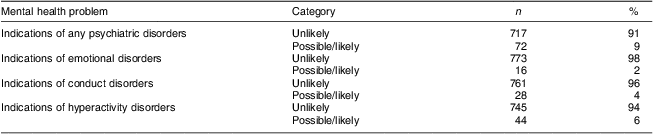
SDQ, Strengths and Difficulties Questionnaire.
* Sample with complete data on diet and mental health problems. Distribution of each mental health variable is given (n 789).
The adjusted multiple regression model for the association between eating patterns and mental health problems (Table 3) showed that adolescents with high scores on the ‘varied Norwegian’ eating pattern were less likely to have indications of ‘any psychiatric disorders’ than those with lower scores on this eating pattern. Further, adherence to the ‘varied Norwegian’ eating pattern was associated with a lower likelihood of indications of hyperactivity disorders. Adolescents with moderate to high scores on the ‘junk/convenient’ eating pattern were more likely to have indications of hyperactivity disorders than adolescents with low scores on this pattern. Furthermore, high scores on the ‘snacking’ eating pattern were associated with a higher likelihood of indications of conduct disorders. No significant associations were observed between the ‘dieting’ eating pattern and mental health problems.
AssociationsFootnote * (odds ratios and 95 % confidence intervals) between tertiles of eating pattern scores and mental health problems measured by the extended SDQ (SDQ symptom scores combined with impact scale scores) among 12–13-year-old children (n 789), Telemark County, Norway, spring 2010
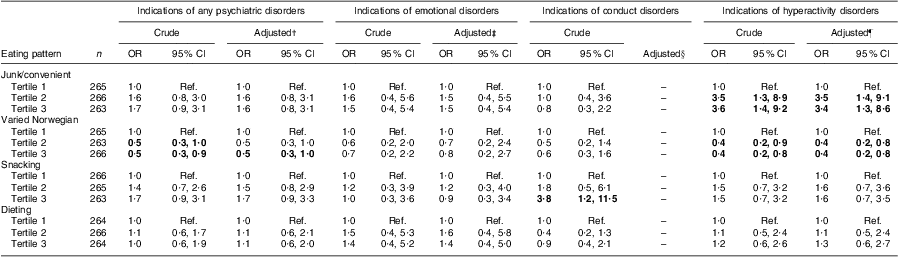
* Significant associations in bold (P < 0·05). Adjusted for other eating patterns and significantly associated background variables: †gender and family structure; ‡family structure; §no background variables were significantly associated with indications of conduct disorders; ¶gender.
Discussion
In the present study, we found a significant relationship between eating patterns and mental health problems in young adolescents, independently of physical activity, sedentary activity and various background factors. Adolescents with high adherence to the ‘varied Norwegian’ eating pattern (recommended nutrient-dense foods like fruits, vegetables, unrefined grains and fish combined with regular meals) were less likely to have indications of ‘any psychiatric disorders’ and a reduced likelihood of hyperactivity disorders. Moderate to high adherence to the ‘junk/convenient’ eating pattern (energy-dense and processed foods) was associated with indications of hyperactivity disorders. Adolescents with high adherence to a ‘snacking’ eating pattern (unhealthy snacking and irregular meals) were more likely to have indications of conduct disorders.
A few studies have previously investigated associations between diet and mental health problems in adolescents, and three studies have used overall dietary patterns in their analyses(Reference Weng, Hao and Qian10, Reference Howard, Robinson and Smith16, Reference Oddy, Robinson and Ambrosini18). Different assessments of mental health problems and diet, as well as a different eating pattern composition, make direct comparison with our results difficult. However, some clear similarities can be observed.
Our findings are in line with previous studies in which healthy eating patterns or food combinations of fruit, vegetables and fish have been associated with better mental health in adolescents(Reference Øverby and Høigaard9, Reference Weng, Hao and Qian10, Reference Jacka, Kremer and Berk15–Reference Oddy, Robinson and Ambrosini18). In the Australian Raine study, high scores on a ‘healthy’ dietary pattern and high intake of fruits and vegetables were associated with a lower likelihood of ADHD diagnosis and better behaviour (lower symptoms of conduct problems) at age 14 years(Reference Howard, Robinson and Smith16, Reference Oddy, Robinson and Ambrosini18). Similar associations between a moderate intake of fruits and fish and a lower likelihood of behavioural problems were recently reported in a cohort study of Norwegian adolescents(Reference Øverby and Høigaard9).
The association observed between the unhealthy ‘junk/convenient’ eating pattern and indications of mental health problems is consistent with the Raine study, in which adolescents with high scores on a ‘Western’ dietary pattern were more likely to have an ADHD diagnosis(Reference Howard, Robinson and Smith16). The food composition of the Australian ‘Western’ dietary pattern had several similarities with the ‘junk/convenient’ eating pattern in the present study, as both represent energy-dense diets rich in junk foods and other processed foods, refined grains, cakes and sweets. Similar cross-sectional associations between dietary patterns featuring energy-rich foods and junk food and indications of hyperactivity have previously been reported in younger children(Reference Azadbakht and Esmaillzadeh11, Reference Wiles, Northstone and Emmett19).
Our results further support previous findings from two Norwegian adolescent cohort studies in which high intakes of unhealthy foods like sugar-sweetened soft drinks, sweets and snacks were associated with behavioural problems(Reference Øverby and Høigaard9, Reference Lien, Lien and Heyerdahl12). This is also in line with the Raine study, in which the ‘Western’ dietary pattern (rich in confectionery and unhealthy snacks) was associated with poorer behaviour (symptoms of conduct problems)(Reference Oddy, Robinson and Ambrosini18).
An association between diet and emotional problems in adolescence has been reported in a few previous studies(Reference Weng, Hao and Qian10, Reference Jacka, Kremer and Berk15, Reference Jacka, Kremer and Leslie17, Reference Oddy, Robinson and Ambrosini18). The absence of significant associations between the defined eating patterns and indications of emotional disorders (anxiety-depressive disorders) in the present study may be due to the relatively low number of adolescents with indications of emotional disorders. This increases the probability of not detecting true associations that are present (type II errors). The low rate of emotional disorders may be due to the relatively young age of the participants in our study, as emotional problems are known to increase during adolescence(Reference Merikangas, He and Burstein2, Reference Kessler, Berglund and Demler3). Further, the use of parents as the only informants may have resulted in some underestimation of emotional symptoms in our sample(Reference Goodman, Ford and Simmons30, Reference Van Roy, Groholt and Heyerdahl34, Reference Heiervang, Goodman and Goodman35).
Possible explanations for associations between diet and mental health problems are complex, and have previously been reviewed in detail by others(Reference Bellisle7, Reference Bamber, Stokes and Stephen23). Nutrient composition and meal patterns can have immediate and long-term beneficial or adverse effects(Reference Bellisle7). Unlike the nutrient-poor ‘junk/convenient’ and ‘snacking’ eating patterns, the ‘varied Norwegian’ eating pattern represents a diverse diet rich in unrefined plant foods and fish, i.e. foods providing several important nutrients such as folic acid, thiamin, vitamin B12, Se, Zn and n-3 fatty acids, which have previously been found to be associated with better behaviour and cognitive status among adolescents(Reference Bamber, Stokes and Stephen23). Furthermore, the ‘varied Norwegian’ eating pattern includes regular breakfast and lunch. Previous studies have associated regular breakfast eating and breakfast quality with good mental health, well-being, better mood and better performance among adolescents(Reference Bellisle7, Reference Lien13, Reference O'Sullivan, Robinson and Kendall20, Reference Smith36). Meal regularity may also be an indicator of good family regularity and functioning, which has been linked to better mental health in adolescents(Reference Neumark-Sztainer, Larson and Fulkerson37, Reference Ambrosini, Oddy and Robinson38). A main purpose of the present study was to focus on overall eating behaviour using eating patterns rather than single components in the analyses. Although causal relationships cannot be firmly identified, the results of the present study indicate that a varied, nutrient-dense diet and regular meals are associated with good mental health in adolescents. The ‘varied Norwegian’ eating pattern was highly comparable to current Norwegian dietary advice.
It is important to recognize that observed associations between eating patterns and mental health problems may be bidirectional, as mental health problems may promote unhealthy eating. Symptoms of ADHD include inattention, impulsivity and hyperactivity, and may imply a higher risk of developing unhealthy eating patterns(Reference Cortese, Isnard and Frelut39–Reference Bitsakou, Psychogiou and Thompson42). It is also likely that adolescents with conduct problems may be less inclined to respect family rules and more likely to skip family meals and engage in uncontrolled ‘snacking’ behaviour. Emotional problems have been linked to comfort eating(Reference Gibson43). However, a reverse causal relationship between diet and depression was not supported by a recent Australian adolescent prospective study(Reference Jacka, Kremer and Berk15). To further investigate possible longitudinal effects and to clarify the direction of the associations observed in our study, follow-up studies are needed.
Our study has strengths, but also limitations that should be recognized. Two strengths are the relatively large number of informants and the acceptable response rate. Furthermore, the study included several background and lifestyle variables considered important with regard to diet and mental health variability. A further important strength is the use of PCA-derived eating patterns as a measure of the children's overall dietary and meal habits, as opposed to individual nutrients, single food items and single meals(Reference Hu22). The FFQ in the present study represented a wide range of commonly used food items, snack products, drinks and meals, resulting in robust factors (eating patterns) covering multiple items.
Another strength is the use of the extended SDQ, a brief instrument for psychiatric screening of children and adolescents that measures both positive attributes and symptoms of problems, as well as the impact of problems(Reference Goodman25). The extended SDQ is a valuable screening instrument for adolescent mental health problems when used in epidemiological research(Reference Van Roy, Groholt and Heyerdahl44, Reference Achenbach, Becker and Dopfner45). The SDQ has been widely used in studies of Norwegian community samples(Reference Obel, Heiervang and Rodriguez46). Very similar versions are available for parents, young people and teachers.
One limitation is the lack of cross-informant comparisons. The algorithm used in the study was developed and recommended for use with multiple informants. However, the method has also been used where parents are the only informants(Reference Bourdon, Goodman and Rae47, Reference Ravens-Sieberer, Wille and Erhart48). This involves limitations that should be recognized(Reference Goodman, Ford and Simmons30, Reference Goodman49). These limitations mainly concern potential underestimation of SDQ difficulty scores, which may in turn lead to some underestimation of mental health problems. Using British norms may have resulted in some underestimation of problems, as Norwegian studies generally report lower symptom scale means than found in Britain(Reference Heiervang, Goodman and Goodman35, Reference Obel, Heiervang and Rodriguez46). Prevalence estimation of mental health problems was not a main aim of our study.
The dietary reports may have been influenced by parental under-reporting of unhealthy items or over-reporting of healthy products, as parents will be less aware of what their children eat outside the home(Reference Livingstone and Robson50). Further, biases caused by errors in parental memory cannot be excluded(Reference Drewnowski51). It is likely that the dietary data reflect the parents’ ‘dietary image’ rather than the true habitual diet of the children(Reference Drewnowski51). However, the FFQ data were used to derive patterns which reflect dietary behaviour(Reference Newby52). Dietary patterns are less likely to be distorted by misreporting than estimated intakes of energy, nutrients and food amounts. The reproducibility and validity of PCA-derived dietary patterns assessed using FFQ have previously been found to be comparable to those of patterns obtained using weighed dietary records(Reference Togo, Heitmann and Sorensen53–Reference Ambrosini, O'Sullivan and de Klerk56). Any parental misreporting of food items is likely to have attenuated the association between eating patterns and mental health problems.
It can be assumed that sociodemographic and lifestyle factors may have influenced the association between eating habits and mental health problems. Clear associations have previously been reported between eating patterns and gender, parental education levels, physical activity and the tracking of children's overweight(Reference Oellingrath, Svendsen and Brantsaeter24, Reference Oellingrath, Svendsen and Brantsater26). Mental health problems in adolescents have been associated with several sociodemographic variables, physical activity and inactivity(Reference Robinson, Kendall and Jacoby14, Reference Van Roy, Groholt and Heyerdahl44, Reference Page, Cooper and Griew57, Reference Bremnes, Martiniussen and Laholt58). However, only minor changes were observed in the associations identified between eating patterns and mental health problems when adjusted for confounding variables, indicating an important association between the two. Nevertheless, adolescent mental health problems may be related to other biological and environmental factors not taken into account here.
One possible limitation on the results is bias due to non-responders. The participating parents had a somewhat higher educational level and total family income than the county's population in general. Further, we included only participants with complete data on diet and mental health variables in the analyses. However, because those with missing data on these variables did not differ substantially from the remaining informants with regard to background variables, we consider this problem to be limited. The missing data on BMI categories were mainly linked to the drop-out of two schools with organizational problems. Data collection was limited to one Norwegian county and the results are not necessarily representative of the national population.
The study's cross-sectional design eliminates the possibility of identifying causal relationships between children's eating patterns and mental health problems. To further investigate possible longitudinal effects and to clarify the direction of the associations, follow-up studies are needed. Hence, the results will form the baseline for further research, as we intend to repeat the study once the children reach the age of 15–16 years. Intervention studies among adolescents with psychiatric diagnoses may further illuminate the possible positive effect of a healthy eating pattern on mental health status.
Conclusion
We have shown a significant association between overall eating patterns and mental problems among young Norwegian adolescents (12–13 years of age), independent of physical activity, sedentary activity and background characteristics. Our findings support the proposition that a diverse, nutrient-dense diet and regular meals are associated with better mental health in adolescents, while energy-dense, nutrient-poor diets and irregular meals are associated with poorer mental health. Follow-up is needed to investigate the possible relationship between eating patterns and mental health among adolescents further.
Acknowledgements
Sources of funding: This research was supported by Telemark University College, Telemark Hospital, the Research Council of Norway, and the Public Health Programme for Telemark. Telemark University College, Telemark Hospital, the Norwegian Research Council and Telemark County Council had no role in the design, analysis or writing of this article. Conflicts of interest: The authors declare no conflict of interest. Authors’ contributions: I.M.O. and M.V.S. were responsible for the study design and data collection. I.H. was responsible for the evaluation and choice of the SDQ as the instrument for mental health problem assessments. M.V.S. was responsible for the statistical analyses. All authors contributed to the interpretation of the results. I.M.O. drafted the manuscript and the other authors revised it critically. All authors read and approved the final version of the manuscript. Acknowledgements: The authors appreciate the cooperation of the children and their parents, the faculty staff of Telemark County primary and lower secondary schools, and the public health nurses who participated in this study.


 Open access

