


Impact statement
Plastic pollution is a pressing environmental challenge with significant repercussions for ecosystems, human health and economies. In response, the international community is negotiating a legally binding treaty to address this crisis, though countries’ positions vary widely, influenced by economic interests, political structures and differing perceptions of the problem.
Our research systematically analyses pre-session submissions from countries and coalitions, revealing four distinct clusters of policy approaches – from advocates of comprehensive upstream regulation to proponents of waste management. This analysis illuminates the political and economic drivers shaping international negotiations and provides empirical evidence linking national interests to policy preferences.
The findings offer critical insights for policymakers, negotiators and advocacy groups by highlighting the risks of limiting the treaty to downstream solutions. They demonstrate that neglecting the regulation of plastic production may ultimately undermine the treaty’s overall effectiveness in ending plastic pollution.
As negotiations continue, our study serves as a strategic resource for bridging divides and fostering ambitious, science-based policies. By providing a nuanced understanding of the political and economic drivers at play, this research not only informs immediate diplomatic strategies and coalition-building efforts but also paves the way for future inquiry into sustainable solutions that address plastic pollution at its source.
Introduction
The environmental consequences of plastics, from their production, consumption, to waste and pollution, have become a pressing global challenge. After several decades of mass production, plastics are now ubiquitous across the planet, whether in use, discarded or as pollution. Plastics and their related chemicals have therefore been proposed as a reference point for determining whether the planetary boundary for novel entities has been crossed (Persson et al., Reference Persson, Carney Almroth, Collins, Cornell, de Wit, Diamond, Fantke, Hassellöv, MacLeod, Ryberg, Søgaard Jørgensen, Villarrubia-Gómez, Wang and Hauschild2022). The heightened attention to the ills of plastics over the last decade contributed to prompting the member states of the United Nations (UN) at the fifth session of the UN Environment Assembly in March 2022, to provide the mandate to start negotiations of an international legally binding instrument on plastic pollution. The structure of the mandate was limited to five negotiation rounds, with the final round scheduled for the end of 2024. No concluding agreement was reached at the final negotiation round (fifth Intergovernmental Negotiating Committee [INC-5]), 25 November to 1 December 2024. Consequently, a continuing session named INC-5.2 was scheduled for 5–14 August 2025.
While the environmental harms of plastics – from climate change impacts, chemical additives, waste generation, to microplastic pollution – are well-documented (Hahladakis et al., Reference Hahladakis, Velis, Weber, Iacovidou and Purnell2018; Bauer et al., Reference Bauer, Tilsted, Pfister, Oberschelp and Kulionis2023; Villarrubia-Gómez et al., Reference Villarrubia-Gómez, Carney Almroth, Eriksen, Ryberg and Cornell2024), the form and level of ambition to be reflected in a future treaty remains uncertain. Understanding what different countries want from the treaty is therefore crucial, as it provides valuable insights into what a treaty might look like and what might come next after a treaty is in place. As part of the negotiations, countries and coalitions of countries have been asked to submit proposals as to what types of measures the treaty might cover and how these could be implemented. These submissions provide a detailed overview of what its future signatories prioritise and regard as a satisfactory outcome. As states differ in how they define the problem and propose solutions, their pre-session submissions offer a valuable window into national priorities, preferred policy approaches and levels of ambition. There has been a growing body of literature analysing the current plastic treaty negotiations, including articles that explore the procedural and substantive developments of INC-2 (Stöfen-O’Brien, Reference Stöfen-O’Brien2023), the Zero Draft put forward ahead of INC-3 (Vince et al., Reference Vince, Carney Almroth, de Miranda Grilli, Dwivedi, Stöfen-O’Brien and Beyer2024) and challenges faced during the negotiations (Cowan et al., Reference Cowan, Holmberg, Nøklebye, Rognerud and Tiller2024; Gonçalves et al., Reference Gonçalves, Webster, Grilli, Elliff, Scrich, Lopes and Turra2024; Al-Zawaidah et al., Reference Al-Zawaidah, Kammerer, Mitrano and Waldschläger2025; Vince and Willis, Reference Vince and Willis2025). In this article, we analyse all the pre-session submissions of the second and third negotiation rounds from countries and coalitions of countries (see also Arora et al., Reference Arora, March, Nieminen, Shejuti and Walker2024) to examine three interrelated dynamics of the treaty negotiations.
First, across all submissions, we analyse the distribution and comprehensiveness of the submissions in terms of the envisioned measures. In the case of plastics, this refers to whether policies address the full life cycle of plastics, from feedstock production, consumption, waste management and pollution (Simon et al., Reference Simon, Raubenheimer, Urho, Unger, Azoulay, Farrelly, de Sousa, van Asselt, Carlini, Sekomo, Schulte, Busch, Wienrich and Weiand2021), and whether regulatory (laws and regulations), economic (monetary incentives and disincentives) and softFootnote 1 (voluntary and non-binding compliance) measures are combined (Kivimaa et al., Reference Kivimaa, H-L and Lazarevic2017; Schmidt and Sewerin, Reference Schmidt and Sewerin2019; Bach and Hansen, Reference Bach and Hansen2023). This analytical perspective draws on the policy mix literature, which points to the importance of looking beyond single policy instruments and rather considers portfolios of policy instruments in order to better understand the role of policies in addressing complex global environmental issues (Rogge and Reichardt, Reference Rogge and Reichardt2016).
Second, we explore the diversity of views among states based on a cluster analysis, to unpack differences and similarities between countries based on the measures they suggest and the parts of the value chain they focus on. Given the complexity of the plastic challenge – where plastics are an omnipresent feature in our everyday lives, yet associated with multiple significant negative environmental effects – it is hardly surprising that actors have varying perceptions of the right way forward (Hamid, Reference Hamid2023). The cluster analysis helps us understand where policy overlaps exist and which countries tend to adopt similar approaches.
Third, we analyse political-economic factors that potentially explain the clustering of countries according to preference for measures and focus on the value chain. The aim is to perform a descriptive overview of the defining characteristics of each cluster. These findings help explain differing national priorities and offer insight into how future treaty negotiations might unfold. We unpack these insights further in the article’s discussion.
Methods
This article is based on pre-session submissions for the second (INC-2) and third (INC-3) INC, supplemented by on-site observations during INC-2, INC-3, INC-4 and INC-5.1. INC-2 took place from 29 May to 2 June 2023, followed by INC-3 from 13 to 19 November 2023, INC-4 from 23 to 29 April 2024 and INC-5.1 from 25 November to 1 December 2024. Before INC-2 and INC-3, the secretariat of the committee invited member states to submit written contributions on potential elements for the instrument (United Nations Environment Programme [UNEP], 2022a), resulting in responses from 86 submitting parties representing 174 states. These individual pre-session submissions were used to examine the positions of UN member states and coalitions of member states regarding an international legally binding instrument on plastic pollution. Some parties chose to only submit during one submission round, while others submitted during two or all three. Most states followed a template circulated by the Executive Secretary of the INC Plastic Pollution Secretariat. These templates guided the submission texts by including categories and questions to be covered, with emphasis on the objective of the treaty, core obligations, control measures and implementing measures (UNEP, 2022a). A variety of stakeholders, including non-governmental organisations (NGOs) and industry groups, were also invited to submit texts before INC-2 and INC-3. However, states are the principal participants in the negotiating process, as is customary in international law, which is why individual national and coalition submissions have been prioritised in this analysis. The submissions are viewed as written documentation of the member states’ proposals for what type of measures the member state wishes to include within the final treaty text.
The method for analysing the submissions was inspired by policy mix literature, where an emphasis is put on the need for a diverse array of strategies to bring about significant changes in economic activities, such as overhauling the operating principles and practices of an entire industry (Rogge and Reichardt, Reference Rogge and Reichardt2016). Achieving such a transition requires a wide range of measures (Brander et al., Reference Brander, Senathirajah, Fernandez, Weis, Kumar, Jahnke, Hartmann, Álava J, Farrelly, Almroth, Groh, Syberg, Buerkert, Abeynayaka, Booth, Cousin, Herzke, Monclús, Morales-Caselles, Bonisoli-Alquati, Al-jaibachi and Wagner2024; De Sousa, Reference De Sousa2024; Gonçalves et al., Reference Gonçalves, Webster, Grilli, Elliff, Scrich, Lopes and Turra2024; Organisation for Economic Co-operation and Development [OECD], 2024), which are usually defined as ‘instruments’ in the policy mix literature, including economic, regulatory and soft measures (Kivimaa et al., Reference Kivimaa, H-L and Lazarevic2017). This method has also been used in analyses of countries’ positions in international negotiations (see, e.g., Rodríguez-Antón et al., Reference Rodríguez-Antón J, Rubio-Andrada, Celemín-Pedroche and Ruíz-Peñalver S2022; van Asselt et al., Reference van Asselt, Fragkos, Peterson and Fragkiadakis2024). In our case, economic measures included monetary interventions to incentivise change, such as taxation, economic penalties or investments. Regulatory measures include policies, rules and laws to control and direct behaviour to achieve the objective of the treaty, and soft measures include voluntary actions and measures that seek to guide, educate and manage behaviours related to the plastics industry. All coding categories have been described with examples in Supplementary Appendix A, Table S1. The combination of measures across these categories constitutes the policy mix, where a balanced presence of all three types allows the benefits of each to ensure a more effective policy outcome, or, as in this case, treaty outcome (Schmidt and Sewerin, Reference Schmidt and Sewerin2019; Bach and Hansen, Reference Bach and Hansen2023). Once the treaty text is adopted, these measures could, depending on the wording, become legally binding to states that sign and ratify the treaty and transpose these measures into national law.
To analyse variation in the proposed policy mix, a coding of the participating states’ pre-session submissions was conducted. The coding approach integrated a hybrid of attribute and exploratory provisional coding based on the principles of coding for qualitative researchers by Saldaña (Reference Saldaña2013). This was followed by focused coding, guided by a codebook based on policy mix literature to structure and refine data around key themes, which was created and later modified after insights from the provisional coding. Two coders worked in close collaboration throughout the development of the codebook and the coding process. A more in-depth description of the coding process and results can be read in Supplementary Appendix A and the report by Dreyer et al. (Reference Dreyer, Hansen, Holmberg, Olsen and Stripple2024). The goal was to map the distribution of measures across the three categories, to discern whether the policy mix is balanced or heavily skewed towards a specific category. We also included specific, measurable targets as a fourth category. Targets can both include dates or specified figures, which are suggested to be included in the final treaty, but can also be text specifying the need for measurable targets, without set dates or figures being proposed. Besides the type of proposed intervention, we were interested in which part of the value chain of plastics the measure or target was aimed at.
To define the value chain of plastics, we drew on the model used by the INC Plastic Pollution Secretariat, which outlines the ‘full life cycle of plastics’ (UNEP, 2022b, p.12), as well as the INC-2 ‘zero-draft’ preparation document (UNEP, 2023), which helped inform the sub-categories for the plastics value chain (see also Vince et al., Reference Vince, Carney Almroth, de Miranda Grilli, Dwivedi, Stöfen-O’Brien and Beyer2024). We use these categories since they are the definitions that delegations of member states will primarily refer to and take into account. The value chain is divided into the following stages: (1) upstream (including feedstock and raw materials and production and processing of monomers/polymers), (2) midstream (including design phase and innovation, production of plastic products, distribution and plastics use and consumption) and (3) downstream (including collection/sorting/waste management, reuse/repair/recycling and legacy plastics). We introduced a fourth category, (4) ‘cross-value-chain’ (including release and emission to water/soil/air and microplastic leakage), to capture overarching measures spanning multiple stages. This simplified value chain of plastics aims to represent all stages of the life cycle of plastics, from raw materials to end-of-use treatment. See Figure 2 for how this conceptualisation is applied in the article.
Text in submissions that proposed a clear intervention was coded in the qualitative data analysis software NVivo 14 (see Supplementary Appendix A for details). Based on the coding of submissions, a clustering of submissions was performed using the K-modes algorithm (Huang, Reference Huang1998), which is an adaptation of the K-means algorithm (Lloyd, Reference Lloyd1982) tailored for categorical data. The number of clusters, K, is predetermined before running the algorithm. Multiple values of K were tested, and K = 4 was found to best represent the data and the authors’ assessment of which cluster model best captured the distinctions among submissions, as informed by the coding process. Since the number of clusters must be predetermined before running the algorithm, this can result in some countries not being representative of their clusters and being outliers within their clusters, as not all submissions are equally close to the ‘centre’ of the cluster. This algorithm aims to find the ‘centres’ of clusters, referred to as modes, which represent the most common characteristics of each cluster. For our data, the characteristics are the types of measures proposed within the pre-session submissions and where, along the value chain, they are proposed to be implemented. The premise is that these modes determine the cluster assignment for each submission; a submission is assigned to the cluster whose mode it is closest to. Initially, the algorithm randomly initialises these modes and constructs the clusters accordingly. Subsequently, the algorithm recalculates the modes based on the constructed clusters, as the cluster centres may have shifted. This iterative process continues until the modes stabilise and no longer shift (see Supplementary Appendix B for details).
To analyse the four clusters in more detail, a range of political-economic variables was selected for a descriptive examination of the characteristics of each cluster. Six variables were used (further described in Supplementary Appendix B, Table S2): ‘Democracy Index 2023’ (The Economist Intelligence Unit, 2024), ‘Total GDP Current Prices USD 2021’ (International Monetary Fund, 2022), ‘Manufacturing, value added, 2021’ (World Bank and OECD, 2021a), ‘Services, value added, 2021’ (World Bank & OECD, 2021b), ‘Oil rents, 2021’ (World Bank, 2021a), ‘Natural gas rents, 2021’ (World Bank, 2021b), and ‘Monomer and/or polymer production’ (see excel sheet in Supplementary Data B). The selection of the variables was made based on their potential to impact the position of a member state in the negotiations, taking inspiration from similar work such as Tørstad et al., Reference Tørstad, Sælen and Bøyum L2020, while adding plastics-specific political-economic variables, inspired by Bauer et al., Reference Bauer, Tilsted, Pfister, Oberschelp and Kulionis2023. For details on the political-economic variables and descriptive statistics, see Supplementary Appendix C.
Important limitations to this approach are, first, that changes in coalitions and positions have taken place since the INC-2 and INC-3 pre-session submissions were made. Since INC-2, we observed the formation of informal coalitions, such as ‘the like-minded group’, announced by Iran during INC-3, claiming to represent Iran, Saudi Arabia, Cuba, China, Russia and Bahrain. Existing coalitions have also evolved, with Benin, Malawi, Moldova, Solomon Islands and Togo joining the High Ambition Coalition (HAC, n.d.), and new states, such as India and Vietnam, are entering the negotiations. Consequently, the findings cannot fully reflect the current and future dynamics and positions of states, but they can tentatively allow us to distinguish certain patterns and structures within the negotiations. Second, it is important to be aware of potential biases in the submissions. Some states are represented by several submissions due to their involvement in multiple coalitions, while others are only represented by a coalition submission without an individual submission. Thus, it is important to keep in mind that, even though coalition negotiations usually operate by consensus, the negotiations are not publicly accessible, and it cannot be inferred with certainty that a coalition submission represents each state’s position. Third, the categorisation and interpretation of policy documents in qualitative coding may introduce researcher bias. This risk has been mitigated by using multiple coders. Lastly, the submissions represent a static snapshot into a dynamic negotiation process, which we have sought to address by including in-person observations throughout the INC negotiations.
Results
Mapping the pre-session submissions
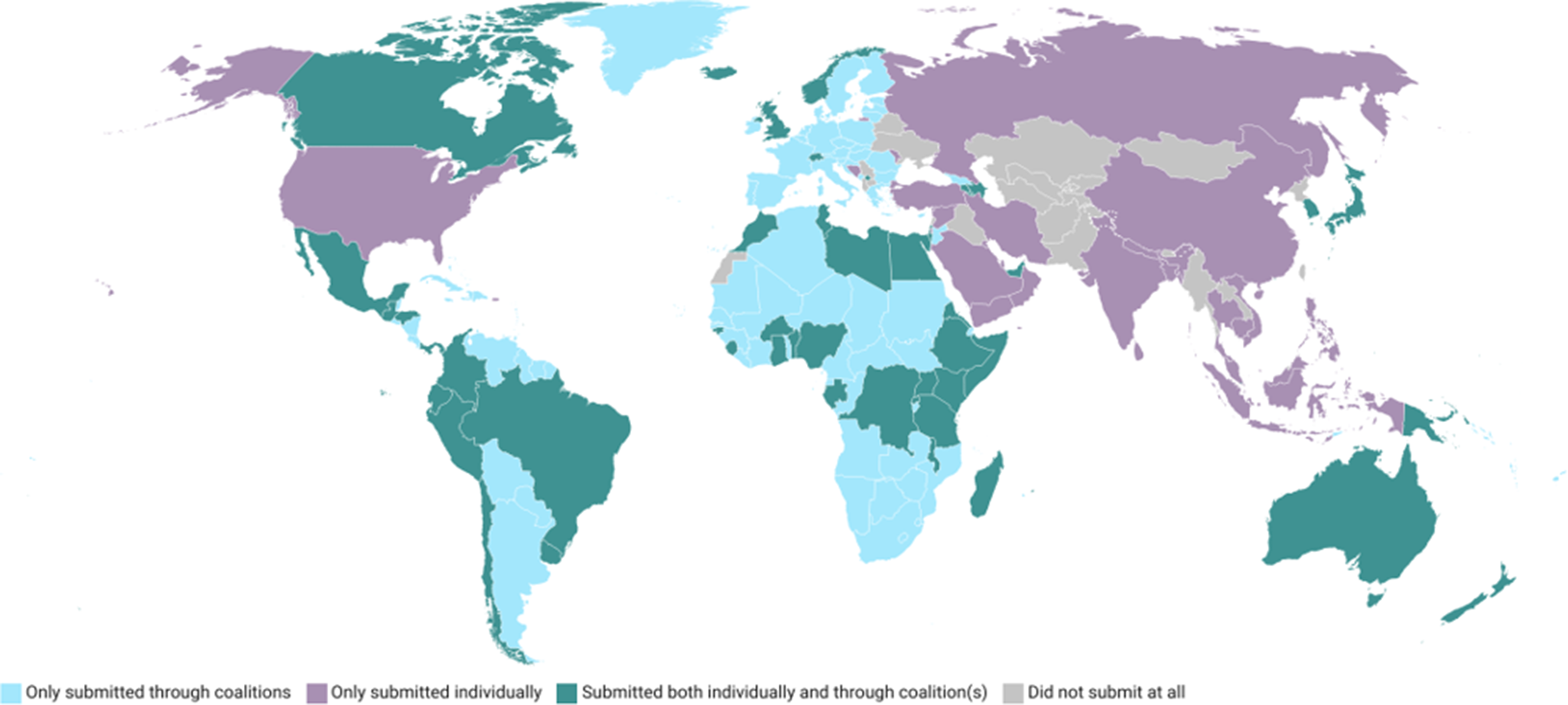
Figure 1 provides a visual overview of the total pre-session submissions from the member state delegations. In the pre-session submissions, countries or coalitions of countries make statements about preferred outcomes, measures and implementation. These submissions were provided ahead of INC-2 and INC-3.
Map of INC-2 and INC-3 pre-session submissions.
World map showing countries with pre-session submissions: light blue indicates countries that submitted only through coalitions, purple indicates those that submitted only individually, turquoise indicates countries that submitted both individually and through coalitions and grey indicates countries with no submission.

Overall, the pre-session submissions represent 174 states worldwide. Of these, 25 countries submitted only individually, while 93 submitted only through a grouped submission, either through a coalition or the European Union (EU). Fifty-seven countries submitted both individually and through one or more coalitions. Notably, 33 states were part of more than one grouped submission. No formal coalition submission from the ‘like-minded’ group was made ahead of INC-2 or INC-3.
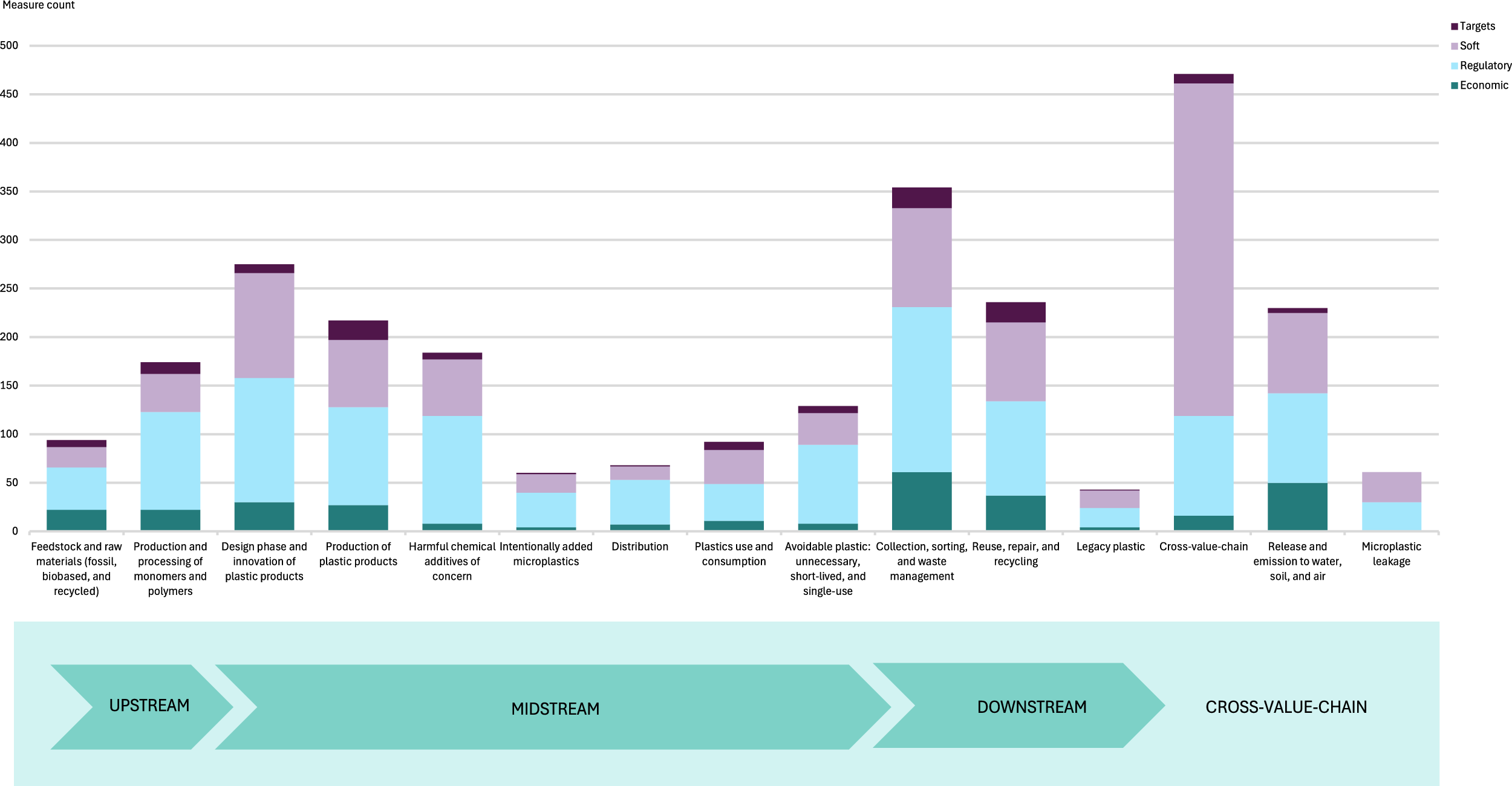
In total, 2,688 codes for measures and targets were discerned through the coding process of the pre-session submissions (see Supplementary Appendix A for more details), with 1,015 distinct measures and targets coded. Figure 2 illustrates the overall focus of all suggested measures distributed along the value chain. Most measures are found in the ‘cross-value-chain’ category, driven by many suggestions for soft measures in the form of various types of voluntary interventions without a clear tie to a specific part of the value chain. This category includes calls for National Action Plans and measures, such as the need for capacity-building and technical support for developing countries.
Overall distribution of measures along the value chain of plastics.
This figure shows the distribution of measures across each part of the value chain. The same measure or target can be included in several parts of the value chain. The figure was originally published by Dreyer et al. (Reference Dreyer, Hansen, Holmberg, Olsen and Stripple2024).

A substantial proportion of measures are associated with plastic waste, which encompasses both the downstream and cross-value-chain sections. The three waste-related categories ‘collection, sorting and waste management’, ‘reuse, repair and recycling’, ‘legacy plastic’ and ‘release and emission to water, soil and air’ account for 32.1% of all suggested measures. These categories account for 49.4% of all economic measures.
Only 10.0% of the measures directly address the upstream segment of the value chain, but the proportion of economic and regulatory measures is notably higher (70.5%) than for the midstream (62.1%), downstream (61.5%) and cross-value-chain (63.8%) categories. Including the production-related midstream categories of ‘production of plastic products’ and ‘avoidable plastic’ raises the share of production-related measures to 22.8%. Still, the upstream and production-related parts of the value chain remain underrepresented in both the number of proposed measures and the number of submissions addressing them.
Cluster analysis
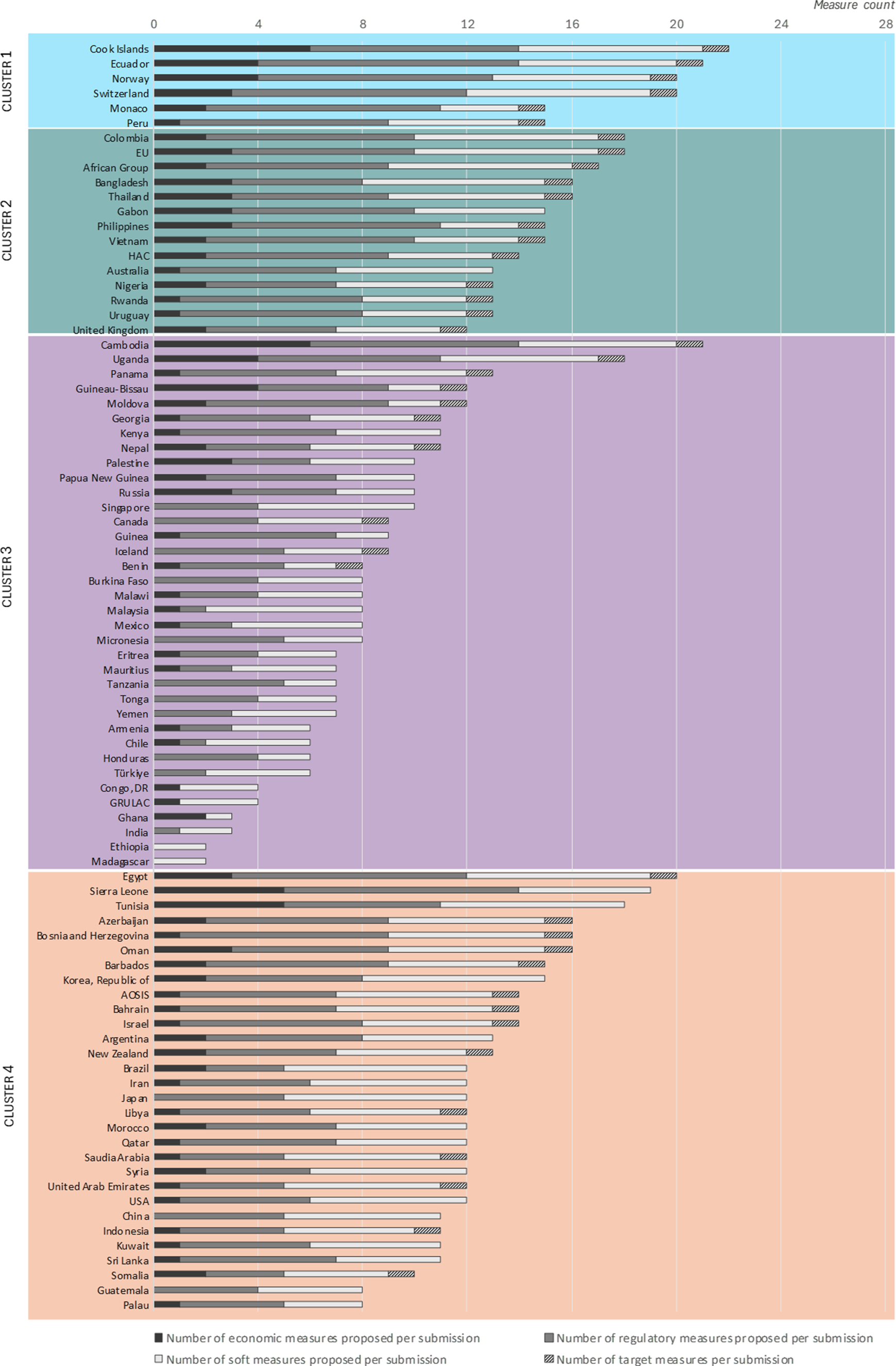
Figure 3 provides an overview of the coded submissions categorised into four clusters. For each state or coalition, the range of coded measures and targets is illustrated, outlining how well these submissions cover different policy types. The clusters were decided according to the proximity of the submissions based on their proposed measures.
Range of measures mentioned in pre-session submissions for INC-2 and INC-3.
Graph of pre-session submissions for INC-2 and INC-3 grouped into four clusters. For each cluster, the states or coalitions have been ranked according to the range of measures and targets proposed. In this figure, a measure or target has been marked as ‘proposed’ if it has been mentioned in a submission for any part of the value chain at least once.

Cluster 1
Cluster 1 includes six countries, all of which have proposed a diverse range of measures throughout the life cycle of plastics and are part of the HAC. As seen in Figure 3, Cook Islands and Ecuador are at the top of the chart, with 22 and 21 proposed measures, respectively, across the plastics value chain.
All six countries propose to introduce a provision to reduce primary plastic polymer (PPP) production. They all consider it imperative that the treaty include an obligation to reduce the production of PPPs for the treaty to be able to end plastic pollution. The submissions of both Monaco and Norway include the proposal that: ‘[e]ach Party should be required to take effective measures to reduce the production of [PPP] to an agreed level to reach a common target. Measures could include, inter alia, taxes, tariffs, fees, production permits and licenses, moratoriums, bans, regulations, and removal of negative fiscal incentives’ (Monaco, 2023; Norway, 2023). Switzerland, Ecuador, the Cook Islands and Peru propose similar upstream measures to tackle PPP production (Switzerland, 2023; Cook Islands, 2023a; Peru, 2023).
Moreover, all six countries propose tax incentives as a potential measure to be included within the treaty, specifically in the upstream part of the value chain concerned with the production and processing of polymers. Five of the pre-session submissions (Ecuador, Monaco, Norway, Peru and Switzerland) propose the removal of negative fiscal incentives, such as ‘subsidies that support the expansion of plastic production’ (Ecuador, 2023; Monaco, 2023; Norway, 2023; Switzerland, 2023; Peru, 2023). The Cook Islands proposes to implement ‘market-based disincentivised measures such as price-based measures, permits, licences, tariff or tax on virgin plastic production’ (Cook Islands, 2023b). This high degree of alignment, particularly on upstream measures such as reducing PPP production and fiscal reform, indicates a convergence across member countries. Cluster 1 countries stand out in their comprehensive policy mix portfolio, suggesting measures of various types across the plastic value chain, while clearly emphasising the importance of upstream measures, as indicated by the examples above.
Cluster 2
The second cluster identified includes 11 countries, the EU, and 2 coalitions (the African Group and the HAC). Within this cluster, all countries and coalitions propose measures at every part of the life cycle of plastics. This indicated a relatively high level of convergence in terms of overall scope, as all propose measures upstream, focusing mainly on three main measures: (1) bans, (2) defining criteria for substances and polymers of concern and (3) restricting the range of polymers currently used in the production of plastics and their related products.
Within the midstream section, all countries, except for Bangladesh and Gabon, propose a ban on harmful chemicals and additives of concern. Furthermore, all countries, except Uruguay, propose measures within the downstream category ‘reuse, repair and recycle’ and within the cross-value-chain category ‘release into the environment’. The most common measures proposed within the ‘reuse, repair and recycle’ category are performance standards and targets. For example, Thailand proposes to ‘adopt design and performance criteria and regulatory schemes’ with a dual purpose: (1) to reduce the use of plastics overall and (2) to increase ‘safety, durability, reusability, refillability, repairability and refurbishability of plastics and plastic products’ (Thailand, 2023). This language is similar to the pre-session submissions by the African Group, Australia, the EU, the Philippines and Vietnam. While the majority of members align in these areas, minor divergence emerges in the specifics and consistency of proposals, particularly from a few outliers. With regards to ‘release into the environment’, states within this cluster mainly propose penalties or highlight the need for assessment, monitoring and evaluation measures. The African Group, Australia, the EU, Gabon, the United Kingdom, Uruguay and Vietnam propose penalties by implementing the polluter-pays principle for producers to internalise the cost of externalities.
Another commonality found within this cluster is that all countries, except Australia and Gabon, propose the implementation of targets within the treaty. Six countries (Bangladesh, Colombia, Rwanda, Thailand, the United Kingdom and Vietnam), the EU and the HAC propose targets within the downstream category ‘reuse, repair and recycling’. This cluster demonstrates a moderate degree of convergence, with most members aligning on key upstream and downstream measures, though some variation remains in midstream and cross-value-chain proposals.
Cluster 3
The third cluster identified includes 35 countries and one coalition submission (Group of Latin America and the Caribbean [GRULAC]). Within this cluster, 30 countries and GRULAC propose midstream measures, 29 countries propose measures downstream and 31 propose measures across the value chain. This cluster contains less variation (see Supplementary Appendix B, Figure S3) in comparison to other clusters, hence less diverging interests according to their submissions.
Within this cluster, the most common measures proposed, by over 25 countries, are soft measures in the form of knowledge sharing as well as assessment, monitoring and evaluation measures. Eighteen countries propose performance standards, and most countries propose them within the category ‘design and innovation phase’. For example, Benin proposes design criteria for circularity and reuse (Benin, 2023), and Eritrea emphasises the need to implement a zero-waste hierarchy, which underlines the need to prevent, reduce and reuse above all to minimise end-of-life waste (Eritrea, 2023).
Cambodia and Uganda can be seen as outliers within this cluster, as they are the only two countries that propose a wide range of measures (21 and 18, respectively). The rest of the cluster proposes, on average, eight different types of measures. This suggests a relatively cohesive centre of policy priorities with a few more ambitious outliers. Finally, 16 out of 35 countries within Cluster 3 propose measures upstream. The most common types of measures proposed here are bans and assessment, monitoring and evaluation measures. For example, Kenya proposes to track the ‘types and volumes of plastics feedstocks, polymers, [and] processed plastics’ (Kenya, 2023). A few countries also propose tax incentives, such as ‘subsidies/incentives to support alternatives of plastic production’ proposed by Georgia (2023). Overall, upstream engagement is less consistent across this cluster, and the overall policy direction is in favour of soft and systems-level interventions.
Cluster 4
The fourth cluster includes 29 countries and one coalition (Alliance of Small Island States [AOSIS]). Within this cluster, all members propose measures related to the midstream and downstream, as well as measures across the value chain of plastics. There is a convergence on midstream and downstream priorities, with a majority of countries within this cluster proposing measures for the midstream categories ‘design phase and innovation’ and ‘avoidable plastics.’ Regarding the design and innovation phase, 21 pre-session submissions highlight the need for design criteria and harmonisation to promote the circularity of plastics. Moreover, most countries support the inclusion of provisions in the treaty on research, innovation and development of more sustainable alternatives. Within the downstream section, all members of this cluster propose measures in the category ‘collection, sorting and waste management’ and all, except the United Arab Emirates (UAE), propose measures within the category ‘reuse, repair and recycling.’ All members of this cluster support the inclusion of mandatory action plans, knowledge sharing and measures to promote research and innovation.
Eight countries do not propose any upstream measures at all; these are Argentina, Iran, Kuwait, Morocco, Oman, Somalia, the UAE and the United States, indicating a more sceptical view on upstream action. Out of the 22 that propose measures upstream, nine propose measures to reduce the overall production of plastics to address the problem of plastic pollution. These submissions include the AOSIS coalition, Azerbaijan, Barbados, Brazil, Indonesia, Sierra Leone, Palau, Tunisia and New Zealand. Bosnia and Herzegovina, Libya and Sri Lanka, propose to reduce only certain single-use plastics. Regarding alternatives and substitutes, Egypt and Guatemala highlight the importance of taking economic feasibility into account, as they argue that obligations should be formulated by individual parties. Japan and South Korea emphasise the idea of circularity without declaring an absolute reduction target (Japan, 2023; Republic of Korea, 2023). China, Qatar, Syria and Saudi Arabia emphasise the need for recycled plastics, often leaning towards the idea of chemical recycling. Qatar highlights the need to increase ‘the percentage of recycled content in the manufacturing of new plastic components’ (Qatar, 2023), and Saudi Arabia highlights the ‘wide range of technologies [that] are underway to take plastics back down to their chemistry to fabricate new materials’ (Saudi Arabia, 2023). Altogether, the cluster reflects considerable alignment on mid- and downstream issues, while upstream measures reveal a more diverse range of positions.
Potential factors influencing cluster membership
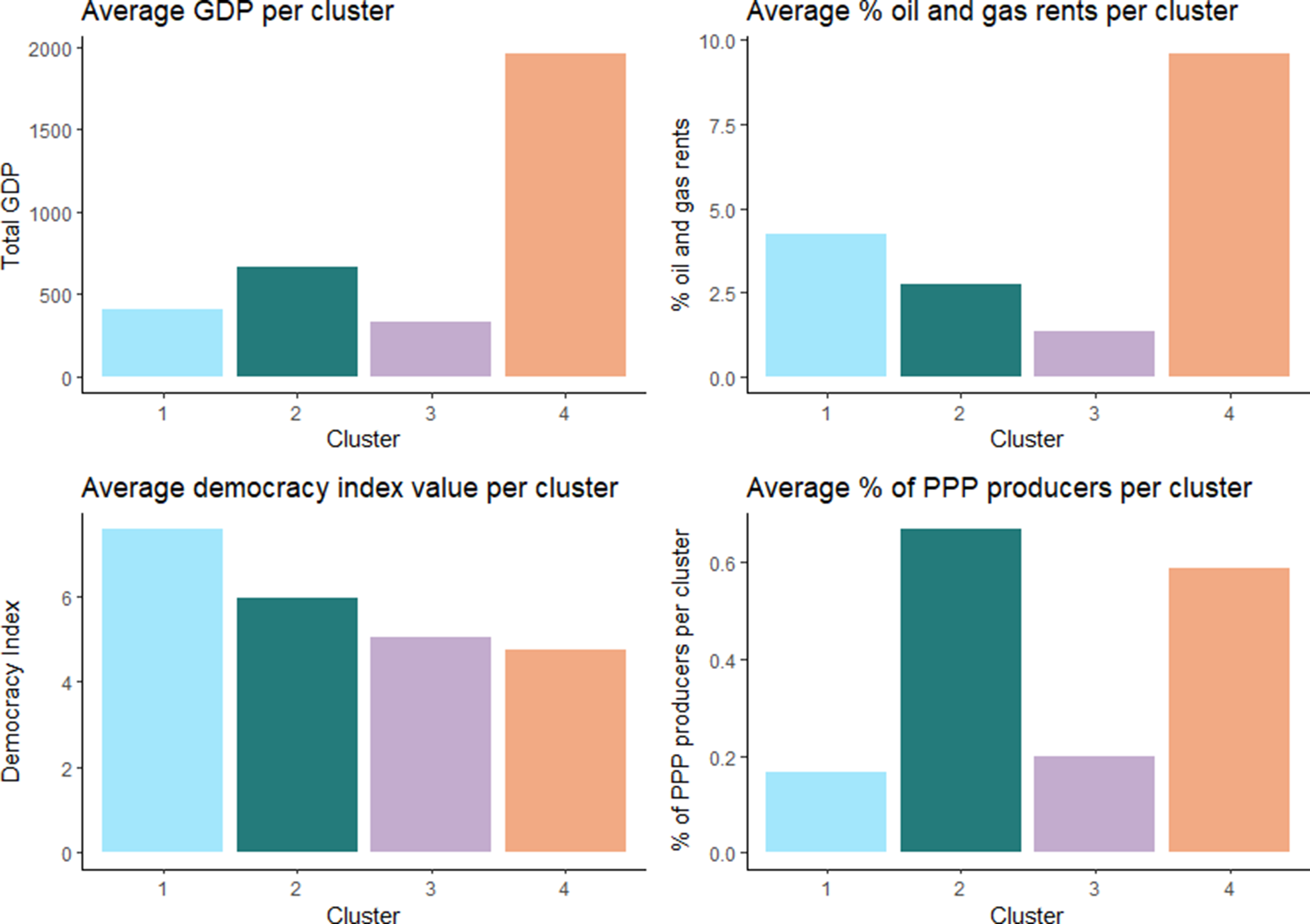
To assess the results of the cluster analysis, the relationship between the clusters and several key political-economic variables is analysed. Six variables were selected based on their relevance and the presence of data covering a majority of the submissions. These include the total gross domestic product (GDP) in current prices, the Democracy Index, net output of the manufacturing sector, net output of the service sector, oil and natural gas rents and the existence of domestic monomer and/or polymer production (see descriptions in Supplementary Appendix C, Table S2). The tests were only performed on state submissions, including the EU, while omitting the coalitions. Little variation was observed between the clusters based on the variables ‘services’ and ‘manufacturing’ as a share of GDP, while greater variation could be observed in the case of the other four variables (see Figure 4).
Bar graphs of average and share values of background variables divided by cluster.
Descriptive bar graphs of four background variables: (1) averages of total GDP in billion USD per cluster, (2) average democracy index value per cluster, (3) average share of oil and fossil gas rents per cluster and (4) average share of presence of PPP in member states per cluster.

Members of Clusters 1 and 2, on average, consist of rich democratic countries, whereas Cluster 1 has slightly higher average oil and fossil gas rents of GDP. Cluster 2, on the other hand, has the highest share of PPP producers, where up to two-thirds of its members have domestic production.
Cluster 3, on average, consists of less wealthy countries, with low shares of both oil and fossil gas rents and PPP production; similar to Cluster 4, they have a slightly lower average on the democracy index. Cluster 4, on the other hand, has by far the highest average shares of oil and natural gas rent, while also having a substantial share of PPP producers. Hence, this might be the cluster that most clearly represents the actors with an economic interest in the proliferation of high PPP production levels, as it could be a route to keep the fossil fuel rents high.
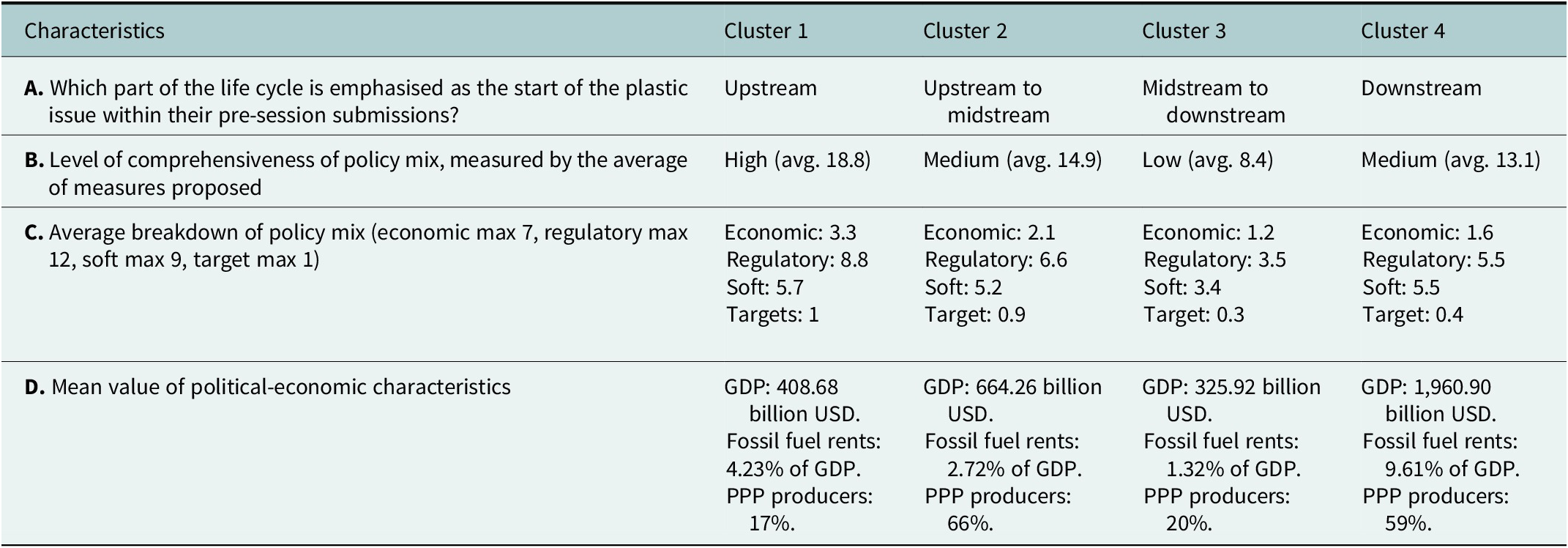
Combined with the data from the mapping and cluster analysis, Table 1 summarises our findings across the four identified clusters.
Results: Overview of key characteristics of clusters

Note: A is based on empirical work at INC-2, INC-3 and INC-4 negotiations, supported by the reading of submissions and the numbers in Supplementary Data A. B shows the average of the total amount of measures proposed by each of the submitting actors in a cluster. B and C uses numbers from the coding of submissions, included in Supplementary Data A. D is based on descriptive statistics of the clusters, see Supplementary Appendix C, Table S3 and Supplementary Data B.
Discussion
The analysis of pre-session submissions reveals that country positions in the plastics treaty negotiations cluster into four distinct groups, each reflecting particular policy preferences, framings of the problem and political-economic contexts. While each cluster may include various and contrary policy preferences, we can capture their distinct core policy orientation, as the clusters differ not only in the number and types of proposed measures but also in how they define the nature of the plastics problem and necessary points of intervention. A policy mix perspective highlights the relevance of the distribution of instruments across the value chain and the layered complexity of policy mixes (Kern et al., Reference Kern, Kivimaa and Martiskainen2017), which are likely to grow as the negotiations continue. This approach enables a structured understanding of how national delegations envision the plastic treaty, the combination of policy instruments they utilise and how these combinations (or lack thereof) may influence the potential for an effective plastic treaty (Borrás and Edquist, Reference Borrás and Edquist2013; Bach and Hansen, Reference Bach and Hansen2023; Pfeffer et al., Reference Pfeffer, Reike and Bening2025).
Cluster 1 country delegations are characterised by a clear focus on upstream regulation, including the reduction of PPP production, and a broad mix of regulatory, economic and soft measures across the value chain. These states tend to be relatively wealthy, democratic and have low economic dependence on fossil fuels or domestic polymer production. Cluster 2 country delegations share a commitment to regulation across the plastics value chain but are more internally diverse. Many are PPP-producing countries that support upstream action alongside midstream and downstream reforms, though often with less consistency than the first cluster.
Cluster 3 countries, by contrast, propose fewer measures overall and tend to concentrate their efforts on midstream or downstream interventions. Many of these are lower-income countries and appear to use their national submissions as a complement to coalition statements. This may reflect capacity constraints, alignment strategies, or different views on where action is most feasible. Cluster 4, such as Saudi Arabia, Iran and Qatar, includes several of the world’s major plastics producers and countries with high fossil fuel rents. These countries generally oppose upstream measures and emphasise waste management and recycling as the core focus of the treaty (Jebe and Park, Reference Jebe and Park2024). This cluster reflects an effort to limit the treaty’s scope to end-of-pipe solutions and to assert sovereign control over resource use, particularly in relation to fossil-based feedstocks. For a non-cluster-based overview of the submissions, see also Arora et al. (Reference Arora, March, Nieminen, Shejuti and Walker2024) and Dreyer et al. (Reference Dreyer, Hansen, Holmberg, Olsen and Stripple2024).
From a policy mix perspective, certain configurations are regarded as more effective in enabling transitions towards sustainability (Rogge and Reichardt, Reference Rogge and Reichardt2016; Brander et al., Reference Brander, Senathirajah, Fernandez, Weis, Kumar, Jahnke, Hartmann, Álava J, Farrelly, Almroth, Groh, Syberg, Buerkert, Abeynayaka, Booth, Cousin, Herzke, Monclús, Morales-Caselles, Bonisoli-Alquati, Al-jaibachi and Wagner2024; De Sousa, Reference De Sousa2024; Gonçalves et al., Reference Gonçalves, Webster, Grilli, Elliff, Scrich, Lopes and Turra2024). These include: (1) combining measures that dismantle unsustainable systems with measures that foster sustainable alternatives (Kivimaa and Kern, Reference Kivimaa and Kern2016), (2) deploying a balanced portfolio of policy instruments (Kivimaa et al., Reference Kivimaa, H-L and Lazarevic2017) and (3) ensuring coverage across all relevant stages of the value chain (Pfeffer et al., Reference Pfeffer, Reike and Bening2025) to avoid shifting problems downstream. Our results show that the clusters vary substantially in these respects. Cluster 1 aligns most closely with these criteria, whereas Cluster 4’s narrow and end-of-pipe orientation is unlikely to deliver reductions at source. These divergences are not just reflections of differing capacities or environmental preferences but also linked to structural economic interests (Dauvergne et al., Reference Dauvergne, Ralston, Clapp and Taggart2025a; Ralston and Taggart, Reference Ralston and Taggart2025). Efforts by downstream-oriented Cluster 4 countries to shift the language of the treaty towards regulating the ‘full life cycle of plastic waste’ appear designed to exclude upstream interventions and maintain business-as-usual production levels. An example of this can be found in China’s submission, which, while mentioning the need to manage plastics throughout their full life cycle, also states in their paragraph on the scope of the instrument: ‘Limiting the production of plastic polymers is not a straightforward solution to plastic pollution and goes beyond the mandate of the instrument; as a result, it should not be included in the instrument’ (China, 2023). Intriguingly, the core of Cluster 4 later formed the ‘like-minded group’, first announced at INC-3, a group of countries with economic interest in fossil fuel, petrochemical and plastic production (Dauvergne et al., Reference Dauvergne, Allan, Beaudoin, Almroth, Clapp, Cowan, de Groot, Farrelly, de Miranda Grilli, Mah, Mendenhall, Park, Ralston, Stoett, Stöfen-O’Brien, Taggert, Tiller, Villarrubia-Gómez and Vince2025b). As such, our results illustrate that, in retrospect, it might not be surprising that this group was formed.
Meanwhile, the distribution of the HAC members across all four clusters – including some that have not called for upstream action – points to internal tensions within the nominally ambitious coalition, raising questions about the coherence of the coalition as negotiations progress. For example, a letter from NGOs was sent to the chairs of the HAC a few days before INC-4, highlighting the potential conflict of interests between the member UAE and the coalition, specifically regarding ‘conflicting aims concerning petrochemical buildout and plastic production’ (Al Aridi, Reference Al Aridi2024). Our analysis, along with observations during negotiations, confirms these conflicting views, with the pre-session submissions of the UAE containing no proposals for upstream measures or language surrounding the need for production reduction. Other Cluster 4 members of the HAC, such as Azerbaijan, Japan and the Republic of Korea, have likewise not demonstrated a clear, ambitious stance on the need for the PPP production reduction within their pre-session submissions or during plenaries at INC-3, INC-4 and INC-5.1. Looking ahead to the resumed session at INC-5.2, and potentially negotiations beyond, these dynamics are likely to become more visible and consequential. At INC-5.1, countries with strong fossil fuel interests – such as Kuwait and Saudi Arabia – explicitly defended their right to exploit domestic resources, framing upstream regulation as a violation of national sovereignty, a view reflected in many of these countries’ pre-session submissions. If this wish prevails, it may severely limit the treaty’s capacity to address plastic pollution at its source, where it is most needed (Bergmann et al., Reference Bergmann, Almroth, Brander, Dey, Green, Gundogdu, Krieger, Wagner and Walker2022; Baztan et al., Reference Baztan, Jorgensen, Carney Almroth, Bergmann, Farrelly, Muncke, Syberg, Thompson, Boucher, Olsen, Álava J, Aragaw, Bailly, Jain, Bartolotta, Castillo, Collins, Cordier, De-Falco, Deeney, Fernandez, Gall, Gammage, Ghiglione, Hansen, Issifu, Knoblauch, Wang, Kvale, Monsaingeon, Moon, Morales-Caselles, Reynaud, Rodríguez-Seijo, Stoett, Varea, Velis, Villarrubia-Gómez and Wagner2024). Nonetheless, at INC-5.1, we saw a higher number of countries than previously come together with the ambition to include an article on the reduction of production. For the optimist, this could spark a glimmer of hope for the next round of negotiations scheduled for August 2025 in Switzerland (Bodansky and Ivanova, Reference Bodansky and Ivanova2025). The pessimist, however, might question whether this momentum can translate into an ambitious treaty text, as the rules of procedures for the negotiations are only provisionally applied, which leaves room for delay tactics (Cowan et al., Reference Cowan, Holmberg, Nøklebye, Rognerud and Tiller2024). Additionally, the change in administration in the United States shifts the balance in the negotiation room and is currently actively encouraging increased fossil fuel exploration and petrochemical production (White House, 2025), while heightened geopolitical tensions create a grimmer outlook for diplomatic solutions overall (Dauvergne et al., Reference Dauvergne, Allan, Beaudoin, Almroth, Clapp, Cowan, de Groot, Farrelly, de Miranda Grilli, Mah, Mendenhall, Park, Ralston, Stoett, Stöfen-O’Brien, Taggert, Tiller, Villarrubia-Gómez and Vince2025b). These dynamics underscore the importance of mapping how different countries are positioning themselves as the negotiations continue for INC-5.2, and beyond.
Conceptually, our analysis highlights how the policy mix perspective is not only useful to study implemented policies but can also inform our understanding of the policy formulation phase and the varying preferences voiced by involved actors. Using the policy mix framework in this way opens up for closer engagement with policy process theories that focus on the role of coalitions and changes in political systems for policy formulation, but which have rarely been connected to policy mix studies (Kern and Rogge, Reference Kern and Rogge2018). Further, previous work on policy mixes provides little attention to the value chain dimension of policy mixes, but our analysis highlights the importance of considering this dynamic, as it is a core distinguishing factor between the clusters. As the process moves forward, understanding these clusters and their structural logics can facilitate informed coalition-building and designing negotiation strategies in a complex treaty-making process. This could be vital for those seeking to navigate the negotiation landscape and push for a more ambitious and effective global treaty.
Conclusion
This article has outlined four distinct clusters of positions by member states emerging in the negotiations towards a global plastics treaty. These clusters are distinguished by the types of policy measures they propose and which parts of the plastics value chain they seek to regulate. The analysis demonstrates that preferences for upstream, midstream or downstream measures are not random but correspond to broader political-economic structures, including levels of democracy, total GDP, fossil fuel dependency and domestic polymer production. By applying a policy mix perspective, which has been expanded to consider both the diversity of measures and their position along the value chain, we gain a clearer understanding of how treaty preferences are structured and why certain framings of the plastics crisis have gained traction in some contexts while remaining peripheral in others.
These findings highlight an important challenge for the treaty process. If upstream measures are excluded, the treaty risks failing to address the root causes of plastic pollution, yet it is going to be politically difficult to realise potential production cuts. Recognising how structural economic interests shape negotiation positions is essential for understanding the current deadlocks and identifying where coalitions with greater ambition might be built. As the process continues, a nuanced grasp of these clusters can help negotiators and advocates navigate political divides and push for a treaty that addresses plastic pollution across its full life cycle.
Open peer review
To view the open peer review materials for this article, please visit http://doi.org/10.1017/plc.2025.10030.
Supplementary material
The supplementary material for this article can be found at http://doi.org/10.1017/plc.2025.10030.
Data availability statement
Data supporting the findings, including extracted and publicly available datasets referenced in the article, are provided in the Supplementary Materials. The clustering code used to analyse the coding results in this study is available at https://github.com/quantagenmtg/ClusteringStepsPaper.
Acknowledgements
The authors would like to express their sincere gratitude to Esther Mary Calvo at Lund University for her assistance and comments.
Author contribution
J.S., K.H. and T.H. conceived the project and acquired funding. All authors contributed to the conceptualisation and design of the methodology. J.S., K.H. and T.H. supervised the analysis. K.H. and T.O. attended a negotiation meeting as part of the in-person data collection. E.D., K.H., L.K., T.H. and T.O. contributed to the qualitative and quantitative data material. E.D., L.K., K.H. and T.O. performed the visualisations of the data. All authors wrote the manuscript. All authors discussed the results and contributed to the review and editing of the article.
Financial support
This work is part of the research programme Sustainable Plastics and Transition Pathways (STEPS), financed by the Swedish Foundation for Strategic Environmental Research (MISTRA). E.D., T.H. and T.O. acknowledge additional funding from the Carlsberg Foundation through the Green Transition Policy Centre. The authors declare that they have no known competing financial interests or personal relationships that could have influenced the work reported in this article.
Competing interests
T.O., T.H., K.H., J.S. and E.D. are non-remunerated members of the Scientists Coalition for an Effective Plastics Treaty. The authors declare no other competing interests.


 Open access


Comments
Dear editors,
We hereby submit our paper Towards a Global Plastics Treaty: Navigating Policy Preferences and Economic Interests for consideration in Cambridge Prisms: Plastics. Our team member, Tara Olsen, has been in contact with you regarding this submission and we believe this paper aligns closely with the journal’s mission, as it addresses the critical intersection of plastics, policy, and environmental governance.
Our study systematically analyses pre-session submissions by countries and coalitions to the ongoing Global Plastics Treaty negotiations, offering critical insights for policymakers, negotiators, and advocacy groups by highlighting the risks of limiting the treaty to downstream solutions. Given the urgency of addressing the societal and environmental impacts of plastics, we believe our findings provide timely insights, particularly as treaty negotiations continue in 2025.
We have previously published a report based on the coding that is also a part of the current paper. The report can be downloaded here:
https://lucris.lub.lu.se/ws/portalfiles/portal/173635177/Dreyer_et_al._2024_-_Towards_a_Global_Plastics_Treaty_-_Tracing_the_UN_negotiations.pdf
Part of the descriptive results in the submitted paper, including Fig. 1-3, are similar (but not identical) to content in the report. However, we do not consider this a dual publication for two main reasons. First, the report was not peer-reviewed and was published with the aim of making the descriptive data accessible (following demand from delegates) in advance of the April 2024 negotiation round for the Global Plastics Treaty in Ottawa (INC-4). Second, the core analytical parts of the paper – the cluster analysis of submissions and an analysis of political-economic factors that potentially explain the clustering of countries – were not part of the report.
Yours sincerely,
Elin Dreyer
On behalf of the entire author team:
Elin Dreyer, Prof. Teis Hansen, Dr. Karl Holmberg, Lionel Kielhöfer, Tara Olsen, Prof. Johannes Stripple