

On New Year’s Eve of 1762, a man called Joe by the family who held him in bondage fled the household where he was enslaved in the eighteenth-century city of Charleston, South Carolina. The man who enslaved Joe—John Milner Sr.—posted a runaway advertisement in the South Carolina Gazette nearly a month later, on January 29, 1763 (South Carolina Gazette [SCG], January 29, 1763). Along with a description of Joe’s appearance, suggesting he may have been mixed race, the advertisement states, “He was seen since in market, and its likely was waiting for passage to Wappoo, where he has a large acquaintance, particularly at the plantation of Mr. Holman’s estate; from which he has been several times seen to bring hogs and poultry to Charles-Town; he has a wife belonging to Henry Middleton.” The ad indicates that Joe’s enslaver can be found in Charleston, but most of the spatial referents in the ad—Wappoo, Mr. Holman (of Colleton County), and Henry Middleton (of Middleton Place)—point south of the peninsular city at the confluence of the Ashley and Cooper Rivers (Figure 1). It serves as a vivid description of Joe’s social and spatial world and introduces a compelling story regarding the experience of urban slavery that is not wholly urban but instead unfolds well across the wider South Carolina Lowcountry, a geographical and cultural region encompassing the low-lying swampy landscapes abutting the Atlantic coast.
Spatial networks of the men, women, and children enslaved at 87 Church Street in the mid-eighteenth century, as far as we currently know them. Joe is associated with the Lower Market, Wappoo Creek, Henry Middleton, and Mr. Holman. Map by author.

Importantly, we also know where Joe was likely living and certainly laboring at this time. Joe would have spent a significant amount of his time alongside at least 9 other enslaved men, women, and children at the urban town lot now located at the address 87 Church Street (Herold Reference Herold1978:6; Zierden and Reitz Reference Zierden and Reitz2007:15). Today, this lot is known as the Heyward-Washington House, a historic house museum owned and operated by the Charleston Museum. I emphasize here the address and not the name because the landscape one can see and visit today—a museum with an interpretation focused on the Revolutionary period occupation of the white family for which the house is named—represents only one component of this town lot’s complex history, which spans 330 years. The built landscape visible today overlies an early to mid-eighteenth-century gunsmithing operation and multiple iterations of dwellings owned by a white family known as the Milners, of which John Milner Sr. (and Joe’s enslaver) was patriarch.
This invisible landscape, now only accessible via archaeology, would have formed Joe’s lived world. However, because of the nature of a science reliant on mapping change through time in material assemblages and clusters of features, interpretations of urban slavery are distinctly difficult to access archaeologically (Chapman Reference Chapman2015:16; Reitz and Zierden Reference Reitz and Zierden2023:158; Zierden Reference Zierden2010:540–554). This is a common challenge to archaeologies of urban households where individuals of many conflicting social classes dwelled in the same physical space—often in the same buildings and work yards—and discarded their refuse in a shared location (Saunders Reference Saunders2022). Archaeologies of plantation landscapes, by contrast, can allow for deposits distinct to the enslaver and the communities they enslaved to be isolated and for independent conclusions to be drawn about each social class of residents (for literature review of plantation archaeology, for example, but certainly not limited to, Clay and Delle Reference Clay, Delle, James and Elizabeth2019; Orser Reference Orser1990; Singleton Reference Singleton and Theresa1999). This methodological limitation is fundamental to urban archaeology, where lived worlds within our sites of study were densely compacted and overlapping, often introducing significant social friction. These dissonances are present not just in the experiences we as researchers strive to highlight but in the present practice of urban archaeology itself (Platt and Britt Reference Platt and Britt2024).
Consequently, when we investigate at the scale of the household, it is difficult to access the contours of any given class of individuals’ life experiences. This challenge is particularly pronounced on sites of urban slavery in the early and mid-eighteenth century, when perceptions of the social order had not yet gone through the transformations of the Revolutionary period and the hardening of racial categories later in the century (Camp Reference Camp2004:17–18). Here, I argue that we should challenge the way we understand and interpret archaeological data in these urban households, which can often be biased toward the white landowners with perceived primary purchasing power. These predominantly white property owners also possess the most recognizable footprint within the historical archive (Miles Reference Miles2021:77) and therefore our archival silences become archaeological.
We should pivot, instead, to the perspective of individuals who we know—via the archival record—lived and, critically, labored on shared landscapes. We can borrow our understandings from research advances in history, from architectural history, and from archaeological studies of material culture consumption by enslaved households in plantation contexts to make necessary interpretive leaps in urban spaces and places. Traversing historically perpetuated silences requires what Black feminist–informed historians have described as “restrained imagination” (Miles Reference Miles2021:18). This interpretative shift can challenge what “rigorous” archaeological analysis and data can be (Baxter Reference Baxter, Supernant, Baxter, Lyons and Atalay2020:125; Lyons and Supernant Reference Lyons, Supernant, Supernant, Baxter, Lyons and Atalay2020:6–7), but what I argue is a necessity if we are to highlight these stories in a landscape that is inherently racialized, where both Black histories broadly and experiences and lived worlds under enslavement were until recently deliberately hidden from view by powerful, elite, and largely white heritage preservation communities (Kytle and Roberts Reference Kytle and Roberts2018; Platt Reference Platt2020; Yuhl Reference Yuhl2005, Reference Yuhl, Mason and Page2019; see also Flewellen et al. [Reference Flewellen, Dunnavant, Odewale, Jones, Wolde-Michael, Crossland and Franklin2021:228] on “redress”). To illustrate this point, I deploy archaeological and archival data collected from a legacy archaeology project at the site that would have served as a focal point in Joe’s lived world—87 Church Street.
Introducing 87 Church Street, Charleston
The first white colonizers from England and the Caribbean colony of Barbados arrived at the mouth of what is today Charleston harbor in 1670. The colony of Carolina differs from other similar North American ventures in that it functioned almost from the outset as what Berlin (Reference Berlin1998) refers to as a “slave society,” where systems of enslavement were built into and fundamental to the colony’s economy. Although the local economy was focused on the cultivation of naval food stores, attention shifted to the development of a plantation system oriented primarily toward rice and secondarily toward indigo in the first half of the eighteenth century. The colony’s agricultural production from the outset was wholly reliant on the unfree labor of an enslaved workforce. These agricultural goods were primarily shuttled out into the Atlantic world through Charleston (then Charles Town), concentrating wealth in the hands of a white merchant and planter class in the urban center by the mid-eighteenth century. This reality of a “slave society” is reflected both in the Black majority population of the wider colony (Wood Reference Wood1996) and within the primary Lowcountry urban center Charleston, where from the first census in 1790 through 1850, Black residents outnumbered white (Powers Reference Powers1994:267).
During this period, most African and African-descended Charlestonians were enslaved, operating in domestic service roles and as specialized artisans (Edelson Reference Edelson, Greene, Brana-Schute and Sparks2001). However, there was also a substantial free Black population located within the city (Powers Reference Powers1994). White anxiety surrounding Charleston’s Black majority population ebbed and flowed throughout this period, which was marked, in particular, by Joe’s occupation of 87 Church Street. During flashpoints of Black resistance—such as the Stono Rebellion of 1739 and the thwarted Denmark Vesey Revolt of 1820—increased legal (McCord [Reference McCord and Johnston1840:397] on the Negro Act of 1740; Singleton [Reference Singleton1984] on badge laws) and material surveillance measures appeared in the city and surrounding region (e.g., Herman Reference Herman1999; Zierden Reference Zierden2001:226). Black residents subverted these measures socially and materially throughout this period (Haney Reference Haney, Ellis and Ginsburg2017).
87 Church Street
What is today the 87 Church Street property was initially granted in 1694 as half of Lot 72 in the Charleston Grand Modell (Smith Reference Smith1908:18), an Enlightenment-era city plan dictated by the Lords Proprietors (Hart Reference Hart2010; Wilson Reference Wilson2016). The first documented residents appear in 1737. By this time, the gunsmith John Milner Sr. managed a gunsmith operation on site, and as early as 1734, served as the Public Armorer to the colonial government (SCG, December 15, 1737; Salley Reference Salley1947:86). He and the people he enslaved maintained the government firearms (Salley Reference Salley1947:51–52), and the assembly compensated John Sr. to repair the guns of visiting Indigenous delegations (Easterby Reference Easterby1952:169, Reference Easterby1953:318; Salley Reference Salley1947:51–52). A disastrous fire on November 18, 1740, destroyed a substantial portion of the city’s business district, including the Milner gunsmithing operation fronting Church Street (SCG, November 20, 1740; Easterby Reference Easterby1952:479).
John Sr. died in 1749 and had documented in his will 10 men, women, and children he enslaved, including Joe (from the introduction), Prince, Dandy, Jacob, Hester, Isaac, Mariam, Jack, another man named Prince, and an unnamed girl child (South Carolina State Archives [SCSA], John Milner Sr. Will., ST 0513, vol. 6, 1749:200–204). John Sr. passed each individual as property to his wife and four children (SCSA, ST 0513, 1749). He left the 87 Church Street property to his son, John Milner Jr., who—at least for a brief period—operated again as a gunsmith on site. John Jr. appeared to have taken over the government contracts from his father (Olsberg Reference Olsberg1974:118), although these were swiftly rescinded after poor performance (Lipscomb Reference Lipscomb1983:34–35). John Jr. lost the 87 Church Street property to his debts in 1768 (Herold Reference Herold1978:7; Register of Mesne Conveyances [RMCO], Conveynce of 87 Church Street Property to Daniel Heyward, Book [B] B4, 1770:55–59). He evidently owned some plantation property in what today is the town of Mount Pleasant (SCG, November 14, 1761; SCG March 13, 1762; SCG, July 18, 1771) and likely retreated there while the city auctioned off the town lot. The city sold the property to Daniel Heyward, a wealthy plantation owner, who passed the lot to his son Thomas Heyward Jr., a judge and eventual signer of the Declaration of Independence in 1771 and for whom the present house museum is named (Herold Reference Herold1978:7; Zierden and Reitz Reference Zierden and Reitz2007:17–18; see also RMCO B B4, 1770:55–59).
The property was razed, the earlier built landscape was wholly erased, and the Heywards constructed the standing urban compound currently visible today, which consists of the Georgian double townhome, kitchen building, stable, and privy structure (necessary) (Chappell Reference Chappell2018). Thomas Heyward, his family, and the people they enslaved dwelled on site throughout the American Revolution. Although beyond the scope of discussion here, the site’s history in the late eighteenth and nineteenth centuries is just as rich, encompassing a history as an elite dwelling, a school for girls, a boarding house, a tenement, and a bakery (Zierden and Platt Reference Zierden and Platt2024; Zierden and Reitz Reference Zierden and Reitz2007). The site was occupied until its acquisition as a historic house museum by the Charleston Museum in 1929.
Archaeology at 87 Church Street
The Heyward-Washington House, with its remarkably well-preserved Georgian urban complex, has long been a subject of architectural interest as one of the first preserved house museums in the Charleston historic preservation movement in 1929 (Yuhl Reference Yuhl2005:40–51, Reference Yuhl, Mason and Page2019:210–211). The property is also one of the most extensively archaeologically investigated in the city of Charleston, with approximately 20% of the lot excavated, producing a collection of over 200,000 artifacts. It has been the subject of at least five archaeological campaigns by four excavators: three professional archaeologists and one natural history curator (Herold Reference Herold1978; Zierden Reference Zierden1993; Zierden and Platt Reference Zierden and Platt2024; Zierden and Reitz Reference Zierden and Reitz2007). Three of the campaigns by professional archaeologists Elaine Bluhm Herold (Reference Herold1978) and Martha Zierden (Zierden Reference Zierden1993; Zierden and Reitz Reference Zierden and Reitz2007) form the dataset of interest here.Footnote 1
Herold produced the largest archaeological component over a series of year-round volunteer field seasons from 1974 to 1977 (Figure 2). She published a preliminary accounting of her findings (Herold Reference Herold1978) and an article detailing the results of tobacco-pipe analysis (Herold Reference Herold1992) but passed away in 2014 before being able to finish her research and final report. Herold made the initial archaeological and archival discovery of the gunsmithing component that predates the standing landscape, and she and her team compiled the initial historical research (Herold Reference Herold1978) that was later expanded upon by me and Zierden (Platt Reference Platt2022; Zierden Reference Zierden1993; Zierden and Platt Reference Zierden and Platt2024; Zierden and Reitz Reference Zierden and Reitz2007). Despite the Herold collections being some of the most remarkable recovered in Charleston, forming the basis of many of the materials on display within the Charleston Museum, her curatorial decisions resulted in the artifacts being only of limited use in scientific study. Herold, prior to arrival in Charleston, was an accomplished prehistoric archaeologist in the Midwest, and she excavated 87 Church Street in a context-based system in a combination of natural and arbitrary levels. However, following typical curatorial protocols at the time, Herold chose to reorganize the entirety of the artifact collection by artifact class and type. Due to this organizational decision, archaeological studies incorporating Herold’s extensive excavations prior to the present work were largely limited to artifact-centered analyses, such as studies of the colonoware (Crane Reference Crane1993; Ferguson Reference Ferguson1992:83; Platt and Anthony Reference Platt and Anthony2020; Sattes and Platt Reference Platt2020; Sattes et al. Reference Sattes, Bernard Marcoux, Platt, Zierden and Anthony2020; Zierden et al. Reference Zierden, Anthony, Platt, Marcoux and Sattes2024) and zooarchaeological assemblages (Lord et al. Reference Lord, Collins, deFrance, LeFebvre, Pigière, Eeckhout and Erauw2020; Zierden et al. Reference Zierden, Reitz, Hadden and Smith2022), rather than holistic considerations of the entire site. Zierden’s work made important inroads to understanding the site-wide stratigraphic sequence (Zierden and Reitz Reference Zierden and Reitz2007), but it was largely focused on materials recovered in later museum excavations, and integration of Herold’s materials was ultimately limited by these curatorial challenges.
Excavated units at 87 Church Street. Map by author. (Color online)

The Herold collections are considered the “legacy” component of the site and are the subject of ongoing reanalysis by me and Zierden. The present project (see Platt Reference Platt2022) is the result of a digital and, where necessary, physical reorganization and recataloging of the ceramic collection. The resulting dataset consisted of 57,017 ceramic sherds, and it forms the basis of a temporal and stratigraphic reanalysis of the site and the reintroduction of some amount of vertical (temporal) control (Platt Reference Platt2022:69–70). Although reanalysis of the legacy component continues, integrating this ceramic dataset and limited components of other artifact classes with new archival research allows for more complex anthropological questions to be asked of the existing archaeological material, even if all artifact classes are not yet fully revisited.
Archaeologies of Urban Slavery
Zierden (Reference Zierden2010) discusses the realities of urban slavery at this particular town lot and has had the institution centered as part of her and the Charleston Museum’s research design for the city of Charleston since the early 1980s (Zierden and Calhoun Reference Zierden and Calhoun1984).Footnote 2 However, Herold’s discussion is wholly limited to just three mentions of the practice at all in her initial 1978 report, and only in reference to these individuals in the collective (“slaves”) and as property (Herold Reference Herold1978:6, 9, 11). Until recently, urban slavery was an understudied historical practice both within and beyond archaeology (Ellis and Ginsburg Reference Ellis, Ginsburg, Ellis and Ginsburg2017:3–4). As an institution, it is difficult to define. Although chattel slavery is often assumed to be a carefully constructed system held in check by anxious white enslavers, the institution becomes more flexible at the edges, such as in cases of urban and industrial slavery (Parish Reference Parish1983). It also highlights the reality that enslavement is a diachronic process dependent on temporal, spatial, and social context rather than a wholly stable entity with universally recognizable material signatures (Marshall Reference Marshall2015). In fact, the earliest historical studies on urban slavery ultimately focused on why it declined as a practice in southern cities (e.g., Goldin Reference Goldin1976; Parish Reference Parish1983; Wade Reference Wade1967). And often, the institution of slavery from our perception in the present feels antithetical to urban spaces, which we culturally associate with modernity (Burnard and Hart Reference Burnard and Hart2012; see Young [Reference Young and Amy2000:3] on the perception of the urban South in general). However, slavery provided the scaffolding of labor and capital on which modernity was constructed in southeastern US and Caribbean urban places (Burnard and Hart Reference Burnard and Hart2012).
The subject of urban slavery has received increasing attention in the fields of history and architectural history over the past two decades, with a series of studies that have fleshed out historical and theoretical understandings of the practice and how it intersects with Black experience during the eighteenth and nineteenth centuries (e.g., Ellis and Ginsburg, eds. Reference Ellis and Ginsburg2017; Johnson Reference Johnson2016; Marshall Reference Marshall2015; Mitchell Reference Mitchell, Rediker, Chakraborty and van Rossum2019; Müller Reference Müller2020; Strickland Reference Strickland2022; Sweeney Reference Sweeney2019). Yet urban slavery remains neglected in historical archaeology, at least relative to the extensive body of literature on plantation slavery. The institution usually receives some, even ample, discussion in articles and monographs centered on archaeologies of urban spaces and places (e.g., Cantwell and Wall Reference Cantwell and diZerega Wall2001:277–290), often within the scope of what Berlin would refer to as “slave societies” (e.g., Dawdy Reference Dawdy2008; Zierden and Reitz Reference Zierden and Reitz2016). Although limited in number, several archaeologists have taken up the task of exclusively addressing the practice of urban slavery in the United States and beyond (e.g., Klein Reference Klein2020; Lima Reference Lima2016; Odewale and Hardy Reference Odewale, Hardy, James and Elizabeth2019; Sanford Reference Sanford2019; Stewart-Abernathy Reference Stewart-Abernathy, Kerri and Jamie2004). Although a full literature review is beyond the scope of discussion here, bioarchaeologists have also been critical contributors to the compendium of knowledge regarding the subject, including within Charleston (Fleskes et al. Reference Fleskes, Ofunniyin, Gilmore, Poplin, Abel, Bueschgen and Juarez2021; Gilmore et al. Reference Gilmore, Ajani Ade Ofunniyin, Fleskes and Schurr2024), Philadelphia (Rankin-Hill Reference Rankin-Hill, Molly and Debra2016), and Washington, DC (Watkins and Muller Reference Watkins and Muller2015). The African Burial Ground project in New York City (Barrett and Blakey Reference Barrett, Blakey, Sabrina and Bonnie2011) remains a foundational case study.
Despite these limitations, archaeologists in the South Carolina Lowcountry itself have long worked to highlight enslaved African and African-descended peoples’ experiences in downtown Charleston (e.g., Joseph Reference Joseph and Amy2000, Reference Joseph, Joseph and Zierden2002; Reitz and Zierden Reference Reitz and Zierden2023; Singleton Reference Singleton1984; White et al. Reference White, Moore, Cohen, Fairbanks, Monzon, Ray, Souza and Zare2025; Zierden Reference Zierden2010; Zierden and Reitz Reference Zierden and Reitz2016). Some of the most successful discussions in Charleston focus on the landscape (Joseph Reference Joseph, Joseph and Zierden2002), considering both the formal architecture of slavery (Zierden and Herman Reference Zierden and Herman1996) and the marginal and liminal spaces within the town lot that may have been co-opted by enslaved residents (Joseph Reference Joseph and Amy2000; Zierden Reference Zierden2010). A particularly crucial recent study explores the botanical and material remnants archived behind walls by rodent behavior, and it highlights insights into the culinary life of enslaved people within the kitchen building of what is now known as the Nathaniel Russell House (White et al. Reference White, Moore, Cohen, Fairbanks, Monzon, Ray, Souza and Zare2025). Market sites were also explicitly the purview of enslaved and free Black men and women in Charleston, and archaeological remnants can be directly attributed to their experiences (Joseph Reference Joseph2016; Zierden and Reitz Reference Zierden and Reitz2016:197–199).
However, archaeological studies of urban slavery broadly are often (though certainly not always) limited in discussion to artifacts that can be reliably tied to enslaved peoples’ experiences, such as slave badges (e.g., Greene et al. Reference Greene, Hutchins and Hutchins2008; Singleton Reference Singleton1984), colonowares (e.g., Perry and Sweeney Reference Perry and Bridgman Sweeney2021), foodways, and small finds associated with spiritual lives such as cowries and crystals (e.g., Leone Reference Leone2005:192–244; Yentsch Reference Yentsch1994:177–213). These artifacts are often what can, in some instances, be referred to as “Africanisms,” and they have long been a subject of debate and critique in African diaspora archaeology (e.g., Davidson and McIlvoy Reference Davidson and McIlvoy2012; Sattes et al. Reference Sattes, Bernard Marcoux, Platt, Zierden and Anthony2020:5–6; Singleton Reference Singleton and Theresa1999:8). There are absolutely distinct and recognizable traces of West African cultural traditions in Lowcountry archaeology, including two notable examples excavated at 87 Church Street itself in the form of a decorative motif on colonoware (Sattes and Platt Reference Platt2020; Sattes et al. Reference Sattes, Bernard Marcoux, Platt, Zierden and Anthony2020) and the preserved fragment of a sweetgrass basket (Rosengarten Reference Rosengarten, Voeks and Rashford2013), both dating to the occupational period of interest here. Slave badges—tags purchased by an enslaver from the city to be worn by an enslaved person to allow for free movement within the scope of their occupation—are also an especially potent material remnant of urban enslavement in Charleston (Greene et al. Reference Greene, Hutchins and Hutchins2008; Singleton Reference Singleton1984). Although several badges were recovered from 87 Church Street dating to the 1860s, the copper alloy badge system (instituted in 1783) entirely postdates the gunsmith workshop (see Charleston Museum 2024).
Regardless, an approach focusing on firmly recognizable West African traits and artifacts immediately attributable to the system of slavery limits the scope of research and the narratives we can formulate. This also risks approaching the material signatures of slavery as naturalized racial and social identities, as opposed to a diachronic process with differential experiences across time and space (Marshall Reference Marshall2015). This, then, still leaves us with the realities of a highly socially mixed archaeological depositional process (see Reitz and Zierden Reference Reitz and Zierden2023). A closer look at a component of the available archaeological data at 87 Church Street reveals the scope of this challenge when taking a typical household-level view of an urban town lot.
Archaeological Silences at 87 Church Street
During the period of occupation defined by the two iterations of the gunsmith workshop, the largest archaeological component, the work yard,Footnote 3 served as a shared crafting space. In the colonial period up until about 1750, gunsmith workshops were primarily household enterprises, with the shop itself often incorporated into the craftsman’s dwelling (Brown Reference Brown1980:243). Both iterations of the workshop at 87 Church Street clearly follow this model. Herold recovered (1) the remnants of a wood-framed house on the property that would have been occupied by John Sr. and his family in the southeastern corner of the lot and (2) to the rear, a series of postholes for a covering structure that sheltered the brick remnants of a forge (Figure 3:F. 136). A large trash midden (Figure 3:F. 166) to the rear of this structure contained artifacts associated with metal working, including scrap copper, slag, and gun parts. All of these features were destroyed in the 1740 fire and are capped by an ash layer that spans the eastern half of the property. The second iteration of the gunsmith workshop, rebuilt by John Jr. 10 years after the 1740 fire, follows a similar pattern. A later house constructed on brick piers occupied the northeastern corner of the lot to replace the burned dwelling, with evidence of a forge (Figure 3:F. 137) to the rear. This component was destroyed in the construction of the standing built landscape by the Heyward family in 1772.
Excavated features at 87 Church Street. Map by author, compiled from Herold’s remaining paperwork. (Color online)

The evolution of the work yard closely mirrors Joseph’s (Reference Joseph, Joseph and Zierden2002) discussion of changes in Charleston urban town-lot uses of space from the early colonial period through the American Revolution. On the whole, the arrangement of features on this site (Figure 3) tracks with early eighteenth-century patterns Joseph and colleagues encountered at the Judicial Center site, named for the courthouse complex constructed in 1790, which the archaeological site predates (Hamby and Joseph Reference Hamby and Joseph2004; Joseph Reference Joseph, Joseph and Zierden2002). This site, situated about two city blocks northwest of 87 Church Street, consisted of a series of townhome lots roughly contemporaneous with the first and second 87 Church Street gunsmithing occupations. Both the Judicial Center pattern (Joseph Reference Joseph, Joseph and Zierden2002) and the 87 Church Street work yard exhibit a tight cluster of functional features such as wells, privies, and storage pits situated near the house in the earliest period (the orange features in Figure 3) that decrease markedly through time as the site approaches the American Revolution (purple, blue, and green features in Figure 3).
The archaeological data seem to most reflect the key transition from a gunsmith workshop (pre-1772) to an elite urban townhome (post-1772). By the end of the eighteenth century, town lots were carefully structured according to the Georgian order, with the “dirty and disorderly” laboring spaces segregated behind the main house, out of sight but still carefully surveilled (Herman Reference Herman1997, Reference Herman1999; Zierden Reference Zierden2010:536–537). The reorganization of the town lot, in which enslaved workspaces were increasingly segregated and carefully defined by the white property owner (Herman Reference Herman1997, Reference Herman1999; Joseph Reference Joseph, Joseph and Zierden2002; Vlach Reference Vlach1997; Zierden Reference Zierden2010), aligns with increasing paternalism and racialized thinking that defined the intellectual period following the Revolution (Camp Reference Camp2004:17). This is reflected in the architectural transformations at 87 Church Street during this time, and it appears to be reflected in the archaeology as well. The yard is transformed from a gunsmith’s workshop—likely a shared space between artisans both free and enslaved—to a manicured and paved work-yard space with a carefully appointed kitchen and slave quarters in the 1770s (Chappell Reference Chappell2018).Overall, both the spatial reorganization and preliminary ceramic data from the work yard suggest a very different experience of the built world in the earlier eighteenth century, and a very different landscape of urban slavery prior to 1772. Before 1772, there is a continuity in community—free and enslaved—from the first iteration of the gunsmith workshop to the second, and the property owners are of similar occupation and social status. Although the violent disjuncture of before and after the 1740 fire is a dramatic stratigraphic marker in the built and archaeological landscape, socioculturally, it is unlikely that the material remnants of life experiences on this lot changed much during the gunsmithing period. The transition from the gunsmith workshop to a laboring space intended to service an elite dwelling is more archaeologically recognizable. Key features, including a well (Figure 3:F. 26) that was open and in use prior to and after this transition, reflect a shift from a mix of wares used by Charleston residents who represented a range of economic statuses to predominantly coarse and plain refined earthenwares. marking this shift from a shared workspace to a highly racialized and segregated one (see Platt Reference Platt2022:135–143). The material world and day-to-day lives of enslaved people at 87 Church Street during the gunsmithing period were likely even more immediately entangled with the enslaver than the material lives of enslaved men and women who dwelled on site later in the eighteenth century, who experienced a landscape increasingly segmented, controlled, and surveilled by enslavers.
Although these data offer important insights, much of the nuance and texture of Joe’s story, discussed in the introduction, and of the intimate experiences of enslaved people living and laboring on this site are lost in this wash of archaeological data. Indeed, the diversity of the work-yard space prior to 1772 highlights how the methodological issues surrounding the archaeological study of urban slavery on the whole are likely even more pronounced in early eighteenth-century contexts such as those in the gunsmith workshop. Deposits are more mixed, with enslaved people consuming and using artifacts and material culture similar to that of those who enslaved them in a likely more socially diverse laboring space that later was segregated out of sight by enslavers in the later eighteenth and early nineteenth centuries. And although landscapes that were built later within the work yard could likely be more readily associated with enslaved living and laboring spaces, enslavers continue to be deeply entangled in the lives of the people they enslaved via this paternalistic and increasingly racialized manipulation of landscape. Consequently, the problem of mixed archaeological deposits and middens produced in the friction of urban life persists. We encounter the same problem archaeologists have long circled on these sites: how do we parse the experiences of enslaved peoples with the same level of narrative and scientific detail that we can accomplish in the segregated landscapes of the plantation that have long been the focus of archaeological investigation?
Bridging Archaeological (Archival) Silences
As Zierden (Reference Zierden2010:540) critically argues, in the complex and “embedded” landscape of the urban town lot (Herman Reference Herman1999; Vlach Reference Vlach1997), it is likely that enslaved people handled or interacted with every object excavated on site. However, citing other archaeologists (e.g., Wurst Reference Wurst1999), Zierden (Reference Zierden2010:540) notes disentangling which object belonged to whom on multistatus sites might not be a necessary exercise. Saunders (Reference Saunders2022:746) argues that although the household (in our case, the town lot) is perceived as the primary means of how individuals integrate with wider social and economic worlds, the role and complex cultural lives of individuals within households often becomes lost within the “black box” of this analytical unit (see also Novak and Warner-Smith [Reference Novak and Warner-Smith2020:3–4] on how household “agency” is given primacy over individual living bodies). Saunders (Reference Saunders2022:746) rightfully argues, “I believe that disregarding the reality that the household is composed of individuals with differing levels of power and agency prevents imagining the complexities of these people’s daily lives.” This same bias and set of assumptions within archaeology regarding the household as a unit of analysis obscures the realities of communal living, which include multiple family units—such as in tenement housing—or multiclass households that include both property owners and their families alongside either paid or unfree laborers, craftspeople, and often their kin (e.g., Saunders Reference Saunders2022:741; Warner-Smith Reference Warner-Smith2022). It neglects, too, the material reality of the lived experiences by individual bodies that comprise the economic unit of the household (Novak and Warner-Smith Reference Novak and Warner-Smith2020:3–4).
We know these individuals by name who dwelled, labored, and passed through 87 Church Street (see Table 1), and these archival remnants are worthy of an archaeological interrogation. To identify these individual relationships within the archaeological record requires a careful pivot in interpretive perspective—one that can reach the uncomfortable edges of our discipline that we often like to “patrol” (Mullins Reference Mullins2008:124). It demands a practice of interdisciplinarity—and methodological disobedience (McKittrick Reference McKittrick2020:35)—that is often a necessity within the historical archaeologies of cities (Platt and Britt Reference Platt and Britt2024) and of investigation of lived worlds hidden by structures of colonial power in the archive (Fuentes Reference Fuentes2016; Trouillot Reference Trouillot1995). Rather than risking becoming a “handmaiden to history” (Noël Hume Reference Noël Hume1964), I argue that we must be comfortable with these interpretive leaps if we are to bridge these silences in the archaeological record, or not silences at all, but simply the product of the cacophony of urban life that is often ill suited to archaeological research in isolation (Platt and Britt Reference Platt and Britt2024). However, these are silences that the interdisciplinarity of historical archaeology (see Oliver [Reference Oliver, Orser, Zarankin, Funari, Lawrence and Symonds2020] for a recent review; see Russell [Reference Russell2016] for historical archaeology as history) and the archival tools of historians informed by Black feminism (e.g., Fuentes Reference Fuentes2016; Hartman Reference Hartman2008; Miles Reference Miles2021) are particularly well equipped to interrogate.
Archival Narratives of Enslaved Individuals at 87 Church Street.

Note: For full discussion, see Platt Reference Platt2022:126. For spatial referents, see Figure 1.
Reading 87 Church Street along and against the Bias Grain
This approach requires a level of narrative care from the researcher that has been long highlighted by historians working in similar violent archival contexts (e.g., Fuentes Reference Fuentes2016; Hartman Reference Hartman2008; Miles Reference Miles2021; Smallwood Reference Smallwood2016). The discussion of site history above was—somewhat uncomfortably and self-consciously—dominated and predominantly structured by the experiences and life rhythms of enslavers (the Milner and, later, the Heyward family). As part of our research processes, we have to actively resist letting the white property owners dictate the narrative because theirs is the predominant voice in the written record on which we rely (Miles Reference Miles2021:77). Early in data gathering for this project, I often referred to this practice as having to “back into” the documents, or to piece together the loose fragments and fleeting glimpses of enslaved lives into a narrative by reading violent documents such as newspaper runaway advertisements and court cases from a bottom-up perspective. Historians and cultural theorists of the history of slavery (e.g., Fuentes Reference Fuentes2016; Hartman Reference Hartman2008; Miles Reference Miles2021; Smallwood Reference Smallwood2016) have grappled with the fundamental discomfort of this often perilous process. In her study of the lives of enslaved women in eighteenth-century Barbados, Fuentes (Reference Fuentes2016:5) notes that the violence inflicted on enslaved women in life “is transferred from the enslaved bodies to the documents that count, condemn, assess, and evoke them, and we [historical practitioners] receive them in this condition.” These historians ask, then, how do we fully tell the stories of people for whom little to no documentary record exists, and when they do appear, it is often in moments of extreme violence? The answer Hartman (Reference Hartman2008:11) proposes is “to both tell an impossible story and to amplify the impossibility of its telling.” It is by narrating the fullest and most complete story of peoples held in bondage that we as researchers and witnesses in the present are capable of providing (Quashie Reference Quashie2021:9–11) and by deploying “restrained imagination” defended with historical evidence to bridge these inhumane gaps within slavery’s archive (Miles Reference Miles2021:18).
This requires a deliberate and careful approach to archives “that are partial, incomplete, and structured by privileges of class, race, and gender,” informed by historians and scholars who have long pursued subjects whose narratives are “distorted” by these power structures within the documentary record (Fuentes Reference Fuentes2016:4; see also for literature review). Scholars, many borrowing from Black feminist historical methodologies (Miles Reference Miles2021:17), have cited this process as reading documents along (Fuentes Reference Fuentes2016; Stoler Reference Stoler, Hamilton, Harris, Taylor, Pickover, Reid and Saleh2002, Reference Stoler2010) and against (Miles Reference Miles2021) the bias grain to both understand the processes of the document’s and archive’s intention and to subvert it. This is not always some hidden meaning; rather, it is exactly why a document exists in the first place and what (often colonial) power structures the documents are intended to uphold (Stoler Reference Stoler2010:9). This process “expands the legibility” of documents deployed, where the experiences of men and women living under slavery and its afterlife are highlighted only in dehumanized terms, which therefore thwarts the document’s original intent (Fuentes Reference Fuentes2016:78; Miles Reference Miles2021:17). One can then build a historical narrative informed by these power structures perpetuating the archival silences that often begin within the living community beyond the archive—schools, city streets, memorials, films, museums (Trouillot Reference Trouillot1995:21), and archaeological sites.
If we archaeologists are to make these necessary interpretive leaps and traverse these narrative silences on the archaeological site, we should necessarily heed the concerns of these archive scholars, because as Trouillot (Reference Trouillot1995:29; also cited by Miles Reference Miles2021:19) notes, “History begins with bodies and artifacts: living brains, fossils, texts, buildings.” Miles’s (Reference Miles2021) biography of Ashley’s Sack, an artifact associated with the Charleston region and with Middleton Place, highlights the immense value of interweaving the material—and often archaeological—world with these understandings of historical and archival power. It is notable that Middleton Place is a plantation owned by a family who enslaved Joe’s wife in 1762 (Figure 1).
A wider body of scholarship exists aiming to cross “transdisciplinary realms of theory” in the archaeological study of the African diaspora (Agbe-Davies Reference Agbe-Davies2022:356), including applications of Black Feminist theory (for example, but certainly not limited to, Battle-Baptiste Reference Battle-Baptiste2011; Flewellen et al. Reference Flewellen, Dunnavant, Odewale, Jones, Wolde-Michael, Crossland and Franklin2021:227–229; Franklin Reference Franklin2001; Saunders Reference Saunders2022; Sterling Reference Sterling2015; see also Greer [Reference Greer2022] for a recent application of wider Black studies literatures). What Flewellen and colleagues (Reference Flewellen, Dunnavant, Odewale, Jones, Wolde-Michael, Crossland and Franklin2021:228) term “Black archaeology”—an archaeology that emerges from and is embedded in Black Studies and Feminist literatures—“is explicitly political and grounded in intersectional analyses.” These understandings of differential access to power informed by gender, race, class, and other identities—particularly Saunders’s (Reference Saunders2022) intersectional approach to disentangling individual lives within an urban household—inform the application of these archival/archaeological readings of the historical record at 87 Church Street. I, too, borrow here from colleagues in historical bioarchaeology (Lans Reference Lans, Lori and Reedy2020, Reference Lans2022; Warner-Smith Reference Warner-Smith2022) who have deployed similar archival approaches to narrate individual life courses among the people they study.
A careful reading of the archive, artifact, and site at 87 Church Street unwinds these individual stories from the snarl of the urban archaeological record but similarly introduces a perhaps necessary and critical sense of discomfort for the researcher to the process (Crabtree Reference Crabtree2020). In what remains, I turn to the “wayward worlds” (Hartman Reference Hartman2019; Quashie Reference Quashie2021:10) of the lives lived at 87 Church Street and pause at the conclusion of these stories to consider our ethical responsibility to Joe, Mariam, Prince, and their kin as we explore the archaeological remnants of their lives in the present.
Three Stories under Enslavement
During the occupational phases defined by the gunsmith workshops, from roughly 1734 to 1772, we know a community of at least 17 people by name who dwelled on site. Of those 17, seven individuals enslaved the remaining 10. In Herold’s (Reference Herold1978) research endeavors at 87 Church Street, enslaved individuals were treated as anonymous, and few documents place named people on the landscape. The notable exception in her initial research was the 1749 will of John Sr. (SCSA, ST 0513, 1749). This recorded will and later Works Progress Administration (WPA)–era transcription describes the transfer of John Sr.’s property to his wife and children, and much of that property included people held in bondage. The detailed document provides the names, gender, and—in some instances—occupations of the 10 men, women, and children John Sr. enslaved on site. It is important to note that although these are the names that I will be using to refer to these individuals, they are the names given to them by their enslavers and are not necessarily what they would have called themselves. In fact, these names often reflected the racist and patriarchal whims of the enslaver at the time (Burnard Reference Burnard2001; Miles Reference Miles2021:175–176).
In previous research, this document has been treated as a static snapshot of those who lived on the property in 1749. However, in the process of revisiting the archive, these named individuals reappeared in flashes in future wills, in newspaper runaway advertisements, and in bills of sale. A close reading along and against the grain of these documents, with the understanding of the mechanisms of power involved in their creation, began to reveal the contours of their experiences (see Table 1). Following the narratives of the individuals in the list renders this document dynamic and produces a far more complex temporal and spatial picture than typically conceived in archaeological research. Rather than a static legal document, we are witnessing a moment of both institutional violence and resistance in progress. Using this document as a starting point, I trace three of these individuals and rearticulate them with and upon the material and built landscape. The remainder of the discussion will explore their stories as they emerged, and how they are entangled with the archaeology at 87 Church Street.
Joe
I Give & Bequeath unto my said Son John Milner my negro Fellow Prince, a Gunsmith, & my molatto Boy Slave Joe, also my smiths pair of Bellows, and Anvil & a Vice [SCSA, ST 0513, 1749].
Joe and Prince are described together and would have had the longest physical presence at 87 Church Street of any enslaved member of the household named in 1749. They are passed as property to John Jr. Although discussed together, suggesting a close association just by virtue of sharing space, their narratives seem to diverge after this moment. Joe is described in the 1749 will as a “mulatto” child. By the time a series of runaway ads appear some 13 years later in the 1760s, Joe is an adult (SCG, March 13, 1762, March 20, 1762, March 27, 1762). He first reappears in the South Carolina Gazette on March 13, 1762 (SCG March 13, 1762). With John Jr.’s continued enslavement of Joe, Joe would presumably have grown up on the Church Street lot. He is described again as “mulatto,” about five and a half feet tall, with a large scar on his cheek, and “well set.” The ad indicates that Joe has “run away from the subscriber, since April last.” Based on the dates of the ad, Joe would have been gone for well over a year. John Jr. offers a 20-pound reward for the return of Joe to Charleston, with the promise of anonymity for the informant. The ad appears three times over three weeks (SCG, March 13, 1762 , March 20, 1762, March 27, 1762). Presumably, Joe is captured and returned to enslavement, because he appears in the runaway advertisements again a year later, the first of three ads appearing on January 29, 1763 (SCG, January 29, 1763, February 5, 1763, February 12, 1763). The advertisement (discussed in the introduction) indicates he was last seen New Year’s Eve, so he would have been gone for about a month. The document offers a similar physical description, although it indicates that the scar is on the “lower part” of his cheek. The night he fled slavery, Joe wore “a blue negro cloth coat and breeches, and coarse light coloured stockings.” The latter half of the advertisement is particularly illuminating. John Jr. states that Joe had last been seen at the market, and was—as noted in the introduction to this article—“likely waiting for passage to Wappoo”(SCG, January 29, 1763).
Although the advertisement does not pinpoint individual connections in Joe’s social networks by name, it does suggest that he made his flight southward likely by water due to his economic activities in this region (Figure 1). The creeks and rivers that lace through the South Carolina coastal plain were well-known arteries for enslaved people transporting foodstuffs and market goods to the city both in service of their enslavers and as part of their own market activities (e.g., Edwards Reference Edwards2021:29; Joseph Reference Joseph2016; Morgan Reference Morgan1998:250–252; Reitz and Zierden Reference Reitz and Zierden2021). These exchange networks formed a critical component of the colonial economy in the region. Black men in particular were adept navigators of these waterways, and their networks of movement were often more flexible than those of women due to the nature of their labor (Camp Reference Camp2004:28). After 1770 and the formal establishment of the local fish market, the colonial government in Charleston strove to limit enslaved participation in market practices (Joseph Reference Joseph2016:103), but local household-level fishing became the primary purview of Black men due to their familiarity with these waterways well through the nineteenth century (Reitz and Zierden Reference Reitz and Zierden2021:1087–1089, 1093–1094). Joe would have likely relied on these waterways to escape bondage and surveillance—however briefly.
There are several markets in Charleston during the period of Joe’s residence at 87 Church Street and prior to the passage of legislation dictating the consolidation of these disparate spaces on what is today Market Street in 1787 (Joseph Reference Joseph2016:98). The advertisement does not specify in which of these markets Joe was seen, but it is quite possible, even likely, that he was waiting for passage at the Lower Market situated on Tradd Street at this time (see Figure 1; Zierden and Reitz Reference Zierden and Reitz2016:195). Given the Lower Market’s easy access to the waterfront, Black boatman would often bring provisions from plantations and their daily catch of fish directly to the market (Morgan Reference Morgan1998:250–252; Zierden and Reitz Reference Zierden and Reitz2016:197–199). Critically, enslaved hucksters from James Island were the primary source of vegetables and fruits for this market (Zierden and Reitz Reference Zierden and Reitz2016:197–199). With his connection to the Wappoo Creek corridor, Joe was likely well acquainted with this community at the Lower Market and naturally would have sought refuge and safe passage both at the market and James Island.
The colonial markets of Charleston were primarily the purview of enslaved people, particularly women (e.g., Edwards Reference Edwards2021; Joseph Reference Joseph2016; Morgan Reference Morgan1998:250–252; Zierden and Reitz Reference Zierden and Reitz2016:198). This was a common trait of marketplaces in the British slaveholding Atlantic world (Sweeney Reference Sweeney2019) and, as Joseph (Reference Joseph2016) argues, fundamental to formations of African American identity in the South Carolina Lowcountry. In Charleston, enslaved women exerted such control over the marketplace that it empowered Black women to manipulate the pricing and by extension the circulation of local goods (Morgan Reference Morgan1998:250–252). When women fled bondage, they often sought refuge in markets within these networks of resistance (Edwards Reference Edwards2021:32), a practice Sweeney (Reference Sweeney2019:198) refers to as “market marronage.” In fact, white residents, although they would complain about and attempt to regulate Charleston markets throughout the eighteenth century (Joseph Reference Joseph2016:103–104), did not abolish them entirely, and there were few formal efforts to curtail their productivity (Edwards Reference Edwards2021:37). These networks, although employed in Joe’s case as a means of resistance and escape, were not always illicit (Edwards Reference Edwards2021:4). To acquire certain goods, white residents also relied on these watery exchange networks that were navigated by men like Joe and that articulated with the city at the market. This is key to understanding life and landscape at 87 Church Street and the subversive networks generated through social connection and movement throughout the region (Edwards Reference Edwards2021). These social and material networks mobilized primarily by enslaved people and in which Joe would have been an active agent left their trace on the archaeological record of 87 Church Street. One of the most immediate archaeological connections to these networks is represented in the colonowares found on site. Rather than being solely a possible material signature of West African identity, many of these same waterways that would have been exploited by Joe were likely means by which these low-fired, locally made coarse earthenwares were transported to the city and urban household (Espenshade Reference Espenshade2007a, Reference Espenshade2007b; Joseph Reference Joseph2007, Reference Joseph2016; Zierden and Reitz Reference Zierden and Reitz2016:199). A great deal of the most spectacular and complete colonoware finds in the Lowcountry have been recovered by hobby divers from the rivers and creeks, and although some suggest that there may be a possible spiritual component to their discard in these locations (Ferguson Reference Ferguson2007), it is also quite possible that these vessels ended up at the bottom of these waterways as a result of boating accidents during their voyage to Charleston (Espenshade Reference Espenshade2007a, Reference Espenshade2007b; Joseph Reference Joseph2016:103).
Due to insights gleaned in previous research at 87 Church Street, it is unlikely that Charleston colonowares were being produced in the city itself; instead, they were probably sourced from a diverse array of rural producers via these networks (Crane Reference Crane1993; Sattes et al. Reference Sattes, Bernard Marcoux, Platt, Zierden and Anthony2020; Zierden et al. Reference Zierden, Anthony, Platt, Marcoux and Sattes2024). The colonoware assemblage at 87 Church Street is substantial, consisting of 2,696 total sherds and forming approximately 4.73% of the total excavated ceramic assemblage (Platt Reference Platt2022:244–245; Zierden et al. Reference Zierden, Anthony, Platt, Marcoux and Sattes2024). An early neutron activation analysis (NAA) of samples of the 87 Church Street colonowares (Figure 4) excavated by Herold indicated the pottery was coming from multiple heterogenous clay sources (Crane Reference Crane1993). This was in sharp contrast to the plantation sample, which suggested the pottery was likely being produced from a single source (Crane Reference Crane1993; Sattes et al. Reference Sattes, Bernard Marcoux, Platt, Zierden and Anthony2020:11–12; Zierden and Reitz Reference Zierden and Reitz2016:198). Throughout the eighteenth century, the locally produced coarse earthenwares—including both Native American pottery and colonoware (likely some combination of Indigenous and Black production)—exhibit considerable and remarkable diversity at 87 Church Street, in contrast to other downtown Charleston sites (Zierden et al. Reference Zierden, Anthony, Platt, Marcoux and Sattes2024). Whether or not Joe himself is responsible for the presence of some of these wares on site, this diverse assemblage of ceramic vessels made their way to the city by the same trajectories and networks he exploited both for economic gain and as a means to escape.
The sample of 87 Church Street colonowares tested by Brian Crane (Reference Crane1993) via neutron activation analysis, including the rouletted colonoware sherd discussed by Sattes et alia (Reference Sattes, Bernard Marcoux, Platt, Zierden and Anthony2020). Image by author. (Color online)

The advertisement notes that Joe transported pigs and poultry to Charleston. We know from the work of archaeologists such as Zierden, Reitz, and others (Reitsema et al. Reference Reitsema, Brown, Hadden, Cutts, Little and Ritchison2015; Zierden and Reitz Reference Zierden and Reitz2009; Zierden et al. Reference Zierden, Reitz, Hadden and Smith2022) that the circulation of animals throughout the Lowcountry was key to provisioning the city. Following nonhuman animals in their movements across the region is also enlightening in terms of understanding the geographies particularly of the Black men who cared for them (Morgan Reference Morgan1998:5; Wood Reference Wood1996). In the earliest years of the colony, enslaved men served as the first cowboys, caring for and maintaining herds of cattle that would be raised for use in naval stores and for provisioning the Caribbean colonies (Morgan Reference Morgan1998:5). The cattle supplying the city continued throughout the eighteenth century to come from a wide array of sources spanning the region (Zierden et al. Reference Zierden, Hadden, Platt, Pavao-Zuckerman, Reitsema, Reitz, Smith and Snitker2020; Zierden et al. Reference Zierden, Reitz, Hadden and Smith2022). The preliminary isotopic study of the cow teeth excavated at 87 Church Street indicate that the cows were housed in a variety of conditions, likely indicating that they were brought to the city from a many different herds spanning the region at different time scales (Zierden et al. Reference Zierden, Hadden, Platt, Pavao-Zuckerman, Reitsema, Reitz, Smith and Snitker2020). For example, the results indicated the animals drank from both stagnant and flowing water sources, suggesting both free-ranging and corralled animals. Like the movement of colonowares, provisioning sources suggest broad regional networks, of which Black men in particular were the primary cultivators and maintainers. Much of the foodstuffs eaten by the community at 87 Church Street during this two-decade period, and their archaeological remnants, likely would have been physically brought to site by Joe via his market and regional community connections.
Mariam
I Give & Bequeath unto my Loving Daughter Mary Milner, my Negro Slave Wench Mariam & my negro Slave Girl ___, the Daughter of Celia [SCSA, ST 0513, 1749].
The 1749 will is not the first mention of Mariam in the archival record. In 1744, Mariam and another enslaved child, Dandy, were sold from a plantation owned by James Allen to John Sr. (SCSA, S S21 3003, V 002F). James Allen owned plantation property, today known as Long Point Plantation, as early as 1719 on the Wando River in Mount Pleasant near what is now Kearns Park (Trinkley Reference Trinkley1985a, Reference Trinkley1985b; see Figure 1). Allen died within the decade, but his son and the approximately 12 individuals he enslaved—including, for a time, Mariam and Dandy—resided on the low-lying property until the 1760s raising livestock and growing corn as livestock feed (Trinkley Reference Trinkley1985a:45). Whether or not Dandy and Mariam are related is a point lost to the documentary record and time. The social ties (that were later broken by the Milners) were not critical to this economic transaction. This is reflected, too, in the 1749 will (SCSA, ST 0513, 1749). Mariam is granted to Mary Milner, alongside a female child, who is indicated to be the “daughter of Celia” (see below and Table 1). Celia is granted to the matriarch Martha Milner in the will, and Celia’s son Isaac to another Milner daughter, Sarah. Dandy, with whom Mariam would have traveled to Charleston, is granted to the merchant Solomon Milner. Each of these economic transactions, described only in a line or two, represents a disjuncture or breakage in a formal or fictive social tie (see Miles [Reference Miles2021] on kinship). It is important to note the word choice deployed in the will: “loving daughter” Mary as opposed to “Wench” Mariam. As indicated by Joe’s story, enslaved people retained and carefully, lovingly cultivated social and kinship ties regardless of site boundaries, but they are not formally reflected in or respected by the laws—or language—of their enslavers. Notably, Dandy also reappears in the archival record as a boy “Dandie,” in a March 1750 runaway advertisement only a few months after the 1749 will was executed (Table 1; SCG, March 26, 1750). He ran away from Solomon Milner wearing a brown coat with a blue lining and fled alongside a woman named Sabinah.
Mariam, in all likelihood, labored in a domestic role at 87 Church Street. Enslaved women such as Mariam in urban settings frequently served in this role; they cooked, cleaned, mended clothing, and otherwise cared for the white family that enslaved them (Yentsch Reference Yentsch1994:186–188). As argued by Joseph (Reference Joseph, Joseph and Zierden2002), status differences are less clear in ceramic assemblages from the early eighteenth century, and asserting these status differences through ceramic wares may have simply been a less important endeavor when social hierarchies were simply accepted as a given (Camp Reference Camp2004:17). The assemblages excavated at 87 Church Street, excepting the earliest deposits, follow the citywide patterns noted both by Joseph (Reference Joseph, Joseph and Zierden2002) and Zierden and Reitz (Reference Zierden and Reitz2016), with high proportions of Chinese porcelain, staffordshire slipwares, delftware, and colonowares (see Platt Reference Platt2022:141–143). Presumably, everyone was eating from these wares, or at least they were being disposed of in the same manner regardless of who they belonged to.Footnote 4
But a critical set of questions remain. Who disposed of these wares when they became broken? Who cooked the food consumed from these vessels by the enslaver? Who washed these wares after meals? In all likelihood, women such as Mariam performed these tasks and labored alongside other women in the work yard preparing meals and cleaning these ceramic wares. They were expected to serve meals and operate within the household silently (Yentsch Reference Yentsch1994:186–188). And that silence is sustained, notably, when interpretations forgo domestic labor in favor of consumer choice in the archaeological record (Novak and Warner-Smith Reference Novak and Warner-Smith2020:3–4; Warner-Smith Reference Warner-Smith2022). When considered in the scope of labor, the view of these ceramic objects shifts. It also raises questions as to who on the site would have actually handled these wares the most. Although other studies have deployed these fancifully decorated wares as signifiers of white elite identity (e.g., Yentsch Reference Yentsch1994), these ceramics take on a different meaning when considered from the perspective of domestic labor. This meaning is harder to quantify—and to read in the archaeological record—but it is a crucial one that often gets lost in discussions of “seeing” urban slavery archaeologically. Although whether or not much of the archaeological material found on site can be directly attributed to Mariam remains an open question, it was her labor and the labor of women like her that can be tied directly to the formation of the archaeological record through their daily tasks, such as deliberate discard of refuse or accidental loss of small items such as pins and buttons following common tasks such as cooking, cleaning, and laundering.
Of the narratives discussed here, Mariam’s by far occupies the longest span of time in the archive. She reappears again in 1788, in Mary Milner’s will, long after John Jr. lost the 87 Church Street property to his debts. Despite this narrative throughline diverging from that of the archaeological site, it is a critical insight into Mariam’s experiences, given that the lifeways of enslaved men and women do not map perfectly onto site chronology. Mary Milner indicates in this document, “I do also order and direct that my slaves Mullato Betty and Marian [sic] be manumised emancipated and set free from Slavery after the Death of my said Nephew Solomon Milner” (SCSA, ST 0520, 1788). Although the name listed is Marian, not Mariam, it is very possible that this is the same Mariam from the 1749 will. Mariam would have been well into her middle age in 1788. If this assumption is correct, she would have been enslaved by Mary for 39 years. Mary’s nephew Solomon Jr., the son of Solomon Milner and to whom Dandy would have passed in ownership, died very shortly after Mary in 1789. But there is no indication whether her wishes that Mariam be set free from slavery were honored in his will (SCSA, Solomon Milner Jr. Will, ST 0520, 1789).
Manumission was not a frequent practice in eighteenth-century Charleston, but it was not unheard of in cases of perceived “faithful service” by white enslavers (Marks Reference Marks2020:13). Marks (Reference Marks2020:23) notes a brief period just after the American Revolution when hundreds of enslaved people were manumitted in South Carolina, especially in Charleston, due to relatively relaxed regulation compared to prior decades. Many, like Mariam, were manumitted following the enslavers’ death. This trend ended with concerns surrounding slave rebellion in the 1790s (Marks Reference Marks2020:24). That Mary Milner chose to manumit the people she enslaved perhaps implies a certain amount of intimacy and proximity on Mary’s part, emotionally or otherwise. Given the length of time she enslaved Mariam, and the inherent physical closeness Mariam’s work would have required, this is not entirely surprising. Mary could have been inspired by the tides of humanitarian ideals of the time.The physical—if not social—closeness is implied archaeologically by the inherently mixed deposits in the 87 Church Street work yard. That same proximity gave urban enslaved populations a working knowledge of white society that allowed them to, in Joseph’s words, “work the system” (Joseph Reference Joseph and Amy2000:125). It also, however, invoked considerable white anxiety. The institution of urban slavery, on the whole, was a much more fragile and shorter-lived practice than plantation slavery in the American South (Ellis and Ginsburg Reference Ellis, Ginsburg, Ellis and Ginsburg2017:1). This was likely due, in part, to the increased anxiety surrounding the freedom and flexibility in relation to slavery in urban spaces (Parish Reference Parish1983; Wade Reference Wade1967). These fears, despite the economic paradox of needing access to slave economies described above, led to the systems of regulation and surveillance that emerged in the built landscape later in the century (Haney Reference Haney, Ellis and Ginsburg2017; Herman Reference Herman1997, Reference Herman1999; Zierden and Herman Reference Zierden and Herman1996). That physical closeness came with limits, as evidenced by the terms set regarding Mariam’s manumission. Despite this presumed act of freedom making, the terms were still dictated by the enslaver. The mechanisms of Mariam’s legal freedom are bound up and entangled in the desires of the grandson of the man who purchased her from a plantation in 1744. These same social forces that dictated and truncated the terms of Mariam’s legal freedom would lead to the dramatic architectural upheavals in the work yard pre-1772 (gunsmith) to post-1772 (elite dwelling) described above and would have occurred in Mariam’s lifetime.
Prince
I Give & Bequeath unto my said Son John Milner my negro Fellow Prince, a Gunsmith, & my molatto Boy Slave Joe, also my smiths pair of Bellows, and Anvil & a Vice [SCSA, ST 0513, 1749].
Despite white enslavers’ immense concerns surrounding Black resistance, paradoxically, enslaved people—particularly men—were permitted the use of guns to hunt and provide game to not only sustain themselves and their families but also provision Charleston (Morgan Reference Morgan1998:39; Reitz et al. Reference Reitz, Gibbs, Rathbun and Theresa2016). They were also drafted into militias and used guns to repel attacks by adversaries of their enslavers (Edgar Reference Edgar1998:69; Morgan and O’Shaughnessy Reference Morgan, Jackson O’Shaughnessy, Brown and Morgan2006; Wood Reference Wood1996:116), and they used guns to resist enslavement and carry out revolts (Edgar Reference Edgar1998:74–79; Olwell Reference Olwell1998:21). This was often in direct conflict with emerging conceptions of racial inferiority and increasing fears of insurrection, especially in relationship to military service (Morgan and O’Shaughnessy Reference Morgan, Jackson O’Shaughnessy, Brown and Morgan2006:181–182).
Enslavers also deployed enslaved people’s labor directly in service of empire in the form of specialized knowledge and crafting within gunsmith workshops and associated factories (Brown Reference Brown1980:257). Prince, described as a “gunsmith,” is granted to John Jr. along with Joe in the 1749 will with valuable tools of the gunsmithing trade: “a pair of Bellows, an Anvil, & a Vice” (SCSA, ST 0513, 1749). Whereas the legal categorization of chattel for plantation owners meant that enslavers legally grouped the people they held in bondage with livestock in their estates, for gunsmiths such as John Sr., the man Prince was listed alongside the most valuable of John Jr.’s assets: his tools (Wilson Reference Wilson2021:65). Alongside the trained gunsmith Prince, two additional skilled men—Jack and another individual named Prince—would have formed the crucial backbone of knowledge and labor in the 87 Church Street gunsmithing operation (Figure 5).
Illustration of a blacksmith’s forge from Denis Diderot and Jean le Rond d’Alembert’s L’Encyclopédie, ou Dictionnaire Raisonné des Sciences, des Arts, et des Métiers, 1751–1772 (http://encyclopedie.uchicago.edu). Gunsmithing required skillsets in carpentry, fine metalworking, and blacksmithing. Prince and other enslaved craftspeople likely engaged in labor similar to the work depicted here. Image in public domain.

Training to become a gunsmith in colonial America was largely based on the English apprenticeship model, although it did vary from colony to colony (Brown Reference Brown1980:242). Enslaved people also learned the trade, as evidenced by men like Prince; however, they were excluded from the apprenticeship system (Brown Reference Brown1980:257). It is possible that Prince learned aspects of the trade in Africa, discussed further below, although in all likelihood, Prince gained these skills under the conditions of enslavement in North America. Regardless, skilled enslaved people like Prince used their knowledge and abilities to negotiate their worlds in different ways and to carve out some form of autonomy through their “cultural fluency” (Edelson Reference Edelson, Greene, Brana-Schute and Sparks2001:217). Enslavers would “hire out” skilled artisans in urban contexts, allowing enslaved people in some instances to earn independent income but certainly to have a greater degree of movement throughout the city (Edelson Reference Edelson, Greene, Brana-Schute and Sparks2001; Singleton Reference Singleton1984:41). Their mobility and relative economic independence allowed enslaved specialists to not only navigate the plantation system but also use their abilities to escape from enslavement (Edelson Reference Edelson, Greene, Brana-Schute and Sparks2001:218; Mitchell Reference Mitchell, Rediker, Chakraborty and van Rossum2019:204).
In many ways, the relationship between Prince and the landscape of labor is an easier connection to recognize and quantify archaeologically. These industrial spaces of production and crafting that very clearly left their mark on the archaeological record at this site would have directly and obviously formed the landscape of Prince’s lived world. The features described above (Figure 3)—the postholes forming a covered structure, the forge and other industrial elements, the middens—all formed the material landscape of Prince’s day-to-day life. The 21 currently identified gun-part artifacts and gunsmithing tools within the legacy collection recovered in contexts dating to Prince’s occupation (see Platt Reference Platt2022:193–194) such as frizzens, cocks, springs, files, barrel cutoffs (Figure 6), and pliers were not only in all likelihood handled by Prince but quite possibly crafted using his knowledge and labor.
Gun parts and associated firearm artifacts excavated at 87 Church Street. Image courtesy of the Charleston Museum. (Color online)

It is unclear when Prince would have arrived at 87 Church Street, given that his first mention in the documentary record is the 1749 will. However, it is likely that Prince’s lived experiences spanned both phases of the gunsmith operation discussed here. Prince only reappears in the archival record once more: two years after John Jr.’s loss of the 87 Church property to his debts in a posting on October 16, 1770. The advertisement was made by the work house in the South Carolina Gazette and Country Journal, where it is noted that Prince was “taken up in Charles Town” (SCGCJ, October 16, 1770). He is described as being from the “Angola country,” being 5 ft. 1 in. tall, having a thin face and a “yellow” complexion, and wearing a green jacket and trousers. It states in the advertisement that Prince stated his master’s name is John Milner and that he (Prince) left the previous Christmas. Given the date, Prince had been gone nearly a year, and there is no sign in the newspapers that John Jr. sought his return.
It is unclear whether Prince actually was from Angola. There are many notable archival examples of individuals who had clearly just arrived from Africa, spoke only their native language, and possessed filed teeth and ritualized scarification (Pollitzer Reference Pollitzer2005:40–41, 58–59). There is also DNA evidence of direct sub-Saharan African ancestry in urban Black communities during this period (Fleskes et al. Reference Fleskes, Ofunniyin, Gilmore, Poplin, Abel, Bueschgen and Juarez2021). However, much of these eighteenth-century descriptions by white people rely on racial stereotypes as much they do actual country of origin (Pollitzer Reference Pollitzer2005:40–41, 58–59). South Carolinian planters often cultivated preferences for specific ethnic groups trafficked from Africa, in part, based on these stereotypes (Pollitzer Reference Pollitzer2005:40–41) but also due to reliance on African knowledge in rice production (e.g., Fields-Black Reference Fields-Black2008). The mechanisms of how individuals came from different regions and groups to the middle passage is complicated and violent, and the literature surrounding the question of how and by what means cultural traits persist in the archaeological record is long-standing (e.g., Davidson and McIlvoy Reference Davidson and McIlvoy2012; Sattes et al. Reference Sattes, Bernard Marcoux, Platt, Zierden and Anthony2020:5–6; Singleton Reference Singleton and Theresa1999:8). However, as noted by Berlin (Reference Berlin1998:149), there was little to no natural increase in the native-born Black population in eighteenth-century South Carolina, and enslavers relied on the slave ships arriving in Charleston to replenish enslaved labor forces.
Knowledges and expertise in the form of crafting, such as in the case of the rouletted colonoware sherds with recognizably African surface treatments (Sattes and Platt Reference Platt2020; Sattes et al. Reference Sattes, Bernard Marcoux, Platt, Zierden and Anthony2020), are readily available in the archaeological record (see, for example, Burke and Spencer-Wood Reference Clare and Spencer-Wood2018). Again, in all likelihood, Prince learned the gunsmithing trade in North America. It is unclear whether the description in the workhouse ad is accurate, and we must be careful applying “Pan-African”-type traits to an individual we ultimately know very little about (Singleton Reference Singleton and Theresa1999:8). However, despite these cautions, that Prince is described as being of Central African ancestry and an iron specialist is notable. If Prince was indeed from Angola, he may have been a part of the Bantu cultural group, and it is quite possible that he was from the Kongo kingdom, where the power and status of ironworkers was closely associated with royalty (Pollitzer Reference Pollitzer2005:32–33; Ringquist Reference Ringquist2008). Metallurgy was a profoundly important craft in sub-Saharan Africa for millennia (for example, but certainly not limited to, Kense and Okoro Reference Kense, Ako Okoro, Shaw, Sinclair, Bassey and Okpoko1993; Miller and Van Der Merwe Reference Miller and Van Der Merwe1994; Schmidt Reference Schmidt2006:167–194), with ironworkers serving in highly regarded roles within the community (Goucher Reference Goucher, Ogundiran and Saunders2014; Ringquist Reference Ringquist2008). On the whole, ironworking was a highly gendered practice with ritual significance unseen in European metallurgy (Goucher Reference Goucher, Ogundiran and Saunders2014; Ringquist Reference Ringquist2008). Continuities of iron-related spiritual practice are seen in African-descended communities throughout the Caribbean and the wider Black Atlantic (Goucher Reference Goucher, Ogundiran and Saunders2014:112–115; Symanski and dos Santos Gomes Reference Symanski and dos Santos Gomes2016). Metallurgical practices have profound social, spiritual, and political meanings in sites of Black resistance in Jamaica (Bulstrode Reference Bulstrode2023:8) and Brazil (Symanski and dos Santos Gomes Reference Symanski and dos Santos Gomes2016). Consequently, these ritualistic associations with metal and metalworking in all likelihood also made their way to South Carolina—and to Charleston—and were reconfigured into a new form.
Guns and, by extension, gunsmithing also had a sustained presence throughout Africa during this period (Brahm Reference Brahm2020:1; DeCorse Reference DeCorse2001:168). Much like in North America, firearms quickly became an accepted and sought-after trade good, and in many locations in West and Central Africa, they featured prominently in the slave trade—whether through trade or in use in slaving raids (Brahm Reference Brahm2020:9). With this preexisting culture of ironworking, as they did in North America, local blacksmiths quickly began repairing imported firearms and creating their own (Brahm Reference Brahm2020:9; DeCorse Reference DeCorse2001:169). Therefore, again, if we consider the possibility of Prince actually being African rather than American born, it is also quite plausible that he may have had familiarity with guns and the practice of gunsmithing prior to his arrival.
This is very much speculation, a cautious but necessary interpretive stretch in the absence of further details about Prince’s life in the documentary record. However, in as much as it is possible that Prince learned the gunsmithing trade from his enslavers, it is also quite plausible that he was already culturally versed in the practice of blacksmithing. If so, and with the spiritual significance of iron and ironworking in Kongo and throughout sub-Saharan Africa, the iron objects found on site and produced for both financial and political gain of white colonizers take on a new and more complex meaning.
Conclusion: Girl ___
The runaway advertisement for Prince discussed above was not posted by John Jr. but rather by a state institution. The work house was a government-sponsored apparatus that served in the eighteenth century as a means of regulating both the poor and enslaved populations in the region (Strickland Reference Strickland2022:25). When enslaved persons escaped bondage but were recaptured, they were brought to the work house and imprisoned until they were retrieved and re-enslaved. In the early nineteenth century, enslavers would bring the people they held captive to the work house and pay for their punishment often by means that today would—and should—be considered torture that resulted in economic profit for the work house (Dornan Reference Dornan2005; Strickland Reference Strickland2022:30–32).
Two years after this advertisement was published, the man who enslaved Prince—John Jr.—was convicted and fined 350 pounds for murdering, in a “heat of passion” (SCSA, The King vs. John Milner, Sentenced for Killing a Negro Belong to John Sandford Dart in a Sudden Heat of Passion. Series: S145002 Volume: 1st year 1769 Page: 00207 Item: 02E, 1772; SCSA, Indictment of John Milner for Killing A Negro. Series: S145002 Volume: 1st year 1769 Page: 00187 Item: 005, 1772; SCSA, The King vs. John Milner For Killing a Negro in a Sudden Heat of Passion, Indicted. Series: S145002 Volume: 1st year 1769 Page: 00195 Item: 01A, 1772), an enslaved person held in bondage by John Sanford Dart. This fine amount is consistent with the codes and regulations dictated by the 1740 Negro Act, which indicates “And if any person shall, on sudden heat or passion, or by undue correction, kill his own slave, or the slave of any other person, he shall forfeit the sum of three hundred and fifty pounds, current money” (McCord Reference McCord and Johnston1840:397). Other forms of cruel punishment and torture that did not result in death warranted a 100-pound fine (McCord Reference McCord and Johnston1840:397). Consequently, this act of violence and its punishment were fully within the scope of what was sanctioned by the colonial government, and they are a distinct reminder of the wider system of violence that enabled these moments of extreme cruelty against Black men, women, and children to occur at the institutional, household, and interpersonal scale.
If we are to read these documents and consider them alongside the archaeological record, we also must be reading “along the grain” and fully recognize the intention of their creation. Another document influenced by these colonial institutional processes, the 1749 will of John Sr. (SCSA, ST 0513, 1749), lists among enslaved individuals a girl child, the daughter of Celia. In the Works Progress Administration–era transcription of the will, there is an indentation that was inserted by the transcriber alongside “Girl,” leaving a blank space where her name likely belonged. The original signed colonial wills were transported from Charleston to Columbia in approximately 1862 for their protection during the Civil War (Wade Dorsey, personal communication 2024). These documents, supposedly, were burned by the Federal Army in 1865 as part of General Sherman’s “March to the Sea.” However, the original recorded copy of the will in the Will Book survives (SCSA, John Milner will, S213027 Book NN (1747-52), Pp. 168–171), and the gap where the girl’s name presumably would appear is still present, possibly illegible in the original document. Therefore, possibly due to a wartime strategy in a conflict instigated by the South’s insistence on the continuation of slavery as an institution, whether this enslaved child’s name appeared in the will is unknown (but see also the vagaries of poor recordkeeping in the destruction of South Carolina records [McKown and Stauffer Reference McKown and Stauffer1996]). Her relationship to others still gives some shape to this space. We know she is Celia’s daughter and Isaac’s sister, and she is separated from both in this economic transaction—a clear violent intention in the original document before transcription. Beyond that, she disappears in the archive.
Here is where some amount of discomfort is introduced, as we as researchers “look into the face of death” (Hartman Reference Hartman2008:4–5) and, perhaps, reproduce the very traumas we hope to avoid in this narrative’s retelling. Crabtree’s (Reference Crabtree2020) assessment of the ethics of revisiting traumatic histories provides an important framing for working through these narratives. We (archaeologists and other historical practitioners) have a long history of this reconstitution of historical violence to our own (often financial) benefit via the career advancement mechanisms of our scholarly discipline (Crabtree Reference Crabtree2020:353)—not just within the archive but through our very curatorial practice, which we should continually work to interrupt (Lans and Boza Cuadros Reference Lans and Fernanda Boza Cuadros2023). Crabtree (Reference Crabtree2020:352) asks whether it is our place at all as historians and memory-workers to unearth this pain. This girl child and Joe, Mariam, and Prince did not consent to have their stories told in this way, and obtaining consent from a descendant is a complicated question due to the long afterlife of slavery (Crabtree Reference Crabtree2020:355). And is it really that descendant’s place to consent for an individual who, by all accounts, hid these experiences whether because of pain or necessity (Crabtree Reference Crabtree2020:353)—such as Joe’s and others’ clandestine movements throughout the Lowcountry? Are we (am I) an appropriate narrator at all (as nonmembers of the communities we research [Crabtree Reference Crabtree2020:355])?
That said, these stories of violence are critical to understand and to document in a city where heritage tourism is a dominant economic mechanism, where white tourists often visit to consume a carefully curated narrative about the South’s past that, consciously or unconsciously, perpetuates white supremacy (Kytle and Roberts Reference Kytle and Roberts2018; Platt Reference Platt2020; Yuhl Reference Yuhl2005, Reference Yuhl, Mason and Page2019)—a common and often important rationale for this type of work (Crabtree Reference Crabtree2020:354). In a place where these histories are deliberately hidden, it is also our responsibility to ensure they are told, and—I hope in this case—not drift back into the state of anonymity they occupied in earlier research (such as Herold Reference Herold1978). This approach described above successfully locates experiences of urban slavery within the noisy and complex archaeological record of cities; however, it is an ethically and methodologically perilous process and often demands sitting in and with discomfort. These deaths—and these traumas, Crabtree (Reference Crabtree2020:362) argues—should not be witnessed with ease, but rather with care and caution. This approach also requires significant interdisciplinary crossings, ones by which I should not have been surprised given the arguments of Black feminist scholars and the realities of working within positivist scientific frameworks with anti-Black origins (McKittrick Reference McKittrick2020). It is also, admittedly, not possible everywhere. Keystone documents such as the 1749 will that allowed us to place named men and women on this landscape and chase out a much more narratively full archaeological story do not exist on every site.Footnote 5
We must still strive to tell these stories responsibly and fully (Hartman Reference Hartman2008:11) and emphasize instead narratives of aliveness instead of indexing Black life with death (Quashie Reference Quashie2021). In Crabtree’s (Reference Crabtree2020:363) words, this means capturing lives “mid-stride” rather at their often traumatic end. As evidenced by the material networks described above, enslaved people’s movement between town and the surrounding region was frequent; social ties did not stop at city limits. These social connections in and of themselves were a means by which enslaved people survived enslavement (Smallwood Reference Smallwood2007). Smallwood (Reference Smallwood2007:182) indicates that enslaved people had to reassert these social connections and agency that the violent displacement of the transatlantic slave trade “threatened to extinguish.” As she explains, “Those who lived to walk away from the slave ship had to address the problem of their unique displacement and alienation,” and one of the means by which they did so was that “they created kinship and community out of the disaggregated units remaining after the market’s dispersal of its human wares” (Smallwood Reference Smallwood2007:182–183).
Love and connection can be refusal of violent worlds (Miles Reference Miles2021:4). They can also be recognizable in the material environments and landscapes we inhabit and study (Baxter Reference Baxter, Supernant, Baxter, Lyons and Atalay2020:135; Lyons and Supernant Reference Lyons, Supernant, Supernant, Baxter, Lyons and Atalay2020:13; Miles Reference Miles2021; Warner-Smith Reference Warner-Smith2025) and embedded in the archaeological fragments we find. If we return to the document that opened this piece, instead of focusing on the limitations built into Joe’s world and fixating overlong on the violence of that world, we should instead turn away from the archaeological site and consider with equal measure the moments he would have spent within the Lower Market—surrounded by allies, likely friends, and waiting for passage away from the city and from 87 Church Street to reconnect with kith and kin.
Acknowledgments
This manuscript is an adapted and revised version of “Chapter 4—Rival Geographies and Material Entanglements: Seeing Urban Slavery”—of the author’s dissertation (Platt Reference Platt2022), and it incorporates additional material from throughout the dissertation. Significant gratitude is owed to Shannon Novak, Matthew Greer, and Aja Lans, whose thoughts and recommended reading before and after the defense informed many of the new scholarly dimensions explored here while I transformed the dissertation chapter into this article manuscript. Alanna Warner-Smith provided critical thoughts on an earlier version of this manuscript, and three anonymous reviewers made this article much stronger by their valuable comments. Maria Fernanda Boza Cuadros generously translated the abstract. As always, I am grateful to the team at the Charleston Museum and to Martha Zierden and Elaine Bluhm Herold—the giants on whose shoulders we stand.
Funding Statement
The majority of this research was completed by the author while she received funding from the National Science Foundation Graduate Research Fellowship (NSF GRFP) program as a fellow from 2015 to 2020. Financial support was also received from Syracuse University and the Digital Archaeological Archive of Comparative Slavery (DAACS).
Data Availability Statement
All data deployed in this study are available upon request at the Charleston Museum and at the GitHub repository (https://github.com/saraheplatt/87ChurchStreet_PlattDissertation). Context for all data used is provided in the author’s dissertation (Platt Reference Platt2022).
Competing Interests
The author declares none.

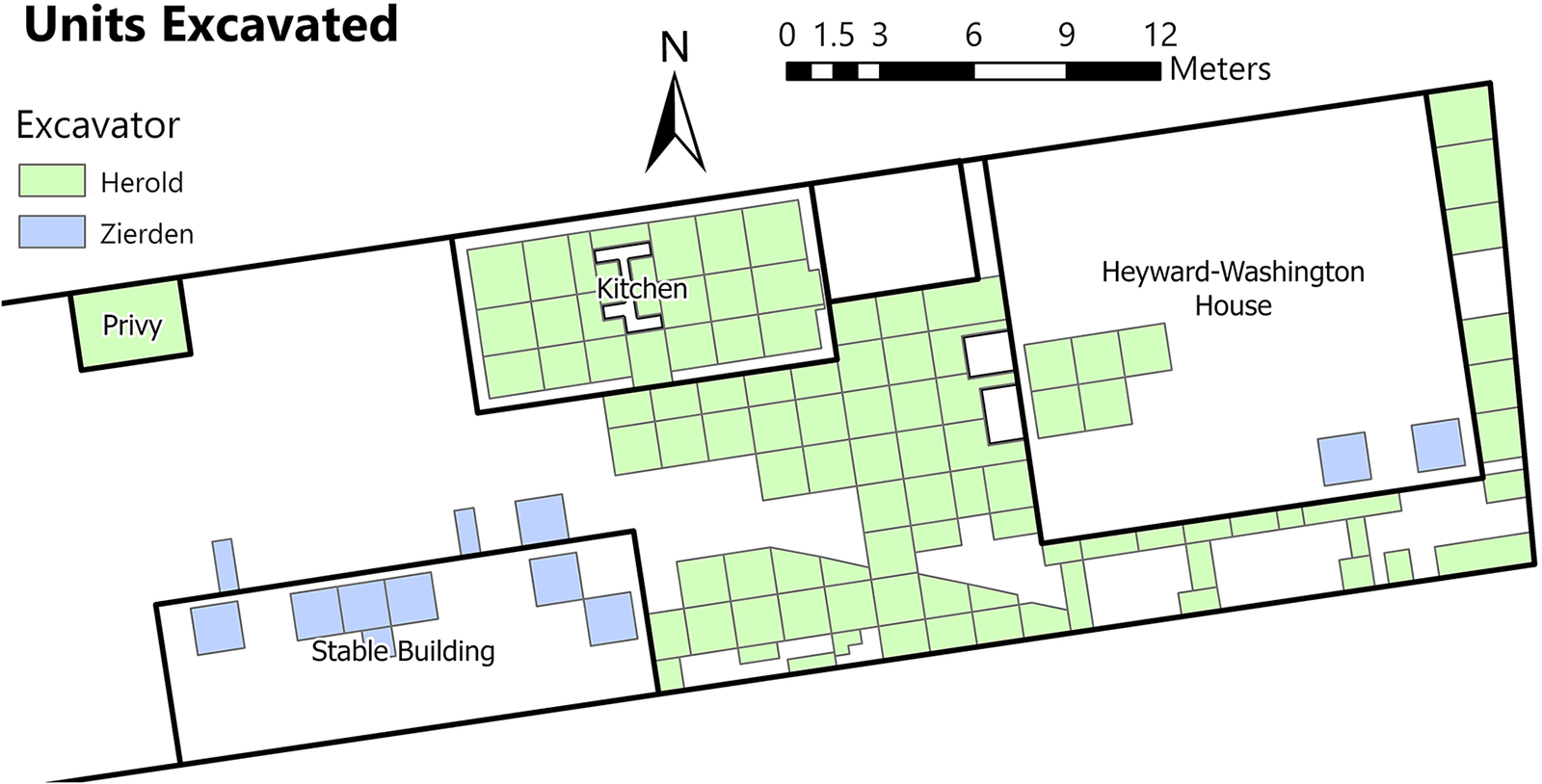
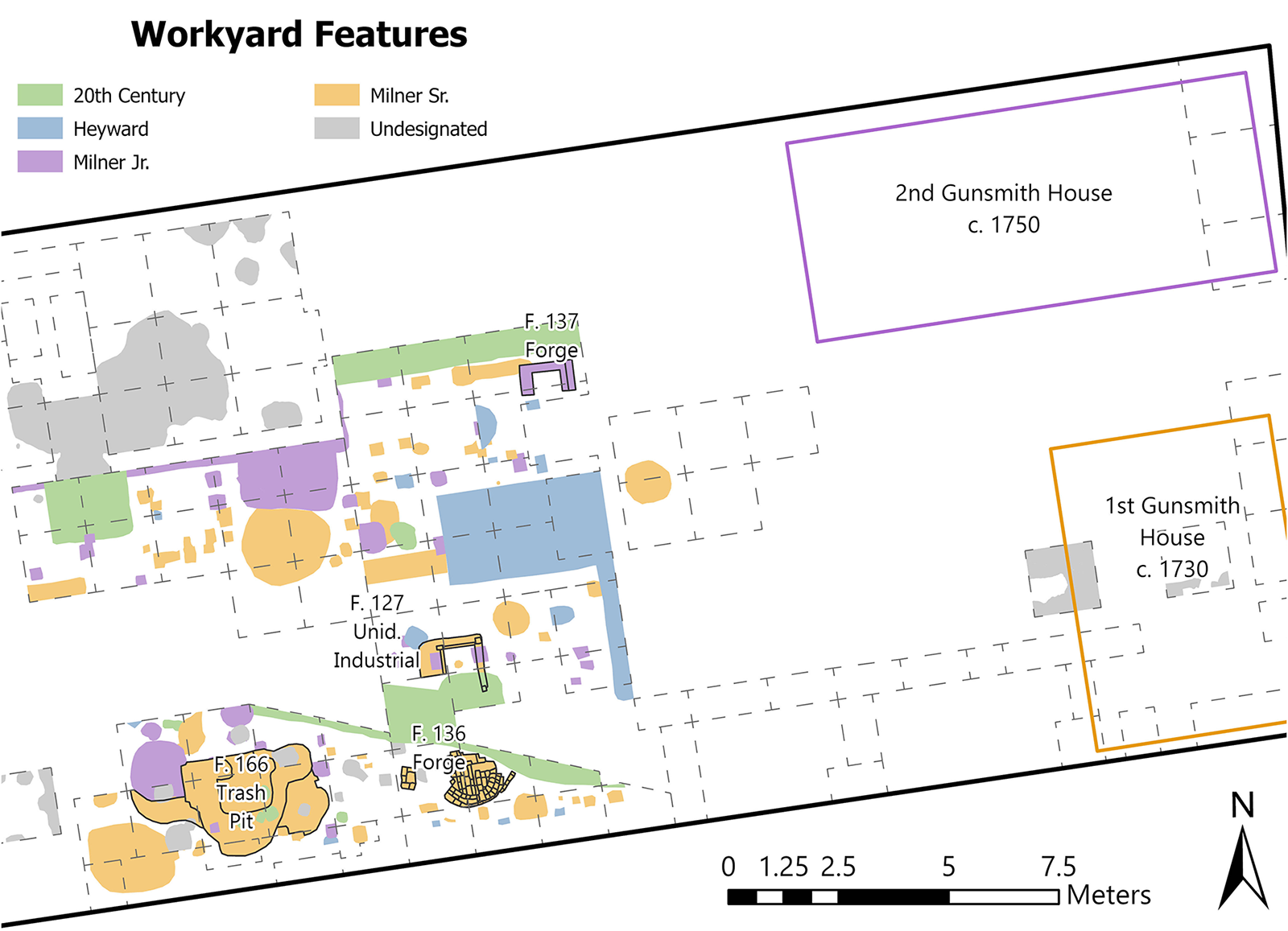

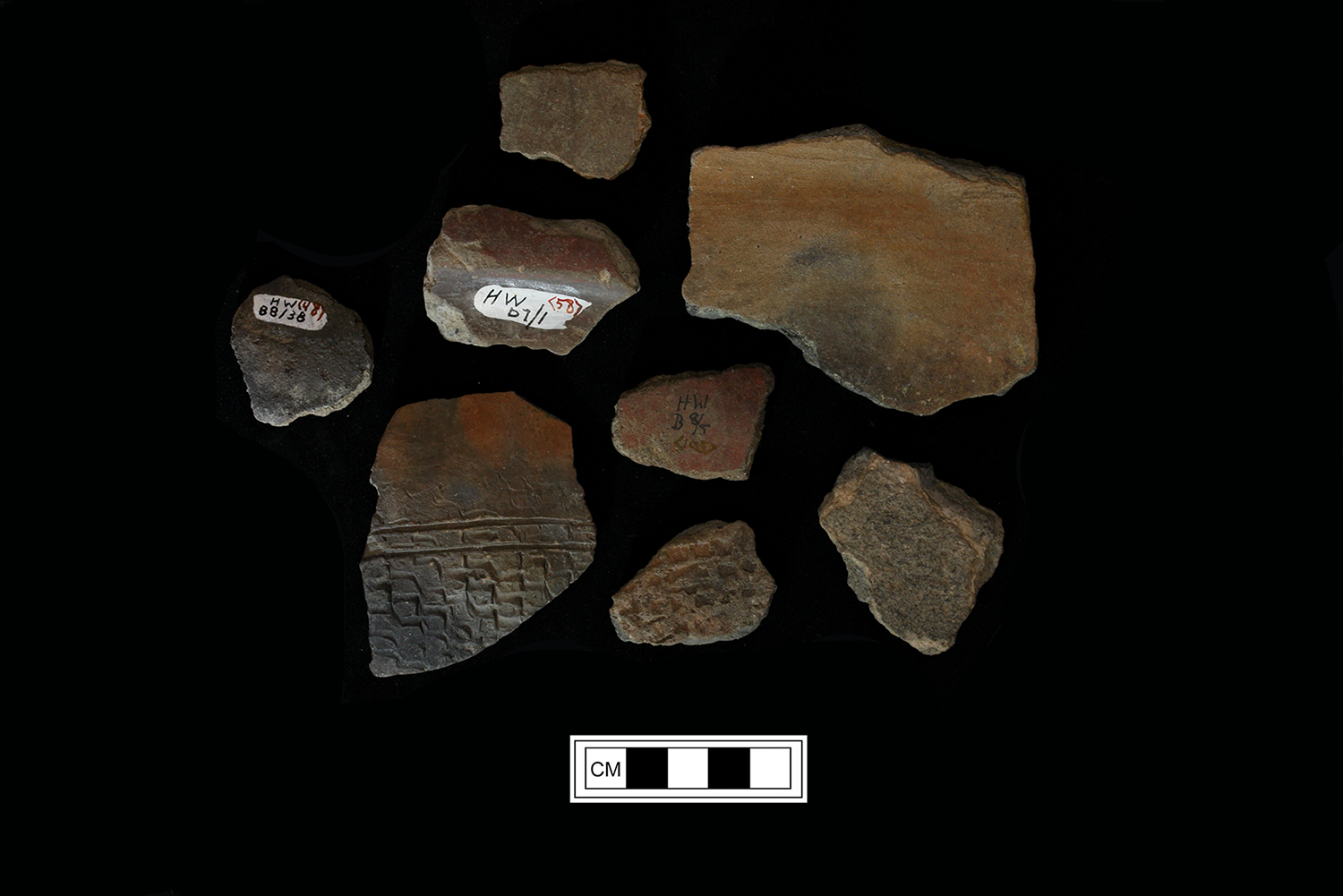
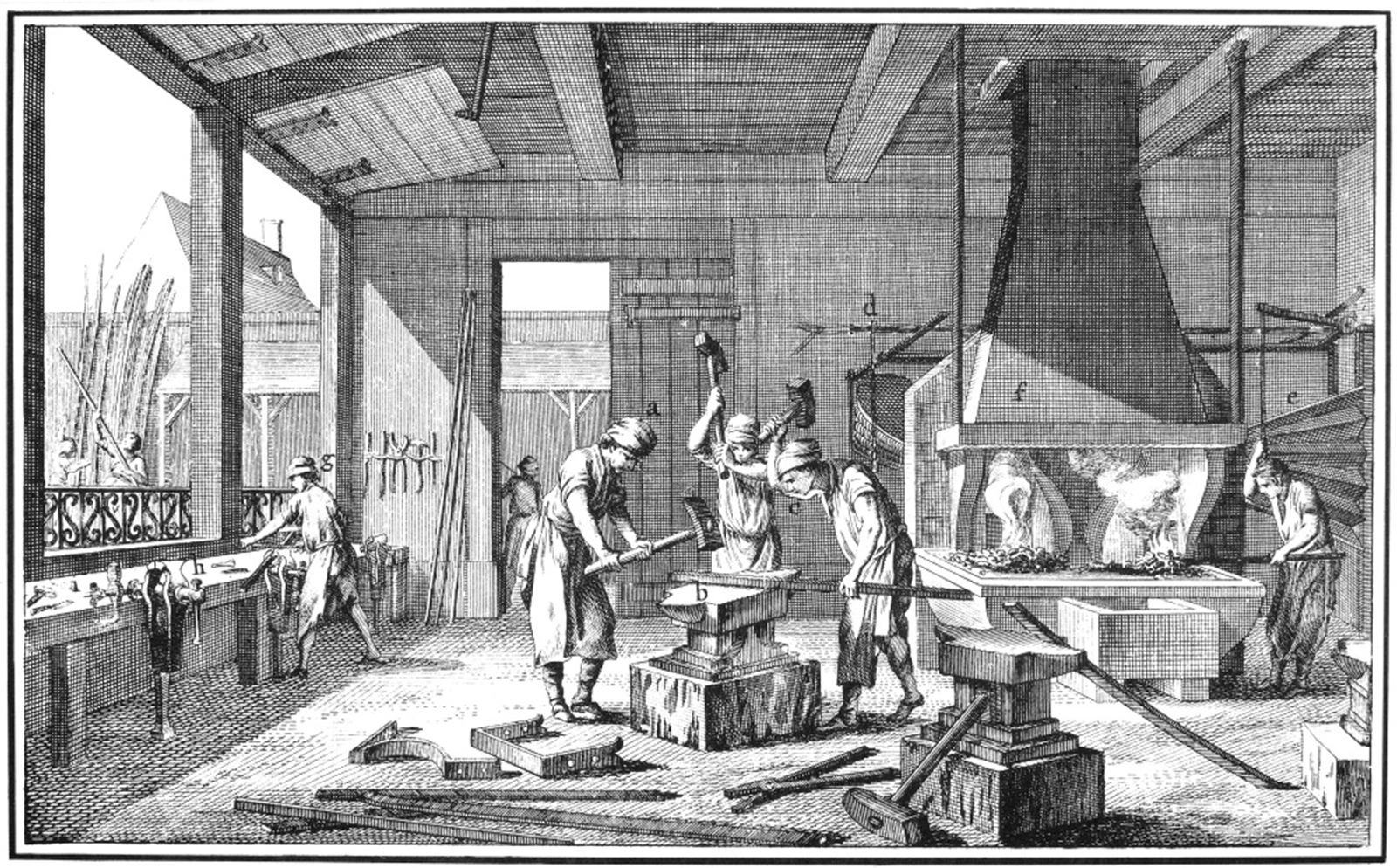


 Open access

