

Introduction
With almost 60% of its population under the age of 25, the African continent has the world’s youngest population, thus a great potential for harnessing the youth bulge to reap the advantages of demographic dividends (Reference AusubelAusubel, 2020; Reference KaribaKariba, 2020). The sudden outbreak of COVID-19, by provoking a massive loss of employment among low-skilled youth, laid bare the slippery nature of the road to those potential dividends.Footnote 1 Vertical skills mismatch has been pointed out as one of the main culprits for the high rates of unemployment and the precarity of employment in South Africa (Business Tech, 2021). In fact, the ILO (International Labour Organization, 2019) considers skills mismatch as one of the most important topical issues in employment policy debates in low- and middle-income countries.Footnote 2 Indeed, labour market skills imbalances constitute a considerable impediment to the efficient deployment of human capital to maximise aggregate productivity, as highlighted by Reference McGowan, Andrews, Polachek, Pouliakas and RussoMcGowan and Andrews (2017) and Reference PalmerPalmer (2017). In South Africa, skills mismatch is primarily characterised by technical underskilling (as perceived by potential employers): even at the level of basic numeracy and literacy skills required to enter the labour market, there is ample evidence to show that young people progress through the South African basic education system without gaining sufficient levels of corresponding competence, including when they do complete their schooling (Reference De Lannoy, Graham and PatelDe Lannoy et al., 2020; Reference Spaull, de Lannoy, Swartz and LakeSpaull, 2015). As a result, high demand for skilled workers co-exists with persistent high youth unemployment rates, despite government efforts to enhance youth employability through upskilling programmes.
To confront the skills mismatch and tackle the staggering unemployment rates, especially among socially disadvantaged rural youth, the South African government instituted a nationwide youth skills development programme, the National Rural Youth Service Corps (NARYSEC), which primarily targets youth from disadvantaged families in rural areas.Footnote 3 Its main objective is to equip unemployed rural youth with technical and vocational skills and to provide them with the needed support to enhance their employability or put them in a better position to set up their own enterprise. This employment and enterprise development programme also helps involved learners cope with the hardships of unemployment by paying them a monthly stipend during the 2 years that they spend in the programme.
The South African government’s approach to skills development has mostly been informed by the economic orthodox theory of market failure, that is, the assumption that the massive youth unemployment only reflects a shortage in the supply of skills demanded by current and potential employers. Yet, a closer analysis of the structural composition of the country’s economy reveals that the persistence of high youth unemployment rates reflects more pervasive structural distortions leading to a middle-income trap rather than a temporary market failure (Reference Andreoni and TregennaAndreoni and Tregenna, 2020; Reference Bhorat, Cassim and HirschBhorat et al., 2014; Reference KrussKruss, 2020; Reference LuizLuiz, 2016). Moreover, the growing recognition of the role of soft skills (such as leadership, communication and networking skills) in enhancing employability suggests that the composition of the skills mix in the youth upskilling programme plays a role in the labour market success of programme alumni (Reference Duncan and DunifonDuncan and Dunifon, 2012; Reference Meacham, Phalp and RossMeacham et al., 2014; Reference Nickson, Warhurst and CommanderNickson et al., 2012; etc.).
Whereas the traditional views on bridging skills gaps focused on technical qualifications, there has been a growing realisation that technical skills are not enough to ensure adequate employability. Reference Brown and HeskethBrown and Hesketh (2004) and Reference Nickson, Warhurst and CommanderNickson et al. (2012), for example, argue that technical qualifications are only part of the answer to the skills gap, with soft skills constituting an important factor for employability in jobs at both the higher and lower end of the labour market. For jobs at the bottom end of the labour market, including interactive service work, soft skills are even indispensable for adequate job performance in interactive context (Reference GurjarGurjar, 2018). Reference Meacham, Phalp and RossMeacham et al. (2014) attribute part the growing importance of soft skills to technological change that require ‘new soft skills’ associated with the use of social media.
These arguments are empirically supported by observational studies in the United Kingdom (UK), the United States and Malaysia. Reference Duncan and DunifonDuncan and Dunifon (2012), for example, examined data from the Panel Study of Income Dynamics and found soft skills to be as important as completed schooling in explaining labour market success. For the UK, Reference Nickson, Warhurst and CommanderNickson et al. (2012) show that for front-line jobs in retail, soft skills are the main key to accessing entry-level employment, while Reference Hairi, Toee and RazzalyHairi et al. (2011) find the lack of soft skills as likely to become the most important factor limiting access to employment among electrical engineering graduates of Universiti Teknologi Mara in Malaysia. This paper aims to examine the effectiveness of flagship government programmes designed to bridge the youth skills mismatch in increasing the employability of young job seekers and reducing structural youth unemployment in the light of these structural distortions and the type of skills mix targeted by the programmes.
Using a blended methodological approach combining quantitative analysis and a qualitative evaluation of data collected through direct interviews and secondary sources, this study sought to assess how the various aspects of the skills development training affect the likelihood of job market and enterprise development success among participants who complete the programme. Our findings from probit regressions of data collected from participants reveal that improvements in leadership, networking and problem-solving skills come ahead of gains in technical skills in their being associated with a higher likelihood of success in finding stable employment or setting up a viable enterprise by programme laureates. Moreover, a qualitative analysis of data collected using the outcome mapping (OM) approach reveals that despite localised successes, national policies aimed to enhance the absorption of youth in the labour market have generally not led to a significant reduction in the massive unemployment numbers, which remain a threat to the economic and political stability of the country.
Youth employment with matching skills matters, because it is one of the most important determinants of subsequent employment trajectories. Employers value previous work experience highly when hiring (National Treasury of South Africa, 2011; Reference Rankin and RobertsRankin and Roberts, 2011). Reference Mavromaras, Sloane and WeiMavromaras et al. (2015) also show that skill mismatch acts as an additional characteristic that can affect a skilled worker’s probability of future unemployment. In the absence of a clear strategy for structural change, the combination of a high rate of youth unemployment and the precariousness of jobs in the low-skilled segment of the labour market generates substantial risks of political instability, as shown by the recent wave of riots that broke out in South Africa in July 2021 (Reference Azeng and YogoAzeng and Yogo, 2013; Reference HonwanaHonwana, 2012, Reference Honwana, Tall, Pomerolle and Cahen2015; Reference NkamisaNkamisa, 2021).
This study contributes to the literature on youth employment in two ways. First, it provides additional empirical evidence for the growing importance of non-technical skills in enhancing employability among job seekers, and secondly, it places skills bridging programmes in a broader policy context by highlighting the nexus between policies aimed at enhancing the readiness for the labour market and the needed capability building for structural transformation in developing countries. It also provides additional empirical confirmation for the growing role of ‘soft skills’ in enhancing employability and work proficiency. Because of the prominent position of South Africa as an emerging economy within a region in need for structural change, lessons from its experience with bridging the skills gaps are of particular importance for the entire southern African region and the rest of the developing world. The rest of the paper is structured as follows: the next section presents an overview of the recent evolution of youth unemployment in South Africa. Section ‘Data and methodological approach’ presents the employed methodology. Section ‘Youth employment and enterprise development programme outcomes’ presents the main outcomes of our assessment, while the final section discusses the implication of the findings and provides some policy recommendations.
Historical overview of youth unemployment in South Africa
Youth unemployment in South Africa 2000–2022
Despite decades of sustained policy initiatives to increase job readiness and create employment opportunities for the growing number of young job seekers, youth unemployment remains the Achilles’ heel of most African economies. South Africa’s rates have been among the highest on the continent (Reference De Lannoy, Graham and PatelDe Lannoy et al., 2018; Reference FlanaganFlanagan, 2021; Reference GhafarGhafar, 2016; Reference HonwanaHonwana, 2012). Reference YuYu (2013) provides a detailed analysis of youth unemployment characteristics by combining data from all labour force surveys since the advent of democracy in South Africa until 2011. Data categorised into age cohorts indicate that the unemployment rate (in both narrow and broad definitions) has remained highest for the age cohort of 18–29-year-olds. The labour force having grown more rapidly than the capacity of the economy to absorb entrants, unemployment rates followed an upward trend since 1995 to peak at the beginning of 2003 (March survey) before gradually decreasing until the end of 2008. Between the last quarter of 2008 and the third quarter of 2010 a sharp surge in unemployment was observed, especially among the 15–24-year-olds, largely due to the considerable job shedding that followed the Global Financial CrisisFootnote 4 (Reference Habiyaremye, Jacobs and MolewaHabiyaremye et al., 2021; Reference YuYu, 2013).
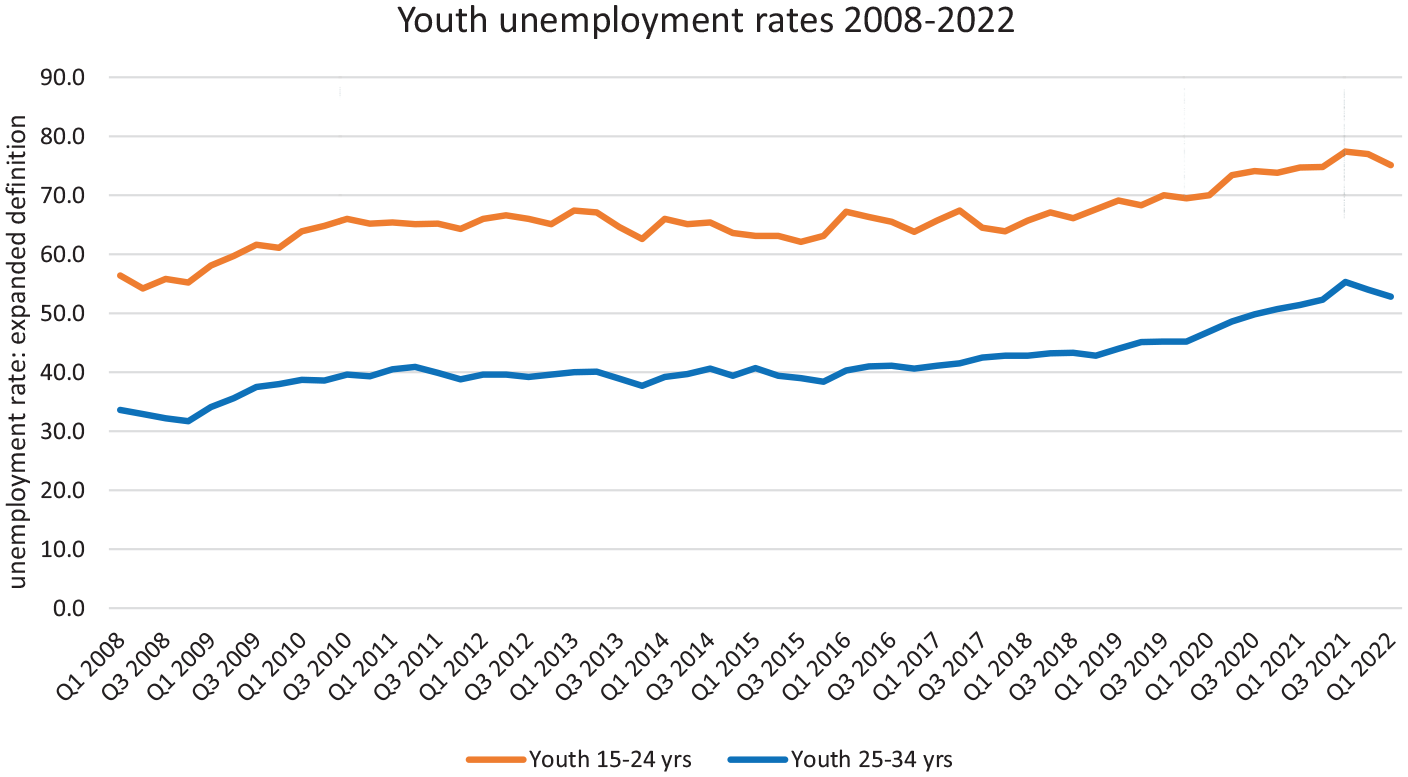
Unemployment rates increased again in 2009–2010, especially among the lowest skilled youth. This trend is similar to the unemployment dynamics observed in Australia by Reference JunankarJunankar (2015) over the same period for low-skilled young workers. In the wake of the Great Recession following the 2007–2008 Global Financial Crisis, the rate of unemployment among young people aged 15–24 years has climbed above 60% and remained resistant to all efforts to bring it down. The outbreak of the COVID-19 pandemic in the first quarter of 2020 only made a dire situation worse and saw the rate rapidly climb above 70% among this group, with a corresponding rate climbing above 50% for the 25–34-year-olds. Despite an incipient marginal decline in the first quarter of 2022, the rates are still above these staggering markers, as shown in Figure 1. The periods of unemployment surge as a result of the great recession and the COVID-19 crises are identified by the vertical grey lines showing a noticeable change in the slope of the curves.
Evolution of youth unemployment rates South Africa, 2008–2022.
Source: Statistics South Africa (2022).
The fragility of youth employment exposed by the COVID-19 outbreak raises the question of why high levels of youth unemployment have remained recalcitrant to skills development policy initiatives in South Africa.Footnote 5 Skills mismatch plays a significant role in these dynamics because low-skilled and inexperienced young people are found to be less likely to be in employment than their more skilled and experienced counterparts (Reference De Lannoy, Graham and PatelDe Lannoy et al., 2018; Statistics South Africa, 2021; World Bank, 2021). As a result, the informal sector plays an important role as a major source of youth employment in South Africa but is characterised by income precarity and risk exposure (Reference Bhorat, Cassim and MasumbuBhorat et al., 2015). Reference Asai, Breda and RainAsai et al. (2020) point out that shifts in production technology that raise the relative productivity of skilled workers with respect to unskilled ones increase the demand for skilled labour, which may lead to rising unemployment among unskilled workers. Given the South African legacy of racial and spatial segregation, South African youth is very heterogeneous (four racial groups based on a categorisation inherited from the apartheid rule, rural vs urban, gender differences as well as difference in age cohorts); each youth sub-category is therefore differently affected by unemployment dynamics according to its specific characteristics (Reference YuYu, 2013). The disproportionate loss of employment among the least skilled workers is a reminder of the crucial role that having adequate skills plays in supporting employment stability (Reference Asaad and Roudi-FahimiAsaad and Roudi-Fahimi, 2007; Reference Asai, Breda and RainAsai et al., 2020; Reference Cunningham and SalvagnoCunningham and Salvagno, 2011; OECD, 2010).Footnote 6
Most of the jobs created in the past two decades were in low-skill sectors which are commonly characterised by low wages and insecure employment (Business Tech, 2021). The dominance of the low-skills jobs is only partly explained by the failure of the education system to adequately train learners and equip them with the requisite skills, despite the steady increase in the average number of years of education of the younger generation relative to their parents. Reference De Lannoy, Graham and PatelDe Lannoy et al. (2020) point out that only 8% of 15–24-year-olds attend a university or college and even fewer reach the graduation phase, which leaves most youth outside of the skills accumulation streams that could enhance their labour market prospects. In that respect, black African and Coloured youth from disadvantaged socio-economic backgrounds have the lowest performance (Reference Branson, Hofmeyr, Papier, Swartz, Lake and SmithBranson et al., 2015). With its history of Bantu education, South Africa suffers from skills shortages with an education system that does not produce the quality and levels of skills required by the labour market (World Bank, 2021).
Moreover, the quality of skills training offered by the technical and vocational education and training (TVET) institutes has been signalled as falling short of the required levels and has little alignment with the needs of the labour market (Reference MsibiMsibi, 2021; Reference Spaull, Spaull and JanssenSpaull, 2019). The failure of the education system to produce science, engineering and mathematics skills required for the country’s technological change also constrains its ability to grow and generate more employment, as highlighted by Reference Fedderke and SimkinsFedderke and Simkins (2012) and Reference Spaull, Spaull and JanssenSpaull (2019).
It is important to highlight that the high rate of youth unemployment is a structural problem that has plagued the South African economy for more than a decade: the COVID-19 pandemic has only exacerbated a challenge that was already giving headaches to policymakers. However, the COVID-19 pandemic is shifting the labour market skills structure, by favouring the expansion of high skills jobs during recovery while sectors characterised by low skill jobs experience a more sluggish recovery (ILO, 2022). Programmes aimed at bridging the skills gaps and increasing the opportunities of young people to find suitable jobs in expanding sectors are therefore just one aspect of a mix of policies that governments can pursue in dealing with the challenge of high youth unemployment.
The structure of the skills gap-bridging programme
The rationale for the NARYSEC skills training programme rests primarily on the supply-side assumption that the lack of qualifications and skills required in the labour market is the main reason for massive rural youth unemployment, and that equipping the youth with those skills and qualifications will make them employable.Footnote 7 After their recruitment, programme candidates are sent to a specialised College in Thaba Nchu in the Free State province, where they undergo an induction programme, followed by orientation and life skills training sessions. After this initial phase, participants are taken through a youth leadership skills training offered by the South African National Defence Force at the Kimberley military base (Northern Cape Province) and at the Saldanha Bay naval base in the Western Cape. It is at this stage that they are trained in different soft skills such as leadership, character building, problem solving and social networking. These skills are crucial for promoting social cohesion and embeddedness of rural youths in their respective communities.
After completing this training phase, participants are sent to TVET colleges and other training institutes where they gain the technical and vocational qualifications in their chosen disciplines. The costs of this training phase are borne by the Department of Agriculture, Land Reform and Rural Development (DALRRDD). The last phase of the skills development programme comes in the form of a community service internship, whereby participants are given the opportunity to put into practise the acquired technical and vocational skills within their local communities. Upon completion of this phase, participants graduate from the programme and may get support to follow various career paths corresponding to their newly acquired skills or to set up and run their own enterprises. Support by the DALRRDD comes in the form of partnering with recruitment agencies for job placement of programme graduates as well as facilitation and advice in developing business plans for graduates who opt for enterprise creation.
Data and methodological approach
Sampling approach
The data used for this research were collected through interviews targeting two main sources: data on self-assessment of success in the job market and enterprise creation were collected from programme alumni, whereas information on the assessment of overall performance and effectiveness of the skills development programmes were collected from programme alumni as well as from programme implementation officers and associated external stakeholders. For the data needed to provide a detailed picture of the overall performance of the programme, telephonic interviews were conducted with implementation officers in charge of the skills development programme as well as external stakeholders linked to it in the country’s nine provinces.
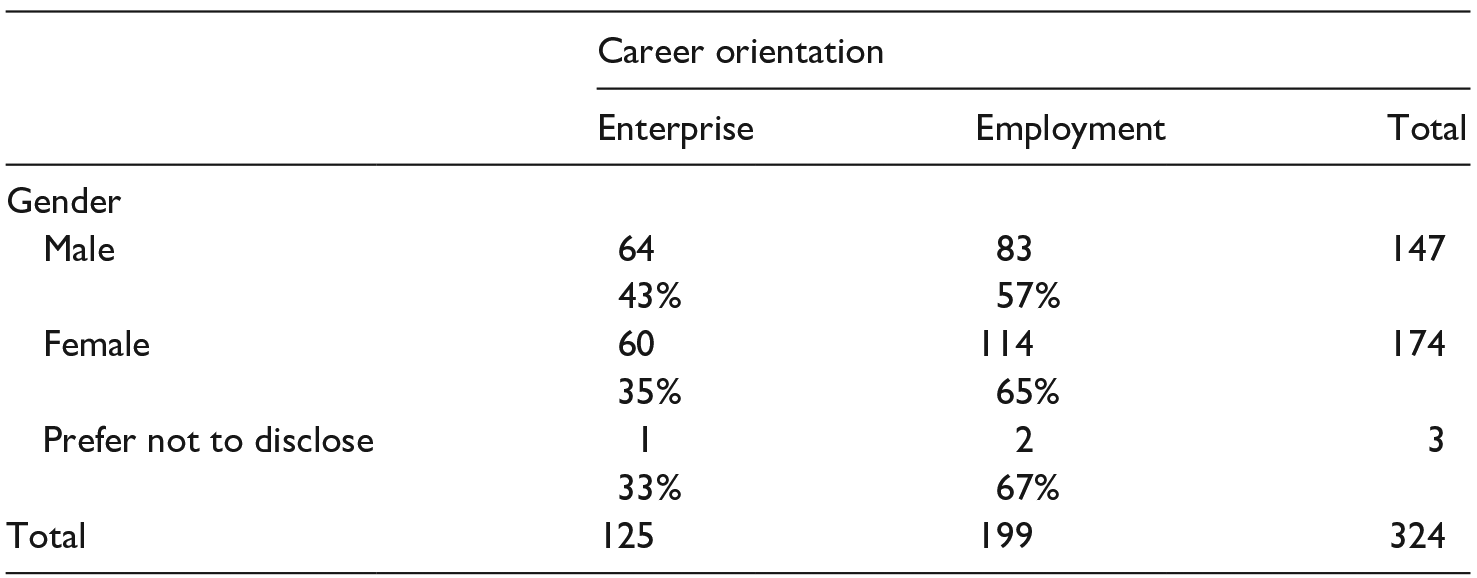
For a closer assessment of the programme outcomes at the individual level, we targeted a sample of programme alumni to get a picture of how they had fared after completing the programme. To maximise the representation of the underlying population of programme laureates, we used a purposive stratified sampling of programme alumni, whereby the geographical coverage of all nine provinces was prioritised. At least two districts were targeted for survey in each province. A total of 324 programme alumni were interviewed to gauge their perceptions of the main factors that affected the career outcome of their participation in the programme. Table 1 shows the overview of the distribution of respondents according to their gender and career choice after programme completion.
Sampling outcome of the skills programme alumni in the nine provinces.
Insights garnered from these interviews were augmented by information from desktop reviews to produce a reliable account of factors explaining the effectiveness of skills development programmes in supporting youth employment policy.
Data collection
Key informants were identified through the documentation provided by the leadership of this programme in the Department of Agriculture and Rural Development: these include regional implementation agents, youth representatives in various sectors, non-governmental organisations and service providers contracted to carry out the actual skills training. Semi-structured interview schedules were used for key informant interviews, whilst structured questionnaires were used in interviewing exited and near-exiting programme participants. Key informant interview schedules included questions to trace the evolution of participants and the programme structuring from its inception to date. Because of the restrictions imposed COVID-19 containment measures, interviews were conducted through telephone conversations with provincial directors and other senior officials who have directly interacted with participants. Interviews were also conducted with other direct stakeholders, including service providers appointed to implement capacity building programmes, and where possible, with those who support economic opportunity for graduates. These interviews were conducted from June to August 2021.
The final data collection process yielded a balanced sample of respondents from all provinces. In terms of gender distribution, the outcome sample consists of a relatively larger number of female participants (174) with respect to males (147), but their percentage distribution of the employment transit path is quite similar. Table 2 provides an overview of the distribution of respondents in terms of their perception of skills improvement during the programme training phases and their subsequent success in securing a stable job or establishing a viable enterprise.
Self-reported skills improvement of participants and success in the labour market and enterprise creation.
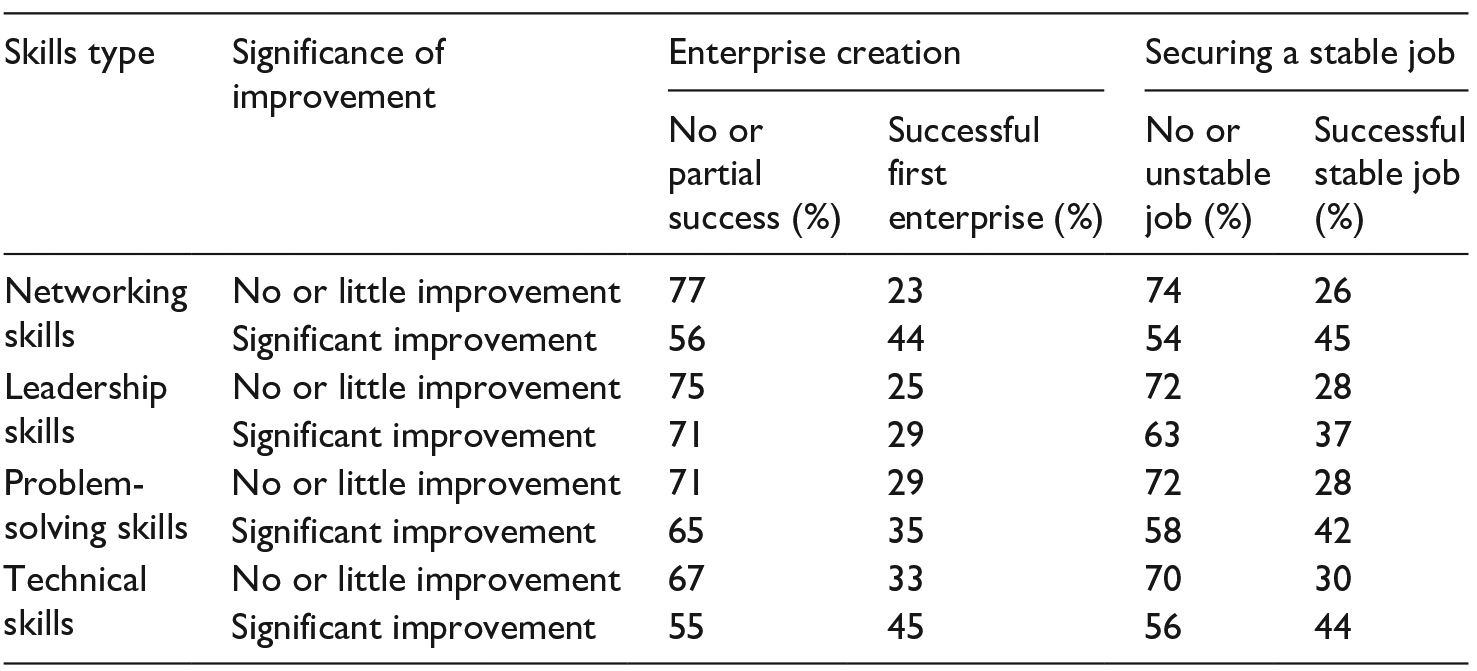
While the share of respondents reporting success remains lower than that of those reporting little or no success along with different skills categories, the distribution indicates a relatively lower percentage of failure (or a higher percentage of success) among participants reporting significant skills improvement in comparison to their counterpart reporting no or little improvement. The pattern remains similar for job success in the labour market and enterprise creation.
Using the Outcome Mapping approach to assess programme outcomes
Evaluating the impact of social interventions is significantly challenging, especially when such interventions occur in a social context in which their effects cannot be easily isolated from the effects of other factors. Ideally, measuring the impact of intervention would require a counterfactual experiment to show what would have happened without the intervention. Unlike laboratory experiments, however, real-life interventions usually do not offer the possibilities of counterfactuals. In the results-based management approach, interventions can be evaluated along four main sections of what is called the results chain. The results chain comprises inputs, activities, outputs, outcomes and finally impact. Output mapping focuses on the ‘outcomes’ part of the results chain. Outcomes refer to measurable changes that occur in behaviour, attitudes, commitment or social and cultural values of groups and individuals as well as legal, institutional and societal practices, as a consequence of achieving expected outputs from a development intervention (Reference Earl, Carden and SmutyloEarl et al., 2001; Reference Gwija, Chuks and ChuxGwija et al., 2014). These changes should be logically linked to the activities of such an intervention, even though they might not necessarily be directly caused by those activities.
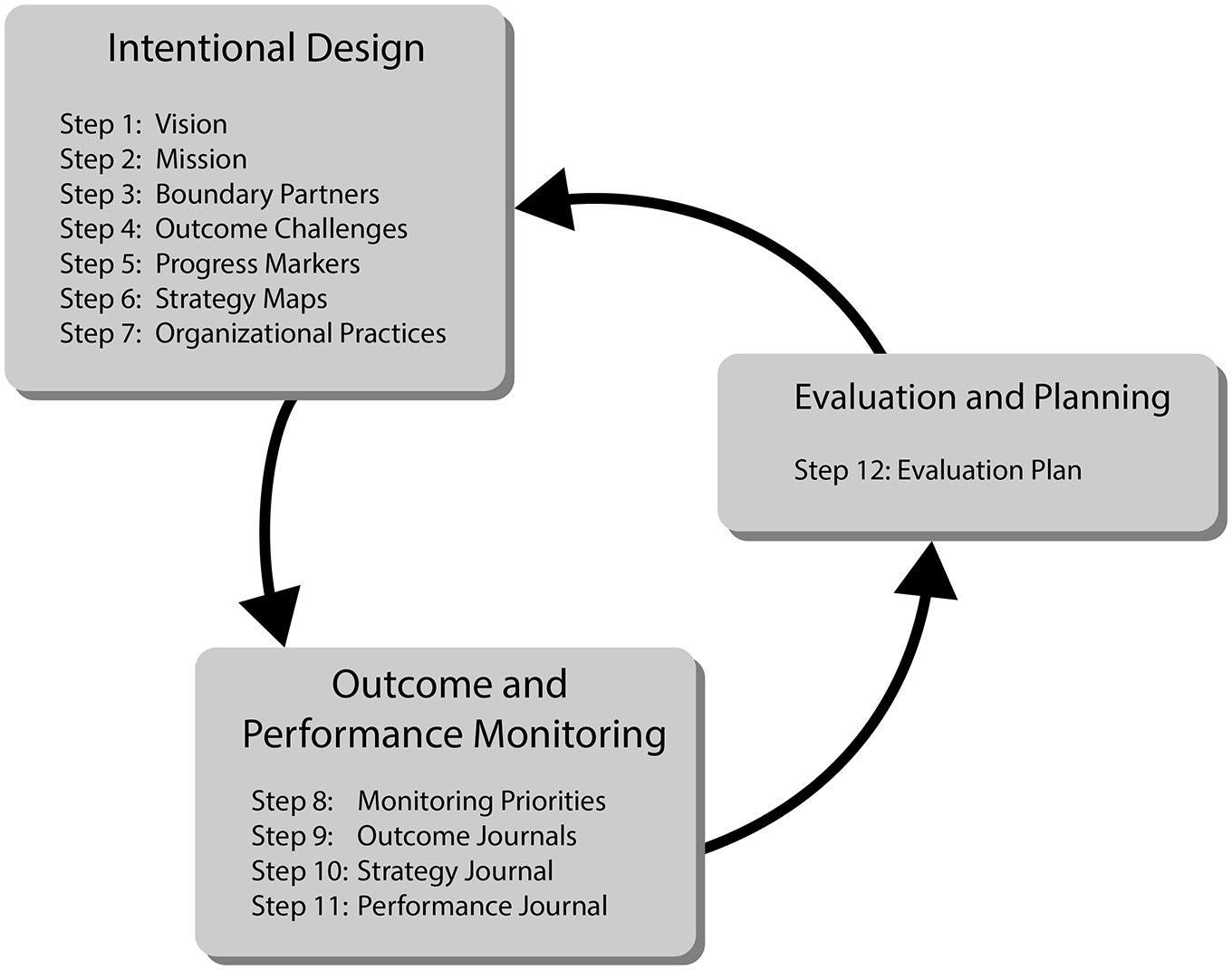
The central methodological approach used to assess the general transformative effect of the programme is thus OM, and its application is outlined in the following subsection. The advantage of this methodology is its shift away from assessing the impact of programmes (defined as changes in state, for example, policy relevance, poverty alleviation, unemployment reduction, higher incomes) towards changes in the behaviours, relationships, actions or activities of the people, groups and organisations with whom the intervention programme works directly. When used for both planning and evaluation purposes, the OM approach comprises three main stages, each broken down into several steps (see Figure 2). In this study, OM is used only as an evaluation tool, rather than as a planning tool, as is usually the case when the intervention is initiated with that approach in mind.
The stages of Outcome Mapping.
Assessment criteria
In applying the OM methodology, we used the following evaluation criteria as set out by the ILO (2020) in the Policy Guidelines for results-based evaluation. These are: relevance and strategic fit of the programmes, effectiveness, efficiency of resource use, sustainability for the future and transformative character of outcomes, including equity and gender balance. The effectiveness of the interventions was appraised based on progress made towards the achievement of their stated objectives. The management and governance structures of these interventions are crucial factors for ensuring success. Of key importance was how the programme was structured, and how accountability and transparency were organised to maximise the likelihood of success. This includes adequate risk assessment, as well as a monitoring and evaluation system to identify progress or lack thereof regularly.
Regarding the outcome and sustainability of the employment and entrepreneurship development support programme, emphasis was put on exploring how the implementation of the project contributed to the expansion of the knowledge base in the target rural youth and influenced observable changes in the behaviours of programme beneficiaries as well as other key stakeholders. This assessment exercise also sought to determine to what extent the identified outcomes of the interventions could be expected to contribute to the economic transformation of target implementation zones and sustain environmentally friendly production in the long run. As for the equity and gender balance of the interventions, key aspects include the extent to which the design and implementation of the programmes contributed to women empowerment (involvement in decision making) and the inclusion of other traditionally disadvantaged groups, such as minorities and persons with physical and mental disabilities.
Youth employment and enterprise development programme outcomes
Outcome analysis for programme participants
For a micro-level picture of how the programme affects individual participants, a probit regression was fitted to estimate the likelihood of being successful in accessing the labour market after completion of the skills training as a function of the following determinants: (1) self-reported improvement in leadership skills, (2) self-reported improvement in networking skills, (3) self-reported improvement in problem-solving skills, (4) self-reported improvement in technical skills, (5) individual socio-demographic characteristics of participants, namely age, gender and educational qualifications prior to joining the programme.
The marker of success Yi = 1 means participant i secured a sustainable formal job after successfully completing the skills development programme. If the participant did not succeed in securing a job, then the marker indicates Yi = 0.
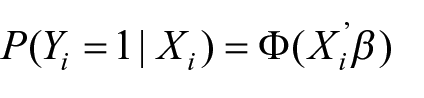
where Xi represents the covariates related to participant i, while Φ is the cumulative density function of the standard normal distribution:

and β is the vector of the regression parameters, These are estimated using the maximum likelihood method, providing a consistent, asymptotically normal and efficient estimation of the regression coefficients. The average partial effects (APE) are also calculated to provide an approximate measure of how a small variation in each of the explanatory variables affects the expected mean of the predicted dependent variable, holding the other independent variables constant. For binary exogenous regressors, the APEs are calculated by taking the difference of the evaluated conditional mean of equation (1) between the values 1 and 0 of each binary regressor or a continuous regressor, the APE is computed by taking the derivative of the conditional means of probability function with respect to that regressor.
The estimation is repeated for the successful enterprise creation by participants who graduated from the skills development programme.
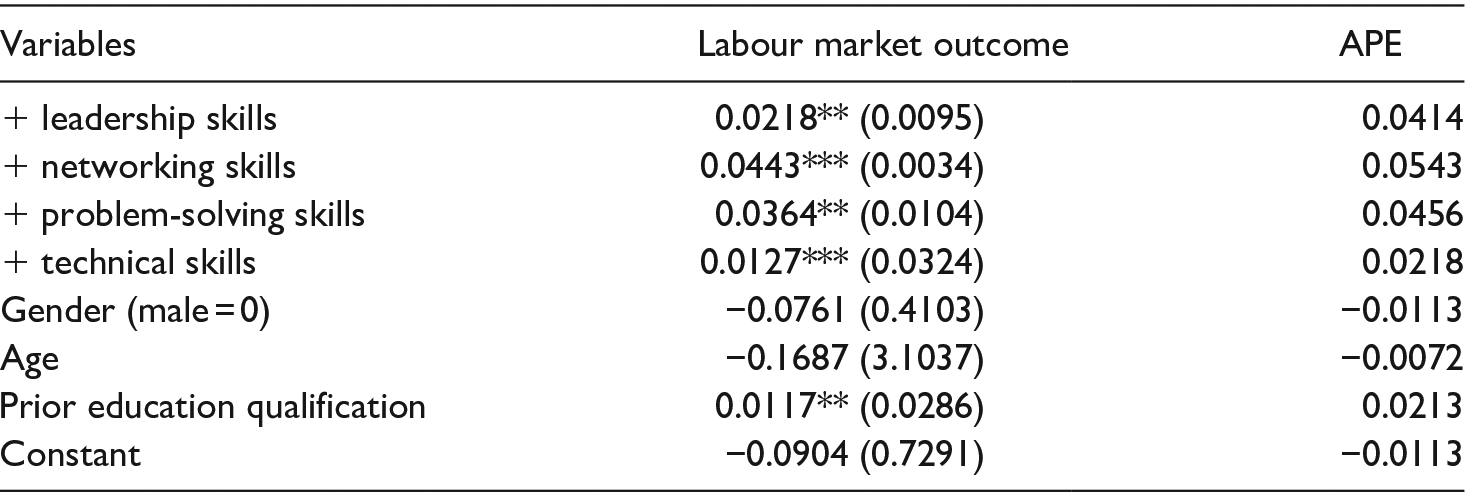
Table 3 shows the probit estimation results for the likelihood of securing a stable job within the first 3 months of graduation from the skills development programme. The coefficients for reported improvement in leadership skills, networking skills, problem-solving skills as well as technical skills all display strongly significant and positive effects on the likelihood of success in securing a stable job in the first 3 months after completion of the skills training programme. Prior education qualification also displays a positive effect on the likelihood of securing a job, while the effects of demographic variables age and gender remain insignificant.
Probit regression of labour market outcome of skills development programme.
Std. errors in parenthesis.
Likelihood ratio Chi2 = 63.54; Prob > Chi2 = 0.0000; Log likelihood = −18.48588.
Pseudo R 2 = 0.6322.
Hosmer–Lemeshow Chi2 = 8.27; p-value H-L goodness-of-fit (df = 12): 0.76349.
All dummy variables take value ‘1’ for yes and ‘0’ for no.
*** p < 0.001. **p < 0.01.
The APE, reflecting the marginal increase in the probability of success as a result of the change in the indicator of each regressor while holding other regressors constant, suggest that problem solving-skills have the largest effect on the likelihood of job success, followed by networking skills and leadership skills. Improvement in technical skills appears to have the lowest marginal effect on the probability of employment success. The difference in the odds of success between males and females, though insignificant, is in favour of males. Increasing age is also a disadvantage for the odds of employment success, while an additional year of schooling above the minimum required matric level for recruitment into the programme increases the odds of success in securing a job after completion of the gap-bridging skills training.
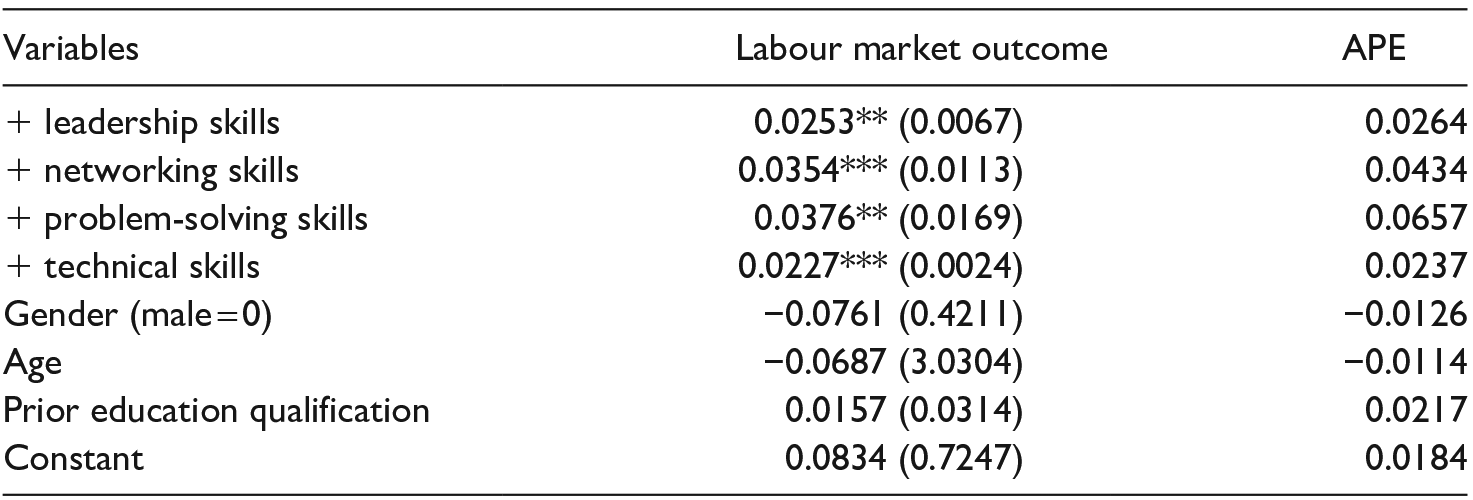
Table 4 reports the results for successful enterprise creation within the first 3 months following graduation from the skills development programme. Improvement in the various components of skills training appears to be a strongly significant predictor of the success in the creation of viable enterprise, in a way very similar to the results of the odds of success in securing a job. Improvements in problem-solving, networking and technical skills are all strongly significant, with the coefficient for problem-solving skills being the highest. Individual demographic characteristics of graduates, gender and age, do not seem to have a significant bearing on their business success. Neither does their educational achievement prior to joining the programme.
Probit regression results for successful enterprise creation by skills development programme participants.
Std. errors in parenthesis.
Likelihood ratio Chi2 = 67.473; Prob > Chi2 = 0.0000; Log likelihood = −19.378.
Pseudo R 2 = 0.6446.
Hosmer–Lemeshow Chi2 = 7.97; p-value H-L goodness-of-fit (df = 12): 0.78747.
*** p < 0.01. **p < 0.05.
The APE indicate a significant role for problem-solving skills and networking skills in increasing the likelihood of successful enterprise creation. The effects of improvement in technical skills come only behind those of improvement in leadership skills.
These results underscore the importance of non-technical or ‘soft’ skills in bridging the skills gaps and connecting the youth to employment and entrepreneurship. They confirm the need to increase emphasis on soft skills gaps in employment support programmes in line with what Reference Nickson, Warhurst and CommanderNickson et al. (2012) observed for the UK. Another reason why technical skills by themselves do not strongly connect to success in employment or launching participants’ own businesses may lie in the misalignment between the types of vocational skills offered to learners and their own career preferences. Quite often, learners have been trained in imposed programmes that were not necessarily adequate to prepare them for the jobs or businesses in their areas of interest, because the available technical and vocational skills training contents are supply-driven rather than need-driven. This causes a disjunction between the practical skills graduates to acquire through the programme and the tools they need to succeed in their job readiness or business endeavours.
OM assessment of NARYSEC as youth skills bridging programme
Using the OM approach with the ILO assessment criteria, we also sought to understand how the implementation of the programme performed in terms of relevance, effectiveness, transformative effects and equitable inclusiveness. It is important to note that the majority of programme implementation officials we interviewed from different provinces were confronted with similar problems and expressed largely similar views on the outcomes of the programme and on the need for more support to the graduates. There was also a quasi-consensus among them that tended to indicate that in its conception, the programme was a relevant policy to address the massive unemployment challenge, especially among rural youth with deficient skills for integration in the imbalanced labour market. The underlying assumption for the design of the programme was that the massive levels of youth unemployment were essentially due to market failure in skills supply, that therefore the government needed to correct this failure by equipping youth with the requisite skills. The assessment is primarily based on a synthesis of the ideas expressed in these interviews.
Notwithstanding the pertinence of its conception, the way this policy is being implemented poses practical challenges to the skills training programme graduates. First, despite a coherently articulated policy aimed at providing support for graduates in finding stable employment, only a few graduates have benefited from such support in practice because of the lack of robust administrative structures to keep track of exited participants and monitor their support needs (synthesis from interviews with programme coordination and implementation officers).
The second significant challenge has been the shortage of funds and resources such as land to help graduates with an entrepreneurial spirit get start-up capital. In a market characterised by fierce competition, graduates coming from rural areas in mostly disadvantaged conditions are unlikely to compete with other entrepreneurs without concrete material support in the form of starting capital. The lack of business networks in rural areas to help new start-ups integrate in local value chains is an additional obstacle facing those young people coming from predominantly rural areas (interviews with programme implementation and alumni support officers).
The mismatch between the kind and levels of skills and qualifications acquired by the participants during their technical and vocational training programme and the prevailing labour market demand has also been a serious obstacle to connecting graduates to the rare job opportunities that are available. Among those who exited the programme, only a small percentage has managed to secure sustainable employment or create their own businesses (interviews with provincial officials in charge of alumni support). Consequently, the youth unemployment rates have remained persistently high among the alumni, with hardly any sign of improvement in the near future.
For the contribution to knowledge stocks, there is equally a consensus among key informants that the skills and qualification level acquired by the programme graduates is still too low to enable them to compete with graduates from regular programmes of TVET colleges and universities in a labour market characterised by a biting job scarcity (synthesis from interviews with provincial official in charge of skills development coordination). Those qualifications were not even deemed sufficient to establish a niche of artisans that would shield NARYSEC graduates from that competition. The self-evaluation of these graduates also suggests that only slightly more than a quarter of them find the acquired skills to have the necessary usefulness to help them obtain employment.
In terms of gender balance and equitable inclusion, however, the programme has been exemplary in promoting women participation. In various cohorts, female participants constitute more than 50% of participants. With its emphasis on rural youth, the programme has also sought to target the most disadvantaged group for social inclusion. However, with an inadequate strategy of job placement of NARYSEC graduates, the overall transformative effect of the programme has been inadequate, with a majority of graduates returning to their prior unemployment status after graduation. As a result, the accumulated skills and knowledge are hardly put to use and get lost with time (interviews with provincial programme implementation officials).
The implementation of this programme for employment and entrepreneurship development has been fraught with various difficulties. As a result, it has been characterised by limited effectiveness. Existing support has been primarily based on administrative and procedural assistance to graduates seeking to overcome the first hurdles of establishing their small enterprises. Effective support for making the business actually operate and become viable is still wanting (interview with provincial programme implementation officials). Moreover, this support is provided randomly without any systematic procedure and seems to be decided on an ad-hoc basis. Partnerships exist between NARYSEC implementation officials and other stakeholders in charge of youth development (such as the National Youth Development Agency) and enterprise support (such as Rural Enterprise and Industrial Development, Rural Infrastructure Development, etc.). The functioning of existing arrangements between these stakeholders has however not proved to be enough to have a significant effect on enterprise development to the extent of having a visible impact on the realisation of the strategic objectives of the programme (interview with provincial programme coordinator).
For the enterprise development support strategy to succeed, the coordination between various stakeholders in charge of rural enterprise development must be to reap the benefits of synergy and reduce redundancies as well as inefficiencies. It is equally important that available support be systematised and the staffing capacity at the NARYSEC office in charge of the implementation of this strategy be reinforced to enhance its effectiveness. Equally important for the success of this strategy is the alignment of skills acquired by the learners to the desired and needed trades according to the comparative advantage of each geographical location.
Finally, adequate support, not only in the form of mentoring and incubation but also of needed material resources such as land and start-up funds is necessary to increase the likelihood of business creation and success. For that support to be systematically and thoroughly provided, it is crucial to have a well-organised tracking system with a robust database enabling policy support officers to know in real time which graduates need what help, when and where to figure out how that help can be better organised and timely extended to those who need it.
Conclusion
Skills mismatch among rural youth remains an important factor of structural unemployment in South Africa. In this paper, we have assessed one of the flagship programmes designed to bridge the youth skills to help rural youth boost job readiness and gain access to stable employment or launch their own enterprise as an alternative source of income generation. On the micro level, our probit estimation results indicated that improvements in non-technical skills constitute an important booster for the chance to succeed in the labour market and in enterprise development after programme completion. With the eye on continuous technological change in the work environment, the inclusion of these skills in youth skills enhancing programme is therefore a forward-looking strategy that needs strengthening. On the macro level, however, job readiness and enterprise development programmes have mostly remained ineffective in addressing the challenges posed by high levels of youth unemployment. One of the main reasons for the lack of transformative outcomes lies in the doctrinal approach to the high rates of youth unemployment, which assumes youth to be a symptom of market failure, rather than a logical outcome of narrow-based economic structures in need of a more encompassing structural transformation. Without a transformative strategy that deploys youth employment schemes as part of an integrated long-term development planning, high rates of youth unemployment are unlikely to decline, especially given the ongoing turbulence in the global economy due to the COVID-19 pandemic fallout as well as the ongoing conflict in Ukraine and their adverse effects on developing economies such as South Africa.
The potential of any youth employment programme to change the lives of entire communities remains very limited when those programmes target job creation in a narrow-based economy. Dealing with the skills supply side may this be necessary but not sufficient to achieve the goal of employment growth if the demand side factors are not reinforced for economic expansion. For youth skills interventions to be effectively transformative, they need to be conceived as part of a broader development strategy involving the profound transformation of the economic structure by exploiting the opportunities offered by the country’s comparative advantage (Reference LinLin, 2012). This implies equipping young people with the skills they need to thrive in the changing structures of tomorrow’s economy. Skills development efforts must be seen as part of broader capacity-building measures aimed to make the economy ready for the jobs and technologies of the future. This requires coordination with a network of partners with concrete follow up projects and the support of enabling infrastructures funded by public-private partnerships. However, Reference LoxleyLoxley (2013) and Reference Loxley and HajerLoxley and Hajer (2019) caution against the reliance on public-private partnership to solve social issues requiring investments, because such partnerships may typically turn into tools for subsidising private profits without any advantage above what can be achieved through traditional public procurement approach. Harmonisation with existing local economic development structures and integrated development plans can ensure long-term alignment and synergy between localised interventions and broader development policy initiatives.
Funding
The author(s) disclosed receipt of the following financial support for the research, authorship, and/or publication of this article: Data collection for this study was funded by The World Bank and The Department of Land Reform and Rural Development, South Africa.


 Open access

