


Introduction
Optimising the consumption of balanced diets is critical to the welfare, development, health and productivity of animals, particularly when raised or kept in captivity. In non-forced animal feeding scenarios, dietary choices are a result of the preference for available feeds or ingredients and the motivation to eat which, in turn, reflects the innate drive of preserving or achieving nutritional homeostasis( Reference Roura and Navarro 1 ). The maintenance of the nutritional balance (or homeostasis) is a dynamic process that implies the existence of a network of nutrient sensors covering critical physiological functions. Thus, the term nutritional chemosensing was coined to describe studies on the sensing of nutrients in biological systems including the molecular mechanisms related to changes in genomic, metabolic, physiological and behavioural parameters( Reference Roura, Koopmans and Lallès 2 ). In mammals and birds, dietary nutrients are perceived in the oral cavity mainly through the taste system which has evolved to differentiate nutrients from toxins( Reference Glendinning 3 , Reference Herness and Gilbertson 4 ). Taste sensory cells form the taste buds in the oral cavity and translate nutrient sensing into neuronal signals (through cranial nerves) to the primary gustatory cortex of the brain. Chickens seem to have developed an acute sense of taste which enables them to distinguish at least five of the six primary tastes including fatty, umami, salty, sour and bitter (it is noted that the acceptance of fatty acid sensing as a differential taste type is still controversial particularly in chickens)( Reference El Boushy and van der Poel 5 , Reference Roura, Baldwin and Klasing 6 ). In addition, the existence (or lack) of sweet taste linked to carbohydrate sensing in chickens remains unclear and will be further discussed in the ‘Nutritional chemosensing in chickens: the molecular inside to taste’ section( Reference Roura, Baldwin and Klasing 6 – Reference Higashida, Kawabata and Kawabata 8 ).
Similar to mammals, birds integrate gustatory perception with post-ingestive events, particularly originating in the gastrointestinal system, to control feed intake( Reference Werner and Provenza 9 ). In this context, extra-oral sensing of nutrients has been recently attracting a lot of attention, collating the importance of nutrient receptors (including taste receptors) and related downstream pathways on the control of feed intake( Reference Roura, Koopmans and Lallès 2 , Reference Roura, Baldwin and Klasing 6 , Reference Buchan 10 – Reference Foster, Roura and Thomas 14 ). The existence of this network of nutrient sensors outside the oral cavity implies that behavioural studies assessing the effect of taste in the control of feed intake need to be assessed with caution since pre- and post-ingestive nutrient sensing can be easily confounded. In the following sections, the present review will outline the main scientific findings covering oral and extra-oral nutrient sensing (but not always discerning which one of the two or both are the main drivers) relevant to chicken diet selection, feeding behaviour, oral/tongue anatomy, and nutritional genetics and genomics organised in a chronological order (Table 1).
Chronological accountancy of the main peer-reviewed publications on taste and nutrient sensing and feed intake in poultry grouped by scientific discipline
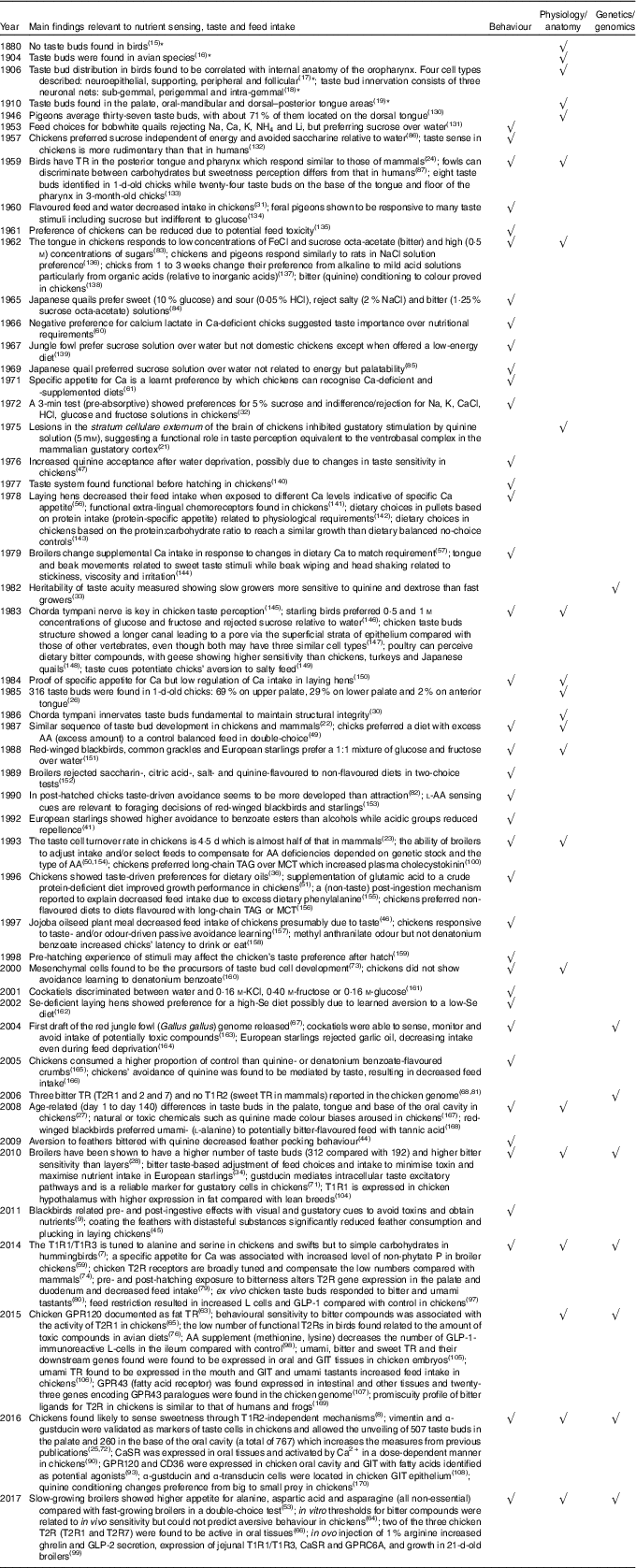
TR, taste receptor; AA, amino acid; MCT, medium-chain TAG; T2R, taste receptor family 2; T1R, taste receptor family 1; GLP, glucagon-like peptide; GPR, G-protein receptor; CD36, cluster of differentiation 36; GIT, gastrointestinal; CaSR, Ca sensing receptor.
* These reports are in German and have been reviewed by Berkhoudt (1992)( Reference Berkhoudt 20 ).
The avian taste and nutrient-sensing system: research highlights
Table 1 represents a chronogram of the avian taste and feed intake research featuring the highlights of what has been published to date. The first traceable studies on the avian taste system refer back to more than 130 years ago and consisted of an anatomical examination of the avian oral cavity by Merkel (1880)( Reference Merkel 15 ) who failed to find taste buds. Botezat and Bath( Reference Botezat 16 – Reference Botezat 19 ) were the first to report taste buds on palatal and mandibular areas of the oral cavity in several bird species. All these early reports were published in German and were reviewed in a book chapter by Berkhoudt (1992)( Reference Berkhoudt 20 ).
Chicken taste buds were shown to have common morphological and anatomical features together with some cellular and developmental differences compared with other vertebrates( Reference Gentle 21 – Reference Ganchrow, Ganchrow and Royer 23 ). Based on a few bird species studied to date (i.e. chicken, turkey, pigeon, etc.), it seems that taste buds are located mainly in the posterior tongue and pharynx as well as in the upper palate and base of the tongue, but not in the highly keratinised anterior and central tongue as is the case in mammals( Reference Roura, Baldwin and Klasing 6 , Reference Kitchell, Ström and Zotterman 24 ). The most recent studies using molecular biology techniques showed that broiler chickens had 507 taste buds in the palate and 260 in the base of the oral cavity( Reference Rajapaksha, Wang and Venkatesan 25 ). Ganchrow & Ganchrow (1985)( Reference Ganchrow and Ganchrow 26 ) reported only a total of 316 taste buds in chickens, a number which has been used as a reference until recently as it appears to have underestimated the density of the avian taste sensory network. The palate of chickens has the highest number of taste buds compared with the other regions of the oral cavity, while broiler chickens have higher numbers than the egg-laying breeds( Reference Rajapaksha, Wang and Venkatesan 25 , Reference Kudo, Nishimura and Tabata 27 , Reference Kudo, Shiraishi and Nishimura 28 ). Finally on anatomic structures, the chorda tympani nerve has been identified to be involved in chicken taste bud innervation( Reference Gentle 29 , Reference Ganchrow, Ganchrow and Oppenheimer 30 ).
The taste sense of the chicken plays a key role in the initial choice of feed and the level of feed consumption and growth( Reference Kare and Pick 31 – Reference Barbato, Siegel and Cherry 33 ). Skelhorn & Rowe (2010)( Reference Skelhorn and Rowe 34 ) showed that bitter taste-driven dietary selection in European starlings was essential in maximising nutrient while minimise toxin ingestion. Taste perception has been frequently targeted to try to improve feed intake, growth performance, mortality and feed conversion ratio in poultry( Reference El Boushy and van der Poel 5 , Reference McNaughton, Deaton and Reece 35 – Reference Mabayo, Okumura and Hirao 37 ) (Table 1). Additionally, taste-driven behaviours have also been studied to prevent economic losses in agricultural production due to birds damaging cereal and fruit production( Reference Mason, Adams and Clark 38 , Reference Clark, Hagelin and Werner 39 ). For example, fruits have been successfully protected against bird damage by increased sucrose content or by using coniferyl benzoate, a compound known to be bitter to avian species( Reference Brugger and Nelms 40 – Reference Brugger, Nol and Phillips 42 ). Furthermore, compounds known to be bitter to humans (quinine, garlic oil, almond oil, clove oil, magnesium chloride) have been successfully used to reduce feather pecking incidence in laying hens( Reference Harlander Matauschek, Beck and Rodenburg 43 – Reference Harlander-Matauschek and Rodenburg 45 ). A decreased feed intake was also observed by adding jojoba oilseed to the diet, presumably caused by bitter taste aversion( Reference Vermaut, De Coninck and Flo 46 ).
On the other hand, water deprivation of 2–6 h decreased the averseness to a quinine solution in chickens which was related to changes in taste sensitivity due to dry mouth( Reference Gentle 47 , Reference Gentle 48 ). It is tempting to speculate that under water scarcity (drought) the abundance of foods available may decrease and birds may need to be more tolerant to low-quality grains and fruits.
Other main taste-related events found in chicken literature include amino acid (AA) sensing. Initial work showing AA sensing in chickens studied AA preferences of limiting essential AA. A maize–soyabean meal diet supplemented with 4 % lysine was preferred over the same supplementation of methionine, threonine and arginine( Reference Edmonds and Baker 49 ). Similarly, broiler chicks were found to prefer a balanced diet containing synthetic AA compared with a similar diet deficient in lysine, methionine and tryptophan( Reference Picard, Uzu and Dunnington 50 ). In addition, glutamic acid (l-Glu) received considerable attention as well, potentially related to umami taste. For example, l-Glu increased feed intake and growth in broiler chickens fed a low-crude protein diet( Reference Moran and Stilborn 51 ). However, excess dietary l-Glu may decrease appetite( Reference Kerr and Kidd 52 ). Recently, Niknafs et al. (2017)( Reference Niknafs, Kim and Roura 53 ) reported that AA preference was related to the rate of growth in broiler chickens: slow-growing broilers consumed 64 % more of a non-essential AA (alanine/aspartic acid/asparagine)-supplemented diet compared with fast-growing broilers( Reference Niknafs, Kim and Roura 53 ). In addition, broiler chickens lowered their feed intake when the diet was supplemented with synthetic AA compared with a diet containing soya protein isolate( Reference Siegert 54 ). The authors speculated that taste played a major role explaining this behaviour but post-ingestive effects were not properly considered.
Some studied avian species have shown preference for Ca-rich feed ingredients such as bones, shells and grit, which are rich in Ca( Reference Reynolds and Perrins 55 ). Both broiler and laying chickens have a specific appetite for Ca, and they can meet their Ca requirement by consuming from a separate source in a choice feeding scenario( Reference Leeson and Summers 56 – Reference Wilkinson, Selle and Bedford 58 ). Such specific appetite was also reported to be associated with the level of dietary non-phytate P( Reference Wilkinson, Bradbury and Bedford 59 ). Taste cues may play a key role in recognising Ca-deficient and -supplemented diets by chickens, and it has been reported that Ca-deficient chicks rejected calcium lactate solution due to aversive taste( Reference Wood‐Gush and Kare 60 , Reference Hughes and Wood-Gush 61 ).
Finally, fat perception and consumption may have strong implications in poultry nutrition. Chickens were shown to increase feed intake of a high-added fat compared with a low-fat isoenergetic diet( Reference Roura, Baldwin and Klasing 6 , Reference Klasing 62 ). In addition, chickens showed a higher intake of a long-chain TAG compared with a medium-chain TAG-supplemented diet. Interestingly, such preference was inhibited after tongue paralysis, suggesting the role of oral gustation in dietary fat preferences( Reference Furuse, Mabayo and Okumura 36 ). Similarly, chickens were also reported to prefer oleic and linoleic acids from a maize oil-rich diet following a double-choice paradigm( Reference Sawamura, Kawabata and Kawabata 63 ). However, these results need to be interpreted with caution because of the long-term assay (7 h) together with the use of mineral oil (potentially toxic at high inclusion levels) in the reference diet.
In summary, the chronological review of the taste-related anatomy and feeding behaviour in chickens shows a long delay (50 years) in the discovery of the taste system (taste buds) in birds compared with mammals, probably related to the lack of taste papillae and to the initial focus on the bird tongue which is mostly deprived of taste-related anatomical structures( Reference Berkhoudt 20 ). However, in recent years research highlighting the association between taste-related feeding behaviour and cellular mechanisms in chicken has been abundant( Reference Cheled-Shoval, Behrens and Korb 64 – Reference Dey, Kawabata and Kawabata 66 ). On the other hand, the advent of the sequencing of the red jungle fowl genome in 2004 introduced a new area, genetics and genomics, which has significantly changed the profile of research on avian chemosensory science ever since( Reference Hillier, Miller and Birney 67 ). Thus, novel research tools have been applied to chicken chemosensory research including RT-PCR, functional heterologous expression assays, immunohistochemistry combined with scanning electron microscopy, and three-dimensional image reconstruction, which has allowed improving our understanding of the molecular mechanisms of chicken taste.
Nutritional chemosensing in chickens: the molecular inside to taste
The availability of the chicken genome as a model opened up the research field of avian taste and nutrient sensing to the molecular underpinnings (Table 1). Lagerström et al. ( Reference Lagerström, Hellström and Gloriam 68 ) identified 557 G protein–coupled receptor (GPCR) genes forming part of the chicken genome of which more than forty might be directly related to taste and nutrient sensing, as summarised in Table 2 ( Reference Roura, Baldwin and Klasing 6 , Reference Lagerström, Hellström and Gloriam 68 – Reference Schioth 70 ). Some of the early works involved the downstream taste cellular signalling using vimentin and α-gustducin as molecular biomarkers for labelling and visualising chicken taste sensory cells( Reference Rajapaksha, Wang and Venkatesan 25 , Reference Kudo, Wakamatsu and Nishimura 71 – Reference Witt, Reutter and Ganchrow 73 ). Studies on the early development of taste buds showed profound differences between human subjects and chickens. Human taste bud cells originate from epithelial cells while in chickens they are of mesenchymal origin( Reference Witt, Reutter and Ganchrow 73 ). Interestingly, based on their unique migratory properties, mesenchymal cells play a fundamental role in embryonic development. Thus, it is tempting to speculate that taste sensory cells in chickens have the potential to spread, reaching a wider distribution in body tissues than in humans or mice (see the ‘Extra-oral taste receptors mediating feed intake in poultry’ section of the present review).
Chicken nutrient-sensing genes (G protein-coupled receptors; GPR) identified based on homology with mammalian genes and mRNA expression data

T1R, taste receptor family 1; SGLT1, sodium–glucose cotransporter 1; CaSR, Ca sensing receptor; mGluR, metabotropic glutamate receptor; eNaC, epithelial sodium channel; PKD1L3, (protein coding), polycystin 1 like 3; PKD2L1, (protein coding), polycystin 2 like 1; HCN, hyperpolarisation-activated cyclic nucleotide-gated.
* These receptors have been defined as membrane channels and do not belong to the GPCR super-family.
Generally speaking, bird species that have been studied so far have shown a lower number of bitter taste receptors (T2R) than some other vertebrates studied to date( Reference Roura, Baldwin and Klasing 6 ). Chickens have only three bitter taste receptor genes: T2R1, T2R2 and T2R7( Reference Cheled-Shoval, Behrens and Korb 64 , Reference Lagerström, Hellström and Gloriam 68 , Reference Behrens, Korsching and Meyerhof 74 ). Using heterologous cell expression systems and in vivo double-choice trials, specific agonist and antagonist ligands of the three chicken genes have been confirmed( Reference Cheled-Shoval, Behrens and Korb 64 , Reference Dey, Kawabata and Kawabata 66 , Reference Behrens, Korsching and Meyerhof 74 ). In particular, caffeine was shown to stimulate the T2R2 chicken receptor and elicit a negative preference in chickens at 10 mm or higher, but potential confounding stimulation of other receptors was not assessed( Reference Lagerström, Hellström and Gloriam 68 ). In addition, the results reported by Dey et al. ( Reference Dey, Kawabata and Kawabata 66 ) showing no preferences for 3 mm-caffeine suggest that the affinity for the chicken T2R2 may be relatively low or that the gene may not be fully functional in chickens. Moreover, there is a wide variation in the number of bitter taste receptors (T2R) between avian species, varying from one reported for domestic pigeons to eighteen for the white-throated sparrow( Reference Davis, Lowman and Thomas 75 , Reference Wang and Zhao 76 ). Such diversity in the T2R repertoire in birds has been related to reflect species differences in nutritional needs and the adaptation to ecological niches( Reference Dong, Jones and Zhang 77 , Reference Li and Zhang 78 ). Despite having only three bitter taste receptors in chickens, there is no evidence of an evolutionary contraction of the gene pool( Reference Dong, Jones and Zhang 77 ). In addition, the relatively low number of taste receptors in chickens did not result in a decreased functionality and relevance of bitter taste since these receptors were shown to be widely tuned( Reference Behrens, Korsching and Meyerhof 74 ). Hirose et al. (2015)( Reference Hirose, Kawabata and Kawabata 65 ) showed a direct association between behavioural responses to bitter tastants and the level of activity of the T2R1. Furthermore, before and/or after hatching exposure to bitterness altered the expression of bitter taste receptor genes in the palate of chickens, leading to decreased feed intake( Reference Cheled-Shoval, Behrens and Meyerhof 79 ).
In vitro studies using cell reporter systems expressing chicken T1R1 and T1R3 receptors confirmed that these receptors respond to umami agonists to a similar extent seen in mice( Reference Baldwin, Toda and Nakagita 7 , Reference Kudo, Kawabata and Nomura 80 ). In contrast, chickens lack T1R2, one of the dimers of the sweet taste receptor gene in mammals( Reference Lagerström, Hellström and Gloriam 68 , Reference Shi and Zhang 81 ). The latter seems to explain the lack of response to sweet tastants in several studies conducted in chickens( Reference Ganchrow, Steiner and Bartana 82 , Reference Halpern 83 ). However, preference for carbohydrates including sugar in poultry has been reported in many studies( Reference Brindley 84 – Reference Kare and Medway 87 ). In the mouse, a T1R2-independent pathway involving oligosaccharidases and the glucose transporter SGLT-1 in taste buds has been recently described( Reference Sukumaran, Yee and Iwata 88 ). A similar mechanism may be hypothesised in chickens( Reference Higashida, Kawabata and Kawabata 8 ). Alternatively, it has been shown that some birds, such as the hummingbird, have adapted the umami receptor T1R1 to mainly perceive carbohydrates (and presumably sweetness)( Reference Baldwin, Toda and Nakagita 7 ).
Table 2 summarises the array of mammalian nutrient sensors found to be expressed in the oral cavity of chickens (T1R1/3, Ca sensing receptor (CaSR), G-protein receptor (GPR) 120, T2R and cluster of differentiation 36 (CD36)). For example, the taste system seems to play a role in the regulation of Ca intake which is probably mediated by the CaSR and T1R3 in several mammals and chickens( Reference Conigrave and Brown 89 – Reference Tordoff, Shao and Alarcón 92 ). Finally, the long-chain fatty acid receptor GPR120 was found expressed in the palate of chickens which is speculated to be associated to oleic and linoleic acid sensing( Reference Sawamura, Kawabata and Kawabata 63 ). In addition, the fatty acid transporter CD36 has also been reported to sense fatty acids in the oral cavity of chickens( Reference Kawabata, Mizobuchi and Kawabata 93 ). However, to date, taste perception of fatty acids in chickens has not been clearly demonstrated and requires further investigations.
Overall, the nutrient receptor gene repertoire in the chicken highly resembles those of the human and mouse with a few important exceptions such as the low number of T2R and the absence of the T1R2. However, the widely tuned nature of the T2R genes advocates for a fully functional sense in the chicken to a similar relevance than in some mammals. In contrast, the lack of the sweet receptor in the chicken may indicate that T1R2-independent pathways exist to monitor simple carbohydrates such as glucose. Chemosensory science in avian species is only an emerging discipline and is lagging behind the knowledge in mammals. Given their implication in feed intake and nutrient appetite, there is an increasing need for studying and understanding the regulatory network and co-expression analysis of nutrient sensors. Finally, since avian taste sensory cells are of mesenchymal origin which, in turn, is related to a higher capacity to migrate during development than epithelial cells (the origin of mammalian taste sensory cells) it would be interesting to study if the avian sensory cells are more abundant than mammalian sensory cells outside the oral cavity.
Extra-oral taste receptors mediating feed intake in poultry
The expression of taste receptors and nutrient sensors in extra-oral tissues, such as the gastrointestinal tract (GIT), has been found to play key roles in food intake and appetite control. They have been involved in responses to the luminal content involving the secretion of hunger–satiety hormones such as glucagon-like peptide (GLP)-1, ghrelin and cholecystokinin (CCK)( Reference Behrens and Meyerhof 13 , Reference San Gabriel 94 – Reference Janssen and Depoortere 96 ). Chickens under feed restriction had higher numbers of GLP-1-containing intestinal L cells compared with unrestricted birds( Reference Monir, Hiramatsu and Yamasaki 97 ). Similarly, a lower number of GLP-1-immunoreactive cells were found in chickens fed a methionine/lysine-supplemented diet compared with the control non-supplemented group( Reference Nishimura, Hiramatsu and Watanabe 98 ), whereas in ovo injection of arginine increased the secretion of jejunal ghrelin and GLP-2( Reference Gao, Zhao and Zhang 99 ). In addition, dietary supplementation with medium-chain TAG increased CCK secretion and decreased feed intake in chickens( Reference Furuse, Mabayo and Choi 100 ). Taste receptors and nutrient sensors expressed in the GIT have been related to sensing nutrients in luminal contents, resulting in the secretion of gut peptides mediating food appetite in some mammalian species. The main outcomes have been recently reviewed( Reference San Gabriel 94 – Reference Janssen and Depoortere 96 , Reference Breer, Eberle and Frick 101 – Reference Wauson, Lorente-Rodríguez and Cobb 103 ).
In an early work in chickens, Byerly et al. (2010)( Reference Byerly, Simon and Cogburn 104 ) demonstrated the presence of the umami taste receptor (T1R1) in the hypothalamus. The chicken T1R1 was expressed at higher levels in fat compared with lean broiler lines. Cheled-Shoval et al. (2014( Reference Cheled-Shoval, Behrens and Meyerhof 79 ) and 2015( Reference Cheled-Shoval, Druyan and Uni 105 )) reported the expression of both chicken T1R and T2R subfamilies in the GIT. The presence of umami taste receptors in the chicken’s GIT was also cofirmed by Yoshida et al. (2015)( Reference Yoshida, Kawabata and Kawabata 106 ). In addition, the expression of fatty acid receptors GPR43, GPR120 and CD36 were also reported in the chicken’s intestine( Reference Kawabata, Mizobuchi and Kawabata 93 , Reference Meslin, Desert and Callebaut 107 ). Finally, α-gustducin and α-transducin cells have also been reported in the chicken’s GIT( Reference Mazzoni, Bombardi and Vallorani 108 ).
Unpublished results from our group (S Niknafs and E Roura, unpublished results) targeted extra-oral AA sensors (T1R1/T1R3, CaSR, GPR92 and GPR139) and showed that they are significantly expressed in the chicken’s GIT, being a higher expression of CaSR and GPR139 associated with higher feed intake and growth rate in broiler chickens. In addition, intestinal nutrient transporters have also been reported to sense nutrients( Reference Hyde, Taylor and Hundal 109 ). In poultry, transporters for peptides, AA, glucose and fructose have been extensively studied( Reference Awad, Aschenbach and Ghareeb 110 – Reference Zhang, Zhang and Wan 119 ). However, their role as chemosensory mediators has yet to be fully described.
The role of nutrient sensors in the GIT has been unveiled in the mouse, rat and humans but current knowledge in avian species is scarce. The scenario depicted in the Introduction where the anatomy (and perhaps the function) of the chicken taste system is fundamentally different from in some studied mammals may be repeated regarding the role of taste receptors in the GIT. The existence of a network of sensory cells related to the enteroendocrine system underlines the relevance of nutrient sensors in the secretion of gut peptides. However, the hormonal control of appetite related to the gut–brain axis based on gut peptides has been shown to feature major differences between the chicken and mouse. For example, although ghrelin in humans and the mouse is an orexigenic hormone( Reference Vancleef, Van Den Broeck and Thijs 120 ), it has been well documented to be anorexigenic in the chicken( Reference Furuse, Tachibana and Ohgushi 121 – Reference Ocłoń and Pietras 127 ). In contrast, peptide YY (PYY) and GLP-1 have an anorexigenic role in humans and the mouse, whereas in the chicken they seem to stimulate appetite( Reference Richards and Proszkowiec-Weglarz 69 , Reference Monir, Hiramatsu and Yamasaki 97 , Reference Nishimura, Hiramatsu and Watanabe 98 , Reference Kuenzel, Douglass and Davison 128 , Reference Ando, Kawakami and Bungo 129 ). Overall, what has been learned so far on chicken nutritional chemosensing shows an area with potentially profound implications in avian nutrition that needs further investigation, particularly regarding gut mechanisms and their functionality related to gut peptides and the hunger–satiety cycle.
Conclusion
The present review of the avian taste-related literature dismounts the long-sustained dogma that birds have a minor level of taste sensing. Chickens, and the other avian species studied so far, seem to taste different (not less) from mammalian species. The anatomical features reveal an evolution of the taste system in harmony with an oral cavity and deglutition mechanics requiring a slim long keratinised tongue incompatible with a sensing system on it (such as in mammals) which, in turn, found its place in the upper palate. The essential role of taste as the nutrient-sensing machinery in chickens seems to be close to the mammalian system except for carbohydrates (sweet in mammals) since the T1R2 gene was lost in evolution. Similarly, compared with mammals and most amphibians, chickens and the other avian species studied to date appear to have a smaller bitter taste receptor (T2R) repertoire. However, the low number of T2R genes may be compensated by their nature, tuned to sense a wide array of chemicals. Thus, AA and fatty acid sensing (and possibly Ca) seems to take the lead in nutrient appetites in chickens. However, the relevance of carbohydrates (i.e. glucose) should not be discarded in birds since chickens show an active T1R2-independent pathway and the umami gene T1R1 in some mammals responds to sugars in hummingbirds. The change in molecular roles from mammals to some bird species like the hummingbird does not seem to be an isolated occurrence. On the contrary, gut peptides with appetite-enhancing properties in well-studied mammals like mice may suppress the appetite of birds and the other way around such as in the case of ghrelin, PYY and GLP-1. However, there is a lack of data regarding the regulatory genes and pathways orchestrating the control of feed intake in chickens. Studying the molecular and regulatory networks involved in nutrient-sensing mechanisms across the GIT and the central nervous system can partially explain the variation in feed intake within strains with the same genetics. In addition, little is known about genetic polymorphisms in taste receptors, nutrient sensors and their downstream effects that may affect feed intake regulation mechanisms in chickens, warranting further investigation.
Acknowledgements
S. N. wrote the paper. E. R. designed, edited and revised the paper.
There are no conflicts of interest.



