

INTRODUCTION
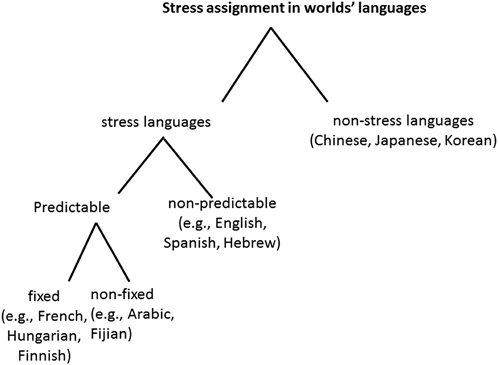
The native language (L1) has been shown to influence prosody processing (e.g., Krishnan, Gandour, & Bidelman, Reference Krishnan, Gandour and Bidelman2010; Wong, Parsons, Martinez, & Diehl, Reference Wong, Parsons, Martinez and Diehl2004). Specifically, in languages where stress is fixed and does not change the meaning of the word (e.g., French), listeners were found to have difficulties in processing the prosody of nonnative languages (also known as “stress deafness”) (e.g., Dupoux, Pallier, Sebastián, & Mehler, Reference Dupoux, Pallier, Sebastián-Gallés and Mehler1997; Peperkamp, Vendelin, & Dupoux, Reference Peperkamp, Vendelin and Dupoux2010). One possible reason for these difficulties relates to the fact that listeners of a language with fixed stress have no listening experience with different stress positions in words. Another explanation may be related to the functional role of stress in the language. It can be argued that when stress position does not sign a change in word meaning, native listeners become less sensitive to it. So far, these two explanations could not be separated because previous studies have been conducted in languages where stress is fixed and has no functional role for word meaning (e.g., Peperkamp, Vendelin, & Dupoux, Reference Peperkamp, Vendelin and Dupoux2010). To tease apart these two explanations, we would need to assess explicit stress processing in a language in which stress assignment is not fixed to one syllable, and yet, does not change the meaning of words. Arabic is an example for such a language (Vogel, Reference Vogel, Cantone and Hinzelin2000; see Appendix A). Thus, the purpose of the first experiment was to assess sensitivity to stress in Arabic. It was assumed that, if speakers of the Arabic language would show reduced processing of stress, it would support the notion that the important factor in stress processing is the functional role of stress in the native language and not the exposure to different positions of stress in words. Nonetheless, reduced sensitivity to changes in stress position in words may influence lexical acquisition in a second language (L2) with variable stress. Thus, a second experiment was conducted to assess awareness to stress in native speakers of Arabic, a language with no contrastive role for stress, who acquired languages with variable stress and functional role of stress (Hebrew, English). Taken together, the two experiments were aimed to assess how linguistic experience in L1 and L2 molds stress processing.
Lexical stress refers to the impression of the listener that one syllable in a word is more dominant than another. This impression is typically guided by acoustic cues, such as amplitude, fundamental frequency, syllable duration, or a combination thereof (Fry, Reference Fry1958; Lehiste, Reference Lehiste1970; Liberman, Reference Liberman1960). In languages with fixed stress, stress is always placed on the same syllable in the utterance (e.g., the last syllable in French) or word (e.g., the first syllable in Hungarian, /tábla/ “board” and Finish /láiva/ “ship”). For these languages there is no use of contrastive stress to convey different word meanings (Altman & Vogel, 2002; Hayes, Reference Hayes1995; Vogel, Reference Vogel, Cantone and Hinzelin2000). However, in other languages, stress assignment varies between words and has a contrastive function in the language, changing the meaning of the word (e.g., in English: /pérmit/ vs. /permít/; in Spanish /bébe/ “drink” vs. /bebé/ “baby”; in Hebrew: /náal/ “shoe” vs. /naál/ “he locked”; Vogel, Reference Vogel, Cantone and Hinzelin2000).
Studies have shown that speakers of languages with fixed stress, such as French, Hungarian, or Finish, have a reduced ability to discriminate, identify, and remember stress positions in nonsense words compared with speakers of languages with variable stress assignment (Spanish) (Dupoux & Peperkamp, Reference Dupoux, Peperkamp, Durand and Laks2002; Dupoux, Peperkamp, Sebastián-Gallés, Reference Dupoux, Peperkamp and Sebastián-Gallés2001; Dupoux et al., Reference Dupoux, Pallier, Sebastián-Gallés and Mehler1997; Dupoux, Sebastián-Gallés, Navarrete, & Peperkamp, Reference Dupoux, Sebastián-Gallés, Navarrete and Peperkamp2008; Kijak, Reference Kijak2009; Peperkamp et al., Reference Peperkamp, Vendelin and Dupoux2010). French subjects, for example, had significantly more difficulty than Spanish subjects in discriminating similar trisyllabic nonsense words in an ABX task, especially when the ABX task involved phonetic variability of different talkers (Dupoux et al., Reference Dupoux, Pallier, Sebastián-Gallés and Mehler1997). French subjects had also difficulties in remembering the placement of stress in a sequence of nonsense words compared to Spanish speakers (Dupoux et al., Reference Dupoux, Peperkamp and Sebastián-Gallés2001). This restricted ability to encode stress in the short-term memory is called “stress deafness.” It is assumed that to retain stress placement efficiently in a short-term memory store, it has to be recoded into a more abstract phonological level (e.g., Dupoux et al., Reference Dupoux, Pallier, Sebastián-Gallés and Mehler1997, p. 9). Thus, the difficulty in remembering the placement of stress in syllabic sequences is attributed to the linguistic (phonological) level, whereas the auditory ability to discriminate stress in AX tasks that do not involve a memory load is preserved (e.g., Dupoux et al., Reference Dupoux, Pallier, Sebastián-Gallés and Mehler1997; Peperkamp et al., Reference Peperkamp, Vendelin and Dupoux2010). In other words, previous studies suggest that stress processing involves two levels of representation: the acoustic-phonetic level that involves the acoustic correlates of stress, and the phonological-linguistic level that is language specific. Following this line of reasoning, it is assumed that in “stress deafness” the phonological-linguistic level of representation is altered leaving the acoustic-phonetic level of representation intact (e.g., Dupoux et al., Reference Dupoux, Pallier, Sebastián-Gallés and Mehler1997).
Based on the hypothesis that stress deafness is influenced by a native language, one interesting question is whether second language acquisition of a language with variable stress alters stress deafness. There is some evidence to suggest that stress deafness was evident even when native speakers of French had advanced knowledge of Spanish, a language with variable stress, as a second language (L2). Native French speakers, who were late learners of Spanish, continued to show reduced discrimination of stress in an ABX task that involved different talkers (Dupoux et al., Reference Dupoux, Sebastián-Gallés, Navarrete and Peperkamp2008). The late learners of Spanish also showed a reduced ability to encode and remember stress contrasts, presented in sequences of nonwords, similar to French monolinguals and irrespective of their level of proficiency in Spanish. Furthermore, when a speeded lexical decision task with word–nonword minimal pairs that differed only in the position of the stress was used, native French speakers who were late learners of Spanish had a reduced ability to use stress cues for lexical judgment, irrespective of their level of proficiency in Spanish (ibid.). In another study, French–Spanish bilinguals were tested on their perception of Spanish lexical stress using two short-term memory encoding tasks and a speeded lexical decision. In all three tasks, the performance of the group of simultaneous bilinguals was intermediate between that of native speakers of Spanish and French late learners of Spanish (Dupoux, Peperkamp, & Sebastián-Gallés, Reference Dupoux, Peperkamp and Sebastián-Gallés2010). These results support the notion that proficiency in a second language with variable stress reduces stress deafness due to new phonological learning.
So far, reduced sensitivity for stress was evident only in languages with fixed stress. It would be of interest to study how a native language in which stress is not fixed to one syllable in the word, and yet has no contrastive role, influences stress perception, and whether additional learning of a non-native language (NNL) with variable stress influences perception. It is also of interest to ascertain whether knowledge in a NNL with variable stress influences the way stress is represented and improves sensitivity for stress. On the one hand, it is possible that the native language has a long-lasting influence on phonological representation. Thus, when in the native language stress has no contrastive role, difficulties in processing stress will remain even when there is a high proficiency in a second language with variable stress (Dupoux et al., Reference Dupoux, Sebastián-Gallés, Navarrete and Peperkamp2008; Takagi & Mann, Reference Takagi and Mann1995). On the other hand, it is possible that the acquisition of a second language with variable stress will enhance sensitivity to stress (Dupoux et al., Reference Dupoux, Peperkamp and Sebastián-Gallés2010; Lively, Logan, & Pisoni, Reference Lively, Logan and Pisoni1993). Understanding the constraints that the native language imposes on processing prosody may contribute to the understanding of the difficulties in prosody processing of L2 and consequently to developing appropriate learning protocols.
One language in which stress is not fixed and yet does not play a contrastive role is Arabic. This includes Modern Standard ArabicFootnote 1 (MSA) and various dialects of Levantine ArabicFootnote 2 (LA) including the dialects spoken in Israel. MSA has generally been classified as a predictable weight-sensitive language, in which the stress position in the word is determined and predicted by the phonological structure of the syllable. Specifically, stress is assigned to the final superheavy syllable (i.e., CVVC or CVCC) in the word. When there is no final superheavy syllable, the rightmost heavy syllable (i.e., CVC or CVV) receives the primary stress (e.g., Hayes, Reference Hayes1995; Kenstowicz, Reference Kenstowicz, Chukerman, Marks and Richardson1983; McCarthy, 1979; Watson, Reference Watson, Oostendorp, Ewen, Hume and Rice2011; Wright, 1995). Stress assignment in LA is generally similar to MSA. Predictable stress assignment governed by the syllabic structure and the position of the syllable in the word excludes the possibility of using lexical stress as contrastive (e.g., in Jordanian Arabic, Al-Wer, 2007; Jong & Zawaydeh, 1999).
Stress assignment in LA spoken in Israel, including the dialects of the north area (e.g., Kabul) and the central area (Umm al-Fahm and Kafr Qara), is very close to MSA. Stress is assigned to the superheavy syllable in the word (e.g., /darást/ “I studied,” /darbátna/ “she hit us”). If there is more than one superheavy syllable in the word, stress is assigned to the rightmost syllable (e.g., /katbín/ “they write”). When there is no superheavy syllable in the word, stress is assigned to the heavy syllable unless it is the ultimate syllable. In this case, stress is assigned to the penultimate syllable (e.g., /wálad/ “child”). If there are only light syllables in the word (CV, VC), stress is assigned to the initial one (/zálama/ “man,” /báraka/ “blessing”) (Elihay, Reference Elihay2007; Rosenhouse, Reference Rosenhouse1984, Reference Rosenhouse1989).Footnote 3
There have been few studies of stress perception in native Arabic speakers. Youssef and Mazurkewich (Reference Youssef, Mazurkewich, Flynn, Martohardjono and O’Neil1998) investigated the ability of Egyptian Arabic speakers who were learning English as a second language to perceive the stress in English words. The participants were required to mark the stress on a printed list of English words that were presented aurally. The Egyptian Arabic learners of English showed scores well below the control group of native English speakers. They were, however, successful in identifying the stress in superheavy final syllables in which the stress position was in accordance with the phonological rule for stress assignment in their native language, Arabic. It should be noted that the findings of Youssef and Mazurkewich (Reference Youssef, Mazurkewich, Flynn, Martohardjono and O’Neil1998) did not show whether Arabic speakers have a reduced ability to discriminate, remember, and identify stress in their native language, or whether the acquisition of a second language with unpredictable stress influenced their ability to identify the stress in words. In another study, sensitivity to stress differences in native speakers of Cairene Arabic was supported by electrophysiological measures showing different activity at the cortical level. The participants showed increased positivity effects in different time windows attributed to the P300 potential following the violated words compared to the nonviolated words. The participants also had high-accuracy responses in judging stress violations in Arabic words. The results support sensitivity for stress position in Arabic words. However, the participants had knowledge in NNLs including English, German, French, or Spanish and they lived in Germany from 1 month up to 7 years before testing. Thus, it might be the case that their knowledge of other NNLs influenced their sensitivity to stress (Domahs, Knaus, El Shanawany, & Wiese, Reference Domahs, Knaus, El Shanawany and Wiese2014).
In contrast to Arabic, in both modern Israeli Hebrew and English, stress assignment is considered unpredictable (i.e., variable) and the stress position may differentiate the meanings of words (Hayes, Reference Hayes1995; Vogel, Reference Vogel, Cantone and Hinzelin2000). Changes in stress assignment characterize Hebrew (e.g., /óxel/ “food” vs. /oxèl/ “he eats,” /náxal/ “river” vs. /naxál/ “to gain”) (Bolozky, Reference Bolozky1982, Reference Bolozky2000) and English (/pèrmit/ “certificate” vs. /permít/ “allow,” /désert/ “barren region” vs. /desért/ “leave”) (van Donselaar, Koster, & Cutler, 2005). However unlike English, in Hebrew unstressed syllables are not characterized by reduced vowels (change in vowel quality) (Lehiste & Peterson, Reference Lehiste and Peterson1959), and while the common stress position in Hebrew is word final, in English it is word initial (Cutler & Carter, Reference Cutler and Carter1987; Segal, Nir-Sagiv, Kishon-Rabin, & Ravid, Reference Segal, Nir-Sagiv, Kishon-Rabin and Ravid2009). Across the three languages, Arabic, Hebrew, and English, the acoustic correlates of stressed syllables in words may include longer duration, higher fundamental frequency, and amplitude compared with unstressed syllables (Al-Ani, Reference Al-Ani1992; Becker, Reference Becker and Falk2003; Enoch & Kaplan, Reference Enoch and Kaplan1969; Jong & Zawaydeh, Reference Jong and Zawaydeh1999; Silver-Varod, Sagi, & Amir, Reference Silver-Varod, Sagi and Amir2016; Sluijter & Van Heuven, 1996; Zuraiq & Sereno, Reference Zuraiq, Sereno, Trouvain and Barry2007).
The motivation of the present study was to explore how the Arabic native language and second language acquisition influences stress processing, and whether the influence of the native language is long lasting even in the presence of high proficiency in a second language with variable stress. One purpose of the present study was to examine the influence of stress characteristics of a native language with predictable unfixed stress assignment (LA spoken in Israel) on the ability of adult listeners to discriminate, remember, and identify stress in their native language. A second purpose was to assess how the acquisition of a NNL with unpredictable stress (Hebrew or English) influenced the ability of Arabic speakers to identify the lexical stress in words.
To address the purposes of the study, two experiments were conducted. Experiment 1 tested whether native Arabic speakers discriminate and remember stress sequences like native Hebrew speakers. Experiment 2 tested whether native Arabic speakers identified stress placement in words like native Hebrew speakers and whether the acquisition of a NNL with unpredictable stress (Hebrew or English) improved this ability.
EXPERIMENT 1
METHODS
Participants
A total of 30 adult students, aged 20 to 26 years, participated in this study. Fifteen of these participants were native Arabic speakers (11 women and 4 men) and 15 (11 women and 4 men) were native Hebrew speakers. The native Arabic speakers were citizens of the state of Israel, who lived in Kabul, northeast of Haifa. They spoke LA that is used in the north of Israel, with minimal exposure to Hebrew in their daily lives. The native Hebrew speakers lived in the Tel Aviv area.
To ensure that the Arabic speakers had limited experience with Hebrew or English, the level of exposure to and proficiency in different languages (Arabic, English, and Hebrew) of each participant were assessed with the nine questions listed in the following text. The participants responded to each question on a scale from one (very little) to five (very much).
1. How much are you exposed to each of the following languages daily: Arabic/English/Hebrew?
2. How well can you express yourself in each of the following native languages and NNLs: Arabic/English/Hebrew?
3. How strongly do you feel that Arabic/English/Hebrew is a second language for you, in which you can express yourself clearly?
4. How well can you converse on the phone with a native speaker of the following languages: Arabic/English/Hebrew?
5. How well do you understand each of the following languages: Arabic/English/Hebrew?
6. How often do you watch television in Arabic/English/Hebrew?
7. Do you watch news on television in any of the following languages: Arabic/English/Hebrew?
8. How often do you speak each of the following languages: Arabic/English/Hebrew?
9. How often do you write or read in each of the following languages: Arabic/English/Hebrew?
The mean self-report proficiency results for each group of participants in each language, and their ages, years of education, and years of formal learning (exposure to instruction) of the NNLs are shown in Table 1.
Mean age, years of education, scores in the questionnaires assessing proficiency in Arabic, English and Hebrew, and years of formal nonnative language learning (NNLL) at elementary and high school in the two groups of participants.
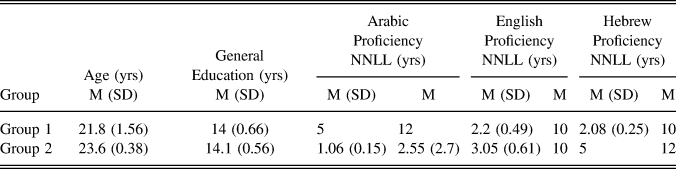
Note: Group 1 = native LA speakers, Group 2 = native Hebrew speakers; yrs = years, M = mean, SD = standard deviation. Note that all participants were college students.
The average proficiency in the NNLs, English and Hebrew, among the native Arabic speakers (Group 1) was limited (mean [M] = 2.2, standard deviation [SD] = 0.49 for English; M = 2.08, SD = 0.25 for Hebrew). For these participants, spoken Arabic was the main language in which they studied, spoke, and interacted, and MSA was used for reading and writing. They all attended an Arab-speaking college (Sakhnin College), in which Hebrew and English were not spoken. All the participants of Group 1 were formally exposed to Hebrew and English for the first time in third grade (8–9 years of age) in special lessons targeting second language acquisition. They learned Hebrew and English in lessons of 45 minutes, given twice a week. These lessons continued through to twelfth grade (17–18 years of age). Despite their formal education in Hebrew and English, the participants in Group 1 could not speak or converse in either Hebrew or English and had had limited exposure to these languages in their everyday lives for at least 3 years before testing.
The native Hebrew speakers (Group 2) were proficient in English (varying between intermediate to very proficient, M = 3.05, SD = 0.61), but poorly proficient in Arabic (varying between little or very little, M = 1.06, SD = 0.15) with very limited exposure to spoken Arabic through radio or television. The native Hebrew participants studied English as a second language at school (third to twelfth grade) and passed their final exams in English. They were all students of Tel Aviv University where a predetermined level of proficiency in English was an entry criterion to their studies. They were also exposed to English in their academic and daily lives.
All the participants had similar college-level education (as shown in Table 1), they belonged to middle socioeconomic class according to their neighborhood of residence and years of education, had no known language or learning disability according to self-report, and had normal hearing at frequencies 0.5, 1, 2, and 4 KHz (ANSI, 2004).
Stimuli
The stimuli were constructed from eight trisyllabic nonsense words, with a CVCVCV pattern. The phonemes within the nonsense words exist in both Arabic and Hebrew. Also, the CV syllable doesn’t cue for stress assignment in Arabic (compared to heavy syllables such as CVV or CVC), and it is acceptable in both languages. Each nonsense word was recorded 18 times by a female Arabic speaker, six times for each stress position: with stress on the first, second, or third syllable. The speaker was instructed to say the words clearly with the stress, but not to exaggerate the stress. The words were uttered within a sentence (e.g., /tagid bánizo bevakasha/ “say bánizo please”). An Arabic native speaker was recorded because we wanted to assess Arabic speakers and to compare their performance to Hebrew speakers. Thus, we gave the Arabic speakers an advantage by using an Arabic speaker that uttered the nonwords as Arabic words using an Arabic accent. The stimuli were recorded digitally at a sampling rate of 48,000 Hz and 16-bit quantization in a soundproof room with a JVC MV 40 microphone located 10 cm from the mouth of the speaker, using the Sound Forge software (version 4.5a). The recorded nonsense words were then cut from the sentence and edited so that the words did not differ in intensity by more than 1/2 dB, using the Sound Forge software (version 4.5a).
Acoustic measurements were made with the Praat software (Boersma & Weenink, Reference Boersma and Weenink2010). The measurements included the duration, mean fundamental frequency, and mean intensity of the vowels in each syllable. The results showed that the duration of the stressed syllables (M = 140.63 ms, SD = 43.69) was longer than that of the weak syllables (M = 87.62 ms, SD = 17.44; t(22) = 3.9, p = 0.001). However, no significant differences were found between the pitch of the stressed syllables (M = 236.31 Hz, SD = 24.33) and the weak syllables (M = 230.27 Hz, SD = 53.43) (p = 0.37). Marginal significance was found for intensity differences between the stressed syllables (M = 80.04 dB in relative units, SD = 2.09) and the weak syllables (M = 77.51 dB in relative units, SD = 4.35) (p = 0.07).
The recorded stimuli were edited to include six triplets for each of the eight nonsense words, using the Sound Forge software (version 4.5a), as shown in Appendix A. In each of the six triplets, all the stimuli had the same phonemic content. In each triplet, two words had the same stress position and the other word had a different stress position. The word with the different stress position was stressed on either the first, second, or third syllable. In each of the six triplets, the word with the different stress position was placed twice in the first position, twice in the second position, and twice in the third position across the triad. Thus, the total number of 48 triplets included equal numbers of triplets (n = 16) in which the different stress placement could fall on the first, second, or third position across the triad of nonsense words.
In each trial, the interstimuli interval was 500 ms. A 500 ms interval of silence was presented before the first stimulus in the trial, and a 10 ms silence after the last stimulus in the trial. One additional CVCVCV nonsense word was recorded and edited as described previously to create six triplets. The six triplets (trials) of this word were used as examples before the beginning of the test.
The trials described here were used for both the discrimination and memory tasks. The list of stimuli for the discrimination and memory test is described in Appendix B.
Procedure
The participants were tested individually in a quiet room using a Dell Precision 4300 computer. The stimuli were presented with the Superlab 4.5 software. The participants heard each of the stimuli diotically through headphones at 65 dB SPL and typed their responses at the designated numbers in the computer. Half the participants were tested first with the discrimination oddball task and then with the memory task, and the other half were tested in the reverse order. Both the response type and the reaction time were collected. In both the discrimination and memory tasks, each trial consisted of a sequence followed by a white screen, and the participants could not begin typing their response until they saw this screen.
Reaction time was collected from the end of the trial. An intertrial interval of 1,500 ms was included.
In the discrimination task, the participants were asked to detect which of the three nonsense words presented in the trial differed from the two others and to type their response as quickly as possible. If the first word differed in its stress position, the participant had to write 1; if the second word differed, the participant had to write 2; and if third word differed, the participant had to write 3. In the memory task, the participants were asked to remember whether the stress on each nonsense word was on the first, second, or third syllable. At the end of the trial, they had to type a sequence of associated keys in the correct order and as quickly as possible. For example, if the trial included stress on the first syllable of the first word, on the first syllable of the second word, and on the second syllable of the third word, the participant would type the sequence 112.
Before testing, all the participants confirmed that they were familiar with the concept of stress in words and had learned about it at school. The experimenter explained that the stressed syllable is the more prominent syllable in the word, and gave an example in the native language of the participant.
In both the discrimination and memory tasks, six warmup trials were given at the beginning of the test, with feedback. Only after the experimenter had confirmed that the participant understood the task did the test trials begin. During the test phase, no feedback was provided.
To ensure that the two groups of participants did not differ in their verbal working memory, all the participants were also tested on the forward and backward digit span test, taken from the Wechsler Adult Intelligence Scale (WAIS-IV) (Hartman, Reference Hartman2009). On these tests, the Hebrew participants were tested in Hebrew and the Arabic participants were tested in Arabic. The participants were asked to repeat a sequence of numbers in the order that they had heard them or in the reverse order.
The order of tests was counterbalanced across participants. On average, the experiment lasted approximately 40 minutes, including a 10-minute break between the experimental tasks that tested the discrimination and memory of stress.
The procedure was approved by the Ethical Review Board Committee of Tel Aviv University. All the participants signed a consent form before the commencement of the tests.
RESULTS
No participant was excluded from the study. The mean results for the correct responses and reaction times, and the corresponding standard deviations, for each task and group of participants are summarized in Table 2.
Mean correct response, reaction time (in milliseconds) standard deviation, estimated means after controlling for working memory, and confidence intervals for each of the tasks and groups of participants.

M = mean, SD = standard deviation, % = percentage, ms = milliseconds, CI = confidence intervals.
Table 2 shows that the native Arabic speakers had fewer correct responses and longer reaction times in both tasks (stress discrimination and memory recall of stress sequences) than the native Hebrew speakers. It also shows that the participants had more correct responses and shorter reaction times in the discrimination task than in the memory task. The native Arabic speakers also performed more like the native Hebrew speakers in the discrimination task than in the memory task.
Because the two tasks, discrimination and memory, differed in the probability for guessing, the analysis of variance was performed on the data after correction for guessing using equation (1):
 $${\rm{Sc}} = ({\rm{su - sg)/(}}100{\rm{ - sg)*100}}$$
Where Sc = corrected score in percent, Su = uncorrected score in percent, Sg = mean score expected from guessing (0.33 for the discrimination task and 0.006Footnote 4 for the memory task) (Boothroyd, Reference Boothroyd1988). Group means are shown in Table 2.
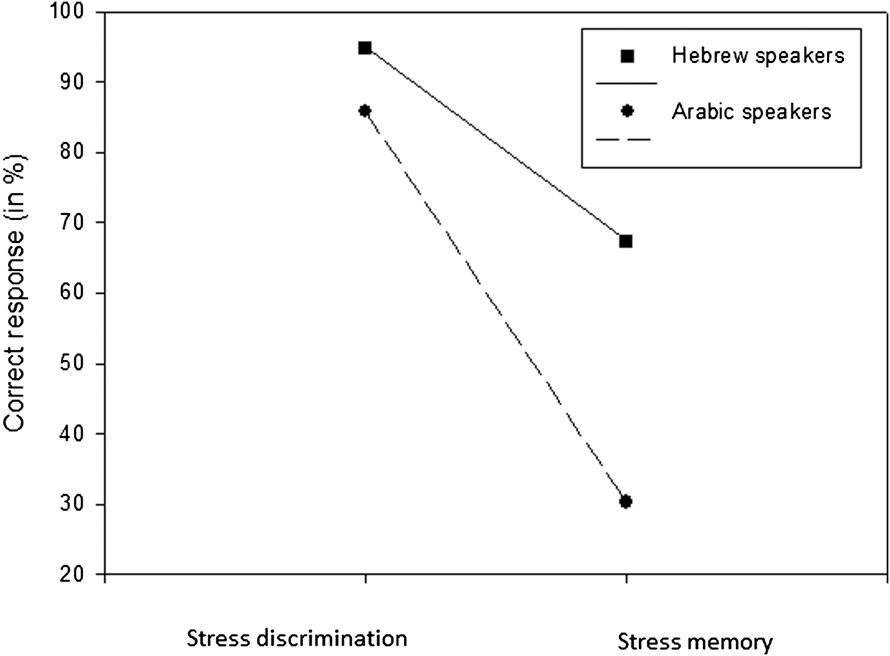
The statistical analysis was designed to assess the influence of both the task and the native language of the participants. The correct responses were normally distributed. Also, a strong positive correlation was found between the scores of forward and backward digit span (r = .76, p = .001) and therefore these two scores were averaged to produce a single memory measure. Positive significant correlations were found between this measure and the scores of the two experimental tasks (discrimination and memory of stress) (r = 0.43, p = 0.019; r = 0.48, p = 0.007, respectively). Thus, two-way analysis of covariance (ANCOVA) with repeated measures was performed on the data, after correction for guessing, with the correct response as the dependent variable, TASK (discrimination or memory of stress) as the within-subject variable, and GROUP of participants (Arabic speakers or Hebrew speakers) as the between-subjects variable, controlling for working memory. A main effect was found for TASK [F(1,27) = 16.46, p = 0.0001, η 2 = 0.38] confirming more correct responses in the discrimination compared to the memory task, and GROUP [F(1,27) = 26.69, p = 0.0001, η 2 = 0.50] confirming more correct responses of Hebrew compared to Arabic speakers (as shown in Table 2). A GROUP × TASK interaction was also found [F(1,27) = 15.57, p = 0.001, η 2 = 0.37]. The results of the interaction adjusted for the covariate are shown in Figure 1. Subsequent tests revealed differences between the two groups of participants in the discrimination task [F(1,27) = 5.90, p = 0.02, η 2 = 0.18] and in the memory task [F(1,27) = 26.29, p = 0.001, η 2 = 0.493]. A larger difference was found in the “stress memory” task between the Hebrew and Arabic speakers compared to the “stress discrimination” task.
The average percentage of correct responses (adjusted for covariate) in the discrimination and memory task for each group of participants: Hebrew speakers and Arabic speakers (Experiment 1).
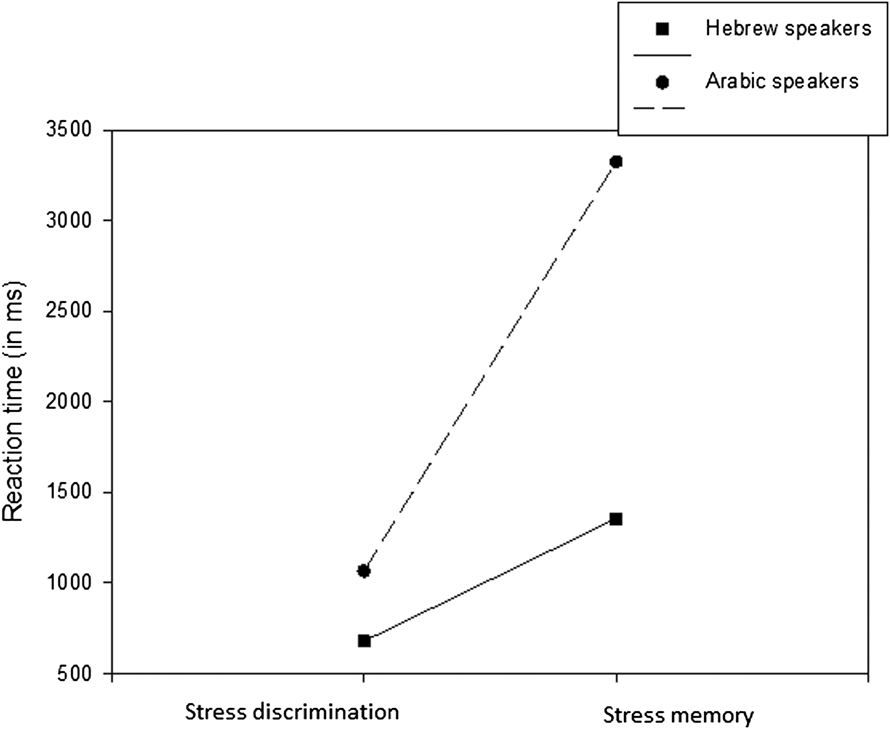
Reaction time was normally distributed and no significant correlations were found between the scores of forward digit and backward digit span and response time. Thus, two-way repeated-measures ANOVA was performed with reaction time (for correct responses) as the dependent variable, TASK (discrimination or memory of stress) as the within-subject variable, and GROUP of participants (Arabic speakers or Hebrew speakers) as the between-subjects variable. Main effects were found for TASK [F(1,28) = 27.08, p = 0.0001, η 2 = 0.47] confirming shorter reaction times in the discrimination compared to the memory task, and GROUP [F(1,28) = 19.37, p = 0.0001, η 2 = 0.40] confirming shorter reaction times of Hebrew compared to Arabic speakers (as shown in Table 2). A GROUP × TASK interaction was also found [F(1,28) = 7.77, p = 0.009, η 2 = 0.21]. The results of the interaction are shown in Figure 2. Subsequent contrast tests revealed differences between the two groups of participants in the discrimination task [F(1,28) = 13.57, p = 0.0012, η 2 = 0.33] and the memory task [F(1,28) = 12.62, p = 0.001, η 2 = 0.31]. A larger difference was found in the stress memory task between the Hebrew and Arabic speakers compared to the stress discrimination task.
The average reaction time in the discrimination and memory task for each group of participants: Hebrew speakers and Arabic speakers (Experiment 1).
Independent t test performed on the mean results for verbal working memory suggested that the two groups did not differ in their mean results (M = 6.27, 6.57, SD = 0.90, 1.19 for Arabic and Hebrew speakers, respectively) [t (28) = 0.78, p = 0.44, d = 0.20].
DISCUSSION
The results of Experiment 1 support the following findings: (a) Native speakers of Arabic were less able to discriminate or memorize the stress placements in a sequence of three, trisyllabic nonsense words, than native speakers of Hebrew tested on the same words. The difficulties experienced by Arabic speakers in the discrimination and memory tasks were apparent in both their fewer correct responses and their prolonged reaction times. These results support the notion that listening experience in a native language with predictable unfixed stress (Arabic) reduces the listener’s ability to encode stress in the short-term memory. (b) The discrimination “oddball” task was easier for both groups of participants than the memory task, regardless of their native language, suggesting that different processing strategies are involved in the two tasks, an acoustic strategy for discrimination and a phonological strategy for memory. (c) The fact that Arabic speakers had greater difficulty in the memory task than in the discrimination task suggests that their processing constraints mainly involve the phonological level of processing rather than the acoustic–auditory level of processing.
The first finding of this experiment is that a native language with predictable but unfixed stress (Arabic) influences an individual’s ability to discriminate and memorize stress positions in words. Previous studies have suggested that native speakers of languages with fixed stress had difficulty with stress discrimination in an ABX task that involved short-term memory (Dupoux et al., Reference Dupoux, Pallier, Sebastián-Gallés and Mehler1997) and in memorizing stress sequences in words (e.g., Peperkamp et al., Reference Peperkamp, Vendelin and Dupoux2010). Our findings add to the existing body of literature by showing that difficulties in stress processing are not exclusive to languages with fixed stress, but also affect speakers of languages with unfixed but predictable stress. The results support the notion that exposure to a native language with variation in stress position across words is not enough for facilitating advanced stress processing abilities such as the ability to memorize stress sequences. However, it must be noted that the fact that the Arabic speakers were less efficient in the discrimination task does not indicate reduced auditory acuity but rather the influence of the memory load on discrimination.
One can argue that the difference in performance between Arabic and Hebrew speakers is related to the fact that the Arabic speakers in the present experiment are monolinguals, whereas the Hebrew speakers are bilinguals (are proficient in Hebrew and English). However, the native speakers of Arabic are not classic monolinguals. In fact, Arabic speakers learn two languages; spoken language (SA) and literate Arabic, also termed Modern Standard Arabic (MSA), when the former can be treated as L1 and the latter as L2 (Eviatar & Ibrahim, Reference Eviatar and Ibrahim2001; Ibrahim, Reference Ibrahim2006; Ibrahim & Aharon-Peretz, Reference Ibrahim and Aharon-Peretz2005; Leikin, Ibrahim, Eviatar, & Sapir, Reference Leikin, Ibrahim, Eviatar and Sapir2009). Although the two languages are related, belonging to the same (Semitic) family (SA and MSA), having many similar words, and having similar rules for stress assignment, they differ considerably on phonetic, phonologic, morpho-syntactic, and semantic levels so that many concepts are represented by different words. Importantly, the MSA is formally learned in school on the basis of SA, in which the child is already proficient. All reading materials (textbooks, newspapers, etc.) are written in MSA (Ibrahim & Aharon-Peretz, Reference Ibrahim and Aharon-Peretz2005). Furthermore, there is evidence from semantic priming and metalinguistic tasks suggesting that SA and MSA functions as first and second languages in the cognitive system of native Arabic speakers (Eviatar & Ibrahim, Reference Eviatar and Ibrahim2001; Ibrahim & Aharon-Peretz, Reference Ibrahim and Aharon-Peretz2005, p. 51). Thus, both Hebrew and Arabic native speakers in Experiment 1 can be treated as having high proficiency in a second language: English for Hebrew native speakers and LA for Arabic speakers. In other words, it is not the learning of a second language (regardless of the language) that influenced stress processing, but rather the prosodic characteristics of the second language, that was significantly different from the native language, that facilitated stress processing.
The second and third findings of the present study refer to the better performance of both groups of participants in the discrimination task compared to the memory task, especially in the group of native Arabic-speaking participants. The difference in the performance of the two tasks, discrimination and memory for stress placement in syllabic sequences, can be attributed to different processing strategies: an acoustic strategy and a phonological strategy (e.g., Dupoux et al., Reference Dupoux, Pallier, Sebastián-Gallés and Mehler1997, Reference Dupoux, Peperkamp and Sebastián-Gallés2001). The discrimination task is mainly based on the ability to detect the acoustic change (or mismatch) in one of the nonsense words, possibly with the involvement of echoic store (Dupoux et al., Reference Dupoux, Peperkamp and Sebastián-Gallés2001). This ability is considered to involve less cognitive resources compared to the memory task in which both identification of stress placement and memory for stress sequences are required. Listeners may overcome this memory load using a phonological encoding strategy for stress in the short-term memory. This phonological encoding strategy is supposed to be language specific and characterizes speakers of languages with variable stress (Dupoux & Peperkamp, Reference Dupoux, Peperkamp, Durand and Laks2002; Dupoux et al., Reference Dupoux, Pallier, Sebastián-Gallés and Mehler1997, Reference Dupoux, Peperkamp and Sebastián-Gallés2001, Reference Dupoux, Sebastián-Gallés, Navarrete and Peperkamp2008; Kijak, Reference Kijak2009; Peperkamp et al., Reference Peperkamp, Vendelin and Dupoux2010). Therefore, although the load on the working memory made the task more difficult for both the Hebrew and Arabic speakers in the present study, the task was especially difficult for the Arabic speakers, who did not use the phonological strategy, possibly because stress is not encoded at the phonological level in Arabic. Importantly, because both groups, the Arabic and Hebrew speakers, performed similarly on the verbal working memory tasks for digits, the difference in their performances in remembering stress sequences cannot be attributed to differences in general memory abilities.Footnote 5
The present findings motivated the second experiment on whether the native language has a long-lasting influence on awareness for stress even in the presence of high proficiency in a NNL with variable stress. In other words, if the native language influences the way listeners encode stress, would learning a NNL with variable stress facilitate stress representation in both native languages and NNLs? This question is important because difficulties in stress processing may pose difficulties in learning a second language with contrastive lexical stress, including possible difficulties in lexical acquisition.
In Experiment 2 we used a task that does not involve a load on the short-term memory but assesses explicit metalinguistic awareness, to clarify the declarative knowledge of Arabic listeners for lexical stress in real words.
EXPERIMENT 2
The aims of the present experiment were twofold: (a) to assess how the native language influences the metalinguistic awareness of stress in words; and (b) to assess whether the acquisition of a language with different stress assignment than Arabic, such as Hebrew or English, that has variable stress influences an individual’s metalinguistic awareness of lexical stress. To this end, Arabic speakers with limited or advanced knowledge of a language with variable stress (e.g., Hebrew and English) were tested on their ability to identify stress in words from their native language (Arabic) and from their NNL (Hebrew).
METHODS
Participants
Thirty different adult students, aged 20 to 29, participated in this study, 10 adults in each test group. Twenty of these participants were native Arabic speakers and the remaining 10 were native Hebrew speakers. The native Arabic speakers were citizens of the state of Israel who lived in the “Triangle” area in Umm al-Fahm and Kafr Qara, northeast of Tel Aviv–Jaffa, not far from Haifa. They all spoke the same LA dialect that is spoken in the center of Israel. In these areas, only Arabic is spoken in daily life, with minimal exposure to Hebrew. The native Hebrew speakers lived in the Tel Aviv area.
The native Arabic speakers were divided to two groups. Group 1 included students who were native Arabic speakers and who lived and studied in Arabic-speaking areas and therefore had minimal exposure to Hebrew (n = 10). Group 2 included Arabic students who studied in Hebrew-speaking institutes. The small sample size stemmed from the fact that we required Arabic speakers with limited knowledge in Hebrew and for Arabic speakers with advanced knowledge of both Hebrew and English. We also looked for Arabic speakers whose proficiency in English was similar to that of the Hebrew speakers.
The levels of exposure to and proficiency in the different languages (Arabic, English, and Hebrew) of each participant were based on the questionnaire used in Experiment 1. Also, participants of Group 2 with advanced knowledge in Hebrew passed both the Hebrew and the English criteria of the entry tests to Tel Aviv University.
The mean self-report proficiency results for each group of participants in each language, their ages, years of education, and years of formal learning (instructed exposure) of the NNLs are shown in Table 3.
Mean age, years of education, scores in the questionnaires assessing proficiency in Arabic, English and Hebrew, and years of formal nonnative language learning (NNLL) at elementary and high school in the three groups of participants.
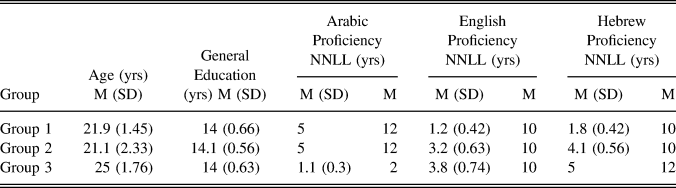
Note: Group 1 = native LA speakers, Group 2 = native LA speakers with advanced knowledge in Hebrew and English, Group 3 = native Hebrew speakers; yrs = years, M = mean, SD = standard deviation. Note that all participants were college students.
It can be seen that the average proficiency of the native Arabic speakers (Group 1) in the NNL, English and Hebrew, was limited (M = 1.2, SD = 0.43, for English; M = 1.8, SD = 0.42, for Hebrew). Arabic was the main language of these participants, in which they studied, spoke, and interacted. They all attended Arabic-speaking colleges, in which Hebrew and English were not spoken. All the participants in Group 1 were formally exposed to Hebrew and English for the first time in third grade (8–9 years of age) in special lessons targeting the acquisition of a foreign language. They learned Hebrew and English in lessons of 45 minutes, given twice a week. These lessons continued until the twelfth grade (17–18 years of age). However, the participants of Group 1 did not speak Hebrew or English and had limited exposure to these languages in their everyday lives for at least 3 years before testing.
The average proficiency of the native Arabic speakers with knowledge of Hebrew and English (Group 2) as NNL varied between intermediate and high (M = 3.2, SD = 0.63 for English; M = 4.1, SD = 0.56 for Hebrew). Like Group 1, the participants of this group were also introduced to Hebrew and English as part of their curriculum at elementary and high school, from third grade to twelfth grade. However, all the participants in Group 2 were students of Tel Aviv University, at which the spoken and written language is Hebrew and most reading is done in English. They were also required to obtain a predetermined level of proficiency in both English and Hebrew as entry criteria to their studies.
The average proficiency of the native Hebrew speakers (Group 3) in the NNL, English and Arabic, differed. The native Hebrew speakers were highly proficient in English (varying between intermediate to high; M = 3.8, SD = 0.74), but poorly proficient in Arabic (little or very little, M = 1.1, SD = 0.30; n = 10). The native Hebrew participants studied English as a NNL at school (third to twelfth grade) and passed their final exams in English. They were all students of Tel Aviv University where a predetermined level of proficiency in English was an entry criterion to their studies. They were also exposed to English in their academic and daily lives. However, these students had almost no knowledge of Arabic.
All the participants had similar college-level education (as shown in Table 3), and had studied at either Tel Aviv University or a local college at Umm al-Fahm. All participants belonged to middle socioeconomic class according to their neighborhood of residence and years of education, had no known language or learning disabilities according to self-report, and had normal hearing at frequencies 0.5, 1, 2, and 4 KHz (ANSI 2004). All Arabic speakers used MSA for reading and writing in Arabic.
Stimuli
The stimuli consisted of 40 bisyllabic words: 20 Arabic words and 20 Hebrew words (the words are listed in Appendix C). The words in each language included 10 words with a strong–weak stress pattern (stress on the penultimate syllable) and 10 words with a weak–strong stress pattern (stress on the ultimate syllable).Footnote 6 The words in Hebrew and Arabic were extremely familiar to the native speakers of those languages. This was confirmed with a questionnaire that assessed the familiarity of the words, completed by six adults for each language, using a scale from one (unfamiliar) to seven (very familiar). The Arabic speakers evaluated the Arabic words as used very frequently in Arabic (M = 6.93, SD = 0.12). Similarly, the Hebrew speakers evaluated the Hebrew words as used very frequently in Hebrew (M = 6.32, SD = 0.71). The familiarity scores for the Arabic and Hebrew words did not differ significantly (p = 0.3).
The stimuli were produced by two female native speakers—a native Arabic speaker and a native Hebrew speaker—and both had no known or apparent idiosyncrasies in their speech. The speakers were instructed to say the words clearly but to avoid exaggeration. All the words were recorded within a sentence. The two speakers were not aware of the purpose of the study. The stimuli were recorded digitally (sampling rate of 48,000 Hz and 16-bit quantization) in a soundproof room with a JVC MV 40 microphone located 10 cm from the mouth of the speaker, using the Sound Forge software (version 4.5a). The intensity of the words did not differ by more than 1/2 dB. This intensity range was obtained by normalizing the words without changing the ratios between the syllables within the words. The recorded words were divided into separate trial words with intervals of 500 ms silence before and after each word.
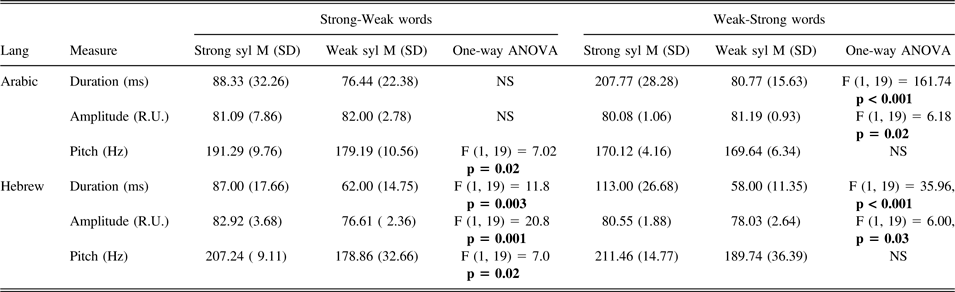
Acoustic measurements (duration, maximum peak pitch, and amplitude) were made for each syllable (vowel) of the Arabic and Hebrew words, and are shown in Table 4. The mean results for each language and within the strong–weak and weak–strong words are shown separately. The results of one-way ANOVA of the differences between the strong and weak syllables for each acoustic parameter are also shown in Table 4.
Acoustic measurements of vowels in strong-weak and weak-strong Arabic and Hebrew words. Mean (M) and Standard Deviation (SD) of duration (in ms) and maximum amplitude (in relative units) and pitch (in Hz) are described for the strong syllable (strong syl) and for the weak syllable (weak syl). Results of one-way analyses of variance between the measures of the strong and weak syllable are also shown for comparison between the weak and the strong syllable in each language and stress pattern (NS = statistical non significance).
Procedure
The participants were tested individually in a quiet room using a Dell Precision 4300 computer. The stimuli were presented with the Superlab 4.5 software. The participants heard each of the stimulus diotically through headphones at 65 dB SPL. Each participant heard separately the Arabic and Hebrew words. After each word, the participant was asked to indicate whether it contained the stress, and if yes, which of the two syllables contained the stress, the first or second. The participant clicked his/her answers to both questions. The responses were collected by the software. Before testing, all the participants confirmed that they were familiar with the concept of stress in words and had learnt about it at school. The experimenter explained that “stress” refers to the most prominent syllable in the word and gave an example in the native language of the participant. Before testing in each language (block), the participant was presented with two examples and was asked to identify the stress placement. Feedback was provided for these examples. The examples did not appear in the test items.
After the examples, 20 stimuli in the same language were presented by computer. There was an interval of 30 seconds between each trial, in which a distracting task was presented by the computer (e.g., addition of numbers, completion of a puzzle). The purpose of the distracting task was to prevent the storage of words in the short-term auditory memory, which would allow the following word to be compared with the previous one. The participants were presented with one block of words in LA and one block in Hebrew. The order of the blocks was counterbalanced across the listeners. The word order within each block was also random, with no more than three words with the same stress pattern presented successively. No feedback was provided for the test items. The test sessions lasted for 20 to 25 minutes. The procedure was approved by the Ethical Review Board Committee of Tel Aviv University. All the participants signed a consent form before the commencement of the tests.
RESULTS
No participant was excluded from the study. In analyzing the data, we first analyzed the incorrect responses to the question “Does the word contain stress?” for each group and each language. Only if the answer to the first question was “yes,” we then analyzed the correct identification of the stress location for each group and each language based on the participants’ answers to “Which of the two syllables in the word contained the stress, the first or second?” The sum of mistakes, for each participant (out of 20 questions) served as the dependent variable. Figure 3 shows the mean of the sum of mistakes (in raw scores) for each group.
The average scores of “no stress” mistakes and SD for each language (Arabic and Hebrew) and group of participants (Experiment 2).
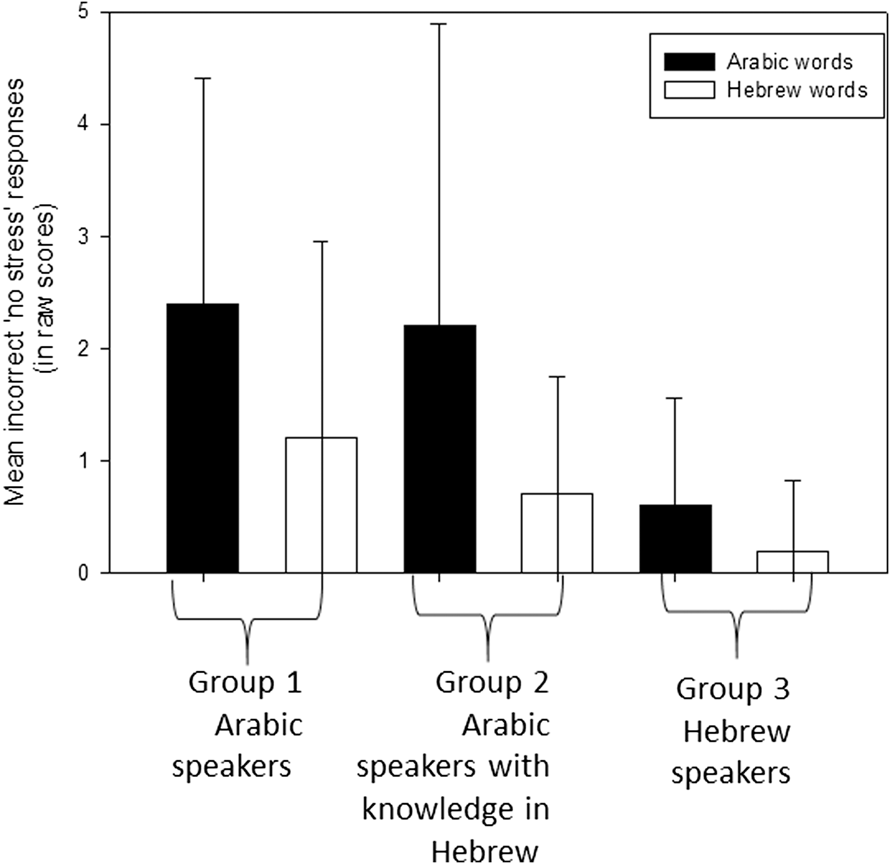
It can be seen from Figure 3 that Group 1 (native Arabic speakers with limited proficiency in Hebrew and English) displayed a higher number of mistakes (“no stress”) (M = 2.40, SD = 2.01 for Arabic words; M = 1.20, SD = 1.75 for Hebrew words), followed by Group 2 (native Arabic speakers with advanced proficiency in Hebrew and English; M = 2.20, SD = 2.78 for Arabic words; M = 0.70, SD = 1.05 for Hebrew words) and Group 3 (Hebrew speakers; M = 0.60, SD = 0.96 for Arabic words; M = 0.20, SD = 0.63 for Hebrew words). All three groups showed the highest numbers of mistakes in Arabic words. These observations were confirmed with a statistical analysis. It should be noted that although the decision of each participant was a bionomic one (“yes” or “no” for the existence of stress), the sum of responses is a continuous variable. Thus, an ANOVA analysis was conducted. The results of two-way repeated-measures ANOVA with the sum of “no stress” answers as the dependent variable, the LANGUAGE of the stimulus as the within-subject variable, and the GROUP of participants as the between-subject variable, suggested a main effect of LANGUAGE [F(1,27) = 9.56, p = 0.005, η 2 = 0.26], no significant main effect of GROUP [F(2,27) = 2.59, p = 0.09, η 2 = 0.16], and no LANGUAGE × GROUP interaction [(2, 27) = 0.96, p = 0.39, η 2 = 0.07].
To assess whether the three groups of speakers differed in their ability to identify the placement of lexical stress, the correct responses for stress placement were calculated only for the words in which the presence of stress was identified. The sum of correct responses in the 20 responses to these questions served as the dependent variable. Figure 4 displays the mean of the sum of correct responses (in raw scores) for each group.
The average scores of correct responses and SD for stress placement for each language (Arabic and Hebrew) and group of participants (Experiment 2).
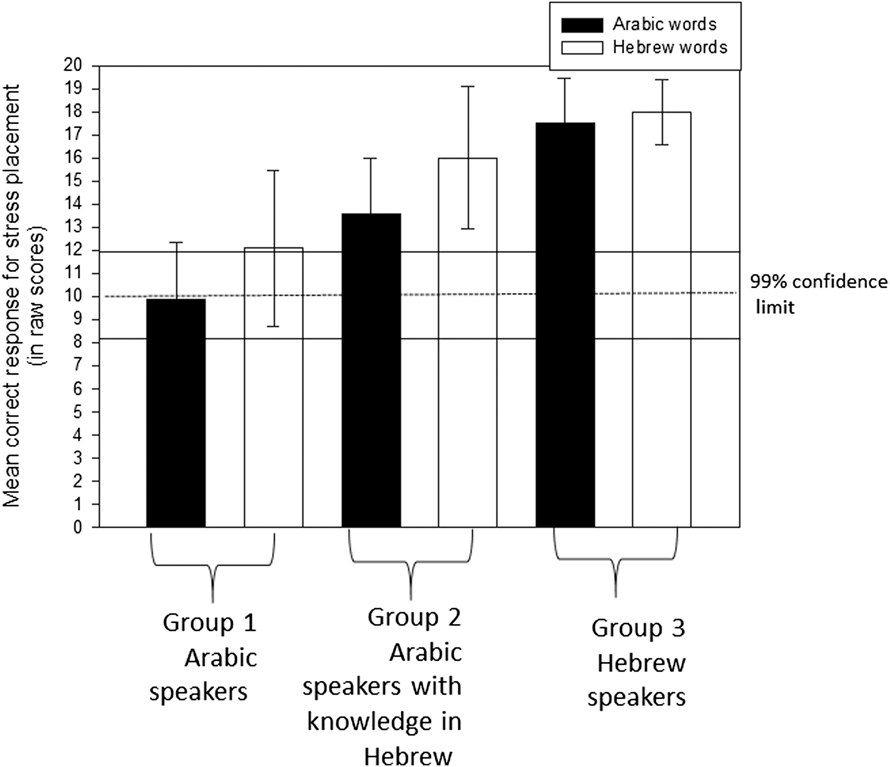
From Figure 4, it can be seen that Group 1 (native Arabic speakers with limited proficiency in Hebrew or English) obtained the lowest scores for identifying stress placement (M = 9.9, SD = 2.46 for Arabic; M = 12.1, SD = 3.38 for Hebrew) followed by Group 2 (native Arabic speakers with advanced proficiency in Hebrew and English; M = 13.6, SD = 2.41 for Arabic; M = 16, SD = 3.09 for Hebrew) and Group 3 (Hebrew speakers) (M = 17.5, SD = 1.95 for Arabic; M = 18, SD = 1.41 for Hebrew).
Correct responses were normally distributed within each group. The results of two-way repeated-measures ANOVA with the sum of “correct responses” for stress placement in the word as the dependent variable, the LANGUAGE of the stimulus as the within-subject variable, and the GROUP of participants as the between-subject variable suggest a main effect of LANGUAGE [F(1,27) = 12.42, p = 0.002, η 2 = 0.32] confirming more correct responses in Hebrew compared to Arabic words, a main effect of GROUP [F(2,27) = 24.30, p = 0.0001, η 2 = 0.64], and no LANGUAGE × GROUP interaction (p = 0.22, η 2 = 0.10). Further pairwise comparisons between the groups revealed significant differences between Group 1 and Group 2 (p = 0.002), between Group 2 and Group 3 (p = 0.02), and between Group 1 and Group 3 (p = 0.0001). Thus, speakers in Groups 3 and 2 had more correct responses compared to Arabic speakers with limited knowledge in Hebrew (Group 1) and speakers with advanced knowledge in Hebrew and English (Group 2) had more correct responses compared to Hebrew speakers (Group 3).
We reanalyzed the data without a few cognate words that exist in both Arabic and Hebrew (e.g., /málik/ in Arabic and /mélex/ in Hebrew, “king”). A two-way repeated-measures ANOVA with the mean “correct response” for stress placement in the word as the dependent variable, the LANGUAGE of the stimulus as the within-subject variable, and the GROUP of participants as the between-subject variable was conducted. The results showed a main effect for LANGUAGE [F(1,27) = 124.19, p = 0.0001, η 2 = 0.82], a main effect for GROUP [F(2,27) = 26.62, p = 0.0001, η 2 = 0.66], and no LANGUAGE × GROUP interaction (p = 0.66, η2 = 0.03). Further pairwise comparisons between the groups revealed significant differences between Group 1 and Group 2 (p = 0.001), between Group 2 and Group 3 (p = 0.02), and between Group 1 and Group 3 (p = 0.0001).
DISCUSSION
The results of Experiment 2 support the following findings: (a) Native speakers of Arabic with limited knowledge of Hebrew and English had difficulty identifying the presence and placement of stress in both their own language and in NNL with variable stress, Hebrew. This supports the notion that listening experience in a native language with predictable unfixed stress reduces an individual’s metalinguistic awareness of stress. (b) Native speakers of Arabic who were more proficient in English and Hebrew showed better identification of stress placement, suggesting that proficiency in NNL with variable stress may facilitate stress identification in both the native languages and NNLs. (c) Stress identification was easier in Hebrew words than in Arabic words across the three groups of participants.
Our first finding is that during a listening experience, the native language influences the listener’s ability to identify stress in words. LA speakers who live in Israel, whose native language is characterized by predictable unfixed stress assignments, and who had little exposure to Hebrew or English showed reduced stress identification in words, regardless of whether the presented language was Arabic or Hebrew. These results suggest that Arabic speakers have difficulties in encoding stress not only in meaningless syllabic sequences as shown in Experiment 1, but also in familiar bisyllabic words. The present findings are in agreement with data on stress processing in languages with fixed stress assignment (Dupoux & Peperkamp, Reference Dupoux, Peperkamp, Durand and Laks2002; Frost, Reference Frost2011; Kijak, Reference Kijak2009; Peperkamp et al., Reference Peperkamp, Vendelin and Dupoux2010). Future studies may explore the influence of the number of syllables in the word on metalinguistic awareness for stress.
The second main finding of this study is that the acquisition of NNL may facilitate stress identification to some extent. One of the suggested advantages of second language acquisition is that it can enhance metalinguistic awareness, or the ability to explicitly think about language (e.g., Bialystok, Reference Bialystok1988). This has been demonstrated in several linguistic domains, including the semantic, grammatical, and phonological domains. For example, bilingual children were better equipped to explain what a word is to correct syntactical mistakes, explain the rules of syntax, and count the phonemes in words (e.g., Adesope, Lavin, Thompson, Ungerleider, Reference Adesope, Lavin, Thompson and Ungerleider2010; Bialystok, Reference Bialystok1988; Bialystok, Majumder, & Martin, Reference Bialystok, Majumder and Martin2003). The present study has shown that the acquisition of a second language also better equips a listener for the prosodic judgment of stress placement in words.
Arabic speakers with advanced knowledge of Hebrew and English identified the stress in Hebrew and Arabic words better than Arabic speakers with minimal knowledge of Hebrew, but not as good as that of native Hebrew speakers. These results suggest that the acquisition of a second language (Hebrew and/or English) with unpredictable stress, in which stress distinguishes the meanings of similar words, may enhance the metalinguistic awareness of stress positions.
However, somewhat different results have been reported for French adults who were late learners of Spanish, who could not remember the sequences of the stress positions in words or make lexical decisions (word vs. nonword) based on stress positions (Dupoux et al., Reference Dupoux, Sebastián-Gallés, Navarrete and Peperkamp2008). It is possible that the differences in the results of our study and the other studies cited arise because the French speakers started to learn Spanish at 15 to 18 years of age and did not speak Spanish in their everyday lives, whereas the Arabic speakers in the present study started to learn Hebrew and English at a much earlier age (8–9 years) and continued to use Hebrew and English in their everyday academic lives. Although Arabic speakers learned Hebrew and English after the optimal period for phonetic perception (Werker & Tees, Reference Werker and Tees2005), it is possible that their lifelong experience using languages with unfixed stress influenced their meta-prosodic abilities in both NNL and native language. However, their stress identification in their native language (Arabic) remained less efficient than their stress identification in NNL (English and Hebrew). It should be noted, that the results of the present study are in agreement with the results of French–Spanish bilinguals who were tested on their perception of Spanish lexical stress (Dupoux et al., Reference Dupoux, Peperkamp and Sebastián-Gallés2010).
Our last finding was that stress placement was more readily identified in Hebrew words than in Arabic words across the three groups of speakers. Even Arabic speakers with limited knowledge in Hebrew and English performed above chance when judging stress placement in Hebrew words (see Figures 3 and 4). At least two factors might contribute to this phenomenon: (a) the fact that Arabic speakers do not encode stress at the phonological level, and therefore, when hearing a familiar word, cannot use previous phonological representations of the word to judge the placement of the stress; and (b) the fact that the Hebrew words contained more acoustic correlates for stress. Looking at Table 4, it can be seen that the Hebrew stressed syllables, whether in strong–weak or weak–strong words, included increased duration, intensity, and possibly pitch (pitch was increased in the strong–weak words but not in the weak–strong words). However, the Arabic words included changes in only one or two dimensions. The stressed syllables in strong–weak Arabic words were characterized by increased fundamental frequency, and the stressed syllables in weak–strong Arabic words were characterized by increased duration and greater intensity. This was also confirmed in a pilot study in which word production of additional five Arabic and Hebrew speakers was assessed. Therefore, the overall suprasegmental cues for stress may be more salient in Hebrew compared to Arabic words. This may be related to differences in the acoustics of the language or between speakers (because only one speaker was recorded in each language). This issue warrants further investigation.
GENERAL DISCUSSION
Overall, the findings of the present study suggest that perceptual sensitivity for lexical stress is influenced by the native language and the presented tasks. In this study we assessed the influence of the native language on sensitivity for lexical stress by assessing participants from two understudied languages: Arabic and Hebrew. We also used three different tasks that tapped on three different perceptual-cognitive processes: discrimination, recall of stress sequences, and metalinguistic judgment for stress placement in words. Our findings suggest that although native Arabic listeners perceived the acoustic correlates for stress as evident by their above-chance performance in the discrimination task, they had difficulties in recalling stress placement in nonsense words and in identifying stress placement in real words. A possible explanation for this difference in performance may be related to the involvement of different levels of representation for each task. While discriminating the word that differs in its stress position may involve mainly the acoustic-phonetic level of representation, judgment of stress placement and memory for stress sequences require also the phonological-linguistic level of representation. Phonological representation or encoding is a language-specific strategy that is probably developed or facilitated in languages in which stress has a functional role in distinguishing between similar words and/or a useful role in word recognition. In the absence of phonological encoding of stress, participants who are presented with tasks, such as, identifying stress placement in words or memorizing stress placement have to rely mainly on memory for acoustic cues, and therefore are confronted with more cognitive load. The findings of the present two experiments support the influence of the native language with predictable stress assignment on stress representation. However, the findings of the second experiment add a novel observation suggesting that high proficiency in a NNL with variable stress may facilitate stress representation in both words of the native language and the NNL. Arabic speakers with advanced knowledge in Hebrew and English, languages in which stress assignment is variable and stress has a contrastive role as distinguishing between word meaning, can improve their ability to identify stress. This suggests that second language acquisition may improve awareness for stress.
From a theoretical perspective, the implications of the present findings relate to stress representation and its influence on perception. Researchers have suggested that the more regular or predictable a speech pattern is, the less it needs to be specified in the lexical representation. For example, if vowel nasality is predictable, as in English, where nasal vowels only occur before nasal consonants, it does not need to be specified lexically (Gaskell, Hare, & Marslen-Wilson, Reference Gaskell, Hare and Marslen-Wilson1995; Peperkampet al., 2010, p. 422). It seems that a similar argument is valid also for stress representation. Whether stress is predictable because it is fixed to one syllable in the word (e.g., Hungarian) or linked to the phonological structure of the syllable (Arabic), and thus does not distinguish between word meanings, it does not have to be represented lexically. Our findings concerning stress perception and memory in Arabic speakers support this view by implying that Arabic speakers are less efficient at encoding stress.
The current study has educational implications concerning possible benefits of studying a NNL with different stress assignment. Native speakers of a language with predictable stress (Arabic) can improve their awareness to stress in words by learning languages with nonpredictable contrastive stress (e.g., Hebrew, English). However, high proficiency of the NNL is required to improve sensitivity to stress. In addition, difficulties in stress processing may alter word learning of similar words that differ only in stress position, at least when the second language learners have limited experience with the language. Thus, learning programs of second languages with variable stress should explicitly address this issue.
The present study has several limitations that should be mentioned. One limitation is related to the fact that only one Arabic speaker and one Hebrew speaker recorded the words in Experiment 2. Thus, it is possible to claim that individual differences between the Arabic and Hebrew speakers contributed to the acoustic differences observed between Hebrew and Arabic words, and that these differences do not reflect a real dissimilarity between the two languages. However, the results of an ongoing pilot study in our lab with an additional five Hebrew speakers and five Arabic speakers on the differences of acoustic characteristics of stress in Hebrew and Arabic bisyllabic words confirms the difference in production that are reported in the present study (Table 4). Arabic speakers use mainly duration to sign stress in weak–strong words and pitch differences in strong–weak words, whereas Hebrew speakers tend to use amplitude and pitch changes. Another possible limitation of the present study is that most Hebrew strong–weak words were nouns and most weak–strong words were verbs. Hypothetically, this uneven distribution of different lexical categories across the different stress patterns may give some psycholinguistic advantage for Hebrew speakers in their decision for stress position. However, the fact that speakers who were familiar with Hebrew (Groups 3 and 2) were better than Arabic speakers (Group 1) in identifying stress position not only in Hebrew words but also in Arabic words (Experiment 2) does not support this view. Our interpretation is that a linguistic knowledge on lexical categories of words did not assisted Hebrew speakers, but their experience with a language with different prosodic characteristics compared to Arabic did. However, further research with more balanced representation of lexical categories in strong–weak and weak–strong words is important. Finally, the present study did not use a direct comparison between memory for stress and memory for phoneme using the same sequence recall task to control the possible influence of phonological memory. Instead, the forward and backward digit spans were used. Further studies may use more appropriate measures for assessing phonological memory.
In sum, this study highlights two major points: (a) Variations in stress position in words at the surface level of L1 are insufficient to facilitate awareness and memory for stress placement. It is suggested that when in the native language stress has no functional linguistic role for differentiating between words, speakers show reduced sensitivity to stress. However, it remains possible that the phonological structure of Arabic in which stress is predictable by the structure of the syllable, influences sensitivity for stress. (b) Acquisition of a second language at 8 to 9 years of age, and, frequent and repeated use of a NNL with variable stress (Hebrew/English) may enhance awareness for stress placement in words.
APPENDIX A
STRESS APPEARANCE AND REGULARITY IN THE LANGUAGES OF THE WORLD (FOLLOWING VOGEL 2000)
APPENDIX B
LIST OF STIMULI FOR THE DISCRIMINATION AND MEMORY TEST
For each of the nonsense words six triplets were made. In each triplet, one word differs in stress position from the two others.
bánizo, bánizo, banízo
banízo, banízo, bánizo
banizó, bánizo, bánizo
bánizo, banizó, banizó
banízo, banizó, banízo
banizó, banízo, banizó
kíduta, kíduta, kidúta
kidúta, kidúta, kíduta
kidutá, kíduta, kíduta
kíduta, kidutá, kidutá
kidúta, kidutá, kidúta
kidutá, kidúta, kidutá
dímaku, dímaku, dimáku
dimáku, dimáku, dímaku
dimakú, dímaku, dímaku
dímaku, dimakú, dimakú
dimáku, dimakú, dimáku
dimakú, dimáku, dimakú
túsalo, túsalo, tusálo
tusálo, tusálo, túsalo
tusaló, túsalo, túsalo
túsalo, tusaló, tusaló
tusálo, tusaló, tusálo
tusaló, tusálo, tusaló
zíkoda, zíkoda, zikóda
zikóda, zikóda, zíkoda
zikodá, zíkoda, zíkoda
zíkoda, zikodá, zikodá
zikóda, zikodá, zikóda
zikodá, zikóda, zikodá
túbida, túbida, tubída
tubída, tubída, túbida
tubidá, túbida, túbida
túbida, tubidá, tubidá
tubída, tubidá, tubída
tubudá, tubída, tubidá
APPENDIX C
ARABIC STRONG–WEAK WORDS
/ákal/ (ate), / ḍáhab/ (gold), /fáhas/ (to test), /má:lik/ (king), /kálam/ (pencil), /wálad/ (boy), /ʁásem/ (picture), /ʁákad/ (ran), /bána/ (built), /kátab/ (wrote)
ARABIC WEAK–STRONG WORDS
/mará:m/ (purpose), /kaʁá:ʁ/ (decision), /kalá:m/ (talking), /salá:m/ (piece), /baná:t/ (girls), /xawá:t/ (sisters), /ḍamá:n/ (past), /matá:ʁ / (rain), /kazá:z/, /gamá:l/ (camel)
HEBREW STRONG–WEAK WORDS
/téne/ (fruit basket), /xével/ (rope), /réSet/ (net), /Séker/ (lie), /tékes/ (ceremony), /páʔam/ (occasion), /géfen/ (grapevine), /tséla/ (edge), /déȓex/ (grass), /péSa/ (crime)
HEBREW WEAK–STRONG WORDS
/doréS/ (demand), /toxén/ (miller), /poxéd/ (afraid), /xadáS/ (new), /kará/ (happened), /pagá/ (hit), /pasál/ (reject), /tipá/ (drop), /koSér/ (tie), /kaSá/ (hard).



