Introduction
The Neolithic period in southern Arabia (c. 6500–3300 BC) coincides with the Holocene Humid Period (c. 8000–3000 BC, cf. Lézine et al. Reference Lézine, Ivory, Braconnot and Marti.2017), which in this territory was characterised by a wetter climate, interspersed with phases of aridity. These climatic fluctuations correlate with archaeological evidence for increased occupation of either inland or coastal areas (Preston et al. Reference Preston2015). Neolithic communities in southern Arabia probably practised a flexible subsistence strategy, combining hunting and gathering with local herding and coastal fishing (Charpentier et al. Reference Charpentier, Maiorano, Marchand, Vosges and Borgi.2023).
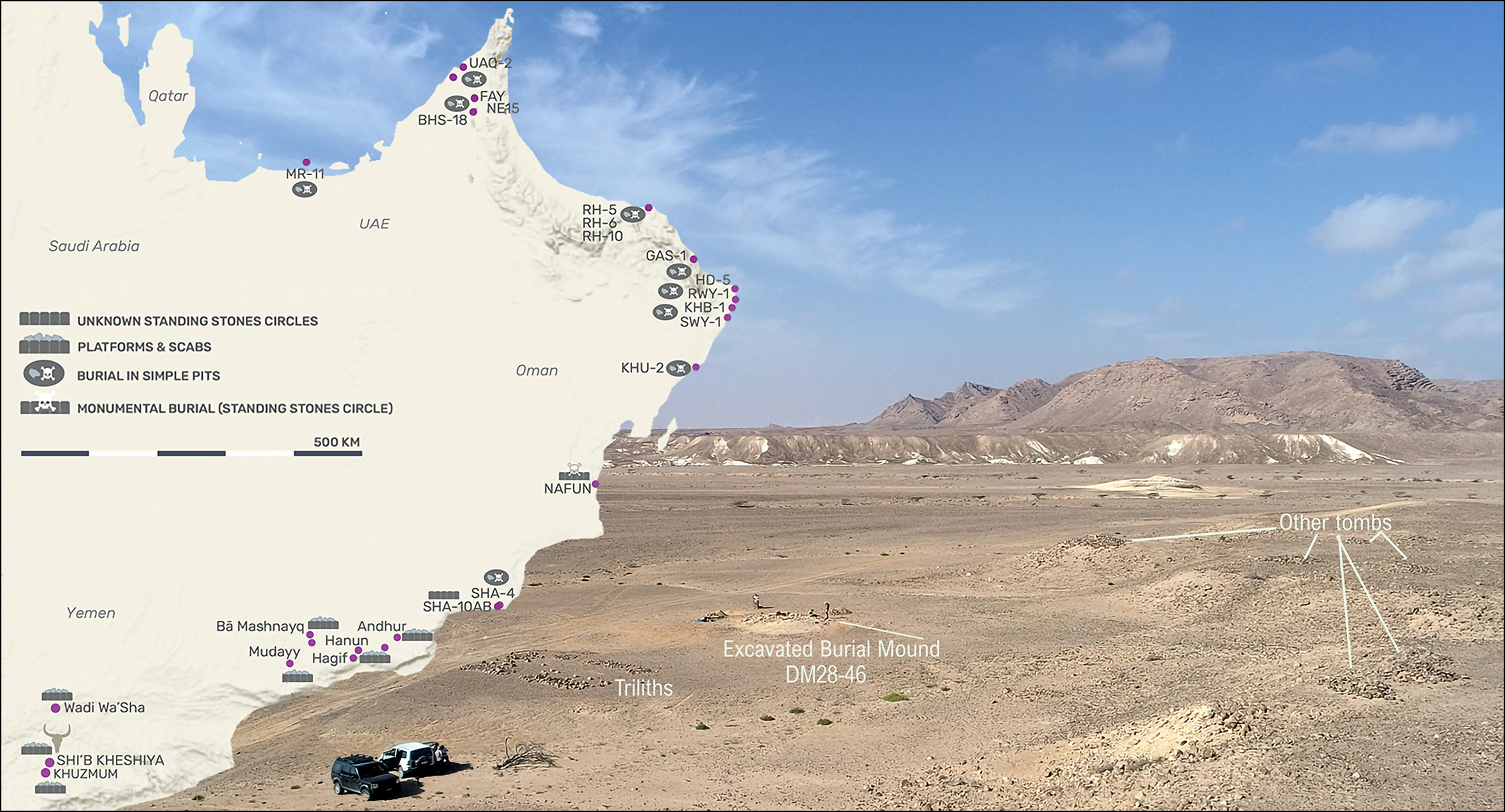
Most burial evidence comes from sites along the coasts of the Gulf and the Arabian Sea (Figure 1); inland ritual structures are fewer and more variable (Uerpmann et al. Reference Uerpmann, Uerpmann and Jasim2006; McCorriston Reference McCorriston2023). Typical graves from the fifth and fourth millennia BC consist of single or double pit burials, with occasional collective graves (Bortolini & Munoz Reference Bortolini and Munoz.2015). In this context, the discovery of successive burials of multiple individuals alongside monumental stone architecture—an uncommon element in southern Arabia until the Bronze Age (Bortolini & Munoz Reference Bortolini and Munoz.2015)— at Wadi Nafūn offers unique evidence of ritual behaviour during the Neolithic period.
Overview of the Nafun archaeological complex looking south, overlaid with a map of south-southeastern Arabia showing Neolithic burial sites (figure by Maria Pia Maiorano; photograph by Waleed Al-Ghafri).

The collective grave in Wadi Nafūn
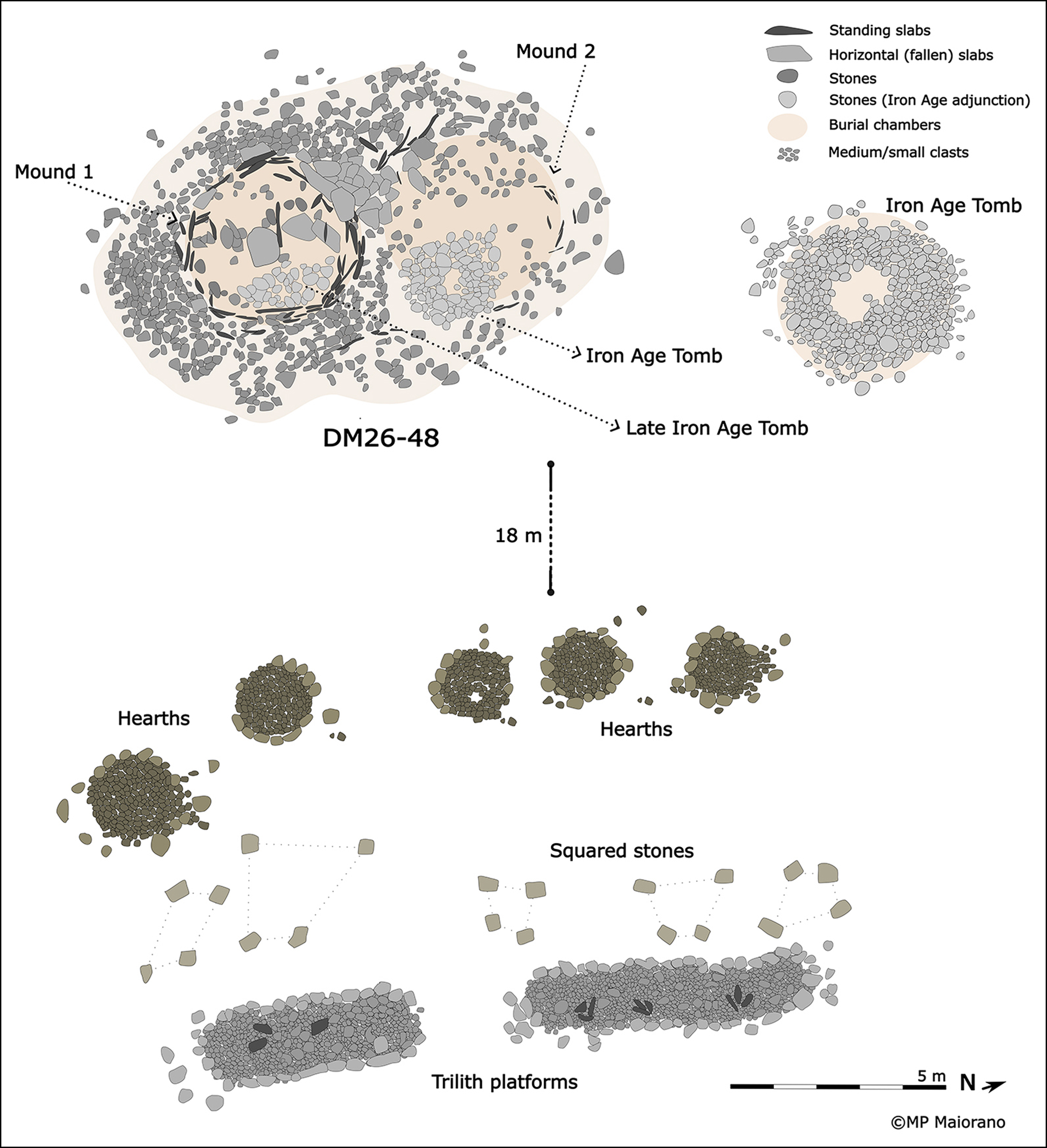
The burial mound DM28.46 is on the western edge of Wadi Nafūn, located on top of a gravel terrace. It forms part of a larger monumental complex (Figure 1), used over several millennia along a route running through the wadi from inland to the coast. The significance of the area is highlighted by an accumulation of monuments, including numerous Iron Age tombs, contemporary ‘triliths’ (megalithic stone rows), and an extensive rock-carving gallery dating from the Neolithic to the early Islamic period (600–1150 AD) (Fossati & Garba Reference Fossati and Garba.2025).
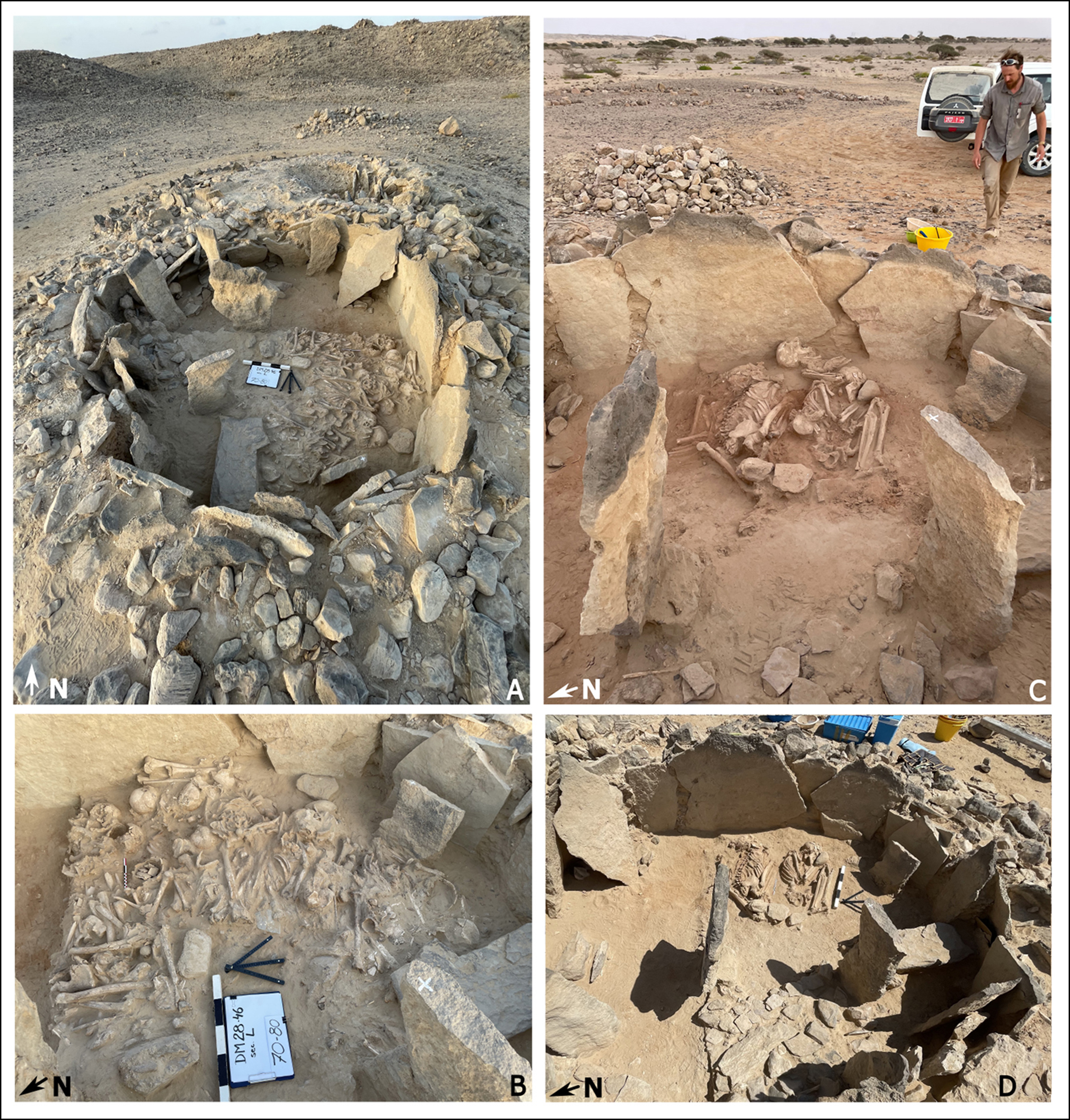
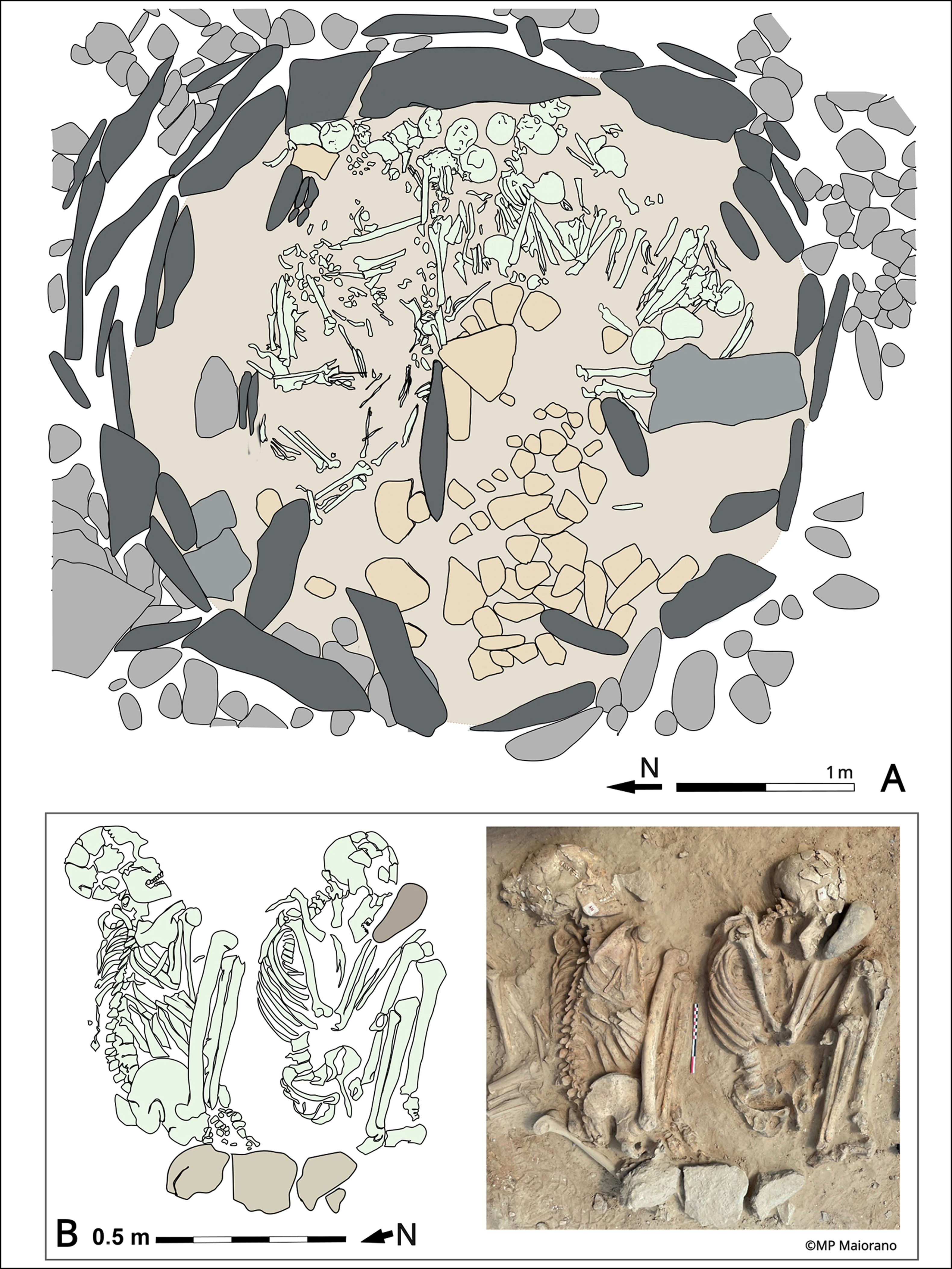
The structure comprises two circular burial mounds (Figure 2). To date, only Mound 1 has been fully excavated. Construction used locally sourced limestone and dolomite slabs, creating a 1.5m-thick circular wall with four to five internal rows of slabs and one or two external rows. The space in between was filled with loose stones, gravel and aeolian sand. The burial chamber is slightly oval, with internal dimensions of 6m (east–west) by 5.5m (north–south) and a depth reaching up to 1m. In the western part, five thin stelae indicate an area used for access or ritual activity, featuring a surface ‘pavement’ of irregular stones. The largest stela marks the centre, while several smaller stones define the main area for burial (Figures 3 & 4). The burial depositions follow a crescent-like pattern along the perimeter walls. The remains were placed in the chamber following decomposition of soft tissues, arranged with skulls lined up along the walls and long bones pointing towards the centre. Other body parts were placed on or between the long bones. The minimum number of individuals, estimated at more than 70, suggests a collective burial practice involving both sexes and all ages. At the lowest level, directly opposite the ‘entrance’, the fully articulated skeletons of two older males were found (Figure 4), suggesting they may have held a special role within the community.
Plan of DM28-46 with surrounding monuments (figure by Maria Pia Maiorano).

Mound 1 and the burial deposits within it during excavation (figure by Maria Pia Maiorano; photographs by Alžběta Danielisová).

The burial chamber in Mound 1, showing the lower level of burial deposits in situ (A) and detail of the two articulated bodies from the lowermost layer (B) (figure by Maria Pia Maiorano).

Most of the bones show signs of exposure to the elements (aeolian sands/monsoon rain). As bones accumulated over time, the chamber floor rose with natural sedimentation. Later deposits became less organised, with remains haphazardly placed throughout, even within the ‘entrance’ area. A partial collapse of the western wall was left unattended, and burial depositions continued between the collapsed stones.
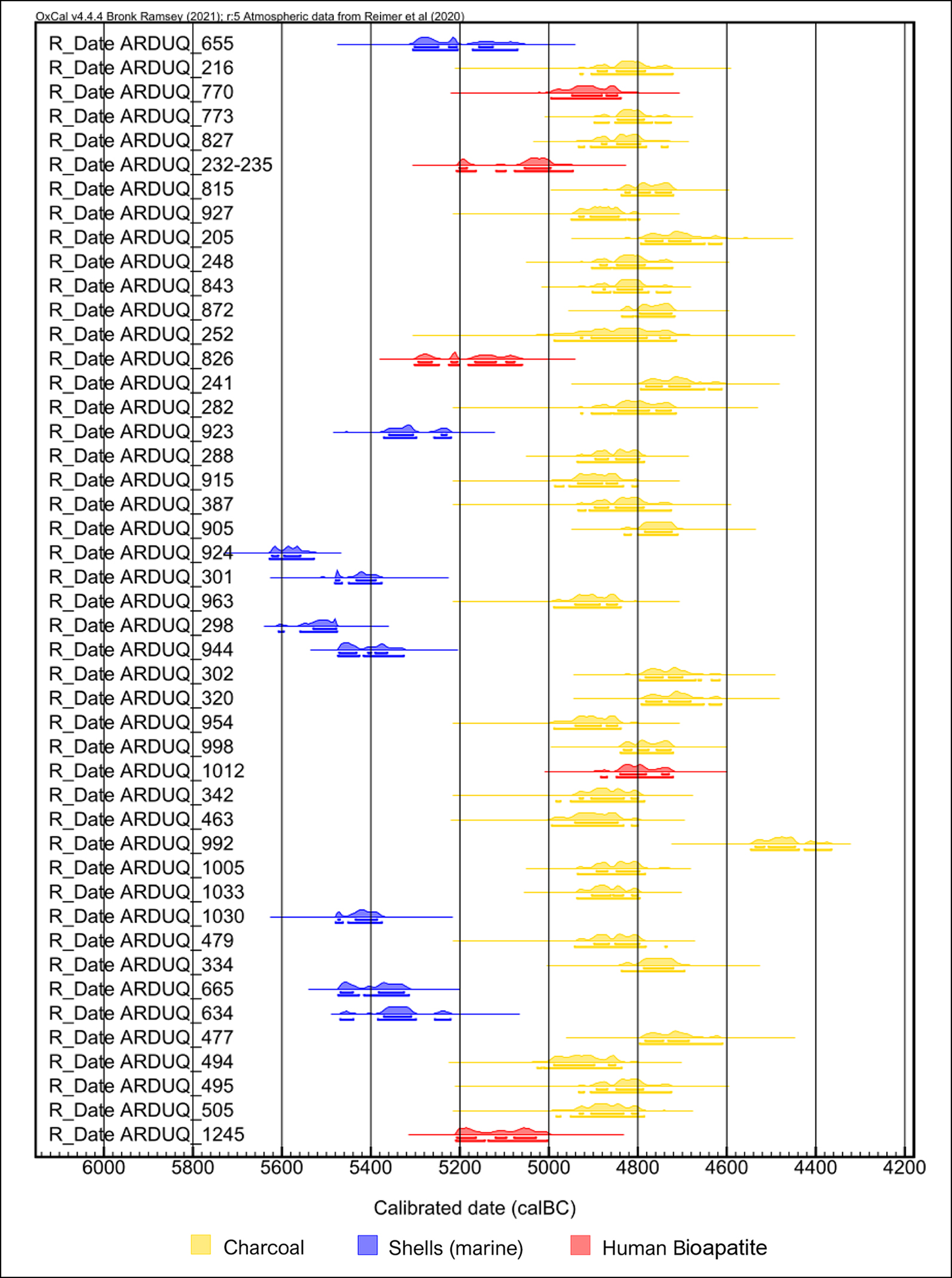
Stratigraphic evidence suggests that Mound 2 was constructed sometime after Mound 1, sharing both its architectural design and burial practices. The two mounds were connected by a row of vertical slabs, forming a unified funerary complex. Radiocarbon dating of the structure was performed on charcoal, marine shells and human bioapatite collected from individual bone clusters and other stratigraphic contexts, including the entrance ‘pavement’ within the burial chamber. Discrepancies between radiocarbon dates obtained from charcoal and shell samples reveal a notable marine reservoir effect in this area, reaching 600 years. Older dates obtained from human bioapatite may thus be attributed to the influence of a marine-rich diet. Bayesian modelling of the marine reservoir effect-corrected dataset indicates that the monument was in use for more than 300 years during the first half of the fifth millennium BC (Figure 5).
Radiocarbon dates from Mound 1 (figure by Jiří Šneberger).

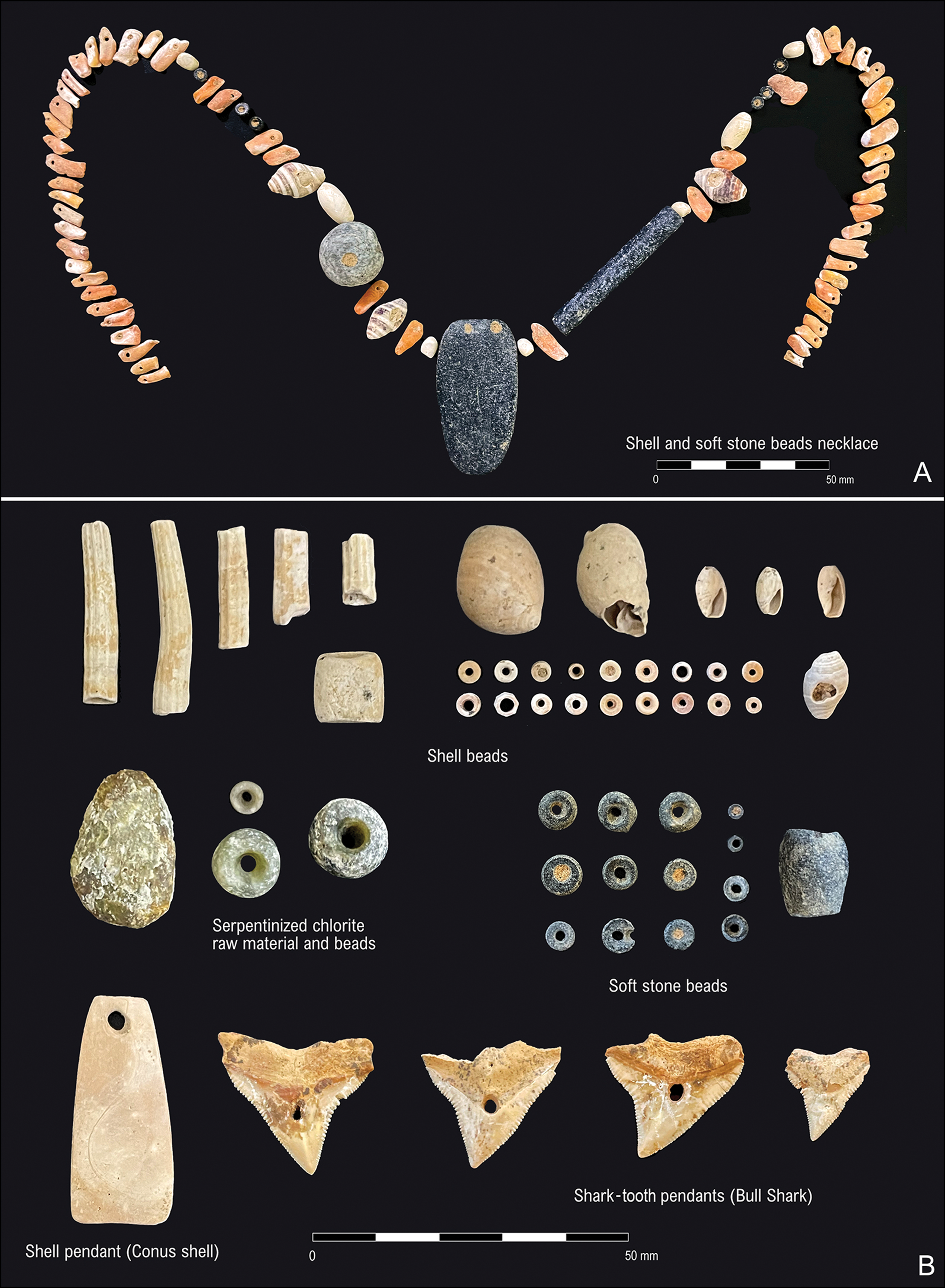
The material culture (Figure 6) of the grave primarily consists of personal ornaments, including shells, soft stone beads and shark-tooth pendants (Heterodontidae). A connection to marine themes is also suggested by a panel of Neolithic rock carvings located across the wadi, and finds (tiger shark tooth, stingray’s barb, bone fish-hook) from Mound 2. During the cleaning works at Mound 2, a complete necklace of shells (Engina mendicaria, Spondylus sp.) and soft stones was discovered.
Shell and soft stone necklace (A) and other finds from DM28-46 (B) (figure by Maria Pia Maiorano).

The lifestyle of the burial community
The arid environment posed challenges for the preservation of human remains, making collagen-based analyses impossible. As a result, isotopic data are derived from bioapatite in the enamel and bones. Analysis of strontium (87Sr/86Sr) and oxygen (δ18O) reveals that different bone clusters were associated with communities from varying locations, some from distances of up to 50km away. Both strontium and oxygen gradients also suggest the possibility of frequent population movements, specifically during childhood and early adolescence.
Dietary reconstructions are more difficult to assess, but carbon (δ13C) isotopes, marine reservoir effect calculations and elemental concentrations of the bioapatite indicate a mix of terrestrial and marine food sources. Preliminary isotopic analysis of dental enamel nitrogen (δ15N) reveals unexpectedly high values, suggesting a protein source derived from a high marine trophic level. Dietary patterns will be further explored through dental wear analysis and the study of dental calculus (proteomic and microfossil analyses).
Significance of the site
Dating to the first half of the fifth millennium BC, Wadi Nafūn is the oldest site of its kind in South Arabia. The collective effort required to build and maintain this structure suggests strong interconnectedness and communication among various communities living in and migrating through the region. This structure—constructed, maintained and used for more than two centuries—was a distinct sociocultural marker connecting Neolithic communities across a vast area. These groups were possibly guided by philopatric behaviour, with the central burial ground acting as a focal or instrumental feature in their understanding of the local territory. In the following millennia, the monument continued to hold significance for sociocultural activities.
Despite the fragmentary preservation of the remains, the Nafūn burial community provides a valuable opportunity to investigate Neolithic lifeways through modern bioarchaeological and geochemical methods. This approach will offer new insights into the impact of social behaviour and subsistence choices on human resilience and health.
Acknowledgements
We thank the Ministry of Heritage and Tourism of the Sultanate of Oman and the Special Economic Zone Authority of Duqm (SEZAD) for supporting this research and Waleed al Ghafri for drone imagery.
Funding statement
The project was funded by the Academy of Sciences of the Czech Republic: ‘Biocultural interactions: migration as a result of climate change and subsistence mismatches (Praemium Academie of Prof. Viktor Černý)’ and by the Czech Ministry of Education, Youth and Sports (project reg. no. CZ.02.01.01/00/22_008/0004593).