


The overall health of children depends, in part, upon food intake that provides sufficient energy and nutrients to support optimal growth and development( Reference Briggs, Mueller and Fleischhacker 1 ). Yet diets consumed by most US children are not consistent with the Dietary Guidelines for Americans( 2 ). Children's consumption of fruits, vegetables, whole grains and low-fat and fat-free dairy are substantially less than current recommendations, resulting in shortfall intakes of several key nutrients, in particular Ca, K, fibre, Mg and vitamin E( 3 ). Additionally, intakes of discretionary energy from solid fats and added sugars considerably exceed recommendations( 3 ).
More than 55 million US children aged 5–19 years spend the majority of their day in school( 4 ). Through the federally assisted National School Lunch Program (NSLP) and School Breakfast Program (SBP), schools provide up to two meals and often snacks daily. In 2011, the NSLP served lunch to more than 31 million children each day( 5 ). Students who participate in both the NLSP and SBP may consume up to 47 % of their daily energy intake from school meals/snacks, placing schools in a position to significantly influence children's food choices and diet quality on a daily basis( Reference Briefel, Crepinsek and Cabili 6 ).
Under the previous standards for national child nutrition programmes, enacted by the Child Nutrition and WIC Reauthorization Act of 2004 (CNR)( 7 ), school lunches were planned to provide children with one-third of the RDA of protein, Ca, Fe, and vitamins A and C from five required meal components: 2 oz meat/meat alternate, 8 oz milk, 1 serving of grain (whole grains are encouraged) and 2 servings (total of 3/4 cup) of fruit or vegetables( 8 ). According to the Third School Nutrition Dietary Assessment Study (SNDA III)( 9 ), over 85 % of US public schools offered lunches that met the standards for these key nutrients. However, fewer than one-third of these schools offered lunches that met the standard of less than 30 % of energy from fat or less than 10 % of energy from saturated fat( Reference Crepinsek, Gordon and McKinney 10 ).
Recognizing there were still improvements to be made, in 2009 the Institute of Medicine recommended new meal standards that closely aligned with the Dietary Guidelines for Americans( 11 ). In 2010, national legislation directed the US Department of Agriculture to update school meal regulations and align them with the Institute of Medicine's recommendations( 12 ). The final school meal standards, released in 2012, limit energy and provide minimum and maximum amounts of energy for each age group( 13 ). The standards also require a serving of fruit and a serving of vegetables daily with a weekly requirement for vegetable subgroups (dark green and orange vegetables and legumes). The previous standards required only a fruit or a vegetable and no requirement for vegetable subgroups( 8 ). Students will also be required to take a minimum of a fruit or a vegetable, whereas the previous guidelines allowed them to refuse both, if desired. Fifty per cent of grain foods must be whole grains. The new meal standards should help students improve their dietary intake at school, if the additional components are chosen and consumed. The Offer Versus Serve (OVS) provision of the NSLP meal regulations requires all five components to be made available; however, students are only required to take three of them. This provides students with choice and flexibility but creates a situation where lunches they actually choose and consume may not meet the standards for key nutrients( 14 ).
To implement the new standards, it is important for school nutrition programmes to know what choices students are making and determine how to encourage students to select the additional vegetable and fruit offerings. Therefore, the purpose of the present study was to: (i) evaluate consumption patterns and food choices (via plate waste) of northern Colorado elementary- and middle-school students who participated the NSLP; and (ii) compare students’ average nutrient intake from lunch with the 2004 (CNR) lunch standards and the new (Healthy, Hunger-Free Kids Act, HHFKA) school meal standards.
Methods
Participants
Students from three elementary schools and two middle schools in one northern Colorado district participated in the present study in autumn of 2010. The district's population of more than 15 000 students was 77 % white, 18 % Hispanic, 1·2 % Asian and 0·9 % African American. Approximately 35 % of students were eligible to receive free or reduced-price meals and 49 % of all students ate lunch at school. Average daily school lunch participation was 70 % for elementary schools and 57 % for middle schools. Elementary-school participants were children in grades 1 to 5 and middle-school participants were in grades 6 to 8.
Up to 185 students at each school were randomly selected using the district's cashiering and account management system (WinSnap version 2·6·4 2010; SLTech, Santa Monica, CA, USA) from those who regularly participate in the NSLP. Use of this database also allowed selection of similar numbers of boys and girls and students in each grade level. Cafeteria managers flagged selected students in the point-of-sale system so that cashiers were alerted when a selected student purchased an NSLP lunch.
At no time were individual students associated with particular lunches and no personal identifying information about students was collected other than gender and grade. No photographs of students were taken as part of this research. The study was conducted according to the guidelines laid down in the Declaration of Helsinki and all procedures involving human subjects/patients were approved by the Colorado State University Institutional Review Board (Fort Collins, CO) and Thompson School District (Loveland, CO).
Procedure
Elementary and secondary lunch menus for October and November 2010 (the months corresponding to plate waste assessment) were obtained from the district. The district used a 4-week cycle menu. Menus were analysed by district nutrition services staff using Nutrikids menu planning and nutrient analysis software version 12·0 (LunchByte Systems, Inc., Rochester, NY, USA), which provided daily and monthly averages (based on portion values) for energy, protein, fibre, Na, vitamins A and C, Ca, Fe, total and saturated fat. All schools utilized the OVS provision.
Plate waste measurement
Plate waste measures were conducted over five days in each elementary school and four days in each middle school using a previously validated digital photography method( Reference Martin, Newton and Anton 15 – Reference Swanson 17 ). A digital camera (Fuji FinePix Z10fd, 7·2 MP with optical zoom, Tokyo, Japan) was mounted on a tripod 66 cm (26 in) above lunch trays and angled down at approximately 45°. Five servings of each pre-portioned menu item (entrées, fruits, vegetables and breads) were obtained from the cafeteria each day, arranged on trays and photographed. These reference photographs were used for comparison with the post-consumption photographs of each student's tray. After photographing the reference foods, they were packed in a cooler, taken back to a laboratory and weighed on a calibrated digital scale (A&D, SK-2000D, Seoul, Korea). The average weight of the five portions for each food item was recorded to the nearest 0·1 g and served as the standard when estimating the weight of food consumed. Of the 130 food items for which five portions were collected, only eight had a standard deviation greater than 10 % of the mean, indicating little variation between reference samples.
As students walked through the serving line and made their selections, the district's electronic point-of-sale and account management system alerted the lunch cashier if a student had been selected to have his/her tray photographed after consumption. A research assistant obtained verbal assent from the student. On a small index card, pre-printed with the date and lunch menu, a research assistant placed a check mark by the foods selected, recorded gender and grade, and then affixed the card to the student's tray. When students finished eating, they took their trays to the photography station for post-consumption photographs. Trays were placed on a reference board to ensure consistent position of all trays in the camera frame. Prior to taking the post-consumption picture, research assistants re-positioned remaining food items and containers on the trays to ensure all items were visible in the photograph. For example, napkins and utensils were removed and if the student had combined the waste of two or more foods, they were separated if possible. Beverage waste was poured into a liquid measuring cup and ounces remaining were recorded.
Each day of data collection, approximately 20 % of post-consumption student trays were packed and carried back for weighing. The weight of each remaining (uneaten) food item was divided by the average weight of the five reference portions to calculate percentage of food wasted. This number was compared with the result of visual plate waste estimation as a confirmation of observer reliability. There was 92 % agreement between the weighed trays and plate waste estimated visually from post-consumption photographs.
Data analysis
The percentage of students selecting each menu item was calculated from the frequency and total number of students whose trays were photographed. Percentage waste was estimated for menu items categorized as entrée, canned fruit, fresh fruit, vegetable, grain and milk. The entrée was typically a combination food that included a meat/meat alternate with a grain and/or vegetable. Since it was not possible to separate the individual components, the entrée was evaluated as one item. Canned fruit and fresh fruit were evaluated and reported separately because some students selected both and wasted different amounts of each. Grains were evaluated separately only if they were offered as an individual menu item choice, such as a breadstick or dinner roll.
Two trained analysts simultaneously reviewed the post-consumption photographs alongside the reference food photographs and determined the proportion of each food item wasted to the nearest 10 % increment. Differences in observations greater than 20 % for any food item were resolved by reviewing photographs of similar weighed trays alongside the reference tray photographs and student tray in question. Consensus was reached when estimates from each observer were within 10 % of each other and the average was recorded.
Percentage of each food item wasted was entered into an Excel® spreadsheet and imported into the statistical software package SPSS version 9·2 for Windows. Descriptive statistics (frequency, mean and standard deviation) were calculated for percentage waste of each food item. Univariate ANOVA was conducted to determine differences in percentage plate waste between genders, schools and grades. Differences were determined to be statistically significant at P ≤ 0·05. The percentage of each food item consumed was determined based on the percentage wasted and merged with the school district's nutrient analysis data using the statistical software package SAS version 9·2 for Windows. Average lunch nutrient intake per student for energy, protein, fibre, Na, vitamins A and C, Ca, Fe, total fat and saturated fat was calculated by multiplying the percentage consumed by the nutrient values for each food item. Percentages were used to describe the proportion of students meeting or exceeding the 2004 CNR meal standards( 8 ) and the HHFKA meal guidelines( 13 ). The final HHFKA school meal nutrition recommendations direct districts to use a food-based menu planning approach and recommend specific nutrient targets for energy, percentage of energy from saturated fat and Na( 13 ). Since the HHFKA final meal standards did not provide nutrient targets for total protein, Ca, Fe, vitamins A and C, and dietary fibre, the recommendations from the Institute of Medicine( 11 ) were used.
Results
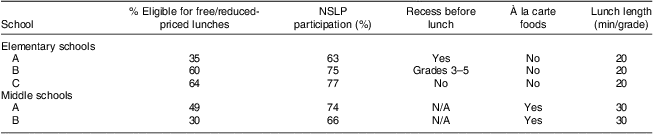
The characteristics of the participating schools are provided in Table 1. Elementary schools B (ES B) and C (ES C) had a higher percentage of students who qualified for free and reduced-priced meals than elementary school A (ES A). ES B scheduled recess before lunch for grades 3–5 only and ES C scheduled recess after lunch. All elementary schools provided 20 min per grade for the students to eat lunch.
Characteristics of study schools, northern Colorado, USA, autumn 2010
NSLP, National School Lunch Program; N/A, not applicable.
The two middle schools (MS A and MS B) had 49 % and 30 % of students who qualified for free and reduced-priced lunches, respectively. They had similar cafeteria layouts, each with three tray lines from which students could purchase lunch. Both schools had limited availability of à la carte items, such as baked chips, small cookies, bottled water and fruit soda. The schools differed in their lunch schedules. MS A had three 30-min lunch periods, one for each grade. MS B had two 30-min lunch periods, with the 7th grade divided between the lunch periods.
A total of 899 students, 535 elementary-school students and 364 middle-school students, participated in the study. Of the elementary-school students, 50·5 % were males with 18·9 %, 20·9 %, 20·2 %, 20·4 % and 19·6 % from grades 1 to 5, respectively. Of the middle school students, 53·8 % were males with 35·2 %, 32·7 % and 32·1 % from grades 6 to 8, respectively.
Various food choices were offered on the district menus. Elementary-school students could choose from three different entrées (one hot option, a deli sandwich or a third cold option, such as an entrée salad), two fruits (one canned and one fresh), a vegetable, and low-fat or fat-free white or fat-free chocolate milk for lunch daily. Middle-school students had a daily choice of four entrées (two hot options, a deli sandwich or an entrée salad), canned and fresh fruit, and hot and fresh vegetables. In both elementary and middle schools, at least half the grain items served were whole grain and often incorporated into the entrée. Low-fat white, fat-free white and fat-free chocolate milk were available daily at middle schools as well. For both elementary- and middle-school menus, the monthly average for energy was below the 2004 CNR meal standards; however, they met or exceeded guidelines for all other nutrient targets (data not shown).
Table 2 shows the number and percentage of students who selected each menu item. While all students chose an entrée, less than half of elementary- and middle-school students selected a vegetable with lunch. Students were more likely to select fruit with lunch. When canned and fresh fruit were combined, some students took both, and therefore more than 60 % took at least one serving of fruit with lunch. Approximately 96 % of elementary-school students and 82 % of middle-school students selected milk with their lunch, of which three-quarters was fat-free chocolate.
Number and percentage of elementary- and middle-school students who selected each menu item, northern Colorado, USA, autumn 2010

*Fat-free chocolate milk.
†White, 1 % fat or fat-free white milk.
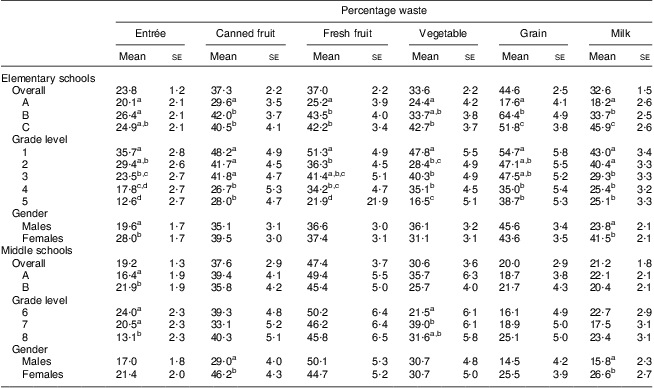
The percentage of each menu item wasted is provided by school, grade and gender in Table 3. Elementary-school students wasted more than one-third of individual grain, canned fruit, fresh fruit and hot and fresh vegetable menu items. Significant differences (P < 0·05) in the percentage of each menu item wasted were observed between ES A and ES B and ES C. Students from ES A had higher consumption patterns for all menu items when compared with the other two elementary schools. Students in grades 4 and 5 wasted one-third to one-half less of each menu item than students in grades 1 and 2. Males had less waste, and therefore higher consumption, for the entrée, canned fruit, fresh fruit and milk. However, these differences were significant only for the entrée (P = 0·001) and milk (P < 0·0001).
Percentage waste (least-squared means and their standard errors) of each lunch menu item by school, grade level and gender, northern Colorado, USA, autumn 2010
a,b,c,dMean values within a column with unlike superscript letters were significantly different (P < 0·05).
Middle-school students left nearly half of fresh fruit, over a third of canned fruit and nearly a third of vegetables unconsumed. Students from MS A wasted significantly less entrée than students from MS B (P = 0·041). Additionally, there was a difference in vegetable waste between the middle schools; however, due to the low number of students who selected vegetables, this difference was not statistically significant (P = 0·19). Middle-school students in grade 8 wasted significantly less of the entrée than those in grades 6 (P = 0·001) and 7 (P = 0·025). There was a significant difference in waste between middle-school males and females for canned fruit (P = 0·004) and milk (P = 0·002), with females wasting more than males. Middle-school females also wasted more of individual grain foods; the difference trended towards statistical significance (P = 0·057).
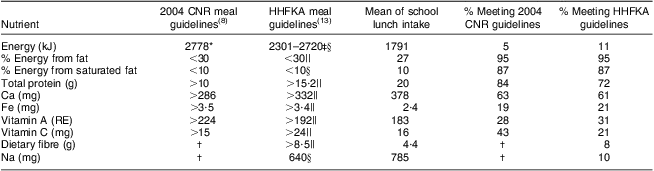
The mean energy intake of elementary-school students was less than both the 2004 CNR and HHFKA guidelines, and therefore very few students met the 2004 CNR or HHFKA targets (Table 4). This result would be expected given that the monthly menu average, based on portion values, was below the energy recommendation. The majority of elementary-school students did not exceed the 2004 CNR and HHFKA recommended intakes for percentage of energy from total fat and saturated fat and nearly two-thirds of students met both recommendations for Ca. However, less than half of elementary-school students met the 2004 CNR or HHFKA recommended nutrient intakes for Fe and vitamins A and C. Very few of these students met the new HHFKA recommendations for fibre and most exceeded the limit for Na (640 mg).
USDA NSLP guidelines, mean of school lunch nutrient intake and percentage meeting the 2004 CNR NSLP guidelines and the HHFKA NSLP guidelines among elementary-school students (n 535), northern Colorado, USA, autumn 2010
USDA, US Department of Agriculture; NSLP, National School Lunch Program; CNR, Child Nutrition and WIC Reauthorization Act of 2004; HHFKA, Healthy, Hunger Free Kids Act of 2010; RE, retinol equivalent.
*664 kcal.
†No USDA standard.
‡550–650 kcal.
§Nutrient targets from the HHFKA final lunch meal pattern.
||Nutrient targets from the 2009 Institute of Medicine recommendations( 11 ).
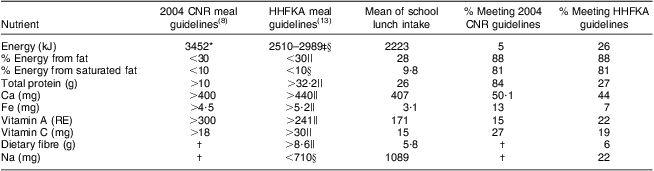
Similar to elementary-school students, very few middle-school students met the 2004 CNR guidelines for energy intake, although a higher percentage met the HHFKA energy target (Table 5). The majority of middle-school students did not exceed the 2004 CNR and HHFKA recommended intakes for percentage of energy from total fat and saturated fat. With regard to Ca, approximately half of the students met the 2004 CNR recommendation and slightly less than half of the students met the HHFKA guideline. Less than one-third of middle-school students met the 2004 CNR or HHFKA recommended intakes for Fe and vitamins A and C. Very few of these students met the HHFKA recommendations for fibre and average Na intake exceeded the limit (710 mg).
USDA NSLP guidelines, mean of school lunch nutrient intake and percentage meeting the 2004 CNR meal guidelines and the HHFKA meal guidelines among middle-school students (n 364), northern Colorado, USA, autumn 2010
USDA, US Department of Agriculture; NSLP, National School Lunch Program; CNR, Child Nutrition and WIC Reauthorization Act of 2004; HHFKA, Healthy Hunger Free Kids Act of 2010; RE, retinol equivalent.
*825 kcal.
†No USDA standard.
‡600–700 kcal.
§Nutrient targets from the HHFKA final lunch meal pattern.
||Nutrient targets from the 2009 Institute of Medicine recommendations(11).
Discussion
The amount of plate waste reported in the present study is consistent with amount of waste found in previous studies that examined plate waste in school lunch programmes. Marlette et al.( Reference Marlette, Templeton and Panemangalore 18 ) found an average percentage waste of 44 % for fruit, 24 % for mixed dishes, 15 % for milk and 30 % for vegetables among 6th-grade students. The present study found similar results in middle-school students, which included 6th grade, in which they wasted on average 43 % of fruit (an average of canned and fresh), 19 % of the entrée and 31 % of vegetables. Milk waste was slightly higher in the present study at 21 %. However, this represents a difference of less than half an ounce of a standard eight-ounce carton. A 2010 study of 4th–6th grade students in Louisiana reported 37 % wastage of fruits and vegetables combined( 5 ). This compares with overall waste of 37 % of canned fruit, 37 % of fresh fruit and 34 % of vegetables from elementary students in the present study.
The new HHFKA school meal standards are designed to ensure school meals offered to students align with the current US Dietary Guidelines for Americans( 2 ), particularly with respect to servings of fruits and vegetables. The new regulations call for an overall increase in the number of fruit and vegetable servings offered to students at lunch, and in the variety of vegetables served each week( 13 ). Also, unlike in the past, students will be required to take a serving of fruit or vegetable with lunch. These provisions should result in students selecting more nutrient-dense lunches. However, results from the present study indicate this may not be the case. While three-quarters of all students chose fruit (canned and fresh combined) with lunch, close to 40 % of these items went uneaten. Of particular concern, less than half of elementary-school students and less than 40 % of middle-school students selected either the hot or fresh vegetables. When students did take a vegetable, more than 30 % went uneaten. This result is in agreement with national data( Reference Condon, Crepinsek and Fox 19 ) which reported that 96 % of schools offered vegetables; however, only 51 % of students consumed vegetables with lunch. Thirty-eight per cent of those vegetables were categorized as starchy (French fries, white potatoes and corn) and only 6 % of students chose orange or dark green vegetables. A recent study of middle-school students in Texas found that of those students consuming NSLP meals, about 40 % selected and consumed a fruit serving( Reference Cullen, Watson and Dave 20 ). About two-thirds of students selected a vegetable, with only 4 % choosing a dark green or orange vegetable. When students do not consume the fruit and vegetable servings offered with lunch, they are less likely to meet nutrient targets for vitamins A and C, fibre or Fe, as demonstrated by the present study. Therefore, even when school lunch menus are planned to meet the new HHFKA standards, the lunches students choose and consume may not translate into improved dietary intake.
The OVS provision of the NSLP meal regulations was implemented to provide students with choice and minimize plate waste( 14 ). However, the influence of OVS on student lunch intake is unclear. A recent study( Reference Goggans, Lambert and Chang 21 ) compared fruit and vegetable intake of 4th- and 5th-grade students in a serve-only and an OVS school. All students at the serve-only school took fruit or vegetables with lunch; only 25–72 % of OVS students chose fruit or vegetables. Students at the serve-only school wasted significantly more fruit and vegetables (43–75 %) than students at the OVS school; however, OVS students still wasted 20–44 % of fruits and vegetables selected with lunch. All schools participating in the current study use OVS and student consumption patterns are similar to those from Goggans et al.( Reference Goggans, Lambert and Chang 21 ). While OVS may reduce fruit and vegetable plate waste when compared with serve-only, more needs to be done to encourage students to self-select vegetables and encourage their consumption.
Aside from the entrée, the only other menu item selected by more than 80 % of elementary- and middle-school students was milk. Previous studies indicate this likely contributed to more than half of students meeting the Ca recommendation( Reference Johnson, Panely and Wang 22 , Reference Ballew, Kuester and Gillespie 23 ). More than 70 % of elementary- and middle-school students who took milk with lunch selected fat-free chocolate milk. Data from SNDA III show most (60 %) students choose flavoured milk( Reference Condon, Crepinsek and Fox 19 ). Offering fat-free flavoured milk is a way to help students meet the new meal standards while staying within fat and energy targets( 14 , Reference Krueger and Casey 24 ).
Students from ES A did not waste more than 30 % of any menu item and therefore had significantly better consumption of all menu items than students in the other two elementary schools. One possible explanation for the difference is the scheduling of recess before lunch, which has been found to influence the amount of food wasted by elementary-school students( Reference Smith and Cunningham-Sabo 25 ). A Washington state elementary-school study found food waste decreased from 40·1 % to 27·2 % when recess was scheduled before lunch( Reference Smith and Cunningham-Sabo 25 ). As a result, the consumption of most vitamins and minerals was significantly greater when recess occurred before lunch. ES A scheduled recess before lunch for all grades, whereas ES B scheduled recess before lunch only for grades 3–5 and ES C's recess occurred after lunch. While it was not the purpose of the present study to determine the effect of recess scheduling on plate waste, the scheduling of recess before lunch could have had an influence on the reduced plate waste from ES A.
For the first time, the HHFKA meal standards place limits on the amount of Na in school meals. By 2022, the Na content of American school lunches must be 53 % lower than the current national average of 1377 mg for elementary school and 1520 mg for middle school( 13 ). Na reductions will occur incrementally over the next 10 years, with the intent of giving schools and industry the opportunity to work together to lower Na content of school meals. The first incremental reduction takes effect in 2014 with limits of 1230 mg Na for elementary- and 1360 mg Na for middle-school students( 13 ). While average Na intake for both elementary and middle schools did not exceed the incremental targets, they did exceed the final 2022 targets of 640 and 710 mg, respectively. The Na limitations could have implications for vegetable intake since any seasoning used to increased vegetable consumption will likely be Na free. Schools will need to be innovative and partner with food industry to create lower Na products and seasonings that are acceptable to students.
Results of the present study identify the need for multifaceted nutrition education and marketing strategies to improve students’ self-selection and consumption of vegetables with school lunch. An experiential nutrition education programme combining cooking in the classroom with ongoing cafeteria reinforcement improved students’ selection and consumption of fruits and vegetables with school lunch( Reference Liquori, Koch and Contento 26 ). Children's preferences are strongly linked to fruit and vegetable consumption; therefore, behavioural interventions that increase vegetable preference may also increase consumption( Reference Wojcicki and Heyman 27 , Reference Blanchette and Brug 28 ). A recent review of behavioural interventions to promote intake of fruits and vegetables reported seven studies conducted in children, with three demonstrating a modest (0·39 servings/d) but significant increase in daily fruit and vegetable servings( Reference Thomson and Ravia 29 ). Age-appropriate marketing and communication strategies are another targeted approach for influencing fruit and vegetable consumption( Reference Snyder 30 ). Communication campaigns may be effectively combined with behavioural interventions and provide tailored messaging at the school level, targeting intrinsic and extrinsic motivation to increase fruit and vegetable intake with school lunch( Reference Thomson and Ravia 29 ). A small number of studies indicate that the use of behavioural economic strategies in the school cafeteria, such as food location, lighting, verbal prompts and convenience lines, may promote increased fruit and vegetable intake( Reference Schwartz 31 , Reference Fulkerson, French and Story 32 ). These strategies used in conjunction with traditional behavioural interventions and communication strategies may help achieve and sustain children's fruit and vegetable intake at recommended levels.
Study strengths and limitations
Plate waste assessment of student lunch intake is one of the present study's strengths. Plate waste methodology overcomes the need to rely on students’ memory or lack of ability to accurately estimate portion sizes; common limitations of using 24 h recall with children( Reference Livingstone, Robson and Wallace 33 , Reference Warren, Henry and Livingstone 34 ). The digital photography method used in the study has been validated by several previous studies as an accurate and convenient method to assess plate waste( 5 , Reference Martin, Newton and Anton 15 – Reference Swanson 17 ). There was little disruption to usual lunch service, minimizing an unintended influence on plate waste. Lastly, the study provided the school district with valuable information that will help develop further improvements to the school lunch programme.
There are several limitations that should be noted. The study was conducted in three elementary schools and two middle schools in northern Colorado with primarily white, moderate-income students, limiting generalizability. Also, plate waste was not assessed simultaneously in all schools; therefore, differences in the daily menu may have affected the difference in waste between schools.
Conclusions
The key finding from the present study is that elementary- and middle-school students are not regularly selecting fruit, and particularly vegetables, offered for school lunch. As a result, their lunch consumption does not meet the new national meal standards for vegetable intake and they are falling short of key nutrients including vitamins A and C. As schools implement the provisions of the new national meal standards, they will need to employ several complementary strategies such as nutrition education, marketing communications and behavioural economics to ensure students make the most healthful lunch choices.
Acknowledgements
Sources of funding: This project was supported by member grant from the Coalition for Activity and Nutrition to Defeat Obesity (CanDo) of Fort Collins, Colorado. CanDo had no role in the design, analysis, or writing of this article. Conflicts of interest: The authors have no conflict of interests to report. Authors’ contributions: S.L.S. designed and conducted the study, wrote the manuscript and is the corresponding author. L.C.-S. assisted with project development and co-wrote the manuscript. Acknowledgements: The authors would like to thank Tammie Rempe, Shannon Emslie and Carla Bankes of Thompson School District for their critical guidance and support. They also thank Garry Auld for assistance with the research design and manuscript review and Jim Zumbrunnen for statistical analysis and interpretation.



