The Scottish Government, in accordance with international guidelines such as the WHO Global Strategy on Diet, Physical Activity and Health( 1 ) and the WHO 2008–2013 Action Plan for the Global Strategy for the Prevention and Control of Noncommunicable Diseases( 2 ), has in recent years prioritised improving the diet of the Scottish population by increasing healthy eating and reducing unhealthy eating( 3 – 5 ). As with many health outcomes, however, some members of the population fare better than others. Within Scotland, gender and age differences have been shown in eating behaviour, with fruit and vegetable consumption more prevalent among girls and younger children, and sweets, chips and crisps consumption less prevalent( Reference Currie, Levin and Kirby 6 ). Socio-economic inequalities in health have also been shown for many adolescent outcomes in Scotland and have widened over time for both adult( Reference Leyland, Dundas and McLoone 7 , 8 ) and adolescent health measures( Reference Levin and Currie 9 , Reference Levin, Currie and Muldoon 10 ). A recent study of adolescent eating behaviour showed that socio-economic inequalities in adolescent eating habits exist in Scotland, with those from higher social class reporting a more favourable diet( Reference Levin, Kirby and Currie 11 ).
Scotland has a population of approximately 5 250 000 with a land mass of 78 772 km2, resulting in a relatively low average population density of sixty-five people per square kilometre. However, Scotland is highly urbanised, with most of the population residing in the central belt which includes the two largest cities, Glasgow and Edinburgh, and several other large towns. The Highlands and Islands, home to 7 % of the Scottish population, makes up over 60 % of Scottish land mass, with a resulting sparse population density of eight people per square kilometre. The heterogeneous nature of rural communities both in Scotland and the rest of the UK has been discussed in previous studies( Reference Barnett, Roderick and Martin 12 , Reference Levin and Leyland 13 ), with health outcomes suggesting large variation in need within rural Scotland.
Levin et al. ( Reference Levin, Kirby and Currie 11 ) noted that eating behaviour differed by education authority, a large-area level with population size ranging between approximately 50 000 and 550 000, with those from the Highlands and Islands having a healthier diet. Previous research on adult health has shown some geographical differences, with generally less favourable outcomes in remote rural Scotland: higher rates of suicide( Reference Levin and Leyland 14 ) and IHD following discharge from hospital( Reference Levin and Leyland 15 ), more severe injuries due to road traffic accidents( Reference Weiss, Ellis and Ernst 16 ) and more advanced stages of cancer at diagnosis( Reference Campbell, Elliott and Sharp 17 ). Theories around the unique hazards faced by rural residents from both the physical and built rural environment, including issues of access and availability of health services, exposure to health risks, as well as cultural differences influencing attitudes and behaviours and their impact on the health and well-being of the remote and rural population, are discussed elsewhere( Reference Pearce, Witten and Bartie 18 , Reference Veitch 19 ). The studies of urban–rural inequalities in adult health listed above adjusted for socio-economic status using small-area level indicators of deprivation. Adjustment for deprivation is advisable in such studies as some geographies have higher rates of deprivation than others. For example, accessible rural Scotland is a relatively affluent geography( Reference Bishop, Clark and Harris 20 ). Deprivation may therefore confound any association linking health and place. Adjustment for area-level deprivation should overcome confounding of this type.
Studies of inequalities, and particularly socio-economic inequalities, in health are widely documented. These are important, in part because as health improves, as it has done over recent decades in Scotland, greater improvements are generally observed among some members of the population than others( Reference Schulz and Northridge 21 , Reference Wagstaff 22 ), but also because by identifying subgroups within the population whose health is particularly poor or particularly good, we may progress to identify associated modifiable risk factors. Studies of urban–rural inequalities in health, and particularly child health, in Scotland are limited, although geographic differences in health in Scotland are known to be larger than in any other part of the UK( Reference Leyland 23 ), and this was raised as an area of inequalities requiring further work in the Inequalities in Health Report( 24 ). We are not aware of any previous study, however, that has investigated urban–rural differences in eating behaviour or indeed any health outcome in adolescence. The present study aimed to describe patterns of eating behaviour among adolescents across the urban–rural spectrum, after adjustment for individuals’ family affluence and area-level deprivation.
Methods
Study design
The study examines Scottish data from the 2010 Health Behaviour in School-aged Children (HBSC) survey. HBSC is a WHO Collaborative Cross-National Study conducted in countries across Europe and North America and uses a standardised protocol( Reference Currie, Grieber and Inchley 25 ). For the HBSC Scotland survey, the population was stratified by education authority and school type, defined as state-funded or independent, and a nationally representative sample was selected using systematic random sampling. Using passive parental consent except where active consent was required, pupils in Secondary 4 (S4), aged approximately 15·5 years, received questionnaires in school between January and March. The questionnaire was completed anonymously in class under teacher supervision. The research protocol was approved by the University of Edinburgh's School of Education Ethics Committee.
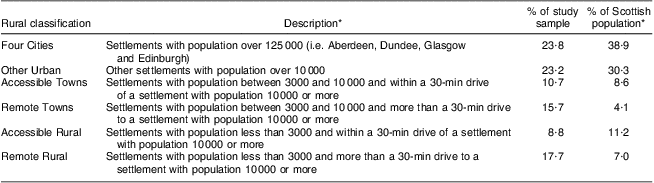
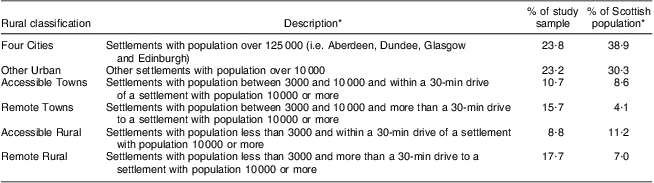
The 2010 HBSC Scotland survey sample of S4 pupils, aged on average 15·5 years, was boosted to give a representative sample of each of the six ruralities defined by the Scottish Household Survey and described in Table 1. Urban samples are generally well represented within the survey as they make up a large part of the population. However, rural samples, and particularly the remote rural sample, are often small as they make up only a small proportion of the population and the HBSC sample is selected to be representative of Scotland as a whole. The boosted sample of classes was selected randomly within each sampling frame, defined by rurality classification, assigned by school postcode. The samples were boosted with the aim of achieving a minimum of 350 children within each rurality classification to give a 95 % confidence interval of ±6 % around a proportion of 65 % (for 15-year-olds, the majority of variables saw proportions greater than 65 % or smaller than 35 % in the 2006 HBSC survey( Reference Currie, Levin and Todd 26 )) and a design factor of 1·2. The response rate of the boosted rural sample was high, higher than the rest of Scotland, probably due to the fact that schools in remote and rural areas are not called upon as often as their urban counterparts to take part in research surveys.
Outcome variables
Consumption of fruit, vegetables, sweets, crisps and chips were examined in the study with the question ‘How many times a week do you usually eat the following things?’ and response options of ‘never’, ‘less than once a week’, ‘once a week’, ‘2–4 days a week’, ‘5–6 days a week’, ‘once a day, every day’ and ‘every day more than once’. This measure has been validated previously among Belgian adolescents( Reference Vereecken and Maes 27 ).
The seven optional responses for each question were re-coded as follows: ‘never’ = 0; ‘less than once a week’ = 0·25 (equivalent to consumption of food item once every 4 weeks); ‘once a week’ = 1; ‘2–4 days a week’ = 3; ‘5–6 days a week’ = 5·5; and ‘once a day, every day’/‘every day more than once’ = 7. This represents the number of days per week each food item is consumed. Recoding the food items in this way has been previously validated( Reference Vereecken, de Henauw and Maes 28 , Reference Vereecken, Rossi and Giacchi 29 ). A further composite score of ‘healthy eating’ combined all five items by adding weekly vegetable and fruit consumption and subtracting consumption of sweets, chips and crisps, with coding as above except for response ‘more than once day’ = 14, a method used previously in the construction of food indices( Reference Levin, Kirby and Currie 11 , Reference Vereecken, Rossi and Giacchi 29 , Reference Vereecken, Haerens and De Bourdeaudhuij 30 ). This was centred to give a score ranging between −42·0 and 28·0, with a mean of 0. The measure had a kurtosis of 0·63 and skewness of −0·27, acceptable for linear analyses. Similarly, all other outcomes had a kurtosis of <1·34 and a skewness of <0·83.
A further set of eating behaviour measures was examined using binary outcomes: eating a family meal together four or more times per week; regular breakfast consumption (every day during the school week); on a diet to reduce weight; and going to bed hungry, also known as ‘food poverty’, an indicator of a disordered household( Reference Molcho, Nic Gabhainn and Kelly 31 ). Descriptions of these four survey questions and optional responses, as well as reports of prevalence nationally and internationally, are available elsewhere( Reference Currie, Levin and Kirby 6 , Reference Molcho, Nic Gabhainn and Kelly 31 , Reference Currie, Zanotti and Morgan 32 ).
Explanatory variables
Young people's age and sex were included in analysis. School type (state or independent) was also included. The Family Affluence Scale (FAS)( Reference Currie, Molcho and Boyce 33 ) was calculated using responses to the following questions: ‘Does your family have a car or van?’ (response options: ‘no’/‘yes, one’/‘yes, two or more’); ‘Do you have your own bedroom to yourself?’ (response options: ‘no’/‘yes’); ‘During the past 12 months, how many times did you travel away on holiday with your family?’ (response options: ‘not at all’/‘once’/‘twice or more’); and ‘How many computers (PCs, Macs or laptops) does your family own?’ (response options: ‘none’/‘one’/‘two’/‘more than two’). The items were combined using categorical principal components analysis to produce tertiles of low, medium and high family affluence, as recommended( Reference Currie, Molcho and Boyce 33 ).
Deprivation at the area level was also included using the 2006 Scottish Index of Multiple Deprivation (SIMD), a continuous measure of deprivation at the ‘data zone’ small-area level which combines thirty-seven indicators across seven domains: income, employment, health, education, housing, geographic access and crime( 34 ). The 2006 SIMD score included in the present analysis ranged from 1·04 (least deprived) to 85·85 (most deprived), assigned to each child by his/her home postcode. The results presented were for a unit change in deprivation as measured by the SIMD score divided by ten, with the assumption that each additional unit carries an equivalent effect. Rurality was included as a categorical variable as defined by the 2008 Scottish Household Survey urban–rural classification( 35 ) and used in similar analyses elsewhere( Reference Levin and Leyland 13 – Reference Levin and Leyland 15 , Reference Levin, Davies and Douglas 36 ).
Of the original 3577 young people surveyed, 894 (25 %) were excluded due to missing postcode information, 54 % boys and 46 % girls. The final data set had 2683. Among those excluded, fruit and vegetable consumption was slightly lower than for those included in the study, and consumption of chips, sweets and chips was slightly higher. However, there did not appear to be any response bias by affluence, with 34 % of those excluded having low FAS, 34 % middle FAS and 32 % high FAS. A further twenty-four (0·9 %), thirty-two (1·2 %), twenty-nine (1·1 %), thirty-eight (1·4 %) and twenty-four (0·9 %) had missing fruit, vegetable, sweets, crisps and chips consumption information and therefore had to be excluded from analyses for individual items, with ninety-three (3·5 %) missing a healthy eating score.
Statistical analysis
Preliminary analyses described the data, presenting prevalence of eating behaviour and mean number of days foods were consumed. These were compared using t tests (for means) and χ 2 tests (for prevalence) to assess patterns of urban–rural inequalities in outcomes as a preliminary analysis. Linear multilevel regression models were then fitted for each of the five scale outcome variables and combined healthy eating variable, using RIGLS (restricted iterative generalised least squares) estimation in the statistical package MLwiN 2·02( Reference Rasbash, Charlton and Browne 37 ). Fixed and random parameter estimates were tabulated. Joint χ 2 tests were carried out to determine the significance of variables and Wald tests to identify the significance of parameter estimates. The Akaike Information Criterion (AIC) was used as a measure of model fit with a lower AIC value being favoured. The models had three levels: education authority, school and individual child. The models were fitted, adjusting for age, sex, school type (state or independent), FAS, SIMD score/10 and rurality, to describe differences by geography. Parameter estimates were tabulated and discussed. Consumption frequency variables and the healthy eating score were treated as normally distributed in the analyses. Residuals of the models and the results of binary models of consumption with outcome ‘high’ v. ‘low’ consumption, as defined elsewhere( Reference Vereecken, de Henauw and Maes 28 ), support this modelling structure and the findings presented here, and are available from the author on request.
Binary eating behaviour outcomes were modelled using the MCMC (Markov chain Monte Carlo) method in MLwiN and fixed and random parameter estimates were tabulated. Wald tests were carried out to identify the significance of parameter estimates. Estimates reported in the results are based on a chain of length of 50 000 following a burn-in of 5000. The Deviance Information Criterion (DIC) was used as a measure of model fit with a lower value of the DIC being favoured( Reference Spiegelhalter, Best and Carlin 38 ).
Results
Table 2 describes consumption frequency and eating behaviour by geography. Mean number of days where fruit was consumed was particularly low in Other Urban areas. Vegetables were also consumed on fewer days in more urban areas, while Remote Rural and Accessible Rural areas saw the lowest consumption frequencies of sweets, chips and crisps; e.g. crisps were consumed on average approximately 4 d/week in Four Cities, compared with 3 d/week in Remote Rural areas. There were also some differences observed between Remote Towns and Remote Rural areas; young people living in Remote Towns consumed vegetables on fewer days and crisps on more days than those living in Remote Rural areas. The overall healthy eating score was particularly high (3·11) in Remote Rural areas and lowest in Other Urban areas (−2·42). While consumption frequency differed by rurality, eating behaviours for the most part did not. Eating a family meal together on ≥4 d/week, however, was significantly more prevalent in Remote Towns (78 %) compared with Four Cities (67 %) at the 95 % level of significance, while prevalence in Other Urban areas was also lower (68 %) at the 93 % level of significance.
Consumption frequency and eating behaviour variables by rurality among 15-year-old adolescents; data from the 2010 Scotland Health Behaviour in School-aged Children survey
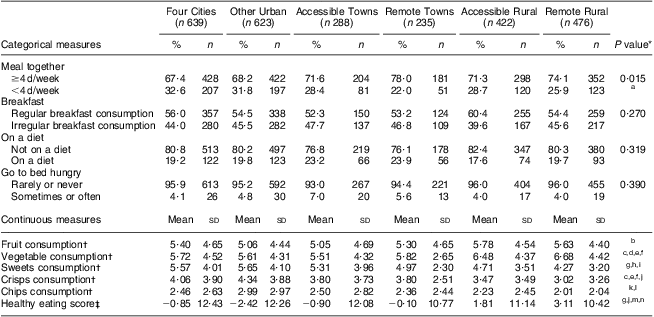
aFour Cities and Remote Towns differ significantly at 95 % level of significance; bOther Urban differs significantly from Remote Rural and Accessible Rural at 95 % level of significance; cFour Cities, Other Urban and Accessible Towns differ significantly from Remote Rural at 99 % level of significance; dOther Urban and Accessible Towns differ significantly from Accessible Rural at 99 % level of significance; eFour Cities differs significantly from Accessible Rural at 95 % level of significance; fRemote Towns differs significantly from Remote Rural at 95 % level of significance; gFour Cities, Other Urban, Accessible Towns and Remote Towns differ significantly from Remote Rural at 99 % level of significance; hFour Cities and Other Urban differ significantly from Accessible Rural at 99 % level of significance; iFour Cities and Other Urban differ significantly from Remote Towns at 95 % level of significance; jOther Urban differs significantly from Accessible Rural at 99 % level of significance; kOther Urban differs significantly from Remote Rural, Accessible Rural and Remote Towns at 99 % level of significance; lRemote Rural differs from Four Cities at 95 % level of significance; mFour Cities and Accessible Towns differ significantly from Accessible Rural at 95 % level of significance; nOther Urban differs significantly from Remote Towns at 95 % level of significance.
*P value from χ 2 test for categorical measures and from t test for continuous measures.
†Number of days per week the item is consumed.
‡Healthy weekly eating score calculated by adding weekly fruit and vegetable consumption and subtracting weekly crisps, sweets and chips consumption.
When the data were modelled, the healthy eating score was greater for girls (on average 2·92 more than for boys), due to greater frequency of fruit and vegetable consumption and lower frequency of sweets and chips consumption (Table 3). Children attending independent schools ate fruit and vegetables more frequently (on approximately one more day per week), and chips and crisps less frequently, and had an average healthy eating score 5·78 greater than children from state-funded schools. Categorical FAS was significant for outcomes vegetable consumption and chips consumption and the healthy eating score. Area-level deprivation was also significant, independently of individual material wealth, for all but sweets consumption, with those with a greater score (i.e. more deprived) having a poorer diet.
Multilevel linear models for eating behaviour outcomes (REML estimates*; se) among 15-year-old adolescents; data from the 2010 Scotland Health Behaviour in School-aged Children survey
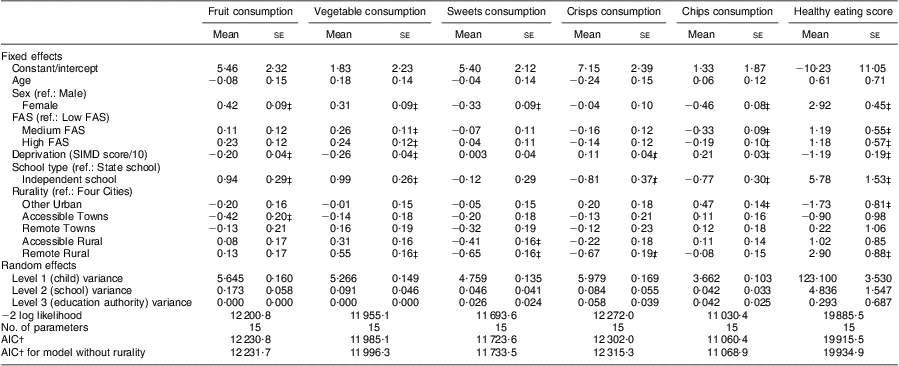
REML, restricted maximum likelihood; ref., referent category; FAS, Family Affluence Scale; SIMD, 2006 Scottish Index of Multiple Deprivation.
*Via restricted iterative generalised least squares (RIGLS).
†AIC is the Akaike Information Criterion; the larger this is, the worse the model fit.
‡95 % CI is above or below 0.
After adjustment for sociodemographic variables, the rurality variable was significant for all but the fruit consumption models under the joint χ 2 test, also supported by the AIC. Vegetables were consumed on significantly more days per week and sweets and crisps on significantly fewer days per week in Remote Rural areas than in Four Cities, after adjustment for all sociodemographic variables. This resulted in a healthy eating score on average 2·90 greater than in Four Cities. Accessible Rural areas also saw significantly lower sweets consumption than in Four Cities. Other Urban areas were the least healthy. When an interaction term was added between rurality and SIMD score/10, this was not significant for any of the consumption frequency outcomes other than fruit consumption. Socio-economic inequalities in fruit consumption were particularly great in Accessible Rural and Remote Rural areas, and significantly greater than those in urban areas (Table 4). Thus, those living in the most deprived areas of Remote Rural Scotland (SIMD score = 48·87) consumed fruit on approximately 1 d less per week than those living in Four Cities of equivalent deprivation. However, among the most affluent (SIMD = 3·03), Remote Rural residents ate fruit on average on 0·6 d more per week than their urban counterparts.
Multilevel linear model for fruit consumption with interaction between rurality and deprivation (REML estimates*; se) among 15-year-old adolescents; data from the 2010 Scotland Health Behaviour in School-aged Children survey

REML, restricted maximum likelihood; ref., referent category; FAS, Family Affluence Scale; SIMD, 2006 Scottish Index of Multiple Deprivation.
*Via restricted iterative generalised least squares (RIGLS).
†AIC is the Akaike Information Criterion; the larger this is, the worse the model fit.
‡95 % CI is above or below 0.
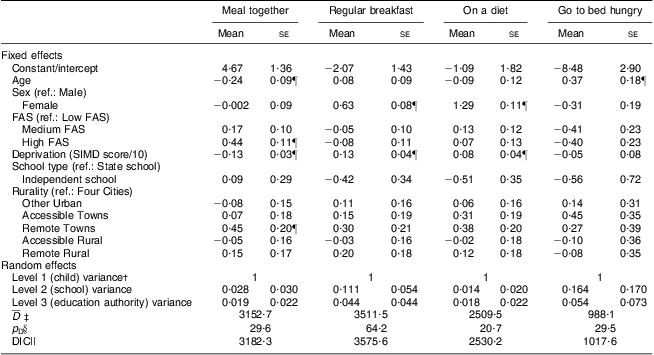
Rurality was less relevant in terms of eating behaviour (Table 5). For the outcome variable eating a family meal, the odds of sharing a family meal were particularly high among those living in Remote Towns. The odds of being on a diet were also higher in Remote Towns at the 94 % level of significance. However under the joint χ 2 test the rurality variable was overall not significant for any of the eating behaviour outcomes.
Multilevel logistic models for categorical eating behaviour outcomes (MCMC* estimates; posterior sd, equivalent to se) among 15-year-old adolescents; data from the 2010 Scotland Health Behaviour in School-aged Children survey
ref., referent category; FAS, Family Affluence Scale; SIMD, 2006 Scottish Index of Multiple Deprivation.
*Via Markov chain Monte Carlo (MCMC); estimates are based on a chain of length of 50 000 following a burn-in of 5000.
†Variance at the child level is constrained to 1.
‡
 $$--><$>\overline {\tf="Helv_O" D}$$$
is the expectation of the deviance and is a measure of how well the model fits the data.
$$--><$>\overline {\tf="Helv_O" D}$$$
is the expectation of the deviance and is a measure of how well the model fits the data.
§p D is the effective number of parameters.
||DIC is the Deviance Information Criterion; the larger this is, the worse the model fit.
¶95 % CI is above or below 1.
Random effects showed that a large proportion of the variance for the consumption frequency models existed at the individual level (Table 3). Unexplained variance at the child level reduced but remained significant after adjustment for all explanatory variables. Variance at the school level was significant for fruit and vegetable consumption. The random part of the breakfast consumption model also found significant unexplained variance at the school level (Table 5). The addition of a random slope at the school or education authority level to the rurality variable was not found to be significant for any of the models, suggesting that the relationship between rurality and consumption frequency did not vary by school or education authority.
Discussion
The present study suggests that young people from rural areas have a healthier diet than those living in urban areas. These differences exist even after adjustment for individual- and area-level deprivation. Adolescents living in Remote Rural Scotland have the highest consumption frequency of vegetables and the lowest consumption frequency of sweets and crisps. However, it is not the geography described by the classification Four Cities, but Other Urban areas (large towns of between 10 000 and 125 000 residents) that has the poorest diet.
Previously, urban–rural differences in adolescent food consumption were observed at the education authority level( Reference Levin, Kirby and Currie 11 ). Those education authorities that included mostly rural areas, such as the Highlands and Islands, had a better diet. It was hypothesised that this was likely to be due to urban–rural differences in the historical tradition and culture of family meals, availability of food types and/or access to shops supplying snacks and convenience food, rather than strategic decision making by education authorities( Reference Levin, Kirby and Currie 11 ). This is supported by the current study which shows that this geographic difference exists at the individual level of residence. However the current study does not support the theory relating to the family meal, as there was no difference in prevalence of family meals between Remote Rural Scotland and urban areas. Similarly, dieting behaviour, food poverty and breakfast consumption did not differ by rurality.
Previous work which examined availability and cost of fruit and vegetable items in Scotland found there to be no difference in food price by neighbourhood deprivation( Reference Cummins, Smith and Aitken 39 ), with better access to grocery stores in more deprived areas and better availability in urban settings( Reference Smith, Cummins and Taylor 40 ). The current study found neighbourhood deprivation to be significant, independently of individual-level material wealth, and associated with lower consumption frequency of fruit and vegetables and higher consumption frequency of crisps and chips. Again in contrast to work relating to availability of fruit and vegetables( Reference Smith, Cummins and Taylor 40 ), the relationship between neighbourhood deprivation and vegetable consumption did not differ by rurality in the current study; neighbourhood deprivation and rurality were associated with consumption independently of one another. For fruit consumption, associations with deprivation were more extreme in rural areas, suggesting greater socio-economic inequalities. However, Smith et al.( Reference Smith, Cummins and Taylor 40 ) found median times to stores, an inverse proxy for access, to be greatest for the most affluent residents of the (rural) islands of Scotland, indicating a reverse relationship. This suggests that in-store availability and access to food do not relate directly to adolescent consumption behaviour, at least for fruit and vegetables.
There may however be a relationship between in-store access and consumption of ‘unhealthy foods’. Previously, modest correlations were seen between consumption of ‘healthy’ foods and between consumption of ‘unhealthy’ foods, but not between one another( Reference Levin, Kirby and Currie 11 ), suggesting these two behaviours to be independent. High frequency of vegetable consumption in rural areas, for example, may be due to the ability to grow your own vegetables, while relatively low frequency of sweets and crisps consumption may be due to a scarcity of shops selling snacks on the way home from school. The reason for urban–rural differences in consumption frequency of foods might therefore depend on food type.
The role of schools in young people's diet, over and above rurality and deprivation, is highlighted in the current study. Of particular interest is the difference between state and independent schools. By age 15 years, the majority of independent schools in Scotland allow young people to leave the premises at lunchtime to buy their lunch. Even under these comparable circumstances, young people attending independent schools were significantly more likely to eat fruit and vegetables and less likely to eat crisps and chips. Variance at the school level remained significant for fruit and vegetable consumption, after adjustment for all factors, suggesting schools may have an important role to play in providing a healthy and tasty lunch menu. When rurality was allowed to vary at the school level (i.e. a random slope was introduced to the model), this was not significant for any of the outcomes, suggesting that the role of school is equally important across all ruralities. The school level was not significant for models of sweets and crisps consumption, probably due to the fact that schools are no longer allowed to sell these at snack or lunch times( 3 ). Although all schools are also encouraged to provide nutritious meals which include fruit and vegetables under the Schools (Nutrition and Health Promotion) Act (2007), quality and food choice are likely to vary. The impact of breakfast club provision in schools may also explain the significant variance at the school level for the outcome variable irregular breakfast consumption. In 2010, 33 % of primary and 58 % of secondary schools in Scotland provided a breakfast club for pupils( 41 ). Again a random slope was not significant, suggesting a school effect on young people's diet across all of Scotland, regardless of rurality.
Limitations and recommendations
Although a minimum sample size of 350 per rurality was optimum, this was difficult to achieve with any precision because the boosted sample was selected by class rather than child's residence. As the FAS showed no sign of bias, the impact of not achieving this sample size for Accessible Towns and Remote Towns is unlikely to bias the results but may have resulted in an under-powering and therefore an overly conservative test of comparison between these ruralities and Four Cities within the models. Missing data may have resulted in a sample biased towards healthier children overall, although there is no reason to believe that this bias would vary by rurality and therefore should not bias urban–rural comparisons.
Another limitation of the study is that information about the diet of young people collected in the survey was incomplete, focusing only on five foods. The study is therefore limited to the food items described, acting as indicators of dietary intake rather than a comprehensive assessment of foods consumed. Furthermore, the indicators refer only to frequency of consumption and not to size or number of portions. It is possible, for example, that more than one portion of fruit is consumed on a single occasion (i.e. one time per week), therefore leading to underestimation of actual food intake. Nevertheless, the HBSC FFQ has been validated previously( Reference Vereecken and Maes 27 ) and, more generally, a recent review of FFQ among children and adolescents noted that highest validity was found when the questionnaire did not assess portion size, when it measured consumption over a relatively short time span (e.g. previous day/week) and when it was administered to young people rather than their parents( Reference Kolodziejczyk, Merchant and Norman 42 ). A 24 h recall method( Reference Vucic, Glibetic and Novakovic 43 ), including portion size information and a more complete set of food groups, may instead be preferable in future studies. A computerised version of this method has also been developed for use with adolescent populations and across several European countries( Reference Vereecken, Covents and Sichert-Hellert 44 ).
Area measures of deprivation and rurality are at the ‘data zone’ small-area level (mean population size of 778 and range of between 500 and 1000), calculated in 2006 and 2008 respectively, and were assigned according to children's postcodes. These should therefore be reasonably accurate. Nevertheless, findings of urban–rural comparative studies are dependent on the definition of rurality( Reference Brady and Weitzman 45 ). This may therefore complicate or even invalidate comparisons with other studies using different measures of geography. Smith et al.'s( Reference Smith, Cummins and Taylor 40 ) study measuring fruit and vegetable availability, referred to in the Discussion, used the same urban–rural classification as us and therefore should be approximately comparable.
Qualitative research is recommended to understand reasons for the urban–rural differences in food consumption reported in the current study. We have eliminated a few possible eating behaviours which might explain these differences, but further examination of why these differences exist is required. Future work is also recommended to look at differences in availability and access in relation to ‘healthy’ v. ‘unhealthy’ foods, as consumption of each is a separate independent behaviour. The impact of quality and choice of food available within schools should also be investigated.
Acknowledgements
Sources of funding: This work was supported by NHS Health Scotland and the Ludwig Boltzmann Institute. However, NHS Health Scotland and the Ludwig Boltzmann Institute had no role in the design, analysis or writing of this article. Conflicts of interest: There are no conflicts of interest. Author's contribution: K.L. conceived the idea for the study, carried out the analyses and wrote the manuscript. Acknowledgements: The Health Behaviour in School-aged Children (HBSC) study is an international survey conducted in collaboration with the WHO Regional Office for Europe. The author would like to acknowledge the HBSC international research network in forty-three countries that developed the study's research protocol.