


Introduction
Global climate models predict significant increases of both annual precipitation and mean annual air temperature (MAAT) in far northern latitudes during the first half of this century (Reference HoughtonHoughton and others, 2001). A consequence of climatic warming in the high Arctic will be an increase in surface melting of glaciers and ice caps in Svalbard (Reference Gregory and OerlemansGregory and Oerlemans, 1998), resulting in an increased flux of fresh water into the North Atlantic (Reference Hagen, Kohler, Melvold and WintherHagen and others, 2003). The volume of fresh water discharged into the North Atlantic is of importance due to its potential to disrupt the Atlantic Meridional Overturning Circulation (AMOC) (Reference Otterå, Drange, Bentsen, Kvamsto and JiangOtterå and others, 2003).
Glaciers on the west coast of Svalbard are subject to a strong maritime influence due to their proximity to the northern terminus of the North Atlantic drift and the frequent passage of relatively warm northward-moving depressions (Reference Hanssen-Bauer, Solås and SteffensenHanssen-Bauer and others, 1990). High precipitation and warm summer air temperatures (relative to their latitudes) cause these glaciers to be among the most sensitive in the Arctic to climate change (Reference Fleming, Dowdeswell and OerlemansFleming and others, 1997).
The response time of glaciers to a changing climate is mediated by supraglacial and englacial processes; in the high Arctic the most important of these for glacier mass balance is the refreezing of meltwater (Reference Woodward, Sharp and ArendtWoodward and others, 1997). Percolating meltwater can refreeze at any point within the snowpack, creating features such as ice columns and ice lenses (e.g. Reference Marsh and WooMarsh and Woo, 1984). The majority of refreezing occurs when the wetting front encounters a cold (sub-zero) impermeable surface such as a thick ice layer or the glacier firn or ice surface. A proportion of the total meltwater may then refreeze to form a layer of superimposed ice (Reference Wakahama, Kuroiwa, Hasemi and BensonWakahama and others, 1976).
Superimposed ice formation is a significant component of the mass accumulation of many glaciers and ice caps in the continental climates of the Canadian and Russian high Arctic (Reference SchyttSchytt, 1949; Reference MüllerMüller, 1962; Reference KoernerKoerner, 1970; Reference Barkov, Blinov, Bugorkov, Dmitriev, Korotkevich and PetrovBarkov and others, 1988; Reference DowdeswellDowdeswell and others, 1997). Few studies of superimposed ice formation, however, exist for maritime Arctic climates such as western Svalbard. Indeed the contribution of meltwater refreezing to the annual mass balance of glaciers in this area is thought to be significant (Reference Wadham and NuttallWadham and Nuttall, 2002), but its response to climate change, the topic of the study presented here, is unknown.
In this study, data from the Ny-Ålesund meteorological station in northwest Spitsbergen (Fig. 1a) are used to drive a surface-energy/mass-balance model of the valley glacier midre Lovénbreen (Fig. 1b). The model includes an explicit ‘first principles’ calculation of meltwater production and refreezing which is validated with field measurements. There are two objectives to this investigation: (1) to determine the present contribution of superimposed ice formation to the annual net mass balance of midre Lovénbreen using data from the period 1971–2000; and (2) using scenarios of future climate, to quantify the impact of superimposed ice formation on the response of midre Lovénbreen to climate change. All mass-balance values quoted in this work have units in metres of water equivalent.

Fig. 1. (a) A map of Svalbard showing the location of midre Lovénbreen. (b) A topographic map of midre Lovénbreen with the positions of the NP (Norwegian Polar Institute) mass-balance stakes indicated. The 1995 margin of the glacier is shown by a dashed line.
Model Description
A two-dimensional energy/mass-balance model following the approach of Reference BassfordBassford (2002) is coupled to a simple, 17-cell, linear flowline model of midre Lovénbreen. Surface energy balance is calculated on a 15min time-step, and mass balance is returned for each cell annually. The initial surface elevation and hypsometry for the model are taken from a 1977 aerial survey of the glacier. The glacier bed topography used is the result of combined radio-echo sounding studies (Reference RippinRippin and others, 2003).
The model requires daily input of six meteorological variables: mean air temperature and range, humidity, average cloud cover, average cloud base height and total precipitation. The individual components of the surface energy budget are calculated from these variables by parameterizations selected from the published literature on the basis of their applicability to the high Arctic. The equations are described in their original sources, and a detailed description of the model is in preparation. Consequently only a brief description is recounted here.
Energy-balance components are summed to give a net flux of energy at the glacier surface, which is then used to compute surface melting. Global shortwave radiation is the source of most melt energy; in this model it is calculated by the method of Reference OerlemansOerlemans (1992). In this approach, solar radiation is partitioned between separate diffuse and direct components as a linear function of cloud cover. In addition, a calculation is made of surface shading based on digital elevation models of both the glacier surface and the surrounding mountainous topography. Incident longwave radiation is calculated by the sum of clear-sky and cloud-cover components using the equations proposed by Reference Kimball, Idso and AaseKimball and others (1982). The energy lost from the surface by longwave radiation depends on the internally generated surface temperature, while parameterization of the turbulent heat fluxes follows the method of Reference OerlemansOerlemans (1992).
The snowpack and upper 20 m thickness of glacier ice is represented in the model by a one-dimensional vertical grid (after Reference BassfordBassford, 2002) in which cell size is 5 cm for snow and increases from 5cm to 210 cm with depth in glacier ice. Snow and ice melt, percolation, refreezing and runoff are represented by density and temperature changes within the grid. Surface albedo is dependent on the density of the top gridcell. Albedo is calculated by a linear interpolation between two prescribed points: the density/albedo of fresh snow and that of bare ice (Reference Greuell and KonzelmannGreuell and Konzelmann, 1994; Reference BassfordBassford, 2002). A thermodynamic equation similar to that of Reference Greuell and KonzelmannGreuell and Konzelmann (1994) is employed to calculate temperature changes. This allows the surface temperature to be internally generated and, therefore, a consistent calculation of energy loss by thermal radiation to be made. Meltwater refreezing is calculated on the basis of the available energy. Each cell through which meltwater percolates must be raised to the melting point by the release of latent heat or the conduction of heat from adjacent cells before percolation can proceed.
The formation of superimposed ice at the interface between snow and glacier ice is governed by the empirical equation of Reference Wakahama, Kuroiwa, Hasemi and BensonWakahama and others (1976). In the formulation of this model, the maximum quantity of superimposed ice that can form within a single time-step is a function of the temperature gradient at the interface. The quantity formed during any given time-step is dependent on the supply of meltwater to the interface via percolation from above. The model simulation of englacial and snowpack temperature profile evolution during the spring melt period, and superimposed ice formation, have been validated through comparison with field measurements. Superimposed ice quantities were measured at a full range of altitudes on midre Lovénbreen during the 1999, 2000 and 2002 summer seasons. Snowpack and englacial thermistor measurements were conducted at two sites during the 1998/ 99 mass-balance year (Reference Wadham and NuttallWadham and Nuttall, 2002) and at one site during the 2002 melt period. In simulating each of the field observations, the model has been shown to perform well in comparison to more schematic parameterizations described in the literature.
The local air-temperature lapse rate is set to –0.004˚C m–1, which is determined by a simple linear regression of overlapping air-temperature measurements. These consist of three entire balance years of data, from automatic weather stations at three separate altitudes spanning most of the ice-covered range.
A significant proportion of snow accumulation on midre Lovénbreen is due to the deposition of wind-blown snow. Therefore to simulate accumulation as closely as possible, the Norwegian Polar Institute record of winter balance at stake altitudes, in some cases calculated from ‘robust fits’ to sparse measurements (Kohler and others, unpublished information), was used to calculate precipitation lapse rates on an annual basis. The use of lapse rates involves the implicit assumption that the contribution of wind-drifted snow to accumulation is constant over the glacier surface area. This method can only be used for years in which measurements of winter balance are available at several altitudes on the glacier. When modelling future climate scenarios the average precipitation parameters from all recorded data are used.
Mass-Balance Simulations: 1971–2000
The model (forced with daily meteorological data from Ny-Ålesund) was tuned to the average measured net mass balance (–0.33ma–1) for the 30 year period 1971–2000. The resulting modelled and measured mass-balance series are shown in Figure 2.
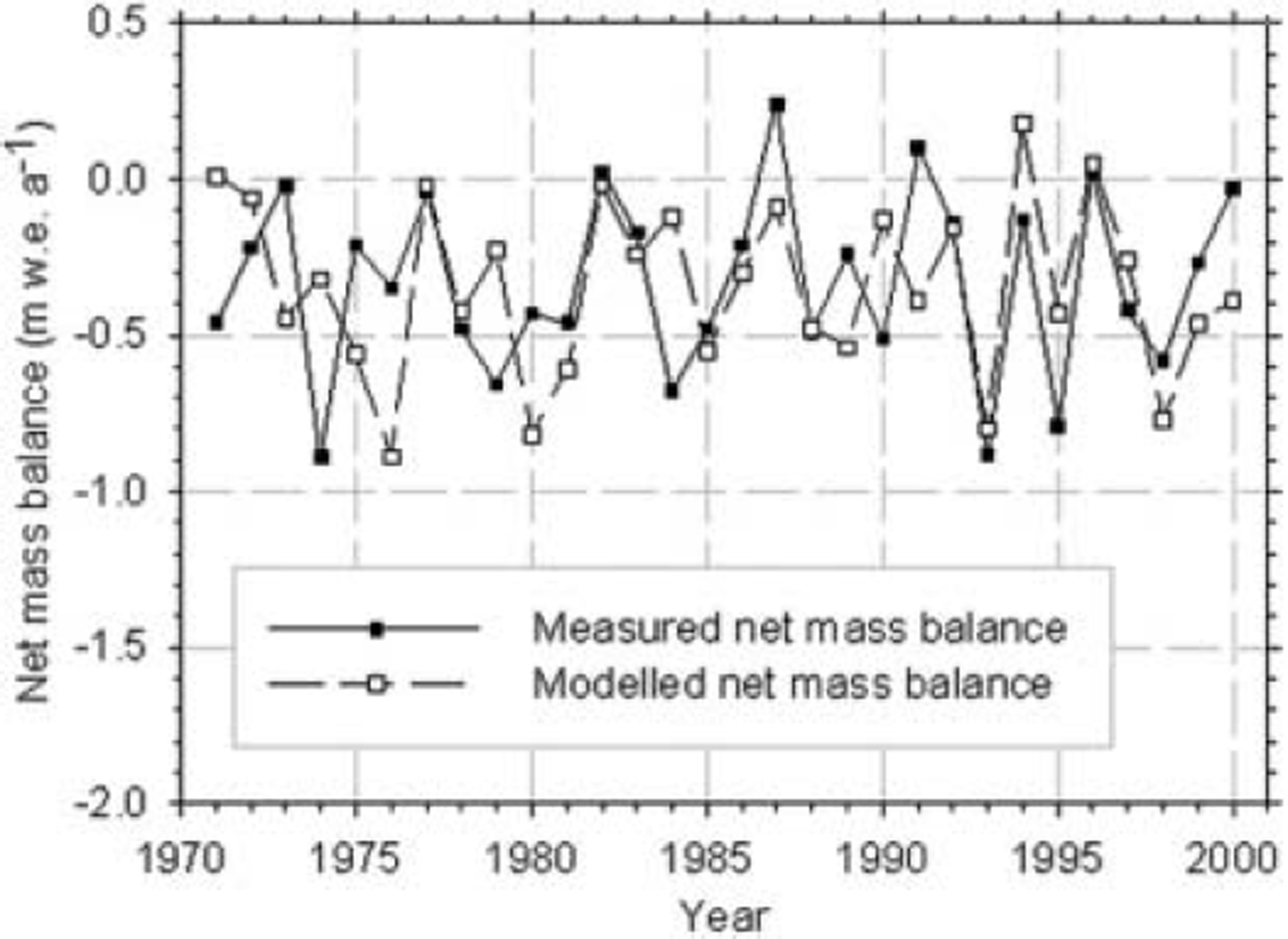
Fig. 2. Measured and modelled annual net mass-balance time series for midre Lovénbreen, 1971–2000.
The large annual variation of these mass-balance results compared to any trend (standard deviations are 0.28 and 0.29m a-1 for the modelled and measured series respectively) makes a statistical comparison of the two series difficult. Overall, though, the model reproduces the year-to-year variation in mass balance relatively well, correctly determining the direction of the trend in most years and to a lesser extent the magnitude of variation. Similar to the measured values, the modelled net balance is negative in all but four years.
The modelled total net volume of superimposed ice accumulation during each mass-balance year is shown in Figure 3a. The average annual net volume of superimposed ice accumulation at midre Lovénbreen over the 30year period is estimated to be 390 × 105 m3.
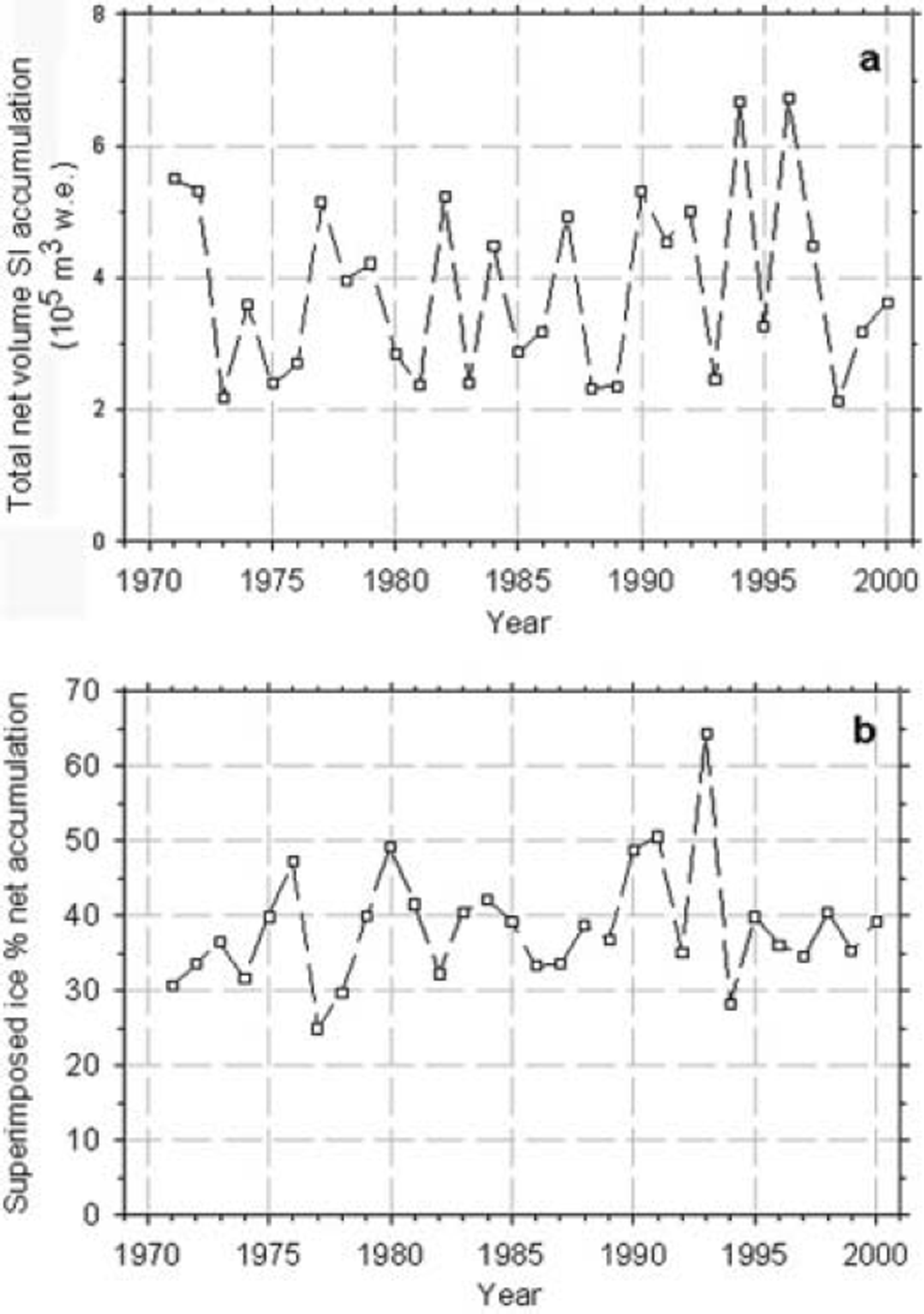
Fig. 3. Net superimposed ice quantities, 1971–2000. (a) Total volume of superimposed ice remaining at the end of the mass-balance year. (b) Net mass of superimposed ice as a percentage of total net accumulation.
Annual variation of net superimposed ice accumulation is largely dependent on the size of the accumulation area, and hence the variations in net mass balance and total superimposed ice volume are strongly correlated. Figure 3b shows the mass of superimposed ice formed as a proportion of the total net accumulation in water equivalent for each of the 30 mass-balance years. Superimposed ice accounts for 20-65% of the annual accumulation at midre Lovénbreen, with a modelled average of 37% over the study period.
Climate-Change Scenarios
Future climate scenarios used in this work are taken from published results of spatial interpolation and empirical downscaling of trends derived from global climate model (GCM) ensembles (Reference BenestadBenestad, 2004). Large variations are found in downscaled GCM predictions for Svalbard and these are attributed to differences in the model treatments of sea-ice conditions (Reference Benestad, Førland and Hanssen-BauerBenestad and others, 2002; Reference Førland and Hanssen-BauerFørland and Hanssen-Bauer, 2003).
The present climate at Svalbard airport, Longyearbyen, is characterized by statistically significant increases in measurements of MAAT (+0.1 ˚C decade-1) and total annual precipitation (+2.7%decade-1) over the period 1912-2001 (Reference Førland and Hanssen-BauerFørland and Hanssen-Bauer, 2003). Reference BenestadBenestad (2004) uses an ensemble of GCM predictions to estimate a 50% probability that January warming in northwest Spitsbergen will exceed +0.5˚Cdecade-1 between 1980 and 2050. Similarly Reference Hanssen-BauerHanssen-Bauer (2002) projects an increase in MAAT of +0.61 ˚C decade-1 at the site of Svalbard airport for the period 1961-2050, coinciding with a precipitation increase of +1.4% decade-1. Reference Bjørge, Haugen and NordengBjørge and others (2000), using dynamical downscaling of GCM model predictions, however, put a larger figure on the likely increase in precipitation for western Svalbard of ∼ + 2% decade-1.
A complete list of the climate-forcing scenarios used in this study is given in Table 1. The trends used are based substantially on the observations and forecasts reported in Reference Førland and Hanssen-BauerFørland and Hanssen-Bauer (2003). A ‘no trend’ scenario is constructed as described in the next section from the mean values of temperature and precipitation at Ny-Ålesund. In this scenario (p0t0) there is no change in the MAAT or total precipitation throughout the model runs.
Table 1. Future climate scenarios used in this investigation. Temperature and precipitation trends are linear and are expressed as ˚C decade–1 increase in the mean annual value and as %decade–1 increase in the annual total respectively
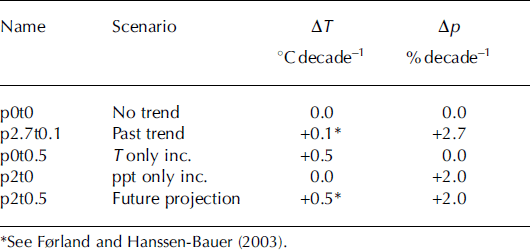
A ‘future prediction’ scenario is constructed using the same method, but with trends in MAAT and total precipitation which represent the downscaled GCM predictions described above. In this scenario (p2t0.5) MAAT increases at a rate of 0.5˚C decade-1 and total annual precipitation increases at a rate of 2% decade-1 over the period 2001-50. Scenarios were also produced for the purpose of assessing the model sensitivity that include a positive trend of 0.5˚Cdecade-1 in MAAT only (p0t0.5) or a positive trend in precipitation of 2% decade-1 only (p2t0).
An additional scenario (p2.7t0.1) which represents a continuation of the MAAT and precipitation trends observed during the past century at Svalbard airport is also included. This features an increase in mean air temperature of +0.1 ˚Cdecade 1 and a simultaneous increase in annual precipitation of +2.7%decade- 1.
Mass-Balance Simulations: 2001–50
The first stage in modelling future climate scenarios was to produce a reference climate for the present day. This is based on sine curves fitted to daily average values of mean temperature and humidity for the 30 year period 1971-2000. Synthetic years of daily temperature and humidity were then created by adding a randomly generated element to these annual functions. In order to do this, the annual cycle was divided into four sections, summer, winter and the two inter-seasonal periods. For each of these, the randomly generated component was determined from the standard deviation of temperature from the mean within the past 30 year meteorological record. Standard deviations were as follows: ±6˚C (days 0-99 and 301-365), ±3˚C (days 100-150 and 250-300) and ±1.87˚C (days 150-250). The aim was to replicate the greater daily variation observed in winter temperatures while retaining the smaller daily variation measured during summer.
When modelling future mass balance, input data for precipitation, cloud cover and cloud base height were randomly sampled as complete single balance year series from the 30year record, onto which a daily percentage increase could then be superimposed. Due to the difficulties of synthesizing unique and realistic precipitation distributions, this method was determined to be the simplest and most valid way of simulating a trend of increasing precipitation while retaining variability in the total annual quantity of precipitation.
We find that the combination of synthetically generated temperature series and precipitation distributions taken from previous years of meteorological measurement creates annual variations in future predictions that have a realistic magnitude (see Fig. 4). In order to determine the effect of using stochastic variations in the daily temperature and precipitation series on net balance predictions, five distinct temperature series differing only in their randomly generated component were constructed for each of the modelled scenarios for the period 2001-50. These temperature series were in turn combined with each of five different precipitation selections, creating an envelope of 25 parameter sets all adhering to the prescribed trend. The combined results of these simulations are shown in Figure 4.
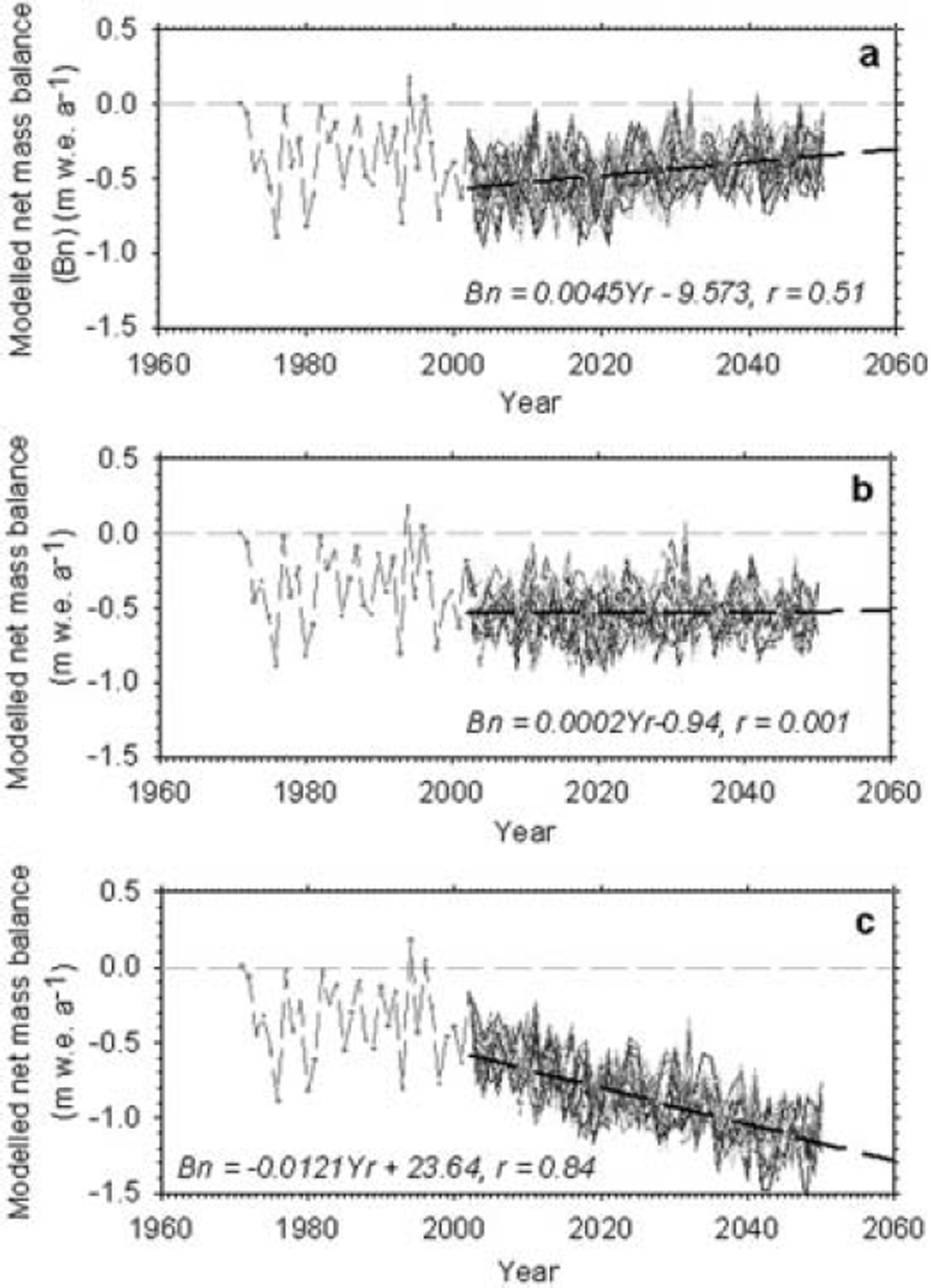
Fig. 4. Model results for the annual net mass balance of midre Lovénbreen with daily meteorological data (1971–2000) and with synthetic data consisting in each case of 25 different random daily variations on a future scenario for the period 2001–50. (a) ‘No change’ temperature and precipitation averages equal to those of the past 30 years (p0t0; see Table 1). (b) Mean annual air-temperature change of +0.1˚C decade–1 (p0t0.1). (c) Mean annual air-temperature change of +0.5˚C decade–1 and total annual precipitation change of +2% decade–1 (p2t0.5). In each case the trend shown is a best fit to the average of all 25 simulations.
For each of the climatic scenarios the 25 mass-balance predictions follow a common trend. The ‘no trend’ scenario (Fig. 4a) produces a consistently negative mass balance that increases steadily beyond the year 2020. A straight-line fit (r = 0.51) to the mean of these predictions identifies a mass-balance increase of +0.0045 ma-1 . This result reflects the glacier regaining equilibrium with the climate within a time frame of 70-80years. This would eventually lead to a cessation of terminus retreat and a return to a mass balance of ∼ 0 m a-1 .
Figure 4b shows that a temperature increase of +0.1 ˚C decade-1 is sufficient to sustain the present negative balance state of midre Lovénbreen. A straight-line fit shows no increasing or decreasing trend in mass balance, and results in continued glacier retreat for at least the next 50 years. The projected temperature increase of +0.5˚Cdecade-1 and coincident precipitation increase of +2%decade-1 (Fig. 4c) results in a consistently negative and decreasing mass balance with a trend of -0.012 m a-1 (r = 0.84). Under this scenario, midre Lovénbreen shows no sign of reaching equilibrium within the modelled period.
The cumulative impact of the predicted changes in MAAT and total precipitation on glacier mass balance is shown in Figure 5a. The cumulative mass loss averaged over the glacier surface for the 50 year period is − 22 m for the p0t0 scenario and –41 m for the p2t0.5 scenario. Cumulative mass balances are also plotted for the isolated temperature (p0t0.5) and precipitation (p2t0) only increase scenarios. The sensitivity of the modelled mass balance to increasing precipitation by the projected value (+0.02 m a-1) is far less than the sensitivity of the model to increasing the MAAT (−0.43 m a-1).
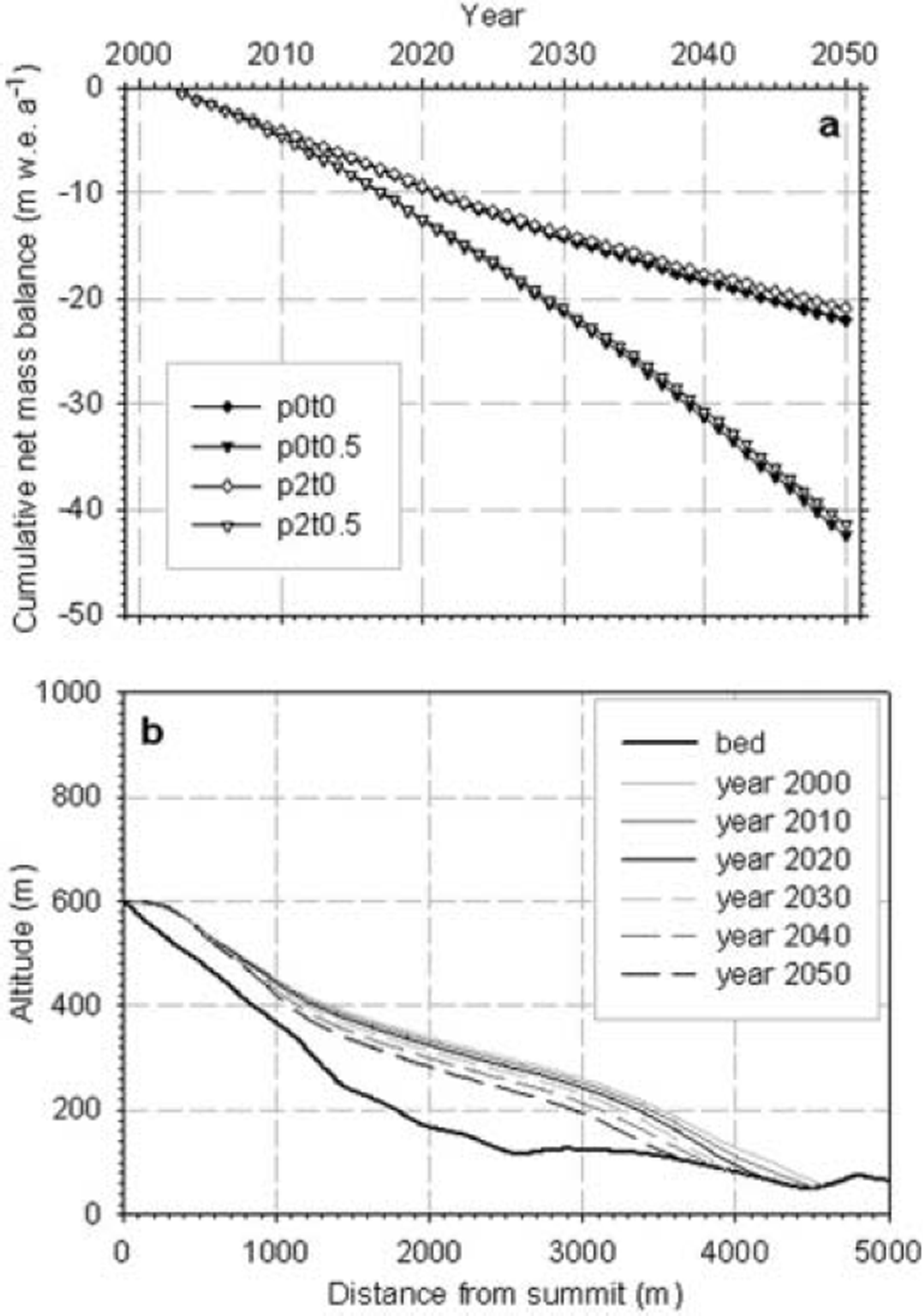
Fig. 5. (a) Modelled cumulative net (surface area averaged) mass balance of midre Lovénbreen under four scenarios of climate change (see Table 1). (b) Model prediction of the change in surface height profile of midre Lovénbreen as a function of distance from the glacier summit in the direction of the glacier centre line. To produce the results in (b) the model was forced with the p2t0.5 scenario.
The longitudinal profile of midre Lovénbreen along the centre line produced under the p2t0.5 scenario is shown in Figure 5b at 10year intervals from the present. The modelled response to this climate-change scenario includes thinning of the upper glacier by ∼50m, thinning of the lower glacier by ∼100m and retreat of the terminus at a rate of ∼14ma–1 , giving a total retreat for the period 2001-2050 of ∼700m.
Superimposed Ice Formation
Total net superimposed ice accumulation at midre Lovénbreen (Fig. 6a) is predicted to decrease at a rate of -3.9 × 10³m3w.e. a-1 (r = 0.83) over the next 50 years under the p2t0.5 climate-change scenario. In contrast, model results from the p0t0 ‘no trend’ scenario show no significant decrease in the net volume of superimposed ice.
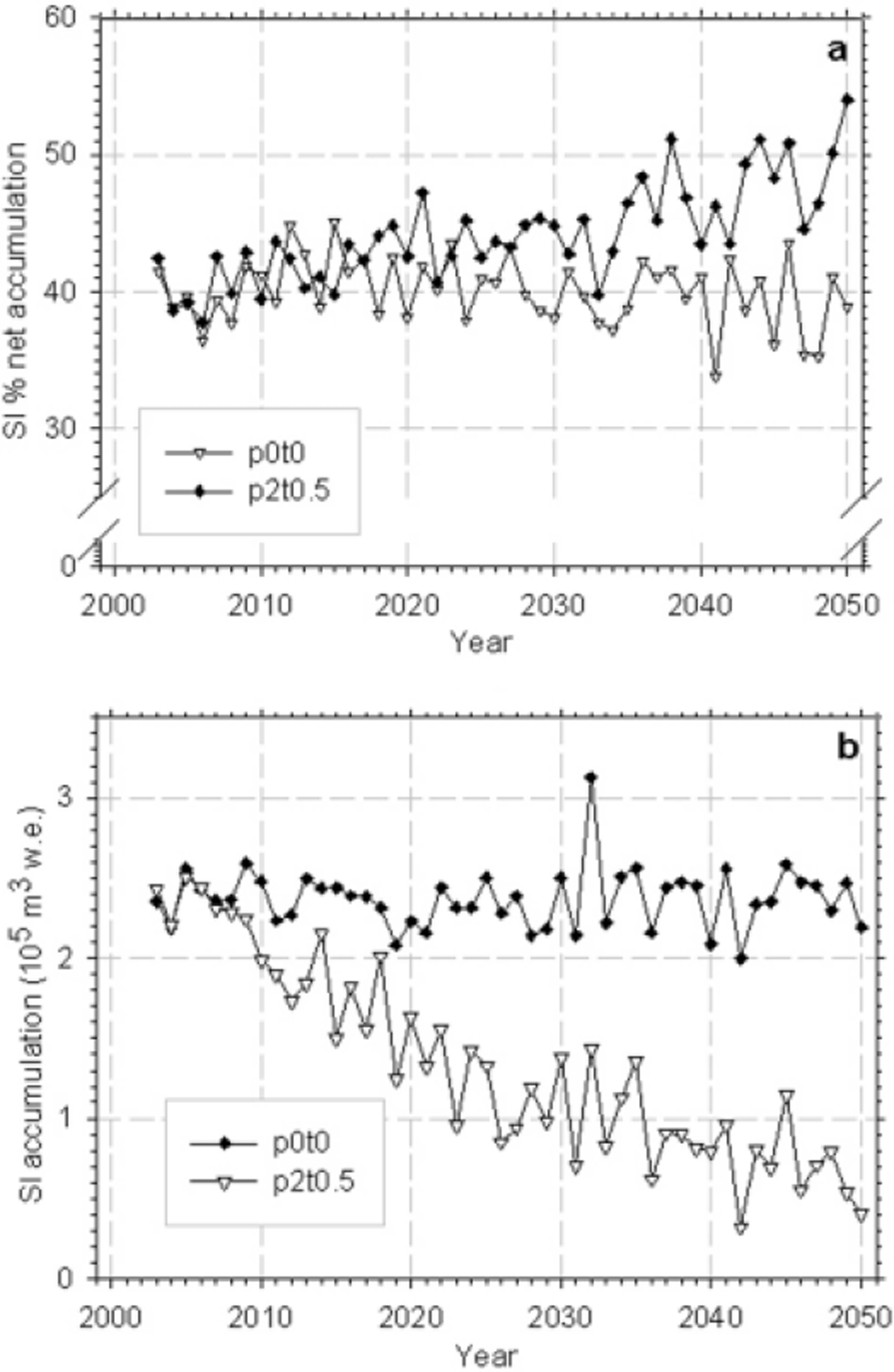
Fig. 6. (a) Volume of superimposed ice accumulation summed over the entire glacier catchment. (b) Mass of superimposed ice divided by total water equivalent accumulation. In each case the scenarios shown for comparison are p0t0 and p2t0.5.
The rapid decline in superimposed ice volume predicted for the p2t0.5 scenario is largely the result of an increase in the equilibrium-line altitude and consequent decrease in size of the accumulation area. As a result, however, of greater surface melting within the remaining accumulation area, superimposed ice is found to account for an increasing proportion of the modelled net accumulation, rising to 55% by the end of the studied period (Fig. 6b) (cf. an average of 37% for 1971-2000).
In order to assess the importance of superimposed ice formation and refreezing within the snowpack to the net mass balance of midre Lovénbreen, an experiment was performed where the processes of refreezing were removed from the model (Fig. 7). As a result, the cumulative mass balance over the 50 year period was found to decrease by -7.44 m for the p0t0 scenario and by -7.87 m for the p2t0.5 scenario. We conclude therefore that the combined effect of all meltwater refreezing processes on the annual net mass balance of midre Lovénbreen is +0.155m a–1 for the p0t0 scenario, and +0.164 ma–1 for the p2t0.5 scenario.
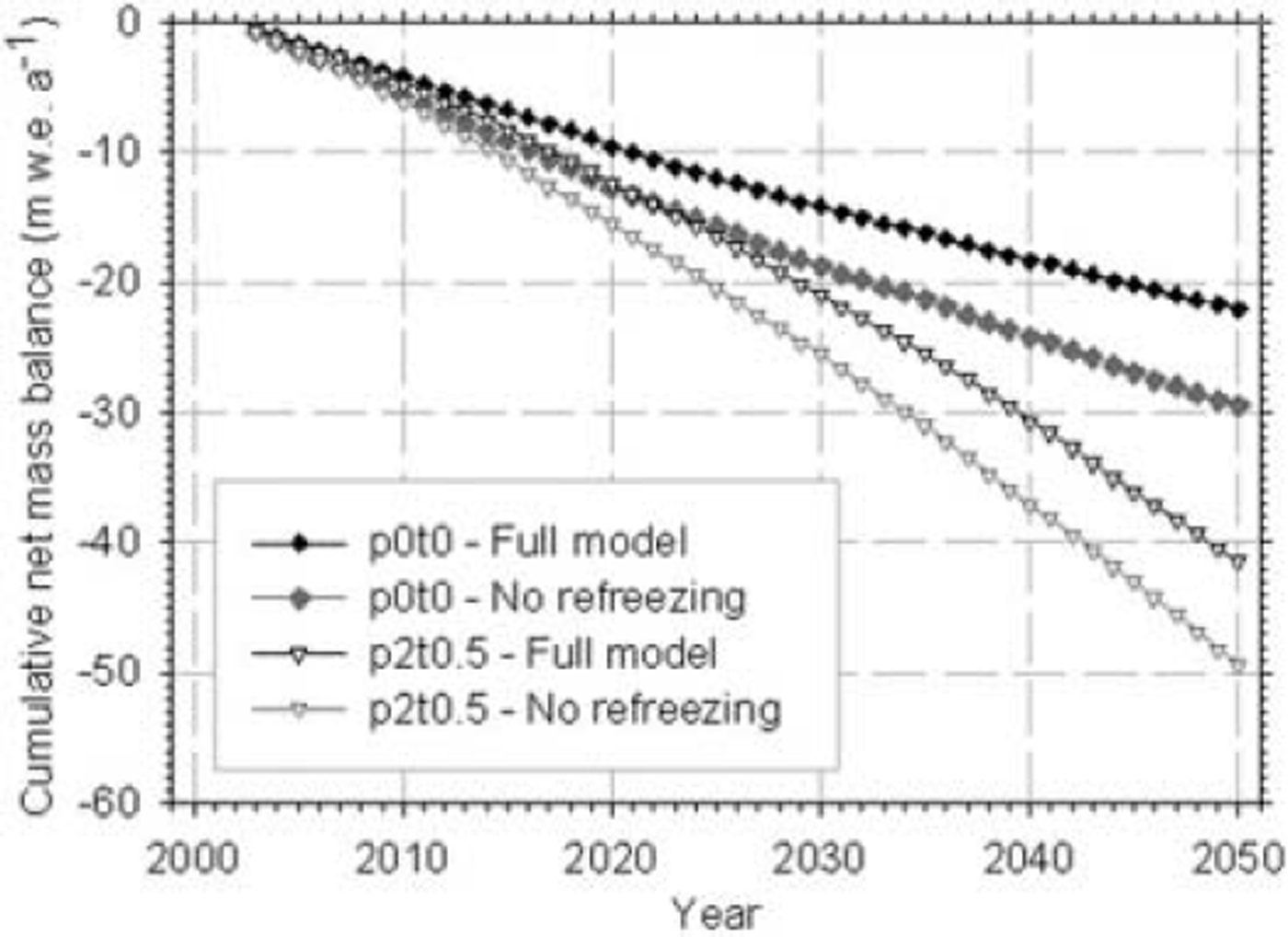
Fig. 7. Cumulative mass losses predicted for midre Lovénbreen over the 50 year period by models both including and neglecting meltwater refreezing. Climate scenarios of p0t0 and p2t0.5 are shown.
Summary and Conclusions
A detailed energy/mass-balance model has been applied to midre Lovénbreen, a high-Arctic valley glacier in Spitsbergen. The model is run with meteorological input from the past 30 years to simulate present climatic conditions and with synthetically generated data to simulate scenarios of future climate change. Conclusions from this work are as follows:
Reference Wadham and NuttallWadham and Nuttall (2002) estimated from field measurements made in 1998 and 1999 that superimposed ice accounts for 16–25% of the net accumulation at midre Lovénbreen. Modelling of the same glacier suggests that this may be regarded as a conservative estimate. The average modelled contribution of superimposed ice for the period 1971–2000 is 37% of the total net accumulation.
Scenarios of climate change in line with current GCM predictions produce a significant decrease in the net volume of superimposed ice formation at midre Lovénbreen, corresponding to a decreased accumulation area and retreat of the terminus. The relative importance of superimposed ice for accumulation is predicted to increase, however, and to account for >50% of net accumulation by the year 2050.
The refreezing of meltwater at present contributes +0.15m a–1 to the net mass balance of midre Lovénbreen and will continue to do so in the future, thus reducing the potential runoff (without refreezing) by around one-third.
Superimposed ice is shown to be contributing significantly towards maintaining the present balance of the glacier and is predicted to have a vital role in slowing down the mass-balance response to future climate change. These results demonstrate the importance of accurately measuring and correctly modelling meltwater refreezing and particularly superimposed ice formation in studies of the sensitivity of glaciers and ice caps to climate change.
Acknowledgements
This project was funded by the UK Natural Environment Research Council studentship (NER/S/A/2001/06006) and ARCICE thematic programme (GST/02/2192). We are grateful to the Norwegian Polar Institute for logistical support in Svalbard and to the Norwegian Meteorological Institute for the use of data. For the provision of additional field data we thank A.-M. Nuttall, and for assistance in the field O. Brandt and N. Span.



