




Introduction
The long-chain omega-3 polyunsaturated fatty acids (LC n-3PUFA) eicosapentaenoic acid (EPA; 20:5n-3) and docosahexaenoic acid (DHA; 22:6n-3) are well-established as having a broad range of beneficial health effects in the general population, while interest in docosapentaenoic acid (DPA, 22:5n-3) is steadily increasing(Reference Djuricic and Calder1–Reference Kaur, Cameron-Smith, Garg and Sinclair3). Higher intakes and circulating and tissue status of these fatty acids promote cardiovascular heath(Reference Djuricic and Calder4,Reference Drouin, Rioux and Legrand5) , reduce the incidence of pre-term birth(Reference Middleton, Gomersall, Gould, Shepherd, Olsen and Makrides6–Reference Best, Gibson and Makrides8), support visual and cognitive development in early life(Reference Drouin, Rioux and Legrand5,Reference Calder9) , promote immune function including reduced chronic inflammation(Reference Djuricic and Calder1,Reference Eggersdorfer, Berger, Calder, Gombart, Ho and Laviano10,Reference Ghasemi Fard, Cameron-Smith and Sinclair11) and reduce the risk of Alzheimer’s disease or cognitive decline(Reference Wei, Li, Dong, Tan and Xu12) and depression(Reference Lu, Qiao and Mi13), although causality for the brain health benefits remains to be fully established in RCTs.
In the form of dietary reference values (DRV), Food-Based Dietary Guidelines (FBDG) and expert consensus documents, many national and international health authorities, ministries and expert groups advocate the inclusion of LC n-3PUFA rich food sources in the diet often as recommendations on intake of total fish and oil-rich fish (the almost exclusive dietary source of LC n-3PUFA), with some suggesting supplementation in specific population groups such as women during pregnancy. FBDG provide recommendations for the general healthy population about foods, food groups and dietary patterns which promote health and well-being and reduce the risk of chronic diseases. Topics such as sustainability are increasingly included in FBDG. National authorities or ministries may also make underpinning recommendations about specific target intake levels of LC n-3PUFA for different age groups and physiological states, outline specific health relationships, give guidance on high intakes and express views about the use of LC n-3PUFA supplements. Often, these underpinning recommendations are based upon a technical and scientific review of the evidence base, and they cover the needs of the general healthy population rather than those with specific medical conditions. FBDG and the underpinning technical and scientific documents (TSD) play a vital role in informing public nutrition and health policy development.
LC n-3PUFA recommendations vary between countries and regions. To our knowledge no up-to-date worldwide overview of LC n-3PUFA intake recommendations within FBDG TSD and other expert reports is available. Given that the global evidence base, from which expert groups and FBDG TSD working groups derive their recommendations, is the same, it is of value to nutrition science, medical, industry and consumer communities to understand whether there is consistency across recommendations worldwide. Previous analyses broadly associated with this topic cover recommendations relating to seafood intake and sustainability(Reference Graham, Thorne-Lyman, Love, Nussbauer, Bloem and Fry14), quantity and quality of dietary fat intake(Reference Schwingshackl, Zähringer, Beyerbach, Werner, Heseker and Koletzko15), worldwide LC n-3PUFA status mapped using the Omega-3 Index (O3I) as a standard biomarker(Reference Schuchardt, Beinhorn, Hu, Chan, Roke and Bernasconi16) and LC n-3PUFA recommendations focusing on cardiovascular benefits alone(Reference Gebauer, Psota, Harris and Kris-Etherton17). Therefore, the primary aim of this review was to examine TSD that underpin FBDG, and expert group reports to provide an overview of global quantitative intake recommendations for LC n-3PUFA for healthy individuals across the life-stages, and report on recommendations relating to health messages, supplementation and high intakes of LC n-3PUFA.
Methods
Data collection
The Food and Agriculture Organization (FAO) of the United Nations global online repository for FBDG(18) was used to identify countries with FBDG for general healthy populations. The information and links available on each FAO FBDG country webpage were used to establish if the FBDG was based on a TSD and whether the TSD was available in the English language. For the purposes of this review a TSD was defined as technical and scientific if it contained references to the published scientific literature and was not consumer-facing. If the FAO website link was not functional or had expired, a Google search was conducted using the title of the FBDG document in order to locate it. For all documents identified, a Google search was conducted to check that the most recent version of the named TSD was sourced. TSD presented in other formats (e.g. as webpages) were included if they were available in the English language.
Further TSD were identified by conducting two additional structured Google searches as follows: (country name) + (omega-3) + (guideline) and (country name) + (fatty acid) + (guideline). Structured Google searches were also conducted for each region. The first 50 returns of each Google search were screened for eligibility. The search strategy employed (FAO route and Google search route) was specifically designed to identify expert group TSD reports and TSD that underpin FBDG. The documents of interest, TSD, are most often published as national authority or international expert organisation reports and not as academic papers. For this reason, searches of traditional bibliographic databases such as MEDLINE or EMBASE were not undertaken.
For some countries more than one TSD was identified (e.g. for different age groups or supporting DRV publications) either directly via the FAO route, via the Google searches or as a linked document within a FBDG TSD. All TSD were potentially eligible for inclusion if available in the English language and were the latest version of the TSD or expert report. All searches were completed between the 29th of September 2024 and the 24th of October 2024 for Asia and the Pacific, the Near East, Europe and North America (51 countries) and between the 27th of March 2025 and the 14th April 2025 for Africa and Latin America (49 countries).
Documents designed for use by consumers were excluded since they are not technical scientific documents. TSD relating to diseases or medical conditions were excluded with the exception of TSD that contained information on primary prevention of a disease or medical condition. Each TSD was searched for the following key words using the find text search function: Omega-3, n-3, eicosapentaenoic acid (EPA), docosapentaenoic acid (DPA), docosahexaenoic acid (DHA), and long chain polyunsaturated fatty acid (LC-PUFA). Documents containing these search terms were then hand searched to identify TSD that included quantitative intake recommendations for LC n-3PUFA for healthy individuals across the life-stages, and recommendations relating to health messages, supplementation and high intakes of LC n-3PUFA. References to fish or marine oils and generic use of the term omega-3 fatty acids were excluded as they were not specific enough to the intended search criteria. Data collection was completed by a reviewer [CJ] and anomalies discussed with two other reviewers [PC and FP] with a final decision reached by consensus.
Data extraction
Data were extracted and entered into a pre-designed excel spreadsheet to capture details of the TSD publishing organisation, year of publication, country or region, target population, recommendation methodology (e.g. systematic review, consensus/expert opinion), quantitative LC n-3PUFA intake recommendation by life stage category with grading of recommendation if available, health messages, and guidance on high intakes and statements about supplementation relating to LC n-3PUFA. TSD that were authored by a disease or medical condition specific expert body e.g. national heart foundations (focusing on primary prevention) were assumed to be relevant to adults only, unless the TSD specifically made reference to age groups <18 years.
Results
Overall description of reports
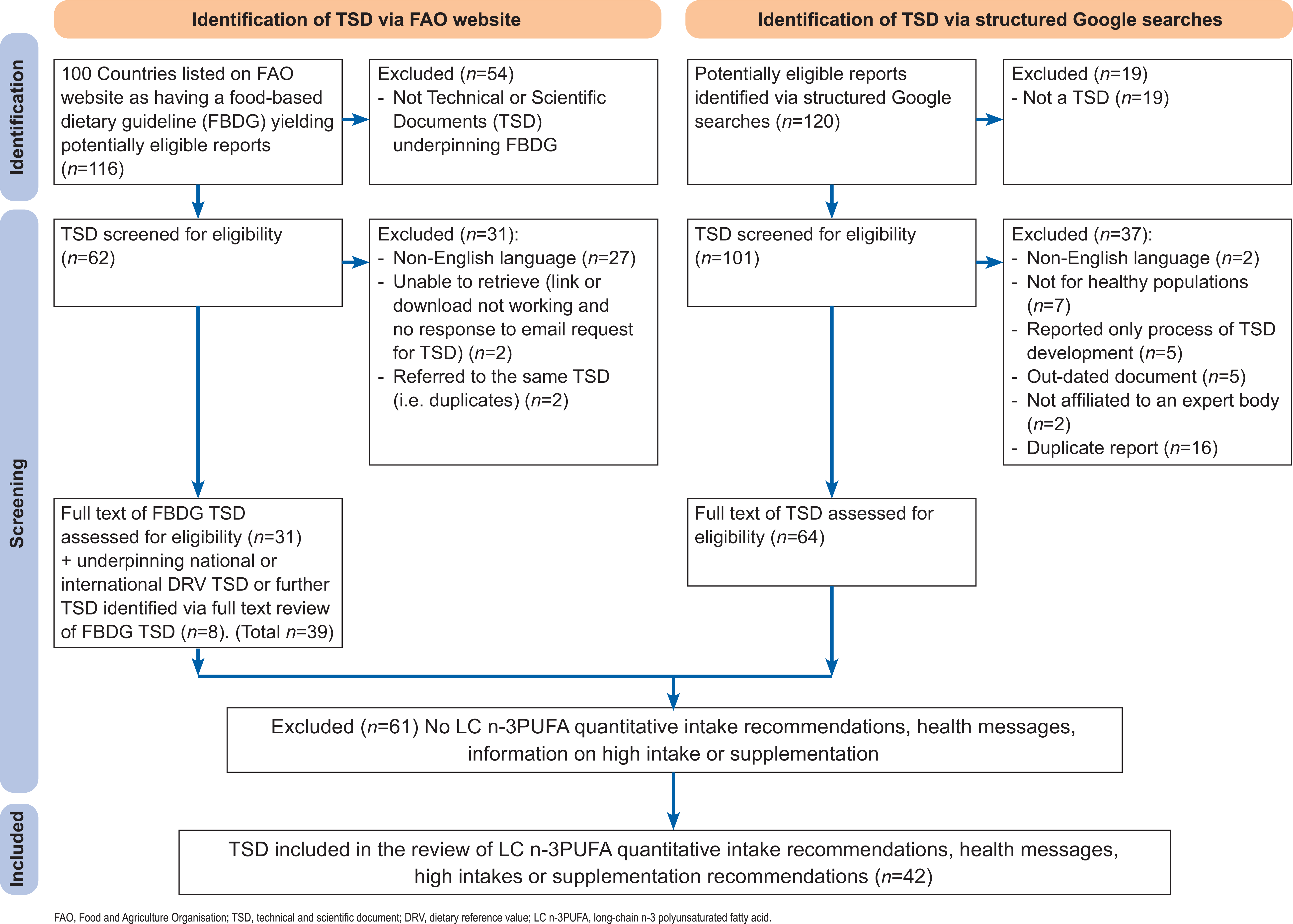
From 100 countries listed on the FAO website as having a FBDG, 116 documents were assessed (some countries had more than one FBDG specific to different life stages) of which 62 were identified as having an underpinning TSD. A structured Google search found 120 potentially eligible reports with 101 classed as TSD. In total 163 TSD were assessed and 42 met the inclusion criteria for the review. The flow diagram in Figure 1 shows the systematic search and TSD selection process.
The systematic search and TSD selection process.

Of the 42 TSD included, 30 (71%) contained quantitative intake recommendations for LC n-3PUFA, 26 (62%) outlined health messages, 14 (33%) discussed supplementation, 12 (29%) gave guidance on high intakes or safety of LC n-3PUFA, and 31 (74%) provided information on more than one of these categories. Those included were categorised as follows: International (≥2 countries) DRV TSD (n = 5), National DRV TSD (n = 3), National FBDG TSD (n = 15) and Expert Body TSD (n = 19), the latter group being a mix of life stage specific, sex specific, disease or medical condition specific (focused on primary prevention) or toxicological/safety reports.
The TSD identified were published between 2004 and 2024. Eighteen (43%) TSD provided clear details of the recommendation methodology (or cross referenced to it)(Reference Cetin, Carlson, Burden, da Fonseca, di Renzo and Hadjipanayis7,Reference Best, Gibson and Makrides8,19–34) , 5 (12%) referred to literature searches or the literature sources underpinning the document(Reference Koletzko, Cetin and Brenna35–39), 6 (14%) were based on expert opinion(40–45) and 13 (31%) either did not report the process undertaken to formulate recommendations or the detail was unclear(46–Reference Vorster, Badham and Venter58).
The scope of the TSD varied with 23 (54%) covering the general healthy population i.e. all sex and age groups(21,22,Reference Blomhoff, Andersen, Arnesen, Christensen, Eneroth and Erkkola24,26,28,29,31,32,34,37,40,42–47,Reference Park50,53,54,Reference Simão, Précoma, Andrade, Correa Filho, Saraiva and Oliveira56–Reference Vorster, Badham and Venter58) . Other TSD were life stage or sex group specific covering adults only (n = 6; 14%)(20,30,Reference Vannice and Rasmussen33,Reference Sánchez-Borrego, von Schacky, Osorio, Llaneza, Pinto and Losa36,41,Reference Hanafiah, Karyadi, Lukito, Neoh and Zin48) , infants and/or children only (n = 4; 10%)(25,49,52,55) , pregnant and/or lactating women only (n = 5; 12%)(Reference Cetin, Carlson, Burden, da Fonseca, di Renzo and Hadjipanayis7,Reference Best, Gibson and Makrides8,23,Reference Koletzko, Cetin and Brenna35,38) , and older adults only (n = 2; 5%)(39,51) . Two (5%) TSD either did not report the scope or the scope was unclear(19,Reference Wolfram, Bechthold, Boeing, Ellinger, Hauner and Kroke27) .
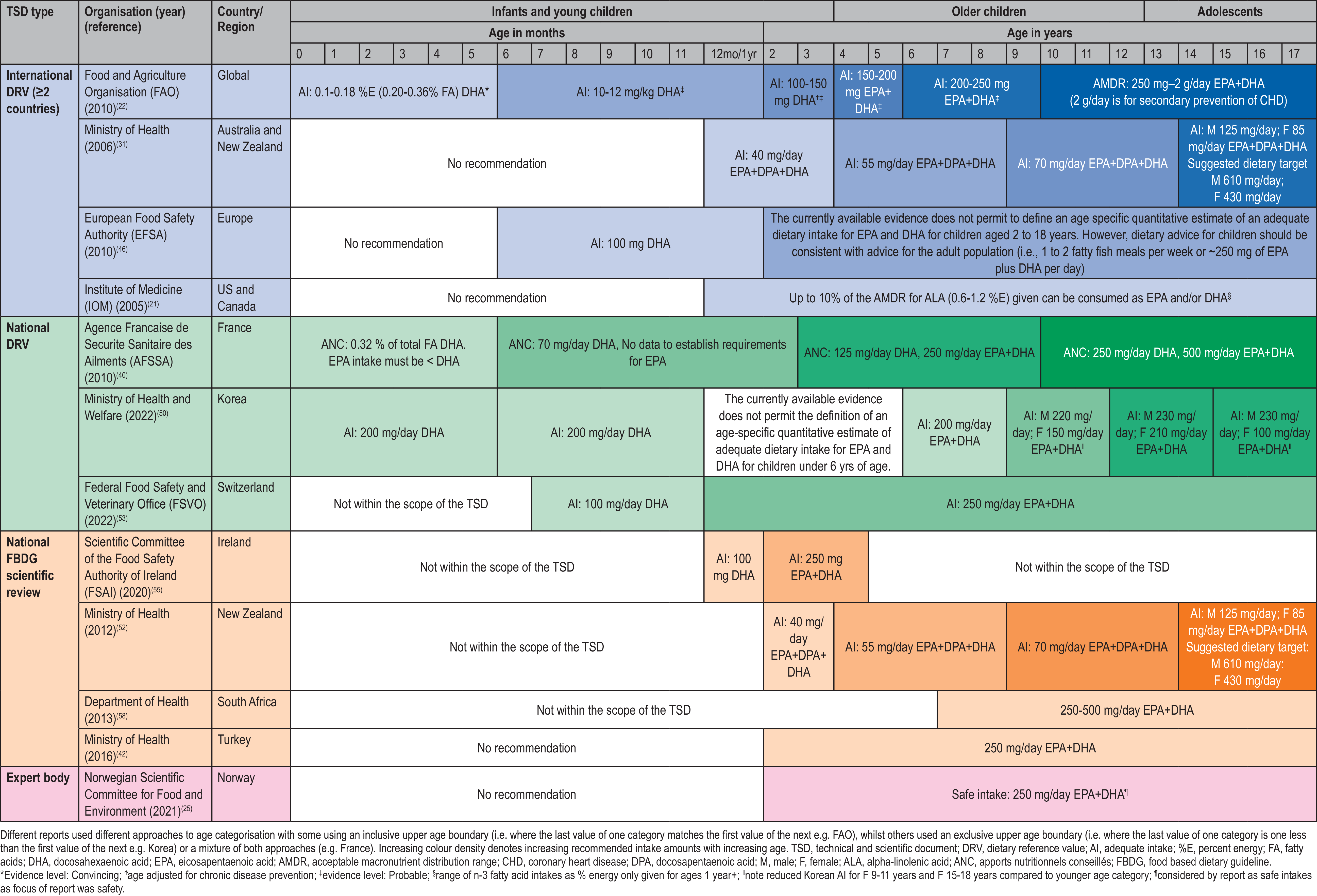
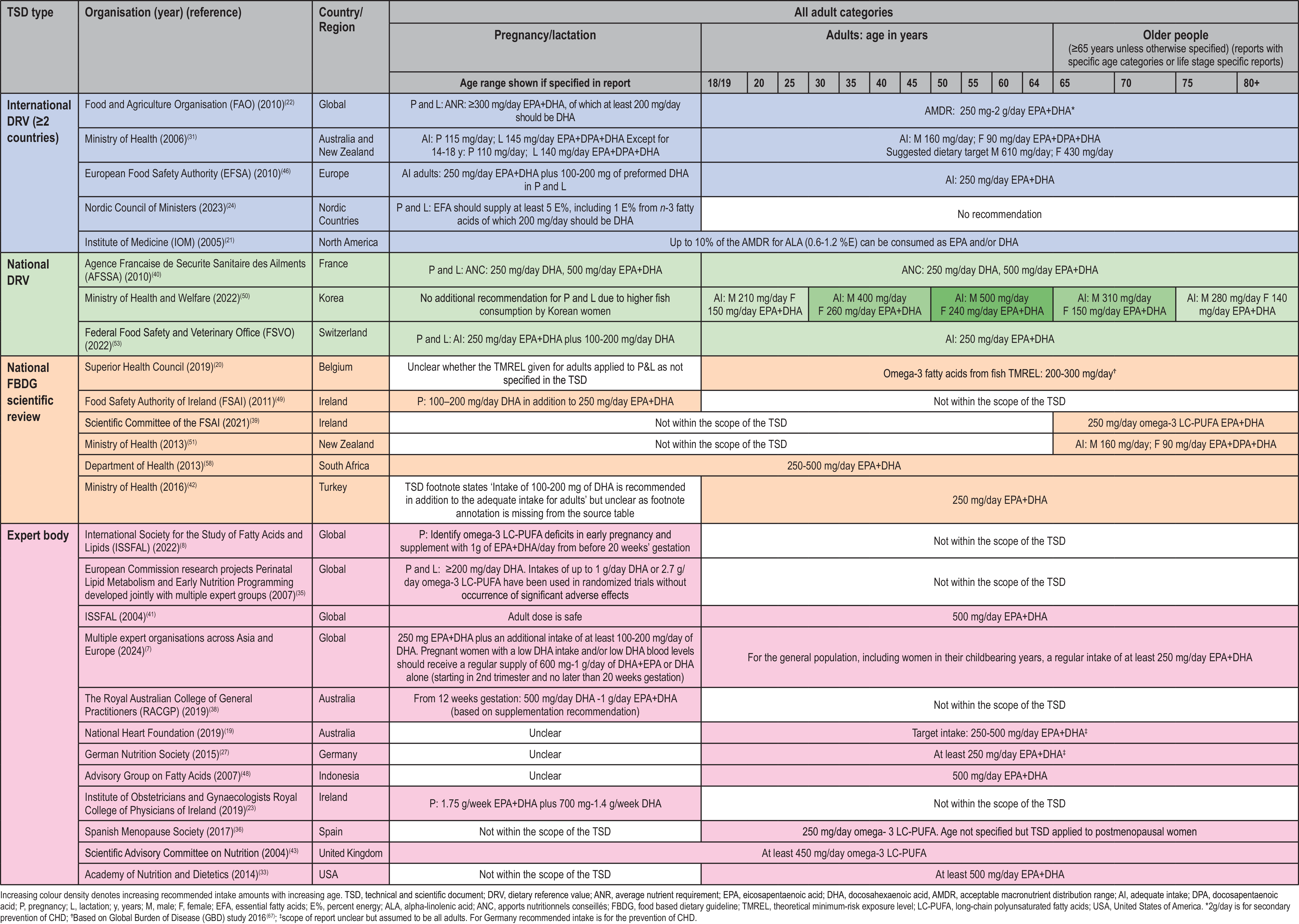
There was heterogeneity between the age categories used in reports, how quantitative recommended intakes were expressed (e.g. in mg/day, as a percentage of total recommended energy intake, as a percentage of the recommended percentage energy intake from total omega-3 fatty acids or in mg/kg body weight), and whether sex specific intake recommendations were given. How the specific quantitative recommended intakes were defined also varied, with some given as adequate intakes (AI), some as the acceptable macronutrient distribution range (AMDR), and others were made in the context of the evidence base supporting health outcomes or reducing disease risk. The quantitative intake recommendations for LC n-3PUFA from the 30 TSD that gave such recommendations are summarised in Figure 2 for age groups <18 years and in Figure 3 for age groups ≥18 years. Different reports used different approaches to age categorisation, some using an inclusive upper age boundary (i.e. where the last value of one category matches the first value of the next e.g. FAO), others used an exclusive upper age boundary (i.e. where the last value of one category is one less than the first value of the next e.g. Korea) or a mixture of both approaches (e.g. France). For the purposes of this review age categories for children are defined as shown below.
Overview of quantitative intake recommendations for LC n-3PUFA for groups in the general healthy population aged <18 years.

Overview of quantitative intake recommendations for LC n-3PUFA for groups in the general healthy population aged ≥18 years.

LC n-3PUFA quantitative intake recommendations by life stage
Infants (0–12 months) and young children (1 to 3 years)
A total of 11 TSD gave LC n-3PUFA intake recommendations that were relevant to infants (0–12 months) and young children (aged 1–3 years)(21,22,25,31,40,42,46,Reference Park50,52,53,55) .
The amounts of LC n-3PUFA recommended for infants were often split by age in months with two TSD providing intake recommendations for DHA for the first 6 months of life of 0.32% of total fatty acid intake in France(40) and an AI of 0.1–0.18% energy in a global publication(22). The French recommendation also stipulated that EPA intake must be lower than that of DHA(40). One further TSD gave an AI of 200 mg/day DHA for Korean infants from 0–5 months(Reference Park50).
Recommendations for older infants were given in 5 TSD(22,40,46,Reference Park50,53) . An intake of 100 mg/day DHA was recommended in 2 TSD for infants >6 months of age(46,53) with slightly lower intakes recommended in France (DHA 70 mg/day for infants 6–12 months)(40) and a higher intake recommended in Korea (DHA 200 mg/day for infants 6–11 months)(Reference Park50). One global TSD recommended an adequate DHA intake from 6 months (to 24 months) of 10–12 mg/kg body weight with an evidence grading of probable(22).
For young children (aged 1–3 years), intake recommendations varied from an AI of 40 mg/day EPA + DPA + DHA(31,52) to 250 mg/day DHA + EPA(25,42,53,55) , although there were differences in the age categories this intake related to within the 1–3-year age range. The European Food Safety Authority (EFSA) stated that the available evidence did not permit the definition of an age specific quantitative estimate of an adequate dietary intake for EPA and DHA for children aged 2 to 18 years. However, they recommended that dietary advice for children should be consistent with advice for the adult population (i.e., one to two fatty fish meals per week or ∼250 mg of EPA plus DHA per day)(46). In the USA and Canada(21) up to 10% of the percentage energy range for total omega-3 fatty acids given can be consumed as EPA + DHA; the recommended intakes of omega-3 fatty acids expressed as a percentage of energy intake start at one year of age.
Older children (4 to 12 years)
A total of 12 reports gave LC n-3PUFA intake recommendations that were relevant to older children aged 4–12 years(21,22,25,31,40,42,46,Reference Park50,52,53,55,Reference Vorster, Badham and Venter58) .
The amounts of LC n-3PUFA recommended for older children varied considerably ranging from an AI based on median population intakes of 55 mg/day (EPA + DPA + DHA) at 4 years(31,52) to 500 mg/day (EPA + DHA) at 10 years(40) as well as a range of intake of 250–500 mg EPA + DHA/day from 7 years(Reference Vorster, Badham and Venter58). An intake of 250 mg/day EPA + DHA was recommended in 5 TSD(25,42,46,53,55) . One global TSD applied adult intake recommendations of 250 mg to 2 g/day (EPA + DHA) from 10 years of age with the higher end of the recommendation based on secondary prevention of coronary heart disease (outside the scope of this review)(22). Five TSD recommended increasing amounts of LC n-3PUFA with age(22,31,40,Reference Park50,52) except for female Korean children, with an AI recommendation of 150 mg/day (EPA + DHA) at 9–11 years compared to 200 mg/day (EPA + DHA) at 6–8 years(Reference Park50).
Adolescents (13–18 years)
A total of 11 reports gave LC n-3PUFA intake recommendations that were relevant to adolescents aged 13–18 years(21,22,25,31,40,42,46,Reference Park50,52,53,Reference Vorster, Badham and Venter58) .
The amounts of LC n-3PUFA recommended varied considerably ranging from an AI of 70 mg/day (EPA + DPA + DHA) in Australia and New Zealand at age 13 years(31,52) up to 500 mg/day (EPA + DHA) in adolescents aged up to 18 years in France(40) and South Africa(Reference Vorster, Badham and Venter58). Five TSD provided recommended intakes of EPA + DHA of 250 mg/day(22,25,42,46,53) . One TSD from Korea gave an AI of EPA + DHA from 100 mg/day for females aged 15–18 years to 210 mg/day at 12–14 years of age whilst the AI for males in the same age categories was higher at 230 mg/day(Reference Park50). One further TSD from North America recommended that up to 10% of the percentage energy range for total omega-3 fatty acids given can be consumed as EPA + DHA(21).
A suggested dietary target for children aged 14 years and older was provided in one TSD from New Zealand which suggested that intakes of LC n-3PUFA (EPA + DPA + DHA) should be 610 mg/day (males) and 430 mg/day (females) which is significantly higher than the population AI of 125 mg/day (male) and 85 mg/day (female) for the same age group(52). The suggested dietary target is equivalent to the 90th centile of intake in the Australian/New Zealand population and is based on the likely health benefits (reduction in chronic disease risk) of increased population consumption of LC n-3PUFA(31). An intake of EPA + DHA of 250 mg to 2 g/day was also recommended for adolescents from 10 years (and into adulthood) in a global publication with the upper level in the context of secondary prevention of coronary heart disease, but the topic of secondary prevention of disease is outside the scope of this review(22).
Adults (≥18 years)
A total of 18 TSD provided quantitative intake recommendations for LC n-3PUFA for adults(Reference Cetin, Carlson, Burden, da Fonseca, di Renzo and Hadjipanayis7,19–22,Reference Wolfram, Bechthold, Boeing, Ellinger, Hauner and Kroke27,31,Reference Vannice and Rasmussen33,Reference Sánchez-Borrego, von Schacky, Osorio, Llaneza, Pinto and Losa36,40–43,46,Reference Hanafiah, Karyadi, Lukito, Neoh and Zin48,Reference Park50,53,Reference Vorster, Badham and Venter58) .
Across all TSD there was a range of recommended intakes with 2 TSD giving AIs at the lowest end of the range(31,Reference Park50) . Specifically, Australia and New Zealand gave an AI of 90 mg/day (EPA + DPA + DHA) for women aged from 19 years(31) and Korea gave an AI for women aged 19–29 years of 150 mg/day (EPA + DHA)(Reference Park50). Seven TSD gave a recommended intake of 250 mg/day EPA + DHA which included 3 international TSD(Reference Cetin, Carlson, Burden, da Fonseca, di Renzo and Hadjipanayis7,22,46) , and 4 TSD from individual countries(Reference Wolfram, Bechthold, Boeing, Ellinger, Hauner and Kroke27,Reference Sánchez-Borrego, von Schacky, Osorio, Llaneza, Pinto and Losa36,42,53) . The recommendations from France and the UK were notably higher than other European countries with a specific recommendation for EPA + DHA of 500 mg/day in France made up of 250 mg/day DHA (or 0.113% of energy intake) and 250 mg EPA(40) and a recommendation of 450 mg/day total LC n-3PUFA in the UK(43). Three other TSD, including an expert body statement from the International Society for the Study of Fatty Acids and Lipids (ISSFAL), also gave a higher recommendation at 500 mg/day EPA + DHA citing cardiovascular disease (CVD) risk reduction as the basis(Reference Vannice and Rasmussen33,41,Reference Hanafiah, Karyadi, Lukito, Neoh and Zin48) .
Three TSD gave a range of recommended intakes with two referring to a range of 250–500 mg/day EPA + DHA(19,Reference Vorster, Badham and Venter58) and one international DRV-type TSD referring to an AMDR of 250 mg–2 g/day EPA + DHA(22) noting that the upper limit applied to secondary prevention of CVD(22). The same report stated that there was insufficient evidence to set a specific minimum intake of either EPA or DHA alone in adults(22). A range of 200–300 mg/day of omega-3 fatty acids from fish was recommended in one TSD based on the theoretical minimum-risk exposure level (TMREL) which is a measure of intake that results in the lowest possible disease burden(20).
Guidance from North America recommended that up to 10% of the AMDR energy range for omega-3 fatty acids (0.6–1.2 % of energy from alpha-linolenic acid) can be consumed as EPA and/or DHA(21).
Pregnancy and lactation
Seventeen TSD provided recommendations for LC n-3PUFA during pregnancy(Reference Cetin, Carlson, Burden, da Fonseca, di Renzo and Hadjipanayis7,Reference Best, Gibson and Makrides8,21–Reference Blomhoff, Andersen, Arnesen, Christensen, Eneroth and Erkkola24,31,Reference Koletzko, Cetin and Brenna35,38,40,41,43,46,49,Reference Park50,53,Reference Vorster, Badham and Venter58) .
Recommended intakes ranged from an AI of 110 mg/day (EPA + DPA + DHA) for pregnancy in 14–18 year olds in Australia and New Zealand(31) to recommendations to consume 250 mg/day DHA with a combined intake of EPA + DHA of 500 mg/day in France(40). Recommendations with a focus on reducing the risk of preterm birth were higher at up to 1.0 g/day LC n-3PUFA(Reference Cetin, Carlson, Burden, da Fonseca, di Renzo and Hadjipanayis7,Reference Best, Gibson and Makrides8,38) .
One recent international TSD covering the Nordic countries provided a recommendation that pregnant women should consume 1 E% intake from omega-3 fatty acids of which 200 mg/day should be DHA(Reference Blomhoff, Andersen, Arnesen, Christensen, Eneroth and Erkkola24). A further 6 TSD specified a minimum intake of DHA of 100 to 200 mg/day(Reference Cetin, Carlson, Burden, da Fonseca, di Renzo and Hadjipanayis7,23,42,46,49,53) in addition to the intake of 250 mg EPA + DHA for adult health. A minimum intake for optimal adult health and foetal and infant development was defined in one international TSD as 300 mg/day EPA + DHA, of which at least 200 mg/day should be DHA(22) and a further European consensus statement recommended a minimum intake of 200 mg/day DHA(Reference Koletzko, Cetin and Brenna35). There was no recommendation for increased LC n-3PUFA intakes for Korean women during pregnancy and lactation due to the higher observed fish consumption in this sub-group of the Korean population(Reference Park50).
Higher intakes of LC n-3PUFA of up to 1 g/day were recommended for pregnant women at risk of LC n-3PUFA deficits specifically to reduce the risk of preterm birth in 2 TSD with an international focus(Reference Cetin, Carlson, Burden, da Fonseca, di Renzo and Hadjipanayis7,Reference Best, Gibson and Makrides8) . One further clinical practice guideline from Australia recommended a higher intake of at least 500 mg DHA for all pregnant women from 12 weeks gestation to reduce the risk of preterm birth(38).
LC n-3PUFA recommended intakes for lactation are also presented in 7 TSD(22,Reference Blomhoff, Andersen, Arnesen, Christensen, Eneroth and Erkkola24,Reference Koletzko, Cetin and Brenna35,40,42,46,53) . Recommendations from Australia and New Zealand were higher during lactation compared to pregnancy with an AI of 140 mg/day for 14–18 years and 145 mg/day for all other ages (EPA + DPA + DHA)(31), but still lower than the minimum DHA recommended intake of 200 mg/day DHA for lactation in other reports(Reference Blomhoff, Andersen, Arnesen, Christensen, Eneroth and Erkkola24). Australia and New Zealand also have a suggested dietary target of LC n-3PUFA of 430 mg/day (EPA + DPA + DHA) for adult women which is more in line with the specific recommended intakes during pregnancy and lactation in other international recommendations(22,46) . The importance of an adequate LC n-3PUFA intake in lactation was also recognised in two TSD but with no numerical value assigned(23,49) .
Older adults
A total of 5 TSD provided quantitative guidance on LC n-3PUFA intake for older adults(31,Reference Sánchez-Borrego, von Schacky, Osorio, Llaneza, Pinto and Losa36,39,Reference Park50,51) . One TSD from an expert body provided specific guidance on the intake of LC n-3PUFA in post-menopausal women (which we assume applies to mostly older women)(Reference Sánchez-Borrego, von Schacky, Osorio, Llaneza, Pinto and Losa36). These specific recommendations for older adults should be considered alongside those for all adults, as recommended adult intakes are still relevant to older people.
Intake recommendations varied, with 3 reports given as AI(31,Reference Park50,51) , 1 given in the context of the evidence base supporting health outcomes(39) and 1 given as a recommended intake(Reference Sánchez-Borrego, von Schacky, Osorio, Llaneza, Pinto and Losa36). Age categories used in TSD varied, with some using ≥65 years to define older adults(39,51) whilst others had differing age boundaries of 51–70 years and ≥71 years(31); 65–74 years and ≥75 years(Reference Park50) and one sex specific report focused on post-menopausal women without defined age boundaries(Reference Sánchez-Borrego, von Schacky, Osorio, Llaneza, Pinto and Losa36).
Recommended intakes of LC n-3PUFA varied from an AI of 90 mg/day (EPA + DPA + DHA) in women for the age categories 51–70 years and >70 years(31) to 250 mg/day LC n-3PUFA for adults ≥65 years and post-menopausal women respectively(Reference Sánchez-Borrego, von Schacky, Osorio, Llaneza, Pinto and Losa36,39) . One further TSD provided intake recommendations based on observed median population intakes in Korea of EPA + DHA between 140 mg/day for ≥75 year old women to 310 mg/day for Korean men aged 65–74 years(Reference Park50). A suggested dietary target of 610 mg/day for men and 430 mg/day for women (EPA + DPA + DHA) from Australia and New Zealand is also applicable to older adults(31).
Overall, only 3 of the 30 TSD that gave a quantitative intake recommendation for LC n-3PUFA mentioned sustainability as a consideration in translating the intake recommendation into equivalent food-based recommendations(20,Reference Blomhoff, Andersen, Arnesen, Christensen, Eneroth and Erkkola24,Reference Vannice and Rasmussen33) . Two TSD mentioned sustainable fish choices in meeting the LC n-3PUFA intake recommendations(20,Reference Vannice and Rasmussen33) whilst the Nordic Nutrition Recommendations which integrated environmental aspects throughout the report, made a clear recommendation to consume fish (and fatty fish) from sustainably managed fish stocks(Reference Blomhoff, Andersen, Arnesen, Christensen, Eneroth and Erkkola24).
Health messages about LC n-3PUFA
Health messages were included in 26 TSD and were focused on key life stages, specifically health outcomes related to pregnancy and early infancy and the prevention of chronic disease in adults and older adults(Reference Cetin, Carlson, Burden, da Fonseca, di Renzo and Hadjipanayis7,Reference Best, Gibson and Makrides8,22,Reference Blomhoff, Andersen, Arnesen, Christensen, Eneroth and Erkkola24,26–29,32,34–41,43–47,49,54,57,Reference Vorster, Badham and Venter58) . Of these, 8 reported a formal assessment of strength or grading of evidence underpinning the health message(22,26–29,34,Reference Sánchez-Borrego, von Schacky, Osorio, Llaneza, Pinto and Losa36,45) . See supplementary materials Table S1.
The role of LC n-3PUFA in reducing the risk of preterm birth was recognised by ISSFAL(Reference Best, Gibson and Makrides8) and 2 clinical practice guidelines, one on behalf of multiple international expert bodies(Reference Cetin, Carlson, Burden, da Fonseca, di Renzo and Hadjipanayis7) and the other from Australia(38). ISSFAL also noted the role of LC n-3PUFA in influencing duration of gestation(Reference Best, Gibson and Makrides8). In other TSD, beneficial outcomes including maternal health and benefits in low birthweight babies have been reported(34,43,49) . Several TSD recognised the relationship between LC n-3PUFA and outcomes related to brain health and cognition, and retinal function and vision in the foetus and infant(22,32,Reference Koletzko, Cetin and Brenna35,45,46,57) . One of these, an international TSD, assessed the evidence quality and acknowledged that there is convincing evidence that DHA plays a critical role in retinal and brain development in infants and young children aged 0–24 months(22). LC n-3PUFA were also recognised for their role in general growth and development related outcomes in the foetus and infant(Reference Koletzko, Cetin and Brenna35,57) . There were no health messages identified specific to older children and adolescents.
For adult health, the majority of TSD focused on the health relationship between LC n-3PUFA and CVD and/or coronary heart disease outcomes(25–28,32,34,Reference Sánchez-Borrego, von Schacky, Osorio, Llaneza, Pinto and Losa36,40,41,46,54,Reference Vorster, Badham and Venter58) with 4 TSD recognising their role in reducing the risk of fatal coronary heart disease events(22,34,45,46) . Other reported health outcomes for adults included a favourable effect on blood lipids(Reference Blomhoff, Andersen, Arnesen, Christensen, Eneroth and Erkkola24,Reference Wolfram, Bechthold, Boeing, Ellinger, Hauner and Kroke27,Reference Li, Dou, Zhou, Zhao, Ye and Zhao44,54) , blood pressure(Reference Wolfram, Bechthold, Boeing, Ellinger, Hauner and Kroke27,Reference Sánchez-Borrego, von Schacky, Osorio, Llaneza, Pinto and Losa36) , neuropsychiatric disorders(Reference Sánchez-Borrego, von Schacky, Osorio, Llaneza, Pinto and Losa36,40) , metabolic syndrome(40), certain cancers (breast and colon)(40), age-related macular degeneration(40) dementia(29), rheumatoid arthritis(Reference Sánchez-Borrego, von Schacky, Osorio, Llaneza, Pinto and Losa36) and degenerative diseases(Reference Vorster, Badham and Venter58). One recent international TSD also recognised the association between LC n-3PUFA biomarker concentration and type 2 diabetes risk(Reference Blomhoff, Andersen, Arnesen, Christensen, Eneroth and Erkkola24). Health messages specific to older people were mainly focused on cardiovascular outcomes and blood pressure(Reference Sánchez-Borrego, von Schacky, Osorio, Llaneza, Pinto and Losa36,39) with 1 TSD also noting emerging evidence for a potential role of LC n-3PUFA in supporting muscle health in older adults(39).
Negative health effects of EPA and DHA, noted in a Norwegian expert body TSD, are an increased bleeding tendency, lipid peroxidation, impaired inflammation, impaired lipid and glucose metabolism and gastrointestinal disturbances(37). However, evidence was limited and related to doses as high as 6.9 g/day EPA + DHA in specific circumstances in people with pre-existing conditions e.g. coronary heart disease, cardiovascular disease and type 2 diabetes(37). The relevance of these reported physiological parameters to increased risk of disease is unclear.
Recommendations on LC n-3PUFA supplementation, safety and high intakes by life stage
Recommendations or comments in TSD varied with regard to supplementation dose and its safety, including upper intake limit recommendations depending on the primary purpose of the report. Fourteen (33%) discussed supplementation, and 12 (29%) gave guidance on high intakes and/or safety. Recommended intakes and their safety have been presented together as in some TSD, guidance on supplemental doses or upper intake levels was made in the context of safety where there was a lack of observed adverse effects in supplemental trials. Guidance on upper or high intakes applied to intakes from supplements only in 7 TSD(25,Reference Vannice and Rasmussen33,Reference Koletzko, Cetin and Brenna35,47,Reference Park50,54) (which included fortified food in 1 TSD(37)) or from both food and supplements(31,51,52) or was not specified or unclear(Reference Cetin, Carlson, Burden, da Fonseca, di Renzo and Hadjipanayis7,22) .
There was also overlap with respect to life stages where guidance for high intakes for the general population may also be relevant to children, pregnant and lactating women and older people.
Infants (0–12 months), young children (1 to 3 years), older children (4 to 12 years) and adolescents (13–18 years)
No TSD were identified that gave specific advice regarding supplementation of LC n-3PUFA in infants and children, although guidance from Ireland for children aged 1–5 years acknowledged the role of supplements or fortified foods containing EPA and DHA to help ensure adequate intakes(55). A gap in the data was noted in 1 international report which concluded that there was limited evidence for effects of supplementation of LC n-3PUFA during infancy on risk of asthma and wheeze, eczema and atopic dermatitis or allergy(Reference Blomhoff, Andersen, Arnesen, Christensen, Eneroth and Erkkola24). Two TSD provided guidance on LC n-3PUFA supplementation, but it was unclear if this was relevant to infants and children as the scope of the TSD was broad (general population)(31,37) . From a safety perspective, guidance from the Norwegian Scientific Committee for Food Safety concluded that it was not possible to conclude on the safety aspect of doses of 1.1 g/day DHA, 1.55 g/day EPA or the same doses combined from supplements for children and adolescents 3–18 years(25).
Guidance on high intakes of LC n-3PUFA specific to infancy, childhood or adolescence was provided in three TSD(22,31,52) . Recommendations from Australia and New Zealand stated that it was not possible to determine an upper limit (UL) for EPA + DPA + DHA for infants but the UL of 3 g/day from foods and supplements was applicable to all other age groups of children(31,52) . One international TSD stated that there was no upper value for DHA for infants 0–6 months within the human milk range up to 0.75% of energy, reported as the U-AMDR, which equates to 532 mg DHA (based on the FAO daily energy requirement of 639 kcal/day for a 5–6 month male infant(59))(22). The majority of TSD that provided guidance on high intakes referred to the general population(22,37,47,Reference Park50,54) . It was unclear whether the specific guidance on high intakes applied to all life stage categories or to the adult population only with the exception of 1 TSD which stated that supplemental intakes of DHA alone up to 1 g/day do not raise safety concerns for the general population(47).
Adults (>18 years)
For adults (including TSD aimed at the general population), five TSD provided commentary on the use of supplements and/or food enriched with LC n-3PUFA(31,Reference Sánchez-Borrego, von Schacky, Osorio, Llaneza, Pinto and Losa36,37,Reference Simão, Précoma, Andrade, Correa Filho, Saraiva and Oliveira56,57) . Two TSD mentioned the role of food enriched with LC n-3PUFA to help meet dietary targets(31) with one recommendation aimed at vegetarians(57). A Norwegian TSD which focused on the safety aspects of LC n-3PUFA in supplements and enriched foods, concluded that it is possible to obtain positive health effects in the Norwegian population from an intake of EPA and DHA, including from food supplements, without any appreciable risk of negative or adverse health effects(37). A daily supplement of LC n-3PUFA was recommended for those women that do not eat fish in a Spanish TSD aimed at postmenopausal women(Reference Sánchez-Borrego, von Schacky, Osorio, Llaneza, Pinto and Losa36). The evidence for this recommendation was stronger for those with existing coronary heart disease(Reference Sánchez-Borrego, von Schacky, Osorio, Llaneza, Pinto and Losa36). Fish or krill oils were specifically mentioned as suitable supplement sources(Reference Sánchez-Borrego, von Schacky, Osorio, Llaneza, Pinto and Losa36) but no guidance on dose was provided. Conversely, supplementation of EPA and DHA was not recommended for individuals at risk for CVD undergoing evidence-based preventive treatment in an expert body recommendation from Brazil(Reference Simão, Précoma, Andrade, Correa Filho, Saraiva and Oliveira56). Supplemental intakes of combined doses of EPA + DHA up to 5 g/day were noted as not raising any safety concerns for adults in 2 TSD(47,54) . One TSD aimed at adults referred to the US Food and Drug Administration (FDA) Generally Recognised as Safe (GRAS) status (granted in 1997) of up to 3 g/day of EPA and DHA from fish oil in healthy people(Reference Vannice and Rasmussen33). For individual LC n-3PUFA supplemental intakes of EPA alone up to 1.8 g/day in adults and DHA alone up to about 1 g/day in the general population were also not of concern from a safety perspective but there was insufficient data to provide guidance on an upper intake for DPA alone(47).
Upper intake limits of combined EPA + DHA (+/- DPA) indicated in TSD were between 2 g and 5 g/day(22,31,Reference Vannice and Rasmussen33,47,Reference Park50) . It was noted in the Norwegian TSD, which focused on negative and positive health effects of omega-3 fatty acids as constituents of food supplements and fortified foods, that it was not possible to establish a tolerable upper intake limit for EPA + DHA but that no adverse effects had been observed at intakes of 6.9 g/day in specific patient groups(37).
Pregnancy and lactation
Seven TSD gave some guidance on LC n-3PUFA supplementation during pregnancy and/or lactation(Reference Cetin, Carlson, Burden, da Fonseca, di Renzo and Hadjipanayis7,Reference Best, Gibson and Makrides8,Reference Blomhoff, Andersen, Arnesen, Christensen, Eneroth and Erkkola24,28,30,Reference Koletzko, Cetin and Brenna35,38) . Advice on supplementation specific to reducing the risk of preterm birth was given in 3 TSD, 2 of which had an international focus and recommended supplementation of up to 1 g EPA + DHA in pregnant women with nutritional deficits in LC n-3PUFA, taken daily before 20 weeks gestation(Reference Cetin, Carlson, Burden, da Fonseca, di Renzo and Hadjipanayis7,Reference Best, Gibson and Makrides8) . The other TSD from Australia advised taking a supplement from 12 weeks gestation which provides at least 500 mg DHA/day (up to 1.0 g DHA + EPA)(38).
One expert consensus statement focusing on dietary fat intakes for pregnant and lactating women stated that intakes of up to 1 g/day DHA or 2.7 g/day LC n-3PUFA have been used in randomized trials without occurrence of significant adverse effects(Reference Koletzko, Cetin and Brenna35). Limited evidence of the effects of supplementation with LC n-3PUFA in pregnancy was noted in two TSDs on outcomes specific to infant lower respiratory conditions and allergic disorders(Reference Blomhoff, Andersen, Arnesen, Christensen, Eneroth and Erkkola24) and favourable cognitive development in children(28). One TSD from New Zealand did not recommend fish oil or omega-3 supplements in pregnancy and referred to further research being needed(30). Three TSD gave specific guidance on high intakes of LC n-3PUFA during pregnancy and/or lactation(Reference Cetin, Carlson, Burden, da Fonseca, di Renzo and Hadjipanayis7,22,Reference Koletzko, Cetin and Brenna35) . All 3 refer to the same upper threshold of up to 1 g/day DHA(Reference Cetin, Carlson, Burden, da Fonseca, di Renzo and Hadjipanayis7,22,Reference Koletzko, Cetin and Brenna35) with differences in the upper threshold of total LC n-3PUFA intake of either 1.0 g/day EPA + DHA(Reference Cetin, Carlson, Burden, da Fonseca, di Renzo and Hadjipanayis7) or up to 2.7 g/day LC n-3PUFA(22,Reference Koletzko, Cetin and Brenna35) . The rationale provided in 1 expert consensus statement specific to pregnancy and lactation, being that these intakes have been used in randomized trials in pregnant women without occurrence of significant adverse effects(Reference Koletzko, Cetin and Brenna35)
Older adults
For people aged ≥65 years, 1 TSD from Ireland gave a recommendation that older adults (≥65 years) who do not eat oil-rich fish may consider taking a LC n-3PUFA supplement(39). A specific quantity of 450 mg/day (EPA + DHA) was suggested based on the amount of EPA and DHA provided by eating one to two portions of fish per week (one of which being oily)(39). Guidance on high intakes of LC n-3PUFA specific to older people was provided in 1 TSD from New Zealand, which recommended that the upper intake level of LC n-3PUFA (EPA + DPA + DHA) for people aged 51 years and over is 3.0 g/day(51) in line with the adult value(31).
Discussion
To our knowledge this review provides the first overview of national and global dietary recommendations across life stages for LC n-3PUFA intake for generally healthy populations worldwide derived from TSD that underpin FBDG or from expert groups. We identified 42 TSD eligible for inclusion: 71% included quantitative dietary intake recommendations, 62% included health messages related to LC n-3PUFA consumption, 33% discussed supplementation, and 29% gave guidance on high intakes.
Quantitative intake recommendations varied depending on life stage, the basis on which the recommendations were made (observed adequate intakes vs recommendations made in the context of chronic disease prevention), how they were expressed (units and frequency of ingestion) and the LC n-3PUFA fatty acid (EPA, DPA, DHA) included in the quantitative recommendation. Health messages were diverse in terms of health outcomes of focus and the methodology of the supporting evidence review underpinning the health message. Few TSD included recommendations regarding supplementation of LC n-3PUFA but those that did were targeted towards reducing the risk of a preterm birth. Quantitative guidance on UL or high ‘safe’ intakes was not consistent across TSD or not available for all life-stages. Where available, they were significantly higher than intakes realistically achievable through a varied fish containing diet, so were typically focused on LC n-3PUFA consumed as supplements.
Type of reports and potential gaps
Identified TSD were diverse with respect to publication type and scope, reflecting the broad search strategy. Specific quantitative intake recommendations for LC n-3PUFA were made in only four international (i.e. ≥2 countries) DRV-type reports with recommendations from the US and Canada being made in the form of total dietary omega-3 fatty acid intakes rather than specific LC n-3PUFA. Specific quantitative intake recommendations for non-pregnant adults were also lacking in the more recent Nordic Nutrition Recommendations although the health effects of EPA and DHA in CVD risk reduction were recognised along with the benefit of consuming these fatty acids from fish(Reference Blomhoff, Andersen, Arnesen, Christensen, Eneroth and Erkkola24). Eight of the included TSD underpinning national FBDG were identified that gave a quantitative intake recommendation for LC n-3PUFA, often alongside dietary advice to consume seafood. Searches also revealed a significant number of expert body reports e.g. ISSFAL, national professional associations and national scientific advisory committees that gave a quantitative intake recommendation for LC n-3PUFA.
Quantitative intake recommendations
Diversity in how recommendations were expressed or derived makes it difficult to compare all quantitative intake recommendations. Some were derived from average intake data from national nutrition surveys, thus not necessarily always reflecting optimal intakes but rather the values found in a population with no apparent essential fatty acid deficiency. A suggested dietary target of EPA + DPA + DHA for the Australian and New Zealand population of 610 mg/day for men and 430 mg/day for women was recommended alongside the lower AI; the dietary target was based on the 90th centile of population intakes of EPA + DPA + DHA from fish, highlighting the gap between actual and optimal intakes(31). The majority of other intake recommendations for adults were made in the context of a health benefit or disease prevention and were usually higher than the AI values. Recommendations for LC n-3PUFA in early infancy were more likely to be expressed as a % of fatty acids, reflecting the composition of human milk. The majority of recommendations focused on EPA and DHA provision, with a sole focus on DHA in early life and a focus on additional DHA in pregnancy and lactation, reflecting the body of evidence linking DHA supplementation and maternal and foetal outcomes(Reference Middleton, Gomersall, Gould, Shepherd, Olsen and Makrides6).
Quantitative intake recommendations for LC n-3PUFA were most commonly available for pregnancy and lactation. The median of intake recommendations (excluding those based on AI) being 250 mg/day EPA + DHA plus an additional 150 mg/day DHA. The most frequently recommended intake during pregnancy was similar at 250 mg/day EPA + DHA plus an additional 100–200 mg/day DHA, in line with the recommendation from EFSA(46). Guidance was notably higher for women either with a low LC n-3PUFA intake or status with specific supplementation advice of 800 mg to 1 g/day EPA + DHA no later than 20 weeks gestation(Reference Cetin, Carlson, Burden, da Fonseca, di Renzo and Hadjipanayis7,Reference Best, Gibson and Makrides8) .
The calculated median recommended intake in the general adult population (excluding those based on AI) was 313 mg/day EPA + DHA with the most frequently recommended intake being 250 mg/day EPA + DHA also in line with the value recommended by EFSA(46). It was not possible to calculate average recommended intakes for infants, children and adolescents due to the scarcity of recommendations in infancy and young children, the diversity in the way recommended intakes were expressed, and the differences in age categories used in TSD for age groups <18 years. There was also a notable lack of recommendations in early infancy which most likely reflects the use of human milk (a natural source of LC n-3PUFA) and the promotion of exclusive breastfeeding up to 6 months of age. However, the role of DHA as an essential nutrient for brain and visual development in early infancy is recognised in Europe through the mandatory requirement for the addition of DHA to infant formula and follow-on formula(60). Recommendations for older children were often age-adjusted from the adult value. There was also variance in the age at which unadjusted adult values were applied to children and adolescents, with some recommendations applying the adult value from 1 year of age(21,53) and others applying the adult value later in childhood (i.e. from age 7, 10 or 14 years)(22,40,Reference Vorster, Badham and Venter58) . The suggested dietary target in Australia and New Zealand was recommended from age 14 years(31), with only AI values available for children below this age. Recognising these gaps in recommendations for children and adolescents is important as it is likely that early exposure to LC n-3PUFA from fish or supplements optimises the lifelong health benefits.
Implications of recommendations
The diversity and lack of recommendations in certain regions and life-stages raises important considerations. Firstly, AIs derived from estimated observed population intakes tend to be low compared to recommendations based on prevention of chronic disease, and may be associated with suboptimal LC n-3PUFA status, giving a false impression of adequacy. Data from 187 countries showed that in 76% (142/187) of them, intakes were less than 250 mg EPA + DHA/day which is the minimum intake recommendation from the FAO(Reference Micha, Khatibzadeh, Shi, Fahimi, Lim and Andrews61). A worldwide omega-3 fatty acid index (defined as the percentage of EPA + DHA in red blood cell (RBC) membrane fatty acids) analysis showed that the majority of countries had a low or very low LC n-3PUFA status(Reference Schuchardt, Beinhorn, Hu, Chan, Roke and Bernasconi16). This suggests that intakes below the FAO minimum recommendations are widespread leading to a suboptimal LC n-3PUFA status. Secondly, the lack of recommendations in certain regions and life stages fails to recognise the role that LC n-3PUFA from fish have in the prevention of chronic disease. Low dietary intake of LC n-3PUFA from seafood (i.e. EPA + DHA) is recognised as being the sixth leading dietary risk factor for deaths and disability adjusted life years globally identified in the Global Burden of Disease Study 2017(62).
Health messages
Health messages associated with LC n-3PUFA were varied but mostly focused on pregnancy outcomes, brain and visual development in infancy and a risk reduction for prevalent age-related chronic diseases. Of those reports that graded the quality or strength of the evidence, health effects were most reported for the role of DHA on retinal and brain development in infancy, and a LC n-3PUFA associated reduction in risk of CVD or CHD events and mortality in adults. Although there is a substantial amount of prospective cohort data consistent with pre-clinical data of the neurocognitive benefits of LC n-3PUFA, this evidence is not reflected in the dietary recommendations or associated health messages.
Role of supplementation including safety and high intakes
Supplementation with LC n-3PUFA is most likely to be recommended in pregnancy with the aim of reducing the risk of preterm birth. Quantitative intake recommendations in pregnancy and lactation are relatively high and unlikely to be achievable through dietary sources alone, necessitating supplementation, which is reflected in two clinical practice guidelines; one with a worldwide focus(Reference Cetin, Carlson, Burden, da Fonseca, di Renzo and Hadjipanayis7) and one specific to Australia(38). There is a lack of supplementation advice in infancy and childhood despite the requirement for the addition of DHA to infant formula and follow-on formula in Europe(60). The role of supplements and/or enriched foods to help meet dietary targets for LC n-3PUFA intake was acknowledged for the general healthy population in 2 TSD (one of which was relevant for age > 14 years)(31,37) whilst a further 2 TSD recommended supplementation for non-fish consumers at certain life stages(Reference Sánchez-Borrego, von Schacky, Osorio, Llaneza, Pinto and Losa36,39) . Supplementation was deemed to be safe up to 5 g/day of combined EPA + DHA(47,54) or up to 1.8 g/day of EPA alone in adults(47) and up to 1.0 g/day of DHA in the general population(47). Although supplementation recommendations in TSD were not universal, it is perhaps a pragmatic approach alongside advice to increase oil-rich fish consumption (from sustainable sources) and fortified foods as a population strategy to optimise LC n-3PUFA intake particularly against a backdrop of no/low fish intakes(Reference Micha, Khatibzadeh, Shi, Fahimi, Lim and Andrews61), e.g. in vegans and vegetarians and those with low omega-3 fatty acid status(Reference Schuchardt, Beinhorn, Hu, Chan, Roke and Bernasconi16).
There was inconsistency in recommendations for upper intake limits from a safety perspective for either adults or the general population, resulting in a relatively wide range of safe intakes for EPA + DHA. Whether these intake limits applied to total intake from diet and supplements or solely from supplemental sources was also inconsistent across reports.(22,31,Reference Vannice and Rasmussen33,47,Reference Park50) . Quantitative upper limits or high ‘safe’ intakes were usually based on specific dose levels for which no adverse effect was observed in randomised controlled trials. Other quantitative guidance on high intakes or UL for individual LC n-3PUFA depended on life stage(Reference Cetin, Carlson, Burden, da Fonseca, di Renzo and Hadjipanayis7,22,Reference Koletzko, Cetin and Brenna35,51) . Upper intake limits were lacking for infants and children with the exception of the UL for adults in Australia and New Zealand of 3 g/day EPA + DHA + DPA which was also stated as applicable to all age groups of children(31). UL or high ‘safe’ intakes are significantly higher than the intakes that could be realistically achievable through a varied diet so would likely be only relevant to individuals taking LC n-3PUFA supplements.
Strengths and limitations
To our knowledge this is the first overview of national and international dietary intake recommendations for LC n-3PUFA for general healthy populations. Other publications have either reviewed dietary fat recommendations generally with less focus on LC n-3PUFA(Reference Aranceta and Pérez-Rodrigo63) or covered a subset of specific life stages only(Reference Patro-Golab, Zalewski, Kammermeier, Schwingshackl and Koletzko64). The broad search strategy employed is a key strength of the review. The dual approach of combining searches of the FAO global online FBDG repository and additional country and region-specific structured Google searches meant that the search strategy was comprehensive and systematic and resulted in the identification of a broad range of TSD which, using traditional search methods of bibliographic databases, may not ordinarily be detected.
The review has some limitations. Firstly, the inclusion criteria limited selection of reports to those available in the English language. This prevented the inclusion of TSD from a number of countries particularly Latin American countries and China. Although excluded from our review, the Chinese dietary reference intakes(65) broadly follow the FAO guidelines for adults (250 mg to 2.0 g EPA + DHA/day with the upper value of 2.0 g/day for secondary prevention of CVD), so it is unlikely that inclusion of the recommendations from China would have significantly changed the findings. The current overview did not examine in detail the methods used in TSD to derive recommendations for LC n-3PUFA, the time period of the evidence-base examined within individual TSD, nor the methods used to grade the quality of the recommendations, although this was not reported in many TSD. It is also possible that as the search strategy used the FAO FBDG repository as a starting point, some countries’ FBDG may have been missed either because the FAO website was not up to date or the country was not included in the FAO FBDG list; however, the structured Google searches were used to mitigate this. Although the inclusion criteria were wide, in reality the majority of TSD identified were from countries or regions classed as upper middle or high income according to the World Bank Group classification with the exception of India which was classed as lower middle income using gross national income per capita for 2023. Future research could address these limitations.
Conclusion
Low dietary intake of LC n-3PUFA from seafood is recognised as an important dietary risk factor for suboptimal health. Our review of 42 TSD, 30 of which included quantitative intake recommendations, has shown that the median recommended intake in adults (excluding those based on AI) was 313 mg/day EPA + DHA with the most frequently recommended intake being 250 mg/day EPA + DHA which may be hard to achieve from food intake alone and may require supplementation. Although recommendations differ across different countries and regions most countries for which data are available show that intakes fail to meet these recommended targets. This highlights the need for accessible, innovative, sustainable, alternative EPA + DHA sources e.g. bio-enriched foods and supplements to support higher population intakes, LC n-3PUFA status and health benefits(Reference Lewis, Steenson, Haslam, McDonald, Sharman and Traka66). The current overview is a useful resource for nutrition science, medical, industry and consumer communities since it identifies the recommendations available and the gaps which may be of interest to national or international groups wishing to set dietary intake recommendations for LC n-3PUFA.
Supplementary material
The supplementary material for this article can be found at https://doi.org/10.1017/S0954422425100279.
Financial support
Funding for data extraction and analysis was provided from Holland & Barrett to CJ and FP. No other author received funding for this research.
Competing interests
ALC and SP are employed by Holland & Barrett. FP and CJ act as ad hoc consultants/advisors to Danone Trading Medical B.V., Danone Global Research and Innovation Center B.V., Dr Schar UK Ltd., Fresenius Kabi Deutschland GmBH, Holland & Barrett Retail Ltd., Medical Nutrition International Industry and Nutrinovo Ltd. PCC has received consulting/advising honoraria from Abbott, BASF, Bayer Consumer Care, Baxter Healthcare, Bunge, Danone Nutricia, dsm-firmenich, Fresenius Kabi, H&H Group, Haleon Consumer Healthcare, Nestle and Royal Cosun and speaking honoraria from Abbott, dsm-firmenich and Fresenius Kabi. AMM receives consulting/advising honoraria from Heights and a speaking honorarium from Montreal Cognitive Assessment (MoCA).
Authorship
PCC, ALC, CJ, FP, SP and AMM conceptualised the review; CJ extracted the data; CJ and FP drafted the manuscript; all authors provided intellectual input and contributed to the writing and editing of the manuscript; all authors approved the final version.
Glossary



 Open access

