




Introduction
The number of forcibly displaced people is at an all-time high, reaching over 120 million people in 2024 and forecasted to increase across the globe to 1.2 billion by 2050 if natural disasters continue to occur at the same rate(1,2) . Simultaneously, UNHCR, the United Nations High Commissioner for Refugees, has a shortfall of 83% in its budget as of March 2025(3). The most recently calculated mean duration of refugee exile is 10.3 years, yet 93% of humanitarian aid goes to emergency response and only 1.9% to reconstruction, relief and rehabilitation(Reference Devictor4,Reference Agg and Otchere5) . The international community is increasingly calling for a shift towards resilience programming, so it is hoped that an increase in funding and focus will be given to the area – for example, as is detailed in the UK government’s International Development White Paper(Reference Lind, Scoones and Allouche6). A large proportion of displaced people originate from rural and agricultural livelihoods and, as such, participating in agriculture to whatever extent is legally and practically feasible provides a potential pathway to self-reliance and improved health outcomes(7).
While every refugee/IDP camp context differs greatly, common malnutrition concerns exist to varying extents, including stunting, wasting, anaemia, inability to reach minimum dietary diversity and micronutrient deficiencies(Reference Skinner and Carrieri8–Reference Fabio10). The definitions of these terms are provided in supplementary material 1(Reference Report11). Globally, the median prevalence estimates of undernutrition among children living in refugee camps are 23.8% for stunting and 7.1% for wasting(Reference Skinner and Carrieri8). A recent review focused on continental Africa found that, in 80% of studies, chronic malnutrition in refugee/IDP camps is of ‘high’ or ‘very high’ severity, according to World Health Organization (WHO) classifications; acute malnutrition was ‘high’ or ‘very high’ in 50% of studies and anaemia was classified as a severe public health problem in 80%(Reference Gooding, Musa, Lavin, Sibeko, Ndikom, Iwuagwu, Ani-Amponsah, Maduforo and Salami12). Rations provided to refugees differ between locations, but generally consist of cereals, pulses, vegetable oil and iodised salt. Where levels of malnutrition are considered high, specialised foods are distributed to pregnant women, lactating women and children. These include fortified blended foods – for example, corn soya blend, ready-to-use-foods such as Plumpy’Doz, high-energy biscuits, compressed food bars or micronutrient powders(13).
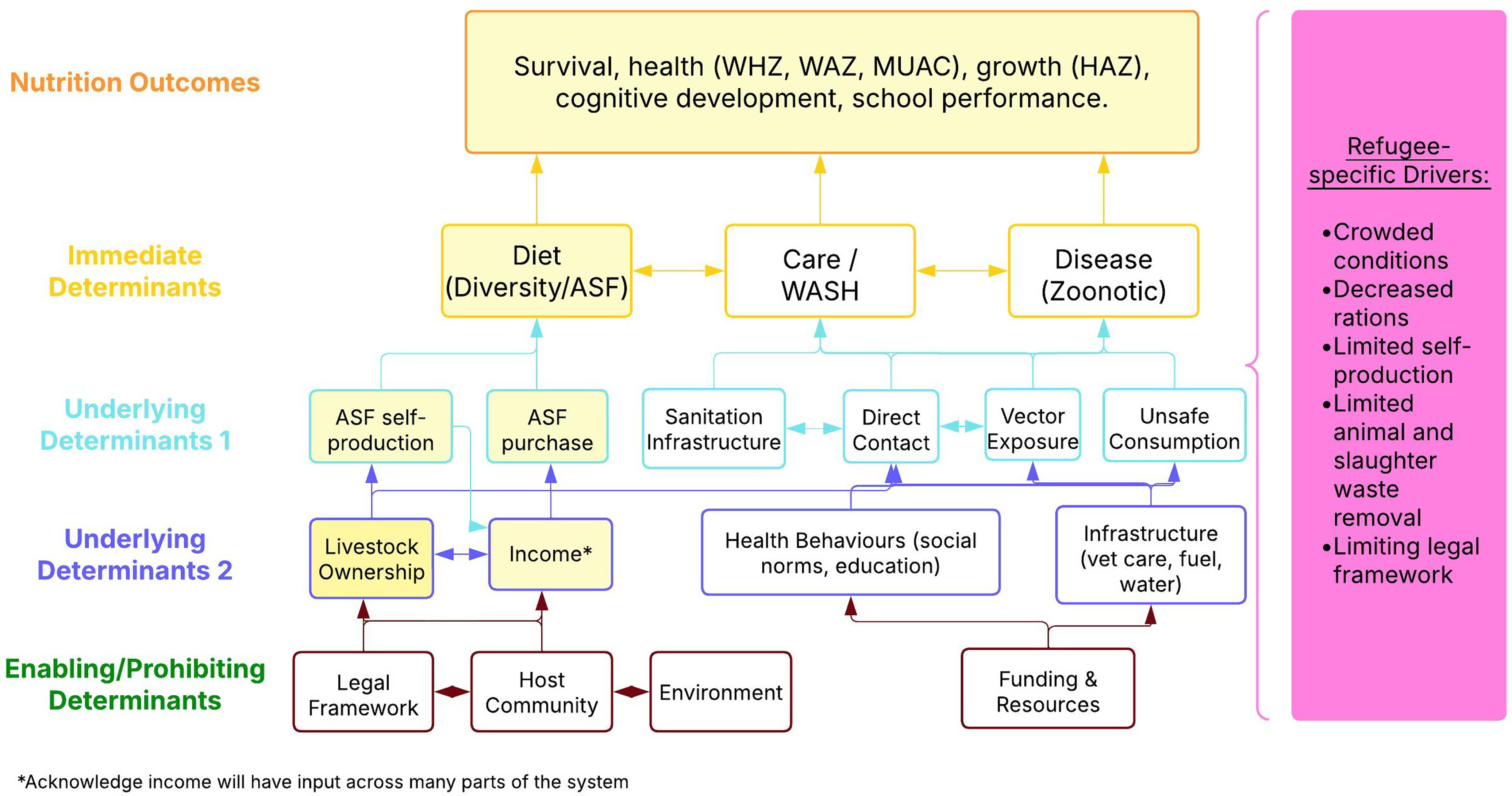
In non-displaced contexts, research has shown complex relationships between livestock-keeping, food security and nutritional outcomes(Reference Hetherington, Wiethoelter, Negin and Mor14–Reference Chen, Mechlowitz, Li, Schaefer, Havelaar and McKune16). In refugee contexts, however, less work has been done to investigate such links. Theoretically, there are multiple pathways through which livestock ownership could lead to improved nutrition and food security of displaced people, as summarised in Figure 1. The most direct pathway is via consumption of self-produced animal source food (ASF) to improved diet and then improved nutritional outcomes. However, there are also numerous other possible indirect pathways – for example, via income generation through sale of livestock or their products. The income from these activities can be used to purchase food items which contribute to nutrition, or to buy non-food items without needing to sell food ration(Reference Alloush, Taylor, Gupta, Valdes and Gonzalez-Estrada17). Many of the predominant origin countries of human displacement, such as Sudan, Syria, Somalia and Eritrea, have strong pastoral heritages and, as such, many of those displaced will have been principally or completely reliant on livestock production. This leads to livestock-keeping occurring in many refugee situations, although in a variable legal landscape and to varying degrees. Livestock husbandry in displaced settings is rarely noted in the literature beyond programmatic reports by the UNHCR and Livestock Emergency Guidelines (LEGS), the former of which contains further information on livestock-keeping in refugee contexts and their basic requirements(18,19) .
Conceptual framework of the pathways between livestock ownership and health in refugee camp contexts (authors, 2025, adapted from the UNICEF Conceptual Framework on Maternal and Child Nutrition(65)). Light yellow shading indicates the pathway considered under this review. WHZ, weight for height Z-score; WAZ, weight for age Z-score; MUAC, middle-upper arm circumference; HAZ, height for age Z-score; ASF, animal source food; WASH, water, sanitation and hygiene.

While displacement is set to continue, humanitarian funding is under increasing threat, as evidenced by the recent dismantling of the United States Agency for International Development and its forecasted impact on child malnutrition and mortality(Reference Anfaal, Khawar, Iqbal and Rath20–Reference Locks, Stewart, Hoffman and Duggan22). To our knowledge, there are no reviews that have sought to evaluate the effects of livestock ownership on nutritional and health outcomes in refugee/IDP contexts. Evidence of this is needed to demonstrate the potential impacts and consequently to optimise humanitarian planning. We undertook a scoping review to identify, collate and analyse the existing research to better understand the pathways between livestock ownership and refugee/IDP nutrition, and to inform future study design in this space.
Methodology
Protocol and registration
This scoping review follows the Preferred Reporting Items for Systematic Reviews and Meta-Analyses extension for Scoping Reviews (PRISMA-ScR) and adhered to its guidelines in addition to the JBI guidelines for scoping reviews(Reference Tricco, Lillie, Zarin, O’Brien, Colquhoun, Levac, Moher, Peters, Horsley, Weeks, Hempel, Akl, Chang, McGowan, Stewart, Hartling, Aldcroft, Wilson, Garritty, Lewin, Godfrey, Macdonald, Langlois, Soares-Weiser, Moriarty, Clifford, Tunçalp and Straus23,Reference Peters, Marnie, Tricco, Pollock, Munn, Alexander, McInerney, Godfrey and Khalil24) . It was prospectively registered in Open Science Framework (https://osf.io/y43na).
Research question and eligibility criteria
The principal research question was formulated using the Population, Exposure, Outcome strategy and was ‘What empirical evidence exists on the role of livestock ownership on refugee/internally displaced person (IDP) nutrition?’. Secondary questions were ‘What effect does animal source food (ASF) consumption have on refugee/IDP nutrition?’, ‘What are the routes through which livestock influence nutrition in the IDP/refugee camp setting?’ and ‘What effect does livestock ownership have on refugee/IDP nutrition?’.
A search strategy was developed to identify relevant sources related to the conceptual framework (Fig. 1) and the developed Population, Concept, Context framework. Published studies fulfilling the following criteria were included: (i) Population/Context: refugees and IDPs in camp/settlement settings; (ii) Concept: investigation of livestock’s impact on at least one of the specified nutrition outcome indicators; (iii) As there is a dearth of published evidence on the topic of livestock and nutrition in refugee contexts, no limitation on the publication date was used. Instead, analysis of the publication dates was included in the data analysis process to reflect whether the evidence available reflects current practices; (iv) No inclusion criteria for language was explicitly used, as it was deemed important to keep all relevant literature regardless of language due to the global nature of the work and it was planned to use a translation service if required. Ultimately no search results in other languages emerged; (v) Published articles were included from both open access and subscription journals. Articles from grey literature were also included according to the methodology detailed below, as it is acknowledged that many industry partners will not publish their findings in peer-reviewed journals due to differing priorities and a limit on resources, time and expertise.
Studies were excluded if they (a) only discussed non-livestock-related effects on nutrition; and (b) did not discuss nutrition in refugee/IDP populations.
Information sources
A search was conducted of the following electronic databases: MEDLINE, CAB Abstracts, Web of Science, African Journal Online, Dissertations and Theses Global. The bibliographies of the included articles were then also searched for identification of relevant literature for inclusion. Grey literature was searched according to the guidelines by the JBI(Reference Peters, Marnie, Tricco, Pollock, Munn, Alexander, McInerney, Godfrey and Khalil24). Theses, dissertations and conference proceedings would be captured through the above electronic databases. Customised Google searches were also used to locate webpages from relevant third sector and government organisations, with the first ten pages of each search’s hits reviewed and the number of results screened and included recorded. Targeted websites of identified organisations from this search were then searched for webpages or documents to include. All information was recorded for inclusion in the PRISMA flow chart. The databases were searched in April 2025. The full electronic search strategy can be found in supplementary material 2.
Selection of sources
Data were extracted using Covidence review software as per Cochrane’s recommendations(Reference Chandler, Cumpston, Li, Page and Welch25). This removed duplicates before two independent reviewers screened titles and abstracts. Where disagreements were present, a third reviewer acted as a tie-breaker. The included articles then had their full text reviewed by two reviewers and, if the inclusion criteria were met, then the data were extracted.
Data charting process
A pre-established data extraction template that had been approved by all authors was used in Covidence. For each included study, the primary author charted the data and the two secondary reviewers reviewed the extraction. The author, year, title, region, aim of study, hypothesis being tested, years studied, study design, population description, number of participants, nutritional measures tested, intervention, livestock interaction, species of ASF, other health conditions considered, confounders measured and associations found were charted. To identify variations in studies and assess their outcomes, data were consolidated into evidence tables. These were then assessed via the narrative synthesis method as to whether they had a positive, negative, mixed or no effect as reported by the authors.
Quality assessment
Although not a JBI guideline requirement for scoping reviews, a quality assessment based upon the Quality Assessment Tool for Observational Cohort and Cross-Sectional Studies published by the National Heart, Lung and Blood Institute was conducted to better understand the research landscape and inform future studies. The Strengthening the Reporting of Observational Studies in Epidemiology – nutritional epidemiology (STROBE-nut) extension was also consulted when reflecting on study quality, though no ratified scoring framework from this exists(Reference Lachat, Hawwash, Ocké, Berg, Forsum, Hornell, Larsson, Sonestedt, Wirfalt, Akesson, Kolsteren, Byrnes, De Keyzer, Van Camp, Cade, Slimani, Cevallos, Egger and Huybrechts26).
Seventeen criteria were used, due to the limited study designs found in this review (see supplementary material 4). For each criteria a score of 2 (yes), 1 (partly) or 0 (no) was given. For each study, these scores were combined and presented as a percentage out of the maximum available score (34). Studies were then assigned to the groups ‘high quality’ if 75% or above, ‘medium quality’ if from 50 to 74% or ‘low quality’ if less than 50%.
Results
Study selection
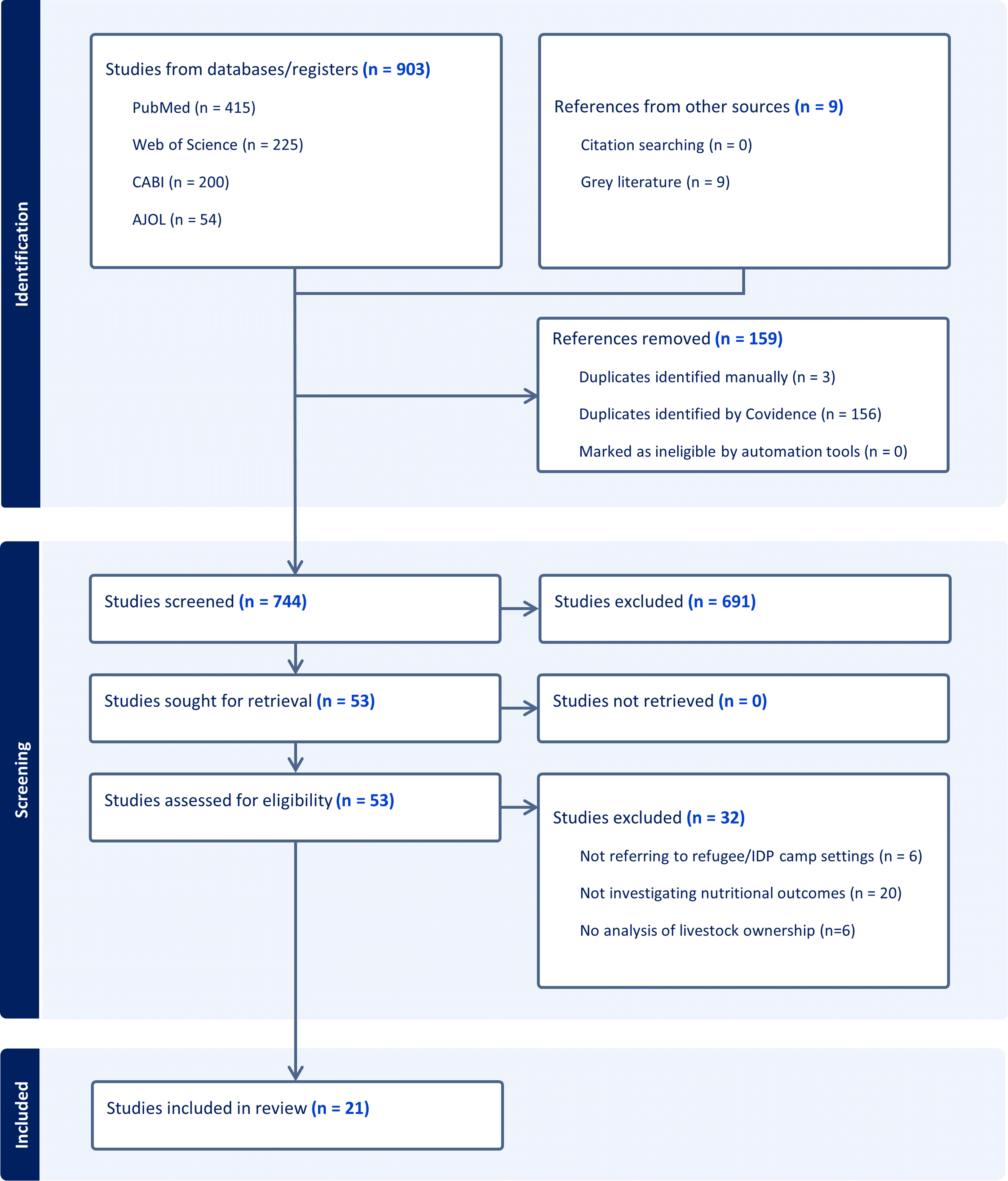
In total, 903 studies were returned from our search: 415 PubMed, 225 Web of Science, 200 CABI, 54 AJOL and 9 from the grey literature. From these, 156 duplicates were removed and 691 studies were found to be ineligible on title/abstract screening by two independent reviewers. Then, 53 full-text studies were assessed for eligibility and 32 excluded (20 for not investigating nutritional outcomes, 6 for having no analysis of livestock ownership and 6 for not referring to refugee/IDP camp settings. The full list of these excluded studies can also be found in supplementary material 3. Ultimately, 21 studies were included for review. Figure 2 depicts the PRISMA-ScR flowchart of the process.
PRISMA-ScR chart (authors, 2025).

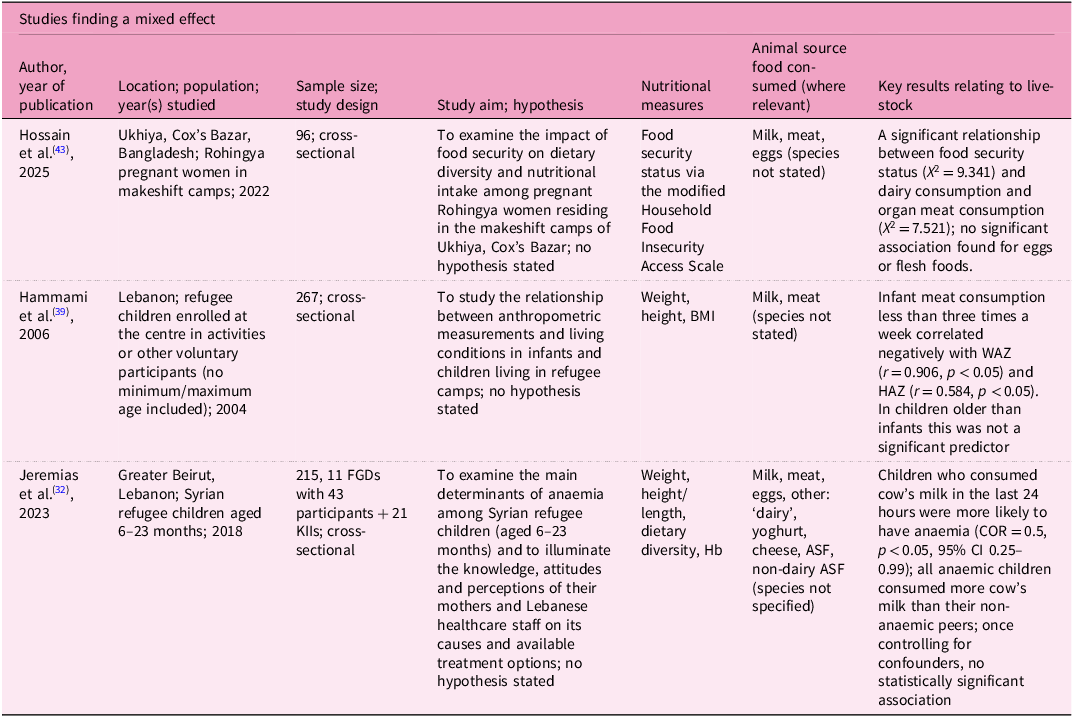
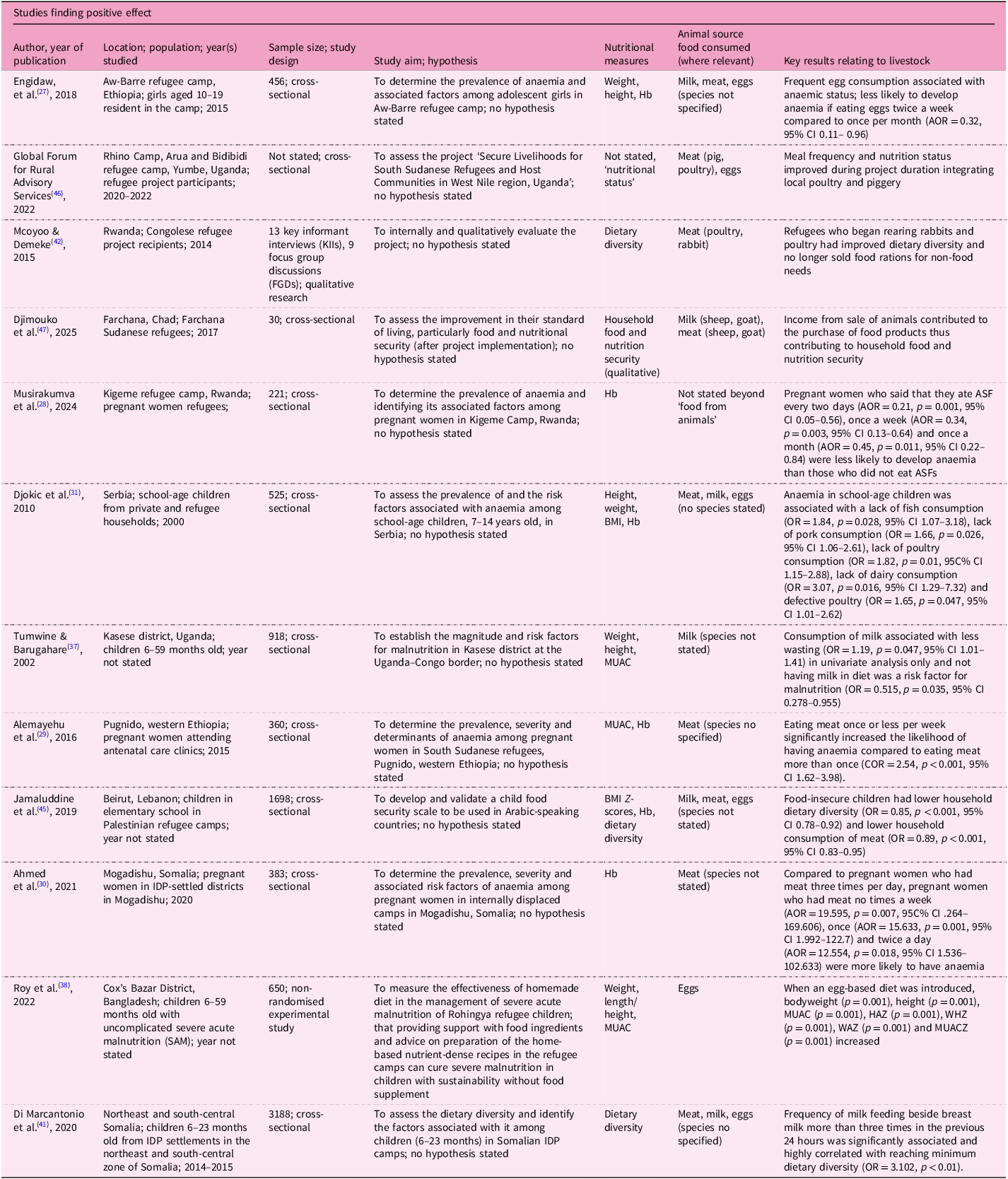
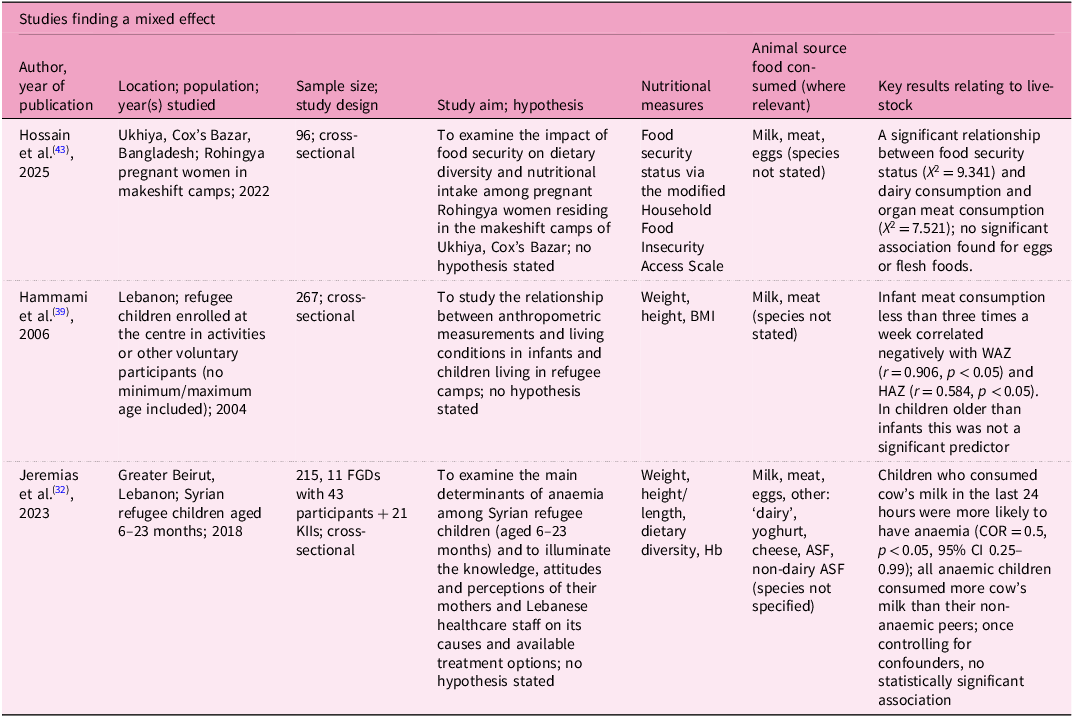
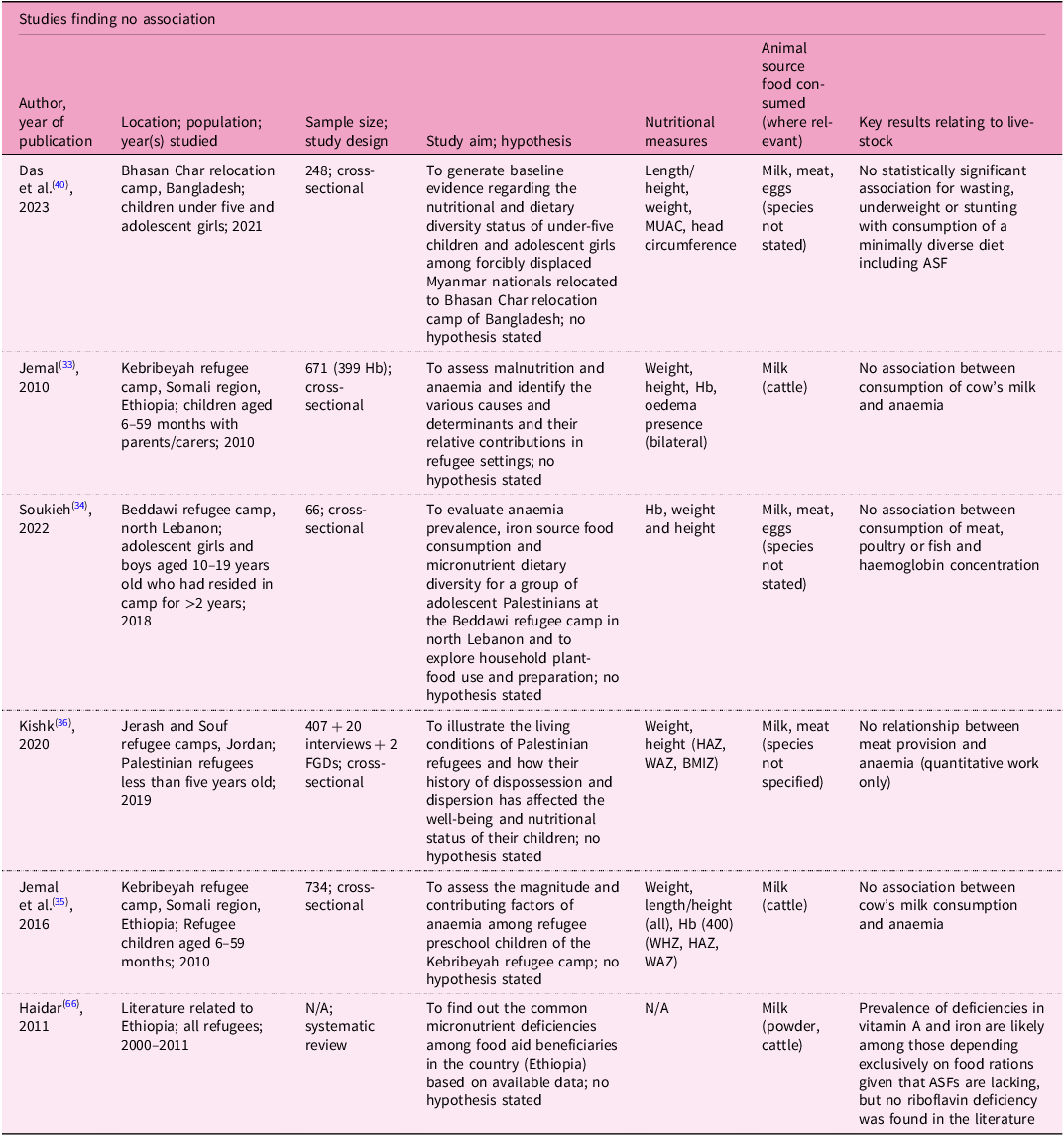
These studies were divided into three groups depending on the associations found between nutritional outcomes and either (a) ASF consumption or (b) income from livestock production: positive effects (Table 1), mixed effects (Table 2) or no association (Table 3). No study included found a solely negative impact. In this review a positive effect is one which demonstrated that livestock ownership was positively associated with improved nutritional outcomes or was protective against poor nutritional outcomes.
Summary of study characteristics and key results for included studies finding a positive effect

Summary of study characteristics and key results for included studies finding a mixed effect
Summary of study characteristics and key results for included studies finding no effect

Studies of any quality were included if they met the inclusion criteria. A quality assessment found 57% of included studies scored as high quality, while 24% scored medium quality and 19% low quality. The most common criteria that received a score of 0/no were: ‘Were inclusion and exclusion criteria for being in the study pre-specified and applied uniformly to all participants?’ (10/21), ‘Was the study approved by an ethics committee?’ (7/21), ‘Is the role of the researcher clearly described?’ (7/21) and ‘Was a sample size justification, power description, or variance and effect estimates provided?’ (7/21). The most common criteria that received a score of 1/partly were: ‘Are the conclusions adequate?’ (10/21), ‘Are the findings convincing?’ (8/21) and ‘Is the research design rigorous?’ (8/21).
What empirical evidence exists on the role of livestock ownership on refugee/IDP nutrition?
Of the 21 included publications, 12 studies found a positive effect of livestock ownership on refugee/IDP nutrition while three cited mixed effects and six found no statistically significant effect. These effects are described below. Most studies were cross-sectional (n = 18) and the rest composed of one qualitative publication, one non-randomised experimental study and one systematic review assessing micronutrient deficiencies in food aid recipients in Ethiopia. One study stated a hypothesis, while the rest (n = 20) did not. The studies were conducted in Ethiopia (n = 5), Bangladesh (n = 4), Lebanon (n = 4), Uganda (n = 2), Rwanda (n = 2), Somalia (n = 2), Chad (n = 1), Serbia (n = 1) and Jordan (n = 1).
Only one of the studies looked at the impact of income generated through livestock-rearing activities on nutritional outcomes, while the remainder (n = 20) analysed the more direct effect of ASF consumption. The studies varied in what animal source food they were including in their analysis, with four studies looking at only milk consumption, three studies only meat consumption, one study only egg consumption and the rest (n = 13) a mixture of milk/meat/eggs. Sixteen studies did not include what species the ASF was from. No studies found discussed wildlife, hunted meat or other non-livestock meat.
The nutritional outcome indicators investigated varied between studies. Indicators studied were weight (n = 11), height (n = 11), haemoglobin (Hb) (n = 10), dietary diversity (n = 4), middle-upper arm circumference (MUAC) (n = 4), body mass index (BMI) (n = 3), head circumference (n = 1) and oedema presence (n = 1). Three studies investigated varying proxies of food security status and one was a systematic review. The age of those studied varied between 6–59 months (n = 6), adults (n = 4), pregnant women (n = 4), 10–19 years (n = 3), 6–23 months (n = 2), ‘school-age’ (n = 2), 2–5 years (n = 1) and ‘children’ (n = 1).
What effect does ASF consumption have on refugee/IDP nutrition?
Anaemia
Of those finding a positive association, five studies found ASF had a protective effect on the likelihood of having anaemia in refugee/IDP camp contexts. Engiwar, Wassie & Teferra(Reference Melaku Tadege Engidaw, Molla Mesele Wassie and Alemayehu Shimeka Teferra27) found that adolescent women who ate eggs twice a week were less likely to have anaemia than those who ate them once per month. Similarly, Musirakumva, Renzago & Habinez(Reference Musirakumva, Renzaho and Habineza28) found that pregnant women who ate ASF every two days, once a week and once a month were less likely to develop anaemia than those who did not eat animal source foods. Also in pregnant women, Alemayehu et al.(Reference Alemayehu, Gedefaw, Yemane and Asres29) found that eating meat once or less per week significantly increased the likelihood of having anaemia compared to eating meat more than once a week. Ahmed et al.(Reference Ahmed, Yussuf, Ali, Iyow, Abdulahi, Mohamed and Mohamud30) found that, compared to pregnant women who had meat three times per day, pregnant women who had meat twice a day or less were more likely to have anaemia. Lastly, Djokic et al.(Reference Djokic, Drakulovic, Radojicic, Radovic, Rakic, Kocic and Davidovic31) found that anaemia in school-age children was associated with a lack of fish, poultry or dairy consumption, and consumption of defective poultry.
Conversely, Jeremias et al.(Reference Jeremias, Abou-Rizk, Burgard, Entenmann, Nasreddine, Jomaa, Hwalla, Frank and Scherbaum32) found that children who had consumed cow’s milk in the last 24 hours were more likely to have anaemia and that all anaemic children consumed more cow’s milk than their non-anaemic peers. In the analysis it is not commented on whether this effect could be due to high milk consumption or low meat consumption. However, once confounders were controlled for no statistically significant association was found.
Jemal(Reference Jemal33) found no association between consumption of cow’s milk and anaemia, Soukieh(Reference Soukieh34) found no association between consumption of meat, poultry or fish and haemoglobin concentration and Jemal, Haidar & Makau(Reference Jemal, Haidar and Kogi Makau35) found no association between cow’s milk consumption and anaemia. In the mixed methods study by Kishk(Reference AbuKishk, Gilbert, Seita, Mukherjee and Rohloff36), quantitative analysis found no relationship between meat provision and anaemia, but qualitative work found that those who were unable to purchase meat felt their children were not receiving a diverse diet and were anaemic.
Stunting and wasting
Two studies found ASF consumption was linked to less stunting(Reference Tumwine and Barugahare37,Reference Roy, Jahan, Khatoon, Alam, Tasnim, Parveen, Ferdaus and Cubra38) . The same two studies found ASF consumption was also linked to less wasting. Tumwine & Barugahere(Reference Tumwine and Barugahare37) found on initial univariate analysis that consumption of milk was associated with less stunting in children aged 6–59 months old; however, the association was not retained in the multivariate analysis after controlling for confounders. Milk consumption was significantly associated with decreased likelihood of being underweight in the multivariate analysis, also in children aged 6–59 months old. Roy et al.(Reference Roy, Jahan, Khatoon, Alam, Tasnim, Parveen, Ferdaus and Cubra38) found that, when an egg-based diet was introduced, bodyweight, height, MUAC, height for age Z-score (HAZ), weight for height Z-score (WHZ), weight for age Z-score (WAZ) and middle-upper arm circumference Z-score (MUACZ) increased.
Hammami, Hamad & Koo(Reference Hammami, Hammad and Koo39) found that infant meat consumption less than three times a week correlated negatively with WAZ and HAZ. In children older than infants, however, this was not a significant predictor. Das et al.(Reference Das, Fahim, Rasul, Afrin, Alam, Zaman, Chowdhury, Arifeen and Ahmed40) found no statistically significant association for wasting, underweight or stunting in children under five with consumption of a minimally diverse diet including animal source foods.
Dietary diversity
Marcantonio, Custodio & Abukar(Reference Di Marcantonio, Custodio and Abukar41) found that the frequency of milk feeding beside breast milk more than three times in the previous 24 hours was significantly associated and highly correlated with reaching minimum dietary diversity in the multivariate analysis. In the qualitative study included in this analysis, refugees who begun rearing rabbits and poultry cited an improved dietary diversity and no longer needing to sell food rations for non-food needs(Reference Mcoyoo and Demeke42).
Many studies discussed dietary diversity and its link to nutritional outcomes but did not extrapolate findings for ASF groups specifically, and so could not be included in this study.
Food security
Variation existed in the proxies used to define households as food secure or insecure. Hossain et al.(Reference Hossain, Iftekhar, Das, Banik, Huda and Rizwan43) based their analysis on a modified Household Food Insecurity Access Scale (HFIAS) as developed by Coates, Swindale & Bilinsky(Reference Coates, Swindale and Bilinsky44). They found a significant positive relationship between food security status of refugee pregnant women and dairy consumption and organ meat consumption. No significant association was found for eggs or flesh foods. Jamaluddine et al.(Reference Jamaluddine, Sahyoun, Choufani, Sassine and Ghattas45) developed a child food security scale and found that food-insecure children had lower household dietary diversity and lower household consumption of meat.
Two studies concerned with evaluating projects did not define what was meant by food security. The Global Forum for Refugee Advisory Services(46) found that meal frequency and nutrition status improved after implementing their project, which integrated local poultry and piggery, but did not provide any more details. Djimouko, Adoum & Zepelin(Reference Djimouko, Alexandre, Issa and Tchoubeube47) was the only study found in this review that analysed effect of income from animal-keeping rather than solely ASF consumption. They found that 63.3% of their project beneficiaries used income from sale of animals to purchase food products which contributed to household food security.
Discussion
This scoping review investigated what empirical research exists on the role of livestock ownership and more specifically the effect ASF consumption has on refugee/IDP nutrition. It elicited 21 studies of which 12 found a positive effect of livestock ownership on refugee/IDP nutrition, while three cited mixed effects and six found no statistically significant effect. Meta-analysis of these publications was not possible due to the diversity of study design and variation between indicators and variables.
Two further sub-questions were registered with the protocol: ‘What are the routes through which livestock influence nutrition in the IDP/refugee camp setting?’ and ‘What effect does livestock ownership have on refugee/IDP nutrition?’. However, insufficient literature was found to answer these questions. Literature does exist on these subjects but it is not specific to a refugee camp context and as such could not be included in this review. This literature is summarised in the recent systematic reviews by Muema et al.(Reference Muema, Mutono, Kisaka, Ogoti, Oyugi, Bukania, Daniel, Njuguna, Kimani, Makori, Omulo, Boyd, Osman, Gwenaelle, Jost and Thumbi48), Zerfu et al.(Reference Zerfu, Nguyen, Duncan, Baltenweck, Brown, Iannotti and McNeill15) and Chen et al.(Reference Chen, Mechlowitz, Li, Schaefer, Havelaar and McKune16), who discuss the relationships between livestock ownership and nutrition in Africa for the former and low-and middle-income countries for the latter two. Both Zerfu et al(Reference Zerfu, Nguyen, Duncan, Baltenweck, Brown, Iannotti and McNeill15). and Chen et al.(Reference Chen, Mechlowitz, Li, Schaefer, Havelaar and McKune16) found mixed results, with literature supporting both some nutritional benefits and an association with infectious disease outcomes. Muema et al.(Reference Muema, Mutono, Kisaka, Ogoti, Oyugi, Bukania, Daniel, Njuguna, Kimani, Makori, Omulo, Boyd, Osman, Gwenaelle, Jost and Thumbi48) focused on nutrition-sensitive livestock interventions, yielding only four studies but finding a significant positive impact on child nutritional outcomes, although citing low quality of evidence. The studies in these reviews do not investigate these relationships in refugee/IDP contexts, which differ in many ways, including more crowded conditions, different nutritional intakes via all or a portion of the diet from rations, limited self-production, limited animal and slaughter waste, and a regulatory framework that limits refugees/IDPs from engaging in livestock production. This is likely, at least in part, to be due to the logistic and legal constraints of working in refugee/IDP camps. Such settlements are often in highly fragile areas and engaging in livestock-keeping may be contentious due to conflict over limited resources and political reasons. However, it is important that future empirical research be undertaken specifically in these contexts to understand the specific drivers and potential avenues for intervention in refugee/IDP populations, given the long-standing nature of many settlements and the increasing trends of displacement.
It is pertinent to consider that the contexts of studies vary considerably and even within a country the different refugee/IDP settings will have different requirements for successful keeping of livestock. For example, in some circumstances, refugees/IDPs may purchase livestock in their new place of residence and in others they may bring their animals with them, which may also bring public health challenges, such as has been discussed for Syrian refugees in Jordan(Reference Braam49). In addition, livestock distribution programmes exist; for example, goat and sheep distribution in South Sudan, poultry distribution in Kenya and goat and poultry distribution in Ethiopia(50–52). Academic studies are infrequently conducted to evaluate such programmes and so no study of the nutritional impact of such an intervention was captured in this review, though publication of such would be valuable to the sector. In addition to the publication of the nutritional outcomes, across studies further documentation and reflection of the contextually relevant logistical and husbandry-related challenges is warranted to provide a deeper understanding of the pathways from livestock-keeping to nutritional outcomes and to inform future planning. Related to this, in this review only one study found investigated the wider effect of livestock ownership other than consumption of ASF. Djimouko, Adoum & Zepelin(Reference Djimouko, Alexandre, Issa and Tchoubeube47) conducted a descriptive study where they looked at the socio-economic context to owners keeping livestock and included selling rates and purpose of the income raised from livestock rearing. In their study of Sudanese refugees at Farchana Camp in Chad, 63.3% of households used the income from sale of animals to contribute to the purchase of food products. This represents an important output from livestock-keeping in terms of the potential nutritional and livelihood benefits and should be considered in future research as a vital component. Where studies investigated ASF consumption, they did not document the source of such food – for example, whether this was purchased from a market, consumed from their own animals or provided as part of a relief programme. Typically, however, food baskets provided to displaced communities by the World Food Programme (WFP) do not include ASFs and instead contain cereals, pulses, vegetable oil and salt(13). Knowledge of this would have important implications for practical learnings from the studies.
This review found that 19 of the 21 included studies were cross-sectional, and only one was hypothesis-driven. While observational, cross-sectional studies have a clear importance in situations of limited pre-existing knowledge and resources, they also bear considerable limitations in terms of causal relationships while still requiring participants’ time and data. Although scoping reviews do not call for a quality assessment, the authors of this study chose to include such, as the analyses of the included studies were very variable and often multiple analyses were conducted with no conceptual framework or a priori hypothesis to give reason for the analysis(Reference Peters, Marnie, Tricco, Pollock, Munn, Alexander, McInerney, Godfrey and Khalil24). This creates concern for the validity of some results in terms of biological mechanism and resultant practical recommendations. In addition, the sample size calculations for the studies included were mostly based on cross-sectional prevalence calculations, which did not provide power for statistical analysis between groups and therefore may be contributing to why some studies found no association between the nutritional outcome variable and predictor variables such as ASF consumption. Anaemia prevalence is often higher in refugee populations than stunting/wasting(Reference Teketelew, Chane, Angelo, Tamir, Cherie, Nigus, Mulatie and Berta53,Reference Choudhary, Padhi, Mital, Gandi, Mishra, Suri, Baral, Satapathy, Shamim, Thangavelu, Rustagi, Sah, Khatib, Gaidhane, Zahiruddin, Abd-Alrazaq and Serhan54) and therefore, if studying the former, it may be easier to adequately power a study with a smaller sample size. In this review, ten out of the 21 included studies investigated anaemia while only four investigated stunting/wasting, which could be due to the logistical advantages of a smaller sample size. While anaemia is a crucial nutritional indicator, especially in women of reproductive age(Reference Adepoju55). it is also complex and influenced by health issues other than nutrition, such as infectious diseases, inflammatory diseases and inherited disorders(56). It is therefore advisable to look at anaemia alongside other nutritional indicators and ensure the study is powered to detect the smallest likely interaction of interest and to increase the sensitivity of the study(Reference Gibson57).
Sixteen of the 21 studies reviewed did not state which species animal source foods were from. Nutritional composition of ASFs vary considerably by species, as was summarised in a recent narrative review by Garcia et al.(Reference García, Am Auid-Orcid, Fracassi, Scherf, Hamon and Iannotti58) Garcia et al.(Reference García, Am Auid-Orcid, Fracassi, Scherf, Hamon and Iannotti58) demonstrate that meat, organ meat, eggs and milk all vary in their composition depending on species in terms of energy, protein, fat, carbohydrate, vitamin A, riboflavin, vitamin B12, calcium, iron and zinc. Of particular relevance to this review, they find that cattle milk has 37.5% less calories than sheep milk but cattle meat has 285.2% more iron (mg) than sheep meat. However, it is not detailed whether the sheep meat being analysed is lamb or mutton. This highlights a common constraint in the academic literature where(Reference Pretorius, Schönfeldt and Hall59) there is a lack of clarity in ASF nutrient composition. For example, other literature finds lamb and mutton contain a higher amount of iron than cattle(Reference Pretorius, Schönfeldt and Hall59,Reference Williams60) . As such, it is imperative that the ASF in the local context of a study is adequately characterised for appropriate conclusions and recommendations to be made. Additionally, the species kept has significant implications on programme planning in terms of husbandry required, cultural norms, zoonotic disease risks, market linkages and value chains, amongst others. Although no publication discussing hunted meat were found in this study, it is acknowledged that in some contexts this may be an important source of ASF. The source of the meat, whether it be from hunting, markets, self-production or otherwise, is also an important consideration. It is therefore strongly advised to include which species of ASF is being investigated and from which source when collecting data. This should be considered under the STROBE-nut extension 7.1: ‘Clearly define foods, food groups, nutrients, or other food components.’(Reference Lachat, Hawwash, Ocké, Berg, Forsum, Hornell, Larsson, Sonestedt, Wirfalt, Akesson, Kolsteren, Byrnes, De Keyzer, Van Camp, Cade, Slimani, Cevallos, Egger and Huybrechts26)
When conducting the screening, numerous studies were found which investigated dietary diversity in refugee populations but beyond stating that ASF comprised some of the diet groups did not provide data beyond this, and therefore could not be included in this review. Given the dearth of literature on this topic, it would be beneficial to the academic community if publications provided more granularity in their data presentation of dietary diversity, such that researchers can access data on specific food groups if wanted. This is also recommended under STROBE-nut extension 22.2: ‘Provide data collection tools and data as online material or explain how they can be accessed.’(Reference Lachat, Hawwash, Ocké, Berg, Forsum, Hornell, Larsson, Sonestedt, Wirfalt, Akesson, Kolsteren, Byrnes, De Keyzer, Van Camp, Cade, Slimani, Cevallos, Egger and Huybrechts26) This is especially true given the recent concern regarding the validity of dietary diversity indicators in reflecting diet quality beyond micronutrient adequacy(Reference Verger, Le Port, Borderon, Bourbon, Moursi, Savy, Mariotti and Martin-Prevel61–Reference Arimond and Deitchler64).
Limitations of the study
This review had limitations in line with other scoping reviews. Articles were not excluded on the basis of language, but given the search terms were in English, and the databases chosen, English language articles will have been more readily found. In addition, although care was taken to include databases such as AJOL, Dissertation and Theses Global and grey literature, it is acknowledged that many actors in this area will not publish findings readily available on traditional academic databases. The large variation in study design, population and indicator of interest makes comparison between studies challenging. Additionally, as discussed above, the majority of the studies included were cross-sectional and so conclusions of causation cannot be made based on these or on this review.
Implication for future research
The increasingly protracted nature of displacement, coupled with forecasted increases in the number of displaced, mean that timely investigation of meaningful ways to optimise people’s health and well-being is needed. Robustly designed and reported empirical research is needed to unpick the complex relationship between livestock-keeping and health, ensuring studies are well-powered, hypothesis-driven and contextualised. Overall, there is a distinct dearth of research investigating the nutritional and health impacts of livestock-keeping amongst refugees outside the mostly cross-sectional observational studies discussed here. To properly inform policy and practice, empirical evidence should be gathered on this specific topic. Although initially this may also be observational in design, studies should be sufficiently powered to detect hypothesised associations that can inform future randomised controlled trials. The quality assessment in this review demonstrates that there is a need to better adhere to existing protocols and guidelines such as the STROBE-nut recommendations. Multiple studies found in this review did not state whether they had been approved by an ethics committee. No studies were excluded on this basis, as judging studies to be ethical/unethical is outside the scope of this review. However, it is of concern that studies involving potentially highly vulnerable persons may not have been ethically sound and all future research should ensure they adhere to the highest ethical standards of research.
In general, when researching the link between nutrition of refugees and livestock-keeping/animal source food consumption, investigation of both direct (ASF) and indirect (income, social wealth, etc.) pathways is required or should at minimum be considered when analysing the results. As the sector looks to contribute to displaced communities’ livelihoods and resilience, inclusion of the indirect pathways would also benefit actors in the sector other than those working in nutrition. Greater granularity should be considered in nutritional studies in refugee settings which investigate diet, so that data is gathered and results are presented in a way that allows analysis of ASF components rather than a crude number of food groups, including specification of species involved.
Conclusion
This scoping review reveals a distinct lack of research into livestock’s impact on nutritional outcomes in refugee/IDP contexts. Mixed effects were found and the outcomes studied included anaemia, stunting, wasting, dietary diversity and food security proxies. Only one study included looked at an indirect pathway between livestock and nutrition (income), while the remainder analysed ASF consumption. There were inconsistencies between the included publications in terms of the study design, data analysis and measures investigated, which make comparisons and corroborations challenging. The mixed findings suggest that future studies should be undertaken in reference specifically to refugee/IDP nutrition with special care taken to ensure data is gathered such that ASFs can be analysed appropriately. In addition, as nutrition in such contexts is highly complex, and indirect pathways will probably have an important but varying impact, these should be included in study design considerations in addition to ASF consumption.
Supplementary material
The supplementary material for this article can be found at https://doi.org/10.1017/S0954422426100353.
Financial support
This work was supported by the Medical Research Council (grant number UKRI443). The Medical Research Council had no role in the design, analysis or writing of this article.
Competing interests
The authors declare none.
Authorship
R.H., L.T. and J.O. designed the study and conceptual framework. R.H. and A.E.-G. conducted the systematic scoping analysis. R.H. wrote and revised the review. L.T., J.O. and L.B. supervised the work and critically revised the review. All authors had access to the data and meta-data from the study and gave their final permission for submission of the review.


 Open access

