


Introduction
Various studies have suggested that local communities can participate in measuring and monitoring forest carbon stocks effectively and cost-efficiently (Karky & Skutsch, Reference Karky and Skutsch2010; Danielsen et al., Reference Danielsen, Adrian, Brofeldt, van Noordwijk, Poulsen and Rahayu2013). This is one way to ensure community participation in forest carbon market mechanisms such as REDD+ (Reduced Emissions from Deforestation and Forest Degradation), which includes sustainable forest management, conservation and enhancement of forest carbon stock. Effective participation is necessary to ensure that REDD+ contributes to income diversification in communities that are already involved in community forest management (known as participatory forest management in Tanzania; Karky, Reference Karky2008; Zahabu & Malimbwi, Reference Zahabu, Malimbwi and Skutsch2011; Mustalahti et al., Reference Mustalahti, Bolin, Boyd and Paavola2012). Participatory forest management could contribute to reducing carbon emissions and increasing forest carbon stocks when supported by finance from REDD+, which promotes sustainable management of forests, with the potential to deliver significant social and environmental co-benefits (Zahabu & Jambiya, Reference Zahabu and Jambiya2007; Burgess et al., Reference Burgess, Bahane, Clairs, Danielsen, Dalsgaard and Funder2010; Mustalahti & Rakotonarivo, Reference Mustalahti and Rakotonarivo2014).
In Tanzania participatory forest management has been observed to have potential for achieving the REDD+ objective of providing financial incentives for sustainable forest management (FBD, 2006; Zahabu, Reference Zahabu2008). Participatory forest management was stipulated in the Forest Policy of 1998 and brought into operation by the Forest Act No.14 of 2002 (URT, 1998, 2002). The law recognizes two main types of participatory forest management: joint forest management and community-based forest management. Joint forest management is based on an agreement between local communities and government authorities regarding the management of central or local government forest reserves. Forest ownership remains with the government, and local communities are duty bearers, receiving user rights and access to some forest products and services (Wily, Reference Wily1997; Mustalahti & Lund, Reference Mustalahti and Lund2010). Community-based forest management takes place in forests on village lands that have been surveyed and registered under the provisions of the Village Land Act No. 5 of 1999 (URT, 1999) and the Forest Act No.14 of 2002 (URT, 2002). Villages take full ownership and become duty bearers of a Village Land Forest Reserve.
REDD+ is a financial mechanism of the United Nations Framework Convention on Climate Change, intended to provide developing countries with incentives to reduce carbon emissions from forests. The national REDD+ strategy for Tanzania recognizes that the REDD+ initiative provides incentives for local communities participating in forest management (URT, 2013). However, accessing carbon-related finances through REDD+ requires, among other things, measurements of changes in forest carbon stock. Carbon assessment by professionals is costly but can be carried out by communities using participatory forest carbon assessment methods at a low cost, with only minimum technical support from professionals (Zahabu, Reference Zahabu2008). Such methods have been developed and tested elsewhere in Tanzania, India, Nepal, Senegal, Mali and Guinea Bissau (Verplanke & Zahabu, Reference Verplanke, Zahabu and Skutsch2011) but previous tests in Tanzania were limited to a few localities and involved small forests (28–600 ha; Mukama et al., Reference Mukama, Mustalahti and Zahabu2012). For wider application of the technique more testing on larger forest areas was required.
The intention of this study was to reassess permanent sample plots established in 2009, to measure the changes in forest carbon. We also set out to evaluate the capability of local communities to undertake participatory forest carbon assessment after an interval of 3 years, the costs involved, and the implications for REDD+ initiatives in Tanzania and forest conservation in general.
Study area
The study was carried out in the Village Land Forest Reserves of Mihumo, Ngongowele and Ngunja (26,703 ha) in south-eastern Tanzania (Fig. 1). The vegetation is characterized by dry miombo, closed-canopy dense forest, riverine and wet miombo areas, with some valuable timber species such as Brachystegia sp. and Pterocarpus angolensis (Dondeyne et al., Reference Dondeyne, Wijffels, Emmanuel, Deckers and Hermy2004; Mukama et al., Reference Mukama, Mustalahti and Zahabu2012). These forests comprise 19% of the Angai Villages Land Forest Reserve (139,420 ha), in the Liwale District. Liwale (c. 3.8 million ha) is the largest of the six districts in the region, with a population of 91,380 according to District records in 2012. Angai Village Land Forest Reserve is managed and owned by 24 villages (previously 13; larger villages were divided in 2008, resulting in new village and forest boundaries; Scheba & Mustalahti, Reference Scheba and Mustalahti2015). However, during this study (in 2009 and 2012) old forest boundaries were used because the new maps were not available yet and villages decided to use the old forest boundaries for their forest management activities.
The location of Ngunja, Ngongowele and Mihumo village forests within the Angai Villages Land Forest Reserve. The rectangle on the inset shows the location of the main map in Tanzania.

Methods
This study was part of the action research project on the role of participatory forest management in the mitigation of, and adaptation to, climate change, which was implemented in 2009 in the Angai Villages Land Forest Reserve to test the field guide for community assessment of forest carbon, which was developed under the Kyoto: Think Global Act Local project (Verplanke & Zahabu, Reference Verplanke, Zahabu and Skutsch2011; Mukama et al., Reference Mukama, Mustalahti and Zahabu2012). The Angai Villages Land Forest Reserve was selected because it has a large forest area (139,420 ha) and is therefore expected to have the highest carbon stock potential among the community-managed forests in Tanzania.
In 2012 the participatory forest carbon assessment was repeated using the same methodology, to determine the changes in forest carbon of the three Village Land Forest Reserves. The assessment was carried out by the same teams as in 2009 in each of the participating villages, to ensure consistency in the collection of carbon data (Mukama, Reference Mukama2010; Mukama et al., Reference Mukama, Mustalahti and Zahabu2012). The teams were trained in carbon assessment, including the use of a global positioning system (GPS) and other equipment, in line with IPCC (2003). In this study the teams were increased from eight to 10 members, with two five-person teams in each village, to accommodate two professional foresters from the Liwale District Council and to reduce time spent in the field. Other similar studies have suggested that each field team should have 4–7 members (Zahabu, Reference Zahabu2008) or 6–8 members (Skutsch et al., Reference Skutsch, Karky, Zahabu, McCall and Peters-Guarin2009) accompanied by a local forester. Almost all team members had received primary education only, two members in Ngongowele had secondary education, one member had adult education, and one had no formal education. The number of women involved in the assessment in each village was reduced from 29% in 2009 to 20% in 2012, primarily because of women's domestic responsibilities but also because some women expressed fears of dangerous animals, walking long distances, and camping in the forest. Each field team received training for 2 days to improve their understanding of the fundamentals of forest carbon monitoring and to remind them how to use inventory materials and equipment. In 2013 the results were presented to communities and the implications of participatory forest carbon assessment for REDD+ initiatives were discussed. The meetings were attended by members of the Village Council and the forest assessment teams.
The same strata and permanent sample plots established in 2009 using participatory forest mapping were followed in 2012 to monitor changes in forest stock (Mukama, Reference Mukama2010; Mukama et al., Reference Mukama, Mustalahti and Zahabu2012). The same number of sample plots and sampling errors determined in 2009 were used for the various vegetation types in the study villages (Table 1). Basal area measurements taken randomly during a pilot survey of each vegetation type were used to determine the number of plots (n), using the formula
 $$n = \displaystyle{{{t^2}C{V^2}} \over {{E^2}}}$$
where CV is the coefficient of variation, t is the value obtained from the student's distribution table at n − 1 degrees of freedom at P = 0.05, and E is sampling error. A sampling error of 5% is recommended for land use, land use change and forestry projects (IPCC, 2003). However, under certain circumstances a 10% sampling error may be used to reduce costs while maintaining estimates within ± 10% of the mean with a 95% confidence level (Zahabu, Reference Zahabu2008). We adapted the number of sample plots and the sampling errors used depending on the vegetation types in the study villages (Table 1).
Details of permanent sample plots in Ngunja, Ngongowele and Mihumo village forests in the Angai Villages Land Forest Reserve, Tanzania (Fig. 1), with vegetation type, area, and number of plots for sampling errors of 10 and 15%.

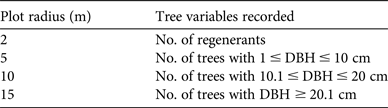
The permanent sample plots were laid out systematically, with a random starting position. Four concentric circular plots of 2, 5, 10 and 15 m radius were used. This type of plot has been used successfully in other studies; it ensures small trees are measured in small plots and large trees in large plots, and reduces edge effects, which may lead to possible counting errors for small trees. With this arrangement approximately the same number of trees are measured for each size class (Malimbwi & Mugasha, Reference Malimbwi and Mugasha2000, Reference Chamshama, Mugasha and Zahabu2002; URT, 2010). The variables measured in the four plots are listed in Table 2.
Sample plot size and tree variables measured in each plot.
Diameter at breast height (DBH) was measured for all trees in the plots, and all measured trees and counted regenerants were identified by their local names. Height was measured for three sample trees (small, medium, large), and a height–diameter equation was developed for each vegetation type to estimate the height of trees for which only DBH was measured (Table 3). Data were recorded on inventory forms.
Height–diameter equations used for each vegetation type in Ngunja, Ngongowele and Mihumo village forests (Fig. 1), with the coefficient of determination, standard error, and number of observations.

* Ht, tree height (m); DBH, tree diameter at breast height (cm)
The data were analysed to evaluate changes in forest carbon stock. Other forest stand parameters, such as biomass (tonnes per ha), number of stems (per ha), basal area (m2 ha−1) and volume (m3 ha−1) were also computed. A checklist of tree species was prepared for the three village forest reserves prior to analysis. Species were listed alphabetically, Latin names were matched with the local names, and each species was assigned a code number.
Tree volume was calculated using the general equation
 $${V_i} = 0.5\,g\,{h_i}$$
where V i is the volume of the ith tree (m3), 0.5 is the tree form factor, g is the basal area of the ith tree (m2), and h i is the height of the ith tree (m). A tree form factor of 0.5 is recommended for natural forests in Tanzania without distinction of the vegetation type involved (Haule & Munyuku, Reference Haule, Munyuku, Malimbwi and Luoga1994). Biomass was calculated by multiplying the tree volume by a mean wood density of 0.5 g per cm3, and used to estimate carbon stock, which was assumed to be 49% of biomass (Brown, Reference Brown1997, Reference Brown and Swingland2003; MacDicken, Reference MacDicken1997). The computed parameters were separated into eight diameter classes: 0–10, 11–20, 21–30, 31–40, 41–50, 51–60, 61–70 and < 70 cm.
Results
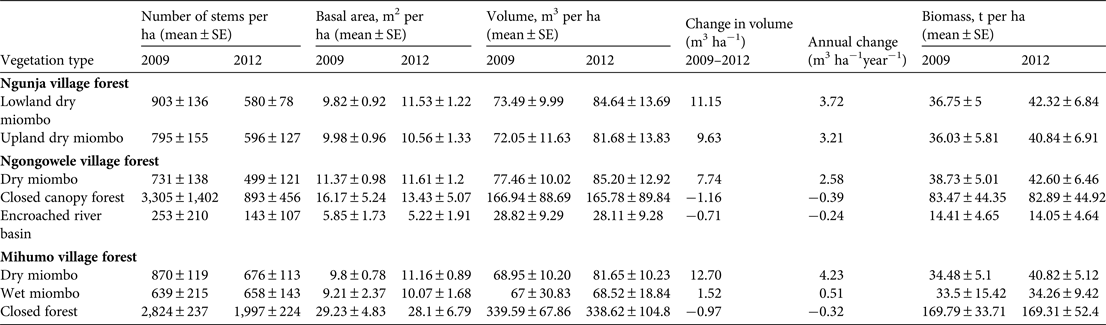
Forest parameters Measurements of forest stand parameters in the various vegetation types in the 2009 and 2012 assessments are in Table 4. The number of stems per hectare declined in all vegetation types except wet miombo from 2009 to 2012. This may be attributable to the natural mortality of small trees as a result of increased canopy closure and other stresses such as wild fires. Stand basal area, volume and biomass increased from 2009 to 2012 in miombo woodlands and decreased in closed forests. The annual increase in volume in miombo woodlands was 0.51–4.23 m3 ha−1 (Table 4), with a mean annual increase of 2.85 m3 ha−1, which is equivalent to a biomass of 1.42 t ha−1, and 2.56 t ha−1 of CO2 equivalent. For the closed forests the mean annual decline in volume was 0.36 m3 ha−1, which is equivalent to 0.16 tonnes per ha biomass and 0.28 tonnes per ha CO2 equivalent. There was a problem with locating plot centres, which could have led to the displacement of plot centres relative to previous measurements. This could explain the observed negative trend in volume. An alternative explanation could be the elephants Loxodonta africana in the closed forests in Angai felling trees as they pass.
Number of stems per ha, basal area, and volume in 2009 and 2012, change in volume between the two years, annual change in volume, and biomass measured in 2009 and 2012 for each vegetation type in Ngunja, Ngongowele and Mihumo village forests (Fig. 1).
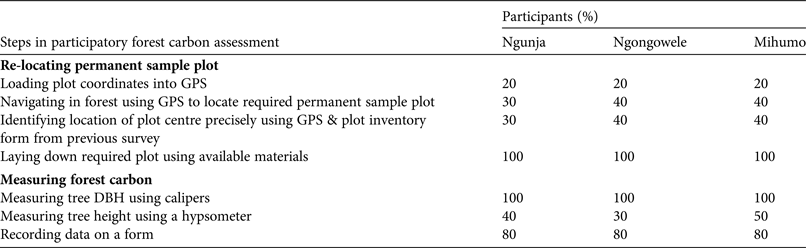
Capability of local community Only a few participants were able to use a GPS to relocate permanent plots and their centres, and < 50% of participants were able to use a hypsometer to measure tree height (Table 5). They explained that they did not understand how to use the equipment because it did not remain with them in the villages and they only used it during fieldwork, and the 3-year interval between the baseline assessment and forest carbon monitoring was too long for them to retain the operating skills. They also mentioned that the training periods in 2009 and 2012 were short and they did not have enough equipment to practise with.
Proportion of participants in Ngunja, Ngongowele and Mihumo village forests (Fig. 1) who were able to carry out various steps in participatory forest carbon assessment.
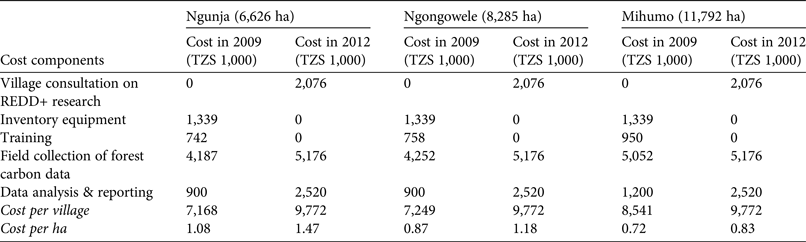
Cost of participatory forest carbon assessment The main cost components for the 2009 and 2012 forest assessments are in Table 6. The total cost involved in conducting forest carbon monitoring in the three village forests in 2012 was TZS 29,317,000 (c. USD 17,530), compared with TZS 22,958,000 (c. USD 13,728) for the baseline survey in 2009. The increase of TZS 6,359,000 (c. USD 3,800) is accounted for by increased payments to team members, from TZS 5,000 in 2009 to TZS 15,000 in 2012. Field allowances for foresters were also increased to compensate for the hardships and risks they faced in the forests. In 2012 the cost per ha for Mihumo, Ngongowele and Ngunja was TZS 830 (USD 0.50), TZS 1,180 (USD 0.74) and TZS 1,470 (USD 0.92), respectively. For all three village forests the costs related to data analysis and reporting were higher in 2012 than the baseline costs established in 2009 (TZS 7,560,000, c. USD 4,519, vs TZS 3,000,000, c. USD 1,793).
Cost components of participatory forest carbon assessment in Ngunja, Ngongowele and Mihumo village forests (Fig. 1).
Discussion
Forest stand parameters
The number of stems per ha declined in all vegetation types from 2009 to 2012, and there are various potential explanations for this. Woodland species regenerate largely through coppice regrowth and root suckers rather than seeds (Robertson, Reference Robertson1984, cited in Campbell, Reference Campbell1996), and Chidumayo (Reference Chidumayo1989) observed that stumps of almost all miombo woodland trees can produce sucker shoots. Although the seeds of the majority of miombo tree species and shrubs also germinate immediately after dispersal when there is enough moisture, tree density in regrowth miombo woodlands decreases over time as a result of moisture and heat stress. Seedlings of the majority of miombo tree species undergo a prolonged period of successive shoot die-back during their development phase as a result of these stresses. Shoot die-back is caused by water stress and/or fire during the dry season, whereas growth of suckers and coppices can be either slowed or accelerated by fire. If a destructive fire occurs before dominant shoots attain a safe height, the process of sucker shoot domination reverts to the initial stage, and stumps respond by producing an equal or larger number of replacement shoots (Chidumayo, Reference Chidumayo1989). Resistance to these environmental factors varies with species.
The impact of fire on miombo depends on the timing and frequency of burning and on the availability of flammable biomass. Complete protection for a few years leads to an accumulation of fuel, which is more detrimental to tree biomass if a fire occurs. A fire management regime is therefore necessary for woodland to thrive.
Experience from higher montane forests has shown that once the forest is harvested it becomes prone to fire and, if burnt, the forest floor becomes occupied by Pteridium spp., which suppress tree growth and result in the expansion of heathlands (Malimbwi & Mugasha, Reference Malimbwi and Mugasha2000). This may also be the case with riverine/lowland forests, although the pioneer species may be different. Enrichment planting is one possible approach to restock the forest, and has the following advantages: partial preservation of internal microclimate, and protection of soil by the initial growing stock; shade-demanding species can be regenerated; a natural, all-aged, species-rich secondary stand can be preserved under the upper storey formed by high-value tree species; and given the small quantity of plants required, the material and field planting costs are low. However, we caution that enrichment planting may not be a feasible technique because there are considerable expenditures associated with the necessary intensive tending of young stands and protection from fire.
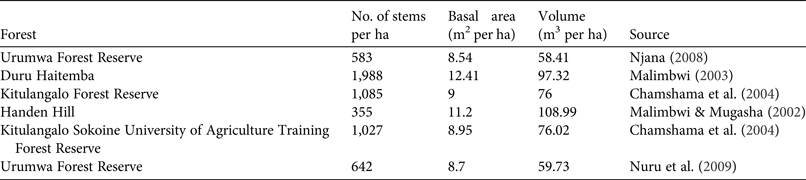
The annual increment in tree volume recorded in this study (2.85 m3 ha−1, Table 4) is consistent with other studies in eastern Tanzania (2.3 m3 ha−1, Zahabu, Reference Zahabu2008; 4.35 m3 ha−1, Eik, Reference Eik1994; 7.4 m3 ha−1, Malimbwi et al., Reference Malimbwi, Solberg and Luoga1994). For the same area Malimbwi et al. (Reference Malimbwi, Zahabu, Monela, Misana, Jambiya and Mchome2005) estimated a mean annual increment of 2.4 m3 ha−1 during 1996–1999, and Nilsson (Reference Nilsson, Boesen, Alarenik and Odgaard1986) and Temu (Reference Temu1979) estimated an annual growth rate of 1–2 m3 ha−1 for disturbed woodlands in Tanzania. Chidumayo (Reference Chidumayo1989) reported a mean annual increment in fuelwood of 1.96 m3 ha−1 for the dry miombo of Zambia. Although the observed growth rate is consistent with previous studies, further monitoring is needed. The number of stems, basal area, and volume recorded are consistent with records for miombo woodlands elsewhere in Tanzania (Table 7).
Number of stems per ha, basal area, and volume per ha recorded in other miombo woodlands in Tanzania.
Capabilities of the local community
The assessment teams were able to perform the necessary steps in forest carbon monitoring, as also reported by Zahabu (Reference Zahabu2008) and Skutsch et al. (Reference Skutsch, Karky, Zahabu, McCall and Peters-Guarin2009). In some cases, however, it was difficult to find the plot centre precisely because forward and back bearings for each plot were not recorded during the 2009 survey, there was no permanent reference mark for the plot centre, and GPS signals from satellites were weak, especially in the closed-canopy forests. As a result, in 2012 there was some displacement of plot centres, and therefore trees that were included in the 2009 survey may have been omitted, or additional trees may have been included. To avoid this situation, the plot inventory form for each plot was used to compare the tree species recorded in 2009 with those observed in 2012. An important lesson from this exercise is that plot centres should be described and marked properly, as this is the only way to ensure the same trees are measured during monitoring.
Ideally monitoring should always be in the same season. Although carbon gains may be calculated and rewarded over a full accounting period, annual surveys are recommended. Growth rates fluctuate with variations in annual rainfall and temperature, and a data series may smooth and average out such natural variation. Furthermore, if data are gathered on an annual basis there is a greater probability of detecting errors. Annual surveys are also important in terms of continuity, so that the community remains aware of the task and the survey teams are more likely to remember monitoring procedures.
Cost of participatory forest carbon assessment
It is important to note that in 2009, data analysis and reporting was partly done by the District Council forester, KM, as part of his Master's thesis (Mukama, Reference Mukama2010), and the external experts from Sokoine University of Agriculture were only involved occasionally in different stages of the inventory (e.g. training, monitoring data collection, actual data analysis and supervision of the Master's thesis). In 2012 the data analysis and reporting were carried out by external experts from Sokoine University of Agriculture. This explains why the cost of data analysis and reporting in 2012 (USD 4,519) was significantly higher than the baseline cost (USD 1,793) established in 2009.
For all of the village forests the cost per ha of assessments was USD < 1, compared to USD 5 and 3 reported elsewhere (Murdiyarso & Skutsch, Reference Murdiyarso and Skutsch2006; Zahabu, Reference Zahabu2008). This may be attributed to the large areas of forest studied in the Angai Villages Land Forest Reserve. Thus, communities managing large forest areas are likely to benefit more under REDD+, as the cost of monitoring is low.
Implications of the findings for REDD+ in Tanzania
During community meetings in 2013 it was evident there were local concerns about community involvement and community-level REDD+ benefits (CCI, 2009; Mukama, Reference Mukama2010) regarding how the various types of benefit-sharing models ensured equity in inter-village benefit-sharing agreements (e.g. cash payments directly to individuals or the allocation of funds to community development projects via the Village Council). Mustalahti et al. (Reference Mustalahti, Bolin, Boyd and Paavola2012) argued that communities in Mihumo and Ngongowele could invest a portion of their REDD+ benefits to develop community projects, creating equity among community members and therefore a sense of ownership of the REDD+ project.
The debate over inter-village benefit sharing raises the question of equity between communities. If only certain communities or forest areas receive revenue from carbon, others may feel they have been treated unfairly, and turn against the REDD+ mechanism. In light of such cases, effort-based payments have been introduced. One of the arguments used by external parties to promote participatory forest carbon assessment has been that the village-level payments not only compensate the opportunity costs of local communities but also promote equity among the communities, based on their efforts against deforestation and degradation (Skutsch & McCall, Reference Skutsch, McCall and Skutsch2011; Mukama et al., Reference Mukama, Mustalahti and Zahabu2012; Mustalahti et al., Reference Mustalahti, Bolin, Boyd and Paavola2012).
REDD+ will need to provide benefits that cover local people's opportunity costs, to change farmers’ attitudes towards forest fires and timber harvesting, for example. The key concern in the Angai Villages Land Forest Reserve was the right to make decisions about natural resources and to benefit from those resources (Mustalahti et al., Reference Mustalahti, Bolin, Boyd and Paavola2012). In 2013, during community meetings, local representatives wanted to know about the availability of funds and the value of carbon, to make decisions about forest utilization. Even when communities are granted tenure rights, experience from the Angai Villages Land Forest Reserve shows that participatory forest carbon assessment, as well as access to carbon benefits, still requires the involvement and skills of foresters as well as the approval of national-level authorities. Thus there is a risk that carbon sequestration interventions result in the transfer of powers to central governments or external agencies. It could be argued that community-level REDD+ interventions involve relatively low costs because the forest inventory work can be carried out by communities managing their forests through the use of participatory forest carbon assessment methods. In Liwale, however, participatory forest carbon assessment was limited to only three of 24 villages in the Angai Villages Land Forest Reserve yet still required the involvement of both District Council foresters and external experts at various stages (e.g. training, monitoring data collection, and data analysis).
This study is of importance not only for REDD+ but also for biodiversity conservation. Involving local communities in monitoring their forests increases their awareness of the status of the forest, and of the cost and processes involved. This increases the sense of ownership of the forest among local communities, engendering a sense of responsibility for reducing threats, but it requires that all stakeholders involved in implementing REDD+ projects place equal emphasis on maintenance of carbon stocks and conservation of biodiversity. Tropical forests are complex ecosystems in which individual or groups of species play various important roles (such as pollination, seed dispersal, nutrient cycling); changing species composition could affect the diversity and functioning of the forest (Forget & Jansen, Reference Forget and Jansen2007; Wang et al., Reference Wang, Sork, Leong and Smith2007; Wright et al., Reference Wright, Hernandez and Condit2007; Brodie et al., Reference Brodie, Helmy, Brockelman and Maron2009; Holbrook & Loiselle, Reference Holbrook and Loiselle2009). Managing forests solely for carbon storage does not necessarily take into account the complex interactions and interdependence of plant and animal organisms living within them (Bunker et al., Reference Bunker, Declerck, Bradford, Colwell, Perfecto and Phillips2005). Although recent evidence suggests that REDD+ protects areas of high biodiversity on a global scale, maintenance of biodiversity on a local scale should not be assumed over the long term (Hinsley et al., Reference Hinsley, Entwistle and Pio2015). This is because threats such as hunting and selective timber harvesting can reduce biodiversity without changing tree cover or carbon stocks in the short term.
Conclusions
The results of participatory forest carbon monitoring demonstrated a general decline in the number of stems in all vegetation types from 2009 to 2012, and this could be attributed to the natural mortality of small trees as a result of increased canopy closure. For the other parameters assessed, changes varied according to vegetation type. For the miombo woodlands, stand basal area, volume and biomass increased from 2009 to 2012; these parameters decreased in closed-canopy forests. These closed forests host large populations of elephants, which cause degradation by felling large trees. Thus it is clear that forest degradation is not only caused by human disturbance but also by other factors, such as the attraction of wild animals to closed-canopy forests. There may therefore be a need for mechanisms to compensate communities when carbon loss is beyond their control. An increase in abundance of elephants and other fauna should not be considered negatively by local communities and other stakeholders, and those promoting REDD+ should attempt to raise awareness of the importance of improved biodiversity in the context of carbon stocks.
We identified discrepancies in the capability of communities to perform the necessary steps in forest carbon monitoring, particularly in the use of a GPS and hypsometer, which require regular use to maintain competence. This necessitates the involvement of both District Council foresters and external experts in various stages of the inventory. To avoid the problems associated with the use of a conventional hypsometer, which requires calculations to be made, communities could use a Vertex hypsometer, a digital device that provides a direct measurement of height. Alternatively, the use of a hypsometer could be avoided by using models for estimating biomass and volume based on diameter at breast height (Mugasha et al., Reference Mugasha, Eid, Bollandsås, Malimbwi, Chamshama, Zahabu and Katani2013).
The total cost involved in conducting forest carbon monitoring in 2012 in the three village forests studied was higher than the baseline cost established in 2009. However, the cost per hectare for each village forest was USD < 1, which is less than that reported for other locations in Tanzania and elsewhere. Communities managing large forests are likely to benefit more from REDD+ because the monitoring cost is lower, and further studies are needed to determine the minimum area under REDD+ for which communities can realize tangible benefits. Costs related to data analysis and reporting for all three of the village forests were higher (USD 4,519) in 2012 than the baseline costs (USD 1,793) established in 2009 because of the involvement of external experts. The main concern for the future is how data analysis and reporting activities will be carried out and who will cover these costs, because external experts are required to enter all local and project-level emission reductions data into the national system.
Acknowledgements
We thank the Academy of Finland for funding, and gratefully acknowledge the Liwale District Council and District Executive Director for permission to carry out this study. We also appreciate the assistance of foresters from Liwale District Council. In particular, we appreciate the cooperation and endurance of the local people who participated in carbon assessment in Mihumo, Ngongowele and Ngunja and who worked tirelessly in harsh conditions.
Biographical sketches
Josiah Zephania Katani's research interests include quantification of changes in forest carbon stock and their implications for livelihood and governance, institutional evolution in the management of water catchments, and its influence on local community livelihoods in Tanzania, and developing biomass estimation models for various vegetation types. Irmeli Mustalahti is an active participant in the debate on development assistance for community participation in natural resources management. She is researching responsive governance in climate change adaptation and mitigation, and global environmental governance in the context of REDD+. Mukama Mauma Kusaga has been involved in community-based natural resource management in Tanzania for c. 15 years. He is an expert in participatory forest carbon assessment, and assisted with the development of a conservation strategy and management plan for enhancing the carbon stock in Angai Village Land Forest Reserve. Eliakimu Zahabu's research interests include testing methods for forest carbon assessment by local communities, and global climate change mechanisms such as REDD+.


 Open access

