



School gardens are an interesting and potentially useful interface between health promotion and local community-based measures towards environmental sustainability. First, school gardens have become a prevalent approach to school-based strategies to enhance dietary and physical activity behaviours in many countries( Reference Bhutta, Salam and Das 1 – Reference Christian, Evans and Hancock 4 ). Interest in school gardens has emerged from previous observations that community gardening was associated with a range of putative health benefits across the physical, psychological and social dimensions of health(5). However, there is also a well-established underlying emphasis on environmental issues such as sustainable living, organic food production, waste minimization and permaculture associated with school gardens. Many of these latter themes have been identified as initial drivers for the establishment of a large proportion of school-based community gardens( Reference Somerset and Bossard 3 ). Inherent within these themes is the maintenance of agricultural biodiversity, particularly by expanding the range of varieties of fruit and vegetables (F&V)(6) beyond that commonly available through mainstream supermarkets. These reported motives are consistent with enhanced self-fulfilment, life satisfaction, sense of belonging and community contribution reported previously( Reference Blair, Giesecke and Sherman 7 ).
School gardens epitomize the tenants of success for nutrition interventions in children outlined by Lytle and Achterberg, being activity based, theory driven, implemented in the school environment and involving parents and the wider community( Reference Lytle and Achterberg 8 ). One of the earliest formal studies on school gardens by Cason, albeit in kindergarten children, set the scene for subsequent work by showing that as little as 30 min each week in a vegetable garden can improve vegetable and fruit identification, identification of ‘best’ snack choices and increased willingness of children to taste new vegetables and fruits( Reference Cason 9 ).
Most of the early studies on school gardens focused on process issues, including in-school support for garden initiatives. In 2005, Graham and Zidenberg-Cherr published two such studies in California schools, reporting that teachers generally were supportive of school gardens and believed that their use enhanced academic performance, language, arts and healthful eating( Reference Graham and Zidenberg-Cherr 10 ). Thus the advocacy for school gardens drifted ahead of supporting evidence of effectiveness for improving health or determinants thereof.
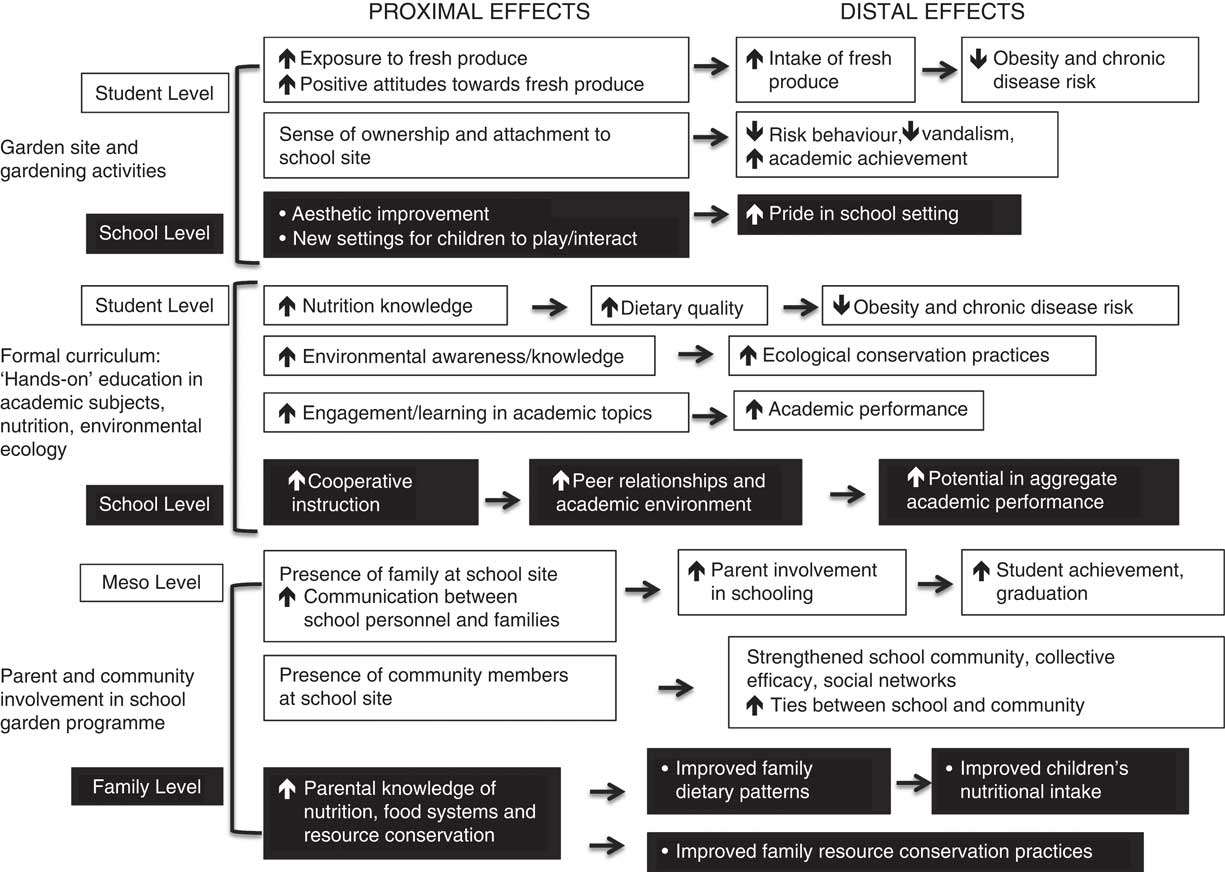
At about the same time, the paucity of empirical evidence on effectiveness of school gardens was revealed in a systematic review by Ozer( Reference Ozer 11 ), which found only five separate studies on the health impacts of school gardens. Ozer recognized the emergence of school gardens as ‘learning laboratories’ in the USA and the need for a conceptual framework upon which to evaluate their impact on health. The resulting conceptual model (summarized in Fig. 1) comprised a matrix of both proximal and distal effects on the health and well-being of various stakeholder groups (students, school, family, community).
Conceptual model of the impact of school garden programmes (adapted from Ozer( Reference Ozer 11 ))
Given the increasing popularity of school gardens as a health promotion resource, the objective of the present review was twofold: (i) to review the garden-based programmes conducted in schools targeting dietary intake and/or related behaviours in children; and (ii) to identify similar strategies and components employed by these garden-based programmes.
Research methods
We searched Medline and Embase for garden-based school interventions. Studies were eligible if they were: (i) in the English language; (ii) taught in school settings; (iii) included a school garden component; and (iv) had a baseline and post-intervention dietary measure (including dietary intake and/or determinants of dietary behaviour). Sixteen studies were initially identified. However, two of these studies, although they included school-age children, were taught in community settings( Reference Heim, Stang and Ireland 12 , Reference Lautenschlager and Smith 13 ) and were therefore excluded. Another study was excluded because there was no main outcome analyses of the intervention( Reference Jaenke, Collins and Morgan 14 ). Therefore, thirteen studies remained, including one prospective study( Reference Wang, Rauzon and Studer 15 ) (where level of implementation among schools was evaluated), three quasi-experimental design studies( Reference Wright and Rowell 16 – Reference Lineberger and Zajicek 18 ) (with no comparison group) and nine non-randomized controlled trials( Reference Davis, Ventura and Cook 2 , Reference Ratcliffe, Merrigan and Rogers 19 – Reference Gatto, Ventura and Cook 27 ).
Results
Table 1 represents the characteristics of each study reviewed, including the reference, location, study population, design, outcome measures and results( Reference Davis, Ventura and Cook 2 , Reference Wang, Rauzon and Studer 15 – Reference Morris, Koumjian and Briggs 28 ). Ten of the garden interventions were conducted during school hours, whereas three were conducted during after-school hours. The duration of the interventions varied widely, from 10–12 weeks (four studies) to 4–7 months (four studies), one school year (two studies), 12 months (one study) and two school years (two studies). The populations also varied widely, with children ranging from kindergarten through 8th grade students; however, nine of these studies were conducted in elementary or primary schools. The studies represented students from a wide range of ethnicities and socio-economic backgrounds, with at least half of the studies targeting minority and low socio-economic students. The intervention components varied widely as well among the garden programmes, such as differences in who taught the lessons (paid instructors v. schoolteachers), where the lessons were taught (actual garden v. in the classroom) and incorporation of nutrition and cooking components.
Studies included in the present review of school garden-based programmes on health outcomes in children
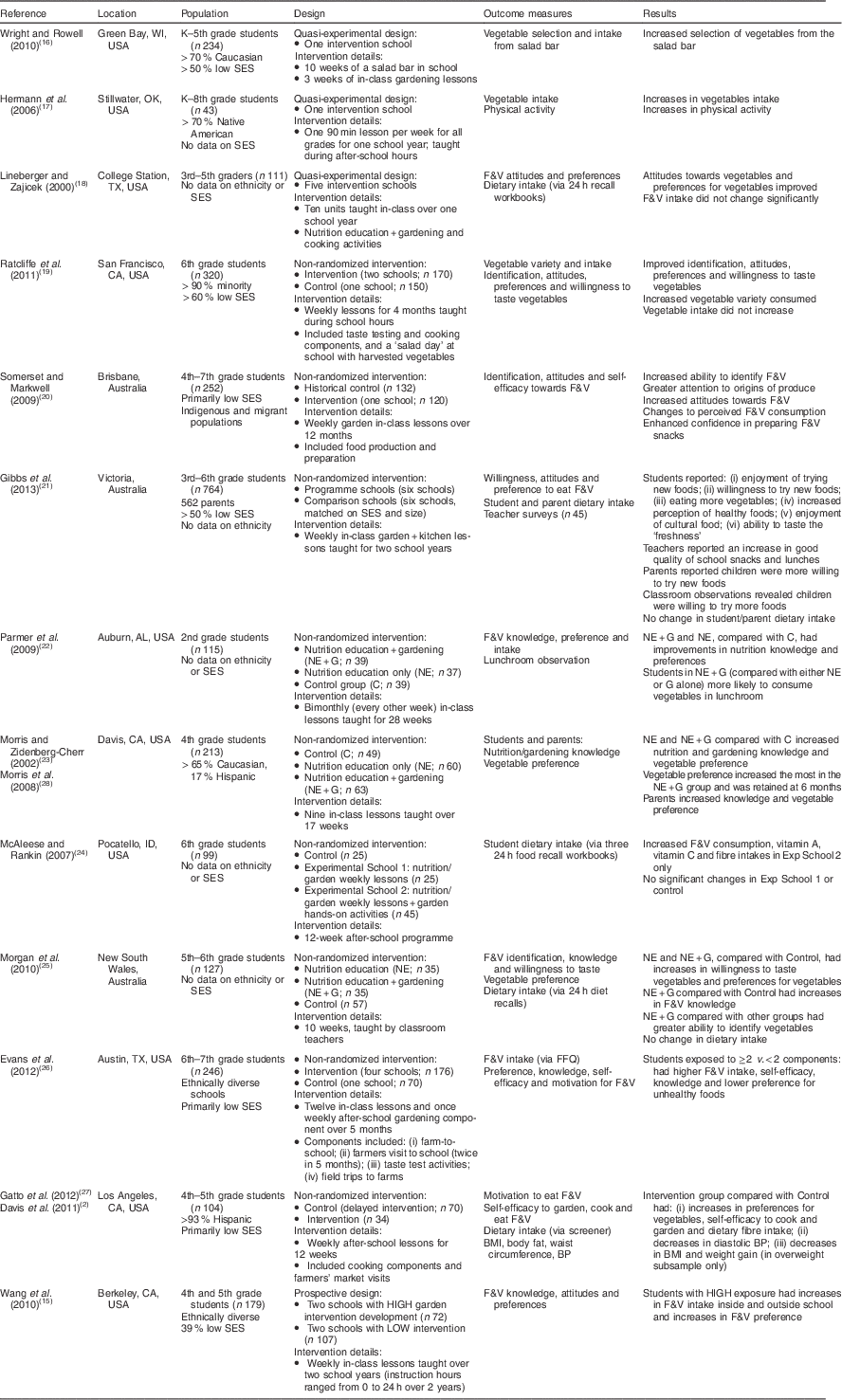
K, kindergarten; SES, socio-economic status; F&V, fruit and vegetables; BP, blood pressure.
The outcomes and evaluation tools reported also varied widely by study. Table 2 outlines the determinants of behaviour and the actual behaviours measured in the garden programmes reviewed. Ten of the studies examined the effect of the garden programme on students’ reported dietary intake, as measured by questionnaire, screener, diet recalls or diet records. Six of these interventions resulted in increased vegetable intake, whereas four studies showed no change in dietary intake.
Summary of determinants of behaviour and actual behaviours measured in the garden programmes reviewed

F&V, fruit and vegetables.
The majority of studies showed significant improvements in determinants of dietary behaviours, such as preference, attitudes towards, willingness to taste, identification, knowledge, self-efficacy and variety consumed of fruit and/or vegetables. Seven of the eight studies that measured preference found that the gardening programme resulted in increased preference for vegetables. Out of the four studies that measured attitudes, all showed that the programme resulted in improved attitudes towards F&V. Out of the three studies that measured willingness and identification all found that the gardening programme resulted in improved willingness to taste and identification of fruits and/or vegetables. Three studies also measured self-efficacy to prepare/cook F&V and/or to garden, all of which resulted in improvements in these self-efficacy skills.
There were several common strategies and components described in the programmes that likely contributed to the improved diet behaviours. Common strategies that were mentioned in at least three of the studies are included in Table 3, resulting in seven strategies. All of the studies referred to the ‘hands on’ experience of planting, caring for and harvesting produce as a key reason why gardening programmes were effective at improving dietary behaviours. Eight of the studies included cooking activities/lessons in their programmes( Reference Wang, Rauzon and Studer 15 , Reference Hermann, Parker and Brown 17 , Reference Ratcliffe, Merrigan and Rogers 19 – Reference Gibbs, Staiger and Johnson 21 , Reference Morris and Zidenberg-Cherr 23 , Reference McAleese and Rankin 24 , Reference Gatto, Ventura and Cook 27 ). In seven of the programmes, instructors were actually provided to teach the garden lessons( Reference Davis, Ventura and Cook 2 , Reference Wang, Rauzon and Studer 15 – Reference Hermann, Parker and Brown 17 , Reference Somerset and Markwell 20 , Reference Parmer, Salisbury-Glennon and Shannon 22 , Reference Morris and Zidenberg-Cherr 23 ). Six of the studies mentioned that stakeholder involvement in the development, planning and implementation was a key aspect of the programme( Reference Davis, Ventura and Cook 2 , Reference Hermann, Parker and Brown 17 , Reference Ratcliffe, Merrigan and Rogers 19 – Reference Gibbs, Staiger and Johnson 21 , Reference Morgan, Warren and Lubans 25 ). Five of studies included a parental component in the programme, although only a few examined the impact of the programme on parental outcomes( Reference Davis, Ventura and Cook 2 , Reference Hermann, Parker and Brown 17 , Reference Ratcliffe, Merrigan and Rogers 19 , Reference Morris and Zidenberg-Cherr 23 , Reference Morgan, Warren and Lubans 25 ). Four of the programmes included some kind of food provision( Reference Hermann, Parker and Brown 17 , Reference Ratcliffe, Merrigan and Rogers 19 , Reference Somerset and Markwell 20 , Reference Evans, Ranjit and Rutledge 26 ). Finally, three of the programmes included media promotion occurring in or around the garden( Reference Wright and Rowell 16 , Reference Ratcliffe, Merrigan and Rogers 19 , Reference Somerset and Markwell 20 ).
Effective strategies to improve health outcomes highlighted in reviewed studies. Strategies listed were included if they were mentioned in at least three studies, and are ranked in decreasing frequency of mention
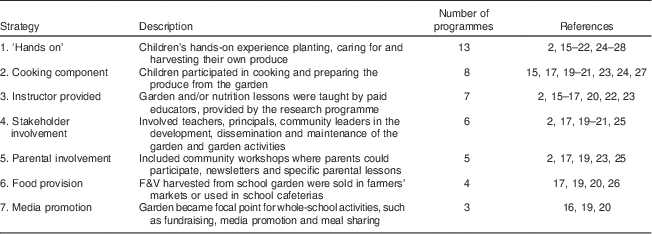
F&V, fruit and vegetables.
Discussion
Thirteen studies were identified and reviewed that evaluated the effects of gardening programmes on dietary behaviours and/or determinants of dietary behaviour. Although all studies differed in evaluation measures, the majority of the programmes that measured dietary intake resulted in increased vegetable intake, whereas some showed no effect. Gardening programmes also resulted in improved preferences for, attitudes towards, willingness to taste, identification of and self-efficacy to prepare/cook F&V. In general, the gardening programmes reviewed showed healthier dietary intake and improved determinants of dietary behaviour.
There appeared to be many common core strategies employed by the school garden programmes to improve dietary behaviours. All of the reviewed studies emphasized the ‘hands on’ experience of planting, caring for and harvesting produce as a key reason why gardening programmes were effective at improving dietary behaviours. When children are actively involved in all aspects from planting the seed, nurturing the growing of the plants to harvesting the produce, and in some cases preparing/cooking the produce, they are truly invested in the process. When children have the opportunity to use their hands they become active participants instead of passive learners( Reference Heim, Stang and Ireland 12 , Reference Beets, Swanger and Wilcox 29 ).
Another key strategy employed by eight of the garden programmes was the inclusion of cooking/food preparation activities in various or all lessons. Teaching cooking/food preparation to children is another example of a ‘hands on’ learning experience and also enables children to acquire necessary self-efficacy skills involved in eating and enjoying vegetables and fruits( Reference Heim, Stang and Ireland 12 , Reference Beets, Swanger and Wilcox 29 ). Many of the programmes divided the children into smaller groups (four to six children) for the cooking component, so that each child got the chance to wash, cut and mix the produce( Reference Davis, Ventura and Cook 2 ). In addition, several of the programmes had the children sit down together to share and enjoy the meal or snack they prepared, which encouraged the children to taste but with no pressure to eat( Reference Davis, Ventura and Cook 2 , Reference Gibbs, Staiger and Johnson 21 , Reference Gatto, Ventura and Cook 27 ).
Seven of the programmes provided an educator/gardener to teach all or some of the garden and nutrition lessons in the programme; this was another key strategy used. Providing instructors may be an integral step in programme initiation and reduces the initial burden of teaching the programme within existing resources. It is unclear how long these educators must be provided to ensure maintenance and sustainability of the programme. More research is required to understand the underlying conditions by which the school community can assume garden maintenance after an initial start-up phase concludes. There is some evidence that not all schools have the capacity and/or volition to do so( Reference Somerset and Bossard 3 ) and it is clear that both teacher and parent engagement and involvement are critical( Reference Somerset, Ball and Flett 30 ).
The above observations highlight the general importance of recognizing links with pedagogical frameworks, in particular careful integration of garden activities into the curriculum. Previous findings indicate that school gardens can be integrated into diverse curriculum areas such as Mathematics, Literacy, Science and Art( Reference Somerset and Bossard 3 , Reference Somerset, Ball and Flett 30 ). The above observations also highlight previously recognized benefits of expanding the reach of school gardens through combinations with other hands-on experiences such as cooking, tasting and marketing. For example, school gardens can be incorporated effectively into Health Promoting School settings through attachment to a kids’ café, as a commercially viable means of food provision( Reference Rowe, Stewart and Somerset 31 ).
Six of the programmes mentioned the importance of enlisting stakeholder input (i.e. children, teachers, principals, school staff, parents, community groups) in the development, implementation and maintenance of the programme( Reference Davis, Ventura and Cook 2 , Reference Hermann, Parker and Brown 17 , Reference Ratcliffe, Merrigan and Rogers 19 – Reference Gibbs, Staiger and Johnson 21 , Reference Morgan, Warren and Lubans 25 ). Many studies discussed holding focus groups or meetings with stakeholders to enlist their help in various aspects of the programme including: (i) the design of the garden; (ii) the build-out/initial planting of the garden; (iii) development of the curriculum and in-class activities; (iv) the selection of the recipes used; (v) what to do with the harvested produce; and (vi) which community/family garden activities to incorporate. These aspects may also enhance the sustainability of the programme after the research project has concluded. However, further research is warranted to assess how initial and continued stakeholder input is needed to sustain school gardens and gardening programmes.
Five of the programmes involved parents and families in some way. Several studies sent home newsletters to the parents, some conducted parent/family classes separately and many involved community garden events, where parents/family were invited to attend( Reference Davis, Ventura and Cook 2 , Reference Ratcliffe, Merrigan and Rogers 19 , Reference Gibbs, Staiger and Johnson 21 ). Parental support, modelling, parenting styles and the family environment are well established as important components supporting the adoption and sustainability of healthy eating behaviours, which are essential in the prevention and management of childhood obesity( Reference Golan and Crow 32 , Reference Epstein 33 ). Although few of the studies reviewed measured parental outcomes, those that did found that a garden programme improved parental dietary behaviours( Reference Gibbs, Staiger and Johnson 21 , Reference Morris, Koumjian and Briggs 28 ).
Four of the studies mentioned how they used the harvested vegetables and fruit from the garden( Reference Hermann, Parker and Brown 17 , Reference Ratcliffe, Merrigan and Rogers 19 , Reference Somerset and Markwell 20 , Reference Evans, Ranjit and Rutledge 26 ). One garden programme had the children and their families sell the produce at a local farmers’ market( Reference Somerset and Markwell 20 ). Another study made salads from the harvested F&V and served them to the entire study body during lunch( Reference Ratcliffe, Merrigan and Rogers 19 ). More research is needed to understand if and how this strategy impacts student dietary behaviour as well as school, family and community outcomes and how this strategy aids in the sustainability of the programmes.
Having media events or promotional activities (such as fundraising events and meal-sharing occasions) occur in the garden is also a viable strategy to highlight the garden and associated programmes( Reference Wright and Rowell 16 , Reference Somerset and Markwell 20 ). Several studies made the garden the focal point for whole-school activities, which helped students, parents, teachers and school staff take ownership and pride in their school garden. The garden can also be very aesthetically pleasing, which can encourage school community support and investment in the garden. Several studies emphasized the importance of teaching the programme in the actual garden( Reference Davis, Ventura and Cook 2 , Reference Somerset and Markwell 20 , Reference Morris, Koumjian and Briggs 28 ). School gardens are ideal settings for experiential (hands-on) learning and give children the opportunity to learn outside the traditional classroom setting. Teaching in the garden allows educators to explore children’s senses, which play a significant role in the development of dietary preferences, including the smell, sight, texture and taste of the growing produce( Reference Dazeley, Houston-Price and Hill 34 ).
Despite the substantial uptake of school gardens to promote health, the evidence underpinning this is limited. The majority of the studies reviewed are ‘proof of concept’ studies and more rigour and well-designed experimental studies are warranted. Ozer’s framework assumed school gardens as systemic interventions, using ecological theory to conceptualize outcomes that might arise from their implementation. However, many school gardens have emerged spontaneously as an outcome of a complex set of needs unique to each school community, making it impractical to design and evaluate the effect of the garden programme with a well-designed randomized control trial. In addition, the randomized control trial design is challenging because control communities are reluctant to participate unless they also receive benefit. Further development and use of suitable experimental and quasi-experimental designs will assist in developing a better evidence base for school gardens and other community-based health interventions.
The length of the studies reviewed varied substantially from 10 weeks to two school years. In general, studies in the present review measured impact immediately after intervention cessation, thus reflecting only short-term changes in diet-related behaviours. There is no clear direction on the optimal duration of interventions which effectively induce long-term dietary behaviour change. Sustainability (i.e. longevity) of garden programmes remains a continuing challenge and it is important to identify factors that drive it. Many of the interventions analysed in the present review acknowledged the importance of parent, teacher and community involvement and ownership as being a critical determinant of success and sustainability of the programmes. Further research on how to support and extend these aspects is warranted.
School gardens have an inherent complexity in terms of their origins, composition and how they are used. Their origins within individual schools and indeed their sustained longevity are driven by a mix of factors unique to each school, comprising factors such as climate, school size and parent/teacher capacity to participate( Reference Somerset and Bossard 3 ). Both US( Reference Graham, Beall and Lussier 35 ) and Australian( Reference Somerset, Ball and Flett 30 ) studies have identified multiple curriculum areas other than health that drive garden establishment. The mechanisms by which each garden is integrated into school life are also complex and varied. One potential pathway to understanding the role of school gardens is to consider them as part of a continuum extending from community need to enhanced health, rather than a specific intervention per se. This is consistent with the proposal by French and Weschler( Reference French and Wechsler 36 ) that school gardens are but one of a range of food-based interventions suitable for enhancing dietary behaviours in school-aged children, providing useful insight into the conceptualization of school gardens.
The surge in interest towards school gardens has been associated with an apparent commodification of the concept in both the USA and Australia. The California ‘garden in every school’( Reference Graham and Zidenberg-Cherr 10 ) and Australian public–private partnership( Reference Block, Gibbs and Staiger 37 ) initiatives tend towards a generic ‘one size fits all’ approach. There is some indication from the literature that this top-down approach has limitations. One study( Reference Hazzard, Moreno and Beall 38 ) reported that a large proportion of schools would not apply for funding to initiate a school garden. Those schools that did apply for funding had greater access to financial and human resources, confirming the importance of individual school environments as a determinant of suitability for garden establishment and sustainability. Such top-down approaches may undermine grass-roots capacity-building initiatives( Reference Liberato, Brimblecombe and Ritchie 39 ).
A substantial limitation across the studies was the lack of consistent evaluation measures. Almost every study used a different measure to evaluate dietary intake and determinants of dietary behaviour. In addition many of the questionnaires/surveys used were not validated. While constructs measured were similar (i.e. preference to eat, willingness to taste, self-efficacy to eat F&V), the actual questionnaire or survey used varied substantially. In order to better understand the effect of school garden programmes on dietary behaviours, garden programmes should use similar and consistent evaluation tools. However, this is challenging given the different age ranges, cognitive capabilities and cultures of the populations tested. In addition, none of the reviewed studies examined the mediatory/mediational effects of changes in dietary determinants on actual changes in dietary intake or any other related health outcomes, such as obesity. More research is warranted to understand how improvements in behavioural determinants actually impact dietary intake. Understanding the most influential determinants of behaviour would provide valuable information in designing garden-based programmes and nutrition interventions more generally.
Another limitation is that only one of the programmes examined a health outcome beyond dietary behaviours. The 12-week gardening, nutrition and cooking programme called LA Sprouts, which was taught during an after-school programme to low-income, primarily Hispanic, 3rd–5th grade students, found that the garden programme resulted in reductions in BMI, waist circumference and blood pressure. While substantial research has been conducted to show that healthy diets, specifically diets high in F&V, are linked to reductions in obesity and obesity-related diseases such as type 2 diabetes and cardiovascular risk factors( Reference Wosje, Khoury and Claytor 40 , Reference Mikkila, Rasanen and Raitakari 41 ), more studies examining the direct impact of a garden-based programme on obesity and related diseases are warranted.
Considering Ozer’s evaluation framework in 2007( Reference Ozer 11 ), there are multiple pathways by which school garden programmes may potentially strengthen the healthy development of students, including dietary intake, academic achievement/engagement and a sense of connection to schools, while enhancing the relationship of the school to the family and broader community. However, the majority of the garden programmes have primarily focused on the student outcomes, mainly dietary behaviours. Impacts on other important stakeholders such as parents, teachers and the wider community have been less reported, but are equally important since they have implications both for persistence of health effects in children and on the sustainability of the garden within the school. Research examining how garden programmes impact student outcomes beyond dietary intake, and how they impact the family and broader community, is needed.
It is clear from the present review that studies which focus on health outcomes associated with school gardens pay only minor attention to impacts on factors affecting environmental sustainability, despite the apparent duality of purpose behind the establishment of many gardens( Reference Somerset and Bossard 3 ). Interest in and volition to produce foods locally via community gardens may be a sentiment that is determined by early-life experience( Reference Pereira, Larder and Somerset 42 ) and is linked to connections with agriculture and community belonging( Reference Harris, Rowe-Minniss and Somerset 43 ). Thus, an important potential direction for impact measurement of school gardens is in relation to factors that can enhance capacity of communities to assure their own local food security. Such measures might include reflections on self-efficacy and knowhow, strengthening of traditional/local food culture and food sovereignty.
Conclusion
The present analysis showed clear and consistent effects of school gardening programmes on improving dietary behaviours linked to increases in F&V intake, while half of the studies showed actual increases in vegetable intake. The contextualization of gardens within pedagogical frameworks is an ongoing challenge towards a better understanding of the potential for school gardens to enhance health.
The broader impacts of school gardens on parents, teachers and the wider school community need further analysis. The transition from the start-up phase to long-term maintenance of garden initiatives is also an important area for further work to enhance sustainability of gardens and thus the duration of effects on determinants of health.
Acknowledgements
Financial support: This research received no specific grant from any funding agency in the public, commercial or not-for-profit sectors. Conflict of interest: None. Authorship: S.S. and J.N.D. were involved equally in the conception and design of the review, involved in drafting and revising the manuscript, had final approval of the version to be published, and agree to be accountable for all aspects of the work. M.R.S. was involved in the conception and design of the review as well as drafting and revising the manuscript. Ethics of human subject participation: Ethical clearance was not sought for this review article.



