

The recent border crisis between Morocco and Spain provides insight into the interplay of border and migration policies in the case of two countries with unequal socioeconomic and legal contexts. This study asks to what extent, with which techniques, and with which consequences Morocco has instrumentalized migration and the management of the borders to pressure its neighbor. In what way is it changing traditional North–South relations?
Our hypothesis is that Morocco seemed to have effectively instrumentalized migration and management of the border with various techniques. Morocco’s leveraging against Spain exemplifies a different approach to North–South relations because the smaller state actor has the capacity to influence and receive concessions from the bigger state actor. This article expands on the Beirut School of Critical Security Studies (BSCSS) by addressing questions that decenter the security paradigm and by showing that in North–South relations, the Southern partner also can be a security actor. The study reviews the literature that is concerned with critical security studies and North–South relations and inequalities.
The study analyzes the Spanish–Moroccan border crisis using the BSCSS. We also review a series of events in the case study that help in understanding the power dynamics in North–South relations. Our case study contributes to the BSCSS because Morocco—a country embedded in the security architecture of the Middle East—provides one of the most-developed examples of instrumentalizing borders and the consequent rebalancing of North–South power relations.
BEIRUT SCHOOL OF CRITICAL SECURITY STUDIES
During recent decades, mainstream approaches to security have faced significant challenges from critical security studies (CASE Collective 2006). In 2018, the BSCSS emerged as a response to the limitations and biases of traditional Western perspectives. For example, the BSCSS does not entirely reject a neorealist framework; rather, it critiques whose security is prioritized and challenges the epistemic dominance of great-power–centric realism (Hazbun Reference Hazbun2017; Pourmokhtari Reference Pourmokhtari2025). Its goal was to integrate the voices, experiences, and knowledge of the Middle East to provide an alternative framework and a profound critique of international relations and security studies.
The BSCSS’s contribution to critical security studies lies in its postcolonial grounding and its expressed desire to produce situated knowledge. By emphasizing localized understandings, it provides greater analytical rigor and overcomes the Eurocentrism that prevails in security studies. This approach allows international relations and security to be framed within North–South power dynamics, enabling the study of political actors and processes in non-Western contexts and in political systems beyond liberal democracies. Bilgin (Reference Bilgin2011) and Vuori (Reference Vuori2008) critiqued the Copenhagen School’s Securitization Theory for its inability to address security in nondemocratic and non-Western contexts. From the BSCSS perspective, this is due to the theory’s reliance on the distinction between ordinary and exceptional politics, a dichotomy that applies only to democratic systems (Buzan, Wæver, and de Wilde Reference Buzan, Wæver and de Wilde1998; Wæver Reference Wæver and Lipschutz1995). Without the rule of law in nondemocratic regimes, this distinction breaks down because there is no clear boundary between ordinary politics (which respect the rules) and exceptional politics (which transcend them). Thus, the ordinary and exceptional spheres of politics are interconnected and political dynamics are shaped by global power relations, particularly North–South inequality. The BSCSS challenges the notion of Southern states as passive subjects, mere recipients, or laboratories of Northern policies. It emphasizes the agency of Global South states.
The BSCSS challenges the notion of Southern states as passive subjects, mere recipients, or laboratories of Northern policies.
A key aspect of the BSCSS is its focus on individual and group experiences in security, which shifts attention from state-centrism to societal security. This does not entail abandoning the study of the state as a relevant actor in international relations. On the contrary, BSCSS’s analysis of the role and agency of the state in the Global South is essential for understanding the subject of this study. In this regard, it is important to highlight Omar Dahi’s (Abboud et al. Reference Abboud, Dahi, Hazbun, Grove, Hindawi, Mouawad and Hermez2018, 284) observation: “Large and powerful Southern states are increasingly developing their own security frameworks and pursuing an assertive foreign policy accordingly.” Dahi noted the recovery of agency in the Global South, through critiques of the global political economy and Southern states’ ability to shape governance models in both the South and the North. For example, human security policy—with the leadership of Brazil and Egypt—illustrates this shift. In our study, Morocco’s contributions to global migration governance provide another example.
A valuable technique within the BSCSS is the decentering of the security paradigm from dominant actors, particularly Western actors, as observed in the Middle East and North Africa (MENA), where the fight against terrorism remains a priority in security policies. Martini (Reference Martini2020) effectively employed the BSCSS’s decentering technique in her analysis of the Syrian conflict following the 2011 popular uprisings. She showed how the language of the War on Terror, typically used by Western actors to describe non-state actors’ violence, was repurposed by non-Western actors. Specifically, Saudi Arabia and Qatar were more comfortable labeling Syrian state violence as terrorism than their Western counterparts, thereby undermining President Asad’s legitimacy in the conflict. Martini’s (Reference Martini2020) study highlighted how non-Western actors led the redefining of terrorism, thereby challenging and shifting traditional security paradigms.
Another significant contribution of the BSCSS is its emphasis on the intricate link between the security paradigm and the production of violence (Abboud et al. Reference Abboud, Dahi, Hazbun, Grove, Hindawi, Mouawad and Hermez2018). For instance, Garroum Pla (Reference Gabriel2025) used the BSCSS framework to analyze the impact of Asad’s reconstruction policies, which—in his view—amounted to urbicide (i.e., city killing)—that is, not merely a byproduct of those policies but rather a deliberate tool of the regime.
Martini (Reference Martini2020) and Garroum Pla (Reference Gabriel2025) made significant contributions to the BSCSS’s decentering of the security paradigm by showing that the securitization locus is expansive and that language and narrative provide pertinent methodologies to assess the agency of various security actors, beyond great powers. Similarly, our case study highlights North–South differences and the particularities of security interests in the Global South to still assert sovereignty and territoriality over liberal cooperation.
THE CONTEXT OF THE BORDER BETWEEN SPAIN–EUROPEAN UNION AND MOROCCO: A HISTORY OF CONFRONTATION AND COOPERATION
The border disputes between Morocco and Spain are not new and are related not only to migration flows but also to sovereignty. Both maritime and land borders between the two countries have experienced conflict dynamics for decades. The most controversial issue is the sovereignty of Ceuta and Melilla. These territories are under Spanish sovereignty but they are claimed by Morocco. There also are disputes regarding the territorial waters of the Canary Islands.
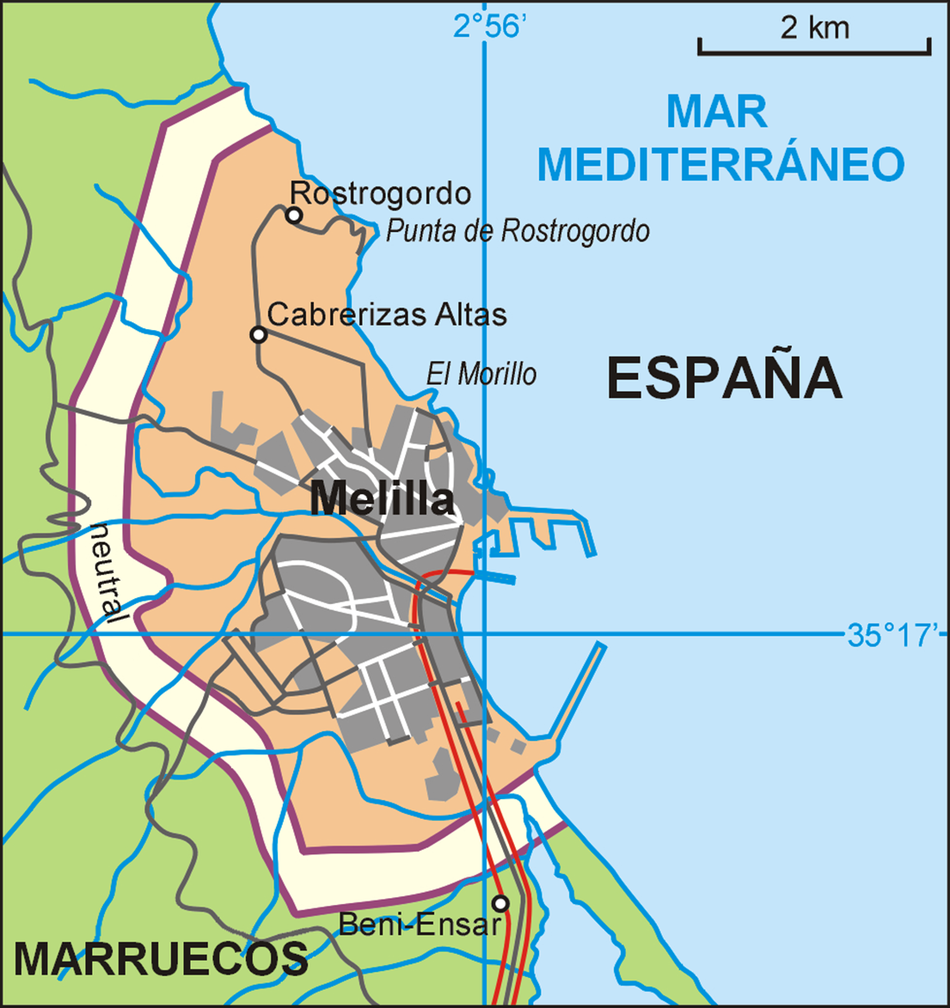
Morocco and Spain have shared territorial borders since the incorporation of Melilla and Ceuta into Spain in 1497 and 1640, respectively (figures 1 and 2). In Ceuta, the border is 8 kilometers long. Two fences separate both countries. On the Moroccan side, the fence is 2 meters high; on the Spanish side, it is 10 meters high. In Melilla, the border is 12 kilometers long. Two fences separate both countries: one on the Moroccan side and another on the Spanish side, each measuring 6 meters high.
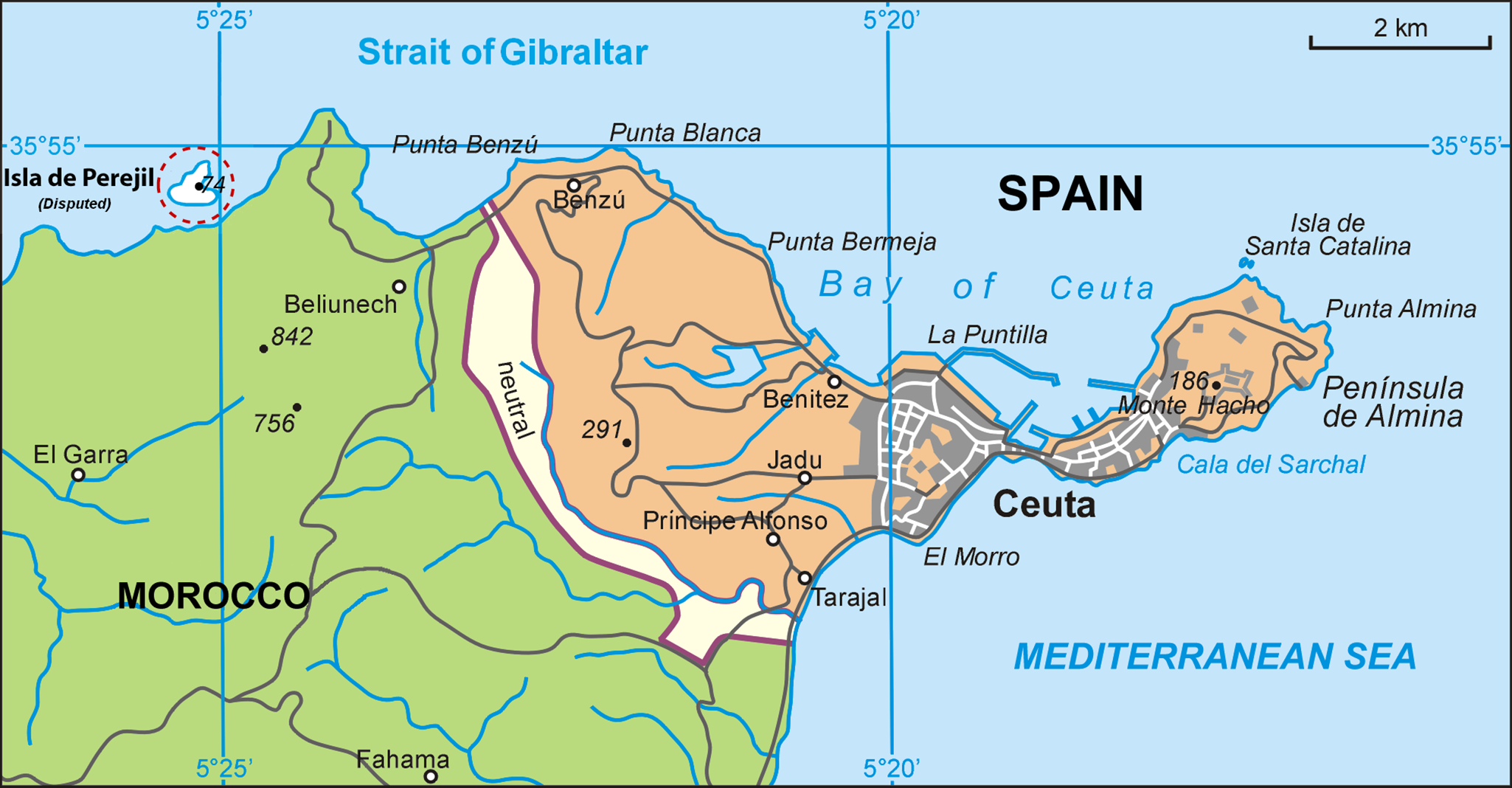
Figure 1 Territorial Border Between Morocco and Spain in Ceuta
Source: Barry’s Borderpoints, 2025.

Figure 2 Territorial Border Between Morocco and Spain in Melilla
Source: Barry’s Borderpoints, 2025.
Regarding the maritime border, the distance between both countries at the Strait of Gibraltar is only 8 miles. Since 1990, Ceuta, Melilla, the Canary Islands, and the Strait of Gibraltar have been key points for migration flows. The volume and geography of migration flows changes over time due to border surveillance and historical factors.
The recent history of migration from Morocco to Europe has different phases. The first was in the 1960s and the 1970s, when migration flows grew significantly. During the 1960s, Morocco experienced a deep economic crisis with high unemployment, inflation, and external debt. At that time, Europe had a massive need for workforce. The combination of both factors explained the growth of Moroccan migration flows to Europe. Initially, Moroccan citizens headed to France to seek job opportunities and later to Belgium and the Netherlands. This massive export of workforce was channeled through bilateral agreements between Morocco and European countries (Pennell Reference Pennell2003). Thus, the Moroccan diaspora in Europe was formed.
Migration flows from Morocco to Spain took a turn in the 1990s. The political and economic context changed because European countries did not need massive foreign labor and began to restrict migration. The 1985 Schengen Agreement—which abolished internal border controls between 29 European countries and created a border-free zone for travel, work, and study—had a profound impact on migration flows and the situation at the Spanish–Moroccan border. Before the Schengen Agreement, circular migration was common and visa-free. However, after the Schengen Agreement, migrants did not know when they returned to Morocco whether they would be able to work in Europe again due to the visa regime. Therefore, many who were seeking work decided to overstay in Europe and thus irregular migration began.
Before the Schengen Agreement, circular migration was common and visa-free. However, after the Schengen Agreement, migrants did not know when they returned to Morocco whether they would be able to work in Europe again due to the visa regime. Therefore, many who were seeking work decided to overstay in Europe and thus irregular migration began.
The volume of migration flows from Morocco to Spain has fluctuated annually since records began. Between 2001 and 2011, the annual average of irregular migrants’ arrivals in Spain by sea was 15,339. The peak during this period was recorded in 2006, with 39,000 arrivals (Ministerio del Interior 2025). In the period 2012–2024, the annual average was 27,444 arrivals. This represents significant growth (almost double), with notable peaks in 2018 (57,498 arrivals) and 2024 (61,323 arrivals). The data are not disaggregated by origin, but the majority came from Morocco (i.e., Moroccans or other nationalities).
The migration framework in Europe became a security framework, with migration policies aimed at stopping migration in origin countries and deporting irregular migrants to their home country (Huysmans Reference Huysmans2006). To meet these goals, European governments focused on cooperation about migration with countries of origin and transit. This was the so-called externalization of migration control, which references the process by which the states transfer their migration policies (especially border control) beyond their own territorial limits (Boswell Reference Boswell2003; Lavenex Reference Lavenex2006). One consequence was the deterritorialization of borders because they are transferred to extraterritorial spaces through the delegation or externalization of migration control to third countries (Naranjo Giraldo Reference Giraldo and Elena2014).
Morocco is an important example of the European Union (EU) externalization policies. The external dimension of the EU migration policy is managed as a transaction, which is based on financial support for Morocco as compensation for border control (Delkáder-Palacios Reference Delkáder-Palacios2024). However, Morocco refuses to be a mere recipient of European migration and security policies, particularly assuming the role of police officer for Europe. Morocco instead seeks a balance between two profiles: an obedient partner with Europe and a regional hegemon in Africa. The agency of Morocco as a Global South state is noteworthy, specifically in the field of migration. This includes significant diplomatic moves, such as hosting the Intergovernmental Conference to Adopt the Global Compact for Safe, Orderly, and Regular Migration in 2018; being designated as the “African Champion of Migration” by the African Union; and hosting the headquarters of the African Migration observatory (Delkáder-Palacios Reference Delkáder-Palacios2023). Finally, in Rosière’s (Reference Rosière2012) “World Map of Closed Borders,” Morocco is the only territory that has all types of problematic borders, including front lines and closed straits (figure 3).

Figure 3 World Map of Closed Borders Cartography
Source: Stéphane Rosière, Reference Rosière2012. www.antiatlas.net/stephane-rosiere-world-map-of-closed-borders-en.
Although the border situation of Morocco is unique, it is somewhat similar to the US–Mexican border, given that the two Southern countries are passage points for wider flows of migrants from Africa or Central and South America. Yet, the language of hostility in the case of the US–Mexican border has been particularly stronger from the US side (Alden and Trautman Reference Alden and Trautman2025, 38), which is in contrast with the Spanish–Moroccan border.
MOROCCO: STATE INSTRUMENTALIZATION AND LEVERAGE FROM THE GLOBAL SOUTH
Border policies are a distinctive instrument for advancing security objectives. First, because borders are shared, there is an inherent interdependence among multiple stakeholders. Second, in this case study, the EU and its Member States have externalized their border control—that is, they delegated strict enforcement to a third country. This move has sparked widespread public debate about migration across Europe and rendered border management highly controversial. Consequently, Europe’s image has suffered, giving Morocco an opportunity to leverage the controversy to its advantage.
To understand Morocco’s instrumentalization of the border crisis against Spain, it is important to remember the country’s two key interests: (1) gaining legitimacy regarding its territorial claim over the Western Sahara; and (2) signaling that it is a strong regional actor, such as the controversial tactical move to normalize relations with Israel. To analyze this instrumentalization, we focus on three questions: How did the Moroccan state render the border crisis an insecurity? How did it act on it? What does this reveal about North–South power dynamics?
To understand Morocco’s instrumentalization of the border crisis against Spain, it is important to remember the country’s two key interests: (1) gaining legitimacy regarding its territorial claim over the Western Sahara; and (2) signaling that it is a strong regional actor, such as the controversial tactical move to normalize relations with Israel.
Framing Insecurity: The Economy and Dignity
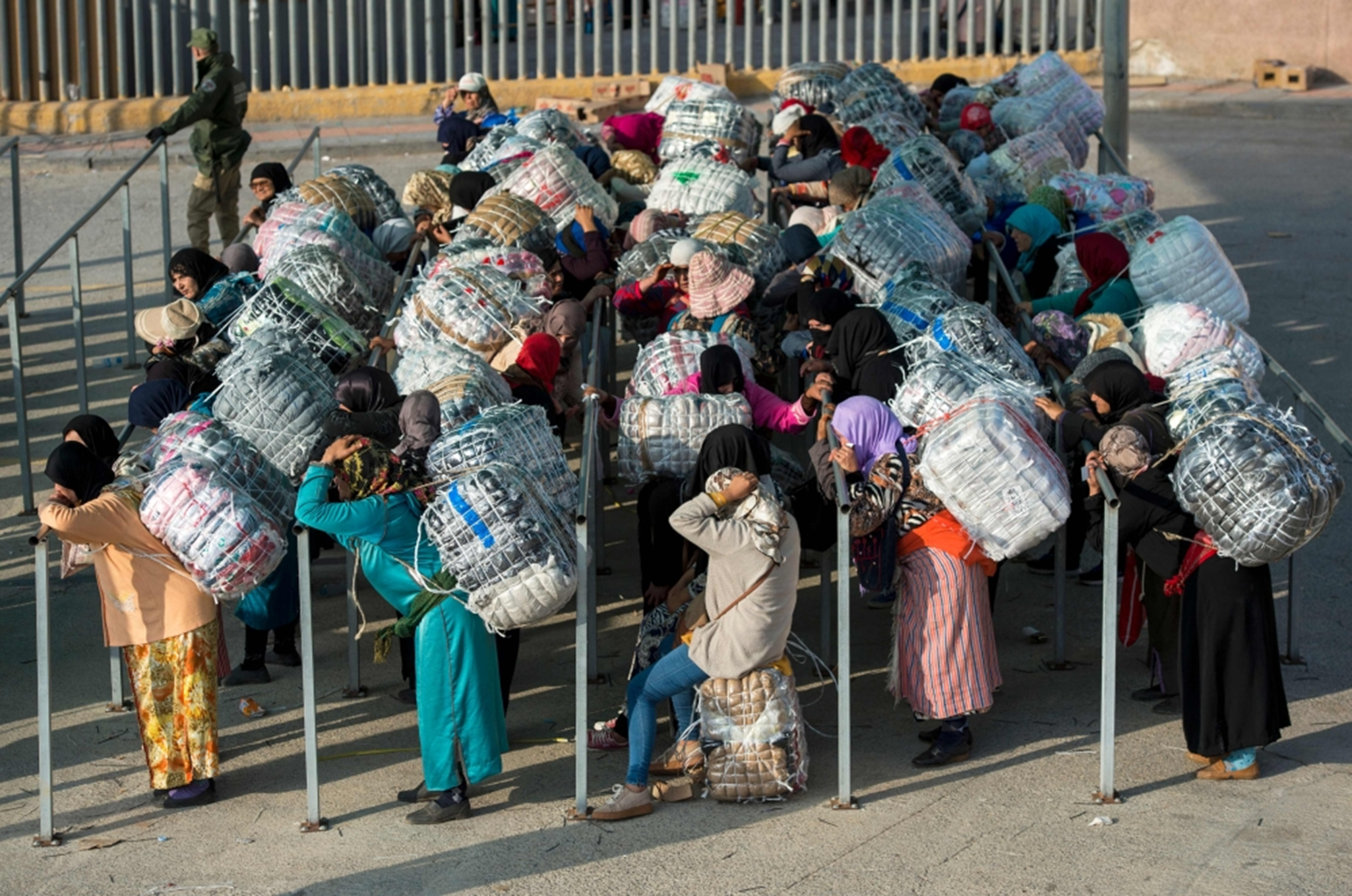
The Spanish enclaves in Morocco are a logistical challenge for their inhabitants because they are separated from the mainland. As such, the two enclaves of Ceuta and Melilla have tax advantages as an incentive for the inhabitants and visitors.Footnote 1 Moroccans in the vicinity of the enclaves, and even beyond, for decades have become avid consumers of smuggled goods from the enclaves, which are perceived to be of higher quality than Moroccan goods and cheaper. As such, the Spanish enclaves became a competitive threat to Moroccan goods. In addition, the smuggling of goods also created an opportunity for smuggling networks, notoriously relying on “mule” women (figure 4), who carry large bags on their back, walk across the border daily, and are paid meager wages for strenuous work.

Figure 4 Female Moroccan Porters Wait to Pass Through Customs at the El-Tarajal Border, Ceuta to Morocco
Source: Agence France-Press 2017.
The two elements of economic threat and the dehumanizing of poor Moroccan women were the tenets for the framing of the enclaves as sources of insecurity for Morocco. In my experience as a Moroccan national who, for decades, crossed the Ceuta border, the Moroccan state’s framing of such insecurity has been detached from reality because the wait and the complications of the crossing often came from the Moroccan rather than the Spanish side. The following section presents a series of events around the time of the border crisis to highlight key actions taken in the Moroccan state instrumentalization of the border crisis with Spain.
Phasing of the Border Crisis
The sophistication of borders can be traced back to the mid-1990s, with the advent of the Schengen Agreement, biometric passports, and other smart border measures. This sophistication of borders aimed to better monitor mobility without disrupting trade and travel (Alden and Trautman Reference Alden and Trautman2025). This new era has been particularly marked by increasing the control of the borders between Spain and Morocco ever since Spain joined the European Communities—the organization that preceded the EU—in 1986. The aftermath of the 9/11 terrorist attack was another watershed moment in terms of enhancing border control, particularly the screening of people who are coming from the MENA. During COVID-19, the states demonstrated their ability to quickly seal their borders and freeze the entire ecosystems of the borderlands (El Bernoussi et al. Reference El Bernoussi, Garriga-López, Martiniello and Saade2025). In my own experience as a Moroccan national crossing the border to Spain and applying for a visa, I witnessed the visa-validity dwindle from several years to only a few days.
The border crisis between Morocco and Spain reached its apex during the COVID-19 pandemic, but there also were important surrounding events. This study focuses on three stages: 2018, 2020, and 2021.
On August 1, 2018, Moroccan authorities made the unilateral decision to close the crossing point to Melilla in a voluntary move to debilitate the economy of the enclave (El Faraa Reference El Faraa2021). The permanent action was preceded by a test the day before, to the complete surprise of Spanish authorities. Truck drivers were delayed for weeks because of the ordeal.Footnote 2 The Moroccan customs office provided a flyer in only Arabic and French to announce that customs crossing would be permitted only at maritime ports (i.e., no land crossings) and from the Moroccan ports of Nador and Beni Ensar to help with the development of the region (figure 5).Footnote 3 Many speculated that it was a method of economic asphyxiation of the enclave, which greatly depended on Moroccan trade. This put political pressure on Spain—and particularly the new government of Pedro Sánchez—to assist with the surge of irregular migration.Footnote 4

Figure 5 Moroccan Customs’ Notice on Decision to Allow Imports Only from Beni Ensar Starting in Late July 2018
Source: www.kafapress.ma/index.php?ida=72947.
On March 13, 2020, Morocco closed the air and maritime borders with Spain and the land border with Ceuta. All land, sea, and air connections between the two countries were suspended. Officially, the stated goal was to prevent the spread of the coronavirus. Unofficially, this only intensified the 2018 border crisis. The closure of maritime borders in 2020 implied the cancellation of all ships coming from Spanish ports bound for Morocco, which particularly affected Tarifa and Algeciras. The closure was extended over time and caused the cancellation of the 2020 and 2021 Operation Crossing the Strait between Spain and Morocco. More than 3 million Moroccans in Europe who intended to return to Morocco (i.e., both European and Moroccan residents) were affected. Despite the previous discussion, paradoxically, Morocco allowed the arrival of ships from Sète (France) and Genoa (Italy)—countries that at times had a worse epidemiological situation than Spain (Peregil Reference Peregil2021). Maritime connections between Spain and Morocco were restored in April 2022 and Operation Crossing the Strait was carried out in the summer of 2022.
In 2021, during the COVID-19 pandemic stage of the border crisis, Brahim Ghali, leader of the Polisario Front, was welcomed by Spain to receive urgent medical attention. This was despite Morocco’s protest and request to extradite the leader who had been charged with a series of crimes. Even before Spain’s Foreign Minister Arancha Gonzalez Laya officially announced the arrival of Ghali in Spain for medical treatment, the Moroccan counterpart ministry had already issued a warning (figure 6). The statement posed the following questions:
-
“Why was the man named Brahim Ghali admitted to Spain secretly and with a forged passport?”
-
“Why did Spain find it useful not to notify Morocco?”
-
“Why did it choose to admit him under a false identity?”
-
“Why the Spanish justice has not yet reacted to the many complaints lodged by the victims?”
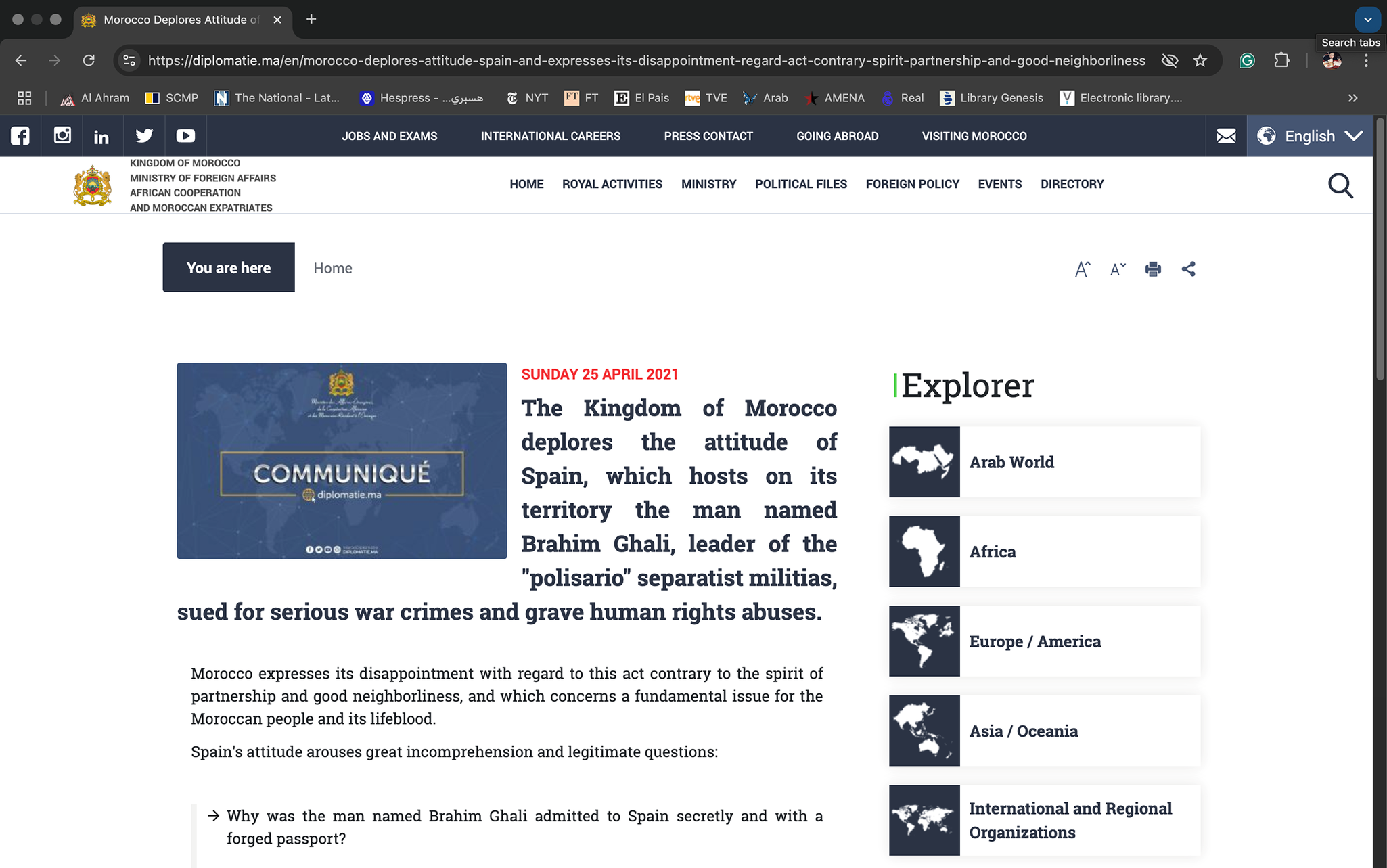
Figure 6 Moroccan Foreign Affairs Ministerial Statement on April 21, 2021, Two Days Before Spanish Announcement
The self-perception of Morocco regarding its power changed with US President Trump’s recognition of Moroccan sovereignty over the Western Sahara, also in 2021, in exchange for normalization with Israel. Morocco immediately intensified the pressure on Spain and other EU Member States (e.g., Italy and Germany) to obtain explicit recognition of its sovereignty over the Western Sahara. There is an expectation that such pressure can resume with Trump’s second administration and expand to the enclaves.Footnote 5
Morocco’s barely hidden promise of retaliating against Spain for supporting the Polisario leader was honored soon after. Only a few weeks later, in May 2021, more than 10,000 migrants entered Ceuta from Morocco; approximately 7,000 were deported back to Morocco, including minors (Europa Press 2021). However, the Spanish justice system stopped the expulsion of minors because it was against the Spanish Immigration Law (De Vega Reference De Vega2021). Sources estimated that there were approximately 2,000 minors and that it may have been a deliberate move. Many of the minors spent weeks in Ceuta, sleeping on the streets in the cold, and they were subjected to illegal pushback practices by Spanish authorities (Vargas Martín Reference Jairo2021). In response, the European Parliament condemned the instrumental use of children as a political weapon by Morocco (European Parliament 2021). This provoked a response from the Arab Parliament, which rejected the resolution and called it arrogant and interfering. The Arab Parliament also emphasized that Ceuta, Melilla, and the Canary Islands are colonial territories (Radio Televisión Española Reference Española2021). Given its emphasis on upending the security paradigm (Martini Reference Martini2020), the BSCSS helps to understand the unusual Moroccan strategy to extract itself from the framework of a third-country partner in the fight of African irregular migration to Europe. In the cases of Melilla and Ceuta, the insecurity created by the borders becomes a burden not only for Europe but also for Morocco, its economy, and the rights of its people. The EU attempted to co-opt third countries (e.g., Turkey and Morocco) into its migration and border management priorities, using funding and specific mobility channels as incentives. However, the capacity of these countries to respect migrants’ rights remains limited, which challenges the obligations of EU Member States under European and international law (Carrera et al. Reference Carrera, Cassarino, Qadim, Lahlou and den Hertog2016).
The territorial borders between Morocco and Spain in Ceuta/El Tarjal and Melilla/Beni Ensar remained closed until May 2022, despite excellent data on the benefits of vaccination against the coronavirus in both countries. The reopening in 2022 was only for travelers or frontier workers and did not include trade activities (González Reference González2022) until January 15, 2025. However, this reopening of Melilla customs is limited to only one nonarticulated truck daily in each direction, operating between 10 a.m. and 4 p.m., excluding holidays in either country.Footnote 6
Complicating North–South Relations
The recent border crisis between Morocco and Spain reveals a complex reading of North–South relations. This discussion sets the context of these relations in a postcolonial frame and within the COVID-19 pandemic to explain Morocco’s strategy vis-à-vis Spain.
Contemporary North–South relations had been shaped by colonial legacies of hierarchy, despite the attempt to institutionalize equality among supposedly sovereign states (Grovogui Reference Grovogui1996). However, the fast pace of neoliberal integration has complicated such hierarchies by distributing pockets of elite power around the world, with effective control over policy making and material progress (Harvey Reference Harvey2007). Most important, the mechanisms of global integration among states (including cooperation on migration and border management) have given leverage to the foreign-policy actions of countries of the Global South to pressure countries of the Global North (Grove Reference Grove2024). Morocco’s relations with Spain are an example because Morocco has reversed the pressure dynamic on its stronger partner in EU external migration policy to advance Morocco’s national immigration framework (Tittel-Mosser Reference Tittel-Mosser2018). Morocco’s daring move against Spain is noteworthy. The unilateral decision to close the border in 2018 was particularly hostile. The extreme move to close all borders with Spain in 2020 for a lengthy duration was targeted. For example, on March 18, five days after the Moroccan action on the Spanish border, Turkey also closed its border with the EU,Footnote 7 but only for 20 days.
Despite the ability of Morocco to pressure its European partners, the North African state continues to cast itself as an underdog, particularly decrying the double standards in restricting mobility South of the Mediterranean as an afront to the dignity of Moroccans (El Qadim Reference El Qadim2018). This strategy is a reaction to a broader context of the stigmatization of migration as a source of chaos and turmoil for host countries, which dehumanizes migrants (Diab Reference Diab2021). As a counterattack, Morocco has been condemning and shaming European partners for championing a human rights discourse while applying rigidity toward Moroccan migrants and constraining mobility from the South, including rejecting visas (El Qadim Reference El Qadim2018).
When the worldwide COVID-19 pandemic began in 2020, the extent of global integration was put to the test. In many cases, borders were quickly sealed but trade experienced little interruption (Alden and Trautman Reference Alden and Trautman2025). Those exceptional measures faced social resistance. The pandemic revealed the complexity of finding a balance between public health and civil liberties. COVID-19 was used as an excuse by some governments to limit rights and freedoms—notably, the freedom of movement—which advanced social control (Alden and Trautman Reference Alden and Trautman2025). During the pandemic, Morocco’s distinctive rigidity vis-à-vis crossing from Spain to its territory intensified the already growing tension from the 2018 border incidents. Moroccan nationals in Spain were not allowed to return home for several months, even after the easing of the lockdown in other European countries. Moreover, it was only in early 2025—five years since the pandemic—that the neighboring countries began to slowly allow commercial flows across the borders.
The Moroccan state has been instrumentalizing the border crisis in two ways. First, by harming the fragile economies of the enclaves and limiting their competitive advantage over its own economy, for its national economic interests. Second, by blaming Spain for the security problems in the borderlands from management of irregular migration to the spread of informal economies. The goal for Morocco is victory over its geostrategic rival, Spain, because it stands in the way of its territorial and identity objectives.Footnote 8 Because direct confrontation with Spain would entail high risks for Morocco, given the superior military powerFootnote 9 of Spain, Morocco apparently is opting for a “grey zone strategy” based on an anticolonial discourse, weaponization of the Moroccan population in the borderlands, economic warfare, and modernization of its armed forces (Baqués-Quesada Reference Baqués-Quesada2022). These tactics seem to be effective because in 2022, Spanish Prime Minister Pedro Sánchez officially supported the Moroccan plan for the autonomy of the Sahara region in an unprecedented move, conceding to Morocco’s territorial claim.
The externalization of the Spanish border in the enclaves created precarious living conditions for Moroccan residents—and even citizens of Moroccan origin because they have limited access to social services (Sahraoui Reference Sahraoui2024). This fuels their antagonism toward Spain and advances the claim of Morocco to become a better alternative. Morocco’s hostile stances against Spain are a strategy of “muscle flexing” to signal that it is a strong regional actor. Morocco’s territorial ambitions have gone beyond the Sahara region and the enclaves to include the so-called Greater Morocco (figure 7).Footnote 10

Figure 7 Facebook Post on the Page “Le Maroc Moderne” on June 13, 2021, with the Title “Greater Morocco”
The map is signed by the Moorish Movement, a far-right movement in Morocco.
This signaling of expansionism and political strength also coincided with the controversial tactical move by Morocco to normalize relations with Israel in 2020, despite the unpopularity of the decision among its citizens. Even with the increasing global condemnation of Israel’s violence against Palestinians since October 7, 2023, the Moroccan state has increased partnerships with Israel, particularly in economic and military development.
CONCLUSION
The BSCSS provides a needed challenging of mainstream approaches to security and international relations, which are based on Western concerns, interests, and political priorities. Experiences of security matters and international affairs in the MENA showcase that the BSCSS is not only a theoretical exercise but also a reflection of the studied concepts on the ground. The recent Moroccan–Spanish border crisis deepened since 2018; however, it must be situated in a longer history of border management and migration policies between the two countries, including their colonial histories.
Many aspects of the Moroccan–Spanish border crisis have been studied: the livelihoods of people in the borderlands (Sahraoui Reference Sahraoui2024), the COVID-19 pandemic (El Faraa Reference El Faraa2021), regional rivalries (Baqués-Quesada Reference Baqués-Quesada2022), international cooperation (Carrera et al. Reference Carrera, Cassarino, Qadim, Lahlou and den Hertog2016), security concerns (Delkáder-Palacios Reference Delkáder-Palacios2023), international mobility (El Qadim Reference El Qadim2018), and externalization of borders (Naranjo Giraldo Reference Giraldo and Elena2014; Tittel-Mosser Reference Tittel-Mosser2018). This study contributes to the discussion with the BSCSS as a reading of a paradigm shift in security studies and North–South relations.
This case study of the 2018 border crisis demonstrates that Morocco managed to frame the enclaves of Ceuta and Melilla as a threat to its economy and people and also instrumentalized the crisis to obtain an unprecedented recognition of its territorial claim on the Western Sahara from its European neighbor. This study challenges the view that borders exclusively disadvantage Southern countries. We argue that borders can be wielded as an instrument of leverage for the Global South. Future research could extend this argument and support the BSCSS project of decentering dominant security paradigms by investigating other North–South border contexts; Turkey–EU is a prime example. Comparative studies not only would test our claim about the strategic potential of borders but also would enrich the empirical and theoretical foundations of the BSCSS, thereby advancing its commitment to regionally grounded, critical security scholarship (Habash Reference Habash2025).
The Moroccan instrumentalization of the border crisis with Spain is another example that documents the agency of the Global South. These examples are important to inform policy makers from both sides of the border to consider the needs of foreign partners.
ACKNOWLEDGMENT
The authors thank Lina Benabdallah for significantly improving this article.
CONFLICTS OF INTEREST
The authors declare that there are no ethical issues or conflicts of interest in this research.