


Introduction
While many Canadians vote with their hearts and cast their ballot for the party they prefer most, a reasonable share of people in every election deviates by casting an insincere vote. A common explanation in the literature for this behaviour is that insincere voting is a form of strategic voting in which voters abandon their most preferred party if it stands little chance of winning the constituency seat (see, for example, Blais, Reference Blais2002; Merolla and Stephenson, Reference Merolla and Stephenson2007). Few studies, however, focus on the expressive “face” (Franklin et al., Reference Franklin, Niemi and Whitten1994) of an insincere vote: the protest vote. The general premise of such a vote is that voters utilize their ballot to send their party a signal of perceived shortcomings by temporarily withdrawing their support and voting for another party (Kselman and Niou, Reference Kselman and Niou2011). The existing literature on protest voting in Canada focuses on the connection between different forms of dissatisfaction and a third-party vote (Bélanger, Reference Bélanger2004; Bowler and Lanoue, Reference Bowler and Lanoue1992), particularly in western Canada (Bickerton, Reference Bickerton, Gagnon and Tanguay2016). In some studies, only a vote for third parties is even considered a protest vote (McGregor, Reference McGregor2012). The party approach to protest voting, however, can result in theoretical circularity (Van der Brug et al., Reference Van der Brug, Fennema and Tillie2000) or extensive overlap with other voting models—for example, valence voting (Alvarez et al., Reference Alvarez, Kiewiet and Núñez2018). More importantly, because the spotlight in these studies is on whom disenchanted voters choose, we know less about the first step of protest voting—namely, why and when voters decide to act on their discontent and cast an insincere vote (Birch and Dennison, Reference Birch and Dennison2019; Weber, Reference Weber2011). The goal of this article is to revisit protest voting in Canada and adopt a voter's perspective as a way to look at this first step. Understanding how and when protest voting occurs addresses timely questions, as both Canadian political pundits and experts regularly note that fake news (Bryden, Reference Bryden2019) and populism (Graves and Valpy, Reference Graves and Valpy2018) are playing a greater role in contemporary Canadian politics, leading to an unstable political climate that may lead angry citizens to cast protest votes.
The article's intended contribution is threefold. The first contribution involves empirical insights into the underlying foundation of a protest vote and the interaction between its two dimensions: the protest motive and the insincere vote. The central argument is that voters who perceive their most preferred party as lacking quality in a given area are more likely to vote insincerely to signal their dissatisfaction (Hirschman, Reference Hirschman1970; Weber, Reference Weber2011). In addition to explaining protest voting, these insights help explain why some Canadians vote insincerely. The second contribution is an empirical test of potential moderating effects of strategic considerations on protest voting. A string of recent studies suggest two ways in which these effects may play out—namely, that voters are more likely to cast a protest vote if they are certain their party has secured the win or if they expect an election to be noncompetitive (Kselman and Niou, Reference Kselman and Niou2011: 408; Myatt, Reference Myatt2017: 1541). The third contribution is an extensive discussion of the challenges involved in conceptualizing “protest voting” using an operationalization that differs from that used in the majority of the existing literature. The choices made in this article may therefore also inform future debates and research on protest voting.
Using data from the Making Electoral Democracy Work (MEDW) project (Cross et al., Reference Cross, Gélineau, Gidengil, Pruysers, Lawlor, Blais and Stephenson2017), I find evidence for the general mechanism of protest voting in the 2015 federal elections. Voters who perceive their most preferred party to lack quality were more likely to defect and vote insincerely—that is, to cast a protest vote. The findings, however, do not suggest that the decision to cast a protest vote is conditioned by strategic considerations. Neither the perceived chances of winning the constituency seat nor the expected electoral competition consistently conditions the marginal effect of quality on insincere voting behaviour in the theoretically expected ways.
In the following section, I clarify the concept of protest voting. The subsequent sections develop a series of hypotheses, describe the research strategy for and the results from my empirical analyses, and offer a concluding discussion and summary.
Defining a Protest Vote
In this article, I define a protest vote as an insincere vote (behaviour) intended to signal discontent (motive) to a voter's most preferred party (Heath et al., Reference Heath, Jowell and Curtice1985: 113; Kang, Reference Kang2004; Kselman and Niou, Reference Kselman and Niou2011; Meirowitz and Tucker, Reference Meirowitz and Tucker2007; Weber, Reference Weber2011). There are thus two dimensions to protest voting: behaviour and motive. Each dimension allows the concept to be distinguished from similar concepts. The insincere vote is crucial because it distinguishes protest voting from other models of voting, such as proximity voting (Downs, Reference Downs1957) or valence voting (retrospective voting) (Healy and Malhotra, Reference Healy and Malhotra2013). According to the latter, for instance, voters evaluate parties and politicians based on their performance. Depending on the outcome, voters either vote for or against the party they evaluate (Fiorina, Reference Fiorina1981; Key, Reference Key1966). While protest voters and valence voters are similar, protest voters who cast a ballot abandon their most preferred choice temporarily—as Weber (Reference Weber2011: 908) puts it, they register their “voice-by-choice.” Thus, classical valence voters are sincere in that they switch to punish poor performance (see, for example, Stiers, Reference Stiers2018). Protest voters, on the other hand, vote against their most preferred party or group of parties in order to achieve changes beyond the current election (Kang, Reference Kang2004: 81). As Alvarez et al. (Reference Alvarez, Kiewiet and Núñez2018: 141) point out in their comprehensive review of the protest voting literature, scholars too often equate protest voting with conventional retrospective voting. The emphasis on insincerity helps to distinguish the different models.
As a protest vote is insincere, some scholars describe it as a form of strategic or tactical voting (Alvarez et al., Reference Alvarez, Kiewiet and Núñez2018: 142; Franklin et al., Reference Franklin, Niemi and Whitten1994; Meirowitz and Tucker, Reference Meirowitz and Tucker2007: 88). Protest voting and strategic voting (as more commonly defined), however, should and can be distinguished both conceptually and empirically based on their underlying motives. Strategic voters seek to influence the election outcome in pivotal situations (Blais et al., Reference Blais, Young and Turcotte2005; Fisher, Reference Fisher2004; Herrmann et al., Reference Herrmann, Munzert and Selb2016). In the words of Blais et al., “a strategic vote is a vote for a party (candidate) that is not the preferred one, motivated by the intention to affect the outcome of the election” (Reference Blais, Nadeau, Gidengil and Nevitte2001: 344, italics in original). In the Canadian context, strategic voting can occur, for instance, when voters perceive their preferred party's constituency candidate as having little or no chance of winning the seat. Rather than wasting their vote (Cox, Reference Cox1997: 70), voters abandon their preferred party and vote insincerely to maximize their influence on the election outcome (Blais et al., Reference Blais, Loewen, Rubenson, Stephenson, Gidengil, Aldrich, Blais and Stephenson2018: 89). Thus while an insincere vote is observed in both strategic and protest voting, there are two key differences. First, strategic voters care about the outcome of the pending election when making their decisions. In contrast, protest voters, at the time of their decision making, seek to achieve some long-term goal beyond the current election (McMurray, Reference McMurray2017; Meirowitz and Shotts, Reference Meirowitz and Shotts2009; Meirowitz and Tucker, Reference Meirowitz and Tucker2007; Myatt, Reference Myatt2017). Second, and even more important, the underlying motives to vote insincerely differ between the two types: whereas strategic voters are motivated by wanting to influence an election outcome, protest voters are motivated by wanting to signal discontent stemming from perceived failures of their most preferred party.
The final point in this section concerns the frequent linkage made between protest voting and specific types of parties. Protest voting is often limited to, or primarily associated with, a vote for populist parties (Ivarsflaten, Reference Ivarsflaten2008; Schumacher and Rooduijn, Reference Schumacher and Rooduijn2013) or third and minor parties (Denemark and Bowler, Reference Denemark and Bowler2002; McGregor, Reference McGregor2012). While these types of parties may well be the primary beneficiaries of protest voting in some contexts, equating the vote for a protest party (or any specific type of party) with protest voting can lead to theoretical circularity (Van der Brug et al., Reference Van der Brug, Fennema and Tillie2000: 82): voters are “protest voters” because they vote for a “protest party.” To circumvent this problem, the definition used here rests on Birch and Dennison's recommendation to consider protest voting “in terms of the vote, not the party” (Reference Birch and Dennison2019: 111). Consequently, citizens may engage in protest voting irrespective of the party they support, and protest voting becomes a two-step process. First, voters decide to cast a protest vote; second, they chose whom to cast their vote for. By not equating a protest vote with a vote for a third party, we are able to ask, for instance, under what conditions third parties can attract protest votes (Bowler and Lanoue, Reference Bowler and Lanoue1992; Burden, Reference Burden2005).
In summary, protest voting is defined by two components: the signalling of discontent (the motive) and an insincere vote (the behaviour). Rather than focusing on the question of for whom protest voters vote, as has been done in previous studies (see, for example, Bélanger, Reference Bélanger2004; Bowler and Lanoue Reference Bowler and Lanoue1992), this article addresses the underlying foundations of protest voting in Canada to illuminate why and when voters opt to cast a protest vote. In the subsequent section, I map out the “micro-logic” (Weber, Reference Weber2011) of the protest vote in order to unravel the relationship between the two dimensions, discontent and insincere voting. I theorize why a perceived lack of quality should lead to insincere voting in the first place and how the relationship between the two is affected by strategic considerations related to electoral competition at the district level.
Protest Voting—Basic Mechanism and Expected Election Result
The underlying micro-logic (Weber, Reference Weber2011) of protest voting is based on Hirschman's (Reference Hirschman1970) trailblazing work, Exit, Voice, and Loyalty. One of the book's central ideas is that a perceived decline in the quality of a good leads to dissatisfied customers (here, eligible voters) who can choose to make their voices heard. The term quality describes the criterion that customers use to evaluate their suppliers. Drawing on this idea, Weber (Reference Weber2011) and Kang (Reference Kang2004) show that the term can also be used to describe the diverse set of criteria that citizens use to evaluate political parties. For instance, quality may refer to party leadership (see, for example, Polk and Kölln, Reference Polk and Kölln2018), policy congruence (Myatt, Reference Myatt2017) or the ability of parties to handle voters’ most important issues (Weber, Reference Weber2011). But while there are multiple manifestations of quality in politics, the mechanism is identical across all of them (Weber, Reference Weber2011: 910): supporters of parties who perceive that their most preferred party fails to live up to the supporters’ standards become more likely to cast an insincere vote to signal their dissatisfaction—that is, they cast a protest vote.Footnote 1 Put differently, citizens utilize their vote to communicate their evaluations to political parties (Piketty, Reference Piketty2000).Footnote 2 In their study of party members in Sweden and Great Britain, Polk and Kölln (Reference Polk and Kölln2018), for instance, find that ideological distance between party members and their parties predicts defection in national elections. Weber (Reference Weber2011) unravels similar patterns in his study on the 1999 and 2004 European parliamentary elections. He shows, for instance, that voters are willing to temporarily withdraw their support for their most preferred party if they perceive a large enough ideological gap between themselves and their party. The key assumptions behind this mechanism are that voters attempt to maximize their utility, believe their vote matters, believe they can freely choose between different options and are aware of existing options.
H1:
The lower the perceived quality offered by a voter's most preferred party, the more likely the voter is to cast an insincere vote.
Even though there is a view that protest voters are not voting to elect a winner (Carter and Guerette, Reference Carter and Guerette1992), some argue that protest considerations are moderated by strategic considerations related to the election outcome. Cox, for example, proposes that voters have an opportunity to send a signal to major parties but only if “the constituency result is a foregone conclusion” (Cox, Reference Cox1997: 83). This proposition has been adopted in a number of theoretical studies (Kselman and Niou, Reference Kselman and Niou2011; Myatt, Reference Myatt2017; Razin, Reference Razin2003), and Alvarez et al. write: “Instead of abandoning a party with no chance of winning, however, protest voters vote for another party to signal dissatisfaction with their most preferred party, which they are confident is going to win” (Reference Alvarez, Kiewiet and Núñez2018: 142). The rationale is that voters still want the party that represents them the best to win, in order to maximize their utility. Once voters perceive that this goal is being achieved, they may consider defecting to correct for a lack of quality, as it further increases their utility if a political party eventually reacts to their protest. There are reasons, however, to question this rationale. Strategic voting hinges on pivotal situations where a single vote makes a difference (Herrmann et al., Reference Herrmann, Munzert and Selb2016: 586). But even though voters tend to overestimate their influence on the election outcome at times (Duffy and Tavits, Reference Duffy and Tavits2008), pivotal situations are not the norm (see, for example, Fraga and Hersh, Reference Fraga and Hersh2018: 303). One possible consequence of the lack of true pivotal situations is “that pivot events are not of first-order importance when rational voters take into account the future effects of their votes” (Meirowitz and Shotts, Reference Meirowitz and Shotts2009: 747). Hence, even in situations where voters encounter the possibility of casting a strategic vote, they may be less willing to do so and instead give more importance to other motives. To test these competing views empirically, I derive two hypotheses about how strategic considerations can influence the proposed relationship between protest considerations and insincere voting. Because winning in the context of Canadian elections is generally tied to the constituency results, the focus of this article is on strategic considerations related to the constituency level. The first of these hypotheses follows directly from the discussion above of how protest considerations cause insincere voting only if a voter is certain their most preferred party has secured the win:
H2:
The more certain voters are that their most preferred party will win the constituency seat, the greater the effect of party quality on insincere voting.
The second hypothesis extends the argument to voters who may not perceive their party as winning but still consider the election result settled (Kselman and Niou, Reference Kselman and Niou2011: 407). For instance, a voter of the eventual runner-up party in a constituency may decide to cast a protest vote not because their party is assured of winning but because they perceive that the race is already decided in favour of another party. Whether their party is in the lead or behind, perceived noncompetitive races should increase voters’ willingness to signal any lack of quality to their most preferred party.
H3:
The less competitive that voters expect the constituency race to be, the greater the effect of party quality on insincere voting.
H2 and H3 imply that the relationship between the two dimensions of protest voting is moderated by strategic considerations. If these hypotheses hold, then protest voting is not a tool for voters to hold parties accountable. If winning trumps quality concerns at all times, parties cannot learn about voters’ concerns from election results, specifically in consistently competitive races, both objectively and subjectively.
In the following section, I describe my empirical strategy aimed at achieving two goals: first, to understand the underlying foundations of a protest vote; and second, to understand how these foundations are altered by strategic considerations.
Research Strategy
To test my hypotheses, I use data from the Making Electoral Democracy Work project (Blais, Reference Blais2010) that were collected in a two-wave online survey focused on the 2015 Canadian federal election (Cross et al., Reference Cross, Gélineau, Gidengil, Pruysers, Lawlor, Blais and Stephenson2017), which was held on October 19, 2015. The pre-election wave was fielded between October 9 and October 18, 2015, and the post-election wave between October 20 and November 6, 2015. The surveys were fielded in three Canadian provinces, British Columbia (N = 1,869), Ontario (N = 1,891) and Quebec (N = 1,849), which combined are home to approximately 75 per cent of all Canadians. Respondents were recruited panel members, selected according to quotas (age, gender, education and region), and the survey is meant to be representative of eligible voters with respect to the quota criteria. All survey questions related to parties were asked about the Conservative party, the New Democratic party, the Liberal party, the Bloc Québécois (in Quebec only), and the Green party. Hence, all subsequent discussions and analyses focus on these five parties.
Dependent variable
The dependent variable is a dummy variable with “sincere voting” as the baseline category (0 = sincere vote; 1 = insincere vote). A sincere vote is measured as a vote for the party a voter prefers the most. To determine sincere voting preferences, I use an 11-point scale on which respondents were asked to rate the main parties (like/dislike) competing in their province. I chose the like/dislike scores over party identification, which is conceived of here as a social identity (Campbell et al., Reference Campbell, Converse, Miller and Stokes1960). As Gidengil et al. (Reference Gidengil, Nevitte, Blais, Everitt and Fournier2012: chap. 4) show, party identification has not only played a meaningful role in contemporary Canadian politics but is also stable enough to justify a social identity perspective. Moreover, the measurement of preferences using like/dislike scores follows prominent examples in the protest voting and strategic voting literatures, as well as elsewhere (Blais et al., Reference Blais, Guntermann and Bodet2017; Blais et al., Reference Blais, Young and Turcotte2005; Weber, Reference Weber2011). To code voters as sincere/insincere, the following rules were applied: If the respondent rated two or more parties as their most liked parties, they were asked a follow-up question to break the tie and identify which of the parties they liked the most. Respondents were coded as sincere if they reported in the post-election survey that they voted for the party they had said they liked most in the pre-election survey; they were coded as insincere if their vote choice deviated from their sincere preference.Footnote 3
On the basis of the coding, I restrict the primary analyses to those respondents whose previous vote choice (2011 federal election) is identical to their most preferred party. This approach follows Weber's (Reference Weber2011: 913) proposition on how to distinguish protest voters from potential switchers, which is not the focus of the article. From a theoretical view, this restriction accounts for the suggested dynamic long-term perspective of those who cast a protest vote, as well as the idea that parties can rely on previous election results to adjust their positions in current elections (see, for example, Somer-Topcu, Reference Somer-Topcu2009).Footnote 4
Independent variables
I use two different measures of party quality: 1) the perceived ideological congruence between a voter and the voter's preferred party, and 2) the perceived competence of the voter's preferred party to handle voters’ most pressing issues. These measures capture two important aspects of a party for voters—namely, how well a party represents them and the party's competence to deliver (Kang, Reference Kang2004; Weber, Reference Weber2011: 908).Footnote 5 In line with the proposed theoretical mechanism, these measures capture two aspects that voters can use to evaluate parties. Ideological congruence is a measure for how well a party represents their voters’ positions overall. Hence, an increase of incongruence should increase the probability of an insincere vote. Ideological congruence is measured as the absolute distance between a voter's self-placement on an 11-point left-right scale and the placement of their most preferred party on an identical scale. Greater absolute distances indicate less congruence between a voter and the voter's party.Footnote 6 The second measure—competence to handle voters’ most important issues—combines information from two survey questions. First, respondents were asked if any party could handle the issue most important to them in the current federal election. If they answered yes, they were asked which party they considered best suited to handle the issue. The combined variable has two categories, indicating if the most preferred party is best suited to handle the issue (0) or not (1). Respondents are coded in the same way regardless of what type of issue was most important to them. The nature of the issue should only play a role in explaining which parties insincere voters choose (a question beyond this article's scope) but not if they vote insincerely in the first place.
Respondents were also asked to rate each party's chance of winning the local constituency on a scale from 0 to 10. To account for the relativity of win chances, the rating that respondents gave their most preferred party was divided by the sum of scores they gave to all parties whose chances they were asked to rate. The measure thus ranges from 0 (no chance to win at all) to 1 (will certainly win). Finally, respondents were asked how competitive they expected the election outcome in their constituency to be on a four-point scale (0 = “not close at all” to 4 = “very close”). All four variables were measured in the pre-election survey.
Covariates
All models include a dummy variable to capture whether respondents identify with the party they prefer most (dummy: yes/no).Footnote 7 As in previous work on protest voting (Weber, Reference Weber2011), this variable is intended to measure the loyalty of voters to their most preferred party. Theoretically, loyalty plays a dual role in protest voting. On the one hand, loyal voters may benefit the most from casting a protest vote if parties react to their signals accordingly; hence, they might be more likely to cast a protest vote (see, for example, Gehlbach, Reference Gehlbach2006). Evidence for this is found by Weber (Reference Weber2011) but also in the related literature on partisan defection, where studies have shown that otherwise loyal followers are willing to defect in the wake of perceived shortcomings (Beck, Reference Beck2002; Cain and Ferejohn, Reference Cain and Ferejohn1981). On the other hand, loyal followers may be those who would rather “suffer in silence” than communicate their discontent (Barry, Reference Barry1974: 97). The dummy is to adjust for either of these tendencies. In addition to party identification, I adjust for how important the election outcome in their district and nationwide is to respondents because of its potential relationship to protest voting and the outcome (Franklin et al., Reference Franklin, Niemi and Whitten1994).
Regarding political leaders and candidates, I include two variables that indicate if respondents prefer a district candidate and/or a national party leader other than the ones from their most preferred party better (dummies: yes/no). This is to account for respondents voting for a local candidate or national candidate rather than a party, for which there is empirical evidence in Canada (Bittner, Reference Bittner2018; Blais and Daoust, Reference Blais and Daoust2017).Footnote 8 Finally, I adjust for a set of demographic variables (age, gender, education) and the province of respondents in order to control for unobserved heterogeneity, specifically that resulting from the additional political dimension in Quebec. All covariates were measured in the pre-election survey. For descriptive statistics, question wording and further coding details, see section A of the Online Supplementary Material.
Methodology
To test my hypotheses, I use logistic regression models with insincere voting as the dependent variable. First, I test the main premise of protest voting: that a perceived lack of quality provided by the respondents’ most preferred party increases the likelihood of an insincere vote (H1). Second, I estimate four additional models with interaction terms between the indicators of party quality, ideological incongruence and issue competence, and the two variables related to the election outcome, expected competitiveness and expected chances of winning the constituency. These four models are used to test the theorized moderating effect of strategic considerations on the relationship between perceived quality and insincere voting.Footnote 9 The full replication material is available from the Harvard Dataverse (https://doi.org/10.7910/DVN/EZDWZH).
Results
I begin the empirical section with some basic descriptive analyses. Figure 1 displays the bivariate relationship between the two indicators of quality and the dependent variable. We see that lower levels of quality are associated with higher levels of insincere voting. For ideological congruence (Fig. 1.1), only 10 per cent of the respondents who perceived their most preferred party to be fully congruent with their position on the left-right scale cast an insincere vote.Footnote 10 An increase in incongruence is associated with more insincere voting. For party competence (Fig. 1.2), we observe a similar trend. Among those who perceive their most preferred party to be best equipped to handle the most important issue, only 10 per cent cast an insincere vote. Of those respondents who thought that either none of the parties or a party other than their most preferred were competent in that area, 26 per cent cast an insincere vote.
Vote Choice (Sincere/Insincere) by Perceived Ideological Incongruence to the Most Preferred Party (Fig. 1.1) and Incompetence of Most Preferred Party to Handle the Respondent's Most Important Issue (Fig. 1.2)
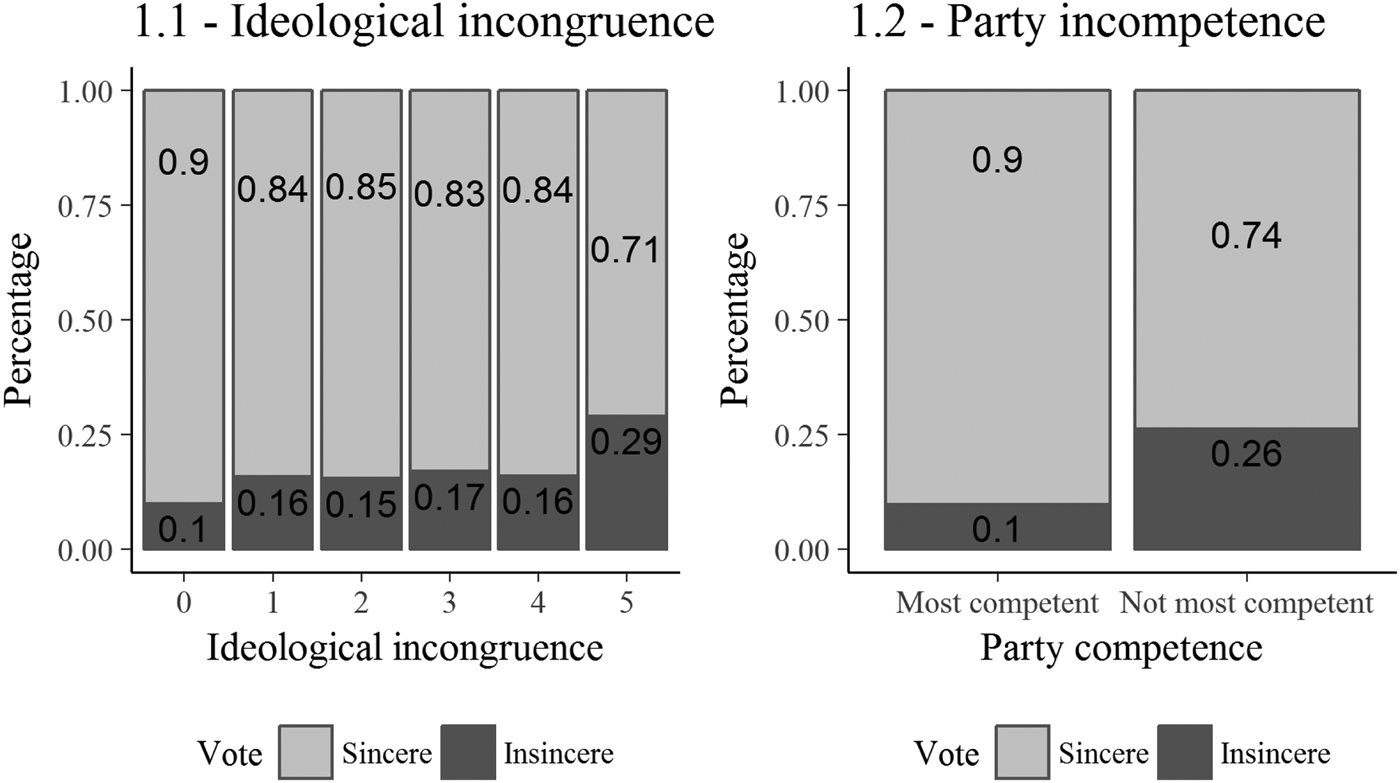
These observations lend some initial support to the idea that voters respond to low levels of quality by casting a protest vote. This is further investigated in the subsequent regression analyses.
Table 1 reports the results from the logistic regression analyses. Model 1 supports the initial findings from Figure 1. A decrease in ideological congruence, as well as the perception that one's most preferred party is incapable of handling the most important issue, increases the chances that voters will vote insincerely—that is, cast a protest vote. However, neither of these effects is large, and considering the standard errors, both are surrounded by high levels of uncertainty. This is further illustrated by looking at the expected probabilities at different values of the explanatory variables. For instance, the first difference between the expected probabilities to vote insincerely between the 10th and the 90th percentile of the ideological incongruence distribution is 2.1 per cent. The uncertainty ranges from 0.02 per cent to 4.8 per cent on the 95 per cent confidence level. For party competence, we can say that the expected value to vote insincerely increases by 3.3 per cent if voters perceive their most preferred party as incompetent compared to voters who think otherwise. The uncertainty ranges from 0.5 per cent to 7.8 per cent on the 95 per cent confidence level.Footnote 11 Nonetheless, even though the findings are substantially small and met with some uncertainty, this is not unexpected. The two quality indicators that were chosen here present only two of the more prominent choices of criteria based on the literature but do not offer an all-inclusive measure of party quality as perceived by the voter. Hence, these findings lend further support to the idea of protest voting as a form of signalling.
Effect of Perceived Party Quality (Ideological Incongruence and Party Competence) on Insincere Voting
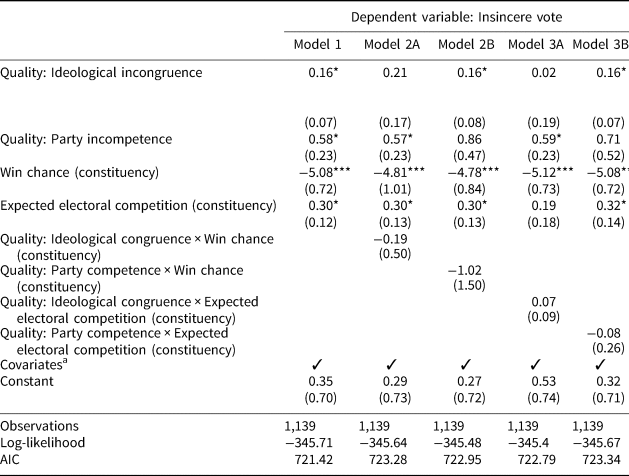
Note: Table reports log odds from logistic regression models, with standard errors in parentheses.
a Covariates adjust for the importance of the constituency and national result, party identification, preference for local and national candidates, gender, age, education and province; coefficients of covariates are not shown in this table to preserve clarity. For full results, see Table B1 in Supplementary Material Section B.
*p < .05; **p < .01; ***p < .001
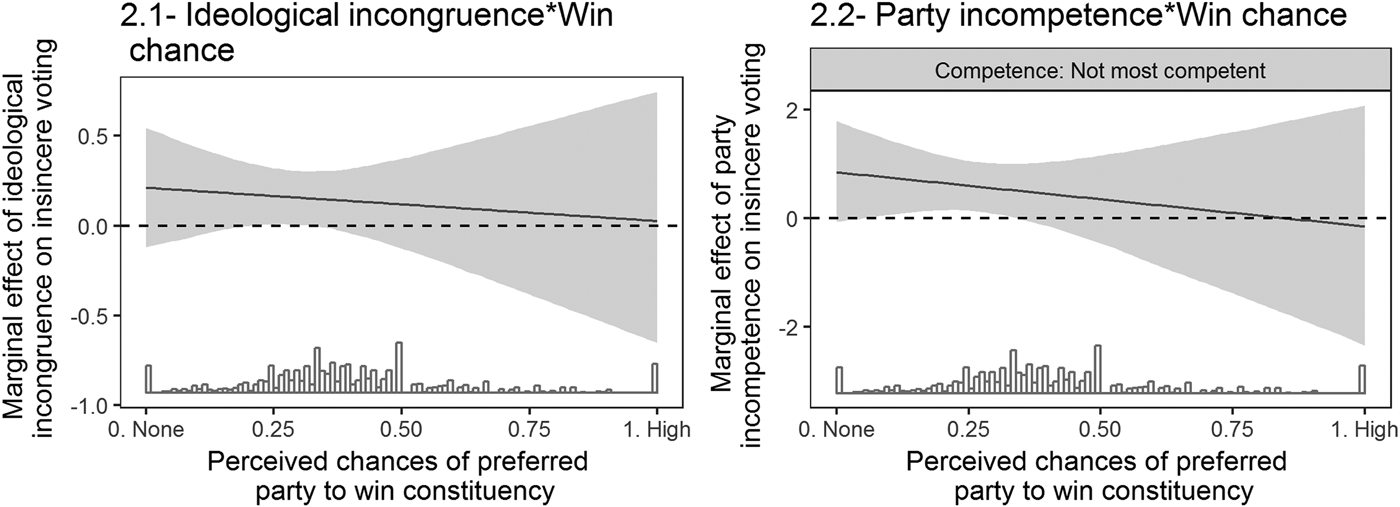
To test whether the relationship between quality and insincere voting is conditional upon the perceived chances of winning the constituency (H2) and the expected electoral competition (H3), I estimate four separate logistic regression models (Models 2A, 2B, 3A and 3B), each containing one interaction term. From Table 1, we can see that neither the perceived chances of winning the constituency seat nor the expected electoral competition in the constituency moderates the effects of quality on insincere voting on average. I further investigate these effects by plotting the average marginal effects (compare Brambor et al., Reference Brambor, Clark and Golder2006) in Figures 2 and 3, using critical t-statistics adjusted confidence intervals (compare Esarey and Sumner, Reference Esarey and Sumner2018).
Average Marginal Effects of Party Quality - Ideological Congruence (Fig. 2.1) and Party Competence (Fig. 2.2) - on Insincere Voting by Perceived Chances to Win Constituency
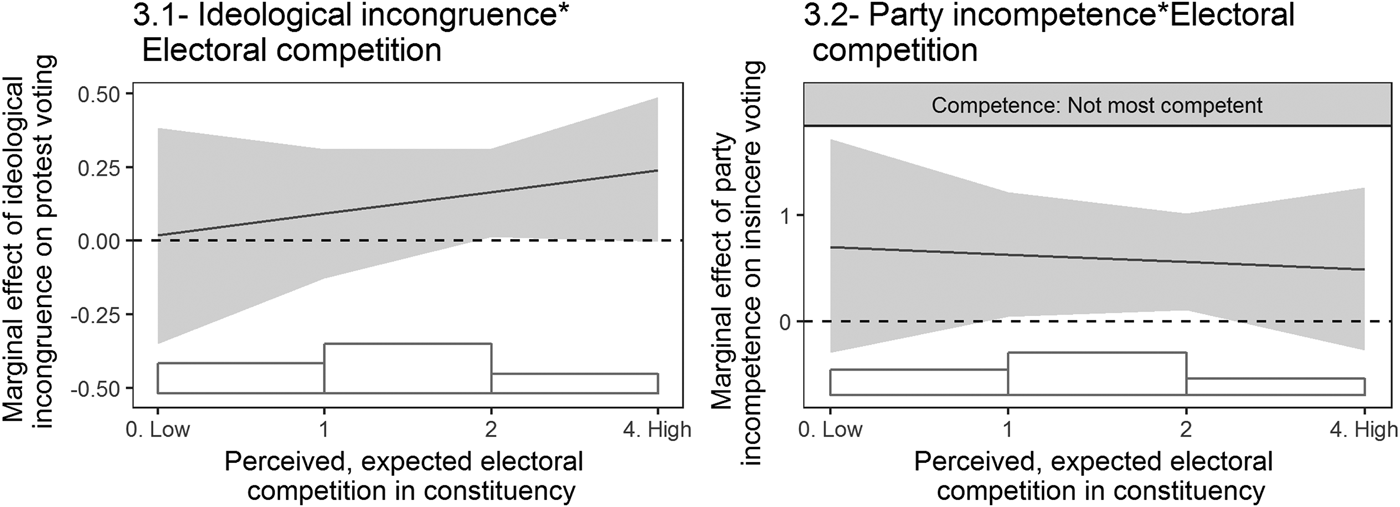
Average Marginal Effects of Party Quality - Ideological Congruence (Fig. 3.1) and Party Competence (Fig. 3.2) - on Insincere Voting by Expected Electoral Competition
The theoretical expectation was that the more certain voters are that their preferred party will win the constituency seat, the more likely they are to react to lower quality and cast an insincere vote. Figures 2.1 and 2.2, however, show that low ideological congruence is not consistently positively associated with insincere voting across all values of perceived win chances. Moreover, the average marginal effect does not increase the more certain voters are that their most preferred party is going to win. Figure 2.2 suggests the opposite trend, although this is to be taken with caution given the uncertainty surrounding the estimates. Thus, there is no clear empirical evidence to support H2.
Based on H3, we would expect to see that voters are most likely to cast a protest vote if they anticipate that the electoral competition in their district will be low. To recap: lower competition from the respondents’ point of view may mean both 1) that their party is likely to win, or 2) that neither their most preferred party nor any other party is likely to win. The average marginal effects from Models 3A and 3B are plotted in Figures 3.1 and 3.2. Again, there is little evidence to support this idea. For ideological congruence, we even see the opposite trend, with the average marginal effect increasing as respondents expect more electoral competition in their constituency. This effect, however, barely reaches conventional levels of statistical significance across all values of the conditional variable. For party competence (Fig. 3.2), we see that the average marginal effect on insincere voting is slightly higher at lower values of electoral competition. This would imply that the more voters perceive the constituency race to be settled, the more likely they are to vote insincerely. Yet at neither of the extreme values (low or high) of the conditional variable do we observe a statistically significant average marginal effect of party competence. Hence, this does not change the overall findings that neither expected win chances nor expected electoral competition conditioned the protest vote mechanism in the 2015 Canadian elections in British Columbia, Ontario and Quebec.
Overall, the analyses reveal that the two dimensions of protest voting worked as theorized. Voters were more likely to vote insincerely the lower the perceived quality was in terms of ideological congruence and competence. However, the analyses did not reveal clear evidence to support the idea that strategic considerations were moderating the relationship between the quality and insincere voting. In the subsequent robustness checks, I thus focus on testing assumptions underlying the general model of protest voting.
Robustness Checks
A key assumption made in the baseline model is that supporters of all Canadian parties react in a similar way to a decline in quality. This assumption rests on the concept of protest voting, as defined in this article, which starts from the voter's perspective. But because the previous literature primarily associates protest voting with supporters of mainstream parties (Bowler and Lanoue, Reference Bowler and Lanoue1992; McGregor, Reference McGregor2012), I conduct two additional tests of H1: a groupwise jackknife test (Neumayer and Plümper, Reference Neumayer and Plümper2017: 96) and an alternative model specification where a categorical variable for the most preferred party is added to the main models (see Online Supplementary Material C). The results of both tests, while adding some uncertainty, do not lead me to alter my main conclusions. A second assumption concerns the long-term perspective of voters and the subsequent decision to take into account the previous voting behaviour to restrict the set of respondents for the primary analyses. The approach allowed me to filter out potential switchers (as defined by Weber, Reference Weber2011) from the analyses and added the long-term perspective built into the theory of protest voting. Yet the absence of preference information for the previous vote choice variable and inaccurate recall answers bring with it a set of other issues. Removing the restrictions to the set of analyzed respondents and defining insincere voting solely on the basis of party preferences measured before the election and the current vote choice, however, does not alter the main findings of this article (see Online Supplementary Material D).
Discussion and Summary
In this article, I investigated the underlying dimensions of protest voting in Canada. Building on previous studies, I adopted a voter's perspective to conceive of protest voting as a deliberate insincere vote to signal discontent. The empirical analyses focused on the 2015 Canadian federal elections and revealed support for the basic mechanism of protest voting, although of a small magnitude. Voters who perceived their party as providing lower quality—measured as ideological congruence and issue competence—were more likely to vote insincerely. However, I did not find empirical patterns consistent with the idea that strategic considerations would moderate the relationship between discontent and insincere voting, as has been theorized in other studies (for example, Kselman and Niou, Reference Kselman and Niou2011; Myatt, Reference Myatt2017).
Conceptually, I highlighted the importance of adopting a voter's perspective and of considering protest voting as a concept that is built on two interacting foundations: a motive (signal discontent) and behaviour (insincere vote). I argued that such an approach allows for drawing a clear distinction between protest voting and other forms of voting, especially strategic voting. The one drawback of the concept and its implementation is that it does not allow for an easy sorting of citizens into the categories of “protest voter” and “non-protest voter.” Researchers who want to know the proportion of protest voters are thus tasked with using an indirect approach—for example, similar to what Blais et al. (Reference Blais, Young and Turcotte2005) propose for identifying the number of strategic voters. Simulation approaches may be used, for instance, to predict the percentage of respondents to whom dissatisfaction played a critical role in their decision to vote insincerely. Overall, however, the proposed concept and its implementation, which builds on previous studies (especially Weber, Reference Weber2011), should inform future studies and debates about the topic of protest voting, both in Canada and elsewhere.
Empirically, the findings shed new light on a common argument made regarding protest voting—namely, that voters will only signal discontent if a win is secured (Cox, Reference Cox1997; Kselman and Niou, Reference Kselman and Niou2011; Myatt, Reference Myatt2017). While Bowler and Lanoue (Reference Bowler and Lanoue1992) find some support that strategic considerations mattered when Canadian protest voters chose between different options in the 1984 federal elections, the expected outcome appears to matter less for the initial decision to vote insincerely. On the one hand, this spells good news for democracy as voters hold representatives accountable for perceived shortcomings or lack of quality (Hirschman, Reference Hirschman1970). If voters place signalling discontent over winning, parties and their candidates or representatives may utilize election results even more than before to improve their otherwise incomplete or party-biased knowledge of constituency voters’ preferences (Koop, Reference Koop2012). On the other hand, there may be a reason that protest voting in this form has received limited attention, primarily because it remains a limited phenomenon (McGregor, Reference McGregor2012; Weber, Reference Weber2011). The results of this article support the latter conclusion. Even though this study revealed patterns consistent with the underlying mechanism of protest voting, the substantive effects were limited. Thus the results of elections such as the 2011 Canadian federal election, which brought about historic shifts (Fournier et al., Reference Fournier, Cutler, Soroka, Stolle and Bélanger2013: 863) only for them to be reversed in 2015 (McGrane, Reference McGrane, Pammett and Dornan2016), are more likely the result of switching rather than temporary defection consistent with protest voting.
Nonetheless, protest voting remains a topic worthy of more scholarly attention. For instance, this article remained limited in its scope by focusing on the 2015 elections and tackled only some of the interesting implications that theories of protest voting have developed. Others, such as the supply of viable options or the choice between a protest vote and abstention, have yet to receive extensive empirical attention (but see Bélanger, Reference Bélanger2004). Likewise, even though there is anecdotal evidence that politicians care about protest voters, extensive systematic analyses have yet to be carried out to investigate if and how parties react to signals by a relatively small group in the electorate. Ultimately, this issue will determine if the efforts of protest voting pay off.
Supplementary material
To view supplementary material for this article, please https://doi.org/10.1017/S0008423919000325
Acknowledgments
I presented earlier versions of this article at the University of Mannheim's Graduate School Colloquium and the 4th GESIS Political Science Roundtable and thank all participants for their useful feedback. I want to thank Ruth Dassonneville for encouraging me to write this article and Stephen Quinlan for helpful comments and his suggestion to use the terminology “underlying foundations.” For further useful comments, I am grateful to Robert Huber, Nicole VT Lugosi-Schimpf, Harald Schoen, the three anonymous reviewers and the editors of the journal. I also acknowledge the support of the University of Mannheim's Graduate School of Economic and Social Sciences funded by the German Research Foundation.


 Open access

