



The health benefits of regular physical activity (PA) and a healthy diet are indisputable( Reference Thompson, Buchner and Pina 1 , Reference Lichtenstein, Appel and Brands 2 ). Despite this, many adults do not engage in these healthy behaviours. PA levels are particularly low among African Americans( 3 ), perhaps contributing to the health disparities that currently exist( 4 ). Faith-based health promotion programmes have been used to reach and improve the health of hard-to-reach and at-risk populations, including African Americans. The important role of religion and the church in the lives of African Americans( Reference Giger, Appel and Davidhizar 5 ) has made the church an invaluable and natural collaborator in efforts aimed at improving their health and health behaviours. Results from faith-based studies thus far are promising in terms of improving health behaviours, including PA and dietary behaviours( Reference Campbell, Hudson and Resnicow 6 , Reference DeHaven, Hunter and Wilder 7 ), although much work remains. There is particular concern over the lack of theoretical basis that many faith-based interventions, particularly PA interventions, have( Reference Bopp, Peterson and Webb 8 ).
Although it is essential to test whether interventions successfully change the targeted behaviour, it is also important to understand how interventions change behaviour( Reference Bauman, Sallis and Dzewaltowski 9 , Reference Baranowski, Anderson and Carmack 10 ). Mediation analyses allow researchers to understand how an intervention achieved its effects and can ultimately be used to improve interventions. A number of PA( Reference Lubans, Foster and Biddle 11 , Reference Rhodes and Pfaeffli 12 ) and dietary( Reference Cerin, Barnett and Baranowski 13 ) intervention studies targeting children, adolescents or adults have conducted mediation analyses. Findings from the reviews are mixed, although there is some evidence suggesting outcome expectancies (children) may be important for changing dietary behaviours( Reference Cerin, Barnett and Baranowski 13 ), whereas self-regulation (adults)( Reference Rhodes and Pfaeffli 12 ) and self-efficacy (children and adolescents)( Reference Lubans, Foster and Biddle 11 ) may be important for changing PA behaviour. However, much work remains in understanding which mediating variables interventions should be targeting.
Despite the fairly large number of outcome studies published( Reference Campbell, Hudson and Resnicow 6 ), very few faith-based studies targeting PA( Reference Baruth, Wilcox and Blair 14 ) or fruit and vegetable (F&V) consumption( Reference Shaikh, Vinokur and Yaroch 15 , Reference Fuemmeler, Masse and Yaroch 16 ) have conducted and published mediation analyses. Of the three studies published, only one found evidence of significant mediation across the entire sample( Reference Fuemmeler, Masse and Yaroch 16 ). Fuemmeler et al.( Reference Fuemmeler, Masse and Yaroch 16 ) found that self-efficacy and social support mediated changes in F&V consumption in the Body and Soul programme. Formal mediation analyses should be routinely conducted and published for all faith-based intervention studies, regardless of whether findings are positive or null( Reference Plotnikoff, Pickering and Rhodes 17 ).
Self-efficacy and social support have been tested as mediators in general PA( Reference Rhodes and Pfaeffli 12 ) and dietary interventions( Reference Shaikh, Yaroch and Nebeling 18 ), and in the few faith-based mediation studies conducted to date. The social cognitive theory( Reference Bandura 19 ) proposes that behaviour is influenced by a dynamic interplay of behaviour, personal factors and the environment( Reference Baranowski, Perry and Parcel 20 ). According to the social cognitive theory, individuals with more confidence in their ability to engage in and overcome barriers to PA and eating more F&V, and individuals with greater social support for PA and F&V consumption, would be more likely to improve these behaviours( Reference Baranowski, Perry and Parcel 20 ). The structural ecological model acknowledges the influence of the social and physical environment on an individual’s behaviour( Reference Cohen, Scribner and Farley 21 ). As such, it is expected that individuals with a more supportive social and physical church environment for PA and F&V consumption (e.g. provide opportunities, media messages, create policies) would be more likely to improve these behaviours. Although church support has been examined as a mediator in only a single study( Reference Baruth, Wilcox and Blair 14 ), this construct is highly relevant in faith-based studies and should be explored further.
The Faith, Activity, and Nutrition (FAN) study was a 15-month, PA and dietary intervention targeting African Methodist Episcopal churches in South Carolina, USA. Using a community-based participatory research approach, FAN targeted the social, cultural and policy influences within the church( Reference Wilcox, Laken and Parrott 22 ). The structural ecological model( Reference Cohen, Scribner and Farley 21 ) and the social cognitive theory( Reference Bandura 19 ) guided the development of FAN (described in more detail below) and thus served as the framework for the mediation analyses. The purpose of the present study was to examine whether self-efficacy, social support and church support mediated changes in PA and F&V consumption in the FAN programme.
Materials and methods
The methods of FAN are described in detail elsewhere( Reference Wilcox, Laken and Parrott 22 , Reference Wilcox, Parrott and Baruth 23 ). FAN used a group randomized design and included three waves of implementation. Churches were randomized to receive the intervention immediately following baseline assessments (i.e. intervention group) or at the end of the 15-month intervention period, following post-test measurements (i.e. control group). The primary goals of FAN were to increase moderate- to vigorous-intensity PA and F&V consumption, and to improve blood pressure( Reference Wilcox, Laken and Parrott 22 ). The mediator analyses performed in the present study were conducted as post hoc analyses. The study was conducted according to the guidelines laid down in the Declaration of Helsinki and all procedures involving human subjects were approved by the Institutional Review Board at the University of South Carolina.
Church recruitment
As reported in more detail elsewhere( Reference Wilcox, Laken and Parrott 22 , Reference Wilcox, Parrott and Baruth 23 ), pastors from four geographically defined African Methodist Episcopal districts in South Carolina were sent letters from their presiding elder introducing the FAN programme and inviting participation. Follow-up telephone calls to pastors were made by programme staff to provide more details about the FAN programme and to answer any questions. Pastors from interested churches typically appointed a liaison to assist programme staff to schedule and coordinate measurement sessions and church intervention trainings.
Procedures
Liaisons from interested churches were asked to recruit members of their congregation to take part in a measurement session at baseline (pre-intervention), with recruitment goals a function of church size. Small churches (<100 members) were asked to recruit thirteen members to take part, medium churches (100–500 members) thirty-two members, and large churches (>500 members) sixty-three members. Written informed consent was obtained from all participants at the measurement session. To be eligible, participants had to be at least 18 years of age, free of serious medical conditions or disabilities that would make changes in PA or diet difficult, and attend church at least once per month. Upon providing consent, trained staff took physical assessments and participants completed a comprehensive survey. The same measures were repeated 15 months later (post-programme).
Intervention
The FAN intervention was developed using a community-based participatory research approach( Reference Israel, Schulz and Parker 24 ) and targeted environmental (i.e. social, cultural, physical) and organizational (i.e. policies, practices) change within the church. Guided by the structural ecological model( Reference Cohen, Scribner and Farley 21 ), churches were asked to implement intervention activities focusing on PA and healthy eating that targeted each of the four structural factors thought to influence behaviour: (i) the availability and accessibility of products that are associated with health outcomes; (ii) physical structures that increase opportunities for healthy behaviours; (iii) social structures that promote or inhibit behaviours through organizational guidelines and support; and (iv) cultural and media messages that people see and hear frequently through large or small media and through stories and cultural practices.
Trainings
Each church formed a FAN committee, consisting of the pastor, health director, FAN coordinator and the cook or lead kitchen staff, and attended a full-day training provided by study staff. The purpose of the training was to provide an overview of the FAN programme and its goals, to engage the pastor in supporting FAN and to brainstorm activities the church could do to promote PA and healthy eating. Each committee developed a formal intervention plan that was in line with the overall FAN objectives. Upon submission, churches received a stipend (up to $US 1000) to assist with FAN-related activities.
Each FAN church sent two individuals to attend a one-day cooks training that focused on the Dietary Approaches to Stop Hypertension (DASH) diet plan. The participatory training was expected to provide church cooks with the knowledge and skills necessary to prepare healthy and flavourful foods that nourish and satisfy their congregations as well as themselves( Reference Condrasky, Baruth and Wilcox 25 ). The participatory training workshop connected scripture to healthy eating, provided ideas on how churches could improve healthy meals and snacks within the church food programme, provided cooks with hands-on cooking with chef training, engaged cooks in menu building activities, encouraged and demonstrated how traditional recipes could be modified to be healthier, and demonstrated the development of flavour in foods through healthy ingredients( Reference Condrasky, Baruth and Wilcox 25 ). A detailed description of the trainings can be found elsewhere( Reference Wilcox, Laken and Parrott 22 , Reference Condrasky, Baruth and Wilcox 25 ).
Other intervention activities
Although churches had a great deal of flexibility in what intervention activities they implemented (based on the needs and wants of the congregation), they were asked to implement a set of core activities, focusing on PA and healthy eating, which were consistent across churches. These activities were designed to increase church support (a targeted mediator) for PA and healthy eating, and included: distribute bulletin inserts focusing on PA or healthy eating (provided by study staff); share messages about PA and healthy eating from the pulpit (e.g. church announcements, sermons); pass out educational materials about PA and healthy eating (e.g. brochures, handouts provided by study staff); create a FAN bulletin board focusing on PA and healthy eating; and suggest policies and practices the pastor could set that promoted PA and healthy eating (e.g. incorporate PA breaks into church meetings).
FAN committees, cooks and pastors also received monthly mailings over the intervention period that focused on PA or healthy eating, a health condition and highlighted a health behaviour change strategy consistent with the social cognitive theory( Reference Bandura 19 ). Social support and self-efficacy, both tested as mediators of the FAN intervention and constructs of the social cognitive theory, were targeted in many intervention mailings and church-wide activities. Table 1 provides examples of how intervention activities aligned with the three hypothesized mediators (i.e. church support, social support and self-efficacy). The FAN committee was instructed to share the monthly mailing materials, which would assist church members in meeting FAN goals, with its congregants. Finally, intervention staff made follow-up technical assistance calls to pastors, FAN coordinators and cooks to learn what types of activities were being implemented and to help problem-solve challenges.
Intervention activities targeting the hypothesized mediators
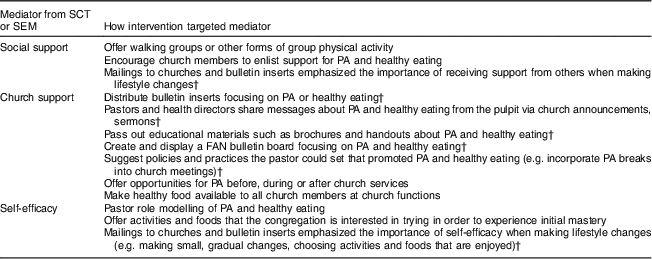
SCT, social cognitive theory; SEM, structural ecological model; PA, physical activity; FAN, Faith, Activity, and Nutrition.
The FAN intervention did not look the same in all churches. The intervention activities targeting the mediators above were possible activities, with the exception of the required activities, designated with † above.
Measures
All measures were completed at baseline (i.e. prior to randomization) and at 15 months (post-test).
Sociodemographic and health-related variables
Participants self-reported their age, gender, race, marital status, educational attainment and rated their health status. BMI was calculated as kg/m2 using measured height and weight.
Physical activity
A thirty-six-item modified version of the Community Health Activities Model Program for Seniors (CHAMPS) questionnaire( Reference Resnicow, McCarty and Blissett 26 ) assessed the frequency and duration of leisure-time moderate-to-vigorous PA ‘in a typical week during the past four weeks’. This measure has been shown to have strong psychometric properties( Reference Resnicow, McCarty and Blissett 26 , Reference Harada, Chiu and King 27 ). Hours per week of leisure-time moderate-to-vigorous PA (≥3·0 MET (metabolic equivalents of task), household and related activities removed) was calculated.
Fruit and vegetable consumption
The National Cancer Institute’s Fruit and Vegetable All-Day Screener measured F&V consumption (cups/d) in the past month( 28 ). Nine of the original ten items were used (consumption of French fries was excluded)( Reference Thompson, Demark-Wahnefried and Taylor 29 ). This instrument has shown acceptable psychometric properties( Reference Thompson, Subar and Smith 30 , Reference Campbell, Demark-Wahnefried and Symons 31 ).
Perceived church support for physical activity and healthy eating
Scales measuring perceived church support for PA (seven items)( Reference Baruth, Wilcox and Blair 32 ) and healthy eating (six items)( Reference Baruth, Wilcox and Condrasky 33 ) over the past 12 months were developed for the present study. Items that had face validity were developed to capture important types and sources of support in church settings based on experiences from a previous faith-based project( Reference Wilcox, Laken and Anderson 34 , Reference Wilcox, Laken and Bopp 35 ), input from church leaders and lay members, and the guiding theory for our intervention( Reference Cohen, Scribner and Farley 21 ).
In line with the intervention targets and the four pillars of the structural ecological model( Reference Cohen, Scribner and Farley 21 ), church support items asked about opportunities for PA and healthy eating at church services and events (e.g. ‘How often has PA been included before, during, or right after worship services?’) and how often the church and church leaders talked about and provided information about PA and healthy eating via the pulpit, handouts, bulletin inserts, bulletin boards, etc. (e.g. ‘How often has your church included written information about healthy eating in the Sunday bulletin?’). A four-point response scale ranging from 1 (‘rarely or never’) to 4 (‘most or all of the time’) was used. Internal consistency was high, in our sample, for both scales (PA, α=0·86; healthy eating, α=0·84).
Self-efficacy for physical activity and fruit and vegetable consumption
An adapted twelve-item version of Sallis’ scale( Reference Sallis, Pinski and Grossman 36 ) measured self-efficacy for PA and a ten-item scale used in two other faith-based projects( Reference Resnicow, Jackson and Blissett 37 – Reference Resnicow, Jackson and Braithwaite 39 ) measured self-efficacy for F&V consumption. Using a four-point response scale, participants were asked how confident they were, in the next 6 months, that they could exercise when faced with common barriers (e.g. ‘when your family is demanding more time from you’, ‘when you have household chores to attend to’) and eat F&V when faced with common barriers (e.g. ‘when you are depressed or in a bad mood’, ‘when you eat out with friends’). Internal consistency for our sample was α=0·95 for PA and α=0·93 for F&V consumption.
Social support for physical activity and fruit and vegetable consumption
Social support for PA (three items) and F&V consumption (three items) over the past 12 months from family, friends/work colleagues and people at church was measured on a 4-point response scale (e.g. ‘How much encouragement do you get from your family to get more PA?’). The items used to assess family and friend/colleague support were derived from a study by Eyler et al.( Reference Eyler, Brownson and Donatelle 40 ), which were adapted from the Sallis et al.( Reference Sallis, Grossman and Pinski 41 ) scale. The items assessing support from church members (e.g. ‘How much encouragement do you get from people at your church to eat more F&V?’) were similar to those used in another faith-based project( Reference Resnicow, Jackson and Blissett 37 ). Internal consistency for our sample was α=0·68 for PA and α=0·75 for F&V consumption.
Statistical analyses
All statistical analyses were conducted with the SAS statistical software package version 9·4. Baseline differences between the immediate and delayed intervention groups on survey variables were examined with χ 2 and t tests. Square-root transformations corrected skewness in baseline and post-programme PA and F&V scores. To account for church clustering, ANCOVA using SAS PROC MIXED was used. A random effect for church was included in all models. MacKinnon’s product of coefficients test (αβ) was used to test mediation( Reference MacKinnon, Lockwood and Hoffman 42 ). For both outcomes (PA and F&V consumption), single mediator models were conducted first, followed by a multiple mediator model.
Two ANCOVA models were conducted for each mediator: the first performed the regression of the mediator v. intervention group assignment (α coefficient); the second performed the regression of the outcome variable v. intervention group and the mediator (β coefficient). All models controlled for gender, age, education (some college or higher v. high-school graduate or less), wave, church size and the measure(s) at baseline. Asymmetric confidence limits based on the distribution of the product were constructed using the PRODCLIN program( Reference MacKinnon, Fritz and Williams 43 ) to determine if the mediated effect was statistically significant. If the confidence limit did not include 0, there was significant mediation.
Results
The study flow has been described in detail elsewhere( Reference Wilcox, Parrott and Baruth 23 ). In brief, 1257 participants from seventy-four churches were included in the primary outcomes paper( Reference Wilcox, Parrott and Baruth 23 ). The present study includes only 582 (PA outcome) and 588 (F&V outcome) participants from sixty-eight churches with complete pre- and post-test data. Thirty-seven churches were randomized to the intervention group and thirty-one churches were randomized to the control group. Participants not included in the PA outcome analyses were significantly younger, less educated and less likely to be married than those included (all P<0·05). Participants not included in the F&V outcome analyses were significantly younger, had lower self-efficacy for F&V consumption and were less likely to be married than those included in analyses (all P<0·05).
Baseline characteristics of participants, by group assignment, included in the PA mediation analyses (n 582) and F&V mediation analyses (n 588) are shown in Table 2. In the F&V analyses, delayed participants were more likely to be married (P=0·04). In both the PA (P=0·01) and F&V analyses (P=0·02) delayed participants engaged in more PA at baseline. There were no other significant baseline differences between groups.
Baseline characteristics of participants, by intervention group assignment, for the PA and F&V samples: church members from sixty-eight African Methodist Episcopal churches in South Carolina, USA, 2007–2011, FAN study
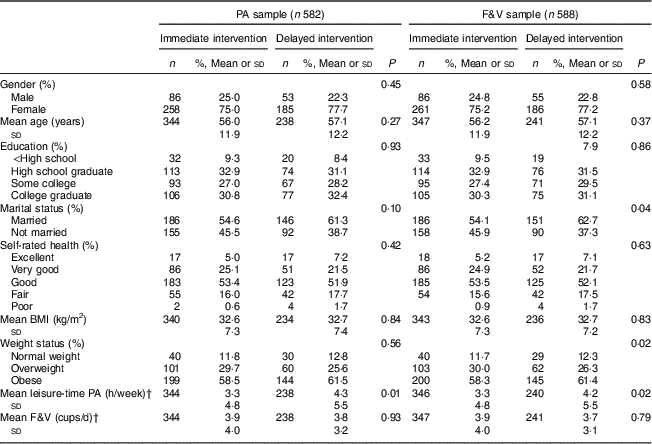
PA, physical activity; F&V, fruit and vegetable; FAN, Faith, Activity, and Nutrition.
† Skewed distribution.
Changes in outcomes
Results from the FAN programme have been reported elsewhere( Reference Wilcox, Parrott and Baruth 23 ). In participants included in the present study, daily F&V consumption (P=0·02, data not shown) and PA (P=0·03, data not shown) were significantly higher in the intervention group than in the control group at post-intervention.
Mediation effects of the FAN intervention on leisure-time PAFootnote † among church members (n 582) from sixty-eight African Methodist Episcopal churches in South Carolina, USA, 2007–2011
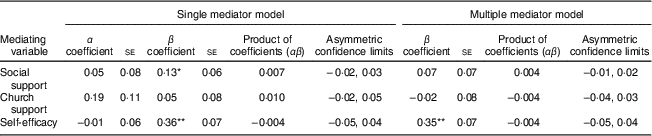
FAN, Faith, Activity, and Nutrition; PA, physical activity; ICC, intra-class correlation coefficient.
The ICC for unadjusted baseline leisure-time PA was 0·064. The ICC for adjusted baseline leisure-time PA was 0·054 (adjusted for age, gender, education, church size and phase).
*P<0·05, **P<0·0001.
† Transformed (square-root) value used in all models.
Mediation: leisure-time physical activity
As shown in Table 3, none of the hypothesized mediators were found to be significant mediators of changes in PA in the FAN intervention. An examination of the α and β paths indicated that the intervention did not change any of the hypothesized mediators (all P>0·05); however, increases in self-efficacy (P<0·0001) and social support (P=0·04) were associated with increases in PA. The relationship between increases in social support and increases in PA was no longer significant in the multiple mediator model (P=0·29); all other results were the same.
Mediation: fruit and vegetable consumption
As shown in Table 4, none of the hypothesized mediators were found to be significant mediators of changes in F&V consumption in the FAN intervention. An examination of the α and β paths indicated that the intervention did not change any of the hypothesized mediators (all P>0·05); however, increases in church support (P=0·002) and self-efficacy (P=0·001) were associated with increases in F&V consumption. Results from the multiple mediator model were the same.
Mediation effects of the FAN intervention on F&V consumptionFootnote † among church members (n 588) from sixty-eight African Methodist Episcopal churches in South Carolina, USA, 2007–2011
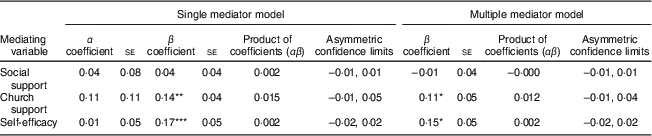
FAN, Faith, Activity, and Nutrition; F&V, fruit and vegetable; ICC, intra-class correlation coefficient.
The ICC for unadjusted baseline F&V consumption was 0·040. The ICC for adjusted baseline F&V consumption was 0·031 (adjusted for age, gender, education, church size and phase).
*P<0·05, **P<0·01, ***P<0·001.
† Transformed (square-root) value used in all models.
Discussion
Although progress has been made, much work remains in understanding the relationship between theoretical variables and behavioural outcomes and how interventions impact these mediating (theoretical) variables( Reference Baranowski, Lin and Wetter 44 ). Advancements in this area of research may allow for more effective interventions targeting behaviours known to improve population levels of health. The present study examined the mediating effects of social support, church support and self-efficacy in a faith-based PA and dietary intervention targeting African Americans. None of the studied mediators were found to be significant mediators of change in PA or F&V consumption.
Despite the positive increases in PA and F&V consumption resulting from FAN, it is still unclear what caused the changes. It appears that other, unmeasured, mediators caused the changes in outcomes. Very few faith-based studies have performed and published mediation analyses( Reference Baruth, Wilcox and Blair 14 – Reference Fuemmeler, Masse and Yaroch 16 ) and the findings have been mixed. Baruth et al.( Reference Baruth, Wilcox and Blair 14 ) found no evidence for support (church, instrumental, emotional), self-efficacy or exercise enjoyment as mediators of change in a 1-year PA intervention. Shaikh et al.( Reference Shaikh, Vinokur and Yaroch 15 ) found that social support, self-efficacy and controlled motivation were not significant mediators of change in a 1-year F&V intervention; autonomous motivation was a significant mediator only in those with low baseline levels. Fuemmeler et al.( Reference Fuemmeler, Masse and Yaroch 16 ) found self-efficacy and social support to be significant mediators of change in F&V consumption in a 6-month intervention, whereas controlled and autonomous motivation were not. Although faith-based interventions targeting behaviours such as PA and F&V consumption have resulted in positive outcomes, the mechanisms by which faith-based interventions exert their effects are ambiguous, substantiating the need for additional research.
Results from the present study suggest that the FAN intervention may not have changed the studied mediators. It is possible that the FAN intervention was not intense or targeted enough to change the hypothesized mediators. In that case, adaptations to the intervention activities focusing on the targeted mediators may want to be considered. However, there are a number of other plausible explanations for the lack of relationship between group assignment and changes in mediators seen in the study. First, it is possible that the mediators tested did not map on to our conceptual model ideally. For example, although social support and self-efficacy were included in the monthly mailings to the church, they would not be considered ‘main targets’ of the intervention, and thus it is not surprising that significant changes in these variables did not take place. In contrast, mediators that mapped on to the structural ecological model (i.e. church support) were assessed with brief measures not previously validated. Additionally, it is possible that participants experienced a ‘response shift’, where participants’ self-evaluation and/or internal standards of the targeted mediators changed as a result of changes in PA and F&V consumption( Reference Sprangers and Schwartz 45 ). For example, it is possible that participants were confident (i.e. self-efficacy) in their ability to engage in PA or consume F&V at baseline, but as they changed their behaviour they encountered or realized additional difficulties that may arise in maintaining these behaviours, causing a shift (i.e. decrease) in their self-efficacy.
Second, the type and timing of the measures used may also explain, in part, the lack of findings. The self-report measures used in the present study may not have accurately assessed the mediators or may not have been sensitive enough to capture change( Reference MacKinnon 46 ). This may be particularly relevant for church support, which was developed due to the paucity of measures in the existent literature. Although found to have high construct validity and internal consistency in our study, it is unlikely that it adequately captured all levels and aspects of church support, which was a critical aspect of the FAN intervention and guided many of the intervention activities. Furthermore, the dietary church support measure assessed support for healthy eating, not F&V consumption specifically. Unfortunately, due to study logistics, we were unable to validate the measure prior to the intervention and in consideration of participant burden were limited in the number of questions the measure included. Continued work on developing a valid measure that adequately captures the wide spectrum of church support, including emotional, instrumental and informational support, targeted in faith-based interventions is warranted. Doing so will assist researchers in understanding whether the intervention targets successfully changed church support and which aspects of the intervention need to be refined.
Third, it is possible that the intervention did in fact change the targeted mediators, but the timing of the measures did not capture it. When measurements are conducted is important, as it is possible to miss relationships if the timing of the changes in mediators differs from the timing of the measures( Reference MacKinnon 47 , Reference Kraemer, Wilson and Fairburn 48 ). For example, church support may have increased in the first 6 months of the FAN intervention, but it was not sustained at the 15-month follow-up. Because there were no intermediate follow-up periods (i.e. at 6 months), this increase would not have been captured. It is entirely possible that the initial increase in the mediator produced positive changes in the outcomes at the 15-month follow-up but, unfortunately, the timing of our measures did not capture it. Although intermediate follow-ups would have been ideal, it would have significantly increased participant and staff burden.
Much work remains in how to develop PA and dietary interventions that effectively change proposed mediators, as recent reviews examining mediators of PA( Reference Rhodes and Pfaeffli 12 ) and dietary change( Reference Cerin, Barnett and Baranowski 13 ) have found that, overall, interventions are not successful in changing targeted mediators. In fact, PA (adults) and dietary (youth) interventions were successful in changing the targeted mediators less than half of the time( Reference Rhodes and Pfaeffli 12 , Reference Cerin, Barnett and Baranowski 13 ). Developing interventions that target the hypothesized mediators with higher fidelity is imperative for successfully changing PA and dietary behaviours( Reference Rhodes and Pfaeffli 12 ).
Changes in some of the mediators were associated with changes in PA and/or F&V consumption, suggesting that these variables likely play some role and are important for behaviour change. Self-efficacy seems to be important for both PA and F&V consumption, social support may be important for PA (single mediator model only), and church support, which is a unique mediator not often studied in faith-based studies, may be important for changing F&V consumption and should be further investigated in future studies. Faith-based settings allow for unique social interactions, including support from church members, the pastor and the church environment (i.e. policies, physical environment), which are unlike those of many other community institutions. Future studies should continue to incorporate these levels of support into the development of interventions.
Mediation analyses were not initially proposed for the FAN study, but instead were conducted as a post hoc analysis. To really understand how interventions work, researchers should more carefully consider mediation analyses from the conception of the study and align intervention strategies with the hypothesized mediators from the start. Considerable thought should be given a priori to the selection and measurement (including the timing) of mediators, as it is very likely that the measures needed may not be available after the intervention is finished( Reference Kraemer, Wilson and Fairburn 48 ). Assessing potential mediators with appropriate scales is important. Mediation analyses can be a challenge to do in community-based research such as FAN, as there is a fine balance between collecting adequate data and not overburdening the churches (organizations) and its members (participants).
Study limitations, including the high attrition rate, should be considered when interpreting the findings. Less than 50 % of participants included in the primary outcomes paper had complete pre/post data. High attrition rates, particularly when the follow-up exceeded 6 months, have been reported in PA interventions targeting African Americans( Reference Pekmezi and Jennings 49 ). Participants wanting to take part in the FAN evaluation were not rigorously screened prior to enrolment and were not provided with monetary incentives for measurement completion. These omissions may have reduced participant commitment and motivation for completing measurements.
Significant work remains in understanding how PA and dietary interventions exert their effects, particularly in faith-based studies. Performing and publishing mediator analyses, whether significant or null, provides insight into where research efforts should focus and collectively will assist in developing the most effective and powerful behaviour change interventions. Despite the positive increases in both PA and F&V intake outcomes resulting from the FAN programme, we found no evidence of mediation. Future studies should consider mediation analyses a priori, putting careful thought into the types of measures used and the timing of those measures, while also being cognizant of the burden that could be imposed on both participants and staff. Finding a balance will be fundamental in successfully understanding how faith-based interventions exert their effects.
Acknowledgements
Acknowledgements: The authors thank the leaders of the 7th Episcopal District of the African Methodist Episcopal church, especially the Bishop, participating Presiding Elders and participating pastors, for their support of FAN. The authors thank the many churches and members who have taken time out of their busy lives to participate in measurements and trainings and to implement FAN in their churches. The authors also thank the staff, investigators and students who have meaningfully contributed to FAN. Financial support: The project described was supported by the National Heart, Lung, and Blood Institute (grant number R01HL083858). The content is solely the responsibility of the authors and does not necessarily represent the official views of the National Heart, Lung, and Blood Institute or the National Institutes of Health. Conflict of interest: None. Authorship: M.B. assisted with data collection and cleaning, analysed the data and drafted the manuscript. S.W. obtained the funding (primary investigator), designed the study, carried out the study and helped draft/edit the manuscript. Ethics of human subject participation: This study was approved by the Institutional Review Board at the University of South Carolina.



