





On the afternoon of 27 July 1967—the thirteenth day of the International Congress on the Dialectics of Liberation (DOL)—Allen Ginsberg prepared to address an audience of about a thousand inside the Roundhouse, a Victorian-era railroad shed located in London's Camden Town. Gazing out from his seat before the stage, his perceptions slightly warped by the lingering effects of LSD, the poet and counterculture icon took in the motley gathering of academics, artists, activists, and admirers who squinted back at him through the dusty beams of light descending from the sooty glass-domed ceiling. Many leaned forward in their wooden folding chairs, notepads in hand, eagerly waiting for him to speak. Throughout the room, beneath a billowing haze of marijuana smoke, dozens of cameras pointed in Ginsberg's direction, poised to capture every word and gesture. The brim of a familiar fedora, glimpsed deep in the crowd, shaded the craggy face of his friend, William S. Burroughs. The PA hummed above the soft din of murmurs, nervous laughter, and the shuffling of feet on the sawdust-coated floor. Outside, it was a sunny summer day, but in the gloom of the Roundhouse, the mood was tense with expectation. Ginsberg pulled up his chair to the microphone and began.Footnote 1
Before launching into his remarks, Ginsberg paused to express concern about the condition of the sound system. Tentatively, he asked the audience, “Can you come up closer where you can hear if you want to hear? Can I be heard in the back?” Apparently satisfied with the response, Ginsberg opened a copy of Burroughs's latest novel, Nova Express, and proceeded to read a lengthy excerpt in which extraterrestrial aliens use mass media to sow hatred and division among earthlings, hastening human self-annihilation. He then explained that the chosen passage applied to “conditions in the Roundhouse” on the previous Saturday night, when he had appeared on an acrimonious panel alongside the Black Power intellectual Stokely Carmichael, the guerrilla theater activist Emmett Grogan, and the Scottish psychiatrist R. D. Laing—a failed “attempt at communication” that had, at certain moments, devolved into an angry shouting match. Refocusing the audience's attention back to the present moment, he reminded them that they were hearing “an electric voice,” not “the human voice,” and warned that it might not be “trustworthy.” Ginsberg did not elaborate. Instead, his thoughts meandered from one subject to another—bad acid trips, rising sea levels, J. Edgar Hoover's sex life, African proverbs—in a baffling series of non sequiturs. At one point, he claimed to “have it on the authority of the Office of Strategic Services” that Hitler liked to eat human shit, asserting that this bizarre fact, if true, “would clarify everything.” By the end of Ginsberg's lecture, anyone who had expected him to say something insightful, or even coherent, must have been disappointed.Footnote 2
Ginsberg's speech resists easy summary. Less a conventional lecture than a performance, it stubbornly and repeatedly reflects back on the context of its enactment, highlighting details of the physical and sensory environment, the means of communication, and the social dynamics within the room. The speech is pockmarked by interruptions and distractions. As he spoke, noise from the increasingly agitated audience intruded on his voice. (At one point, he tried to reason with a terrified audience member who was convinced that plainclothesmen, embedded in the crowd, were poised to make a bust.) His remarks are also littered with references to other moments in the congress, including earlier lectures and conversations with various participants. Because it is practically meaningless when treated as a stand-alone text, Ginsberg's lecture is—justifiably—little remembered more than a half-century later, even as the congress itself remains well known. Nonetheless, it exemplifies the antiauthoritarian politics of knowledge on which the congress was premised.
The DOL was a sprawling festival of ideas organized by four London psychiatrists. Thousands of people entered the Roundhouse each day for two weeks in July 1967, primarily attending lectures, seminars, and performances. An eclectic roster of celebrated figures from across disciplines, and from across the world, graced the program. Besides Ginsberg, the congress featured Gregory Bateson, Julian Beck, Stokely Carmichael, Paul Goodman, C. L. R. James, Thích Nhất Hạnh, R. D. Laing, Herbert Marcuse, Carolee Schneemann, Paul Sweezy—and many others. The audience was no less mixed; it included visitors from several continents, of a variety of social and professional backgrounds.
Neither the breadth of activity at the congress nor the diversity of its participants are conveyed by the edited volume, commissioned by the organizers, that appeared in its wake. Originally titled To Free a Generation and later republished as The Dialectics of Liberation, the book is a compilation of ten lectures given by several of the best-known invited speakers, condensed and touched up for publication. By selecting these materials to fix the public memory of the event, the organizers established an implicit hierarchy of relevance that justified leaving even many of the speeches that received top billing (not to mention seminars, performances, and other activities) on the cutting-room floor. Even Ginsberg, perhaps the most famous participant, was omitted from the “clean,” official record of the proceedings. Instead, like almost everything that occurred inside the Roundhouse, his appearance was bracketed as extraneous.Footnote 3
Because To Free a Generation provides the source material most often cited by historians, scholarly discussion of the congress has largely proceeded along the narrow path hewn by its editors.Footnote 4 The literature on the event is fragmented according to the distinct, if not incommensurable, commitments associated with the most conspicuous names on the list of invited speakers. Historians of social movements have treated the DOL as a formative moment for Black Power and gay liberation in the United Kingdom and as a turning point for the British New Left.Footnote 5 Intellectual historians, meanwhile, have discussed the congress in relation to the biographies and thought of key figures, including Bateson and Schneemann, or else contextualized it with respect to the development of such discourses as antipsychiatry and Third Worldism.Footnote 6 These different paths through the Roundhouse, all of which illuminate different aspects of the DOL, have by and large been based on the event's published traces.
This article proceeds from the premise that the form of the congress is intrinsic to the meaning of any content that can be extracted from it. My focus is not only on the lecturer, the lecture, and the stage on which they stand, but rather also on the entire space and everyone in it at all moments of the congress. I aim, to the greatest possible extent, to reconstruct the interactions among speakers, organizers, audience members, and the physical space, approaching the congress as a field of action shaped by the expectations and interventions of these different actors. My purposes are therefore, in part, methodological: insofar as intellectual history is the preserve of ideas, I intend to trace ideas, ossified in texts, back to the multilayered contexts (physical, sensory, kinetic, emotional) out of which they emerged.
To construct this intellectual and institutional history, I have made use of audio recordings and transcripts, correspondence, administrative records, photographs, and ephemera in the archived papers of Joseph Berke, the principal organizer of the congress. I have also relied on the poet Iain Sinclair's Kodak Mantra Diaries, a limited-edition book (accessible only in archives and rare-book libraries) that includes his firsthand account of the congress. Documentary footage, oral-history interviews, published memoirs, and digitized print materials and photographs, meanwhile, have allowed me to form a detailed composite (though by no means comprehensive) picture of the event.Footnote 7 The contents of these diverse sources—especially untranscribed audio recordings—disrupt conventional assumptions about which actors and moments are central, and which are peripheral, to historical interpretation.Footnote 8
This approach is well suited to the object of my research. As the historian Oisín Wall notes, the organizers of the DOL envisioned the congress not as a “forum for the dissemination of information” but as a utopian experiment in the production of knowledge.Footnote 9 Audiences would not passively absorb ideas handed down to them from the podium by “star” intellectuals. Instead, new relationships and values would emerge out of their own multidirectional and reciprocal communication, both verbal and nonverbal. This egalitarian and spontaneous process of collective thinking would not end inside the Roundhouse, either: it would overflow the spatial and temporal boundaries of the event. By eliminating the formal conventions and hierarchies governing the production and exchange of ideas, thought could be “liberated” from the clutches of accredited experts, institutions, and channels of discourse.
Given these elements of its conception, the congress offers a window onto larger intellectual and cultural transformations in the 1960s. In particular, it marks the convergence of several distinct but overlapping efforts to develop democratic epistemologies and nonauthoritarian social relations—efforts in which, not coincidentally, prominent congress participants played a leading part. Early in the decade, Goodman, Marcuse, and the anthropologist Jules Henry, all of whom spoke at the congress, published influential critiques of schools, universities, and mass media, which they characterized as narrowing the imagination and indoctrinating people into amoral groupthink.Footnote 10 By 1967, such dark warnings seemed to be confirmed by these institutions’ complicity with the American military campaign in Vietnam, which seriously damaged their cultural prestige. While a general disregard for authority was on full display at the congress, particular skepticism was reserved for the university and the mass media: far from opening new avenues of thought, these powerful apparatuses of knowledge production battered citizens with militarist “platitudes,” manipulating “the perceptual capacities of the people” to prepare them for perpetual war.Footnote 11
If the legitimacy of those institutions was in doubt, alternatives were flourishing. Many participants in the congress were previously involved in pedagogical counterinstitutions that had largely been designed to democratize the production of knowledge. A decade earlier, Goodman taught at Black Mountain College, an experimental cultural community and educational institution based on nonhierarchical principles. Carmichael participated in the Freedom Schools, which civil rights activists used to both educate and politicize disenfranchised African Americans in Mississippi during the 1964 Freedom Summer.Footnote 12 Both the Freedom Schools and Goodman's influential critiques of mass education in turn propelled the free-university movement in the middle of the decade. In 1965, Berke cofounded the Free University of New York (FUNY) as a nonprofessionalized and politically radical alternative to the bureaucratized university. While planning the DOL two years later, he invited organizers of several free universities with the purpose of showcasing their work and ensuring its continuation.Footnote 13
The antiwar “teach-ins,” organized by radical students and faculty at American universities in the mid-1960s, were another essential precursor to the congress. Combining lectures, performances, debates, protest actions, and long stretches of informal socializing, the teach-in modeled a highly participatory and raucous form of knowledge production. Participants described feeling as though “the barriers between students and teachers had been broken” and characterized the gatherings as not simply about learning about the war, but as “catalysts … for the dispersion of ideas.”Footnote 14As unrest intensified at European universities, the teach-in crossed the North Atlantic. During their occupation of the administration building at the London School of Economics in March 1967, antiwar students held an “open university” that featured “round-the-clock seminars on educational theory and structure.”Footnote 15 A number of them would attend the DOL several months later.
The free universities and teach-ins reflect broader counterinstitutional currents in the mental-health professions, the performing arts, radical politics, and social thought. Some of the public figures most associated with these developments participated in the congress. The four psychiatrists who organized the event—Joseph Berke, David Cooper, R. D. Laing, and Leon Redler—traced violence and social domination to authoritarian interpersonal dynamics within such key institutions as schools, hospitals, and the family. Kingsley Hall, their short-lived experimental clinic in east London (1965–70), was meant to function as a nonauthoritarian therapeutic community where those dynamics could be reversed, allowing the mentally ill to reconstruct their own damaged psyches.Footnote 16 The congress would be another such “liberated” environment, but on a much larger scale.
This psychiatric conception of the DOL dovetailed with efforts by social scientists, including Gregory Bateson, to cultivate the “democratic personality” within immersive sensory environments that made use of mass communications technology as early as the 1940s.Footnote 17 It also echoed techniques of avant-garde performance designed to convert passive recipients of stimuli into active and engaged participants. The Living Theatre, cofounded by Julian Beck in 1947, employed physical and highly confrontational methods to unsettle audiences and draw them into the co-construction of the play. By the 1960s, artists including Carolee Schneemann were utilizing a variety of media to confound the barriers between the work and its setting, the performer and the spectator, and art and everyday life. The Diggers, a theater company established by Emmett Grogan in 1966, brought these techniques into public settings and placed them in the service of community activism, using “ticketless theater” to establish a “territory without walls” and convert consumers into “life-actors.”Footnote 18 They were applied on a mass scale in January 1967 at the Human Be-In, a landmark countercultural festival and immersive multimedia “happening” in Golden Gate Park, where Ginsberg and Grogan first met before crossing paths once again at the congress.Footnote 19
There were parallel developments in the domain of radical politics. The creation of participatory and nonauthoritarian political structures had been a preoccupation of the European antifascist left since the interwar period.Footnote 20 In the hands of the New Left, this project increasingly took the form of prefigurative politics, in which activists sought to model their desired future within an institution, a bounded territory, or an event.Footnote 21 As the counterculture and the New Left overlapped in the mid-1960s, enthusiastic observers, including Ginsberg, viewed a burgeoning ecosystem of “liberated” counterinstitutions—made up of underground newspapers, free clinics, communes, and cooperatives—as an “alternative society” rooted in democratic values.Footnote 22 The DOL was intended to be both a venue for theorizing the prefigurative counterinstitution and an instantiation of the concept. In the course of the congress, participants would overcome alienation and false consciousness, forming nonauthoritarian patterns of thought and action that served as a reminder of what was possible.
Ultimately, the organizers found themselves enmeshed in the same tensions between means and ends, ideals and practicalities, that were intrinsic to prefigurative projects of the time, and which inevitably made so many of them “failures” (noble or otherwise). The hierarchies and bureaucratic procedures that structured the congress disappointed audience members, who objected to the ways in which they were—or felt they were—being managed and silenced. The profusion of audio, visual, and print records from the congress, which serve as evidence of the lengths taken to document and formalize much of what took place, make a mockery of the organizers’ promises of spontaneity.
Given the grand vision powering it, the DOL seems a far cry from an academic conference; instead, it more closely resembles the large-scale music and arts festivals, such as Woodstock and—less auspiciously—Altamont, that are among the best-known mass counterinstitutions of the late 1960s.Footnote 23 Nevertheless, the congress was dedicated to ideas, thinking, and knowledge. Tensions between intellectuals and their publics defined the congress, in a reflection of broader cultural currents. In the late 1960s, public intellectuals increasingly dispensed with long-standing notions of autonomy, regularly merging with crowds at mass demonstrations. (Both Goodman and Ginsberg joined more than 100,000 protesters at the March on the Pentagon in October 1967, just three months after their visits to London.) Members of the planning committee exploited the celebrity of intellectuals, advertising the congress as a chance to hear some of the most influential thinkers of the day—even as they emphasized the bottom-up spirit of the event. That many of the invited speakers promulgated influential antiauthoritarian ideas magnified this tension: their own authority within the Roundhouse was problematic, not least of all in the eyes of those who rejected their classification as mere “audience.” The congress effectively subjected radical intellectuals to their own critical analyses of power, bureaucracy, and ideology. For this reason, it shows how the crisis of authority in the Global North, hastened in large measure by those very critical analyses, by the late 1960s implicated the realm of intellectual life.
This article is divided into five sections. I begin with the organizers of the DOL, inquiring into their plans for the congress and what they hoped to accomplish. The next section focuses on the main speakers, showing how they struggled to reconcile their antiauthoritarian principles with their position of authority inside the congress. My focus then shifts to the audience, especially their critiques of the management and structure of the event. The fourth section examines several overlooked moments in which the congress approximated to its spontaneous and participatory promise. The final section examines how these moments were obscured once the congress concluded, as the organizers reasserted control over its meaning.
“The prepared and the improvised”
The four psychiatrists who planned the Dialectics of Liberation Congress—Joseph Berke, David Cooper, R. D. Laing, and Leon Redler—shared a radical theoretical perspective within their profession that emphasized the power of nonauthoritarian environments to restructure the psyche. While none had experience organizing an event on the scale of the congress, all four had helped to run Kingsley Hall, a therapeutic community where they aimed to cultivate psychiatric patients’ autonomy and participation in communal affairs. In their view, this work was fundamentally political: in Laing's popular writings, he attributed war, racism, and various forms of social domination to the formative psychological damage that small-scale institutions such as the family, the school, and the clinic inflict on the individual. Accordingly, the path to “liberation” hinged on the development of counterinstitutions, like Kingsley Hall, in which people, free of manipulation and management by authorities, could recover their authentic selves.Footnote 24
Joseph Berke, the person most responsible for conceiving and planning the congress, wedded this psychopolitics to a broader cultural radicalism. While a medical student in New York earlier in the decade, he had been immersed in an avant-garde milieu, befriending Julian Beck, Allen Ginsberg, Carolee Schneemann, and other artists whom he would later invite to the DOL. In 1965, Berke cofounded the Free University of New York, regarding it both as a site for the development of radical political analysis and as a venue where students could explore their intellectual interests, however unconventional, without the restrictions they would encounter in an ordinary university. Later that year, Berke moved to Britain to work with Laing. There, he entered the orbit of the anarchist writer Alexander Trocchi, whose concept of the “spontaneous university,” based on a pedagogy of communal play and small-group interaction, shaped his vision for the congress.Footnote 25
Berke's idea of the “anti-congress” as a minimally organized gathering from which new ideas and relationships could emerge was informed by his accumulated experience in pedagogical and psychiatric counterinstitutions. In a press conference before the DOL, Berke compared the congress to the free university, saying that it would appeal to “students who are dissatisfied with what they're being taught in their own universities” and to scholars frustrated with “the limitations of their particular disciplines.”Footnote 26The form of the event would be nothing like that of an academic conference; instead, it would be maximally participatory and unstructured to the point of formlessness. Although the congress had been conceived and arranged by a committee, Berke and his three co-organizers insisted that they would exert little control over the event. In an invitation to the Anglo-American writer Alan Watts (who declined), Laing described the congress as “a setting where things can happen, this side of chaos,” a characterization that implied a passive role for those planning it.Footnote 27 Similarly, Berke assured a prospective attendee that “authority at the Congress will be present in those attending it.”Footnote 28 Like Kingsley Hall, it would be a nonauthoritarian space for the development of new, freer selves. Unrestricted communication within the dense network of participants would produce dissident knowledge. The planned environment would both prefigure a liberated society and give birth to the ideas necessary to its construction.
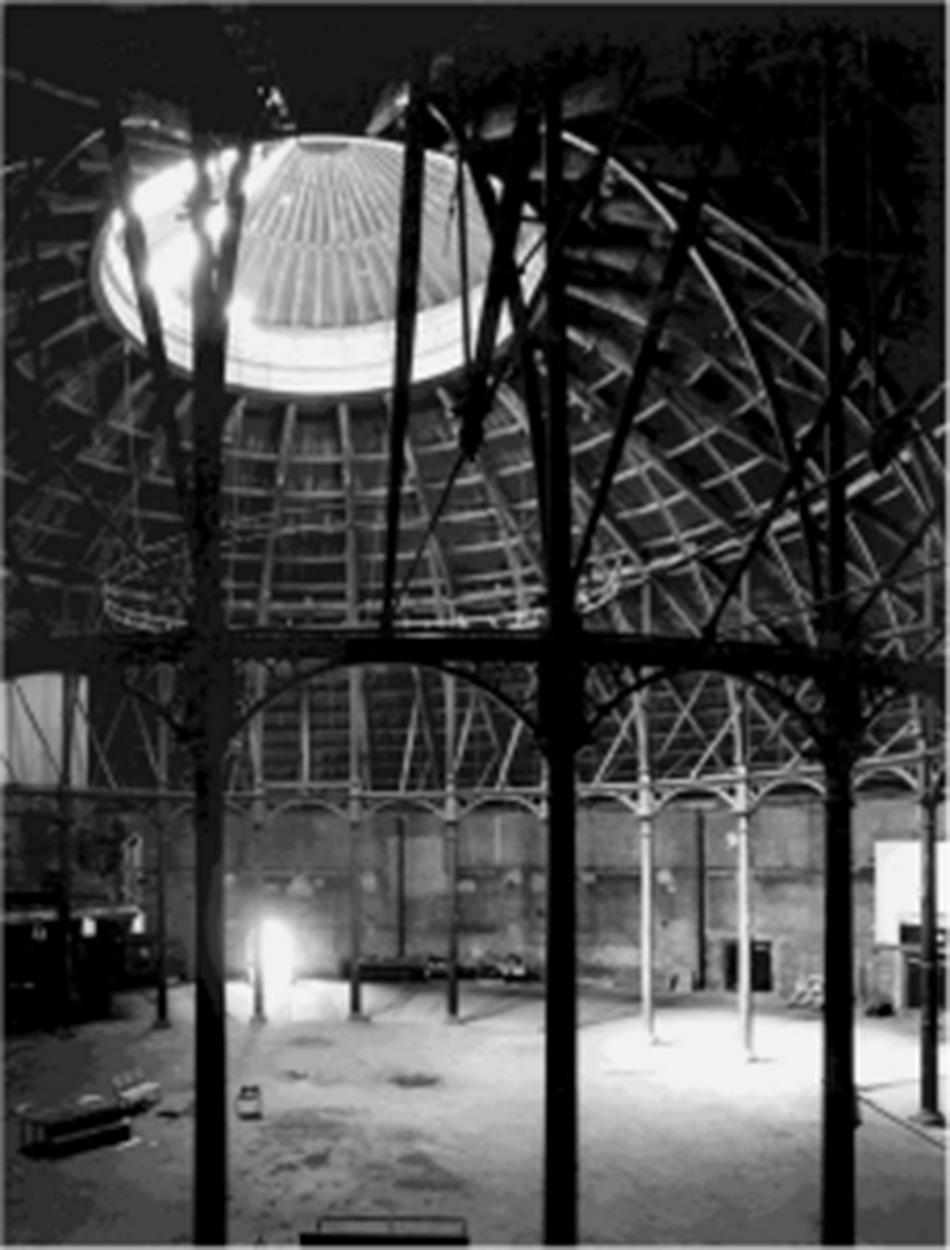
While devoted to future possibilities, the congress was set among the decaying vestiges of Britain's industrial past. The Roundhouse (Figure 1), a former railroad shed dating to the 1840s, had recently been converted into a center for avant-garde performance by the radical dramatist Arnold Wesker. The poorly maintained building was in “extremely shabby” condition at the time of the congress, according to one observer. “The roof leaks in several places, the floor is covered in dust, the yard is full of junk.”Footnote 29Another visitor described the cavernous iron structure as bare, “without parquet floors, ceilings or walls, with naked beams all around, with decrepit borrowed chairs and benches.”Footnote 30To the young poet Iain Sinclair, the disheveled look of the hall, “Big & empty,” qualified it as “a good location for [the] event.”Footnote 31
Interior of the Roundhouse, undated. Image credit: Roundhouse. Photographer unknown.
To draw enough people to fill this enormous space, the planning committee tapped into a transatlantic network of radical counterinstitutions, placing advertisements in underground newspapers and sending promotional literature for distribution at countercultural bookstores, community centers, and free universities.Footnote 32 Berke sent posters to those who inquired about registering, requesting that they be mounted in conspicuous locations around universities, city parks, and hospitals, thereby enlisting prospective attendees in a campaign to publicize the congress.Footnote 33
As its full title—the International Congress on the Dialectics of Liberation— suggests, the organizers aspired to overcome Cold War geopolitical fragmentation, English parochialism, and the legacies of colonialism, making the event properly global in every respect. Berke regarded the attendance of people “not only from Western countries but also from the Communist and Third worlds” as “essential to the development of the Congress.”Footnote 34 To that end, the planning committee fired off invitations to dozens of writers, artists, scholars, and public figures from across Africa, Asia, Latin America, and Eastern Europe in the hope of adding them to the program.Footnote 35 To raise the profile of the congress beyond the global North, they also placed a series of advertisements in Marcha, a Spanish-language leftist newspaper published in Uruguay, and arranged for the socialist government of Zambia, which had recently secured its independence from the United Kingdom, to broadcast selections from the congress over the radio.Footnote 36
Before the DOL was underway, the organizers appeared to hedge on their radical democratic vision of the event. Despite emphasizing audience participation and self-management, they also, somewhat incongruously, described the congress as primarily an opportunity for “leading intellectuals” to share their “expert knowledge.”Footnote 37 The final draft of the program was weighted toward the latter idea. A principal lecturer would speak every weekday morning before taking audience Q & A. After lunch, they would participate in a panel discussion devoted to the themes of their lecture.Footnote 38 Seminars, scheduled later in the afternoon, were designed, according to Berke, to “help people to digest” the main idea of the morning talk, going “over it again and again” in groups of about twenty.Footnote 39 Practically the entire day, it seemed, was devoted to reinforcing the argument of a single lecture. Only the evenings were set aside for unstructured activity. During these hours, as Redler told the folk singer Joan Baez (who declined her invitation), audience members could organize “discussions, poetry readings, singing, dancing and inner-or-outer-directed ‘happenings’” as they pleased.Footnote 40 The program therefore mixed “the formal and the informal, the prepared and the improvised,” as one observer wrote, leaving room for spontaneity and broad participation, albeit within strict limits.Footnote 41
This hybrid form largely resulted from a shift in how the organizers imagined the congress. In the first invitations that he sent to prospective speakers (in the summer of 1966), Laing referred to a quiet gathering of distinguished scholars at an estate in the English countryside.Footnote 42 By the following spring, this plan had been scrapped; instead, the committee planned to organize a large-scale public festival of ideas, the costs of which would be covered through ticket sales. Still, while no longer “an exclusive symposium of ‘eminent people,’” the congress would retain some of its initial, more modest shape.Footnote 43 To manage the enormous number of attendees, the organizers sorted them into three categories: Alphas (speakers), Betas (seminar leaders), and Gammas (the general audience).Footnote 44 (Their dry use of the class designations in Aldous Huxley's dystopian novel Brave New World indicates an uneasy self-awareness about the possibly sinister implications of their authority.) Alphas, Berke reassured the Cuban novelist Alejo Carpentier, would enjoy “a maximum of private and informal discussions and meetings.”Footnote 45 Admission to seminars, he explained to another prospective attendee, would be restricted to ensure “privacy for the participants.”Footnote 46 Only the lectures would be open to everyone. In this manner, the organizers hoped to nestle an intimate and sheltered scholarly gathering within a more chaotic mass event.
Not everyone was pleased with this arrangement. Having agreed to join what was billed as an academic symposium when he first corresponded with Laing in the summer of 1966, the Canadian sociologist Erving Goffman expressed surprise and displeasure, in March of the following year, at how plans for the event had changed in the interim. “Frankly,” he wrote, “I had not thought that the Conference was to receive the publicity it has and launched as something that people pay to attend. It seems to me that such a format may be fine for disseminating ideas to a wider public, but perhaps not the best imaginable one for cultivating and developing perspectives and conceptions.”Footnote 47 As Goffman pointed out, the impending congress had come to resemble a rock concert or a political rally—environments that were wholly unsuited to disinterested discussion. He abruptly withdrew from the program just days before the event was set to begin.Footnote 48
Others raised political objections to the commercial nature of the congress. Attention-grabbing promotional literature featuring the names of famous people (including several who had declined their invitations) in large print, and offering few other details, was transparently designed to leverage celebrity in order to sell as many tickets as possible. Redler alluded to this crass calculus in an invitation to the comedian and civil rights activist Dick Gregory, whose involvement, he bluntly wrote, would help the committee “meet the enormous expense of convening [the] Congress.”Footnote 49 Unsurprisingly, such shameless entrepreneurialism proved controversial in the radical precincts that the organizers hoped to entice. In response to an invitation from Berke, a member of the Situationist International in France denigrated the DOL as “a pseudo-event, having more to do with the star-system than with any kind of revolutionary activity.”Footnote 50
Nonetheless, efforts to promote the congress succeeded in stoking interest over the months leading up to July. In a recent interview, Sinclair recalled, “There was some excitement about this event which we'd heard was happening at the Roundhouse. Some of the names meant a lot to us, others were more obscure, and it seemed that you could sign up for this whole project and listen to them and get a chance to engage with them.”Footnote 51 The organizers were soon flooded with inquiries. Because frustratingly little information had been provided, many people wished to know more about what was planned. Advertisements for the congress served up grandiloquent language (one flyer reads, “We must destroy our vested illusions as to who, what, where we are … We must combat our self-pretended ignorance as to what goes on and our consequent non-reaction to what we refuse to know …”), but generally said nothing concrete.Footnote 52 As Elizabeth Robinson, a student at the University of Sussex, politely asked, “I have a pamphlet telling me that all men are in chains, that I am being killed and enslaved—but what will this conference be about?”Footnote 53 The folk singer Pete Seeger, who declined his invitation, offered a more pointed reply. Noting that their turgid prose “repels many people whom you are trying to reach, even such as myself,” he urged the organizers to “learn how to write the English language more as it is spoken.”Footnote 54 Others cast doubt on the event's utility. From Detroit, a man named Joel Kohut questioned Berke, “what is your conference going toward? what does goodman, ginsberg et allus know about phenomenology that husserl did not know? that i did not know? that we do not know?”Footnote 55 For altogether different reasons, the British antiwar activist Peter Neville dismissed the congress as a costly distraction, quipping that “fifteen guineas could perhaps be better spent on Peace Action rather than just talking.”Footnote 56 The organizers’ authority was under attack before the congress had even begun.
“Dictated from above”
A selected chronology of the congress provides a sense of the range of topics that were covered, and the variety of public figures who spoke, over the course of its two-week run. R. D. Laing delivered his opening remarks on Saturday 15 July. Gregory Bateson lectured on the morning of Monday 17 July, joining Laing, Paul Goodman, and the anthropologist Francis Huxley for a panel later in the afternoon. That evening, the Buddhist monk Thích Nhất Hạnh and the poet Võ Văn Ái discussed the war in Vietnam. Stokely Carmichael lectured the following morning, then in the afternoon joined C. L. R. James for a discussion of Third Worldism. On Thursday, the leftist writer David Horowitz (later a noted neoconservative) offered his analysis of the Six Day War, which had recently concluded in the Middle East. The next day opened with a lecture from the Marxist economist Paul Sweezy, followed by remarks from Julian Beck in the afternoon, and finished with chants of the Hare Krishna mantra, which were led by Allen Ginsberg. On Saturday evening, 22 July, Carmichael joined Ginsberg, Laing, and Emmett Grogan for a raucous panel, in many ways the crescendo of the congress. The following day, Carmichael joined several Afro-British activists, including Michael Abdul Malik and Obi Egbuna, for a discussion of Black Power. A symposium on antipsychiatry was held on Monday 24 July. Goodman delivered his lecture the next morning—followed the next day by the philosopher Lucien Goldmann, who was introduced by Herbert Marcuse. A celebration of the Cuban Revolution on the night of 26 July began with remarks from the novelist Edmundo Desnoes, followed by film screenings and readings from the Afro-Caribbean poets Edward Brathwaite, Evan Jones, John La Rose, and Andrew Salkey. Ginsberg's lecture took place on Thursday 27 July; that evening, he joined the poets Jerome Rothenberg, Susan Sherman, and Ted Joans for a reading. Marcuse delivered the congress's keynote lecture on 28 July. The next afternoon, Cooper offered closing remarks, and on that night, Carolee Schneemann staged her multimedia performance, “Round House.”Footnote 57
For a fortnight, artists, students, activists, and professionals debated Maoism and Zen Buddhism, cybernetics and psychosis, surrealism and Palestine. While many questions divided the congress, perhaps the deepest fault line concerned the political relevance (or irrelevance) of the emerging youth counterculture in the global North.Footnote 58 On one side, Ginsberg celebrated “hippies” as the vanguard of a liberated culture based on cooperation, sensuality, and individuality. Marcuse speculated that by emancipating “human sensibility and sensitivity,” and thus creating “new needs and satisfactions” that consumer capitalism could not satisfy, the hedonistic ethos of the counterculture could be the springboard of revolutionary social transformation.Footnote 59Others offered less sanguine appraisals. To Carmichael, “flower power” was nothing more than a “cop out”: far from “smash[ing] the system,” the hippies helped to stabilize it.Footnote 60The anti-imperialist writer John Gerassi, meanwhile, forcefully argued throughout the congress that the only emancipatory social force was armed struggle in the Third World. For Gerassi—who boarded a plane to Havana to prepare for the founding conference of the Latin American Solidarity Organization immediately after appearing at the DOL—too many voices in the Roundhouse mistook “psychological oppression” for “physical oppression, from an outward enemy,” and had failed to grasp that “liberation is to fight.”Footnote 61Instead of sitting around to “talk about their souls,” he insisted, radicals in the global North “must become revolutionaries, too.”Footnote 62
As Gerassi's remarks suggest, antagonistic views of the counterculture implicated the congress itself. In their speeches bookending the DOL, Laing and Cooper outlined a strategy of psychopolitical struggle at “intermediate system levels,” envisioning schools, hospitals, factories, and other institutions as sites for “transforming consciousness.”Footnote 63Both made clear that the congress was an institution of precisely this kind, positing its revolutionary potential in ways that were repeatedly challenged over the course of the event.
Paul Goodman offered perhaps the least charitable view of the congress, calling it “a lousy educational experience” in his lecture. In his view, the speakers had offered only dogmatic slogans, pandering to different constituencies and challenging nobody's assumptions. For their part, the audience had reacted like sheep, mindlessly expressing their degree of approval according to ideological formulae. (The alternating jeers and applause elicited by his speech seemed to reinforce the point.) To Goodman, the organizers had erred in describing the congress as a “happening,” as the term implied “an exploration of chance, of drawing on spontaneous community response to a concrete situation.”Footnote 64 In reality, the event, managed to excess, hermetically resisted the unexpected.
Several “Alphas” evinced discomfort with the intellectual authority with which they had been invested and challenged the audience to reject it. Emmett Grogan, whose background was in improvisational theater, made a notorious effort to stir the audience out of its passive condition. On the evening of 29 July, Grogan delivered a speech that, as he would later write, “had the whole audience up on its feet giving him an enthusiastic, standing ovation.” Once the applause subsided, however, he shocked his listeners by revealing that the apparently innocuous remarks they had just heard were originally spoken by Adolf Hitler thirty years earlier. Grogan recalls in his memoir that upon learning this, the assembled crowd of “about one thousand” abruptly descended into chaos, “breaking things up, setting stuff on fire.” Grogan's prank, however juvenile, was meant to show that the arbitrary, hierarchical organization of the congress encouraged the audience to subscribe to whatever the chosen speakers said. Whether applauding or rioting, they had become an unthinking, manipulable mass.Footnote 65
Grogan's fellow dramaturge Julian Beck articulated a similar point during his sudden, unplanned appearance at the Roundhouse on 21 July. Beck delivered extemporized remarks while seated among his listeners (Figure 2).Footnote 66 In his speech, he described the “thoroughly collective vision” of the Living Theatre, explaining that the company rejected the premise “that one person [e.g. the director] comes and gives the answer.” Their creative process involved spontaneity, equality, and community, and its members shared a belief that “the Holy word comes from the unification of us all, and … when that moment of unity comes, when the spark ignites, when we meet and the electricity happens, that then we'll find the answer.”Footnote 67 While Beck's words specifically referred to the theater, they also applied to the congress, which was promised as an opportunity for unrestricted, collective thinking among equals.
Julian Beck speaking at the congress. One of his listeners holds a microphone to capture his improvised remarks. Source: John Haynes for IKON, October 1967.

The failure of the DOL to live up to that promise was, at least in part, the subject of Allen Ginsberg's lecture on 27 July (with which this article began). Disturbed by the vitriol and hostility that were exhibited during the panel on which he had appeared with Carmichael, Grogan, and Laing the previous Saturday night, Ginsberg sought to explain (in his nonlinear fashion) the sources of potential violence inside the Roundhouse. His analysis centered around the power of mass communications technology to stifle independent thought, generate conflict, and enhance the authority of ruling elites. Radio, television, and other media, he argued, present audiences with “a phantasy or image or movie of [themselves],” encouraging people to passively absorb the sounds and pixels beamed at them. These electronic media offer “front symbolisms”—images of an illusory public self that conceal the real person underneath—and lull their subjects into an uncritical acceptance of the distinction between ordinary people and public figures. Ginsberg believed that the unsavory dynamics in the congress followed this pattern: people had fought to “control the microphone,” recognizing its status as an instrument that determined the hierarchically arranged “identity-role[s]” structuring the congress (“spectators,” “conference participants,” “preachers,” and so on). To achieve “liberation,” they would have to abandon these roles and give up on the struggle to control the means of communication. “We don't need leaders,” he stated before drawing to a close. As an alternative form of social organization, he pointed to counterinstitutions, such as “free stores, free cooperative activity, [and] underground newspapers” where ideas “spread naturally on their own and can be practised democratically on the grass roots, with the active political consciousness of the masses … raised—but not dictated from above by microphone.”Footnote 68
Ginsberg was uneasily aware that his message was misaligned with the context in which he expressed it. His own voice, of course, was amplified by a microphone. The structure of the congress codified his status as a “preacher,” reflecting conditions in the world beyond: in the Kodak Mantra Diaries, Sinclair describes Ginsberg's many run-ins, while in London, with paparazzi and aggressive “poetry groupies” desperate for a glimpse of their celebrity prophet.Footnote 69 Inside the Roundhouse, Ginsberg seemed determined to play the role of an ordinary participant. Sinclair observes him listening intently to a lecture as he stands alone at the back of the auditorium. Predictably, these attempts at inconspicuousness fail. “People continually wander up to him, ask questions, or just stand as close as they dare, inhaling the aura,” Sinclair writes. “He shrugs them off, answers shortly, moves away.”Footnote 70
“A breakdown in communication”
“Alphas” like Goodman and Ginsberg were not alone in their frustration with the congress. Many “Betas” and “Gammas” had expected the gathering to be far less structured, and far more participatory, than it turned out to be, and made their disappointment known throughout the event.
Roughly two hundred people registered for the full two-week program of seminars and lectures, while thousands more showed up for lectures and performances à la carte (often without having purchased a ticket). The first category of attendee is better documented in the Berke archive. Its ranks include mostly students and academics, as well as many psychologists, physicians, artists, and activists.Footnote 71 A Danish free university, a Canadian Marxist–Leninist party, and a left-wing Spanish scholarly institute were among the organizations that sent entire delegations. (Kingsley Hall, meanwhile, supplied much of the volunteer labor.)Footnote 72 While most of those in attendance were from the global North, many global South nations—including India, Kenya, Malawi, Mexico, and Nigeria—were represented.Footnote 73
Berke's correspondence with prospective seminar leaders reveals the variety of interests that attracted people to the congress. Fred Weaver, an African American psychiatrist from California, planned to lead a session about psychedelic therapy.Footnote 74 Vickie Hamilton, a philosophy student in England, proposed to explore the British psychoanalyst D. W. Winnicott's theory of interpersonal relations using mirrors and a “story-poem” that she wrote for the occasion. Juan Ramón Martínez, a Honduran political scientist, wished to convene a discussion of “competition and conflict” between Chicano and black liberation movements in the United States. Other suggested topics included “the family as the nucleus of human social behavior,” “relativism in ethics and aesthetics,” “the Middle East situation,” “public and private space,” and “how to set up anti-environments (hospitals, schools, universities).”Footnote 75 These proposals not only reveal a wide range of concerns; they also show that attendees sought to shape the event in ways that had the potential to conflict with the organizers’ intentions.
The struggle between audience and organizers began on the first night of the congress. At a meeting held to plan portions of the program—in which those who were registered for the entire two-week program were allowed to weigh in with their preferences and suggestions—the organizers were accused of blocking “genuine dialogue,” refusing to let discussion “follow … [its] natural course,” and trying to “‘structure’ everything in advance.”Footnote 76According to the journalist Roger Barnard, people were angry that there had been no traveling microphones in the venue at the first lecture, leaving the audience unable to raise questions from the floor. Many objected to what they perceived as the congress's hierarchical spatial arrangement. One person suggested that “even for the public lectures, the seats should be arranged in a circle.” To eliminate “the roles of ‘speaker’ and ‘audience,’” it was necessary that seminars “not be ‘conducted’ by anyone in particular.”Footnote 77 Others were unsatisfied with the unexpectedly academic tenor of the gathering and suggested that participants should “fan out from the Round House, and initiate action and protest in the local community,” rather than talk among themselves.Footnote 78
The audience only grew more restive in the days that followed. Defective technical equipment made it difficult to hear what was said onstage. (As Sinclair wrote, “mad runs of feedback [from] … the crippled sound-system … put paid to all communication.”)Footnote 79 Even worse, a few speakers seemed to deliberately resist intelligibility. Laing's lecture was especially jargony, oracular, and convoluted. During his appearance with Carmichael, Ginsberg, and Laing, a taciturn (and strung-out) Emmett Grogan could only muster the occasional word, and when he spoke it was only to mumble meaningless slogans in a flat, hostile monotone.Footnote 80 Many organized discussions drifted aimlessly, exhausting and boring those in the room. A panel that brought together Bateson, Goodman, Huxley, and Laing on the morning of 17 July lacked a coherent guiding question or motivating idea—failing, as Huxley later noted, to produce a “common language.”Footnote 81 (One observer described the panelists, who became visibly irritated with one another as the event dragged on, as “talking to themselves, literally.”)Footnote 82 Members of the audience made their displeasure known—applauding, for instance, when one man, holding the microphone during Q & A, described the congress as offering only “mystification.”Footnote 83
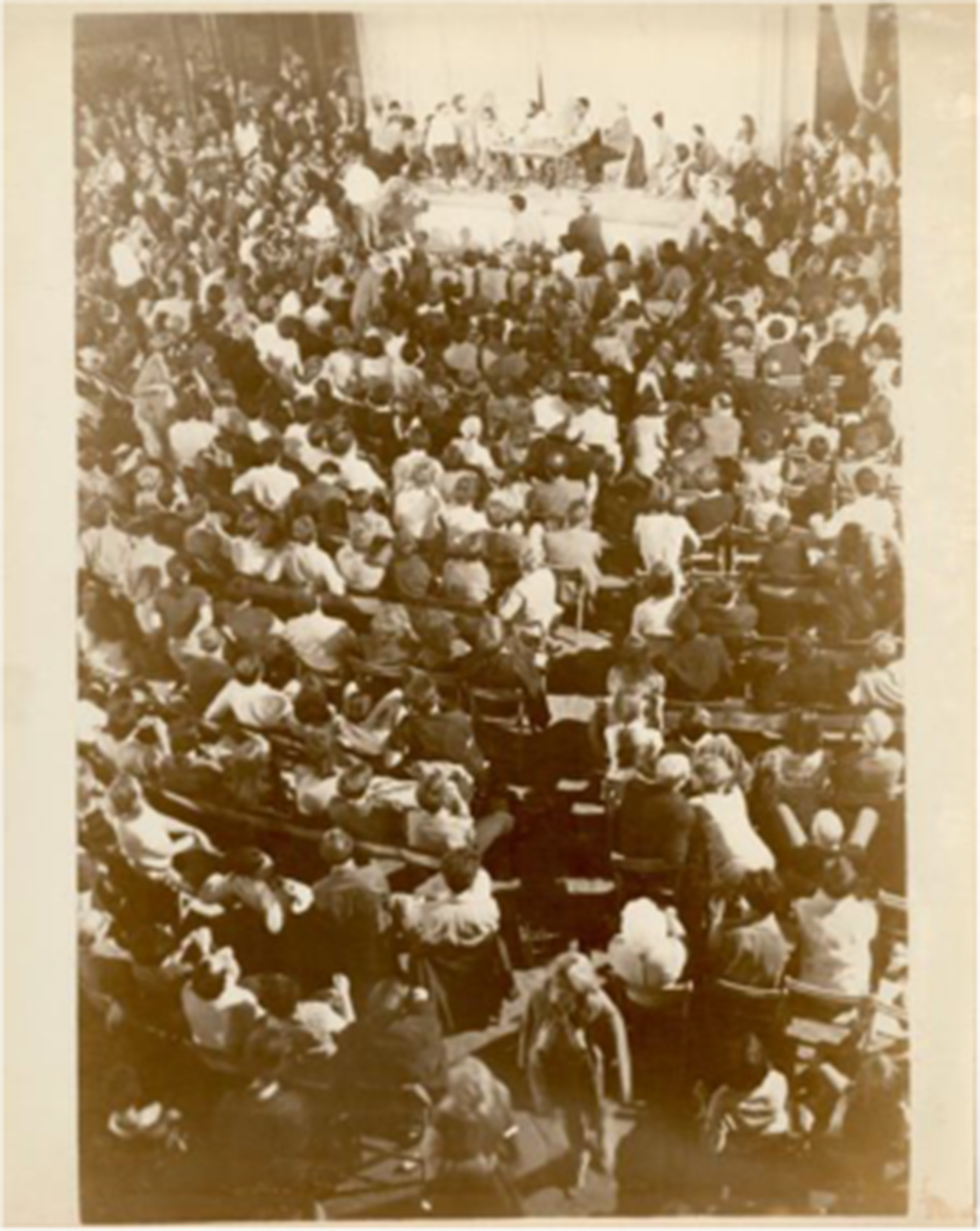
As Goodman had complained in his lecture, many arrived at the Roundhouse less willing to expand their minds than to impose their views by force. The American poet Susan Sherman observed that “those who spoke loudest and fastest were often those who were most attentively listened to.”Footnote 84 This was especially true whenever Carmichael appeared onstage, invariably courting controversy and revving up his fans. Speaking on the night of 22 July (the missed “attempt at communication” to which Ginsberg alluded in his later remarks), the notoriously sharp-tongued activist bragged about carrying a gun and suggested that a white audience member who asked a question about allyship should kill her parents.Footnote 85 (The next morning, he expressed his hope that the Chinese government would “give Africans the H Bomb.”Footnote 86) Unsurprisingly, such provocative statements polarized the room, which was filled to capacity (Figure 3). Portions of the crowd periodically cheered him on, chanting “STOKE-LY!” and “BLACK POW-ER!” Those who vigorously objected were threatened by other audience members—or else shouted down by Carmichael, who clutched his microphone.Footnote 87 A similar scene had taken shape several days earlier, when Carmichael endorsed violence while speaking on a panel with John Gerassi, C. L. R. James, and the American historian George Rawick. An audio recording of the Q & A captures loud jeering as the antiwar activist Peter Cadogan challenges Carmichael, declaring, “it's time somebody put the case for nonviolence.” Against the mounting clamor, Cadogan—who began his statement by saying that violence results from a breakdown in communication—can be heard to shout, “There's a little word called dialectics, and it hasn't begun yet!”Footnote 88
The packed floor of the Roundhouse on the night of 22 July. Crowded onto the stage, from left to right, are Laing, Grogan, Ginsberg, Carmichael, and Cooper. Source: unnumbered box, unnumbered folder, Berke Archive. Credit: John Haynes.
The audience competed for airtime and had few opportunities to challenge the speakers. An unpublished report on the congress describes a lack of “communication between the audience and the platform,” noting that a lack of microphones made it “extremely difficult for anyone in the audience to stand up and make a point or ask a question … [Indeed] it seemed that the platform was prepared to disregard communication altogether.” Because their “points could be made only at the end of the talks,” if they could be made at all, audience members were essentially forced to listen quietly and patiently even when they found the speeches objectionable.Footnote 89 At the panel discussion featuring Carmichael, Gerassi, James, and Rawick, one man expressed his dismay by declaring, “We are being submitted to a tyranny of the microphone.” Invoking the congress's promise of multilateral communication, he added, “[We] met here to talk to one another, and not just to listen, and I would have hoped that we might have an opportunity of talking together.”Footnote 90
The unilateral flow of discourse—from stage to floor—did not go unchallenged. Audience members grew increasingly impatient with the fruitless discussion between Bateson, Goodman, Huxley, and Laing on 17 July, prompting the moderator, psychiatrist Ross Speck, to urge them to reserve comments for the afternoon seminars, telling them, “We may allow this stuff, but we haven't got off the ground yet.” According to the transcript, someone in the audience indignantly shouted “something about Allow?”—perhaps suggesting the word's ominous undertones—to which Speck shot back, “I am the moderator, and I am not going to allowyou.”Footnote 91 To many participants, such exchanges revealed the hollowness of the antiauthoritarian rhetoric used to promote the congress. The organizers wanted order: only a select few were authorized to speak, and the rest should remain silent. That view seemed to be shared by the main lecturers. When, during Q & A, someone quipped that Marcuse's description of a free society resembled the hyper-managed dystopia of Brave New World, the German philosopher agreed, explaining, as one observer paraphrased him, that “in the free society there will have to be indoctrination in freedom … as there is now indoctrination in authoritarianism, and we will have to come to terms with the educational dictatorship.”Footnote 92Insofar as the congress was meant to disrupt authoritarian social patterns, it had apparently failed. If anything, those patterns had been replicated, even intensified, within the walls of the Roundhouse. As one participant declared, “I've learned a little something in this conference about … positions of power, or positions of control, positions of authority.”Footnote 93
The composition and organization of the congress also reflected the social inequalities that structured the public sphere beyond the Roundhouse. While much of the audience was female, the program included just one woman, Carolee Schneemann. Gender inequality was left entirely unaddressed during the congress (class, race, and colonialism received far more attention), except for a brief protest by a small group of feminists who, according to one attendee, “seized some hand mics and began to denounce the entire structure and organization of the Congress” before trading insults with hecklers.Footnote 94 Although the demographics of the audience varied from one day to the next, most participants were white, university-educated, and either European or North American. A report published in The Guardian estimated the ratio of white to black people in attendance at one panel as “approximately six to one.”Footnote 95 The relative absence of working-class, nonwhite, and global South perspectives exasperated many participants. During Q & A, a South Asian man excoriated Ginsberg for misappropriating non-Western religious traditions, challenging him “to explain what Hinduism means” and insisting that a genuine Buddhist would not “use publicity” to “advertise” themselves. (The same man also objected to Ginsberg “going around with young girls,” prompting laughter from the audience and shouts of “young boys!” Ginsberg's homosexuality was not a secret.)Footnote 96 In a letter to Berke written after the congress, the Indian historian Romila Thapar stated that although she was “delighted” to see the audience take an interest in “the Third World,” their sympathetic views seemed to be “based on misconceptions or wishful thinking.”Footnote 97 Few working-class Londoners, meanwhile, could afford the steep entry fee or the time necessary to participate in the congress. Following Marcuse's keynote lecture, a man with a heavy Cockney accent condemned the class character of the event. “If you really were interested in other people,” he sneered, “you'd go talk to the people who are hard to talk to, not the people who are easy to talk to,” implying that, for all their talk of revolution, middle-class intellectuals were unwilling to abandon the narrow spheres in which they were most comfortable. Otherwise, he concluded, “this is all chat!”Footnote 98
“The struggle for contact”
Midway through the DOL, the American psychiatrist Phil Epstein declared that the congress had already fulfilled its mission. While few of the discussions had clarified issues or resolved disputes, critics who emphasized these deficiencies missed the point. What made the gathering meaningful was the new relationships that it made possible. As an example, Epstein pointed to the composition of the panel on which he appeared. Besides himself, it included Carmichael, a Trinidadian American, and three Afro-British activists, all of whom had immigrated from around the Atlantic: Roy Sawh, from Guyana; Obi Egbuna, from Nigeria; and Michael Abdul Malik (later known as Michael X), also from Trinidad. Epstein celebrated this union of diasporic African radicals who had previously been strangers, but he also affirmed the thousands of less public connections that had been established within the Roundhouse over the previous days. These unknown but vital interactions, taking place out of the spotlight and away from the microphone, had sustained a “true dialogue.”Footnote 99 It was only through them that any “dialectics of liberation” could take shape.
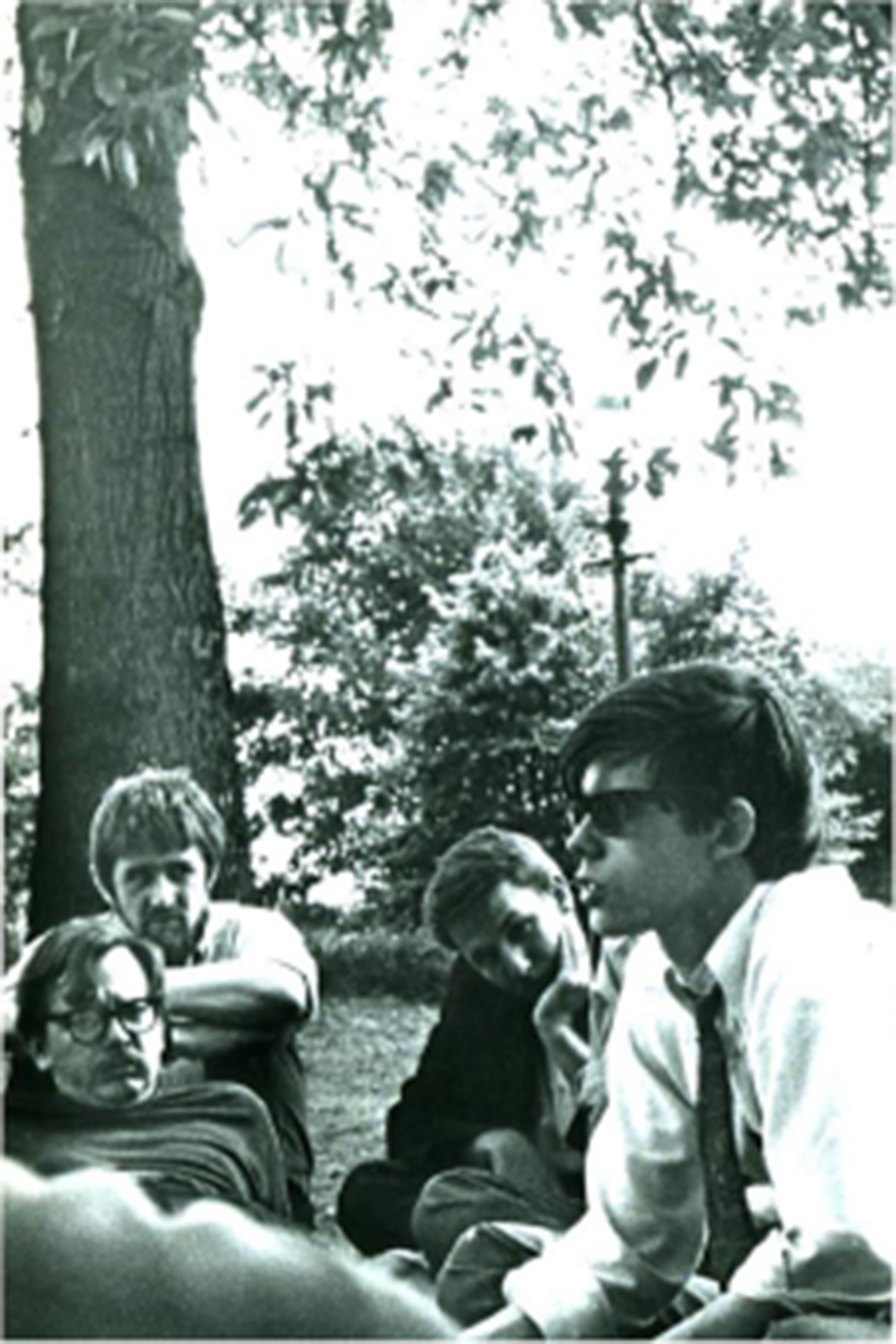
Indeed, while the headline lectures dominate the historical memory of the DOL, the bulk of the congress consisted of workshops, seminars, and performances, with unstructured activity filling the space in between. One attendee recalls “singing (of Indian bhajans), unconventional, small theatrical events and unexpected ‘happenings,’” much of which spilled out of the venue, onto the street and into nearby pubs and parks (Figure 4).Footnote 100 The existing sources provide only fragmentary glimpses of this. In his diary, Iain Sinclair pays close attention to the audience, treating it as part of the spectacle. On the first morning, he observes, “Connections are established among the shifting mass … Soft drinks are bought, people climb the stairs, lie on mattresses on the upper deck, listening not watching, smoking, chatting in small groups.” His roommate, who attends every lecture, sleeps in the Roundhouse for two weeks and brings “odd characters home for breakfast” every morning.Footnote 101 Years later, Sinclair recalled “old railway yards among sunflowers and waste spots [behind the venue where] you could just wander about, and people would happily come out of the conferences or arguments they were having and sit down and talk to you, even [if they] didn't have the faintest idea who you were.”Footnote 102 An account published in a London anarchist newspaper provides a more vivid picture:
Several people brought sleeping bags and actually lived there … A huge swing had been hung from the gallery, and kids and grown-ups swung and climbed … A pedal organ in one corner was in constant use. Impromptu poetry recitals were held. Poems were pinned up on the wall, and were joined by a set of charcoal drawings. Someone discovered an old piano frame in the yard and began playing it with two sticks: others joined in with metal pipes, milk crates, tin cans and produced a mind-blowing sound … Another time a middle-aged Dane announced that he felt like dancing: he danced, someone played a tambourine, other clappedor beat a rhythm on the hollow iron pillars.Footnote 103
Unidentified participants meet for a seminar in the park, bringing the congress outside the Roundhouse. Credit: Ragna Karina Priddy.
These accounts present the DOL less as a scholarly symposium than as a dynamic environment brimming with creative friction—or, in Laing's words, “a setting where things can happen.”
Participants in the congress at times used communications technology to facilitate and document the open-ended exchange of ideas. Epstein noted that several of the afternoon seminars were being recorded—not to formalize what was said, but instead to provide a model of “how ideas can generate … and how [people can] act on them.”Footnote 104 Michael Abdul Malik also viewed audio technology as a tool for expanding and enriching collective discourse. As Malik explained on the panel at which he appeared with Epstein, he had been engaged in conversation by many people in the course of the congress, but he did not have enough time to speak with all of them. As a solution, he recorded a freewheeling conversation among the guests in his London home (including Carmichael and the SNCC activist George Ware), intending to play the tape at the congress later on. “I hope,” Malik told the audience, “that through this tape we can bring our sitting room into the Roundhouse and allow you to have the experience of the evening even though you were not there.” To enhance the immediacy of the listening experience, Malik did not edit the recording. Instead, he left in “long gaps of silence,” privileging no single moment or voice.Footnote 105 To an extent, this audio document could collapse the distance between intellectuals and their publics by extending the range of private conversation. Still, while listeners gained access to the voices on the recording, they could not respond. They could, to use Ginsberg's language, peer behind the “front symbolisms” of public figures, blurring their “identity-roles,” but as passive spectators rather than interlocutors.
Carolee Schneeman made more ambitious use of communications media—and assorted materials—in “Round House,” an improvisational performance held on the last night of the congress. A promotional flyer announcing the piece early in the congress described a “sensuous environment” of “waste materials” situated in “radical juxtaposition,” within which “encounters [could] be realized” and “a social range of cultural taboos and repressive conventions” exposed.Footnote 106 Schneemann's language was deliberately opaque: as much in the work was up to chance, little could be said about it in advance. (She was also adapting to contingencies up to the last minute: heavy rain on the night of the performance forced her to abandon a plan to ferry the audience into the venue, one small group at a time, using a rope.)Footnote 107 The idea of “Round House,” which Schneemann later described as a meditation on the “dominant issues and elements of the congress,” was inseparable from its embodiment in form and movement, just as control over its meaning belonged to each person who, consciously or not, participated in its realization.Footnote 108
According to Schneemann, while “many of the congress discussions … broke down into shouting matches,” “Round House” depended on a large reservoir of cooperation.Footnote 109 Because the piece required a sizable cast of dedicated performers, she recruited untrained actors from the audience over the course of the congress. No one in the eventual “core group” of about ten people, nor in the “mass group” of about thirty—altogether a motley crew of “economists, Trotskyites, Marxists, social workers, doctors, artists, an heiress escaping her family,” and five working-class boys from the neighborhood—had a background in theater or dance.Footnote 110 Strangers to one another at first, they grew comfortable with one another by practicing highly physical “contact improvisation” in open rehearsals every day for two weeks. Their meals and costumes, meanwhile, were arranged by Emmett Grogan, who solicited donations from other attendees.Footnote 111
Not everyone, however, was willing to cooperate with Schneemann, whose plans for “Round House” incorporated fragments of taped lectures and comments from the audience, cut up and reassembled beyond coherence. Among the invited speakers, Paul Goodman objected with particular vehemence, complaining that removing his words from their context would void them of all meaning and undermine his intent. Schneemann did not yield, but she was “disappointed” by the hostile response from Goodman and others, having “hoped for a full sense of community and communality” at the congress.Footnote 112 Her use of recorded audio was meant to deepen this “sense of community,” as listeners would not just hear snippets of language but recombine them according to the sonic and conceptual resonances that they evoked at a given moment. The words with which “auspicious culture heroes” had subdued the audience over the previous two weeks would become the source material for a collaborative and inclusive process of meaning-making.Footnote 113
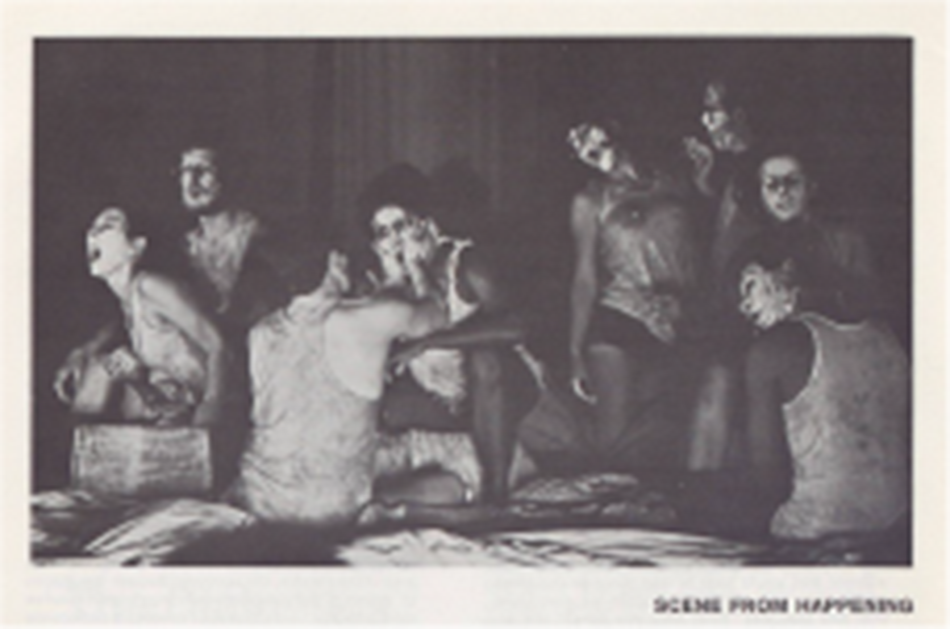
On the night of the performance, approximately five hundred people gathered in the Roundhouse, arranging themselves in “a huge semi-circle.”Footnote 114 At the center were the artist and performers, a horse, and a cart, surrounded by debris.Footnote 115 The atmosphere inside the venue was tense: Schneemann later remembered the audience as “testy,” “aggressive,” and full of hecklers.Footnote 116 But these dynamics changed as “the core group's developing closeness spread into the actions of the mass group,” and then out into the audience (Figure 5).Footnote 117 The activation of the audience, which Schneemann intended to draw into a spontaneous creative process, was achieved through multiple kinetic and sensory effects. As the poet Susan Sherman described in her detailed account of the work, the actors abandoned the stage, dispersing themselves across “the total area of the theatre.”Footnote 118 Disturbing images and sounds wore down the audience’s defenses, provoking their “honest emotional reaction[s].” At one moment, “shapes of greased, foil-covered, sweating human bodies [were] silhouetted against pictures of newsreels and scenes from Vietnam,” a layered assault that many “could not bear, even for an hour, to sit still and listen [to].”Footnote 119 The concluding movement brought catharsis: people rose from their chairs to dance as the Social Deviants, a psychedelic rock band, showered them with electrically amplified sound, bottlecaps, and blinding light.
Members of the “core group” during their performance of Carolee Schneemann’s “Round House.” Credit: John Haynes. Source: IKON, October 1967.
To Sherman, “Roundhouse” dramatized the “struggle for contact” animating the congress.Footnote 120 Schneemann's work had generated a shared experience of profound physical and emotional intensity—in so doing, providing those who were present with a fleeting sense of collective possibility. As the artist reflected, “We were evolving not simply a ‘performance,’ but a microcosm of creative inter-relations … [We] were discovering a concrete clarification of the actual social situation, and a full self-identity within a group process.”Footnote 121 Like the congress itself, “Round House” brought a range of dissimilar elements together in close quarters, producing a hothouse environment where conflict was inescapable. As the boundaries between different sensations, concepts, and people dissolved under the pressure of these circumstances, new beginnings emerged.
The distinctions among “Alphas,” “Betas,” and “Gammas” also blurred at certain moments in the congress. As David Cooper wrote in his summary of the event that introduces To Free a Generation, “the ‘principal speakers’ mixed … freely … with the ‘audience’,” exchanging words and sharing parts of themselves.Footnote 122 Sinclair recorded several of these moments in his diary: Michael Abdul Malik “chatting to a matronly black woman, making her laugh, courteous in his manner, fingering a flower,” and “[Alexander] Trocchi … Tense, bundle of papers & books under his arm: a street don looking for a guerilla seminar.”Footnote 123 Audio recordings of the lectures are studded with spontaneous interaction of various kinds: peals of laughter, murmurs of conversation, noise from offstage. Just before Marcuse's keynote address, a pack of children who had wandered in off the street claimed the stage to deliver an improvised poetry recital. They bore hollyhocks, which they distributed among the audience, prompting the seventy-year-old philosopher to begin his remarks by declaring, “I am very happy to see so many flowers here, and that is why I want to remind you that flowers, by themselves, have no power whatsoever, other than the power of men and women to protect them and take care of them against aggression and destruction.”Footnote 124
“What may be a permanent form”
Early in the congress, Iain Sinclair jotted in his diary, “The Roundhouse is discovering a function, a use. People are identifying with it. Making it their own territory.”Footnote 125 As “Gammas” claimed their share of authority, resisting their passive role as the “audience,” things began to happen. Deference gave way to defiance, strangers became collaborators, answers became questions. Noise and signal blended until the two were indistinguishable. But as soon as the congress ended, the organizers reasserted their control, managing its legacy and limiting its meaning to the edited remarks of ten of the speakers with the greatest name recognition.
Plans for the publication that would become To Free a Generation, which were in place before the congress, reveal a set of assumptions about which speakers, and which portions of the event, would be most significant. The book—published by Collier's in 1968, and translated into Japanese, Swedish, German, Dutch, Spanish, and Italian—contains none of the laughter, bursts of applause, informal asides, and other interruptions that fill the unedited lecture transcripts.Footnote 126 All traces of the audience were struck from the official record. Some speakers were given the opportunity to substantially revise their transcripts, stripping the written text of imperfections and extraneous details.Footnote 127 Criticism of the organizers (from Goodman, for instance) also mysteriously disappeared. These aspects of the editing process lent a menacing valence to David Cooper's statement, in his closing address, that during the congress the audience matured “from [a] position of compulsive speaking” to a (more desirable) position of “silence.”Footnote 128
The organizers commodified the congress in other media besides print. Berke commissioned the production of twenty long-playing vinyl records, a ludicrously massive audio compilation that contained a much greater volume of material than found its way into the book. American independent radio stations aired excerpts in the late 1960s and early 1970s, bringing the sounds of the congress to a small but potentially receptive audience.Footnote 129 Some listeners wrote to Berke to share their reactions. Derek Baker, a ward orderly in a psychiatric hospital, found the lectures “thought provoking” but disliked the fact that they offered little hope. So long as the “system of violence and counter-violence” remained in place, he concluded, no one could “genuinely be himself.” Furthermore, it was apparent in hindsight (he wrote in 1973) that the radical ideas and social movements inspiring the congress had fizzled out. Speculating as to why this might be the case, he wondered whether the “intelligentsia” were “so well integrated that they no longer constitute[d] a real threat to the continuity of the prevailing system.”Footnote 130 Integrated or not, the extremely low sales figures for Berke's twenty-record collection suggested that the intelligentsia had moved on from the congress. Just three years after their initial pressing, hundreds of unsold records—the bulk of the stock—sat moldering in his London basement.Footnote 131
While commercial recordings of the congress never reached a mass audience, countless enduring connections and intellectual partnerships that formed within the event furthered the shared construction of knowledge. Bateson, for instance, became an important interlocutor for both Ginsberg and Goodman.Footnote 132 Others found that exchanges at the congress, many of them tense, challenged their worldviews and shifted their trajectories. Although Carmichael later dismissed the DOL as a frivolous retreat for “armchair theoreticians,” his exposure to Malik, James, Egbuna, and other black activists from across the anglosphere pushed him towards an internationalist, pan-Africanist perspective.Footnote 133 Rather differently, for Angela Davis, who stopped in London on her way from Frankfurt to San Diego (where she would go on to study with Marcuse), discussions at the Roundhouse reinforced a commitment to Marxism and multiracial organizing.Footnote 134 The British feminist intellectual Sheila Rowbotham remembered the “peculiar” event as a “two-week trauma,” but the “severe dislocation” that she felt while there was, in the end, generative: Carmichael's “idea of taking hold of your own definitions stuck,” she wrote. “So did the tortured delicacy of Laing. I began to use both ways of thinking for myself.”Footnote 135 The American activist Meredith Tax, then a graduate student in London, attended the congress at a moment of personal and intellectual crisis. Decades later, she credited Laing's lecture with revealing the “fundamentally political” nature of the family, gender, and the psyche—an “enormously powerful” insight that helped break the impasse. In her impression, not only Laing but “[the] whole conference seemed to be saying” that the only path to personal liberation was through politics. Within weeks, Tax joined an antiwar organization; she would go on to become an important figure in the women's liberation and peace movements in the United States.Footnote 136
In his closing remarks, Cooper expressed the hope that the “transnational network” and “forms of collaboration” established inside the Roundhouse would remain in place after the congress had ended.Footnote 137 Not long after its conclusion, the organizers unveiled a new initiative: the Antiuniversity of London. According to Cooper, the project would be an extension of the congress, sustaining its spirit “in what may be a permanent form.”Footnote 138 Indeed, it mirrored the congress in several key respects. It was administered by a committee that included all four organizers of the DOL (Berke, Cooper, Laing, and Redler). The faculty, who offered classes on topics ranging from filmmaking and sculpture to “the social psychology of revolution” and “the politics of small groups,” included many of the same personnel who spoke at the congress.Footnote 139 And the language used to promote the Antiuniversity characterized it, much like the congress, as a nonhierarchical and participatory counterinstitution that would facilitate free, unrestricted, and collaborative thinking—in direct contrast to such bureaucratized venues of knowledge production as the modern university.Footnote 140
Channeling the same utopian ambitions that fueled the DOL, the Antiuniversity was marred by similar disputes. Although students were encouraged to participate in administration and teach seminars of their own, critics, including the American poet Harold Norse, regarded the division of the school community into student, faculty, and administrative “roles” as antithetical to the Antiuniversity's mission.Footnote 141 Many objected to the enrollment fees charged to students, arguing that by monetizing education the Antiuniversity excluded those without the funds to pay, exploited one segment of the population for the enrichment of another, and instrumentalized creativity and thought.Footnote 142 As had been the case in the lead-up to the DOL, the administrators issued mixed messages about how democratically the institution would operate. Berke informed prospective faculty that the goal of the project was to offer established scholars and artists the opportunity to “communicate their work to young people and others outside the usual institutional channels.”Footnote 143 This conception of the school was at odds with other statements, which presented it as a field of spontaneous encounters and experiments in the cocreation of knowledge. Tangled up in these contradictions, and hobbled by logistical and financial difficulties, the Antiuniversity folded after three years of operation. Its demise marked the end of efforts to institutionalize the Dialectics of Liberation.
Conclusion: “the work of the conference is the conference”
Decades after the DOL, Francis Huxley would remember it as “just one rant after another,” a pretentious spectacle where some of the most celebrated public intellectuals of the time briefly converged only to talk past each other.Footnote 144 Where Huxley viewed the congress as having failed to produce coherent scholarly knowledge, many others have characterized it as a political failure. In a postmortem, one observer lamented that despite so much anticipation leading up to the event, it had not produced “a new politics.”Footnote 145 More recently, historians have described the lectures as haunted by a “sense of hopelessness” and “despair” about the possibility of radical social change, judging the congress an “anticlimax” on these terms.Footnote 146
As if anticipating these criticisms, in an article announcing the congress in January 1967 the African American poet Calvin Hernton wrote that the gathering would not necessarily be about “providing solutions.”Footnote 147 The objectives of the congress, as we have seen, had as much to do with radicalizing discursive forms and relations as with the production of intellectual content per se. A seemingly trivial anecdote from the American philosopher Roger Gottlieb, who was in attendance, conveys the point. During Marcuse's keynote lecture, someone unfurled a banner that read, “The work of the conference is the conference—pass the joint!” Suddenly, “dozens of joints started to circulate and Marcuse, to vast cheers, took a puff!”Footnote 148 The printed message communicates that, to many in the audience, everyday interactions and activities among those gathered in the Roundhouse were at least as significant as anything that happened onstage. Enlisting Marcuse as a coconspirator in their hijinks, moreover, was another way to collapse the distance between “audience” and “speaker.”
This article has shown that the DOL was an attempt to construct a “liberated” environment in which thought could flow without the imposition of hierarchies and bureaucratic structures. That endeavor was historically situated: as an intellectual counterinstitution founded upon radically antiauthoritarian principles, the congress was a node where several developments in the politics of knowledge during the 1960s intersected. As the Vietnam War undermined the credibility of mass communications media, scholarly experts, and the institutions of higher education that employed them, experimental forms and venues for producing and sharing knowledge—above all, teach-ins and free universities—emerged as alternatives. At antiwar demonstrations and large countercultural festivals such as the Human Be-In, masses of people gathered as participants rather than spectators, while public intellectuals not only spoke to crowds but merged with them. Those engaged in a variety of counterinstitutions, including communes, free schools, and therapeutic communities such as Kingsley Hall, hoped to restructure their consciousness and undo the damage inflicted on their psyches by the principal socializing institutions of their societies (above all, the family, the school, the church, and the mental-health professions). Each of these discrete currents shaped how participants conceived of the congress.
Another element that shaped their conception of the congress was the “happening,” an idea that originated in the New York art world of the late 1950s. It is worth reflecting on the significance of this idea at our conclusion, not only because it was frequently mentioned in connection with the congress, but also because it challenges conventional methodological assumptions about the relationship between ideas and the circumstances around them. Strictly speaking, the happening was a mode of performance, but the term entails an understanding of the artwork as contextual (not just framed but constituted by its environment), participatory (embedded in the life of a community whose members all share in its creation and interpretation), improvisatory (not predetermined and in some instances not intentional), boundaryless (spatially, temporally, and conceptually coextensive with daily life “around” the work), and ephemeral (deliberately designed to resist both formalization and documentation).Footnote 149The politics of the happening were deeply democratic: as the critic Richard Kostelanetz wrote in 1968, happenings dethroned the artist from “his high chair above the mass,” immersing him in the scene he helped to create. A happening had no focal point; its meaning resided “everywhere at once.”Footnote 150 In fact, according to Allan Kaprow, the artist most often identified with the term, the “meaning” of the happening was simply equivalent to its effect on those involved.Footnote 151 As “directly experienced” rather than mediated activity, Kaprow wrote, the happening freed art from the constraints of the art object, offering “a liberation [achieved by] no other art form.”Footnote 152
When transposed from the arena of aesthetic experience to the arena of knowledge production, the “happening” prompts us to treat thinking as an unbounded activity that is collective, embodied, and ordinary in every way. By extension, we can think of the congress as a specific kind of “happening”—a field of intellectual exchange, the spatial and temporal limits of which are difficult, if not impossible, to define. From this perspective, to isolate ideas, to canonize them within texts, and even to attribute them to individual authors is to obscure the innumerable conditions that contribute to their emergence. The Dialectics of Liberation, then, compels us to think about the production and exchange of ideas as taking place not only in texts, but in all realms of experience.
Acknowledgments
I would like to thank the Institute for the Advanced Study of the Humanities at the University of Edinburgh, the Center for American Studies at Columbia University, and the Honors College at Adelphi University for supporting the research that went into this article. Special thanks to Debra Doggett and Gareth Beynon, the wonderful staff at the Planned Environment Therapy Archives and Special Collections in Gloucestershire. John Erik Hmiel, Gregory Jones-Katz, Andrew Seal, Xin Wen, Peter Wirzbicki, and two anonymous reviewers for Modern Intellectual History provided many perceptive and insightful comments on the manuscript at different stages in its production. The responsibility for any errors and omissions in this article rests with the author alone.


 Open access

