

Implications
When managed under similar organic low-intensity production conditions, milk yield differences between local and modern Holstein breeds were less pronounced than under more intensive production conditions. The local breeds studied showed equal or slightly better fertility, somatic cell count level and health performance and higher milk content traits compared to the widely used modern Holstein breeds. Future breed comparisons will have to take greater account of different production intensities between organic farms in order to improve the practical applicability.
Introduction
Organic standards indirectly and explicitly recommend the use of local breeds, as they may be better adapted to local, and especially organic, conditions characterised by a stronger dependency on local feed resources, higher proportions of pasture-based feeding systems and restricted amounts of concentrate feeding and medical drug use (EC, 2007). Dairy cow breeds having been selected under high-input conditions over several decades (Ingvartsen et al., Reference Ingvartsen, Dewhust and Friggens2003; Knaus, Reference Knaus2009) may not equally cope under organic conditions. When asked about their breeding goals, organic farmers usually gave more emphasis to functional traits compared to their conventional colleagues (e.g. Ahlman et al., Reference Ahlman, Ljung, Rydhmer, Röcklinsberg, Strandberg and Wallenbeck2014). Nevertheless, several studies reveal that the choice of dairy breeds on European organic farms does not substantially differ from conventional farms, Holstein Friesian (HO) cattle with a high genetic merit for milk production being widespread (Marley et al. (Reference Marley, Weller, Neale, Main, Roderick and Keatinge2010) for the United Kingdom; Ivemeyer et al. (Reference Ivemeyer, Brinkmann, March, Simantke, Winckler and Knierim2018) for Germany; Krieger et al. (Reference Krieger, Sjöström, Blanco-Penedo, Madouasse, Duval, Bareille, Fourichon, Sundrum and Emanuelson2017) for Germany, France, Spain and Sweden); while others indicate that local breeds and cross-breeding strategies might be more common under organic farming conditions (e.g. Sundberg et al. (Reference Sundberg, Berglund, Rhymer and Strandberg2009) for Sweden).
Genetic antagonisms between production and functional traits like fertility and health problem incidences are described and reviewed in the literature (e.g. Oltenacu and Broom, Reference Oltenacu and Broom2010; Berry et al., Reference Berry, Wall and Pryce2014), and relationships between high production levels and deterioration of health, fertility and longevity have been reported (Knaus, Reference Knaus2009). At the same time, lower yielding dairy cows have been reported to show better udder health, fertility, longevity or metabolic stability (e.g. Gandini et al., Reference Gandini, Maltecca, Pizzi, Bagnato and Rizzi2007; Curone et al., Reference Curone, Zanini, Pansere, Colombani, Moroni, Riva and Faustini2016 and Reference Curone, Filipe, Cremonesi, Trevisi, Amadori, Pollera, Castiglioni, Turin, Tedde, Vigo, Moroni, Minuti, Bronzo, Addis and Riva2018).
Therefore, breeding goals should balance productivity with functional traits (Fuerst-Waltl et al., Reference Fuerst-Waltl, Fuerst, Obritzhauser and Egger-Danner2016), and the choice of appropriate dairy breeds can be regarded as a key factor for preventive health management in organic dairy farming (Marley et al., Reference Marley, Weller, Neale, Main, Roderick and Keatinge2010). Moreover, the use of local breeds is contributing to the conservation of rare and diverse genetic resources of the bovine species.
Most of the few studies on the comparison between local and widespread specialised dairy breeds were not performed under organic farming conditions (e.g. Gandini et al., Reference Gandini, Maltecca, Pizzi, Bagnato and Rizzi2007; Curone et al., Reference Curone, Zanini, Pansere, Colombani, Moroni, Riva and Faustini2016 and Reference Curone, Filipe, Cremonesi, Trevisi, Amadori, Pollera, Castiglioni, Turin, Tedde, Vigo, Moroni, Minuti, Bronzo, Addis and Riva2018), or most studied whole populations without differentiating between production intensities of organic farm types (e.g. Bieber et al., Reference Bieber, Wallenbeck, Leiber, Fuerst-Waltl, Winckler, Gullstrand, Walczak, Wójcik and Spengler Neff2019). In this context, the actual performance of different dairy cow breeds managed under similar organic conditions needs to be assessed. We therefore aimed to compare production level, fertility management and health performance of local red breeds and widely used modern Holstein dairy breeds on organic farms in Germany and Sweden managed under similar conditions and therewith to evaluate their suitability under comparable organic production conditions.
Material and methods
In Germany, records on production traits, somatic cell count (SCC), fertility and veterinary treatments of the local dairy breed Original Red Angler cattle (AAZ) were compared to those of the German Holstein Friesian dairy cattle breed (HO) managed under similar organic farming conditions during the time frame from 1 July 2011 to 30 June 2015.
Data on production, SCC and fertility were obtained from milk recording data. Data on veterinary treatments were collected via farm visits conducted between March 2015 and March 2016. All seven German organic farms, milking at least three AAZ cows and taking part in official milk recording from the list of AAZ breeders (http://www.anglerrind-az.de), joined the study. To prevent bias due to management practice, 14 HO farms, classified as having either medium-scale herds of 36–70 cows with low to medium yearly milk yield of ≤7000 kg/year, typically with loose housing systems and mostly located in the eastern part of Germany (major farm type ‘A’), or small-scale herds equal to or less than 35 cows with low yearly milk yield of ≤5900 kg/year, typically with straw yard stable and mostly located in the western parts of Germany (major farm type ‘B’) following the classification method described by Ivemeyer et al. (Reference Ivemeyer, Brinkmann, March, Simantke, Winckler and Knierim2018), were selected for this study. Concentrate feeding level was 837 (±329) and 710 (±495) kg/cow and year for major farm types ‘A’ and ‘B’, respectively. Only pure-bred HO cows and pure-bred AAZ cows (at least 62.5% AAZ blood percentage and at maximum 12.5% Holstein Friesian blood percentage) classified using information about pedigrees from the database http://anglerrind.chromosoft.eu/ were included.
In Sweden, records from the time frame of 1 July 2011 to 30 June 2014 of the local dual-purpose breed Swedish Polled (SKB), the local dairy breed Swedish Red (SRB) and the widely used dairy breed Swedish Holstein (SH) regarding production traits, SCC, fertility, veterinary treatments and claw remarks at claw trimming were analysed. Data were obtained from the Växa Association that is responsible for the Swedish milk recording system (Växa Sverige, 2015) and was restricted to organic herds with cows of the SRB or SH breed and at least one cow of the rarely used SKB breed, resulting in data sets from mixed herds. In one of the herds, the one SKB cow was excluded from the analyses due to too low production, leading to a total number of herds with SKB of 17. On average the proportion of SH and SRB in the data set was approximately the same, with few herds having one dominant breed (e.g. more than 50%), while the proportion of SKB was very low.
Major organic dairy farm types in Sweden have been characterised by Wallenbeck et al. (Reference Wallenbeck, Rousing, Sørensen, Bieber, Spengler Neff, Fuerst-Waltl, Winckler, Pfeiffer, Steininger, Simantke, March, Brinkmann, Walczak, Wójcik, Ribikauskas, Wilhelmsson, Skjerve and Ivemeyer2018) who identified them to be of higher intensity in terms of milk yield (median of 8250 to 9443 kg ECM per cow and year) and concentrate feeding level (median 1500 to 2250 kg per cow and year) compared to German ones (median milk yield of 5370 to 7732 kg ECM per cow and year, and concentrate level of 750 to 1600 kg per cow and year, respectively). Also the proportion of first- and second-parity cows was reported to be higher in Swedish farm types (median between 27.2% and 32.2% compared to a median of 17.6% to 27.7% in Germany), while German farm types had a larger proportion of cows in parity 3 or older (median of between 55.1% and 64.5% in Germany v. 40.2% and 46.4% in Sweden). Only 13.3% to 23.1% of the Swedish organic dairy farms had herds with only one major breed, while this proportion was at least 50% in German farm types, indicating that mixed herds are quite common in Sweden.
Traits investigated
The traits investigated were defined as follows: energy-corrected milk yield (ECM) with a fat content of 4.0% and a protein content of 3.4% was calculated as follows (Heller and Potthast, Reference Heller and Potthast1990):
 $${\rm{ECM}}\;\left( {{\rm{kg}}} \right) = {\rm{Milk}}\;\left( {{\rm{kg}}} \right) \times \left[ {0.38\; \times \left( {{\rm{Fat}}\% } \right) + 0.21 \times \left( {{\rm{Protein}}\% } \right) + 1.05} \right]/3.28$$
Further production traits investigated were milk protein and milk fat content in percentage.
The fertility traits included were days open, calving interval and the number of inseminations or services until conception.
Proportion of test day results with ≥100 000 cells per ml milk at lactation level was used as indicator for subclinical mastitis (Hamann, Reference Hamann and Hogeveen2005). Breeds were also compared with regard to medical treatments recorded by the farmers in Germany and by veterinarians in Sweden. All treatments with antimicrobials, anti-parasitics, hormones for treatment of fertility disorders, corticosteroids, non-steroidal anti-inflammatory drugs and infusions for treatment of metabolic diseases were included, whereas treatments belonging to complementary medicine (such as phytotherapy or homeopathy) as well as physical treatments by veterinarians or farmers were excluded, since recordings of these treatments were highly variable and unreliable. Treatment data were coded as binary variables (yes or no) at lactation level and expressed as percentage of lactations with treatments. They included any veterinary treatment, veterinary treatment of udder problems, fertility problems and veterinary treatment for metabolic diseases. In Germany, data regarding leg and claw treatments relied on veterinary records, as recording of physical treatments was highly variable among German farms and therefore considered unreliable, while in Sweden claw remarks at claw trimming were included for this study.
Data validation
Only completed lactations with calving and drying off within the respective study period were included. Data validation was performed by setting the following thresholds as used by Bieber et al. (Reference Bieber, Wallenbeck, Leiber, Fuerst-Waltl, Winckler, Gullstrand, Walczak, Wójcik and Spengler Neff2019): 500 to 22 000 kg ECM for milk yield, 1.5% to 9.0% for fat content and 1.5% to 7.0% for protein content. If one of the production measures exceeded the limits, all records from that lactation were deleted. The fertility records were restricted to the following intervals: 20 to 400 days for days open, 250 to 700 days for calving interval and 1 to 8 for number of inseminations.
Sample sizes of the validated data sets in terms of number of herds, cows, lactations and distribution of cows over lactation number by breed in Germany and Sweden are presented in Table 1.
Number of herds, dairy cows, lactations and distribution of cows over lactation number by breed in Germany and Sweden

1 Breeds: AAZ = Original Angler Cattle; HO = German Holstein; SKB = Swedish Polled; SRB = Swedish Red; SH = Swedish Holstein.
Statistical analysis of German data
We analysed the differences between the two German breeds with regard to production traits, fertility, udder health and veterinary treatments using linear mixed-effect models or mixed-effect logistic regression models applying the lme4 package (Bates et al., Reference Bates, Maechler, Bolker and Walker2015) in the R environment version 3.2.4 and 3.2.5 (R Core Team, 2016) applying model 1.
 $${\text{Model\; 1\!\!:\,}}{Y_{ijklmn}} = \mu + {b_i} + {l_j} + y{r_k} + s{e_l} + her{d_m} + co{w_n}\left( {her{d_m}} \right) + {e_{ijklmn}}$$
where Y ijklmno = response variable, μ = overall mean, b i = fixed effect of breed i (i = AAZ or HO in Germany and SRB, SKB or SH in Sweden), l j = fixed effect of lactation j (j = 1, 2, 3 or ≥4), yr k = fixed effect of year of calving k (k = 2011 to 2015 in Germany and 2011 to 2014 in Sweden), se l = fixed effect of calving season l (l = quarter 1, 2, 3 or 4), herd m = random effect of herd m, N = 19 in Germany and N = 18 in Sweden, cow n (herd m) = random effect of cow n nested within herd m and e ijklmn = random error.
Visual inspection of residual plots did not reveal any obvious deviation from homoscedasticity or normality, except for the variables days open and calving interval in the German data set, which were therefore log transformed prior to analysis and number of services or inseminations until conception which was analysed as Poisson distributed in a logistic regression model. Logistic regressions were used to analyse the proportion of test day records above the threshold of 100 000 somatic cells per ml milk at lactation level and veterinary treatment data. Post hoc analyses were performed as Tukey contrasts using the lsmeans package for German data (Lenth, Reference Lenth2016) and results were back transformed for logistic regressions.
Statistical analysis of Swedish data
SAS (SAS Institute Inc., Cary, NC, USA; version 9.4) was used for the statistical analyses of Swedish data. Differences between breeds in milk production and fertility traits were analysed using SAS with mixed linear models in the mixed procedure using model 1. The binary coded data on veterinary treatments were analysed with generalised linear models in the GLIMMIX procedure using model 1 with logit link and binomial distribution.
Pairwise differences between breeds in Swedish data were analysed using the LSMEANS statement, and results were back transformed for logistic regressions. Statistical significance was determined at P < 0.05, with tendency at P> 0.05 and <0.1 in all data analyses.
Results
Milk yield, protein and fat content
In Germany, total ECM tended to be higher in HO (HO 5620 kg v. AAZ 5193 kg), while milk fat and milk protein contents were significantly higher in AAZ cows (HO 4.18% and 3.31% v. AAZ 5.09% and 3.61%, respectively, Table 2). In Sweden, SH had the highest ECM yield (9209 kg), which was 926 kg and 3040 kg higher than that in SRB and SKB, respectively. The local breed SKB had the highest milk fat and protein contents (4.47% and 3.50%), followed by the SRB cows (4.33% and 3.46%) (Table 2).
Breed differences as least square means ± standard error of milk production level, milk fat content, milk protein content, and the proportion of test day records above the threshold of 100 000 somatic cells per ml milk at lactation level between Original Angler Cattle and German Holstein dairy cows in Germany and between Swedish Polled, Swedish Red and Swedish Holstein dairy cows in Sweden

1 Breeds: AAZ = Original Angler Cattle; HO = German Holstein; SKB = Swedish Polled; SRB = Swedish Red; SH = Swedish Holstein.
2 Trait: ECM = energy-corrected milk yield in kilogram; FAT = milk fat content in percentage; PROTEIN = milk protein content in percentage; PSCC100 = proportion of test day records above the threshold of 100 000 somatic cells per ml milk at lactation level.
a–c Least square means within a country with different superscript letters in the same row indicate pairwise differences at P < 0.05 in the post hoc analysis.
3 †P < 0.10, ***P < 0.001, P values from the analysis of deviance (Type II Wald χ 2 test) for the breed effect.
Fertility traits
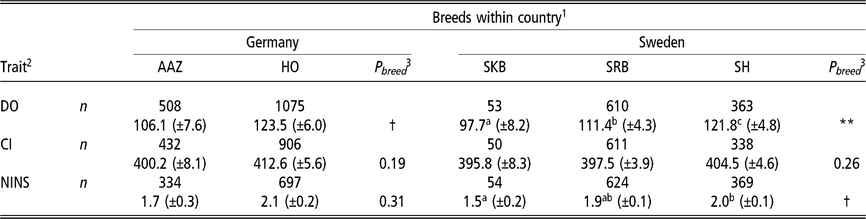
German breeds did not differ with regard to fertility traits; although the local AAZ tended to have fewer days open than the HO breed (17 days less; Table 3). Swedish breeds did not differ with regard to calving interval, but both local breeds had fewer days open compared to SH (24 days less in SKB and 10 days less in SRB, respectively). Moreover, SKB needed 0.5 fewer inseminations compared to SH (Table 3).
Breed differences as least square means (± standard error) of days open, calving interval (days), and number of inseminations or services until conception between Original Angler Cattle and German Holstein dairy cows in Germany and between Swedish Polled, Swedish Red and Swedish Holstein dairy cows in Sweden
1 Breeds: AAZ = Original Angler Cattle; HO = German Holstein; SKB = Swedish Polled; SRB = Swedish Red; SH = Swedish Holstein.
2 Trait: DO = days open; CI = calving interval; NINS = number of inseminations or services until conception.
a–c Least square means within a country with different superscript letters in the same row indicate pairwise differences at P < 0.05 in the post hoc analysis.
3 †P < 0.10, **P < 0.01, P values from the analysis of deviance (Type II Wald χ 2 test) for the breed effect.
Somatic cell count
In any of the two countries, breeds did not differ regarding the proportion of test day records above the threshold of 100 000 somatic cells per ml milk at lactation level, which was around 57% in both German breeds and between 37% and 39% in Swedish breeds, respectively (Table 2).
Veterinary treatments
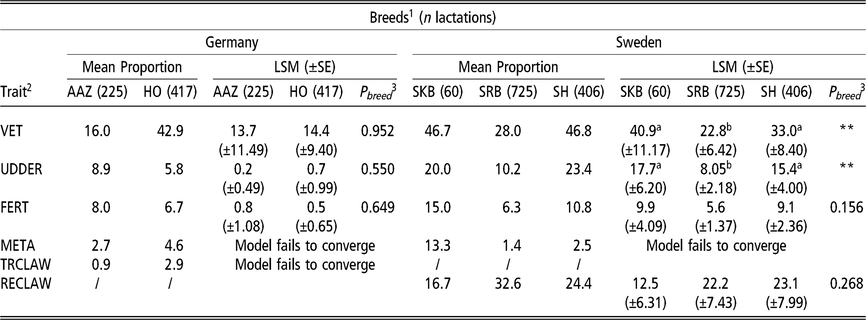
Overall veterinary treatments and those due to fertility and udder problems did not differ between German breeds. Treatments due to metabolic disorders and leg or claw problems had low incidences and models did not converge (Table 4), probably due to too few observations.
Descriptive mean proportions and least square means (LSM) ± standard error (SE) of veterinary treatments due to any reason, due to udder, fertility and metabolic problems as well as claw treatments (Germany) and claw remarks from claw trimming (Sweden) for German and Swedish dairy breeds at lactation level
1 Breeds: AAZ = Original Angler Cattle; HO = German Holstein; SKB = Swedish Polled; SRB = Swedish Red; SH = Swedish Holstein.
2 Trait: all traits were binary coded (yes/no) at lactation level, proportion of lactations with treatments of all lactations; VET = occurrence of any veterinary treatment during lactation; UDDER = veterinary treatment of udder problems; FERT = veterinary treatment of fertility problems; META = veterinary treatment of metabolic problems; TRCLAW = veterinary claw treatment; RECLAW = remark on claw problem during claw trimming. Models for META and TRCLAW failed to converge, probably due to too few observations.
a,b LSM within a country with different superscripts differ at P < 0.05 in the post hoc analysis.
3 **P < 0.01, P values from the analysis of deviance (Type II Wald χ 2) for the breed effect.
In Sweden, we found the lowest incidence of overall veterinary treatments and treatments due to udder problems in the local breed SRB (22.8% and 8.5% in SRB v. 33.0% and 15.4% in SH, respectively), but the local breed SKB did not differ from the SH in either of the two traits (SKB 40.9% and 17.7%, respectively). Swedish breeds did not differ regarding veterinary treatments due to fertility problems or diagnosis of claw or leg problems during claw trimming. Incidences of treatments due to metabolic disorders were low in all Swedish breeds, and models for this trait failed to converge (Table 4), again presumably due to too few observations for this trait.
Discussion
Pre-selection of herds
Apart from having differing production intensities between the two countries involved, our attempt to obtain data from cows producing under similar management intensities within each of the two countries also resulted in mixed farms in Sweden where they seem to be more common on organic dairy farms compared to Germany (Wallenbeck et al., Reference Wallenbeck, Rousing, Sørensen, Bieber, Spengler Neff, Fuerst-Waltl, Winckler, Pfeiffer, Steininger, Simantke, March, Brinkmann, Walczak, Wójcik, Ribikauskas, Wilhelmsson, Skjerve and Ivemeyer2018), and in separate farms of the same major farm type in Germany. These differing pre-selection methods might have further implications, as Magne et al. (Reference Magne, Thénard and Mihout2016) reported multi-breed herds produce less milk with the same concentrate-conversion efficiency and have a better reproductive performance compared to specialist breed farms. Moreover, they found higher milk production along with a better concentrate-conversion efficiency, but worse reproductive performance in multi-breed herds compared to generalist herds when comparing performances of French dairy cattle herds with either single-breed herds, using a specialist breed type (Holstein), or generalist breed types (Montebeliarde, Simmental, Brown Swiss or Normande) with multi-breed dairy herds. The combination of different breed types with complementary performances (e.g. milk yield, milk content, lactation length) might have the potential to increase resilience and sustainability of organic dairy farms. The comparison of single- or multi-breed herds in different European countries, regarding farmers’ intentions and aims as well as herd performances can be considered an interesting future research topic. However, the present study does not illuminate these aspects.
Herd structure
In Germany, the differing age structure showing older HO herds is due to the fact that one AAZ farm is still establishing the herd and therefore has a very high proportion of young cows. As milk yield increases during the first lactation, this age difference might have slightly biased milk production differences in favour of the HO breed.
Nevertheless, in the Swedish data the lower yield of the SKB breed compared to SRB and HO was not compensated by the assumed age-related increase in milk production of the average older SKB cows.
Production traits
As shown by similar studies, we expected higher production levels in modern breeds (e.g. Gandini et al., Reference Gandini, Maltecca, Pizzi, Bagnato and Rizzi2007; Bieber et al., Reference Bieber, Wallenbeck, Leiber, Fuerst-Waltl, Winckler, Gullstrand, Walczak, Wójcik and Spengler Neff2019). In German herds, the difference in favour of the Holstein breed was not as pronounced, which might partly be explained by the considerable better milk content levels found in AAZ, along with pre-selection for similar farm types in the data set. The average production level in the Swedish herds was higher than that in German herds, suggesting a more intensive management practice on the Swedish organic farms. Ahlman et al. (Reference Ahlman, Ljung, Rydhmer, Röcklinsberg, Strandberg and Wallenbeck2014) even stated that differences in production environment of organic and conventional farms are relatively small in Sweden.
On this line, Krieger et al. (Reference Krieger, Sjöström, Blanco-Penedo, Madouasse, Duval, Bareille, Fourichon, Sundrum and Emanuelson2017) reported a median concentrate feeding of 2373 kg/cow and year (range: 0 to 5475 kg) in Sweden, compared to 1200 kg/cow and year (range: 0 to 3667 kg) in Germany. Similar figures indicating a higher production intensity in Sweden compared to German organic dairy farms were reported by Wallenbeck et al. (Reference Wallenbeck, Rousing, Sørensen, Bieber, Spengler Neff, Fuerst-Waltl, Winckler, Pfeiffer, Steininger, Simantke, March, Brinkmann, Walczak, Wójcik, Ribikauskas, Wilhelmsson, Skjerve and Ivemeyer2018), with a median concentrate amount varying from 1500 to 2250 kg/cow and year in different major Swedish organic dairy farm types, with a median production level between 8250 and 9443 kg ECM, while for the German major farm types this figures ranged between 750 and 1600 kg concentrates/cow and year and between 5370 and 7732 kg ECM, respectively.
The practice of feeding ruminants with high shares of human-edible food to achieve higher yields (Zehetmeier et al., Reference Zehetmeier, Baudracco, Hoffmann and Heißenhuber2012) contradicts the organic ideal of regional nutrient cycles with low-import proportions (EC, 2007). Therefore, in organic dairy production, purely forage-based systems are increasingly discussed (e.g. Leiber et al., Reference Leiber, Schenk, Maeschli, Ivemeyer, Zeitz, Moakes, Klocke, Staehli, Notz and Walkenhorst2017), which could profit from the use of robust local breeds.
Results on breed comparisons regarding milk constituents reported in the literature (Horn et al., Reference Horn, Steinwidder, Gasteiner, Podstatzky, Haiger and Zollitsch2013; Piccand et al., Reference Piccand, Cutullic, Meier, Schori, Kunz, Roche and Thomet2013; Bieber et al., Reference Bieber, Wallenbeck, Leiber, Fuerst-Waltl, Winckler, Gullstrand, Walczak, Wójcik and Spengler Neff2019) are less consistent than our findings in favour of local breeds, which are only supported by the results of Curone et al. (Reference Curone, Zanini, Pansere, Colombani, Moroni, Riva and Faustini2016) and partly by those of Bieber et al. (Reference Bieber, Wallenbeck, Leiber, Fuerst-Waltl, Winckler, Gullstrand, Walczak, Wójcik and Spengler Neff2019), who found higher milk content for local breeds in Poland and for SRB in Sweden compared to Holstein breeds. The local breeds AAZ, SRB and SKB are well known for their high contents in milk constituents (https://www.anglerrind-az.de for AAZ, e.g. Växa Sverige 2015 for SRB and SKB).
Somatic cell count
The country-specific SCC levels we found are in line with the median proportion of test day records with SCC over 100 000 cells per ml milk reported by Krieger et al. (Reference Krieger, Sjöström, Blanco-Penedo, Madouasse, Duval, Bareille, Fourichon, Sundrum and Emanuelson2017) of 53.6% (range: 24.8% to 73.5%) and 44.1% (range: 18.9% to 80.6%) in Germany and Sweden, respectively.
Our findings regarding comparable SCC levels in local and widely used Holstein breeds in both countries are supported by some studies (Horn et al., Reference Horn, Steinwidder, Gasteiner, Podstatzky, Haiger and Zollitsch2013; Piccand et al., Reference Piccand, Cutullic, Meier, Schori, Kunz, Roche and Thomet2013), while others reported lower SCC levels in local breeds (e.g. Curone et al., Reference Curone, Filipe, Cremonesi, Trevisi, Amadori, Pollera, Castiglioni, Turin, Tedde, Vigo, Moroni, Minuti, Bronzo, Addis and Riva2018; Bieber et al., Reference Bieber, Wallenbeck, Leiber, Fuerst-Waltl, Winckler, Gullstrand, Walczak, Wójcik and Spengler Neff2019). A possible explanation for our findings is that management has a pronounced effect on SCC level (e.g. reviewed by Dufour et al., Reference Dufour, Fréchette, Barkema, Mussell and Scholl2011), and our data originated from farms of similar management types in Germany and compared breeds within mixed herds in Sweden.
Fertility
Numerically all fertility figures were consistently better in the local breeds, though statistical differences were only conspicuous (tendency or significant) for days open in both data sets and for number of services in the Swedish data.
We assume management, for example, practicing seasonal calving or not, to heavily influence fertility traits such as days open and therewith calving interval. Therefore, the present results on fertility must be interpreted with caution against the background of possible confounding effects between management and breeds effects. Number of services (given no differences in days open) might be a better indicator to evaluate breed differences. In this regard, the local Swedish breed SKB, needing the lowest number services appeared to be more robust, according to Friggens et al. (Reference Friggens, Blanc, Berry and Puillet2017) who defined robustness as the ability to maintain reproduction, though being challenged by environmental constraints. Higher standard errors for SKB might reflect the smaller sample size for this breed and potential differences in management strategies related to insemination for these lower producing cows within mixed breed herds.
Better fertility in local breeds was already reported by some studies (e.g. Gandini et al., Reference Gandini, Maltecca, Pizzi, Bagnato and Rizzi2007; Spengler Neff et al., Reference Spengler Neff, Mahrer, Moll, Burren and Flury2012; Horn et al., Reference Horn, Steinwidder, Gasteiner, Podstatzky, Haiger and Zollitsch2013; Curone et al., Reference Curone, Zanini, Pansere, Colombani, Moroni, Riva and Faustini2016; Bieber et al., Reference Bieber, Wallenbeck, Leiber, Fuerst-Waltl, Winckler, Gullstrand, Walczak, Wójcik and Spengler Neff2019) but partly not so regarding the trait number of services per pregnancy (Gandini et al., Reference Gandini, Maltecca, Pizzi, Bagnato and Rizzi2007).
Antagonistic genetic correlations between fertility traits and milk yield as reviewed by Berry et al. (Reference Berry, Wall and Pryce2014) might be a reasonable explanation for our findings. Differences regarding fertility were not as large as expected and partly reported in other breed comparisons, possibly again due to comparable management conditions in our data sets. However, our results underline that there is a certain trade-off between milk yield and fertility, which was more pronounced under more intensive production conditions in Sweden.
Veterinary treatments
From our findings in Germany regarding treatment incidences, we cannot derive a breed difference between AAZ and HO. The differing levels of descriptive mean proportions compared to least square means in the German data set (Table 4) probably reflect the limited sample size as well as the high variance within our data. By contrast, in Sweden the local breed SRB, different from the local breed SKB, showed clear advantages regarding veterinary treatments, especially in terms of udder problems.
Our findings regarding the ranking of treatment reasons are comparable to the results of Krieger et al. (Reference Krieger, Sjöström, Blanco-Penedo, Madouasse, Duval, Bareille, Fourichon, Sundrum and Emanuelson2017) who reported highest average prevalence for subclinical mastitis (51.3%), followed by prolonged calving interval of over 400 days (42%), used as an indicator for fertility problems, and clinical lameness (14.2%) which were the most common production diseases on 192 investigated organic dairy farms in Germany, Spain, France and Sweden.
Average number of udder diseases per cow and year was reported to be 19% in organic Holstein cows in Denmark (Slagboom et al., Reference Slagboom, Kargo, Edwards, Sørensen, Thomasen and Hjortø2016), which is close to 23.4% for SH in our study, and also reproduction diseases (average number of cases 10% per cow and year) were on a comparable level. However, our figures in Sweden regarding claw health are on a higher level compared to the treatment incidences for lameness reported by Krieger et al. (Reference Krieger, Sjöström, Blanco-Penedo, Madouasse, Duval, Bareille, Fourichon, Sundrum and Emanuelson2017), due to a differing trait definition, which for our data include all remarks during claw trimming, thus also including cases not needing veterinary treatment.
Higher milk yield appears to be associated with a higher health risk as well as a decline in fertility performance (Knaus, Reference Knaus2009; Berry et al., Reference Berry, Wall and Pryce2014). Nevertheless, studies on the association between increasing milk yield and deterioration in health-associated traits has also been discussed controversially as management practices have a major impact on the latter, and their incomplete consideration might have biased results in the past (e.g. Ingvartsen et al., Reference Ingvartsen, Dewhust and Friggens2003). We therefore tried to minimise potential bias due to management effects by pre-selecting the farms; and apart from the lower treatments in SRB, our findings do not suggest a close association between milk yield and veterinary treatments.
Another potential bias could be our exclusion of complementary medicine in the analysed data set, which might have downsized the overall treatment prevalence of those farms practising alternative treatment methods. Recording the use of complementary medicine is not compulsory, which compromises the reliability of these data. A possible downsizing effect might have been more pronounced for the German data set as Wallenbeck et al. (Reference Wallenbeck, Rousing, Sørensen, Bieber, Spengler Neff, Fuerst-Waltl, Winckler, Pfeiffer, Steininger, Simantke, March, Brinkmann, Walczak, Wójcik, Ribikauskas, Wilhelmsson, Skjerve and Ivemeyer2018) reported the proportion of herds using homeopathic treatments for mastitis to be higher in farms of the German major farm types A and B included in this study (A = 40% and B = 30%) compared to Swedish farms where it ranged from 14% to 29% between major farm types.
Conclusion
Under the relatively low-input management conditions investigated in Germany, differences in yield, fertility and health traits were less marked between Holstein and Original Angler cows. However, than under the more intensive organic conditions in Sweden between Holstein and SRB cows, milk yield showed an inverse relationship to fertility and health traits. In general, it appears that the local breeds investigated show higher milk content traits compared to the widely used modern Holstein breed, and that both, the widely used modern Holstein breed and local breeds, show comparable fertility and health performance under similar organic production intensities. Our results suggest that different production intensities within organic farming need to be considered more closely when assessing the performance of local breeds in order to derive practical recommendations on breed choice in the future and thus meet the recommendations of the European Union regulations on this point.
Acknowledgements
We acknowledge funding by the Federal Ministry for Sustainability and Tourism (BMNT), Austria (Grant Number BMLFUW-LE.1.3.2/0002-PR/8/2015) for Switzerland, by the Federal Ministry of Food and Agriculture (BMEL) under the Federal Organic Farming Scheme (BÖLN) (grant no. 2814OE003) for Germany and by the Swedish Research Council for Environment, Agricultural Sciences and Spatial Planning (FORMAS) for Sweden in the framework of the ERA-net CORE Organic Plus project OrganicDairyHealth. We also thank participating German farmers for their cooperation in sharing data and Växa Sverige for contributing data.
A. Bieber 0000-0002-7671-1699
Declaration of interest
The authors declare that they have no conflict of interest.
Ethics statement
Not applicable.
Software and data repository resources
Neither software nor data are deposited in an official repository.



