




LEARNING OBJECTIVES
After reading this article you will be able to:
-
• identify and describe the primary pharmacological treatments for panic disorder and be aware of recommendations from current national and international guidelines
-
• evaluate the efficacy and tolerability of these medications based on recent evidence
-
• understand the considerations for selecting appropriate treatments for panic disorder.
A panic attack is a sudden period of intense fear or anxiety that peaks within minutes. Symptoms often include a rapid heartbeat, chest pain, sweating, shaking, dizziness, flushing, an upset stomach, faintness and shortness of breath. Additionally, individuals may experience cognitive symptoms such as fear of collapse, ‘going mad’ or dying, and derealisation, which is the sensation that the world around them is unreal (American Psychiatric Association 2022).
Panic disorder was first classified in 1980 with DSM-III, following observations that people with panic attacks responded to the tricyclic antidepressant imipramine (Klein Reference Klein1964). To diagnose panic disorder, certain criteria must be met, including the frequency of attacks, the occurrence of spontaneous attacks, and the exclusion of attacks solely due to medical causes or substances like caffeine. Panic disorder can be associated with agoraphobia (Bienvenu Reference Bienvenu, Onyike and Stein2006; Greene Reference Greene and Eaton2016), which is a marked fear or anxiety about using public transport, being in open spaces, being in enclosed places, standing in a queue or being in a crowd and being outside of the home alone (American Psychiatric Association, 2022). Individuals with agoraphobia avoids these situations because of thoughts that escape might be difficult or help might not be available in the event of developing panic-like or other incapacitating or embarrassing symptoms (Rosebrock Reference Rosebrock, Lambe and Mulhall2022). In DSM-5-TR, panic disorder and agoraphobia are treated as separate diagnoses (American Psychiatric Association 2022).
Panic disorder affects 1–4% of the general population (Kessler Reference Kessler, Petukhova and Sampson2012) and around 10% in primary care settings, where common mental disorders are frequently managed (King Reference King, Nazareth and Levy2008). Women and those previously married have higher prevalence rates (Sheikh Reference Sheikh, Leskin and Klein2002). The exact cause of panic disorder is not fully understood, but biological theories suggest that this disorder arises from a combination of neurochemical imbalances, genetic predispositions, respiratory and metabolic dysfunctions, hormonal influences and neuroanatomical abnormalities, all contributing to hypersensitivity to internal or external stimuli and exaggerated fear responses (Kyriakoulis Reference Kyriakoulis and Kyrios2023). About 25% of individuals with panic disorder also experience agoraphobia, which is associated with increased severity and worse outcomes (Kessler Reference Kessler, Chiu and Jin2006). Risk factors for developing agoraphobia with panic disorder include female gender, intense dizziness during panic attacks, certain cognitive factors, dependent personality traits and social anxiety disorder (American Psychiatric Association 2022).
Panic disorder often co-occurs with other psychiatric conditions, such as substance dependence, major depression, bipolar disorder, social phobia, specific phobia and generalised anxiety disorder. Lifetime comorbid mental disorders occur in 80% of people with panic disorder, and lifetime comorbidity levels are particularly high for other anxiety disorders (63.1%) and mood disorders (53.7%) (de Jonge Reference de Jonge, Roest and Lim2016).
Unfortunately, in contrast to other diagnostic areas in psychiatry, putative new pharmacological strategies for panic disorder have yet to be studied sufficiently to merit consideration as recommended treatments (Garakani Reference Garakani, Murrough and Freire2020). There is a need therefore to understand the efficacy and tolerability of existing treatments.
The aims of this article are:
-
• to discuss and review the treatments for panic disorder;
-
• to describe the findings of our recent Cochrane Review network meta-analysis (Guaiana Reference Guaiana, Meader and Barbui2023), which compared the efficacy and tolerability of four antidepressant classes and of benzodiazepines with each other and with placebo;
-
• to describe the recommendations of six current national and international guidelines for pharmacological treatment of panic disorder and to compare and contrast the findings of the above network meta-analysis with the advice offered in the guidelines.
Treatments for panic disorder
This review focuses on two primary pharmacological interventions for panic disorder: antidepressants and benzodiazepines (BDZs). Treatment for panic disorder typically includes both psychological and pharmacological approaches, often used together (Ziffra Reference Ziffra2021). The primary pharmacological treatments are antidepressants and BDZs. Substances such as azapirones, gabapentinoids, atypical antipsychotics, anticonvulsants, beta-blockers and inositol have also been investigated (Ziffra Reference Ziffra2021; Rossano Reference Rossano, Caiazza, Zotti and Viacava2023), but these are not the main focus of this article.
Antidepressants
Historically, older antidepressants, like the original irreversible monoamine oxidase inhibitors (MAOIs) such as phenelzine and the tricyclic antidepressants (TCAs) such as imipramine, clomipramine and desipramine, were used to treat panic disorder (Bruce Reference Bruce, Vasile and Goisman2003). However, these medications are associated with side-effects and other properties that make everyday use more challenging. For example, the MAOIs necessitate dietary restrictions to prevent hypertensive crises, while for TCAs anticholinergic and arrhythmogenic effects reduce tolerability and the majority can be associated with dangerous toxicity in the case of overdose (Schatzberg Reference Schatzberg and Nemeroff2024).
A previous meta-analysis showed that selective serotonin reuptake inhibitors (SSRIs), which first came to market in the 1980s and 1990s, are as effective as TCAs and better tolerated (Bakker Reference Bakker, van Balkom and Spinhoven2002), although some studies suggest that the efficacy of SSRIs may be overestimated compared with older antidepressants (Otto Reference Otto, Tuby and Gould2000).
Benzodiazepines
Benzodiazepines (BDZs), first introduced in the late 1950s, have efficacy across the anxiety disorders for short-term use but may not be adequate for treating panic disorder with comorbid depression as a monotherapy (Ballenger Reference Ballenger, Davidson and Lecrubier1998). Longer-term use of BDZs, however, carries higher risks of dependence and withdrawal symptoms than antidepressants (Schatzberg Reference Schatzberg and Nemeroff2024). Despite these drawbacks, BDZs continue to be widely prescribed for panic disorder (Bruce Reference Bruce, Vasile and Goisman2003).
Since the mid-1980s there have been stringent cautions about their use, especially beyond 4 weeks’ duration, owing to tolerance and rebound withdrawal effects leading to exacerbation of symptoms (Marks Reference Marks, Swinson and Başoğlu1993) and the potential for dependence. A joint Royal College of Psychiatrists/British Association for Psychopharmacology statement issued in 2013 recommended some reconsideration of this position, suggesting that circumstances may exist where long-term BDZ use is a reasonable strategy, but only when other drug treatment options have proved inadequate (Baldwin Reference Baldwin, Aitchison and Bateson2013). Debate continues on the risks posed by longer-term BDZ use; for example, a recent Danish Cohort study suggested that as only 15% of people prescribed BDZs continue to take them after 1 year the risk of dependence may be overestimated (Rosenqvist Reference Rosenqvist, Wium-Andersen and Wium-Andersen2024). However, population-based studies in seniors in Ontario, Canada, suggest it may be premature to dismiss concerns about longer-term use on the basis of the Danish data. One study illustrated that continuation rates may be influenced by the characteristics of the health system in which prescription occurs (Davies Reference Davies, Jacob and Rudoler2018) and another confirmed that even continuation for 1 year or less can put BDZ users at substantially increased risk of adverse outcomes such as falls, fractures and emergency department visits (Davies Reference Davies, Rudoler and De Oliveira2022) relative to short-term or intermittent users. Clearly, there are numerous factors to be taken into account when considering whether to initiate and/or continue BDZs in panic disorder, with age, frailty and history of substance misuse being among them.
Placebo response
Finally, an important point to remember is placebo response. Research on the placebo effect in panic disorder underscores its substantial role in treatment outcomes. One meta-analysis (Ahmadzad-Asl Reference Ahmadzad-Asl, Davoudi and Mohamadi2022) found a medium to high placebo effect size (0.57), varying across measurement tools and being more pronounced in clinician-rated scales compared with patient self-reports. This effect has shown an increasing trend over time, potentially linked to study design and contextual factors. Similarly, another (Bschor Reference Bschor, Nagel and Unger2024) identified significant placebo responses across psychiatric disorders, with panic disorder demonstrating a notable effect size, although lower than that seen in major depressive disorder and generalised anxiety disorder. These findings emphasise the importance of considering the placebo effect in both clinical practice and research design for panic disorder.
Mechanism of actions of antidepressants and benzodiazepines
Most antidepressants work by enhancing the availability in synapses of the monoamines serotonin (5-hydroxytryptamine, 5-HT) and noradrenaline. SSRIs specifically increase the concentration of serotonin in synaptic clefts by inhibiting the transporter responsible for its reuptake. This action primarily occurs in the dorsal raphe nucleus, although serotonin is a very widely distributed transmitter, so the effects of SSRIs are also widespread at the sites of its release (Artigas Reference Artigas, Nutt and Shelton2002). Imaging studies have shown a reduced expression of the 5-HT1A receptor in the anterior and posterior cingulate cortex and in raphe nuclei in individuals with panic disorder, and increasing serotonin availability may help overcome this deficit (Schatzberg Reference Schatzberg and Nemeroff2024). Similarly, noradrenergic antidepressants increase the availability of noradrenaline within the synapse by blocking the noradrenaline reuptake transporter. Some antidepressants, such as serotonin–noradrenaline reuptake inhibitors (SNRIs) and many TCAs, inhibit the reuptake of both serotonin and noradrenaline (Artigas Reference Artigas, Nutt and Shelton2002). A minority of antidepressants affect serotonin and noradrenaline systems by more novel mechanisms. Some are primarily receptor blockers (e.g. mirtazapine). Meanwhile, MAOIs disable the monoamine oxidase enzyme, either irreversibly (e.g. phenelzine) or competitively (e.g. the subsequently developed moclobemide and brofaromine (not all drugs discussed in this paper are licensed in the UK, including brofaromine), which are known as reversible inhibitors of monoamine oxidase, RIMAs). Both of these subtypes of MAOI enhance monoamine transmitter availability (Schatzberg Reference Schatzberg and Nemeroff2024).
In contrast, BDZs have no direct impact on serotonergic or noradrenergic systems. Instead, they act on the gamma-aminobutyric acid (GABA) neurotransmitter system, the brain’s main inhibitory system, by acting as positive allosteric modulators at the GABAA receptor (Baldwin Reference Baldwin, Aitchison and Bateson2013). This receptor complex contains a chloride channel that, when opened, increases chloride permeability, hyperpolarising the postsynaptic neuron, with consequent inhibitory effects, such as reduced arousal and sedation. BDZs are safer than their predecessors, barbiturates (which were highly toxic in overdose), owing to their indirect communication with the chloride channel. Imaging studies have shown deficiencies in the GABA system in panic disorder, and BDZs’ ability to activate the GABAA receptor helps counteract this deficiency (Schatzberg Reference Schatzberg and Nemeroff2024).
Monoamine-based and GABA-based systems appear to converge, allowing both antidepressants and BDZs to be effective in treating panic disorder despite their differing mechanisms.
Synthesis of a recent meta-analysis
The most recent synthesis of pharmacological treatments for panic disorder is our 2023 Cochrane Review network meta-analysis (NMA) (Guaiana Reference Guaiana, Meader and Barbui2023). In that review, the efficacy and acceptability of various antidepressants and BDZ treatments for panic disorder were compared and ranked. The study included 70 randomised controlled trials (RCTs) with a total of 12 703 participants. The review examined five main classes: SSRIs, SNRIs, TCAs, MAOIs (both irreversible and reversible) and BDZs. The main outcomes examined were: response (substantial improvement from baseline as defined by the original investigators), remission, reduction in panic scale scores, frequency of panic attacks, agoraphobia and tolerability (measured by the drop-out rate). Each individual medication was included in the analysis for each outcome. Additionally, response and tolerability outcomes were analysed by drug class.
Drug classes
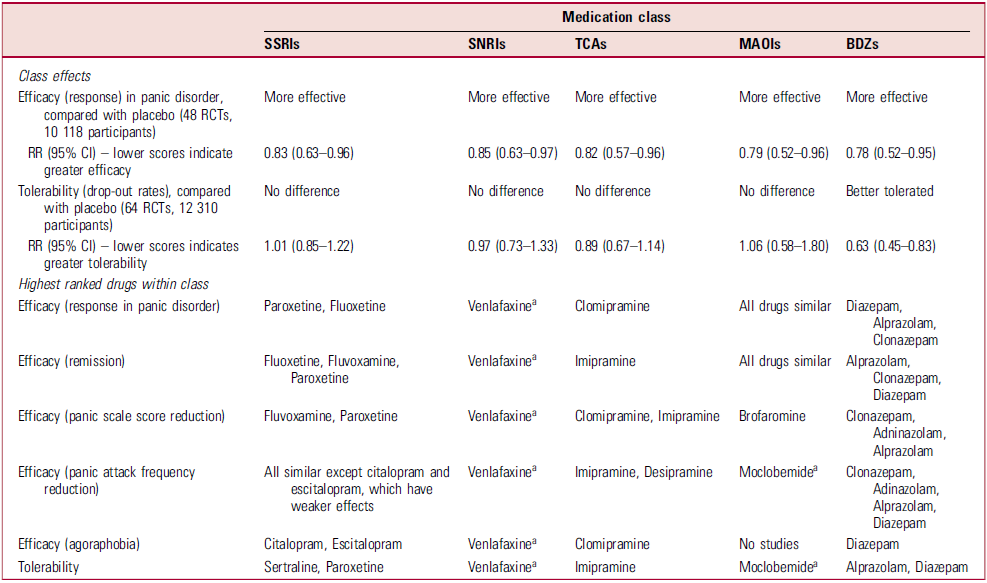
In terms of efficacy based on response outcomes (Table 1), all medication classes studied (SSRIs, SNRIs, TCAs, MAOIs, BDZs) demonstrated greater efficacy than placebo. Differences between classes were minimal. BDZs were the most effective, having the lowest relative risk of failure to respond when compared with placebo, whereas the single SNRI studied was ranked lowest with the highest relative risk, with MAOIs, TCAs and SSRIs being in between. Clearly, rankings should not be interpreted as indicating substantial differences in efficacy, as the relative risk scores are close and direct comparisons between classes lacked precision, had wide confidence intervals and did not show statistically significant differences.
Pharmacological treatments for panic disorder in adults: summary of findings of 2023 Cochrane Review
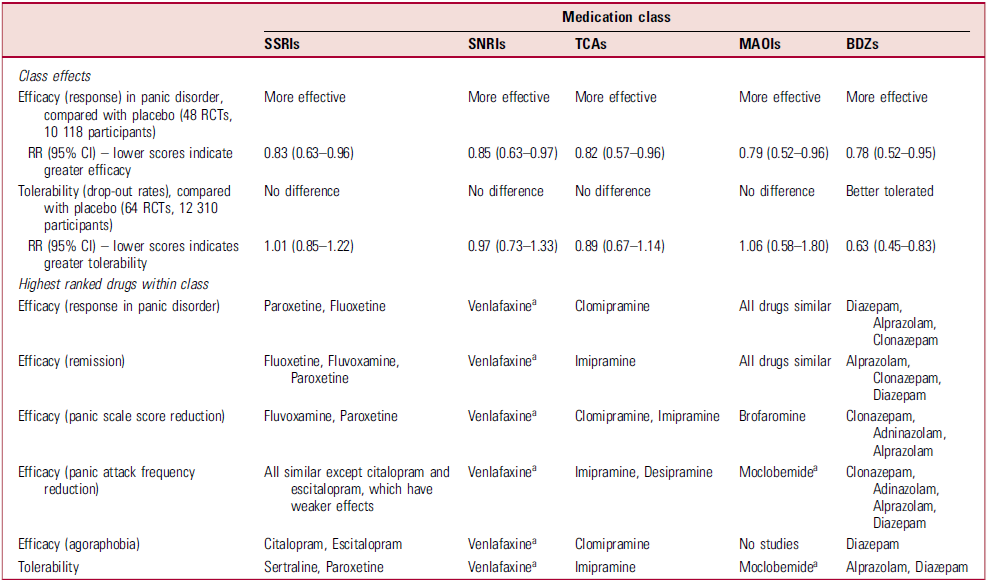
SSRIs, selective serotonin reuptake inhibitors; SNRIs, serotonin–noradrenaline reuptake inhibitors; TCAs, tricyclic antidepressants; MAOIs, monoamine oxidase inhibitors; BDZs, Benzodiazepines; RCT, randomised controlled trial; RR, relative risk.
a. The only drug analysed in the class.
Source: Guaiana (Reference Guaiana, Meader and Barbui2023).
For tolerability (measured as drop-out rates), BDZs were the only class to demonstrate a significantly lower drop-out rate compared with placebo, ranking highest in tolerability (Table 1). BDZs were significantly superior for tolerability in direct comparisons with SSRIs, the SNRI and TCAs.
Individual drugs
The drugs included in the NMA were as follows: SSRIs (citalopram, escitalopram, fluoxetine, fluvoxamine, paroxetine, sertraline), SNRIs (venlafaxine only), TCAs (clomipramine, desipramine, imipramine), MAOIs (the RIMAs brofaromine and moclobemide, and the irreversible MAOI phenelzine) and BDZs (adinazolam, alprazolam, clonazepam, diazepam, etizolam, lorazepam).
With the exception of the SNRI class, where venlafaxine was the only drug with evidence that could be included in the analysis, making ranking impossible, the highest-ranked medications within each pharmacological class in relation to outcome are as follows (summarised in Table 1).
-
• Response: among SSRIs, paroxetine had the highest effect size, followed by fluoxetine. Clomipramine ranked highest among TCAs, but no single MAOI stood out. For BDZs, diazepam, alprazolam and clonazepam showed significant effect sizes. Some results lacked precision, with wide confidence intervals indicating uncertainty in the rankings.
-
• Remission: fluoxetine, fluvoxamine and paroxetine had the highest remission rates among SSRIs. Imipramine was the top-performing TCA. No individual MAOI demonstrated superior remission rates. Among BDZs, alprazolam, clonazepam and diazepam led to higher remission rates. However, wide confidence intervals for some drugs within these classes highlighted imprecise findings.
-
• Reduction in panic scale scores: Fluvoxamine and paroxetine were most effective among SSRIs, although the effect sizes were small. Clomipramine and imipramine ranked highest among TCAs. Brofaromine was the most effective MAOI, and among BDZs, clonazepam demonstrated the strongest effect, followed by adinazolam and alprazolam. Many comparisons lacked precision, with wide confidence intervals reflecting uncertainty in the relative rankings.
-
• Frequency of panic attacks: fluoxetine, fluvoxamine, paroxetine and sertraline reduced attack frequency among SSRIs, albeit with small effect sizes. Imipramine and desipramine were the most effective TCAs. Moclobemide was the sole MAOI studied for this outcome, precluding class ranking. Among BDZs, clonazepam and alprazolam were most effective, with diazepam and adinazolam showing less pronounced effects. Wide confidence intervals in several comparisons indicated imprecise results.
-
• Agoraphobia: citalopram and escitalopram showed the strongest effects among SSRIs, with smaller effects for fluvoxamine and paroxetine. Clomipramine had the strongest effect among TCAs. Diazepam was the most effective BDZ. No MAOIs were studied for this outcome. Wide confidence intervals in many comparisons reduced precision and certainty.
-
• Tolerability: sertraline and paroxetine were the most tolerated SSRIs, although the results were imprecise, with wide confidence intervals indicating uncertainty. Imipramine ranked highest for TCAs, also with wide confidence intervals reflecting imprecision. Moclobemide was the only MAOI studied for this outcome, so no ranking was possible. Among BDZs, alprazolam and diazepam had the best tolerability profiles, although some comparisons showed wide confidence intervals and therefore lacked precision.
Quality of evidence
The quality of evidence in the NMA varies across different studies, influencing the reliability and generalisability of the findings. The assessment of evidence quality involved the following key considerations.
-
• The studies included in the meta-analysis were double-blind randomised controlled trials (RCTs). Double-blind RCTs are generally considered the gold standard owing to their ability to minimise bias.
-
• Methodological rigour varied, with smaller studies being less robust and more prone to statistical anomalies. Significant heterogeneity in diagnostic criteria and outcome measures caused inconsistencies. Reporting varied, with some studies detailing symptom changes and others providing only aggregate data.
-
• Analysis of bias highlighted issues such as failure of masking (blinding) and high drop-out rates, potentially skewing findings. Publication bias may also be a concern, as positive results are more likely to be published, possibly overestimating treatment efficacy.
-
• The generalisability of the findings to broader clinical practice depends on the representativeness of the study populations. Many studies included in the meta-analysis were conducted in specific settings or with particular demographic groups, which may not reflect the wider population of individuals with panic disorder.
-
• External validity is further influenced by the interventions and comparators used in the studies. Variations in dosage, treatment duration and adjunctive therapies can affect the applicability of the results to routine clinical practice.
Overall, our network meta-analysis offers useful insights into the efficacy and acceptability of different pharmacological treatments for panic disorder, although the evidence quality varies. The findings should be interpreted with caution, considering the methodological limitations, heterogeneity and potential biases present in the included studies.
Synthesis of the latest evidence and recent guideline recommendations
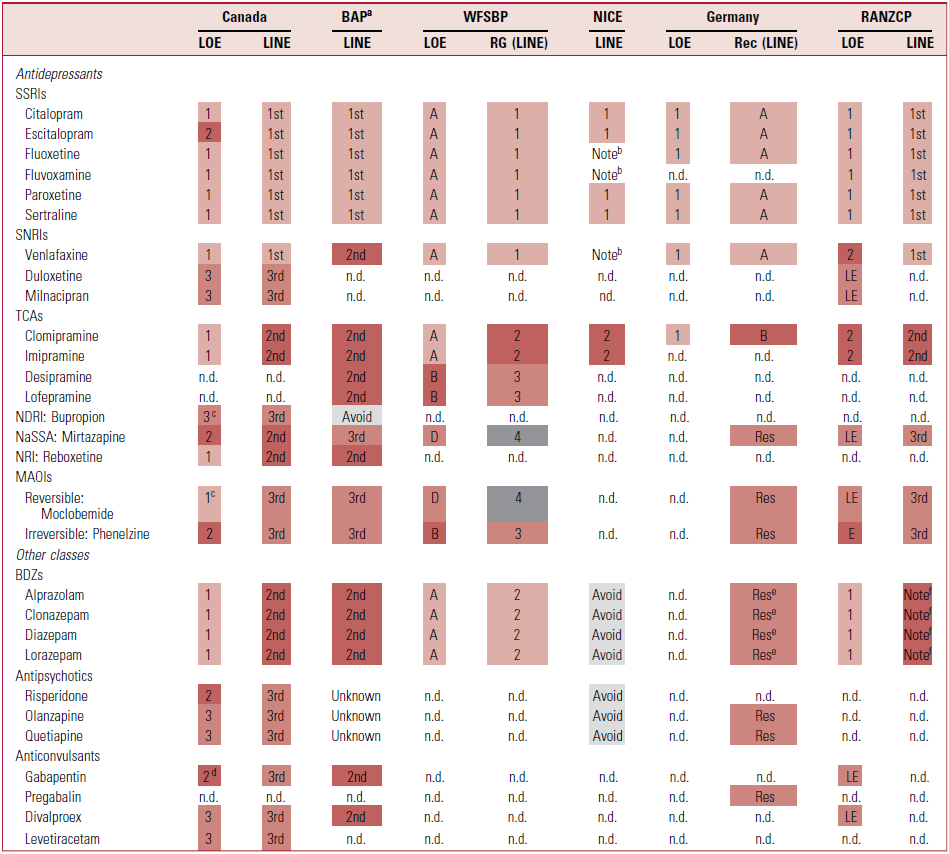
To set the findings of our NMA (Guaiana Reference Guaiana, Meader and Barbui2023) in a real-world clinical context, in this section we compared and contrasted its results with six influential national or international anxiety disorder treatment guidelines published since 2014. These comprise two from the UK (from the British Association of Psychopharmacology (BAP) (Baldwin Reference Baldwin, Anderson and Nutt2014) and the National Institute for Health and Care Excellence (NICE) (NICE 2011)), one each from Canada (Katzman Reference Katzman, Bleau and Blier2014), Australia/New Zealand (from the Royal Australian & New Zealand College of Psychiatrists (RANZCP) (Andrews Reference Andrews, Bell and Boyce2018)) and Germany (Bandelow Reference Bandelow, Werner and Kopp2022), and the recent World Federation of Societies of Biological Psychiatry (WFSBP) guidelines (Bandelow Reference Bandelow, Allgulander and Baldwin2023). Ratings and recommendations from each are tabulated in Table 2. We have considered only monotherapy and not combination/augmentation strategies.
Pharmacological treatments for panic disorder in adults: rates and recommendations from recent guidelines
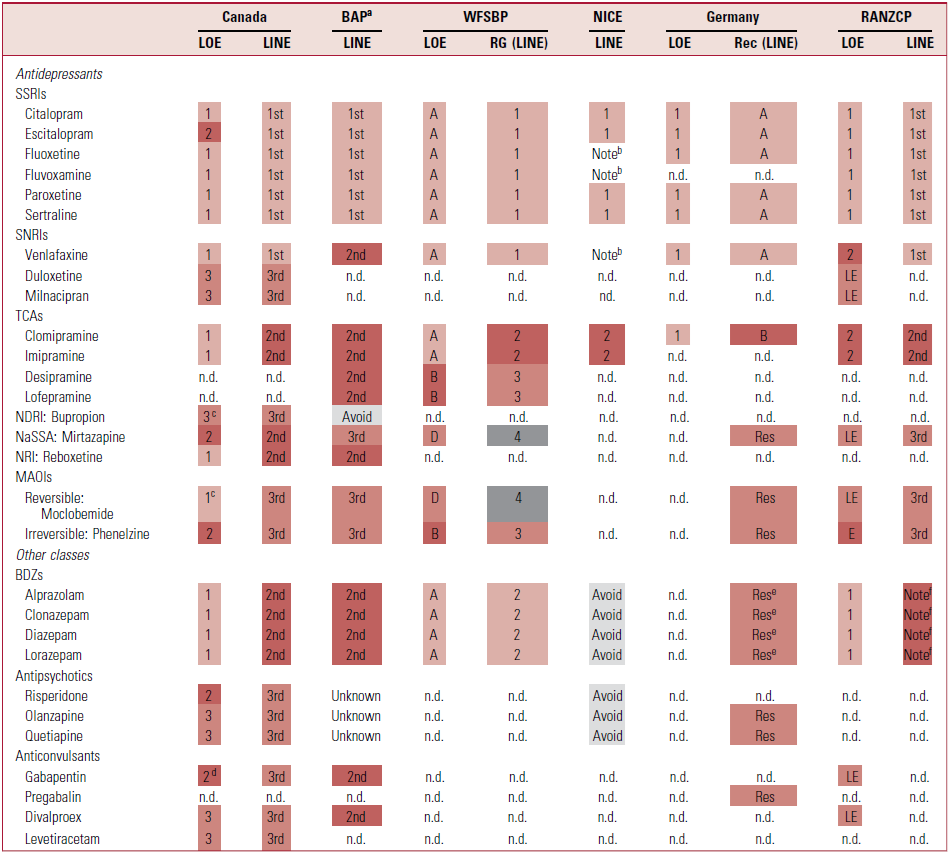
LOE, level of evidence; LINE, first-, second-, third- or fourth-line recommendation; RG, recommendation grade (level 1, 2, 3 or 4); Rec, recommendation (level A or B); SSRIs, selective serotonin reuptake inhibitors; SNRIs, serotonin–noradrenaline reuptake inhibitors; TCAs, tricyclic antidepressants; NDRI, noradrenaline–dopamine reuptake inhibitor; NaSSA, noradrenergic and specific serotonergic antidepressant; NRI, noradrenaline reuptake inhibitor; MAOIs, monoamine oxidase inhibitors; BDZs, benzodiazepines; n.d., not discussed; Res, consider in panic disorder resistant to A and B grade recommendations; LE, limited evidence of efficacy; E, evidence of efficacy.
a. The BAP guideline describes only SSRIs as ‘first-line’, but considers all drugs listed here as ‘second-line’ as having category I evidence of efficacy. We have considered the three other drugs described as having evidence of efficacy as ‘third-line’ options.
b. NICE states that SSRIs, SNRIs and TCAs are classes having ‘an evidence base’ and that venlafaxine and four SSRIs are licensed in the UK for panic disorder; fluoxetine and fluvoxamine are not licensed in the UK for that indication. It recommends only ‘SSRIs licensed for panic disorder’ as first-line and clomipramine and imipramine as alternatives
c. Conflicting evidence.
d. Negative study overall but effective in severe cases.
e. German guideline suggest BDZs should be used in rare cases only where clinically justified.
f. RANZCP guideline states that BDZs are not first-line drugs and should be used for short-term treatment only.
Sources: Canada: Katzman (Reference Katzman, Bleau and Blier2014); British Association of Psychopharmacology (BAP): Baldwin (Reference Baldwin, Anderson and Nutt2014); World Federation of Societies of Biological Psychiatry (WFSBP): Bandelow (Reference Bandelow, Allgulander and Baldwin2023); National Institute for Health and Care Excellence: NICE (2011); Germany: Bandelow (Reference Bandelow, Werner and Kopp2022); Royal Australia New Zealand College of Psychiatry (RANZCP): Andrews (Reference Andrews, Bell and Boyce2018).
Most guidelines distinguish between two types of rating: level of evidence (LOE), which assesses the strength of efficacy data (the ratings assigned vary depending on the guideline), and line of recommendation (LINE), which ranks a drug’s place in treatment as first-line, second-line, third-line, or reserved for treatment-resistant cases. LOE reflects the quality, consistency and effect size of the evidence, whereas LINE incorporates broader clinical considerations, including tolerability, drug–drug interactions, the need for monitoring, withdrawal and addiction risks, and practical use in real-world settings. As a result, LOE and LINE rankings frequently diverge. One guideline – the NICE guideline (NICE 2011) – does not assign LOE ratings to individual drugs, merely stating that SSRIs, SNRIs and TCAs are evidence-based treatments.
SSRIs and SNRIs
As shown in Table 2, SSRIs are recommended as first-line treatments in all six guidelines. The only divergence is a downgrading of the escitalopram LOE to the second highest level in the Canadian guidelines (Katzman Reference Katzman, Bleau and Blier2014). The NICE guidelines (NICE 2011) further limit first-line use to SSRIs licensed for panic disorder: in the UK this refers to paroxetine, sertraline, escitalopram and citalopram – but excludes fluoxetine and fluvoxamine. Despite these qualifications, SSRIs are consistently identified as the preferred starting point in pharmacological treatment.
Venlafaxine is the only SNRI that receives comparable support. It is considered first-line in the Canadian (Katzman Reference Katzman, Bleau and Blier2014), German (Bandelow Reference Bandelow, Werner and Kopp2022) and WFSBP guidelines (Bandelow Reference Bandelow, Allgulander and Baldwin2023). It is also considered first-line in the RANZCP guidelines (Andrews Reference Andrews, Bell and Boyce2018), but they express more caution regarding its evidence base. The BAP guidelines (Baldwin Reference Baldwin, Anderson and Nutt2014) endorse it as having good evidence of efficacy, but view only SSRIs as first-line drugs. In contrast, the NICE guidelines (NICE 2011) do not explicitly list venlafaxine in their recommended sequence of panic disorder treatments, despite acknowledging the good evidence base of the SNRI class more broadly. Other SNRIs, including duloxetine and milnacipran, are mentioned only in the Canadian and RANZCP guidelines, where they are designated as third-line. As the only SNRI included in the NMA (Guaiana Reference Guaiana, Meader and Barbui2023), venlafaxine’s performance was very similar to that of the SSRIs.
Although the three other drug classes in the NMA (TCAs, MAOIs and BDZs) performed as well or slightly better than SSRIs and SNRIs, guidelines clearly see SSRIs and venlafaxine as the preferred drug treatments. We speculate that this is due to their extensive evidence of efficacy in panic disorder and the relative lack of practical problems that are associated with each of the other classes, as we will outline here.
TCAs
All guidelines recommend at least one TCA as a second-line treatment (clomipramine in all six guidelines and imipramine in five). Two guidelines assign these two drugs the highest LOE ratings, such as the Canadian guidelines (Katzman Reference Katzman, Bleau and Blier2014) and the WFSBP guidelines (Bandelow Reference Bandelow, Allgulander and Baldwin2023). The BAP guidelines (Baldwin Reference Baldwin, Anderson and Nutt2014) extend second-line recommendations to lofepramine and desipramine, which are considered third-line by the WFSBP guidelines. Despite efficacy ratings comparable to those of SSRIs, TCAs are not considered first-line options in any of the guidelines – likely owing to concerns over overdose lethality, cardiovascular risk and long-term tolerability. Our NMA (Guaiana Reference Guaiana, Meader and Barbui2023) showed a non-significant trend towards better short-term tolerability compared with SSRIs, although still inferior to BDZs.
MAOIs
Monoamine oxidase inhibitors (MAOIs), including the irreversible inhibitor phenelzine and the RIMA moclobemide, are typically reserved for third- or fourth-line use. The BAP guidelines (Baldwin Reference Baldwin, Anderson and Nutt2014) and the RANZCP guidelines (Andrews Reference Andrews, Bell and Boyce2018) describe phenelzine as evidence-based, while the Canadian guidelines (Katzman Reference Katzman, Bleau and Blier2014) offer cautious support. Moclobemide is viewed more sceptically owing to the mixed or conflicting evidence. As the Canadian guidelines (Katzman Reference Katzman, Bleau and Blier2014) summarise, moclobemide has randomised trial evidence of equivalent efficacy both to SSRIs and to clomipramine in panic disorder, but it failed to outperform placebo in other randomised trials. The consistently low LINE ranking of MAOIs reflects not only uncertainty about efficacy, but also concerns over dietary restrictions and interaction risks. The NICE guidelines (NICE 2011) do not mention MAOIs. Our NMA (Guaiana Reference Guaiana, Meader and Barbui2023) showed efficacy for MAOIs overall as comparable to other classes, although drop-out rates were slightly higher.
BDZs
Benzodiazepines (BDZs) generate the greatest divergence among guidelines. Four guidelines – the Canadian (Katzman Reference Katzman, Bleau and Blier2014), BAP (Baldwin Reference Baldwin, Anderson and Nutt2014), WFSBP (Bandelow Reference Bandelow, Allgulander and Baldwin2023) and RANZCP (Andrews Reference Andrews, Bell and Boyce2018) – assign high LOE ratings and note their superior short-term tolerability. Yet all four recommend BDZs as second- or third-line options only, and the RANZCP guidelines explicitly recommend short-term use only. The German guidelines (Bandelow Reference Bandelow, Werner and Kopp2022) reserve BDZs for treatment resistance and do not assign any LOE rating. The NICE guidelines (NICE 2011) advise against their use altogether and do not recognise them as evidence-based treatments. In our NMA (Guaiana Reference Guaiana, Meader and Barbui2023), BDZs showed strong efficacy and were the only class to demonstrate significantly better tolerability than placebo, SSRIs, SNRIs and TCAs. However, the risk of dependence (Baldwin Reference Baldwin, Aitchison and Bateson2013, Tang Reference Tang, Davies, Riederer, Laux and Nagatsu2022), withdrawal, cognitive impairment, falls (Davies Reference Davies, Rudoler and De Oliveira2022) and motor vehicle accidents continues to weigh heavily on clinical recommendations.
Further antidepressants, antipsychotics and anticonvulsants
For completeness, Table 2 also includes the reported levels of evidence and line of recommendation for several other drugs that were not included in our NMA (Guaiana Reference Guaiana, Meader and Barbui2023). These include three further antidepressants (reboxetine, bupropion and mirtazapine), which do not fit in any of the four antidepressant classes described above. Notably, the Canadian guidelines (Katzman Reference Katzman, Bleau and Blier2014) rate reboxetine’s evidence as being of the highest level and the BAP (Baldwin Reference Baldwin, Anderson and Nutt2014) rates it as ‘evidence-based’ and both consider it a second-line drug, whereas all other guidelines decline to mention it. The Canadian guidelines also view mirtazapine as being a second-line option, but the other guidelines rate it as third- or fourth-line (or for resistant cases), and NICE does not mention it. There is less enthusiasm for bupropion, which the BAP guidelines state should be avoided entirely, but the Canadian guidelines recommend it for third-line use and the RANZCP (Andrews Reference Andrews, Bell and Boyce2018) as an option in treatment resistance.
Further examination of Table 2 reveals that some guidelines mention a number of antipsychotics (risperidone, olanzapine, quetiapine), anticonvulsants (the gabapentinoids gabapentin and pregabalin, as well as valproate/divalproex and levetiracetam). No guidelines recommend the 5-HT1A partial agonist buspirone, with several stating that it is ineffective in panic disorder. Only the Canadian (Katzman Reference Katzman, Bleau and Blier2014) and German guidelines (Bandelow Reference Bandelow, Werner and Kopp2022) express any support for using certain antipsychotics, as third-line options or in treatment resistance, and NICE advises avoiding them. Gabapentin and valproate are considered evidence-based second-line options in BAP guidelines (Baldwin Reference Baldwin, Anderson and Nutt2014) and third-line in the Canadian guidelines. Levetiracetam is considered third line in the Canadian guidelines. Gabapentin and Divaloproex are described in the RANZCP guidelines (Andrews Reference Andrews, Bell and Boyce2018) as having ‘limited evidence’ for use in resistant cases. Pregabalin has support as a third-line choice only in the German guidelines, by extrapolation from its established efficacy in generalised anxiety disorder. No guidelines recommend buspirone, with several stating that it is ineffective in panic disorder.
Future treatments
Emerging treatments for panic disorder target novel mechanisms: orexin receptor antagonists show promise (Caldirola Reference Caldirola, Alciati and Cuniberti2021), xenon gas exhibits anxiolytic effects (Dobrovolsky Reference Dobrovolsky, Ichim and Ma2017) and amiloride nasal spray may reduce carbon dioxide (CO2) hypersensitivity by inhibiting acid-sensing ion channels (Battaglia Reference Battaglia, Rossignol and Bachand2019). Research is ongoing.
Conclusions
Panic disorder remains a significant psychiatric condition with a complex aetiology, high comorbidity and substantial impact on quality of life. SSRIs are the first-line pharmacological treatment, because of their balance of efficacy and tolerability and the relative absence of practical issues that can be problematic with other drug classes. With a similar profile, the SNRI venlafaxine is recommended as a first- or, at worst, second-line option in the majority of guidelines. TCAs and BDZs demonstrate good efficacy, albeit with safety concerns or other practical considerations that affect the enthusiasm for their use. They are not listed as first-line options in any of the current guidelines examined but remain as recommended alternatives, usually with caveats. MAOIs are also effective, but complexities associated with their clinical use mean that although most guidelines are willing to recommend them, they list them no higher than third-line. A recent network meta-analysis confirms the efficacy of the above drug classes, although evidence quality varies. Continued research is needed to refine treatment strategies, better understand placebo effects and optimise long-term management while minimising risks associated with current pharmacological options.
MCQs
Select the single best option for each question stem
-
1 Which class of medication is recommended as the first-line treatment for panic disorder because of its favourable side-effects profile?
-
a tricyclic antidepressants (TCAs)
-
b monoamine oxidase inhibitors (MAOIs)
-
c selective serotonin reuptake inhibitors (SSRIs)
-
d benzodiazepines (BDZs)
-
e beta-blockers.
-
-
2 In network meta-analysis, which of the following SSRIs was associated with the highest efficacy in treating panic disorder in terms of response?
-
a citalopram
-
b paroxetine
-
c fluoxetine
-
d sertraline
-
e escitalopram.
-
-
3 Which of the following is a significant concern when using tricyclic antidepressants (TCAs) for treating panic disorder?
-
a high potential for dependency
-
b the dietary restrictions required
-
c anticholinergic and arrhythmogenic side-effects
-
d inefficacy in treating comorbid depression
-
e poor tolerability in short-term use.
-
-
4 Which class of medication has network meta-analysis found to have the lowest drop-out rates compared with placebo?
-
a selective serotonin reuptake inhibitors (SSRIs)
-
b tricyclic antidepressants (TCAs)
-
c monoamine oxidase inhibitors (MAOIs)
-
d benzodiazepines (BDZs)
-
e serotonin–noradrenaline reuptake inhibitors (SNRIs).
-
-
5 Which of the following medications has high-quality double-blind randomised trial evidence for efficacy in the treatment of panic disorder?
-
a buspirone (5-HT1A partial agonist)
-
b quetiapine (atypical antipsychotic)
-
c pregabalin (gabapentinoid)
-
d levetiracetam (anticonvulsant)
-
e none of the above.
-
MCQ answers
-
1 c
-
2 b
-
3 c
-
4 d
-
5 e
Data availability
Data availability is not applicable to this article as no new data were created or analysed in this study.
Author contributions
G.G. initiated the manuscript and drafted the initial version. S.J.C.D. reviewed and improved the manuscript, contributing to its final form. Both authors gave final approval of the version to be published.
Funding
This research received no specific grant from any funding agency, commercial or not-for-profit sectors.
Declaration of interest
None.

 Open access


eLetters
No eLetters have been published for this article.