





Adverse family experiences during adolescence may be transmitted across generations via multiple pathways. These experiences exert direct impacts on adolescent development and are likely to shape adolescents’ future attitudes toward parenting (Kerr & Capaldi, Reference Kerr, Capaldi and Bornstein2019; Leondari & Kiosseoglou, Reference Leondari and Kiosseoglou2002). They also potentially impair the development of coping skills essential for managing interpersonal conflict, increasing the risk for later parenting difficulties (Johnson & Pandina, Reference Johnson and Pandina1991; Romm & Metzger, Reference Romm and Metzger2018). This investigation examined paths connecting dysfunctional conflict in the family of origin, substance use problems in adolescence and adulthood, and dysfunctional parenting responses in the next generation across two independent, demographically distinct longitudinal samples.
Theoretical mechanisms in the intergenerational continuity of dysfunctional family conflict
Dysfunctional family conflict may exhibit intergenerational continuity to dysfunctional parenting responses by exposing the adolescent to coercive family processes. Coercion theory posits that children learn aversive or oppositional behaviors through repeated negative interactions with caregivers, resulting in coercive cycles in which both child and parent behaviors are negatively reinforced when they give in to escape the coercion (Patterson, Reference Patterson1982). Coercion theory has also been used to explain adolescent antisocial behavior where reciprocal interactions develop between maladaptive parenting and externalizing behavior in youth, which then continues forward to parenting behavior in the next generation (Patterson, Reference Patterson2002; Rothenberg, Reference Rothenberg2019). Dysfunctional family conflict may also be transmitted through more indirect social learning processes in which youth internalize the aggressive or dysfunctional behaviors they observe in parents or other family members and later replicate these behaviors (Bandura, Reference Bandura1977; Woszidlo & Kunkel, Reference Woszidlo, Kunkel, Braithwaite, Suter and Floyd2017). Both social learning and coercion theory frameworks suggest ways that the family experiences of adolescents may inform their own reactions when they become caregivers themselves (Rothenberg, Reference Rothenberg2019). The current study utilizes these theoretical frameworks as underlying guides in examining processes potentially leading to long-term intergenerational continuities in maladaptive parenting processes.
Substance use as a potential mechanism
Dysfunctional family conflict may also contribute to maladaptive intergenerational continuities by increasing risk for substance use to manage distress (Romm & Metzger, Reference Romm and Metzger2018; Skeer et al., Reference Skeer, McCormick, Normand, Mimiaga, Buka and Gilman2011). Alcohol and drug problems in young adulthood have been linked to emotional distress, which in turn has been linked to harsh and low-skilled parenting in the next generation (Neppl et al., Reference Neppl, Diggs and Cleveland2020). Use of emotionally dysregulated coping strategies associated with substance use may compound over time in response to other life stressors, as suggested by cumulative continuity theories of behavior – even if the substance use does not continue (Moffitt, Reference Moffitt1993; Rönkä et al., Reference Rönkä, Kinnunen and Pulkkinen2001). This is even more likely if adolescents learn to use substances to cope with dysfunctional family relationships early on and then later experience similar relationship stressors with their own children in the future. Given that adolescence is a period in which teens are both gaining emotion regulation abilities and forming and modifying their internal representations of relationships and relationship conflict (Loeb et al., Reference Loeb, Tan, Hessel and Allen2018; Morris et al., Reference Morris, Silk, Steinberg, Myers and Robinson2007), the combination of exposure to dysfunctional family conflict and subsequent substance use is likely to be consequential for future parenting.
Although many adolescents use substances without long-term consequences, those with dysregulated patterns of use are at greater risk for substance use disorders (SUDs), mood disturbances, emotion regulation problems, and coping deficits (Elam et al., Reference Elam, Mun, Connell and Ha2023; Kirsch & Lippard, Reference Kirsch and Lippard2022; Weiss et al., Reference Weiss, Bold, Sullivan, Armeli and Tennen2017). Any of these outcomes may impair parenting behaviors in those adolescents who go on to become parents. Thus, problematic substance use in adolescence and adulthood, as evidenced by consequences such as missing school or work, being injured, or getting arrested, may represent a key pathway through which dysfunctional conflict in the family of origin exerts effects on maladaptive parenting responses in the next generation.
Adolescents who used substances to cope with dysfunctional family conflict may later struggle to manage similar conflicts with their own children, thereby eliciting problematic parenting behavior. Children’s misbehavior may mirror earlier parent–child conflicts, and if these were poorly managed in the family of origin, parents may resort to maladaptive responses (Bowlby, Reference Bowlby1969; Dix et al., Reference Dix, Ruble, Grusec and Nixon1986; Palm et al., Reference Palm, Sawrikar, Schollar-Root, Moss, Hawes and Dadds2019; Patterson, Reference Patterson1982; Rahmey, Reference Rahmey2025). Parents may be more likely to employ punitive strategies for managing their children’s distress or have difficulty consistently disciplining their child’s misbehavior. These difficulties might be further exacerbated in parents who continue to struggle with substance use problems. Evidence suggests there is a dose–response relationship between greater parental substance use and parents’ later poor discipline, including difficulties with implementing discipline (Pears et al., Reference Pears, Capaldi and Owen2007).
Impacts of dysfunctional family conflict
The current investigation assesses the following aspects of dysfunctional family conflict across two studies: (a) parent–child verbal aggression, reflecting overt hostility; (b) family-level conflict, reflecting frequent verbal and physical disagreements among family members; and/or (c) parental psychological control, reflecting intrusive strategies that manipulate adolescents’ thoughts, emotions, or sense of self. These behaviors all reflect tactics used by parents and family members to manage, resolve, or escalate disputes (Barber, Reference Barber1996; Straus, Reference Straus1979). Although each behavior reflects a different aspect of potential dysfunction, all can contribute to the same underlying climate of coercion within the family system. Indeed, various combinations of these behaviors have been found to co-occur (Steeger & Gondoli, Reference Steeger and Gondoli2013; Sun et al., Reference Sun, Ju, Kang and Bian2021). Each type of behavior may have the potential to predict dysfunctional parenting responses in the next generation through underlying coercive family processes or social learning, as well as through substance use problems. This process is consistent with the principle of equifinality, whereby different starting points (i.e., different aspects of dysfunctional family conflict) may lead to the same outcome in the next generation (i.e., dysfunctional parenting responses).
Heterotypic continuity
A heterotypic continuity perspective may also help explain how dysfunctional family conflict could evolve into dysfunctional parenting responses in the next generation. The principle of heterotypic continuity posits that a single latent trait can manifest in different behaviors across the life span, and similar underlying interpersonal dysfunction may appear in distinct forms across generations. Studies of direct intergenerational transmission of behavior from one generation to the next have largely focused to date on capturing homotypic continuity – how specific behaviors are learned and repeated. Studies have documented the homotypic continuity of a wide variety of specific measures of abuse, neglect, harsh parenting, and family conflict from one generation to the next (Neppl et al., Reference Neppl, Diggs and Cleveland2020; Pears & Capaldi, Reference Pears and Capaldi2001; Rothenberg et al., Reference Rothenberg, Hussong and Chassin2016; Van Wert et al., Reference Van Wert, Anreiter, Fallon and Sokolowski2019). Yet, behaviors may also morph and evolve over time. Unlike homotypic continuity, a heterotypic continuity framework can better account for children who ultimately parent differently from their parents, yet in ways that are conceptually linked to prior experiences in their families of origin. Calls have been made for intergenerational studies that broaden conceptualizations of continuity beyond narrowly defined homotypic processes (Kerr & Capaldi, Reference Kerr, Capaldi and Bornstein2019). Although a few studies have examined heterotypic continuity processes with respect to intergenerational effects of interparental or family conflict in the family of origin predicting next-generation parenting difficulties (Chen et al., Reference Chen, Geeraerts and Branje2025; Rothenberg et al., Reference Rothenberg, Hussong and Chassin2018), these studies have not examined both dyadic and family systems-level measures of dysfunctional family conflict in the same study.
Considering mothers and fathers
The current investigation also examined mothers’ and fathers’ behavior in the family of origin separately. Most studies have focused solely on maternal conflict behavior or have combined data on maternal and paternal behavior, making it impossible to distinguish between the two (Steeger & Gondoli, Reference Steeger and Gondoli2013; Sun et al., Reference Sun, Ju, Kang and Bian2021). Adolescents tend to report having more intimate relationships with mothers compared to fathers (Kawabata & Crick, Reference Kawabata and Crick2016; Van Lissa et al., Reference Van Lissa, Keizer, Van Lier, Meeus and Branje2019), which could suggest that maternal parenting behaviors will exert stronger influences on adolescent outcomes. However, fathers also play an important role in parenting, and their behavior may have independent effects on adolescent behavior (Mestermann et al., Reference Mestermann, Arndt, Fasching, Beckmann, Kratz, Moll, Kornhuber and Eichler2023; Videon, Reference Videon2005). In addition to examining maternal and paternal behaviors separately, Study 2 provides reports of both maternal and paternal perceptions of general family conflict in order to yield a more accurate, nuanced picture of the family processes involved.
The present investigation
Not only has most of the developmental research on the intergenerational effects of dysfunctional family conflict focused primarily on mothers, but the vast amount has been conducted on single samples. The replication crisis in developmental psychology appears to partly reflect a lack of consensus on theoretical frameworks underlying developmental principles (Lavelle, Reference Lavelle2022). Importantly, replication need not rely on identical operationalizations of constructs; indeed, testing the same theoretical model using conceptually aligned but methodologically distinct measures may strengthen confidence in the robustness and generalizability (i.e., external validity) of the findings (Shadish et al., Reference Shadish, Cook and Campbell2002). Thus, it is becoming increasingly important to replicate findings across distinct samples using diverse methods, but within an integrative overall theoretical model.
The current two-study investigation tests the theory that dysfunctional conflict in the family of origin exerts heterotypic effects on harsh and inconsistent parenting responses in the next generation through multiple routes, including through direct associations and via pathways in which dysfunctional conflict predicts adolescent substance use, which in turn is associated with later parenting. We examine this theory in two different longitudinal samples with three measures of dysfunctional family conflict.
Study 1 included a diverse sample of adolescents (Generation 2; G2) who provided data on their Generation 1 (G1) parents. A subset of these G2s went on to become parents and reported on their parenting behavior toward Generation 3 (G3) children. Study 2 consisted of an independent three-generation sample from a different demographic region of the United States, with multi-reporter data drawn from the perspectives of G1s, G2s, and G3s. G2 adolescents were assessed at similar ages across the two studies, while G2 parenting outcomes were assessed across two distinct developmental periods for G3s (early childhood in Study 1 and adolescence in Study 2), allowing us to capture continuities from dysfunctional conflict in the family of origin and substance use problems to harsh and inconsistent parenting responses toward next-generation children and adolescents.
Study 1 Introduction
Punitive responses to children’s displays of distress are a likely outcome of exposure to dysfunctional conflict in adolescents’ families of origin. When adolescents experience verbal aggression or psychological control from parents, they may internalize the idea that negative emotions warrant punishment and as adults may then subsequently respond punitively when their own children show negative emotions (Poljak Lukek, Reference Poljak Lukek2015; Seay et al., Reference Seay, Jahromi, Umaña-Taylor and Updegraff2016). Additionally, child misbehavior can trigger parental anger and rigid beliefs about obedience, further eliciting punitive reactions (Roșca et al., Reference Roșca, Iuga and David2024).
There may also be pathways through which exposure to parental verbal aggression and psychological control leads to adolescent substance use, which can persist into adulthood and increase susceptibility to punitive reactions to children’s negative emotions. Continued substance use may impair parents’ ability to monitor, regulate, and respond positively to their children (Arria et al., Reference Arria, Mericle, Meyers and Winters2012; Chassin et al., Reference Chassin, Pillow, Curran, Molina and Barrera1993; Kandel, Reference Kandel1990), thereby increasing risk of punitive responses to children’s distress. Even if adolescent substance use ceases, underlying emotional and behavioral dysregulation may carry forward into adulthood and contribute to greater maltreatment and punitive responses (Lotto et al., Reference Lotto, Altafim and Linhares2024). The current study is the first to examine the ways that parent–adolescent verbal aggression and parental psychological control in the family of origin could contribute to problematic substance use, and the subsequent ways in which this dysregulation carries forward to predict punitive parental responses to children’s distress in the next generation.
Study 1 tested the following hypotheses separately for both maternal and paternal behaviors. We expected broadly similar patterns across maternal and paternal models, while also anticipating some variation given distinct maternal and paternal contributions to parenting. Given that maternal and paternal parenting behaviors are often moderately correlated yet may reflect distinct relational processes, we elected to estimate maternal and paternal models separately in our primary analyses. Modeling parent gender-specific pathways allowed us to preserve conceptual precision in tests of intergenerational continuity, as aggregating maternal and paternal behaviors may obscure potentially distinct parent-specific transmission pathways.
-
1. Parental verbal aggression and parental psychological control in G2’s early adolescence (ages 13–15) will predict G2’s greater likelihood of punitive parental responses to children’s distress in adulthood.
-
2. Parental verbal aggression and parental psychological control in G2’s early adolescence (ages 13–15) will predict G2’s greater presence of substance use problems in late adolescence (age 17).
-
3. Parental verbal aggression, parental psychological control, G2 substance use problems in late adolescence, and G2 substance use problems in adulthood will work together to predict G2’s greater likelihood of punitive responses to children’s distress.
Study 1 Method
Data from Study 1 were drawn from a larger longitudinal investigation of adolescent social development in familial and peer contexts conducted in the southeastern region of the United States (Allen et al., Reference Allen, Porter, McFarland, Marsh and McElhaney2005). This study used data from Waves 1–3 (G2 ages 13–15), Wave 5 (G2 age 17), and one wave in adulthood between G2 ages 22–39.
Participants
Participants included 184 adolescents (85 male and 99 female) assessed at ages 13 (M = 13.35, SD = 0.64), 14 (M = 14.27, SD = 0.77), 15 (M = 15.21, SD = 0.81), and 17 (M = 17.32, SD = 0.88). The sample was racially/ethnically and socioeconomically diverse: 107 (58%) identified as White, 53 (29%) as African American, 15 (8%) as of mixed race/ethnicity, and 9 (5%) as being from other minority groups. Adolescents’ parents reported a median family income in the $40,000–$59,999 range at the initial assessment. Data for the current study were collected between 1998 and 2024.
Adolescents were initially recruited from the seventh and eighth grades of a public middle school drawing from suburban and urban populations in the Southeastern United States. Students were recruited via an initial mailing to all parents of students in the school, along with follow-up contact efforts at school lunches. Families of adolescents who indicated they were interested in the study were contacted by telephone. All adolescents provided assent before the interview session, and parents provided informed consent for adolescents. Initial interviews took place in private offices within a university academic building. Beginning in early adulthood (M age = 31.18, SD = 4.06; range: 22.62–39.25 years), G2 participants who had at least one biological child between the ages of 3 and 8 years (M = 5.05, SD = 1.04) were invited to complete a set of questionnaires assessing parenting and child development. A total of 72 G2 participants (39% of the original sample, 25 men, 47 women) had at least one child and were included in the present analyses, which culminated in reports on parenting for a total of 126 G3s (see Table 1 for demographic information). Of the 72 G2 parents, 38 provided parenting data on more than one child, resulting in 92 G3 children with siblings and 34 singleton-family G3s.
Study 1 means, standard deviations, and bivariate correlations among primary measures
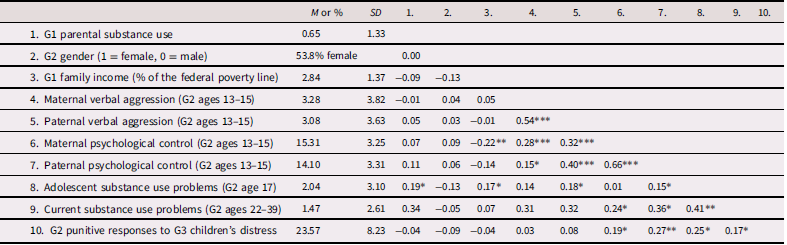
Table 1. Long description
The table presents data on various measures related to a study, including means, standard deviations, and bivariate correlations. It has 10 rows and 12 columns. The columns are labeled as follows: M or %, SD, 1, 2, 3, 4, 5, 6, 7, 8, 9, and 10. The rows are labeled with different measures and their corresponding values. Row 1: G1 parental substance use, M 0.65, SD 1.33. Row 2: G2 gender (1 = female, 0 = male), 53.8% female, SD 0.00. Row 3: G1 family income (% of the federal poverty line), M 2.84, SD 1.37, correlation with row 1 -0.09, correlation with row 2 -0.13. Row 4: Maternal verbal aggression (G2 ages 13-15), M 3.28, SD 3.82, correlation with row 1 0.01, correlation with row 2 0.04, correlation with row 3 0.05. Row 5: Paternal verbal aggression (G2 ages 13-15), M 3.08, SD 3.63, correlation with row 1 0.05, correlation with row 2 0.03, correlation with row 3 -0.01, correlation with row 4 0.54***. Row 6: Maternal psychological control (G2 ages 13-15), M 15.31, SD 3.25, correlation with row 1 0.07, correlation with row 2 0.09, correlation with row 3 -0.22**, correlation with row 4 0.28***, correlation with row 5 0.32***. Row 7: Paternal psychological control (G2 ages 13-15), M 14.10, SD 3.31, correlation with row 1 0.11, correlation with row 2 0.06, correlation with row 3 -0.14, correlation with row 4 0.15*, correlation with row 5 0.40***, correlation with row 6 0.66***. Row 8: Adolescent substance use problems (G2 age 17), M 2.04, SD 3.10, correlation with row 1 0.19*, correlation with row 2 -0.13, correlation with row 3 0.17*, correlation with row 4 0.14, correlation with row 5 0.18*, correlation with row 6 0.01, correlation with row 7 0.15*. Row 9: Current substance use problems (G2 ages 22-39), M 1.47, SD 2.61, correlation with row 1 0.34, correlation with row 2 -0.05, correlation with row 3 0.07, correlation with row 4 0.31, correlation with row 5 0.32, correlation with row 6 0.24*, correlation with row 7 0.36*, correlation with row 8 0.41**. Row 10: G2 punitive responses to G3 children’s distress, M 23.57, SD 8.23, correlation with row 1 -0.04, correlation with row 2 -0.09, correlation with row 3 -0.04, correlation with row 4 0.03, correlation with row 5 0.08, correlation with row 6 0.19*, correlation with row 7 0.27**, correlation with row 8 0.25*, correlation with row 9 0.17*.
Note. G1 = Generation 1 (n = 184); G2 = Generation 2 (n = 184); G3 = Generation 3 (n = 72).
*p ≤ .05 **p ≤ .01 ***p ≤ .001.
Participant loss due to G2–G3 inclusion criteria
One source of participant loss at the time of the G2–G3 parenting assessment simply reflected our inclusion criteria (i.e., requirement to be parenting a child in the 3- to 8-year-old age range by the time of the follow-up assessment). This criterion excluded a total of 99 participants from the full sample of 184 participants. Analyses were conducted to examine bias in participants who did versus did not meet inclusion criteria for the current study. G2 females were more likely to have age-eligible children and provide parenting data than G2 males (b = 0.69, SE = 0.32, z = 2.16, p = .031; OR = 2.00, 95% CI [1.07, 3.74]). Those who met criteria for the G2 parenting assessment were more likely to have had a lower family income at baseline than those who did not meet inclusion criteria (b = −0.53, SE = 0.21, z = −2.47, p = .013). G2 participants who met study criteria were also more likely to have experienced higher levels of psychological control from both mothers (b = 1.84, SE = 0.51, z = 3.58, p < .001) and fathers (b = 1.74, SE = 0.54, z = 3.20, p = .001) at baseline. No significant differences were found between baseline parental verbal aggression or late adolescent substance use in participants who did and did not meet criteria for the G2 parenting assessment.
Participant loss due to attrition
Another source of participant loss was the attrition of participants who met inclusion criteria (i.e., had a child in the 3- to 8-year-old age range) but were lost to follow-up. A total of 13 participants (out of the 85 with at least one eligible child) fell into this category. G2 females were more likely to provide parenting data than G2 males (b = 1.44, SE = 0.65, z = 2.21, p = .027; OR = 4.23, 95% CI [1.17, 15.24]). Additionally, G2 participants who participated in the parenting assessment were more likely to have experienced higher levels of maternal psychological control than those who were lost to follow up (b = 1.57, SE = 0.76, z = 2.08, p = .038). No other significant differences were found in predictors or covariates for participants who did and did not participate in the G2 parenting assessment.
Full information maximum likelihood (FIML) methods were used with all analyses to reduce any potential biases due to attrition. This approach allows us to retain the full sample for estimating the effects of early family experiences on development while appropriately accounting for missingness. Additionally, recent scholarship suggests that FIML is uniformly more powerful at detecting unbiased effects than listwise deletion (i.e., regardless of whether data are missing at random or missing completely at random; Enders, Reference Enders2013; Newman, Reference Newman2014; Woods et al., Reference Woods, Gerasimova, Van Dusen, Nissen, Bainter, Uzdavines, Davis-Kean, Halvorson, King and Logan2024).
Procedure
Confidentiality was assured to all study participants in the initial introduction and in adulthood sessions, and adolescents were told that none of their responses would be revealed to their parents. Participants’ data were protected by a Confidentiality Certificate issued by the US Department of Health and Human Services, which protected information from subpoena by federal, state, and local courts. If necessary, participants were provided with transportation and childcare. Participants were paid for their participation.
Measures
G2 adolescents’ experience of G1 parents’ verbal aggression. Each year between the ages of 13 and 15, G2 adolescents reported how often they experienced verbal aggression from their G1 mother and father using the Conflict Tactics Scale (CTS; Straus, Reference Straus1979). The CTS contains 80 items assessing the severity and frequency of conflict between two partners, as well as conflict management techniques. The 6-item Psychological Aggression subscale was used in the current study. Sample items included, “Your father insulted or swore at you;” “Your father did or said something to spite you;” “Your father threatened to hit or throw something at you.” Items were identical for adolescents’ experience of maternal verbal aggression. Adolescents responded on a seven-point Likert scale representing how often they had experienced the behavior in the past year (0: never, 1: once, 2: twice, 3: 3–5 times, 4: 6–10 times, 5: 11–20 times, or 6: more than 20 times). Final scores were obtained by summing responses on the frequency scale across behaviors and could range from 0 to 36. These final scores were then averaged to create separate composite variables for maternal and paternal verbal aggression across G2 ages 13–15. Cronbach’s alphas in the present sample ranged from 0.71 to 0.77 for maternal verbal aggression and from 0.77 to 0.78 for paternal verbal aggression.
G2 adolescents’ experience of G1 parents’ psychological control. Each year between ages 13–15, G2 adolescents completed the Psychological Control versus Psychological Autonomy subscale of the Childhood Report of Parenting Behavior Inventory (CRPBI; Schaefer, Reference Schaefer1965). This 10-item subscale assesses the degree to which parents (G1) use love withdrawal, guilt, anxiety, or other psychological methods to control adolescents’ behavior. Example items for this measure included, “My mother figure is a person who if I have hurt her feelings, stops talking to me until I please her again;” “My mother figure is a person who is less friendly with me, if I do not see things her way;” “My mother figure is a person who is always trying to change me.” Items were identical for adolescents’ experience of psychological control in their relationship with their fathers. Adolescents responded on a three-point Likert scale (1: Not like my mother/father, 2: Somewhat like my mother/father, 3: A lot like my mother/father). Final scores were obtained by summing responses on the Likert scale across items and could range from 10 to 30. These final scores were then averaged to create separate composite variables for maternal and paternal psychological control across G2 ages 13–15. Cronbach’s alphas in the present sample ranged from 0.76 to 0.80 for maternal psychological control and from 0.80 to 0.82 for paternal psychological control.
G2 substance use problems. At age 17 and again in adulthood, concurrent to when G2s completed their parenting assessment, G2s were assessed with the Core Alcohol and Drug Survey (Presley et al., Reference Presley, Meilman and Lyerla1994). This measure asks respondents to note whether they have experienced any of 20 different problems due to drinking or drug use during the past year, ranging from having a hangover, to being hurt or injured, to being arrested for driving under the influence. A total problems score is created as the sum of responses to these 20 dichotomous items. The number of problems reported were summed to produce a total problems score ranging from 0 to 20 for age 17 and for adulthood. Cronbach’s alpha for these sum scores were 0.87 for age 17 and 0.86 for adulthood.
G2 punitive responses to G3 children’s distress. When G2s had at least one child between ages 3–8, they reported on their responses to children’s negative emotions using the Coping with Children’s Negative Emotions Scale (CCNES; Fabes et al., Reference Fabes, Poulin, Eisenberg and Madden-Derdich2002). This measure assesses parental responses to 12 hypothetical scenarios that involve their child expressing a negative emotion. For each scenario, parents rate their likelihood of responding in six different ways on a scale from 1 (very unlikely) to 7 (very likely). The subscale of punitive parental responses to child distress was included in the current study. An example scenario was, “If my child is afraid of injections and becomes quite shaky and teary while waiting for his/her turn to get a shot, I would…” The punitive response to this scenario was “tell him/her to shape up or he/she won’t be allowed to do something he/she likes to do (e.g., watch TV).” Cronbach’s alpha in the present sample was 0.71 for punitive responses.
Covariates
Theoretical selection of covariates was made based on previously established correlates of parental verbal aggression, psychological control, and punitive parenting (Chassin et al., Reference Chassin, Curran, Hussong, Colder, Marlatt and VandenBos1997; Chassin et al., Reference Chassin, Sher, Hussong and Curran2013; Kerr & Capaldi, Reference Kerr and Capaldi2020; Pears & Capaldi, Reference Pears and Capaldi2001; Tynkkynen et al., Reference Tynkkynen, Vuori and Salmela-Aro2012; Zhang, Reference Zhang2014). The following covariates were considered: G2 parental age, G2 & G3 gender, G1 family income, and G1 parental substance use problems. Of these, G2 parental age and G3 gender were unrelated to the parenting outcome and thus omitted from analyses. Final covariates included G2 gender, G1 family income, and G1 parental substance use. G1 family income was calculated at G2 age 13 taking into account household size and G1 parental income to determine each family’s income as a percentage of the federal poverty line. G1 parental substance use problems were measured at G2 age 13 using the CAGE (“Cut down, Annoyed, Guilty, Eye-opener”) brief screener for alcohol and drug use disorders (Ewing, Reference Ewing1984). G1 parents reported separately on their alcohol and drug use and maternal and paternal reports were combined.
Analytic plan
First, to investigate the direct effects of verbal aggression and parental psychological control in the family of origin on punitive responses to children’s distress in the next generation, we constructed linear regression models. We next examined links between verbal aggression and parental psychological control and adolescent substance use problems using linear regression models. Finally, to test associations between all predictors and punitive responses to children’s distress, two path analyses were constructed in MPlus Version 8.10 (Muthén & Muthén, Reference Muthén, Muthén and van der Linden2017). The first model tested pathways of G1 maternal verbal aggression and G1 maternal psychological control to G2 substance use and punitive responses to their G3 children’s negative emotions (all G2-reported). The second model tested associations between G1 paternal verbal aggression and G1 paternal psychological control to G2 substance use and punitive responses to G3 children’s negative emotions (all G2-reported). The covariates listed above were included in both path models as predictors of substance use problems in late adolescence, substance use problems in adulthood, and punitive responses to children’s distress. Path models are displayed in Figures 1 and 2. All previously identified predictors were included. Significant paths between main variables of interest are displayed in the figures using solid, bold lines, while nonsignificant paths are depicted using light gray dotted lines. Concurrent substance use problems were included as a correlational path with punitive responses to children’s distress. For clarity, the figures do not depict non-significant covariate pathways. All models described above accounted for nesting of multiple G3 offspring within a single family by correcting for clustering at the G2 level using the “cluster” function in Mplus.
Study 1 path analysis of G2 adolescents’ experience of maternal verbal aggression and psychological control in the family of origin to G2 substance use problems and punitive responses to G3 children’s distress. Note. Nonsignificant paths between main variables of interest are depicted in light gray dotted lines. Only significant covariate paths are displayed for clarity. G2 gender was coded as 1 = Female, 0 = Male. G1 = Generation 1; G2 = Generation 2; G3 = Generation 3. *p ≤ .05, **p ≤ .01 ***p ≤ .001.
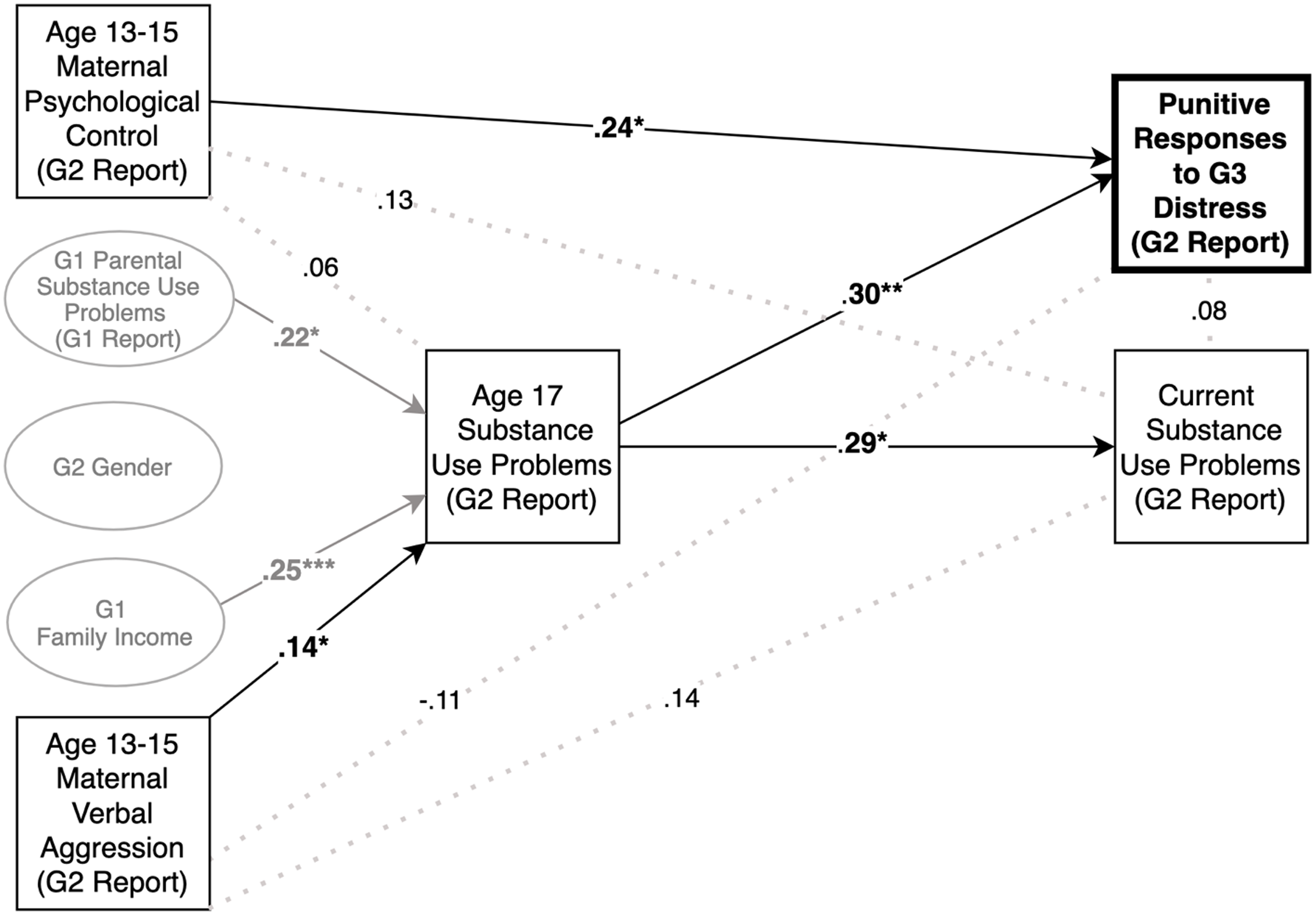
Table 1. Long description
The table presents data on various measures related to a study, including means, standard deviations, and bivariate correlations. It has 10 rows and 12 columns. The columns are labeled as follows: M or %, SD, 1, 2, 3, 4, 5, 6, 7, 8, 9, and 10. The rows are labeled with different measures and their corresponding values. Row 1: G1 parental substance use, M 0.65, SD 1.33. Row 2: G2 gender (1 = female, 0 = male), 53.8% female, SD 0.00. Row 3: G1 family income (% of the federal poverty line), M 2.84, SD 1.37, correlation with row 1 -0.09, correlation with row 2 -0.13. Row 4: Maternal verbal aggression (G2 ages 13-15), M 3.28, SD 3.82, correlation with row 1 0.01, correlation with row 2 0.04, correlation with row 3 0.05. Row 5: Paternal verbal aggression (G2 ages 13-15), M 3.08, SD 3.63, correlation with row 1 0.05, correlation with row 2 0.03, correlation with row 3 -0.01, correlation with row 4 0.54***. Row 6: Maternal psychological control (G2 ages 13-15), M 15.31, SD 3.25, correlation with row 1 0.07, correlation with row 2 0.09, correlation with row 3 -0.22**, correlation with row 4 0.28***, correlation with row 5 0.32***. Row 7: Paternal psychological control (G2 ages 13-15), M 14.10, SD 3.31, correlation with row 1 0.11, correlation with row 2 0.06, correlation with row 3 -0.14, correlation with row 4 0.15*, correlation with row 5 0.40***, correlation with row 6 0.66***. Row 8: Adolescent substance use problems (G2 age 17), M 2.04, SD 3.10, correlation with row 1 0.19*, correlation with row 2 -0.13, correlation with row 3 0.17*, correlation with row 4 0.14, correlation with row 5 0.18*, correlation with row 6 0.01, correlation with row 7 0.15*. Row 9: Current substance use problems (G2 ages 22-39), M 1.47, SD 2.61, correlation with row 1 0.34, correlation with row 2 -0.05, correlation with row 3 0.07, correlation with row 4 0.31, correlation with row 5 0.32, correlation with row 6 0.24*, correlation with row 7 0.36*, correlation with row 8 0.41**. Row 10: G2 punitive responses to G3 children’s distress, M 23.57, SD 8.23, correlation with row 1 -0.04, correlation with row 2 -0.09, correlation with row 3 -0.04, correlation with row 4 0.03, correlation with row 5 0.08, correlation with row 6 0.19*, correlation with row 7 0.27**, correlation with row 8 0.25*, correlation with row 9 0.17*.
Study 1 path analysis of G2 adolescents’ experience of paternal verbal aggression and psychological control in the family of origin to G2 substance use problems and punitive responses to G3 children’s distress. Note. Nonsignificant paths between main variables of interest are depicted in light gray dotted lines. Only significant covariate paths are displayed for clarity. G2 gender was coded as 1 = Female, 0 = Male. G1 = Generation 1; G2 = Generation 2; G3 = Generation 3. *p ≤ .05, **p ≤ .01 ***p ≤ .001.
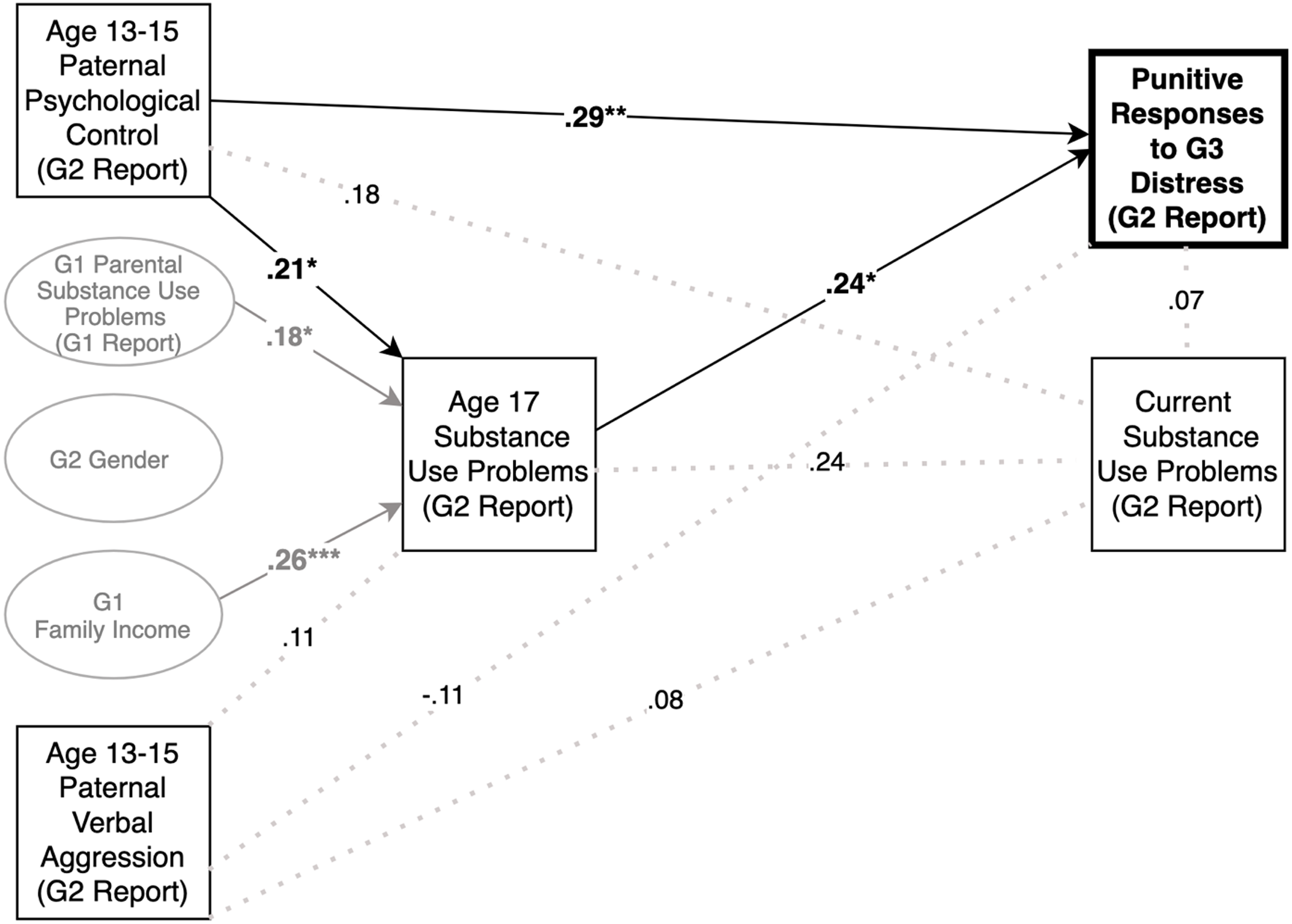
Figure 2. Long description
A diagram representing a path analysis of the relationships between paternal psychological control, substance use problems, and punitive responses to distress across three generations. The diagram includes several labeled components: Age 13-15 Paternal Psychological Control (G2 Report), G1 Parental Substance Use Problems (G1 Report), G2 Gender, G1 Family Income, Age 13-15 Paternal Verbal Aggression (G2 Report), Age 17 Substance Use Problems (G2 Report), Current Substance Use Problems (G2 Report), and Punitive Responses to G3 Distress (G2 Report). Arrows indicate the directional relationships between these components, with significant paths marked by solid lines and nonsignificant paths by dotted lines. The diagram shows how paternal psychological control and verbal aggression influence substance use problems in adolescents, which in turn affect their parenting behaviors towards their own children. Significant paths are denoted by asterisks indicating levels of significance: *p <= .05, **p <= .01, ***p <= .001.
Study 1 Results
Preliminary analyses
Table 1 presents means, standard deviations, and bivariate correlations of measures used in the current study.
Primary analyses
Maternal analyses
All variables are based on G2 report unless otherwise noted.
Hypothesis 1:
Maternal verbal aggression and psychological control in G2’s early adolescence (ages 13–15) will predict G2’s greater likelihood of punitive responses to children’s distress in adulthood.
First, using linear regression, we assessed direct intergenerational effects from G2’s perception of their mothers’ verbal aggression and psychological control during early adolescence to G2’s punitive parental responses to their own children. Analyses began by entering G1 parental-reported substance use, G2 gender, and G1 parental-reported family income. The next step entered maternal verbal aggression and psychological control. Even after controlling for G1 substance use, adolescent gender, and income in the family of origin, higher levels of maternal psychological control predicted more punitive parental responses to G3 children (β = 0.26, p = .023; Table S1).
Hypothesis 2: Maternal verbal aggression and psychological control in early adolescence (ages 13–15) will predict G2’s greater presence of substance use problems in late adolescence (age 17).
We next examined maternal verbal aggression and psychological control as predictors of G2’s substance use problems in late adolescence in a linear regression model that also controlled for the covariates described above. Higher levels of maternal verbal aggression at ages 13–15 predicted greater substance use problems at age 17 (β = 0.14, p = .042; Table S2).
Hypothesis 3: Maternal verbal aggression, psychological control, substance use problems in late adolescence, and substance use problems in adulthood will work together to predict G2’s greater likelihood of punitive responses to children’s distress.
Finally, we examined links between all predictors and G2’s punitive responses to G3 children using a path analysis. The maternal path model fit the data well (χ2 (4) = 5.45, p = .244, CFI = 0.971, RMSEA = 0.038, SRMR = 0.034). Consistent with the linear regression results, mothers’ psychological control predicted more punitive parental responses to G3 children (β = 0.24, p = .013; Figure 1), and mothers’ verbal aggression predicted late adolescent substance use problems (β = 0.14, p = .052; Figure 1). G2’s greater substance use problems at age 17 predicted greater punitive responses to G3 children (β = 0.30, p = .002; Figure 1). While substance use problems in late adolescence predicted substance use problems in adulthood (β = 0.29, p = .030; Figure 1), these G2 parenting-era substance use problems were not significantly correlated with G2’s punitive responses as parents. This final model accounted for 14.9% of the variance in G2’s punitive parenting responses to child distress. Full path model effects are presented in Table S5.
Paternal analyses
All variables are based on G2 report unless otherwise noted.
Hypothesis 1: Paternal verbal aggression and psychological control in G2’s early adolescence (ages 13–15) will predict G2’s greater likelihood of punitive responses to children’s distress in adulthood.
First, we assessed effects from G2’s perception of their fathers’ verbal aggression and psychological control during early adolescence to G2’s punitive responses to their own children using the same regression approach described above. Consistent with the maternal model, higher levels of paternal psychological control at ages 13–15 predicted more punitive responses to G3 children (β = 0.33, p = .006; Table S3).
Hypothesis 2: Paternal verbal aggression and psychological control in early adolescence (ages 13–15) will predict G2’s greater presence of substance use problems in late adolescence (age 17).
We next examined fathers’ verbal aggression and psychological control as predictors of G2’s substance use problems in late adolescence. Higher levels of paternal psychological control at ages 13–15 predicted greater substance use problems at age 17 (β = 0.21, p = .020; Table S4).
Hypothesis 3: Paternal verbal aggression, psychological control, substance use problems in late adolescence, and substance use problems in adulthood will work together to predict G2’s greater likelihood of punitive responses to children’s distress.
Similar to the maternal analyses, we conducted a path analysis to examine links between paternal verbal aggression, paternal psychological control, substance use problems in late adolescence and adulthood, and G2’s punitive responses to G3 children. The paternal path model fit the data well (χ2 (4) = 1.97, p = .742, CFI = 1.00, RMSEA = 0.000, SRMR = 0.022). Consistent with the linear regression results, paternal psychological control predicted more punitive parental responses to G3 children (β = 0.29, p = .006; Figure 2), as well as late adolescent substance use problems (β = 0.21, p = .021; Figure 2). G2’s greater substance use problems at age 17 similarly predicted greater punitive responses to G3 children (β = 0.24, p = .023; Figure 2). Again, adulthood substance use problems, concurrent to assessments of G2 parenting, were not significantly correlated with G2’s punitive responses to G3 children. This final model accounted for 15.4% of the variance in G2’s punitive responses to G3 children’s distress. Full path model effects are presented in Table S6.
Post-Hoc Analyses
To explore the unique contributions of maternal vs. paternal verbal aggression and psychological control, we tested an additional path model with all four predictors in the same model. In this model, only paternal psychological control predicted G2 substance use problems and none of the dysfunctional family conflict variables predicted G2’s punitive responses to G3 children’s distress (Table S7). The loss of previously significant effects in this model may be due to the shared variance in G2s’ reports of maternal and paternal verbal aggression and psychological control given the modest correlations between these behaviors and possible suppression effects in this model. We also tested a model combining G2 reports of both maternal and paternal verbal aggression and psychological control. In this model, neither parental verbal aggression nor psychological control predicted G2 late adolescent substance use problems. Psychological control continued to predict punitive responses to G3 child distress (Table S8). These findings support our expectations that examining maternal and paternal parenting behaviors separately provides greater precision in understanding associations between dysfunctional family conflict, G2 substance use problems, and G2 punitive responses to G3 children’s distress.
Study 1 Discussion
Results from Study 1 indicated that adolescents’ experiences of paternal psychological control and maternal verbal aggression at ages 13–15 predicted adolescents’ greater substance use problems at age 17, which subsequently predicted a greater likelihood of punitive responses to children’s distress in adulthood. There were also direct links from maternal and paternal psychological control to greater punitive responses to children’s distress. Notably, concurrent substance use problems were not associated with greater punitive responses to children’s distress. These findings also highlight the potential importance of examining maternal and paternal behaviors separately, as distinct parent-specific pathways emerged across models.
These findings suggest that there are multiple routes through which dysfunctional conflict in the family of origin might predict harsh responses to children’s negative emotions in the next generation. Although there are multiple potential theoretical explanations underlying the intergenerational associations in the current study, one particularly plausible explanation is that coercive patterns of parent–offspring dysfunctional conflict behavior may become established in adolescence and then persist across generations, increasing the likelihood of G2 parents responding punitively to G3 emotional displays (Patterson, Reference Patterson1982). Social learning as a result of observing aggressive or harsh behavior may also increase the likelihood of such future punitive reactions (Bandura, Reference Bandura1977). In addition, this study found evidence of a developmental cascade from experiences of maternal verbal aggression and paternal psychological control in early adolescence to substance use problems in late adolescence, and then to future G2 punitive responses to G3 children’s distress. Notably, adult substance use problems, assessed concurrently with our parenting assessment, did not predict punitive responses. This suggests that even if problematic substance use does not continue into adulthood, it may display heterotypic continuity in the form of deficits in coping and impulse control (Hussong et al., Reference Hussong, Jones, Stein, Baucom and Boeding2011; Tarter et al., Reference Tarter, Kirisci, Mezzich, Cornelius, Pajer, Vanyukov, Gardner, Blackson and Clark2003; Wills et al., Reference Wills, Simons, Sussman and Knight2016). Additionally, adolescent substance use produces lasting neurobiological changes in emotion regulation and cognitive control (Squeglia et al., Reference Squeglia, Jacobus and Tapert2014), potentially creating a trajectory of traits that increases the risk for punitive responses to children’s distress in adulthood.
Ultimately, the findings from Study 1 suggest that both parental verbal aggression and psychological control may have potential downstream negative consequences for punitive responses to children’s distress in the next generation. Study 2 aims to replicate and extend these findings in a different sample with different measures and using reporters from across all three generations. While the use of dyadic measures of verbal aggression between adolescents and their parents in Study 1 allowed us to isolate the effects of conflict behavior that adolescents reported experiencing from their parents on their substance use problems and later parenting outcomes, Study 2 offers a complementary perspective by considering the role of the broader family environment in shaping substance use and parenting. Study 1 was limited by having only G2-reported measures of G1 parental behavior and their own parenting behavior; Study 2 addresses this limitation by incorporating perspectives from multiple reporters.
Study 2 Introduction
Study 2 explored inconsistent parental discipline as another potential second-generation parenting outcome of dysfunctional conflict in the family of origin. Inconsistent discipline is a form of maladaptive parenting associated with attitudinal ambivalence toward attachment figures (Surjadi et al., Reference Surjadi, Lorenz, Conger and Wickrama2013) and emotion dysregulation (Kim et al., Reference Kim, Pears, Capaldi and Owen2009). Family-wide verbal and/or physical aggression may contribute to an underlying climate of coercion in the family system, which may cause adolescents to view the behavioral and emotional responses of family members in challenging situations as unpredictable and potentially generalize these patterns to their own future parenting practices (Sillars et al., Reference Sillars, Canary, Tafoya and Vangelisti2003). Furthermore, exposure to dysfunctional family conflict is closely linked to broader challenges with emotion regulation and substance use, which may carry forward to inconsistent discipline practices (Cheng et al., Reference Cheng, Cheung and Chung2024; Koss et al., Reference Koss, Cummings, Davies and Cicchetti2017). Should substance use continue into adulthood, parents’ substance use contributes to poor implementation of discipline strategies, such as failure to follow through on the use of consequences (Arria et al., Reference Arria, Mericle, Meyers and Winters2012).
Study 2 tests the theory that there are multiple paths from dysfunctional conflict in the family of origin to inconsistent parental discipline in the next generation: one pathway in which experiences of family verbal and/or physical aggression and parental psychological control are directly associated with later inconsistent discipline, and another in which these experiences predict late adolescent substance use, which in turn is associated with inconsistent discipline in the next generation. The following hypotheses were tested separately for both maternal and paternal behaviors. As in Study 1, we expected that examining maternal and paternal reports of psychological control separately would allow for greater precision in detecting parent-specific intergenerational pathways. We also examined maternal and paternal reports of family verbal and/or physical aggression separately to provide multiple perspectives on family conflict.
-
1. G1 parental-reported family verbal and/or physical aggression and G1 parental-reported psychological control in G2’s mid-adolescence (age 15) will predict G2’s greater inconsistent discipline of G3 children in adulthood (G3-reported).
-
2. G1 parental-reported family verbal and/or physical aggression and G1 parental-reported psychological control in G2’s mid-adolescence (age 15) will predict G2’s self-reported greater presence of substance use problems in late adolescence (age 20).
-
3. G1 parental-reported family verbal and/or physical aggression, G1 parental-reported psychological control, G2-reported substance use problems in late adolescence, and G2-reported substance use problems in adulthood will work together to predict G2’s greater inconsistent discipline of G3 children (G3-reported).
Study 2 Method
Study 2 used data from a multigenerational, longitudinal study of children of parents with an alcohol use disorder (AUD) and matched controls located in the southwestern region of the United States. This study consists of 6 waves of data, with data from Waves 1–3 collected annually from G1s and G2s (i.e., G1–G2 families) between G2 ages 13–15 and data from subsequent waves collected at 5-year intervals from G2s and G3s (i.e., G2–G3 families). Data were collected between 1998 and 2010.
Participants
The present sample included G1 parents (N = 193), G2 adolescents who later became parents (N = 266), and their G3 children (N = 385). The original study sample comprised 454 families with a G2 adolescent and their G1 parents. Approximately half of the original sample (246 G2s) had at least one biological parent with AUD. To be included in the study, G1 parents needed to have at least one child between 10.5–15.5 years of age, identify as Latinx or non-Latinx White, a date of birth between 1926 and 1960, be a resident of the state in which the study was being conducted, and (for AUD families) meet lifetime diagnostic criteria for alcohol abuse or dependence according to the DSM-III (American Psychiatric Association, 1980). AUD families were recruited from court arrest records for driving under the influence, HMO wellness questionnaires, and community telephone screenings (see Chassin et al., Reference Chassin, Rogosch and Barrera1991). Reverse directories were used to locate families living in the same neighborhoods as AUD families, and controls were recruited from this match. Controls were matched to AUD participants in ethnicity, family structure, socioeconomic status, and G2 child’s age and gender. To verify that neither biological nor custodial parents of controls met DSM-III criteria for alcohol use or dependence, direct parent interview data were used.
The main predictors of interest (i.e., family verbal and/or physical aggression and parental psychological control) in the current study were only collected at Wave 3 (G2 M age = 15.16, SD = 1.44). Late adolescent substance use problems were collected at Wave 4 (G2 M age = 20.37, SD = 1.36). Inconsistent parental discipline was collected at Wave 6, along with measures of concurrent substance use problems (G2 M age = 34.27, SD = 2.60; G3 M age = 12.44, SD = 1.53). Covariate data were from Wave 1 (G2 M age = 13.22, SD = 1.44). Full-biological siblings were added at Waves 4, 5, and 6. Combining data for the original adolescents and their age-eligible siblings (i.e., ages 18–26 at Wave 4) produced a sample of 431 families with 772 young adults. Of these, there were 266 G2s (including both original targets and siblings) for whom Wave 1–3 family data were available for the current study. Siblings were presumed to have been exposed to the same levels of global family verbal and/or physical aggression, as well as G1 parental demographic variables. However, because parental psychological control was likely to differ between siblings, only Wave 3 parental psychological control data for the original G2 target was included.
If a G2 participant (including both original targets and siblings) had at least one child between the ages of 10–15 at Wave 6, their data were included in the present study. The lower limit of this age range was selected because G3 children were eligible to report on G2 parenting beginning at age 10. The age range was capped at G3 age 15 to reduce age-related variability in inconsistent parental discipline across the adolescent period and to attempt to best capture G3 family experiences at a similar age as G2 family experiences. Of the 193 G1 parents, 56 had more than one child included in the current study, resulting in 129 G2 children with siblings and 137 G2s from singleton families. Of the 266 G2 parents, 95 had more than one child included in the current study, resulting in 214 G3 children with siblings and 171 singleton-family G3s. A total of 104 G1 participants in the current sample (53.9%) had a SUD at some point in their lifetime. Although G1 participants were selected into the larger longitudinal study for the presence of an AUD, other SUDs were allowed to freely vary. To capture the experiences of G1–G2 families with at least one parent with any SUD, this study collapsed across alcohol and other SUDs. The sample was racially/ethnically representative of the region from which it was drawn (63.5% non-Latinx White, 29.7% Latinx, 6.8% other race/ethnicity). Sample demographic characteristics can be found in Table 2.
Study 2 means, standard deviations, and bivariate correlations among primary measures
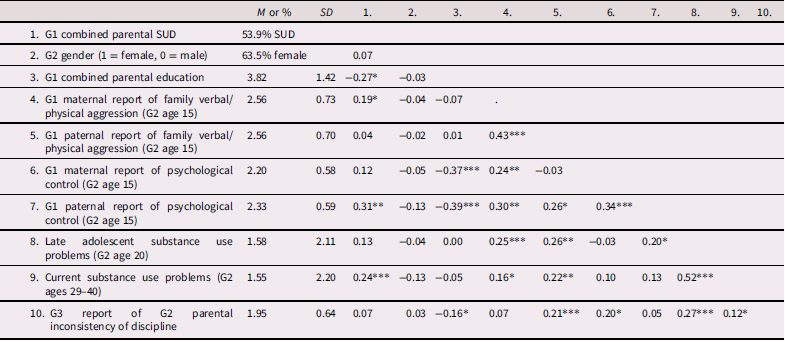
Table 2. Long description
The table presents data on means, standard deviations, and bivariate correlations among primary measures in a study. It consists of 10 rows and 12 columns. The columns are labeled as follows: M or %, SD, 1, 2, 3, 4, 5, 6, 7, 8, 9, and 10. The rows are labeled with different measures and their corresponding values. Row 1: G1 combined parental SUD, 53.9%, SUD. Row 2: G2 gender (1 = female, 0 = male), 63.5% female, 0.07. Row 3: G1 combined parental education, 3.82, 1.42, -0.27*, -0.03. Row 4: G1 maternal report of family verbal/physical aggression (G2 age 15), 2.56, 0.73, 0.19*, -0.04, -0.07. Row 5: G1 paternal report of family verbal/physical aggression (G2 age 15), 2.56, 0.70, 0.04, -0.02, 0.01, 0.43***. Row 6: G1 maternal report of psychological control (G2 age 15), 2.20, 0.58, 0.12, -0.05, -0.37***, 0.24**, -0.03. Row 7: G1 paternal report of psychological control (G2 age 15), 2.33, 0.59, 0.31**, -0.13, -0.39***, 0.30**, 0.26*, 0.34***. Row 8: Late adolescent substance use problems (G2 age 20), 1.58, 2.11, 0.13, -0.04, 0.00, 0.25***, 0.26**, -0.03, 0.20*. Row 9: Current substance use problems (G2 ages 29-40), 1.55, 2.20, 0.24***, -0.13, -0.05, 0.16*, 0.22**, 0.10, 0.13, 0.52***. Row 10: G3 report of G2 parental inconsistency of discipline, 1.95, 0.64, 0.07, 0.03, -0.16*, 0.07, 0.21***, 0.20*, 0.05, 0.27***, 0.12*.
Note. G1 = Generation 1 (n = 193); G2 = Generation 2 (n = 266); G3 = Generation 3 (n = 385); SUD = substance use disorder; “Combined” indicates the average of G1 mothers and fathers.
*p ≤ .05, **p ≤ .01 ***p ≤ .001.
Participant loss due to G2–G3 inclusion criteria
Similar to Study 1, one source of participant loss at the time of the G2–G3 parenting assessment was a result of G2 participants who either did not have G3 children or did not have G3 children in the 10–15-year age range required for the current study eligibility. A total of 496 G2 participants fell into this category. Data for the following analyses were drawn from the Wave 4 assessment to capture the greatest number of G2 target participants and siblings. A logistic regression adjusting for clustering within G1 families indicated that inclusion in the current study was significantly associated with gender (b = 0.90, SE = 0.17, z = 5.44, p < .001). G2s included in the study had significantly greater odds of being female (OR = 2.47, 95% CI [1.78, 3.41]). G2 participants included in the current study were also more likely to have G1 parents with lower levels of education (b = −0.39, SE = 0.12, z = −3.17, p = .002) and have experienced greater levels of maternal psychological control (b = 0.15, SE = 0.07, z = 2.32, p = .021) and paternal psychological control (b = 0.23, SE = 0.07, z = 3.07, p = .002). No significant differences were found between those who were and were not included in the study in terms of G1 parental substance use, G1 maternal- and paternal-reported family verbal and/or physical aggression, and G2 late adolescent substance use problems.
Participant loss due to attrition
Another source of participant loss was the attrition of participants who met inclusion criteria (i.e., had a G3 child in the 10–15-year age range) but were lost to follow-up. A total of 11 eligible G2–G3 families did not complete Wave 6 out of the 506 total G2 participants not included in the current study. G2 females were more likely than G2 males to have children who participated in Wave 6 (b = 2.06, SE = 0.79, z = 2.61, p = .009; OR = 7.84, 95% CI [1.67, 36.78]). Current study participants were also more likely to have lower levels of G1 maternal-reported family verbal and/or physical aggression compared to participants who dropped out (b = −0.68, SE = 0.28, z = −2.42, p = .015). No other significant differences were found between covariates or predictors for G2s whose G3 children did and did not participate in Wave 6. FIML methods were also used in this study, and the full sample of 385 G3 children was utilized for these analyses.
Procedure
At G2 age 15 (Wave 3), G1 parents completed in-person interviews, and at age 20 (Wave 4), G2 adolescents completed in-person interviews. Interviews were conducted simultaneously and in separate rooms for privacy. At G2 age 33 and G3 age 12 (Wave 6), G2 parents and G3 children completed interviews ranging from 1–3 hours. Similar to Study 1, participants’ data were protected by a Confidentiality Certificate issued by the US Department of Health and Human Services, which protected information from subpoena by federal, state, and local courts.
Measures
Verbal and/or physical aggression in G1–G2 families. At G2 age 15, G1 mothers and fathers reported on their perception of verbal and physical aggression in the family using the family conflict scale from Bloom’s Family Environment Scale (Bloom, Reference Bloom1985). This five-item scale assesses the extent to which instances of both verbal and physical aggression occurred in the home during the preceding three months. Sample items included, “Family members sometimes got so angry they threw things;” “Family members sometimes hit each other;” “Family members hardly ever lost their tempers” (reverse-scored). Responses were scored on a scale of 1 (Strongly Agree) to 5 (Strongly Disagree), then reverse-scored so that higher scores indicated more verbal and/or physical aggression. Internal consistency for this measure was 0.67 for maternal report and 0.70 for paternal report.
G1 maternal & paternal psychological control. At G2 age 15, G1 mothers and fathers reported on their psychologically controlling parenting of G2s using seven items from a validated measure of parenting styles (Steinberg et al., Reference Steinberg, Mounts, Lamborn and Dornbusch1991). This scale assessed parents’ psychologically controlling and autonomy-supportive parenting behaviors. Sample items included, “[In the past 3 months], how often did you act cold and unfriendly if CHILD did something you didn’t like?”; “[In the past 3 months], if CHILD did something that you didn’t like, how often did you react by not letting him/her do things with you?”; “[In the past 3 months], how often did you answer CHILD’s arguments by saying something like “You’ll know better when you grow up”? Responses were scored on a scale of 1 (Never) to 5 (Very Often), with higher scores indicating greater psychological control. Items that captured autonomy-supportive parenting were reverse-coded. Cronbach’s alphas were 0.69 for maternal report and 0.74 for paternal report.
G2 substance use problems. At age 20 and again in adulthood, concurrent with when G2s completed their parenting assessment, G2s reported on their problems due to alcohol and drug use using a measure developed by the research team. This measure asks respondents to note whether they have ever experienced any of 14 different problems due to drinking or drug use. Similar to Study 1, these problems ranged from missing school or work, being hurt or injured, or being arrested for driving under the influence. A total problems score was created as the sum of responses to these 14 dichotomous items, ranging from 0 to 14 for age 20 and for adulthood. Cronbach’s alphas for these sum scores were 0.87 for age 20 and 0.88 for adulthood.
G2 parental inconsistent discipline. At G2 age 33 and G3 age 12, ten items taken from the Children’s Report of Parent Behavior Inventory (CRPBI; Schaefer, Reference Schaefer1965) were used to assess parental inconsistency of discipline. G3 children reported on the extent to which their parents’ application of rules and attention to their behavior was consistent. G3 report was used to provide greater objectivity in capturing G2 parenting behaviors. A sample item included, “My parents punished me for doing something one day but ignored it the next.” Responses were scored from 1 (Strongly Disagree) to 5 (Strongly Agree) such that higher scores represented greater inconsistency of discipline. Internal consistency for this measure was 0.74 for G3 report of their father’s inconsistent discipline and 0.70 for G3 report of their mother’s inconsistent discipline.
Covariates
Theoretical selection of covariates was made based on previously established correlates of verbal and/or physical aggression, psychological control, substance use, and inconsistent parental discipline (Arria et al., Reference Arria, Mericle, Meyers and Winters2012; Bosk et al., Reference Bosk, Anthony, Folk and Williams-Butler2021; Lander et al., Reference Lander, Howsare and Byrne2013; Mallett et al., Reference Mallett, Rosenthal and Keys2005). Similar to Study 1, the following covariates were considered: G2 parental age, G2 & G3 gender, G1 parental education, and G1 parental SUD. G2 parental age and G3 gender were not associated with our outcome of interest and were dropped from further consideration. Final covariates included G2 gender, G1 parental education, and G1 parental SUD. At G2 age 13, G1 mothers and fathers reported on their highest level of education obtained using a scale ranging from 1 = 8th grade or less to 11= completed graduate/professional school. This measure was used as a proxy for G1–G2 family socioeconomic status. Mothers’ and fathers’ education levels were averaged to create a combined measure of parental education. At G2 age 13, G1 mother and father SUD diagnoses were obtained from computerized DIS-III interviews (Robins et al., Reference Robins, Helzer, Croughan and Ratcliff1981). This interview provided DSM-III diagnoses of alcohol and drug abuse or dependence. Parental diagnoses were dichotomized as present, such that at least one G1 parent met lifetime criteria for an alcohol or drug use disorder, or absent, such that neither G1 parent met lifetime criteria. Mothers’ and fathers’ SUD diagnoses were combined.
Analytic plan
First, to investigate direct effects of family verbal and/or physical aggression and parental psychological control in the family of origin on inconsistent discipline in the next generation, we constructed linear regression models. We next examined links between family verbal and/or physical aggression and parental psychological control and late adolescent substance use problems using linear regression models. Finally, to test associations between all predictors and inconsistent parental discipline, two path analyses were constructed in MPlus Version 8.10 (Muthén & Muthén, Reference Muthén, Muthén and van der Linden2017). The first model tested links of G1 maternal-reported family verbal and/or physical aggression and G1 maternal psychological control to G2 substance use in late adolescence and adulthood (G2-reported) and inconsistent parental discipline (G3-reported). The second model tested associations between G1 paternal-reported family verbal and/or physical aggression and G1 paternal psychological control to G2 substance use in late adolescence and adulthood (G2-reported) and inconsistent parental discipline (G3-reported). The covariates listed above were included in both path models. All models described above accounted for nesting of multiple G2 and G3 offspring within a single family by correcting for clustering at the G1 level using the “cluster” function in Mplus.
Study 2 Results
Preliminary analyses
Table 2 presents means, standard deviations, and bivariate correlations of measures used in the current study.
Primary analyses
Maternal analyses
The reports of family verbal and/or physical aggression and psychological control described in the following section are all based on G1 maternal report, reports of substance use problems are based on G2 report, and reports of inconsistent parental discipline are based on G3 report.
Hypothesis 1: Family aggression and maternal psychological control in G2’s mid-adolescence (age 15) will predict G2’s greater inconsistent discipline of G3 children in adulthood.
First, using linear regression, we assessed direct intergenerational effects from G1 mothers’ perceptions of family aggression and their own psychological control during G2’s mid-adolescence to G2’s inconsistent discipline of G3. Analyses began by entering G1 parental-reported SUD, G2 gender, and G1 parental education. The next step entered family aggression and psychological control. After controlling for G1 SUD, G2 gender, and parental education in the family of origin, neither family aggression nor maternal psychological control predicted inconsistent discipline of G3 children (all p’s > .05; Table S9).
Hypothesis 2: Family aggression and maternal psychological control in G2’s mid-adolescence (age 15) will predict G2’s greater presence of substance use problems in late adolescence (age 20).
We next examined G1 maternal reports of family aggression and maternal psychological control as predictors of G2’s substance use problems in late adolescence in a linear regression model that also controlled for the covariates described above. Higher levels of family aggression predicted G2’s greater substance use problems in late adolescence (β = 0.25, p = .004; Table S10).
Hypothesis 3: Family aggression, maternal psychological control, G2 substance use problems in late adolescence, and G2 substance use problems in adulthood will work together to predict G2’s greater inconsistent discipline of G3 children.
Finally, we examined links between all predictors and G2 inconsistent discipline of G3 using a path analysis. The G1 maternal path model fit the data well (χ2 (4) = 1.60, p = .808, CFI = 1.00, RMSEA = 0.000, SRMR = 0.013). Unlike the linear regression results, in the more complex path model, maternal psychological control predicted greater inconsistent discipline of G3 children (β = 0.18, p = .032; Figure 3). Higher levels of maternal-reported family aggression predicted G2’s greater substance use problems in late adolescence (β = 0.22, p = .010; Figure 3). Additionally, maternal psychological control significantly predicted concurrent substance use problems (β = 0.12, p = .045; Figure 3). G2’s greater substance use problems in late adolescence predicted more inconsistent discipline of G3 children (β = 0.33, p < .001; Figure 3). While substance use problems in late adolescence predicted substance use problems in adulthood (β = 0.51, p < .001; Figure 3), parenting-era substance use problems were not significantly correlated with G2’s inconsistent discipline. This final model accounted for 14.5% of the variance in G2’s inconsistent discipline of G3. Full path model effects can be found in Table S13.
Study 2 path analysis of G1 maternal-reported family verbal and/or physical aggression and psychological control in the family of origin to G2 substance use problems and inconsistent parental discipline of G3 children. Note. Nonsignificant paths between main variables of interest are depicted in light gray dotted lines. Only significant covariate paths are displayed for clarity. G2 gender was coded as 1 = Female, 0 = Male. G1 = Generation 1; G2 = Generation 2; G3 = Generation 3. *p ≤ .05, **p ≤ .01 ***p ≤ .001.
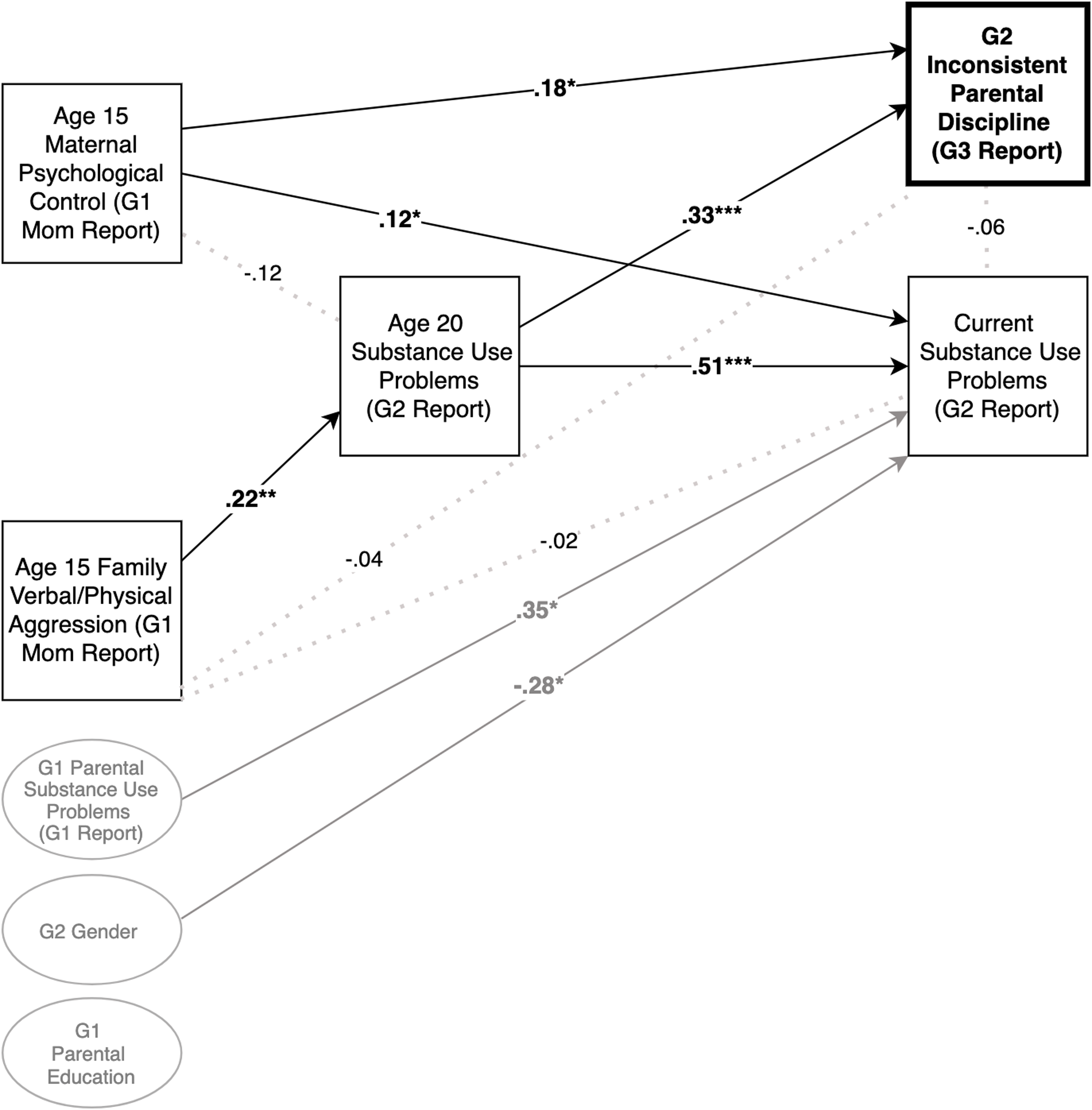
Table 2. Long description
The table presents data on means, standard deviations, and bivariate correlations among primary measures in a study. It consists of 10 rows and 12 columns. The columns are labeled as follows: M or %, SD, 1, 2, 3, 4, 5, 6, 7, 8, 9, and 10. The rows are labeled with different measures and their corresponding values. Row 1: G1 combined parental SUD, 53.9%, SUD. Row 2: G2 gender (1 = female, 0 = male), 63.5% female, 0.07. Row 3: G1 combined parental education, 3.82, 1.42, -0.27*, -0.03. Row 4: G1 maternal report of family verbal/physical aggression (G2 age 15), 2.56, 0.73, 0.19*, -0.04, -0.07. Row 5: G1 paternal report of family verbal/physical aggression (G2 age 15), 2.56, 0.70, 0.04, -0.02, 0.01, 0.43***. Row 6: G1 maternal report of psychological control (G2 age 15), 2.20, 0.58, 0.12, -0.05, -0.37***, 0.24**, -0.03. Row 7: G1 paternal report of psychological control (G2 age 15), 2.33, 0.59, 0.31**, -0.13, -0.39***, 0.30**, 0.26*, 0.34***. Row 8: Late adolescent substance use problems (G2 age 20), 1.58, 2.11, 0.13, -0.04, 0.00, 0.25***, 0.26**, -0.03, 0.20*. Row 9: Current substance use problems (G2 ages 29-40), 1.55, 2.20, 0.24***, -0.13, -0.05, 0.16*, 0.22**, 0.10, 0.13, 0.52***. Row 10: G3 report of G2 parental inconsistency of discipline, 1.95, 0.64, 0.07, 0.03, -0.16*, 0.07, 0.21***, 0.20*, 0.05, 0.27***, 0.12*.
Paternal analyses
The reports of family verbal and/or physical aggression and psychological control described in the following section are all based on G1 paternal report, reports of substance use problems are based on G2 report, and reports of inconsistent parental discipline are based on G3 report.
Hypothesis 1: Family aggression and paternal psychological control in G2’s mid-adolescence (age 15) will predict G2’s greater inconsistent discipline of G3 children in adulthood.
First, we assessed G1 fathers’ reports of family aggression and their own psychological control as predictors of G2’s future inconsistent discipline of G3 at age 12 using the same regression approach described above. Unlike maternal report data, paternal reports of family aggression when G2s were 15 significantly predicted their greater inconsistent discipline of their own G3 children (β = 0.22, p < .001; Table S11).
Hypothesis 2: Family aggression and paternal psychological control in G2’s mid-adolescence (age 15) will predict G2’s greater presence of substance use problems in late adolescence (age 20).
We next examined G1 paternal report of family aggression and paternal psychological control as predictors of G2’s substance use problems in late adolescence. Higher levels of family aggression predicted G2’s self-reported greater substance use problems at age 20 (β = 0.23, p = .012; Table S12).
Hypothesis 3: Family aggression, paternal psychological control, G2 substance use problems in late adolescence (age 20), and G2 substance use problems in adulthood will work together to predict G2’s greater inconsistent discipline of G3 children.
Finally, we examined links between G2’s substance use problems in late adolescence and adulthood, as well as all previously established predictors, to G2’s inconsistent discipline of G3 using a path analysis. The G1 paternal path model fit the data well (χ2 (4) = 3.94, p = .414, CFI = 1.00, RMSEA = 0.000, SRMR = 0.025). Like the linear regression models, G1 paternal reports of family aggression predicted G2’s greater inconsistent discipline of G3 (β = 0.15, p = .002; Figure 4), and higher levels of family aggression predicted G2’s greater substance use problems in late adolescence (β = 0.25, p = .003; Figure 4). Consistent with Study 1, G2’s greater substance use problems at age 20 predicted more inconsistent discipline of G3 children (β = 0.29, p < .001; Figure 4). While substance use problems at age 20 predicted substance use problems in adulthood (β = 0.49, p < .001; Figure 4), parenting-era substance use problems were not significantly correlated with G2’s inconsistent discipline. This final model accounted for 14.5% of the variance in G2’s inconsistent discipline of G3. Full path model effects can be found in Table S14.
Study 2 path analysis of G1 paternal-reported family verbal and/or physical aggression and psychological control in the family of origin to G2 substance use problems and inconsistent parental discipline of G3 children. Note. Nonsignificant paths between main variables of interest are depicted in light gray dotted lines. Only significant covariate paths are displayed for clarity. G2 gender was coded as 1 = Female, 0 = Male. G1 = Generation 1; G2 = Generation 2; G3 = Generation 3. *p ≤ .05, **p ≤ .01 ***p ≤ .001.
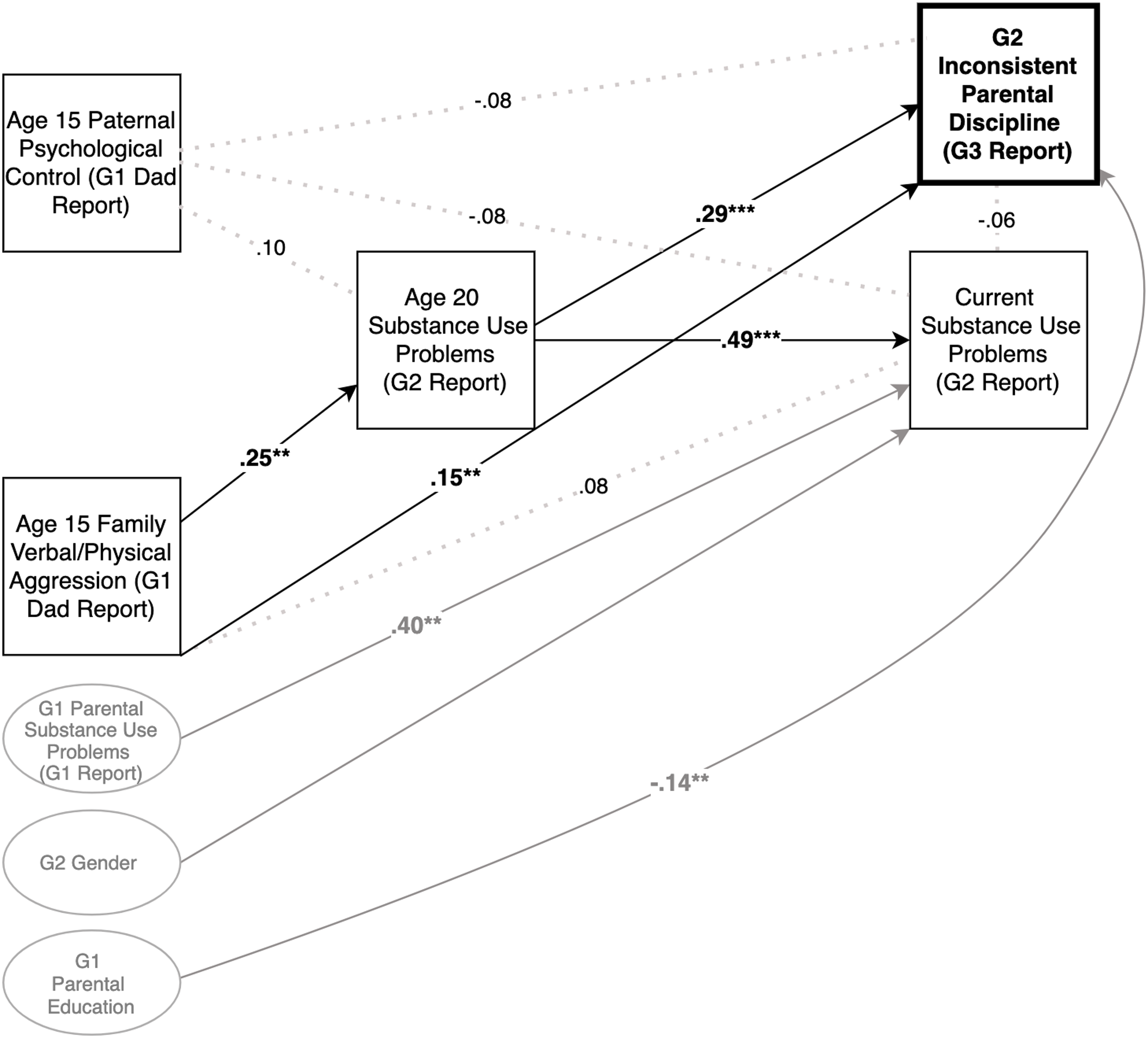
Figure 4. Long description
A diagram representing the path analysis of family dynamics and their intergenerational effects. The diagram includes several labeled boxes and arrows indicating relationships between variables. Key components include Age 15 Paternal Psychological Control, Age 15 Family Verbal/Physical Aggression, Age 20 Substance Use Problems, Current Substance Use Problems, and G2 Inconsistent Parental Discipline. Arrows with numerical values indicate the strength and significance of relationships between these variables. Significant paths are depicted with solid lines, while nonsignificant paths are shown as light gray dotted lines. Covariate paths such as G1 Parental Substance Use Problems, G2 Gender, and G1 Parental Education are also included, with significant paths highlighted. The diagram shows how early family experiences can influence later substance use and parenting behaviors across generations.
Post-hoc analyses
Unlike Study 1, which focused on direct mother–adolescent and father–adolescent verbal aggression, G1 mothers and fathers in Study 2 were potentially reporting on the same general verbal and/or physical aggression in the family. Because of this, we conducted post-hoc path analyses combining G1 maternal and paternal reports of family aggression. Results were highly similar for the model with combined G1 parent-reported family aggression and maternal psychological control (Table S15). However, for the model with combined G1 parent-reported family aggression and paternal psychological control, family aggression no longer predicted inconsistent discipline of G3s (Table S16). These findings suggest that examining G1 maternal and paternal reports of family aggression separately provide greater nuance in detecting connections between these behaviors and inconsistent parental discipline in the next generation.
Study 2 Discussion
Consistent with Study 1, Study 2 findings revealed multiple pathways from dysfunctional family conflict to inconsistent discipline in the next generation. Specifically, G1 maternal psychological control and G1 paternal-reported family aggression directly predicted G2’s inconsistent discipline of G3. Additionally, both G1 maternal and paternal reports of family verbal and/or physical aggression predicted G2’s greater substance use problems in late adolescence, while maternal psychological control uniquely predicted G2’s substance use problems in adulthood. As in Study 1, late adolescent, but not concurrent, substance use problems predicted greater inconsistent discipline of G3 children, again underscoring the unique role of late adolescent substance use problems as a predictor of future parenting.
These findings also emphasize the importance of examining maternal and paternal behaviors separately. Only maternal psychological control had direct associations with G2’s inconsistent discipline of G3, suggesting adolescents may be more sensitive to maternal control regarding their own future parenting consistency. Maternal psychological control also predicted substance use problems in adulthood, concurrent with assessments of G2 parenting, but did not predict late adolescent substance use problems. Very few studies have examined longitudinal links between parental psychological control and offspring behavioral outcomes beyond the late adolescent/early adulthood period, and those that have are not longitudinal and sample across a wide age range, making it difficult to determine if findings differed across developmental periods (Faherty et al., Reference Faherty, Lowe and Arnett2020). Thus, more research is needed to better understand longitudinal associations between maternal versus paternal psychological control and adult behavioral outcomes. With respect to examining maternal versus paternal reports of family verbal and/or physical aggression separately, in the current study, only G1 fathers’ reports of family aggression predicted G2’s inconsistent discipline, despite nearly identical average levels reported by mothers and fathers. This may be due to the general nature of the aggression measure, which did not specify the individuals involved. These findings suggest that collecting reports of family aggression from multiple family members provides valuable nuance in detecting intergenerational effects that are not captured when combining parental reports.
Study 2 provided support for an additional intergenerational pathway between dysfunctional family conflict and dysfunctional parenting responses and obtained similar results to those of Study 1 despite using different samples, measures, assessment timepoints, and reporters. Study 2 included the perspectives of all three generations, thereby increasing our confidence in the similarity of these findings across reporters.
General Discussion
Using two independent, demographically distinct longitudinal samples, this investigation provided converging evidence supporting the theory that dysfunctional conflict in the family of origin potentially shapes later parenting outcomes through multiple pathways. Verbal and/or physical aggression and parental psychological control in the family of origin had unique predictive relations to future punitive parental responses to children’s distress in the next generation in Study 1 and to inconsistent parental discipline in the next generation in Study 2. Our findings also suggest a pathway by which these types of dysfunctional family conflict increase susceptibility to adolescent substance use, which in turn predicts punitive responses to children’s distress and inconsistent parental discipline. In both studies, adolescent, but not adult, substance use problems predicted parenting outcomes in the next generation. Additionally, both studies support the examination of maternal and paternal perspectives on dysfunctional family conflict separately, as distinct predictions were detected based on parent gender.
The current investigation conceptualized dysfunctional family conflict as a broad construct captured by parent–child verbal aggression, family-level conflict, and parental psychological control across the two studies. Consistent with the framework of heterotypic continuity, we demonstrated that dysfunctional family conflict may have intergenerational effects beyond the direct transmission of identical behaviors. Our findings suggest that dysfunctional family conflict may appear in different forms and yet has similar associations with harsh and inconsistent parenting responses in the next generation, which is arguably more consistent with real-world processes where maladaptive behaviors can also evolve over time.
In Study 1, both maternal and paternal psychological control had direct predictive links to punitive responses to children’s distress in the next generation, even after accounting for G1 parental substance use, G2 gender, and G1 family income. In Study 2, G1 maternal psychological control and G1 paternal reports of family verbal and/or physical aggression predicted inconsistent discipline in the next generation, after controlling for G1 parental substance use, G2 gender, and G1 parental education. The measures of parental psychological control were largely similar across the two studies, with both primarily capturing dimensions of love withdrawal and manipulation of adolescents’ verbal expressions and identity (Barber et al., Reference Barber, Stolz, Olsen, Collins and Burchinal2005). On the other hand, the measures of parent and family aggression differed between the two studies. Study 1 examined G1 maternal and paternal verbal aggression toward adolescents, while Study 2 assessed G1 maternal and paternal reports of family-wide verbal and/or physical aggression. As such, Study 2 might be capturing interparental or sibling discord which are conflict processes that do not always involve the adolescent directly and do not necessarily capture maternal and paternal aggression. However, exposure to interparental and sibling conflict also has negative implications for youth coping and adjustment (Bank et al., Reference Bank, Burraston and Snyder2004; Harold & Sellers, Reference Harold and Sellers2018). Observing conflict between other family members can be traumatic and stressful and may shape adolescents’ broader views on behavior in close relationships. For example, interparental discord has been found to undermine adolescents’ sense of security within the family (Davies & Cummings, Reference Davies and Cummings1994), which may then limit their ability to establish a sense of security with their own children should they become parents themselves. In contrast, experiencing direct aggression from parents may diminish security in the family but is also likely to contribute to the development of negative internal scripts and expectations, such that when adolescents’ emotional needs are not responded to adequately by their parents, they are left less able to respond supportively in the future to their own child’s emotional needs (Bowlby, Reference Bowlby1977). Given the differences between exposure to conflict among other family members versus experiencing aggression from parents directly, it may be that the two studies are to a degree capturing distinct mechanisms underlying the intergenerational continuity of dysfunctional family conflict.
Across both studies, however, several common theoretical explanations can help explain the observed intergenerational heterotypic continuity of dysfunctional family conflict. Dysfunctional family conflict may contribute to coercive cycles whereby parents’ conflict strategies escalate adolescents’ problem behavior, which further amplifies parents’ dysfunctional strategies (Patterson, Reference Patterson1982, Reference Patterson2002; Rothenberg, Reference Rothenberg2019). These coercive patterns are likely to continue forward to the next generation due to the socialization of aggressive or maladaptive strategies to control the behavior of others (Kerr & Capaldi, Reference Kerr, Capaldi and Bornstein2019). Just as coercion theory suggests that adolescents will learn and enact in various forms coercive behavior modeled by parents, social learning theory also provides a framework for understanding how children internalize the dysfunctional behaviors of their parents and later express these in various forms (Bandura, Reference Bandura1977). Finally, as described above, dysfunctional family conflict may contribute to the development of negative internal representations of close relationships that carry forward into future caregiving relationships (Bowlby, Reference Bowlby1977). Thus, dysfunctional family conflict may contribute to harsh and inconsistent parenting responses in the next generation by shaping relational expectations through a combination of coercive family processes, social learning, and negative internal working models (Bowlby, Reference Bowlby1977; Patterson, Reference Patterson1982; Waters et al., Reference Waters, Waters, Waters, Thompson, Simpson and Berlin2021; Xu et al., Reference Xu, Wu, Xu, Ding, Zhou and Long2024). These explanations are not exclusive, however, and future research using other theoretical frameworks is still clearly needed.
These findings suggest that adolescents may use substances to manage the distress caused by dysfunctional family conflict. Because Study 1 and Study 2 capture parent-level and family-level aggression, respectively, different mechanisms may underly the prediction from these constructs to adolescent substance use. However, consistent with the principle of equifinality, exposure to different forms of aggression may have contributed to the same substance use outcome across the two studies. Dysfunctional conflict, whether experienced directly or indirectly, likely fosters a negative family context that may contribute to adolescents’ seeking maladaptive means to cope with these environments (Hummel et al., Reference Hummel, Shelton, Heron, Moore and van den Bree2013; Johnson & Pandina, Reference Johnson and Pandina1991). Our findings extend the current literature by suggesting that adolescent substance use may represent an underlying process through which dysfunctional family conflict demonstrates heterotypic continuity to harsh and inconsistent parenting responses in the next generation.
There are several potential explanations for the finding that adolescent, but not adult, substance use problems contributed to harsh and inconsistent parenting responses in the next generation. Greater adolescent substance use may initiate a developmental cascade toward other maladaptive outcomes that could later influence parenting, including lower educational attainment (e.g., failing to complete high school), mental health problems, and criminal justice system involvement (Lynne-Landsman et al., Reference Lynne-Landsman, Bradshaw and Ialongo2010). It also increases the likelihood of selecting a partner with dysregulated patterns of substance use, further contributing to parenting difficulties (Fleming et al., Reference Fleming, White and Catalano2010; Wargo Aikins et al., Reference Wargo Aikins, Simon and Prinstein2010). Adolescent substance use problems, which can stem from genetically influenced traits like impulsivity, could contribute to the development of a temperamentally challenging child in the next generation through genetic transmission and postnatal gene-by-environment interactions, as children with greater temperamental difficulties are more likely to evoke problematic parenting strategies (Elam et al., Reference Elam, Wang, Bountress, Chassin, Pandika and Lemery-Chalfant2016). Further, parental distance or lack of monitoring may provide adolescents with greater ability to access substances (Rusby et al., Reference Rusby, Light, Crowley and Westling2018). Ultimately, adolescent substance use problems likely signify coping deficits or emotion and behavior dysregulation that persists into adulthood. Our findings suggest that adolescent substance use may disrupt the formation of crucial coping and regulatory abilities during a sensitive period for the development of these skills, thereby contributing to difficulties with parenting up to 20 years later.
Contrary to our expectations, concurrent substance use problems in the parenting era were not associated with parenting in either study. Given well-established links between parental substance use problems and poor parenting outcomes such as lower parental warmth, less parental involvement, and greater aggressive parenting (Arria et al., Reference Arria, Mericle, Meyers and Winters2012; Eiden et al., Reference Eiden, Edwards and Leonard2007; Smyth et al., Reference Smyth, Miller, Mudar and Skiba2004), it is probable that concurrent parental substance use problems were more likely to shape other aspects of parenting not examined in the current investigation. Additionally, studies often examine parental substance use disorder or level of use, as opposed to substance use problems (i.e., social or personal consequences due to substance use). Our findings may have differed if we examined the former constructs. Instead, our findings underscore the importance of considering the long-term sequelae of adolescent substance use problems for future parenting.
Also contrary to our expectations was the fact that some of the predictive associations we detected appeared to differ based on G1 parent gender. In Study 1, late adolescent substance use problems were predicted by maternal verbal aggression and paternal psychological control. While previous literature has found links between parental psychological control and adolescent substance use (Romm & Metzger, Reference Romm and Metzger2018), as well as verbal and/or physical aggression and adolescent substance use (Skeer et al., Reference Skeer, McCormick, Normand, Mimiaga, Buka and Gilman2011), these findings expand on the current literature by suggesting that each behavior may have distinct implications for adolescent substance use depending on whether they are exhibited by mothers versus fathers. Additionally, in Study 2, only G1 paternal reports of family aggression were associated with inconsistent discipline of G3 children and when maternal and paternal reports were combined, family aggression did not predict inconsistent discipline in the next generation. One explanation for this is that fathers may be more sensitive to the types of family aggression that are most likely to play a role in shaping adolescents’ future parenting. However, this was not possible to determine given the general nature of the family aggression measure in Study 2. There also appears to be greater nuance when examining maternal and paternal perspectives on family aggression separately. Future studies should continue to explore gender differences in the effects of maternal vs. paternal verbal aggression, perceptions of family aggression, and psychological control.
Presenting these findings as a two-study package enabled us to capitalize on their unique and combined strengths. Study 1 used data collected from G2s, while Study 2 incorporated perspectives from G1s, G2s, and G3s, thereby encompassing all three generations. Further, G2 adolescents were similar in age when measures of G1–G2 family characteristics were assessed in both studies, allowing us to focus specifically on the developmental effects of dysfunctional family conflict within adolescence. In contrast, G3 children represented a much wider age range across the two studies. Taken together, findings across both studies indicate that dysfunctional conflict in the family of origin predicts negative parenting behaviors from the preschool period through the adolescence of G3, which reduces the likelihood that findings are specific to G2 parenting only during certain developmental windows. Ultimately, the detection of a similar pattern of findings across two distinct samples with different measures, assessment timepoints, and reporters, increases our confidence in the generalizability of these findings. They also support our integrative theoretical model, suggesting there are multiple pathways from dysfunctional family conflict to harsh and inconsistent parenting responses in the next generation.
It is important to acknowledge other possible explanations and limitations of these correlational findings. First, effects across both G2 and G3 may be bidirectional, as child and adolescent emotion dysregulation can drive parenting behavior (Otterpohl et al., Reference Otterpohl, Wild, Havighurst, Stiensmeier-Pelster and Kehoe2022). Child characteristics resulting from genetic contributions, such as temperament, disobedience, adaptability, and demandingness, can all shape the strategies that parents use to manage their child’s emotional and behavioral needs (Abidin, Reference Abidin1992; Breaux et al., Reference Breaux, McQuade and Musser2022). Consequently, these findings represent only one possible direction of behavior within the parent–child relationship. Furthermore, this investigation did not capture other significant influences on the adolescent attachment system and future caregiving skills, such as siblings, extended family, and peers (Bengtson, Reference Bengtson2001; Stern et al., Reference Stern, Bailey, Costello, Hellwig, Mitchell and Allen2024; Whiteman et al., Reference Whiteman, McHale and Soli2011). Additionally, our findings did not account for the direct homotypic intergenerational transmission of aggression and psychological control, given that we did not have identical parenting/family measures across generations in both studies. Finally, as this investigation relied on questionnaire reports, future studies should integrate observational and neurobiological methods to more comprehensively assess negative family experiences.
Despite its limitations, the current investigation presents significant implications for both research and clinical practice. If further replicated, these findings support the need for interventions focused on reducing dysfunctional family conflict, strengthening parent and adolescent emotion regulation and coping skills, and teaching more positive forms of communication between parents and teens. Several promising interventions have already been developed in this regard (Havighurst et al., Reference Havighurst, Kehoe and Harley2015; Miller-Graff et al., Reference Miller-Graff, Cummings and Bergman2016; Rhodes et al., Reference Rhodes, Wolchik, Uhlman, O’Hara, Sandler, Tein and Porter2023), and the current investigation suggests that interventions such as these are likely to have not only immediate but also multigenerational benefits. Further, interventions for adolescent substance use might also serve to disrupt the intergenerational continuity of dysfunctional family conflict. The Family Check-Up is an intervention designed to improve parenting skills particularly for children and adolescents with emotional and behavioral problems, including substance use (Dishion et al., Reference Dishion, Nelson and Kavanagh2003). Other interventions that improve family support and reduce dysfunctional patterns (Functional Family Therapy) and those that target multiple areas within the adolescent’s life, including families, schools, and community partners (Multidimensional Family Therapy) have also been shown to reduce adolescent substance use (Horigian et al., Reference Horigian, Anderson and Szapocznik2016; Vaughn & Howard, Reference Vaughn and Howard2004). School-based prevention programs also appear effective in reducing or discontinuing substance use in adolescents (Kulis et al., Reference Kulis, Nieri, Yabiku, Stromwall and Marsiglia2007). Ultimately, these findings underscore the need to decrease dysfunctional conflict in the family of origin to improve developmental outcomes across generations.
Supplementary material
The supplementary material for this article can be found at https://doi.org/10.1017/S0954579426101710.
Data availability statement
The data that support the findings of this study are available from the corresponding author upon reasonable request.
Funding statement
Preparation of this manuscript was supported by the Eunice Kennedy Shriver National Institute of Child Health & Human Development (JA, grant number R37HD058305; JS, grant number F32HD102119), the NIH (JA, grant number R01-MH58066), the National Institute on Drug Abuse (MC, grant number: 5K12DA043490-07), the National Institute on Alcohol Abuse and Alcoholism (LC, grant number R01-AA016213), and the National Science Foundation Graduate Research Fellowship Program (NB, grant number 2234693).
Competing interests
The authors declare none.
Pre-registration statement
Data for the current investigation were collected under informed consents specifying that data would only be used by the research team.
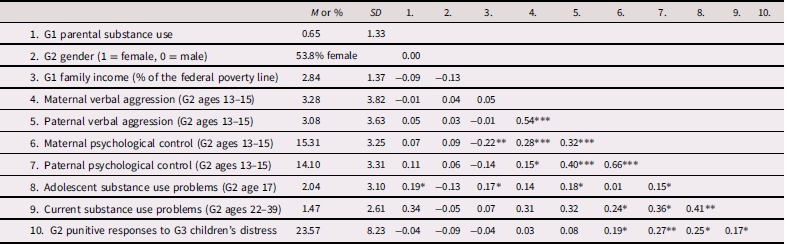
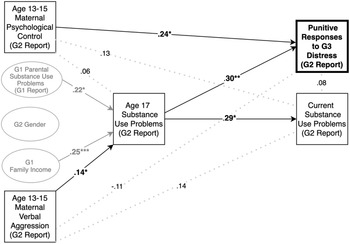
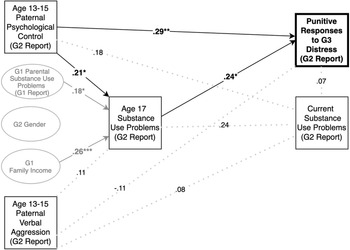
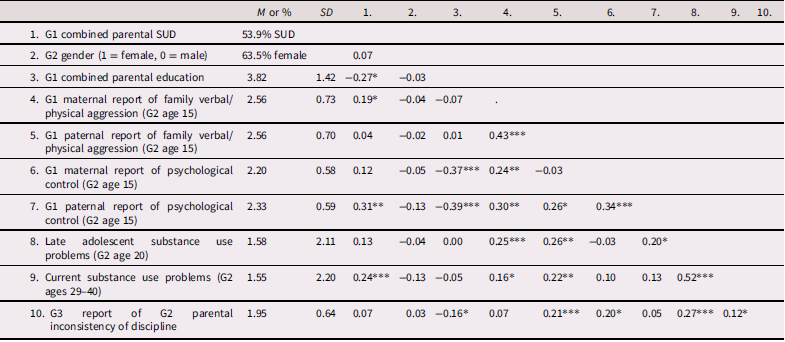
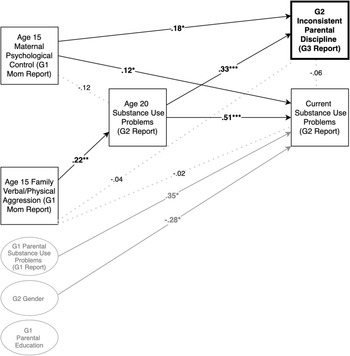
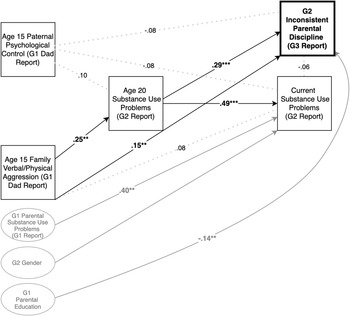


 Open access

