


Dyslipidaemia is one of the major risk factors for CVD, the leading cause of death in Western populations and a constantly growing cause of morbidity and mortality worldwide(Reference De Backer, Ambrosioni and Borch-Johnsen1). Lifestyle changes, one of which is diet, remain the cornerstone for the treatment of dyslipidaemia and the prevention of CVD. Lifestyle changes, in fact, may reduce the risk of premature CHD by 82 %(Reference Stampfer, Hu and Manson2), whereas dietary changes alone may reduce the risk by 60 %(Reference Kris-Etherton, Etherton and Carlson3, Reference Hill, Fleming and Kris-Etherton4).
A large number of functional foods and dietary supplements have been reported to be beneficial for the management of dyslipidaemia(Reference Sirtori, Galli and Anderson5, Reference Huang, Frohlich and Ignaszewski6). Among those, dietary fibres are recommended as a safe and practical approach for cholesterol reduction. This activity is limited to some soluble fibres, whereas insoluble fibres do not exert this effect(Reference Anderson7). Soluble fibres known to lower LDL-cholesterol include pectins from apple and citrus fruits, β-glucan from oats and barley, and fibres from flaxseed and psyllium(Reference Erkkila and Lichtenstein8). Based on meta-analyses showing their hypocholesterolaemic activity(Reference Harland9), health claims exist for both oat β-glucan and barley β-glucans for cholesterol reduction(10, 11). The mechanisms behind this effect are not fully understood: bile acid binding has been suggested, but there are also other potential means for the reduction(Reference Gunness and Gidley12).
Substitution of animal proteins with vegetable proteins appears to be associated with a lower risk of CHD. Soya protein consumption has been shown to successfully reduce cholesterolaemia in experimental animals, when increased by dietary means(Reference Kim, Lee and Reiner13, Reference Terpstra, Woodward and West14), as well as in human subjects with cholesterol elevations of genetic or non-genetic origin(Reference Bakhit, Klein and Essex-Sorlie15, Reference Sirtori, Lovati and Manzoni16). This hypocholesterolaemic effect is not limited to soya, but it appears to be a feature of most legume proteins. Indeed, a strong cholesterol reduction has been shown in animals fed proteins purified from lupin and pea seeds(Reference Sirtori, Lovati and Manzoni17, Reference Rigamonti, Parolini and Marchesi18).
A potentially effective strategy for cholesterol reduction through the diet is that of combining various cholesterol-lowering foods in one diet(Reference Huang, Frohlich and Ignaszewski6). The present study attempted to evaluate, in a recognised rat model of hypercholesterolaemia, the efficacy of a combination of legume proteins and soluble fibres. Pea proteins were selected, together with β-glucan from oat and pectin from apples. Pea proteins appear to provide an attractive alternative to soya proteins in view of the wide availability, low cost and appropriate taste for the non-oriental population(Reference Bazzano, Thompson and Tees19). Vegetable protein and fibres were administered with the diet, alone or in combination, to evaluate a possible additive or synergistic effect. Moreover, mechanisms behind the hypocholesterolaemic effect were explored through real-time quantitative PCR analyses.
Methods
Animals, diets and experimental protocol
Procedures involving animals and their care were conducted in accordance with the institutional guidelines that are in compliance with national (D.L. no. 116, G.U. Suppl. 40, 18 February 1992, Circolare no. 8, G.U. Luglio 1994) and international laws and policies (EEC Council Directive 86/609, OJL 358, 1, 12 December 1987; Guide for the Care and Use of Laboratory Animals published by the US National Institute of Health, NIH Publication no. 85–23, revised 1996). The experiments were supervised by the Laboratory Animal Welfare Service at our Department.
A total of seventy-two male Sprague–Dawley rats (body weight 200–225 g; Charles River Italia) were housed in a room with controlled lighting (12 h/d), constant temperature and relative humidity. During the first week, they were fed a commercial non-purified diet (Mucedola) and then divided into six groups of twelve rats on the basis of body weight so that the distribution between the groups was similar. The animals were then fed for 28 d ad libitum with Nath's(Reference Sirtori, Lovati and Manzoni17) hypercholesterolaemic diet (control group) or diets identical to Nath's diet except for the protein or fibre content. The composition of the experimental diets is shown in Table 1. The protein content in each diet (20 %) was either the total protein isolate from Pisum sativum (Pisane® C9; Provital Industrie SA) or casein as the control protein. Pisane® C9 was constituted by 90·8 % pea proteins on DM and low amounts of fat (1·2 %) and fibre (0·9 %). About the fibre content, the relative amount of cellulose (control) and apple pectin fibre was 7·5 %. Apple pectin was a highly methoxylated, low-gelling, high-viscous pectin from apple peels (degree of esterification 68–78 %, Pectin Classic AU 201-USP; Herbstreith & Fox KG). Pectin Classic AU-201-USP used had a Staudinger index (intrinsic viscosity, limiting viscosity number) of 500 cm3/g (Dr Hans-Ulrich Endress, Herbstreith & Fox, personal communication, 2012). Oat fibres were included in the diet as a component of a dietary product, Oatwell® 28 %, an oat bran rich in β-glucan with a high viscosity and a high molecular weight (CreaNutrition AG). Oatwell® 28 % contains 28 % β-glucan and 46 % of total fibre. The relative amount of Oatwell® 28 % in the rat diet was 11·6 %, thus the total fibre content of the diet was 5·3 % and the β-glucan content was 3·25 %. Considering the composition of Oatwell® 28 %, the diets containing this product were also balanced for minerals, fat and starch content (Table 1). During the feeding period, body weight and food intake were recorded.
Composition of the experimental diets

Sample collection
Fasting blood samples were collected into tubes containing 0·1 % (w/v) EDTA before and after 14 and 28 d of dietary treatments. Plasma was separated by centrifugation at 8000 rpm for 10 min at 4°C and stored at − 20°C for lipid analysis. At the end of the dietary treatments (28 d), rats were killed and the liver was excised and immediately snap-frozen in liquid N2 for subsequent RNA isolation and analysis.
Plasma and liver lipid measurement
Plasma total cholesterol, HDL-cholesterol and TAG concentrations were measured with standard enzymatic techniques using a Roche Diagnostics Cobas autoanalyser. HDL-cholesterol was measured after the precipitation of apoB-containing lipoproteins with polyethylene glycol (20 %, w/v) in 0·2 m-glycine (pH 10). This method has been extensively used for the measurement of HDL-cholesterol concentrations in mice(Reference Schultz, Gong and McCall20–Reference Parolini, Chiesa and Gong23), and has been validated in our laboratory for HDL-cholesterol quantification in rats by comparison with results obtained by fast protein liquid chromatography separation of lipoprotein fractions(Reference Rigamonti, Parolini and Marchesi18). VLDL+LDL-cholesterol concentrations were calculated as the difference between the total cholesterol and HDL-cholesterol concentrations.
Lipids were extracted from the liver with a mixture of chloroform–methanol(Reference Folch, Lees and Sloane Stanley24); lipid extracts were dried and the lipids dissolved using Triton X-100. Hepatic cholesterol and TAG contents were quantified by enzymatic assays (ABX Diagnostics).
Real-time PCR analysis
Total RNA was isolated from the rat liver using the NucleoSpin RNA extraction kit (Macherey-Nagel) according to the manufacturer's instructions. RNA concentration and purity were estimated from optical density at 260 and 280 nm, respectively. Total RNA (1 μg) was reverse transcribed with random hexamer primers and MultiScribe reverse transcriptase (Applied Biosystems) following the manufacturer's instructions. Complementary DNA were quantified by real-time detection PCR on an Applied Biosystems 7900 sequence detector using SYBR® Green I and specific primers indicated in Table 2. Real-time detection was performed in a volume of 25 μl containing 100 nmol/l of each primer and an iTaq SYBR Green Supermix with ROX 2X as recommended by the manufacturer (Bio-Rad). Conditions were 95°C for 10 min, followed by forty cycles of 30 s at 95°C, 30 s at 55°C and 30 s at 72°C. A final melting curve guaranteed the authenticity of the target product. The housekeeping gene cyclophilin was used for normalisation. Fold changes were calculated with the ΔΔC t method. The mRNA concentration of cyclophilin was not influenced by the experimental conditions.
Sequences of the primers used for real-time PCR analysis
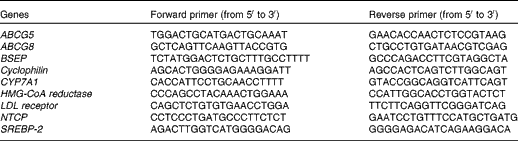
ABC, ATP-binding cassette transporter; BSEP, bile salt export pump; CYP7A1, cholesterol 7α-hydroxylase; HMG-CoA, hydroxymethyl-glutaryl-CoA; NTCP, sodium-taurocholate co-transporting polypeptide; SREBP, sterol regulatory element-binding protein.
Immunoblotting of cholesterol 7α-hydroxylase in liver microsomes
Microsomes were prepared from liver extracts as described previously(Reference Li-Hawkins, Lund and Turley25). Briefly, liver tissues were homogenised in 0·25 m-sucrose buffer (0·25 m-sucrose, 20 mm-Tris acetate (pH 7·4), 1 mm-EDTA, 2 × protease cocktail inhibitor; Sigma) using an Ultra-Turrax T25, followed by centrifugation at 600 g for 10 min. Supernatants were further centrifuged at 10 000 g for 20 min, and then subjected to a second centrifugation step at 100 000 g for 30 min at 4°C. Pellets were resuspended in 50 mm-Tris acetate (pH 7·4), 1 mm-EDTA and 20 % (v/v) glycerol. For immunoblotting, 100 μg of proteins were fractionated by SDS–PAGE in 12 % acrylamide gels and then transferred onto a nitrocellulose membrane (GE Healthcare). A rabbit polyclonal antibody recognising mouse and rat cholesterol 7α-hydroxylase (CYP7A1) (kindly provided by Dr David Russell, University of Texas Southwestern Medical Center, Dallas, USA) was used for overnight hybridisation at 4°C, at a dilution of 1:200. The membrane was further incubated with horseradish peroxidase-conjugated anti-rabbit IgG (Cell Signaling) at a dilution of 1:5000. The signal was detected with the Pierce ECL Western Blotting Substrate (Thermo Scientific). Membranes were then stripped at 42°C for 45 min in 62·5 mm-Tris (pH 6·8), 2 % SDS and 0·07 % 2-mercaptoethanol, and reprobed with a rabbit polyclonal anti-Ig heavy chain-binding protein antibody (Cell Signaling) at a dilution of 1:1000. Membranes were further incubated with the secondary antibody and the signal was detected as described above. CYP7A1 and Ig heavy chain-binding protein signals were quantified with the ImageJ 1.46 program and CYP7A1 expression was normalised to Ig heavy chain-binding protein.
Statistical analysis
Data are expressed as mean values and standard deviations. Group differences were tested for statistical significance by multivariate ANOVA (repeated measures), followed by Tukey's post hoc test. P< 0·05 was considered as statistically significant. Statistical analysis was performed using SYSTAT software (version 13; Systat Software, Inc.).
Results
Effect of the diets on lipid concentrations in plasma and liver
The vegetable proteins and fibres affected the body weight of the animals differently on the high-cholesterol regimen, when monitored during the 28 d of dietary treatment. The animals fed pea proteins and pea proteins+oat fibres grew significantly more than the control animals (mean weights at 28 d of the diet: 388·92 (sd 23·92) g in controls, 441·83 (sd 26·44) g in pea protein-fed rats and 442·92 (sd 27·78) g in pea protein+oat fibre-fed rats, P< 0·005). This higher increase in body weight was consequent to a higher food intake (daily food intake: 18·26 (sd 1·45) g/d in controls, 22·29 (sd 3·63) g in pea protein-fed rats and 22·58 (sd 2·82) g in pea protein+oat fibre-fed rats, P< 0·005).
Each dietary regimen containing vegetable proteins and/or fibres led to lower total cholesterol concentrations when compared with the controls at both 14 and 28 d of the hypercholesterolaemic diet (Fig. 1(a)). The two combinations (pea proteins+oat fibres and pea proteins+apple pectin) proved more effective than fibres alone in modulating cholesterolaemia at 28 d ( − 53 and − 54 %, respectively, P< 0·001; Fig. 1(a)). No significant differences among the groups were observed for HDL-cholesterol concentrations (P>0·05, data not shown). On the contrary, plasma concentrations of VLDL+LDL-cholesterol in rats fed the diets containing vegetable proteins, fibres or the combinations were markedly lower than those in the animals fed the control diet, at both 14 and 28 d of treatment, and the two combinations were more effective in lowering plasma cholesterol concentrations when compared with fibres alone (Fig. 1(b)).
Plasma concentrations of (a) total cholesterol, (b) VLDL+LDL-cholesterol and (c) TAG in male rats fed, for 28 d, Nath's hypercholesterolaemic diets differing in protein and fibre sources. Plasma lipid analysis was performed before, during (14 d) and at the end of the dietary treatment (28 d). Values are means, with standard deviations represented by vertical bars (n 12). * Mean values were significantly different from those of the control diet (P< 0·005). † Mean values were significantly different from those of the fibre-alone diet (P< 0·005). ‡ Mean value was significantly different from that of the control diet (P< 0·05). □, 0 d;  , 14 d; ■, 28 d.

No significant variations in TAG concentrations were detected, except for the group fed apple pectin, where a significant increase was observed at 28 d of dietary treatment (Fig. 1(c)).
Rats fed the diets containing oat fibres, apple pectin or the combinations had a lower cholesterol content in the liver compared with the control rats, whereas no variations were detected between the controls and the pea protein-fed animals (Fig. 2(a)). No changes in hepatic TAG content were instead observed among the groups (Fig. 2(b)).
Liver content of (a) total cholesterol, and (b) TAG in male rats fed, for 28 d, Nath's hypercholesterolaemic diets differing in protein and fibre sources. Data are expressed as mg lipid/g tissue. Values are means, with standard deviations represented by vertical bars (n 12). * Mean values were significantly different from those of the control diet (P< 0·005). † Mean values were significantly different from those of the pea diet (P< 0·005).
Effect of the diets on the hepatic mRNA concentration of genes involved in cholesterol metabolism
In order to examine the possible mechanisms behind the different impacts of the vegetable-containing diets on cholesterolaemia, hepatic gene expression of several key enzymes and transporters involved in cholesterol and bile acid metabolism was evaluated (Table 3).
Relative mRNA concentrations of the hepatic genes involved in the lipid metabolism of rats fed, for 28 d, Nath's hypercholesterolaemic diets, differing in protein and fibre sources§ (Mean values and standard deviations, n 12)
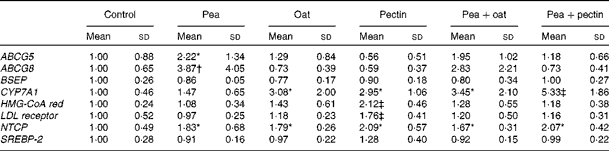
ABC, ATP-binding cassette transporter; BSEP, bile salt export pump; CYP7A1, cholesterol 7α-hydroxylase; HMG-CoA red, hydroxymethyl-glutaryl-CoA reductase; NTCP, sodium-taurocholate co-transporting polypeptide; SREBP, sterol regulatory element-binding protein.
* Mean values were significantly different from those of the control diet (P< 0·05).
† Mean value was significantly different from that of the control, oat, pectin and pea+pectin diets (P< 0·05).
‡ Mean values were significantly different from those of all the other diets (P< 0·05).
§ Values were normalised to the reference gene cyclophilin and are expressed relative to the levels in the control animals set as 1.
In the pectin group, hepatic mRNA concentrations of hydroxymethyl-glutaryl-CoA (HMG-CoA reductase) and LDL receptor were raised when compared with the control group (P< 0·05). No differences among the groups were observed for mRNA levels of sterol regulatory element-binding protein-2 (SREBP-2). Rats fed pea proteins had higher hepatic mRNA levels of ATP-binding cassette transporter G5 (ABCG5) and G8 (ABCG8) than the controls (P< 0·05). Moreover, rats fed the diets containing oat fibres or apple pectin, alone or combined with pea proteins, had higher hepatic mRNA concentrations of CYP7A1 when compared with the control rats (P< 0·05). All the diets significantly up-regulated liver sodium-taurocholate co-transporting polypeptide (NTCP) mRNA concentrations, but did not show any effect on the hepatic mRNA levels of bile salt export pump (BSEP).
Effect of the diets on hepatic cholesterol 7α-hydroxylase protein expression
The protein expression of hepatic CYP7A1 in the experimental groups is shown in Fig. 3. Rats fed the diets containing apple pectin and the two combinations (pea proteins+oat fibres and pea proteins+apple pectin) showed higher CYP7A1 protein expression compared with the controls (P< 0·05). The group fed oat fibres displayed a trend towards higher expression when compared with the controls, but did not reach statistical significance.
Expression of cholesterol 7α-hydroxylase (CYP7A1) in the rat liver and representative image of CYP7A1 immunoblotting experiments. Microsomal membranes were prepared from liver homogenates and 100 μg of proteins were subjected to immunoblotting using a polyclonal antibody directed against CYP7A1. * Mean values were significantly different from those of the control diet (P< 0·005). BiP, Ig heavy chain-binding protein.
Discussion
In the present study, each dietary treatment containing vegetable proteins and/or soluble fibres substantially lowered plasma cholesterol concentrations, if compared with the control diet containing animal proteins and insoluble fibres. The most effective cholesterol-lowering regimens were those combining pea proteins with oat fibres or apple pectin. Considering the hypocholesterolaemic effect of the dietary treatments containing the single effective ingredients (only pea proteins or only soluble fibres), it appears that the cholesterol reduction obtained with the combination of vegetable proteins and soluble fibres is likely to be due to an additive effect. Although this result can be considered somehow expected on the basis of previous studies testing the efficacy of the so-called portfolio diets(Reference Aquilani, Tramarin and Pedretti26–Reference Jenkins, Kendall and Faulkner28), the possibility of a synergistic effect could not be excluded, based on the supposed mechanisms of action of these bioactive ingredients(Reference Sirtori, Galli and Anderson5, Reference Nijjar, Burke and Bloesch29). Indeed, the effect of these dietary components on cholesterol metabolism was explored in the present study, through quantitative real-time PCR.
Previous studies in rodents, performed by the present and other research groups, explored the effect of pea proteins on plasma lipids. Pea proteins generally displayed a marked hypocholesterolaemic activity(Reference Rigamonti, Parolini and Marchesi18, Reference Jacques, Deshaies and Savoie30, Reference Lasekan, Gueth and Khan31), sometimes associated with a hypotriacylglycerolaemic effect(Reference Rigamonti, Parolini and Marchesi18, Reference Lasekan, Gueth and Khan31). The present study confirmed the great efficacy of pea proteins in lowering plasma cholesterol concentrations, but failed in showing any effect on TAG. A possible explanation for the lack of hypotriacylglycerolaemic effect may reside in the very low basal TAG concentrations in rats, associated with the absence of a significant TAG rise in the control group that may have hindered a possible efficacy of pea proteins in modulating plasma TAG concentrations.
Legume proteins are believed to lower plasma cholesterol concentrations, at least in part, by LDL receptor activation(Reference Sirtori, Galli and Anderson5). In the present study, we did not observe any significant transcriptional activation of SREBP-2 and its target genes, including the LDL receptor, in the group fed pea proteins, but we instead observed a strong activation of ABCG5/G8. The ABCG5/G8 transporter promotes the removal of sterols from the body by mediating the transport of sterols, including cholesterol, from intestinal enterocytes into the gut lumen and from hepatocytes into the biliary space(Reference Sabeva, Liu and Graf32). The effect of dietary pea proteins on ABCG5/G8 has never been explored previously, but a transcriptional activation of this transporter in the liver has been observed in a previous study investigating the effect of a dietary soya protein isolate on cholesterolaemia in rats(Reference Ikeda, Kudo and Hamada33). The present results support this observation and are corroborated by previous findings in rats, indicating an increase of faecal cholesterol excretion by soya proteins(Reference Nagata, Tanaka and Sugano34, Reference Sugano, Goto and Yamada35), although this effect is not consistent in clinical studies(Reference Fumagalli, Soleri and Farina36, Reference Maki, Butteiger and Rains37). Altogether, these data suggest that ABCG5/G8 activation may play a role in the hypocholesterolaemic effect of legume proteins.
In the present study, the soluble fibres tested, i.e. β-glucan from oats and pectin from apples, both displayed a marked hypocholesterolaemic activity. Dietary soluble fibres are believed to alter hepatic cholesterol homeostasis primarily by reducing dietary cholesterol uptake in the intestine and by increasing the faecal loss of bile acids, thus reducing the enterohepatic bile acid pool(Reference Rideout, Harding and Jones38). As a consequence, cholesterol is rapidly catabolised in the hepatocyte to replenish the bile acid pool via the activation of CYP7A1, the rate-limiting enzyme in bile acid synthesis(Reference Gunness and Gidley12). Indeed, in the present study, a significant transcriptional increase of this enzyme was found in rats fed both oat fibres and apple pectin. A significant reduction in hepatic cholesterol content was observed with both soluble fibres, possibly as a consequence of reduced intestinal cholesterol absorption and increased bile acid synthesis. In response to the hepatic cholesterol depletion, a compensatory increase in the expression of HMG-CoA reductase and LDL-receptor may occur(Reference Gunness and Gidley12), the latter contributing to plasma cholesterol lowering. Increased expression of HMG-CoA reductase and LDL-receptor was found in pectin-fed rats, whereas no changes v. controls were found for oat fibre-fed rats, suggesting that the hypocholesterolaemic effect of oat fibres may be mostly consequent to reduced intestinal cholesterol absorption. Surprisingly, the dietary treatment with pectin significantly raised TAG plasma concentrations. Dietary treatments with pectin, and generally with soluble fibres, lower or do not modify TAG levels. However, it has been reported that soluble fibre feeding may cause the hepatic secretion of large, TAG-rich VLDL(Reference Fernandez39). We may hypothesise that this effect has also occurred in the present study, leading to a plasma TAG rise in pectin-fed rats. In this regard, it should also be noted that bile acid sequestrants, used in the clinic as hypocholesterolaemic drugs, often raised TAG concentrations by increasing VLDL production(Reference Einarsson, Ericsson and Ewerth40, Reference Aldridge and Ito41).
The combination of soluble fibres and pea proteins led to a further decrease of plasma cholesterol concentrations compared with the single ingredients, which was significant with respect to soluble fibres alone. The transcriptional activation of CYP7A1 observed in rats fed oat fibres or apple pectin was maintained in both treatments combining pea proteins and soluble fibres, and was significantly higher in rats fed pea proteins plus apple pectin v. any other dietary regimen. To validate the transcriptional data obtained, Western blotting analysis of CYP7A1 expression was performed. The results were overall in line with the real-time PCR results, suggesting a good correlation between RNA and protein levels. The additional stimulation of CYP7A1 gene transcription by pea proteins plus apple pectin feeding may suggest that this dietary combination could have further increased the bile acid loss mediated by pectin alone, leading to raised bile acid synthesis. Interestingly, the increased transcriptional activation of ABCG5/G8 observed after feeding a pea protein-only diet was not maintained for the diets containing both soluble fibres and pea proteins. ABCG5/G8 expression is stimulated by liver X receptor in response to hepatic cholesterol overload to enhance biliary cholesterol secretion(Reference Sabeva, Liu and Graf32). The diets containing the combinations of pea proteins and soluble fibres significantly reduced the hepatic cholesterol content v. the treatment with pea proteins alone. This hepatic cholesterol reduction may have caused the lack of ABCG5/G8 transcriptional activation induced by pea protein feeding.
Finally, no dietary regimens affected the expression of BSEP, which mediates the canalicular excretion of bile acids(Reference Anwer42). On the contrary, NTCP expression, the transporter that is primarily responsible for the hepatic uptake of bile acids(Reference Anwer42), was increased. NTCP expression is increased by agents stimulating the bile acid turnover, such as cholestyramine(Reference Cheng, Buckley and Klaassen43), and it is reduced, similar to CYP7A1, by farnesoid X receptor, in the presence of high bile acid levels(Reference Teodoro, Rolo and Palmeira44). Increased cholesterol excretion or reduced bile acid absorption mediated by the dietary regimens could therefore be responsible for the observed effect.
In conclusion, pea proteins, apple pectin or oat fibres are dietary components extremely effective in reducing cholesterolaemia in rats. The combination of these ingredients in the diet results in an additional efficacy with respect to soluble fibres alone, mainly consequent to reduced cholesterol and bile acid absorption. The hypothesis that this type of combinations may be of clinical value is supported by recent data showing a moderate hypocholesterolaemic effect in subjects consuming low amounts of these combined ingredients(Reference Sirtori, Triolo and Bosisio45).
Acknowledgements
The present study was supported by a grant of the European Commission, CRAFT Project Bioprofibre (COOP-CT-2006-032075). We are very grateful to Dr David Russell for his helpful suggestions on liver microsome preparation and for providing the anti-CYP7A1 antibody. The authors' contributions were as follows: C. P., M. M., C. R. S. and G. C. designed the study; C. P., M. B., E. R., M. M., E. D. and S. M. performed the study; C. P., M. M. and G. C. performed the data analyses; C. P., C. R. S. and G. C. wrote the manuscript; G. C. had primary responsibility for the study, data acquisition, interpretation and final content of the manuscript. The authors declare no conflict of interest.



