


Data from the Ministry of Education, Culture, Sports, Science, and Technology in Japan show that the proportion of obese (more than 120 % of standard body weight for height) Japanese junior high school students (aged 12–15 years old) is 9·37–10·99 % in boys and 7·89–8·92 % in girls, and that the proportion in boys has increased slightly over the last 20 years( 1 ). A change in physical activity (PA) may have effected this increase in the proportion of obesity, although data on PA in Japanese adolescents are limited.
The proportion of junior high school students participating in daily exercise increased from 1970 to 2000( Reference Watanabe, Sasai and Miyake 2 ). However, the PA level (PAL) and the amount of moderate-to-vigorous PA (MVPA) were not established in previous studies.
Studies of PA in Japanese adolescents often measured walking steps, as pedometers and accelerometers are very popular tools in Japan. These studies used uniaxial accelerometry to show that junior high school students walk 9450–15 428 steps/d on weekdays and 6375–15 517 steps/d on weekends( Reference Adachi, Sasayama and Okisima 3 ). Only two studies have measured total PA using the doubly labelled water (DLW) method in Japanese children and adolescents. Hikihara et al. ( Reference Hikihara, Saitoh and Yoshitake 4 ) measured PA in high school baseball players (mean age 16·5 years, PAL 2·66), while Adachi et al. ( Reference Adachi, Sasayama and Hikihara 5 ) measured PA in elementary school students (mean age 11·2 years, PAL 1·47). These studies simultaneously used uniaxial accelerometry, which is used widely in Japan. Hikihara et al. ( Reference Hikihara, Saitoh and Yoshitake 4 ) reported that total energy expenditure (TEE) measured by uniaxial accelerometry correlated strongly with DLW data (r 0·73, P< 0·05), but underestimated TEE ( − 35·3 (sd 3·6) %).
Subjective measurements are less preferable in children as a consequence of complex movement behaviour in young people and their inability to accurately recall the intensity, frequency and duration of activities( Reference Sirard and Pate 6 ). Objective measurements using accelerometers are therefore required to evaluate PA( Reference Tanaka, Tanaka and Kawahara 7 , Reference Chen, Sekine and Hamanishi 8 ). Possible reasons for the limited data on PAL and MVPA in Japanese children are the lack of a validation study for accelerometry in children, and the higher cost of accelerometers compared with pedometers. Recently, Yamada et al. ( Reference Yamada, Yokoyama and Noriyasu 9 ) found that a commercially available triaxial accelerometer (EW4800P; Panasonic Corporation) had relatively high accuracy for measuring PA in elderly Japanese subjects.
The objective of the present study was to evaluate the accuracy of EW4800P triaxial accelerometry for measuring PA in Japanese adolescents. This was achieved by comparing EW4800P data with PA measured by the DLW method.
Experimental methods
Participants
Subjects were recruited from one junior high school in Kanagawa Prefecture, near the Tokyo metropolitan area of Japan. Information on the study was sent to all students (n 300), and the purpose, methods and risks of the study were explained to students and their parents. No exclusion criteria were used in the recruitment of the subjects. A total of eighty students and their parents submitted written informed consent. Due to incorrect urine sampling, two subjects (one boy and one girl) were not included in the calculation of TEE by the DLW method. In addition, one subject was excluded, as she had a fever during the experiment. The periods when the accelerometer device was not worn were assessed from the accelerometer data and records kept by the students when the device was attached or removed. Valid days were defined as a non-wear time of less than five waking hours/d. In order for data to be used in the study, subjects had to wear the accelerometer for more than four weekdays and one weekend day. Of the subjects, nineteen were excluded because of faulty accelerometry data (for the two subjects described above, TEE data measured by both DLW and accelerometry were faulty). The remaining sixty subjects were included in the final analysis of the present study. The study was conducted according to the guidelines of the Declaration of Helsinki, and all procedures involving human subjects were approved by the Ethics Committee of Yokohama National University (three of the authors attended this university when the study was conducted).
Study schedule
Before the study period, anthropometric measurements, baseline urine sampling, dietary assessment and measurement of RMR (RMRm) were performed. TEE was then measured over 1 week by the DLW method (TEEDLW), with simultaneous collection of triaxial accelerometer data and completion of a simple PA record. The measurements were carried out from September 2006 to January 2007 depending on each student's schedule. Long vacations and periods of unusual PA, such as examination periods and special school events, were excluded from the experimental period.
Doubly labelled water method
After providing a baseline urine sample, a single dose of approximately 0·06 g/kg body weight 2H2O (99·8 atom%; Cambridge Isotope Laboratories) and 1·4 g/kg body weight H2 18O (10·0 atom%; Taiyo Nippon Sanso), was administered orally to each subject. Subjects were then asked to collect urine samples immediately after arriving at school at the same time every morning over 1 week. On Saturday and Sunday, subjects collected urine samples at home at the same time as on school days. All samples were stored frozen at − 30°C in airtight parafilm-wrapped containers until analysis in our laboratory.
Gas samples for the isotope ratio mass spectrometer were prepared by equilibration of the urine sample with a gas. The gas used for equilibration of 18O was CO2 and H2 was used for 2H equilibration. A Pt catalyst (R1091830; Thermo Electron Corporation) was also used for the equilibration of 2H. The urine samples were analysed in a DELTA Plus isotope ratio mass spectrometer (Thermo Electron Corporation). Each sample and the corresponding reference sample were analysed in duplicate. Throughout the analysis, average standard deviations were 0·5 ‰ for 2H and 0·03 ‰ for 18O.
The 2H and 18O zero-time intercepts and elimination rates (k H and k O) were calculated using least-squares linear regression of the natural logarithm of isotope concentration as a function of the time elapsed since dose administration. Zero-time intercepts were used to determine isotope pool sizes. The total body water was calculated as the mean value of the isotope pool size of 2H (N d) divided by 1·041 and that of 18O (N o) divided by 1·007. In the present study, N d/N o was 1·021 (sd 0·012) (range 1·000–1·055), which is within the recommended range for high-quality analysis( 10 ). The rate of CO2 production (r CO2) was calculated as:
 $$\begin{eqnarray} r _{CO_{2}} = 0\cdot 4554\times TBW\times (1\cdot 007 k _{o} - 1\cdot 041 k _{H}), \end{eqnarray}$$
where TBW is the total body water, and we assumed that isotope fractionation applied to both breath and transdermal water using equation (A6) from Schoeller et al. ( Reference Schoeller, Ravussin and Schutz 11 ) with the revised dilution space constant of Racette et al. ( Reference Racette, Schoeller and Luke 12 ). Calculation of TEEDLW (kJ/d) was performed using a modification of Weir's formula based on the r CO2 and mean food quotient of the subjects in the study( Reference Weir 13 , Reference Black, Prentice and Coward 14 ). The food quotient was calculated based on dietary data from a brief self-administered dietary history questionnaire for junior high and high school students( Reference Miyake, Sasaki and Arakawa 15 ). The intake of protein, fat and carbohydrate assessed from this questionnaire correlated with data obtained from dietary records, with Pearson's correlation coefficients ranging from 0·38 to 0·68( Reference Kobayashi, Honda and Murakami 16 ). The mean food quotient of subjects in the present study was 0·87 (sd 0·02), which is very similar to the values of 0·87 (sd 0·03) for Japanese adults( Reference Ishikawa-Takata, Tabata and Sasaki 17 ) and 0·86 (sd 0·04) for elderly Japanese subjects( Reference Yamada, Yokoyama and Noriyasu 9 ). TEEDLW was expressed as mean TEEDLW per d over the study period. However, we did not adjust TEEDLW for the time at which the accelerometer was not worn, as the non-wear time was minimal in all the study subjects. PA energy expenditure (PAEE) was calculated as (TEEDLW× 0·9 − RMR) using both RMRm (PAEEDLWm) and predicted RMR (RMRp, PAEEDLWp), assuming that dietary-induced thermogenesis accounted for 10 % of TEEDLW. PAL was calculated as TEEDLW divided by RMRm or RMRp (PALDLWm, PALDLWp). Fat-free mass was calculated as the proportion of water in fat-free mass and was determined to be 74·5 % for boys and 75·5 % for girls( Reference Lohman 18 ).
Triaxial accelerometry
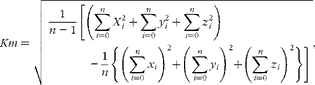
A triaxial accelerometer (EW4800P; Panasonic Corporation) was secured at the waist by a rubber belt throughout the period of DLW measurements. Details on the accelerometer and its accuracy in elderly Japanese have been reported in a study by Yamada et al. ( Reference Yamada, Yokoyama and Noriyasu 9 ). The accelerometer measures 60 × 35 × 13 mm and weighs 24 g. It has a linear frequency response with a low-pass filter, and samples acceleration at 20 Hz with a range from zero to two times the acceleration of gravity. The device stores the standard deviation of the vector norm of the composite acceleration (Km) in three dimensions each minute as follows:
 $$\begin{eqnarray} Km = \sqrt {\frac {1}{ n - 1}\left [\left ({ \sum _{ i = 0}^{ n } }\, X _{ i }^{2} + { \sum _{ i = 0}^{ n } }\, y _{ i }^{2} + { \sum _{ i = 0}^{ n } }\, z _{ i }^{2}\right ) - \frac {1}{ n }\left \{\left ({ \sum _{ i = 0}^{ n } }\, x _{ i }\right )^{2} + \left ({ \sum _{ i = 0}^{ n } }\, y _{ i }\right )^{2} + \left ({ \sum _{ i = 0}^{ n } }\, z _{ i }\right )^{2}\right \}\right ]}, \end{eqnarray}$$
where n is the number of data for 1 min (n 1200), and Σx, Σy, and Σz are the sums of the acceleration in three directions over 1 min. Data were not rounded off for storage of Km.
Subjects were asked to wear the accelerometer for the whole day except when sleeping, bathing or swimming. If subjects took the accelerometer off due to difficulty in wearing it during contact sports, or if they forgot to attach it, they were asked to record the time of removal and the duration and type of PA carried out while not wearing the accelerometer. A commercially available accelerometry software (EW48001; Panasonic Corporation) was used to calculate the total energy expenditure measured by the accelerometer using RMRp (TEEACCp), walking steps and duration of light PA (less than 3 metabolic equivalents), moderate PA (3–6 metabolic equivalents) and vigorous PA (6 metabolic equivalents or more). The metabolic equivalent intensity levels of physical activities were calculated using the simple linear regression of Km and O2 consumption( Reference Matsumura, Yamamoto and Kitado 19 ). MVPA was calculated as the sum of moderate PA and vigorous PA. The commercially available software incorporated RMRp calculated using standard values to calculate TEEACCp that were obtained for the Japanese population from the dietary reference intake in Japan( 20 ). PAEE assessed by accelerometry (PAEEACCp) was calculated as TEEACCp× 0·9 − RMRp. PALACCp was calculated as TEEACCp/RMRp. In the present study, we also calculated each value using raw accelerometry data and RMRm by the same equations used in the commercially available software (TEEACCm, PAEEACCm and PALACCm).
RMR
Before the study period, subjects were asked to come to school at 08.00 hours after an overnight fast. After 30 min of rest, RMRm was measured using an indirect calorimeter with a hood (AR-1; Arco System) at an environmental temperature between 22 and 25°C. This system involved a steady state being established 3 min after the starting of collecting respiratory gas, with the accuracy of RMR measured by this system being 0·02 %( Reference Kumae, Ito and Koizumi 21 ). Subjects were placed under a transparent plastic hood that covered their heads and that was connected to the system. After the child had adapted to the hood for 5 min, RMR was measured for 20 min. O2 consumption and CO2 production were measured at 1 min intervals and averaged over 6–20 min. Resting status was confirmed by measuring the body temperature and the heart rate.
Statistical analysis
All the analyses were performed using SPSS 16.0 J for Windows (IBM Japan). The characteristics of the subjects are expressed as means and standard deviations. As the PA data were not normally distributed, they were expressed as both means and standard deviations and medians with ranges. Differences between grades and sexes were analysed by two-way ANOVA. The linear relationships between PAL and light PA, moderate PA, vigorous PA and MVPA were assessed using Pearson's correlation coefficients. Student's paired t test, Spearman's rank correlation coefficients, intraclass correlation coefficient and Bland–Altman plot analysis( Reference Bland and Altman 22 ) were used to compare data obtained from the DLW method and accelerometry.
Results
The physical characteristics of the subjects are shown in Table 1. Height and weight were significantly lower in girls than in boys (both P< 0·001). The percentage of body fat was higher in girls than in boys (P< 0·001). TEEDLW and RMRm were significantly lower in girls than in boys. PALDLWm ranged from 1·48 to 2·54 in individual subjects, with a mean of 1·91. PALDLWm was not different between sexes or grades. All subjects included in the analysis wore the accelerometers for more than four weekdays and more than one weekend day. Of the subjects, 82 % wore the accelerometer for five weekdays, and 90·2 % wore it for two weekend days. TEEDLW and PALDLWm were not different between the subjects included in the analysis and subjects excluded due to insufficient accelerometer use (TEEDLW 11·0 (sd 2·6) v. 11·0 (sd 2·5) MJ/d; RMRm 5·7 (sd 0·9) v. 5·9 (sd 1·1) MJ/d; PALDLWm 1·91 (sd 0·30) v. 1·85 (sd 0·26), respectively).
Anthropometric characteristics of the study subjects (Mean values and standard deviations)
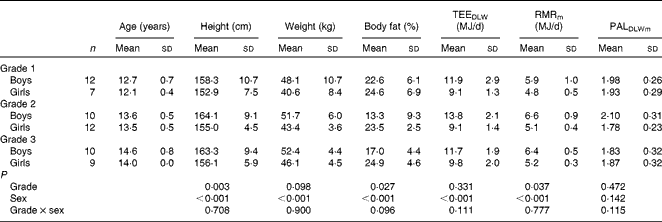
TEEDLW, total energy expenditure measured by the doubly labelled water method; RMRm, measured RMR; PALDLWm, physical activity level measured by the doubly labelled water method.
Of the present subjects, 75 % (twenty-seven boys and ten girls) participated in exercise other than the physical education class. The frequency and duration of exercise were 3·6 (sd 1·8) times/week and 523 (sd 291) min/week for boys, and 2·1 (sd 1·1) times/week and 318 (sd 219) min/week for girls, respectively. Major sports activities included kendo (n 5), soccer (n 4), tennis (n 4), basketball (n 4), track and field (n 4) and baseball (n 3) for boys, and badminton (n 6), track and field (n 5) and tennis (n 3) for girls. The percentage of body fat was significantly lower in subjects who exercised; however, RMRm did not differ with exercise activity (Table 2). Non-wear time, including bathing, periods of PA preventing accelerometer use and times when participants forgot to wear the accelerometer, also did not differ with exercise activity. TEEDLW, TEEACCm and TEEACCp were 11·0 (sd 2·0), 10·3 (sd 1·9) and 10·7 (sd 2·1) MJ/d for all subjects, respectively. All three indices were significantly greater in subjects who exercised compared with subjects who did not exercise. Walking step counts were greater in subjects who exercised; however, TEEACCp did not differ with exercise activity.
Total and physical activity energy expenditure of junior high school students who did and did not exercise (Mean values and standard deviations; medians and 25th–75th percentiles)
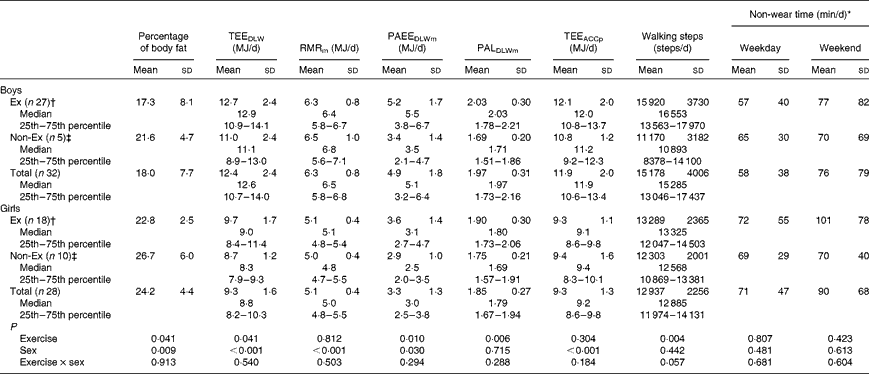
TEEDLW, total energy expenditure measured by the doubly labelled water method; RMRm, measured RMR; PAEEDLWm, physical activity energy expenditure (TEEDLW× 0·9 − RMRm); PALDLWm, physical activity level measured by the doubly labelled water method using RMRm (TEEDLW/RMRm); TEEACCp, total energy expenditure measured by the accelerometer using predicted RMR.
* Non-wear time: duration of the time that subjects did not wear the accelerometer.
† Ex: subjects who exercised except for the physical education class.
‡ Non-Ex: subjects who did not exercise except for the physical education class.
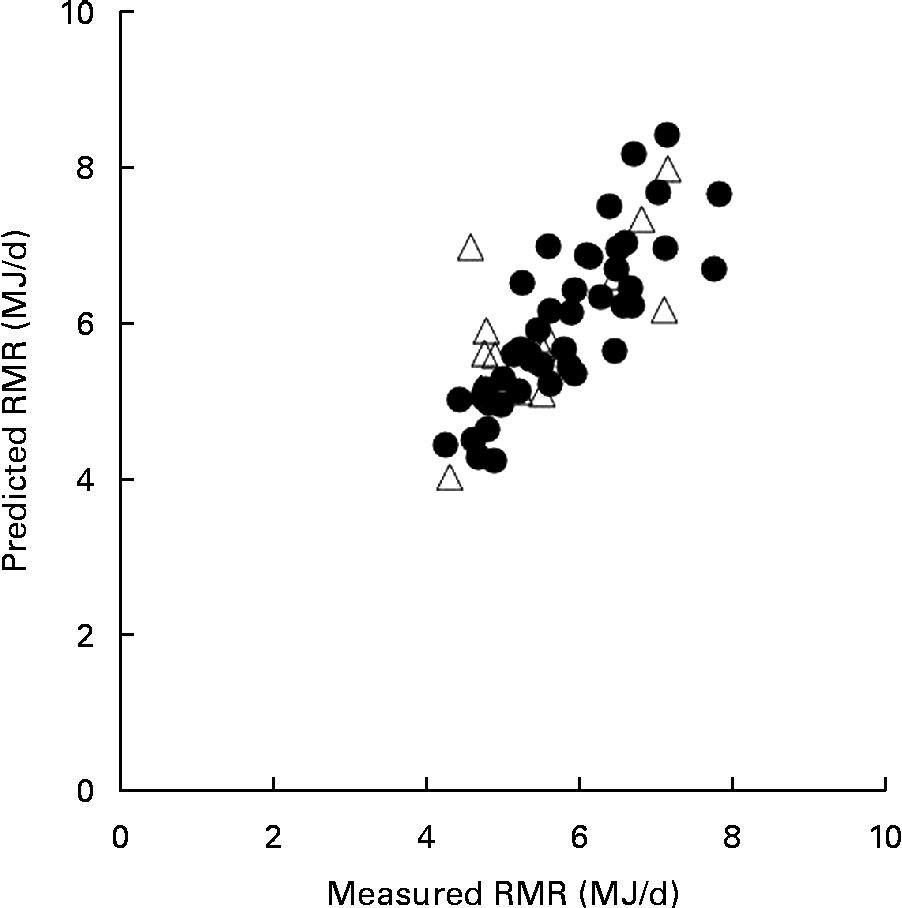
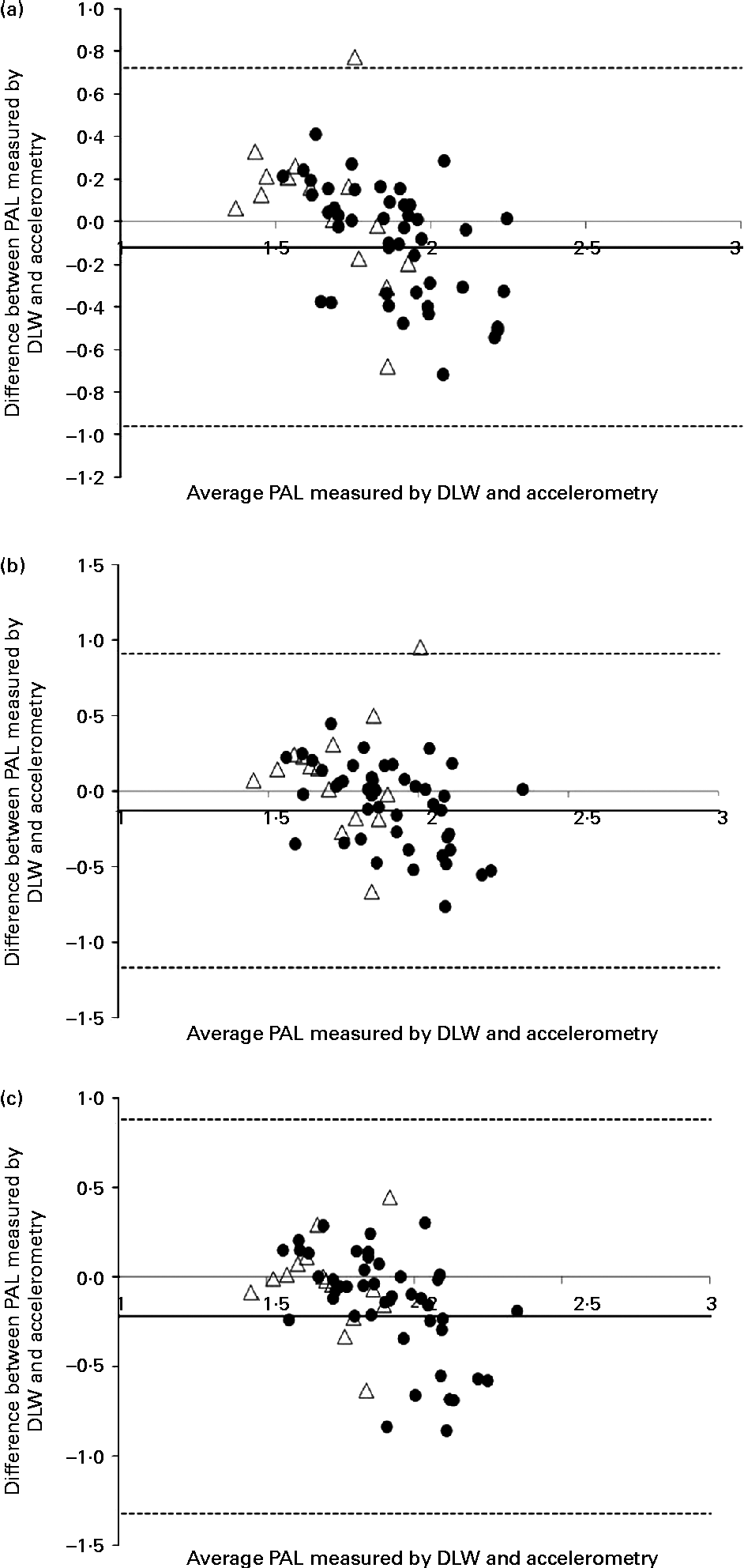
RMRm and RMRp correlated strongly in all subjects and in subjects who exercised, although RMRp was significantly greater than RMRm in all subjects and subjects who did not exercise (Fig. 1; Table 3). The percentage difference between RMRm and RMRp correlated with body weight (r 0·401, P= 0·002) and the percentage of body fat (r 0·524, P< 0·001), but not with sex, age or height. TEEDLW correlated significantly with both TEEACCm and TEEACCp, although TEEACCp was significantly smaller than TEEDLW in all the subjects. In subjects who exercised, accelerometry underestimated TEE significantly using either RMRm or RMRp. Spearman's rank correlation coefficients and intraclass correlation coefficient were lower for PAEE than for TEE in all subjects and in the exercising and non-exercising subjects. Accelerometry underestimated PAEE significantly in comparisons between PAEEDLWm v. PAEEACCm, and PAEEDLWm v. PAEEACCp in all subjects and in subjects who exercised. Subjects who did not exercise showed a weaker correlation between PAEE assessed by the DLW method and accelerometry. In comparison with PAL, Spearman's rank correlation coefficient and intraclass correlation coefficient were lower than those for PAEE and TEE. Accelerometry underestimated PAL only when PALACCp was compared with PALDLWm in all subjects and in exercising and non-exercising subjects. The percentage of body fat correlated significantly with the percentage difference in TEE, PAEE and PAL assessed by the DLW method and accelerometry using RMRp (r 0·304, P= 0·018 for TEE and PAL; r 0·349, P= 0·006 for PAEE), and PAL using RMRm (r 0·304, P= 0·018). Sex, age, body weight and height did not correlate significantly with the percentage difference between TEE, PAEE and PAL. The Bland–Altman agreement plots showed a moderate negative correlation between PAL assessed by either the DLW method or accelerometry, even when measured or RMRp was used (Fig. 2).
Correlation between measured and predicted RMR. ●, Subjects who exercised; Δ, subjects who did not exercise. The Spearman's correlation coefficients were 0·732 (P< 0·001) for all subjects, 0·800 (P< 0·001) for subjects who exercised, and 0·436 (P= 0·020) for subjects who did not exercise.
Comparison of energy expenditure measured by the doubly labelled water method and triaxial accelerometry

ICC, interclass correlation coefficient; RMRm, measured RMR; RMRp, predicted RMR; TEEDLW, total energy expenditure measured by the doubly labelled method; TEEACCm, total energy expenditure measured by accelerometry using RMRm; TEEACCp, total energy expenditure measured by accelerometry using RMRp; PAEEDLWm, physical activity energy expenditure using TEEDLW and RMRm (TEEDLW× 0·9 − RMRm); PAEEACCm, physical activity energy expenditure using TEEACCm and RMRm (TEEACCm× 0·9 − RMRm); PAEEDLWp, physical activity energy expenditure using TEEDLW and RMRp (TEEDLW× 0·9 − RMRp); PAEEACCp, physical activity energy expenditure using TEEACCp and RMRp (TEEDLW× 0·9 − RMRp); PALDLWm, physical activity level using TEEDLW and RMRm (TEEDLW/RMRm); PALACCm, physical activity level using TEEACCm and RMRm (TEEACCm/RMRm); PALDLWp, physical activity level using TEEDLW and RMRp (TEEDLW/RMRp); PALACCp, physical activity level using TEEACCp and RMRp (TEEDLW/RMRp).
* %Δ: (data measured by accelerometry − data measured by the doubly labelled method)/(data measured by the doubly labelled method) × 100 or (RMRp− RMRm)/RMRm× 100.
† P t: P value for the paired t test.
‡ Cor: Spearman's rank correlation coefficient.
§ P c: P value for Spearman's rank correlation coefficient.
Bland–Altman plots of physical activity level (PAL) assessed by either the doubly labelled water (DLW) method or an accelerometer. ●, Subjects who exercised; Δ, subjects who did not exercise.  , Mean PAL measured by the DLW method and accelerometry;
  , mean (2 sd) of PAL measured by the DLW method and accelerometry. Comparison of (a) PAL measured by the DLW method and accelerometry with predicted RMR (r − 0·564, P< 0·001), (b) PAL measured by the DLW method and accelerometry with the measured RMR (r − 0·381, P= 0·003) and (c) PAL measured by the DLW method with the measured RMR and accelerometry with the predicted RMR (r − 0·508, P< 0·001).
When the subjects were divided into tertile subgroups for PAL, 47, 45 and 52 % of the subjects were stratified into the same tertiles of PALDLWm v. PALACCm, PALDLWp v. PALACCp and PALDLWm v. PALACCp. However, 27, 30 and 25 % of the subjects were divided into the lower PAL subgroups according to PALDLWm v. PALACCm, PALDLWp v. PALACCp and PALDLWm v. PALACCp.
The average number of walking steps and the duration of light PA, moderate PA, vigorous PA and MVPA assessed by accelerometry were 14 132 (sd 3469) steps/d, and 894 (sd 66), 89 (sd 29), 13 (sd 14) and 103 (sd 39) min/d, respectively. MVPA in subjects who did or did not exercise was 113 (sd 38) and 72 (sd 22) min/week, respectively. MVPA in weekends was significantly shorter (P< 0·001) than in weekdays (81 (sd 47) v. 111 (sd 42) min/d). Walking step counts were also significantly lower (P< 0·001) in weekends (10 630 (sd 5622) steps/d) compared with weekdays (15 652 (sd 3632) steps/d). MVPA correlated significantly with PALDLWm (r 0·341, P= 0·008). The linear relationship between MVPA and PALDLWm (PALDLWm= MVPA × 0·003+1·65) showed that 30 min of MVPA per d was equivalent to 1·74 of PALDLW.
Discussion
This is the first study to assess PA among Japanese junior high school students using the DLW method and triaxial accelerometry. TEE assessed by accelerometry was found to have good accuracy as determined by comparison with TEEDLW, whereas the accuracy of PAEE and PAL was lower compared with that of TEE. The errors caused by accelerometry were considered to be attributable to the error in the prediction of RMR and the assessment of exercise intensity.
The average height of the subjects in the present study was slightly higher, and the girls' height slightly lower than that in data collected in 2010 by the Ministry of Education, Culture, Sports, Science, and Technology, Japan( 1 ). In the present study, only three students weighed more than 120 % of the standard body weight for sex, age and height in Japanese students( 1 ).
The average PALDLWm of 1·91 (sd 0·30) in the present study was greater than that in previous studies conducted in Western countries (PAL 1·48–1·89)( Reference Bandini, Schoeller and Dietz 23 – Reference Corder, van Sluijs and Wright 33 ). The proportion of the present subjects performing exercise, with the exception of the physical education class, was higher than that in a previous report on the entire student population at this school (in the previous study, boys 70 % and girls 46 %)( Reference Ito, Koizumi and Atsumi 34 ). As the subjects who exercised participated in MVPA about 2 h each week and had a smaller percentage of body fat than non-exercising subjects, they were well trained and had higher energy expenditure.
The average number of walking steps in the present study was also greater than that in previous studies that used uniaxial accelerometry. The accuracy of step counts in the present accelerometry had already been examined in an adult population only, and it is possible that there may be differences in accuracy between adult and children( Reference Park, Ishikawa-Takata and Tanaka 35 ). The accelerometer used in the present study underestimated step counts by 18 % when subjects walked 55 m/min with a normal step frequency. However, this accelerometry did not show significant differences in step count compared with visually counted step counts at walking speeds of 75 and 95 m/min. Although we could not examine the accuracy of assessing MVPA by accelerometry, the relationship between MVPA and the number of walking steps was similar to that reported in previous studies. Tudor-Locke et al ( Reference Tudor-Locke, Craig and Beets 36 ) recommended 10 000–11 700 steps/d for adolescents to satisfy 60 min of MVPA. In the present study, 60 min of MVPA was equivalent to an average of 11 006 steps/d.
The present study shows that TEE measured by EW4800P triaxial accelerometry had good accuracy. The percentage difference between TEEDLW and TEEACCp was − 0·7 (sd 15·8) %. Although the commercially available software uses RMRp, in the present study, we also used RMRm to calculate energy expenditure. TEEACCp showed less difference than TEEACCm in comparison with TEEDLW. The difference between TEEDLW and TEEACCp was very close to the results of a previous study that used the same accelerometer in elderly subjects, and showed a 1·6 % difference( Reference Yamada, Yokoyama and Noriyasu 9 ). These results suggest that this accelerometer can evaluate TEE with a similar level of accuracy in both elderly and junior high school students, at least at the group level. In addition, this accelerometer has very good accuracy compared with other accelerometers. A study using triaxial accelerometry in an age group similar to that in the present study and the most accurate estimation equation( Reference Corder, Brage and Wright 37 ) showed that the root mean square error was 40·72 % for boys and 59·72 % for girls. We examined the effects of sex, age, body weight, height and percentage of body fat on the difference between TEEDLW and TEEACCp or TEEACCm, and found only the percentage of body fat to be correlated significantly with the percentage difference between TEEDLW and TEEACCp. As the percentage of body fat also correlated with the difference between RMRm and RMRp, the prediction error in RMR for subjects with higher body fat deposition affected the estimation error of TEE using RMRp.
Although TEEACCp and TEEACCm showed good accuracy as established by comparison with TEEDLW, RMR accounted for a large portion of TEE in the study subjects. To lessen the contribution of RMR, we compared PAEE and PAL measurements obtained using the two methods. The accuracy for PAEE and PAL was lower than that for TEE. For PAEE, the difference between the two methods was most apparent when RMRp was used in both the DLW method and accelerometry. In particular, the mean difference in PAEE and PAL was overestimated by accelerometry in subjects who did not exercise. The reasons for this finding were that one subject who did not exercise showed a large overestimation of PAEE by accelerometry, while the estimation error of PAEE by accelerometry was relatively small in the other non-exercising subjects. In comparison with PAL, PALDLWm and PALACCm showed the strongest correlation. One reason for these results is the prediction error of RMR. RMRp is based on a standard value of RMR for Japanese in the dietary reference intake for Japan. The dietary reference intake for Japan is revised every 5 years, although the standard RMR value for children was calculated using the data collected in the 1950s. When the dietary reference intake was revised in 2010 based on data measured in the 2000s, the standard value of RMR in females aged 18–29 years decreased from 98·7 to 92·5 kJ/d. It is therefore possible that RMRp may also be overestimated in adolescents. Another possible reason for the overestimation of RMRp was the systematic error of the measurement. Cooper et al. ( Reference Cooper, Watras and O'Brien 38 ) suggested that there was a systematic error in calorimetry systems. The system used in the present study has been tested previously( Reference Kumae, Ito and Koizumi 21 ). As the standard value was based on data collected more than 50 years ago, we could not examine the systematic error between the present system and systems that were used to decide the standard value of RMR. Given that RMR can vary with age, maturation, body weight and the level of PA, we considered that a better estimation of PAEE may be obtained using a more accurate measurement of RMR( Reference de Graauw, de Groot and van Brussel 39 ).
In the present study, subjects who exercised tended to have a greater underestimation of PAL by accelerometry than other subjects who did not exercise. RMR and non-wear time of accelerometry were not different between the exercising and non-exercising subjects, while walking step counts were greater in subjects who exercised. As most accelerometers are more sensitive for accelerations in the vertical place and less sensitive for a more complex movement( Reference Corder, Brage and Wareham 40 ), the intensity of exercise may be estimated less accurately. In addition, although the prediction model of EW4800P was constructed using data from adults, the models are population specific( Reference Strath, Pfeiffer and Whitt-Glover 41 ). It is therefore possible that PA in some adolescents may not have been estimated correctly.
The most significant limitation of the present study was that all the subjects were recruited from one school. Most of the students in the present study used trains to go to school, and had to walk approximately 15 min each way from the nearest station to the school. In Japan, most public school students go to school on foot or by a bicycle. It is therefore necessary to collect data from other schools to generalise the present results to other Japanese junior high school students.
Second, although we sent an information letter to all the students, the participation rate was quite low. We are therefore not sure whether the subjects in the study were representative of the students in this school.
Third, some subjects had issues with improper wearing of the accelerometer. According to our criteria, approximately 25 % of the subjects were excluded from the analysis because of inappropriate accelerometer use. Of the seventeen subjects excluded from the analysis, fifteen did not wear the accelerometer on any weekend days. All the subjects included in the analysis wore the accelerometer more than 12 h/d and for more than 5 d. This exclusion rate was not greater than that in the International Children's Accelerometry Database, which found that only 62·2 % of boys and 59·3 % of girls in their study wore an accelerometer more than 12 h/d over periods longer than 4 d( Reference Sherar, Griew and Esliger 42 ). On weekdays, members of the research team met with the subjects every morning to remind them to wear their accelerometers. However, TEEDLW and PALDLW were not different between the subjects included in the analysis and those who were excluded.
Fourth, we used a triaxial accelerometer made by a Japanese company. This made it difficult to compare the present results with those from Western countries, which have most often used Actigraph accelerometers. Actigraph accelerometers are not used widely in Japan, and Japanese people tend to be more familiar with pedometers and accelerometers made by Japanese companies. The present study examined the accuracy of the EW4800P accelerometer, and showed that it can estimate the total PA with a high degree of accuracy.
In conclusion, based on a comparison with the DLW method, the present study showed that EW4800P triaxial accelerometry can estimate daily TEE with good accuracy and precision. However, the accuracy of PAEE and PAL estimations was not high in Japanese adolescents. Prediction of RMR in Japanese adolescents and the prediction model of accelerometry for adolescents therefore need to be improved.
Acknowledgements
The authors thank the teachers, families and students who participated in and supported the study. The present study was supported by a Grant-in-Aid for Scientific Research (A) (no. 18200047) from the Ministry of Education, Culture, Sports, Science, and Technology, Japan. K. I.-T. analysed and interpreted the data, wrote the manuscript and had primary responsibility for the final content. K. Kaneko designed the main study protocol and managed the study. K. Koizumi managed the field study. C. I. managed the field study and RMRm. All authors approved the final version of the manuscript. The authors declare that they have no conflicts of interest.



