


Introduction
Providing care through general medical providers and community health workers is a central strategy for expanding access to mental health services (Patel et al. Reference Patel, Kieling, Maulik and Divan2013). Generalists express interest in addressing mental health problems, but worry about taking on new responsibilities without long-term educational and referral support (Petersen et al. Reference Petersen, Sseunnya, Bhana and Baillie2011; Mendenhall et al. Reference Mendenhall, De Silva, Hanlon, Petersen, Shidhaye, Jordans, Luitel, Ssebunnya, Fekadu, Patel, Tomlinson and Lund2014; Stein et al. Reference Stein, Storfer-Isser, Kerker, Garner, Szilagyi, Hoagwood, O'Connor and McCue Horwitz2016; Straus & Sarvet, Reference Straus and Sarvet2014). Sustainability is thus a critical element of programs that seek to build generalists’ mental health care capacity.
The JHU-TSEHAI Program for Mental Health Problems in HIV Care (Legesse et al. Reference Legesse, Tegegn, Jerene, McNabb, Zewdu, Tilahun and Wissow2011; Wissow et al. Reference Wissow, Tegegn, Legesse, McNabb, Tilahun, Jerene and Ruff2014) was part of the US President's Emergency Plan for AIDS Relief (PEPFAR) in Ethiopia. Program components included attention to context (support from federal, regional, and local health authorities, supplies of required medications, designing content in collaboration with Ethiopian experts), brief mental health training for generalist HIV providers (covering front-line approaches to common mental disorders across the lifespan as well as epilepsy, psychosis, and dementia), and short-term support in the form of printed reference materials and follow-up site visits over a period of a few months. Co- and cross-training of HIV providers and mental health staff were included to build a common vocabulary, shared sense of mission and long-term, self-sustaining collaborations (Benzer et al. Reference Benzer, Beehler, Miller, Burgess, Sullivan, Mohr, Meterko and Cramer2012; Wilkes & Stopforth, Reference Wilkes and Stopforth2015). The program's reference guide for clinicians and facilitator guide are available at www.jhu.edu/pedmentalhealth.
The program was originally implemented in seven clinics in four regions of Ethiopia over a period of about 3 years (November 2010–February 2013). In an informal, mid-roll-out evaluation, conducted by interviewing trainees at four sites where training had already taken place, HIV providers reported that they were more likely than pre-training to listen to and counsel patients with low mood or anxiety. New linkages were developing with on-site mental health staff, some of whom had over time been assigned to non-mental health roles but now were allowed to return to mental health work. Staff turnover and lack of ways to easily document mental health-related encounters were reported as problems; these were addressed by creating new brief clinical reference materials and a simplified mental health registry (Legesse et al. Reference Legesse, Tegegn, Jerene, McNabb, Zewdu, Tilahun and Wissow2011).
In June 2014, about 16 months after the last training, we returned to two of the sites to look for evidence of the program's ongoing impact. We used Stirman et al. (Reference Stirman, Kimberly, Cook, Caloway, Castro and Charns2012) model to explore factors potentially promoting ongoing impact (Table 1). Stirman et al., identify four main influences on program sustainability: characteristics of a program's core intervention (including effectiveness and fit with its context), characteristics of the program's context (aspects of the setting, participants, and leadership), the setting's capacity to carry out the program (funding, workforce), and processes available at the setting (including mechanisms for ongoing evaluation and feedback, the creation of working relationships among stakeholders) (Table 1). We use this framework to understand persistence of the program. We were particularly interested in whether the attempt to promote local collaborative relationships had been able to sustain the HIV providers’ mental health work after external support for the program had ended.
Characteristics of the HIV-mental health integration intervention related to sustainability
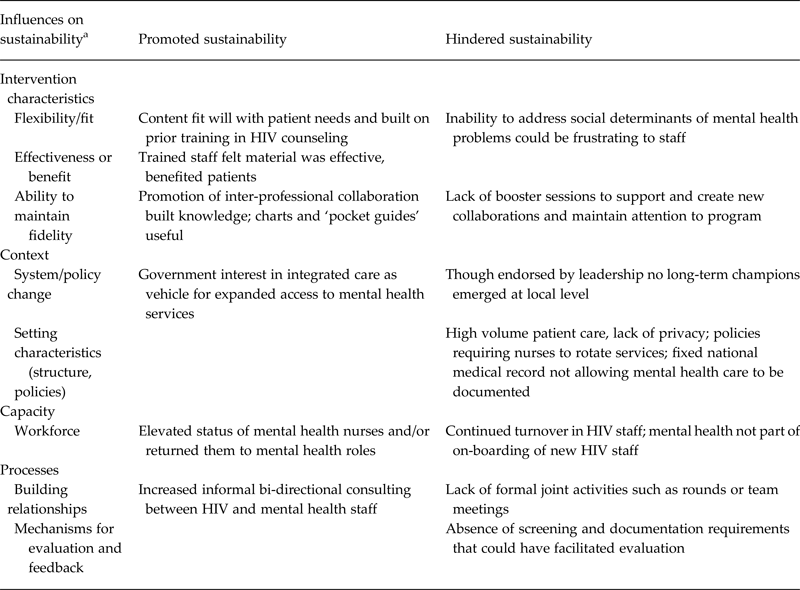
aCategories from Stirman et al. Reference Stirman, Kimberly, Cook, Caloway, Castro and Charns2012, Table 2.
Methods
Study design
This study used a mixed-methods quasi-experimental design (Campbell & Stanley, Reference Campbell and Stanley1963; Fetters et al. Reference Fetters, Curry and Creswell2013). Data are available only at a ‘post’ intervention time point and contrast care given by HIV providers who did and did not receive the program training.
Measuring impact
We first assessed whether there had been sustained impact, using the framework provided by Shediac-Rizkallah & Bone (Reference Shediac-Rizkallah and Bone1998), which looks for evidence of ongoing benefits, activities, and capacity. The main quantitative measure of sustained impact is difference in provider recognition of patients with possible mental health problems, comparing trained and untrained HIV providers. We hypothesized that trained providers would better identify patients with mental health problems (greater sensitivity and specificity) compared with untrained providers. We recruited patients of trained and untrained providers, administered age-appropriate standardized screening tools, and, without revealing screening results, asked providers to indicate if they believed the patient they were seeing had a mental health problem requiring intervention. If so, providers were asked what type of problem they believed the patient had (thought problems, depression, anxiety/trauma, epilepsy, child development/conduct, substance use, difficulty living with HIV – categories used in the training) and what treatment or follow-up plans they provided, if any. Subsequently, screening results were unmasked and patients offered further assessment if results suggested that it was needed.
Sites
The evaluation took place in two of the program's original seven sites, those most accessible (the others were located hours to days travel outside the capital) and with the highest volume of HIV care (together they served 71% of all patients across the sites). At both evaluation sites, HIV clinics provide diagnostic and long-term treatment services. Both have ambulatory mental health services on their campuses; at Site 1 these are provided by nurses and at Site 2 by nurses and psychiatrists. Neither site has inpatient mental health care. Site 1 had experienced turn-over in HIV staff and at the time of the evaluation had both trained and untrained providers; at Site 2 all active HIV staff had received mental health training.
Providers
We enrolled all active HIV providers at the two sites (n = 33, 21 from Site 1 and 12 from Site 2). Nine were physicians, 22 were nurses, and two were health officers; 19 had received the program training and 14 had not. Not all of the enrolled providers ultimately participated in the study: participation depended on: (a) if one or more of their patients made a visit during the quantitative part of the study, or (b) if they were selected at random for an interview as part of the qualitative part of the study.
Patients
Patients were eligible if they were coming to see one of the enrolled providers and were age 6 or older. They or their parents were approached and asked for written consent by a member of the site clinical team (not participating in the study). Recruiting took place over 9 days, involving consecutive patients of any enrolled providers working on those days.
Data collection
If patients agreed to participate those 16 and older were administered the Amharic versions of the Kessler 10, a brief assessment for common mental disorders (Tesfaye et al. Reference Tesfaye, Hanlon, Wondimagegn and Alem2009) and the AUDIT, a brief screen for harmful alcohol use (Soboka et al. Reference Soboka, Tesfaye, Feyissa and Hanlon2014). In one validation study against a structured clinical interview for depression in Ethiopia, the Kessler 10 had an area under the ROC curve of 0.91 and a Chronbach's α of 0.90 (Tesfaye et al. Reference Tesfaye, Hanlon, Wondimagegn and Alem2009). The Ethiopian version of the AUDIT has been modified to reflect the alcohol content of traditional beverages and demonstrated concurrent validity against reports of risk factors for drinking (Soboka et al. Reference Soboka, Tesfaye, Feyissa and Hanlon2014). For those under 16, parents completed an Amharic translation of the Strengths and Difficulties Questionnaire (Goodman, Reference Goodman1999; Goodman et al. Reference Goodman, Renfrew and Mullick2000; www.sdqinfo.com). While the SDQ has been used in studies in Ethiopia, it has not been formally validated. In addition, we extracted from patients’ medical records information about their general health and HIV treatment status.
For the qualitative portion of the study, interviews were conducted in Amharic by a member of the study team (MB) who had not been part of the JHU-TSEHAI program development or delivery. The interview guide (for English translation see online Supplementary Appendix) elicited provider, patient, and contextual factors that, in the eyes of providers, facilitated or hindered delivery of mental health care in the HIV clinics. For trained providers, the interview also asked about aspects of the JHU-TSEHAI training perceived as helpful and the extent to which activities promoted by the training were still taking place. The guide was adapted from the evaluation of a US task-shifting program involving community-based providers of children's health care (Gadomski et al. Reference Gadomski, Wissow, Palinkas, Hoagwood, Daly and Kaye2014).
Sample size
For the quantitative portion of the study, we aimed to enroll approximately 150 patients at Site 1 to determine a difference between moderate and low levels of agreement with screening instruments by trained v. untrained providers, assuming α = 0.05, power = 0.8. Calculations used the ‘R’ statistical program's ‘N.cohen.kappa’ function.
A sample of 12 enrolled providers (six from each site) was randomly selected for the interviews described above. The sample was drawn by research associates prior to any quantitative data analysis. Because this sample did not yield data saturation for untrained providers, we recruited four additional providers from Site 1 who had not been trained.
Data analysis
Kappa and other bi-variate statistics were computed to assess agreement between provider identification of mental health problems and screening results. Stata procedure xtmelogit was used for final summary analyses to account for clustering of patient-level observations within providers.
Qualitative analysis used a ‘constant comparison’ approach feeding back thoughts about interview content and making adjustments to the interview (Glaser & Strauss, Reference Glaser and Strauss1967). Interviews were conducted in Amharic, recorded, and translated into English by MB. LW read and re-read the English translations line by line and developed a codebook based on the interview guide. TR then re-read the interviews and made suggestions for merging some codes and creating additional categories. TR and LW then coded four interviews and met to resolve differences; LW then coded the remaining interviews. Coding and abstraction used the TAMS Analyzer (version 4.0; University of Washington-Tacoma).
Results
Recruited providers
Among the providers of recruited patients in the quantitative portion of the study (n = 11) four were physicians and seven were nurses. Four were trained (all nurses) and seven were not. Among providers in the qualitative portion of the study (n = 16), four were physicians and 12 were nurses. Eleven had been trained (two physicians and nine nurses) and five had not been trained (two physicians and three nurses).
Recruited patients and screening results
At Site 1, 148 patients were approached and agreed (directly or via a parent) to participate – none of those approached declined. They ranged in age from 7 to 75 years (mean 37, s.d. = 12); 103 were female and 45 male. All but two were described as having a functional status allowing them to work or attend school. Patients’ most recent CD4 cell counts averaged 506 (median 479, range 9–2029); 11 patients (7%) had CD4 counts <200.
Across all three screening instruments, 44 of the 148 patients (30%) were rated as having a mental health problem (positive on any of the three). The positive included three of 15 children (20%) on the SDQ, 37 of 133 adults (28%) on the Kessler 10, and 8 (6%) on the AUDIT.
Patients of trained and not-trained providers did not differ significantly by gender (67% female v. 71%) or positive screening results (33% v. 27%), but patients of trained providers were younger (mean age 32 v. 39 years, p < 0.001).
Evidence for sustained program impact
Trained providers’ agreement with screening results was modest but better than among untrained providers (κ = 0.40, p < 0.001 v. 0.24, p = 0.01). Compared with the screening results, trained providers’ sensitivity was 89% and specificity 58%; untrained providers’ sensitivity and specificity were 64% and 65%, respectively. Adjusted for patient clustering among providers, the odds that trained providers would correctly identify a screen-positive patient was 7.3 times greater than the odds for non-trained providers (95% confidence limits 1.0–54.4). The odds that trained providers would incorrectly label as positive a screen-negative patient was 1.2 times greater than non-trained providers, a difference that was not statistically significant (95% confidence limits 0.55–2.9).
This difference in ability to identify patients with mental health problems was reflected in providers’ interviews. Trained providers described how they had begun to ask patients about mental health problems, while those who had not been trained continued to feel that there was insufficient time to respond to any but the most serious and obvious problems (Table 2).
Evidence for sustained impact: contrasting excerpts from interviews with trained v. not-trained providers
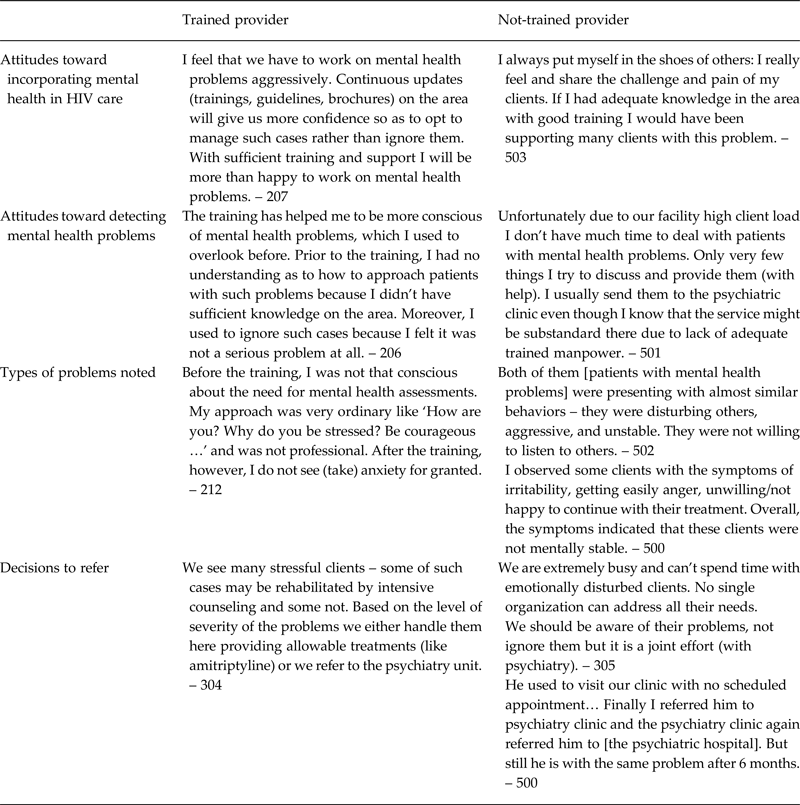
When providers considered that a patient had a mental health problem, the distribution of provisional diagnoses assigned by trained and untrained providers was similar with two exceptions (overall χ2 p < 0.05). Untrained providers identified 16% of those they believed had problems as having a ‘thought problem,’ while none of the trained providers gave a patient this label, and trained providers identified 23% of those with problems as having anxiety compared with 10% among those identified by untrained providers. These differences in interpretation of patients’ symptoms and behavior were reflected in the interview responses. Trained providers talked about asking patients about emotional concerns, and how they had become more aware of patients’ affective and social problems. Untrained providers emphasized that their patients exhibited irritability and aggression or were unwilling to take medication. As one trained provider said, ‘before the training I was not that conscious about the need for mental health assessments. My approach was… “Be courageous” and was not professional. After the training I do not take anxiety for granted.’
Both trained and not-trained providers offered some form of treatment (discussion within the visit, medication, or referral) to patients they believed had a mental health problem (74% v. 68%, p = 0.53). There were no significant differences in the proportion of identified patients given a medication (17% v. 8%), receiving some form of counseling during their visit (40% v. 44%) or given follow-up of some kind (43% v. 28%). However, there were differences in what trained providers did within these categories. In arranging follow-up visits, not-trained providers referred all of the patients they identified to a mental health specialist, while trained providers asked half (8/15, p < 0.01) to return to see them in the HIV clinic. For their in-office discussions, only trained providers used psychoeducation (7/12. p < 0.01) v. more general ‘counseling.’ These differences were reflected in the interview responses. Not-trained providers mentioned immediately referring when possible, while trained providers described a mix of responses depending on the patients’ level of severity, including providing some initial treatment and scheduling a follow-up visit before deciding on the need for a referral.
Trained providers’ comments suggested that participation had changed their attitudes toward the appropriateness of detecting mental health problems and intervening in the HIV clinic. While both trained and untrained providers saw mental health as important to HIV care, trained providers said they were now willing to take it on while not-trained providers still saw it as something for which they were not prepared. As one trained provider put it, ‘The training has helped me to be more conscious of mental health problems, which I used to overlook before.’
Influences on sustainability
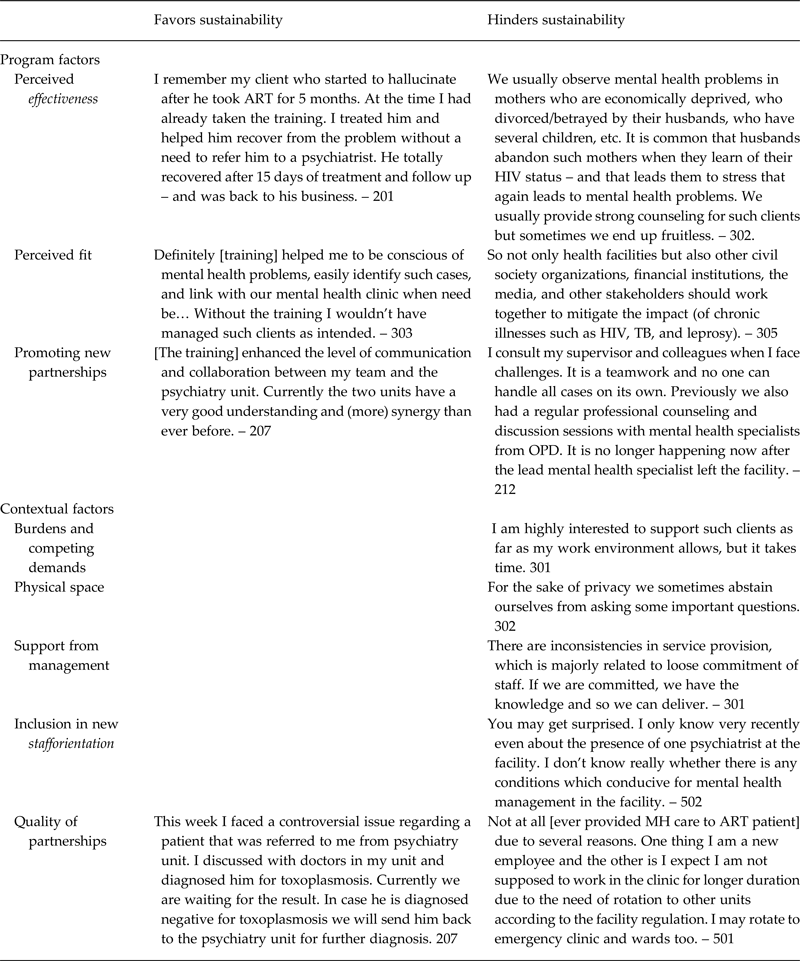
Providers’ interview responses suggested that factors related to all four key domains of sustainability played a role in the evolution of mental health care after program support ended. The main findings are summarized in Table 1 and selected quotations from informants are shown in Table 3.
Influences on sustainability: excerpts from interviews with trained providers
Intervention characteristics that promoted sustainability
Several characteristics of the intervention were cited as promoting both its initial implementation and its sustainability. These included its perceived effectiveness, the fit of the intervention with prior training in HIV counseling, and the successful building of new on-site interprofessional relationships.
Perceived effectiveness
Trained providers felt they now could help patients in ways that they had not previously been capable of. This was a benefit to both patients and staff. One trained provider noted that he was now less likely to ‘burn out of repeated cases because I always know they can be treated and recover.’ Providers’ sense of effectiveness came in part from patient feedback. As one provider said, ‘If my clients thank me simply because I gave them amitriptyline and they were relieved temporarily, how come they can't be even happier if I give them a full-fledged mental health treatment?’
Perceived fit
The training appeared to fit well with providers’ existing capabilities, the kinds of mental health problems that patients frequently experienced, and with providers’ prior training experiences in counseling. The training covered problems that the providers had felt were both common and frustrating, and in that way met a need.
The intervention also seemed to fit well with patient preferences, as perceived by the providers. They reported that their patients liked the idea of ‘not having to tell their story again’ (as they would have had they been referred) and preferred to receive treatment at a location not associated with the stigma associated with mental health.
Promotion of new inter-professional collaboration
Providers noted that the training had increased their working relationships with the mental health providers at their sites. Particularly important was having been trained by mental health clinicians who would later be available for ongoing consultation, as well as a sense that even clinic staff not directly involved in the patients’ primary medical care (for example, pharmacists) had been trained and shared common goals.
Intervention characteristics that hindered sustainability
Limitations of fit with patient population
Providers pointed out that many of their patients had difficulty returning to see them for follow-up, largely because the patients had only come to the metropolitan area temporarily to initiate HIV care. In addition, patients’ mood and anxiety were seen as being heavily influenced by social circumstances that were beyond the help providers could offer, despite attempts to link with community-based services. These limitations detracted from a sense of the training's effectiveness. One provider noted that many patients, particularly mothers of HIV+ children, had serious economic problems and were commonly abandoned by their husbands. ‘We usually provide strong counseling for such clients,’ she said, ‘but sometimes we end up fruitless.’
Continued dependence on outside support for refresher training and materials
Despite the initial success of building local collaborations, as key mental health consultants left for other positions, the HIV providers lost their source of ongoing mental health support. Materials distributed at the time of the training, such as posters illustrating diagnostic algorithms, were taken down or damaged and not replaced. ‘Refreshers’ and the provision of updated materials were seen as important not just for the information they might provide but also as a sign that the topic remained a priority. Booster sessions attended jointly by both HIV and mental health providers might have been able to develop new local collaborations as staff turned over.
Contextual factors that promoted sustainability
The program benefited from trends in the larger world of mental health and non-communicable disease care in low and middle income countries. The World Health Organization's Mental Health GAP program (mhGAP) was being developed simultaneously, promoting mental-health related support and discussion within the Ethiopian Ministry of Health (Anonymous, 2013). JHU-TSEHAI staffs were able to contribute to editing of a national mental health strategic plan, which also helped cement relationships at the ministry level (Federal Democratic Republic of Ethiopia, 2012). The TSEHAI program's training manual had an introduction signed by the Minister of Health and featured the ministry logo on its cover. Ministry support, in turn, promoted support from regional health authorities and hospital administrators; the latter provided key support related to sustainability in the form of space (at Site 1, a mental health office that had been turned over to another program was returned to mental health care) or manpower (restoring the roles of mental health nurses who had been re-assigned to general medical rather than mental health duties).
Contextual factors that hindered sustainability
Several aspects of context hindered sustainability, including the volume and pace of patient care, aspects of the physical setting in which care was delivered, and a perception that higher management at the intervention sites was not committed to mental health care.
Burden of patient volume
Providers reported that they felt overloaded in both patient volume and the number of tasks to accomplish with each patient. Despite interest in mental health care, there was always the ‘push back’ of other demands.
The physical setting of the sites also made it difficult to consistently raise mental health issues. Multiple visits might be occurring in the same large office equipped with several desks and examining tables; HIV patients and those with other primary problems might be seen in the same clinic within earshot of each other. As one provider noted, ‘For the sake of privacy we sometimes abstain from asking some important questions.’ This had been a challenge to initial implementation and it persisted as a force counteracting efforts to sustain mental health care.
Lack of perceived support by upper management
As outside support ended, providers perceived a lack of ongoing interest in the mental health care on the part of the administration and outside supporters. While individual providers had become interested in providing mental health care, it did not appear that champions had emerged among the more permanent front-line HIV staff, which could have compensated for a lack of higher level support.
Staff rotation policies
The bidirectional relationships promoted by the program were threatened by hospital policies that required most nursing staff to rotate among services at fixed intervals .The rotation system was both a threat to the maintenance of working relationships and a disincentive to learn additional skills perceived of as not being of long-term use.
Capacity factors that promoted sustainability
Workforce
From its conception, hope for the program's sustainability had been built on the development of working relationships between HIV providers and on-site mental health personnel (mostly mental health nurses who were long-term staff members). The program's presence appeared to have raised the profile of mental health nurses who were already at the sites and allowed them to resume or expand their mental health roles.
Capacity factors that hindered sustainability
Workforce
While mental health nurses could potentially remain at their posts for extended periods of time, psychiatrists were more likely to leave for other posts, disrupting relationships with HIV providers. Without the ability to make a personal referral, HIV providers had to fall back on routine referral mechanisms and felt that mental health resources were ‘congested’ and unable to meet their needs.
It also did not appear that attention to mental health had become part of orientation of new staff. Two of the ‘not trained’ providers at one of the sites, who had joined the HIV team relatively soon after the final program training, said they were not aware of integration efforts or mental health resources, despite the presence of mental health trained HIV providers in the same unit. One said, ‘You may get surprised. I only know very recently even about the presence of one psychiatrist at the facility. I don't know really whether there are any conditions conducive for mental health management in the facility.’
Process factors that promoted sustainability
Strengthening working relationships
Though the HIV providers generally had prior knowledge of the mental health resources at their sites, the intervention strengthened these relationships and made them more functional. There was evidence of more two-way interaction – especially around mental health symptoms that could be related to medical problems. Training of mental health workers in ‘provider-initiated testing’ for HIV resulted in more referrals from mental health providers to HIV providers and opportunities for joint work to make a diagnosis.
Process factors that hindered sustainability
Informal nature of HIV-mental health collaboration
The program had been successful in promoting collaboration and informal consultation among HIV and mental health providers, but collaborative mechanisms (for example, regular joint rounds) were not established as formal, regular processes and thus were more susceptible to fading out as key participants left and outside attention diminished.
Absence of a formal screening and documentation process
Within the larger JHU-TSEHAI program, HIV providers also received trainings for detection and management of tuberculosis, nutritional problems, and opportunistic infections common in immunosuppressed patients. These other programs required formal screening procedures and documentation of the procedure and results. Trained providers noted that the mental health program's lack of a formal screening tool or established place for documentation in the standard encounter form harmed its sustainability once management and external attention diminished.
Lack of mechanisms for ongoing evaluation and feedback
The lack of standardized screening and required documentation, noted above, contributed to a lack of ongoing evaluation and feedback. Whereas sites and providers received feedback about rates of routine assessment and documentation of patients’ nutritional status or exposure to tuberculosis, mental health assessment and treatment were not part of required documentation nor were they examined centrally as indicators of the overall HIV program's performance.
Discussion
Co-training generalists and mental health providers, and actively promoting local collaborations, helped sustain the impact of a task-shifting mental health program more than a year after formal support ended. Though differences may have been diminishing over time, compared with generalist providers who had not been trained, trained providers had different attitudes toward mental health and greater sensitivity detecting potential cases. They made different treatment decisions, and showed more awareness of mental health resources.
Program characteristics that providers felt were related to their sustained mental health efforts included having learned effective means to address common patient problems, receiving positive reinforcement from patients, access to written materials that supported mental health work, and enhanced bi-lateral relationships with mental health providers. The inclusion of these characteristics in the program had resulted from a deliberate attempt to design a program that fit the context in which it would be used (Proctor et al. Reference Proctor, Luke, Calhoun, McMillen, Brownson, McCrary and Padek2015). The program was designed collaboratively by a bi-national team (Wissow et al. Reference Wissow, Tegegn, Legesse, McNabb, Tilahun, Jerene and Ruff2014). It sought to extend current practice in familiar ways (Padmanathan & De Silva, Reference Padmanathan and De Silva2013), building on existing values related to holistic care, how HIV providers classified patients’ psychosocial problems, and counseling skills familiar to HIV providers (Assefa et al. Reference Assefa, Jerene, Lulseged, Ooms and Van Damme2009). Co-training of HIV and mental health clinicians helped create familiarity with each other's work and trusting relationships between clinicians in these two different fields (Benzer et al. Reference Benzer, Beehler, Miller, Burgess, Sullivan, Mohr, Meterko and Cramer2012).
Despite this attention to fit, impact of the program was clearly seen as diminishing over time. Key staff involved in informal networks of care left, and were either not replaced or their replacements did not seek out and interact with HIV providers in the same way (and vice versa). Mental health was not included among the metrics used to assess site performance, making it vulnerable to being set aside when there was competition for limited time. Although administrators had been supportive of the program, they had not taken over responsibility for its on-going implementation. Similarly, though the program had been well-received by front-line HIV staff, champions who could sustain it were not cultivated and did not emerge. Materials were not renewed or updated, and new HIV staff did not receive orientation highlighting the mental health resources available. The training itself may have fallen short in its inability to offer means of dealing with some of the social issues faced by patients, especially stigma that caused them to seek care far from home, limiting possibilities for follow-up, and stress related to poverty and unemployment (Heiman & Artiga, Reference Heiman and Artiga2015).
Many of these limitations fall under what could be called the ‘absorptive capacity’ of the implementation sites (Emmons et al. Reference Emmons, Weiner, Fernandez and Tu2012). The program had many elements promoting long-term impact, but sites did not have the ability to make structural changes that would have supported long-term impact. They could or did not institute processes for tracking mental health care, building mental health collaboration into job descriptions or day-to-day structured activities, or adding mental health materials to inventories of tools that would be routinely available and regularly updated.
Limitations
The quantitative results come from a small, non-randomized cross-sectional study. We can say little about differences or similarities between trained and not-trained providers outside of their professional category and training status. We cannot rule out the possibility that trained providers were simply more experienced or more predisposed to treat mental health problems. We have only post-intervention data so we can only infer from the contrasts seen that the impact on provider behavior is attributable to training, and we cannot provide data demonstrating that the altered provider behavior actually led to better patient outcomes. Our main quantitative evidence for sustained impact was greater agreement with standard screening instruments, and better sensitivity without significant loss of specificity. Studies in other low and middle income countries settings have shown mixed results for changes in case detection after task-shifting training (Goncalves et al. Reference Goncalves, Fortes, Campos, Ballester, Portugal, Tófoli, Gask, Mari and Bower2013; Jenkins et al. Reference Jenkins, Othieno, Okeyo, Kaseje, Aruwa, Oyugi, Bassett and Kauye2013; Kauye et al. Reference Kauye, Jenkins and Rahman2014). The changes we found were modest but consistent with training content. The majority of the training covered common mental disorders and emphasized the importance of eliciting patients’ concerns. Interview responses suggested that trained providers were more likely to ask about patients’ mood and to see beyond interactions with patients who were initially angry or irritable.
The range of informants we spoke with was also limited. We spoke only to HIV clinicians, and only at two of the seven original implementation sites. Though these sites served the large majority of patients seen in the program, the fact that the other sites were in more remote parts of the country could have led to different degrees of sustained impact and different explanations for it. We might have gained other insights from talking to mental health providers and administrators, and, indeed, our results suggest that these perspectives could be particularly important to verifying our conclusions about how the program could have been more strongly sustained.
Conclusions
Efforts to fit this task-shifting program to its target context, and promotion of potentially self-sustaining consultation networks across professional lines, were associated with a modest but measureable degree of sustained impact more than a year after formal program support ended. More attention to the capacity of the sites to sustain the program – institutionalizing it with monitoring, personnel processes (reducing staff rotation, including mental health in ‘on-boarding’), and renewal of mental health-related staff support materials might have helped institutionalize the changed behaviors that providers reported. The extent to which the sites lacked these capacities related in part to local and national policies regarding data management, hospital staffing, financing for continuing staff education, and mental health as a core clinical priority. Changes to these policies might not have guaranteed the long-term impact of the program, but combined with changes to the program itself (recruiting local champions, broadening interventions to include social determinants of mental health), they might have better sustained providers’ mental health work after active program support ended.
SUPPLEMENTARY MATERIAL
The supplementary material for this article can be found at https://doi.org/10.1017/gmh.2017.21
Acknowledgements
The authors are grateful to the patients and staff of the sites involved, and to many other staff members of JHU-TSEHAI, for their support during the program development, implementation, and evaluation. The original JHU-TSEHAI Program for Mental Health Problems in HIV Care was funded as part of a larger HIV services and training grant from the US Centers for Disease Control (AR, grant number U2GPS00585). Data analysis was supported in part by a grant from the National Institute of Mental Health (LW, grant number P20MH086048).
Declaration of Interest
None.
Ethical Standards
The authors assert that all procedures contributing to this work comply with the ethical standards of the relevant national and institutional committees on human experimentation and with the Helsinki Declaration of 1975, as revised in 2008. The study was approved by the human subjects review committees of the Johns Hopkins School of Public Health and ALERT Hospital as well as the Ethiopian National Research Ethics Review Committee.


 Open access

