

Introduction
Inclusive development has been rooted in the idea of universal human rights since the 1940s and was reflected in the United Nations Agenda 21 as well as the Millennium Development Goals. In contrast to sustainable development, which mainly focuses on economic and environmental aspects, inclusive development emphasises the social dimension (Gupta, Pouw and Ros-Tonen Reference Gupta, Pouw and Ros-Tonen2015) which first appeared in publications of the Asian Development Bank as a strategy towards empowerment and equity, based on poverty elimination, human and social capital development, gender equality and social protection (Rauniyar and Kanbur Reference Rauniyar and Kanbur2010). In China, inclusive development was proposed by the former party Chair, Hu Jintao, at the Boao Forum for Asia in 2011, and indicated a major shift of ideology from regarding economic growth as the central task to a focus on all-round development (Gao Reference Gao2012). This change reflected the global transition of economic development into a ‘new normal’ characterised by economic slowdown accompanied by the growth of social problems such as income inequality and social exclusion (Li and Zhang Reference Li and Zhang2014; Xiang Reference Xiang2014).
Inclusive development should, by definition, embrace older people even if the rhetoric of economic growth focuses mainly on those of working age. Both developed and developing countries have been experiencing a dramatic ageing of their populations. The report World Population Ageing 2013 put the number of older persons at 841 million, with a projected increase to 2 billion in 2050 (United Nations 2013). Older people are one of the groups most vulnerable to exclusion because of their likelihood of physical frailty, loss of paid work, reduction in participation in various domains of life as well as age discrimination (Brocklehurst and Laurenson Reference Brocklehurst and Laurenson2008; Feng Reference Feng2011). China not only has the largest population in the world but also the largest number of older persons. The country experienced two baby booms in the 20th century, which will lead to two ageing peaks between 2010 and 2030 as a result of the addition of more than 160 million older persons (Chen Reference Chen1999). The rate of population ageing has already accelerated and is projected to reach 32.8 per cent in 2050 and 34.3 per cent in 2100. The numbers aged 60 and over will exceed 454 million in 2050 and 372 million in 2100 (United Nations 2012). The huge and urgent needs of older people in China challenge the country's social security system as well as all support providers, especially in terms of family and government. According to the China Health and Retirement Longitudinal Study 2015 report, one-third of Chinese people aged 60 and over have severe depression, and the prevalence of hypertension and diabetes is 53.6 and 23.9 per cent, respectively (Lancet Reference Lancet2016).
For practical social policy purposes, inclusive development can be roughly translated into social inclusion. In respect of the older population, it can be understood globally as the elimination of poverty, where individuals have equal access to the social security and enjoy a decent standard of living, the elimination of stereotypes and barriers to social participation, intergenerational solidarity and the sharing of the benefits of socio-economic development (Du Reference Du2013). In response to the ageing of the population and the goal of inclusive development, over 30 polices have been published by different government departments in China, over the past decade, with the aim of promoting income security and social services for older people (Li, Zhang and Chen Reference Li, Zhang and Chen2015). For example, the implementation of the New Rural Social Pension (NRSP) in 2009, covering rural residents; and the Urban Resident Social Pension in 2011, covering those urban residents exempted from other pension systems; and the reform of the Government and Institution Pensions (GIP) in 2014 with the aim of greater social equality. Together these measures have established basic income security for older people in China, a remarkable feat by any standards of social policy (Zhu and Walker Reference Zhu and Walker2017).
In line with most developing countries, policy for older people in China almost exclusively focuses on income provision such as pensions, which reflects an assumption that when financial risks are addressed other domains of wellbeing will follow suit (Lloyd-Sherlock Reference Lloyd-Sherlock2010). Although income welfare alone does not capture all aspects of human wellbeing, especially in terms of subjective satisfaction particularly when looking at changes over time or in individual status through the lifecourse (Easterlin Reference Easterlin2010; Copestake and Camfield Reference Copestake and Camfield2010), many studies argue that pension benefits have significant positive impacts on poverty reduction, human development, the social status of older people within their households and communities, later life health and mortality (Norström and Palme Reference Norström and Palme2010) and overall levels of satisfaction with individual and household wellbeing (Bender Reference Bender2012; Esser and Palme Reference Esser and Palme2010; Lloyd-Sherlock, Saboia and Ramírez-Rodríguez Reference Lloyd-Sherlock, Saboia and Ramírez-Rodríguez2012; Panis Reference Panis, Mitchell and Utkus2004). Thus, it is important to explore the complex relationship between pensions and wellbeing of older people in the context of inclusive development and social inclusion in China. This is the main aim of this paper. The first part very briefly introduces the relevant literature with respect to social exclusion and inclusion in later life. The following section describes the study design and data-set as well as the methodology. The third part focuses on assessing empirical evidence on the relationship between pensions and social inclusion in later life based on the 2014 China Longitudinal Ageing Social Survey (CLASS). The paper concludes by identifying policy lessons for China and other developing countries.
Social exclusion and ageing
The concept of social exclusion first emerged in France in the 1960s primarily referring to the poor. As successive social and political crises erupted in France during the 1980s, social exclusion came to be applied to more and more types of social disadvantages and encompassed new social groups and problems (Silver Reference Silver1994). Differing from operational definitions from governments, scientific approaches have sought to move beyond the identification of problems, and probe the ways in which individuals and groups are cut off from mainstream society. For example, Walker and Walker (Reference Walker and Walker1997: 8) defined social exclusion as a ‘dynamic process of being shut out, fully or partially, from any of the social, economic, political and cultural systems which determine the social integration of a person in society’. Levitas, Pantazis and Fahmy (Reference Levitas, Pantazis and Fahmy2007: 25) defined it as ‘the lack or denial of resources, rights, goods and services, and the inability to participate in the normal relationships and activities to the majority of people in a society’. In practice, although, it is impossible to find a single definition of exclusion, both researchers and policy makers all agree on one point, social exclusion is a multi-dimensional and dynamic conception representing both an outcome and an array of social processes (Byrne Reference Byrne2005). Multi-dimensional social exclusion is commonly conceptualised in relation to two main dimensions: economic-structural exclusion and social-cultural exclusion. The former dimension can be further divided into material deprivation and social rights, while the latter is composed of social participation and normative integration (Jehoel-Gijsbers and Vrooman Reference Jehoel-Gijsbers and Vrooman2007). In a similar vein, Burchardt, Le Grand and Piachaud (Reference Burchardt, Le Grand, Piachaud, Hills, Le Grand and Piachaud2002) identified four dimensions in which people may be regarded as social excluded: consumption (the capacity to purchase goods and services); production (participation in economically or socially valuable activities); political engagement (involvement in local or national decision-making); and social interaction (integration with family, friends and community). Social exclusion also varies in meaning according to ideological and cultural contexts. Silver (Reference Silver1994) initiated a threefold typology of the multiple meanings of exclusion based on different theoretical perspectives, political ideologies and national discourses: solidarity, specialisation and monopoly. A range of recent studies propose the idea of cumulative advantage and disadvantage across the lifecourse, changing over time and potentially extending their reach from one generation to the next (Baars et al. 2006; Dannefer Reference Dannefer2003; O'Rand Reference O'Rand2002).
The voluminous literature on social exclusion treats it and inclusion as essentially two sides of the same coin: the one side being the problem and the other the solution. This is clearly rather simplistic because social inclusion, like exclusion, is a relative status which may be assessed by its degree, but also it is uniquely a positive ‘plea for change in the principles by which resources are distributed, in the arrangements which govern access to organisations, institutions and social relations, and in social attitudes’ (Walker and Walker Reference Walker, Walker, Van der Maesen and Walker2012: 182). Thus, in this paper we have attempted to operationalise the idea of social inclusion, at least to the extent that the available data will allow, while being mindful that the dominant academic and policy discourses are conducted mainly in terms of social exclusion.
The definitions discussed above have been applied to tackle social exclusion among various population groups such as the disabled, abused children, single parents and the mentally ill. In recent years researchers have paid closer attention to social exclusion in relation to the older population and its special features (Lui et al. Reference Lui, Warburton, Wintertion and Barlett2011; Walker et al. Reference Walker, Barnes, Blom, Cox and Lessof2006; Warburton, Ng and Shardlow Reference Warburton, Ng and Shardlow2013). There are two key concerns that need to be addressed when adopting an exclusion focus on older adults. The first is the ways in which exclusion in later life might differ from that at earlier stages of the lifecourse; the second is a concern to identify the prime drivers of exclusion in later life (Scharf and Keating Reference Scharf and Keating2012). As for the first concern, researchers in recent years have identified characteristics of social exclusion that are especially relevant for older people, such as persistent poverty, limited access to community services and an inability to engage in civic activities. In the absence of a single agreed definition referring to the exclusion of older people, the United Kingdom (UK) Social Exclusion Unit (2006) presented a shorthand definition: an experience characterised by deprivation and the lack of access to social networks, activities and services that results in a poor quality of life. Based on the English Longitudinal Study of Ageing (ELSA), Walker et al. (Reference Walker, Barnes, Blom, Cox and Lessof2006) constructed social exclusion measurement indicators with seven dimensions for older people: social relationships, cultural and leisure activities, civic activities, basic services, neighbourhood, financial products and material goods. Scharf, Phillipson and Smith (Reference Scharf, Phillipson and Smith2005) identified five domains of social exclusion of older people: material resources, social relations, civic activities, basic services and neighbourhood exclusion. Furthermore, cumulative social disadvantages, age-related characteristics and age discrimination (Social Exclusion Unit 2006), as well as non-age-friendly communities (Phillipson and Scharf Reference Phillipson and Scharf2004; Scharlach and Lehning Reference Scharlach and Lehning2013) coupled with deprived inner-city areas (Buffel, Phillipson and Scharf Reference Buffel, Phillipson and Scharf2013; Burns, Lavoie and Rose Reference Burns, Lavoie and Rose2012), contribute to the unique nature of the exclusion of older adults.
In the process of exploring the reasons triggering the problem of exclusion in later life, the early ‘acquiescent functionalist’ accounts of social exclusion in old age took as their starting point individual adjustment to ageing, retirement or physical decrescence (Cumming and Henry Reference Cumming and Henry1961) and ignored the social structural influences. While individual physical and mental health does commonly deteriorate in late old age, the marginalisation and dependency of older people could more properly be viewed as ‘socially created’, a product of forced exclusion from work, poverty, institutionalisation and passive forms of community care (Townsend Reference Townsend1981; Walker Reference Walker1980, Reference Walker1981; Walker, Sinfield and Walker Reference Walker, Sinfield and Walker2011). Social exclusion created by social policy caused divisions both between older people and the rest of the population and between different groups of older people. On the one hand, ‘old’ age is socially defined as the statutory pension age which artificially enforces workers to withdraw from the labour market regardless of their individual will and health status, and which not only reduces their income, but also reduces their range of social contacts (Walker Reference Walker1981). Although less blatant in those countries under the European Union (EU) Equal Treatment Directive, older workers are none the less still often encouraged to exit from the labour market. On the other hand, social exclusion among older people is a function of low economic and social status prior to retirement. For example, cross-national research revealed that in the UK as well as the United States of America (USA), older people with higher incomes prior to retirement were less likely than the lower-income ones to rely solely on the state pension, while more likely to also receive private and occupational pensions (Walker Reference Walker1981, Reference Walker, Cann and Dean2009), which resulted in ‘two nations’ in old age (Titmuss Reference Titmuss1955). Subsequent critical gerontology research has shown the gendered nature of this distribution of pension rights and benefits and the vastly unequal access of different minority ethnic groups (Arber and Ginn Reference Arber and Ginn1991; Nazroo et al. Reference Nazroo, Bajekal, Blane, Grewal, Walker and Hagen Hennessy2004).
Pensions and social inclusion for older people
As HelpAge International (2000) has argued, poverty and social exclusion remain the main stumbling blocks to the realisation of the human rights of older people. Pensions are essential for older people to fill the income gap caused by exclusion from access to paid employment although that also creates new inequalities. For most older people, the receipt of state transfers in the form of a pension, as well as pensions from employers and the market, are essential to escape poverty. Up to now, the broad majority of countries (166 out of 178 countries for which information is available) provide contributory or non-contributory pensions (International Labour Organization 2014). In Organisation for Economic Co-operation and Development countries, 59 per cent of the household incomes of men and women aged 65 and over come from public pension transfers, the proportion of which is about 60 per cent in the majority of European countries. The prominent role of pensions lies in poverty reduction, while at the heart of attempts to achieve social inclusion through age-related changes is a concern with income poverty. Since 1966, the poverty rate of older people aged 65 and over in the USA has decreased dramatically in contrast to the increase among the rest of the population (Fontenot, Renwick and Housing Statistics Division Reference Fontenot and Renwick2016). Even in the era of financial crisis from 2007/08, the poverty rate among older people in the EU decreased steadily, as a result of the safety net provided by pensions, while the poverty rate among the rest of the population, such as children, young people and working-age adults, increased (Zaidi and Antczak Reference Zaidi and Antczak2016). For example, the EU population aged 65 and over grew by 6.5 million from 2008 to 2014, while the poverty rate of older people was 17.7 per cent in 2014, 6 per cent lower than in 2008. In the UK, the poverty rate among pensioners declined from a peak of 43 per cent in 1989 to 17 per cent in 2011, being lower than those for the working-age population and children (Cribb et al. Reference Cribb, Hood, Joyce and Phillips2013). The ELSA indicated that only one-quarter of women and one-third of men aged 65 and over successfully escape from poverty without public pensions, which plays a mediating role offsetting the disadvantages of employment and family history in the lifecourse (Price et al. Reference Price, Glaser, Ginn and Nicholls2016). In developing countries, the impact of pensions on poverty reduction is almost entirely due to social pensions, also called tax-financed pensions, which are non-contributory pensions financed by the public purse. Given the limited financial affordability and low coverage of contributory pensions, the social pension is an optimal instrument to respond to old-age poverty (Pestieau, Dethier and Ali Reference Pestieau, Dethier and Ali2011). The prevalence of social pensions has been shown to be critical in poverty reduction in Latin America both for individual older people and their family members (Bertranou and Grushka Reference Bertranou and Grushka2002; Bertranou, Van Ginneken and Solorio Reference Bertranou, Van Ginneken and Solorio2004), Africa (Bello et al. Reference Bello, Letete, Rapapa and Chakobane2008; Dhemba Reference Dhemba2013; Kakwani and Subbarao Reference Kakwani and Subbarao2007) and Asia (Barrientos Reference Barrientos2015; Handayani and Babajanian Reference Handayani and Babajanian2012).
In addition to direct poverty reduction, pensions also promote mental health and non-material wellbeing, subsequently promoting social inclusion for older people. Dramatically decreased mortality rates within democratic welfare states in the past century have been attributed to economic growth and the expansion of social welfare (Kangas Reference Kangas2010). More generous pensions enable older people and their families to access health resources. Better health was found in 13 Western European countries with more generous pensions, and the ‘basic pension’ being less related to a person's work history was better than ‘income security’ for older persons’ health (Esser and Palme Reference Esser and Palme2010) as well as low mortality (Norström and Palme Reference Norström and Palme2010). Pensions also contribute to positive social impacts, particularly in terms of cultivating social capital for older people, and enhance their status in households and communities. For example, older people use pensions to maintain connections and social networks within their communities by making donations and contributions as socially required for marriages, funerals and religions (Suwanrada and Wesumperuma Reference Suwanrada, Wesumperuma, Handayani and Babajanian2012). The positive impact of pensions both on material, physical, mental and social dimensions are reflected in subjective wellbeing and life satisfaction. The positive relationship between income and subjective wellbeing has been demonstrated already both at individual and state levels (Diener, Tay and Oishi Reference Diener, Tay and Oishi2012; Okulicz-Kozaryn Reference Okulicz-Kozaryn2012).
Theoretical framework, data and methods
Theoretical framework
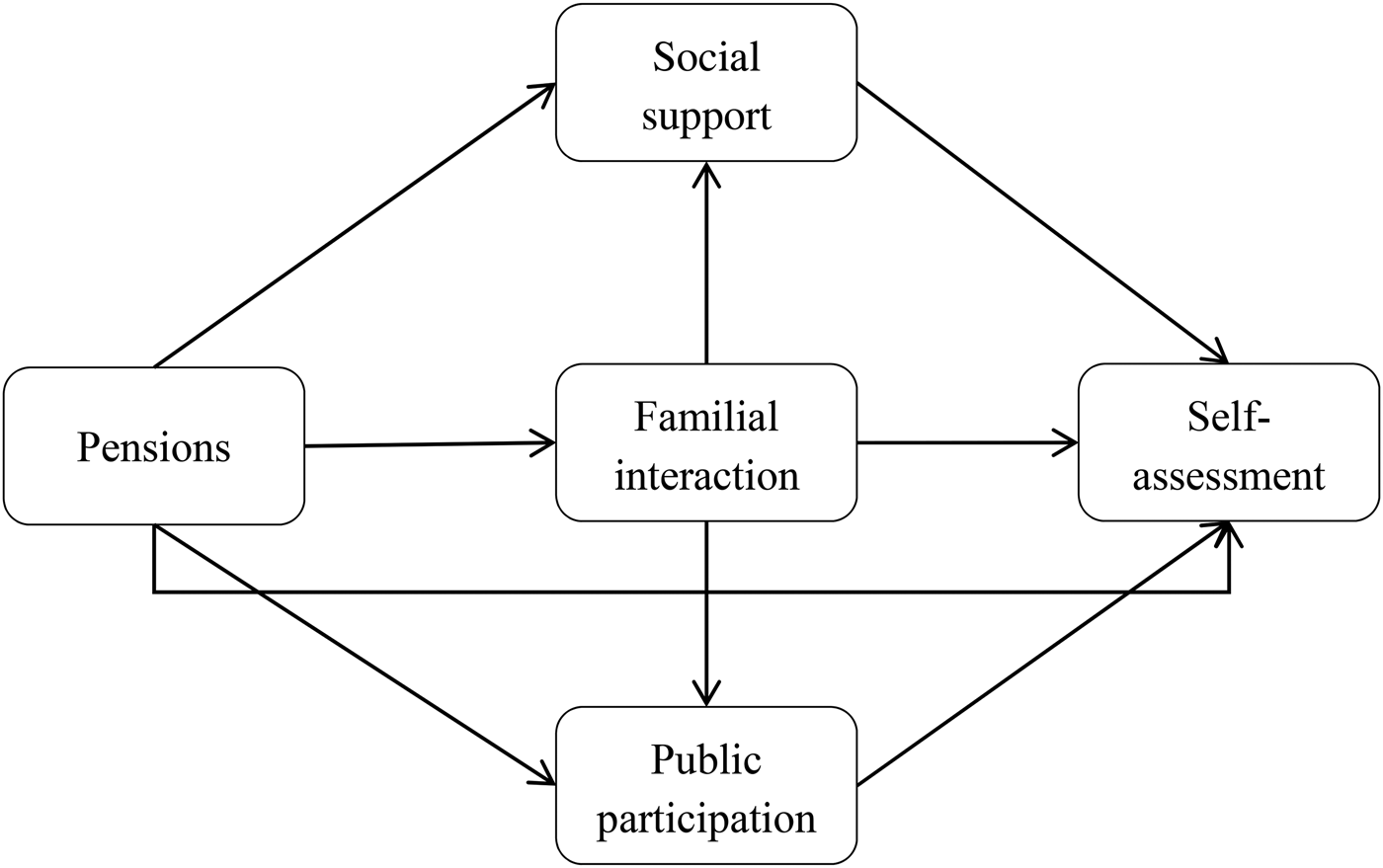
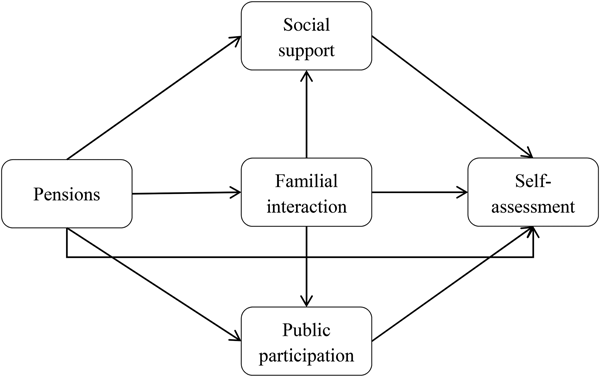
As with the concept of social exclusion, the idea of social inclusion is multi-dimensional. The World Health Organization's (WHO) active ageing approach provides a conceptual framework and practical programme aimed at achieving social inclusion (WHO 2002). The term ‘active’ refers to continuing participation in social, economic, cultural, spiritual and civic affairs, not just the ability to be physical active or to participate in the labour force (WHO 2002). Based on this approach, the European Commission's Directorate General of Employment, Social Affairs and Inclusion and the Population Unit of the United Nations Economic Commission for Europe initiated the Active Ageing Index (AAI) in 2012 to quantitatively monitor the outcome of active ageing policies at different levels. The AAI comprises four dimensions: employment, participation, independent healthy and secure living, and capacity and enabling environment for active ageing, which gave us an important reference point for this paper. However, due to limitations of data availability, we cannot apply the AAI in China. Also this paper aims to explore the correlation between pensions and social exclusion rather than assessing the level of AAI. The notion of social inclusion in this paper is operationalised using four dimensions: self-assessment of overall social inclusion, familial interaction, social support and public participation. Many specific sub-groups, such as the widowed, unmarried, divorced and separated older women, are the more likely to face multiple disadvantage and multiple exclusion (Walker Reference Walker1981). Although Walker et al. (Reference Walker, Barnes, Blom, Cox and Lessof2006) did not find a simple domino effect among different forms of exclusion, where exclusion in one area appears to cause exclusion in another and so on, we can examine inversely the possible domino effect of pension policy on social inclusion. For example, the positive effect of pensions on harmonious familial relationships between older people and their children may promote their enthusiasm for public participation which would then improve their self-assessment of their degree of social inclusion. In the context of a traditional culture in China, interaction with children is prior to any other social activities for older people, thus we set familial interaction as an important intervening variable between pensions and variables of social support and public participation. Self-assessment of social inclusion is mainly based on personal experience of familial interaction and social activities, thus self-assessment is considered as an outcome variable in this paper. Based on this theoretical groundwork, the framework for this analysis is as shown in Figure 1.
Theoretical framework.
In addition, the pension system in China is characterised by distinct stratification in which pensioners are distributed into four classes in descending order in terms of pension levels but ascending order in terms of coverage. At the top are those in the GIP, in the middle are those covered by the Enterprise Employee Basic Pension (EEBP), followed by those in the Urban and Rural Resident Social Pension (URRSP) and at the bottom are people without any pensions (Zhu and Walker Reference Zhu and Walker2017). Disparate and unequal pensions result in distinctly different impacts on social inclusion. For example, nearly half of all urban-dwelling older people have social pensions as their main financial resources compared to only 4 per cent for their counterparts in rural areas. Accordingly, the emerging needs of urban older people are for a rich spiritual and cultural life, keeping pace with the times, social participation and life-long education; while rural older people have to work until an advanced age due to their low incomes (Du Reference Du2013). Therefore, it is important to compare the impact of pensions on different classes of older people.
Data and measurement
The data-set used in this paper is from a national and longitudinal survey, CLASS, conducted by Renmin University of China in 2014 based on pilot investigations in 2011 and 2012. CLASS aims at regularly collecting information referring to the socio-economic status of older people so as to assess the challenges confronting them and their families as well as the impacts of relevant social policies on promoting the life quality of older people. This survey includes six major sections: demographic characteristics, health status, economic status, supporting resources, living arrangement and social participation. The investigation in 2014 covered almost all provinces in China, with the exception of Hainan, Tibet and Xinjiang, referring to 462 villages/communities from 134 counties/districts with multi-stage probability sampling, and successfully interviewed 11,511 older people aged 60 and over. The data are of high quality. For example, the sex ratio of male to female in the survey is 0.9216, close to the result of the sixth census, 0.9756, conducted in 2010 (National Survey Research Center at Renmin University of China 2014).
The description of demographic characteristics and pension variables is shown in Table 1. As is usual, the number of women is greater than men, which increases with age group. Also with the economic development of China, urbanisation has increased dramatically over the past three decades. Nearly half of older people were living in urban areas, indicating improved living environments. What stands out initially is the low educational attainment of the majority of older people: over 30 per cent were illiterate and another one-third attained only elementary education, which is likely to affect their attitude to society and consequently to social inclusion.
Variables and sample distribution
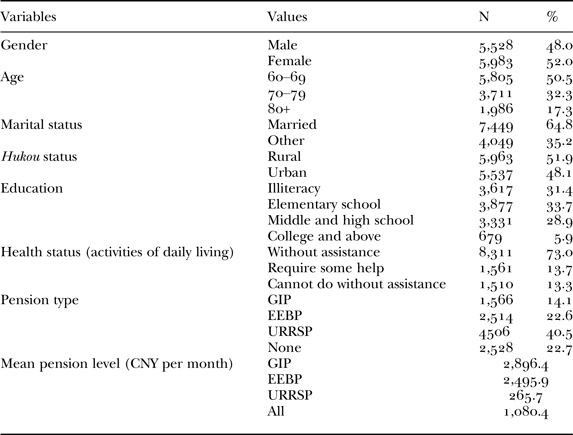
Notes: GIP: Government and Institution Pensions. EEBP: Enterprise Employee Basic Pension. URRSP: Urban and Rural Resident Social Pension.
The independent variable is the pension which was specified as two sub-variables: benefit levels and pension types. The former was calculated by the amount of pension benefits per month in 2014; while the later was determined by the three types of pension systems and the last group without any pension. As shown in Table 1, almost 80 per cent of Chinese older people were entitled to pension rights as a result of the unprecedented extension of pensions, with an average annual increase of 19 per cent between 2010 and 2015 (International Social Security Association (ISSA) 2016). Particularly, the New Rural Social Pension piloted in 2009 covered over one-third of older people who were excluded from all pensions before that. Benefit levels among different groups are quite unequal due to the work-test and performance-test pensions. The average pension of the URRSP is only 265.7 CNY per month compared with 2,896 CNY per month for the GIP, a ten-fold difference.
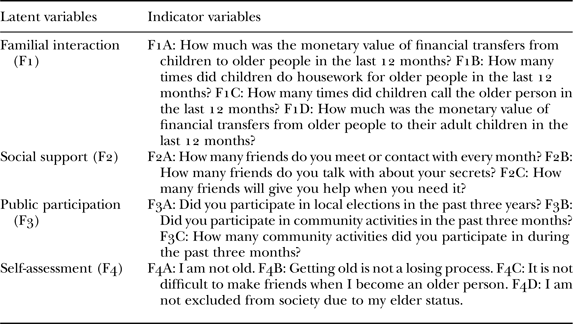
The dependent variables, familial interaction, social support and public participation, and self-assessment, are latent variables measured by Likert scales or other observed variables. Familial interaction includes income transfers informal service transfers, affective interaction between older people and their children, and living arrangements. Given the diversity of numbers of children and their activities among different families, we used the mean of income transfer and values of informal service transfers and affective interaction provided by the oldest child for the older people with two children and over. The latent variable of social support was measured by a six-point Likert scale with three progressive questions. Public participation consisted of local voting and community activities. The last latent variable, self-assessment, was measured on a five-point Likert scale including four items. All four latent variables and their indicator variables are shown in Table 2. Age, gender, hukou status, education, marital status and occupation before retirement were considered as covariates in the analysis.
Four latent variables and measurement indicators
Methods
Given the features of latent variables and the theoretical framework, Structural Equation Modelling (SEM) was the most suitable for this analysis. This is a general and broad family of analyses used to test measurement models and to examine the structural models of the relationships among latent variables (Harrington Reference Harrington2008). As for the measurement model, on the one hand, confirmatory factor analysis (CFA) is employed to measure the four latent dependent variables: self-assessment, familial interaction, social support and public participation. CFA, theory-driven analysis, is used for four major purposes: psychometric evaluation of the measures, construct validation, testing method effects and testing measurement invariance (Brown Reference Brown2006). Compared with exploratory factor analysis, which is data-oriented and is also called data-driven analysis, CFA characterised by hypothesis testing is suitable for the situation where the relationship between latent variables and manifest variables is defined prior to analysis (Wang Reference Wang2014). In terms of the structural model, on the other hand, the path analysis is as shown in Figure 1. In addition to the direct relationships between pensions and the four latent variables, we attempted to test the mediation role of family, community and society to the sense of subjective social inclusion from the perspective of older people. The software Mplus 7.4 was used.
Results
SEM: measurement model
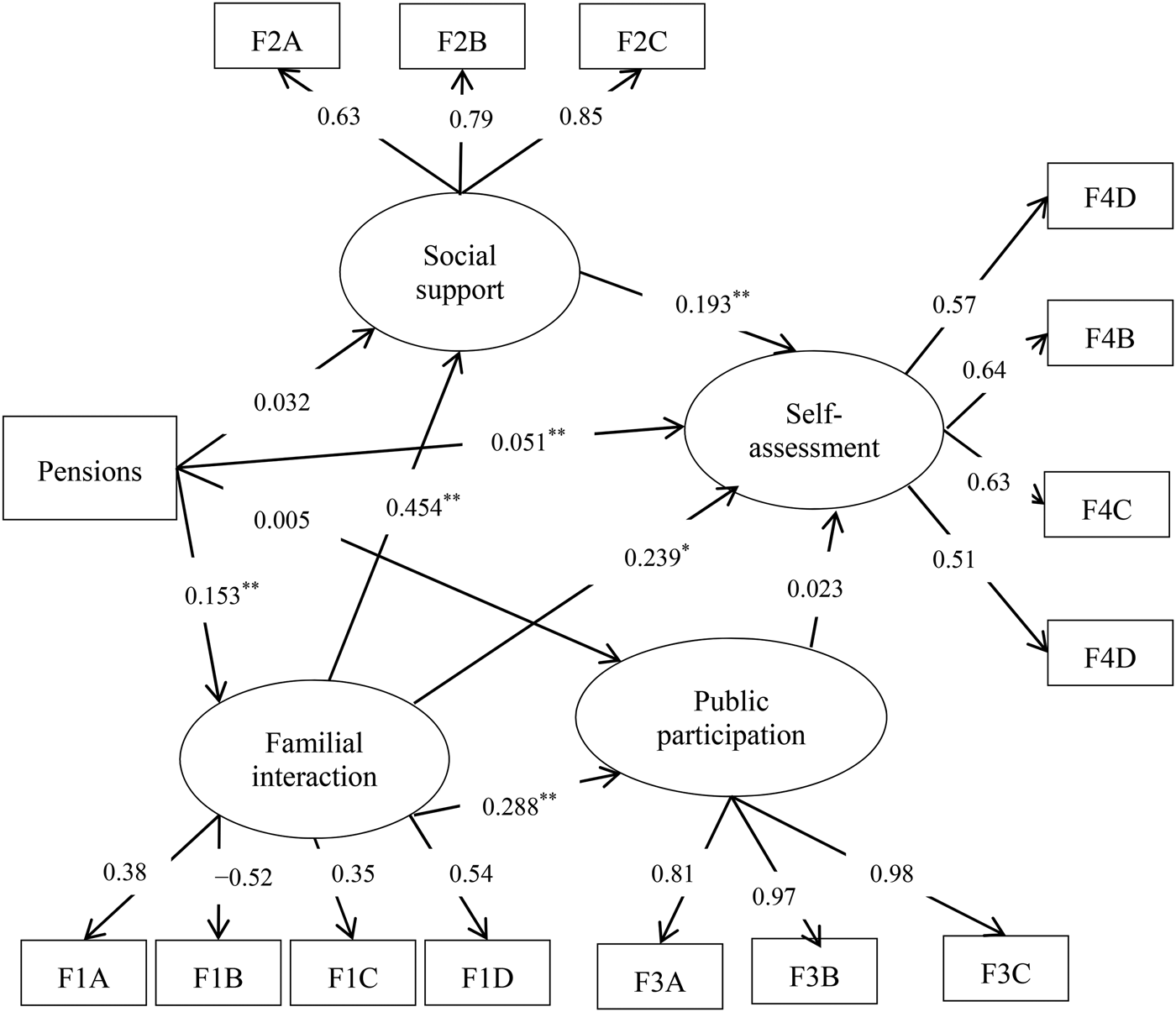
The measurement model was made up of four latent constructs and 14 manifest variables. Each of the four latent variables was measured by three or four manifest indicators. Given the abnormal distribution of indicators, the maximum likelihood method (MLM) is employed to estimate parameters, which is robust to non-normality (Muthén and Muthén Reference Muthén and Muthén2015). Results of the analysis suggest good fits, such as self-assessment with chi-square/degrees of freedom of 158.96, significant at the 1 per cent level, comparative fit index (CFI) of 0.94, standardised root mean square residual (SRMR) of 0.04, root mean square error of approximation (RMSEA) of 0.14; while the other three latent variables are a saturated model. All loading coefficients are shown in Figure 2. With the exception of income transfers from adult children to their parents and living arrangement in familial interaction, the loading coefficients of all indicators are over 0.5.
Structural Equation Modelling of the impact of pensions on social inclusion for older people.
SEM: structural model
According to the theoretical framework represented above, the tested model is shown in Figure 2, including 14 paths among pensions and latent variables. In this model, we pooled all of the pension types as well as those without pensions whose pension values are zero. Fit indexes indicate an acceptable model with a significant chi-square at the 1 per cent level, CFI of 0.94, Tucker–Lewis Index of 0.92, RMSEA of 0.04, as well as SRMR of 0.03.
Although the covariates are removed in order to simplify Figure 2, the full model shows that all control variables are significant for familial interaction. For example, compared to older men, older women are more involved in familial interaction with their children. Meanwhile, older people with a higher degree level of educational attainment, better occupations before retirement and urban household registration have closer relationships with family members than those within lower classes. While the relationships between covariates and the other three dimensions of social inclusion, social support, public participation and self-assessment, show the completely opposite relationship. As for the correlation between pensions and social inclusion, all paths could be divided into nine direct and five indirect ones as shown in Figure 2. In terms of the direct paths, relationships between pensions and familial interaction and self-assessment are positively significant at the 1 per cent level. The coefficient between pensions and public participation is small, revealing that increasing pensions has a small impact on public participation among older people in China. It is surprising that there is no significant association between public participation and the self-assessment of social inclusion, with the control of covariates, the reasons for which will be discussed later.
Referring to the indirect correlations between pensions and social inclusion, the self-assessment of older people is regarded as the comprehensive index of social inclusion, which operates as the terminal variable in the model. The mediation effects of familial interaction and social support are examined with the exception of public participation, again revealing a multi-dimensional social inclusion and interaction between each dimension. The total indirect association coefficient of pensions and self-assessment is 0.043. Of this, 0.006 and 0.037 are from the mediation effects of social support from friends and familial interaction, which indicates that familial support is more important for the self-assessment of social inclusion than other supports. Being affected by the non-significant correlation between public participation and self-assessment, the indirect correlation coefficients of public participation on self-assessment are zero.
As detailed above, three sub-groups of older people were specified according to China's pension system: at the top of the inverted pyramid are those covered by the GIP followed by those retired from enterprises, and at the bottom are older people covered by the URRSP. Before the SEM analysis, bivariate correlation analysis between pensions and four dimensions of social inclusion facilitated a more intuitive understanding of diversity among the sub-groups of older people. Given the categorical variable of pension types, weighted least-square parameter estimates were applied for correlation coefficients. Results show that pension types (GIP = 1, EEBP = 2, URRSP = 3, none = 4) were significantly negatively correlated with self-assessment (−0.18), social support (−0.15) and public participation (−0.21), with the exception of familial interaction (0.40), at the 1 per cent level, which reveals that older people with better pensions are actually integrated better into society. Surprisingly, however, older people with the lowest pensions have better relationships with their family members than those with higher pensions, which may result from the fact that the poorest are those living in rural areas, being more reliant on their relatives and therefore more likely to be positive.
Specific models with each sub-group categorised by pension types present diversities in detail. Fit indexes and path coefficients of the three models are as shown in Table 3. All fit indexes of the models are acceptable statistically, as argued above. The prominent trend of the three models is the steadily decreasing coefficients between pensions and social inclusion from the GIP model to the URRSP one, although many of them are non-significant at the 5 per cent level. For example, coefficients steadily decrease from 0.471 in the GIP model to 0.287 in the EEBP model and to 0.091 in the URRSP one, as shown in Table 3, which reinforces the conclusion examined above once again that older people with better pensions are more likely to be included into family and society. Only familial interaction out of the four dimensions was significantly positively affected by pensions, at the 1 per cent level in the model of the GIP, which reveals that social inclusion among older people covered by the GIP is not improved along with benefit rises, although they did have higher overall social inclusion than other pension groups. Conversely, older people receiving the EEBP and the URRSP are more sensitive to changes in pension levels. As well as the self-assessment of social inclusion, pensions enable older people covered by the EEBP and the URRSP to feel that they are being included into family, community and society in both direct and indirect ways. However, public participation, which is defined in terms of voting and community activities, is immune to pensions and other dimensions of social inclusion within all of the models.
Comparison of pension impact on social inclusion for sub-groups
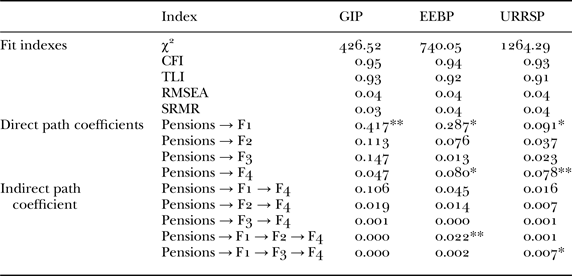
Notes: GIP: Government and Institution Pensions. EEBP: Enterprise Employee Basic Pension. URRSP: Urban and Rural Resident Social Pension. CFI: comparative fit index. TLI: Tucker–Lewis Index. RMSEA: root mean square error of approximation. SRMR: standardised root mean square residual. F1–F4: see Table 2.
Significance levels: * p < 0.05, ** p < 0.01.
Discussion
Of particular relevance in developing countries is a focus on issues around material and financial security, which reflects the income resources domain of both social exclusion and social inclusion frameworks (Burchardt, Le Grand and Piachaud Reference Burchardt, Le Grand, Piachaud, Hills, Le Grand and Piachaud2002; Scharf and Keating Reference Scharf and Keating2012; Scharf, Phillipson and Smith Reference Scharf, Phillipson and Smith2005). As the former president of the ISSA said when he presented the second ISSA Award for outstanding achievement in 2016 to the Chinese government, ‘China has made unprecedented progress in the development of its social security system in the past decade and has successfully extended pension, health and other forms of coverage for the benefit of its population through a combination of sustained government commitment and significant administrative innovations’. As a major yet still middle-income country, China has made substantial efforts to extend pension coverage by the use of non-contributory pensions (e.g. the URRSP) in the past decade. The majority of social surveys indicate that the coverage rate of pensions has reached around 80 per cent. Benefit levels are also increasing along with economic development. The levels of the EEBP have increased at a rate of 10 per cent every year since 2005 and 8 per cent in 2016, the amount of pensions per month on average has increased from 711 CNY in 2004 to 2,353 CNY in 2015 (Ministry of Human Resources and Social Security 2015). Income transfers among family members, labour income and pensions are three major income resources among older people in China. Although income transfers from children still comprise more than 40 per cent of income, it was 57 per cent in 1994 and has steadily decreased since then (Du and Wu Reference Du and Wu2006), while the percentage of pensions has increased from 15.6 per cent in 1994 to 24.1 per cent in 2010 (Ding Reference Ding2013), and resulted in substantial poverty reduction among older people.
The focus of this paper, however, is not on the economic impact of pensions but their impact on social relations and subjective attitudes towards social inclusion among older adults. Beyond increasing their income, there is a range of ways in which increased pensions boost older people's social inclusion. At the individual level increased pensions provide an income replacement in retirement, therefore their relative generosity positively affects the wellbeing and life satisfaction of older people. Also the importance of relative income in the determination of life satisfaction is also true for pensions (Bender Reference Bender2004). However, in the model without the control variable ‘occupation before retirement’, a direct correlation between material pension welfare and self-assessment of social inclusion was not found in the model pooled total sample, but was found in the sub-models categorised by pension types and in the model with ‘occupation before retirement’. As suggested above, self-assessment is a comprehensive index produced by older people based on personal experiences and their living environment, which are affected by multiple factors rather than only pensions. Similar to the subjective satisfaction index, one reason for its lack of influence is that expressed satisfaction with a particular performance may not be affected by any characteristics of that performance (Stipak Reference Stipak1979). Subjective assessment of public services was examined as a function of neighbourhood, individual and governmental characteristics and their social relationships (Stipak Reference Stipak1976). As stated in this paper, pensions have no impact on self-assessment when covariates are considered, but they do have an impact on it within sub-models and, in particular, the model with occupation before retirement which to a large extent determines who gets which pensions (Zhu and Walker Reference Zhu and Walker2017). This indicates differences of self-assessment among social groups categorised by individual, occupational, economic and social factors. Also the statistically significant mediation effects of familial interaction and social support between pensions and self-assessment inclusion suggest a way to improve subjective social inclusion. Increasing pensions, especially for older people living in rural areas and those without any pensions at present, can improve their social capital, familial relationships and therefore their subjective wellbeing.
The relationship between pensions and familial interaction is more complex. An important finding is that increased pensions enhance the interaction between older people and their adult children in terms of income transfers and verbal communication, but have a negative effect on service interaction, as shown in Figure 2 (a negative loading coefficient of F1B on F1). Although affected by socio-economic change characterised by economic growth, high-speed population mobility and smaller family structure, familial relationships with a ‘feedback model’ in essence remain unchanged in China (Fei Reference Fei1983). A survey in Shenzhen, the largest immigrant city in China, indicated that the majority of immigrants (67.7%) expressed a close relationship with their parents even though they live far apart from them (Cui and Jin Reference Cui and Jin2015). Although constrained by geographical distance, income and emotional interactions remain close regardless of the health status of the parents. Thus, familial interactions without spatial-temporal limits such as income transfers and telephone calls are strengthened, while service interactions are inevitably weakened. From the perspective of older people, increased pension income not only reduces their dependence on their children and friends, but also enables them to help others. Recognition and respect from children as a result of supporting and sustaining their family with pensions contribute to the positive assessment of intra-household relationships from the perspective of older people (Lloyd-Sherlock, Barrientos and Mase Reference Lloyd-Sherlock, Saboia and Ramírez-Rodríguez2012).
Based on the Asian cultural background, social participation provides new role identities for older adults in the context of the erosion of traditional family ones (Warburton and Wintertion Reference Warburton and Wintertion2010). Taking part in community activities is regarded as a continuation of the role of family leaders as the breadwinners and carers, which totally disappear when they retire (Mu Reference Mu2002). However, social participation seems to be immune to both financial income and other social relations, as we have shown, although it is an important path to social inclusion for older people from the perspective of active ageing in which older people are given opportunities to develop their own forms of activity as citizens (Walker Reference Walker2002). The factors are multiple relating to older people and their families as well as the government rather than focusing on material income (Wang Reference Wang2011). Firstly, health and volition are two key factors determining social participation at the individual level. When asked the reason for the absence of community activities, poor health and without interest were the first and third reasons, consisting of 27.6 and 11.1 per cent, respectively. Secondly, the traditional culture poses another important barrier for older people to engage in social participation. The concept of ‘structure of grade’ (cha xu ge ju), put forward by Fei Xiaotong, based on Confucianism, takes the family as the centre of a social network surrounded by relatives and followed by those without blood relationships such as friends and colleagues, and strangers are last (Fei Reference Fei1992). This suggests that older people are expected to spend time with their families and undertake responsibilities defined by culture, such as caring for grandchildren and doing domestic work, before taking part in community activities. One of the factors behind absence from social participation in this survey is the family, including caring for other family members and opposition from their children, which makes up of 6.4 per cent. Thirdly, the lack of infrastructure contributes another important factor behind limited social participation. As many as 18.1 per cent of respondents in this survey gave the reason for their lack of social participation as not knowing how to take part, even though they had the desire to. Ageism, regarding old age as a disability and, consequently, regarding older people as the objective of services rather than as carers or active citizens, is prevalent as a result of ignorance. Thus legislation, social organisations, funding, human resources and so on supporting community activities are completely absent (Han Reference Han2007; Liu Reference Liu2006).
In addition to inequalities in pension income among individuals and households, the impact of pension stratification, in the form of three public pension schemes, reflects a complex and hierarchical relationship between pensions and social inclusion at the macro-social level (Calvo Reference Calvo2009). Pension policies are embedded in structural and cultural circumstances that mediate how people respond to those policies. Older people being part of a well-designed pension system, such as the GIP, with better pensions on average, are those with advantages in their previous lifecourse. They are still at the lowest risk of social exclusion even if pensions are not taken into consideration. The impact of pensions on social inclusion is not only about the amount of the pension, but also about those living with a high degree of risk in a world where basic material needs have not been met. Better pensions have a weak impact on social inclusion for older people covered by the GIP, but they have a higher degree of social inclusion than other pension classes. In contrast, social inclusion for older people in the EEBP and the URRSP are more sensitive to pension level. The inequality of pensions with performance-tests and work-tests has an adverse impact on the relationship between financial income and social inclusion. Older people with disadvantages over the lifecourse are more likely to be excluded from family, friends and community, as well as in terms of the psychological feelings about themselves, as the result of extremely low pensions, although they are the ones with the most urgent need of decent pensions, which are the major source of resources to compensate for their disadvantages.
Conclusion
Social exclusion and inclusion are discussed in the western arenas of gerontology and social policy but are largely absent from similar discussions in developing countries and particularly in China. Accompanied by economic transition, more social policies referring to inclusive development indicate a paradigm shift from an economy-oriented development model to an economy and society-oriented model. In accordance with other developing countries, the pension system is one of a few vital social policies responding to the social exclusion of older people in China and their need for inclusion. This paper provides a uniquely comprehensive exploration of the relationship between pensions and social inclusion using highly reliable nation-wide survey data, the results of which provide valuable information for future reforms both in China and other developing countries. On the one hand, pension policy should take priority over any other measures as an instrument to achieve social inclusion among older people in developing countries. In addition to substantial poverty reduction, an important dimension of social inclusion, pension income promotes familial interaction, social support and community participation, and results in positive subjective assessments of integration in society among older people. On the other hand, however, equality-oriented pensions which aim to reduce disadvantages from the previous lifecourse are effective at offsetting or eliminating huge inequalities deriving from the labour market, family and social welfare systems. The potential of pensions as an engine of social inclusion among older people in China is currently limited by its stratified pension system. Finally, infrastructure such as activity spaces, volunteer organisations, funding and social motivators should also be provided to co-ordinate with pension policy, which is rather rare in developing countries.
Acknowledgements
The authors would like to thank the anonymous reviewers for their helpful comments and Vanessa Rodgers for her support in the publication process.


 Open access

