


Impact statement
Despite the widespread attention given to marine plastic pollution, the impacts of terrestrial plastic pollution on domestic animals are poorly understood. In low- and middle- income countries (LMICs), millions of people depend on livestock and working donkeys, who are traditionally managed by allowing them to free-roam. However, a rise in the use of plastics coupled with a lack of waste management infrastructure presents a significant threat, as free-roaming animals interact with plastic waste. Plastic ingestion has serious consequences: for animal welfare, as plastic-induced blockages of the gastrointestinal system commonly cause suffering and high animal mortality rates, and for the people who rely on these animals to sustain their livelihoods. This article raises awareness of the impact of plastic pollution on working donkeys, cattle and humans within an LMIC context. The results provide a starting point for future initiatives in Lamu aimed at safeguarding animals and livelihoods. The article also provides a blueprint for interdisciplinary projects that aim to understand the consequences of plastic pollution in unique local contexts. The research highlights the complexity of the relationships between human behaviour, animal welfare and environmental health, factors that are applicable to plastic pollution contexts on a far wider scale. A holistic One Welfare approach, which considers the interplay of these factors, will be vital in future efforts to mitigate the global plastics crisis.
Introduction
Plastic pollution represents one of the foremost environmental threats and plays a predominant role in altering ecosystems worldwide (Santos et al., Reference Santos, Machovsky-Capuska and Andrades2021). The issue of interaction between plastic pollution and animals has garnered a significant amount of attention in both the media and research spheres; however, focus has remained predominantly on marine ecosystems (de Souza Machado et al., Reference de Souza Machado, Kloas, Zarfl, Hempel and Rillig2018; Anca and Wallis, Reference Anca and Wallis2024). Most plastic pollution originates on land and ends up in waterways and oceans as a result of mismanagement (de Souza Machado et al., Reference de Souza Machado, Kloas, Zarfl, Hempel and Rillig2018). While the widespread negative impacts of plastic pollution on marine species are well researched and undisputed, the impacts of plastic pollution on terrestrial species are widely understudied, representing a critical evidence gap that needs to be filled (Brahney et al., Reference Brahney, Hallerud, Heim, Hahnenberger and Sukumaran2020; Bucci et al., Reference Bucci, Tulio and Rochman2020; Thushari and Senevirathna, Reference Thushari and Senevirathna2020; Santos et al., Reference Santos, Machovsky-Capuska and Andrades2021).
While habitat degradation due to plastic pollution, as well as health issues caused by ingestion of or entanglement in plastic, have been demonstrated to impact terrestrial species (Ayala et al., Reference Ayala, Zeta-Flores, Ramos-Baldárrago, Tume-Ruiz, Rangel-Vega, Reyes, Quinde, De-la-Torre, Lajo-Salazar and Cárdenas-Alayza2023; Anca and Wallis, Reference Anca and Wallis2024), there is relatively little known about interactions between plastics, terrestrial environments, animals and humans, leading to calls for further research (Bucci et al., Reference Bucci, Tulio and Rochman2020; Thrift et al., Reference Thrift, Porter, Galloway, Coomber and Mathews2022; Ayala et al., Reference Ayala, Zeta-Flores, Ramos-Baldárrago, Tume-Ruiz, Rangel-Vega, Reyes, Quinde, De-la-Torre, Lajo-Salazar and Cárdenas-Alayza2023). Terrestrial mammal species used for domestic purposes, such as livestock and working animals, are at high risk from the effects of plastic pollution due to their close coexistence with humans (Prata and Dias-Pereira, Reference Prata and Dias-Pereira2023). These animals are of vital importance to the estimated 60% of the planet’s 1.3 billion people living in poverty who are reliant on livestock for at least part of their livelihoods (Thornton et al., Reference Thornton, Herrero, Freeman, Mwai, Rege, Jones and Mcdermott2007). Working equids (donkeys, horses and mules) also support the lives of an estimated 600 million people living in low- and middle-income countries (LMICs), enabling access to and transport of basic necessities such as water and firewood (Bonsi et al., Reference Bonsi, Anderson and Carder2023).
From an animal welfare perspective, the impacts of plastic pollution can be devastating. Macroplastic ingestion, in particular, can result in blockages of the gastrointestinal (GI) system; studies in ruminant livestock have documented goats, sheep, cattle and buffalo suffering from plastic ingestion and its resulting symptoms that include loss of body condition due to starvation, severe abdominal pain, weakness and eventual death (Hailat et al., Reference Hailat, Nouh, Al-Darraji, Lafi, Al-Ani and Al-Majali1997; Bin et al., Reference Bin, Hizikel, Mirza and Ahmad2020; Mahadappa et al., Reference Mahadappa, Krishnaswamy, Karunanidhi, Bhanuprakash, Bindhuja and Dey2020). In animals that had ingested plastics and were examined post-mortem, diseased areas of the rumen and reticulum were observed, indicating that while alive, the plastic present in their GI tract had caused detrimental biological changes (Hailat et al., Reference Hailat, Al-Darraji, Lafi, Barakat, Al-Ani, El-Magrhaby, Al-Qudah, Gharaibeh, Rousan and Al-Smadi1998; Ashok Kumar Reddy et al., Reference Ashok Kumar Reddy, Lakshmi Namratha, Shravan Kumar, Ravi Kumar and Lakshman2020). The evidence in equids is more limited, but impaction colic caused by plastic-related obstructions has been recorded in both horses and donkeys. It has been suggested that the exploratory nature of browsing species, such as donkeys, may make them more prone to ingestion of inappropriate materials in comparison to grazers (Thiemann and Sullivan, Reference Thiemann and Sullivan2019). However, in both horses and donkeys, impactions were seen in the small, large and transverse colon and the caecum (Mirazo et al., Reference Mirazo, Carluccio, Gil, Cuns, Rocca and Vila2012; Thiemann and Sullivan, Reference Thiemann and Sullivan2019; Bianchi et al., Reference Bianchi, Ribeiro, Stolf, Bertolini, Laisse, Sonne, Driemeier and Pavarini2020). Colic remains one of the most common causes of death in equids, and high morbidity and mortality have been particularly documented in equids presenting with the symptoms of impaction colic (Mirazo et al., Reference Mirazo, Carluccio, Gil, Cuns, Rocca and Vila2012; Thiemann and Sullivan, Reference Thiemann and Sullivan2019; Bianchi et al., Reference Bianchi, Ribeiro, Stolf, Bertolini, Laisse, Sonne, Driemeier and Pavarini2020).
Alongside the obvious negative animal welfare implications, exposure of livestock and working animals to plastic pollution has detrimental impacts on food security. Loss of body condition associated with plastic ingestion results in less productive animals providing lower meat and milk yields, and a subsequent reduced market price (Li et al., Reference Li, Wang, Kulyar, Iqbal, Lai, Zhu and Li2023). Reduced economic revenue will be felt by livestock keepers, and the reduction in animal products available for human consumption is a food security concern given the predicted rise in world population growth and associated significant increased demand for livestock products (Thornton et al., Reference Thornton, Herrero, Freeman, Mwai, Rege, Jones and Mcdermott2007; Prata and Dias-Pereira, Reference Prata and Dias-Pereira2023). Preventative education for animal owners regarding feeding and management strategies is recommended, although it is acknowledged that larger waste management issues need to be resolved in order to facilitate these effectively (Mirazo et al., Reference Mirazo, Carluccio, Gil, Cuns, Rocca and Vila2012; Tesfaye and Chanie, Reference Tesfaye and Chanie2012; Bin et al., Reference Bin, Hizikel, Mirza and Ahmad2020).
Another food security concern is the potential for microplastic transfer to humans through the food chain. Human ingestion of microplastics can occur through the consumption of animal products contaminated with microplastics or through crops that have been fertilised with animal manure containing microplastics (Beriot et al., Reference Beriot, Peek, Zornoza, Geissen and Huerta Lwanga2021; Da Costa Filho et al., Reference Da Costa Filho, Andrey, Eriksen, Peixoto, Carreres, Ambühl, Descarrega, Dubascoux, Zbinden, Panchaud and Poitevin2021; Liu et al., Reference Liu, Chen, Chen, Yang, Yao and Xie2022). Microplastics in the human body can cause oxidative stress, cytotoxicity, inflammation, immune response and the leaching of chemical additives and contaminants (Wright and Kelly, Reference Wright and Kelly2017; Prata et al., Reference Prata, da Costa, Lopes, Duarte and Rocha-Santos2020; Kadac-Czapska et al., Reference Kadac-Czapska, Ośko, Knez and Grembecka2024) contributing to negative health outcomes, including tissue damage, fibrosis, cancer, autoimmune and reproductive disorders (Wright and Kelly, Reference Wright and Kelly2017; Senathirajah et al., Reference Senathirajah, Attwood, Bhagwat, Carbery, Wilson and Palanisami2021). Microplastic accumulation in human organs and tissues is well documented (Amato-Lourenço et al., Reference Amato-Lourenço, Carvalho-Oliveira, Júnior, dos Santos Galvão, Ando and Mauad2021; Liu et al., Reference Liu, Liu, Guo, Yang, Wang, Sun, Chen and Dong2023; Yang et al., Reference Yang, Xie, Du, Peng, Han, Li, Zhao, Qin, Xue, Li, Hua and Yang2023), and although few studies have acknowledged meat from livestock as a direct source of microplastics in the human food chain (Huerta Lwanga et al., Reference Huerta Lwanga, Mendoza Vega, Ku Quej, de los Chi A, Sanchez del Cid, Chi, Escalona Segura, Gertsen, Salánki, van der Ploeg, Koelmans and Geissen2017), it is not unreasonable to hypothesise that microplastics could be internalised in animal tissues (destined to be consumed by people) in the same way. If so, then the risk of microplastic ingestion through meat is likely higher in LMICs due to the routine consumption of more parts of a carcass, a lack of formal safety checking of meat pre-consumption and the widespread plastic pollution of environments where livestock graze (Huerta Lwanga et al., Reference Huerta Lwanga, Mendoza Vega, Ku Quej, de los Chi A, Sanchez del Cid, Chi, Escalona Segura, Gertsen, Salánki, van der Ploeg, Koelmans and Geissen2017; Priyanka and Dey, Reference Priyanka and Dey2018; Beriot et al., Reference Beriot, Peek, Zornoza, Geissen and Huerta Lwanga2021).
One location where plastic pollution poses a significant problem for both humans and animals is Lamu Island, Kenya. As with many locations in LMICs globally, free-roaming livestock in Lamu are ubiquitous, and insufficient waste management infrastructure means that donkeys and cattle regularly graze open dumpsites, putting them at risk of injury and death through the ingestion of plastic (Lamu Environment Foundation, 2021; Monyoncho, Reference Monyoncho2013; Mwagona et al., Reference Mwagona, Njue, Trott, Apondi, Roberts and Obura2022). Confirming this risk, from 2019 to 2021, ~5% of donkeys presenting at NGO The Donkey Sanctuary’s Lamu veterinary clinic had impaction colic, potentially caused by ingestion of plastic, which was usually fatal. Since only a minority of donkeys on the island are taken to the clinic when ill, the true number of animals dying from impaction colic on the island is likely to be much higher.
The research aim of this interdisciplinary study was to document the scale of the impact that plastic pollution is having on Lamu’s donkeys and cattle. In order to achieve this, and to consider the complexity of the relationships that exist between humans, environment and animal welfare, multiple methodologies were utilised. First, observations of foraging behaviour were used to determine the ingestion rates of different material types. Second, the abundance of microplastics from faecal samples across different environments was analysed. Third, a survey documented people’s attitudes to plastic, animal management practices and the prevalence of severe problems experienced resulting from the interaction between animals and plastic pollution. This novel combination of methods investigated multiple facets of the plastic pollution problem in Lamu, enabling triangulation via multiple data types, and was designed to provide a comprehensive understanding of the current context.
Methods
Study site
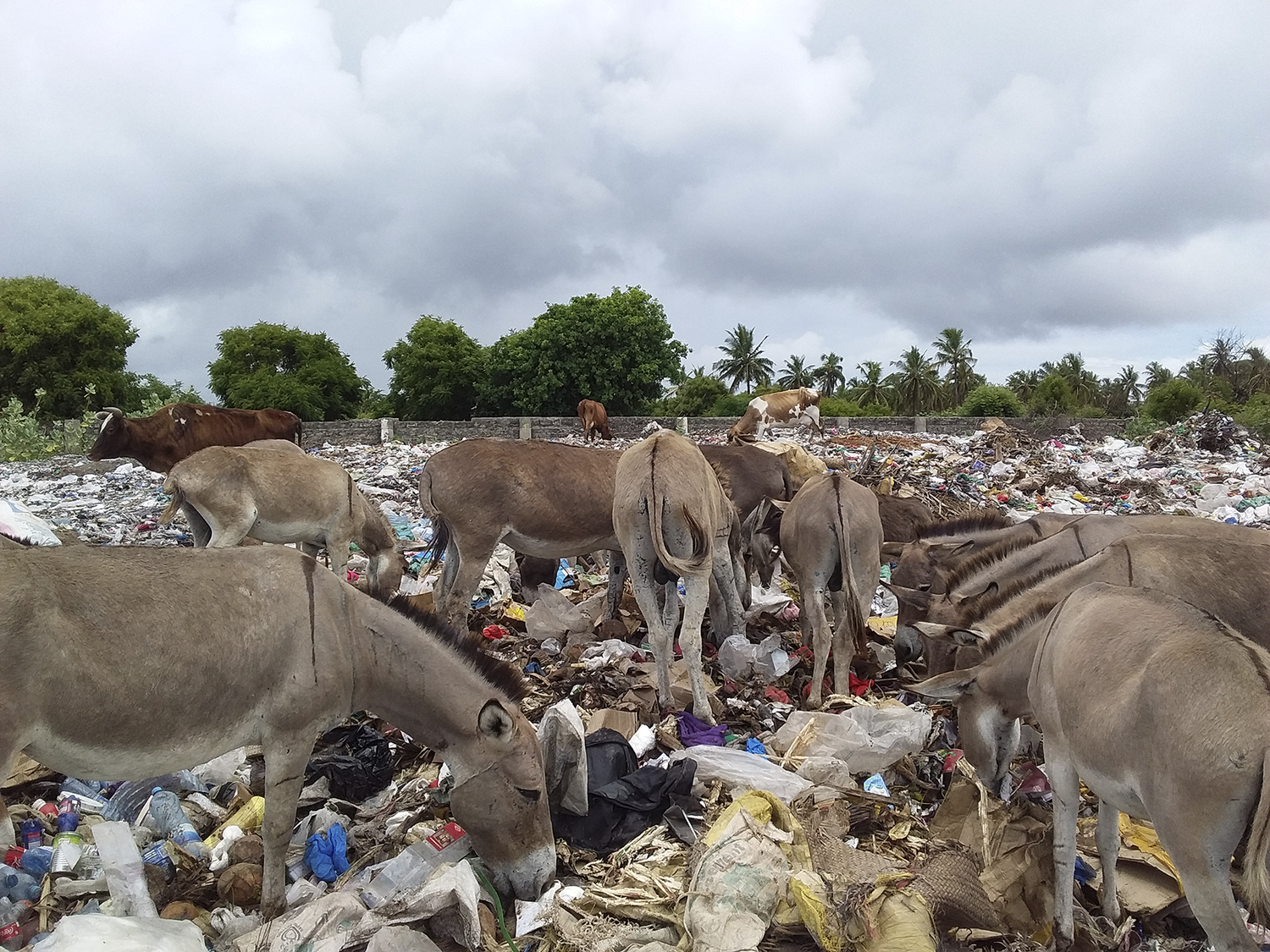
Our study site was Lamu Island, part of the Lamu archipelago, situated off the Kenyan coast (2° 17′ 0″ S, 40° 52′ 0″ E). The Old Town is the oldest and best-preserved Swahili settlement in East Africa and is a designated UNESCO World Heritage site (UNESCO, 2001). Cars are banned for the public, and the main form of land transport is the donkey. Many industries, including construction, agriculture and tourism, are also reliant on working donkeys. The ecosystem of Lamu (poor quality sandy soil, prolonged dry periods and a lack of accessible fresh water) results in unfavourable growing conditions for arable crops; consequently, cattle are typically the main income source for farming households (Maingey et al., Reference Maingey, Opondo, Olago and Ouma2022). Although Lamu County Government is responsible for some collection of solid waste, the amount of waste generated (especially of single-use plastics) outstrips capacity, and waste is disposed of post-collection at an unfenced dump site located ~1.5 km away from the seafront (Monyoncho, Reference Monyoncho2013). Many unofficial dumpsites also exist closer to residential areas where residents dispose of their household litter themselves. Both donkeys and cattle can regularly be found grazing on these open dumpsites (Figure 1).
Donkeys and cattle grazing at Lamu Island’s main waste site.

Study 1: Focal observation of foraging behaviour
Subjects: Foraging observations of 101 individual animals (N Donkeys = 77, Female = 58; N Cattle = 24, Female = 22) were collected in March and November 2023, totalling 1,441 min of observations and a total of 140 observation sessions. Some individuals were observed on multiple days and across both wet and dry seasons. Photographs and ID notes were taken for each subject to enable identification if they were encountered multiple times.
Methods: Focal animal sampling is routinely used to investigate the foraging behaviour of equids, cattle and small ruminants (Lamoot et al., Reference Lamoot, Callebaut, Demeulenaere, Vandenberghe and Hoffmann2005; Papachristou et al., Reference Papachristou, Platis and Nastis2005). To explore differences in activity budgets and foraging patterns across different environments and between species, focal observations of both donkeys and cows were conducted. Observations were carried out between 08.00 and 18.30, but avoided the hottest part of the day, that is 12.30–15.45 in March, when animals tend to be less active and instead remain in the shade. Each focal animal was observed for a 10-min period, during which all instances of and the durations of the behaviours feeding, resting, moving, social behaviour and other (e.g., scratching) were recorded to create an activity budget. If the animal moved, the observer followed in order to complete the observation. Observations were taken at close proximity, this allowed the observer to witness the composition of the material ingested by the animal when grazing. As the animals were habituated to human presence, close proximity was achieved without altering foraging behaviour. The number of bites taken while foraging was recorded as well as the composition of each bite taken, categorised as soft plastics, hard plastics, cardboard/paper, fabric, miscellaneous or unidentified inorganic material (e.g., foil or foam), graminoids, forbs, coconut husks, woody browse and organic waste or unidentified organic material (Mwagona et al., Reference Mwagona, Njue, Trott, Apondi, Roberts and Obura2022). Attempts to selectively avoid ingesting specific materials were also recorded (rejection occurred when a material that had been bitten was ejected rather than ingested). Data were recorded in an Excel spreadsheet using a tablet computer. Focal observations were conducted in three types of environments: at waste sites, in rural areas and in urban areas. Waste sites included the main waste site outside of town and two smaller, unofficial waste sites closer to residential areas. Urban observations were taken in Lamu Old Town and at the seafront. Rural sites were agricultural land and dune areas located outside of the town and reached on foot or by boat.
Data analysis: Activity budgets were calculated for donkeys and cattle separately to give the total time and percentage of time spent performing each activity in each environment type. Descriptive statistics, including the percentages of each material ingested for both species across each environment type, were calculated alongside rejection rates of different materials for all focal animals that were observed foraging. Cattle were rarely present in urban areas, with only two focal sessions recorded. As a result, comparisons in foraging behaviour for cattle were restricted to waste and rural sites. The data were not normally distributed and could not be corrected through transformation, and so a series of non-parametric Kruskal–Wallis tests were performed to determine if there were significant differences in the time donkeys spent performing activities in rural, urban and waste site areas. Pairwise comparisons, using Bonferroni correction for multiple testing, were conducted where the main effect was significant. A series of Mann–Whitney tests was performed to determine if there were significant differences in the time cattle spent performing activities in rural versus waste site areas.
Study 2: Analysis of microplastic abundance in faeces
Subjects: Thirty-nine viable faecal samples were collected (N donkey = 25, N cattle = 14), distributed across the three environment types in March and November 2023.
Methods: Sample collection – In order to provide a measure of the level of microplastics (MPs) excreted by donkeys and cattle, faecal samples were collected at waste sites, in rural areas and in urban areas, to determine microplastic abundance. Samples were collected from the fresh faeces of animals that were witnessed defecating during observation periods for the focal observations described above during March 2023 and November 2023. Samples were collected with a spatula from the centre of a faecal pile to avoid contamination of the sample from contact with external microplastics present on the ground. Samples were stored in sample pots and frozen on the same day they were collected.
Plastics and microplastics extraction: Microplastics analysis was conducted at the Kenya Marine and Fisheries Institute in Mombasa, to determine the mean abundance of microplastics present in the samples from donkeys and cattle across the three environment types. Samples were air dried in a laminar flow, then a density separation method was performed to extract plastics from the matter using the modified method of Quinn et al. (Reference Quinn, Murphy and Ewins2017). The dry sample of a known weight was put in a conical flask and a solution of saturated sodium chloride (>1.2 g per cubic centimetre) was added at a quantity of thrice the sample volume, shaken for 30 min on end-over-end shaker and left to settle for 12 h, after which the supernatant was sieved through 500- and 63-μm sieves, hence separating the plastics into two size categories according to the modified method of Kazmiruk et al. (Reference Kazmiruk, Kazmiruk and Bendell2018): 63 μm ≥ MP ≤ 500 μm and > 500 μm. Size 63 μm ≥ MP ≤ 500 μm was further filtered through a 0.7-μm Whatman GF/C glass fibre filter and 30% H2O2 was added, then left for 12 h to digest the organic materials, making it possible to visually identify microplastics under a dissecting microscope. The filter was viewed under a dissecting microscope to sort the plastics into types and colours, while size >500 μm plastics were sorted by eye.
Quality control: Cotton (100%) lab coats were worn at all times, and polyester-type clothing (e.g., fleece jackets and polyester lab coats) was avoided to prevent samples from being contaminated by textile fibres. Distilled water, ethanol and saturated NaCl were filtered twice through a 0.7-μm Whatman GF/C glass fibre filter in an 8-cm diameter glass Buchner funnel. All materials were rinsed with filtered distilled water before usage, and work surfaces were wiped clean with 70% ethanol (Karbalaei et al., Reference Karbalaei, Golieskardi, Hamzah, Abdulwahid, Hanachi, Walker and Karami2019). Latex gloves (soft and made of natural rubber) were worn during sorting and counting to prevent skin from coming into contact with the microscopic samples. Glass and stainless steel materials were used at all times. Procedural blanks were run in parallel with the samples to account for potential contamination during the extraction procedure. Blanks collected in each environment type and in the lab were also analysed for microplastic presence to test for potential environmental sources of sample contamination. Other precautions were taken regarding contamination, including (i) air-contamination controls set up during sampling and visual identification and (ii) blanks set up during sieving. No contamination was detected throughout the quality-control process.
Data analysis: Descriptive statistics were calculated for microplastic size and type across the three locations and from the two species. A series of Mann–Whitney and Kruskal–Wallis tests (with Bonferroni correction for multiple tests) were used to assess differences in microplastic abundance (MPs/g dry weight) based on environment type (waste site and rural) and species (donkey and cattle). Since no cattle were found in urban areas, the samples from donkeys in urban areas were excluded from analyses involving species comparisons. Analyses were conducted in SPSS version 26.0 (IBM Corporation, 2019).
Study 3: Survey of stakeholder attitudes to plastic pollution and its effects on domestic animals
Subjects: A total of 198 people participated in the survey (N women = 45, N men = 153) with ages ranging between 18 and 68 years (mean age of 33, standard deviation [SD] ± 10 years). Participants were recruited from four target groups: 61 (31%) participants were donkey owners, 51 (26%) were livestock owners, 66 (33%) were local residents who did not own animals and 21 (11%) were tourists. Of those participants who owned animals (N = 111), 88% (N = 53) of donkey owners and 92% (N = 23) of cattle owners indicated that their animal was the main source of income for their household.
Methods: To capture stakeholder perspectives on plastic pollution and its effects on domestic animals, a survey was conducted. The survey had ethical approval (see ethics statement), and informed consent was gained from all participants. The survey covered the topics of attitudes towards plastics and plastic pollution, discussion of the barriers and solutions to the plastic problem, personal experiences of animals affected by ingestion of plastic and animal management practices (with a focus on free roaming of animals, as this is the main factor enabling animals to access waste sites where the highest levels of environmental plastics occur). The survey was conducted in-person by local data collectors from the Flipflopi project between August and October 2023. Each survey took on average 30–45 min to complete and consisted of a possible maximum of 70 questions. Participants answered a subset of questions based on their participant type (e.g., tourist). The survey collected both qualitative and quantitative data. Participants were recruited via opportunity sampling of people present outside in public areas of Lamu Town and Shela Town. The survey questions were read aloud to participants in Kiswahili (local residents) or English (tourists). Answers were recorded into an Excel spreadsheet accessed on a mobile phone or tablet.
Data analysis: For quantitative data, which consisted of responses to Likert scale questions, descriptive statistics were calculated. Mann–Whitney U-tests were used to assess differences in opinion regarding roaming practices and plastic pollution, and compared animal owners and non-owners. Content analysis was used to analyse and group open text responses. This allowed the most common themes and participant ideas proposed for each question to be identified (Braun and Clarke, Reference Braun and Clarke2006). Surveys were reviewed in Excel format by E.H., and initial codes were generated based on common concepts that occurred repeatedly across survey responses. Based on these codes, a list of potential themes was compiled in MS Word (Microsoft® 2023) and examined by a second author (O.S.), who reviewed and revised themes until a consensus was reached.
Results
Study 1: Focal observation of foraging behaviour
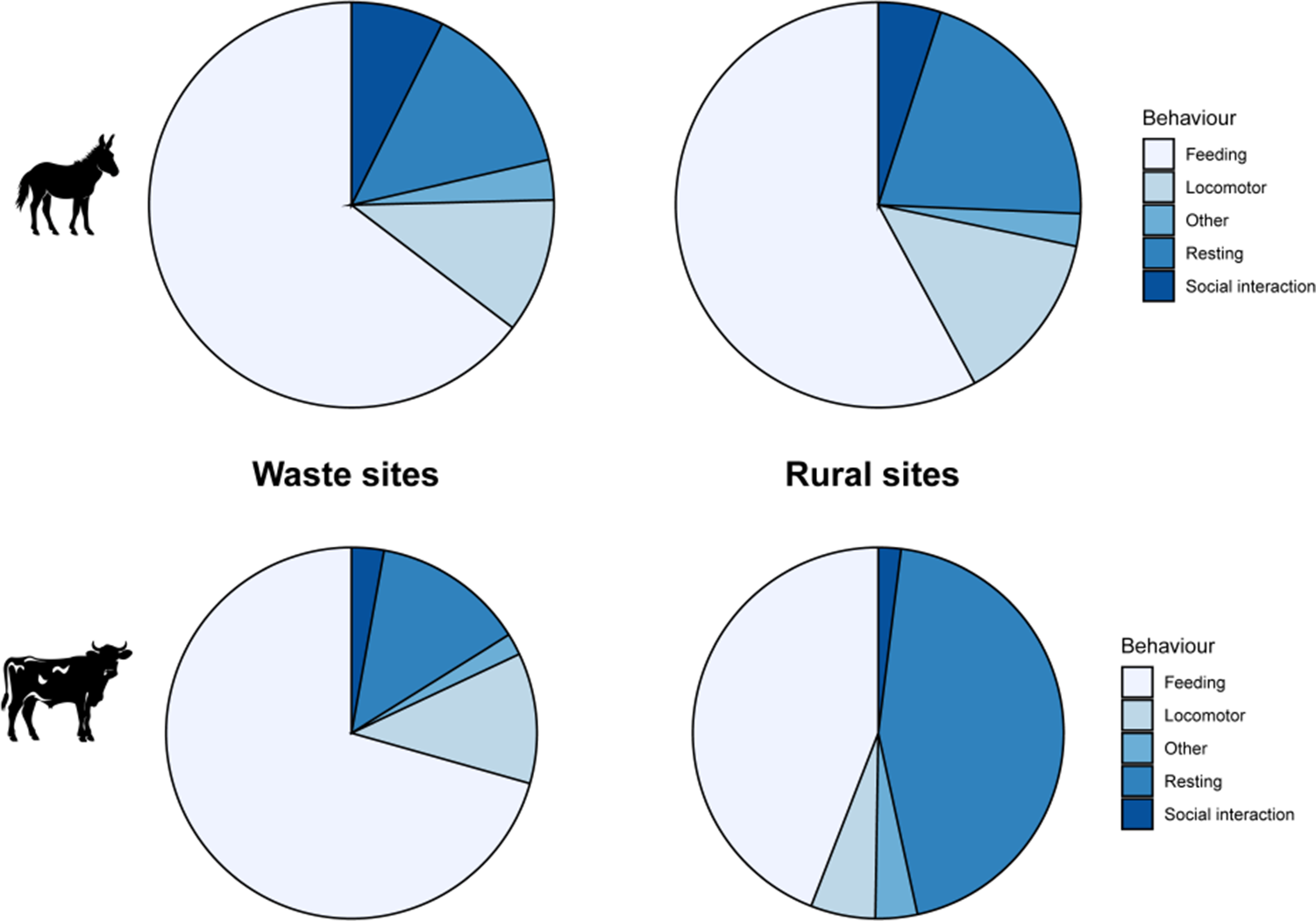
The activity budgets of donkeys and cattle are presented in Figure 2. The proportion of time cattle spent feeding at waste sites was significantly higher than at rural sites (U = 46, p = 0.03), while the difference in time the donkeys spent feeding across locations approached significance, with most time spent feeding at waste sites (H(2) = 5.5, p = 0.065). For cattle, there were no significant differences in the amount of time spent engaging in other activities at waste versus rural sites (Resting: U = 130, p = 0.1; Social interaction: U = 84, p = 0.7; Locomotion: U = 76, p = 0.4; Other: U = 118, p = 0.3). The amount of time donkeys spent engaging in social interaction was highest at waste sites and differed across locations (H(2) = 7.5, p = 0.02). There were no significant differences in the amount of time donkeys spent engaging in resting, locomotion and other behaviours across locations (Resting: H(2) = 2.7, p = 0.3; Locomotion: H(2) = 5.4, p = 0.07; Other: H(2) = 4.7, p = 0.1).
Activity budgets of donkeys and cattle across different environment types.

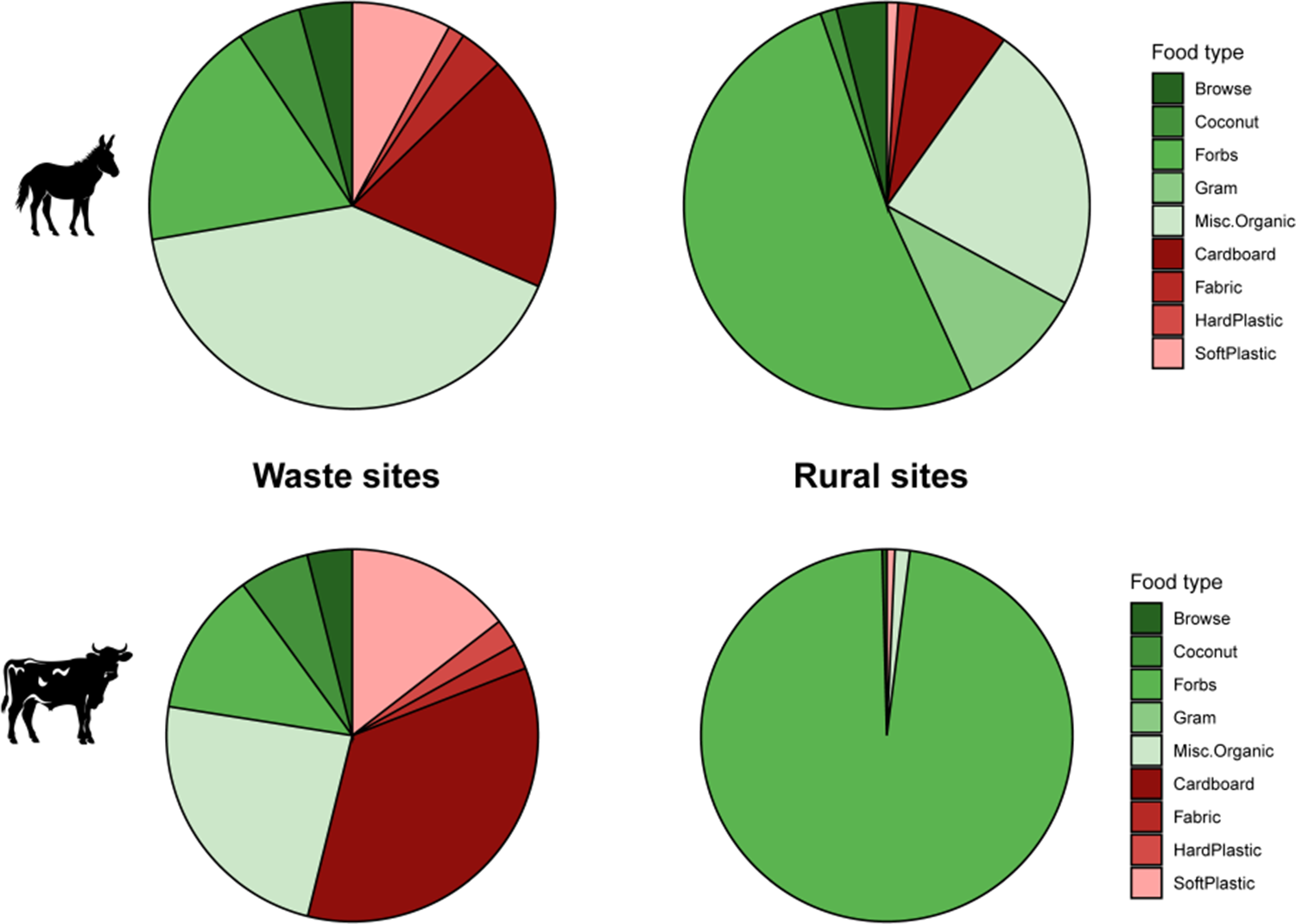
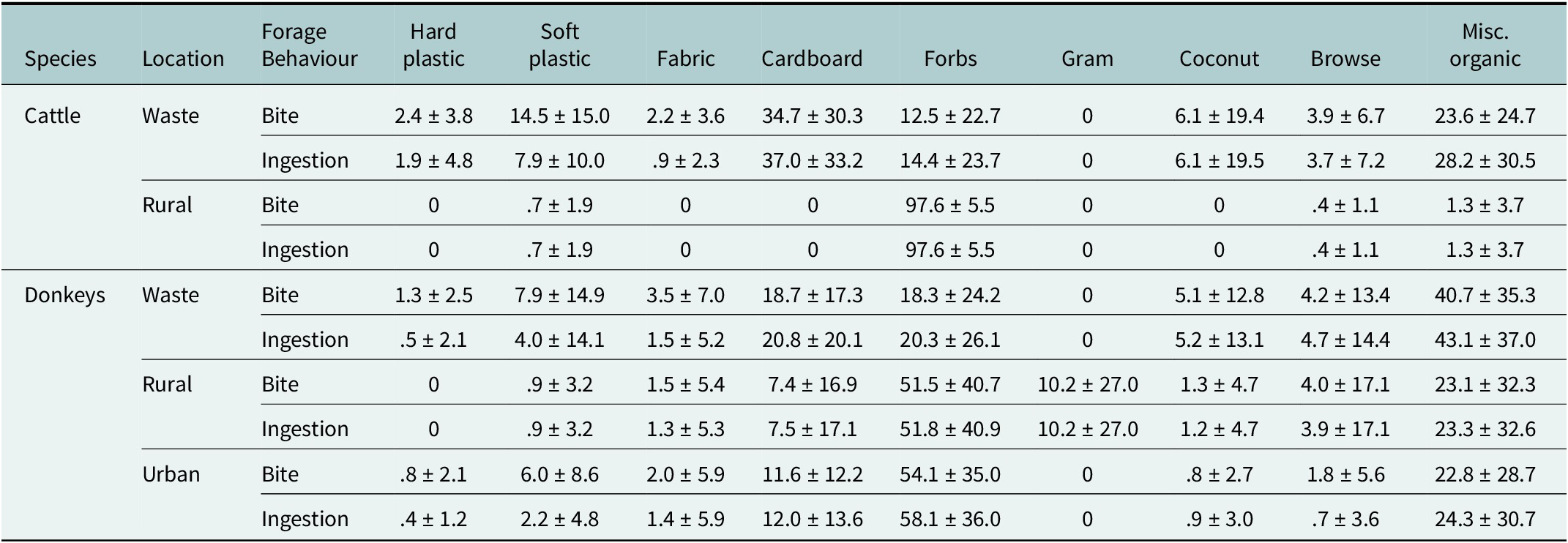
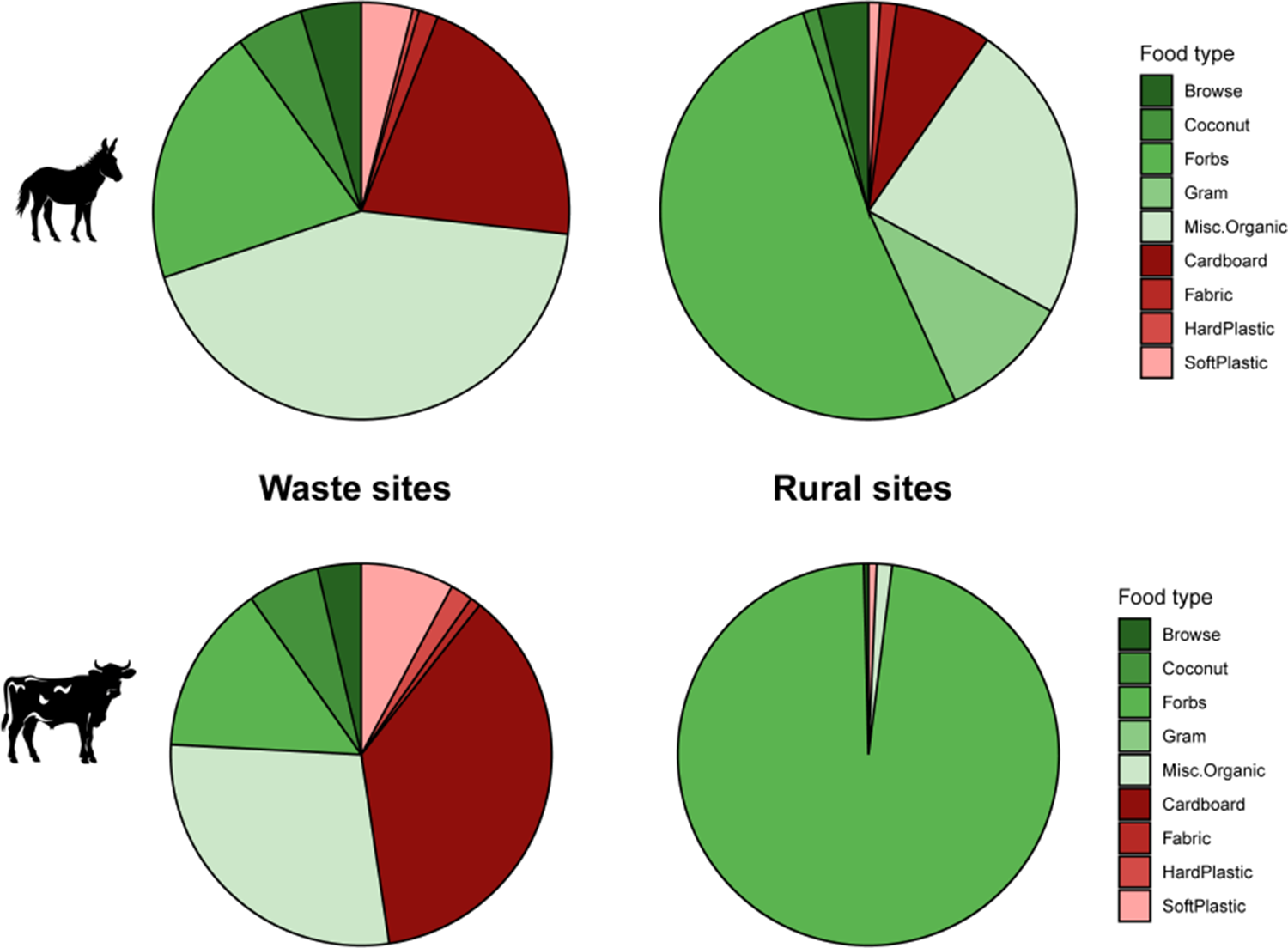
The composition of materials selected also varied considerably by site (Figure 3 and Table 1). Donkeys and cattle at rural sites primarily selected growing vegetation, with cattle almost exclusively selecting forbs and at significantly higher proportions than in waste sites (U = 5.0, p < 0.001). Forbs were also donkeys’ most selected items in rural areas, with the proportion of forbs eaten differing significantly between locations (H(2) = 24.0, p < 0.001) and lowest at waste sites. Donkeys were only observed eating graminoids in rural areas (Location difference: H(2) = 12.8, p = 0.002). Less than 1% of the materials selected at rural sites were plastics.
Composition of materials selected across waste and rural sites.

In contrast, at waste sites, both cattle and donkeys selected multiple types of organic and inorganic items. Cardboard was the most selected item for cattle at waste sites, while they were never observed eating cardboard in rural locations (Location difference: U = 160, p < 0.001). Cardboard selection was also high for donkeys at waste sites, with intake varying significantly across locations (H(2) = 15.3, p < 0.001), and significantly higher at waste sites compared to rural locations (U = 30.5, p < 0.001). “Other” organic items, which largely consisted of food waste, were the most frequently selected item by donkeys at waste sites, with intake varying significantly across locations (H(2) = 9.7, p < 0.008), and being significantly higher at waste sites compared to both rural (U = 20.5, p = 0.03) and urban locations (U = 17.3, p = 0.03). Although these items were selected less by cattle at waste sites, they were still selected at a significantly higher rate at the waste sites than in rural areas (U = 137, p = 0.008).
Soft plastic was the third most selected material for cattle at waste sites, consisting of 14.5% of items selected, significantly higher than in rural areas (U = 140, p = 0.004). Soft plastic was also frequently selected by donkeys at waste sites (7.9%), with intake varying across locations (H(2) = 13.8, p < 0.001), and being significantly lower at rural sites than both waste (U = 27.5, p = 0.001) and urban sites (U = 24.1, p = 0.009). Hard plastic comprised 2.4% of bites taken by cattle at waste sites, which did not differ significantly from the proportion seen at rural locations (U = 112, p = 0.2). In contrast, the intake of hard plastics by donkeys did differ across locations (H(2) = 6.9, p = 0.03), with the difference being primarily due to higher levels of plastic intake at waste sites (1.3%) compared to rural locations where hard plastic consumption was not observed (U = 14.0, p = 0.03).
At waste sites, donkeys and cattle both selected fabric, woody browse and coconut husks at low levels (<7%), with no significant difference in the proportion of fabric and woody browse selected across locations for donkeys (Fabric: H(2) = 5.0, p = 0.08; Woody browse: H(2) = 1.1, p = 0.6) or cattle (Fabric: U = 112, p = 0.2; Woody browse: U = 109.5, p = 0.2). Cattle also did not differ in the amount of coconut husks they selected across locations (U = 104.0, p = 0.4), whereas the amount of coconut husks selected by donkeys differed (H(2) = 7.6, p = 0.02), with significantly more husks being chosen at waste sites compared to urban sites (U = 12.8, p = 0.03) but not rural sites (U = 10.3, p = 0.2).
Comparing the foraging patterns of the two species at the waste sites, cattle selected significantly more cardboard and soft plastic than the donkeys (Cardboard: U = 400, p = 0.05; Soft plastic: U = 401, p = 0.04) but there were no significant differences in the percentages of other items selected (Fabric: U = 592, p = 0.7; Hard plastics: U = 492, p = 0.3; Forbs: U = 660.5, p = 0.2; Graminoids: U = 567, p > 0.99; Coconut husks: U = 611, p = 0.5; Browse: U = 471, p = 0.1; Food waste/Miscellaneous organic material: U = 721, p = 0.07).
Percentage (%) of observed bites and percentage of ingested items (calculated by subtracting instances of items being rejected from the bites taken) of each material by donkeys and cattle across locations (mean ± SD)

Across all observations, 245 instances of rejection were recorded. Of all material types, hard and soft plastics and fabric had the highest rejection rates at 51–64% across both species (Table 2). In contrast <0.2% of forbs and graminoids were rejected during the observation period. The rejection rates of cattle and donkeys were not significantly different for any items except cardboard, which was rejected relatively more often by cattle (Cardboard: U = 567, p = 0.01; Fabric: U = 132, p = 0.98; Hard plastic: U = 79, p = 0.5; Soft plastic: U = 565, p = 0.2; Forbs and graminoids: U = 720, p = 0.6; Coconut husks: U = 50, p = 0.6; Browse: U = 99, p = 0.7; Food waste/“Other” organic: U = 692, p = 0.98).
Percentage (%) of bites in which the items were subsequently rejected by donkeys and cattle for each material type (mean ± SD)

By subtracting the number of bites rejected from the number of bites taken, we are able to determine ingestion rates of the different items (Figure 4 and Table 1). Despite high rejection rates, plastics still consisted of ~1 in 10 items ingested by cattle at waste sites. Soft plastics were ingested a significantly higher rates at waste sites (U = 134.5, p = 0.01), alongside cardboard (U = 156, p < 0.001) and food waste/other organic matter (U = 137, p = 0.008). Forbs were ingested at a significantly greater rate in rural locations (U = 5, p < 0.001). There were no significant differences in the proportion of other items ingested across rural versus waste sites (Fabric: U = 96, p = 0.6; Hard plastic: U = 100, p = 0.5; Graminoids: U = 84, p > 0.99; Coconut husks: U = 100, p = 0.5; Browse: U = 105, p = 0.3).
Composition of materials ingested across waste and rural sites.

For donkeys, despite high rejection rates, plastic still consisted of ~1 in 20 items ingested. This proportion did not vary across locations (Soft plastics: H(2) = 3.3, p = 0.2; Hard plastics: H(2) = 1.8, p = 0.4). Ingestion of food waste/other organic material varied across locations (H(2) = 10.0, p = 0.007), with higher rates of ingestion at waste sites that were both rural (U = 20.6, p = 0.03) and urban sites (U = 17.5, p = 0.03). There was also a significant difference in the proportion of cardboard ingested across locations (H(2) = 13.9, p < 0.001), with more cardboard being ingested at waste sites compared to rural sites (U = 28.7, p = 0.001) but not urban sites (U = 13.7, p = 0.1). Coconut husk ingestion also varied across locations (H(2) = 7.7, p = 0.02), with more husks being ingested at waste sites compared to urban sites (U = 11.7, p = 0.04) but not rural sites (U = 11.3, p = 0.1). Forb and graminoid intake also varied across locations (Forbs: H(2) = 23.7, p < 0.001; Graminoids: H(2) = 12.8, p = 0.002) with more ingestion occurring in rural locations compared to waste sites for both plant types (Forbs: U = 25.8, p = 0.004; Graminoids: U = 7.8, p = 0.002). Graminoids were also consumed at a higher rate in rural areas compared to urban areas (U = 7.9, p = 0.005), but forbs were consumed at a similar rate at urban and rural sites (U = 5.0, p > 0.99). There were no differences in ingestion rates of fabric and browse across locations (Fabric: H(2) = 0.5, p = 0.8; Browse: U = 4.2, p = 0.1).
Study 2: Analysis of microplastic abundance in faeces
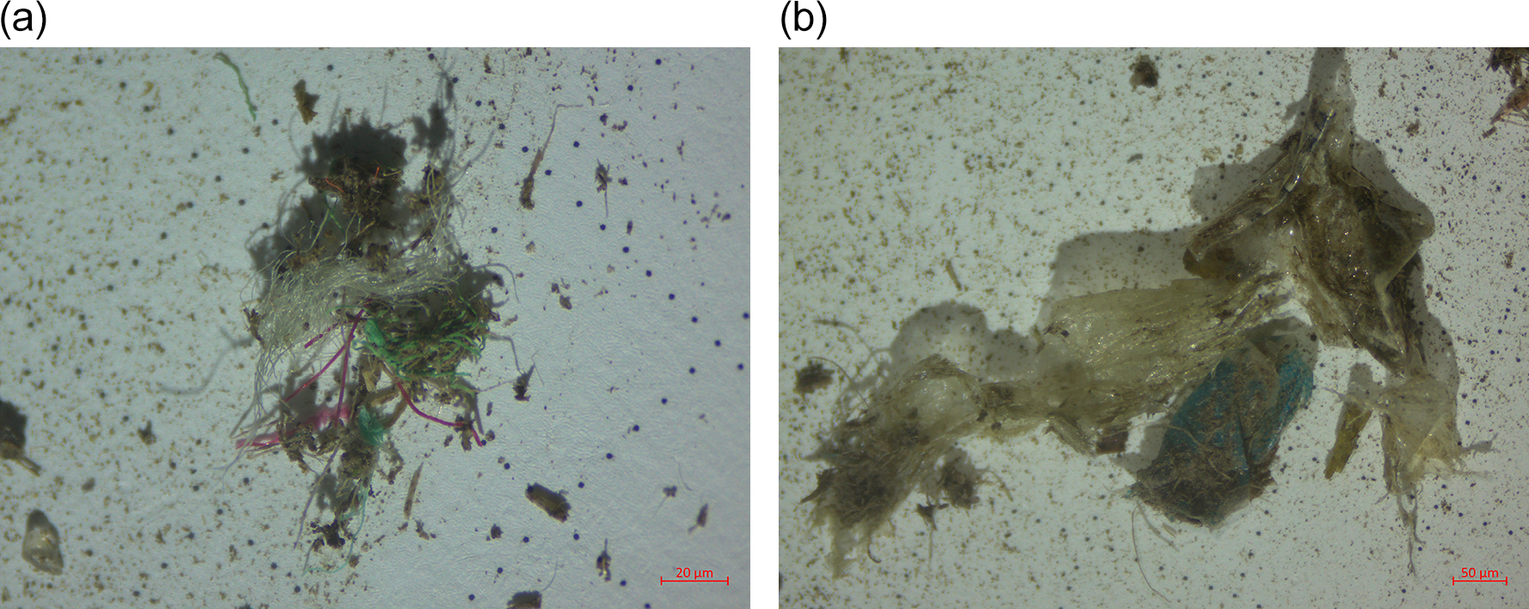
All samples contained microplastics (100% prevalence) and analysis indicated the presence of all microplastic types: fibre, film and fragment in at least one sample from all three environments (Figure 5). Microplastics of a size range 500 μm – 5 mm were the most common (found in 97% of samples), although microplastics between 63 and 500 μm were found in 90% of samples.
Photographs of microplastics from samples: (a) example of fibre and (b) example of film.

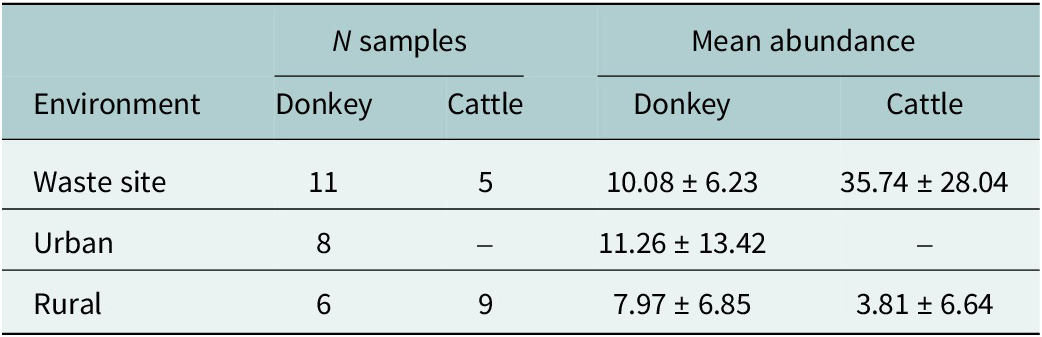
Significantly higher microplastic abundances were found in samples from waste sites in comparison to rural sites (U = 44, p = 0.002). When separated by species (Table 3), there was a significantly higher abundance of microplastics in cattle samples from waste sites in comparison to rural sites (U = 2.0, p = 0.004). For donkeys, statistical differences in microplastic abundances were not significant between the three environment types (χ 22 = 1.2, p = 0.55).
Total microplastic abundance (MPs g-1 dry weight) in faecal samples collected from donkeys and cattle in waste sites, urban and rural areas (mean ± SD)

Study 3: Survey of stakeholder attitudes to plastic pollution and its effects on domestic animals
Attitudes towards plastic pollution
Plastic pollution was problematic for the majority of participants: 45% (N = 83) stated that it was very problematic, 3% (N = 6) felt it was quite problematic, 49% (N = 92) felt it was, to some extent, a problem and 3% (N = 5) felt it was a little problematic. There was no significant difference in opinion between animal owners and non-owners (U = 4,187.5, p = 0.8). Participants stated that there was nowhere on the island that plastic pollution had not touched, making the environment look dirty. It was also acknowledged that plastic has adverse effects on animals and the environment: killing terrestrial animals and harming marine life. People attributed declines in many fish species to pollution, entanglement in plastic waste and plastics harming the mangrove environment.
Lamu Island is a tourist destination, with the tourism industry providing many employment opportunities on the island. However, the majority of tourists stated that plastic pollution had not put them off returning to Lamu for a holiday at all (78%; N = 14), with 11% (N = 2) indicating that it had put them off a little and 11% (N = 2) indicating that it had put them off to a greater extent.
Attitudes towards plastic pollution and domestic animals
The majority of animal owners (66%, N = 69) felt that plastic pollution was a problem to some extent, with 15% (N = 15) believing it to be very problematic or problematic and 19% (N = 20) believing it was only a little problematic. The main reason cited was that ingestion of plastic present in the environment when grazing posed a risk to animals (plastic bags were particularly mentioned as frequently consumed), and it was acknowledged that post-ingestion mortality was high. Burning plastic near animals was also mentioned as being harmful to animal health, and plastic waste was described as a physical barrier to working animals. For those owners who rated plastic pollution as less of an issue, reasons included a low risk to their animals because they did not allow their animals to roam, instead keeping them in an enclosed area that they ensured was free of waste.
Participant experiences of plastic ingestion by animals
In order to understand the scale of the impact of plastic pollution on the health of Lamu’s animals, participants (N = 168) were asked whether they themselves or anyone they knew of had experienced an animal becoming sick as a result of ingesting plastic. Almost a third, 27% (N = 46), indicated that they or someone they knew had experienced an animal becoming sick from plastic ingestion. In terms of species affected, participants mentioned donkeys (N = 26), cattle (N = 21) and sea turtles (N = 2) becoming sick as a result of plastic ingestion. Mortality rates reported by survey participants for the described incidents were high (78%); 38 participants specifically mentioned that the animals died as a result of ingesting plastic. In three cases involving cattle, owners sought veterinary treatment and their animals survived; the survival outcome in other cases described was unknown (N = 8). From the descriptions given by participants, it was clear that donkeys and cattle suffered before their death, in the majority of cases for several days. The symptoms witnessed included: constipation, swelling of the abdomen, becoming weak, poor breathing, inability to stand or walk, visible pain and eventual death.
Attitudes and practices related to the free roaming of domestic animals
The following questions were posed to animal owners and other stakeholders in order to more clearly understand the complex trade-offs of costs and benefits when domestic animals are allowed to roam freely.
Feeding and roaming practices
Grazing was the main dietary component for 67% (N = 40) of participants’ donkeys and 84% (N = 21) of participants’ cattle, although 95% (N = 57) of donkey owners and 80% (N = 20) of cattle owners routinely bought additional food for their animals. Significantly more cattle owners felt they could provide enough food for their animals than donkey owners (U = 438, p = 0.001): 49% (N = 29) of donkey owners versus 88% (N = 22) of cattle owners could always provide enough food, with 51% (N = 30) of donkey owners versus 12% (N = 3) of cattle owners only sometimes being able to provide enough food for their animals.
The roaming practices reported by the participants were varied. Although 14% (N = 8) of donkey owners and 38% (N = 13) of cattle owners often or always let their animals roam, the majority of donkey owners (56%; N = 32) and 32% (N = 11) of cattle owners sometimes let their animals roam. In contrast, only 28% (N = 16) of donkey owners and 29% (N = 10) of cattle owners never let their animals roam, with 2% (N = 1) of donkey owners rarely letting their donkeys roam.
Animal owners were additionally asked whether they let their animals graze on the waste sites; 95% (N = 105) of owners responded that they did not, with the remaining 5% responding that they did not know whether their animals grazed at the waste sites.
Attitudes towards free roaming domestic animals
Participant’s opinions regarding seeing freely roaming donkeys on the island were polarised, with a statistically significant difference between animal owners and non-owners (U = 3,795, p = 0.005). Fifty-eight per cent (N = 64) of animal owners versus 44% (N = 38) of non-owners liked seeing free-roaming donkeys, 25% (N = 28) of animal owners versus 45% (N = 39) of non-owners disliked seeing free roaming donkeys and 17% (N = 19) of animal owners and 11% (N = 10) of non-owners neither liked nor disliked seeing them. Participants (including animal owners) were asked the main reason for their choice; the main themes could be divided into seven negative and seven positive categories. Positive reasons included: access to additional food; belief in donkey freedom; the enjoyment of seeing donkeys and being reminded of their value to livelihoods; tradition – having free-roaming donkeys is strongly tied to the island’s culture; roaming brings donkey health and social benefits; the donkeys are a tourist attraction. In contrast, negative reasons included: donkey urine and faeces make the streets dirty; donkeys are noisy, block the narrow streets and cause congestion; unattended animals cause damage to people’s properties and eat their crops; donkeys can cause injury to people through kicking, biting or collisions (especially the elderly or children); roaming is a sign that owners are not taking responsibility for their animals; dangers to donkeys themselves such as being stolen, injury (accidental or intentional), eating inedible things or ingesting poison (travel to dumpsites was explicitly mentioned for ingestion-related dangers).
Attitudes to other domestic animals freely roaming were less positive, with the majority of respondents (46%; N = 91) neither liking nor disliking seeing them, 31% (N = 63) disliking seeing them and 22% (N = 45) liking seeing free-roaming animals. There was no significant difference seen between animal owners and non-owners (U = 4,782.5, p = 0.9). The reasons given for this mirrored very closely those listed for donkeys, with the additional point that ‘livestock need to be kept in good condition in order to get the best milk or meat and achieving this means keeping them in an enclosed rural area’.
Attitudes towards banning free-roaming practices
A roaming ban was introduced for donkeys on Lamu Island in 2023, although the ban is not currently actively enforced, and the majority of respondents said that they did not know that a roaming ban existed (78%; N = 152). Most non-donkey owning participants thought that donkey owners never or rarely adhered to the ban (57%; N = 77), with 34% (N = 46) thinking that owners sometimes adhered to the ban, and only 10% (N = 14) believing that owners often or always adhered to the ban.
There was a difference in opinion between donkey owners and non-donkey owners as to the effect that enforcing the roaming ban would have on the donkeys’ health. The majority of donkey owners (56%; N = 32) thought that preventing roaming would have a negative effect on donkey health, and only 18% (N = 10) of owners thought health would be positively affected (26% = no effect). In contrast, only 26% of non-donkey owners thought the ban would negatively affect donkeys, and 39% (N = 53) thought the results would be positive (35% = no effect).
Participants who believed enforcing the roaming ban would improve donkey health cited increased protection from theft, injury and harmful substances; easier monitoring by owners; and reduced disease transmission. Behaviourally, they felt donkeys would become more disciplined, avoid learning bad habits and develop stronger bonds with owners due to closer proximity. They also thought owners would be more accountable, providing better quality food and reducing risks from ingesting inedible items. Conversely, others argued the ban could harm donkeys. They feared that owners could not afford sufficient food, leading to widespread starvation, and that restricted donkeys might be kept in poor conditions (e.g., tied on wet ground), suffer injuries from restraints or lack basic aspects of care such as access to water. Donkeys may also miss out on exercise, fresh air and social contact, potentially becoming harder to handle and more aggressive. Keeping multiple donkeys enclosed could also result in fighting. Some participants felt the ban would have no effect, stating that donkey health and behaviour depend more on owner care and veterinary support than ability to roam.
Concern was also expressed that banning roaming would be discontinuing a traditional and respected practice that is part of Lamu heritage, culture and the image of the town (that many people travel to see). Negative economic consequences were also mentioned, both from a potential downturn in tourism and for the livelihoods of those relying on working donkeys, who would be in poorer condition. Others, however, felt that banning roaming would result in cleaner streets and improved public safety as congestion and collisions with donkeys in the town would be prevented.
Overall opinion on the roaming ban was divided, with a significant difference between animal owners and non-owners (U = 3,360, p = 0.001). Of animal owners, 57% (N = 60) oppose the ban versus 33% (N = 28) of non-owners. The remaining 43% (N = 45) of animal owners and 67% (N = 56) of non-owners support the ban.
Barriers and solutions to the plastic pollution problem
As residents of Lamu with lived experience of plastic pollution, they are uniquely placed to understand the challenges and potential solutions to this issue.
Barriers to reducing plastic pollution
Participants were asked what they considered to be the main barriers to reducing plastic pollution. The availability of and reliance on plastics featured heavily. A large amount of plastic is brought to the island and used daily. Companies produce and transport products packaged in plastic, and it was felt that importing plastic products represented profitable business for companies, yet not enough emphasis was put on reuse or recycling. Linked to this was the current large-scale reliance on plastics, including household items necessary for everyday living. When virtually all products brought onto the island are either packaged in plastic or are made of plastic, consumption is difficult to reduce. While the main sources of potable water for households in Lamu include wells, boreholes and rainwater harvesting (Maingey et al., Reference Maingey, Opondo, Olago and Ouma2022), residents, hoteliers and tourists continue to purchase water in plastic bottles. Single-use plastics are popular, inexpensive and readily available in shops despite the fact that, as a UNESCO World Heritage site, plastic water bottles, cups, disposable plates, cutlery and straws have been banned since 2020 and single-use plastic bags have been banned since 2017. Participants reported limited access to materials that could be a suitable alternative to plastic (useful, strong and inexpensive) and a lack of infrastructure and investment into alternatives (particularly for replacing plastic packaging). On an individual level, a lack of environmental responsibility was frequently mentioned. This included throwing plastic into the environment instead of making an effort to dispose of it in a safer manner, and burning plastic, which causes air pollution. These behaviours were felt to represent a lack of care about the impact of plastics on the environment or animals. Ocean currents also bring in plastic waste to Lamu’s beaches that has been dumped by others at sea. Participants felt that there was a general lack of education, knowledge and awareness around the harms of plastic pollution to the environment and to animals. On an infrastructure and governance level, the lack of a waste disposal system to safely dispose of plastics was raised. Even if disposed of responsibly, plastics end up at the dumpsite from which they can escape into the wider environment. It was also felt that the government was not acting effectively on the issue of plastic pollution despite promising action. A lack of rules, laws or legislation to reduce plastic pollution was considered a barrier both within the town and at the county level. There was also criticism that the government is allowing the plastic industry to expand and consistently import plastics to Lamu.
Suggested actions to reduce plastic pollution
Participant suggestions to reduce plastic pollution on the island covered changes at the individual, community and infrastructure/governance level. Individually, ensuring that individuals dispose of their plastic waste responsibly, changing consumer behaviour surrounding plastics (specifically reducing or stopping buying plastics altogether) and being more proactive about keeping plastic away from animals were suggested. At the community level, suggestions included actively promoting plastic reuse in the community, running beach cleans and town clean-up days to clear the plastic from the environment and education on the harmful effects of plastic pollution (particularly school programmes). For the wider community, signage and banners with messaging about plastic pollution were suggested, and community leaders should emphasise the importance of not polluting the environment. At the infrastructure and governance level, improved facilities featured heavily, including the installation of bins on the streets and areas in each neighbourhood for disposing of plastics specifically, installing fencing around the dumpsites to prevent access by animals and the creation of a plastic recycling industry on the island. It was suggested that regular plastic collection at a household level would help reduce pollution. On a wider level, it was proposed that the county government should employ workers to collect plastics and clean the environment (often mentioned as an employment opportunity for young people). Having the option to sell plastics back to the companies that produce plastic products or to recycling centres was also mentioned alongside an increase in the production and availability of plastic alternatives. Bans and penalties also featured, with some participants calling for a ban on (or reduction of) all plastics being imported and specifically on single-use plastics on the island – suggesting that the public is unaware of the ban already in place. Some people suggested strictly enforcing penalties (in the form of fines or punishments) for disposing of plastics directly into terrestrial or ocean environments.
It was acknowledged that there are organisations and community groups who are trying to reduce plastic pollution, and participants mentioned seeing people collecting plastics, which they felt was decreasing visible plastic pollution in their area.
Discussion
Results from our three-part interdisciplinary study all demonstrate that plastic pollution is having a detrimental impact on the welfare of Lamu’s animals. Cattle, and to a lesser extent donkeys, spent more time grazing compared to other activities when at waste sites compared to rural locations, suggesting they may be choosing to selectively feed at waste sites. The considerable amount of plastic waste present on these waste sites means that plastic ingestion is high, accounting for, on average, 1 in 10–20 items eaten. High levels of microplastics were also found, particularly in faecal samples from animals grazing at waste sites in comparison to rural sites. A quarter of survey respondents had experience of donkeys and cattle becoming seriously ill or dying as a result of plastic ingestion. Survey respondents are aware of the threat plastic pollution poses to animals and the environment, but our data highlight the complex trade-off faced by animal owners and the wider community when determining if domestic animals should roam freely.
The higher rates of foraging found at waste sites suggest that these free-roaming animals may be visiting waste sites primarily to find food, despite the availability of more suitable dietary items in rural areas nearby (Katlam et al., Reference Katlam, Prasad, Aggarwal and Kumar2018). However, the waste sites are a year-round source of food, so they may present a more reliable grazing option than rural areas. Additionally, the miscellaneous organic matter, largely food scraps, available at waste sites, was the preferred and second most preferred foods for donkeys and cattle, respectively, and are likely to be more energy rich than the vegetation available in rural areas, presenting a greater potential reward, particularly for animals already experiencing a negative energy balance (Priyanka and Dey, Reference Priyanka and Dey2018). Future research assessing the nutritional content of the waste chosen by free-roaming animals may provide insights into why they choose to forage in these locations.
Despite the potential nutritional value of some foodstuffs found at waste sites, animals may not always be able to distinguish and avoid potentially harmful materials, particularly when they are small or food is coating them (Santos et al., Reference Santos, Machovsky-Capuska and Andrades2021). Both donkeys and cattle attempted to avoid ingesting plastics by rejecting plastic at higher rates than any other materials. Contrary to previous research that suggested browsing species, such as donkeys, may be more prone to ingestion of inappropriate materials than grazers (Thiemann and Sullivan, Reference Thiemann and Sullivan2019), in this study, donkeys were able to avoid plastics more effectively than cattle, potentially precisely because, as browsers, they are more selective foragers and possess more agile, prehensile lips than cattle (Lamoot et al., Reference Lamoot, Callebaut, Demeulenaere, Vandenberghe and Hoffmann2005). However, despite high rejection rates, plastics still accounted for 4.5% of items ingested by donkeys and 10% of items ingested by cattle at waste sites, a significant amount given the potential harm of microplastics and macroplastics (Mirazo et al., Reference Mirazo, Carluccio, Gil, Cuns, Rocca and Vila2012; Priyanka and Dey, Reference Priyanka and Dey2018).
It is important to note that the lower levels of plastic ingestion by donkeys compared to cattle do not necessarily equate to a lower risk of experiencing negative health effects as a result. Differences in the GI morphology of cattle and equids mean that donkeys are more likely than cattle to experience fatal impaction colic when consuming indigestible foreign bodies. Cattle, as ruminants, have four stomach chambers, increasing the potential for foreign bodies to be retained in one chamber without blocking the passage of material to the next. Indeed, evidence suggests that cattle can ingest a large volume of plastic products without causing fatal impaction (Priyanka and Dey, Reference Priyanka and Dey2018). At slaughter, 35 kg (wet weight) of plastic waste (including whole nappies) was recovered from a single cow at an abattoir on Lamu (C.B., personal observation), and 17 kg of plastic sheeting and rope was recovered during necropsy of a cow in Hyderabad, India (Ashok Kumar Reddy et al., Reference Ashok Kumar Reddy, Lakshmi Namratha, Shravan Kumar, Ravi Kumar and Lakshman2020). In contrast, donkeys are non-ruminant hindgut fermenters, possessing a small single stomach and a long, narrow caecum and colon, which are prone to blockages (Thiemann and Sullivan, Reference Thiemann and Sullivan2019).
Some other non-food items, namely cardboard, appear highly valued by cattle and donkeys. Cardboard was the item most ingested by cattle, and the second most popular for donkeys at waste sites. Research increasingly demonstrates that eating cardboard is harmful to livestock. For instance, when available, donkeys often eat large quantities of cardboard bedding material (likely due to its perception as a source of fibre), predisposing them to a higher rate of impaction colic compared to animals kept on non-edible bedding types (Thiemann and Sullivan, Reference Thiemann and Sullivan2019). Cardboard at waste sites may also have tape or plastic attached. The diversity of harmful materials ingested by animals grazing at waste sites is reflective of the availability of multiple material types in these environments, where poisoning is also a common outcome of ingestion (Olum and Rachuonyo, Reference Olum and Rachuonyo2021).
Despite plastic ingestion being seen primarily at waste sites, all faecal samples collected across urban, rural and waste sites contained microplastics. To the author’s knowledge, this is the first study to analyse microplastics in donkey faeces, and no comparisons are available in the literature. However, microplastics have previously been examined in the faeces of cattle. Average abundance of microplastics in studies that tested farmed cattle was 4,520 (Zhang et al., Reference Zhang, Li, Zhou, Ding, Wang, Zhao, Li, Zou and Chen2023) and 74 MP kg−1 (Wu et al., Reference Wu, Cai, Chen, Yang, Xing and Liao2021). For cattle samples in our study, the average abundance is considerably higher, at 16,331 MP kg−1. This is likely due to the foraging behaviours of cattle in Lamu, including foraging at waste dumps, compared to managed feeding behaviours at cattle farms in China.
Microplastics can be ingested by grazing animals through direct pathways, including accidental ingestion of plastics and microplastics, and indirect pathways, via ingestion of vegetation, soil or water contaminated with microplastics (Khan et al., Reference Khan, Qadeer, Wajid, Ullah, Rahman, Ullah, Safi, Ticha, Skalickova, Chilala, Bernatova, Samek and Horky2024). Furthermore, microplastics are internalised not just by ingestion, but also via dermal contact and inhalation (Abafe et al., Reference Abafe, Harrad and Abdallah2023; Qiu et al., Reference Qiu, Lu, Tu, Li, Zhang, Wang, Chen, Zheng, Wang, Lin, Zhang, Zhong, Li, Liu, Liu and Zhou2023). Plastic waste in the environment degrades readily into smaller fragments, and waste sites are heavily contaminated with microplastics (Zhang et al., Reference Zhang, Hamidian, Tubić, Zhang, Fang, Wu and Lam2021; Mandal et al., Reference Mandal, Roy, Binha, Popek, Przybysz, Koczon, Prasad and Sarkar2025). It is important to note that this study did not record the presence of existing microplastics at the study sites, so it is not possible to draw firm conclusions regarding the exact origins of the microplastics found in the faecal samples.
Levels of microplastics in cattle faecal samples were much higher than in donkey samples. Comparing the foraging patterns of the two species at the waste sites, observational data showed that cattle ingested almost double the amount of soft plastics than donkeys (14.5% and 7.9%, respectively). The rejection rates for hard and soft plastics and fabrics were similar for both species. It is also important to note that even when plastics are rejected, some chewing is likely to occur, causing the generation of microplastics (Sipe et al., Reference Sipe, Bossa, Berger, von Windheim, Gall and Wiesner2022). As well as ingesting more macroplastics, cattle chew items differently from donkeys. Cattle are cud-chewers, grinding and breaking down food items by regurgitating and re-chewing food, whereas donkeys chew once before ingestion. Thus, there are likely to be species differences in the chewing of soft plastic, hard plastic and fabric items, even before rejection, that could result in the generation and ingestion of comparatively more microplastic particles by cattle. Differences in the microplastics measured in the faeces of cattle and donkeys may also result from differences in the digestive processes breaking up macroplastics.
Taken together, our study found significantly higher levels of microplastics in faecal samples from animals grazing at waste sites in comparison to rural sites (although this was largely driven by the samples from cattle). The observational data showed that <1% of materials selected at rural sites were plastics, whereas at waste sites, cattle and donkeys ingested higher levels of soft plastics (14.5% and 7.9%, respectively), and small quantities of hard plastics and fabrics. It is likely that both direct and indirect ingestion of macro and microplastics is the cause of the microplastics found in the faecal samples. The significant difference in microplastic prevalence across faecal samples taken from animals grazing at waste and rural sites may also reflect roaming behaviours reported by animal owners in the community survey. Owners reported that their animals have a routine and are frequently found in the same location; they are therefore subject to repeated exposures to microplastics if habitually returning to graze at waste sites. Future work employing GPS tracking data would help researchers understand the foraging decisions made by free-roaming livestock in complex anthropogenic environments.
By discussing barriers and solutions to the plastic pollution problem with local stakeholders, it is possible to devise locally relevant and achievable initiatives to reduce plastic pollution and reduce animal ingestion of plastics. In this study, despite 70% of donkey and livestock owners allowing their animals to roam ‘at least sometimes’, when asked whether they let their animals graze on the waste sites, 95% of owners said that they did not. Considering that once animals are set loose to roam, most owners do not have them within their sight, realistically, the likelihood of animals going to the waste sites is high, and responses are likely to be affected by demand characteristics. Owners recognised the dangers of animals grazing at waste sites, which included the risk of ingesting inedible and harmful substances, such as plastic and rat poison. Owners also expressed concern that health issues associated with animals eating at the waste sites could lead to costly veterinary bills and potentially the death of their animal. Just under a third of participants knew someone who had or had themselves experienced an animal becoming ill as a consequence of plastic ingestion, and at least 78% of these animals died. This mortality rate is higher than described for donkeys (51%) and horses (47%) suffering from impaction colic in Europe and Latin America (Cox et al., Reference Cox, Proudman, Trawford, Burden and Pinchbeck2007; Mirazo et al., Reference Mirazo, Carluccio, Gil, Cuns, Rocca and Vila2012). This may reflect a delay in seeking treatment or lack of access to veterinary care, which have been noted as common problems on the island (personal communication).
Enforcing the legislated but largely ignored roaming ban for donkeys does not appear to offer a simple solution, and opinions were polarised on the issue. Donkeys are a symbol of Lamu’s identity and a traditional part of Lamu culture like that of the free-roaming population of Sika deer in Nara, Japan (Takagi et al., Reference Takagi, Murakami, Takano, Torii, Kaneko and Tamate2023). Some of those who expressed concern about the ban thought that removing donkeys would destroy the essence of Lamu, and the UNESCO World Heritage status was often mentioned. From an animal welfare perspective, enforcing the ban would potentially resolve one welfare problem only to create others. The main negative welfare outcomes stemming from stopping donkeys from roaming involved owners being unable to provide adequate resources and environments for their donkeys. Not all donkey owners have land where they could keep their animals enclosed, potentially resulting in animals tied or tethered for long periods without suitable shelter. Owner provision of food was a frequently cited topic that divided opinion. Some participants believed that enforcing the ban would result in owners having to provide more food, which would be of better quality than grazing and would remove the risk of ingesting inedible substances while roaming. However, other participants believed that owners would be unable financially to provide enough food for their donkeys, and if unable to roam, this would result in widespread malnutrition. Indeed, only 50% of donkey owners felt they could always provide enough food to meet their donkeys’ needs, especially given that animal feed prices have risen significantly in the last few years and can fluctuate by as much as 35% seasonally or after an adverse weather event. Donkeys are also not included in livestock emergency feed relief schemes, an issue reflected globally, which means that donkey owners have little support when animal feed is scarce (Clancy et al., Reference Clancy, Watson and Raw2022). This leaves some livestock owners with no option but to risk animals feeding at waste sites in order to maintain adequate body condition. Previous efforts to fence off the waste sites failed due to owners removing fencing to allow their animals back onto the sites. Future work examining the feasibility of separating organics at waste sites in this context would be very valuable.
The lack of an adequate waste disposal system on the island lies at the root of the problem, animal interaction with plastic waste being just one of the issues that participants mentioned in relation to the negative impacts of terrestrial pollution. The residents of Lamu are keen to seek solutions to decrease the amount of waste, including the organisation of community clean-up events and small-scale plastic collections facilitated by community organisations. However, other solutions involve large-scale change and require significant financial investment and governmental support, such as the creation of a plastic recycling industry, reduction of the amount of plastics imported and availability of plastic alternatives. This situation is mirrored across many LMICs where a lack of waste management infrastructure negatively impacts human, animal and environmental health, yet global plastic production has increased 20-fold in the last 50 years (Priyanka and Dey, Reference Priyanka and Dey2018; Santos et al., Reference Santos, Machovsky-Capuska and Andrades2021; Walker and Fequet, Reference Walker and Fequet2023; Sophie et al., Reference Sophie, Pacome, Aminata, Kelety, Barthélemy, Vinciale, Boubacar and Ngangue2024). With waste generation outpacing existing regulations, ambitious global targets are needed to reduce plastic pollution if there is to be any sustainable future for plastic use (Walker and Fequet, Reference Walker and Fequet2023).
Conclusion
This study provides a blueprint for interdisciplinary projects that aim to understand the consequences of plastic pollution in unique local contexts. The results highlight the significant impact plastic waste is having on livestock and working animal populations that free roam in places where open waste sites are commonplace. Owners are dependent on releasing their animals to find sources of grazing; however, animals appear to be selectively feeding at open waste sites where plastic ingestion exposes them to increased risk of (often fatal) impaction colic. The research highlights the complexity of the relationships between human behaviour, animal welfare and environmental health, factors that are applicable to plastic pollution contexts on a far wider scale. A holistic approach, which takes into account the interplay of these factors, will be vital in future efforts to mitigate the global plastics crisis.
Open peer review
To view the open peer review materials for this article, please visit http://doi.org/10.1017/plc.2025.10036.
Data availability statement
The data that support the findings are accessible via the Portsmouth Research Portal: https://researchportal.port.ac.uk/.
Acknowledgements
The authors would like to thank those based in Lamu, who made this study possible, everyone who gave their time freely to participate and The Donkey Sanctuary and The Flipflopi Project for their support and logistical help.
Author contribution
Conceptualisation: EH, LP, and CB. Formal analysis: KL, EH, CK, and LP. Funding acquisition: LP and CB. Investigation: EH, LP, and OS. Methodology: LP, EH, CB, and CK. Supervision: LP and CB. Writing – original draft: EH. Writing – review and editing: EH, LP, CB, CK, OS, and KL.
Financial support
This work was supported by the University of Portsmouth Thematic Research & Innovation Fund (No: RT00024) and QR funding awarded to LP and CB.
Competing interests
The authors declare none.
Ethics statement
The University of Portsmouth’s Ethics Committee for the Faculty of Science and Health and the Animal Welfare Ethical Review Body reviewed and approved the study for data collection with human and animal participants, respectively (Ref No. SHFEC 2023-051 and Ref No. 223B). Informed consent for both participation and publication (verbal or written, dependent upon literacy) was gained from all adult participants involved in the survey.


 Open access


Comments
Dear Editor,
I am pleased to provide the research article “Ingestion of terrestrial plastic pollution by free-roaming livestock, including working donkeys: an interdisciplinary assessment” for review by Cambridge Prisms: Plastics.
In locations where waste management is lacking, the welfare of free-roaming animals can be significantly affected by the ingestion of plastic waste, potentially impacting human livelihoods and health. However, the effect of plastic pollution on terrestrial animals is poorly understood. Using a combination of methodologies from animal behaviour, environmental and social sciences, this study assesses the effects of plastic pollution on donkeys, cattle and their owners in Kenya. Behavioural observations suggested that donkeys and cattle preferentially fed at waste sites, where 1 in every 10-20 items ingested were plastic. Faecal sampling also showed far higher concentrations of microplastics than previous studies of farmed cattle and significantly higher concentrations in the faeces of donkeys and cattle grazing at waste sites compared to rural areas. Survey data showed that the majority of livestock owners believed that plastic pollution was a problem and almost a third of local residents had witnessed an animal becoming ill following plastic ingestion, reporting mortality rates of 78%. Triangulating data from multiple methods highlights the risks terrestrial plastic pollution poses to domestic animals, demonstrating the need for interdisciplinary projects that tackle this important issue by addressing the interconnectedness of human behaviour, animal welfare and environmental health.
I believe that the paper is appropriate for Cambridge Prisms: Plastics as the study examines the nexus between plastics and the health of animals, humans and the environment. The study explores the major challenges involved in the context of Lamu Island but with important lessons for others locations where waste management is poor. The findings are particularly relevant for NGOs, stakeholders and practitioners working across the fields of animal welfare, plastic pollution and policy.
I confirm that the manuscript has been read and approved by all named authors, is original, and is not being considered for publication elsewhere. The manuscript contains three, multidisciplinary studies, and as a result, is over the recommended word count. This has been raised with the Editor-in-Chief, Steve Fletcher, who advised us to submit the manuscript for review.
I look forward to hearing from you.
Best Wishes,
Emily Haddy