




Introduction
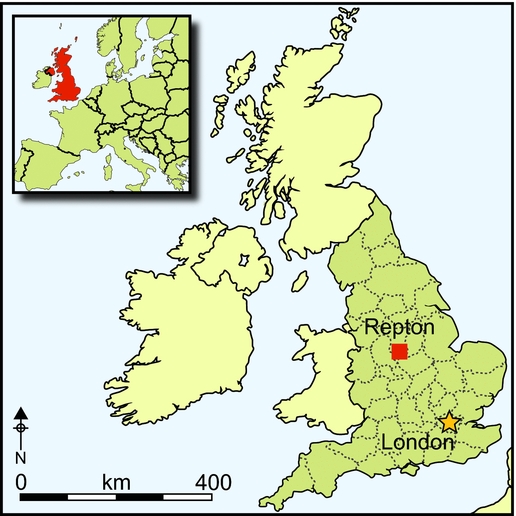
Between 1980 and 1986, investigations in the vicinity of St Wystan's church at Repton in Derbyshire (Figure 1) uncovered a charnel deposit containing the disarticulated remains of at least 264 people under a low pebble mound (Biddle & Kjølbye-Biddle Reference Biddle and Kjølbye-Biddle1992, Reference Biddle, Kjølbye-Biddle and Graham-Campbell2001). The bones were hypothesised to be those of the Viking Great Army that overwintered in Repton in AD 873–874, according to the Anglo-Saxon Chronicle (Swanton Reference Swanton2000). The excavators also discovered extensive evidence of a large defensive ditch and a number of furnished burials with distinctly Scandinavian-style grave goods. Numismatic evidence assigned both the charnel and the Viking graves to AD 872–75 (Biddle et al. Reference Biddle, Blunt, Kjølbye-Biddle, Metcalf and Pagan1986; Pagan Reference Pagan, Biddle, Kjølbye-Biddle, Northover, Pagan and Blackburn1986; Biddle & Kjølbye-Biddle Reference Biddle and Kjølbye-Biddle1992, Reference Biddle, Kjølbye-Biddle and Graham-Campbell2001). Radiocarbon date determinations of bone collagen from the charnel deposit, however, seemed to disagree with the archaeological findings. Although several samples were consistent with a ninth-century date, a number dated to the seventh and eighth centuries AD, and thus seemed to belong to an earlier phase of activity (Biddle & Kjølbye-Biddle Reference Biddle, Kjølbye-Biddle and Graham-Campbell2001). As a result, the identification of those buried in the charnel as members of the Great Army has been brought into question (e.g. Richards et al. Reference Richards, Beswick, Bond, Jecock, McKinley, Rowland and Worley2004).
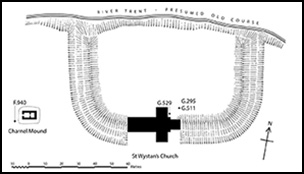
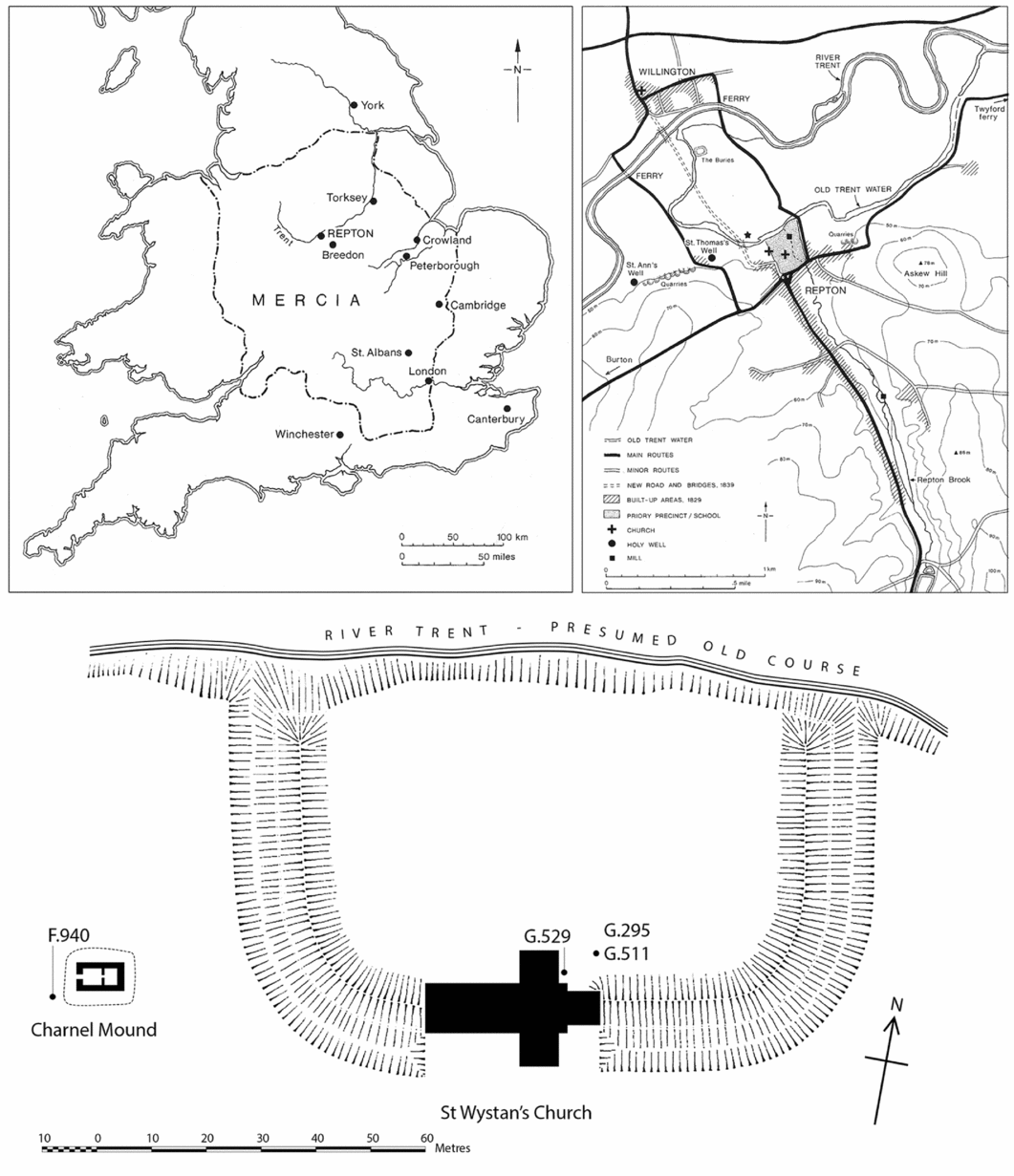
Location of Repton and site plan.
The date and identification of the Repton charnel is important for a number of reasons. Despite significant evidence for a Scandinavian presence in England in the ninth century AD, securely identified Scandinavian inhumations, and thereby direct osteological evidence for a migrant population, are rare (Richards Reference Richards, Lucy and Reynolds2002; Redmond Reference Redmond2007). The nature and magnitude of Scandinavian migrations to England in the early medieval period is still disputed (e.g. Sawyer Reference Sawyer1957; Hadley Reference Hadley2006; Leslie et al. Reference Leslie, Winney, Hellenthal, Davison, Boumertit, Day, Hutnik, Røyrvik, Cunliffe and Lawson2015; Kershaw & Røyrvik Reference Kershaw and Røyrvik2016). The size and nature of Great Army winter camps has been used as a proxy to estimate the size of the invading forces, but with divergent results (cf. Sawyer Reference Sawyer1962; Hadley et al. Reference Hadley, Richards, Perry, Mahoney Swales, Craig-Atkins, Stein and Woods2016). An accurate understanding of the chronology at Repton is therefore essential for improving our knowledge in these areas.
Here we present new radiocarbon dates of bone material from Repton to elucidate the dating of the charnel deposit. We take into account marine reservoir effects (MREs) on human bone, and use contextual information with Bayesian modelling to constrain the dates further. The results show that all dated remains from the charnel deposit are consistent with a single late ninth-century event. Beyond the context of Viking Age England, the material presented here demonstrates the need to account fully for MREs, in particular when working with secondary burials or material where 14C dates seem inconsistent with other forms of evidence.
Background
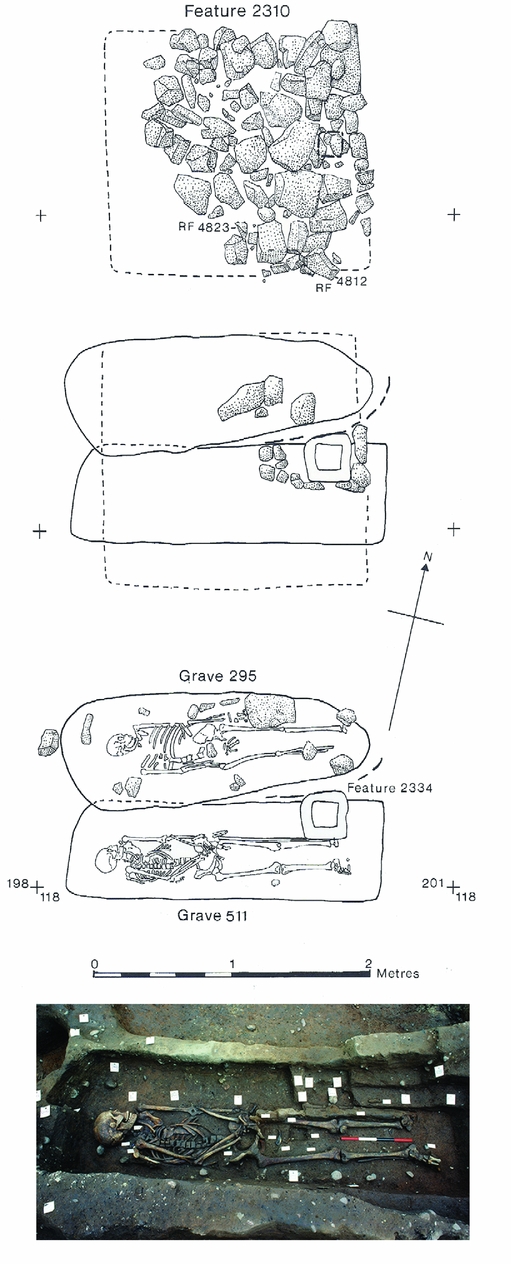
Excavations were carried out in Repton between 1974 and 1980 by Harold Taylor, Martin Biddle and Birthe Kjølbye-Biddle, with the initial aim of investigating the origins of the Anglo-Saxon church of St Wystan (Taylor Reference Taylor1989; Biddle & Kjølbye-Biddle Reference Biddle and Kjølbye-Biddle1992, Reference Biddle, Kjølbye-Biddle and Graham-Campbell2001). Repton was a significant royal and ecclesiastical centre in the Anglo-Saxon kingdom of Mercia. It was the location of a double monastery for men and women ruled by an abbess, established in the third quarter of the seventh century (Biddle & Kjølbye-Biddle Reference Biddle and Kjølbye-Biddle1985). According to the Anglo-Saxon Chronicle, the Viking Great Army took up winter quarters in Repton in AD 873, driving the Mercian king Burghred into exile in Paris (Swanton Reference Swanton2000). A large defensive ditch abutting St Wystan's church was discovered during the excavations, and was interpreted as part of a D-shaped enclosure, using the church as a gatehouse, with the River Trent forming a natural line of defence to the north (Figure 1). Several burials with grave goods of a distinctly Scandinavian type were discovered within and around this enclosure. Most notable was a double grave of two men, of which one (G.511) was furnished with artefacts including a sword of Peterson type M, and a silver Thor's hammer pendant (Figure 2). Strontium and oxygen isotope analysis of tooth enamel from these two individuals has demonstrated that they both grew up in a region commensurate with values expected from southern Scandinavia (Budd et al. Reference Budd, Millard, Chenery, Lucy and Roberts2004).
Plan of the double grave (G.511 and G.295); and photograph of G.511 (© M. Biddle).
The mass burial of at least 264 people, largely comprised of men aged 18–45, was found beneath a mound in the vicarage garden to the west of St Wystan's church (Biddle & Kjølbye-Biddle Reference Biddle and Kjølbye-Biddle1992, Reference Biddle, Kjølbye-Biddle and Graham-Campbell2001). This charnel deposit was placed inside the eastern compartment of a partially levelled, two-celled building of seventh- to eighth-century date, thought to have been a chapel forming part of the Anglo-Saxon monastery. Despite the wholesale disturbance of the bones when the deposit was first uncovered in the seventeenth and early nineteenth centuries (Degg Reference Degg1727; Bigsby Reference Bigsby1854), some of the long bones found in 1982 were still stacked charnel-wise in position. A layer of clean red marl had been placed beneath the bones in preparation, demonstrating that deposition occurred as a single event. Artefacts found among the bones included an iron axe, two fighting knives and five silver pennies datable to AD 872–874 (Pagan Reference Pagan, Biddle, Kjølbye-Biddle, Northover, Pagan and Blackburn1986).
Following the closure of the mound over the bone deposit, burial continued in the area around St Wystan's from the later ninth century onwards. Importantly, a number of burials, referred to as cemetery 3M, were cut directly into the mound itself, over the charnel deposit. Of particular significance is a grave (feature F940) found immediately outside the mound to the south-west. This contained four juveniles aged between 6 and 17, carefully arranged with a sheep jaw placed at their feet (Figure 3). A square stone setting beside the grave seems to have held a substantial marker of unknown type. The location of this grave and the deliberate arrangement of the four bodies suggest that it could have been a sacrificial deposit intended to mark the completion of the charnel mound.
Plan and photograph of the juvenile grave, F.940 (© M. Biddle).

In 1995, a set of 22 samples were AMS 14C dated at the Van de Graaf Laboratorium at the University of Utrecht (Biddle & Kjølbye-Biddle Reference Biddle, Kjølbye-Biddle and Graham-Campbell2001). Terrestrial calibration of these determinations resulted in dates that, in many cases, were either inconsistent with the archaeological evidence, or yielded imprecise calibrated ranges. Notably, dated bones from the charnel appear to fall into two separate groups (Figure 4). One group of at least four different individuals seemed to date from as early as the seventh or eighth century, with the remainder fitting with a ninth-century date. This suggested, therefore, that the bones were not all from a single contemporaneous group, making them incompatible with a population derived from the Viking Great Army of AD 873–874. An alternative hypothesis (Richards et al. Reference Richards, Beswick, Bond, Jecock, McKinley, Rowland and Worley2004) suggested that some of the charnel bones may have come from the older cemetery of St Wystan's church, uncovered during the excavation of the ditch for the winter camp in AD 873–874 and reburied beneath the mound in the vicarage garden.
Plot of the terrestrial calibration of the Utrecht radiocarbon dates.

Another explanation for the apparent disparity between the radiocarbon dates and the archaeological evidence may lie in a lack of MRE corrections. 14C is not equally distributed across the biosphere and marine ecological zones. After production, it is incorporated into the terrestrial food chain by being fixed from atmospheric CO2 via photosynthesis. Carbon exchanges in dynamic equilibrium with sea-surface ocean waters, and yet due to the large size of the ocean carbon reservoir and the slow rate of mixing throughout, there is an offset between the 14C concentration in the ocean and that of the atmosphere. This offset averages around 400 years (Aitken Reference Aitken2013). These differences are reflected in consumers and passed on up the food chain. It has been demonstrated elsewhere (e.g. Ascough et al. Reference Ascough, Church, Cook, Dunbar, Gestsdóttir, McGovern, Dugmore, Fridriksson and Edwards2012) that MREs can significantly influence the 14C concentration of radiocarbon dates determined from humans and fauna that may have consumed marine-derived proteins. Similar effects are seen in freshwater contexts such as lakes and rivers (e.g. Cook et al. Reference Cook, Bonsall, Hedges, McSweeney, Boronean and Pettitt2001).
To correct for MREs, a local reservoir value (ΔR) must be established to take into account any differences between the global average marine reservoir offset and local variations (Cook et al. Reference Cook, Ascough, Bonsall, Hamilton, Russell, Sayle, Scott and Bownes2015; Russell et al. Reference Russell, Cook, Ascough and Scott2015). A particular challenge for the Repton material is the determination of an appropriate ‘local’ value for what appears to be a highly mobile group of people, whose collagen probably represents carbon assimilated from a range of geographic sources. Although the isotope data from the double grave suggests a southern Scandinavian origin for those two men, this relates to their childhood; the collagen dated here pertains to more recent diets over the 10–15 years preceding their death. As historical sources suggest that the Great Army was active in England for at least a decade before arrival in Repton (Swanton Reference Swanton2000), it is uncertain whether Scandinavian reference data would provide accurate ΔR values for these individuals.
It is also necessary to estimate the proportion of marine foods in each individual's diet. This can be reconstructed from stable isotope data in a number of ways, all of which are approximations and are associated with varying degrees of confidence (for a review, see Phillips et al. Reference Phillips, Inger, Bearhop, Jackson, Moore, Parnell, Semmens and Ward2014). The simplest methods rely on linear interpolations between end-members that represent a fully terrestrial or fully marine diet (e.g. Arneborg et al. Reference Arneborg, Heinemeier, Lynnerup, Nielsen, Rud and Sveinbjörnsdóttir1999), whereby isotope data from a given individual are compared against values measured from humans or animals consuming only terrestrial or marine proteins respectively. Both δ13C and δ15N can be used in this way, but δ15N values are particularly sensitive to local environmental conditions (Szpak Reference Szpak2014), and can also vary for physiological reasons, such as weaning or nutritional stress (e.g. Fuller et al. Reference Fuller, Fuller, Sage, Harris, O'Connell and Hedges2005). In addition, there may be systematic geographic differences in δ15N values between Scandinavia and the British Isles from the early medieval period, and the input of dietary protein from freshwater food sources can also obscure their interpretation (Cook et al. Reference Cook, Bonsall, Hedges, McSweeney, Boronean and Pettitt2001; Bonsall et al. Reference Bonsall, Cook, Hedges, Higham, Pickard and Radovanović2007; Pollard et al. Reference Pollard, Ditchfield, Piva, Wallis, Falys and Ford2012; Chenery et al. Reference Chenery, Lamb, Evans, Sloane, Stewart, Loe, Boyle, Webb and Score2014). Consequently, we used only δ13C values for dietary reconstruction and MRE corrections.
Materials and methods
Materials
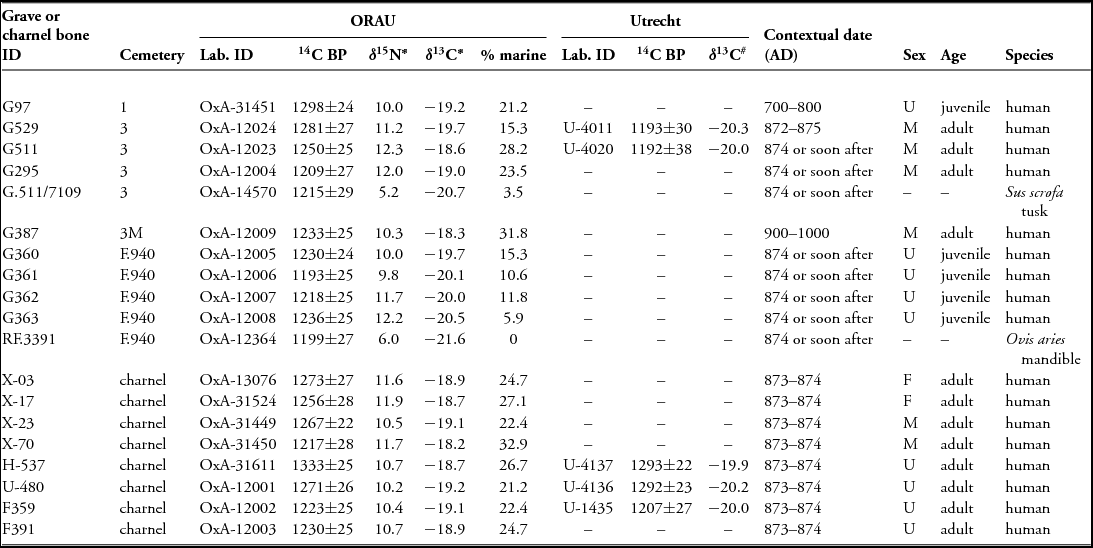
The new samples (Table 1) were selected to provide a more detailed dating sequence than the previously published dates. Three samples came from burials in cemetery 3 to the north of the church, thought to be contemporaneous with the charnel deposit. These are the Viking double grave (G.511 and G.295) and a grave with five coins dated to AD 872–875 (G.529). Eight samples were selected from within the charnel deposit, which has been dated to AD 872–874 using numismatic evidence. To constrain the end date of the charnel, one sample (G.387) was selected from cemetery 3M, which is stratigraphically later than the charnel mound. The four young individuals from feature 940 (G.360–63) were also dated. The sheep jaw included in this grave provides a 14C date from an animal with a purely terrestrial diet. Finally, a sample from the seventh- to eighth-century monastic cemetery (cemetery 1) was also included (G.97). In order to compare the validity of the former 14C dates, five of the selected samples were taken from individuals previously dated in Utrecht.
Material sampled with uncalibrated 14C dates, stable isotope data and calculations of % marine consumption through δ13C linear interpolation. # = AMS derived δ13C value, * = IRMS derived δ13C and δ15N values.
Methods
Between 2002 and 2015, bone samples of approximately 500–1000mg dry weight were AMS dated at the Oxford Radiocarbon Accelerator Unit (ORAU), with collagen prepared following the methods outlined in Bronk Ramsey et al. (Reference Bronk Ramsey, Higham, Bowles and Hedges2004). Carbon and nitrogen isotopic compositions were determined using GC-C-IRMS on an aliquot of the same prepared collagen used for 14C analysis, and are reported using standard delta notation relative to the reference standards Vienna Pee Dee Belemnite (V-PDB) and atmospheric nitrogen (AIR) for δ13C and δ15N respectively.
OxCal v.4.2 was used to calibrate the radiocarbon determinations using the IntCal13 atmospheric curve and Marine13 marine calibration curve (Reimer et al. Reference Reimer, Bard, Bayliss, Beck, Blackwell, Bronk Ramsey, Buck, Cheng, Edwards, Friedrich, Grootes, Guilderson, Haflidason, Hajdas, Hatté, Heaton, Hoffmann, Hogg, Hughen, Kaiser, Kromer, Manning, Niu, Reimer, Richards, Scott, Southon, Staff, Turney and van der Plicht2013). A local reservoir correction ΔR value of −47±52 14C years was used for all samples, after the weighted mean value for Scotland determined by Russell et al. (Reference Russell, Cook, Ascough and Scott2015), as no similar values are available for England. We also assessed relative differences between this and other possible ΔR values to test whether the conclusions that we reached still held true.
Stable isotope data were used to provide marine dietary estimates for each individual based on linear interpolation of bulk δ13C collagen values, using the following equation to calculate the fraction of marine dietary protein (fm) in any given individual n
 $$\begin{equation*}
{\rm{f_m\ = \ }}\frac{{{\rm{\delta ^{13}C_n\ - \ \delta ^{13}C_{terr}}}}}{{{\rm{\delta ^{13}C_{mar}\ - \ \delta ^{13}C_{terr}}}}}
\end{equation*}$$
$$\begin{equation*}
{\rm{f_m\ = \ }}\frac{{{\rm{\delta ^{13}C_n\ - \ \delta ^{13}C_{terr}}}}}{{{\rm{\delta ^{13}C_{mar}\ - \ \delta ^{13}C_{terr}}}}}
\end{equation*}$$
where δ13Cn is the measured value for sample n, and δ13Cterr and δ13Cmar correspond to the isotopic values of fully terrestrial and fully marine end-members respectively. There are no known sources of C4 foods, which can cause elevated δ13C values in consumers, from medieval contexts in Northern Europe (Kosiba et al. Reference Kosiba, Tykot and Carlsson2007). Variation in δ13C values should therefore relate entirely to differing consumption of marine food sources. For a terrestrial end-member, a δ13C value of −21.0‰ was used, in accordance with values used elsewhere (Arneborg et al. Reference Arneborg, Heinemeier, Lynnerup, Nielsen, Rud and Sveinbjörnsdóttir1999; Cook et al. Reference Cook, Ascough, Bonsall, Hamilton, Russell, Sayle, Scott and Bownes2015). This is close to the δ13C value measured in the sheep jaw from feature F940 (−21.6‰), when a 1‰ offset for fractionation between diet and consumer is taken into account (Ambrose et al. Reference Ambrose, Butler, Hanson, Hunter-Anderson and Krueger1997). A reliable marine end-member value is more difficult to obtain because there are no representative fully marine consumers from Repton. Instead, the reference value of −12.5‰, suggested by Arneborg et al. (Reference Arneborg, Heinemeier, Lynnerup, Nielsen, Rud and Sveinbjörnsdóttir1999) in a study from Greenland, was used.
Quantifying the error associated with mixing models is complicated, as a wide range of both physiological and methodological factors affect the estimates (Hedges Reference Hedges2004; Cook et al. Reference Cook, Ascough, Bonsall, Hamilton, Russell, Sayle, Scott and Bownes2015). Although methods for quantifying and propagating errors have been demonstrated elsewhere (e.g. Phillips & Gregg Reference Phillips and Gregg2001), these may be less applicable to an archaeological context where the accuracy of the dietary end-members is uncertain. Therefore, despite compromising on precision, we add an unquantified general uncertainty of ±10% to each marine estimate here in accordance with common practice (Cook et al. Reference Cook, Ascough, Bonsall, Hamilton, Russell, Sayle, Scott and Bownes2015). Where possible, Bayesian modelling was used to constrain calibrated 14C dates further by employing stratigraphic information and associated dated artefacts.
Results and discussion
With the exception of one sample (G. 529), 14C dates of material previously dated at Utrecht agreed within instrumental uncertainty for all samples, indicating the validity of the former 14C determinations. It is not currently possible to correct for MREs in the full Utrecht dataset, as independently determined stable isotope data are not available from those samples. The published δ13C values (Biddle & Kjølbye-Biddle Reference Biddle, Kjølbye-Biddle and Graham-Campbell2001) were obtained via the AMS measurements and were probably affected by some form of fractionation associated with the sample preparation or measurement process. This is evidenced by comparing the Utrecht AMS and ORAU IRMS δ13C values of the replicated samples, which gives an average difference of 1.1‰ (range 0.9–1.4‰). This corresponds to an average variation in marine consumption of 12.9±10%, which suggests that the Utrecht δ13C values cannot be reliably used for MRE corrections.
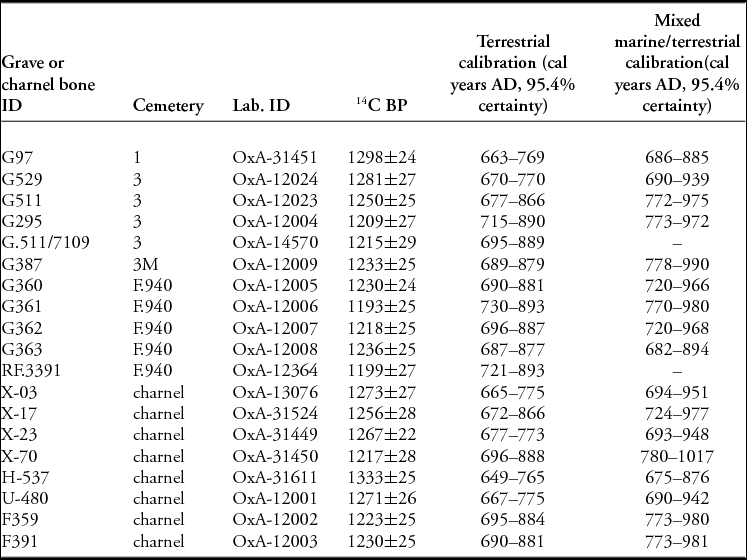
Our δ13C interpolations demonstrate some degree of marine protein consumption in all individuals, ranging from 5.9±10% to 32.9±10% (Table 1). As seen in the Utrecht dataset, terrestrial calibrations demonstrate that the age ranges of all samples are affected by a plateau in the calibration curve, giving dates that span the eighth and ninth centuries AD at 95.4% certainty (Table 2). Precision is further affected by the MRE corrections, whereby the necessary uncertainties applied to our calculations make the calibrated age ranges even wider. For several of the graves, however, contextual and stratigraphic evidence, combined with Bayesian modelling, significantly refines the age estimates.
Calibrated 14C dates, using both terrestrial and mixed marine/terrestrial calibration curves.
We evaluated our choice of ΔR value to test the effect that this had on our conclusions by calibrating the date for G.529, which has a terminus post quem (TPQ) date of AD 872 (see below), using ten different ΔR values from a range of other Northern European locations. Although the range of reference values is high (from −131±40 to 83±48), the results show relatively little variation and are all consistent with the archaeologically derived date (Table S1). This demonstrates the robustness of our chosen value.
Individual and double graves
The sample from the monastic cemetery (G.97) is consistent with the archaeologically derived date of between the seventh and eighth centuries AD; this is true for both the terrestrial and marine calibrations (AD 663–769 and AD 686–885 respectively at 95.4% certainty).
Grave 529 provides the clearest evidence of the need for marine reservoir corrections at Repton. The sample yielded an uncalibrated 14C date of 1281±27 BP, which provides a terrestrial calibration of AD 670–770 at 95.4% certainty. This individual was buried with five silver pennies, two of Burghred and three of Alfred, dated to no earlier than AD 873 (Biddle et al. Reference Biddle, Blunt, Kjølbye-Biddle, Metcalf and Pagan1986). This TPQ date makes the terrestrial calibration at the very least 100 years too early. With an estimated marine dietary input of 15.3±10%, a mixed marine/terrestrial calibration gives a date of AD 690–939 (95.4% certainty), which is consistent with the coin date. Taking the TPQ into account, the grave can be further constrained to AD 873–939.
A similar result is evident from grave G.387 from cemetery 3M. From its location, this grave must post-date the AD 872–874 date of the coins found among the charnel deposit, as it is stratigraphically later than the construction of the mound. From an uncalibrated 14C determination of 1233±25 BP, a terrestrial calibration yields a date of AD 689–879 at 95.4% certainty. While not entirely unfeasible, this result is inconsistent with the archaeologically derived date of AD 900–1000 for cemetery 3M. An MRE correction using an estimated marine dietary input of 31.8±10% gives a calibrated age of AD 778–990, which can be limited to AD 872–990 from the coin finds described above. Therefore, with the appropriate correction, this date is actually in good agreement with the archaeological evidence.
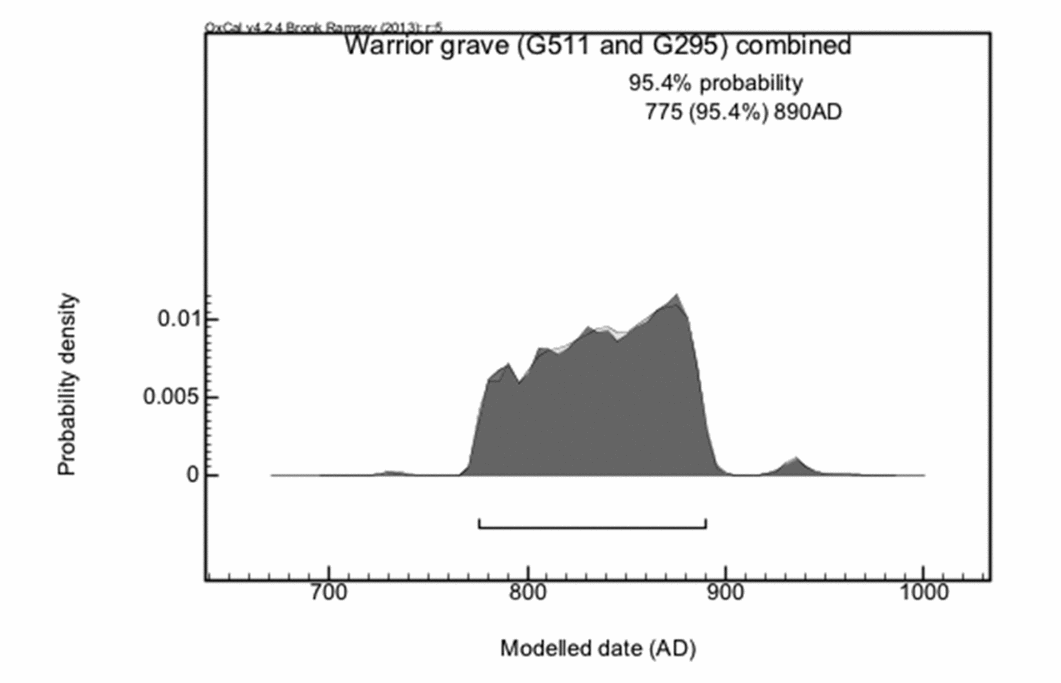
Individually, the fully terrestrial calibrations of the double grave of G.511 and G.295 give dates of AD 677–866 and AD 715–890 respectively (95.4% confidence). The early date for G.511 is inconsistent with our current understanding of the historical and archaeological evidence. The grave goods leave little doubt as to the Scandinavian cultural identity of this individual, yet a date before AD 873 seems unlikely, as there is no evidence for a Scandinavian presence in Repton prior to this date. MRE corrections based on marine diet amounts of 28.2±10% and 23.1±10%, however, give calibrated dates of AD 772–975 and AD 773–972 for G.511 and G.295 respectively. A boar tusk buried with G.511 yielded a calibrated date of AD 695–889, assuming a terrestrial calibration. As the three samples are clearly coeval, we can apply OxCal's Combine function to obtain a modelled date of AD 778–886 (95.4% confidence, Acomb = 116.4%, Figure 5). Assuming a TPQ of AD 873 on the basis of the historical evidence narrows the date for the double grave to AD 873–886.
Plot of the combined mixed marine/terrestrial calibration of G.511, G.295 and the boar's tusk.
Juvenile grave, feature 940
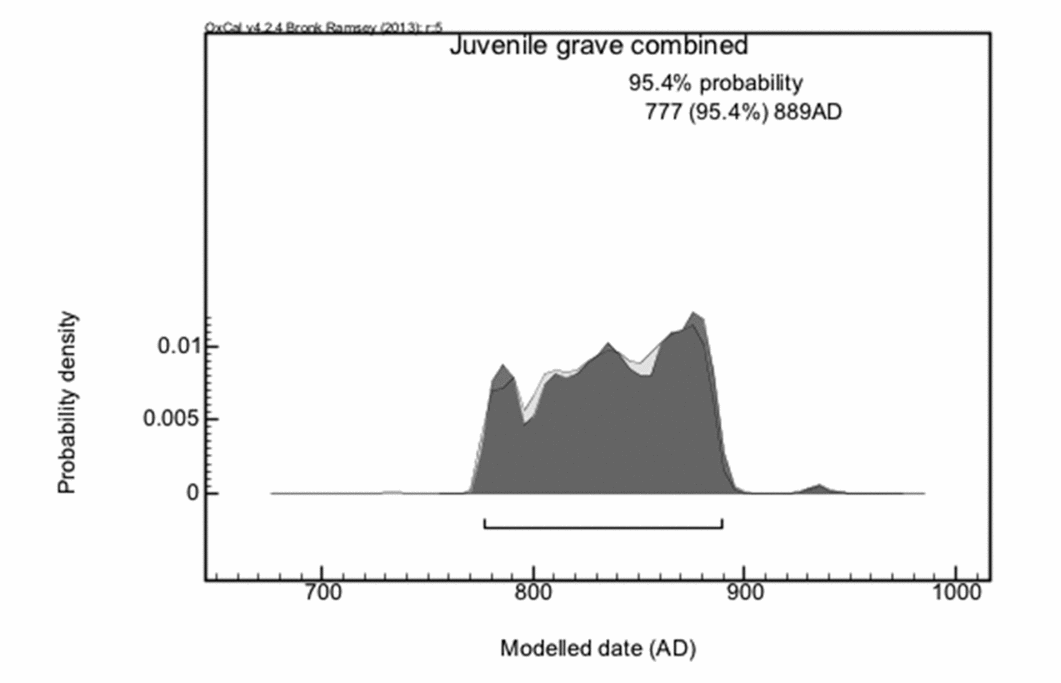
Terrestrial calibrations of all four juveniles fall between AD 687 and 893 at 95.4% certainty, and the sheep jaw from the same deposit dates to AD 721–893. Marine foods appear to have formed a relatively small part of the diet of these individuals (ranging from 5.9–15.3±10%), yet MRE corrections move the calibrated dates to between AD 695 and 990. As the deposition of the four individuals and the sheep jaw was clearly simultaneous, we can use OxCal's Combine function to constrain a modelled and MRE-corrected date of AD 778–885 (Figure 6).
Plot of the combined mixed marine/terrestrial calibration of the burials in the juvenile grave (F.940).
The juvenile grave is located just outside the edge of the stone kerb surrounding the charnel mound. There is no evidence that any of the graves in cemetery 3M pre-date the construction of the mound, and the grave cut of F940 carefully follows the alignment of the remaining burials. For this reason, it is highly unlikely that the grave pre-dates the AD 872 TPQ date for the construction of the mound. Therefore, we can tentatively accept this TPQ for the juvenile grave, which provides us with a very narrow date range of AD 872–885.
Charnel
With fully terrestrial calibrations, the charnel samples fall in a similar grouped pattern to the Utrecht dates, with some encompassing the presumed late ninth-century date, and others substantially pre-dating it (Figure 4). It is clear from the δ13C values (−19.2 to −18.2‰; Table 1) that some individuals had considerable marine dietary input, up to a maximum of 32.9 ± 10% for sample X70. Individual MRE corrections shift the latest possible date for all samples to at least the late ninth, if not the tenth, century AD (Table 2; Figure 7). As such, a date of AD 872–874, as suggested by the archaeological and numismatic evidence, is consistent with all the bone samples dated here. If, as the archaeological context indicates, this is one deposit, then we can further apply a Combine function, on the assumption that the remains are coeval. This provides a combined date of AD 779–887 for the charnel deposit (95.4% certainty, Acomb= 79.9%).
Plot of the combined mixed marine/terrestrial calibration of the new charnel samples.
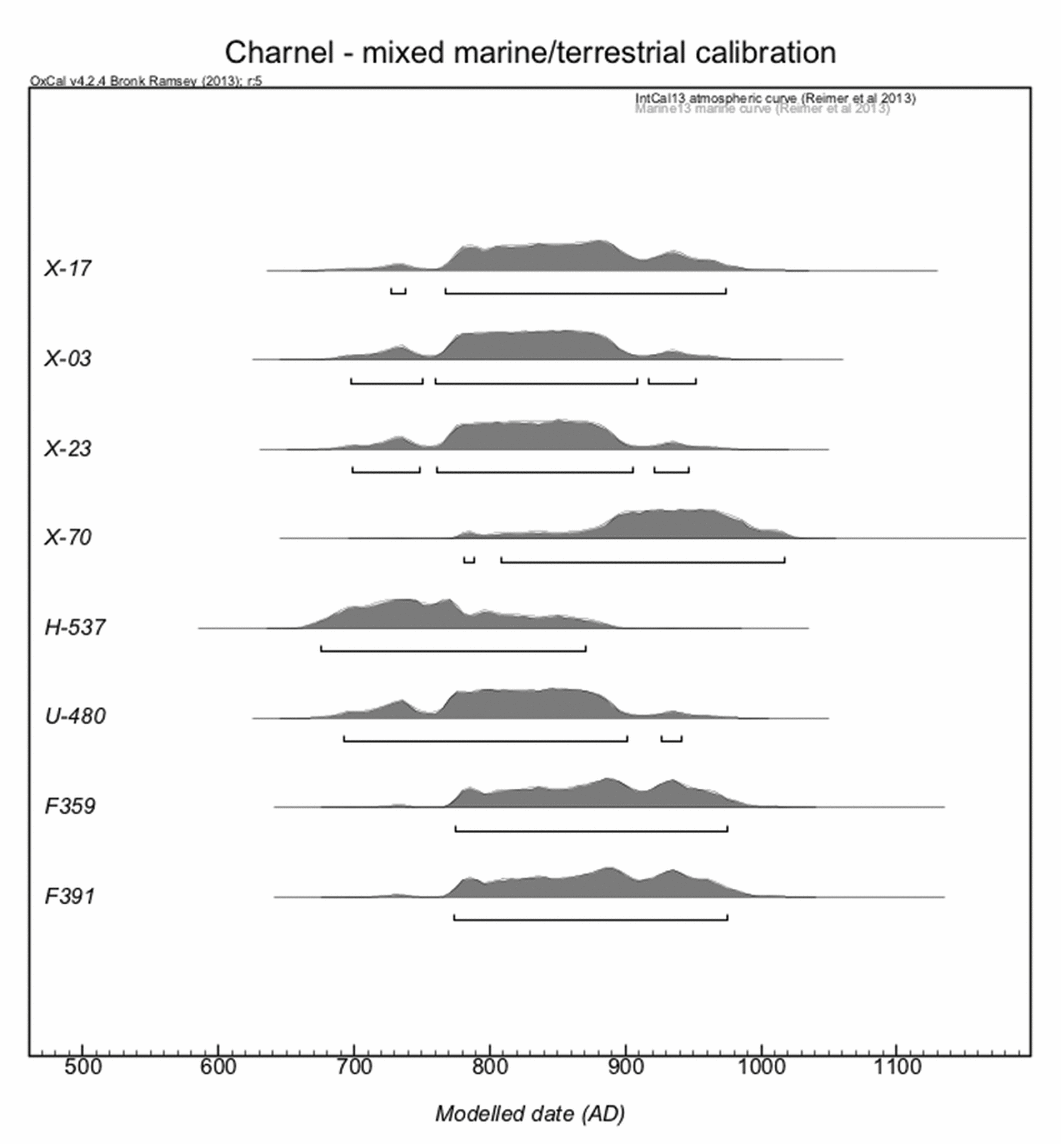
It is important to note that although the calibrated samples from cemeteries 1 and 3 are consistent with the archaeologically derived dates, the age ranges are wide due to a plateau in the terrestrial calibration curve. This is also the case for the charnel deposit. Therefore, the dates encompass both the period of the historically attested Viking presence in Repton, and the latest period of monastic use of the site. To model the effect of this plateau, OxCal's R_Simulate function can randomly generate calibrated distributions, assuming a true age of AD 873. This shows that the ages equivalent to AD 873 range widely, but that discerning samples from AD 873–874 from earlier periods, such as around AD 750 or AD 800, is possible. The plateau in the calibration curve artificially spreads ages to be too old, rather than too young. It is notable that the graves in cemetery 3, which yielded Viking Age grave goods, share a similar spread of calibrated date ranges with the charnel deposit.
Summary and conclusions
The data presented here clearly demonstrate that the apparent groupings seen in the previously published charnel 14C dataset are a result of MREs, rather than a reflection of the true age of the samples. Significantly, our calibrations show that the deposit is fully consistent with a single event dating to the late ninth century AD. Previous suggestions that some of the skeletal remains in the charnel originated from the monastic cemeteries, disinterred during the construction of the D-shaped enclosure, are founded entirely on the earlier dates previously accepted for some of the bones (Richards et al. Reference Richards, Beswick, Bond, Jecock, McKinley, Rowland and Worley2004). The current results show that the radiocarbon dates do not support this line of argument.
Importantly, the very narrow date range of AD 872–885 for the juvenile grave helps support a Viking association for the charnel. Although an interpretation of this grave as sacrificial is uncertain, the deliberate arrangement of these four individuals, the sheep jaw and the possible grave marker in close proximity to the edge of the mound attests to its relationship to the charnel.
In summary, the new radiocarbon dates show that:
-
• MRE calibrations are vital for accurately dating the Repton material—the early dates from the charnel were caused by a lack of such corrections.
-
• The charnel is consistent with a single deposit in the late ninth century.
-
• The warrior double grave and the juvenile grave can both be constrained to narrow date ranges (AD 873–886 and AD 872–885 respectively), which are consistent with the archaeological and historical evidence.
The new data presented here fully support the hypothesis that the Repton charnel contains the remains of members of the Viking Great Army, and further confirms the chronology of the Viking use of St Wystan's church and its surroundings for burial. In addition to helping understand the movements of the Great Army and the subsequent settlement of a Scandinavian population in England, this study has broader implications in emphasising the importance of applying MRE corrections to radiocarbon dates from human bone. Isotope analysis of human tissues is becoming increasingly standard practice for studying geographic origins and aDNA methods are improving rapidly. This means that there is now greater potential than ever for the range of information that can be obtained from human remains alone. For charnels and other types of secondary burial, as well as other scenarios where context and stratigraphy are lacking or unclear, MRE corrections are essential. Sites with multiple burials and commingled remains may contain evidence for large populations; bioarchaeological data can therefore be used to inform about population dynamics or migration events. Similarly, for cases where radiocarbon dates seem anomalous or incompatible with other forms of evidence, correcting for MREs is strongly recommended. As the Repton example shows, such datasets benefit from reassessment if these corrections have not previously been applied, as failure to do so may lead to inaccurate or even erroneous interpretations.
Acknowledgements
This research was supported through an AHRC doctoral grant (AH/K502947/1) awarded to C.J. The Utrecht 14C dates were funded by the BBC, and the Oxford dates through an ORAU facility grant. We are grateful to Richard Evershed and Tim Knowles for early discussions on the dataset, and would also like to acknowledge the contributions of the late Birthe Kjølbye-Biddle, whose efforts to excavate, plan and interpret the graves described here were fundamental to this paper and for ongoing research on Repton.
Supplementary material
To view supplementary material for this article, please visit https://doi.org/10.15184/aqy.2017.196


 Open access

