




1. Introduction
The introduction of positive psychology (PP) to additional language learning (ALL) has been in part responsible for the surge of interest in well-being (MacIntyre & Mercer, Reference MacIntyre and Mercer2014; MacIntyre et al., Reference MacIntyre, Gregersen and Mercer2016). Positive psychology arose to serve as a counterbalance to the predominant lenses in psychology which concentrated on problems, deficits, weakness, and difficulties. The rationale was that, in order to have a full and comprehensive understanding of human nature, we also need to understand strengths, successes, and human flourishing, not only problems. Positive psychology was never intended to focus only on the positives as it is often misunderstood, but rather it was meant to extend existent scholarship by looking at positives and negatives together, exploring how they interact and influence each other, adding the positive to the negative rather than replacing it (cf. Ivtzan et al., Reference Ivtzan, Lomas, Hefferon and Worth2015). A central construct in PP is well-being which refers to the degree to which an individual feels well and is satisfied with their lives and can thus be thought of as flourishing or not (Chaves, Reference Chaves, Kern and Wehmeyer2021). Typically, well-being research looks at what resources and strengths people draw on to protect and nurture their well-being as well as the stressors and difficulties they encounter and how they seek to manage those (Dodge et al., Reference Dodge, Daly, Huyton and Sanders2012). Both well-being and PP have a prevention premise with the idea of understanding resources and flourishing to reduce the likelihood of burnout occurring.
Well-being research in all domains witnessed extraordinary growth as a result of the COVID-19 pandemic. During the pandemic crisis, everyone’s well-being across the globe was threatened by the unprecedented circumstances (Kauhanen et al., Reference Kauhanen, Wan Mohd Yunus, Lempinen, Peltonen, Gyllenberg, Mishina, Gilbert, Bastola, Brown and Sourander2023; Penninx et al., Reference Penninx, Benros, Klein and Vinkers2022). However, the situation in education was especially acute. In education, research found that teachers reported a higher level of anxiety than other professionals (Kush et al., Reference Kush, Badillo-Goicoechea, Musci and Stuart2022), higher rates of depression (Jakubowski & Sitko-Dominik, Reference Jakubowski and Sitko-Dominik2021), a lack of boundaries, loss of purpose (Walter & Fox, Reference Walter and Fox2021), and emotional exhaustion (Chan et al., Reference Chan, Sharkey, Lawrie, Arch and Nylund-Gibson2021). However, some studies also reported that teachers found potential for growth at this difficult time (Kim & Asbury, Reference Kim and Asbury2020; Mairi, Reference Mairi2023) and high levels of personal accomplishment in successfully managing the challenging work conditions to the best of their ability.
As a result, the studies from the pandemic raise important questions about the importance of empowering teachers with knowledge on well-being, not just to cope in the extreme conditions of a global pandemic but to cope with the stress, anxiety, and social disconnection they may ordinarily experience in their lives (Morris, Reference Morris2015). It is following this surge of research interest in well-being that the field of well-being research in ALL has also experienced notable growth.
1.1 Well-being research in ALL
In language education, the advent of PP was also the main trigger for the introduction of the construct of well-being to the field. Important related work existed before the introduction of this perspective but focused primarily on burnout and negative experiences (e.g. Acheson et al., Reference Acheson, Luna and Taylor2016). Instead, a PP lens acknowledges that well-being is a state affected by both stressors as well as positive experiences and resources. As such, it opened up a broader lens on teachers’ experiences which sought to understand the interplay of both. Initial studies examining language teacher well-being (Benesch, Reference Benesch2017; Mercer, Reference Mercer2017; Mercer et al., Reference Mercer, Oberdorfer, Saleem, Gabryś-Barker and Gałajda2016; Miller & Gkonou, Reference Miller and Gkonou2018; Wieczorek, Reference Wieczorek, Gabryś-Barker and Gałajda2016) began as a complement to a smaller number of prior studies on language teacher burnout (e.g. Khajavy et al., Reference Khajavy, Ghonsooly and Hosseini Fatemi2017; Pishghadam & Sahebjam, Reference Pishghadam and Sahebjam2012). However, as has been the case in general education, the interest in well-being as a notion and construct received a dramatic boost during the pandemic. As MacIntyre et al. (Reference MacIntyre, Gregersen and Mercer2020, p. 1) noted, ‘the sources of teacher stress have multiplied with the advent of Covid-19 … Balancing personal and professional roles is a challenge … and ubiquitous online work-related activity creates a lack of physical, temporal and/or psychological boundaries between school and home’. In their study, they explored language teachers’ perceived stressors and coping strategies and found that well-being related to the use of adaptive coping strategies with high levels of stress reported among those using avoidance strategies. In another study, Gregersen et al. (Reference Gregersen, Mercer and MacIntyre2021) surveyed 765 language teachers about their experiences of well-being at the start of the pandemic. Their participants reported experiencing stress stemming from uncertainty and blurry boundaries between their personal and professional lives. Another study focusing on burnout in emergency remote teaching (Emir et al., Reference Emir, Saral, Saçan and Özmen2023) concluded that specific stressors (e.g. job dissatisfaction, absence of support from society, and a decrease in language teachers’ perception of their own competence) were contributing directly to teacher burnout at this time.
In respect to learner well-being, there are notably fewer studies generally (see, e.g. Oxford & Bolaños-Sánchez, Reference Oxford, Bolaños-Sánchez, Gkonou, Tatzl and Mercer2016; Pfenninger & Polz, Reference Pfenninger and Polz2018). The focus on teachers as opposed to learners in well-being research is a reversal to the typical trend in our field in which learners have more commonly been the focus of psychological-focused research. This stems from the dominance of scholarship in individual differences in which the teacher is seen as little more than a tool of teaching as opposed to a key individual stakeholder worthy of in-depth understanding and support (Kalaja et al., Reference Kalaja, Barcelos, Aro and Ruohotie-Lyhty2016). It is perhaps indicative of the critical state of the teaching profession in many parts of the world that has led to the focus on teachers being first and foremost a consideration of their well-being and risk of burnout. As Hiver and Dörnyei (Reference Hiver and Dörnyei2017, p. 406) stated, this is a ‘profession in crisis’.
1.2 Definitional and theoretical concerns of well-being
Well-being itself is notoriously difficult to define and the predominant distinction in theoretical conceptualisations lies in whether they take a more hedonic or more eudaemonic view (Ryan & Deci, Reference Ryan and Deci2001). A ‘hedonic’ approach attempts to maximise positive emotions, while reducing negative emotional states, with the focus being on the affective experience. It is about being satisfied or content with life. A ‘eudaemonic’ approach refers to having a sense of meaning and purpose in life as well as opportunities to self-actualise. Some models take a ‘crossover’ perspective (e.g. Compton et al., Reference Compton, Smith, Cornish and Quails1996; Jayawickreme et al., Reference Jayawickreme, Forgeard and Seligman2012) which blends ‘hedonic’ and ‘eudaemonic’ approaches. One example of a blended perspective is the PERMA model proposed by Seligman (Reference Seligman2011) which has strong eudaemonic roots but incorporates hedonic elements. This PERMA model stands for: positive emotions, engagement, relationships, meaning, and accomplishment. Butler and Kern (Reference Butler and Kern2016) added the notion of vitality which recognises the key role played by physical health in experiences of well-being.
In definitional terms, there is a generally wide consensus that well-being is multifaceted and emerges from the experiences people have in multiple domains, implying the importance of holistic perspectives (Dodge et al., Reference Dodge, Daly, Huyton and Sanders2012). A study by Sulis et al. (Reference Sulis, Mercer, Mairitsch, Babić and Shin2021) has conceptualised well-being in language education as a complex dynamic system (CDS). They argue that well-being is not static and that it emerges from ‘the dynamic interplay of multiple, social, contextual and intrapersonal components’ (p. 20). They conclude that approaching well-being holistically enables research to reveal how multiple components across life and work domains interact to lead to an emergent state which is dynamic over time and place and yet individual in its composition.
In ALL, many studies have drawn on the PERMA model possibly due to its links to PP which has become a popular theoretical lens in the field (e.g. Khajavy & Vaziri, Reference Khajavy and Vaziri2024; MacIntyre et al., Reference MacIntyre, Mercer, Gregersen and Hay2022, Reference MacIntyre, Ross, Talbot, Mercer, Gregersen and Banga2019; Oxford & Cuéllar, Reference Oxford and Cuéllar2014; Shin et al., Reference Shin, Mercer, Babić, Sulis, Mairitsch, King and Jin2023; Sulis et al., Reference Sulis, Mairitsch, Babić, Mercer, Shin and Csizér2022). Oxford (Reference Oxford, Gabryś-Barker and Gałajda2016) has expanded on the PERMA model to create the comprehensive EMPATHICS framework. EMPATHICS stands for the components: ‘E: emotion and empathy; M: meaning and motivation; P: perseverance, including resilience, hope and optimism; A: agency and autonomy; T: time; H: habits of mind; I: intelligences; C: character strengths; and S: self factors, especially self-efficacy’ (Oxford, Reference Oxford, Gabryś-Barker and Gałajda2016, p. 26). Recently, the EMPATHICS model has been theoretically interrogated in order to make it operationalisable for use in research (Alrabai & Dewaele, Reference Alrabai and Dewaele2023), which led to the establishing of the core elements as: empathy, emotions, emotional intelligence, engagement, motivation, and character strengths of language learners, which the authors referred to as the E4MC model.
However, both the PERMA and EMPATHICS/E4MC approaches to well-being focus almost exclusively on the individual often as if detached from social and cultural contexts, with the exception of the inclusion of social relationships. Yet, research in emotions in ALL, such as by Benesch (Reference Benesch2017, Reference Benesch2019), has argued convincingly that emotions ‘are not considered intrapsychic phenomena’ (Benesch, Reference Benesch2019, p. 531), but rather emerge in social contexts which are subject to personal and structural power dynamics. Well-being as a notion is also naturally affected by wider social perceptions, practices, and discourses which ‘capture and reproduce social norms’ (Sointu, Reference Sointu2005, p. 255), and it can also be appropriated by different institutions for their own agendas and purposes. In language education, discussions of well-being in particular are impacted by discourses and perceptions concerning both the social status of language teaching as a profession and the social status of specific languages being taught. Mercer (Reference Mercer2021) has argued that research in well-being must acknowledge that although people do have agency in regard to their own well-being (see Sulis et al., Reference Sulis, Mairitsch, Babić, Mercer and Resnik2024), this is also determined and constrained by the social contexts in which they live and work. Well-being is thus both subjective and individual as well as objective and social, meaning it is not just about how a person feels or perceives a situation, but it is also marked by aspects such as their actual financial income and working hours, and so forth (Benesch, Reference Benesch2017; Mercer, Reference Mercer2021).
This understanding of the interplay of personal and socio-contextual variables in definitions of well-being has led a number of scholars to take an ecological approach to investigating it in order to combine individual perspectives in relation to social settings (Pentón Herrera et al., Reference Pentón Herrera, Martínez-Alba and Trinh2023). For example, Sulis et al. (Reference Sulis, Mercer, Babić and Mairitsch2023) report on an extensive study with language educators in Austria and the UK which took an ecological perspective. They show clearly how differences in well-being across contexts is determined not only by individuality and personal characteristics, but strongly by socio-contextual factors such as status of languages, pay and precarity, socialisation processes, examination systems, educational reforms, and accountability measures among others.
One aspect that has become apparent from ecological research on well-being is that individuals are situated in a multitude of social contexts so that it is difficult to conceive of well-being as being exclusively domain-specific. People experience their lives as a whole comprised of diverse multiple experiences (Pentón Herrera et al., Reference Pentón Herrera, Martínez-Alba and Trinh2023). For research in ALL, this poses an interesting challenge. Even though research has been conducted in language learning and teaching domains, some studies have found that key concerns of the stakeholders are general educational issues and not exclusive to language teaching and learning (e.g. Hofstadler et al., Reference Hofstadler, Babić, Lämmerer, Mercer and Oberdorfer2020; Mercer, Reference Mercer2023; Shin et al., Reference Shin, Mercer, Babić, Sulis, Mairitsch, King and Jin2023; Sulis et al., Reference Sulis, Mercer, Babić and Mairitsch2023). In these instances, the domains overlap and the unique language learning domain appears to have only limited specific impact. However, other studies describe domain-specific issues likely to impact on well-being such as teaching intercultural competence (Sercu, Reference Sercu2006), foreign language anxiety (Horwitz, Reference Horwitz1996), high emotional labour (Gkonou & Miller, Reference Gkonou and Miller2019), and demanding, high-energy methodologies (Borg, Reference Borg2006). It is possible that research in different contexts may elicit different facets of well-being and different types of stressors. For example, Sulis et al. (Reference Sulis, Mercer, Babić and Mairitsch2023) found no presence of language anxiety as suggested by Horwitz (Reference Horwitz1996) for the EFL teachers in their study, which could be expected given that Austrian teachers generally have high levels of English (C2 and above), and so language anxiety is rarely an issue in this context. They also found that different languages in the UK had different social status in society and within the school, and these differences across the languages impacted on teachers in different ways. Those teaching perceived lower status languages suffered lower well-being than those whose language was considered high status. These findings caution about broad generalisations and acknowledge the key role played by context in understanding individual and domain-specific characteristics of language teacher well-being. It reminds researchers to keep an open-mind about the extent to which well-being is domain-specific or not and how different cultural contexts, institutional settings, and languages may lead to significant differences in how well-being is experienced by educators. It also raises questions about where domain boundaries lie or should extend to in well-being research.
In terms of methodologies for researching well-being, work to date in ALL has tended to reflect an approximately equal balance of qualitative and quantitative approaches which is ideal for maintaining a pluralistic view on the construct theoretically and empirically. Qualitative work is ideally suited to exploring well-being from a situated, contextualised perspective which enables individuality to emerge and can encompass a more holistic viewpoint (see Gkonou & Miller, Reference Gkonou and Miller2023; Guijarro-Ojeda et al., Reference Guijarro-Ojeda, Ruiz-Cecilia, Cardoso-Pulido and Medina-Sánchez2021; Mairitsch et al., Reference Mairitsch, Babić, Mercer, Sulis, Jin and King2021; Shin et al., Reference Shin, Mercer, Babić, Sulis, Mairitsch, King and Jin2023; Sulis et al., Reference Sulis, Mercer, Mairitsch, Babić and Shin2021), including a recent interest in autoethnographic studies (see Yazan, Reference Yazan and Feryok2024). In quantitative work, several studies have utilised the PERMA Profiler set of scales developed by Butler and Kern (Reference Butler and Kern2016) (see Gregersen et al., Reference Gregersen, Mercer, MacIntyre, Talbot and Banga2023; MacIntyre et al., Reference MacIntyre, Mercer, Gregersen and Hay2022). Fewer studies to date have employed mixed method designs but they show great promise. For example, in a study by Khajavy and Vaziri (Reference Khajavy and Vaziri2024), the authors used the PERMA Profiler to sample their learners and establish base rates of well-being. They then followed this with individual oral survey interviews to elicit student perspectives on stressors and threats to their well-being. Given the nascent scholarship in well-being in ALL, maintaining varied methodological and theoretical approaches is vital to ensure growth in understandings of how well-being is experienced, nurtured, threatened, and communicated to others across contexts, cultures, and languages.
1.3 General issues arising for research in well-being
Reviewing the body of work on well-being in ALL to date points to a number of interesting issues. Firstly, and unusually in ALL, learner well-being research lags behind language teacher well-being research. While there is generally more scholarship in respect to language learner psychology than there is on teacher psychology (see, e.g. learner compared to teacher emotions, motivation, mindsets, personality, agency) (Mercer & Kostoulas, Reference Mercer and Kostoulas2018), in respect to well-being, the focus has clearly been more on the teacher. However, both areas are in relative infancy and would benefit from a developed programme of research both as individual domains and also in relation to each other (see specific Research task 3). For those wishing to enter the field of well-being research, there are few existent studies and a vast vista of unexplored territory and questions for investigation.
Perhaps a notable issue to raise for all research into well-being is a need for research in a broader range of diverse contexts and cultures (see Godfroid & Andringa, Reference Godfroid and Andringa2023; Ortega, Reference Ortega2019 for broader calls for representation in applied linguistics scholarship). Lau et al. (Reference Lau, Cummins and Mcpherson2005) point out that the majority of well-being research in all domains has drawn on largely Westernised notions of well-being and most tools stem from research in such settings. However, in their study conducted in Hong Kong and Australia, they found that the cultural conceptualisations for ‘happiness’ and ‘satisfaction’ differed from one context to the other. Cummins and Lau (Reference Cummins, Lau and Keith2019) argued that it is ‘incorrect and simplistic’ (p. 371) to assume universality in well-being or happiness across cultures because of the translation of terminology, cultural response bias, and differing notions of what contributes to and reflects happiness and satisfaction in diverse cultures. More recently, Australian scholars have started to explore how Indigenous people may differently understand and experience well-being. Working together with Aboriginal people, Bullen et al. (Reference Bullen, Hill-Wall, Anderson, Brown, Bracknell, Newnham, Garvey and Waters2023) concluded that understandings of well-being need to be adapted to differing cultural notions of the concept. In respect to African notions of well-being, Osei-Tutu et al. (Reference Osei-Tutu, Dzokoto, Affram, Adams, Norberg and Doosje2020, p. 3) argued that Ghanaian models of well-being prioritise and focus on themes such as ‘social responsibility, fulfilment of interpersonal obligations, and a normative-contextual focus on material conditions’, which tends to differ from experiences and notions of well-being in WEIRD (Western, educated, industrialised, rich, and democratic) contexts. This suggests a need for both empirical and conceptual work in the field to explore whether and to what extent conceptualisations of well-being need to be adapted, changed, or even completely re-thought for different populations.
Additionally, linguistically, different languages may use different ways of talking and thinking about well-being which may subsequently affect how it is researched, what terms are used, and how terms are comprehended. In relevant work from emotions research, Mesquita (Reference Mesquita2022) reports on how emotions are socially shaped, determined, and communicated. For example, some emotions, such as pride, are considered as positive and desirable in cultures that value autonomy, but are seen as an unhealthy emotion in cultures that value harmony (Mesquita, Reference Mesquita2022). The implication is that for well-being, there may be a difference not only in how people experience well-being but also in the ways in which they linguistically express and articulate this as well as the connotations they have with words and their translation across languages. Research would need to accommodate this and multilingual approaches to investigating well-being would be vitally important. Given the broad range of cultural and linguistic contexts across which language teachers work, even within one setting, this would seem an urgent aspect of the well-being agenda to address specifically in our field. As such, more research would be required examining perceptions and notions of language teacher well-being in diverse cultures, cross-culturally, and cross-linguistically.
Finally, the domain-specificity of well-being also needs some clarification. Scholars and authors are frequently pressurised for results which are domain-specific, e.g. what is language teaching specific about these findings? However, there are many aspects of well-being which appear to affect all teachers, irrespective of the subject they teach. When and where domain-specific differences arise (or not) is important to explore and requires an openness that research in some contexts, even when conducted solely with language teachers, may not always reveal a uniqueness of language teaching but rather commonality with all teachers. The ways in which language teachers share common experiences of well-being with other teachers as well as the unique ways in which they experience it are vital to understand.
Additionally, well-being is known to ‘spillover’ between domains as we experience one overall sense of well-being (Gregersen et al., Reference Gregersen, Mercer, MacIntyre, Talbot and Banga2023; Mercer & Gregersen, Reference Mercer and Gregersen2020). How different areas of our lives relate to our overall well-being depends on how we ‘weigh’ them, in other words, how much significance an area has for us and our overall sense of well-being (Gregersen et al., Reference Gregersen, Mercer, MacIntyre, Talbot and Banga2023). We can experience well-being in different areas of our lives, but our overall sense of well-being emerges from how these different areas of experience come together and how much importance we assign to them for our lives. This is especially interesting to understand for those educators who teach multiple subjects and in different institutions appreciating how they may compare experiences across their frame of references.
In sum, well-being is an exciting, comparatively new area of scholarship with many pathways open for further research given the relative terra incognita that this field represents within ALL. In the following sections, we move on to reflect in more depth on very specific avenues of scholarship that could be explored in respect to language teachers (including the interrelationship with language learners), mindful that this reflects only a fraction of the work that could yet be conducted and leaves other stakeholders unexamined. Our aim is to identify key lacunae which represent urgent next steps, alongside the broader issues and pathways of scholarship outlined in this introduction.
2. Research Tasks
This section covers two areas: language teacher well-being, and the relationship between language teacher well-being and language learner well-being. We have not included a discussion of the well-being of other stakeholders such as learners in their own right, school leadership, administration, or parents, although as part of the greater well-being ecology surrounding teachers, these too would be important populations to understand and support, and, through processes of contagion, their well-being is likely to impact that of teachers (Nalipay et al., Reference Nalipay, King and Cai2024).
2.1. Research tasks related to language teacher well-being
2.1.1. Research task 1: Language teacher well-being dynamism
Research question: In what ways is teacher well-being dynamic over different timescales? And how do those timescales of well-being interact?
There is widespread consensus that all well-being, including teacher well-being, is dynamic, fluctuating over time and over place/social context (McCallum & Price, Reference McCallum and Price2015; Sonnentag, Reference Sonnentag2015). As well-being is personally and socially determined, it inevitably changes as we change over time, ageing and experiencing different professional and personal contexts. It could also change across contexts, so working with one group of students and then going on to another class only minutes apart can lead to a change in well-being. It becomes apparent from even a commonsense perspective that well-being is constantly changing and that those changes can happen over minutes (Boudreau et al., Reference Boudreau, MacIntyre and Dewaele2018), days or hours (Sonnentag, Reference Sonnentag2015), or throughout a person’s career (Day & Gu, Reference Day and Gu2010). This brings us to a thorny question of whether the well-being we refer to at the level of over years in a career is the same construct as the well-being we refer to in the context of a 45-minute class you teach. We take the view that these are conceptually the same construct but situated within different levels of the ecology and thus functioning and measured at different levels of granularity and susceptible to different timescales of change. It is clear that well-being within the classroom as you teach is likely to fluctuate on timescales of minutes, whereas well-being throughout the school year will fluctuate more on the timescales of weeks and months. However, it would be key to understand how the two might impact each other with implications for the kind of support that could be effective in the long-term. Naturally, within minutes, that level of well-being may seem more volatile and display more change than you would expect to witness across weeks or months where any changes are likely to be more subtle and less dramatic, revealing a pattern of greater stability. Understanding the dynamics of teacher well-being is not only fundamental for a thorough theoretical and descriptive conceptualisation of the construct, but, in practical terms, it is the key to designing impactful interventions on all levels of the ecology.
In language teacher well-being, specifically, several studies have highlighted the dynamism of teacher well-being. For example, Sak and Gurbuz (Reference Sak and Gurbuz2024) tracked the trajectories of well-being of pre-service teachers every ten minutes by having participants self-rate their well-being. Additionally, they used journals, interviews, and stimulated recalls. In their study, they found the well-being of their participants to be dynamic and influenced by both their self-efficacy and peer disengagement. Gregersen et al. (Reference Gregersen, Mercer, MacIntyre, Talbot and Banga2023) conducted an Experience Sampling Method (ESM) study on teacher well-being, stressors, and uplifts and found that teachers’ daily stress is dynamic across time and place emerging from the relationship of well-being with long-term chronic stressors and the daily experiences of stress. They implemented the PERMA profiler (Butler & Kern, Reference Butler and Kern2016), the International Personality Item Pool (Goldberg, Reference Goldberg1992), an adapted multi-item checklist for stressors (Jones & Bright, Reference Jones and Bright2001), and an ESM survey ten times a day for seven days exploring their well-being at the moment of prompting. In another study, Sulis et al. (Reference Sulis, Mercer, Mairitsch, Babić and Shin2021) conducted a study with pre-service language teachers and captured the dynamism of well-being during the COVID-19 pandemic by implementing retrospective semi-structured interviews. They found that a big disruptive event such as the pandemic had positive and negative influences on their well-being, mediated by teachers’ own individual and contextual profiles, such as their sense of agency and their previous well-being state. The dynamism of language teacher well-being has also been approached across the broad timescale of career stages. For example, Sulis et al. (Reference Sulis, Mercer, Babić and Mairitsch2023) conducted a study on language teacher well-being with pre-service, early-, mid-, and late-career teachers, concluding that the challenges language teachers face and resources they draw on change over time. For example, pre-service teachers have to manage the dual identity of being a student and a teacher, whereas an early-career teacher is more concerned with the clash of ideals and the reality of being a teacher as well as letting go of perfectionism. Mid-career teachers face dissatisfaction with professional development and often seek new challenges stretching their personal and professional resources. For late-career teachers, there are diverse issues concerning their attitudes towards retirement and possible health issues and decreasing energy levels. In other words, the well-being of language teachers will vary whether they are at the start of or later on in their career. This cautions against viewing teacher well-being as being the same set of issues for all teachers, but rather it depends on who the teacher is, where they live and work, their relationship networks, and their years of experience on the job.
Building on this work, we argue that studies are needed which combine dynamism and timescales to better understand how the more micro and macros levels interconnect. Longitudinal work does not specify the time frame per se – it can be as short as a few seconds or as long as several years. In respect to well-being dynamism, there is a need for research at all levels of granularity and specifically examining how those different time frames may connect, relate to each other, or reflect fractal patterns of behaviour.
Below is a nested model (see Figure 1) of different time frames across which well-being dynamism could be examined. We will now consider what kinds of tools could look at well-being dynamism on each timescale and which approaches could be combined within one study to look at the complexity of well-being dynamics over time and context and the interaction of different levels of dynamics.
A nested model of time frames for examining language teacher well-being.
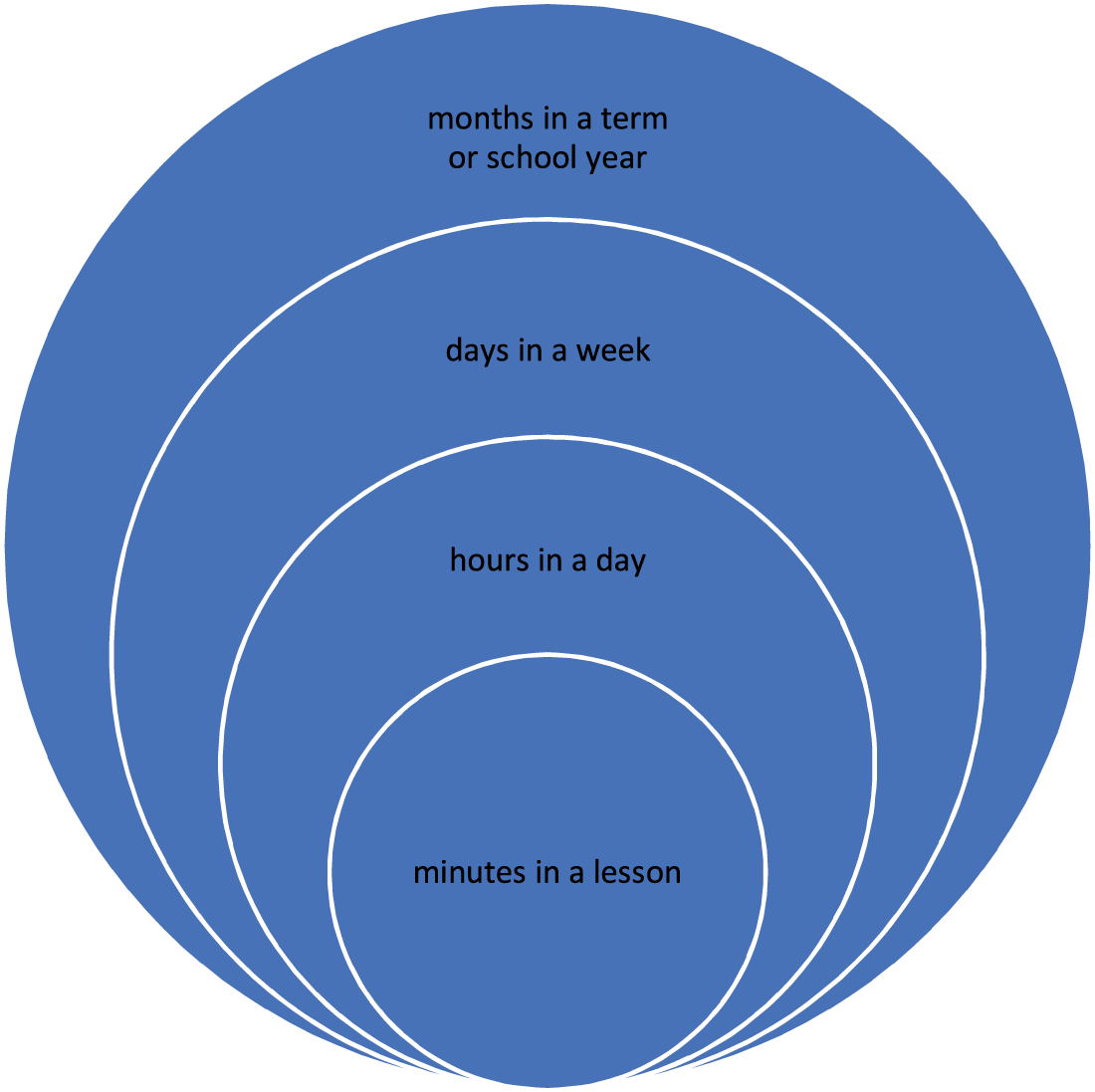
In terms of minutes in a lesson, there are two approaches we would employ: concurrent, ongoing measurement such as through an ESM study, or retrospective measurement such as using Stimulated Video Recall (SVR). An ESM approach would allow gathering valid, real time ecological data in the participants’ environment (Csikszentmihalyi & Larson, Reference Csikszentmihalyi and Larson1987). As a tool, it can provide valuable information to explore well-being in specified time periods at repeated intervals in real time (Gregersen et al., Reference Gregersen, Mercer, MacIntyre, Talbot and Banga2023). Additionally, ESM studies provide a reduction in memory bias, as the time from the prompt to the participants’ answer is short, reducing biases in self-report (Scollon et al., Reference Scollon, Kim-Prieto and Scollon2003). However, a challenge when implementing ESM studies is how to effectively select the assessment period and response time span (Goetz et al., Reference Goetz, Bieg, Hall, Zembylas and Schutz2016). In contrast, SVR avoids disrupting the flow of the class and would permit the in-depth exploration of the interaction of the public (observable) and private (what goes inside and reflected upon) worlds of the participants (Schachter & Freeman, Reference Schachter and Freeman2020). A possible limitation of SVR is how time-consuming it can be for participants and the high demands it places on participant commitment and motivation (for a systematic review of stimulated recall in educational research see Zhai et al., Reference Zhai, Chu, Wang, Tsai, Liang and Spector2024). To the best of our knowledge, there are no studies which have used SVR to investigate language teacher well-being as yet.
To examine change over longer periods of time such as days, weeks, and months, other tools such as journals and repeated time point surveys are interesting as well as sequenced interviews. Journaling as a self-reported event can be divided into three types (Wheeler & Reis, Reference Wheeler and Reis1991). The first type follows interval-contingent designs which allow participants to write at predetermined specific times of the day (e.g. 10 a.m. each day). The second type are signal-contingent forms in which the researcher sends a signal to prompt journaling either randomly, at fixed points, or a mixture of both. Finally, the third is event-contingent which would take place at the moment a specific event happens. In language teacher well-being, Mercer (Reference Mercer2023) implemented journaling to explore language teacher well-being in the private sector in Malta. Between the first and second interview, participants were asked to journal daily about positive or negative things that affected their well-being. The data allowed a more fine-grained perspective on daily issues which might have been forgotten or lost at single-point data collections at the end of the week. Instead, the journals themselves are potentially valuable data but also their use as prompts such as here in the second interview is a valuable lens on change over time.
Different levels of granularity can be combined. For example, an in-depth longitudinal study could be conducted with a single teacher over time of several years combining methodologies to see how they experience well-being in class during a year (ESM and journal posts) but also across their career as they progress year after year in the profession by accompanying these data with interviews each year. However, it is acknowledged that such studies require an enormous commitment on the part of the teacher which is often difficult to sustain. As such, a more feasible approach would be to work with a cross-section of the population taken with teachers at different career stages to compare how they experience well-being in terms of ESM and journaling over the time frame of one semester or one year. Although this is not the same as researching one single individual repeatedly over time, it can be more sustainable in practical terms. Alternatively, this form of journaling and interviewing could be utilised in autoethnography or duoethnography studies, which would be ideally suited to sustained dialogue and reflection by those experiencing comparable professional lives over time (see Lowe & Lawrence, Reference Lowe and Lawrence2020).
2.1.2. Research task 2: Language teacher well-being and teacher self-efficacy
Research question: To what extent does language teacher self-efficacy, well-being, and their relationship vary across populations and contexts of language teachers?
A specific antecedent factor that can play a key role in teacher well-being is their sense of self-efficacy (Skaalvik & Skaalvik, Reference Skaalvik and Skaalvik2014, Reference Skaalvik and Skaalvik2019). Self-efficacy refers to the confidence you have that you can successfully cope with specific tasks and actions. Language teachers can have self-efficacy in respect to didactic, pedagogical, socio-emotional, and language competences. A teacher can have self-efficacy beliefs in different domains, and these can be quite distinct, and so a definitional concern is to clarify the level of domain-specificity being examined. Whereas some scholars take very general domain measures (the domain of language teaching), others focus more specifically on skill domains, such as on the ability to teach speaking or reading skills to specific groups of learners (see Wyatt, Reference Wyatt2018). A key feature of self-efficacy is the notion of teacher agency which refers to the teacher being the agent of any actions. Thus, language teacher self-efficacy must capture a teacher’s sense of confidence in respect to specific facets of their jobs where they have agency to take action and make a difference. Teachers with higher levels of self-efficacy feel more confident and comfortable in their professional roles, and typically feel more agentic to make decisions and manage their professional lives effectively, with thus higher levels of job satisfaction (e.g. Buric & Moè, Reference Buric and Moè2020; Edinger & Edinger, Reference Edinger and Edinger2018).
When teachers’ sense of self-efficacy is threatened, they may subsequently experience language anxiety, which can also threaten their well-being (Bandura, Reference Bandura1986; Horwitz, Reference Horwitz1996). Teachers may become anxious about their ability to teach effectively and/or specifically their ability to use the language appropriately. While there are many studies exploring the relationships between self-efficacy and anxiety among learners (e.g. Mills et al., Reference Mills, Pajares and Herron2006), there are far fewer exploring these issues among teachers. However, Wyatt (Reference Wyatt2018) notes the interest in these relationships as there are many issues which can threaten teacher self-efficacy and induce anxiety, including lack of experience among early-career teachers or perfectionism among more experienced educators.
Specific situations can also challenge how self-efficacious a language educator may feel, and we will outline four core contemporary issues that represent interesting domains in which to explore the relationships between self-efficacy and well-being. (1) In classrooms, teachers’ linguistic self-efficacy can be challenged in class by learners, who may sometimes even have higher proficiency than their teacher due to family backgrounds, personal experiences, and access to multimedia content in diverse languages, especially nowadays for English as a global lingua franca. For example, Haukås et al. (Reference Haukås, Mercer and Svalberg2022) found that English language teachers feel stressed by the wide range of available resources which learners make use of and which potentially diminishes their role as teachers. It is unclear whether English teachers are especially at risk from this threat to self-efficacy compared to teachers of other languages and to teachers of other subjects.
(2) For those teaching a language that is not their L1, native speaker discourses, which often position ‘non-native speakers’ in a deficit position, potentially pose an even greater threat to their self-efficacy and well-being. For example, in an interview study with primary school teachers of English in Korea, Yim and Mercer (Reference Yim and Mercer2025) found that teachers were struggling with a lack of self-efficacy in regard to their English language skills. This was partly due to their own perceived lack of experience and training, but it was also notably exacerbated by continuous criticism and aggression from parents and leadership who prioritised supposed native speaker norms over the skills, professionalism, and commitment of their own teachers.
(3) In some contexts, stretching from primary through to tertiary across the globe, Content Language and Integrated Learning (CLIL) has gained popularity. This too has been shown to potentially affect language teachers’ sense of self-efficacy as it redefines their professional roles, placing pressure on teachers to know some form of content and how to teach it alongside the languages they were trained for and often doing so without suitable resources to draw on (e.g. Cammarata, Reference Cammarata2010; Pappa et al., Reference Pappa, Moate, Ruohotie-Lyhty and Eteläpelto2019). In a study conducted with CLIL teachers in Austria, Talbot et al. (Reference Talbot, Gruber, Lämmerer, Hofstadler, Mercer, Talbot, Gruber and Nishida2021) reported that primary school teachers’ well-being was under such threat from the pressure of parents who wanted to have ‘native speaker’ teachers that some teachers even chose to quit teaching CLIL altogether as a result.
(4) Finally, Artificial Intelligences (AI) have the potential to be a valuable resource for educators potentially boosting well-being by alleviating heavy workloads in terms of administration, corrections, and lesson planning (Wang et al., Reference Wang, Wang and Su2024). However, AI can also potentially pose a threat to language teacher self-efficacy (Reiss, Reference Reiss2021), as teachers are under pressure to become competent in their use very rapidly and yet the available AI tools are constantly changing and expanding. The second feature of AI, which can challenge language teacher self-efficacy, is its presentation of supposed ‘perfect’ ‘flawless’ texts orally or in writing which teachers may compare themselves with thereby undermining their sense of self-efficacy: a situation that could be especially concerning for educators with a tendency towards perfectionism (Hart et al., Reference Hart, Gilner, Handal and Gfeller1998).
A key agenda, therefore, for well-being research would be to examine the self-efficacy and well-being of language teachers in these specific contexts. In particular, such a programme of research would ideally suggest implementing comparative studies across populations and contexts to examine the ways in which self-efficacy, well-being, and their relationships are related to one another, directly or indirectly, any possible pathways of directionality in such relationships, and how this may vary in terms of mediating variables. While there is potential for both qualitative and quantitative work, these types of questions are well suited to drawing on large-scale survey data in order to examine the potential significance of any differences across a wide range of diverse populations and contexts. To measure language teacher self-efficacy, there are a number of key scales that can be drawn on such as the short or long form of the Teacher Sense of Self-Efficacy Scale (TSES) (Tschannen-Moran & Hoy, Reference Tschannen-Moran and Hoy2001) which has been adapted to fit in the language teaching context (e.g. Atay, Reference Atay2007; Chacón, Reference Chacón2005) or others have drawn on Dellinger et al.’s (Dellinger et al., Reference Dellinger, Bobbett, Olivier and Ellett2008) Teachers’ Efficacy Beliefs System (TEBS) – Self measure. For well-being, many studies have used the PERMA profiler (Butler & Kern, Reference Butler and Kern2016), but there are other tools depending on the theoretical lens the researcher chooses to embrace, such as subjective well-being (SWB) (Diener et al., Reference Diener, Suh, Lucas and Smith1999) or Ryff’s long or short psychological well-being scales (Ryff, Reference Ryff1989; Ryff & Keyes, Reference Ryff and Keyes1995). A short and popular scale from outside of education is the WHO-5 well-being scale (WHO, 1998) which comprises of only five items but has been used also in language education with high internal consistency (e.g. MacIntyre et al., Reference MacIntyre, Gregersen and Mercer2020).
From a comparative perspective, survey data can be examined to compare the levels of self-efficacy, well-being, and their relationships, and to understand how this may play out across different populations and in different contexts, focusing on the specifics outlined earlier where we note there are particular threats to self-efficacy and subsequently well-being. For example, survey data could be collected and compared from teachers of different languages (such as English as a foreign or second language, modern languages, heritage languages), teachers for whom the language taught is one of their L1s and those for whom it is not, and teachers in diverse cultural settings across the globe, potentially making further distinctions between contexts in which native speaker discourses predominate or not. The same could be applied to teachers from different educational levels (e.g. primary, secondary, and tertiary), from different types of CLIL teachers such as those who volunteered to teach CLIL and those who did not, those with content training and those without, and those with access to CLIL resources and those without. This approach should involve the use of state-of-the-art analyses such as invariance testing and multigroup analyses. Additionally, linking teacher well-being with their specific learners’ well-being requires multilevel modeling to match up specific learners with a specific teacher’s classroom. In respect to AI, data could be drawn from teachers about their self-efficacy in using AI tools in language classrooms and how AI-produced texts make them feel about their own texts.
Such studies would be able to address research questions such as: To what extent is language teacher’s self-efficacy in different domains (didactic, pedagogical, socio-emotional, and linguistic) linked to their well-being? Is their linguistic self-efficacy more important for their well-being than say didactic or pedagogical self-efficacy? Does linguistic self-efficacy play an especially significant role for well-being in settings which still have salient native speaker discourses? To what extent does the relationship between self-efficacy and well-being vary across cultural contexts, different levels of education, different languages, different L1/Lx teachers, and different types of CLIL teachers, and so forth? How does language teacher self-efficacy in respect to AI relate to other domains of self-efficacy and well-being specifically, and how do these relationships vary across teacher populations?
With so little work connecting language teacher well-being and self-efficacy, the combinations and range of comparative studies possible is almost boundless. In addition to the questions and populations outlined in the previous paragraph, such survey work also permits a consideration of other variables that could be included to examine through Structural Equation Modelling (SEM) to explore other relationships between variables as well as the possible mediating role of other factors such as job satisfaction, work engagement, motivation, supportive relationships with colleagues, positive rapport with learners, status of the language being taught, the status of the profession in the cultural context, sense of pride in one’s work, and perfectionism, to name just a few of the avenues open to possible exploration. A SEM model would allow examining both latent variables and observed variables (Byrne, Reference Byrne2010) and a structural model would allow the exploration of latent variables (Kunnan, Reference Kunnan1998).
The key message in Research task 2 is that self-efficacy is already known to be vitally important for teacher well-being, but the nature of this relationship in language education specifically and any possible variation across populations and contexts needs further exploration. We have tried to predict areas where it may play an especially significant role, and these could be four key areas to commence programmes of inquiry. Such research would help us to understand who is especially vulnerable and why, as well as how they could best be supported through interventions aimed at boosting self-efficacy or by attending to mediating variables. It is worthy to note that intervention studies on their own require several additional steps in a research study, and should be developed with the specific aim of intervening. There is rich potential for a whole strand of research developing understandings of how well-being can be enhanced through interventions, such as positive psychology interventions (PPIs), and some forms of experimental design may be well suited to such lines of work (see, e.g. Rogers et al., Reference Rogers, McMurry and Dewey2024).
2.2. Research task related to the relationship between learner and teacher well-being
Teacher well-being is known to influence teaching quality, teacher-student relationships, classroom discipline, learner well-being, and, ultimately, student achievement (Collie & Martin, Reference Collie and Martin2017; Day & Gu, Reference Day, Gu, Schutz and Zembylas2009; Granziera et al., Reference Granziera, Martin and Collie2023). However, there is scarce scholarship in the field of ALL which looks at exactly how teacher well-being affects teacher practices and how learner well-being is connected to teacher well-being through processes of contagion.
2.2.1. Research task 3: Longitudinal study of the interrelationship between learner and teacher well-being
Research question: In what ways do learner and teacher well-being interrelate with each other across time?
There is no doubt that learner and teacher well-being are connected through processes of emotional contagion (Bakker, Reference Bakker2005; Houser & Waldbuesser, Reference Houser and Waldbuesser2017; King, Reference King, Gkonou, Tatzl and Mercer2016; Mercer, Reference Mercer2018). This refers to when emotions are transferred from one person to another as a result of empathic mirroring of emotional states. In the classroom, ‘[it] is clear … that students and teachers maintain a place not only in each other’s lives but in each other’s minds’ (Moskowitz & Dewaele, Reference Moskowitz and Dewaele2021, p. 118). In ALL, Moskowitz and Dewaele (Reference Moskowitz and Dewaele2021) concluded that students’ perception of teacher happiness was significantly connected to the students’ motivation and attitudes. Moskowitz (Reference Moskowitz2024) also found that students generally make assumptions about a teacher’s well-being by interpreting the teacher’s behaviour and well-being within the classroom. As Roffey (Reference Roffey2012) explains, teacher and learner well-being are ‘two sides of the same coin,’ but many questions remain about the nature of that relationship and how it develops over time.
To better understand the relationship, data needs to be collected from both teachers and their groups of learners longitudinally. There are two possible ways of doing this. Quantitatively, measurements of well-being can be taken from learners and their teachers which can be examined by doing a latent growth curve modeling (LGM) analysis and sampling to look for interconnections between the two measures of well-being. Preacher et al. (Reference Preacher, Wichman, MacCallum and Briggs2008, p. 2) indicate that LGM ‘permits straightforward examination of intraindividual (within-person) change over time as well as interindividual (between-person) variability in intraindividual change’ which would enable the investigation of the relationship between learner and teacher well-being. In Research task 2, we already presented possible tools for measuring well-being (e.g. SWB [Diener et al., Reference Diener, Suh, Lucas and Smith1999], Ryff’s [Ryff, Reference Ryff1989; Ryff & Keyes, Reference Ryff and Keyes1995], WHO-5 [WHO, 1998], PERMA profiler [Butler & Kern, Reference Butler and Kern2016]). It would be interesting to use SEM to understand how the relationship may be mediated by other variables such as psychological safety in the class, group cohesiveness, enjoyment, engagement, and quality of rapport – all factors known to influence learner well-being and the relationship between learner and teacher. It would also be worth conducting this study with different populations to examine whether different ages of learners are differently susceptible to emotional contagion. For example, in work in developmental psychology, it has been suggested that age plays a role on how susceptible someone is to emotional contagion (e.g. Ruffman et al., Reference Ruffman, Then, Cheng and Imuta2019). Additionally, the closeness of relationship is also worth exploring as depending on the degree of closeness, positive emotional contagion might be stronger than negative emotional contagion (Kimura et al., Reference Kimura, Daibo and Yogo2008; Lin et al., Reference Lin, Zhu and Wang2024). For both, LGM and SEM, the data analysis could be done through software such as AMOS (Arbuckle, Reference Arbuckle2019), Mplus (Muthén & Muthén, Reference Muthén and Muthén2018), or R (R Core Team, 2022).
An especially interesting way of understanding the possible synchronicity between teacher and learner well-being is to conduct an idiodynamic study alongside stimulated recall interviews. Idiodynamic studies capture moment-to-moment dynamics of constructs, in this case, well-being across timescales of minutes (see Boudreau et al., Reference Boudreau, MacIntyre and Dewaele2018; MacIntyre & Gregersen, Reference MacIntyre and Gregersen2022 for examples of idiodynamic studies on emotions). Individuals watch a video of themselves in class and rate their well-being retrospectively, rating continuously over the time frame or selecting moments to focus on. While this has the disadvantage of possible distortion due to memory (MacIntyre, Reference MacIntyre2012), it is less intrusive than an ESM measure which would gather data at fixed time points during the lesson and which is more spaced, capturing moments that are typically predetermined and at fixed points rather than continuous data points. The idiodynamic software creates an output graph of the momentary well-being measured during a class. These are then shared with the participant who compares their ratings while watching the video and explains in a stimulated recall interview the reasoning for their scores and their perceptions of the causes of any fluctuations. This method allows teacher and learner output graphs to be compared across the same time period and is accompanied by the participant’s own perspectives and explanations for the dynamics and ratings. It would be interesting to look at how much overlap and synchronicity there is between learner and teacher self-ratings as well as their reasoning for their scores. Points of matching and disparity can be explored in depth with the ratings, interview data, and accompanying video data which can additionally be accompanied by non-observer participant data.
3. Conclusion
In this research agenda, we have briefly outlined some of the broader issues that can be investigated in language teacher and learner well-being scholarship as well as three specific research tasks focusing primarily on the teacher but also examining the interplay of teacher and learner well-being. It would require a whole other paper to explore learner well-being in any depth but many of the ideas can be adapted across populations and with other key stakeholders (see Resnik & Mercer, Reference Resnik and Mercer2024, for a special issue including research on learner well-being). Given the infancy of well-being research in ALL, the scope and potential of studies which can be conducted is vast, and it will be exciting to witness the increasing growth and development of the field which can become more complex, nuanced, sensitive to diversity, and accommodating of individual uniqueness and contextual variation.
Increasingly, core stakeholder organisations such as the Program for International Student Assessment (OECD, 2019) and the national curriculum of several countries (e.g. Bhutan [Gurung et al., Reference Gurung, Lhamo, Wangchuk, Dema, Dorji and Lepcha2021], Japan [Yamanaka & Suzuki, Reference Yamanaka, Suzuki and Reimers2020], Scotland [Donnelley, Reference Donnelley2009]) are arguing that the health and success of an education system is not defined solely by student test scores but by also the well-being of its core stakeholders. It is the whole ecology – from home, to school, to the classroom, to the culture, to the environment – which impact on every person’s well-being, and we are all interconnected in this regard (e.g. Germain, Reference Germain2022; Long et al., Reference Long, Hawkins, Murphy and Moore2023; Mercer, Reference Mercer2023; Wilkinson & Pickett, Reference Wilkinson and Pickett2010). If we want to have successful language learners, we need flourishing teachers who are supported individually and structurally to enable and empower them to teach to the best of their abilities, and ideally, we need to be looking at factors in the broader ecologies and how these connect with a teacher’s well-being. Well-being is not a luxurious extra in education. It is the core basis on which a humanistic, holistic, and effective approach to education is built. Well-being must be engaged with seriously and deeply as a construct, topic, and field of scholarship in ALL. We hope that this research agenda may in some small part contribute to opening up this area of scholarship, provide impetus and ideas for research, and ensure that it receives the urgent and critical attention that it deserves, putting teachers and their needs centre stage.
Competing interests
The authors declare none.
Sarah Mercer is Professor of Foreign Language Teaching at the University of Graz, in Austria, where she is Head of the Section of ELT Research and Methodology. Her research interests include all aspects of psychology related to the learning and teaching of foreign languages. She is the author, co-author, and co-editor of several books in this area, including one with Tammy Gregersen on teacher well-being published by Oxford University Press, and one with Giulia Sulis, Sonja Babic, and Astrid Mairitsch on language teacher well-being published by Multilingual Matters. Her most recent book is Compassion-based language education published by Oxford University Press. sarah.mercer@uni-graz.at.
Carlos Murillo-Miranda is currently a PhD student at the ELT Research and Methodology section at the University of Graz and is working on his dissertation entitled ‘An ecological perspective on Costa Rican EFL teachers’ identities and wellbeing’. His research interests include all aspects of the psychology of language learning and teaching, particularly language learners and teachers’ well-being, language teachers’ identities, language teacher educators’ emotions, and well-being. carlos.murillo-miranda@edu.uni-graz.at


 Open access

