




Introduction
Since attaining independence in 1980, Zimbabwe’s democratic project has been systematically undermined by the Zimbabwe African National Union-Patriotic Front (ZANU-PF), which has entrenched authoritarian rule through the strategic manipulation of state security institutions. The military, intelligence services and police have been instrumentalised not as impartial organs of statecraft but as tools for ZANU-PF’s political survival and electoral dominance (Simpson & Hawkins Reference Simpson, Hawkins, Simpson and Hawkins2018; Ndlovu-Gatsheni Reference Ndlovu-Gatsheni2006; HRW 2023). The rise of President Emmerson Mnangagwa through the 2017 military coup further entrenched Zimbabwe’s securitised governance. Under his leadership, the military and intelligence services have become even more embedded in party structures and electoral processes. This has contributed to the institutionalised hybrid regime, which blends formal democratic procedures with informal, coercive mechanisms of control (Helliker & Moyo Reference Helliker, Moyo, Moyo and Helliker2023; Zhou Reference Zhou, Duri, Marongwe and Mawere2019; Ruhanya & Gumbo Reference Ruhanya and Gumbo2022).
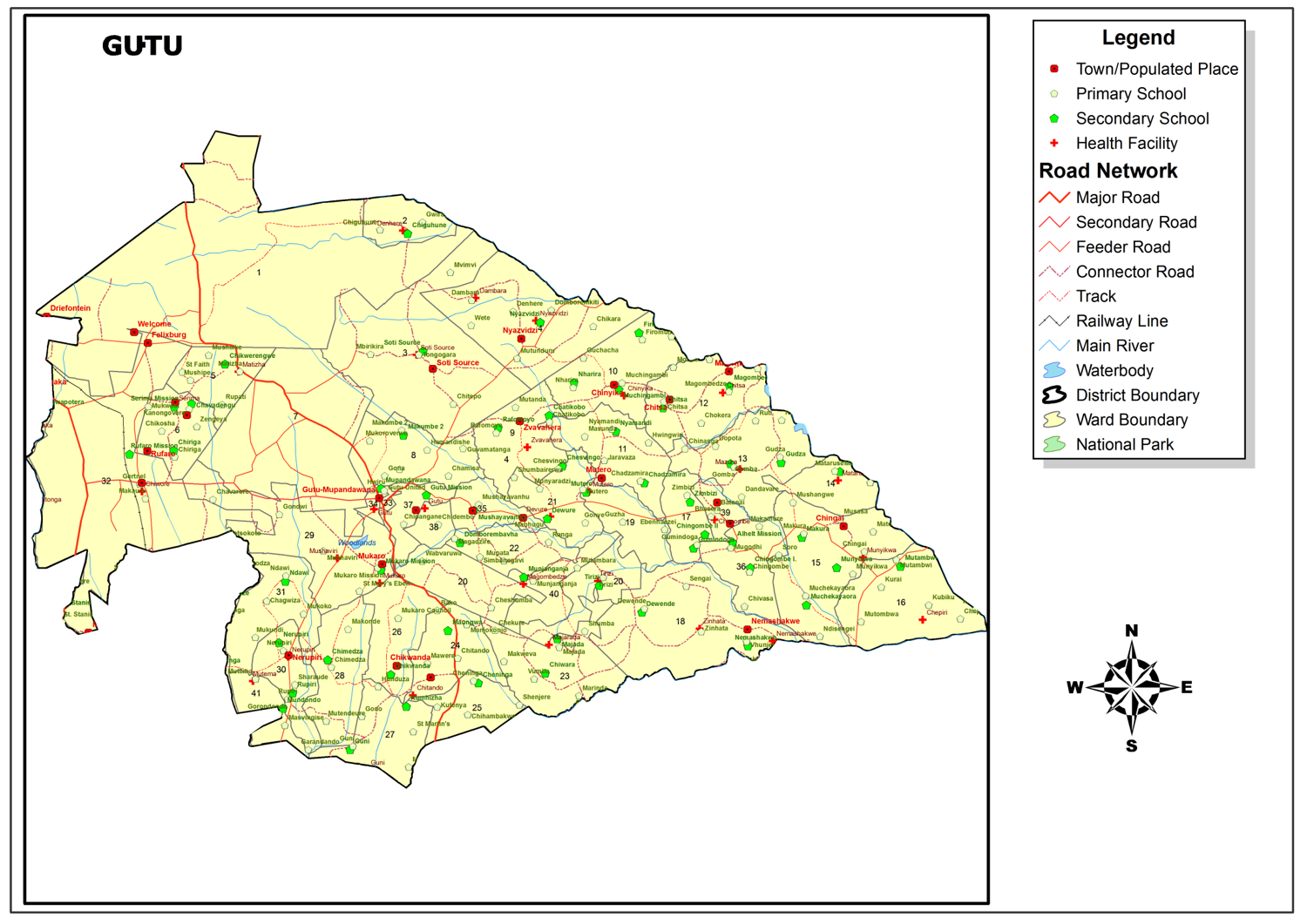
Using Gutu District (see the map in Figure 1) as a microcosm of broader national dynamics, this study examines the operational strategies by a Government-Organised Non-Government Organisation (GONGO) aligned with ZANU-PF and the feared Central Intelligence Organisation (CIO), during the 2023 election cycle and the range of citizen responses it provoked. It argues that FAZ functioned as a coercive instrument within ZANU-PF’s evolving architecture of electoral repression. Its main purpose was to ensure Mnangagwa’s re-election against the popular former Citizens Coalition for Change (CCC) leader, Nelson Chamisa, amid a deepening socio-economic crisis characterised by economic hardship, currency volatility, rising poverty and power shortages. As we will demonstrate, FAZ represents a form of political innovation or an adaptive mechanism of authoritarian control that operates below the threshold of overt state violence. Thus, as we argue, this allowed the regime to maintain plausible deniability, presenting FAZ as an independent civic organisation while it executed the ruling party’s agenda of electoral manipulation and civic intimidation.
Map of Gutu and the national context Gutu is one of seven districts in Masvingo Province, southern Zimbabwe. It is the third-largest district in the province, after Chiredzi and Mwenezi, and is the northernmost district in Masvingo.
Source: https://africaahead.org/wp-content/uploads/2015/08/Gutu-map.png, accessed 19.12.2023.

In historiography, the concept of GONGO gained prominence in the late 1980s (Brown & Korten Reference Brown and Korten1989), with some attributing its origin to Indonesian civil society actors (Sooryamoorthy & Gangrade Reference Sooryamoorthy and Gangrade2001). However, the phenomenon itself predates the terminology. For instance, in the 1950s, West Germany’s Ministry of Intra-German Relations funded political parties, churches, trade unions and student and legal associations to form a kind of shadow administration that served Cold War goals (Creuzberger Reference Creuzberger2008). More recently, studies have focused on GONGOs in authoritarian states like China, where they help extend state control into civic society (Hsu et al. Reference Hsu, Hsu and Hasmath2016; Hasmath & Hsu 2018). These organisations are often seen as tools that undermine liberal democratic norms and simulate pluralism (Naim Reference Naim2007; Wiktorowicz Reference Wiktorowicz2002).
The paradox inherent in the concept of GONGOs, being state-created yet labelled ‘non-governmental’, continues to animate debates on civil society under authoritarian regimes (Hasmath et al. Reference Hasmath, Hildebrandt and Hsu2019). Much of this discourse centres on the perceived lack of authenticity of such organisations, with both GONGOs and NGOs in authoritarian contexts often dismissed as lacking genuine independence (Handrahan Reference Handrahan2002; Walker Reference Walker, Diamond, Plattner and Walker2016). Despite growing interest, the existing literature provides limited analytical frameworks for understanding the evolving nature of GONGOs globally (Carapico Reference Carapico2000; Greve et al. Reference Greve, Flinders and Thiel1999; Wettenhall Reference Wettenhall2001), leaving scholars with few tools to identify and critically assess them. Given the definitional ambiguities, this study conceptualises GONGOs as state-directed organisations devoid of genuine voluntarism, whose leadership and agendas are politically engineered to entrench regime control rather than represent community interests. In authoritarian contexts like Zimbabwe, GONGOs are a serious threat to democracy. As Naim (Reference Naim2007: 96) argues, they range from benign intermediaries to ‘sinister extensions of repressive state apparatuses’ – a category into which FAZ increasingly falls. This underscores the strategic sophistication of contemporary authoritarian regimes that blend coercion with plausible deniability to stay in power.
In Africa, research on GONGOs is limited. Some exceptions include EuroMed Rights (2021) on Algeria and Egypt, and Page’s (Reference Page2021) work on Nigeria, which describe GONGOs as imitations of civic activism deployed to protect ruling elites from accountability. In Zimbabwe, FAZ and the Zimbabwe Heritage Trust (ZHT) have been criticised by civil society and independent media but remain understudied in academic literature. Moore (Reference Moore2023a: 28) describes FAZ as an NGO ‘moulded with rough edges’, depicting it as a more formal version of the Border Gezi Youth Brigade, a pro-government militia from the early 2000s. Page (Reference Page2021) outlines key characteristics of GONGOs, including sycophantic behaviour, opaque funding, political partisanship and use of ad hominem attacks. Similarly, EuroMed Rights (2021) argues that GONGOs are often state propaganda tools deployed to manipulate public opinion, suppress dissent and obscure repressive practices. These dynamics were observable in FAZ’s conduct during the 2023 elections. However, unlike earlier formations such as the Border Gezi Youth Brigade, FAZ combines a paramilitary style of coercion with civic credibility, making it a more advanced form of informal repression (Moore Reference Moore2023a). Despite these references, sustained scholarly analysis of FAZ and its role within Zimbabwe’s evolving authoritarian landscape remains notably absent. Scholars examining Zimbabwean civil society have long observed that the phenomenon of state-orchestrated or state-affiliated organisations is not a recent development. Makumbe (Reference Makumbe1998), Dorman (Reference Dorman2003) and Southall (Reference Southall2013) demonstrate that, since the 1990s, the ruling party has routinely instrumentalised civic associations, ranging from youth groups to ‘development’ associations, as extensions of party control and surveillance. Examples include the National Youth Service (NYS), the Zimbabwe National Liberation War Veterans Association (ZNLWVA), Zimbabwe Liberation War Collaborators Association (ZILIWACO), partisan housing cooperatives in Harare and Chitungwiza, the Zimbabwe Youth Council (ZYC) and more recently a proliferation of ‘4ED’ groups.Footnote 1 These earlier works show that GONGO-like formations have historically been central to ZANU-PF’s strategies of co-optation and domination, providing an important backdrop for understanding the emergence of FAZ as part of a longer trajectory rather than an entirely novel phenomenon.
ZANU-PF’s tactics for manipulating elections have been well documented. Mwonzora & Mandikwaza (Reference Mwonzora and Mandikwaza2019) note a shift since the violent 2008 elections from overt violence to more insidious tactics, including patronage, assisted voting, co-opting traditional leaders, and invoking past violence to intimidate. Gumbo (2023) highlights entrenched institutional bias, particularly within the Zimbabwe Electoral Commission (ZEC) and state media, which marginalise opposition voices while enabling hate speech, intimidation and vote-buying. Moyo (Reference Moyo2019) details the role of the military and the CIO in tampering with electoral outcomes, including efforts to block independent audits through raids on civil society organisations. Yet, less attention has been given to quasi-state actors like FAZ.
Unlike the Mugabe regime, which relied heavily on visible coercion, mass rallies and overt deployment of security forces, the Mnangagwa regime has pioneered more decentralised, intelligence-driven mechanisms of control. The creation of FAZ marks a strategic shift: instead of relying solely on traditional party organs such as the Youth League or war veterans, the regime now deploys quasi-civic, data-gathering formations embedded in communities and institutions, blurring the boundary between civic participation and surveillance. Together with the ‘4ED’ groups and digital monitoring practices, these innovations show how the Mnangagwa regime has recalibrated authoritarianism away from spectacle toward more diffused, bureaucratised and plausibly deniable forms of domination. These subtler, intelligence-driven mechanisms, however, coexist with episodic but severe forms of overt violence, as illustrated by the October 2025 firebombing of the SAPES Trust seminar room (New Zimbabwe, 28.10.2025) and the 2023 abduction and murder of Moreblessing Ali, which underscore that the Second Republic has not retreated from coercion but has redeployed it selectively alongside newer techniques of political management and deniability (Moore Reference Moore2023b, Reference Moore2025).
Literature on resistance to authoritarianism in Zimbabwe has shown the diverse and often subtle strategies citizens employ to navigate and subvert repression. Using Scott’s (Reference Scott1985) concept of ‘everyday forms of resistance’, scholars show how people use silence, satire, misinformation and symbolic acts to undermine state authority without open defiance. Chitofiri & Nkomo (Reference Chitofiri and Nkomo2022) explore how, in the absence of formal justice, some victims of political violence take justice into their own hands. Rasch et al. (Reference Rasch, Niemi and Alexander2021) highlight the role of artistic expression as a site of dissent, where creatives risk censorship and persecution to challenge the regime. Mamvura et al. (Reference Mamvura, Nyota and Mangeya2022) emphasise the political potency of humour, particularly in digital spaces, where it is used to critique state excesses and mobilise public sentiment. Similarly, Karekwaivanane & Msonza (Reference Karekwaivanane and Msonza2021) underscore the growing importance of online platforms as alternative civic arenas where citizens document abuses, shame perpetrators and reclaim discursive agency. While most of this literature has focused on broader forms of repression or historical actors such as militias, this study shifts the analytical lens to a contemporary actor (FAZ) to understand how authoritarian regimes now use quasi-civic groups to complicate traditional paradigms of state-citizen contestation.
Building on this characterisation of Zimbabwe as a hybrid authoritarian system, this article engages the competitive/electoral authoritarian (C/EA) framework not to restate its assumptions but to use FAZ as an empirical and conceptual lens for extending its analytical reach. Rather than offering piecemeal confirmations of C/EA claims, the study uses FAZ’s emergence to examine how authoritarian power is recalibrated when formal multiparty elections operate on an uneven field. FAZ becomes a site for tracing how authoritarian rules mutate and adapt, often in ways that complicate standard C/EA expectations. This approach highlights both the persistence of coercive practices under electoral competition and the newer organisational forms, coercive repertoires and patronage strategies shaped by contemporary political and economic conditions.
Theoretical framework and methodology
This study builds on Page’s (Reference Page2021) analysis of how authoritarian regimes co-opt the external forms of civil society, such as NGOs and advocacy networks, not to foster pluralism but to simulate legitimacy, discipline dissent and marginalise independent actors. While Page offers a general framework, this study extends it by showing how these pseudo-civic institutions operate in rural areas, intersecting with local authority structures to entrench informal repression. GONGOs like FAZ are not merely instruments of regime legitimation; they actively shape political control within hybrid regimes.
The study also draws on the theory of everyday resistance to examine how Gutu residents responded to FAZ’s presence. Though overt opposition was often suppressed, people used subtle forms of resistance such as strategic non-compliance, silent refusal and discreet disobedience, complicating the regime’s efforts to exert total electoral control. By foregrounding these forms of agency, the paper challenges top-down conceptions of authoritarianism. It contributes to debates on authoritarian resilience, hybrid governance and civic space in post-liberation African states. It shows that actors like FAZ do not simply impose control from above but are shaped by local resistance and adaptation. This reveals how informal repression evolves in Zimbabwe and what it means for democratic prospects in similar contexts.
This study employed qualitative methods, with a focus on in-depth semi-structured interviews, to explore views on FAZ and the 2023 electoral process in Gutu District, located in the northern part of Masvingo Province in southern Zimbabwe (see Figure 1). Gutu was selected due to the strong presence of FAZ in the area, likely linked to its being the home district of both opposition leader Nelson Chamisa and President Emmerson Mnangagwa’s maternal relatives. Participants were purposively selected for relevance and diversity, and included opposition party members, civil society activists, election observers and local citizens.
Interviews were guided by open-ended and follow-up questions to allow detailed discussion of participants’ experiences. Given the political sensitivity of the topic, ethical measures were taken to protect participant anonymity and safety. Interviews were conducted with heightened awareness of the risks posed by Zimbabwe’s politically charged environment, where state surveillance, suspicion of researchers and intermittent monitoring of public interactions can constrain open dialogue. In this context, fieldwork required careful navigation: meetings were arranged in neutral, low-visibility locations; no identifying details were recorded; and digital notes were stored securely to minimise traceability. Although all respondents were assigned pseudonyms, the study recognises that anonymisation alone cannot fully eliminate risk in competitive authoritarian settings. These measures were therefore supplemented by limiting the frequency and visibility of research encounters, avoiding politically sensitive sites and discontinuing interviews when participants appeared uncomfortable. To triangulate and contextualise the interview data, the study also incorporated desktop research, including media reports, civil society publications and party documents. Data were analysed thematically, through systematic coding and categorisation to identify recurring patterns, themes and narratives.
FAZ, GONGOs and electoral manipulation in Zimbabwe
As previously mentioned, the Mnangagwa regime has covertly deployed FAZ, a GONGO comprising operatives from the CIO, war veterans, youth militias and vigilante groups to extend state influence into electoral and civic spaces under the guise of patriotic mobilisation (Financial Times 17.8.2023). This strategy has precedent: in 2018, the regime orchestrated a comparable initiative through the military-affiliated ZHTFootnote 2 , which reportedly collaborated with the ZEC to manipulate the electoral process in favour of President Mnangagwa (ZDI 2023). FAZ became more visible during ZANU-PF’s March 2023 primary elections, which were marked by confusion, intimidation and procedural irregularities. Prominent figures such as Mary Mliswa-Chikoka, Philip Chiyangwa and Terence Mukupe were removed in favour of lesser-known candidates reportedly aligned with FAZ (Nehanda Radio 27.3.2023). Rather than serving as a genuine contest over candidacy, these primaries functioned as a testing ground for techniques of electoral control within party structures. The same tactics were later used during the general elections.
During the 2023 elections, FAZ played a pivotal role in constricting political space, especially in rural constituencies like Gutu District. Working with ZANU–PF local structures, the police, ZEC officials and traditional leaders, FAZ systematically undermined the opposition CCC’s ability to campaign and mobilise. Its operatives employed a variety of extra-legal tactics, including infiltrating opposition meetings, intimidating voters, collecting personal data without consent, surveilling voter inspection centres and unlawfully conducting ‘exit polls’. FAZ’s activities continued beyond the elections. Reports indicate it infiltrated CCC structures and fomented internal divisions (Newsday 3.11.2023). These activities are credited for the rise of Sengezo TshabanguFootnote 3 , a self-declared CCC Secretary General, who initiated a series of controversial parliamentary recalls that triggered several by-elections across the country. These recalls were widely interpreted as part of a ZANU–PF effort to reclaim the two-thirds majority it had missed in the general election. A strong FAZ presence marked the by-elections held in November 2023 and February 2024, and ZANU–PF ultimately achieved its legislative objective (The Zimbabwean 1.2.2024). However, FAZ’s declared intention to remain active in the future elections points to the deepening institutionalisation of electoral authoritarianism and the continued erosion of democratic norms in Zimbabwe.
From campus roots to coercive power: the making of FAZ’s hybrid identity
FAZ was founded in 2010 at Solusi University by Seventh Day Adventist students and Faculty of Business members, seeking to tap into empowerment opportunities from Zimbabwe’s Indigenisation and Economic Empowerment Programme (FAZ 2023). With support from the Ministry of State for Presidential Affairs, FAZ was formalised as a trust that same year (FAZ 2023). However, its early ambitions were stymied by the bickering politics of the Government of National Unity (GNU) period. Founding CEO Bongani Ngwenya, a former Solusi University lecturer, later relocated to South Africa and now holds a research position at the University of KwaZulu-Natal. Of the original six trustees, only Kudakwashe Munsaka, Kudzaiishe Mangidza and Gillian Shambare remain in Zimbabwe, while Fungai Jonga, Trinity Mashava and Winfilda Chirango emigrated in search of better opportunities (Pindula News 15.10.2023). Similarly, executive members like Valentine Fidel Tapfumaneyi, Samson Mangozhe and Brighton Mubaiwa pursued careers in Harare, while Ruvimbo Tambara and Linda Manda pursued opportunities elsewhere (Pindula News 15.10.2023). The dissolution of the Ministry of State for Presidential Affairs in April 2015 ended FAZ’s initial political backing and operations.
After years of dormancy, FAZ was revived in June 2022, re-registering as a Private Voluntary Organisation (PVO), claiming to assist the underprivileged. This humanitarian façade soon gave way to open political involvement ahead of the 2023 elections. FAZ forged strategic ties with both ZANU-PF and the CIO. According to ZANU-PF’s Masvingo Provincial Chairperson, Robson Mavhenyengwa, FAZ was tasked with voter mobilisation and reporting to the CIO under the pretext of maintaining peace (TellZim News 9.12.2023). This raised concerns among observers, particularly as FAZ appeared to displace the ZHT, which had allegedly influenced the 2018 elections in Mnangagwa’s favour (The African Report 29.5.2023). Analysts interpret the tension between FAZ and ZHT as part of factional struggles within ZANU-PF, with the ZHT allegedly linked to Vice-President Constantino Chiwenga’s faction, now branded as Team Gudoguru. However, this shift may also reflect dissatisfaction with ZHT’s performance in 2018. ZHT’s operations were seen as imprecise and controversial. It was accused of tampering with the ZEC’s data servers and manipulating the vote counts (NewsHawks 23.8.2022). Despite these efforts, it failed to help ZANU-PF secure a two-thirds parliamentary majority, forcing the party to rely on the Constitutional Court to validate Mnangagwa’s victory. Nevertheless, both FAZ and ZHT were engaged for the 2023 elections, but FAZ took on a more central role.
FAZ’s leadership includes Kudakwashe Munsaka as president and Lieutenant-General Asher Walter Tapfumaneyi (Commander of the Zimbabwe National Army) as a key liaison. The group incorporated war veterans, youth militias, vigilante groups, military and intelligence actors (Financial Times 17.8.2023). However, the group also attracted young semi-intellectuals and entrepreneurs drawn by the hope of advancing through ties to the ruling elite (Doran Reference Doran2023). Many joined FAZ not out of ideological conviction but in pursuit of socio-economic opportunities, a trend typical of GONGOs under authoritarian regimes, as Page (Reference Page2021) observes. Leaked audio recordings revealed that members were promised loans for personal projects as a reward for securing ZANU-PF victory, with lenient repayment terms spread over five years (NewsHub 1.2.2024). However, some, particularly village headmen, reported being coerced into FAZ membership, citing fears for their positions and safety. The civilian veneer in this group served to camouflage coercive mobilisation.
FAZ described its mission as serving ‘Zimbabwe’ and responding to ZANU-PF’s call to action (FAZ 2023). Its main goals were to boost the ruling party’s electoral prospects, support economic advancements for its members and secure President Mnangagwa’s re-election (FAZ 2023). It also sought to weaken opposition parties and civil society advocating human rights, especially amid debate over the then-controversial PVO Amendment Bill.Footnote 4 Passed in 2025, the PVO Amendment Act imposed new regulations that negatively affected the operations, funding and activities of independent civic groups. In practice, FAZ acted as a sycophantic pseudo-NGO, helping to legitimise the regime, suppress dissent and expand ZANU–PF’s patronage networks under the cover of developmental and philanthropic work.
By mid-2023, FAZ had deployed approximately 5,910 information gatherers to collect granular household-level voter data (The Zimbabwean 15.6.2023). Its wide reach was underwritten by opaque off-budget funding, estimated at US$10 million, and logistical backing, including 200 vehicles procured through the CIO (Bulawayo24 News 8.5.2023). Like similar groups in authoritarian states like Nigeria, its operations relied on informal, unaccountable financial channels (Page Reference Page2021). Though its leaders publicly claimed it was self-funded, interviews with FAZ insiders revealed that operatives received payments directly through intelligence structures. This confirmed FAZ’s role as a quasi-state apparatus embedded within the coercive architecture of the Zimbabwean state, operating without public oversight.
Prototype testing: FAZ and ZANU-PF primary elections
ZANU-PF’s March 2023 primary elections served as a testing ground for FAZ’s emergence as a shadow electoral authority. This deployment extended surveillance, coercion and manipulation into intra-party processes to reinforce Mnangagwa’s factional dominance (his faction is now known as Team 2030). As mentioned above, the group’s involvement resulted in the defeat of several long-standing party figures, widely perceived as aligned with Mnangagwa’s inner circle, including Simbaneuta Mudarikwa, Philip Chiyangwa and Mary Mliswa-Chikoka. Figures such as Chiyangwa and Terrence Mukupe were targeted specifically because they were previously associated with the G-40 faction, highlighting FAZ’s role in curbing factional opposition within the party. Their loss to relatively unknown candidates linked to FAZ surprised many and exposed the shifting sands of political loyalty within the party. After losing in Hurungwe North, former Deputy Finance Minister Terrence Mukupe remarked, ‘We lost to FAZ and not Pax Muringazuva’ (Newsday 3.4.2023), reflecting the perception that FAZ directly imposed candidates. The primaries exposed the fluidity of political allegiances under Mnangagwa, where loyalty appears increasingly defined by one’s utility in maintaining the regime’s grip on power.
In Gutu District, FAZ’s operations combined covert coercion with technocratic control. Rather than simply mobilising support, FAZ acted as a gatekeeper, intervening to shape outcomes in ways that subverted popular will. Local CCC activist Tendai Takawarasha (not his real name) described how FAZ operatives interfered in Gutu East to favour candidates loyal to the dominant ZANU-PF Team 2030 faction, stating: ‘FAZ operatives … instilled fear among party members and tilted the electoral landscape for Benjamin Gwanyiwa over the popular George Vhengere. FAZ operatives instructed illiterate voters to vote for Gwanyiwa, and many votes for Vhengere were labelled as spoiled. …Vhengere’s supporters believed he won this election’ (Takawarasha 2024 int.). The imposition of Gwanyiwa, seen as a Mnangagwa loyalist, sparked dissent. At a ZANU-PF rally on 12 June 2023 in Bhasera, addressed by senior leaders Lovemore Matuke and Yeukai Simbanegavi, some party members disrupted the rally, protesting the perceived rigging. The demonstrators, brandishing placards declaring ‘In Gutu East, the MP is George Vhengere, not Gwanyiwa’, denounced the leadership for endorsing an unpopular candidate (Masvingo Mirror 7.9.2023). The leadership’s response to this rare moment of intra-party resistance was predictably repressive. Rather than investigating the allegations of manipulation, ZANU-PF moved swiftly and reported to the ZRP to arrest the protesters. Vhengere subsequently contested the 2023 harmonised elections as an independent candidate and was later expelled from the ruling party, in line with party rules prohibiting independent candidacies (ZPP 2023: 5). This incident illustrates authoritarian institutionalism, as the outcomes of formal procedures like primaries become subject to manipulation through informal coercive structures like FAZ (Levitsky & Way Reference Levitsky and Way2010; Schedler Reference Schedler2006). In this sense, FAZ was a political technology of control, deploying intimidation, targeted electoral coaching and ballot invalidation to secure elite preferences.
Across provinces, FAZ was linked to confusion, intimidation and irregularities. In Mashonaland Central, it was implicated in vote-rigging and register tampering in districts like Bindura, Muzarabani, Mt Darwin and Rushinga, where 27 voter registers went missing (The Standard 26.3.2023). In Matabeleland South, police were called to intervene after disputes erupted at Beitbridge Mission over ballot box tampering, and some candidates had to sleep at a police station to protect their votes. Unlike previous elections dominated by figures like Senator Tambudzani Mohadi and Metrine Mudau, these primaries witnessed the ascendancy of younger candidates reportedly tied to FAZ patronage networks. Allegations of intimidation and voter register manipulation also surfaced in Mashonaland West, especially in Chegutu, Hurungwe East and Sanyati. At Chikangwe Hall in Hurungwe, members of the Johane Marange Apostolic sect protested the disappearance of their cell register. Additionally, the delays in ballot delivery across several provinces further eroded confidence in the process, prompting Zanu PF National Commissar Mike Bimha to extend voting periods, but this did little to restore legitimacy (ZimEye 26.3.2023).
FAZ’s involvement sparked internal dissent, not just at the grassroots level but within the party elite. Defeated candidates threatened to deploy bhora musango (a protest voting strategy reminiscent of the 2008 election). Politburo members like Christopher Mutsvangwa and Ziyambi Ziyambi issued public warnings against FAZ’s overreach and the dangers of parallel structures disrupting party cohesion (The Zimbabwean Independent 3.3.2023). Tensions escalated when President Mnangagwa formally integrated FAZ and ZHT into his campaign infrastructure, sidelining provincial executives. In protest, some party members boycotted mobilisation events, including in Chivhu ahead of a presidential visit (The Standard 18.6.2018). Thus, FAZ’s rise disrupted traditional hierarchies and exposed competing visions of authority and loyalty within ZANU-PF’s centralised system.
Despite controversy, FAZ was given a central role in general election preparations, including overseeing the training of 35,000 ZANU-PF polling agents through a network of handpicked ‘master trainers’ (The Standard 18.6.2023). This mandate institutionalised its shadowy operations and entrenched it within the party’s electoral infrastructure. One informant, John Gwaramba, revealed, ‘FAZ guys were trained to infiltrate the election process as observers or polling agents … the roles that are usually meant for neutral people. But really, they were there to secretly mess with things like voter registration, ballot handling, and how results were sent through’ (Gwaramba 2024 int.). While the opposition, through Team PacheduFootnote 5 (a civil society initiative led by a seasoned opposition member, Freeman Chari), attempted to counter this by mobilising electoral oversight for the CCC, it lacked the scale, resources and readiness to match FAZ’s capacity. This asymmetry in preparedness and organisational power set the stage for a heavily skewed electoral environment.
FAZ and the 2023 harmonised elections in Gutu District
FAZ played a decisive role in shaping electoral outcomes in Gutu District. Operating through surveillance, propaganda and coercion, it acted as a partisan force embedded within the state-party nexus. This section presents our findings, thematically illustrating how the group infiltrated, dominated and reconfigured Gutu’s political and civic landscape to secure ZANU-PF’s continued hegemony.
FAZ as an electoral substructure of ZANU-PF
Ahead of the 2023 elections, FAZ supplanted the ZANU-PF commissariat in Gutu District, taking over organisational and intelligence-gathering roles traditionally executed by official party structures. It became an electoral substructure of ZANU-PF. Tafadzwa, a former FAZ operative, described it:
They brought in young people from across the country in teams of 24, each led by an intelligence officer. We were paid through the CIO, getting as little as US$200, and smartphones to stay connected. Two CIO operatives were stationed in each district full-time to monitor voter behaviour and submit reports. We also brought in local volunteers and worked closely with traditional leaders and ZANU-PF officials to collect personal voter information. We went door to door in the villages asking for these details, and if anyone refused to cooperate, we would issue veiled threats to ensure compliance. (Tafadzwa 2024 int.).
These activities bore the hallmarks of psychological intimidation, coercion and authoritarian grassroots mobilisation. Despite public criticism, ZANU-PF officials in Masvingo defended FAZ’s actions as necessary intelligence work beyond the capacity of the CIO alone. But FAZ’s deeper purpose was not intelligence gathering itself. It was about recalibrating the electoral environment in favour of ZANU-PF and pre-empting opposition mobilisation. It operated as a mechanism of rural voter management, instilling a pervasive sense of surveillance and engineering compliance without open violence. Thus, it was a ‘hybrid repression toolkit’ that combined legality, informality and plausible deniability to maintain a façade of electoral normalcy while minimising the legitimacy costs of overt repression.
The invasion of the civic space
The activities of FAZ in Gutu District disrupted and reconfigured the civic space. It employed civic mimicry, adopting the language and functions of civil society to marginalise independent civic organisations and embed itself in rural communities. It spied on, infiltrated and sabotaged local civil society organisations, especially those promoting democratic rights, governance reforms and voter education. It displaced NGOs and monopolised activities like voter registration and identity document distribution, often making these services conditional on political loyalty. Lovemore Gwatidzo, a local civic actor, reflected:
Once FAZ arrived in Gutu, NGOs struggled to operate. People were scared. We started hearing stories of people being beaten up by FAZ and ZANU-PF youths, especially in places like Gutu West and Gutu South. So, most civil society groups just went quiet. No one wanted to poke the bear. FAZ basically took over what NGOs like Heal Zimbabwe Trust usually did during elections. They were the ones doing voter education and registration. In fact, they were even helping people get national IDs, but only if you promised to vote for Mnangagwa and ZANU-PF (Gwatidzo 2024 int.).
This account revealed that FAZ displaced civil society not only through violence and intimidation but also by colonising their roles, resources and legitimacy. This suffocated independent civic life and entrenched a surveillance-driven, clientelist model of governance. Civic space was reconstituted in ZANU-PF’s image, transforming what should have been a pluralistic electoral arena into a landscape of coercion, surveillance and managed loyalty.
Propaganda and manufacturing consent through Pungwes
Beyond surveillance and coercion, FAZ served as a cultural-ideological vehicle for ZANU-PF, using propaganda to manufacture consent. Pungwes (originally liberation-era night vigils) were central to this strategy, reimagined as orchestrated rituals of political indoctrination held at growth points on Sundays. These gatherings became regularised platforms for messaging, myth-making and manipulation. Far from informal meetings, these pungwes were carefully choreographed spectacles through which FAZ projected an idealised image of Mnangagwa and ZANU-PF. As Mhofu, a Gutu South resident, explained:
These guys went all out praising Mnangagwa. They were saying he is an able-bodied, visionary leader who has done a lot for the country. They talked about things like the Presidential Input Scheme and Command Agriculture, as if they were massive successes. They pushed the narrative that Zimbabwe was on track to become an upper-middle-income country by 2030. They were also saying, look, yes, there have been some challenges, mostly blaming sanctions, but even with all that, Mnangagwa has done a solid job these past five years. So, they were saying it doesn’t make sense to start over with someone new. Better to give him another term so he can finish what he started (Mhofu 2023int.).
These pungwes were not merely sites of persuasion but also control. As Mhofu added, ‘FAZ operatives disseminated misleading information, warning people that their votes could be tracked and dissent punished’ (Mhofu 2023 int.). This aligns with what Wedeen (Reference Wedeen1999) termed ‘acting as if’, a form of authoritarian compliance where people internalise fear through repeated performative rituals, even when the content is disbelieved. This performative propaganda extended beyond messaging. As Munsaka admitted, the objective was to ‘enlighten’ citizens about Mnangagwa’s achievements, a euphemism for indoctrination and disinformation. FAZ embodied a deeper political pathology advancing illiberal agendas, insulating the regime from criticism, suppressing dissent and shielding the elite against accusations of corruption and failure. Its propaganda campaign in Gutu was part of a broader project of hegemonic control, wherein the state seeks to dominate both the coercive and affective dimensions of political life.
Electoral violence and the targeting of CCC
FAZ’s operations in Gutu entailed systematic repression of the CCC. Taruvinga Rusamho recounted,
Shocking events happened during the elections. The FAZ guys grabbed a CCC council candidate in Gutu West, Ward 7. They held him at gunpoint and forced him to pull out of the race. It was all about sending a message, trying to scare off CCC supporters and make them lose confidence. The real aim was to weaken the CCC’s chances in the area and make Chamisa look bad. They were pushing this idea that even his people didn’t want him. (Rusamho 2023 int.).
This incident highlights how FAZ merged coercion and messaging to delegitimise opposition and shape political perceptions. Tsungurai Tambanewako added:
Some people told me they were getting threatening messages and phone calls from FAZ operatives. They were told to vote for ZANU-PF or else. The message was clear: if ZANU-PF loses, there’d be consequences. FAZ even worked with traditional leaders to pressure villagers. People were warned that if they supported the CCC, they would face violence; some were even told they’d be kicked out of their homes. All this created serious fear, especially among CCC supporters. (Tambanewako 2023 int.).
These methods reflect coercive clientelism, where access to state resources and protection was made conditional on political loyalty. As Bratton (Reference Bratton2014) argues, in this political culture, elections are less about popular representation and more about retaining elite power at any cost. The ethical norms and constitutionalism are subordinated to a ‘dog-eat-dog’ logic of survival. FAZ’s actions show how ZANU-PF deploys violence to disrupt the activities of the opposition and to discipline the electorate into submission.
Another incident of harassment involving Jeffrey Tangemhare, then CCC councillor for Ward 27 of Gutu South, along with five other CCC members, was reported. They sought refuge in the mountains after being attacked by ZANU-PF and FAZ members following a ZEC training workshop at Maungwa Business Centre. Tangemhare identified Stephen Muwunde as one of the leading assailants (Change Radio 18.8.2023). This highlights that Gutu South had become a battleground, with incidents of violence allegedly backed by the ZANU-PF MP for Gutu South, Pupurai Togarepi. Despite the severity, the police made no arrests. This is consistent with Levitsky and Way’s (Reference Levitsky and Way2010) argument that in competitive authoritarian regimes, formal democracy coexists with abuse of civil liberties.
Gutu villagers were coerced into attending ZANU-PF rallies, locally dubbed ‘command rallies’, through systematic door-to-door campaigns conducted by FAZ operatives. Tafara Mabasa explained, ‘Before the ZANU-PF rally at Chingai Secondary School, the FAZ guys set up camp close by. They were going around, making sure people knew they had to attend. They even had registers where they were writing down names. We were told that buses would be there to take everyone to the rally, and they promised inputs for the farming season, like fertilisers and seeds, if we showed up’ (Mabasa 2024 int.). These rallies functioned not to persuade but to enforce public loyalty through performance and material inducement. Mabasa’s experience reveals how FAZ collapsed the lines between political mobilisation and coercion, using material promises and soft intimidation to engineer participation. The practice of recording names gave the impression of surveillance, thus enhancing compliance and a sense of vulnerability to partisan control.
Moreover, FAZ obstructed opposition mobilisation efforts and took punitive actions against CCC supporters. On 8 July 2023, its members and ZANU-PF activists, led by Pupurayi Togarepi, allegedly launched indiscriminate attacks on CCC supporters after a rally by Nelson Chamisa at Mawungwa Business Centre (ZDI 2023). This confirms Slater and Fenner’s (Reference Slater and Fenner2011) observation that authoritarian regimes frequently resort to coercion to manage dissent and tighten control. FAZ’s actions institutionalised informal repression, embedded fear in the civic psyche and weaponised elections as a mechanism of authoritarian resilience rather than democratic renewal.
FAZ, police and ZEC collusion
FAZ colluded with the Gutu police to block CCC activities and limit its campaign freedom. When the CCC applied for clearance to use Makombo Grounds in Mpandawana Growth Point, the Masvingo East Police Dispol Taurai Mambure denied the request, claiming it was already booked for a ZANU-PF-affiliated sports event (Masvingo Mirror 11.7.2023). When CCC District Elections Officer Lloyd Mupfudze suggested Dewure Business Centre as an alternative venue, he was explicitly told that Chamisa could hold rallies in any of the three other constituencies within the district, but not Gutu Central (Masvingo Mirror 11.7.2023). This constituency was significant as it was where veteran journalist Matthew Takaona from CCC was contesting against ZANU-PF’s Winston Chitando, President Mnangagwa’s right-hand man. Consequently, Chamisa’s rally was moved to Mawungwa Business Centre in Gutu South. This spatial restriction amounted to a deliberate act of disempowerment. This reveals how the ZANU-PF regime deployed state institutions to exert symbolic and material forms of coercion. This selective enforcement of public order laws reflects autocratic legalism as the regime manipulated legal frameworks to entrench power while maintaining a façade of procedural correctness (Scheppele Reference Scheppele2018). It aligns with broader discussions of formal legalism in hybrid regimes, where legality is observed in form but not in spirit (Ginsburg & Moustafa Reference Ginsburg and Moustafa2008; Schedler Reference Schedler2006).
ZEC also appeared complicit. FAZ operatives reportedly took control of voter inspection centres, demanding ZANU-PF credentials from citizens wanting to verify their registration status (an egregious breach of electoral neutrality). In Gutu West, the CCC candidate Ephraim Murudu clashed with FAZ agents at a polling station while he was verifying his information. Murudu voiced concerns regarding the perceived ZEC-FAZ collusion in voters’ roll manipulation and the overall electoral processes. FAZ members camped inside polling stations in Gutu West, and voters had no protection from ZEC to exercise their voting rights freely (ZimEye 5.6.2023). According to the Zimbabwe Human Rights Commission (ZHRC), two individuals were arrested and detained in Gutu after having a verbal altercation with FAZ members stationed at inspection sites, acting as inspectors for the voters’ roll exercise (ZHRC 2023). These arbitrary arrests created an uneasy atmosphere for ordinary citizens. The overt involvement of FAZ in voting processes, without ZEC’s intervention, suggests a constitutional compromise. ZEC acknowledged FAZ’s involvement but claimed it was beyond its purview, indicating risks for opposition participation in elections (Mudzaniri 2024 int.). As Zolberg (Reference Zolberg1966) noted, postcolonial African states often struggle to consolidate legitimate political systems and instead fall back on authoritarian improvisation to maintain control.
The Mnangagwa regime’s collusion with FAZ, ZEC and the police reflects desperation to hold power and a deliberate strategy to fuse party and state. In this context, elections become ritualistic performances rather than genuine democratic contests and citizens lose both choice and legal protection. The result was a political environment where coercive legality replaced democratic accountability, and the opposition actors were sidelined through controlled illegality.
Illegal ‘exit polls’
On election day, FAZ agents set up ‘exit poll’ booths adorned with ZANU-PF regalia near polling stations, a move condemned by the opposition and observer groups as a tactic to intimidate voters (ERC 2023; ZESN 2023). In Gutu, Tawanda Mudzaniri said, ‘These guys were everywhere. After you voted, they would approach you and ask for your name and ID number. It wasn’t official, but it scared people because you did not know what they would do with that information’ (Mudzaniri 2024 int.). Such tactics mirror what scholars described as ‘smart authoritarianism’, an indirect repression that produce fear and compliance (calibrated coercion) while appearing legal (Levitsky & Way Reference Levitsky and Way2010; Scheppele Reference Scheppele2018). The Minister of Justice Ziyambi Ziyambi defended the booths as legal because they were 300 metres from polling stations. But this formalist defence overlooked the substantive violation of voter rights and electoral norms. The Commonwealth Observer Mission and other monitoring groups rejected the legality of partisan exit polling, noting that Zimbabwean law does not permit it (COM 2023; ERC 2023; ZESN 2023). Moreover, FAZ was accused of interfering with the results collation process. Reports stated that its agents instructed polling officials to hand over V-11 forms (documents showing local vote counts), undermining trust in the final tally (Moore Reference Moore2023a).
These actions were part of a coordinated strategy to control the election. The resulting environment was one of managed participation, where citizens were allowed to vote, but within a tightly controlled ecosystem designed to favour ZANU-PF. As the EU Election Observer Mission noted, these practices diminished the election’s credibility and rendered the process fundamentally unfree and unfair (EUEOM 2023). The outcome, Mnangagwa’s official victory with 52.6% over Chamisa’s 44%, was thus less a reflection of democratic choice than of engineered dominance. FAZ’s rural operations undercut the CCC’s urban momentum, revealing structural vulnerabilities in its grassroots organising capacity. As Bratton (Reference Bratton2014) argues, authoritarian regimes do not endure through brute force alone, but by manipulating institutional asymmetries and gaming the rules to their advantage.
Community responses in the shadow of FAZ
FAZ’s involvement in the 2023 elections triggered diverse responses in Gutu. While some challenged its role through confrontation, others complied out of fear, adopting subtle forms of dissent or silence. These reactions reveal the layered nature of authoritarian control at the grassroots.
Some residents resisted what they saw as an unlawful intrusion into electoral processes. In Gutu West, a CCC member, Ephraim Murudu, was arrested on 30 May 2023 on charges of criminal insult, assault, and threat of future violence (Masvingo Mirror 3.6.2023). This followed an altercation with FAZ operative Yvonne Funda, who was allegedly monitoring potential voters during the voters’ roll inspection at Mbirikira Primary School. Murudu attempted to seize her notebook, insulted her and reportedly made inappropriate physical contact, resulting in a US$300 fine. Similarly, on 1 June 2023, Goodson Matanda of Chifamba Village in Gutu Central was arrested for assaulting FAZ worker, Shamiso Madondo, at Rafamoyo Primary School (The Standard, 21.8.2023). Madondo had been photographing villagers during the voter roll inspection exercise. Matanda viewed this as partisan surveillance and attacked her. He was sentenced to 315 hours of community service. Moore (Reference Moore2023a) observed that FAZ’s ‘illegal entrance and exit polls’ led to clashes with voters who viewed such actions as intimidation. In some instances, CCC supporters overturned FAZ tables at polling stations and petitioned police to intervene. These incidents were not simply personal outbursts but symbolic rejections of FAZ’s presence and its coercive methods. These acts of defiance, although localised and met with punishment, reveal efforts to reclaim electoral space and assert agency in the face of authoritarian encroachment. However, the police responses reinforced a culture of silencing the citizens and impunity for ZANU-PF affiliates.
Despite acts of defiance, fear-driven compliance was more common. Many residents viewed participation in ZANU-PF events not as endorsements of the regime, but as pragmatic acts to safeguard their livelihoods and safety. Tapera Gwezhira from Gutu Central stated that, ‘We were not free here. FAZ operatives moved around with lists, sometimes with ZANU-PF youths. They noted who attended CCC rallies or criticised the party. A neighbour was beaten up in July for allegedly hosting CCC members. I go to ZANU-PF rallies not because I support them but to protect my family. If you resist, you are marked. You can be tortured or disappeared’ (Gwezhira 2024 int.).
This reveals the entanglement of fear, violence, and politics in Gutu. Within such a climate, silence, conformity, and participation in party activities operated as tools of self-preservation. As Scott (Reference Scott1985) observed, ‘everyday forms of resistance’ such as silence, mimicry and symbolic acts allowed people to navigate and mitigate the risks of overt confrontation. Many echoed slogans and attended rallies, not out of ideological conviction but as political camouflage in an authoritarian ecosystem. Strategic compliance became a way to survive while privately rejecting the ruling party. In this way, the community’s response was not one of simple submission but of constant negotiation, where people balanced survival with moral objection in a constrained political space. Thus, Wedeen (Reference Wedeen1999) argues that public displays of support are often insincere and should be read as part of a culture of dissimulation and forced performativity.
Authoritarian control was further entrenched through the complicity of traditional leaders. Chiefs, headmen and village heads who were supposed to be community custodians became instruments of surveillance and repression. Their collaboration with FAZ helped domesticate state power at the village level. Liberty Makushe, from Gutu South, recounted: ‘Our headman and village head … now lead oppression. They told us FAZ was watching and said our names are already known. The voting was a formality. In Ward 7, no one dares speak against ZANU-PF. Two boys were beaten just for wearing yellow t-shirts. We did not receive even a word from them to denounce these acts of violence’ (Makushe 2023 int.).
Makushe’s testimony reveals the emotional toll of living under localised authoritarianism, with performances of loyalty masking deep alienation. This signifies vernacular authoritarianism as state repression was not only executed by distant agents but internalised and enforced by familiar figures such as chiefs, neighbours, and even kin. Through this lens, customary leaders were no longer just intermediaries between the state and the citizen but active brokers of coercion. The warning that ‘our names are already known’ illustrates how information-gathering and threat-making were deployed to discipline not only action, but even intention. As a result, fear, not deliberation or conviction, becomes the dominant currency of political participation. This localised form of authoritarianism corrodes interpersonal trust, fractures social cohesion and transforms political expression into a dangerous act.
Following the elections, some FAZ operatives who were unfortunate were punished by their communities. Ostracism, ridicule and exclusion became social tools through which communities expressed moral disapproval and reasserted local norms of solidarity. These forms of informal sanctioning served as grassroots accountability. They can be understood in Scott’s (Reference Scott1985) terminology as ‘weapons of the weak’, nonviolent yet powerful forms of protest that reject collaboration and betrayal. Sinikhiwe Ngwenya, a FAZ agent from Gutu South, said:
I joined FAZ thinking I would earn money and be important. But they made me work at my polling station, where everyone knows me. After the elections, people stopped talking to me. I tried to explain that I was just doing what I was told, but they didn’t believe me. They think I reported them. Even my church has turned cold. I feel used, used and dumped. They promised money, but it never came. I now avoid funerals, weddings, or meetings because the looks I get are painful. I feel I betrayed my people for nothing (Sinikhiwe Ngwenya 2023 Int.).
Ngwenya’s story shows how the lure of promised rewards is sometimes eclipsed by shame, alienation and regret when authoritarian strategies fail to deliver on their transactional promises. This aligns with Chatterjee’s (2004) ‘politics of the governed’, as the state authority was negotiated and resisted at the micro-level by non-state actors, including community members who rejected imposed hierarchies through informal sanctions. Moreover, this social backlash illustrates what some scholars described as moral economies of resistance, wherein notions of justice, betrayal and belonging are regulated not by formal law but by community norms. Ngwenya’s avoidance of funerals and church gatherings shows how exclusion from collective rites of passage becomes a form of civic exile (a profound punishment in tightly knit rural societies). Her regret, ‘I feel I betrayed my people for nothing’, captures the gap between personal ambition and collective values. These post-election social sanctions allowed communities to reassert moral sovereignty and symbolically reclaim agency from an imposed surveillance regime.
In the most tragic instance of post-electoral fallout, Norman Mawungwa from Mawungwa Village died of suicide following intense and sustained rejection from his family and community. In an audio message to his son, he said:
I have decided to rest after being tormented. I did not realise it would come to this. Had I known, I would never have been involved. Family members and the whole clan are against my involvement in ZANU-PF politics. I thought I was serving my country. I thought I was helping bring development. But now they call me a traitor. They curse me in public. Even the Mawungwa chieftainship has disowned me. There is no forgiveness. I am tired of crying at night. I am tired of living with this shame. (Zim News 11.10.2023).
Mawungwa’s suicide was not only a personal tragedy but a manifestation of what scholars call ‘social death’, as he was symbolically expelled from communal life (Mbembe Reference Mbembe2003; Patterson Reference Patterson1982). His reference to the clan and the chieftainship disowning him shows how deeply this moral rejection went. He was not just discredited as a citizen but also expelled from Ubuntu, the ethics of relational personhood that define community in many African societies. The fact that his burial was described as that of a pauper, unattended by mourners and even attracting some who came ‘to confirm he was dead’ signifies complete moral excommunication. His status as a human being, a neighbour, a kin member, was rescinded in a final act of symbolic retribution. This aligns with Ndakaripa’s (Reference Ndakaripa2023) observation that electoral violence and manipulation caused social resentments that often outlive the immediate political moment. Yet, this case also shows how communities reassert values through informal means. In rejecting FAZ operatives, they reclaimed a moral order violated by the state’s coercive politics.
Conclusion
The Mnangagwa regime has not delivered on its promises of democratisation. Instead, it has entrenched authoritarian rule by innovating rather than dismantling Zimbabwe’s repressive political system. Through hybrid practices that mimic democratic engagement, the regime has undermined core principles of tolerance, accountability and the rule of law. The creation of FAZ exposes this duplicity. This study demonstrated that FAZ served as both an instrument of ZANU-PF’s internal consolidation and a sophisticated mechanism of electoral repression. Under the veneer of civic mobilisation, it orchestrated voter intimidation, surveillance and political indoctrination, undermining electoral integrity and shrinking civic space. FAZ represented not a departure from past authoritarianism but its reinvention. Its operations illustrated ZANU-PF’s ability to adjust and repurpose coercive tools to maintain power in a context where open violence no longer suffices.
However, the citizens’ responses complicated any simple narrative of domination. While many complied out of fear, others used subtle or symbolic forms of resistance. The post-election ostracism and moral repudiation of FAZ operatives demonstrate that communities were not passive recipients of authoritarianism. They are sites of moral negotiation, where collaboration is contested and complicity carries social costs. These informal acts suggest that even under repression, grassroots accountability and democratic hopes persist.
Taken together, the findings point not only to isolated expressions of competitive authoritarianism but also to a more integrated pattern of authoritarian innovation. FAZ’s operations show how Zimbabwe’s electoral authoritarianism deepens through quasi-civic intermediaries that blur the boundaries between state, party and civil society. In this sense, the Gutu case provides a wider lens for understanding how contemporary authoritarian regimes retool ‘participation’ itself into a mechanism of control.
Although centred on Gutu District, the study captures dynamics, such as coercive civic mobilisation, intelligence-driven voter management and community-level moral resistance, that have been observed across multiple provinces in 2023. At the same time, Gutu’s particular configuration of local elites and wartime histories reminds us that such patterns manifest unevenly, cautioning against assuming national uniformity while still illustrating broader authoritarian trends. FAZ’s declared intention to expand its role in future elections requires sustained scholarly and policy attention. A deeper understanding of the dynamics of such organisations can help expose how authoritarian regimes across the Global South manufacture consent, manipulate participation and use civic institutions as tools of power. In 2025, the evolving debate around possible presidential term extensions has already begun to test FAZ’s internal cohesion and strategic purpose, raising questions about whether these organisations will simply manage elections or become long-term instruments for legitimising constitutional manipulation.
Acknowledgements
We thank Dr. Tapiwa Madimu, Senior Lecturer in History at Rhodes University, and Dr. Neil Maheve, Research Fellow at Rhodes University, for reading the manuscript and offering critical feedback. We also acknowledge the anonymous reviewers appointed by the Journal of Modern African Studies for their comments, which helped to sharpen the analysis and arguments presented in this article.
Competing interests
The authors declare none.


 Open access