


Introduction
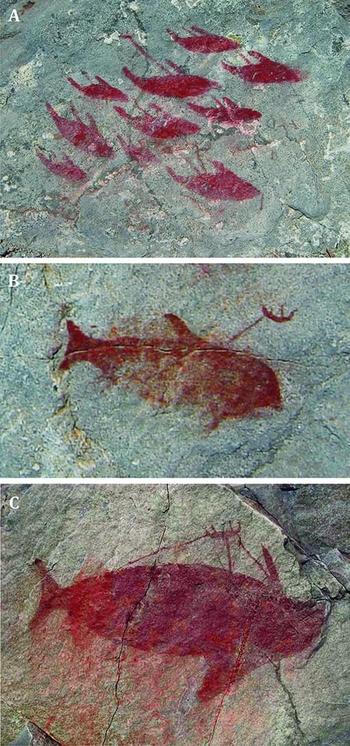
Few places in the world display such a restricted focus of rock art subject matter as is seen at El Médano, located on the Atacama Desert coast in northern Chile, with its emphasis on marine hunting (e.g. McCarthy Reference McCarthy1961; Dikov Reference Dikov1971; Turner Reference Turner1973; Lundy Reference Lundy1974; Hudson & Conti Reference Hudson and Conti1981; Burningham Reference Burningham1994; Conti et al. Reference Conti, Hyder, Padgett, Browne, Mitchell and Chaney1999; Meighan Reference Meighan2000; Lee & Robineau Reference Lee and Robineau2004; O'Connor Reference O'Connor, Cark, Loss and O'Connor2008; Bland Reference Bland2010; Torres et al. Reference Torres, Gutiérrez, González, Fernández and Tavárez2011; Specht Reference Specht2012; Jeon & Kim Reference Jeon and Kim2013). The pre-Hispanic inhabitants of this littoral used lineal strokes of intense red colour to create naturalistic images of whales, swordfish (Xiphias gladius), marlin (Makaira indica), squid, sea lions, turtles and sharks; some are hunting scenes, featuring rafts with seafarers and harpoon lines (Figure 1) (Mostny & Niemeyer Reference Mostny and Niemeyer1983, Reference Mostny and Niemeyer1984; Núñez & Contreras Reference Núñez and Contreras2003, Reference Núñez and Contreras2008; Berenguer Reference Berenguer2009; Niemeyer Reference Niemeyer2010; Gallardo et al. Reference Gallardo, Cabello, Pimentel, Sepúlveda and Cornejo2012; Ballester & Gallardo Reference Ballester2016).
Hunting scenes from El Médano ravine (photography by Francisco Gallardo).
This figurative and pictorial ideology was founded on the everyday experiences of these inhabitants, and it is quite probable that their economic, political and symbolic values were strongly influenced by their marine hunting activities (Ballester et al. Reference Ballester, Gallardo and Aguilera2015). Archaeological evidence attests to a society specialised in marine resource exploitation. Its sophisticated fishing and hunting technology included fish-hooks made from shell, bone, cactus spines and copper, and cotton lines, nets, stone weights, harpoons and rafts made of sea lion skin (Mostny Reference Mostny1964; True Reference True, Casteel and Quimby1975; Llagostera Reference Llagostera, Hidalgo, Schiappacasse, Niemeyer, Aldunate and Solimano1989, Reference Llagostera1992; Núñez Reference Núñez and Blake1999; Castelleti Reference Castelleti2007; Ballester & Clarot Reference Ballester and Clarot2014; Salazar et al. Reference Salazar, Figueroa, Andrade, Salinas, Power, Rebolledo, Parra, Orellana and Urrea2015). This specialisation and the resource-rich Pacific coast allowed the inhabitants to be hugely productive, thereby facilitating permanent residential camps located near water springs and on natural jetties. From here, small groups could explore vast territories (Ballester & Gallardo Reference Ballester and Gallardo2011).
Pictographs can show aspects usually difficult or impossible to derive from archaeological materials. While bone assemblages from residential middens demonstrate the capture, butchering and consumption of large marine species, such as swordfish, marlin, tuna (Thunus sp.), dolphins (Delphinidae), sharks (e.g. Notorynchus cepedianus, Galeorhinus galeus, Isurus oxyrinchus), and some cetaceans (e.g. Phocoena spinipinnis), their social, symbolic and cultural role continues to be underestimated (Mostny Reference Mostny1942; Bird Reference Bird1943; Núñez et al. Reference Núñez, Zlatar and Núñez1974; Contreras et al. Reference Contreras, Núñez, Llagostera, Cruz, San Francisco, Ballester, Rodriguez and Becerra2011; Castro et al. Reference Castro, Aldunate and Varela2012; Olguín et al. Reference Olguín, Salazar and Jackson2014, Reference Olguín, Castro, Castro, Peña-Villalobos, Ruz and Santander2015; Rebolledo et al. Reference Rebolledo, Béarez, Salazar and Fuentes2015; Béarez et al. Reference Béarez, Fuentes-Mucherl, Rebolledo, Salazar and Olguín2016). Maritime representations in rock art depict aspects such as hunting strategies (e.g. the artefacts involved and prey selectivity), performances, gestures, movements, labour cooperation and hunting roles. They also convey a complex understanding of the anatomical, physiological and behavioural aspects of the animals depicted. This article presents newly discovered rock art at the Izcuña ravine and considers its place in the economy of the pre-Hispanic inhabitants of the Atacama Desert coast.
Environment, location and landscape
The Atacama Desert coast is the natural boundary between the world's most arid desert and one of its richest oceans. The ocean was, and continues to be, the biggest resource provider for the region and an excellent environment for facilitating littoral human habitation. The coastline is irregular, composed of a longitudinal chain of sand bays, pronounced peninsulas and rocky points, thus creating a complex and diverse environment. From the earliest settlers to the present day, the protected bays have been the preferred locations for settlement. As the Loa River is the region's only estuarine river, more than 550km of coastline lacks a rich estuarine ecosystem. Here, human settlements have focused principally around natural springs (Núñez & Varela Reference Núñez and Varela1967–Reference Núñez and Varela1968; True Reference True, Casteel and Quimby1975; Llagostera Reference Llagostera1979, Reference Llagostera, Hidalgo, Schiappacasse, Niemeyer, Aldunate and Solimano1989). A plain comprised of ancient marine terraces, and measuring a maximum of 2km across, rises gently from the coast until it meets an imposing cliff line—the foothills of a coastal mountain range that reaches 3000m asl (Paskoff 1978–Reference Paskoff1979).
Irregular, large-scale alluvial inundations caused by intense and heavy rains have formed hundreds of ravines and gullies that descend from the coastal mountain range to the littoral terrace. Natural springs in the dry watercourses and the dense fog (or camanchaca) that enters ravines from the coast allow for the formation of a unique and rich vegetal and faunal ecosystem.
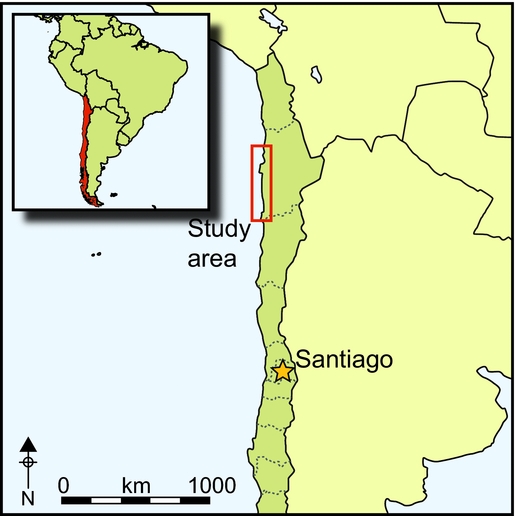
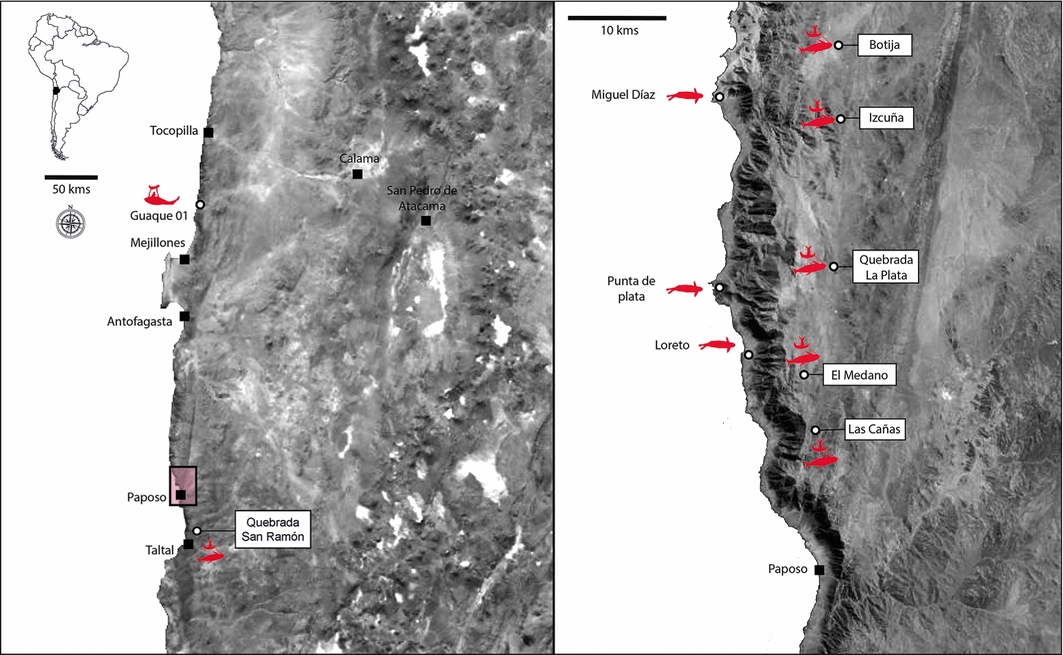
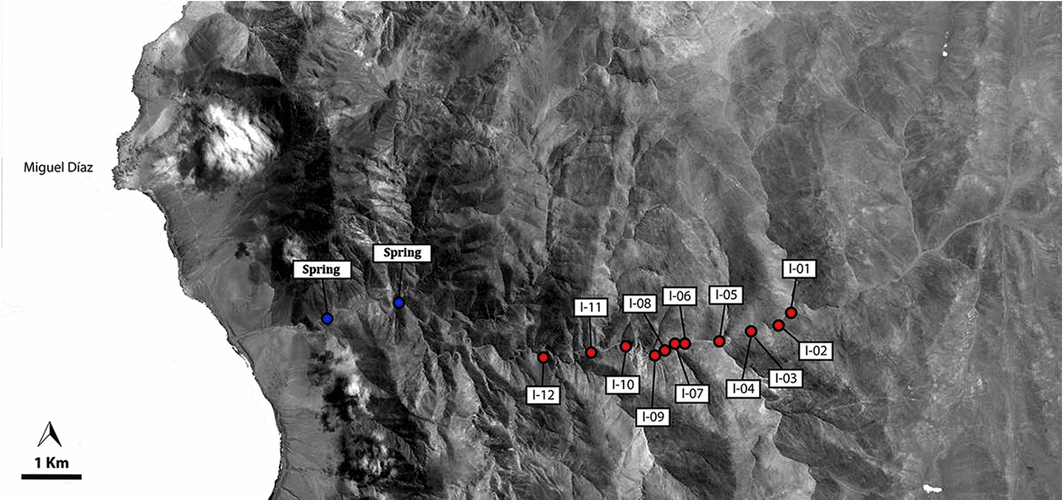
One of these ravines is Izcuña, located 47km north of Paposo and 115km south of Antofagasta (Figure 2). The ravine measures 14km in length, and descends from approximately 1700m asl to the coastal plain. It is morphologically steep, characterised by a V section, and comprises hundreds of curves and deviations. Two large springs are present near the mouth of the ravine, with associated important flora and faunal species. The enormous value of the ravine to the coastal people is evidenced by a remarkable concentration of pre-Hispanic and Hispanic archaeological remains.
Location map from the different archaeological sites with El Médano paintings (icons marked in red). Single animal icons represent motifs without hunting scenes.
El Médano rock art history
In April 1918, Augusto Capdeville, a customs official and expert in Taltal archaeology, recorded a set of painted rocks in El Médano ravine, located five miles north from Paposo, a small fishing town on the Atacama Desert coast. Along with a detailed map of the site, he briefly recounts the presence of fishing nets, rafts, “llamas or guanaco herds”, in addition to “Indians pointing with arrows to guanacos, some of them kneeling, and others throwing harpoons to big fishes (swordfishes), maybe whales, and others from the boats, picking with lines the fishes” (Capdeville Reference Capdeville1918: 73) (Figure 1). The site was rediscovered in 1973; a local mining prospector had long known of its existence and revealed it to a geologist, who immediately notified archaeologist Hans Niemeyer. It was his work that determined the place of El Médano-style paintings in Atacama Desert prehistory and Chilean archaeology (Mostny & Niemeyer Reference Mostny and Niemeyer1983, Reference Mostny and Niemeyer1984; Niemeyer Reference Niemeyer2010). Niemeyer was apparently unaware that Capdeville had previously visited and recorded the paintings at El Médano; traditional knowledge of their existence was confined to the native Paposo people.
Diverse research on the El Médano pictographs has since taken place (Berenguer Reference Berenguer2009), encompassing interpretive, symbolic and archaeology of art approaches (the latter comparing local and coastal rock art to other styles in the Atacama Desert) (Núñez & Contreras Reference Núñez and Contreras2003, Reference Núñez and Contreras2008; Contreras et al. Reference Contreras, Núñez and Rodríguez2008; Gallardo et al. Reference Gallardo, Cabello, Pimentel, Sepúlveda and Cornejo2012).
Nearly a century after Capdeville's recordings, we have discovered at least four new ravines with similar pictographs, located close to El Médano. Thus, our understanding of this rock art style, particularly of its geographic and spatial distribution (Figure 3), has completely changed. These new and important discoveries are presented here, with an emphasis placed on the Izcuña ravine pictographs to understand further their iconography, themes and composition.
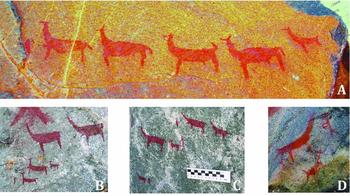
Camelid hunting scenes from El Médano: A) male camelids in a line formation, the first of them with an arrow in the chest and facing an anthropomorphic motif carrying a bow; B) anthropomorphic motif carrying an elongated bow alongside three camelids, two of them with arrows in the chest; C) three hunting scenes, one with an anthropomorphic motif holding a bow and the camelid with an arrow in the chest (A–C photographed by Francisco Gallardo); D) figure with headdress carrying a bow facing two camelids, one of them with an arrow in the chest (Niemeyer Reference Niemeyer2010: 30–31).
El Médano rock art temporality
Establishing the chronology of a rock art style is always challenging (Bednarik Reference Bednarik2002). Following the rediscovery of El Médano, Mostny and Niemeyer (Reference Mostny and Niemeyer1983, Reference Mostny and Niemeyer1984) placed it relatively late in the littoral sequence—probably after 1000 BP, or in the Late Intermediate Period (1000–500 BP). Berenguer (Reference Berenguer2009) proposed a similar date based on characteristic headdresses in seafarer motifs—attire used principally in late pre-Hispanic times. Gallardo et al. (Reference Gallardo, Cabello, Pimentel, Sepúlveda and Cornejo2012) argue that the ‘dragging’ depicted in El Médano hunting scenes is reminiscent of early pastoral paintings from the inland Atacama Desert, thereby supporting a relatively later date for the scenes.
A recent AMS date of an El Médano painting at the Punta de Plata shelter in Paposo has stimulated renewed discussion (Castelleti et al. Reference Castelleti, Goguitchaichvili, Solís, Rodríguez and Morales2015). Analysis dated the painting to 7882±160 BP (Castelleti et al. Reference Castelleti, Goguitchaichvili, Solís, Rodríguez and Morales2015)—several millennia earlier than previously thought. This date, however, is inconsistent with both the occupational evidence at the site (dated to 1100 cal BP) and with local prehistoric iconography. This inconsistency probably results from sample contamination (Ballester Reference Ballester2016). Capdeville (Reference Capdeville1918) recorded a small number of motifs depicting terrestrial (particularly camelid) hunting scenes, including anthropomorphic figures with bows and arrows. Some of these scenes also depict animals with arrows piercing their chests (Figure 3). Archaeological evidence suggests that this technology was developed in the Atacama Desert during the Formative Period (c. 3000 BP) and became popular in coastal areas around 1500 cal BP (Mostny Reference Mostny1964; de Souza Reference de Souza2004; Castelleti Reference Castelleti2007). This provides some of the strongest evidence for a later date for this rock art style.
Furthermore, a few exceptional miniature figurines were discovered that model a similar style to El Médano rock art. Capdeville (Reference Capdeville1918) recorded some of these Late Intermediate Period finds recovered from the Caleta Cifunchos and Agua Dulce Cemeteries (Figure 4A–B) (Mostny Reference Mostny1964; Fuenzalida & Gallardo Reference Fuenzalida and Gallardo2013). Ricardo Latcham (Reference Latcham1910) recorded other specimens excavated near Antofagasta (Figure 4C). The most significant figurines, however, are surely those from the Lodwig Collection of Caldera, deposited in the Valparaiso Natural History Museum (Latorre et al. Reference Latorre, Plaza and Riveros2007). Recovered from Late Intermediate Period cemeteries, three of these are carefully modelled from laminated copper and closely resemble some of the rock art paintings (Figure 4D–E). Additionally, one of the spindle whorls from the collection is finely engraved with a pisciform that resembles some of the marine animals from El Médano (Figure 4F–G).
Modelled miniature figurines: A–B) Cifuncho Cemetery, Taltal (Ballester Reference Ballester2016: fig. 3); C) Otto Aichel figures from Antofagasta; D) copper pieces from the Lodwig Collection (Latorre et al. Reference Latorre, Plaza and Riveros2007: Lám. 3); E) hunting scene painting from the Izcuña site (I-02, block 08, panel 01); F) engraved spindle whorl from the Lodwig Collection; G) marine hunting scene from El Médano (photography by Francisco Gallardo).
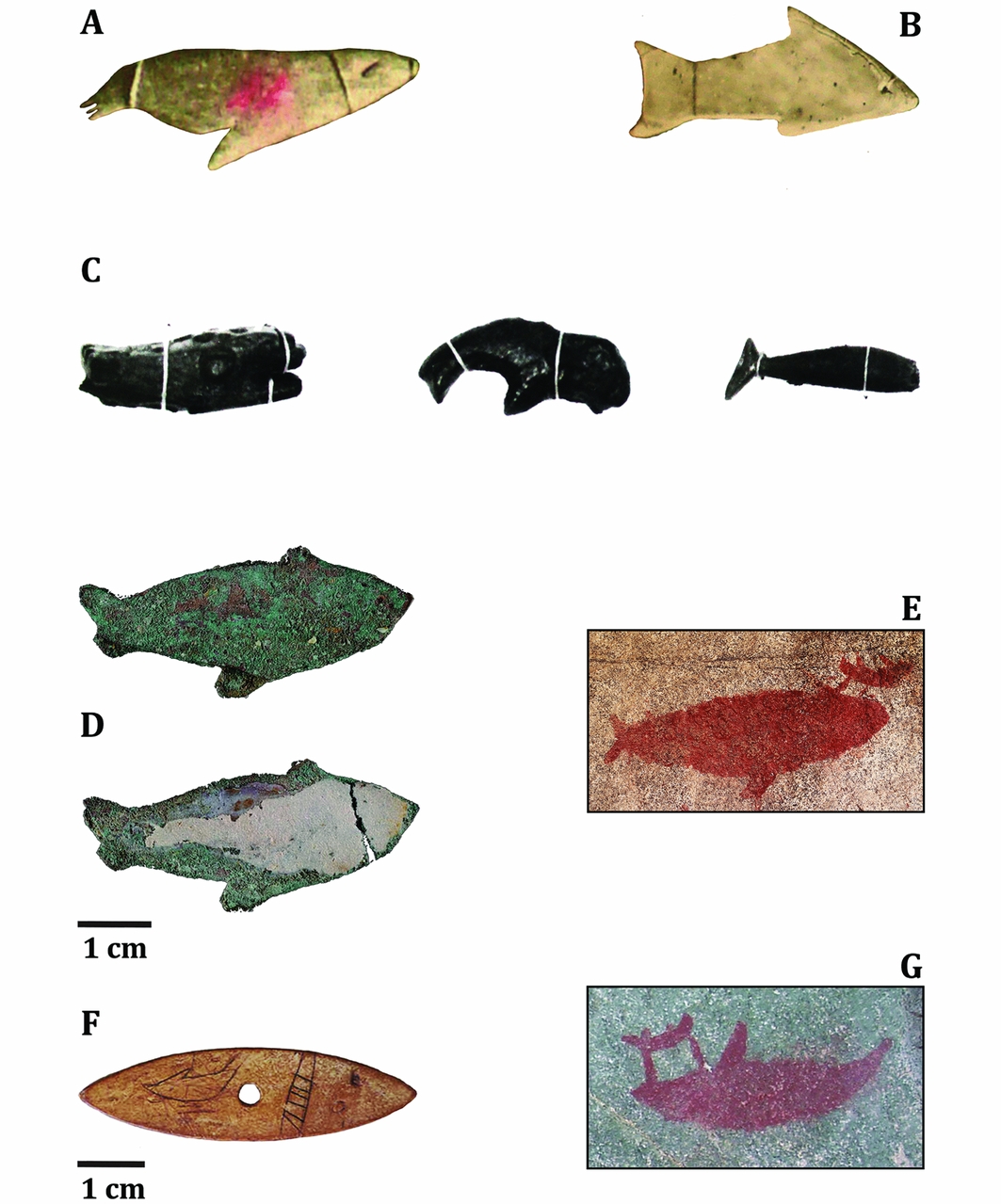
The archaeological provenance of these figurines supports the later date for El Médano rock art, and they bear the same style as portable objects that were offered to the deceased in Late Intermediate Period cemeteries. Metallurgic technology was also not present on the Atacama Desert coast before 2500 cal BP, and only became popular in the Late Intermediate Period (Salazar et al. Reference Salazar, Castro, Michelow, Salinas, Figueroa and Mille2010). Conversely, spindle whorls are characteristic of this same period, especially the biconvex type common in the southernmost part of the Atacama Desert. Archaeological data have yet to provide concrete dates for El Médano rock art. For example, the AMS date of 7882±160 BP contradicts the archaeological and iconographic evidence for the Late Formative or Late Intermediate Periods (Ballester Reference Ballester2016). Further research is necessary to address this problem of rock art chronology.
Izcuña paintings
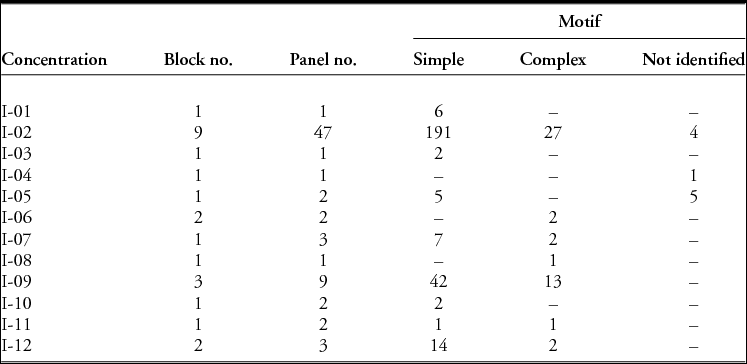
Twelve discrete areas containing concentrations of paintings were identified in the Izcuña ravine, situated between 1320 and 680m asl and in a 4.9km linear sector (Figure 5). No other archaeological sites were documented in this area. In total, we recorded 24 blocks, 74 panels and 328 motifs (Table 1). All of these were painted in red colour, although with tonal variations from orange to deep red. The rock art distribution along the ravine is variable. The largest concentrations of paintings are in I-02 (67.7 per cent) and I-09 (16.8 per cent). I-02 is located in a widening section of the ravine that is characterised by several shelters and exposed rock panels surrounding a central open space; the location is reminiscent of a natural amphitheatre.
Location map of the different painting concentrations areas at Izcuña.
Izcuña rock art motif quantification.
All panels face into the ravine and are clearly visible to anyone within. Most of the paintings are very poorly preserved, having been heavily eroded by the camanchaca. Nevertheless, sufficient detail remains to facilitate morphological and stylistic analyses.
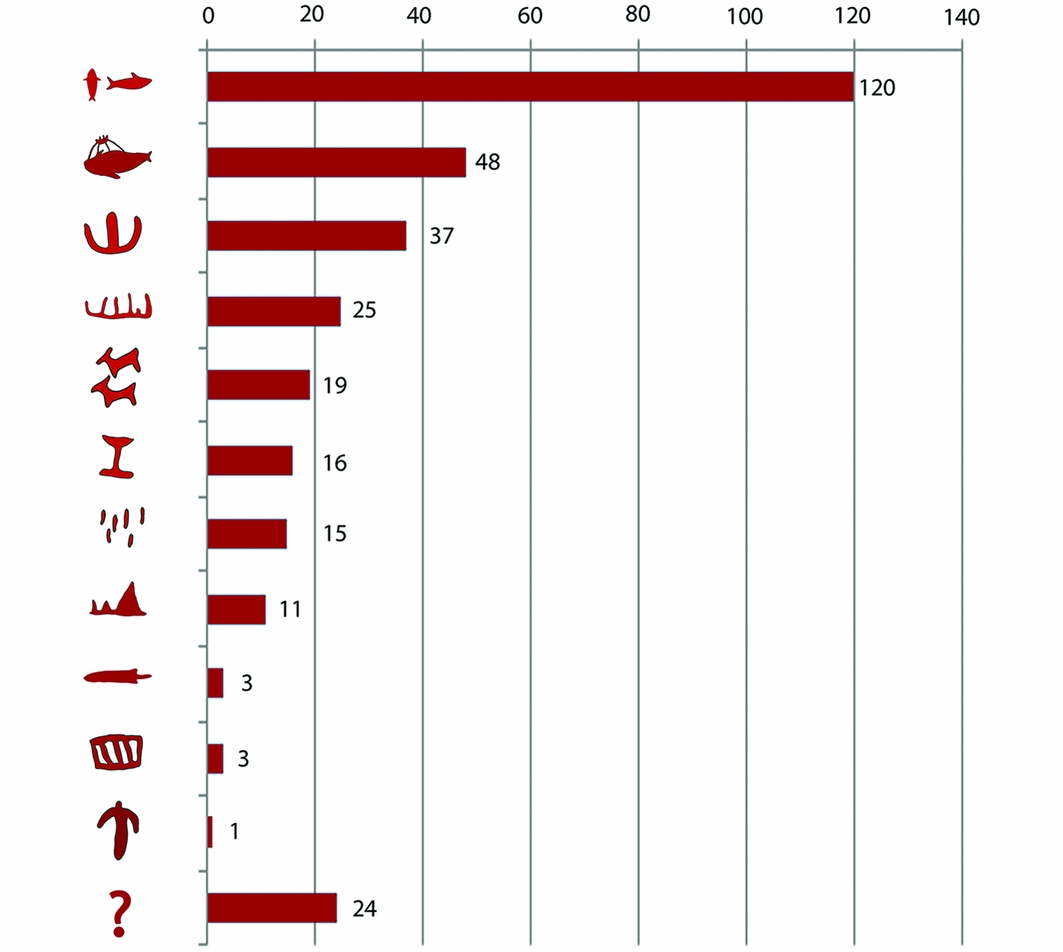
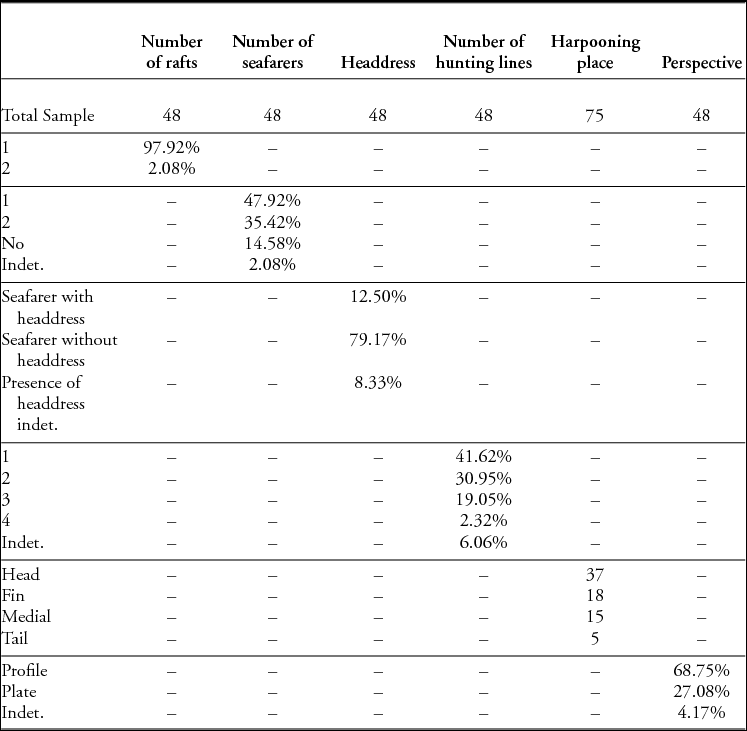
Within the Izcuña assemblage, simple motifs dominate over complex types (Table 1). In the former category, 50.3 per cent were drowned with filled technique (in which an image silhouette is filled with colour), while 45.4 per cent used the linear technique. Complex motifs, however, generally combined both techniques, especially in the marine hunting scenes where the raft and harpoon ropes are linear and prey is represented with solid colours (Figure 1). The most common motif is of pisciform animals, followed by hunting scenes, rafts and abstract subjects (Figure 6). While terrestrial animals appear in significant numbers, anthropomorphic representations are almost absent, except in the marine hunting scenes. Here, they are always depicted in a specific action and associated with rafts and prey. Hence, humans are under-represented as painting subjects, while the social action of hunting is strongly represented, using humans as just a part of the composition.
Quantitative chart of the proportions of different simple and complex motifs identified at Izcuña.
Hunting scenes are always represented in the same perspective: from the outside, giving a complete view of the act and never showing in first or principal plane the harpooning event. Rafts and prey are presented in a single visual plane, generally giving a natural perspective of the action, but without depicting the ocean itself. Although marine scenes (either of hunting from the surface or of the underwater animals) are the central theme of the rock art, the ocean itself is never explicitly represented. In simple pisciform motifs, the animals are most often painted in profile, while the other characters are represented in dorsal view (Table 2). Complex motifs, especially the hunting scenes, present a similar perspective ratio (71.74 per cent profile, 28.26 per cent dorsal) (Figure 7). In contrast, rafts are always represented from the same perspective and following a standardised norm: an inverted half-moon form, such as a concave motif with the seafarers in the interior. Different perspectives depicting animals probably result from constant real-life sightings of animals from multiple angles. A vast corpus of anatomical and behavioural imagery is therefore created.
Izcuña iconographic elements.
Izcuña hunting scenes: A) I-02, block 08, panel 01; B) I-11, block 01, panel 01; C) I-09, block 09, panel 01; D) I-02, block 09, panel 08.

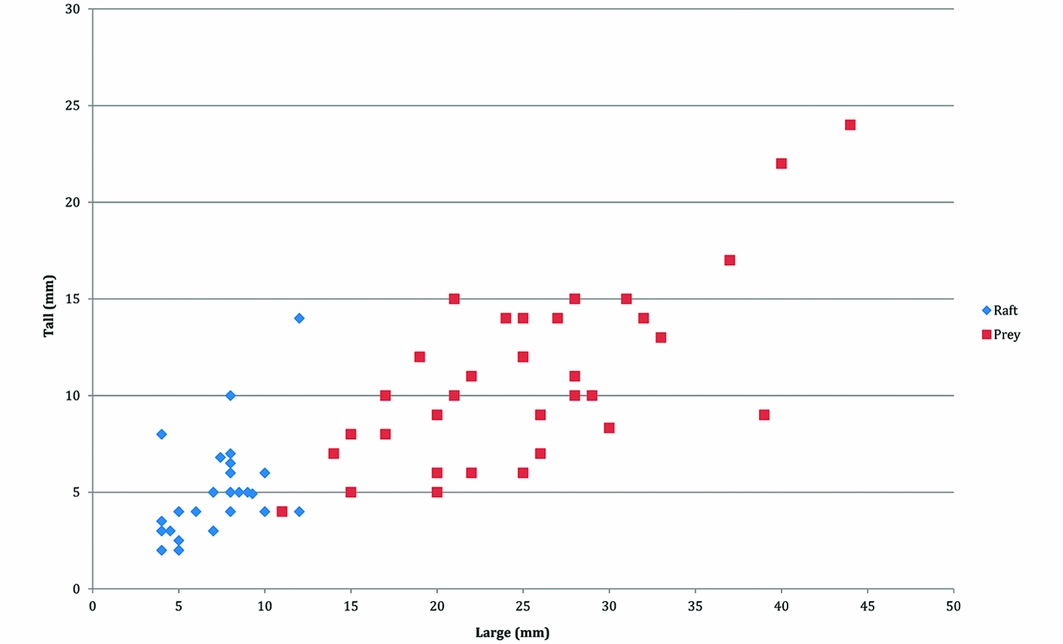
In hunting scenes, prey is always represented as oversized (averaging 3.9 times bigger) compared to rafts and their crew (Figure 8). This style intentionally places the prey as the protagonist, as evidenced by the detailed, meticulous depictions of the anatomy and physiology of the animals. This is contrasted by the simple, undetailed human drawings created using lineal strokes (Figure 7). Detail here is limited to the occasional seafarer's headdress, represented by two lateral protuberances (Table 2).
Size comparison between rafts and prey animals from the Izcuña hunting scenes.
A particular aspect of the animal representations is important. In simple pisciform motifs, marine animals are always painted in their natural position, with the dorsal side facing upwards and the ventral side facing downwards. In hunting scenes, however, a significant percentage of prey animals are painted inverted, with the ventral side up and dorsal side down (Figure 7A). This graphical inversion is probably related to their natural rotation process during sea hunting. Practically all hunting scenes depict a single raft hunting a single animal, except for a unique motif of two rafts trapping a single animal (Table 2). This opposes the previously observed classic El Médano style, which more commonly depicts other configurations (Mostny & Niemeyer Reference Mostny and Niemeyer1983, Reference Mostny and Niemeyer1984). Regardless, the hunting activity is represented as a single practice, mainly conducted by one raft. In most cases they exhibit only one seafarer inside the boat (Table 2). Overall, hunting is represented as a specialised, solitary, individual social practice, led by a selected few people. As previously mentioned, in hunting scenes, rafts and prey are connected by lines that represent harpoon ropes. The quantity of lines varies from scene to scene, increasing in frequency from one line (most frequently depicted), to two, three and four lines (least frequently depicted) (Table 2). The line most commonly connects to the prey's head, pectoral fin, medial part of the body and, least frequently, the tail (Table 2). The depiction of multiple harpoon lines attached to a single animal offers a graphic expression of intense and complex open-ocean hunting expeditions.
From red paintings to ocean hunting
Social representations are, by necessity, linked to reality. They may be transformed, inverted, distorted or modified, but they are always linked to real events. El Médano rock art was created by marine hunter-gatherers with a long historical tradition in the coastal desert (True Reference True, Casteel and Quimby1975; Llagostera Reference Llagostera, Hidalgo, Schiappacasse, Niemeyer, Aldunate and Solimano1989; Núñez Reference Núñez and Blake1999; Salazar et al. Reference Salazar, Figueroa, Andrade, Salinas, Power, Rebolledo, Parra, Orellana and Urrea2015). Archaeological analysis of faunal assemblages from residential middens, dating from 7000 cal BP to the sixteenth-century European arrival, demonstrates the capture, butchering and consumption of large marine prey species, such as swordfish, sharks, marlin, tuna, dolphins, sea lions and some whale species. This attests to an extended and important cultural and economic tradition of marine hunting (Mostny Reference Mostny1942; Bird Reference Bird1943; Núñez et al. Reference Núñez, Zlatar and Núñez1974; Contreras et al. Reference Contreras, Núñez, Llagostera, Cruz, San Francisco, Ballester, Rodriguez and Becerra2011; Castro et al. Reference Castro, Aldunate and Varela2012; Olguín et al. Reference Olguín, Salazar and Jackson2014, Reference Olguín, Castro, Castro, Peña-Villalobos, Ruz and Santander2015; Rebolledo et al. Reference Rebolledo, Béarez, Salazar and Fuentes2015; Béarez et al. Reference Béarez, Fuentes-Mucherl, Rebolledo, Salazar and Olguín2016). Archaeological evidence for harpoons is abundant but poorly studied (Llagostera Reference Llagostera, Hidalgo, Schiappacasse, Niemeyer, Aldunate and Solimano1989). Harpoons were composite devices comprising a wooden shaft of up to 3m in length, a detachable head and a single line of up to 70m in length, made of sea lion skin (Figure 9A–D) (Ballester in press). Harpoon heads are also composite, with parts made from different raw materials, including wood stems, cactus spine barbs, lithic points, copper barbs, cotton strings, bone barbs, vegetal resins and pigment coating (Ballester in press). Harpoons are present in middens dating to 7000 cal BP, only becoming popular as funerary offerings after 6000–5000 cal BP.
Archaeological remains related to hunting activities: A–B) complete harpoon (Bird Reference Bird1946: pl. 123a–j); C–D) rolled harpoon lines from the Camarones 9 site; E) composite oar fragment from the Guaque 07 site—arrows indicate billet position; F) oar fragments from AutoClub de Antofagasta Cemetery; G) float outline from a raft made of sea lion skin (Niemeyer 1965–Reference Niemeyer1966); H) detail of the cactus spine and cotton zig-zag seam (Niemeyer 1965–Reference Niemeyer1966); I) float fragment with spine seam from a raft made of sea lion skin and recovered from El Trocadero Cemetery, Antofagasta.
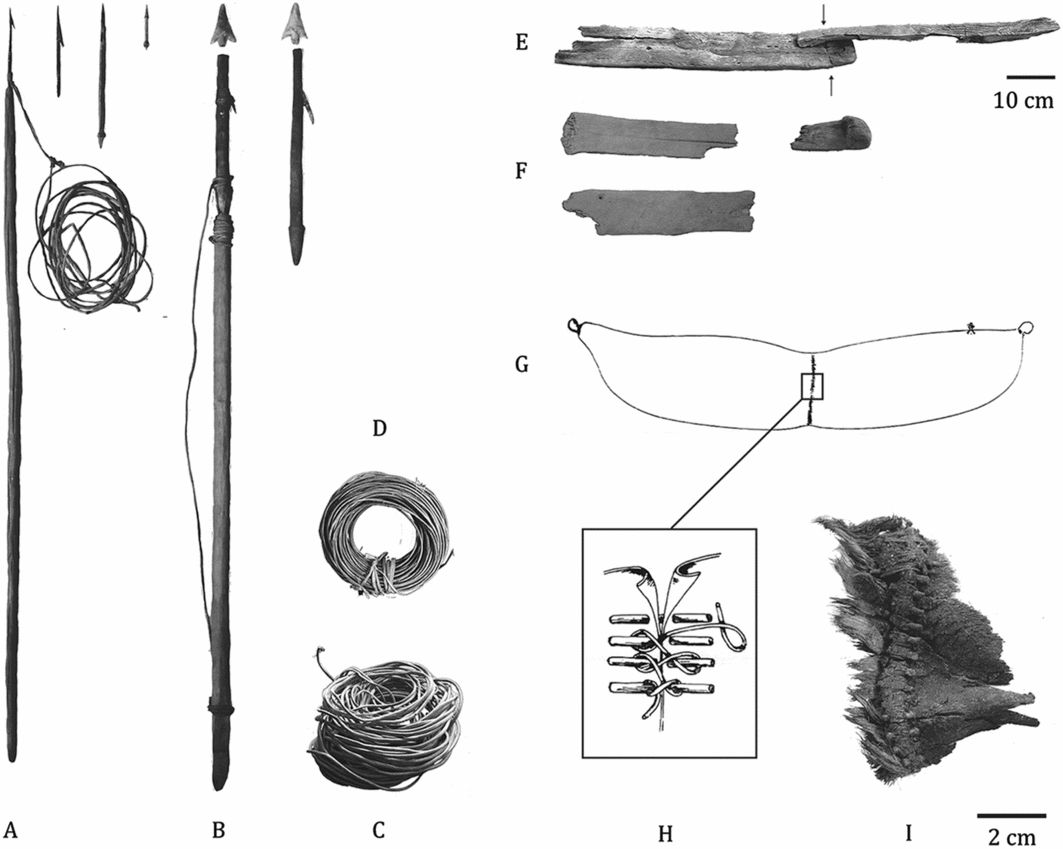
The raft employed in pre-Hispanic times was similar to those described centuries later by Europeans (Figure 10). Such rafts comprised two large cylindrical floating sections made of sea lion skin, which when tied together measured almost 3m in length (Figure 9G). The floating sections were carefully sewn together using hundreds of cactus spines and cotton thread in a zig-zag pattern (Figure 9H–I). Finally, the floating sections were completely sealed and water proofed with a red ochre substance (Frezier Reference Frezier1717; Lesson Reference Lesson1838; Niemeyer 1965–Reference Niemeyer1966; Bibar Reference Bibar1966 [1558]). Archaeological evidence for these rafts is rare but does exist. Oar fragments, for example, have been identified in different Late Intermediate Period cemeteries from Caleta Huelen at the Loa River Mouth, Mejillones, Antofagasta and Taltal (Bittmann Reference Bittmann1978; Núñez Reference Núñez1986). One fragment recovered from the Guaque 07 Cemetery was directly dated to 545–499 cal BP at 100% (wood, Beta-334311, SHCal13 curve (Stuiver et al. Reference Stuiver, Reimer and Reimer2005; Hogg et al. Reference Hogg, Hua, Blackwell, Niu, Buck, Guilderson, Heaton, Palmer, Reimer, Reimer, Turney and Zimmerman2013)). This was a particularly interesting artefact due to its sophisticated manufacturing technology. It was a composite of two different types of wood—cactus for the palette and hardwood for the pole. These were attached together using a bevel system and with thick cactus spines serving as billets (Figure 9E). Similar oars have been recovered from the AutoClub Cemetery located in Antofagasta city (Figure 9F), dated directly to 819–724 cal BP at 84% (wood, Beta-335821, SHCal13 curve (Stuiver et al. Reference Stuiver, Reimer and Reimer2005; Hogg et al. Reference Hogg, Hua, Blackwell, Niu, Buck, Guilderson, Heaton, Palmer, Reimer, Reimer, Turney and Zimmerman2013; Ballester et al. Reference Ballester, Clarot and Llagostera2014)).
Fisherman sailing in a raft made of sea lion skin on the Atacama Desert coast between 1820 and 1822 (photograph from Hall Reference Hall1827).
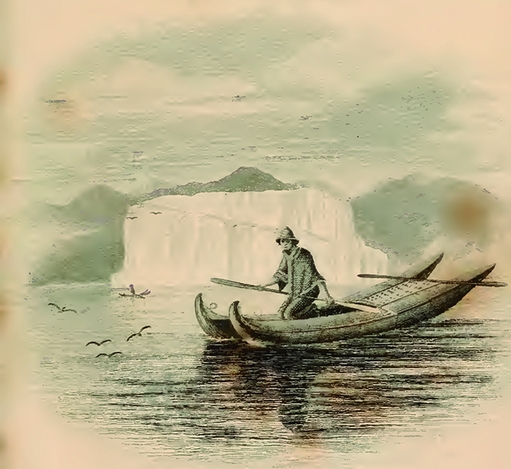
Ethnohistorical and historical sources describe marine hunting using traditional inflated rafts of sea lion skin and harpoon devices. The most famous reference is from Antonio Vásquez de Espinoza's book (Reference Vásquez de Espinoza1948 [1630]), which illustrated a dangerous and complicated whale-hunting scene carried out by only one hunter. Reginaldo de Lizárraga (Reference de Lizárraga1999 [1603–1609]: 378) correspondingly recorded the hunting of tuna,
not in crews like in Spain, but as a lone Indian fisherman going out in a sea lion skin raft, two or three leagues from the coast; carrying his harpoon, attacking, giving rope until the prey bleeds to death, then dragging it to the coast [author's translation].
It is in this context that analysis of the Izcuña rock art acquires value and relevance. As previously discussed, pictorial representations of marine hunting have depicted it as an individual, rather than collective, practice—often with rafts operated by a single occupant. The boats are similar in form to those made of inflated sea lion skin, especially in their raised ends. Yet rock art pictographs give us information beyond that available in the archaeological record. Marine hunting was not only nutritive (evidenced by archaeological animal bone) or technological (evidenced by fragments of harpoons), but also symbolic and ideological. The rock art offers clues concerning hunting strategies, such as labour organisation, hunting roles, the number of harpoon lines involved in the hunt, animal movement during the chase, the position of attack and the perspectives of painters. They also contain a huge corpus of information concerning the cultural knowledge of animal anatomy, physiology and behaviour—essentially, their interspecies relationships. For unknown reasons, the pictographs usually represent successfully accomplished hunting scenes, once the animal is harpooned. Thus, they most often represent success in the hunt, rather than the process of hunting.
The artistic expression of this body of ancestral and complex knowledge occurs only in specific places. Although the pictographs are evident in a few rockshelters near the shore, they occur far more frequently in ravines several kilometres from the ocean. These are often at over 700m asl, in ravines that are narrow and difficult to access. The painters portrayed a marine activity in a desert setting, in a conscious act of linking the ocean to the desert via rock art. But they were also linked by technology, as the harpoons and rafts comprised materials obtained from the inland desert, such as lithics, red ochre, wood, cotton, resin, cactus, and camelid bone. Hence, both economic and representational spheres were linked by the same conception of landscape that bound together the sea and the desert. For the hunter-gatherers of the Atacama Desert coast, this represents two aspects of a single process in the social construction of their territory and culture.
Acknowledgements
Funding for this research was provided by FONDECYT (1160045 & 1140056) and FONDAP (15110006). Thanks go to Javier Álvarez, Francisco Gallardo (El Médano photography), Daniel Quiroz, Carolina Carrasco and Marcela Sepúlveda. Special thanks go to Museo San Miguel de Azapa de la Universidad de Tarapacá, the Museo de Antofagasta and to the National Service of Geology and Mining.



