



1. Acquisition types - different populations?
The goal of this study is to contribute to a better understanding of similarities and differences between first and second language acquisition, focusing on the role of age of onset (AO) as a possible cause of qualitative differences in the knowledge acquired by learners of these acquisition types. The question thus is whether the linguistic behaviour of different populations reflects not only quantitative differences like rate of development or frequency of use of particular phenomena but also qualitative ones: most importantly whether they use constructions not attested in the speech of other populations, proceed through distinct developmental sequences, or ultimately attain different grammatical knowledge systems. It is doubtful whether all acquisition types discussed in the literature, e.g., monolingual (L1) and bilingual (2L1) first, child (cL2) and adult (L2) second language acquisition, naturalistic and instructed learning, third language and heritage language acquisition, do indeed exhibit qualitative differences in the sense just defined. However, this paper is primarily concerned with cL2 learners who are contrasted with (2)L1 on the one hand and with L2 on the other, in an attempt to determine whether observable similarities and differences are due to variation in AO.
It goes without saying that the populations under discussion differ in more respects than AO and, consequently, there exist other factors that might cause qualitative changes in what the Language Making Capacity (LMC, Slobin, Reference Slobin and Slobin1985) accomplishes. The most obvious one, distinguishing all types of bilingualism from L1, is the presence of more than one language in the environment and the brain of a learner. Yet there exists a broad consensus that simultaneous acquisition of more than one grammatical system does not exceed the possibilities of the LMC, which can be characterized as an endowment for multilingualism. Children exposed to two or more languages from birth have been shown to be able to develop more than one native competence; see De Houwer (Reference De Houwer, Fletcher and MacWhinney1995). The presence of another language is thus not an impediment to successful acquisition when the languages are acquired simultaneously from birth.
Input is another factor that might lead to differences between bilinguals and L1 learners. For those acquiring more than one language, time of exposure to each of them is necessarily reduced, as compared to monolinguals. Although this need not imply that bilinguals are exposed to a smaller amount of child-directed utterances, see De Houwer (Reference De Houwer, Grüter and Paradis2014), this is widely assumed to be the case. At least in settings where languages are not equally distributed among domains of daily interaction, this is a plausible assumption for the weaker language. How exactly reduced input affects acquisition is a controversial issue, especially the claim that it can result in incomplete grammars; see Montrul (Reference Montrul2008). In fact, we are not able to determine the minimal amount of input necessary for the development of a native competence. Quantitative effects, however, are well documented. Rate of acquisition tends to be slower in the weaker language; yet this effect does not exceed the normal range of variation for monolinguals, and it is stronger in lexical than in grammatical development; see Hoff, Core, Place, Rumiche, Señor and Parra (Reference Hoff, Core, Place, Rumiche, Señor and Parra2012). Nevertheless, input in interaction with AO and other factors, undoubtedly contributes to the shaping of acquisition processes.
As mentioned above, the present paper is primarily concerned with AO as a factor distinguishing acquisition types. That it does exert an influence of this kind is uncontroversial: if AO happens later in life, grammatical acquisition in this language differs from that in (2)L1 development. Not only do L2 learners draw on different knowledge sources during early phases, they proceed differently through subsequent ones, and they probably never attain full native grammatical competence (Abrahamsson & Hyltenstam, Reference Abrahamsson and Hyltenstam2009). What is controversial is whether these facts reflect different underlying knowledge systems, caused by maturational changes in the brain. If, for example, parameterized principles of Universal Grammar (UG) are subject to changes due to brain maturation, as argued by Smith and Tsimpli (Reference Smith and Tsimpli1995), L2 speakers cannot fix the value of a parameter not instantiated in L1, nor can they reset parameter values in which the grammars differ. Instead, they make use of other cognitive resources to compensate for those not available anymore, e.g., relying on inductive learning where triggering of implicit knowledge has become impossible; see Meisel (Reference Meisel2011). Non-parameterized UG principles, on the other hand, constrain L2 acquisition in the same way as (2)L1 development. Thus, the solution of the controversial issue hinges on the question of whether, as suggested here, L2 learners have only partial access to UG, the knowledge that children bring to the task of acquisition, or whether they continue to have full access to UG, as claimed by Schwartz and Sprouse (Reference Schwartz and Sprouse1996) and others.
At this point, I cannot engage in this discussion that has occupied a large part of generative L2 research over the past 30 years. Rather, I provide empirical evidence for similarities between acquisition types and also for differences that can plausibly be assumed to be due to differences in AO. This investigation focuses on cL2 rather than on adult L2 acquisition, the primary object of previous studies.
2. Child second language acquisition
When, in the 1970’s, L2 research began investigating the mental activities underlying linguistic development rather than focusing on contrastive analyses, these studies dealt with both child and adult learners; see Lakshmanan (Reference Lakshmanan1994). But for many years to come, research did not analyze systematically how child learners differ from their adult counterparts and whether they still acquire language like L1 learners.
The lack of interest in these issues may have been due to the widely held view that maturational effects on the LMC emerge around age 11, as suggested by Lenneberg (Reference Lenneberg1967) in his Critical Period Hypothesis (CPH). Under this assumption, analyzing learners first exposed to a language between ages 3 and 10 may seem to be of limited interest. But even by the 1980’s, L2 research had revealed strong evidence for age-related changes at ages earlier than 11, see Long (Reference Long1990). It became increasingly evident that the CPH needed to be revised, and not merely with respect to the critical age ranges; indeed the concept of ‘critical period’ itself had to be modified; see Meisel (Reference Meisel, Boeckx and Grohmann2013).
Crucially, it has been argued that there exist several sensitive periods in language development; see Locke (Reference Locke1997). Consequently, critical periods are better understood as clusters of sensitive phases during which the LMC is optimally prepared to integrate new information into developing grammars. As for the age ranges during which this heightened sensitivity begins to fade out, Long (Reference Long1990) identified the period around age 6–7 as one during which major changes happen. Neuroimaging as well as behavioural studies subsequently demonstrated that changes affecting morphosyntax already occur around age 4; see Meisel (Reference Meisel1994, Reference Meisel, Bhatia and Ritchie2004).
In sum, although differences between successive and simultaneous acquisition of bilingualism had long been acknowledged, even in cases where AO happens well before age 11, early successive learners did not attract much attention until recently. Consequently, differences between child and adult learners have not been sufficiently explored. But cL2 only qualifies as a distinct learner population if such differences do exist. That this is indeed the case is demonstrated by Unsworth (Reference Unsworth2005) who showed that cL2 learners exhibit similarities and differences in comparison to adult L2 learners as well as to children acquiring an L1.
In order to gain further insights into the nature of cL2 acquisition, we should thus examine the period between approximately 3 and 8 years of age (AO), searching for particularities of language use attested only in cL2 and for constructions shared by two of the populations, e.g., by cL2 and aL2, but not by (2)L1. Whereas the former allow us to identify properties particular to cL2, shared phenomena can reveal shared acquisition mechanisms. Note that we do not expect to find coherent results across all domains of grammar; see Schwartz (Reference Schwartz2004). It follows from the revised CPH that cL2 should resemble L1 in some respects and adult L2 in others. In fact, individual learners, too, are predicted to differ in this way: Depending on their age at onset of acquisition, some will behave like L1 children in their acquisition of particular constructions whereas others will resemble L2 learners in this respect.
A major challenge for research on early successive acquisition is to pinpoint areas of grammar where cL2 differs from (2)L1 and resembles aL2. Although brain maturation and age-related changes of the cognitive system have been argued to cause alterations in acquisition mechanisms, neither neurolinguistic research nor grammatical theory enable us to specify which phenomena are concerned at exactly which points of development. We must therefore search empirically for properties in which cL2 differs from L1 and possibly resembles aL2.
Good starting points for this quest are phenomena known to represent L2 acquisition difficulties, and recent research has indeed identified several grammatical domains in which cL2 learners behave more like aL2 learners than like L1 children. The adult L2-like properties attested in the speech of successive learners who were first exposed to the second language as of AO 3;6-4 years fall into the domains of inflectional morphology and of syntax, although some syntactic properties are affected only around AO 6 years. Since I am concerned here with the acquisition of French by German-speaking children, let me mention examples concerning these languages.
L2-like usage of grammatical morphology has been observed in the speech of early learners of French with respect to tense (Granfeldt, Schlyter & Kihlstedt, Reference Granfeldt, Schlyter and Kihlstedt2007; Meisel, Reference Meisel, Haznedar and Gavruseva2008; Schlyter, Reference Schlyter, Rinke and Kupisch2011) and person-markings (Meisel, Reference Meisel, Haznedar and Gavruseva2008) on finite verbs, and in the acquisition of gender (Granfeldt et al., Reference Granfeldt, Schlyter and Kihlstedt2007; Meisel, Reference Meisel2009). As for syntax, Granfeldt et al. (Reference Granfeldt, Schlyter and Kihlstedt2007) report that cL2 learners behave like adult L2 learners in placing French object clitics in a target-deviant post-verbal position. Placement of finite verbs is another grammatical domain where cL2 resembles adult L2. Sopata (Reference Sopata2009, Reference Sopata, Rinke and Kupisch2011), for example, has shown that Polish children acquiring German (AO 3;8-4;7) use L2-like constructions, failing to place verbs in the required OV order, using target-deviant V3 orders, and moving non-finite verbs to V2 position. Kroffke, Rothweiler and Babur (Reference Kroffke, Rothweiler and Babur2007) present similar findings from a Turkish child learning German at AO 6, whereas a learner first exposed to German at age 3 behaved like L1 children.
In sum, the areas of grammar in which successive acquisition leads to substantially different results, as compared to L1 development, include inflectional morphology and at least some aspects of syntax, although the picture is still blurred when we look at L2-like properties emerging at around AO 4. This is why I propose to take a closer look at the acquisition of grammatical gender. Not only is gender acquisition known to represent a notoriously difficult task for L2 learners in general, see Andersen (Reference Andersen and Andersen1984), this also seems to be true for early learners; see Pfaff (Reference Pfaff1992). Moreover, since grammatical gender involves morphological as well as syntactic operations, its study might shed light on the question of whether these grammatical domains are affected to the same degree by age-related changes if AO happens before 4 years.
3. Grammatical gender: The target system
Let me first summarize briefly the major properties of the gender system of the target language French and, even more briefly, those properties in which the German system differs from the French. Grammatical gender is a noun classification system (Corbett, Reference Corbett1991), exhibiting considerable variability across languages in how it is implemented in grammars and in how it is overtly marked. Languages exhibiting grammatical gender differ in the number of gender values, in whether gender is marked overtly and consistently, and in whether these markings appear on the noun of which gender is an inherent property (Corbett, Reference Corbett1991), or rather on accompanying elements like determiners or adjectives. The latter remark refers to the fact that one needs to distinguish between gender assignment to noun classes and gender agreement (or concord), the mechanism by which it is spread across syntactic categories; see Hockett (Reference Hockett1958).
In grammatical terms, gender can be analyzed as an intrinsic feature of nouns (Harley & Ritter, Reference Harley and Ritter2002), more specifically as an interpretable feature. Gender agreement in Romance and Germanic languages is explained as a result of percolation through DPFootnote 1 , and it has been argued that an uninterpretable feature [ugender] on determiners (D) or adjectives (A) is deleted in the Agree relation; see Carstens (Reference Carstens2000, Reference Carstens2003). Some aspects of this type of analysis are controversial, e.g., the status of the intrinsic feature as an interpretable one, or some details of the syntax of gender agreement, see Carstens (Reference Carstens and Putnam2010). In the present context, we need not be concerned with these issues. What matters is that French and German do not differ fundamentally, in this respect.
Crucial aspects of cross-linguistic variation reflect parameterized options made available by UG. Following Tsimpli (Reference Tsimpli2014), a macroparameter distinguishes between grammatical gender languages versus non-gender languages, whereas microparametric properties determine the number of gender values (binary versus tripartite distinction), the categories on which gender is realized, and the agreement patterns. French and German are both gender languages (no macroparametric distinction) that differ with respect to microparametric options in that French distinguishes two gender values, masculine (masc) and feminine (fem), whereas German exhibits a tripartite classification, masc, fem, and neuter. In both languages, gender is marked on articles, adjectives and pronounsFootnote 2.
A large array of variability also characterizes the principles of gender assignment, which depend on the nature and on the reliability of the cues offered by overt markings. Across languages, gender systems rely on semantic, phonological, morphological, and syntactic cues of extremely variable reliability – or on a mix of some or all of these. French and German are of the latter kind, using cues of all types. The most salient and consistent markings appear on singular forms of definite and indefinite articles, possessive and demonstrative pronouns, and on adjectives and French past participles; see Table 1Footnote 3. French articles are not overtly marked for gender if the noun begins with a vowel; in this case, the preceding element is elided (e.g., l'idée ‘the idea (f)‘ instead of *la idée) or replaced by a form ending in a consonant (e.g., mon idée ‘my idea’ instead of *ma idée). Moreover, some gender distinctions are not marked in oral speech. For example, cet (required when the following noun begins with a vowel) and cette, or vu ‘seen (m)’ and vue ‘seen (f)’ are pronounced identically.Footnote 4
French grammatical gender-markings.
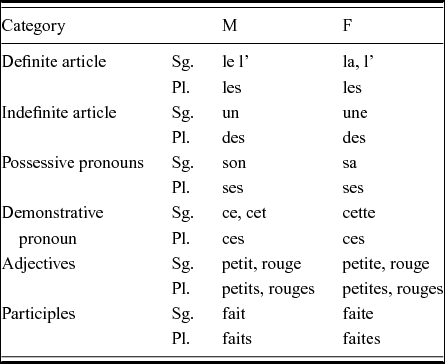
As for gender-marking on the noun itself, formal properties (phonological and morphological) conspire with semantic ones, in French as well as in German. Nouns referring to animates sometimes reflect the sex of referents, e.g., le garçon ‘boy’ – la fille ‘girl’. Suffixes can also indicate the sex of the referents, e.g., feminine –esse, -ine, -ice in French. More frequently, –e, derived from the Latin feminine marker –a, is added to the noun in written language. This schwa is normally not pronounced in oral speech, but it has the effect that unpronounced final consonants of the masculine form are pronounced, as in le sot – la sotte ‘fool’, phonetically [o] > [t], or that the pronunciation of the final consonant is altered, as in le veuf – la veuve ‘widow/er’, phonetically [f] > [v]. A number of other semantic properties play a role in the attribution of grammatical gender in French, but they do not provide reliable cues overall, for they concern only a small number of nouns, and even for these, there exist numerous exceptions.
For morphologically complex nouns, derivational morphology provides the most reliable gender cues. For example, suffixes such as –age (plumage ‘plumage’), -ier (vinaigrier ‘vinegar jar’), -ment, (logement ‘lodging’), or –isme (bilinguisme ‘bilingualism’) consistently mark masculine gender, and suffixes like –tion (participation ‘participation’), -té (bonté ‘kindness’), or -tié (amitié ‘friendship’) reliably mark feminine gender. Note that diminutive suffixes, which appear frequently in child-directed speech, also indicate gender unambiguously, e.g., la fillette ‘little girl’.
In sum, derivational morphology provides the most reliable cues to gender attribution in French, and phonological and morphological properties are more successful than semantic ones. The same is true of German, and in both languages, formal properties override semantic ones when the two offer conflicting evidence. This can be illustrated by the German example das Mädchen ‘the-neut. girl’ and by French nouns like recrue ‘recruit’ or sentinelle ‘sentry’, both feminine, even when referring to male persons.
Given that derivational morphology provides the most reliable cues, gender assignment to morphologically simple nouns relies on stochastic cues. Nevertheless, generalizations about correlations between formal properties of nouns and their gender are possible, contrary to a long tradition of grammars claiming that gender- marking always had to be learned in an item-by-item fashion. Such regularities have been shown to exist in German (Köpcke, Reference Köpcke1982) as well as in French (Tucker, Lambert, Rigault & Segalowitz, Reference Tucker, Lambert, Rigault and Segalowitz1968; Tucker, Lambert & Rigault, Reference Tucker, Lambert and Rigault1977). Note that, as compared to other Romance languages where noun endings offer fairly consistent gender cues (-o masc, -a fem), they are considerably less consistent in French, but they do indicate gender with much more than chance probability, in some cases even very reliably. Since these endings are not necessarily morphemes, I refer to them as word markers, following Harris (Reference Harris1991).
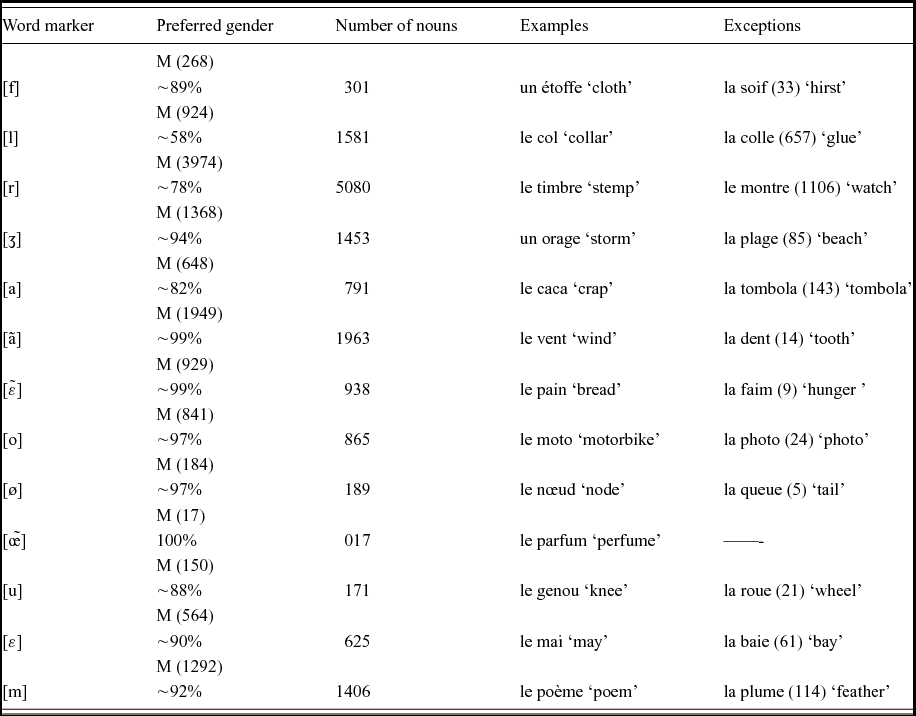
Tables 2 and 3Footnote 5 present some of these formal properties of French nouns and indicate how they correlate with masculine or feminine gender. As becomes easily apparent, associations between word markers and feminine gender tend to be less consistent than for masculine gender. One should add that the [e], [t], and [p] are equally frequent in both gender classes and are therefore not reliable as cues for the assignment of nouns to one of them.
Phonological gender regularities in French: Feminine.
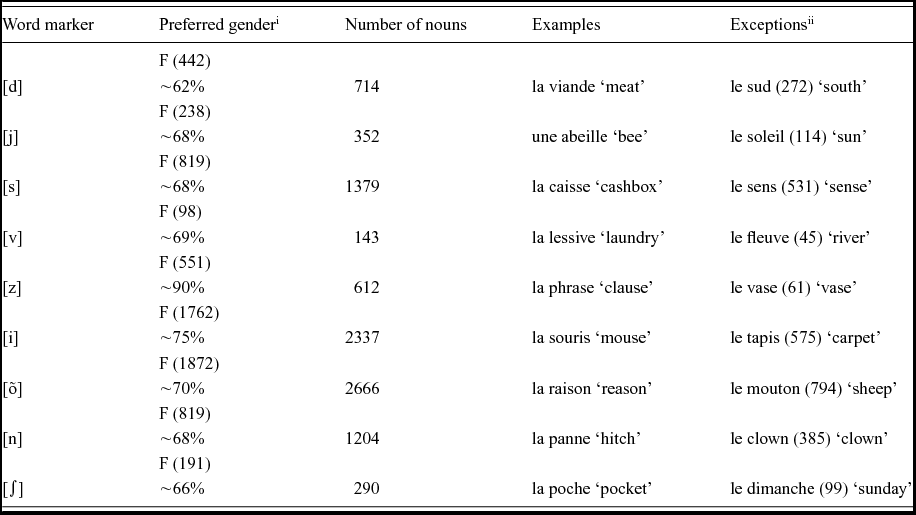
i Numbers in parentheses refer to the number of nouns for which gender is predicted correctly.
ii Numbers in parentheses refer to the number of exceptions for which the prediction does not hold.
Phonological gender regularities in French: Masculine.
4. Acquisition of grammatical gender
4.1 Acquisition tasks
It follows from the preceding discussion of gender systems that learners are facing tasks of two kinds. On the one hand, parameters must be set to the values of the target system. On the other hand, assigning nouns to gender classes requires learning of form classes and lexical properties. Although, in both cases, learners need to detect cues contained in the data, triggering of knowledge provided by UG arguably requires less exposure to the data and less frequent and less salient cues than learning of properties specific to a given language; see Carroll (Reference Carroll1989). Triggering is therefore predicted to happen faster and more uniformly across learners than inductive learning; see Meisel (Reference Meisel2011). We can thus identify the following acquisition tasks:
i) Setting of the macroparameter, determining whether the target is a grammatical gender language. The gender languages French and German exhibit identical settings of this parameter. Lexical entries of nouns contain a classificatory, valued and arguably interpretable, gender feature in both languages.
ii) Setting of microparameters, concerning a) the number of gender values, binary in French, tripartite in German, b) the categories on which gender is realized, and c) the syntactic domains of agreement. In both languages, the unvalued uninterpretable feature [ugender] on articles, possessive pronouns and adjectives is valued by the valued feature on nouns, which triggers agreement in largely identical structural configurations within DP.
iii) Assigning gender to each lexical item in the vocabulary. In languages like French or German, (2)L1 children must rely on formal properties of nouns, most importantly on word markers indicating form classes (Harris, Reference Harris1991). When these cues do not indicate the correct gender value, they have to resort to lexical learning.
Note that these learning tasks are virtually the same for French and German. In other languages, children face substantially different ones. Canonical cues (-a fem, -o masc) in Italian or Spanish, for example, facilitate the gender assignment task. Their consistency makes it easy to discover noun classes and to assign newly learned tokens to them. Non-canonical cues in the same languages, like Spanish –e in el puente ‘the-masc bridge’, take native speakers longer to process (Montrul, Davidson, de la Fuente & Foote, Reference Montrul, Davidson, de la Fuente and Foote2014) and lead more frequently to assignment errors by L2 learners; see Montrul, Foote and Perpiñán (Reference Montrul, Foote and Perpiñán2008) for Spanish and Bianchi (Reference Bianchi2013) or Kupisch, Müller and Cantone (Reference Kupisch, Müller and Cantone2002) for Italian. The ‘opaque’ Dutch gender system (Blom, Polišenská & Weerman, Reference Blom, Polišenská and Weerman2008), represents a yet quite different and particularly challenging acquisition task. Properties of nouns do not reveal gender classes; rather, it is the inflection of attributive adjectives and the type of article that indicate the noun class (common or neuter). Blom et al. (Reference Blom, Polišenská and Weerman2008) report that Dutch children initially use the definite article de with common as well as with neuter nouns (target het) and that they overgeneralize de until at least at age six.
Given these differences between tasks across languages, insights gained from studies of one language cannot readily be carried over to others. Learning mechanisms that are successful in Italian can fail in Dutch, and vice versa. This also means that L2 learners of a gender language whose L1 is also a grammatical gender language will not necessarily do better than those with a non-gender L1. However, if the L1 and the L2 present largely identical acquisition tasks, as is the case for French and German, gender acquisition should be facilitated – provided L2 learners do rely on L1 grammatical knowledge.
4.2 Empirical findings on gender acquisition
4.2.1. First language acquisition
As this short summary of acquisition tasks suggests, UG plays a crucial role in the acquisition of grammatical gender. In fact, in generative theorizing, UG has been equated with the Language Acquisition Device (LAD), and it has been hypothesized to constrain developing grammars at every point of the acquisition process. Yet since this process is shaped by domain-general as well as by domain-specific principles and mechanisms that guide children towards cues enabling them to discover formal properties of languages, the latter must also be part of the LAD; see Endress, Nespor and Mehler (Reference Endress, Nespor and Mehler2009). It is therefore preferable to distinguish between the LMC, comprising domain-specific as well as domain-general operations, and the LAD that assembles only domain-specific principles subserving exclusively the acquisition of formal properties of languages; see Meisel (Reference Meisel2011, chapter 2).
The distinction among tasks involving the triggering of implicit knowledge provided by the LAD and others requiring inductive learning leads to different empirical predictions. Whereas the former are expected to be mastered early and with minimal variation across learners, coping with the latter is predicted to require more time and to involve learning by trial and error. Moreover, macroparameters have been argued to be set before microparameters (Tsimpli, Reference Tsimpli2014). These predictions seem to be empirically valid for monolingual as well as bilingual first language acquisition.
A brief look at findings by earlier studies investigating gender acquisition in German and French, e.g., Koehn (Reference Koehn and Meisel1994), Mills (Reference Mills1986), Müller (Reference Müller and Meisel1990, Reference Müller and Meisel1994), Pupier (Reference Pupier, Pupier, Connors, Lappin, Greene and Nuckle1982), substantiate this claim. Since these languages mark gender primarily on elements accompanying nouns, the focus lies on gender-markings on determiners. After an initial phase during which children do not yet use determiners, productive use sets in rapidly, once the mean length of utterances (MLU) reaches a value of approximately 2.0, at around age 2;0; see Müller (Reference Müller and Meisel1994, p. 59). As soon as this is the case, gender is marked in both languages on definite, indefinite and possessive articles. Already during this phase, markings on definite articles are mostly correct with masculine and feminine nouns, and many of the occasional errors arguably result from overgeneralization of phonological regularities; see Müller (Reference Müller and Meisel1994). Nouns ending in nasal vowels, for example, are assigned masculine gender, e.g., *le main ‘the-masc hand’. With indefinite articles, on the other hand, gender errors still occur for a few months. In the data of the bilingual children analyzed by Müller (Reference Müller and Meisel1990, Reference Müller and Meisel1994), they fade out between age 2;6 and 3;0. Neuter gender in German is another problematic case: it emerges with considerable delay, at around 2;07 (MLU 3.6), and errors persist well into the fourth year. Interestingly, these errors consist in combining neuter nouns with masculine but not with feminine articles; see Müller (Reference Müller and Meisel1990). Children thus seem to distinguish initially between ±feminine, differentiating only later between masculine and neuter nounsFootnote 6 .
These empirical results corroborate the predictions derived from theoretical considerations. The setting of the macroparameter happens very early and uniformly across individuals. Data from (2)L1 learners of gender languages contain evidence of gender-related noun classification as soon as children start combining nouns with other elements (MLU 2.0, at around age 2;0). Setting of the microparameters to their appropriate values requires more exposure to the data. Although categories on which gender is realized are identified early in noun phrases, target-like markings are first attested on definite articles, whereas other categories exhibit more variability for a few months, up to age 3;0, approximately. This may be due to the fact that productive use of these categories emerges gradually, confirming Mills’ (Reference Mills1986) sequence for the acquisition of gender: definite article > indefinite article > modifiers (adjectives). The most demanding task defined by microparametric options is the one concerning the number of gender values. Whereas the binary classification is acquired easily, developing a tripartite classification turns out to be more difficult.
Mastering the task of assigning feminine and masculine gender to specific nouns requires exposure to the input data over a period of several months. Nevertheless, it seems to be a less challenging task than one might have expected, given that the frequency of errors is not very high. Müller (Reference Müller1987, Reference Müller and Meisel1990), for example, reports that once articles are used productively (2;0-2;6), it amounts to no more than 17% for definites. The higher rate (up to 36%) for indefinites during this phase, is arguably due to the fact that they are initially used as numerals. Importantly, part of the errors with definite articles result from an overgeneralization of phonological regularities. In fact, if cues relating to formal properties stand in conflict with functional ones, they rely on the former, i.e., information about formal properties overrides semantic information; see Karmiloff-Smith (Reference Karmiloff-Smith1979), Pérez Pereira (Reference Pérez Pereira1991), Carroll (Reference Carroll1999). This is true even if semantic cues are statistically more reliable because they appear significantly more frequently in the data; see Gagliardi and Lidz (Reference Gagliardi and Lidz2014).
4.2.2. L2 acquisition
Gender represents a notoriously difficult learning task, even for advanced learnersFootnote 7; see Andersen (Reference Andersen and Andersen1984), Carroll (Reference Carroll1999), Dewaele and Véronique (Reference Dewaele and Véronique2001), Montanari (Reference Montanari2010). Particularly challenging is the task of gender assignment, the degree of difficulty depending on how gender is marked overtly; see Stöhr, Akpinar, Bianchi and Kupisch (2012). Since there exists a fairly broad consensus on these points, I refrain from summarizing specific empirical findings. Instead, I will point out five differences between L1 and aL2 acquisition, revealed by studies of French.
One difference relates to the fact that L1 children do not use determiners during an initial phase and that, subsequently, productive use sets in rapidly. L2 learners, on the other hand, use a considerable variety of gender-marked forms with different syntactic categories, already during early acquisition phases; see Stevens (Reference Stevens1984), among others.Footnote 8 Secondly, L2 learners exhibit higher error rates in assigning gender (Andersen, Reference Andersen and Andersen1984; Rieckborn, Reference Rieckborn2007a). Thirdly, gender errors persist for an extended period in the speech of adult L2 learners. The fourth difference is that in L2 error rates may oscillate significantly between higher and lower values. This can be illustrated by two L1 German learners of French (FH, age 32; DG, age 39), studied by Rieckborn (Reference Rieckborn2007a) who recorded them over a period of 18 months, starting six (FH) and seven (DG) months, respectively, after they had moved to France. Their error rate did not decrease continuously over the period studied. Instead, missing or incorrect markings amounted to 10% after 7 months in France, 28% after 16 months, and 16% after 24 months, in the speech of DG; for FH, the error rates were 10.5% (6 months), 28% (9 months), and 25% (17 months). The fifth difference relates to error kind. Whereas in French L1 some of the gender errors are due to the overgeneralization of formal properties of nouns, adult L2 learners do not rely on these cues (Carroll, Reference Carroll1999); they rather tend to use initially only one gender form. Interestingly, they do not necessarily choose the same gender for definite and indefinite articles, i.e., a learner may use le and une with the same noun; see also Hawkins and Franceschina (Reference Hawkins, Franceschina, Prévost and Paradis2004).
In view of these empirically documented differences, we can now ask whether children learning a second language at an early age proceed like L1 learners or whether they resemble adult L2 learners. Before turning to our own study, it may be useful to first look at previous work on gender acquisition by cL2 learners. I will again limit this review to investigations dealing with French and German, given that the different acquisition tasks presented by other languages make a comparison difficult. Moreover, it is frequently not possible to decide whether they are analyzing gender assignment and agreement. Most importantly, it is necessary to distinguish between different ages of onset, rather than treating all learners with AO before puberty as a homogenous group.
A crucial point, considering our goal of a classification of successive language acquisition in childhood as L1 or L2 acquisition, is that previous studies demonstrated that even very young learners may encounter problems with grammatical gender. Pfaff (Reference Pfaff1992), for example, reports that Turkish L1 children, acquiring German in early childhood (AO around age 2;0), were unsuccessful in their acquisition of gender during the period studied, i.e., up to approximately age 4–5. Of particular interest for our question are the findings by Möhring (Reference Möhring, Foster-Cohen and Nizegorodcew2001) who studied seven L1-German children acquiring French (AO 2;10 –3;7, 13–31 months of exposure), analyzing elicited as well as spontaneous data. Six of them behaved like (2)L1 children, whereas one child (AO 3;7, exposure 24 months) resembled adult L2 learners, suggesting that changes occur during the second half of the fourth year. Like in aL2, Möhring finds a considerable variety of gender-marked elements during an early acquisition phase. Similar results were obtained by Stevens (Reference Stevens1984), studying L1-English children acquiring French. Möhring furthermore reported high error rates and initial use of only masculine definite articles, while indefinite articles appeared in both genders.
These findings corroborate the hypothesis that the age between 3;6 and 4 is a crucial one if onset of successive language acquisition happens during this period; see Meisel (Reference Meisel1994, Reference Meisel, Bhatia and Ritchie2004). They also suggest that grammatical gender is one of the phenomena whose development is subject to age-related changes (see Meisel, Reference Meisel2009, Reference Meisel2011). However, these assumptions need further scrutiny, and this is what the study hopes to achieve, which I present in what follows.
5. A study of the acquisition of French gender by German children
5.1 Subjects and data collection
Our corpus consists of recordings of children attending the Lycée Français de Hambourg. They come from either French- or German-speaking families who entered the Ecole Maternelle (preschool) around age 3, where they normally spend six hours per day. The medium of instruction is French, except for 5 weekly lessons intended to foster the French children's knowledge of German. Once they advance to primary school (cours élémentaire) at age 6, both languages are taught in class: 9 hours (12 lessons) of French instruction per week for German children, and 3:45 hours (5 lessons) of German for children from French families.
The present paper reports only on the linguistic development of L1-German children acquiring French naturalistically in this institutional setting.Footnote 9 The parents filled out a questionnaire about the linguistic situation in the families. None of the children had continued contact with French outside school, and we did not include children from bilingual families. Outside the classroom, children use French as well as German on the school premises, but we could not gather information about the amount of exposure to French of individual children at these occasions.
We carried out a longitudinal study, collecting spontaneous data, and administered tests to discover regularities of gender assignment. In the longitudinal study, recordings were conducted approximately every 3 to 5 months, over a period of about two years. Altogether 35 children were recorded with first exposure to French between ages 2;8-4;0. The interviews consisted of structured interactions, carried out individually by French native speakers, each recording lasting for 20 to 30 minutes. During the first meetings children were encouraged to talk about themselves, siblings and parents; they were also shown picture cards representing activities and objects, in order to incite them to talk. Table 4 lists the 24 children analyzed for the present study. They are grouped according to months of exposure (ME) to French: Group A: <1 year, Group B: 1–2 years, Group C: 2–3 years. Within each group, they are ordered according to AO of acquisition.
The corpus: The children, their age of onset and months of exposure at the recordings.

5.2. The acquisition of French gender by early child second language learners
In a previous study (Meisel, Reference Meisel, Haznedar and Gavruseva2008) analyzing the acquisition of finiteness by 10 of these children, based on the first recording of each of them, I concluded that six of these learners (Willi, Lara, Ludwig, Klaus, Jeremie, and Peer) should be regarded as L2 learners. They used adult L2-type constructions not attested in L1 speech. Subsequently (Meisel, Reference Meisel2009), I analyzed the acquisition of gender by these children, also based on the first recordings, arriving at the conclusion that these six children and possibly a seventh (Lars) behaved like L2 learners in this domain as well. In other words, if successive language acquisition sets in between 3;0 and 4;0, some children develop the target grammar much like L1 learners, whereas others resemble adult L2 learners, at least in some domains of grammar. In what follows, I will try to shed more light on this issue, based on a larger set of spontaneous data and on data elicited in a test designed to reveal mechanisms of gender assignment.
Children are classified as L2 learners if characteristics of adult L2 acquisition, identified in 4.2.2, are detected in their speech. More specifically, this classification relies on the following empirical criteria:
1) Error rates above 20% count as ‘high’.
2) Error types, i.e., they do not result from overgeneralizations of phonological regularities of French; they rather represent overgeneralizations of one gender form.
3) Variable use of gender-markings over time, e.g., error rates do not decrease continually but oscillate between high and low figures.
5.2.1. Longitudinal study: A qualitative analysis of the spontaneous data
The goal of this analysis is to determine whether the children exhibit aL2 properties in their gender acquisition. As explained in section 2, I expect to find that some of them behave like L1 and others like L2 learners, in this respect. I therefore report briefly on the language use of individual children over time (ME 3–11, 15–24, 26–38), focusing on the criteria presented above.
The first observation is that these children do not use determiners during their first year of exposure to French, except for one child, Julia, who uses them already at 10 ME and a single example by Marika, also at 10 ME. Since determiners provide the crucial evidence for French gender acquisition, it is important to know when these elements emerge in the speech of learners. With the children studied here, this happened no later than at 15–21 ME. Although protracted acquisition has been argued to be characteristic of L2 learners, see Meisel (Reference Meisel2011), I do not think that this criterion applies here. First of all, it is not obvious that 21 ME can indeed count as a protracted process, in comparison to L1 where productive use sets in at around age 2. Moreover, the amount of exposure to French in this immersion setting is undoubtedly reduced as compared to that in (2)L1 families; see 5.1.
Another property in which these children appear to resemble L2 learners is that they all use definite as well as indefinite articles from the start, differing in this respect from what one typically finds in L1. This, however, is a property of successive language acquisition, arguably due to the partial availability of previously acquired grammatical knowledge, but it does not necessarily imply a qualitative difference as compared to L1 development; see also footnote 8.
Let us thus scrutinize the data for the L2 properties listed above, starting with the third one, variable use of acquired knowledge, referring to frequency of use of determiners and of errors in marking gender. One finds, in fact, differences across learners in how they use determiners in the required contexts. Some of them provide determiners consistently as soon as they begin to use them or soon afterwards, e.g., Sara, Wolf, Alf, Martin, Willi, Julia, Amelia and Marion. Others exhibit considerable variability, e.g., Jana, Magda and Ludwig omit few determiners at ME 16/15 but more frequently in later recordings, and Maja, Marika, Lara, Lars, Jeremie and Peer still omit them during the third year of exposure to French. This kind of variable use is normally found in L2 learners.
Variability within and across learners is also attested with respect to error rates in marking gender. These fluctuate strongly across and within learners. Sara, Wolf, Florian, Nicole, Luisa and Vicky use gender-markings in almost all required contexts and virtually without errors. Their error rates consistently stay below 10%, and Florian commits no gender errors at all. As for Alf and Martin, their error rates are high, at around 30% during the first year, but they drop to well below 10% as of 26 ME, a pattern rarely found in L2 learners. These children are therefore all classified as L1 learners in terms of error rates.
However, lack of errors cannot always be interpreted as successful acquisition. Cristina and Maja, for example, use almost no determiners, but the few examples encountered in their speech are marked correctly for gender. Yet these are probably rote-learned Det+N sequences. This suspicion is confirmed by the fact that Maja's error rate soars up to 16% at 31 ME when she begins to use determiners more often. Increasing or oscillating error frequencies suggest that children acquire the gender system akin to adult L2 learners. This is the case for Maja, Jana, Willi, Magda, Marika, Lara, Klaus, Julia, Amelia, Jeremie and Peer. The same observation applies to those whose error rate decreases but remains on a high level, namely Lars, Ludwig and Marion.
Although some studies rely on error rates as the only criterion for L2-like gender acquisition, e.g., Granfeldt et al. (Reference Granfeldt, Schlyter and Kihlstedt2007), the review of L1 and L2 empirical findings has shown that the type of errors must also be taken into account, most importantly the ones specific for one learner population. Considered together, error frequency, variability of use and error type should enable us to decide reliably on the learner type. The few gender errors attested in the speech of Sara and Wolf, for example, are reminiscent of similar uses in L1 acquisition where the indefinite un has been argued to function as a morphologically invariant numeral; see Koehn (Reference Koehn and Meisel1994, p. 38) and Müller (Reference Müller and Meisel1994, p. 59). Another type of L1-like error happens when relying on word markers leads to the wrong result, as in the speech of Nicole, e.g., *la soleil ‘the sun’, *la savon ‘the soap’; see table 2.
Several children whose error rates make them look like L2 learners also use L2-like errors. Many of the gender errors made by Klaus, for example, cannot be explained in terms of phonological properties of the nouns, e.g., *le souris ‘the mouse’, *le glace ‘the ice’, *la elephant ‘the elephant’. The same observation applies to Julia, Amelia, Jeremie, Peer and Marion. Only in the recordings with Julia does one find a few gender errors with the definite article which could be accounted for by the formal properties of French nouns, see tables 2 and 3, e.g., *la garcon ‘the boy’, *le orange ‘the orange’, *le maman ‘the mommy’, *le pomme ‘the apple’, *le chaussure ‘the shoe’, *le giraffe ‘the giraffe’. But this partly due to the fact that at 16 ME she overuses the masculine article, having overused the indefinite feminine article (23 out of 30 tokens) during the first year. Moreover, most of her errors with definite articles violate the French phonological regularities, e.g., *la pain ‘the bread’, *la copain ‘the buddy’, *la éléphant ‘the elephant’, *la grand frère ‘the big brother’, *la canard ‘the duck’, *la papa ‘the daddy’, *la gateau ‘the cake’, *le souris ‘the mouse’, *le banana ‘the banana’. Other L2-type learners, too, overuse one article form, e.g., Jana prefers the indefinite masculine and the definite feminine determiner, Lars the indefinite masculine article, Ludwig and Marion the indefinite feminine form, and Amelia overuses the masculine forms of both the definite and the indefinite article, which sometimes happen to be the correct choices.
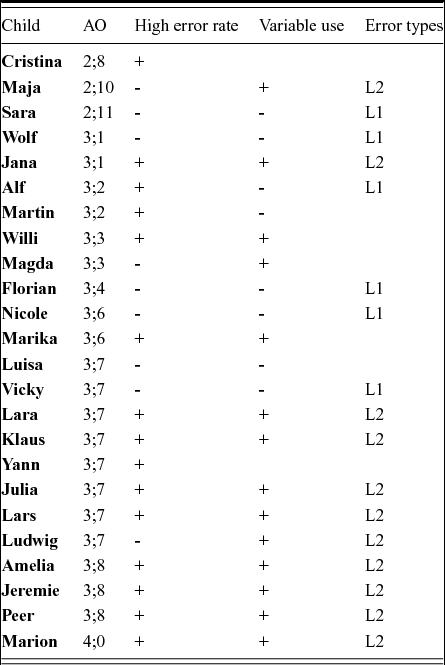
To sum up, applying the criteria defined above, most of the 24 children can be identified with reasonable certainty as L1- or L2-type learners with respect to gender acquisition; see Table 5Footnote 10 for a summary of the results. Only error rates during the first year sometimes stand in conflict with the other two criteria. In these cases, I decided to rely on qualitative rather than on quantitative criteria. Alf and Martin have therefore been classified as L1-type learners in spite of early high error rates, whereas Maja and Magda are considered to be L2 learners, although their error rates are low. This also means that there remain doubts with respect to Cristina's status as an L2 learner. She was last recorded at 23 ME, and we therefore do not know how her French developed afterwards. She may just be a slow learner, and this may also be the case with Maja.
L2 properties.
5.2.2. Longitudinal study: Discussion
I believe that these findings support the claim that some of the children of our corpus acquire grammatical gender like French L1 children, whereas others behave like adult L2 learners. Importantly, most of the ones classified as cL2 learners started to acquire French at AO 3;7 or later. I will return to this issue. However, almost all of those classified as child L2 learners acquired at least part of the determiner system and some of the gender-markings. This could be interpreted as a corroboration of the hypothesis that L1 parameter settings can be activated in L2 grammars; see Franceschina (Reference Franceschina2005) or Hawkins and Franceschina (Reference Hawkins, Franceschina, Prévost and Paradis2004). Identifying French as a grammatical gender language should thus not be difficult. In fact, most aspects of the gender system relating to parametric options should be unproblematic for German learners, for, with respect to microparametric settings, French and German differ in only one of the properties investigated, namely in that French is a binary system, lacking neuterFootnote 11. Theoretical considerations thus lead to the prediction that gender assignment is the major difficulty for child or adult L2 learners of French.
However, a closer look at the data raises doubts as to whether the cL2 learners actually rely on systemic knowledge of French grammatical gender in their language use. This suspicion arises in view of the fact that, after more than 24 months of exposure, not all of them use both gender forms of definite and indefinite articles, let alone other gender-marked elements. It is strengthened by the observation that both gender forms of articles are combined with the same noun, as in le/la souris ‘the mouse’, un/la maison ‘a/the house’, and, when a noun is resumed by a pronoun, conflicting choice of gender can again happen, e.g., la souris il fait. . . ‘the-fem mouse, he makes’, la fenêtre il est cassé ‘the-fem window, he is broken’ (Jeremie). One also finds overuse of one form, e.g., le or une (Willi, Klaus). These kinds of linguistic behaviour suggest that these gender-markings do not reflect knowledge of the target grammatical system. In other words, errors of these types should not occur if learners analyzed the various forms as encoding grammatical gender and if the syntactic operation of gender agreement was in place. It rather seems that these cL2 learners acquired the gender-marked elements by lexical learning, in an item-by-item fashion, but did not activate the agreement operation in the appropriate structural configuration, for, if this was the case, we should find instances of correct agreement in cases of incorrect gender assignment, e.g., *le/*un/*petit souris ‘the/a/little mouse’. The fact that our data do not contain this kind of evidence may be a shortcoming of our corpus. In fact, based on production data, it is notoriously difficult to distinguish between effects of gender assignment and agreement. For the time being, however, my conclusion is that the available data do not support the claim that L2 learners can easily activate L1 parameter settings when developing L2 grammars.
The prediction, on the other hand, that gender assignment constitutes a particularly difficult task for L2 learners is strongly corroborated, as should have become evident from the discussion of our empirical findings. Most importantly, formal properties of nouns do not play a significant role, if any, in cL2 acquisition, neither the ones offered by the French target system, nor the ones of the L1 German system. Moreover, formal properties do not override functional ones, as opposed to what has been reported for L1 development. These observations lead to the question of what principles or generalizations cL2 learners rely on in the acquisition of grammatical gender. It is difficult to offer a satisfactory answer. Quite obviously, semantic criteria do not play a decisive role, as is evidenced by the following examples mon Schwester ‘my-masc sister’, le madame ‘the-masc lady’, une frère ‘a-fem brother’, le maman the-masc mom’. Transfer from L1 cannot serve as an explanation, either, as is shown by Rieckborn (Reference Rieckborn2007b). She analyzed 17 children of our corpus and concluded that transfer could account for maximally 24% of the incorrect gender-markings.
To conclude, based on the results of the corpus analysis it is not possible to identify principles guiding child L2 learners’ acquisition of grammatical gender. My tentative conclusions, therefore, is that gender assignment is the result of lexical learning, item by item. If correct, this makes these children look even more like adult L2 learners.
5.2.3. Experimental data: Testing gender assignment with nonce words
In addition to samples of spontaneous speech, we collected and analyzed experimental data testing children's ability to assign gender to French nonce words. This test is designed to reveal whether children rely on formal properties of nouns in assigning gender.
The experimental design is inspired by a test developed by Karmiloff-Smith (Reference Karmiloff-Smith1979), studying monolingual French childrenFootnote 12 . The experimenter shows the child a card with two pictures of an unknown object in different colours or different sizes and introduces a nonce word when referring to one item which is distinguished by the relevant property while hiding the other one:
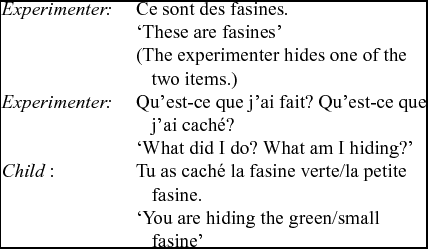
According to Karmiloff-Smith (Reference Karmiloff-Smith1979, p. 160), children are most sensitive to phonological clues for gender assignment up to approximately age 6. Subsequently, they still rely on word markers, but the success rate drops below 100% which they had reached before that age. This has to be taken into account in interpreting our results. At the time of testing, the children of the longitudinal study were between 6;07 and 8;03 years old. We therefore tested another group of children from the Lycée Français de Hambourg, who were younger but had not participated in the longitudinal study.
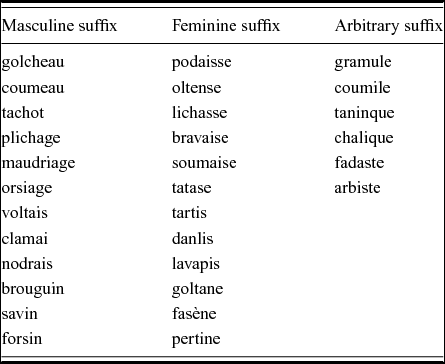
Let us first look at the results obtained by the older children. We were able to test eight of the children who participated in the longitudinal study. According to the analysis presented above, they are child L2 learners. The nonce words presented to them were selected from those created by Karmiloff-Smith (Reference Karmiloff-Smith1979, p. 153) who classified these words as favouring masculine, feminine or no particular gender, respectively, depending on word markersFootnote 13. Table 6 lists all nonce words used in our test; the results are summarized in Table 7.
Nonce words: Test 1.

Gender assignment with French nonce words.
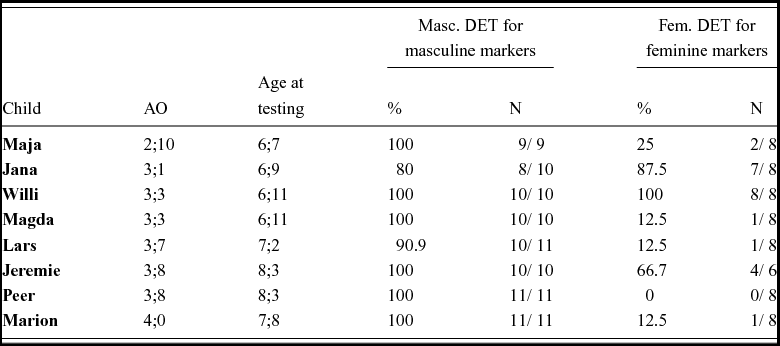
Table 7 displays the frequency with which the children assigned gender in accordance with word markers. Willi is the most successful child on this test, scoring 100% for both genders. This confirms his classification as an L2 learner who exhibits some L1 properties. Most of the other children encountered more difficulties in assigning feminine, as was also observed by Karmiloff-Smith (Reference Karmiloff-Smith1979). In fact, the positive results are primarily due to the overgeneralization of the masculine form. It can therefore be argued that Maja, Magda, Lars, Peer and Marion do not rely on formal properties of nouns in determining gender assignment.
As for Jana and Jeremie, they have now made progress, after well over three years of exposure to French, even if they do not fare equally well with both genders. In view of this limited success with one gender, it is doubtful whether this result is an indication that they rely on noun properties. At an age of testing well beyond the six-year limit set by Karmiloff-Smith (Reference Karmiloff-Smith1979), this test may not provide reliable insights into the nature of the underlying mechanisms of gender assignment. Rather, the effects of these mechanisms may be masked by those resulting from lexical learning after an extended time of experience with the L2.
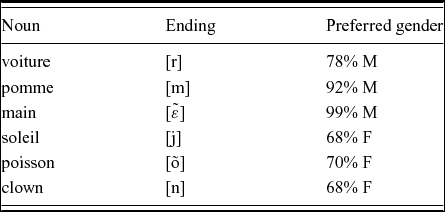
Let us therefore turn to the test administered to younger children who fall within the age range indicated by Karmiloff-Smith (Reference Karmiloff-Smith1979). Here, we used a different set of stimuli, i.e., 24 nonce words designed to trigger either masculine or feminine gender. In choosing the stimuli, we relied on the correlation between the final sound of a noun and its gender, as suggested by Tucker et al. (Reference Tucker, Lambert and Rigault1977). The 24 test items, presented together with 6 gender-neutral nonce words and 6 French nouns, represent 8 different word markers, 4 favouring masculine and 4 triggering feminine gender. We presented 3 examples of each marker, thus 12 masculine and 12 feminine ones. Table 8 lists the nonce words used in the test, and Table 9 displays the French nouns used as stimuliFootnote 14.
Nonce words: Test 2.
French nouns: Test 2.
The overall results, summarized in Table 10, show that, except for Pascal (18/24), the children assigned the predicted gender as expected only 14/24 times or less. This amounts to little more than to chance response patterns. Note that Anton (1 ME!) does not fare worse than Emma (26 ME) or most children at 14–15 ME. Four children overgeneralize one form: Eike (un on all 24 stimuli), Dennis (17 une), Nico (22 le), and Emma (18 le, 2 un, thus 20 masculine forms). In these cases, the frequency of correct assignment is, of course, not meaningful. Note that children do not generally do better on one of the two genders; rather, some are more successful with masculine gender assignment (e.g., Janina), others with feminine (Conny). There seems to be no general pattern adopted by individual learners, except for overgeneralization. Only Pascal might be argued to make use of formal cues when assigning gender.
Correct/incorrect gender assignment to nonce words.
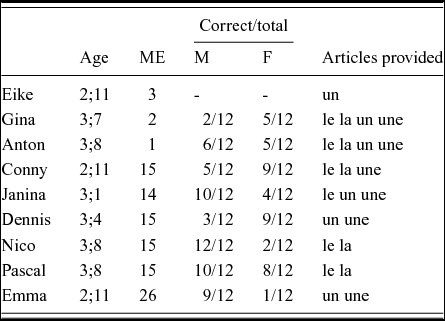
Let us therefore have a look at the correlation between word markers and gender of nonce words and at gender assignment to existing nouns; see Tables 11 and 12. Again, we find that some learners do better with word markers favouring masculine gender and others with those favouring feminine gender. Moreover, it is not the case that certain word markers trigger correct responses by all or by none of the children. Remember, finally, that some of the positive results are due to the overgeneralization of a gender form, e.g., Nico who uses almost exclusively le.
Gender assignment to specific markers of nonce words.
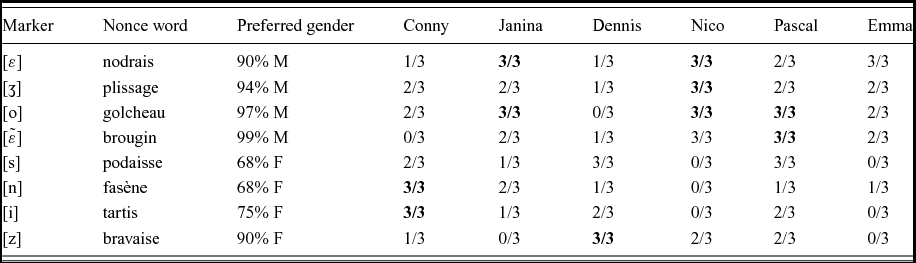
Correct gender assignment to existing French nouns.

Interestingly, Nico, who does not seem to make use of formal cues at all, appears to be the most successful child with existing French nouns. This, however, is due to his overgeneralization of masculine articles. Pascal, on the other hand, the only one who seemed to rely on formal cues, does relatively poorly with existing nouns. The fact that Pascal does not do well here except with nonce words whereas Nico and, to a lesser extent, Dennis succeed with real nouns but not with nonce words, suggests again that gender assignment typically results from item-by-item learning. At any rate, I do not find evidence in favour of the assumption that child L2 learners rely systematically on formal cues. This conclusion is in accordance with the one drawn from the analysis of spontaneous data.
6. Conclusions and open questions
The foregoing discussion has shown that age of onset is a crucial factor determining the course and result of successive acquisition of bilingualism in early childhood. It has also shown that cL2 learners are a distinct population. Some learners resemble children acquiring a first language, others share characteristics with adult L2 learners or exhibit properties of both populations. One of the domains where cL2 learners behave like aL2 learners is grammatical gender in languages where gender assignment depends on formal cues that are only partially transparent, as in French and German. Although some morphological cues are fully reliable and some phonological properties indicate gender with high probabilities, gender assignment to a considerable number of nouns must be learned item-by item. Contrary to L1 children, cL2 learners rely primarily on lexical learning, ignoring the information provided by formal cues. More surprisingly, they encounter difficulties in establishing agreement relations between elements sharing gender-markings, although they could rely on L1 parameter settings. They resort instead to rote learning of word sequences, at least for an extended period in the course of acquisition.
Concerning the age range during which the LMC undergoes changes affecting the acquisition of grammatical gender, our analysis confirms the claim that the turning point is at around AO 3;6. Six of the 12 children first exposed to French at that age or earlier behave like L1 children, but none of those starting at a later age does so; see Table 13. Quite obviously, this result needs to be confirmed based on a larger data base. We should also expect to find individual differences. But the age range around 3;6 is clearly a developmental phase during which important age-related changes occur in successive language acquisition.
Tentative classification of children as L1/ L2 learners.

If it is correct that (2)L1 children rely on formal properties of nouns and on distributional properties (Art+N combinations), this confirms the assumption that L1 learners rely on discovery principles which I argued (4.2.1) to be part of the LAD. Consequently, the observed changes cannot be fully explained in terms of UG principles. Rather, if cL2 learners do not make use of formal cues, this suggests that discovery principles, too, are affected by age-related changes of the acquisition mechanisms. In order to compensate for the partial non-availability of these mechanisms, L2 learners resort to item-by-item learning, or they overemphasize functional cues to the detriment of formal ones; see Carroll (Reference Carroll1999).
Let me finally address one more issue, related to the interpretation of ‘critical periods’ as clusters of sensitive phases, each defined in terms of a grammatical phenomenon that is optimally acquired during that phase. There is no a priori reason to assume that all phenomena of a cluster should be affected simultaneously by age-related changes, neither across learners nor intra-individually. The question thus is whether individual children use L2 features in some grammatical domains and L1 properties in others and to what extent learners with identical AO share L1 or L2 properties. For the time being, I can only offer a tentative answer. For 20 children of our corpus, the development of further grammatical features has been studied, scrutinizing the data for L1 and L2 properties, e.g., finiteness (Meisel, Reference Meisel, Haznedar and Gavruseva2008) and Root Infinitives (Riedel, Reference Riedel2009; Preißler, Reference Preißler, Rinke and Kupisch2011). These analyses suggest that, in most cases (16/20), children behave consistently, either like L1 or like L2 learners; see Table 13. The isoglosses defining sensitive phases thus seem to bundle. As for those learners where this is not the case, further research is needed in order to decide whether the observed inconsistencies reflect the variation space across and within individuals, or whether they are artefacts due to deficiencies of the analyses.



