





1. Introduction
The Falklands are a collection of over 700 islands and islets. Its two main islands are called West Falkland and East Falkland, and fewer than a dozen of the rest are inhabited. The archipelago is located 12,173 kilometers from the United Kingdom, and 344 kilometers from Argentina. Three-quarters of the 3,500 population live in its capital, Stanley, while the rest live in small settlements. The Islands have been an enclave of great controversy since 1833 when the British took control of the archipelago from Argentina, which has never relinquished its sovereignty claim. Since then, the Islands have been administered as a British overseas territory, except for a 74-day war in 1982 which ended with the British retaining control.
Since 1833, the Islands have been continuously inhabited by an English-speaking community. The scarce literature on Falklands English states that it is one of the most recently developed World Englishes, rising from the contact of English varieties of the south and southwest of England and the northwest of Scotland (Britain & Sudbury, Reference Britain, Sudbury, Schreier, Trudgill, Schneider and Williams2010). However, this young variety is also the result of contact with Spanish, from which it has borrowed a considerable number of Spanish words, a consequence of linguistic contact with Spanish-speaking gauchos.Footnote 1 These loanwords are mainly—though not exclusively—related to rural life and livestock. Incidentally, the borrowing process extended to place names, resulting in a fair number of Spanish toponyms still in use to date. Such place names are a reminder of the gauchos’ presence in the Falklands (Boumphrey, Reference Boumphrey1967) and a strong indicator of their significance in the history of the Islands. In other words, their survival points to the scope of the cultural process involved with their presence (see Spruce & Smith, Reference Spruce and Smith2019). An example of this is the word used today in the Islands to refer to the rural area: ‘camp’ (borrowed from the Spanish word campo) instead of the word ‘countryside’ or a variant of it.
When it comes to toponymic research, for much of the twentieth century, the study of place names was mainly preoccupied with accumulating (see Wright, Reference Wright1929) and cataloguing the toponyms rather than analyzing the socio-spatial practice of toponymic inscription itself (Rose-Redwood, Alderman & Azaryahu, Reference Rose-Redwood, Alderman and Azaryahu2010). In the past few decades, there has been a growing recognition that the traditional reliance on maps and gazetteers to study place names is inadequate and should be supplemented with participant observation, interviews, and ethnographic methods (Myers, Reference Myers1996). Toponymists now agree that it is crucial to engage seriously with many different kinds of sources, both written and oral, since the latter can supply names that rarely—if ever—find expression in the written record; examples of these are microtoponyms, i.e. names of small features in the landscape (Taylor, Reference Taylor and Hough2016). In today’s revisited toponomastics framework, fieldwork becomes mandatory. There are aspects essential to the work which involve getting out and about—not just to interrogate those who live in a landscape, such as in the collection of oral material, but also to interrogate the landscape itself (Taylor, Reference Taylor and Hough2016). The toponymy of the Falkland Islands is relatively uncharted territory,Footnote 2 which lacks an examination of Spanish place naming—let alone one within the new framework of toponomastics (i.e. studying maps as well as inhabitants’ narratives).
The present study seeks to address the pending subject of looking exclusively into gaucho place names by resorting to both traditional toponymic and ethnolinguistic approaches. Hence, results are presented in two parts. The first consists of the traditional outlook on toponomastics, i.e. collecting and studying maps of the Islands (dating back as far as 1764), and the second involves three specific objectives: attempting to learn if any of these toponyms evade maps; observing how they are used today; and looking into Islanders’ attitudes towards them. Nonetheless, before diving into that, this introductory section is provided to acquaint readers with basic concepts of language contact onomastics, the sociohistorical context, the study of language attitudes by means of linguistic ethnography, and the languages in contact.
Place names are particularly interesting for contact linguistics as they give a diachronic picture, indicating which cultures have been present in an area through time and unveiling which languages were spoken at a certain time and place. Toponyms in contact situations are easily borrowed, probably because sharing a place name is the easiest way to point out a specific location, and just like loanwords, loan names are adapted to the sound system of the recipient language, and adaptations sometimes also occur on other linguistic levels, including grammar and syntax (Sandnes, Reference Sandnes and Hough2016). Sandnes (Reference Sandnes and Hough2016) draws attention to the role of the speaker in contact onomastics, as processes such as translations, replacement of elements, and syntactic adaptations can only be explained as the result of a speaker’s interpretation and adaptation, and adds that names offer interesting insights into linguistic processes in language contact areas since they are likely to be amongst the first items to be borrowed when people speaking different languages meet, since they do not need to be understood (place names function as labels for places which can be singled out by pointing at them, meaning that only a minimum of communication is needed).Footnote 3
In contact onomastics, studies of place names may be monolingual or bilingual in their approach. In this study, a bilingual approach is adopted, looking into how English and Spanish have interacted, hoping to better understand the historic interactions between different speakers in the same place. Furthermore, like contact linguistics, contact onomastics should address the socio-cultural setting, language users, and the relevant languages (Sandnes, Reference Sandnes and Hough2016). Together with the case of Spanish–English contact in the Falklands, we find the case of Spanish place names in the U.S., where many places have Hispanic names, for instance San Francisco, Los Angeles, San Antonio, Las Vegas, San Diego, Sacramento, Las Cruces, San Jose, Santa Barbara, El Paso, Santa Fe, Boca Raton, Fresno, Escondido, Palo Verde, etc. There is also the case of Gibraltar, where there are only a handful of names in Spanish, e.g. Playa de Levante, Buena Vista Park, Plaza de la Verdura, Calle Comedia, Calle Cordones. However, the case of Spanish place names in the Falklands seems to be quite unique, if one considers the number of Spanish toponyms and the size of the territory.
The livestock business in the Islands can be traced back to the eighteenth century, when Louis Antoine de Bougainville brought a herd of around seven calves and two bulls, along with some pigs and sheep, three horses, and a goat (Strange, Reference Strange1973). According to Strange (Reference Strange1973)—who has made a detailed study of the livestock history of the Falklands—during the Spanish occupation more cattle were taken to the Islands, and by 1785 the Spanish Governor Ramón Clairac claimed that the animals reached 7,774 heads. Between 1826 and 1832, Luis Vernet settled in the Islands in response to a proposal from the government of the province of Buenos Aires. One of the main purposes was to capture wild cattle and slaughter some 20,000 head with the help of gauchos from the Rio de la Plata (River Plate) (Beccaceci, Reference Beccaceci2017). The work of these gauchos consisted of (a) catching the wild cattle and horses descended from those left by Bougainville, (b) constructing peat and stone corrals for the confinement of animals, and (c) trading (Lorenz, Reference Lorenz2014). The General Archive of the Argentinian Nation holds the contracts between Vernet and the gauchos in which it was specified that their work included the slaughter of cattle and horses.
In 1833 Captain Onslow raised the British flag proclaiming British sovereignty over the Islands. At that point, the 33 Argentinian residents and 26 soldiers who made up Argentina’s garrison were forced to withdraw, while the rest were given the option to stay (Pascoe & Pepper, Reference Pascoe and Pepper2008). According to Pascoe & Pepper (Reference Pascoe and Pepper2008), twelve Argentinians, four Uruguayan Charrúa Indians, two British, two Germans, one French, and one Jamaican decided to stay, and another seven civilians arrived later that year (including four gauchos). By 1838, there were 43 people, of whom 14 were sailors working from docked ships and seven were gauchos (Britain & Sudbury, Reference Britain, Sudbury, Schreier, Trudgill, Schneider and Williams2010). The following extract from the travel notes of Captain Robert FitzRoy (Reference FitzRoy1839:278) is very illustrative of that time and place, as he points out that:
Although the climate is so much colder than that of Buenos Ayres, the gauchos sleep in the open air, when in the interior, under their saddles, just as they do in the latitude of 35°. While idling at the settlement they gamble, quarrel, and fight with long knives, giving each other severe wounds. With their loose ponchos, slouched hats, long hair, dark complexions, and Indian eyes, they are characters fitter for the pencil of an artist than for the quiet hearth of an industrious settler. Besides these gauchos, we saw five Indians, who had been taken by the Buenos Ayrean troops, or their allies, and allowed to leave prison on condition of going with Mr. Vernet to the Falklands.
The gauchos described by FitzRoy were amongst the few who remained after 1833. The captain also mentioned how the population was made up, based on what he had been told by someone who had been in Port Louis (the first settlement location), and according to that source, there were around 100 people, including 25 gauchos, five Indians, two Dutch families, two or three English, a German family, and the rest were Spanish or Portuguese.
In 1842 amongst the 49 non-military residents, there were missionaries en route to Patagonia, gauchos, seal hunters, a private group of horticulturists and fish curators, as well as government harvest workers (Royle, Reference Royle1985). Sudbury (Reference Sudbury2001, Reference Sudbury and Hickey2005) asserts that the settlers of the nineteenth century came mainly from Scotland (from the Highlands and the Western Isles) and from the southwest of England (Somerset and Devon). In the second half of the nineteenth century, the population increased significantly, in part due to the British government’s policy of encouraging migration. However, there were also migrants from South America, mainly gauchos from the Rio de la Plata who were employed to work in the cattle industry (Spruce, Reference Spruce, Blake, Cameron and Spruce2011) and would remain in the Islands until the end of the nineteenth century. Those gauchos were not precisely the ones Vernet took to work with wild cattle (though some decided to stay in the Islands), as other merchants continued to “import” workers, especially from Patagonia, and in the case of the Lafone brothers, from Uruguay (Lorenz, Reference Lorenz2014). The Englishman Samuel Fisher Lafone, resident of Montevideo, created the Falkland Islands Company to commercialize Falklands cattle. Colonial auditor Robert Boumphrey (Reference Boumphrey1967) pointed out that in 1847 the great peninsula that forms the southern half of East Falkland, known as “Rincón del Toro” to Darwin, was bought by Lafone. Along with the land, the businessman acquired the rights to the cattle that flourished there. This peninsula is known to this day as Lafonia. Lafone established the Hope Place salting house (locally known by the Spanish name Saladero; see Section 3.2), which led to the rapid decline of wild cattle (Strange, Reference Strange1973). According to Strange, the gauchos that Lafone brought to the Islands built a wall of peat across the isthmus linking the northern section of East Falkland with Lafone’s area to the south, preventing cattle from escaping their land; with this, they managed to hunt cattle to such an extent that in a period of four to five years practically no wild cattle remained (1973). In March 1852 a population census was carried out; it registered eighteen people with the “profession” of gaucho, and other South Americans were listed as “labourers” or “workers” (Falkland Islands Government, 2021). The places of origin range from South America, Uruguay, and Argentina to Montevideo (since that was the port from which they sailed). According to Beccaceci (Reference Beccaceci2017), at that time, boats with gauchos coming from the continent were constantly arriving in the Falklands.
In 1867, thousands of hectares were allocated to sheep farming, turning the Islands into a pastoral colony of the United Kingdom and bringing immigrants of British origin who were supplanting the Rio de la Plata gauchos (Beccaceci, Reference Beccaceci2017). According to Beccaceci (Reference Beccaceci2017), by 1883 there were already half a million sheep, and in 1889 the position of capataz (foreman of the gauchos) disappeared from the Falkland Islands Company’s records. In a short time, cattle ceased to exist in East Falkland, while in West Falkland they disappeared around 1894 (Strange, Reference Strange1973).
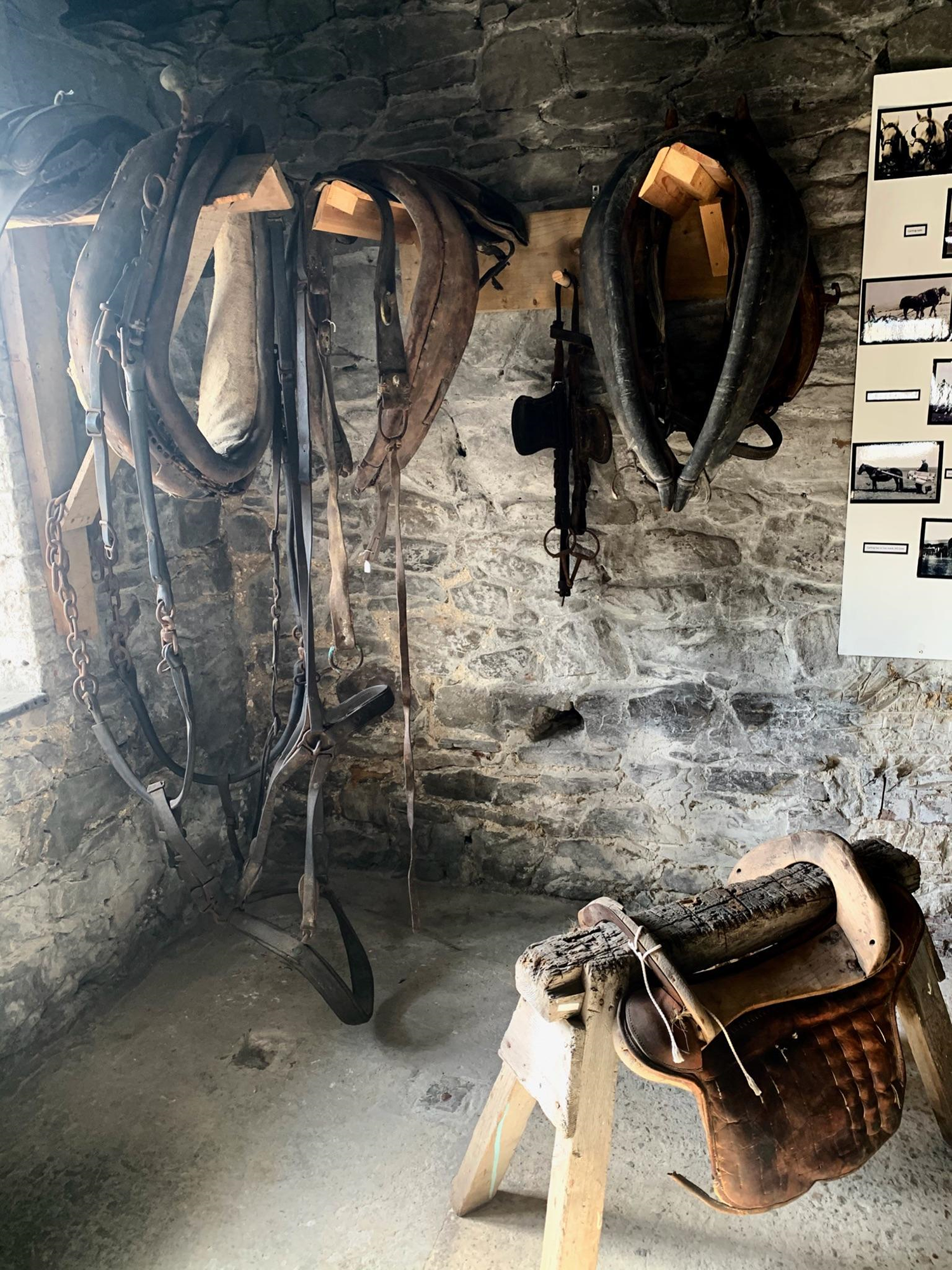
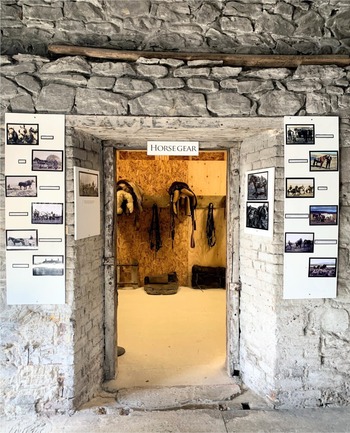
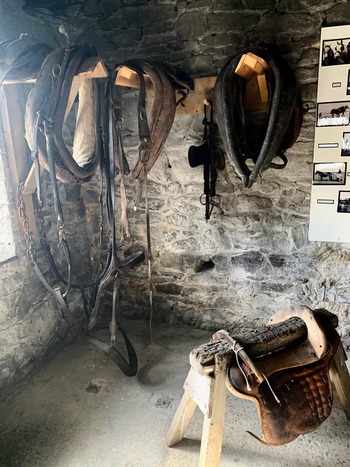
At present, the Historic Dockyard Museum of Stanley has a whole section devoted to the Islands’ gaucho heritage (see Figures 1 and 2). Studies of language attitudes can help to shed light on linguistic phenomena. The concept of language attitudes can be defined from a broad range of viewpoints; however, all tend to include feelings and beliefs that people have towards the language they speak, other speakers of their own language (both native and foreign), speakers of other languages, language policies, language education, etc. Ferguson (Reference Ferguson1996:274–275) points out that “discovering language attitudes is more difficult than finding the basic data and also may raise political issues which threaten the successful carrying out of a language survey, but it is of fundamental importance.” During fieldwork in the Falklands, there was always the imminent possibility of raising sensitive political issues, since the residents are still emotionally affected by the 1982 war. There are many factors that influence attitudes and folk linguistic awareness, from parents, to schools, to literature and the media, to a host of folk-culture artifacts (Preston, Reference Preston1996:46). Furthermore, language attitudes can be socialized through various agents, including educators, peers, family, and the media, and since they are learned, they are prone to change, just like language (Dragojevic, Reference Dragojevic2017). Such changes may respond to intergroup relations, and a conflict like that of 1982 has the potential to change attitudes towards Spanish and English. Once evoked, language attitudes can have myriad behavioral consequences, with negative attitudes typically promoting prejudice, discrimination, and problematic social interactions (Dragojevic, Reference Dragojevic2017).
Entrance to the Horse Gear section of the museum, where horse tack almost identical to that of the mainland is displayed. Most exhibits are named in Spanish.

Some of the numerous bits, saddles, and head collars (locally known by the Spanish loanwords ‘freno’, ‘recao’, and ‘bozal’, respectively), amongst other horse tack.
When it comes to carrying out language attitudes research, there can be uncertainty as to whether research data truly represent the respondents’ attitudes (Garrett, Reference Garrett2010). When looking into language attitudes, linguists resort to one (or a combination) of three approaches, namely the societal treatment approach, the direct approach, and the indirect approach. This work mainly resorts to the first, which tends to include ethnographic techniques, but direct and indirect approaches are part of such interviews too, since researchers bring up subjects to discuss and ask questions directly even while carrying out unstructured interviews in the field. In the past 20 years, within sociolinguistics, this approach has been called linguistic ethnography.
Linguistic ethnography combines theoretical and methodological approaches from both linguistics and ethnography, in order to look into social matters that involve language (Tusting, Reference Tusting2020). While linguistics devotes its attention to language itself, ethnography provides reflexivity about the role of the researcher, attention to people’s emic perspectives, sensitivity to in-depth understandings of particular settings, openness to complexity, as well as contradiction and reinterpretation over time (Rampton et al., Reference Rampton, Tusting, Maybin, Barwell, Creese and Lytra2004).
English is the first local and only official language of the Falklands. Falkland Islands English (henceforth FIE) is largely unknown to other speakers of English. In fact, it is difficult for most of them to identify an Islander when listening to them abroad, and their dialect is generally confused with other southern varieties, given that it features characteristics common to Australian and New Zealand English (Sudbury, Reference Sudbury2001). Interestingly, it has been pointed out that what sets FIE apart from other Southern Hemisphere varieties is the fact that it has not incorporated autochthonous words. Even though incorporating native lexicon is technically impossible since there is no record of a native population to the archipelago, Falklands English does have an island-specific vocabulary as rich as those of Australian, New Zealand, and South African Englishes, which have also developed local lexicons (see Sudbury, Reference Sudbury2001). While Sudbury (Reference Sudbury2001) argues that the lack of language contact with an indigenous population accounts for what she believes is an absence of lexical diversity, she admits that “there are some local lexical items. The majority of these have Spanish origins, most likely left behind from the 19th century South American gauchos” (Sudbury, Reference Sudbury2001:74).
The Spanish imprint in FIE finds its origin in the nineteenth century. The gauchos who set sail from the Port of Montevideo (very probably Rioplatense Spanish speakers) were the ones giving rise to Spanish–English contact, but transit between the Islands and Patagonia has very probably also played a part. For Joan Spruce (Reference Spruce, Blake, Cameron and Spruce2011)—a fifth-generation Islander and local historian—the largest group of words characteristic of the Falklands is probably that taken from the Spanish spoken by the gauchos, and specifies that they brought with them the terminology and knowledge of how to make and use horse gear, which served both for transporting and driving animals, also giving names to streams, valleys, and settlements. It is noteworthy that these loanwords are not restricted to the gauchos’ professional work but extended to other semantic domains, also related to rural life (see Rodríguez, Elizaincín & González, Reference Rodríguez, Elizaincín and González2023). As already mentioned, in the late nineteenth century cattle ranching began to be replaced by sheep farming, making gaucho expertise unnecessary. Such events appear to have diminished the vitality of Spanish loanwords. But even though many of the words borrowed from Spanish may have fallen into disuse, the Spanish linguistic contribution has not been insignificant at all. What is more, the toponymic footprint is still solid as a rock.
2. Methodology
This work is a combination of contact linguistics and toponomastics. In contact linguistics, researchers tend to resort to methodologies and techniques of adjacent disciplines. This work is no exception: a mixed approach of methods from anthropology and sociolinguistics is taken. With respect to toponymic research, following the current trends and reconsiderations of the field, we investigated Islanders’ attitudes towards place names, by combining ethnographic approaches and a close attention to language use. This mainly involved conversing with Islanders in their cultural setting, given that for the foreseeable future at least, there is no substitute for being in and moving through the actual landscape (Taylor, Reference Taylor and Hough2016).
The first stage of this research involved adopting a traditional approach of toponomastics, i.e. collecting and studying maps of the Islands, dating back as far as 1764. During map analysis, only place names clearly tied to gaucho culture were considered. Hence, names that were not plainly of gaucho heritage were left aside. The second phase incorporated participant observation, and interviews during two visits to the Falklands, in 2019 and 2020. Data were collected while speaking to residents about Spanish names on the map of the Islands, asking them to supply any information they recalled relating to the place names in question. Meetings were arranged with people from different parts of the Islands (from West and East Falkland). Informants were all Islanders, both camp (‘countryside’ in Falklands vernacular) and Stanley dwellers, men and women from ages 18 to 87 (no more information is disclosed in this respect in order to protect their identity, since the population only amounts to 3,500 people). The tools consisted of field notes, a field diary, and a recorder, following the premise of ethnographic fieldwork (Guber, Reference Guber2011). Participant observation and ethnographic interviews took place both in camp and in Stanley. Snowball sampling facilitated the recruitment of 20 respondents, and interviews were carried out in the informants’ L1, i.e. English. All interviewees were presented with information letters and asked for informed consent.
3. Results
3.1. Falkland Islands Spanish place names in maps
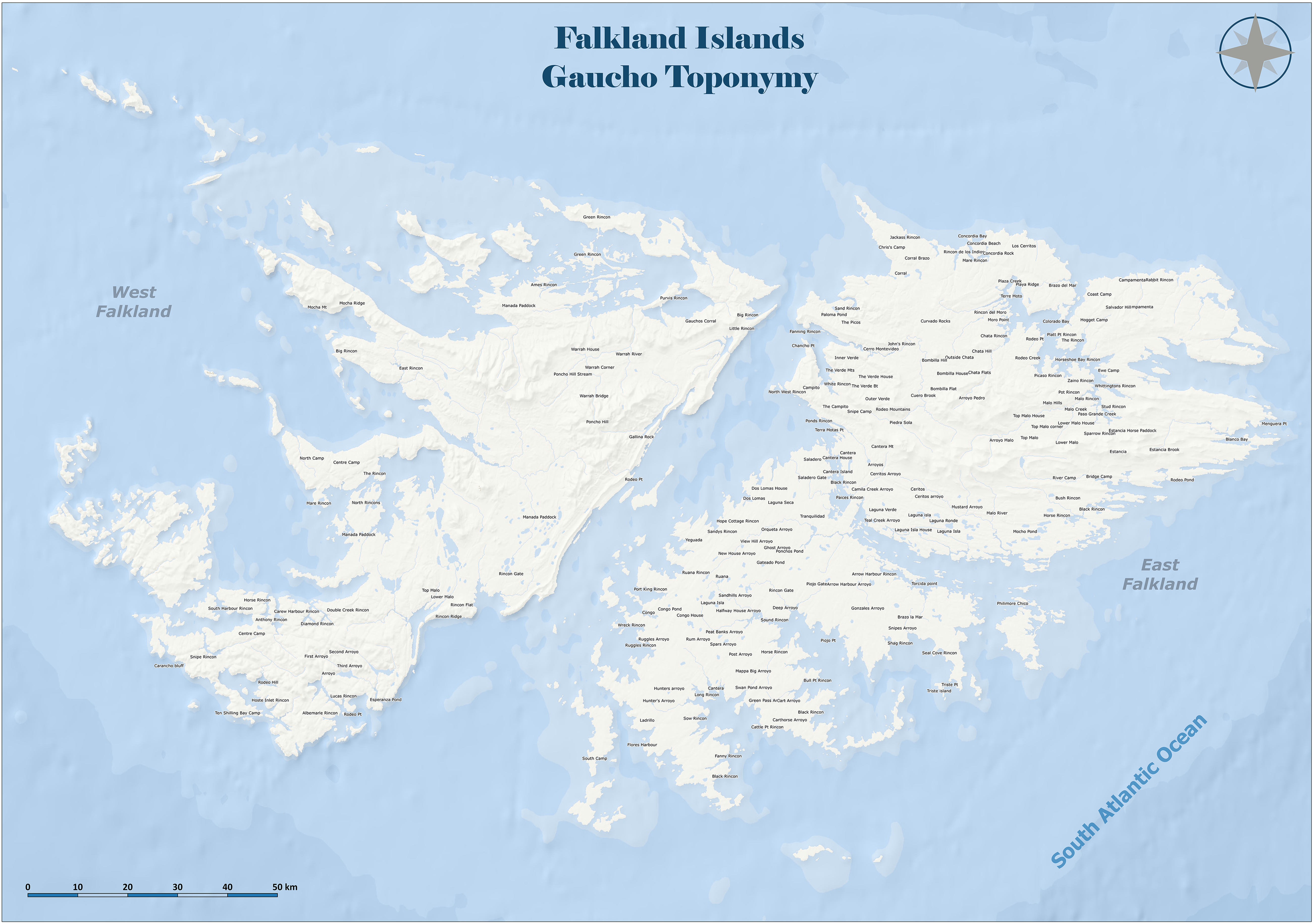
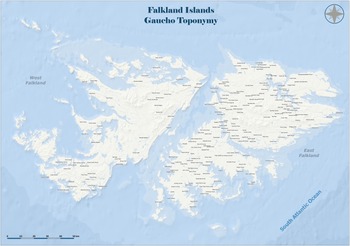
Through the analysis of different types of maps of the Falklands (paper and digital) the contact with Spanish stands out through the abundant Spanish toponymy, e.g. Rincon Grande, Ceritos, Rincon Verde, Cantera, Malo River, Dos Lomas, Torcida Point, Pioja Point, Oroqueta, Laguna Isla, Bombilla Hill, Tranquilidad, Rincon de Saino, Rincon del Picaso, Rincon del Moro, Rincon de los Indios, etc.Footnote 4, Footnote 5 (see Figure 3). There is no doubt that Spanish place names in the Islands result from nineteenth-century gauchos working there, and that the legacy is of considerable weight. In fact, limiting the analysis to local maps, the number of place names with a Spanish component rises to over 200 (Rodríguez, Reference Rodríguez2022). Spruce (Reference Spruce, Blake, Cameron and Spruce2011:1) states that gauchos left “names for streams, valleys and camps,” a toponymic legacy that is still alive and kicking, both in maps and in actual language use. With respect to their coinage, she explains (personal communication, June 22, 2020) that prior to the gauchos working in the mountains, crossing rivers, valleys, and other kinds of terrain (e.g. Cantera, Spanish for ‘quarry’), many of these features would not necessarily have been named. According to Spruce, in order to report to a manager (capataz in Falklands vernacular), a gaucho would have to provide a name for the valley, mountain, stream, or river where he had found cattle or where he had been going for the cattle work, and these names were largely coined from the appearance of the place. The name of Malo River is explained by the fact that it was a bad place to cross on a horse (malo is Spanish for ‘bad’), Terremoto explains swampy ground (Spanish for ‘quivering ground’), and Campo Verde (Spanish for ‘green land/area’) describes green grassy areas. In addition, the name Cerro Montevideo indicates the presence of a Uruguayan gaucho, who might have missed his homeland. This was probably the origin of the toponymic inventory of the Islands on maps.
Map showing some gaucho place name locations.
Unlike place names in French, English, and Spanish given by seamen—which refer mainly to islands, rocks, bays, coves, and capes—gaucho names also identify inland geographical locations and features, reflecting the new practical necessity for orientation, land delimitation, and management in the cattle business. The use of gaucho toponyms is evenly distributed between inland and coastal areas (islands, beaches, bays, points): 97 (43.69%) and 125 (56.30%) respectively (Rodríguez, Reference Rodríguez2022). However, these gaucho place names tend to refer to geomorphic features (e.g. hills, canteras) rather than aquatic features (e.g. streams, lagoons). It is also worth noting that 73% of the place names are in East Falkland, something that came up during fieldwork as a fact intuitively well known to Islanders.
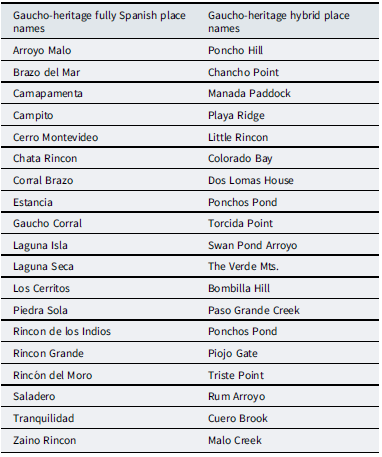
Many place names carry a descriptive and a generic, sometimes both in Spanish and sometimes one of each, e.g. Rincon Verde, First Arroyo, and Playa Ridge (see Table 1 and Figure 4). What is more, while the French and English place names tend to represent the many explorers and navigators who visited the Islands, the Spanish names rarely constitute anthroponyms (except for cases such as LafoniaFootnote 6 and Mount Vernet). Instead, they tend to refer to physical and natural elements in the areas where stock rearing was practiced, i.e. in the countryside, while those originating in other languages mostly define coastal areas.
Fully Spanish and hybrid (English–Spanish) gaucho place names

Map showing generics in gaucho place names.
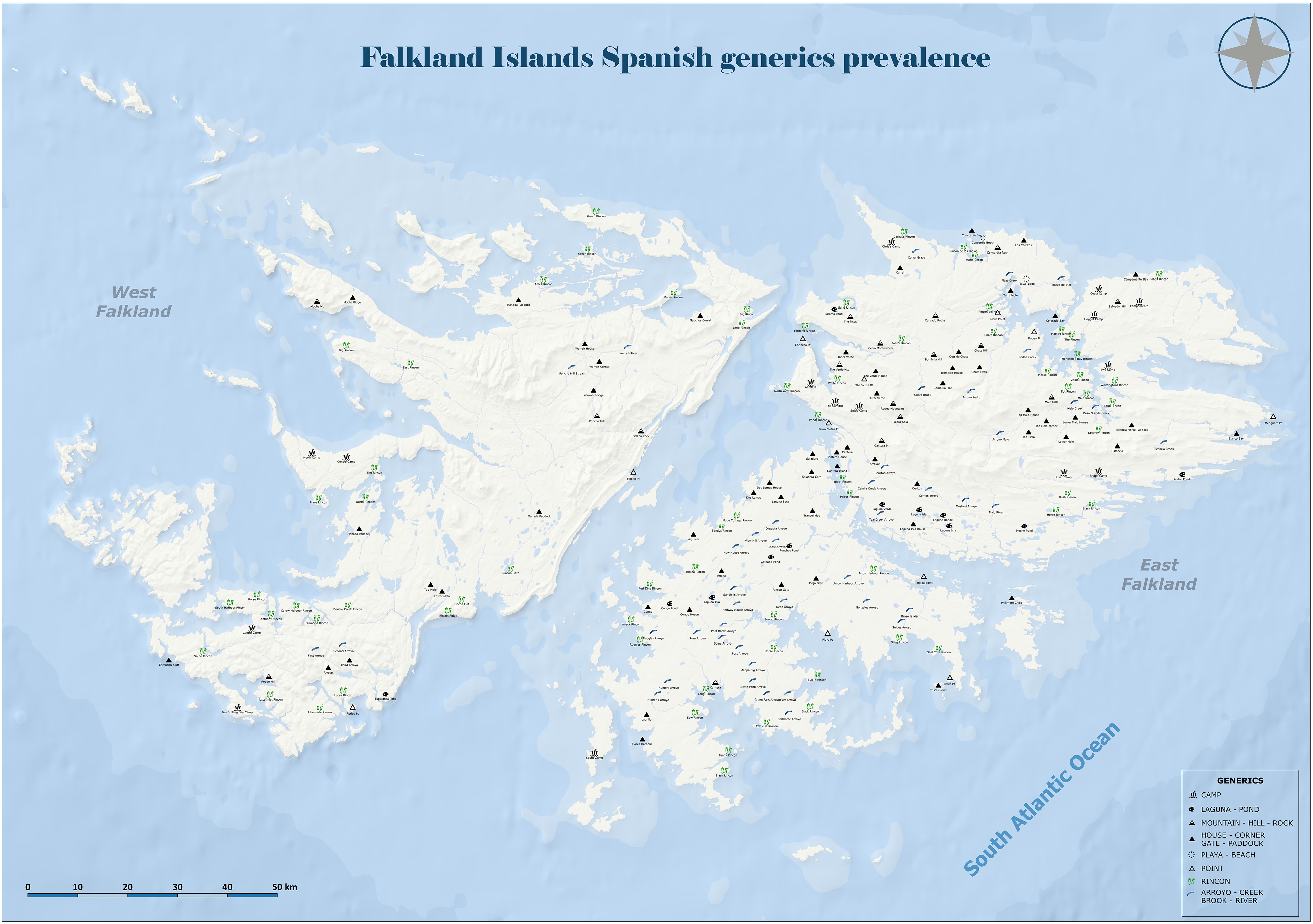
Around 80% of gaucho toponyms are Spanish–English hybrids (also called blended toponyms) and do not present a combinatorial dominant since either the specific or the generic is in Spanish, e.g. Chancho Point and Horse Rincon. These bilingual place names configure toponymic clusters, i.e. the generics are used as part of the specific. The high percentage of hybrid toponyms could be understood as indicative of a diglossic era in the history of the archipelago. Furthermore, the fact that the generics are “absorbed” by the specific could be a result of the abrupt decline in the number of Spanish speakers when changes in the farming industry made gauchos redundant.
The Rioplatense Spanish variety can be identified through the use of suffix -ito in many place names, e.g. Los Cerritos ‘little hills’ and Campito ‘little field’. Other place names are also found in continental South America, namely in Argentina and Uruguay, from where the gauchos came (see Boumphrey, Reference Boumphrey1967). An example of this is the toponym Laguna Seca ‘dry lagoon’.
Looking at local maps allows the reader to immediately perceive the gaucho imprint throughout the camp, a toponymy still in force almost 200 years after the peak of the language contact.Footnote 7 During fieldwork, it became clear that this toponymy of loanwords is valued positively by the local population, who consider it not only part of their history but also their cultural heritage.
3.2. Gaucho place names discussed in fieldwork
The Falklands do not have a literature (articles, books, etc.) vast enough to study how place names work and have evolved, except for a handful of cases, one of which is presented here as an example of gaucho toponyms (Trehearne, Reference Trehearne1978:51):
After following the foothills of the range, with the vast gray bulk of Mt Usborne glowering on their right, the riders struck south, across an area of lowland, along a creek called Ceritos Arroyo, through a very narrow stretch of land separating Burnside Pool from Camilla Creek.Footnote 8
Given that these types of passages seldom occur, fieldwork is fundamental. In the following paragraphs we present ethnographic data on undocumented gaucho place names, how gaucho toponyms are used, and the community’s attitudes towards them.
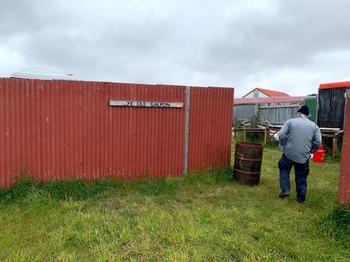
With respect to what is shown by fieldwork but not by maps, it has been claimed that oral sources accessed during fieldwork are particularly useful for finding microtoponyms (see Taylor, Reference Taylor and Hough2016). That has been true for the present case study, since the microtoponym ‘Galpón’ evades all maps, proving how relevant fieldwork is for toponymic research. In Spanish, galpón ‘barn, shed’ is a mere noun, but fieldwork tells us that in the Falklands ‘galpon/galapon’Footnote 9 is a name restricted to a few buildings in Lafonia—two in North Arm and one in Darwin. The latter seems to be the one most associated with this word, but the place name eludes all maps analyzed, and no evidence of ‘galpon’ was found acting as a common noun to refer to any barn, either. ‘The Galpón’ in Darwin—as it is locally known—has been designated as being of architectural and historic interest by local Planning Ordinance in 1991. In Goose Green, we came across one with a sign reading ‘Ye Ole Galpon’ (see Figure 5). The expression ‘Ye olde’ was used in the nineteenth century to establish a connection between a place or business (for instance, a pub) and England.
Photo of ‘Ye Ole Galpon’ taken at Goose Green during fieldwork.

The opposite occurs with Saladero: the former salting house where Lafone’s gauchos used to live and work—formally named Hope Place and referred to as such in all historical and legal documents—is locally referred to by the Spanish name. The name Saladero is so much preferred over the official one that it is used in today’s maps and road signs (see Figure 6). Saladero is the Spanish common noun meaning salting house, whereas in the Falklands it is only used as a proper name, more specifically a place name.
Photo of a street sign taken during fieldwork, where the Spanish name ‘Saladero’ appears instead of the original name ‘Hope Place’.

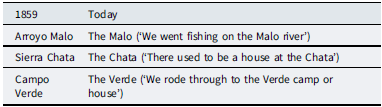
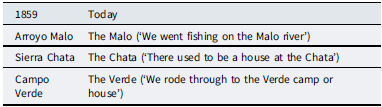
The formation of toponyms is a long, multi-stage process, which tends to be accompanied by a rethinking of elements, adding of suffixes, or, conversely, by truncating long names. In this context, it is necessary to note the modern tendency to reduce the full form of some Falkland Islands place names. On February 5, 1859, Arthur Bailey, Surveyor General, Stanley, in his report to Governor Moore on The Survey of Wild Cattle (within East Falkland) (Falkland Islands Government, 2021), mentioned geographical names which have not been in full use for many years (see Table 2). Concerning the contemporary functioning of place names, according to local historians Joan Spruce and Sally BlakeFootnote 10 (personal communication, February 19, 2020), Spanish generics are part of the place name cluster and are not in use in general conversation, as in “going to the Arroyo Malo via Laguna Isla.” In other words, they are generics in the donor language (Spanish) but some generics have been dropped (see Table 1), for example, the Arroyo Malo is now just referred to as ‘the Malo’ (fishing river). In fact, a typical current feature is to put article ‘the’ in front of Malo, Chata etc., though this practice responds more to orality than to cartography. This is likely because Spanish articles are gendered, hence a FIE speaker would have to learn the accompanying ‘el’ or ‘la’ article that precedes the place name, while using the English article ‘the’ is more economical.
Gaucho place name usage in the nineteenth century compared to today
Analysis of phonetics and phonology was not within the scope of this study, but during fieldwork it became evident that most place names are fully adapted to the recipient system. Interestingly, some Spanish place names have inherited Rioplatense sounds such as the voiceless palatal features in words like playa and ellos. An example is the place name Bombilla, which is pronounced in the way Uruguayans or Bonaerenses (i.e. Rioplatense Spanish speakers) would say it.
Islanders’ attitudes towards the Spanish place names are positive. Most locals are aware of the toponymic heritage left by gauchos. When asked about those place names they do not hesitate to point out their Spanish origin, and follow up with an account of how gauchos are part of their heritage. Some of this knowledge is now taught at school. While visiting Stanley’s Junior School we talked to teachers and witnessed how gaucho heritage is tackled in the classroom and in school projects (some put up on bulletin boards). Gaucho historical culture is part of the local curricula as much as of the archipelago’s historical memory. Attitudes are homogeneous among the different age groups interviewed (18–87); no informant manifested negative viewpoints or sentiments towards them (though Argentinian ones did receive negative comments; see Rodríguez & Elizaincín, Reference Rodríguez and Elizaincín2023). We now present quotations from some of the conversations held during fieldwork, representative of the Islanders’ attitudes.
While talking about the extension of Spanish toponyms in the archipelago, an Islander interviewed in the northwest Falkland camp pointed out that “Lafonia is more centered around the gaucho terminology, it seems to be. Which is obvious, because that’s where they were.” This respondent was correct, as we have mentioned that there are more gaucho place names in East Falkland. So did a former camp dweller who now lives in Stanley due to his advanced age: “quite a few of them [Spanish names] are in Lafonia, because I think that’s where Lafone came and started his cattle business.” See Figure 7.
Map showing the prevalence of Gaucho place names (West vs. East Falkland).

While reflecting on the origin of the names, a Stanley resident pointed out that the names are used naturally by locals, noting that people are not linguistically aware of their origin and do not pay much attention to them. In her own words: “I don’t really think anyone stops to think about them. I think that because you grow up calling them that, you don’t really stop to think.”
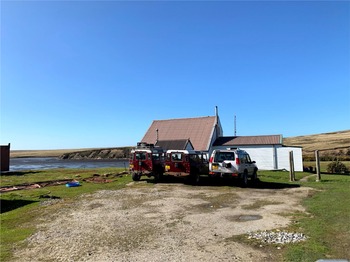
Unlike what happens in cases in which the toponyms originated in indigenous languages (e.g. Ushuaia ‘deep bay’ in Yagan, Ontario ‘beautiful lake’ in Iroquoian) that are distant from the language of the newcomer, Islanders can recognize the Spanish in place names. Hence, while interviewing the dwellers of Estancia Farm (Figure 8), the couple joked about their home being called ‘farm farm’. These tautological place names, where two sounding parts are synonymous, are a common phenomenon resulting from language contact scenarios, where a generic name is added as a descriptor and the original descriptive name becomes the specific.
Photo of Estancia Farm taken during fieldwork in 2019.

The subject of Spanish being the language of “the invader” came up on a few occasions. In East Falkland’s camp, a family mentioned a change in names and clarified that these changes are unrelated to the sovereignty claim held by Argentina: “some people did [start changing the names], but a lot of people still refer to the old names. To me it has nothing to do with Argentina. South American gauchos provided a lot of the Spanish names.” In fact, one informant—who was in his twenties during the armed conflict—shared an interesting story about the backlash to war.
In 1982, there was a post-war public meeting held in an old gym of Port Stanley (now the Standard Chartered Bank is situated there). It was arranged by a local Legislative Councillor who proposed that all Spanish names in the Islands would be changed. This proposal was somehow accepted due to the fresh memories of the war and the heightened emotions of that time. But he was outvoted. Generally, people felt the old gaucho names were part of regional history and besides, any new name would have taken years to replace the familiar gaucho terms. What people object to strongly now are the names given to places here by the argentine government especially Puerto Argentino which has no relevance unlike some used by Vernet when he was at Port Louis which have over time gone out of use.
This confirms the fact that names are highly esteemed by Islanders. Again and again, Islanders would come up with words such as heritage, history, and gauchos, whenever the subject of Spanish nomenclature came up. For instance, a young Islander from Stanley explained that “there’s no doubt that it’s heritage, particularly with the land names and such … because of the gauchos, who were the first people to spread across the Islands.” Moreover, they mention most gauchos come from Uruguay (a country with which the Falklands has maintained healthy diplomatic links), since Lafone’s company was managed from that country. Islanders positively associate the place names to Uruguay, avoiding mention of Argentina.
It seems to be that the cultural origin of the toponyms is what matters most to many of the Islanders, not the language itself.
4. Conclusions
Spanish place names reflect the archipelago’s gaucho heritage, which were attested both historically (in maps) and in Islanders’ narratives. It is clear that locals are aware and are happy to acknowledge that Spanish toponyms are related to the gauchos. Furthermore, the analysis of these toponyms shows acculturation and inter-linguistic processes resulting from Spanish–English contact, and attitudinal data shows how this interwoven toponymicon constitutes a shared historical heritage between the Islands and the mainland.
Gaucho place names have taken their own path within the recipient language, i.e. dropping the generics, omitting articles, and adapting to English phonetics. Even though adaptation was not amongst the objectives of this work, the subject seems to have potential for future research.
When it comes to Island Studies, it has been claimed that islanders develop a strong sense of self-idiosyncrasy to the place where they live (e.g. Gaffin, Reference Gaffin1996). An enhanced sense of difference and uniqueness appears to be stronger on islands than in other isolated places that are non-island environments (Wylie & Margolin, Reference Wylie and Margolin1981) (see Nash, Reference Nash2015). Such a sense of singularity has also been found in the data, given that Islanders embrace their past and point out how proud they are of it. Future directions of this work could study these issues.
The relevance of fieldwork has become evident in this work. Speaking with Islanders in person has revealed facts that go unnoticed when research is limited to maps and gazetteers: finding microtoponyms, understanding how the place names under study are used in situ, observing their pronunciation, discovering the stories behind them, as well as what Islanders think and feel about these place names (especially bearing in mind the ongoing conflict with a Spanish-speaking nation).
We have attempted to provide initial insights into the problem, and assert that looking at toponymy from the aspect of societal acceptance is both a valuable exercise and a promising field with a lot of ground for novel research. Place names must be given far greater attention, with a wider scope of analysis. Moreover, ethnographic fieldwork has proven useful in understanding the complex toponymic reality of the archipelago.
Acknowledgements
We are very grateful to Ross Chaloner, Falkland Islands Land Surveyor, for kindly sharing one of the maps that allowed us to make a thorough analysis of gaucho toponymy, and to Sally Heathman for arranging the logistics of fieldwork as well as interviews with locals around the archipelago. Advice given by Joan Spruce has been of great help in understanding the function and history of gaucho place names in the Falklands. Finally, we are thankful to our informants, who were kind enough to hold long conversations in order to quench our thirst for knowledge. This work was supported by the Postgraduate Academic Commission and the Sectorial Commission of Scientific Research of Universidad de la República (Uruguay). Fieldwork in the Falklands was funded by the British Embassy in Uruguay, the Falkland Islands Government, and the Foreign and Commonwealth Office. Last but not least, we would like to extend our gratitude to the reviewers of this paper for their valuable insights and constructive feedback. Their recommendations have greatly contributed to the improvement and refinement of this work. We sincerely thank the editor and reviewers for their time.




 Open access

