



Overweight/obesity in children has become a major challenge for public health( Reference Ebbeling, Pawlak and Ludwig 1 ). As one of the leading risk factors for mortality, obesity is responsible for 5 % of deaths worldwide( Reference Xie, Stewart and Lam 2 ). Childhood obesity can increase the risk of CVD and diabetes in later life( Reference Lawlor, Benfield, Logue and Tilling 3 ), reduces quality of life and life expectancy, and costs the health-care system billions of dollars per year owing to its secondary complications( Reference Liang, Kuhle and Veugelers 4 ). According to studies conducted in Iran among children and adolescents aged 6–18 years in 2011–2012, the prevalence of overall and abdominal obesity is 11·89 and 19·21 %, respectively( Reference Esmaili, Bahreynian and Qorbani 5 ).
Sedentary behaviour (defined as energy expenditure of less than 1·5 MET (metabolic equivalents of task)) has recently been identified as a health risk factor( Reference Smith, Gardner and Hamer 6 ). Television (TV) viewing is one of the most prevalent sedentary activities in both children and adults( Reference Sisson, Shay and Broyles 7 ), and compared with other sedentary activities such as reading and writing, TV viewing is associated with a lower metabolic rate( Reference Hu, Leitzmann and Stampfer 8 ). A meta-analysis performed on prospective cohort studies reported that prolonged TV viewing was associated with increased risk of CVD, type 2 diabetes and other causes of death( Reference Grontved and Hu 9 ). TV viewing is thought to contribute to overweight/obesity by either displacing physical activity and decreasing metabolic rate, or increasing energy intake, or both. Increases in consumption of junk foods and soft drinks in parallel with a reduction of fruit and vegetable consumption as a result of watching TV has been reported( Reference Vik, Bjørnarå and Øverby 10 , Reference Francis and Birch 11 ). Observational studies have reported a positive relationship between TV viewing during meal consumption and poor diet, as well as between TV viewing and increased BMI( Reference Sisson, Shay and Broyles 7 , Reference Francis and Birch 11 , Reference Matheson, Killen and Wang 12 ). Studies assessing the relationship between eating meals while watching TV and obesity in children have yielded contradictory findings. For instance, some studies have reported that obesity is related to eating while watching TV in Canadian and European cohorts( Reference Liang, Kuhle and Veugelers 4 , Reference Vik, Bjørnarå and Øverby 10 ), while other studies reported no associations in American and European cohorts( Reference Wansink and van Kleef 13 , Reference Roos, Pajunen and Ray 14 ).
Iran is currently experiencing an epidemiological transition in conjunction with a negative nutritional transition that is contributing to increasing prevalence of nutritional disorders among children( Reference Motlagh, Kelishadi and Amirkhani 15 ). In addition, TV viewing time is increasing among Iranian children; however, no studies to date have investigated the consequences of increased TV viewing time on food habits, nutritional status and risk of being overweight/obese among Iranian children and/or adolescents. The purpose of the present study was to investigate the relationship between eating habits while watching TV and overweight/obesity in children in Shiraz, one of the large cities of Iran.
Methods
Participants
The present study was designed to evaluate the association between overweight/obesity and eating habits while watching TV among primary-school children/adolescents in urban areas of Shiraz in the south of Iran. Data collection took place in Shiraz, Iran, from October 2015 to June 2016. Children were randomly selected using stratified multistage sampling methods from a list of all schools (private and public) in Shiraz provided by the Department of Education. Four educational districts of Shiraz were selected as strata and then four primary schools were randomly selected from each stratum. Two classes were randomly selected from each school and all students in selected classrooms were invited to participate in the study. Children were eligible if they were between 6 and 10 years old and studied in primary schools in Shiraz, Iran. Children with incomplete information, serious health problems, or any type of physical or mental impairments were excluded from the final analyses.
The study protocol was described to managers of selected schools and then invitations were sent to parents for an interview at the school. All parents were free to refuse participation. Anthropometric assessments and interviews were conducted at the school over two study visits. During the first visit, all procedures were explained, informed assent and consent were obtained from the children and parents, respectively, and all questionnaires were completed via face-to-face interviews with parents. On the second visit, anthropometric indices were measured and parents were given a 3d food record to complete within the following week. Shiraz University of Medical Sciences Research Ethics Committee approved the study procedures (no. 94-01-84-9888).
Anthropometric measurements
All anthropometric measurements were obtained via standardized procedures by trained researchers. Children’s mass (kg) was measured in light clothing with a digital body composition monitor (BF511; OMRON, China) to the nearest 0·1 kg. Height (cm) was measured barefoot to the nearest 0·5 cm using a non-elastic tape measure. Anthropometric measurements were obtained twice, and the mean values were recorded. BMI percentiles were calculated by the WHO AnthroPlus software version 1.0.4. According to the WHO definitions, underweight was defined as a BMI less than the 5th percentile, overweight as a BMI at or above the 85th percentile and below the 95th percentile, and obesity as a BMI at or above the 95th percentile for children of the same age and sex( Reference Maalouf-Manasseh, Metallinos-Katsaras and Dewey 16 ).
Assessment of physical activity
The Quantification de L’Activite Physique en Altitude chez les Enfants questionnaire (QAPACE), appropriate for estimating physical activity among 6–18-year-old children, was completed via a face-to-face interview with parents. The questionnaire was easy to use and convenient, measuring activities at school, on vacation and at home. Reliability and validity of this questionnaire have been assessed in Iranian children and adolescents( Reference Amiri, Jalali-Farahani and Zarkesh 17 ).
Assessment of socio-economic status
Socio-economic status of the families was estimated by the validated Family Affluence Scale (FAS) that included four questions: (i) ‘Does your family have a car?’; (ii) ‘Does the child have a separate bedroom?’; (iii) ‘How many times a year does your family go on trips?’; and (iv) ‘How many computers/laptops does your family have?’ Children were classified as low, medium or high economic status( Reference Boyce, Torsheim and Currie 18 ).
Dietary intake
Energy intake was measured using a 3d dietary record (two weekdays and one weekend day), completed by parents. Parents were also asked to specify which of the meals and snacks were eaten while watching TV. Using household measuring cups/spoons and food models/photographs, experienced nutritionists educated parents on how to complete the 24 h dietary records. Mixed foods were converted into their ingredients according to each parent’s report on the amount of the food item consumed. Furthermore, parents were asked to write down the food preparation method (i.e. frying, boiling or cooking). All dietary intakes were analysed using Nutritionist 4 software (First Databank Inc., Hearst Corp., San Bruno, CA, USA).
Assessment of television viewing behaviours
Frequency of meals consumed while watching TV was determined with the question, ‘How often do your children eat their meals while TV viewing? (Meals include breakfast, lunch and dinner)’, using the following response options: ‘always’, ‘often’, ‘sometimes’ and ‘never’. TV viewing time during weekends and weekdays was assessed by separate questions, ‘How many hours does your child spend TV viewing during weekends/weekdays?’, with nine response options: ‘30 minutes/day’, ‘1 hour/day’, ‘1·5 hours/day’, ‘2 hours/day’, …, ‘4 hours/day’( Reference Vik, Bjørnarå and Øverby 10 ).
Parents were also asked how often their children consumed five different types of snacks in front of the TV (‘potato chips’, ‘fried chicken’, ‘fruit, biscuits, chocolate and candy’, ‘ice cream’ and ‘fast food’) and two types of drinks (‘soft drinks’ and ‘lemonade’). The response options included: ‘never’, ‘less than once a week’, ‘1 or 2 times a week’, ‘3 or 4 times a week’ and ‘almost every day’( Reference Van den Bulck and Van Mierlo 19 ).
Statistical analyses
Percentage of energy provided by different macronutrients in each meal for two conditions (TV on and TV off) were compared using t tests. Multinomial regression analyses were used to calculate the odds of being overweight/obese taking account of the frequency of eating junk food and meals (breakfast, lunch and dinner) while watching TV on both weekdays and weekend days. Model 1 adjusted for sex, birth order and income; model 2 adjusted for the same factors and further included physical activity; model 3 further included energy intake; and model 4 further included TV viewing time. Other possible confounding variables (e.g. parents’ education, family size and child custody) were not entered in the multivariate analyses because their association with BMI percentile had a P value of >0·1. A weighted kappa (κ w) agreement statistic was used to confirm the level of agreement between the different measurement methods of determining frequency of eating meals while watching TV (dietary records v. survey questionnaire). Statistical analyses were performed using the statistical software package IBM SPSS Statistics version 19, with a level of significance of P<0·05.
Results
Of the 647 students invited to participate in the study, fourteen refused to participate, eighteen had incomplete data for TV viewing time or dietary records, and nine were excluded due to chronic diseases that may have affected study results such as diabetes and thyroid disorders. After excluding missing values and incomplete data, a sample of 607 primary-school children (276 boys and 331 girls) between the ages of 6 and 10 years were included for analyses. The response rate of study was 93·8 %. There were no significant differences in sociodemographic characteristics between the participants who were included or excluded from the final analyses. Kappa agreement tests indicated good agreement between questions pertaining to snacks/meals eaten while watching TV from the dietary records and survey questions (κ w,breakfast=0·69, κ w,lunch=0·63, κ w,dinner= 0·74, P<0·001). Demographic and socio-economic characteristics of the children (n 607) are shown in Table 1. Mean age was 8·16 (sd 1·37) years, with more than half being female (54·5 %) and 17·5 % being overweight/obese. Most of the parents had high school education, and almost half of the children were from families with medium economic status.
Demographic and socio-economic characteristics of participants by sex: primary-school children (n 607) aged 6–10 years, Shiraz, Iran, October 2015–June 2016
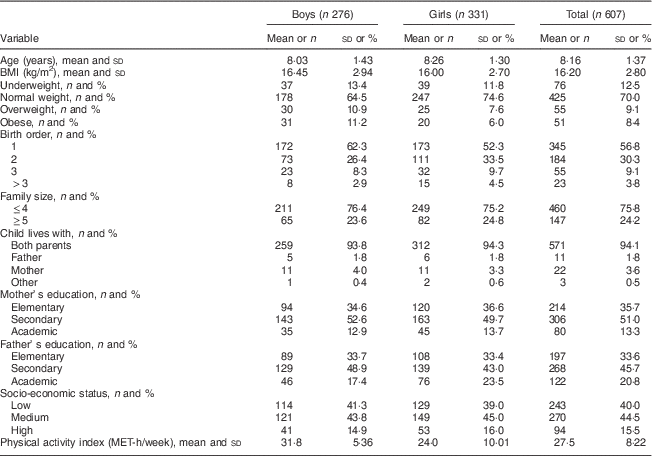
MET, metabolic equivalents of task.
Elementary education=less than 5 years of education; secondary education=12 years of education; academic=having a university degree.
P values for differences between boys and girls were not significant.
On weekdays and weekend days, 31·6 and 35·9 % of the children spent ≥2 h watching TV, respectively (Table 2). We found that 20·7, 19·3 and 21·1 % of the children always ate their breakfast, lunch and dinner while watching TV, respectively. No differences were found between girls and boys in terms of TV viewing behaviours, therefore data from both sexes were pooled to increase power.
Television (TV) viewing behaviours of participants by sex: primary-school children (n 607) aged 6–10 years, Shiraz, Iran, October 2015–June 2016
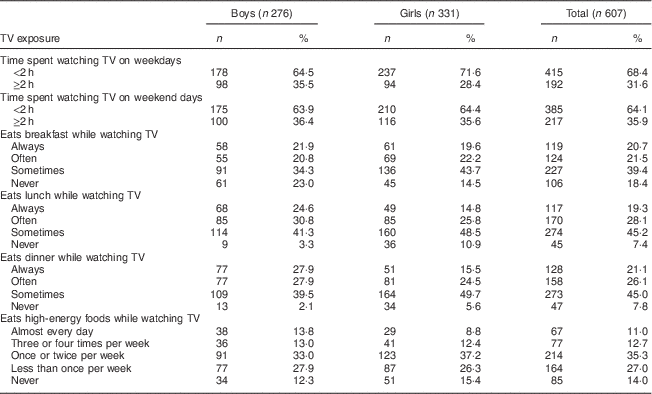
Table 3 reports the odds of being overweight/obese in relation to TV viewing. Children who spent ≥2 h watching TV on weekdays had higher odds of being obese compared with children who spent <2 h watching TV on weekdays (OR=2·06; 95 % CI 1·15, 3·70). This association remained significant after adjustment for factors in model 1 of sex, birth order and income (OR=1·97; 95 % CI 1·09, 3·60), and in model 2 further including physical activity (OR=1·86; 95 % CI 1·01, 3·43). When further including energy intake in model 3, the association was no longer significant. However, on weekend days, the same association remained significant when including energy intake in model 3 (OR=2·44; 95 % CI 1·03, 5·70). Children who always ate breakfast while watching TV had a 2·70 higher odds of being overweight compared with children who never ate breakfast in front of the TV (95 % CI 1·02, 7·60), even after adjusting for all confounding variables in models 1–4. There was no significant relationship between consuming junk food or other meals while watching TV and the odds of being overweight/obese.
Risk of overweight and obesity in relation to television (TV) viewing behaviours of participants: primary-school children (n 607) aged 6–10 years, Shiraz, Iran, October 2015–June 2016
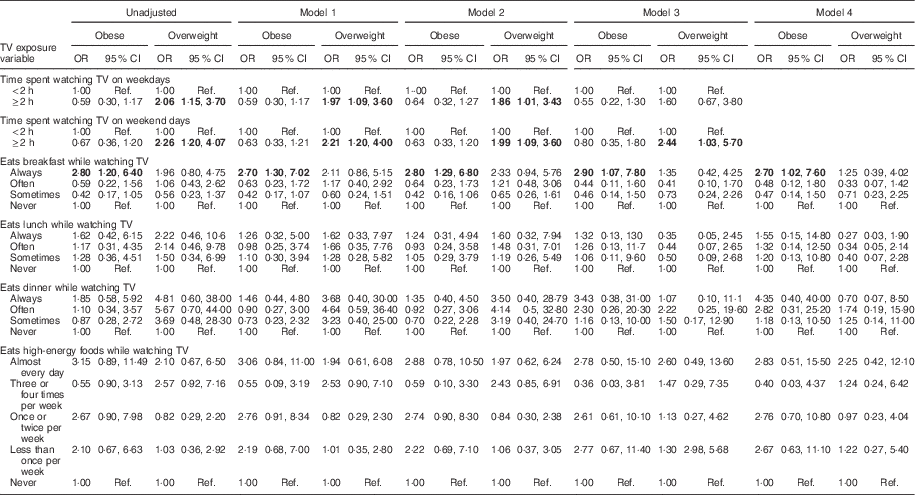
Ref., reference category.
Model 1 was adjusted for sex, birth order and income.
Model 2 was adjusted for sex, birth order, income and physical activity.
Model 3 was adjusted for sex, birth order, income, physical activity and energy intake.
Model 4 was adjusted for sex, birth order, income, physical activity, energy intake and total TV viewing time.
Significant results (P<0·05) are indicated in bold font.
Table 4 shows associations between different macronutrient intakes and TV viewing. Children who ate breakfast while watching TV consumed a higher percentage of energy intake from carbohydrates (P=0·02) and a lower percentage of energy intake from protein (P=0·03). Children who had snacks while watching TV consumed a higher percentage of energy intake from fats compared with children who had snacks without watching TV. No differences were observed between other meals (lunch or dinner) and percentage of energy intake from macronutrients with or without TV.
Association of daily energy intake and macronutrient distribution of different meals with television (TV) viewing behaviours of participants: primary-school children (n 410) aged 6–10 years, Shiraz, Iran, October 2015–June 2016

Significant results (P<0·05, t test) are indicated in bold font.
* Number of meals based on three 24 h dietary records.
Discussion
The present study is the first among children from the Middle East investigating the relationship between mealtime TV viewing and overweight/obesity. Results from our study indicate that both total TV viewing time on weekdays and weekend days, as well as eating habits while watching TV, are associated with overweight/obesity among Iranian children aged 6–10 years. Our major and novel findings are: (i) prolonged TV viewing on weekdays or weekend days increases the odds of obesity, independent of physical activity; and (ii) consuming breakfast in front of the TV increases the odds of overweight among Iranian children aged 6–10 years, independent of total TV viewing time.
Some clinical trial studies have reported no effect of TV viewing on overweight/obesity( Reference Yilmaz, Demirli Caylan and Karacan 20 , Reference Kipping, Payne and Lawlor 21 ). For example, a study conducted by Yilmaz et al. showed that reducing screen time in children aged 2–6 years for 9 months was not effective to decrease BMI( Reference Yilmaz, Demirli Caylan and Karacan 20 ). However, several other studies have reported that TV viewing during childhood is associated with more weight gain and overweight in adulthood( Reference Fuller-Tyszkiewicz, Skouteris and Hardy 22 , Reference Hancox, Milne and Poulton 23 ), and a recent meta-analysis showed that time spent watching TV was associated with increased risk for childhood obesity( Reference Zhang, Wu and Zhou 24 ). Results from the present study showed that increasing hours of time spent watching TV during weekdays and weekend days was associated with increased odds of overweight/obesity in Iranian children; these findings are in agreement with other cross-sectional studies examining the relationship between hours of TV viewing and overweight/obesity among children( Reference Peck, Scharf and Conaway 25 , Reference Bickham, Blood and Walls 26 ). It is hypothesized that the relationship between TV viewing and overweight/obesity could be due to the amount of time spent watching TV displacing physical activity, increasing energy intake, or both. In the present study the association observed between TV viewing and overweight/obesity was independent of physical activity, suggesting that TV viewing time and physical activity are two distinct behaviours that may manipulate body mass via different metabolic mechanisms. Indeed, previous studies have reported independent associations between sedentary time and morbidity and mortality after adjusting for physical activity levels(27). A study by Hamilton et al. suggested that prolonged sitting time could decrease lipoprotein lipase activity and may turn off the expression of some genes responsible for the maintenance of insulin sensitivity(28). Another study reported that prolonged sedentary time might promote increased fat accumulation in the visceral, liver and heart regions(29).
Eating meals while watching TV has been associated with overweight/obesity. While one early study in 2004 reported no association between food consumed during TV viewing and BMI in children( Reference Matheson, Killen and Wang 12 ), several other studies have reported increased risk of overweight/obesity among children who ate their meals in front of the TV across eight European countries( Reference Lissner, Lanfer and Gwozdz 30 ). That large-scale cross-sectional study adjusted for possible confounding variables including age, country of residence, parents’ education, dietary intakes and physical activity( Reference Lissner, Lanfer and Gwozdz 30 ). In another study by Dubois et al.( Reference Dubois, Farmer and Girard 31 ), children who ate once daily or more while watching TV had higher mean BMI in comparison to children who reported less TV viewing during mealtimes; these findings were not adjusted for confounding variables. Results of our study investigating the relationship between eating meals while watching TV and weight status of children are somewhat in agreement with these studies. That is, we observed increased odds of overweight among children who consumed breakfast while watching TV, independent of the total TV viewing time. However, no association between other mealtime TV viewing (i.e. lunch, dinner) and overweight/obesity was observed. A study conducted by Wansink and van Kleef in American children reported similar findings of no association between eating dinner while watching TV and BMI( Reference Wansink and van Kleef 13 ). On the other hand, a study examining meal consumption while watching TV in nine northern European countries showed no relationship between breakfast consumption during TV viewing and overweight/obesity, and a weak association between dinner consumption during TV viewing and overweight/obesity in children( Reference Roos, Pajunen and Ray 14 ).
The relationship between eating while watching TV and overweight/obesity may be attributed to diet quality; observational studies have reported a positive association between eating meals while watching TV and poor diet( Reference Lissner, Lanfer and Gwozdz 30 , Reference Lipsky, Haynie and Liu 32 ). The majority of previous studies investigating diet quality and eating habits while watching TV in children did not investigate each meal separately( Reference Matheson, Killen and Wang 12 , Reference Santiago-Torres, Adams and Carrel 33 , Reference Hare-Bruun, Nielsen and Kristensen 34 ). A possible rationale for the discrepancy in findings between our study and previous research in European countries regarding breakfast consumption while watching TV could be due to different mealtimes and/or different types of TV programming. In the present study we found that children who ate breakfast while watching TV consumed a higher percentage of energy from carbohydrates and a lower percentage of energy from protein; however, we did not observe any relationship between total energy intake and TV viewing. In contrast to other countries where children consume about one-third of their daily energy intake at school from packed lunches and cafeteria-bought food( Reference Wildey, Pampalone and Pelletier 35 ), primary-school children in Iran usually have their breakfast and lunch at home before going to school from 13.00 to 17.00 hours. Therefore, Iranian children have more time to eat breakfast while watching TV and are less supervised at breakfast time compared with other mealtimes. Previous studies have shown that children who eat meals with their parents are encouraged to have healthier eating behaviours (i.e. better diet quality)( Reference Poulos, Pasch and Springer 36 ).
The type of TV programming may also influence diet quality and overall food intake. It is suggested that eating while watching TV can result in ‘mindless eating’; that is, screen time can act as a distractor that can limit the capacity of an individual to monitor physiological signals associated with satiety, ultimately leading to an increase in energy intake( Reference Fletcher, Leech and McNaughton 37 ). Watching violent movies increases anxiety and preference for salty and fatty foods, while watching non-violent movies (e.g. romantic genre) results in a sleepy feeling and preference for sweet foods( Reference Mattar, Zeeni and Bassil 38 ). Previous studies have reported that children who watched happy movies were in a more ‘mindless state’ than children who watched neutral movies( Reference Bevelander, Meiselman and Anschütz 39 ). Although we did not distinguish the types of TV shows viewed while eating meals, Iranian TV channels show a wide range of children’s programmes from 08.00 to 10.00 hours, and it is likely children ate their preferred sweeter carbohydrate-based foods at breakfast while watching ‘happy’ children’s shows. Future studies should observe TV programming during mealtimes and examine the underling biological mechanism for increased food intake during TV viewing.
The strengths of the present study include its large sample size and adjustment for a large number of confounding variables that have not been taken into account in previous studies. Limitations include: (i) the cross-sectional design, which limits the ability to conclude a causal relationship between eating while watching TV and overweight/obesity; (ii) the lack of data regarding the types of programming that children watched while eating meals that may have influenced food intake and body composition; and (iii) only 410 parents marked which of the meals and snacks were eaten while watching TV. Future studies should consider other common screen-time modalities such as computer games and mobile phones.
Conclusion
In conclusion, our results show that repeated consumption of breakfast in front of the TV, independent of physical activity and total hours spent watching TV, is related to overweight/obesity among Iranian children. We suggest that limiting meals in front of the TV may reduce overweight/obesity among children and improve diet quality, but further clinical trials and/or longitudinal studies are needed to better understand the causal relationship between TV viewing behaviours and overweight/obesity.
Acknowledgements
Acknowledgements: This article has been extracted from S.G.’s master’s thesis (code number 9888-84), funded by Shiraz University of Medical Sciences. The authors thank all those who helped with this study. Special thanks go to the participants and their parents for their kind cooperation. Financial support: This work was supported by Shiraz University of Medical Sciences, Shiraz, Iran (grant number 9888-84). The funder had no role in the design, analysis or writing of this article. Conflict of interest: The authors have no conflict of interest to declare. Authorship: S.G. contributed in all parts of the study. N.B. and J.O.T.d.Z. contributed to the study design, interpretation of data and revision. Z.H., R.B. and H.A. participated in collecting data and drafting the manuscript. M.S.-M. contributed to analysis and interpretation of data and revision. S.F. contributed in conception and design, analysis and interpretation of data, and critical revision. Ethics of human subject participation: All procedures involving human participants were performed in accordance with the ethical standards of the institutional research ethics committee and with the 1964 Helsinki Declaration. The aim and study protocol were approved by the Research Ethics Committee of Shiraz University of Medical Sciences (number 94-01-84-9888). Informed consent was obtained from all parents or caregivers of children who participated in the study.



