

Introduction
In the face of the climate emergency, there is an apparent lack of robust responses and a regression from needed action (Huber Reference Huber2022). The role of workers in this fight has been observed as both enabling and constraining. Masses of workers are seen to be invested in climate action since they are among the most affected (Bell Reference Bell2020; Faber et al Reference Faber, Levy and Schlegel2021; Huber Reference Huber2022). Yet, the impact of a green transition on loss of livelihood may mean opposition from workers (McNamara Reference McNamara2024; Żuk Reference Żuk2023), highlighting the need for the green transition to be just. Without the intersection of ecological policies with redistributive programmes, the energy transition promises to be a failure of neoliberal reform using market mechanisms (Samper et al Reference Samper, Schockling and Islar2021).
The Philippines differs from other countries where sections of the elite and political class are engaged in climate denialism, and where climate action is under attack by authoritarians and populists (Forchtner et al Reference Forchtner, Kroneder and Wetzel2018; Van der Linden Reference van der Linden2018; Żuk and Żuk Reference Żuk and Żuk2024). This suggests there may be other barriers to climate justice in the Philippines. Recently, the peak employers’ body and a major labour centre signed a just transition agreement (ECOP 2024). Such cross-class cooperation reflects a lack of open conflict between employers and workers around climate change, in contrast to many instances of community struggles against coal plants and mining operations. The Philippines has a strong suite of ecological laws enacted since the new millennium, such as, the Climate Change Act of 2009 which established the Climate Change Commission (CCC) to coordinate climate change adaptation and mitigation plans. Nevertheless, budget constraints, weak political will, lack of social dialogue, and policy inconsistencies have been barriers to the enforcement of environmental protections (Fortaleza Reference Fortaleza2019; Martinez et al Reference Martinez, Weyman and Palmos2018; Tiu Reference Tiu2021). These highlight the challenges of effective local responses to global climate issues, variously theorised as glocalisation (Żuk and Żuk Reference Żuk and Żuk2025) or green governmentality (McNamara Reference McNamara2024).
Because, plastic is made from fossil fuels, its production contributes to greenhouse gas emissions. Aside from being a climate issue, plastic pollution is also a waste management and public health problem. Regulatory instruments such as outright bans on single-use plastic (SUP) and levies on its production and use have been advocated for and adopted across different countries. In the Philippines, bans on the use of plastic bags have been enacted in 489 cities and towns as a means of stemming waste (CCC 2021).
Legislative proposals for a national ban go back to 2011, the same year the first local regulations started. The proposed bans never became law, and local ordinances gained ground in the meantime. In 2021, a bill passed the lower house of parliament but not its counterpart in the upper house (Bautista and Enano Reference Bautista and Enano2021). At the time of writing, there are 10 legislative bills to ban SUP with differing phaseout periods of one to four years, with one proposal providing for a 10-year time limit.
The proposed national ban would be a game-changer and a significant step in addressing plastic pollution. But it would have major economic and employment impacts on firms and workers. The prospect of a national SUP ban presents the ‘jobs versus environment’ predicament. However, the just transition framework provides a resolution to this livelihood and ecology conundrum. Thus, the research questions are as follows: (1) What is the employment impact of a national ban on SUP? (2) What are the perspectives of SUP workers on a national ban and just transition? (3) What are the barriers to a just transition for SUP workers?
The concept of just transition and a categorisation of climate mitigation barriers are useful in answering these questions. A transition that does not shift power relations in the workplace leaves workers behind. It has been observed that labour rights issues are prevalent in renewable energy global value chains (Davidson Reference Davidson2023). Thus, just transition is most appropriate not only as a theoretical construct, but also a normative ideal in positioning labour in the climate discourse (Cha and Vachon Reference Cha, Price, Stevis, Vachon, Brecher and Brecia-Weiler2021; Saget et al Reference Saget, Luu, Karimova, Räthzel, Stevis and Uzzell2021; Stevis and Felli Reference Stevis and Felli2015). For Stevis and Felli (Reference Stevis and Felli2015, 39):
In order to accomplish a just transition, it will not be enough to recognize workers’ voices or to understand that workers have less power and thus responsibility than capital in shaping the political economy. A more equitable transition will require reorganization of the relations between state, capital and labour.
While for Cha and Vachon (Reference Cha, Price, Stevis, Vachon, Brecher and Brecia-Weiler2021, 101)
A just transition for workers and communities could be developed democratically through active participation by a broad base of stakeholders, re-creating “the rules of the game” to ensure shared and sustainable prosperity.
Finally, for Saget and others (Reference Saget, Luu, Karimova, Räthzel, Stevis and Uzzell2021), a just transition makes three contributions to improve employment relations: (1) participation of civil society in the discourse and implementation of needed interventions; (2) success of climate action through a balance of legal concepts and labour policies; and (3) generation of green jobs.
Steg and others (Reference Steg, Veldstra, de Kleijne, Kılkış, Lucena, Nilsson, Sugiyama, Smith, Tavoni, de Coninck, van Diemen, Renforth, Mirasgedis, Nemet, Görsch, Muri, Bertoldi, Cabeza, Mata, Novikova, Caldas, Chàfer, Khosla and Vérez2022) provide a categorisation of the enablers and barriers to effective climate change mitigation measures. For them, ‘Mitigation options are more likely to be implemented when critical barriers are removed and when efforts are made to bring factors enabling their implementation into play’ (Steg et al Reference Steg, Veldstra, de Kleijne, Kılkış, Lucena, Nilsson, Sugiyama, Smith, Tavoni, de Coninck, van Diemen, Renforth, Mirasgedis, Nemet, Görsch, Muri, Bertoldi, Cabeza, Mata, Novikova, Caldas, Chàfer, Khosla and Vérez2022, 1217). The six categories of barriers or enablers are geophysical, environmental-ecological, technological, economic, sociocultural, and institutional. Geophysical refers to the presence of material resources. Environmental-ecological denotes the impacts on the natural ecosystem. Technological means the availability and scalability of technology. Economic refers to the costs and benefits of the interventions. Sociocultural denotes social effects, including support or opposition by the public. Finally, institutional means the political support and governance structures. This study borrows the framework of Steg and others (Reference Steg, Veldstra, de Kleijne, Kılkış, Lucena, Nilsson, Sugiyama, Smith, Tavoni, de Coninck, van Diemen, Renforth, Mirasgedis, Nemet, Görsch, Muri, Bertoldi, Cabeza, Mata, Novikova, Caldas, Chàfer, Khosla and Vérez2022) but uses it specifically to evaluate the barriers to a just transition for SUP workers. The paper argues that significant constraints exist to implementing a just transition for SUP workers, which necessitate effective policy responses.
The paper is organised as follows: the next two sections review relevant literature. A succeeding section describes the methodology of the study, followed by a discussion of the quantitative and qualitative findings. The conclusion sums up the findings and connects them to the conceptual framework of barriers to a just transition for SUP workers. A final section makes recommendations for future research.
SUP bans in the Philippines
The Philippines is cited as a key source of plastic pollution in oceans (Jambeck et al Reference Jambeck, Geyer, Wilcox, Siegler, Perryman, Andrady, Narayan and Law2015). Annually, some 16.5 billion translucent plastic bags (known locally as labo), 17.5 billion disposable shopping bags, and 60 billion sachets are produced, consumed, and thrown away as residual waste. This is waste which cannot be composted or recycled, thus ends up in landfills or waterways (Global Alliance for Incinerator Alternatives [GAIA] 2019). Residual waste, of which SUP forms a significant amount, represents 18% of total waste in the Philippines. In comparison, organic waste comprises 52% of total waste, and recyclable waste represents 28% (Alegado Reference Alegado2020). Therefore, the plastic problem in the country is severe, and effective action is imperative (Gomez et al Reference Gomez, Cragg, Ghiglione and Onda2023; Rhodes Reference Rhodes2018; Varca Reference Varca2012).
The 489 cities and towns that have enacted local SUP bans comprise some 30% of the total number of local governments (Department of the Interior and Local Government 2025). Local bans have been driven by efforts to mitigate waste and flooding (Garcia Reference Garcia2022). Yet, these local ordinances have been found to be inadequate in resolving the problem of plastic pollution (GAIA 2020). For example, although the SUP ban in Toledo City had a positive impact, the nearby Metro Cebu had no similar regulation, which created limitations in enforcement (Genon et al Reference Genon, Mabunay, Opsima, Zamora, Repaso and Sasan2022). The well-documented model of San Fernando City transitioned over the course of a year to a full ban in 2015. Strict enforcement and robust awareness raising led to a substantial decline in the use of plastic bags and a compliance rate of 85%. In contrast, Quezon City implemented a selective ban, which resulted in 12 times the plastic bag use compared to San Fernando (GAIA 2020). The absence of a national ban puts the burden on local government to manage the issue with more limited resources (Alegado Reference Alegado2020). The challenges of implementing local SUP bans bear similarities to the challenge of enforcing the law on solid waste management. Lack of political will and contradictory policies of implementing government agencies have subverted the spirit of the law (Alegado Reference Alegado2020). The World Bank (2023, 70) noted that the solid waste management law is ‘barely enforced’.
Besides inconsistent enforcement by authorities, consumer behaviour also plays a role in undercutting local SUP bans. Sagala and others (Reference Sagala, Diaz, Arquiza, Bat-og, Balasan, Dolatre, Guarino, Paguntalan, Penaranda and Vergara2020) found that consumers in one village in Bacolod City continued to use SUP despite a ban. The households were aware of the ban but not the deleterious effects of plastic pollution. On the other hand, there has been broad popular support for alternatives to plastics, recycling of waste, and regulation of SUP (Social Weather Stations 2020), although business groups have mixed opinions at best. Organised employers opposed local bans initially, but a city-based chamber of commerce later came out in support (Banzon Reference Banzon2020; Desiderio Reference Desiderio2012). Two literature reviews, one focusing on Africa, found that perceptions of the negative impacts of plastic pollution informed positive attitudes and behaviour (Mugobo et al Reference Mugobo, Ntuli and Iwu2022; Tang Reference Tang2023). A global study by Seblos and others (Reference Seblos, Sangcap, Tabañag, Tapdasan, Ocampo and Paño2023) also observed that a lack of information was among the challenges faced by anti-SUP initiatives in schools. These suggest that awareness of the impact of pollution as well as of initiatives to mitigate plastic use are relevant sociocultural barriers to climate action. Further, these affirm the significance of information dissemination as a lever for just transition in the Global South (Tume and Tanyanyiwa Reference Tume and Tanyanyiwa2018).
South and Southeast Asia are similarly challenged (Goh et al Reference Goh, Yap, Neo, Koo, Madhavan, Suwandi, Lew, Khoo and Tan2025), but some countries have already gone beyond the Philippines in enforcing SUP bans. For example, Jakarta prohibited plastic bags in 2020 (Kahfi Reference Kahfi2020), and by the end of 2029 Indonesia will have totally banned SUP (Rayda Reference Rayda2023). Thailand did so in 2021 (Bangkok Post 2020).
Despite the challenges of implementation, the surge of local SUP bans in the early 2010s led to firms reporting reduced sales, job losses, and even closure of small firms (Asuncion Reference Asuncion2012). The result of such previous qualitative studies needs to be compared with this study’s quantitative findings.
Workers’ perceptions of the transition
The role of labour (Healy and Barry Reference Healy and Barry2017; Moilanen and Alasoini Reference Moilanen and Alasoini2023; Prinz and Pegels Reference Prinz and Pegels2018) and workers’ perceptions of the green transition (Pai et al Reference Pai, Harrison and Zerriffi2020; Sicotte et al Reference Sicotte, Joyce and Hesse2022) are insufficiently studied. Instead, much of the literature about the transition focuses on the economic and technological challenges (de Ruyter and Bentley Reference de Ruyter and Bentley2024). Workers are usually perceived as climate sceptics and transition defiant due to fears of job losses and employment insecurity (Cha et al Reference Cha, Price, Stevis, Vachon, Brecher and Brecia-Weiler2021; Kortetmäki et al Reference Kortetmäki, Huttunen, Järvelä and Turunen2025; Räthzel and Uzzell Reference Räthzel and Uzzell2011). Coal miners are seen to resist change because of high wages and work stability in the mining sector (Baran et al Reference Baran, Szpor and Witajewski-Baltvilks2020).
Yet, many studies have also concluded that workers can be labour environmentalists (Abraham Reference Abraham2017; Hampton Reference Hampton2018; Sicotte et al Reference Sicotte, Joyce and Hesse2022). German and US coal miners accepted a just transition, but this was dependent on the scope of workers’ input into the process (Abraham Reference Abraham2017). Unions have also been found to be advocates for a just transition (Hampton Reference Hampton2018; Räthzel and Uzzell Reference Räthzel and Uzzell2011; Snell Reference Snell, Morena, Krause and Stevis2020). A more nuanced understanding conceives of unions as being for and against the green transition (Prinz and Pegels Reference Prinz and Pegels2018) and of workers’ perceptions as ranging from anxiety to indifference to hope (Kortetmäki et al Reference Kortetmäki, Huttunen, Järvelä and Turunen2025; Malmberg and van Veelen Reference Malmberg and van Veelen2025).
Among the factors that contribute to workers’ negative perceptions of the transition are previous experiences of restructuring, that have oftentimes led to layoffs and precarity (Cha et al Reference Cha, Price, Stevis, Vachon, Brecher and Brecia-Weiler2021; Malmberg and van Veelen Reference Malmberg and van Veelen2025), or ongoing energy transitions that worsen class disparities (Stark et al Reference Stark, Gale and Murphy-Gregory2023). These imply that safeguarding workers’ material interests and easing the costs of the transition are key in getting their support for the transition (Baran et al Reference Baran, Szpor and Witajewski-Baltvilks2020; Sicotte et al Reference Sicotte, Joyce and Hesse2022). Huber (Reference Huber2022) argues that workers can be won over to the cause of labour environmentalism or proletarian ecology by focusing on improvements in their living and working standards through a just transition. He contrasts this politics of material interests with the prevailing emphasis on a politics of scientific knowledge or awareness-raising on climate change. Thus, ensuring distributive and procedural justice is integral in the transition (Kortetmäki et al Reference Kortetmäki, Huttunen, Järvelä and Turunen2025; Lempinen et al Reference Lempinen, Parks and Korpikoski2025; Sicotte et al Reference Sicotte, Joyce and Hesse2022; Stark et al Reference Stark, Gale and Murphy-Gregory2023). In practical terms, provision for skills training has frequently been cited as a crucial element (Pai et al Reference Pai, Harrison and Zerriffi2020; Stark et al Reference Stark, Gale and Murphy-Gregory2023), especially for older and less educated workers (Kortetmäki et al Reference Kortetmäki, Huttunen, Järvelä and Turunen2025).
Reviewing the working conditions of SUP workers, including their occupational safety and health issues, is pertinent. Azoulay and others (Reference Azoulay, Villa, Arellano, Gordon, Moon, Miller and Thompson2019) report that there is a myriad of short- and long-term safety risks for workers in plastic factories, especially poisonous chemicals that cause cancer or disrupt the endocrine system. Women plastic workers are at risk due to exposure to chemicals that are linked to breast cancer and reproductive issues. Heating raw materials releases toxic chemicals whose effects may take years to be detected.
Evidently, workers’ attitudes and behaviours are factors in the outcome of the transition (Moilanen and Alasoini Reference Moilanen and Alasoini2023). Sociocultural, not just economic factors, need to be considered in winning over workers to the green transition (Janssen et al Reference Janssen, Beers and van Mierlo2022; Malmberg and van Veelen Reference Malmberg and van Veelen2025). In this respect, workers’ identities can be enablers or barriers to the development of labour environmentalism (Malmberg and van Veelen Reference Malmberg and van Veelen2025; McNamara Reference McNamara2024). Nonetheless, Sicotte and others (Reference Sicotte, Joyce and Hesse2022) observed that workers’ political identities were not determinants of their attitudes to the transition.
However, the literature on just transition and workers’ perceptions is skewed to the Global North, while clearly the parameters for the transition will be different for the Global South (Pai et al Reference Pai, Harrison and Zerriffi2020; Ramos-Mejíaa et al Reference Ramos-Mejíaa, Franco-Garcia and Jauregui-Becker2018). There appears to be an absence of research about the just transition for SUP workers in the Philippines, except for a single study by Amurao (Reference Amurao2019) that calculated the number of workers to be affected by a national SUP ban. This study responds to this literature gap while also updating the findings of Amurao temporally and methodologically to arrive at a more accurate measure of the employment impact of a national SUP ban.
Methodology
The study used mixed methods. A quantitative analysis of available data from the Annual Survey of Philippine Business and Industry (ASPBI) and the Census of Philippine Business and Industry (CPBI) of the Philippine Statistics Authority (PSA) was undertaken to determine the employment effects of a national ban on SUP. Key informant interviews of SUP workers provided insight into their perceptions about a SUP ban and on just transition.
Data points were collected across seven years using ASPBI: 2010, 2012, 2013, 2014, 2015, 2016, and 2017. There was no data available for the year 2011. The CPBI was utilised for 2018. When the quantitative analysis was conducted in November 2022, the ASPBI from 2019 onwards was not yet available. Nonetheless, the dataset was sufficient to establish the pre-pandemic trend. STATA was used in extracting the data from the ASPBI and also in aggregating it for the data presentation.
The ASPBI and CPBI use the 2009 Philippine Industrial Classification Code (PSIC) to classify firms. As the PSIC does not include a separate category for SUP production, relevant firms were identified using three types of firms designated in the following PSIC codes:
-
• C22201: Manufacture of plastic articles for packing goods (e.g., boxes, bags, sacks, etc.)
-
• C22202: Manufacture of plastic household wares (includes plastic cutlery)
-
• C22206: Manufacture of primary plastic products (e.g., sheets, films, plates, etc.)
This implies that the data observed is an overestimation. For example, there are plastic boxes that are for long-term use, although most plastic bags are used only once. Likewise, not all plastic household wares are single-use. This is a limitation of the study. Nonetheless, overestimating the SUP firms is better than underestimating them for the purposes of the research.
The qualitative analysis is exploratory, given the small number of respondents, but significant, given the absence of studies centred on workers. A labour-centric methodology is proposed, given the lacunae in workers’ perceptions of the climate transition. The head of the plastic industry association was approached but did not provide referrals. As a result, the study relied on convenience sampling using referrals from union contacts, reducing the extent to which the study is representative. Four workers were interviewed from two SUP firms in March 2022, and another worker from a third SUP company in July 2023. Three female workers, anonymised as Ana, Betty, and Cathy, were from Company A. A male worker, anonymised as Danny, was from Company B. The last worker, a male (anonymised as Eloy), was from Company C. All were union officers, two of them were presidents, and thus were influential among their co-workers as worker-leaders. Semi-structured interviews were conducted, lasting from one and a half to two hours. Two of the interviews were done in a public place, while the last one was in a union office. All interviews were recorded and then transcribed. Verbal consent to participate in the study was provided by the respondents, and anonymity was assured to the participants. The five respondents provided insights into the viewpoints of workers regarding their working conditions, plastic pollution, the proposed SUP ban, and the prospect of a just transition – which are indicators of the sociocultural factors to climate action by affected workers. The responses were organised into relevant themes using manual coding.
Employment in the SUP Sector
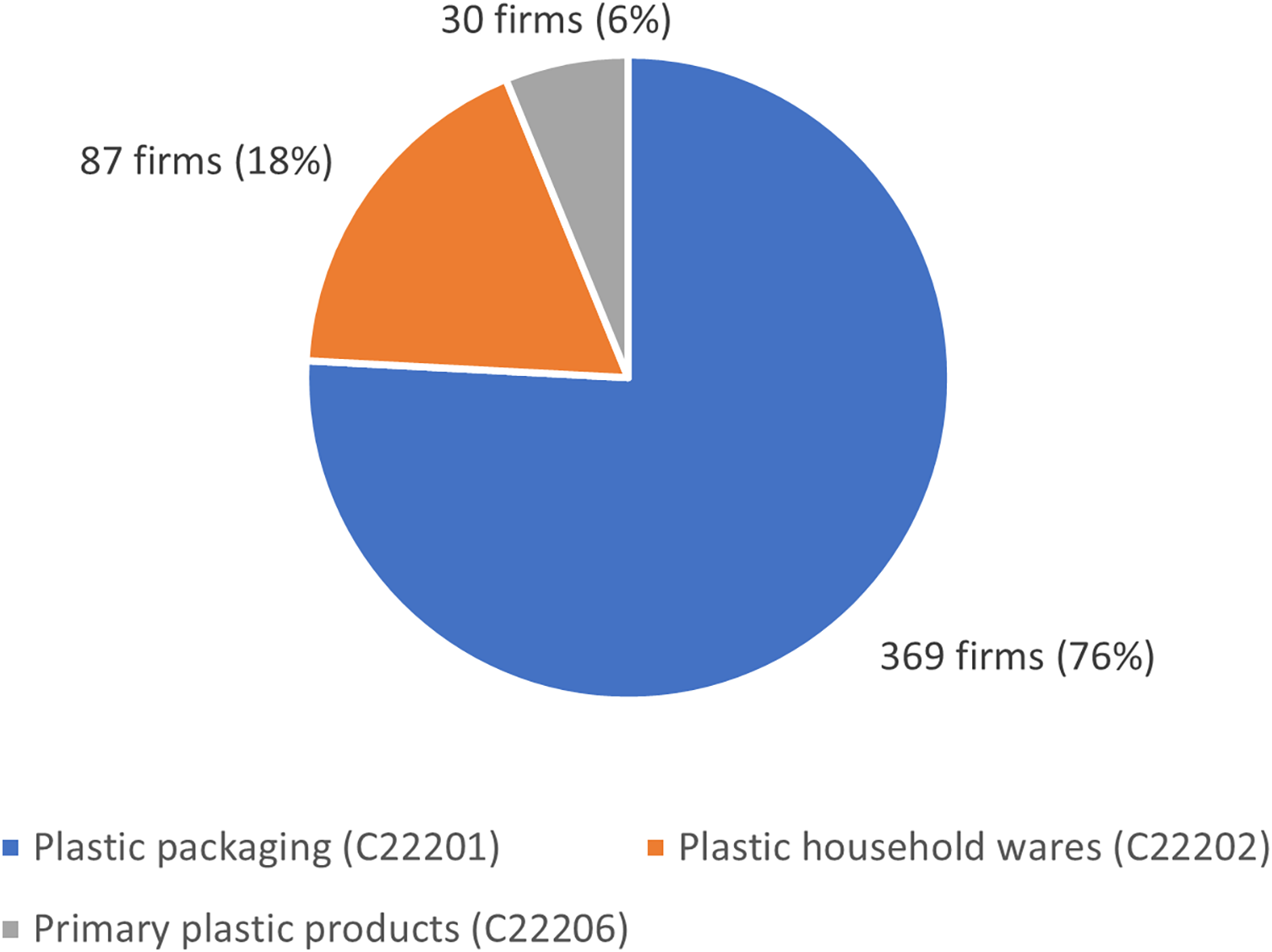
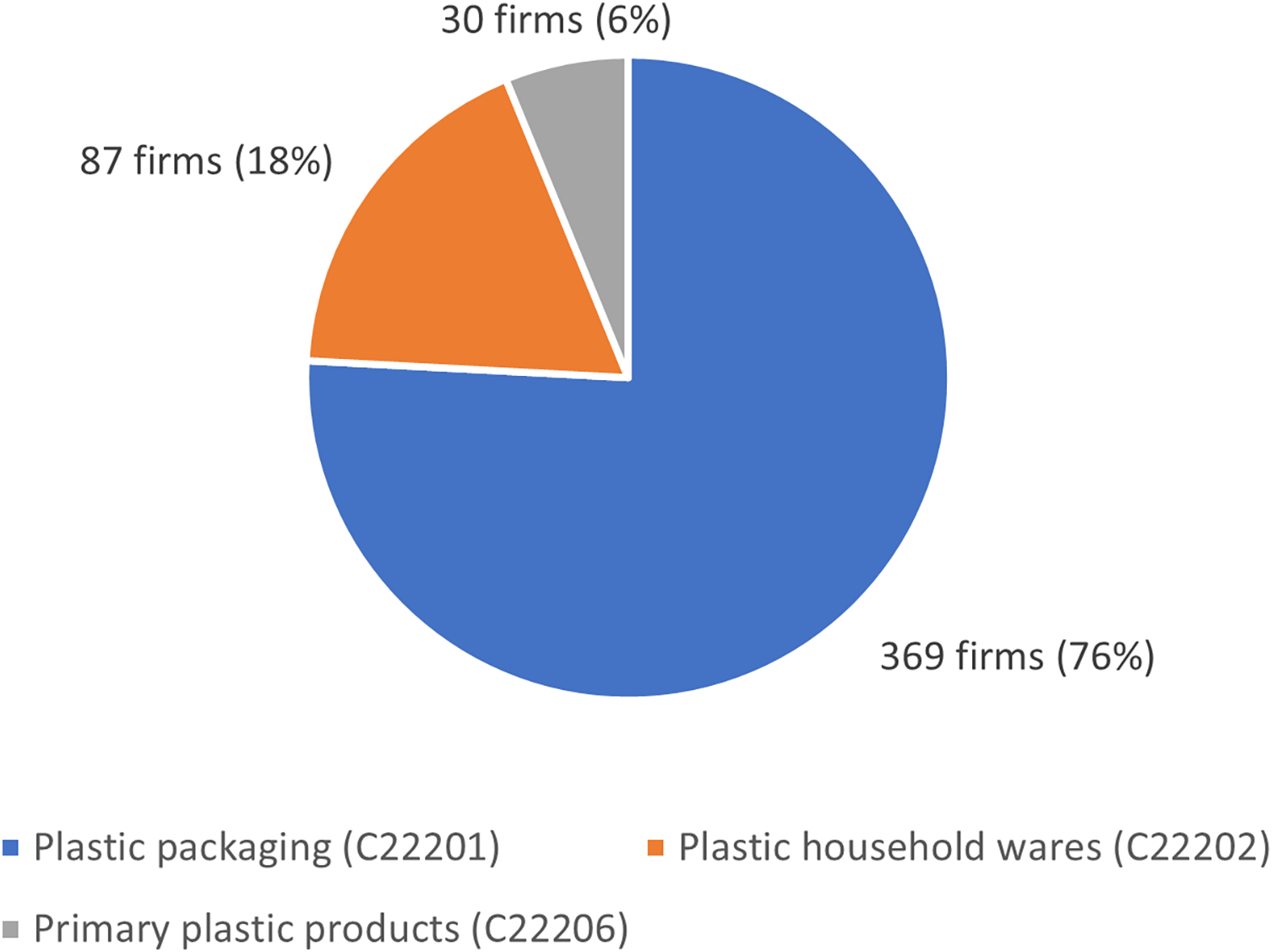
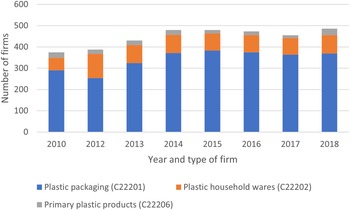
As shown in Figure 1, there were 486 firms engaged mainly in the manufacture of SUP products as of 2018. Of these, 369 firms make plastic articles for packing goods, 87 produce plastic household wares, and 30 create primary plastic products. This means that the overwhelming number of SUP factories manufacture plastic boxes, bags, and sacks.
Firms and types of SUP products in 2018.
The total number of SUP firms slowly rose to 479 in 2014 and 2015, as can be seen in Figure 2. It then declined gradually but peaked at 486 in 2018. The number of SUP firms involved in the manufacture of packaging and primary plastic products followed this pattern. However, the number of SUP firms that made household wares rose in one year and then fell the next year.
Time series of type of firms.
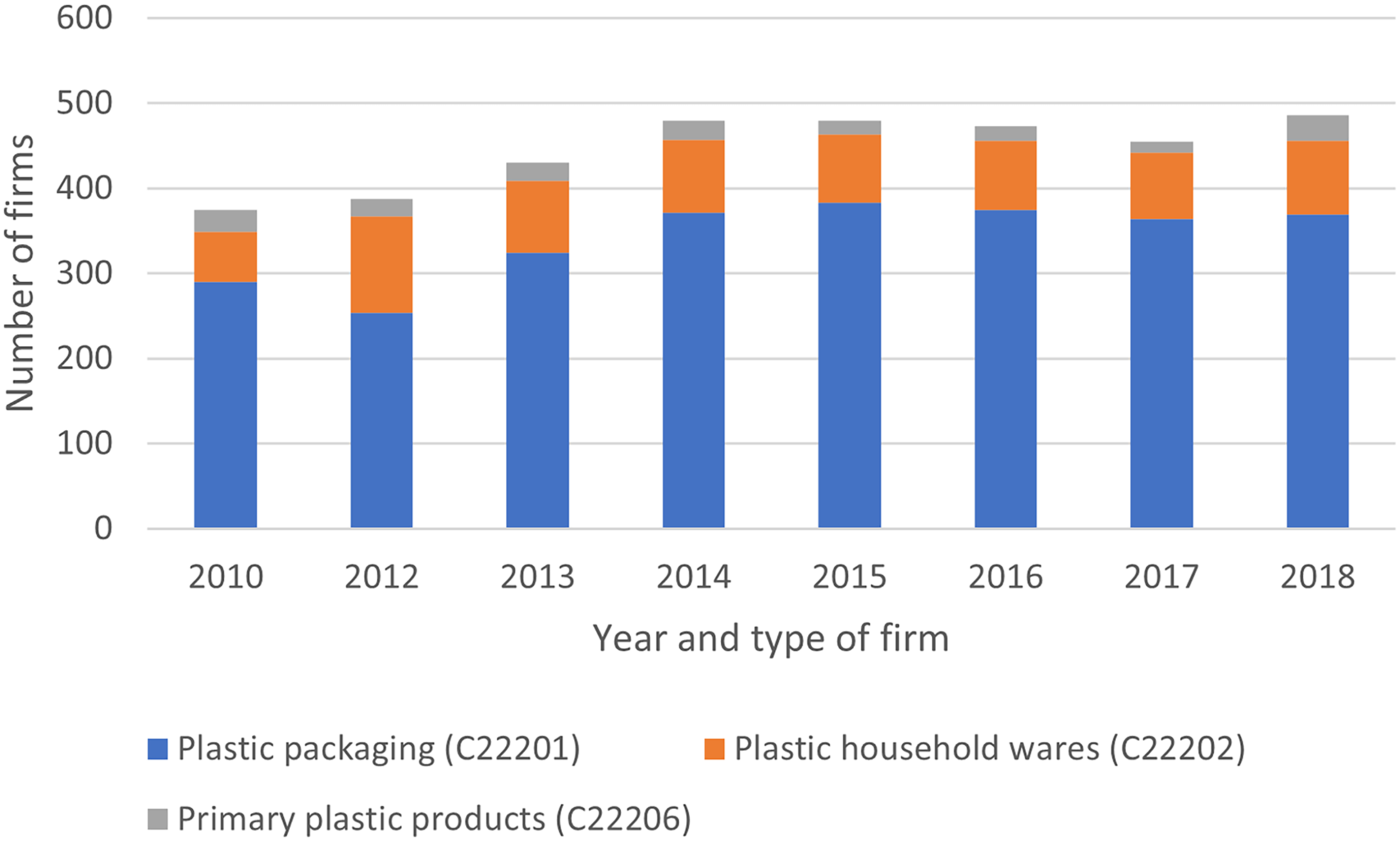
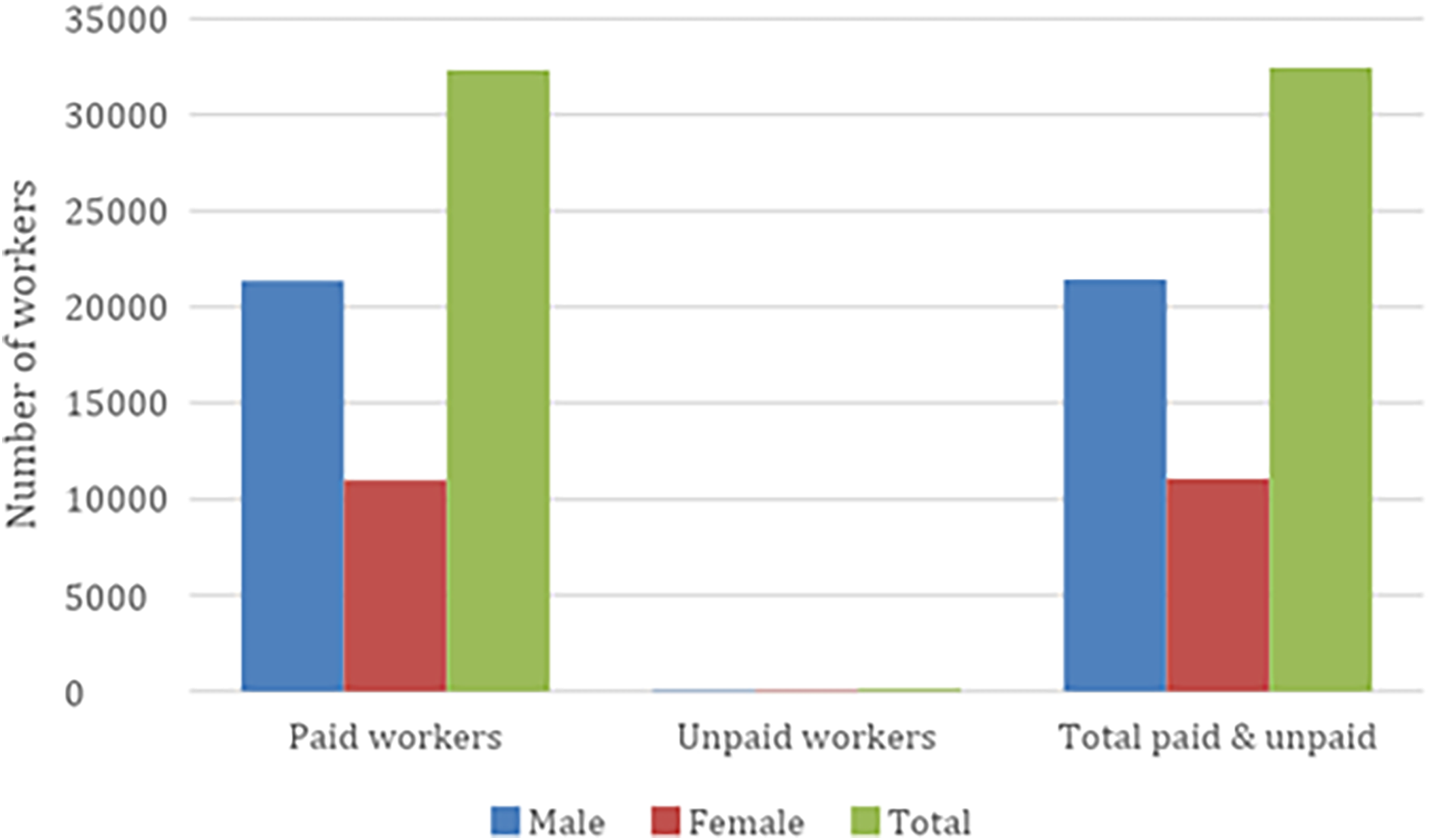
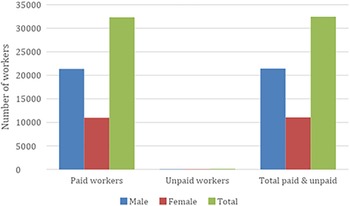
Figure 3 shows that there were 32,462 workers employed in SUP firms as of 2018. Over two-thirds were men, with 21,424 (66%) male, and 11,038 (34%) female. There is an insignificant number of unpaid workers in the sector.
Employed workers in 2018.
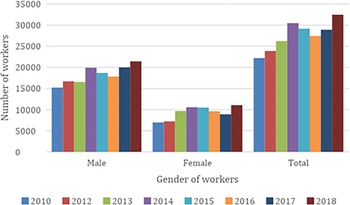
The total number of employed workers in SUP enterprises has risen incrementally over time. As revealed in Figure 4, employment growth peaked in 2014 at 30,467 workers. After a slight fall, a rebound started in 2016 despite the drop in the number of SUP firms operating that year until 2017. The gender distribution of workers has generally remained unchanged over time, with male employees approximately double the number of female employees.
Times series of employed workers.
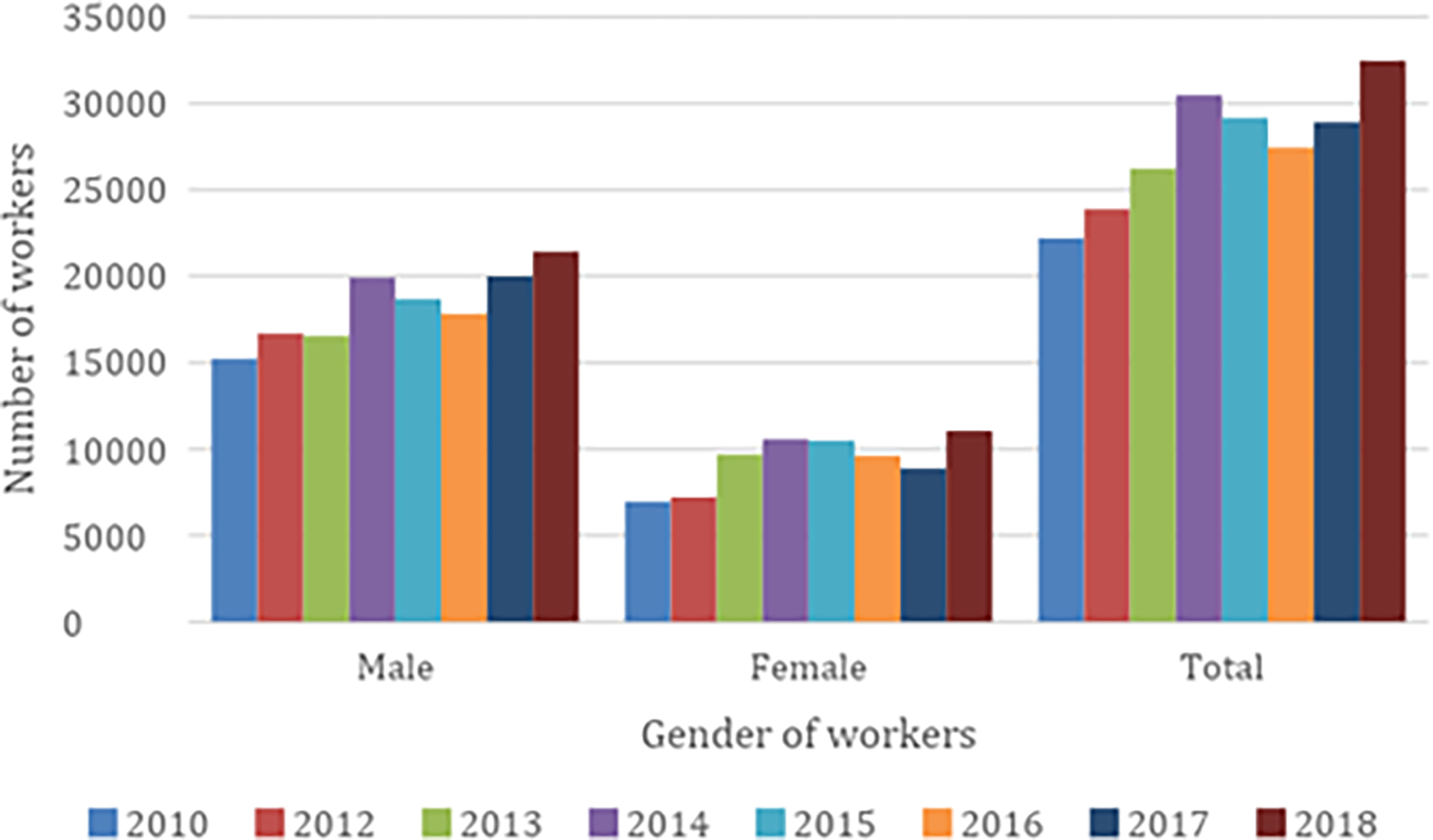
To recap, the trend from 2010 to 2018 was a rising number of SUP firms and employed workers. These findings contrast with the conclusion of Asuncion (Reference Asuncion2012) while affirming the literature on the limited impact of local SUP bans on the industry.
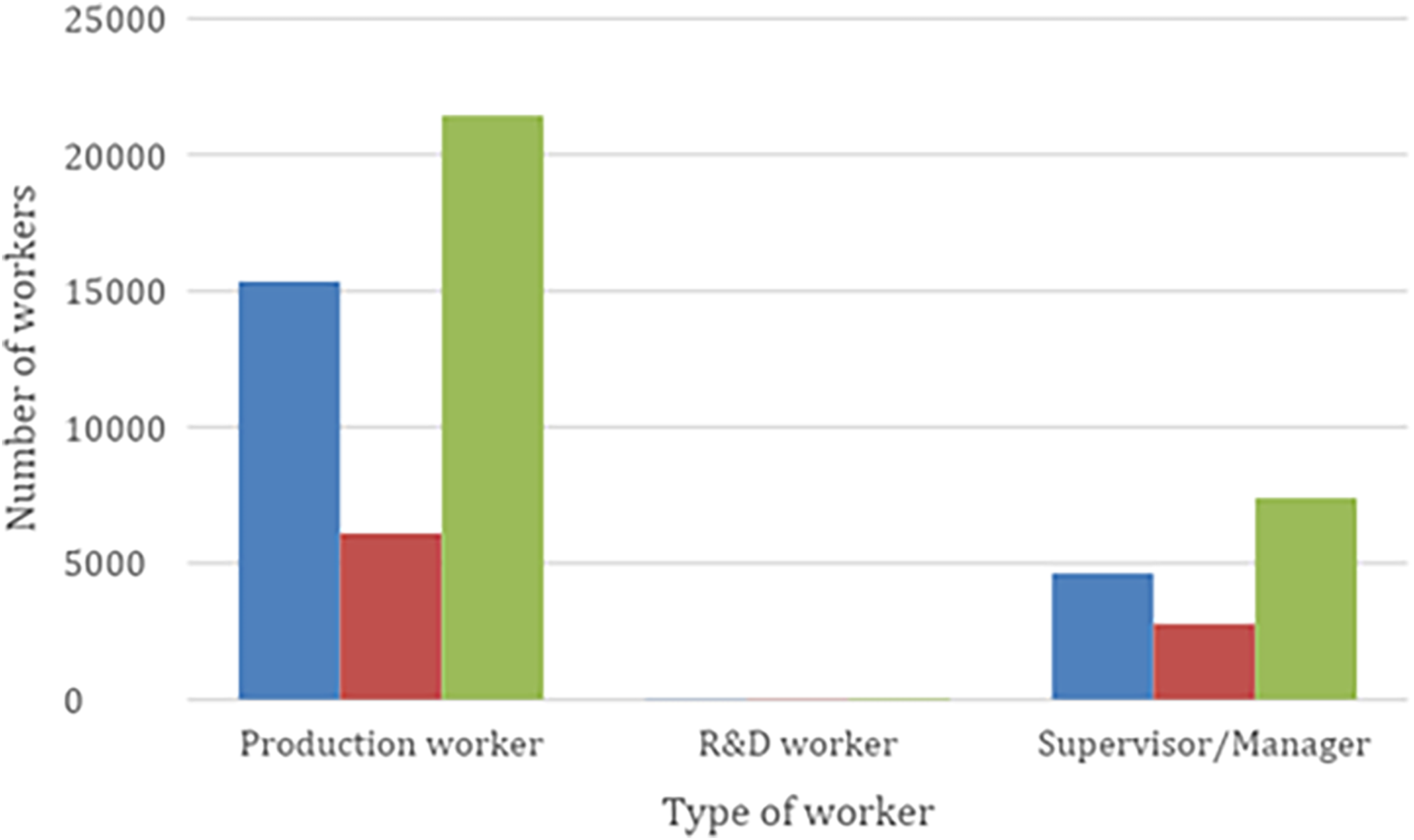
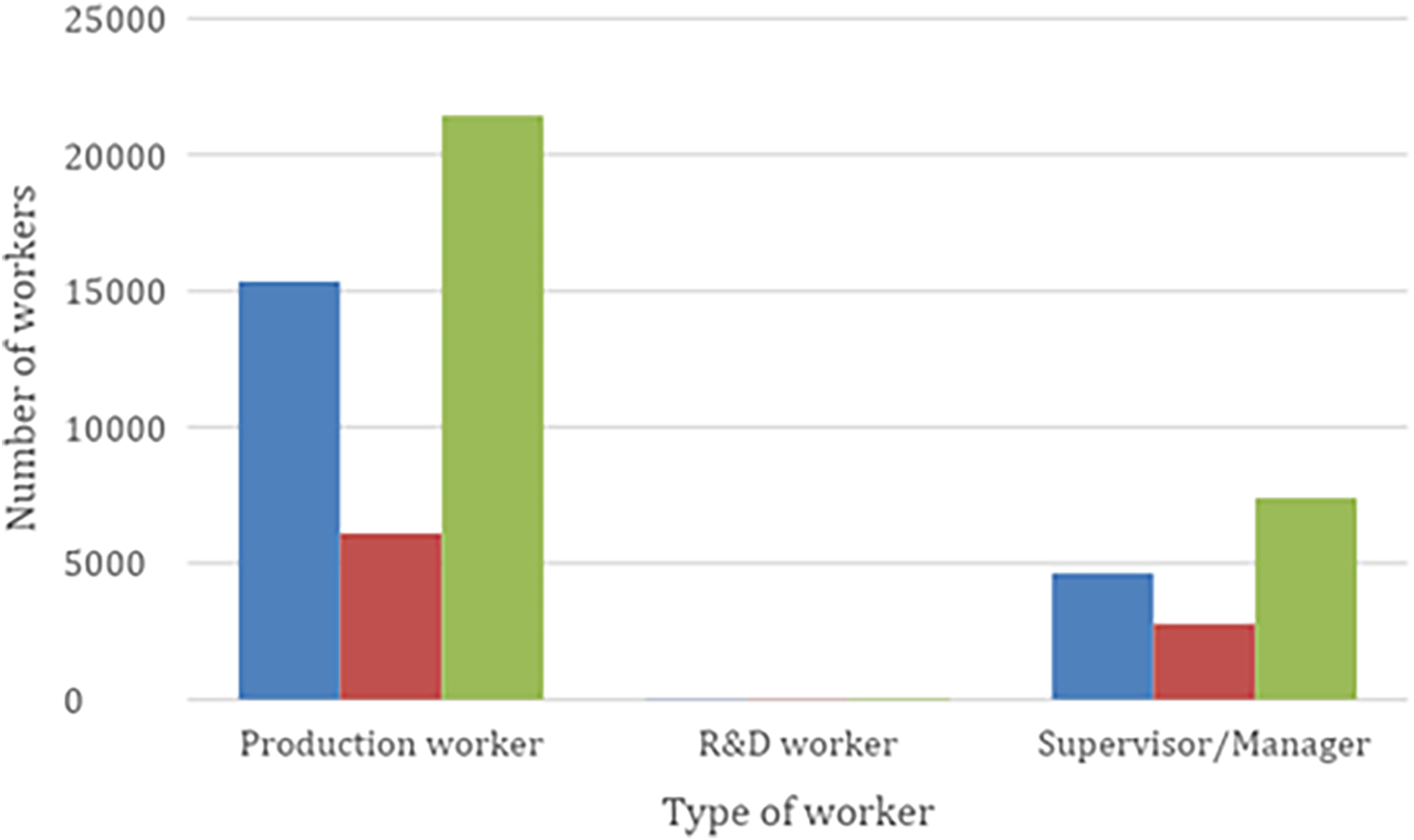
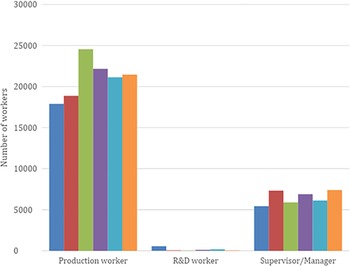
Figure 5 shows that out of the total number of individuals engaged in SUP firms, 21,446, or 74%, are production workers. A very small number, 43 people, are research and development personnel. The remainder, comprising 26% of personnel, presumably are supervisors, managers, and executives. Therefore, one in four people in the SUP sector hold supervisory or managerial positions, making them less vulnerable to economic shocks such as loss of livelihood compared to rank-and-file workers. This data pertains to 2017, not 2018. The 2018 data for this variable is incomparable to previous years, probably because it was a census, not a survey year.
Number of SUP industry workers according to type in 2017.
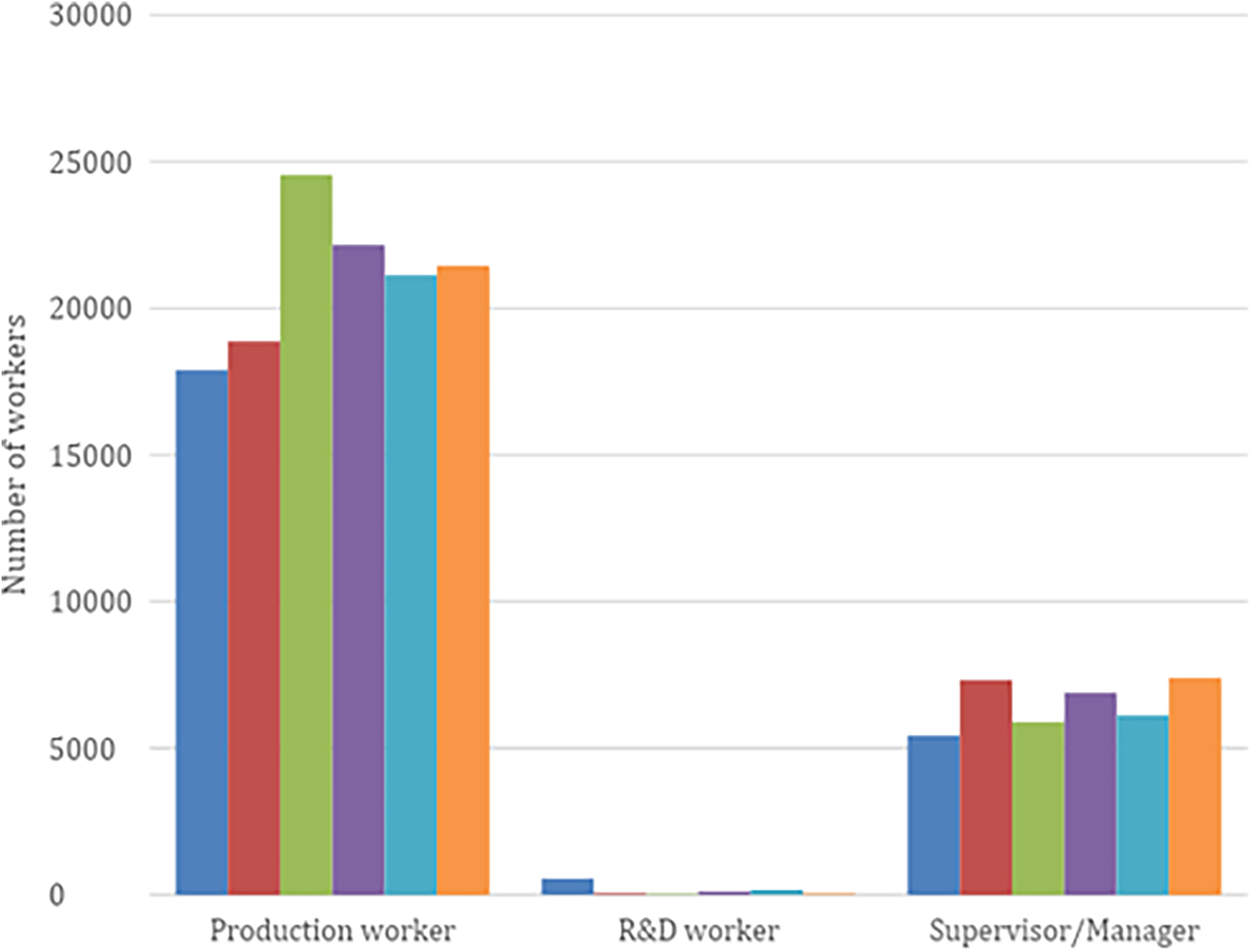
The distribution of workers across each type – production, research and development (R&D) personnel, and supervisory/managerial – has stayed similar over time as illustrated in Figure 6. Most workers were rank-and-file and engaged in production from 2012 to 2017. Very few workers were in R&D, which suggests challenges in innovation, signifying possible difficulties in shifting to ecologically sustainable alternatives. No data on the number of R&D personnel was available for 2010. The data for 2018 is not used due to incompatibility.
Time series of type of workers.
As noted above, the total figure of 32,462 workers in 486 SUP firms in 2018 is an overestimation, given the limitations of the PSA data. The workers most vulnerable to a national phaseout of SUP are the approximately 21,000 production workers. If the estimate of Amurao (Reference Amurao2019) of 24,600 workers is taken as the lower bound and the study’s finding of 32,462 is considered the upper limit, then the maximum margin of error is 24%. The actual error in the overestimation will be lower.
The SUP ban would also affect other workers who are engaged in the forward and backward linkages of SUP plants. The forward linkages of the SUP sector are myriad, from food to electronics. For example, plastic drinking straws produced by SUP factories are sold by wholesalers and retailers to various establishments, including restaurants, hotels, fast food chains, food carts, canteens, local eateries, street vendors, and numerous other outlets. In other words, the linkages span different sectors from industry to services. These linkages are in both the formal and informal economy and are spread out nationwide from cities to the farthest towns and villages.
It is very difficult to estimate the impact on employment in the forward linkages. Except for wholesalers exclusively trading in SUP products, the establishments found in the forward links are not tied to SUP products. They can easily find alternatives. For instance, large shopping malls painlessly transitioned out of plastic bags into reusable or paper bags, and their workers were not affected. Similarly, fast food chains shifted away from plastic straws and utensils. The transition from SUP would have an impact on the operational costs of firms in the forward linkages, but this impact would not be enough to result in mass layoffs.
In contrast, the backward linkages of the SUP sector – the midstream of the plastic industry – would feel the brunt of the loss of production due to a ban. The SUP ban would affect workers in factories making the resins that are the raw materials of SUP products. According to the preliminary data of the 2019 ASPBI, there were 9,428 workers engaged in the production of basic chemicals spread over 196 firms (PSA 2022).
A national SUP ban would, directly and indirectly, affect more than 41,000 workers in the upstream and downstream plastic industries. This will result in mass retrenchments and total loss of livelihood for some, or reduced working hours and decreased pay for others. These figures suggest the scale of the economic barriers to climate action.
Awareness of health risks
Workers are aware of the health and safety hazards of working in a plastic factory. They mention the extreme heat, foul odour, toxic chemicals, and dirty dust that pervade the shop floor.
Ana described the health risks as ‘side effects’ of working in a plastic firm. She and her workmates listed goitre, tuberculosis, and illnesses of the lungs and gallbladder as among the diseases prevalent in workers. According to Ana, ‘First of all, if you are not careful, the machines would indeed smell bad—the burning plastic. This is one of the causes of goitre. Some of our employees contracted goitre. What are their other illnesses?’ Her two workmates, Cathy and Betty, replied, ‘Those that affect the lungs and the gallbladder’.
Ana further described the dire situation:
Where do we get them? From the smell of plastic because it is melted, it gets hot when the [machines] stop; these machines take long to operate, must be preheated. This causes smoke that smells like plastic. These have adverse effects on the human lungs. This is why we are required to wear face masks. Even before the pandemic, we have already been wearing face masks.
Similarly, Danny of Company B stated:
I see that many of my fellow workers contract tuberculosis because of the smell and the heat of plastic. When plastic is melted, it emits a bad smell. Then plastic has small dust particles. They are like those treated with chemicals that when their containers are opened, the lungs would inhale these fine particles. Most of the workers suffer lung ailments and hypertension.
Company B issues only gloves and uniforms as personal protective equipment (PPE). Workers buy their own face masks and safety shoes if they prefer to wear them. Meanwhile, the company gives masks to workers involved in painting. In contrast, Company A provides masks, gloves, laboratory gowns, and alcohol to workers. However, the respondents are unsure if the safety shoes worn by male workers are given for free, implying that most female workers do not wear them.
Eloy described the working conditions inside the Company C factory as too hot, with workers soaked in sweat despite the presence of exhaust fans and individual electric fans provided by the management. There are also fumes and steam due to the production process. According to Eloy, workers have experienced chest pains while working. Meanwhile, the available PPE for Company C workers are face masks, which are mandatory in all departments, as well as goggles and earplugs, but their availability depends on the section or department. However, Eloy commented that some workers take off their masks because wearing them complicates their work. He did not mention whether working conditions have led to occupational safety and health issues among the workers. He did say that at least one worker had spots in his lungs, but was unsure if this was a result of working in the factory.
Perspectives on plastic pollution
Respondents were aware of the pollution created by plastic and its deleterious impact on the environment. However, one respondent nuanced his opinion and showed ambivalence by placing the responsibility of the proper use and recycling of plastic on consumers.
Ana described the end-life of plastic as follows:
One would see that they won’t decay in dump sites. Others think that the plastic has already decayed, but when it rains, the plastic would just fall. This is because plastic is nonbiodegradable. Therefore, if there are alternatives of technology that would make material that looks like plastic but is biodegradable, why not? They should study those potential alternatives to plastic.
Similarly, Danny affirmed that:
I believe that single-use plastic destroys the environment because, for example, if trees would be covered in plastic, and if the sea would be full of dumped plastic, it would feel like they couldn’t breathe. It’s like when we human beings are covered in plastic, we could not breathe. It’s similar to trees. The sea is also part of nature. The fishes would just die. For example, when a whale shark died, it was found to have plastic in its stomach. I do not want this to happen.
In contrast, Eloy opined, ‘Plastic would not harm the environment if used correctly. Promote and allocate funds to recycling to reduce its harmful effects on the environment’.
Workers were also conscious of possible and existing technical fixes to the plastic problem. At one point, Cathy commented, ‘There are new types of plastic, they say, and they dissolve. Are they biodegradable?’ Interestingly, she did not compare these technological solutions to the regulatory instrument of a SUP ban. She later explained that one of their former coworkers found work in a factory that produced eco-bricks: ‘They grind those used bottles. Afterward, they make bricks. I learned this alternative. They grind plastic, and from these plastics, they would make bricks. A former coworker now works there’.
Views on SUP ban
The respondents’ initial opinions of the SUP ban span from opposition to acceptance. Corollary to this, they either believe that individual discipline is the answer to the problem of plastic pollution or think that a ban is a necessary regulatory solution.
Echoing the familiar argument that a ban leads to widespread loss of employment, Danny explained his opposition to a ban:
Personally, I would not agree with a law that bans single-use plastic. If SUP would be banned, many workers would be affected. In the Philippines, there are many plastic factories. I believe there are 100 factories or less than 50 manufacturing plants. This means that a SUP ban would affect many workers. I believe there are around 100 thousand, or maybe fewer. There shouldn’t be a total ban. There should be reductions or limits in SUP use.
Danny insisted that if people were disciplined in throwing out their waste, the plastic would not end up destroying the environment. On this basis, there is no need for a regulation like a ban, he reasoned. He argued:
There should be discipline in disposing SUP. This is what people should do—dispose SUP properly. They should not throw it wherever they please. We indeed have problems with garbage disposal. People lack what would be called discipline. For example, regarding our plastic products, we know that they block drainages; they cause floods. This is also one of the reasons why plastic gets banned. Floods happen because plastic blocks drainage systems.
Echoing Danny’s sentiment, Eloy said, ‘Single-use plastic can be banned for dry goods, but wet markets should still be allowed to use them. But it is important to continue raising awareness and encouraging people to bring their own baskets’. He added, ‘But what would be a reason to reduce plastic production if plastic is the more effective container than other materials? People often use it every day’. Eloy was insistent about the grave impact of a SUP ban. ‘If production would be reduced, workers would earn less, and the plastic manufacturing industry would weaken’.
The union in Company B had discussed the SUP ban in one of their meetings, and it was resolved that they would oppose the proposal due to its employment impact. Danny related, ‘They do not agree with it. All union members disagree’. However, at one point during the interview, he said that most union members, but not all of them, opposed a SUP ban: ‘From what I remember, we discussed this in a union meeting. From our discussion, because we heard that plastic would be banned, most members disagreed’.
In contrast, Ana understood the reality of job losses resulting from banning SUP but acknowledged its necessity. According to her:
We would see a reduction in employment should they implement this ban. But for me, I think it’s a positive development because, for instance, some local governments have prohibited using plastic bags as trash bins. They indeed replaced plastic bags and even polystyrene with paper because paper easily dissolves. If there would be such a law, I would be okay with it as long as workers who would be retrenched get alternative jobs.
The two other Company A workers also agreed with Ana when prompted for their separate opinions. Cathy said, ‘If there is such a law, there should be options available to people who would be retrenched, right?’ Betty, referring to job replacement for the affected, said, ‘Indeed. We are humane’. It is worth noting that, when asked to clarify their opinions, their opinions on the SUP ban were without the benefit of discussion with environmental or labour advocates and campaigners. The three Company A respondents recognised the relevance of a ban but called for alternative employment. They insisted that the shift cannot happen immediately without sufficient preparation and mentioned going on strike if the ban were to be enforced haphazardly. They also do not foresee any challenges in explaining the just transition to their union members and in convincing them of the necessity of a ban on SUP.
Perceptions of just transition
All respondents agreed with the concept of a just transition for workers who will be affected by a SUP ban. Even Danny and Eloy, who at the start expressed opposition to the ban, shifted their position once the idea and meaning of just transition were explained. Just transition was clarified to the respondents as follows:
The conditions of workers should improve. This is what the proposal means. Remove what destroys the environment, look for industries that help nature, but ensure that workers’ conditions do not just return back to normal but become better. In that case, are you okay with it? If there would be a program that not only ensures jobs for the retrenched but also entails that their situation would improve, would you agree?
In contrast to his previous position, Danny responded positively to this:
I think it’s good. They know that we would lose jobs, but at least we have a second option. We would still have another job, so it’s okay for us, as long as we can work again. This is our only reason why we oppose such a law [SUP ban] because we would lose our work.
Furthermore, he added, ‘We might encourage transferring companies—those that no longer focus on plastic. Still, we would earn money. Yet many of us, who would lose jobs, would consider starting a business’. As for Eloy, he stated, ‘We are open to learn new skills, and affected workers in plastic manufacturing should be prioritised in training. We support change if this should benefit the industry, especially the job security of workers’.
Ana explained her point of view this way:
It is important for the workers to have jobs. They are not picky. They would be keen with reducing the production of these products that destroy the environment as long as there are alternative jobs. They want to be assured that they will not lose their income because out of everything, what they earn comes first. This is important, especially today. So, they understand this point. On our part, almost all our products are single-use plastic.
It is interesting to note that the respondents more frequently used the words ‘second option’ rather than ‘alternative,’ which suggests the lack of interaction and discussion with environmental activists. Framing it in the negative, Ana explained the necessity for a just transition in this manner:
If there is no alternative, what would happen to the employees? Nature would improve, but the workers would have nothing to eat. If they do not have food to eat, they would cause problems in society. This should be given attention. If we see improvements in the environment yet have workers become thieves, the situation will worsen.
When asked about the possible standpoint of their co-workers about the just transition, all the respondents answered positively. Referencing the initial opposition of Company B union members to a SUP ban, Danny clarified, ‘They will change their minds. This is their reason too. My reason would also be theirs’. Respondents agreed with the need for alternative jobs since workers need income. If this can be guaranteed, a phaseout of SUP is not a deal-breaker for workers.
Proposals for a just transition
Surprisingly, the respondents did not set a high bar for the alternative jobs and livelihoods that a just transition would require. They basically asked that their wages and benefits from working in the plastic industry should be matched in the alternative employment for a just transition.
Cathy opined, ‘As long as workers have alternative jobs…. Better benefits. Higher wages. Should they lose their jobs, they should be given a separation pay that is a bit high; it is up to the workers to choose what they want’. For Danny, ‘Keep the wages and let us have jobs…. Regarding benefits, we would be more okay with the same benefits that we have been receiving before. We don’t want them to get reduced’. Additionally, he said ‘As long as we receive the full benefits. If we could avail of leaves and receive our 13th-month pay, we would be okay. We are also okay with receiving benefits from SSS [social security] and the government’. Regarding alternative employment as part of a just transition, Eloy responded, ‘If the alternative is better … with liveable wages’. He also said, ‘I just want a job’.
The respondents not only mentioned replacement jobs but also alternative livelihoods. For the older workers, such as Ana and Danny, who knew that it would be difficult to find new jobs considering their age, they insisted on livelihood assistance. Ana described her alternative as going back to farming: ‘If I were given a house and lot, I would do farming, and I would be okay with it’. Betty agreed with Ana and explained that, because their children already have stable jobs, an alternative livelihood is preferable. ‘I can start a business’, Cathy elaborated.
They also proposed that a substantial separation pay would be acceptable and could be utilised to set up a micro or small enterprise. For Danny, ‘My priority, should I be paid a lump sum, would be starting a business’. He also said, ‘Workers could only afford to run a small business. They could operate one through their separation pay. They are lucky if they earn from it. But if they find themselves unlucky, that separation pay could become worthless’. All respondents agreed that both the government and management must contribute to assist affected workers. Danny explained it succinctly: ‘Both of them should help. Of course, the management should help us workers, and the government should also do it’. Nonetheless, Betty insisted that the State should be primarily responsible: ‘No. The government has the better capacity to do so’.
All respondents were receptive to the idea of training for affected workers, but insisted that it must be with compensation. Ana stated that:
As long as we get paid…. We do not want to attend training for a month without pay. Workers are willing to attend training. What is important is receiving compensation…. But if someone suggests leaving work to attend training for two weeks, how would we cover transportation, food, and water bills? Where would workers get money?
Danny qualified his opinion on retraining and upskilling with the age of the workers involved: ‘I would not object to their training. But, for me, I think the younger workers could commit to training. For us older workers, we are more likely to start a business’.
Interestingly, respondents from Company A were aware of the problem of alternative green jobs possibly being worse in terms of working conditions. They were familiar with the experience of a previous co-worker who transferred to an enterprise that downcycled plastic waste into eco-bricks. The company did not issue pay slips or remit social security contributions. The respondents mentioned that they had even helped their co-worker file a case at the labour court against the recycling company.
Information dissemination on SUP ban
No information from the government about the proposed national SUP ban had reached the respondents and their fellow union members. The management of Company A had also not informed its workers or the union. However, the union knew that the city government could possibly close the factory. The local government allegedly wanted to relocate all factories, not just SUP firms, out of the city due to pollution concerns. Thus, the union was aware of management’s preparations to transform the factory into a warehouse instead, but this possibility did not transpire.
In the case of Company B, its management mentioned the proposed national SUP ban during Collective Bargaining Agreement (CBA) negotiations. Thus, it was not actually information dissemination but a negotiation manoeuvre. Danny detailed it as follows:
The [union] president and I had a talk with the management because of our concerns on the CBA. They said, “Okay, we will increase your CBA, but did you know that there is a proposal in the Congress to ban plastics? He [management] said that someone is proposing this in Congress. “Then what will happen to us, Sir?” [we asked]. “I don’t know about you!” [was the answer]… It’s like we were warned that something like that will happen. But we already know that.
The Company B union knew of the SUP ban because of Danny’s participation in a forum where the proposal was discussed. When Danny relayed this to the union, they tabled it in a union assembly. This reveals the real concern and the quick initiative of the union when the officers were alerted to the possibility of a nationwide SUP ban. Contrasting the concern of workers and the complacency of management, Danny maintained, ‘We are worried because the ban would affect us. Although the management would also be affected, they could change the nature of their company because they have the money. Workers could only save money. Once you save up, you could start a business’.
The respondents were not aware of any preparations that their respective companies were making for such a possibility. They observed no apparent changes in the operations of the factory, especially since production was in full swing until the pandemic happened.
Conclusion
The proposed national SUP ban is a significant step towards a circular economy, but it will affect firms and workers. The proposal would directly affect 32,000 workers in almost 500 firms. It would also indirectly impact around 9,000 workers in the midstream plastic industry. The most vulnerable would be 21,000 production workers. These findings illustrate the scope of the economic barriers as well as provide a baseline for advocates and policymakers in advancing just transition proposals.
Workers are aware of the harm produced by plastic waste and the health hazards of working in a plastic factory with only rudimentary PPE. They are also somewhat knowledgeable of the available technical solutions to the plastic waste conundrum. The workers have a range of opinions about a proposed ban – from opposition because of the expected mass layoffs to acceptance as a necessary solution to plastic pollution. In each case, agreement to a SUP ban is predicated on the existence of alternative employment for affected workers.
A just transition for workers is apt to convince workers of the necessity of a SUP ban. Even workers initially opposed to a SUP ban changed their opinions once the meaning of a just transition was explained. If an alternative job or livelihood is guaranteed, then workers are willing to shift out of the SUP industry and embrace the advocacy for plastic regulation. Workers believe that both companies and the government must be responsible, albeit in varying degrees, for providing aid to affected workers.
Workers set a low bar as far as their ideal of alternative employment. Mere maintenance of current wages and benefits is acceptable even when the concept of just transition embodies the principle of decent work and improved conditions in alternative employment. Workers need to raise their just transition ambition, and this should be an aspect of awareness raising. There is also an age dimension to the question of alternative employment. Older workers prefer financial support and/or separation benefits so that they can start a small enterprise. Younger workers desire new jobs, paid retraining and upskilling.
Unfortunately, there is a significant lack of information dissemination from firms and the government about the proposed ban and adaptation measures to prepare workers for a just transition. Instead, knowledge about the SUP ban and possible alternatives has come from environmental and labour coalitions. There are existing alliances between labour unions and environmental organisations, even as many worker groups have mainstreamed climate advocacy in their work (International Trade Union Confederation 2023), which contrasts with the South Africa case (McNamara Reference McNamara2024). A serious education campaign among workers is also a necessary step in ensuring social dialogue. Workers are receptive to a message that integrates both environmental concerns and labour standards. Thus, the study demonstrates that some sociocultural factors are barriers while others are enablers to a transition.
The scaffolding for promoting green jobs and just transition currently exists in legislation and rules. However, there is often a disconnection between the ideal and the reality in Philippine policymaking (cf. Abao Reference Abao, Thompson and Batalla2018) due to implementation issues. These disconnect and implementation issues are the key institutional barriers to surmount. Environmental and labour groups must demand action from the government and employers.
Utilising the framework of Steg and others (Reference Steg, Veldstra, de Kleijne, Kılkış, Lucena, Nilsson, Sugiyama, Smith, Tavoni, de Coninck, van Diemen, Renforth, Mirasgedis, Nemet, Görsch, Muri, Bertoldi, Cabeza, Mata, Novikova, Caldas, Chàfer, Khosla and Vérez2022), the study finds economic, sociocultural and institutional barriers to an effective just transition for SUP workers. The economic barrier is substantial for a middle-income country, though not insurmountable. This would necessitate the allocation by the state and employers of robust assistance for workers’ separation benefits, paid retraining and alternative livelihood. Following Huber (Reference Huber2022), foregrounding just transition in the material interests of workers is crucial. The sociocultural barriers resulting in opposition by affected workers appear to be resolvable through intensive education and awareness raising about just transition. The institutional barrier is inertia by the state and employers, not climate denialism. The institutional inertia-cum-social neglect may later provoke struggles by workers and their allies if the government is abruptly forced to pass a national ban because of the enactment of the global plastics treaty. The nexus of environment and labour can be the driver of a powerful social movement.
Recommendations for future research
While an exploratory labour-centric approach provides rich data for interrogating workers’ perceptions of the transition, future research should expand the number of worker respondents to a bigger sample size using a sampling frame that aligns with the geographic spread and firm size of SUP factories, and the gender composition of workers. Cooperation of the industry association can be secured so that non-unionised SUP companies can be sampled.
Analysing the industry data for the years 2019 onwards would reveal the impact of COVID-19 and uncover the post-pandemic trend. Updated employment figures will be useful in substantiating the demand for a just transition, as well as proposed legislation for a national SUP ban. Future research could evaluate the reasons for the ineffectiveness of local bans in limiting SUP use. Finally, investigating the situation of waste workers – who are mostly informal in status – will be useful in probing the possibility of SUP workers transitioning to work in recycling.
Acknowledgements
Micah Orlino Mangahas and CJ Castillo assisted in the data gathering. The author thanks the two anonymous reviewers for their helpful comments to improve the paper.
Funding statement
Support for the research was received from the Ecowaste Coalition and the Alternative Development Program of the UP Center for Integrative and Development Studies.
Competing interests
The author declared no potential conflicts of interest with respect to the research, authorship, and/or publication of this article.
Benjamin B. Velasco is an Assistant Professor at the School of Labor and Industrial Relations of the University of the Philippines Diliman. He is currently finishing his dissertation on worker-driven social responsibility for garment workers in global supply chains. He is a member of the Trade Unions and Labour Environmentalism Network (TULE), a research group by and for early-career researchers.

 Open access

