


Caffeine (1,3,7-trimethylxanthine) is a natural alkaloid present in varying quantities in the leaves, fruits and seeds of various plants (coffee, kola, tea, maté, etc.). Furthermore, caffeine can be artificially synthesised in the laboratory and is frequently included in over-the-counter medications, nutritional supplements and commercially available beverages( Reference Magkos and Kavouras 1 ). Caffeine is the most frequently consumed psychoactive drug in the current society, despite this substance having no nutritional value and not being essential for any physiological process( Reference Heckman, Weil and Gonzalez de Mejia 2 ). However, caffeine is a potent stimulant of the central nervous system and is primarily used for increasing vigour and activeness, warding off drowsiness and restoring alertness. In the sport setting, caffeine is also the most consumed substance( Reference Del Coso, Muñoz and Muñoz-Guerra 3 ) because of its effectiveness to increase performance in a wide variety of sport disciplines( Reference Burke 4 ). The amount of caffeine consumed per d depends on many factors, such as the source of intake, age, sex, nutritional status, fitness level, peer behaviour and habituation( Reference Brice and Smith 5 ).
Caffeine metabolism is quite different between habitual caffeine consumers and non-consumers( Reference Van Soeren, Sathasivam and Spriet 6 ). The sensitivity of caffeine consumers to the mood- and performance-enhancing effects of caffeine is related to their levels of habitual intake( Reference Attwood, Higgs and Terry 7 ). A greater and longer-lasting ergogenic effect has been found for non-consumers than for caffeine consumers after a dose of 5 mg caffeine/kg( Reference Bell and McLellan 8 ). Furthermore, genetic diversity can influence the response to caffeine, especially by genetic variations in cytochrome P-450 enzymes, responsible for caffeine metabolism, and by variations in A2A receptors, which play a role in the effects of caffeine on arousal( Reference Yang, Palmer and de Wit 9 ).
The main sources of caffeine in nutritional products are brewed coffee, tea, cocoa products and cola beverages. Moreover, the ingestion of caffeine-containing energy drinks has dramatically increased in the last few years, especially in the sport context( Reference Hoffman 10 ). Nowadays, energy drinks have become the most widely used means of caffeine intake in the sports population( Reference Hoffman 10 – Reference Kristiansen, Levy-Milne and Barr 12 ). Energy drinks contain carbohydrate, caffeine and/or other nutrients that may affect mental focus and concentration, and have the potential to affect exercise capacity and perceptions of energy and/or fatigue( Reference Campbell, Wilborn and La Bounty 13 ). Current evidence, although scarce, suggests than consumption of energy drinks is safe in a healthy population and similar to ingesting other foods and beverages containing caffeine( Reference Campbell, Wilborn and La Bounty 13 ). For adults consuming moderate amounts of coffee (3–4 cups/d, providing 300–400 mg caffeine/d), there is little evidence of health risks and some evidence of health benefits( Reference Higdon and Frei 14 , Reference Nawrot, Jordan and Eastwood 15 ). However, some groups, including individuals with hypertension, children, adolescents and the elderly, may be more vulnerable to the adverse effects of caffeine intake( Reference Higdon and Frei 14 ).
The ingestion of caffeine or caffeinated products is typically accompanied by several side effects including insomnia, nervousness, restlessness, gastric irritation, nausea, vomiting, tachycardia, tremors and anxiety( Reference Campbell, Wilborn and La Bounty 13 , Reference Clauson, Shields and McQueen 16 ). In a survey about energy drink consumption patterns among college students, Malinauskas et al. ( Reference Malinauskas, Aeby and Overton 17 ) found that, in energy drink users who consumed greater than one energy drink per month, the most frequent side effects were jolt (increased alertness and energy) and crash (sudden drop in energy) episodes (29 % of users), headaches (22 % of users) and heart palpitations (19 % of users). Moreover, there was a significant dose–effect relationship between the volume of energy drink consumed and the frequency of jolt and crash episodes.
Different national and international poison centres have reported several adverse events associated with consumption of energy drinks including liver damage, kidney failure, agitation, seizures, tachycardia, cardiac dysrhythmias, hypertension and sudden death. The minimum and maximum symptomatic caffeine levels have been reported to be 4 mg/kg in a 13-year-old patient and 36 mg/kg in a 14-year-old patient, respectively( Reference Seifert, Schaechter and Hershorin 18 ).
During exercise, the acute ingestion of caffeine at a dose of 9 mg/kg body mass has been found to drastically increase the frequency of adverse side effects compared with caffeine ingestion at a dose of 3 or 6 mg/kg( Reference Pallares, Fernandez-Elias and Ortega 19 ). Especially, insomnia (54 %), increased urine production (54 %) and gastrointestinal problems (38 %) augmented at a dose of 9 mg/kg( Reference Pallares, Fernandez-Elias and Ortega 19 ). Lower doses (e.g. 3 mg/kg body mass) increased the feeling of vigour and activeness in comparison to a placebo without caffeine content, but did not increase other side effects such as gastrointestinal problems or insomnia( Reference Del Coso, Salinero and Gonzalez-Millan 20 ).
In contrast, ingestion of energy drink can improve psycho-physiological factors related to exertion in exercise( Reference Duncan, Smith and Cook 21 ). Caffeine ingestion has been demonstrated to change the mood state response to exercise, with a greater vigour score and a lower fatigue score compared with placebo ingestion( Reference Duncan and Oxford 22 , Reference Giles, Mahoney and Brunye 23 ). Ingestion of caffeine has been shown to induce a reduction in the rate of perceived exertion (RPE) in exercise( Reference Duncan, Smith and Cook 21 , Reference Duncan and Oxford 24 – Reference Duncan and Hankey 27 ), decreasing muscular pain perception( Reference Duncan, Stanley and Parkhouse 26 , Reference Duncan and Hankey 27 ) and increasing the readiness to invest effort( Reference Duncan, Smith and Cook 21 , Reference Duncan and Hankey 27 ). Moreover, caffeine has been reported to enhance executive control and working memory, and to reduce reaction times in simple and choice reaction time tasks( Reference Giles, Mahoney and Brunye 23 , Reference Haskell, Kennedy and Wesnes 28 ).
Sex interaction in terms of the effects of caffeine is still not clear. In a randomised double-blind placebo study on 688 young adults (238 men and 450 women), caffeine administration induced a greater decrease in somnolence in men than in women. Moreover, the increase in subjective activation after the administration of a caffeinated beverage was greater in men than in women( Reference Adan, Prat and Fabbri 29 ). Similarly, Temple et al. ( Reference Temple, Bulkley and Briatico 30 ) found in young individuals that males may be more susceptible to the reinforcing effects of caffeine. In the prevalence of different adverse effects after ingestion of energy drinks, Malinauskas et al. ( Reference Malinauskas, Aeby and Overton 17 ) did not find differences between male and female participants in a survey-based study. In the use of energy drinks with exercise, no sex interactions were found in relation to the effects of caffeine on RPE, mood state and readiness to invest physical effort in endurance activities( Reference Duncan and Hankey 27 ).
The aim of the present study was to assess psycho-physiological changes and the prevalence of side effects resulting from the ingestion of 3 mg caffeine/kg body mass in the form of an energy drink, and to determine the differences between males and females in these potential effects.
Experimental methods
Participants
A total of ninety-eight athletes from seven different sport disciplines (rugby, volleyball, tennis, badminton, swimming, soccer and hockey) volunteered to participate in the study (Table 1). All of them competed at the national or regional level with more than 8 years of training experience in their disciplines and over 5 h of weekly training. Thus, the study sample can be categorised as experienced and trained athletes. All the participants were especially recruited because they were light caffeine consumers ( < 60 mg/d, approximately 1 cup of coffee). Participants were non-smokers and were not under medical treatment during the study period. Of these participants, eight did not complete all the required experimental protocols and their results were excluded from the statistical analysis. Thus, the study sample was composed of ninety participants (fifty-three male, thirty-seven female). We performed a priori statistical power analysis based on a previous study with the same caffeinated energy drink( Reference Del Coso, Salinero and Gonzalez-Millan 20 ). To obtain significant differences between the ingestion of a caffeinated energy drink v. a placebo drink with an 80 % of statistical power and with an α value of 1·96 (95 % of confidence), we required a sample size of seventy-four participants to detect changes in nervousness or gastrointestinal side effects.
Age and anthropometric characteristics of the study sample (Mean values and standard deviations, n 90)

The present study was conducted according to the guidelines laid down in the Declaration of Helsinki, and all procedures involving human subjects were approved by the Camilo José Cela University Ethics Committee. Written informed consent was obtained from all subjects. All this individual information was obtained by pre-recruiting questionnaires. Once participants fulfilled the inclusion criteria, they were fully informed of any risks and discomforts associated with the experiments and gave their informed written consent to participate. The study was approved by a local Research Ethics Committee in accordance with the latest version of the Declaration of Helsinki.
Experimental design
A double-blind and placebo-controlled experimental design was used for the present study. Each participant took part in two different experimental trials under the same experimental conditions and standardisations. The order of the experimental trials (e.g. caffeinated energy drink or placebo beverage) was randomised for each participant. To control for the order effects, the order of the experimental trials was counterbalanced and forty-five participants performed caffeinated energy drink and placebo beverage order while the remaining forty-five participants performed the placebo beverage and caffeinated energy drink order. To comply with these two criteria, each participant was assigned with a number by an experimenter who did not take part in the experiment. Odd numbers received the caffeinated energy drink and placebo beverage order while even numbers received the placebo beverage and caffeinated energy drink order. The experimental trials were separated by 1 week to allow complete caffeine washout. On one occasion, participants ingested 3 mg caffeine/kg body mass (3 mg/kg) by means of a powdered caffeine-containing energy drink (Fure®; ProEnergetics) dissolved in 250 ml of tap water. On another occasion, participants ingested the same amount of energy drink but with no caffeine content (placebo; 0 mg/kg). The two experimental drinks had a similar taste and appearance and they only differed in the amount of caffeine they contained. The energy drinks also contained taurine (18·7 mg/kg), sodium bicarbonate (4·7 mg/kg), l-carnitine (1·9 mg/kg) and maltodextrin (6·6 mg/kg); however, these substances were ingested in identical proportions in the two experimental trials. Both experimental trials were performed at the same time of the day to avoid the effects of circadian rhythms in the studied variables( Reference Mora-Rodriguez, Garcia Pallares and Lopez-Samanes 31 ).
The experimental beverages were ingested 60 min before the onset of the experimental trials to allow for complete caffeine absorption( Reference Armstrong 32 ), and they were provided in opaque plastic bottles to avoid identification. An alphanumeric code was assigned to each trial to blind participants and investigators to the beverage tested.
Standardisation
The day before each experimental trial, participants were nude weighed ( ± 50 g; Radwag) to calculate the amount of caffeine required for each individual caffeinated energy drink. The amount of the energy drinks was individually calculated to avoid the effects of body mass on the variables under investigation. On that day, participants refrained from strenuous exercise and adopted a similar diet and fluid intake regimen. Participants were encouraged to withdraw from all dietary sources of caffeine (coffee, cola drinks, chocolate, etc.) and alcohol 48 h before testing. In addition, participants were instructed to have a light meal at least 2 h before the onset of the experimental trials. These standardisations were reported to the technical staff of the teams and food and fluid diaries were obtained to ensure compliance.
Experimental protocol
On the day of testing, participants ingested the corresponding beverage (caffeine-containing energy drink or placebo energy drink) and completed a specific sport session, including a standardised warm-up and a simulated competition. Thereafter, participants were required to fill out a questionnaire about their sensations of muscle power, endurance and perceived exertion (RPE) during the test. This questionnaire included a 1- to 10-point scale to assess each item, and participants were previously informed that 1 point meant minimal amount of that item and 10 points meant maximal amount of the item. Moreover, participants were asked to indicate on a yes/no scale whether they had had any perceptible effect. In addition, participants were provided with a survey to be filled out before going to sleep about nervousness, gastrointestinal problems, muscular pain, headache and activeness they had perceived in the hours after the drink ingestion. In the following morning after the ingestion of the energy drinks, participants were asked about sleep quality (e.g. insomnia) on a yes/no scale and about perceived fatigue on a 1- to 10-point scale. This survey has been previously used to assess side effects resulting from energy drink ingestion( Reference Del Coso, Salinero and Gonzalez-Millan 20 ). Participants who did not complete these questionnaires on time were eliminated from the analysis. Thus, eight participants were excluded from the statistical analysis based on this criterion, as indicated in the ‘Participants’ section.
Statistical analysis
Results of quantitative data are presented as means and standard deviations. Differences in the 1- to 10-point scale were analysed using the Wilcoxon signed-rank test. Effect size was calculated (Cohen's d) for each item. Results of qualitative data (e.g. side effects) are presented as percentages. Differences in side effects after beverage intake were analysed using the McNemar test. Sex influences on the tested variables were verified by using a general linear model and a two-way repeated-measures ANOVA (beverage × sex). The criterion for statistical significance in all these tests was set at P< 0·05. The SPSS for Windows 19.0 statistical package (SPSS, Inc.) was used to analyse the data.
Results
Table 2 outlines the perception of muscle power, endurance and exertion of athletes during their sport practice after the ingestion of the caffeine-containing energy drink or the placebo energy drink. In comparison to the placebo energy drink, the pre-exercise ingestion of the caffeine-containing energy drink significantly increased muscle power perception during exercise (P= 0·001), although the effect size was low (d= 0·13). The increased muscle power perception was present in both male (d= 0·10; P= 0·019) and female participants (d= 0·18; P< 0·05). On the contrary, there were no differences in perceived endurance and exertion (P>0·05). The caffeinated energy drink was equally ineffective with regard to the subjective feelings of endurance and exertion in male and female athletes. Overall, caffeine effects on perceived power, endurance and exertion were of the same magnitude in male and female athletes (interaction sex × drink condition; P>0·05).
Subjective perception of power, endurance and exertion of athletes during exercise after ingestion of a caffeine (CAFF)-containing energy drink or a placebo (PLA) energy drink (Mean values and standard deviations; mean differences and 95 % confidence intervals, n 90)

* P< 0·05.
In the morning after the intake of the experimental beverage, females showed higher perceived fatigue after the intake of the placebo beverage (d= 0·17; P= 0·035), while males showed no effect (d= 0·08; P= 0·109; Table 3) . There was a statistically significant effect observed for sex interaction (P= 0·008).
Subjective perception of fatigue of athletes after ingestion of a caffeine (CAFF)-containing energy drink or a placebo (PLA) energy drink (Mean values and standard deviations; mean differences and 95 % confidence intervals, n 90)

* P< 0·05.
The ingestion of the caffeinated energy drink produced a higher prevalence of side effects such as insomnia (31·2 % caffeine v. 10·4 % placebo; P< 0·001), nervousness (13·2 % caffeine v. 0 % placebo; P= 0·002) and activeness (16·9 % caffeine v. 3·9 % placebo; P= 0·007) than the ingestion of the placebo energy drink (Table 4). In these three variables, there were significant differences in the female subpopulation, while in the male subpopulation there were only significant differences between caffeine and placebo in the prevalence of insomnia. There were no sex differences in the incidence of side effects (sex × beverage interaction; P>0·05).
Prevalence of side effects after ingestion of a caffeine (CAFF)-containing energy drink or a placebo (PLA) energy drink†

* P< 0·05.
† Data are percentage affirmative responses obtained from ninety trained athletes.
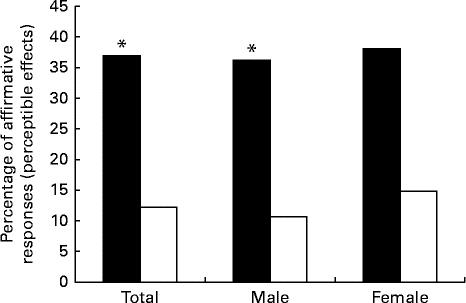
As shown in Fig. 1, the ingestion of 3 mg caffeine/kg in the form of an energy drink produced an appreciable effect in 37 % of the participants, while ingestion of the placebo energy drink also produced appreciable effects only in 12·3 % of the participants (P= 0·001). In males, 36·2 % of participants reported appreciable effects after the ingestion of the caffeinated energy drink while 10·6 % reported these effects with the placebo (P= 0·012). In females, similar results were obtained (38·2 v. 14·7 %; P= 0·057). There was no effect observed for the sex × beverage interaction (P= 0·556).
Self-reported appreciable effects with the ingestion of a caffeinated energy drink (■) or a placebo energy drink (□). Data are percentages of affirmative responses obtained from ninety trained athletes. * Percentage value was significantly different from that of the placebo energy drink (P< 0·05).
Discussion
The aim of the present study was to assess psycho-physiological changes and side effects resulting from the ingestion of a caffeinated energy drink in a group of trained individuals. For this purpose, we provided a caffeinated energy drink (3 mg caffeine/kg body mass) or a placebo energy drink 60 min before a regular training session, and measured subjective feelings of performance and side effects for 24 h after the ingestion of these beverages. In comparison to the placebo beverage, ingestion of the caffeinated energy drink enhanced the subjective perception of muscle power during exercise and reduced overall fatigue the following morning after the intake of the beverage. Moreover, the caffeinated energy drink increased the prevalence of side effects such as insomnia, activeness and nervousness. Interestingly, the caffeinated energy drink affected both male and female participants in a similar manner.
In comparison to the placebo energy drink, the pre-exercise ingestion of the caffeinated energy drink increased power perception during exercise (P= 0·001). In contrast to endurance activities, where the ergogenic benefits of caffeine ingestion have been repeatedly evidenced( Reference Davis and Green 33 ), in activities with a clear reliance on anaerobic pathways controversial results have been obtained. While several studies have failed to find improvements( Reference Collomp, Ahmaidi and Audran 34 – Reference Hoffman, Kang and Ratamess 36 ), more recent studies( Reference Pallares, Fernandez-Elias and Ortega 19 , Reference Del Coso, Salinero and Gonzalez-Millan 20 , Reference Lane, Areta and Bird 37 ) have reported enhanced muscle power output with an identical dose (e.g. 3 mg/kg) to that used in the present study. Therefore, subjective perception of participants about muscle power coincides with empirical data obtained in experimental conditions.
In contrast, the administration of the caffeine-containing energy drink did not produce any differences in the subjective feelings of endurance and exertion during the practice of a high-intensity exercise bout with respect to the placebo drink (P>0·05). Curiously, endurance athletes such as cyclists, rowers or triathletes are among the athletes with the highest caffeine intake before or during sport competition( Reference Del Coso, Muñoz and Muñoz-Guerra 3 ), probably because of its reported ergogenic properties in these sport disciplines( Reference Ganio, Klau and Casa 38 – Reference Carr, Gore and Dawson 40 ). Furthermore, the intake of caffeine has demonstrated ergogenic effects on other endurance activities( Reference Burke 4 , Reference Campbell, Wilborn and La Bounty 13 , Reference Ganio, Klau and Casa 38 , Reference Goldstein, Ziegenfuss and Kalman 41 ), and has reduced the RPE during prolonged exercise( Reference Duncan, Smith and Cook 21 , Reference Duncan and Oxford 24 – Reference Duncan and Hankey 27 ). This effect of caffeine on reducing self-perceived fatigue could partly explain the ergogenic effects of caffeine on performance( Reference Doherty and Smith 25 ). In the present study, participants competed in a sport-simulated competition and, thus, exercise intensity was not standardised between the experimental trials. It is likely that our participants exercised at a higher intensity in the caffeinated energy drink condition than in the placebo condition, and this could be the reason for comparable exertion scores between the conditions.
Insomnia was the principal side effect resulting from the ingestion of the caffeinated-energy drink, with 31 % of the participants reporting sleep disorders during the night after ingestion of this beverage. The prevalence of insomnia in female athletes reached 37·8 %, although this value was not statistically different from male participants (Table 4). Previous research( Reference Pallares, Fernandez-Elias and Ortega 19 , Reference Del Coso, Salinero and Gonzalez-Millan 20 ) did not find significant differences for insomnia with the same dose of 3 mg caffeine/kg as that used in the present study, while caffeine ingestion at a dose of 9 mg/kg increased the frequency of sleep disturbances( Reference Pallares, Fernandez-Elias and Ortega 19 ). It has been reported that caffeine ingestion time could affect the incidence of insomnia especially when caffeine or caffeine-containing products are administered in the afternoon( Reference Drake, Roehrs and Shambroom 42 ). Pallares et al. ( Reference Pallares, Fernandez-Elias and Ortega 19 ) administered the caffeinated (e.g. 3, 6 or 9 mg/kg) or placebo beverages at 07.00 hours, so the influence of these caffeine dosages on sleep quality could have decreased. Because altered sleep–wake cycles could negatively affect sport performance( Reference Reilly and Edwards 43 ), the use of caffeinated energy drinks in sport must be controlled, especially in the afternoon.
Caffeine ingestion has been associated with a moderate hypoalgesic effect during high-intensity exercise( Reference Duncan and Oxford 24 , Reference Gliottoni, Meyers and Arngrimsson 44 ), mainly by reducing muscular pain perception during exercise. Nevertheless, other studies have not found this effect of caffeine ingestion on pain perception( Reference Astorino, Terzi and Roberson 45 , Reference Astorino, Cottrell and Talhami Lozano 46 ), as reported in the present study. All of these cited studies employed doses of 5 mg/kg, so this analgesic effect is controversial. One explanation for these contradictory outcomes could be the different intensities involved in each experimental condition, because in the trials with caffeine, participants were able to perform at a higher intensity which could mask the effects of caffeine on the perceived level of pain( Reference Astorino, Terzi and Roberson 45 , Reference Astorino, Cottrell and Talhami Lozano 46 ). When the intensity was the same, the pain was reduced( Reference Gliottoni, Meyers and Arngrimsson 44 ). For this reason, it is important to standardise exercise intensity when studying the effect of caffeine on muscle pain. Further research is warranted in this area.
Increased activeness and alertness could be a psycho-physiological advantage for sport performance( Reference Hull, Wright and Czeisler 47 ). Most studies investigating the effects of energy drink ingestion before exercise have reported improvements in mood, reaction time and markers of alertness( Reference Campbell, Wilborn and La Bounty 13 , Reference Alford, Cox and Wescott 48 , Reference Seidl, Peyrl and Nicham 49 ). In the present study participants, there was an increased frequency for enhanced activeness after energy drink ingestion (16·9 v. 3·9 %), although this effect was more frequent in female participants. However, nervousness was also increased and this side effect could be a negative outcome of caffeinated energy drink ingestion because anxiety decreases motor performance( Reference McCarthy, Allen and Jones 50 , Reference Rathschlag and Memmert 51 ). More information is necessary to elucidate whether increased activeness and nervousness affect sport performance.
Another objective of the present study was to analyse sex differences in the outcomes resulting from the ingestion of a caffeine-containing energy drink. In the variables analysed in the present investigation, we did not find differences between the responses of male and female athletes except for perceived fatigue the following morning after the intake of the energy drinks (Table 3). Only the female participants reported reduced fatigue after ingestion of the caffeinated energy drink in comparison to that of the placebo energy drink. The absence of sex differences in most effects resulting from energy drink intake is supported by previous investigations with similar objectives( Reference Malinauskas, Aeby and Overton 17 , Reference Duncan and Hankey 27 ). A recent study has described cytochrome P-450 as the primary group of liver enzymes for caffeine metabolism. Thus, cytochrome P-450 has been suggested as a key for the effects obtained with caffeine ingestion on human performance and its adverse effects( Reference Yang, Palmer and de Wit 9 ). A higher activity of cytochrome P-450 has been shown in men than in women( Reference Landi, Sinha and Lang 52 ), although it seems that sex is not the primary variable to explain inter-individual differences in the activity of the cytochrome P-450 enzyme( Reference Bebia, Buch and Wilson 53 ). It appears that male and female athletes have similar caffeine pharmacokinetics( Reference Graham 54 ), and no differences were found in various psycho-physiological measures (e.g. mood state, readiness to invest physical effort, RPE and muscular pain) after the intake of energy drinks( Reference Duncan and Hankey 27 ). Thus, the perceived ergogenicity and the prevalence of side effects after the ingestion of a caffeinated energy drink are similar between males and females.
Several investigations have described that the perception of consuming a substance that purportedly enhances performance is sufficient to improve sport performance (e.g. ‘placebo effect’)( Reference Duncan, Lyons and Hankey 55 , Reference Beedie and Foad 56 ). This placebo effect has been specifically reported in studies with simulated caffeine ingestion( Reference Duncan, Lyons and Hankey 55 , Reference Beedie, Stuart and Coleman 57 ). In these studies, physical performance was significantly improved when participants were informed that they had been supplemented with caffeine despite them having ingested a placebo. In the present study, only 37 % of the participants reported identifiable effects with the caffeinated energy drink, while 12·3 % of the participants reported that the placebo drink produced perceptible effects. These data indicate that most participants were not aware of the beverages tested in each experimental trial. Moreover, these results confirm the blinding of the participants to the treatments and the absence of the ‘placebo effect’ in the outcomes of this investigation.
A limitation of the present study is that the energy drinks (both the caffeinated one and the placebo) contained not only caffeine but also carbohydrates, and other compounds. To set the ecological validity of the experimental design, we selected a commercially available energy drink that contained caffeine, taurine, sodium bicarbonate, l-carnitine and maltodextrin, although these components were included in the same proportion in the placebo drink. Interestingly, with the exception of carbohydrates, there is a lack of evidence to substantiate claims that components of energy drinks, other than caffeine, contribute to the enhancement of physical( Reference McLellan and Lieberman 58 , Reference Tallis, Higgins and Cox 59 ) or cognitive performance( Reference McLellan and Lieberman 58 , Reference van den Eynde, van Baelen and Portzky 60 ). Furthermore, the amount of carbohydrate provided with the beverages in the experimental trials (2 g) was not enough to produce the purported benefits obtained with carbohydrate ingestion during exercise. So, we speculate that caffeine is the only substance responsible for the effects obtained with the caffeinated energy drink.
Although the study of the effects of caffeine ingestion on human performance started one century ago( Reference Rivers and Webber 61 ), the varied and complex properties of caffeine to modify human physiology and its exact mechanisms of action are not yet completely understood( Reference Davis and Green 33 ). Acute caffeine ingestion elicits a number of hormonal, metabolic and physiological effects, both at rest and during exercise( Reference Magkos and Kavouras 1 ), while multiple mechanisms have been proposed to explain the effects of caffeine ingestion on human performance( Reference Goldstein, Ziegenfuss and Kalman 41 ). In addition to positive effects, numerous investigations have determined several adverse effects after the intake of caffeine or caffeinated products in low to moderate doses. Most studies investigating the side effects associated with caffeine ingestion have been carried out with acute caffeine intake and small subject samples( Reference Pallares, Fernandez-Elias and Ortega 19 , Reference Del Coso, Salinero and Gonzalez-Millan 20 ), or survey-based studies conducted with larger subject samples but without the control of real caffeine intake (e.g. dose according to body mass) and established by energy drink consumers( Reference Malinauskas, Aeby and Overton 17 ). The present study is a first step to understanding the side effects resulting from the ingestion of a caffeine-containing energy drink in the sport context. Further research is needed to unveil health-related outcomes after acute energy drink ingestion. Well-controlled laboratory studies including direct (e.g. heart rate, blood pressure, urine production, etc.) and indirect (questionnaire about sleep quality or other health disorders) variables, standardised caffeine dosage and covariates such as ingestion time, user's habituation or genetic factors must be developed after energy drink ingestion to ensure the safety of these beverages.
The effects of long-term consumption of caffeine or caffeinated products (mainly coffee) are numerous, and they affect the functioning of different physiological systems. Long-term consumption of this substance has been associated with several pathological conditions, such as CVD, reproductive disorders, Ca loss, osteoporosis and psychiatric disturbances. However, the chronic ingestion of caffeine has also been associated with a protective effect on neurodegenerative disorders and Parkinson's disease( Reference Magkos and Kavouras 1 , Reference Yang, Palmer and de Wit 9 ). Specifically, there are only a few well-controlled experimental studies that have investigated the side effects resulting from the acute ingestion of energy drinks( Reference Del Coso, Salinero and Gonzalez-Millan 20 , Reference Kurtz, Leong and Anand 62 ). These investigations have reported increased resting blood pressure but with minimal effects in the prevalence of typical side effects produced after caffeine ingestion. To our knowledge, only one study has investigated the effects of prolonged ingestion of caffeinated energy drinks( Reference Lockwood, Moon and Smith 63 ). These authors found that blood markers for hepatic, renal, cardiovascular and immune function revealed no adverse effects in response to 10 weeks of daily energy drink intake. In contrast, several case studies have reported serious adverse side effects (for a review, see Seifert et al. ( Reference Seifert, Schaechter and Hershorin 18 )). However, case studies about the side effects resulting from the ingestion of energy drinks are typically related to the ingestion of unbearable amounts of energy drinks or to subjects with previous conditions that exacerbated the adverse effects of the caffeinated beverages( Reference Burrows, Pursey and Neve 64 ). So, more research is warranted to determine the long-term effects of habitual energy drink intake.
Several previous investigations have focused on the effects of caffeinated energy drinks on physical performance of athletes, and the ergogenicity of these beverages has been well documented( Reference Campbell, Wilborn and La Bounty 13 ). In addition, recent data reveal the positive effects of energy drink ingestion on perception of exertion, perception of leg muscle pain and readiness to invest effort( Reference Duncan, Stanley and Parkhouse 26 , Reference Duncan and Hankey 27 ). All of this information might indicate that energy drinks are an effective nutritional aid to improve the performance of athletes by increasing both the physical functioning and the volitional capacity of the athlete. In contrast, we obtained a greater prevalence of side effects such as nervousness and insomnia after the ingestion of the caffeinated beverage. Thus, the recommendation of caffeinated energy drinks should take into consideration these negative side effects, and the athletes and coaches should consider the potential adverse outcomes of energy drink ingestion, especially in competitive situations. Since large differences in individual responses have been found after the intake of caffeine( Reference Yang, Palmer and de Wit 9 ), athletes must experiment with these beverages in training sessions and consider its use afterwards.
In conclusion, the ingestion of a caffeinated energy drink (3 mg caffeine/kg body mass) improved perceived muscle power during intense exercise, although it did not affect subjective feelings of endurance or exhaustion. Following the exercise bout, the ingestion of the caffeine-containing energy drink significantly increased the prevalence of side effects, such as insomnia, activeness and nervousness. The presence of these side effects was similar between male and female participants. These data indicate that energy drinks produce minor side effects, and special attention should be paid to these beverages when they are ingested in the afternoon.
Acknowledgements
The present study received no specific grant from any funding agency, commercial or not-for-profit sectors.
The authors’ responsibilities are as follows: J. J. S., B. L. and J. D. C. formulated the research question, designed and carried out the study, analysed the data and wrote the article; J. A.-V., C. G.-M., F. A., C. G.-S. and D. R.-V. designed and carried out the study, and revised the manuscript.
None of the authors has any conflicts of interest to declare.



