





LEARNING OBJECTIVES
After reading this article you will be able to:
-
• understand the challenges and inconsistencies in the nomenclature and classification of PPS
-
• describe the shared psychological, behavioural and physiological mechanisms, such as cognitive distortions, avoidance behaviours and body clock dysregulation, that underpin PPS across disorders
-
• describe and critically discuss models of understanding PPS, with a principal focus on the transdiagnostic cognitive–behavioural model, and an overview of alternative frameworks.
Persistent physical symptoms (PPS), which include but are not limited to fatigue, pain and gastrointestinal problems, are associated with functional impairment and psychological distress (Picariello Reference Picariello, Ali, Moss-Morris and Chalder2015). They encompass physical symptoms with normal test results and are also frequently associated with long-term physical health conditions. PPS are common, accounting for up to one in five presentations in primary care and around 50% in secondary care clinics (De Waal Reference De Waal, Arnold and Eekhof2004). PPS impose a significant burden on individuals, families, healthcare systems and society, affecting quality of life, relationships and economic productivity. PPS are linked to increased healthcare use, lost work and disability costs.
Epidemiology
Previous research indicates a notable prevalence of anxiety and depression among people with PPS such as chronic fatigue syndrome (CFS), fibromyalgia, irritable bowel syndrome (IBS) and chronic pain conditions. For example, one systematic review estimated prevalence rates of anxiety symptoms and disorders in people with IBS of 39.1 and 23% respectively. Estimated rates of depressive symptoms and disorders were 28.8 and 23.3% respectively. It was concluded that individuals with IBS are three times more likely to experience anxiety or depression compared with healthy counterparts (Zamani Reference Zamani, Alizadeh-Tabari and Zamani2019). A review reported that individuals with CFS have an increased prevalence of current and lifetime mood disorders, predominately major depression, compared with other chronically ill patients or healthy controls (Afari Reference Afari and Buchwald2003). An analysis of national survey data in the USA looked at the prevalence of anxiety and depression in individuals living with chronic pain conditions (De La Rosa Reference De La Rosa, Brady and Ibrahim2024). They found that approximately 4.9% of the US adult population experienced both chronic pain and anxiety or depression. Among these individuals, 60.1% reported their pain as high impact, compared with 19.8% without psychiatric symptoms. This underscores the substantial burden of these comorbidities, highlighting the need for integrated treatment approaches.
Treatment
Healthcare providers tend to focus on symptom relief rather than addressing the broader tractable mechanisms underlying PPS, leading to inadequate and fragmented care. This not only diminishes patients’ quality of life and functioning but also erodes trust in healthcare systems. The strain on healthcare and welfare services contributes to a vicious cycle that perpetuates health concerns in patients and frustration in healthcare professionals (Thursby Reference Thursby, Dismore and Swainston2024).
Although persistent symptoms may be triggered by a range of physical and psychological stressors, they are often perpetuated by a reinforcing loop of heightened bodily awareness, misinterpretation of sensations, and subsequent avoidance behaviours that continue the cycle of distress and dysfunction. This process is further perpetuated by physiological factors such as autonomic dysregulation and disruptions to the body clock, as well as cognitive and emotional responses like catastrophising, which sustain symptoms. In light of these issues, we adopt a transdiagnostic approach – one that targets shared psychological and behavioural mechanisms that underly a range of PPS presentations, rather than tailoring interventions to specific diagnoses. This stands in contrast to traditional approaches that often focus on condition-specific treatment protocols (e.g. interventions exclusively for chronic fatigue or IBS). Given the symptom overlap among various PPS, a transdiagnostic framework may offer a more streamlined and person-centred way to support individuals experiencing such symptoms, enhancing patient outcomes and reducing individual, social and economic burden.
Defining and contextualising PPS
Nomenclature disparities
Medically unexplained symptoms (MUS) is an umbrella term for conditions like IBS and fibromyalgia, defined as persistent bodily symptoms that are not otherwise explained by an organic disease (Deary Reference Deary, Chalder and Sharpe2007), such as somatic (pain or fatigue), functional (functional neurological symptoms) and dissociative symptoms (non-epileptic seizures), alongside diagnoses that vary depending on the medical specialty. However, the term has been criticised for being too vague, dismissive and stigmatising for patients. This contributes to a lack of patient understanding, engagement and care. Recent surveys have shown that patients prefer the term PPS, as it is less stigmatising, acknowledges the physical experience and is aetiologically neutral (Picariello Reference Picariello, Ali, Moss-Morris and Chalder2015; Marks Reference Marks and Hunter2015).
Neurologists and neuropsychiatrists use the term functional neurological disorder (FND) for several key reasons: it emphasises function – how the nervous system is working – rather than structural damage; it facilitates access to treatment pathways; and it allows for FND-specific approaches to care (Scamvougeras Reference Scamvougeras and Howard2020; Terhune Reference Terhune and Edwards2023). In practice, many patients with PPS have both functional symptoms and symptoms associated with disease, such as an inflammatory condition. Long-term physical health conditions are associated with a greater risk of PPS. For these reasons, in clinical practice, we advocate using the term PPS and do so in this article.
Diagnostic categories: current and emerging frameworks
The American Psychiatric Association’s DSM and World Health Organization’s ICD, systems for the classification of mental disorders, are valuable in that they provide standardisation globally, ensuring consistency in diagnosis and a clear framework by which to identify disorders. However, these classifications have been criticised for undermining the complexity and heterogeneity of conditions like PPS.
Their most recent versions, DSM-5 (American Psychiatric Association 2013) and ICD-11 (World Health Organization 2025), have both moved away from frameworks that emphasise the absence of a medical explanation towards a more inclusive view of PPS. DSM-5 introduced the term ‘somatic symptom disorder’, which embraces somatic symptoms across various conditions, including diseases, rather than focusing on symptoms that do not have a clear-cut medical explanation. Within DSM-5, somatic symptom disorder is described as the experience of one or more distressing physical symptom; excessive thoughts, feelings or behaviours associated with the physical symptoms; and at least one symptom that is constantly present (American Psychiatric Association 2013).
ICD-11 adopted the term ‘bodily distress disorder’, which is broadly similar to somatic symptom disorder, but differs in the primary diagnostic criterion (World Health Organization 2025). Bodily distress disorder’s core diagnostic feature is the degree of excessive distress and preoccupation with bodily symptoms, whereas somatic symptom disorder’s core feature is the distress from the psychological response to those symptoms.
These changes to the diagnostic terminology, which are summarised in Box 1, reflect a more integrated approach to classification that recognises the complexity and nuance of each patient’s experience. Although PPS is not a formal diagnostic label in the DSM or ICD, it aligns with these newer conceptualisations, offering a clinically useful framework when thinking about interventions.
Current diagnostic categories relevant to persistent physical symptoms (PPS)
DSM-5:
-
• Somatic symptom disorder: distressing physical symptoms with excessive psychological responses
-
• Functional neurological symptom disorder: neurological symptoms not explained by medical conditions
-
• Illness anxiety disorder and body dysmorphic disorder: categorised separately
ICD-11:
-
• Bodily distress disorder: persistent physical symptoms with excessive health-related concerns
-
• Functional neurological disorder: recognised as a separate diagnosis
(American Psychiatric Association, 2013; World Health Organization, 2025)
Historical difficulties
Neuroscience focuses on the complex understanding of the nervous system. It aims to understand how the brain enables us to think, feel, experience symptoms and interact with the world around us. However, in mainstream medicine and society, the mind and body were historically treated as separate entities, creating a gap in our understanding of how to treat disorders (Deary Reference Deary2005). This dualism pervades our language and likely influences patients’ views and experience of their own symptoms. Some do believe their symptoms are caused solely by biological factors and consequently they resist explanations that include the role of emotions, cognition and behaviour, which originate in the brain.
In recent years, there have been attempts to move towards a more integrated approach to understanding symptoms that considers the full context of an individual, enabling the customisation of solutions to achieve optimum patient outcomes.
Overlapping symptoms and processes
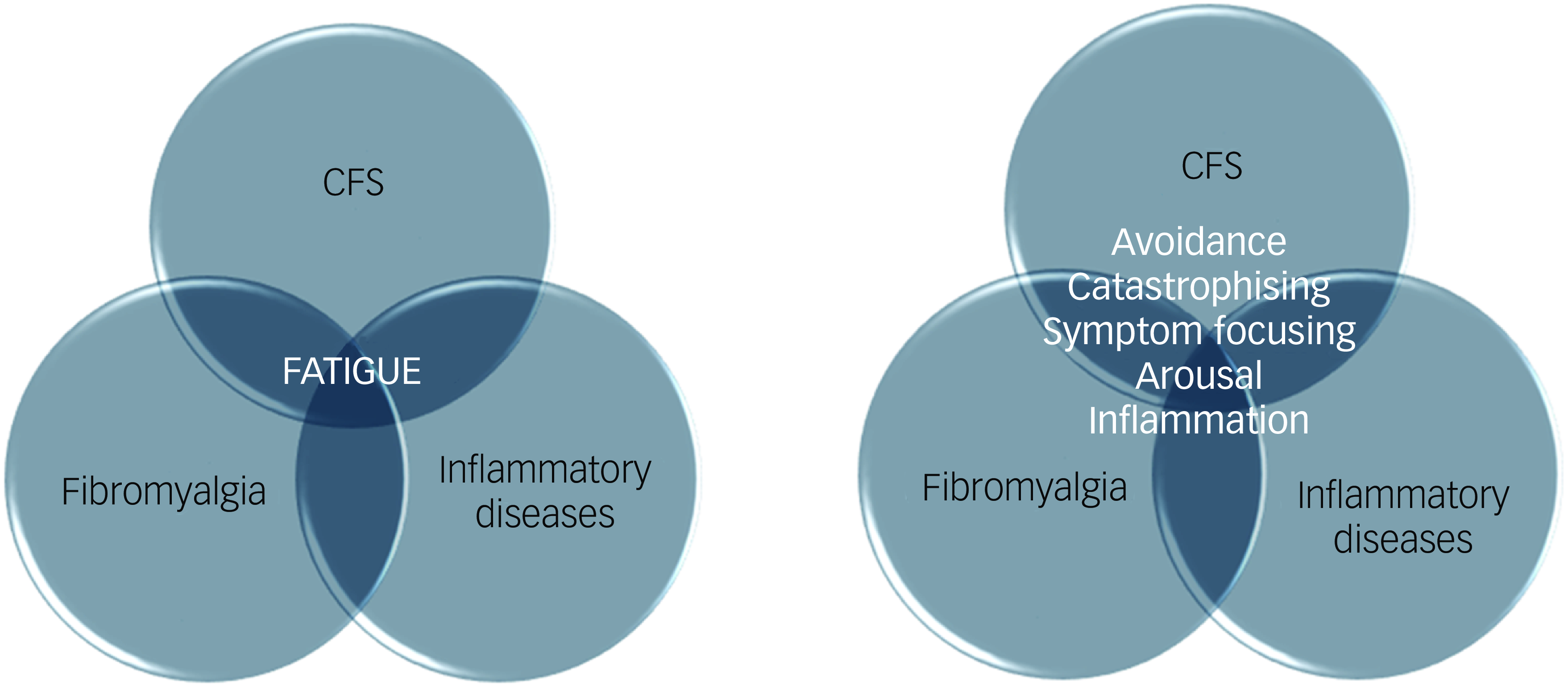
There is considerable overlap in somatic complaints reported across PPS, such as fatigue, chronic pain, gastrointestinal problems and sleep disturbance (Nimnuan Reference Nimnuan, Rabe-Hesketh and Wessely2001). Although this may complicate diagnosis and treatment, it highlights the need to understand the common mechanisms underlying these diagnostic categories. For example, the symptom of fatigue is common to chronic fatigue syndrome (CFS), fibromyalgia and inflammatory diseases. With this comes several shared behavioural, psychological and physiological processes that perpetuate the symptoms and disability. Such responses include catastrophising, avoidance of activity, distress and symptom focusing (Ali 2017; Deary Reference Deary, Chalder and Sharpe2007; Petersen Reference Petersen, Schröder and Jørgensen2020). The graphical representation of the intersection shown in Fig. 1 highlights the need for a holistic, integrated approach to treatment that acknowledges the overlaps.
Intersecting diagnoses: overlaps in psychological, behavioural and physiological processes in chronic fatigue syndrome (CFS).

Transdiagnostic symptoms and processes
Previous researchers have argued that PPS located in different bodily systems share mechanisms (Wessely Reference Wessely, Nimnuan and Sharpe1999). If one assumes this to be true, transdiagnostic interventions logically follow. Box 2 gives a breakdown of transdiagnostic symptoms commonly observed across PPS. The symptom overlap, comorbidities and congruence in response patterns in PPS suggest that an approach that focuses on common processes may be appropriate. For example, disorders like IBS and CFS share an overall transdiagnostic response of ‘avoidance behaviour’, but they often deviate in the type of avoidance exhibited. People with IBS may avoid going out for fear they might experience bowel problems, whereas those with CFS may avoid doing too many activities in one day for fear of exacerbating their fatigue levels (Chalder Reference Chalder and Willis2017).
Transdiagnostic symptoms common across diagnostic categories
-
• Fatigue
-
• Pain (e.g. musculoskeletal, abdominal, headaches)
-
• Gastrointestinal problems (e.g. diarrhoea, constipation)
-
• Sleep disturbances
-
• Cognitive difficulties (e.g. focus, concentration, memory problems)
-
• Balance problems
-
• Autonomic symptoms (e.g. palpitations, temperature dysregulation)
Note: these symptoms often occur across diagnostic categories, contributing to functional impairment and distress regardless of medical cause.
Common mechanisms at play across PPS include the following.
-
• Central sensitisation: originally coined by Yunus (Reference Yunus2007) as ‘central sensitivity syndrome’; this refers to the hyperactivity of neurons in the central nervous system (CNS), leading to magnified pain and fatigue.
-
• Cognitive distortions: these unhelpful beliefs may be associated with symptom focusing and avoidance behaviour (Mobini Reference Mobini2015).
-
• Autonomic disequilibrium: this may manifest itself as heightened physiological arousal. It refers to the body’s ‘fight or flight’ response, an evolutionary mechanism designed to protect the body from danger in response to perceived (although not always real) threat. When dysregulated, symptoms such as palpitations and sweating are common. Restorative rest in the face of ongoing arousal can be challenging.
-
• Emotion dysregulation: this takes many forms. Emotional suppression is one example that can increase physiological arousal. Physical symptoms are then experienced via physiological mechanisms such as muscle tension or palpitations.
-
• Avoidance behaviour: not engaging in activities that exacerbate or produce symptoms is an understandable coping mechanism, but an unintended consequence is that the symptoms become central in determining action.
These processes usually work in unison. For example, someone may suppress or block out worries because they believe it is unacceptable to express their emotions openly (cognitive avoidance). This may cause fatigue, which then leads to them limiting activities for fear of exacerbating or causing fatigue. They may attend several specialists in the hope of finding a biomedical cause (excessive help-seeking).
Explanatory models for understanding PPS
Building on the shared mechanisms observed across PPS (Box 3), this section focuses on explanatory models that provide insight into these processes. These models provide a foundation for understanding the complexities of PPS, guiding the development of more integrated approaches that bridge both primary and secondary healthcare settings.
Summary of proposed shared mechanisms underlying persistent physical symptoms (PPS)
-
• Central sensitisation: heightened nervous system sensitivity
-
• Cognitive distortions: negative symptom-related thoughts
-
• Autonomic dysregulation: imbalanced bodily functions
-
• Emotion dysregulation: poor emotion control
-
• Avoidance behaviours: avoiding activities due to symptom fear
Transdiagnostic cognitive–behavioural model
The transdiagnostic cognitive–behavioural model highlights the role of cognitive and behavioural factors in the maintenance of symptoms, while also accounting for emotional responses and physiological factors. The model, described by T.C. and Claire Willis (Chalder Reference Chalder and Willis2017), is grounded in a broader developmental biopsychosocial framework, which integrates biological, psychological and social components to help understand PPS comprehensively so that treatment approaches can be tailored to the individual.
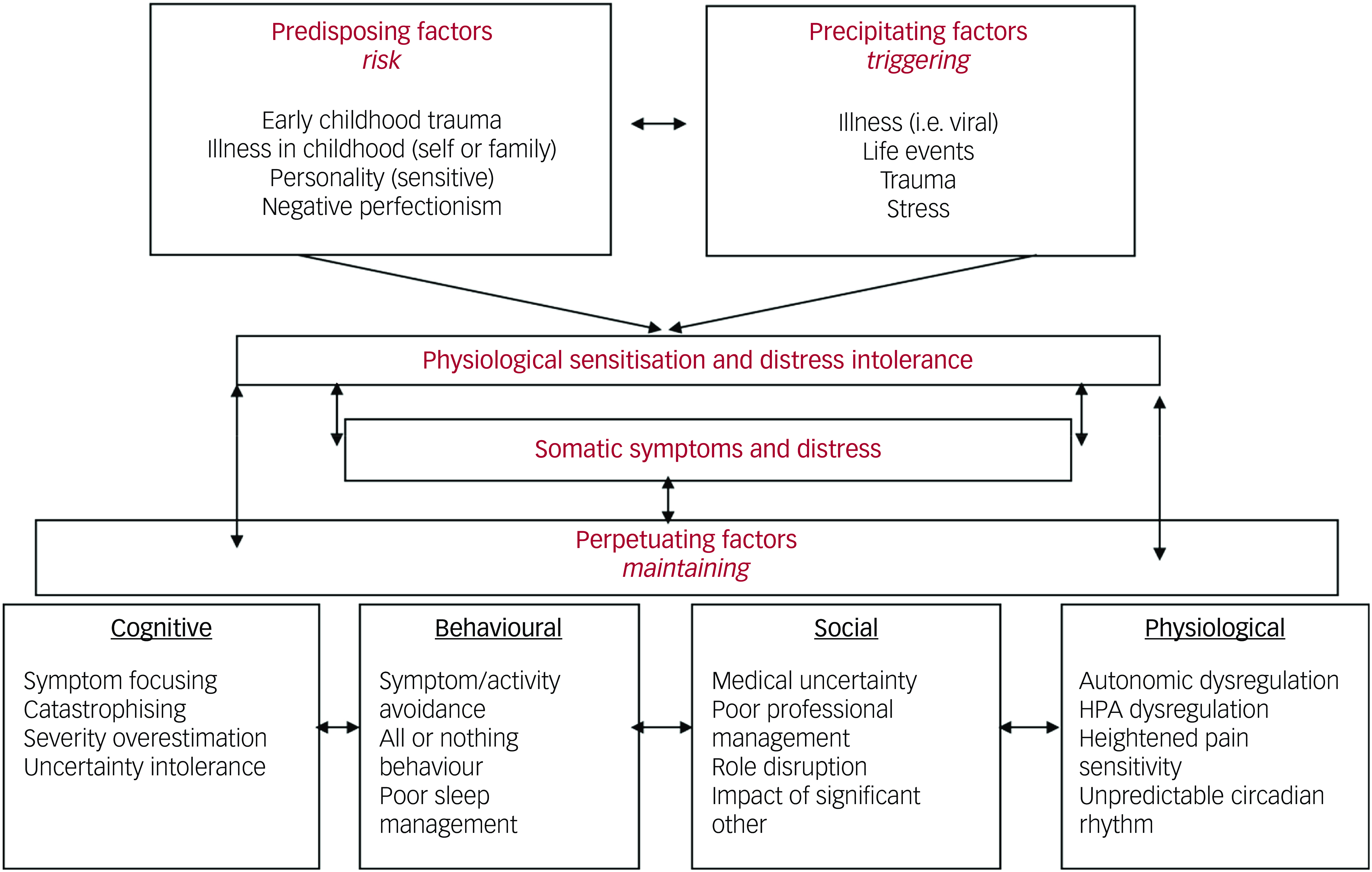
The approach is steered by the transdiagnostic meta-model (Fig. 2), which integrates predisposing, precipitating and perpetuating factors. This model shows how various factors contribute to the persistence of PPS over time by reinforcing each other in an ongoing vicious cycle. The links between symptoms, distress and perpetuating factors emphasises the need for interventions that target processes directly. These factors should all be assessed before the start of treatment, aiding the development of a formulation (see below).
An expanded transdiagnostic meta-model of the factors involved in persistent physical symptoms (PPS). HPA, hypothalamic–pituitary–adrenal axis.

Let us take a look at a transdiagnostic symptom, fatigue, seen in disorders like CFS and fibromyalgia as well as inflammatory disorders such as rheumatoid arthritis. Many processes underpin this symptom, such as:
-
• behavioural, e.g. all or nothing behaviour, persistent avoidance
-
• cognitive, e.g. symptom focusing, catastrophising, cognitive biases (i.e. physical attributions)
-
• physiological, e.g. autonomic dysregulation, body clock dysregulation
-
• emotional, e.g. distress, shame, lack of acceptance (although lack of acceptance is probably a belief system, it is linked to affect and can manifest as emotional symptoms)
-
• social, e.g. stigma, mind/body dualism.
Understanding these processes helps assessment and formulation while guiding individualised treatment.
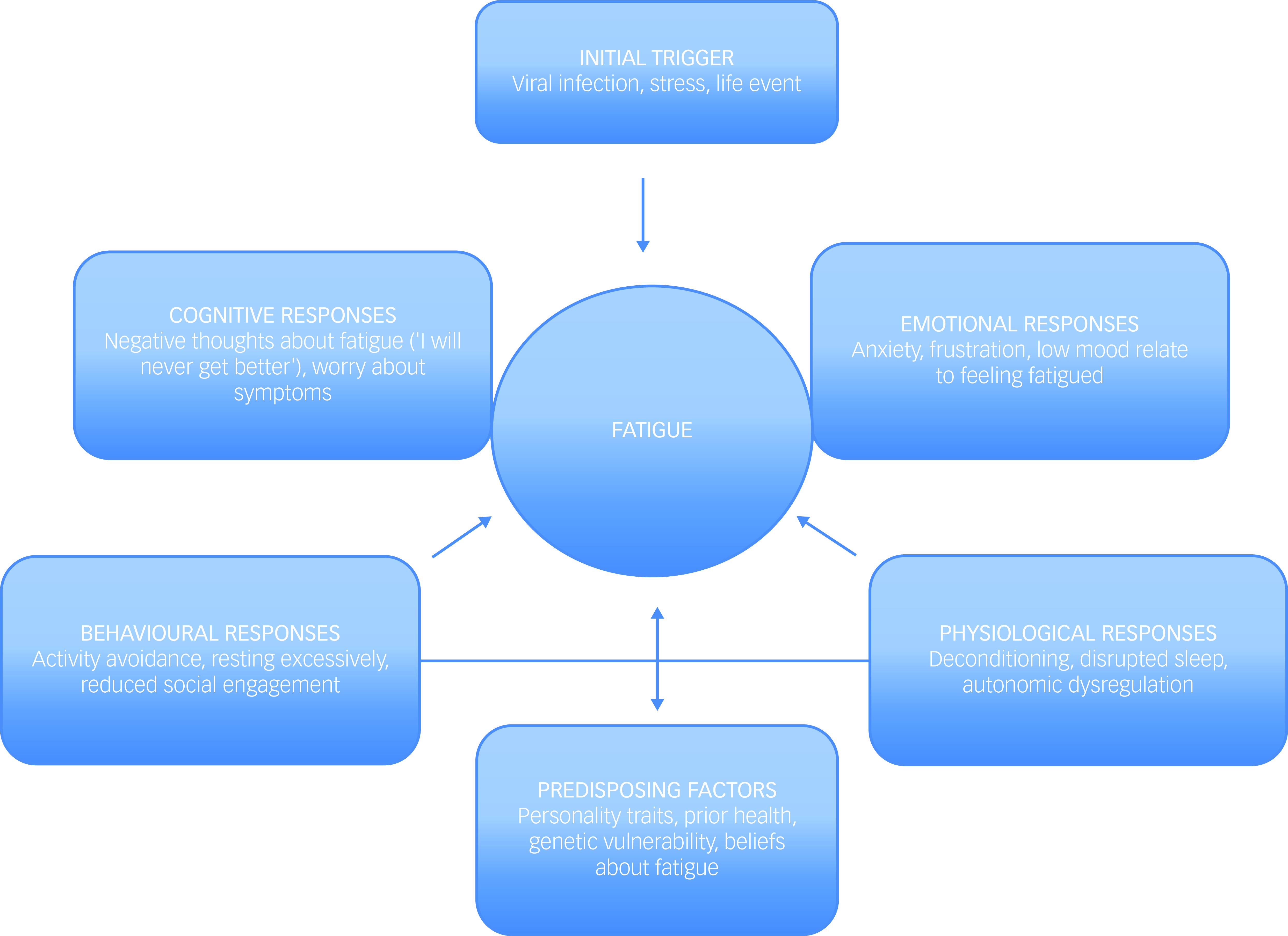
The visual representation of the transdiagnostic cognitive–behavioural model of fatigue shown in Fig. 3 illustrates how fatigue is maintained by interacting cognitive, emotional, behavioural and physiological responses.
Transdiagnostic cognitive–behavioural model of chronic fatigue (adapted from Chalder Reference Chalder and Willis2017).

Integrative conceptual model
The integrative conceptual model is based on cognitive psychological principles (Brown Reference Brown2004). It combines and extends existing theoretical approaches to explain the interplay of cognitive, emotional and behavioural factors in the maintenance of functional neurological symptoms, and integrates interpersonal difficulties into the model. This makes it particularly beneficial for patients with trauma histories.
Predictive processing model
The predictive processing model argues that the brain generates expectations about bodily sensations based on past experiences and sensory information (Friston Reference Friston2005). When the brain’s predictions become overly powerful, a ‘prediction error’ can occur, leading to symptoms such as those seen in PPS and FND, even in the absence of a clear organic cause (Brown Reference Brown2004; Reuber Reference Reuber and Elger2003).
Changing the model of care: personalising care for PPS
In practice, the explanatory models overlap, and healthcare professionals may favour one over others. We believe that the transdiagnostic cognitive–behavioural model provides a practical framework for addressing PPS efficiently. Its flexibility means that clinicians can treat patients with a variety of symptoms and diagnoses using one theoretical approach, as opposed to requiring multiple models for each condition. It is especially useful for comorbidities, as it helps address the interactions and patterns between conditions, providing a comprehensive understanding of a patient’s problems devoid of the strict labels that restrict the scope of treatment.
Case vignette
The following example illustrates how the transdiagnostic formulation facilitates a more integrated approach to care for patients.
A patient presenting with numerous symptoms, such as fatigue, pain and low mood, had undergone multiple referrals with limited improvement. A transdiagnostic model helped shift the focus from diagnostic uncertainty to shared maintenance mechanisms, supporting a more coherent and comprehensive treatment plan.
Care pathways
The complexity of PPS means that a collaborative approach to care across primary and secondary services is required. Primary care is often the initial contact for patients, where their symptoms are discussed with their general practitioner (GP), who, after carrying out appropriate investigations, makes relevant referrals if necessary. However, there are several challenges that patients with PPS may face at this early stage on the care pathway. GPs are often under time constraints, limiting their ability to explore biopsychosocial factors and provide a holistic approach. Repeated investigations can lead to unnecessary testing and patient frustration. Patients often report feeling unheard and dismissed. In secondary care, specialisation can create further silos, with different departments focusing on their own areas and missing the broader picture of PPS. In both primary and secondary care, clinicians must carefully balance reassurance with validation, ensuring that symptoms are taken seriously without reinforcing excessive health concerns. Furthermore, access to appropriate treatment options, such as psychological interventions or multidisciplinary care, is often limited or there are long waiting lists, particularly in secondary care.
Hubley et al (Reference Hubley, Uebelacker and Eaton2016) proposed several strategies for managing PPS in primary care settings, ensuring a collaborative and holistic approach. Their key recommendations are outlined in Box 4.
Strategies for primary care providers in managing persistent physical symptoms (PPS)
Co-create plausible explanations: enhance understanding and reduce distress by engaging patients in developing reasonable explanations for symptoms.
Understand consultation pitfalls: be aware of the challenges in consultations, e.g. importance of not using dismissive language and behaviour.
Develop multimodal treatment plans: consider treatment approaches that are tailored to patients’ needs, such as psychoeducation, cognitive–behavioural therapy.
Expanding on the final recommendation in Box 4 – develop multimodal treatment plans – Hubley et al (Reference Hubley, Uebelacker and Eaton2016) highlight that, although not all patients are interested in psychotherapy, interventions that are rooted in the principles of cognitive–behavioural therapy (CBT) have the strongest evidence base (Deary Reference Deary, Chalder and Sharpe2007). Strategies such as relaxation techniques, activity regulation and cognitive restructuring collectively help to reduce distress and preoccupation with symptoms while enhancing adaptive coping.
Assessment and formulation
A holistic approach that goes beyond labelled disorders and considers individual factors is one such direction. We propose taking a formulation-based approach alongside diagnosis, working towards a consensus between clinician and patient about their individual experience and needs. This should build on explanatory models discussed above to develop a shared comprehensive understanding of the patient’s symptoms and problems. According to Persons & Tompkins (Reference Persons and Tompkins2007), it should include the following: problems, mechanisms, origins, precipitants and strengths. For PPS it can draw on the relevant predisposing, precipitating and perpetuating factors highlighted in the transdiagnostic meta-model above (Fig. 2). A diagnosis will be recorded for clinical purposes and possible ongoing referral and decision-making regarding the best possible approach; the focus is on the individual’s experiences and needs. A developmental formulation can then be discussed collaboratively to enable a deeper understanding of the presenting problems and a personalised roadmap of how to move forwards in a gradual way. A shared formulation and positive explanation of the problem and the limits of diagnostic labels is the first step in treatment.
Expanding on the benefits of formulation in clinical practice for PPS, the following section reviews the current evidence for interventions across healthcare settings, highlighting treatment approaches that have demonstrated success in both primary and secondary care.
Case vignette
The example below illustrates how collaborative formulation can help patients make sense of PPS symptoms.
During assessment, one patient with fatigue described constantly avoiding situations that might worsen their symptoms. They were were concerned about making the problem worse stemming from past experience. A collaborative formulation helped them to see how these behaviours were reinforcing theiri difficulties and making them worse over time. Mapping out the vicious cycle using a diagram helped build a joint understanding and inform treatment.
Overview of treatment approaches for PPS
Pharmacological management
The effectiveness of pharmacological interventions for PPS is inconclusive. A Cochrane review by Kleinstaeuber et al (Reference Kleinstaeuber, Witthoeft and Steffanowski2014) found limited supporting evidence for antidepressants such as selective serotonin reuptake inhibitors (SSRIs) and serotonin–noradrenaline reuptake inhibitors (SNRIs), which are sometimes prescribed to treat the associated psychiatric symptoms. They also found no evidence for tricyclic antidepressants (TCAs) and antipsychotic medication.
Conditions such as IBS may show some response to certain pharmacological medications, some of which are recommended in National Institute for Health and Care Excellence (NICE) guidelines (NICE 2008). In describing the evidence for a proposed systematic review Qin et al (Reference Qin, Yue and Xue2019) note that their effectiveness is inconsistent and the potential for adverse effects is widespread. The NICE guideline for chronic primary pain recommends considering an antidepressant but notes that there were limitations in the quality and amount of evidence (NICE 2021a). Other conditions, such as CFS, have no strong supporting evidence for pharmacological management. A review conducted by NICE for its guideline on CFS (see the ‘Evidence reviews’ link in NICE 2021b) concluded that there was no proof of substantial benefits for medications like antivirals or corticosteroids in the treatment of the syndrome, indicating that alternative treatment strategies for CFS and other PPS need to be explored.
The potential concerns regarding adverse effects of pharmacological interventions, including dependence and reduced effectiveness with prolonged use, make medications unsuitable as a primary approach for PPS. Given the inconclusive evidence, pharmacological interventions should be considered with caution and used as part of a more comprehensive, multidisciplinary care plan or when other treatment approaches are inadequate, depending on the individual case.
Psychological interventions
There are myriad interventions for PPS utilised at present across primary and secondary care settings. Several systematic reviews have highlighted the advantage of integrating psychological approaches such as CBT with physical treatments. A systematic review by Menon et al (Reference Menon, Rajan and Kuppili2017) examined 11 trials assessing CBT for somatic symptoms without medical explanation and found CBT to be effective in alleviating symptom severity and functional impairment. Their analysis also suggested that CBT of greater frequency gave greater improvement in mental health. Mindfulness-based CBT also appeared promising on the basis of results from a single trial.
This is echoed in a more recent systematic review by Swainston et al (Reference Swainston, Thursby and Bell2023), which included 17 studies and found psychological interventions like CBT were effective in helping to manage somatic symptoms of PPS in a primary care setting; 12 of the studies showed a reduction in depressive symptoms.
Findings from these reviews indicate that multifaceted interventions can help alleviate symptoms, reduce healthcare burden and improve overall quality of life for patients, although the robustness of the evidence differs across patient populations.
Practical application of transdiagnostic CBT
Transdiagnostic CBT (Chalder Reference Chalder and Willis2017) focuses on well-defined mechanisms outlined in the aforementioned transdiagnostic cognitive–behavioural model (Fig. 3). These include among others symptom focusing, avoidance of activity and autonomic dysregulation, which influence symptoms, mood and overall functioning.
The approach can be used flexibly to guide formulation and tailor treatment. Using CBT techniques and psychoeducation, patients are encouraged to explore how physiological responses, thoughts, emotions and behaviours interact to perpetuate their difficulties. They are then supported to re-engage with meaningful activities. Ongoing collaboration between the therapist and patient helps enhance confidence in self-management.
The model is closely linked to traditional CBT, which has a robust evidence base for treating conditions such as IBS and CFS. Clinicians are usually well-versed in using CBT for a multitude of presentations; hence, it integrates smoothly into clinical practice with minimal extra training needed (Chalder Reference Chalder and Willis2017). This flexible approach allows the intervention to be applied across a broad range of PPS presentations, as it targets shared processes rather than symptoms that are diagnosis specific.
Case vignette
The example below illustrates how the transdiagnostic approach could be applied in routine clinical settings to target maintenance processes identified in a formulation.
In therapy, the patient was encouraged to gradually reintroduce previously avoided activities such as walking short distances. They once believed that even mild exertion would lead to a relapse but, after gradually increasing the amount of physical activity they did over time, discovered that their symptoms fluctuated independently of activity intensity, helping to reduce fear. At the same time, they were encouraged to use attentional training to shift their focus on symptoms to different things in the environment. This led to increased attentional control.
Evidence for transdiagnostic CBT: a randomised controlled trial
This section focuses on findings from a specific randomised controlled trial (RCT) evaluating transdiagnostic CBT for PPS, and places it within the broader context of evidence from other RCTs.
To assess the clinical utility of the transdiagnostic approach for PPS, Chalder et al (Reference Chalder, Patel and Hotopf2021) conducted a two-arm RCT. A total of 324 participants were randomised to either of a therapist-delivered transdiagnostic cognitive–behavioural intervention (TDT-CBT) + standard care, or standard care alone. Those assigned to TDT-CBT received eight 1 h sessions over a 22-week period, in addition to a self-help manual. Hypothesised mechanisms of change, such as catastrophising and avoidance, were targeted using specific techniques, such as activity scheduling and goal setting, in tandem with challenging unhelpful thoughts and mindfully refocusing attention. Analysis of the trial results showed that TDT-CBT was not only the most cost-effective option (McCrone Reference McCrone, Patel and Hotopf2024), based on money and therapy time, but also resulted in higher health-related quality of life (QoL) compared with standard care alone at the end of the treatment phase. The primary outcome change was not sustained over time, but it is possible that additional treatment sessions could have supported longer-term benefits.
An investigation into mechanisms of change (James Reference James, Patel and Goldsmith2022) suggested that reductions in catastrophising and symptom focusing at 9 weeks (mid-treatment) were salient mediators of improvement in the primary outcome, Work and Social Adjustment Scale (WSAS) score at the end of treatment. Additionally, improvements in symptom focusing mediated decreases in symptom severity at final follow-up (52 weeks). These findings regarding the importance of cognitive and behavioural change are in keeping with the literature, reviewed by Pourová et al (Reference Pourová, Klocek and Řiháček2020). They found that the development of coping strategies and increased symptom acceptance were among the most consistently endorsed mechanisms.
Previous reviews have shown the benefits of CBT-based interventions. In a Cochrane review, van Dessel et al (Reference van Dessel, Den Boeft and van der Wouden2014) found CBT to be more effective than control conditions in reducing psychological distress and improving medical status of people with PPS. Thus, the above-mentioned trial (Chalder Reference Chalder, Patel and Hotopf2021) adds to and extends the current evidence base, reinforcing the utility of CBT for PPS symptoms (Swainston Reference Swainston, Thursby and Bell2023; Menon Reference Menon, Rajan and Kuppili2017).
Evidence for other psychological therapies
Acceptance and commitment therapy
Acceptance and commitment therapy (ACT) helps patients develop psychological flexibility, reducing symptom-related distress by focusing on values-based actions rather than symptom elimination (Hayes Reference Hayes2004). Lai et al (Reference Lai, Liu and McCracken2023) conducted a meta-analysis investigating the effectiveness of ACT for chronic pain conditions. They assessed 33 RCTs involving 2293 participants and found that ACT led to small to medium reductions in pain intensity at both post-treatment and follow-up, as well as significant improvements on psychological measures of depression, anxiety and quality of life. Further evidence for ACT comes from a meta-analysis by Ma et al (Reference Ma, Yuen and Yang2023), which found significant improvements in pain acceptance and quality of life, along with other studies supporting ACT (Wetherell Reference Wetherell, Afari and Rutledge2011).
Mindfulness-based interventions
Mindfulness-based approaches may be more suitable for people with heightened emotional reactivity, as they help improve emotion regulation and reduce symptom amplification by enhancing present-moment awareness and decreasing avoidance behaviours.
Trauma-focused interventions
Where trauma histories are relevant, trauma-focused interventions may be considered alongside the transdiagnostic approach introduced by Chalder & Willis (Reference Chalder and Willis2017), as trauma and adverse life events are common in PPS. By targeting underlying psychological mechanisms rather than specific diagnoses, healthcare professionals will be more accurate in targeting individual needs and expanding the scope of strategies offered to patients.
Interventions for severe PPS
Currently, there is limited evidence specifically targeting people with severe PPS. Severely affected patients may be housebound or even bed-bound. These individuals experience greater distress, challenges and healthcare use, calling for more research into the effectiveness of TDT-CBT (Chalder Reference Chalder, Patel and Hotopf2021) for this specific subgroup to determine its potential to provide meaningful improvements in symptoms and guide tailored treatment approaches.
Conclusions
Overall, the information presented here offers credible support for a process-based model of PPS. Current transdiagnostic treatments (e.g. TDT-CBT) have demonstrated moderate evidence by reducing costs in terms of time and money and improving clinical outcomes. By identifying and understanding shared mechanisms, we can not only enhance the training of clinicians but provide more effective treatment across conditions that frequently occur together. Thus, specific techniques for helping individuals manage their approach to symptoms may be helpful (Chalder Reference Chalder and Willis2017), allowing patients to be in charge of their own personalised care. More work is required to identify mechanisms of change and assess long-term outcomes.
MCQs
Select the single best option for each question stem
-
1 Persistent physical symptoms (PPS) are best described as:
-
a symptoms caused only by psychological stress
-
b persistent symptoms that cannot be fully explained by a single medical condition
-
c symptoms that are imaginary and do not require medical intervention
-
d symptoms that are solely related to neurological impairment
-
e persistent symptoms that always indicate an underlying undiagnosed medical condition.
-
-
2 A transdiagnostic approach is:
-
a a process focusing on one disorder
-
b a focus on common mechanisms across disorders
-
c a treatment for somatic symptom disorder only
-
d a strategy for differentiating psychological and medical conditions
-
e a focus on underlying interpersonal and developmental problems.
-
-
3 Which of the following is considered a targetable transdiagnostic process in PPS?
-
a socioeconomic status
-
b blood type
-
c immune system function
-
d catastrophising
-
e sensory processing sensitivity.
-
-
4 The main purpose of a therapeutic formulation in psychological therapy is to:
-
a prescribe medication for psychological symptoms
-
b develop an exercise programme for improved physical health
-
c collaboratively develop a shared understanding of a person’s problems
-
d produce a treatment plan without patient input
-
e provide a mental health diagnosis based on symptoms.
-
-
5 Which of the following is not a benefit of using transdiagnostic CBT in clinical settings?
-
a it allows clinicians to devise flexible, individualised care plans for patients
-
b it addresses myriad mental health conditions with a single, unified approach
-
c it eradicates the need for customising interventions to the individual
-
d it targets shared processes across disorders, making it time efficient
-
e it encourages the use of therapeutic techniques, such as activity scheduling and goal setting.
-
MCQ answers
-
1 b
-
2 b
-
3 d
-
4 c
-
5 c
Data availability
Data availability is not applicable to this article as no new data were created or analysed in this study.
Author contributions
L.F. and T.C. drafted the first version, which was commented on by the other authors. All authors agreed the final version after several iterations.
Funding
T.C. is part-funded by the National Institute for Health and Care Research (NIHR) Maudsley Biomedical Research Centre (BRC). The views expressed are those of the author(s) and not necessarily those of the NIHR or the Department of Health and Social Care.
Declaration of interest
T.C. developed a transdiagnostic approach and carries out workshops in the UK and abroad for which she has received payment.

 Open access


eLetters
No eLetters have been published for this article.