





1. Introduction
Developing a theory that accounts for the effects of bilingualism on cognition is an endeavor fraught with methodological, interpretative, and expository difficulties, to the extent that it has been described as a challenge of the deepest scientific nature (Mueller Gathercole, Reference Mueller Gathercole2015). 100 years since the first studies that described bilingualism as causing mental confusion (Saer, Reference Saer1923), and 50 years since the first studies that reported bilingual advantages (Feldman & Shen, Reference Feldman and Shen1971; see Barac & Bialystok, Reference Barac and Bialystok2011 for a detailed timeline), the topic of bilingual effects on cognition is still riddled with open questions (Blanco-Elorrieta & Caramazza, Reference Blanco-Elorrieta and Caramazza2021). Although many studies have provided ample evidence for bilingual effects on cognition (often presented as bilingual advantages and disadvantages), the field still lacks a solid theory that enjoys consensus and covers critical topics such as what the observed effects boil down to and what the driving factors behind them are (Treccani & Mulatti, Reference Treccani and Mulatti2015).
In broad terms, it can be claimed that two ongoing discussions surround bilingual adaptations on cognition. The first one concerns the type of the effects and recognizes three categories of results: bilingual advantages (i.e., positive findings), bilingual disadvantages (i.e., negative findings), and null effects (i.e., findings that suggest that the differences between monolinguals and bilinguals are indistinguishable from zero). Regarding the terminology we use, while we a priori reject the use of evaluative terms such as “bilingual advantage” and “bilingual disadvantage” as simplistic (Leivada et al., Reference Leivada, Dentella, Masullo and Rothman2022), the primary purpose of any systematic review is to take stock. We thus employ these mainstream terms, following a long line of systematic reviews, meta-analyses, and quantitative analyses that adhere to the same practice (Donnelly et al., Reference Donnelly, Brooks and Homer2019; Grundy, Reference Grundy2020; Lehtonen et al., Reference Lehtonen, Soveri, Laine, Järvenpää, de Bruin and Antfolk2018; van den Noort et al., Reference van den Noort, Vermeire, Bosch, Staudte, Krajenbrink, Jaswetz, Struys, Yeo, Barisch, Perriard, Lee and Lim2019; Ware et al., Reference Ware, Kirkovski and Lum2020). Specifically, the present work explores the origin of bilingual (dis)advantages across cognitive domains, to present a fine-grained picture of the origin of the conferred bilingual adaptations. In this respect, another terminological specification should be made about the term “bilingual adaptations”, which we use synonymously with the term “bilingual effects”. We follow recent literature (e.g., D'Souza & D'Souza, Reference D'Souza and D'Souza2021; Ivanova et al., Reference Ivanova, Seanez, Cochran and Kleinman2023) that borrowed the term “adaptation” from research on human evolution to highlight that the act of adapting to the surrounding linguistic environment is on par with other ecological adaptations (Leivada et al., Reference Leivada, Dentella, Masullo and Rothman2022). Thus, we use the term “bilingual adaptations” to indicate the offset between advantageous and disadvantageous effects that the bilingual experience has across different cognitive domains, such as executive functions (Bialystok, Reference Bialystok2007; Costa et al., Reference Costa, Hernández and Sebastián-Gallés2008 inter alia), semantic fluency (Gollan et al., Reference Gollan, Montoya and Werner2002; Ivanova & Costa, Reference Ivanova and Costa2008), syntactic processing (Siu & Ho, Reference Siu and Ho2022), and metalinguistic awareness (Adesope et al., Reference Adesope, Lavin, Thompson and Ungerleider2010).
Although certain disagreements still exist in relation to the type of effects (e.g., related to what counts as an advantage vs. a disadvantage; see Leivada et al., Reference Leivada, Dentella, Masullo and Rothman2022 for an overview), several explanations have been offered for these different sets of results (van den Noort et al., Reference van den Noort, Vermeire, Bosch, Staudte, Krajenbrink, Jaswetz, Struys, Yeo, Barisch, Perriard, Lee and Lim2019; Leivada et al., Reference Leivada, Westergaard, Duñabeitia and Rothman2021a; Paap et al., Reference Paap, Mason and Anders-Jefferson2021). For instance, van den Noort et al. (Reference van den Noort, Vermeire, Bosch, Staudte, Krajenbrink, Jaswetz, Struys, Yeo, Barisch, Perriard, Lee and Lim2019) ascribe the heterogeneity of results to differences in studies’ methods. They point out that cognitive reserve can be shaped by several factors (e.g., level of education, linguistic input, lifestyle, profession, and language typology), which are operationalized differently among studies – hence, the varied set of results. Similarly, Leivada et al. (Reference Leivada, Westergaard, Duñabeitia and Rothman2021a) also acknowledge the impact of multiple factors, such as language proximity, the heterogeneity of the term “bilingual”, sample size effects, and task effects.
The second discussion, which concerns the origin of the observed effects, is trickier to classify in terms of main categories of results. Succinctly put, this discussion deals with the following question: where do these advantages and disadvantages stem from? One popular answer refers to cognitive factors such as enhanced monitoring abilities, increased switching flexibility, and sharpened executive control, tracing the origin of the effects to cognitive adaptations to constant language monitoring and inhibition in bilinguals (Bialystok & Martin, Reference Bialystok and Martin2004; Bialystok et al., Reference Bialystok, Craik, Klein and Viswanathan2004, 2012; Abutalebi & Green, Reference Abutalebi and Green2007; see Blanco-Elorrieta & Caramazza, Reference Blanco-Elorrieta and Caramazza2021 for a recent review). However, it has been argued that such cognitive enhancements may be substantially mitigated when we account for individual differences between monolinguals and bilinguals in terms of social, socio-economic, and sociolinguistic factors (Dick et al., Reference Dick, Garcia, Pruden, Thompson, Hawes, Sutherland, Riedel, Laird and Gonzalez2019). Thus, another answer is that bilingualism and socio-economic status (SES) may both confer adaptive effects, but act independently, such that the observed bilingual advantages are not limited by social factors (Calvo & Bialystok, Reference Calvo and Bialystok2014; Engel de Abreu et al., Reference Engel de Abreu, Cruz-Santos, Tourinho, Martin and Bialystok2012). A third answer is that both social and cognitive factors jointly contribute to enhanced self-regulatory behaviors that may lead to bilingual adaptations (Hartanto et al., Reference Hartanto, Toh and Yang2019).
In sum, although many studies acknowledge that the observed bilingual advantages and disadvantages are amenable to a multifactorial account that recognizes the presence of both cognitive and socio-demographic/sociolinguistic factors of influence (e.g., Antón et al., Reference Antón, Carreiras and Duñabeitia2019; Chen et al., Reference Chen, Li, Li, Wang and Wu2013; Garraffa et al., Reference Garraffa, Beveridge and Sorace2015; Mueller Gathercole et al., Reference Mueller Gathercole, Thomas, Jones, Viñas Guasch, Young, & Hughes and K2010), in a large part of the literature either the interaction of the two sets of factors is not spelled out or one set of factors, cognitive or sociolinguistic, is not mentioned at all, depending on the focus of the work. Moreover, controlling for SES is undoubtedly a useful practice, but it does not fully eliminate the potential confounding effects of social factors, if many uncontrolled and ambiguous variables come into play. To give an example, overall L2 proficiency has been linked to cognitive control abilities (Luque & Morgan-Short, Reference Luque and Morgan-Short2021), but proficiency across registers is tightly connected to language use in different contexts, which may be a proxy for sociolinguistic prestige (Leivada et al., Reference Leivada, Westergaard, Duñabeitia and Rothman2021a). From this perspective, proficiency and use are ambiguous factors that can be plausibly read in favor of both cognitive and sociolinguistic accounts of the origin of bilingual effects.
A second example of the complex nature of this debate can be found in the many studies that test bilingual adaptations without, however, considering certain sociolinguistically loaded notions such as type of bilingual trajectory (i.e., simultaneous bilingual, heritage language user, L1 attriter, unbalanced second/foreign language learner). For instance, some studies control for SES, but their bilingual groups are formed based on a positive answer to one question: does the participant speak another language other than English? (e.g., Brito & Noble, Reference Brito and Noble2017). Grouping together different types of bilinguals, who acquired and, in all likelihood, use their languages in different contexts and registers, inevitably invests the bilingual group with some degree of sociolinguistic variation, the impact of which is unclear.
Measuring variables such as degree of language use and proficiency is useful –however, it may bring along certain challenges that contribute to the debate. Degree of use is typically measured by asking participants whether and to what degree they use two languages, or a language other than the one used in the community, when conversing with friends and family (e.g., Dick et al., Reference Dick, Garcia, Pruden, Thompson, Hawes, Sutherland, Riedel, Laird and Gonzalez2019). One challenge that comes from grouping together, in one big bilingual group, people who use another language with friends and family is that heritage language learners, who fit this inclusion criterion, receive variable qualitative and quantitative input, facing socio-political and sociolinguistic pressures from the majority language spoken in their community (D'Alessandro et al., Reference D'Alessandro, Natvig and Putnam2021; Montrul, Reference Montrul2015).
Consequently, while the degree of use may be controlled for in many studies, the variability that is inherent to the sociolinguistic values attached to the many different languages (often more than 30), that are included in big and heterogeneous bilingual groups, is usually neither measured nor acknowledged (Leivada et al., Reference Leivada, Rodríguez-Ordóñez, Parafita Couto and Perpiñán2023). This is relevant to the origin of the bilingual effects debate because using two languages does not entail viewing them in a similar way or, more importantly, being able to reliably reflect on their use. Every bilingual person has a preferred language (Dodson, Reference Dodson1985), and both the emotional stance bilinguals adopt towards their languages as well as the way these languages are compartmentalized and used across contexts have strong implications (Duñabeitia, Reference Duñabeitia2017). Regarding the emotional and affective aspects of language learning and use, some recent studies have operationalized bilingualism considering variables such as acculturation, educational context, and parental encouragement to learn the languages (Laketa et al., Reference Laketa, Studenica, Chrysochoou, Blakey and Vivas2021; Studenica et al., Reference Studenica, Laketa, Chrysochoou, Blakey and Vivas2022). In some cases, acculturation was found to play an important role in shaping the bilinguals’ language profile and appeared to have independent effects from bilingualism on cognition (Laketa et al., Reference Laketa, Studenica, Chrysochoou, Blakey and Vivas2021).
In sum, it has been argued that many early studies in bilingualism research were flawed because they did not control for SES or other sociocultural differences between the tested groups of monolinguals and bilinguals (Mueller Gathercole et al., Reference Mueller Gathercole, Thomas, Jones, Viñas Guasch, Young, & Hughes and K2010 and references therein). While the considerable progress made since then is incontestable and very helpful in enabling us to map variation in bilingual experiences (Fricke et al., Reference Fricke, Zirnstein, Navarro-Torres and Kroll2019), we have not yet resolved all the ambiguities that surround the occurrence of bilingual effects. Finding bilingual advantages and disadvantages is not enough, if we cannot explain what the effects boil down to and what factors drive them. Possibly, this is the key reason that this domain of research has been linked to “insufficiently clear theories and hypotheses that are difficult to falsify” (de Bruin et al., Reference de Bruin, Dick and Carreiras2021, p. 433), even after decades of testing. The aim of this work is to address this issue through shedding light on the origin of bilingual effects on cognition. More specifically, we seek to determine what percentage of the studies conducted in this field test and control for sociodemographic factors (Research Question 1), what percentage of studies that find bilingual adaptations attribute them to a cognitive, sociolinguistic, or mixed origin (Research Question 2), and what social, sociodemographic, and sociolinguistic factors are typically involved in studies that find bilingual adaptations (Research Question 3).
In relation to these questions, one important challenge refers to the scope of these domains, which remains vague in the literature: what counts as a cognitive vs. a social/sociolinguistic determinant of bilingual adaptations? While some proposals are straightforward (e.g., attributing differences between monolinguals and bilinguals to cognitive processes related to general conflict-monitoring and goal-orienting abilities; Costa et al., Reference Costa, Hernández, Costa-Faidella and Sebastián-Gallés2009; Hernández et al., Reference Hernández, Martin, Barceló and Costa2013), other factors are variably treated as pertaining to the sociolinguistic or the cognitive component. For example, differences in cultural knowledge may be attributed to the cognitive component (Green et al., Reference Green, Crinion and Price2007) or not (Barac & Bialystok, Reference Barac and Bialystok2012). For the purpose of this systematic review, we employ one specific criterion (following de Cat, Reference de Cat2020) in classifying the origin of bilingual effects as either cognitive or sociolinguistic: if the results of a study suggest that any observed differences between monolinguals and bilinguals are due to individual-internal cognitive processes (e.g., sharpened monitoring or switching abilities, different use of neural markers, enhanced control of attentional resources, weakened retrieval capacity), this is classified as cognitive origin. If the differences are amenable to an explanation that relies on cognition-external factors (e.g., SES, age, education, social prestige, sociocultural knowledge, language use in different contexts, typological proximity, script), this is classified as sociolinguistic origin.
All in all, while these sociolinguistic factors are an inherent part of the bilingual experience, we cannot afford to subsume them under the generic label “bilingualism-related factors”. In the current context of replacing dichotomous labels such as “cognitive (dis)advantage” with a more nuanced approach (Leivada et al., Reference Leivada, Dentella, Masullo and Rothman2022), examining the role and magnitude of sociolinguistic factors of influence will shed light on the characteristics of different trajectories, helping us to avoid unjust misattribution of certain labels and behavioral outcomes to people's bilingual experiences (Luk, Reference Luk2022).
2. Method
We performed a systematic review of the literature on bilingual advantages and disadvantages. The review was conducted according to the PRISMA Statement (Liberati et al., Reference Liberati, Altman, Tetzlaff, Murlow, Gøtzsche, Ioannidis, Clarke, Devereaux, Kleijnen and Moher2009; Page et al., Reference Page, McKenzie, Bossuyt, Boutron, Hoffmann, Mulrow, Shamseer, Tetzlaff, Akl, Brennan, Chou, Glanville, Grimshaw, Hróbjartsson, Lalu, Li, Loder, Mayo-Wilson, McDonald, McGuinness, Stewart, Thomas, Tricco, Welch, Whiting and Moher2021), which is a reporting guideline designed to assist authors of systematic reviews and meta-analyses in describing the purpose and the methodology of their work in a transparent way. Data were plotted and analyzed using R, version 4.2 (R Core Team, 2021), and jamovi, version 1.8 (The jamovi project, 2021).
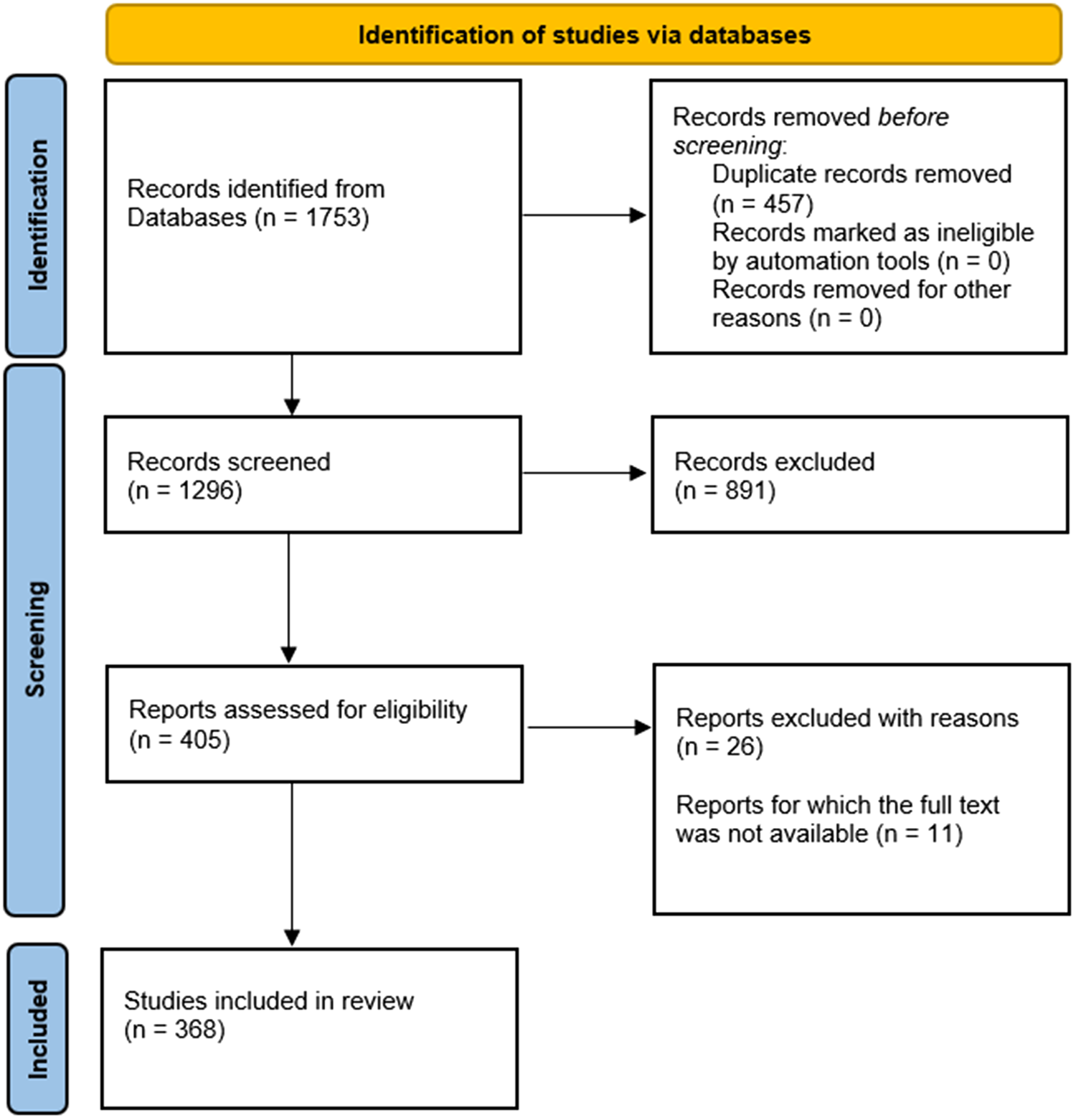
A systematic search of the literature was conducted in the following databases: PsycInfo, PsycExtra, PsycBooks, APA Journals, and PubMed. The searches were conducted in December 2021. The search strategy consisted of the following keywords: “bilingual” & “advantage” OR “bilingual” & “disadvantage”. As these are popular terms, a total of 1753 articles were obtained from this search procedure, which marks the highest number of screened studies in a systematic review/meta-analysis in bilingualism research. Duplicates were removed through Mendeley Desktop software, and the remaining abstracts were screened for content. First, two researchers (C.M. & V.D.) independently searched the databases, selected the relevant studies, and extracted the data, following predefined criteria. In cases of disagreement, a third researcher (E.L.) was asked to evaluate the study in question for inclusion. In all cases, consensus was eventually reached among all authors.
The selection of relevant studies was conducted based on previously determined inclusion and exclusion criteria. First, studies had to present original experimental results. Therefore, meta-analyses, review articles, and theoretical articles were excluded. Second, studies had to be written in English, to enable all three researchers to clearly understand the content of the studies and make the database easily accessible to as many readers as possible. Third, studies had to be published after 1960. Fourth, studies involving neuroatypical populations were excluded. Fifth, data from at least one monolingual and one bilingual group had to be reported, to avoid any bias of grouping together fundamentally different groups. Last, studies focusing solely on the brain without any reference to behavioral measures were excluded. The obtained database covers results from 368 studies, 474 experiments, and 109.604 participants. Figure 1 presents the screening and selection process.
PRISMA Flow Chart.
The pool of data and the complete list of studies that were analyzed for this review are available at: https://osf.io/2z4cx/?view_only=95009316afe3479aa3249b419551a6b4. In the classification of the screened articles, the sociodemographic variables of age, gender, and SES, together with the language profile, are presented, when measured. With reference to SES, studies are divided into three groups: studies that did not mention it, studies that merely acknowledged it in their introduction or discussion sections, and studies that either measured it or controlled for it by group matching. Articles were subsequently screened by two researchers to determine both the reported bilingual effects (i.e., bilingual advantage, bilingual disadvantage, both effects, or null effect) and the origin of the effects (i.e., cognitive origin, sociolinguistic origin, or mixed origin). The two researchers were completely aligned in their judgements about the classification of the bilingual effects reported by the articles (Cohen's k = 1) and presented a very high agreement in their judgements about the origin of such effects (Cohen's k = 0.972). When the origin of the bilingual effect could not be unambiguously established for some studies (n = 5), a third researcher was consulted for reaching agreement.
3. Results
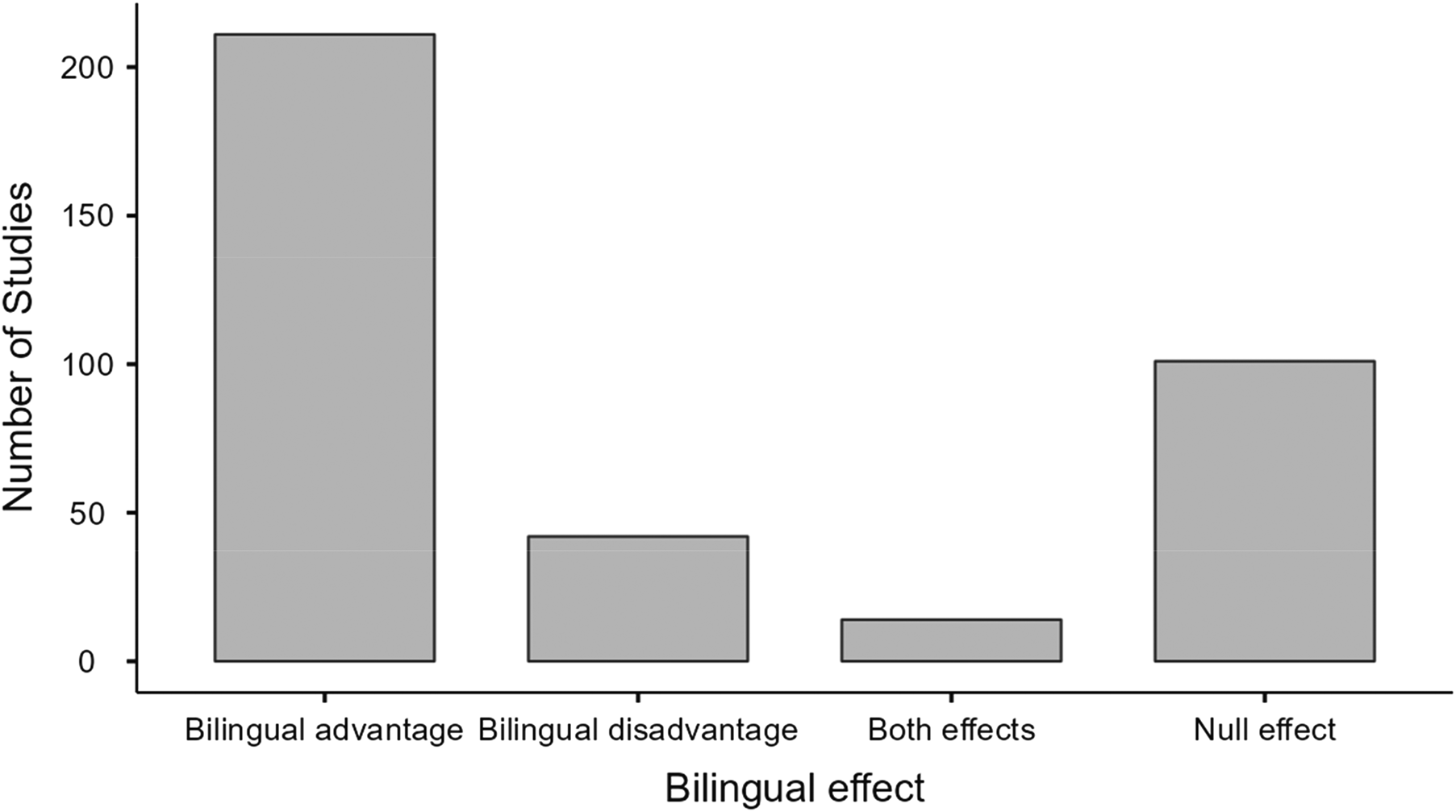
The findings of the analyzed studies are first classified according to the bilingual effects they report. Considering the entire pool of data, comprising a total of 368 analyzed articles, 57.34% of them report a bilingual advantage, 11.41% report a bilingual disadvantage, 3.80% find both advantageous and disadvantageous effects and 27.45% find a null effect. These advantages and disadvantages pertain to different cognitive domains (e.g., executive functions, memory, metalinguistic awareness, different types of fluency, syntactic processing, phonological awareness, etc); unlike most previous systematic reviews and meta-analyses on bilingual adaptations, we did not limit our pool of results to one cognitive domain (typically, executive functions). Figure 2 presents a summary of the distribution of effects.
Frequencies of effects per category.
The findings of the analyzed studies are subsequently classified into the following three categories:
(i) Effects attributed to social, sociolinguistic, or sociodemographic factors (category “sociolinguistic origin”)
(ii) Effects attributed to a combination of sociolinguistic and cognitive factors (category “mixed origin”)
(iii) Effects attributed exclusively to bilingualism and cognitive adaptations linked to it (category “cognitive origin”).
Figure 3 presents a summary of the origin of effects.
Number of studies that reported different origins of bilingual effects.
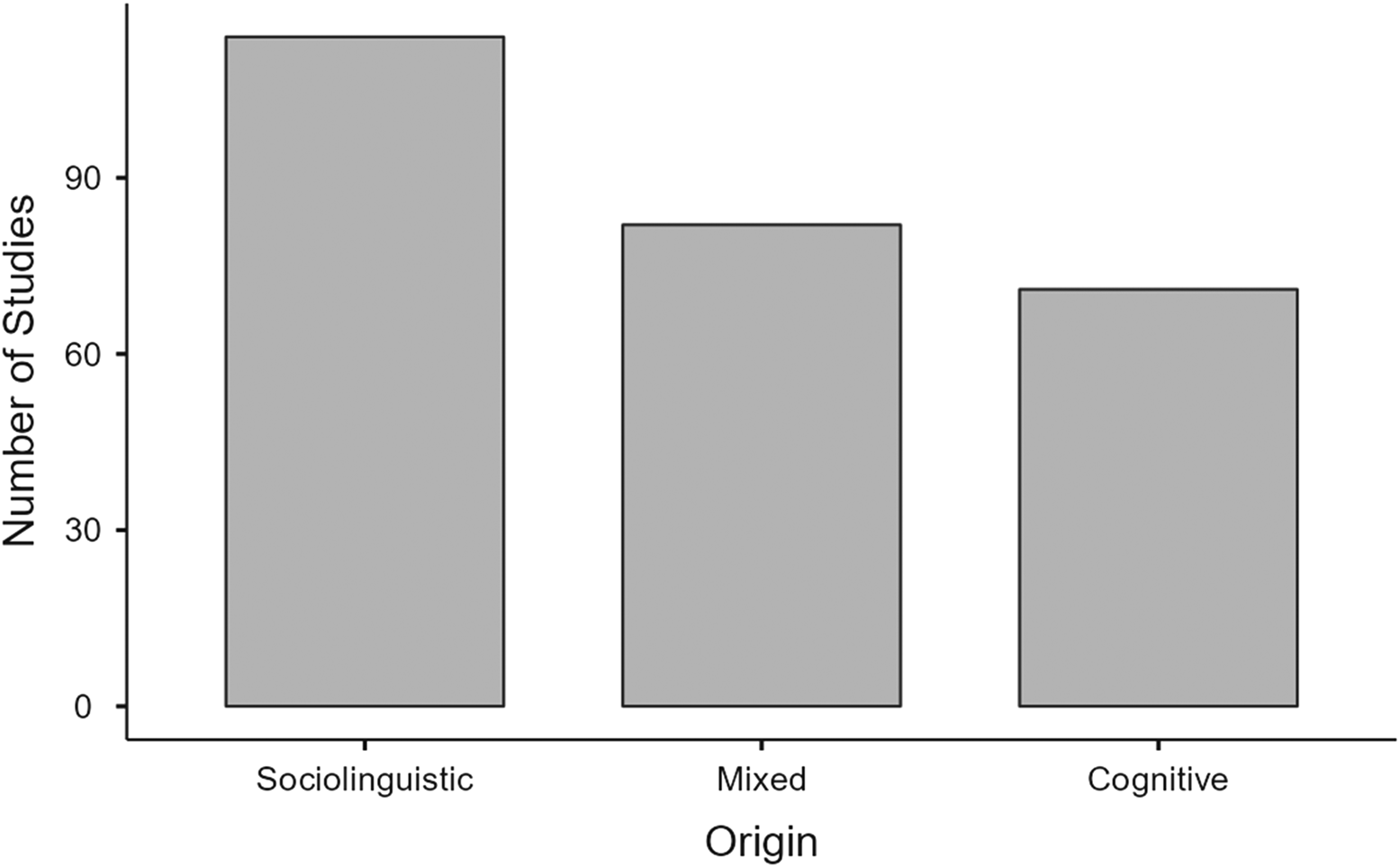
Encompassing a variety of tasks and populations, our results suggest that 73.41% of the screened studies that find bilingual effects can be linked to either a sociolinguistic or a mixed origin. The overall distribution of these effects in terms of origin is shown in Figure 4.
Frequencies of bilingual effects for type of effect (advantage, disadvantage, both) and origin (sociolinguistic, cognitive, mixed).
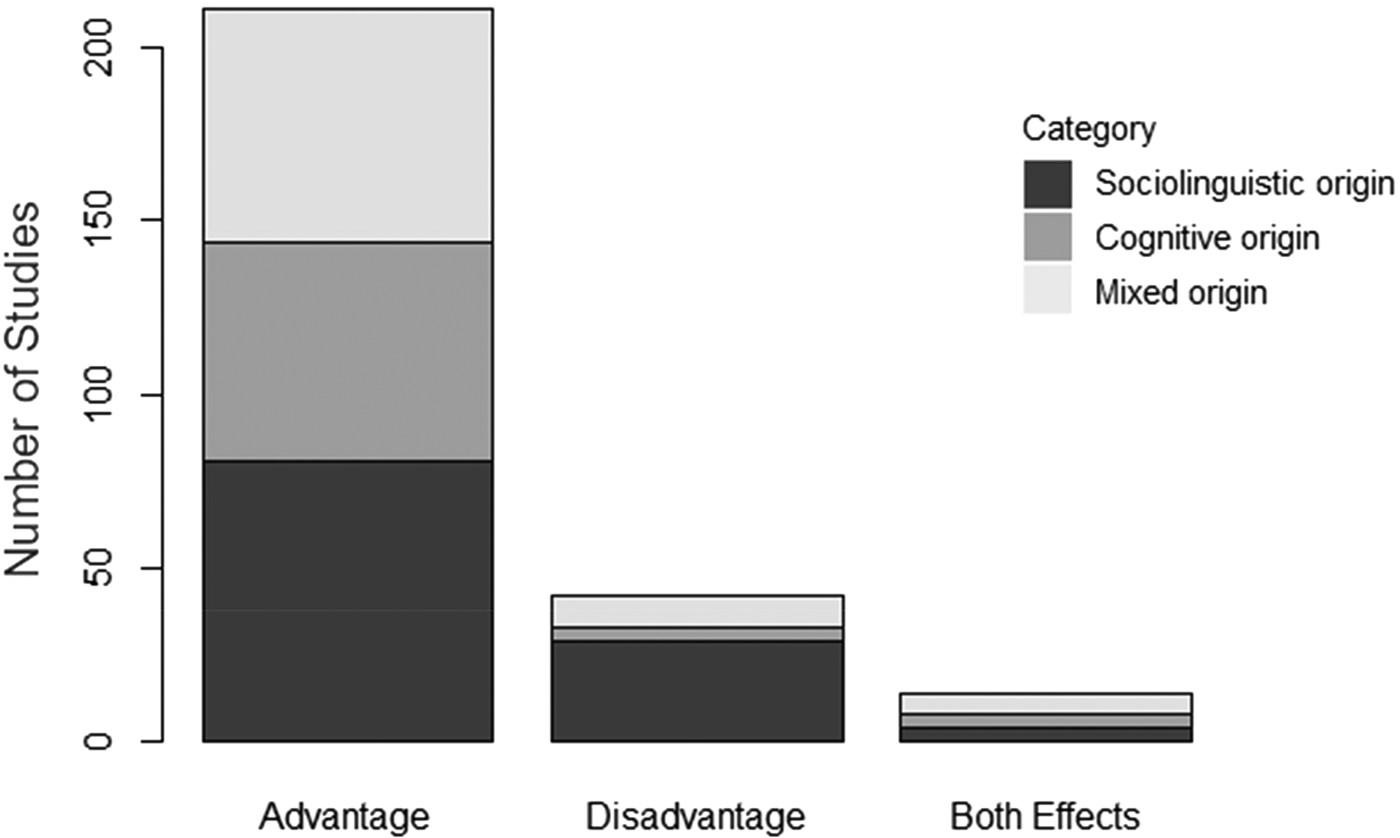
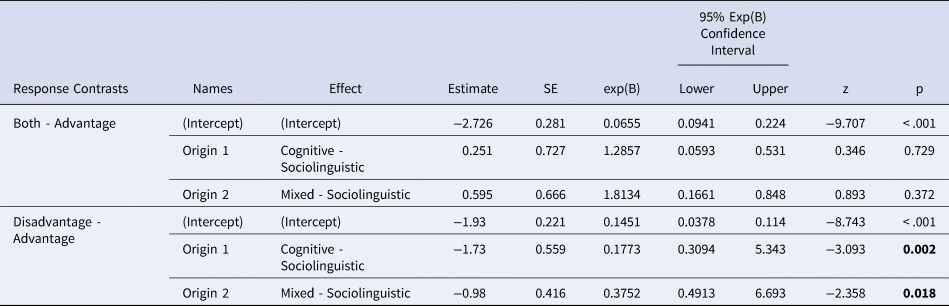
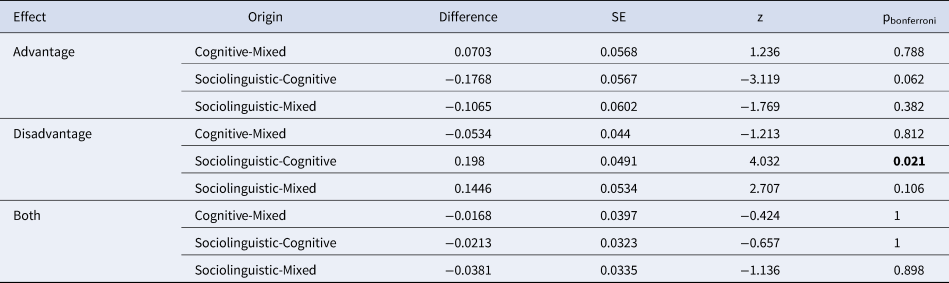
To find whether there is a significant correlation between the type of effects and their origin, we performed two analyses. First, we ran a χ2 test of association to determine the relationship between the two variables. In this analysis, we omitted the category “both effects”, and we focused on the categories “bilingual advantage” and “bilingual disadvantage”. Results show a significant correlation between the type of effect and its origin (χ2 = 14.3, p < .001). The significant difference boils down to the fact that studies that find bilingual disadvantages are more likely to attribute them to sociolinguistic factors, while those that find bilingual advantages are more likely to claim that these effects are linked to either a cognitive or a mixed cognitive and sociolinguistic origin. To provide the full picture, we reran the previous analysis including the previously omitted category “both effects” (n = 14). Treating effect and origin as multinomial variables, again we found a significant association between the two variables (χ2 = 16.4, p = .003). Table 1 presents the model results and Table 2 presents the post-hoc comparisons with Bonferroni correction for multiple comparisons. In the “both effects” category, results are equally distributed between the sociolinguistic and the cognitive type of origin.
Model results for the association of the two variables, type of effect, and origin of effect.
Post-hoc comparisons.
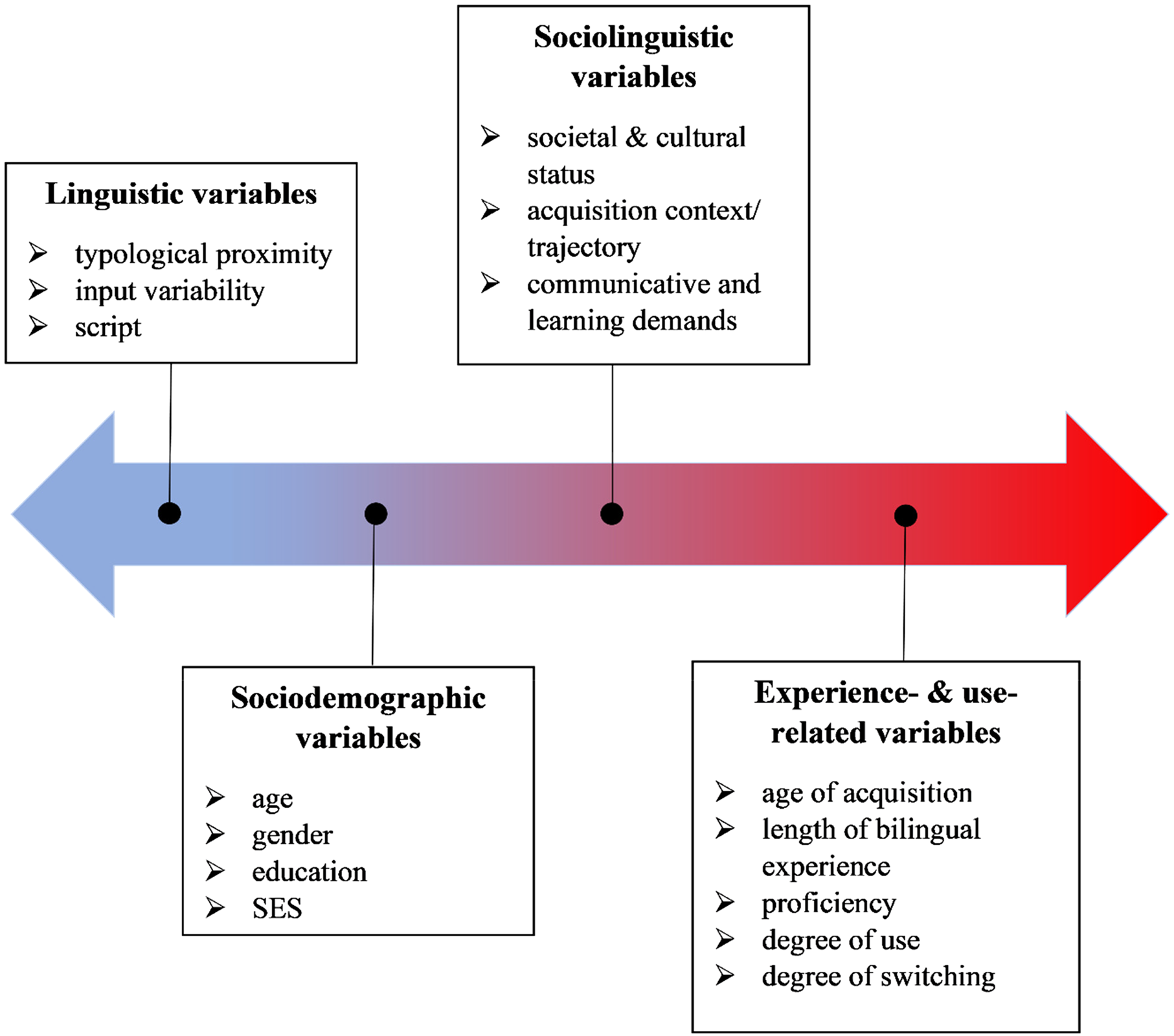
Analyzing the role of specific sociodemographic factors in our pool of data, we find that age is controlled for in 98.91% of studies (n = 364/368), followed by gender which is assessed in 70.92% of studies (n = 261/368). With reference to SES, this variable is unmentioned in 35.60% of studies (n = 131/368), whereas 11.41% of studies (n = 42/368) mention it in their introduction/discussion sections, without measuring or controlling for it. In the remaining 52.99% of studies (n = 195/368), SES is controlled for in the matching of the tested samples. With reference to the sociolinguistic factors that come into play in the emergence of bilingual effects, the most frequently encountered variables are those related to the sociolinguistic status of the languages (e.g., societal status, context of acquisition, and learning trajectory) and to the actual practice of using them in different contexts (e.g., language exposure/use, amount of switching). Overall, the sociolinguistic factors that come into play can be classified in terms of the following four tightly connected categories, which only together can outline the complexity of the bilingual nature.
1. Variables related to how bilinguals experience and use their languages. These variables amount to factors involved in the emergence of bilingual effects, and include age of acquisition, length of bilingual experience, proficiency measures, literacy competence, measures and domains of language use, both in relation to the amount of use specific to a given language – thus including measures of language switching – and to specific contexts of use, and measures of language exposure, including language immersion.
2. Variables related to the sociolinguistic context where bilinguals use their languages. These concern the sociocultural and sociolinguistic properties of the environment: the societal status of a language, the culture and patterns of use associated with it, the learning context of a given language, the subsequent communicative and learning demands posed on speakers/signers.
3. Variables related to the sociodemographic profile of participants, that in turn can both affect their bilingual experience and act independently. These include age, gender, and aspects of SES, including education, parental education, and profession.
4. Variables related to linguistic factors as a category refers to the variability and diversification of the linguistic input as well as the typological properties, including script, of the languages at play.
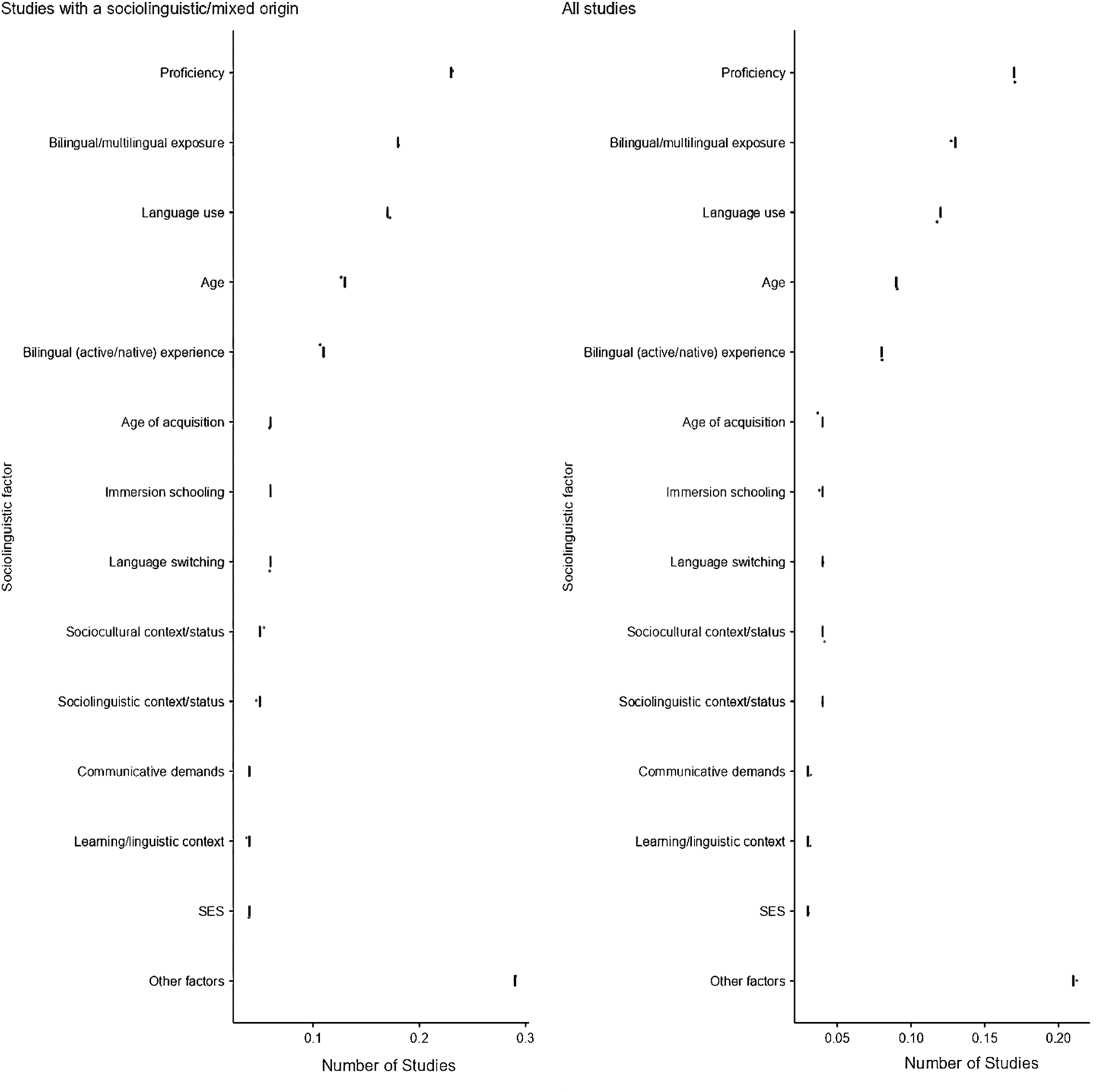
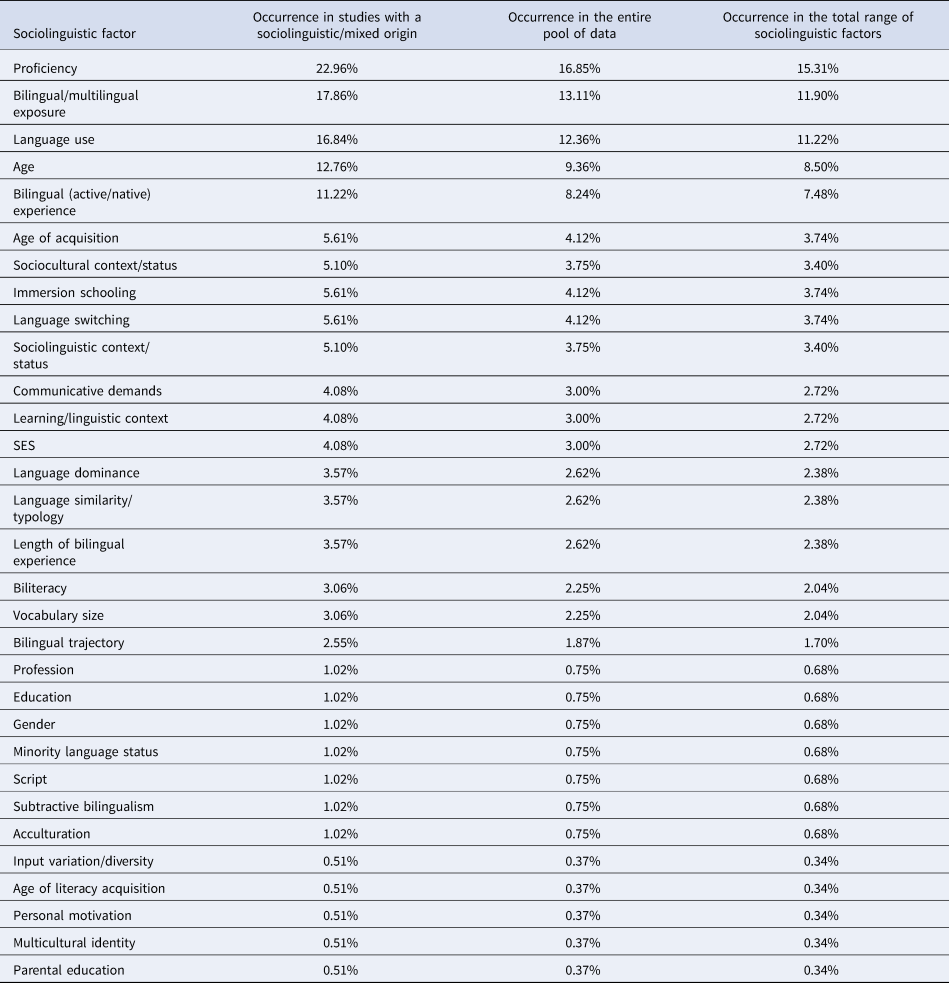
While the classification of variables in the aforementioned categories serves organizational purposes, it does not entail the absence of grey areas between them. This means that these categories are not rigidly demarcated, but host variables that occur on a continuum of influencing factors, as shown in Figure 5. In relation to the magnitude of contribution, Figure 6 shows the occurrence of each sociolinguistic factor individually in (i) the studies that find results that evoke a sociolinguistic/mixed origin and (ii) the overall pool of data (i.e., all studies that find evidence for bilingual adaptations, regardless of origin). Table 3 presents the overall occurrence of each factor in (i) the studies that find results that evoke a sociolinguistic/mixed origin, (ii) the overall pool of data, and (iii) the context of the entire range of sociolinguistics factors. With respect to (iii), a study may find evidence for more than one sociolinguistic factor, so the total instances of mentioned sociolinguistic factors and the total number of studies do not coincide.
Sociolinguistic factors that have been linked to bilingual adaptations. Color warmth indicates the degree of occurrence in the pool of data.
The occurrence of individual sociolinguistic factors in the pool of data. Other factors include language dominance, language similarity/typology, length of bilingual experience, biliteracy, vocabulary size, bilingual trajectory, profession, education, gender, minority language status, script, subtractive bilingualism, acculturation, input variation/diversity, age of literacy acquisition, personal motivation, multicultural identity, and parental education. The complete list is provided in Table 3. The x-axis values show the degree of occurrence in the overall pool of data on a 0-1 scale.
Magnitude of contribution for each sociolinguistic factor.
4. Discussion
Taking stock, our results suggest that bilingual populations can indeed be associated with robust adaptations to bilingualism, confirming the results of van den Noort et al. (Reference van den Noort, Vermeire, Bosch, Staudte, Krajenbrink, Jaswetz, Struys, Yeo, Barisch, Perriard, Lee and Lim2019) and Grundy (Reference Grundy2020). Analyzing the occurrence of bilingual effects in our sample (Figure 3), a χ2 Goodness of Fit suggests a significant difference in study outcome, with 72.55% of the studies in our pool of data finding evidence for bilingual effects (χ2 = 74.9, p< .001). Recall that 73.41% of these studies attribute them to sociolinguistic factors.
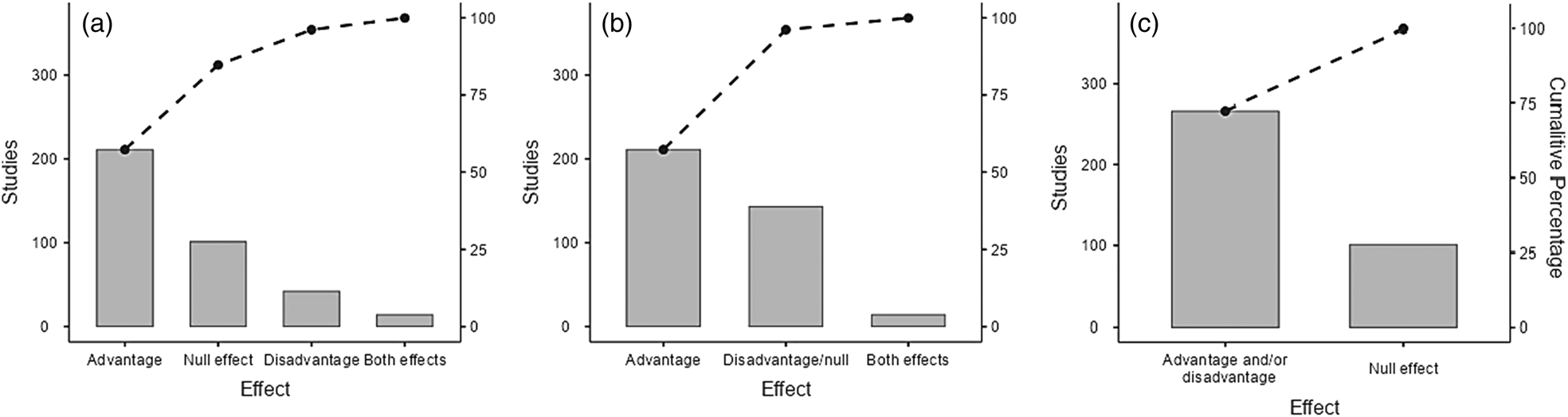
Importantly, the reported bilingual effects include both advantages and disadvantages. An important matter that arises concerns the publication biases that have been argued to favor the publication of results that support positive outcomes (de Bruin et al., Reference de Bruin, Treccani and Della Sala2015). As Figure 7 shows, while bilingual advantages are the most frequent category (7a), if we follow the previous practice of grouping null and negative outcomes in one category (following the classification system in de Bruin et al., Reference de Bruin, Treccani and Della Sala2015), the negative/null category (7b) is not the least frequent one, as we expected based on the literature. At the same time, the classification system matters. If bilingual advantages and disadvantages form trade-offs (Leivada et al., Reference Leivada, Mitrofanova and Westergaard2021b), it is more reasonable to group negative outcomes with positive outcomes (7c) than with null effects (7b). A null result (i.e., failure to find an effect) is not the same as finding evidence for a negative outcome – hence, grouping them together may not do justice to the observed correlations between positive and negative outcomes.
Different ways of grouping bilingual effects. In 7a, bilingual disadvantages and null effects are kept separate. In 7b, bilingual disadvantages and null effects are merged. In 7c, null effects are kept separate from bilingual (dis)advantages.
Overall, this review addresses three questions: what percentage of the studies that report bilingual effects control for sociodemographic factors (Research Question 1); what percentage of the studies reporting such effects attribute them to a cognitive, sociolinguistic, or mixed origin (Research Question 2); and what are the sociolinguistic factors most typically involved in studies that find bilingual adaptations (Research Question 3).
Regarding the first research question, it was found that all 368 articles in our pool of data controlled for at least one sociodemographic factor: age, gender, and/or SES. While only four studies did not account for age in their sample, almost 30% of the articles did not report their participants’ gender, despite the potential impact of this variable (Kormi-Nouri et al., Reference Kormi-Nouri, Moniri and Nilsson2003; Tarighat & Krott, Reference Tarighat and Krott2021). With reference to SES, more than 60% of studies at least mentioned it, and more than 50% either measured it or used it as a matching variable in sample selection.
In relation to the second research question, our results suggest that the observed effects are predominantly attributed to sociolinguistic factors. The relevance of sociolinguistic factors becomes even stronger if we consider the studies that ascribe their findings to both sociolinguistic and cognitive origins (Figure 3). These findings attest to the need for developing a social-based theory for explaining the origin of bilingual effects, further suggesting that bilingual adaptations are a mosaic trait that entails a large number of variables belonging to different domains. The bilingual status, in fact, is not enough, raising the question of “how bilingual one needs to be to benefit from a cognitive advantage” (de Cat et al., Reference de Cat, Gusnanto and Serratrice2018, p. 125), or more broadly, for advantageous and disadvantageous effects to be observed? Not only the outcome (which is variably described in terms of advantages, disadvantages, both effects, and null effects; Figure 2), but also the origin boils down to a mosaic of intertwined variables (Figure 5): there are many, both sociolinguistic and cognitive, factors that work together or compete in conferring cognitive adaptations (Valian, Reference Valian2015). For example, profession is one of them: interpreters are more likely to perform well in certain cognitive tasks that test specific abilities which are trained in the course of their work experience (Henrard & Van Daele, Reference Henrard and Van Daele2017; Yudes et al., Reference Yudes, Macizo and Bajo2011). The results of the present review seem to suggest that the more bilingualism is broken down into particular components that define different types of bilingualism (e.g., use, status, proficiency, etc), the more likely it is that the ecologically broad bilingual effect may be ascribed to something more specific, which oftentimes happens to be of sociolinguistic, rather than cognitive, nature. It seems that the question concerning the origin of bilingual effects is hard to address, most notably because of the variability of the samples. While the terms “bilingualism” and “bilingual” are employed in such a way that their ecological validity seems to be faced with little to no exceptions, the tested samples in the analyzed studies have surprisingly little in common. Participant selection and group matching criteria are by no means fixed, which means that some variables that have been shown to influence results (e.g., SES) are sometimes considered, and sometimes not. Our hypothesis is that the rate at which bilingual advantages and disadvantages are attributed to sociolinguistic factors can be traced back to how bilingualism itself is conceptualized in study design and sample selection: the more multifaceted the bilingual experience is considered, the more likely it is that the origin of its effects will be traced back to a specific subcomponent of bilingualism, recognizing some of the many sociolinguistically-informed nuances of the bilingual experience.
The importance of breaking down the bilingual experience into all its components is also stressed by the significant correlation we found between type of effects and origin. Studies reporting bilingual advantages often attributed them to a cognitive origin, and these studies often focused on the cognitive dimension of the bilingual experience, without specific attention to its social aspects. Chabal et al. (Reference Chabal, Schroeder and Marian2015), for example, inquired about how bilingualism influences attention in an object search task. The superior ability to focus on relevant information for bilinguals was associated with enhanced executive control. Importantly, the main purpose of the study was to observe whether the “bilinguals’ advantage in cognitive control extends to real-world, multi-modal settings” (Chabal et al., Reference Chabal, Schroeder and Marian2015, p. 3), suggesting that authors had a pre-set cognitive approach to bilingualism and its outcomes in the executive control domain. The executive control domain was also the focus of Clare et al. (Reference Clare, Whitaker, Martyr, Martin-Forbes, Bastable, Pye, Quinn, Thomas, Mueller Gathercole and Hindle2016), who however additionally stressed the importance of considering the confounding impact of social factors. The lack of enhanced executive control for their bilingual participants compared to monolinguals was traced back to the specific sociolinguistic context of the study. Indeed, bilingual participants were speakers of English and Welsh who were used to alternate their languages in “a more automatic and less effortful process” compared to other bilingual profiles (Clare et al., Reference Clare, Whitaker, Martyr, Martin-Forbes, Bastable, Pye, Quinn, Thomas, Mueller Gathercole and Hindle2016, p. 422). Thus, the weak lexical competition they experienced might have brought fewer demands on executive control and reduced training in this cognitive domain. Besides the tendency of linking bilingual advantages to cognitive origins and bilingual disadvantages to social origins, these examples suggest that considering the subcomponents of specific bilingual experiences could help in clarifying the apparent inconsistencies of results found in research on bilingualism (Marton et al., Reference Marton, Goral, Campanelli, Yoon and Obler2017).
Indeed, factorizing these subcomponents may be the key to finding the origin of bilingual effects. More concretely, we propose that tracing the effect of bilingualism back to cognitive or sociolinguistic factors partially depends on how gradually bilingual experience itself is represented (i.e., as a spectrum vs. a binary option that is based on the question “Does the participant know any language other than language X?”, cf. DeLuca et al., Reference DeLuca, Rothman, Bialystok and Pliatsikas2019; Sulpizio et al., Reference Sulpizio, Del Maschio, Del Mauro, Fedeli and Abutalebi2020). Defining bilingualism through isolated factors/parameters (i.e., L1/L2 proficiency or age of acquisition as stand-alone elements) may lead to an oversimplified view of this notion: being bilingual is not a dichotomous condition depending on just one factor, rather it is a gradient status where different sociolinguistic/cognitive factors play crucial roles, together with inter-individual variability. Delineating the whole range of the implicated variables as well as their strength of contribution (as in Figures 5 and 6) can be a successful way of approaching the bilingual mind. A better conceptualization of bilingualism is also the key to interpreting its effects (Diaz & Farrar, Reference Diaz and Farrar2018). As previously mentioned, controlling different subcomponents of bilingualism enables a better linking of bilingual effects to specific factors of the bilingual experience. The upshot is that bilingualism should be perceived as the result of a thick network of sociolinguistic factors that influence each other in a chain-reaction fashion.
The resulting question, then, is about the specific sociolinguistic factors that give rise to bilingual effects; this was the third research question of the present research. Our results show that the sociolinguistic origins of bilingual effects can be ascribed to a continuum of social, sociodemographic, sociolinguistic, linguistic, and language experience/use factors (Figure 5). These variables appear to be intrinsically linked in a thick network, influencing each other, and defining the bilingual experience as the sum of each of these variables. The close junction of sociodemographic and sociolinguistic factors is clearly shown by SES, a social variable frequently addressed in our pool of data, as previously discussed. With respect to SES assessment, the reviewed studies show a great variability of measures: some authors assert their sample homogeneity through explaining that only participants of the same neighbourhood or geographical area were recruited (e.g., Duñabeitia et al., Reference Duñabeitia, Hernández, Antón, Macizo, Estévez, Fuentes and Carreiras2014), others calculate SES by summing up different proxy variables such as educational level, type of occupation, and position in the occupation (e.g., Chrysochoou et al., Reference Chrysochoou, Kanaki and Vivas2020), while in other cases, especially in studies focussing on children, parental education is measured as an approximate value for SES (e.g., Giguere et al., Reference Giguere, Dickson, Tulloch and Hoff2022; Goetz, Reference Goetz2003; Lesniak et al., Reference Lesniak, Myers and Dodd2014). Overall, the way in which SES and bilingual experience interact shows that variables pertaining to both the core sociodemographic dimension and variables related to the actual experience of using two languages cannot be perceived as stand-alone factors; they are crucial components of the same thick weft of variables that together give rise to bilingual adaptations. Acknowledging the reality of individual differences entails that employing umbrella terms like “bilingual status”, without pinpointing the sociolinguistic characteristics of the bilingual experience specific to the tested sample, may result in a substantially incomplete picture. Similarly, the mainstream practice of grouping in one bilingual mega-category a mix of people that speak or sign different L1s, acquired through variable developmental trajectories (e.g., heritage language users, immigrants that go through L1 attrition, sequential bilinguals, etc) raises similar concerns. In such cases, it is almost impossible to determine with a reasonable degree of confidence whether the claimed bilingual advantages and disadvantages are due to handling two or more languages or to some uncontrolled degree of sociolinguistic variation.
As Figure 5 suggests, variables pertaining to language use play an important role in the origin of bilingual effects. Proficiency is a clear example. Most of the reviewed studies find a positive correlation between higher degrees of proficiency and bilingual advantages (e.g., K. Antoniou et al., Reference Antoniou, Grohmann, Kambanaros and Katsos2016; Bialystok & Majumder, Reference Bialystok and Majumder1998; Escobar et al., Reference Escobar, Kalashnikova and Escudero2018; Segal & Gollan, Reference Segal and Gollan2018; Skoe & Karayanidi, Reference Skoe and Karayanidi2019). Higher or lower proficiency may depend on different variables, such as language use, sociolinguistic status, context, and the consequent linguistic attitudes that speakers/signers have toward their language(s). While some studies tend to consider proficiency as a compact variable, and accordingly control for it in their samples, other studies spell out the connection of proficiency with other sociolinguistic factors. Woumans et al. (Reference Woumans, Ceuleers, Van Der Linden, Szmalec and Duyck2015), for instance, explain their results by tracing enhanced cognitive control back to balanced language use and degree of language switching, that in turn results in higher proficiency. The prominence of proficiency as a primary measure to assess bilingualism can also be ascribed to the fact that this has often been used as an umbrella-notion that includes other aspects of the bilingual experience, such as language use, and in some cases, this has led some scholars to ascribe bilingual effects to proficiency only. According to Verhagen et al. (Reference Verhagen and de Bree2019), the impossibility of teasing apart the effects of language proficiency and other sociolinguistic variables stems from the absence of separate measures for each independent factor.
Among these factors, there are two that merit special mention: language exposure and language use (Bedore et al., Reference Bedore, Peňa, Summers, Boerger, Resendiz, Greene and Gillam2012). The impact of exposure is most evident in research focused on bilingual children. Going back to our pool of data, the bilingual disadvantage found by Andreou et al. (Reference Andreou, Tsimpli, Masoura and Agathopoulou2021) is a clear example: the lower performance of Albanian–Greek bilingual children is linked to the fact that their Albanian-speaking parents chose to use the societal language (i.e., Greek) at home despite their low proficiency in this language. Interestingly, this study shows once again the close connection between different aspects of the bilingual experience: besides the crucial role of immigrant status and parental language attitudes, the quality of language exposure influences bilingual children's linguistic abilities. This point has also been discussed by Rothman (Reference Rothman2009), who argues that quantitative and qualitative variation in the linguistic input that bilingual speakers receive can affect their resulting grammar.
About language use, terminology matters. The term “language use” is usually ascribed to two main concepts of using a language. The first one concerns the amount of time spent speaking/signing a language, while the second one is strictly connected to the socio-communicative environment in which the language is used. In this second meaning, the interdependent network of sociolinguistic factors becomes once again clear. Referring to the factor “language use” entails considering the social context of use, which in turn can affect the percentage of time the language is spoken. Our results suggest that among the sociolinguistic factors linked to the emergence of bilingual adaptations, sociolinguistic context and communicative environment have a strong impact. The important role of sociolinguistic context in shaping bilinguals’ language use is discussed in Lambert (Reference Lambert1973) through the concept of subtractive environment: choosing to use one language instead of another is not a mere linguistic question, rather it entails social consequences for the speaker/signer.
Another interesting sociolinguistic factor linked to the bilingual communicative dimension is language switching. In most cases, it is drawn from other social components, and it is not independently operationalized, as are proficiency and language use (Verhagen et al., 2019). Similar to proficiency, the frequency of language switching is often found to be positively correlated with bilingual advantages (Barbu et al., Reference Barbu, Gillet and Poncelet2020; Woumans et al., Reference Woumans, Van Herck and Struys2019), in line with the code-switching hypothesis of Peal and Lambert (Reference Peal and Lambert1962). According to this hypothesis, the bilingual experience of switching from one language to another helps in reinforcing symbolic reorganization, turning into both strengthened performance in tasks requiring conceptual reorganization and better communication skills. The low frequency of language switching is also brought into play to justify the absence of positive effects of bilingualism. For example, Scaltritti et al. (Reference Scaltritti, Peressotti and Miozzo2017) explain the lack of bilingual advantages in their bidialectal Italian speakers through suggesting that the latter have fewer opportunities of language switching than other bilingual populations (e.g., Spanish–Catalan bilinguals). In this case, the importance of sociolinguistic context is evident, and it shows once again how different bilingual subcomponents are linked in a chain-reaction fashion: the social prestige of a linguistic variety affects the communicative contexts in which it is used and, in turn, the frequency of switching. In Italy, dialects are often perceived as less prestigious than standard Italian, therefore language switching from Italian to dialect is less frequent and occurs under few communicative dimensions. The more prestigious social status of Catalan, on the other hand, enables the use of the Catalan language in more contexts, with a consequent higher opportunity of language switching, which inevitably arises due to the need to address different monolingual Spanish-speaking interlocutors.
This picture suggests that sociolinguistic factors leave a cognitive imprint, such that the different origins of bilingual effects are intertwined (Blom et al., Reference Blom, Boerma, Bosma, Cornips and Everaert2017; Marian & Hayakawa, Reference Marian and Hayakawa2021). This is relevant to the debate about the origins of bilingual effects because the status of some factors may seem ambiguous. For instance, we have classified switching as a sociolinguistic factor. However, it could be plausibly viewed as a cognitive factor: having to monitor external cues in order to be able to switch engages cognitive control regions in the brain (Blanco-Elorrieta & Pylkkänen, Reference Blanco-Elorrieta and Pylkkänen2017). We argue that both findings are correct: language switching indeed has cognitive implications, but its occurrence is driven by sociolinguistic happenstance. Recognizing the cognitive repercussions of switching does not mean that this is a cognitive factor per se, or that all sociolinguistic factors that recruit and affect cognitive resources should be classified as cognitive in origin. Even SES (i.e., the classic textbook example of a social factor) has an impact on neurocognitive resources (Migeot et al., Reference Migeot, Calivar, Granchetti, Ibáñez and Fittipaldi2022), but this does not prevent us from recognizing its status as a social factor. In sum, given that all social experiences may leave an imprint on cognition, it is uninformative to think of all the sociolinguistic factors as cognitive factors or lump them together under the label “cognitive”. Instead, the emphasis should be on appreciating the individual characteristics of different sociolinguistic ecologies of speakers/signers (Rodríguez-Ordóñez et al., Reference Rodríguez-Ordóñez, Kasstan and O'Rourke2022). As Luk (Reference Luk2022, p. 5–6) puts it, “when shifting the research focus to people and the way that they become multilingual, it is clear that any investigation of bilingual (dis)advantage needs to consider the social contexts where language experiences occur”.
Overall, our proposal about the social imprint on the cognitive impact of bilingualism does not mean to delineate a causal relation between social factors and their outcomes. Rather, the cognitive mechanisms leading to the emergence of bilingual effects should be perceived as mediating between the outcomes themselves and the environmental conditions that shape them. In this respect, potential cognitive mediators have been identified in the domain of attentional control (Bialystok & Craik, Reference Bialystok and Craik2022) or in language selection (Calabria et al., Reference Calabria, Hernández, Branzi and Costa2012; cf. Blanco-Elorrieta & Caramazza, Reference Blanco-Elorrieta and Caramazza2021 for a review). To offer a concrete example, Polinsky and Scontras (Reference Polinsky and Scontras2020) propose that processing pressures experienced by heritage bilinguals are determined by social factors: in most communicative settings, the supremacy of the societal language entails less dominance in the heritage language, which affects both how online resources are handled in processing mechanisms, but also induces linguistic changes in the heritage language grammar (Polinsky & Scontras, Reference Polinsky and Scontras2020).
Last, an interesting observation that emerges from our analysis concerns the “null effect” group of studies. While some studies did not find any effect of bilingualism, others stressed the use of different cognitive strategies by monolingual and bilingual participants. Regardless of finding or not finding statistically significant differences in terms of task performance, it is important to highlight that bilingual experience can impact the use of specific cognitive strategies instead of others (cf. Bialystok et al., Reference Bialystok, Craik, Grady, Chau, Ishii, Gunji and Pantev2005; M. Antoniou et al., Reference Antoniou, Best and Tyler2013; Vaughn et al., Reference Vaughn, Archila-Suerte and Hernandez2018). The failure to find significant differences between monolinguals and bilinguals may be ascribed to factors other than sociolinguistic or cognitive variables, such as task structure and/or stimulus demands (e.g., Lee et al., Reference Lee, Cheung, Chan and Chan2000). What can be drawn from these results is that being bilingual, with all the sociolinguistic variables that bilingualism entails, may affect the way in which a person interacts with linguistic and non-linguistic input, and this in turn may inform processing strategies that may be differently employed by monolingual and bilingual speakers/signers.
5. Outlook
The main findings of the present review support the relevance of a sociolinguistic theory of bilingual effects. Through the analysis of 368 studies, we have determined the occurrence of different sociolinguistic variables responsible for bilingual effects in more than 73% of the studies in our pool of data. Proficiency, language exposure, language use, communicative context, and sociolinguistic environment are the key factors behind bilingual effects, together with sociodemographic factors such as age, gender, and SES. Through adopting a sociolinguistic perspective, future studies on bilingual effects may strengthen their explanatory power by taking into account the dense network of sociolinguistic and environmental factors that characterize the bilingual experience and make bilingualism a gradient phenomenon. The take-home message is that sociolinguistic variables cannot impersonate secondary roles; their influence on results from tasks that are deemed as measuring primarily cognitive outcomes should be acknowledged. This conclusion advances our understanding of the bilingual experience, by showing that bilingualism, as a spectrum of dynamic experiences, cannot be isolated, neither from the cognitive mediators that sustain it nor from the social environment that shapes and nourishes it.
Supplementary Material
The supplementary material for this article can be found at https://doi.org/10.1017/S1366728923000664
Acknowledgements
This work was supported by the European Union's Horizon 2020 research and innovation programme under the Marie Skłodowska-Curie grant agreement n° 945413 and from the Universitat Rovira i Virgili (URV) through 2 Martí i Franquès COFUND Doctoral Fellowships to CM and VD. EL acknowledges funding from the Spanish Ministry of Science and Innovation (MCIN/AEI/10.13039/501100011033) under the research project No. PID2021-124399NA-I00.


 Open access

