


Vitamin D status has become a public health concern in the USA over the last several years due to an increasing number of reports of vitamin D deficiency. Recently, the identification of vitamin D receptors in most tissues indicates an expanded role of vitamin D beyond the classic actions of maintaining bone health. Vitamin D may provide a protective effect against CVD and cancer( Reference Manson, Bassuk and Lee 1 ). High serum vitamin D levels among adult populations are associated with a substantial decrease in CVD, type 2 diabetes and the metabolic syndrome( Reference Parker, Hashmi and Dutton 2 ). Multiple factors contribute to health disparities, and vitamin D status may play a role in differences in the disease and mortality rates between Blacks, Hispanics and Whites in the USA( Reference Golden, Brown and Cauley 3 ). Utilizing the 2005–2006 National Health and Nutrition Examination Survey (NHANES) data and a definition of vitamin D deficiency based on serum 25-hydroxyvitamin D (25(OH)D) concentrations ≤20 ng/ml, the overall prevalence rate of vitamin D deficiency was estimated to be 41·6 % for US adults, with the highest rate seen for Blacks (82·1 %), followed by Hispanics (69·2 %) and Whites (30·0 %)( Reference Forrest and Stuhldreher 4 ). Differences in vitamin D status, therefore, may contribute to health disparities between race/ethnic groups and influence the risk of some of the leading causes of death in the USA( Reference Grant and Peiris 5 ).
The two major forms of vitamin D are ergocalciferol (vitamin D2) and cholecalciferol (vitamin D3). Cholecalciferol occurs naturally in very few foods (oily fish, meat, egg yolks) and is added to some foods (milk, milk products, calcium-fortified juices, fortified breakfast cereals). Ergocalciferol is produced in mushrooms containing ergosterol when exposed to UV radiation and is added to foods such as soya milk. Fortified foods represent the major dietary source of vitamin D( Reference Fulgoni, Keast and Bailey 6 ) and more than one-half of the US population uses dietary supplements( Reference Bailey, Dodd and Goldman 7 ). In addition, vitamin D is produced endogenously through exposure of skin to UV light, which stimulates conversion of the precursor 7-dehydrocholesterol to pre-vitamin D3 that is rapidly converted to cholecalciferol( Reference Holick 8 ).
In 1991, the US Department of Agriculture included the vitamin D content of foods for the first time in the National Nutrient Database for Standard Reference (SR). Vitamin D concentrations were obtained from some analytical data, processed food label declarations and calculated values from ingredient composition( Reference Yetley 9 ). In 2008, HPLC and UV spectroscopic detection were used to measure ergocalciferol and cholecalciferol concentrations of milk, soya milk, cheese, calcium-fortified juices and breakfast cereals. The new analytical data were added to SR22 and used to estimate vitamin D intakes for the NHANES 2005–2006 cycle( Reference Holden and Lemar 10 – Reference Patterson, Phillips and Horst 12 ). Since then, as vitamin D-fortified products (yoghurts, margarine brands, cereal bars, etc.) enter the marketplace( Reference Harnack, Steffen and Zhou 13 ), vitamin D content is routinely measured by HPLC and UV spectroscopic detection and incorporated into SR updates.
In 1997, the Institute of Medicine released Adequate Intakes for vitamin D rather than RDA because there was insufficient scientific evidence to determine an Estimated Average Requirement (EAR)( 14 ). EAR are used in surveillance studies to compare population intakes with recommended intakes of healthy people( 14 ) and serve as the nutrient-based reference values for setting the RDA. In 2010, EAR and RDA for vitamin D were established because more extensive information and higher-quality studies were finally available( 15 ).
Many investigators concluded that Blacks and Hispanics were at higher risk of vitamin D deficiency than Whites( Reference Harris and Dawson-Hughes 16 – Reference Zadshir, Tareen and Pan 20 ). Multiple factors likely contributed to race/ethnic vitamin D differences including economic status, reduced nutrient intake and the skin pigmentation. Minority groups are more likely to have lower incomes compared with Whites( Reference Bleich, Thorpe and Sharif-Harris 21 ) and their access to nutritious food may be too expensive or limited, therefore contributing to nutrient health disparities( 22 ). In addition, increased skin pigmentation inhibits cutaneous synthesis of vitamin D and potentially increases the risk of a deficiency for darker-skinned individuals( Reference Weishaar and Marcley Vergili 23 , Reference Clemens, Henderson and Adams 24 ).
Given the increased interest in the role of vitamin D in health, the continuing vitamin D analytical updates of the food supply, the establishment of EAR and RDA levels for vitamin D in 2010 and the interest in economic and race/ethnic factors that may contribute to health disparities, we estimated vitamin D intake in the USA for adults aged ≥19 years during 2007–2010. We then compared total, dietary and supplemental vitamin D intakes by poverty income ratio (PIR), race/ethnicity and gender. Finally, we identified the major foods groups in 2007–2010 contributing to the dietary intake of vitamin D.
Methods
Survey design and source of data
The NHANES is a cross-sectional surveillance programme conducted on a continual basis by the National Center for Health Statistics of the Centers for Disease Control and Prevention that is released in 2-year increments to allow examination of the relationship between diet, nutrition and health( 25 ). The survey uses a complex multistage probability sampling design with oversampling of certain races/ethnicities and age groups( 26 ). Data were collected by trained NHANES personnel using the multiple-pass method( Reference Blanton, Moshfegh and Baer 27 ) during in-household interviews as a part of the household and mobile examination centre interviews. A detailed description of the survey design, content, operations and procedures can be found elsewhere( 28 ).
For the present analyses, 11 857 adults aged ≥19 years participating in the 2007–2008 and 2009–2010 NHANES cycles were combined to increase sample size. The study measures obtained from the NHANES demographic file included PIR, race/ethnicity, gender and age. Of the original NHANES 2007–2010 data set, participants were excluded if PIR information was missing or if 24 h dietary recall data were judged to be incomplete or unreliable by the Food Surveys Research Group( 29 ). Also excluded from the analyses were 172 women who were pregnant or lactating and six participants taking large dosages of vitamin D supplements (≥1250 μg/d).
Ethnicity and race were derived from self-reported information obtained in the screener and the household interviews( 30 ). For our analyses, groups were categorized into the following: non-Hispanic (NH) Whites, non-Hispanic (NH) Blacks and Hispanics. Other ethnic groups were not included due to the small sample size. Hispanics were comprised of Mexican American and Other Hispanic combined into one Hispanic group to increase sample size for analysis.
Participants were classified as males or females based on self-reported data and categorized into income groups by PIR which was determined by the US Census Bureau method of dividing family income by poverty threshold specific to a family size( 31 ). Participants were classified into low income (≤131 % of PIR), medium income (>131 % to ≤185 % of PIR) or high income (>185 % of PIR).
The study was conducted according to the guidelines laid down in the Declaration of Helsinki. All procedures in the 2007–2010 NHANES were approved by the National Center for Health Statistics Ethics Review Board and written informed consent was obtained from all participants( 28 ).
Dietary assessment
Dietary intake data were obtained from in-person 24 h dietary recall household interviews administered using an automated multiple-pass method at the mobile examination centre( Reference Blanton, Moshfegh and Baer 27 ). During the household interview, a Dietary Supplement Questionnaire was completed to collect information regarding the use of vitamins, minerals, herbs and other dietary supplements. Descriptions of the dietary interview methods are provided in the NHANES Dietary Interviewer's Training Manual( 32 ).
Covariates
Food group consumption tends to vary by demographic and economic status; therefore, demographic characteristics (i.e. race/ethnicity, gender and age) and economic status (i.e. PIR) were considered as potential covariates in the analyses. The data for all covariates were obtained from the dietary recall and questionnaires.
Estimates of vitamin D intakes from food sources
The intake of vitamin D from food sources was determined for the major food categories used by the Food and Nutrient Database for Dietary Studies( 33 ). In addition, the proportion of intake of the major food categories was assessed by income. Within the major food groups, vitamin D intake was estimated by food sub-categories.
Estimates of vitamin D adequacy
The percentage of the population during 2007–2010 not meeting the EAR and the RDA from dietary or total intake was estimated for the total population by income and age group.
Statistical analyses
Four-year sample weights and weighted data were calculated for all statistical analyses to account for the complex sample design, which was multistage, stratified, unequally weighted or clustered. Statistical analyses were performed using the statistical software package SAS version 9·2. PROC SURVEYFREQ and PROC SURVEYMEANS and procedures of SAS were used to produce the estimated frequencies of categorical variables, presented as frequency percentage and standard error, for all categorical measures with the Wald χ 2 test and the means for continuous variables, being presented as mean and standard error.
For evaluating differences in vitamin D intake across the three race/ethnic groups, least-square means and standard errors were compared by ANCOVA using PROC SURVEYREG of SAS, controlling for age, gender or PIR. A P value of ≤0·05 was used to determine statistical significance and the t test with Tukey–Kramer adjustment was used for multiple comparisons.
Results
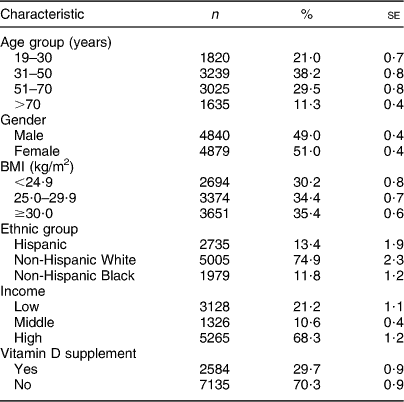
A total of 9719 participants not taking high dosages of vitamin D supplements from NHANES 2007–2010 provided complete demographic and in-person 24 h dietary recalls determined to be reliable and to meet overall quality and completeness criteria as determined by the Food Surveys Research Group (Table 1). Sample size by race/ethnicity, gender and age group was summarized and weighted to represent the US adult population of 193 million. The percentage of participants in the four age categories ranged from 11·3 % to 38·2 % for >70 years and 31–50 years, respectively. The percentage of males and females included was similar (49·0 % and 51·0 %, respectively). Distribution of BMI indicated that 34·4 % were overweight (BMI = 25·0–29·9 kg/m2) and 35·4 % were obese (BMI ≥30·0 kg/m2). The study population was comprised of 74·9 % NH Whites, 13·4 % Hispanics and 11·8 % NH Blacks. The majority of the participants were in the high income group (68·3 %), although a substantial number fell into the low income category (21·2 %) based on PIR. Approximately one-quarter (29·7 %) the participants reported consuming a supplement containing vitamin D.
Demographic characteristics of US adults aged ≥19 years, National Health and Nutrition Examination Survey, 2007–2010Footnote *,Footnote †,Footnote ‡
* Total sample size of 9719, weighted to represent the US adult population of 193 million.
† Income categorized by poverty income ratio (PIR), with ≤131% of PIR = low income, >131% to ≤185% of PIR = medium income and >185% of PIR = high income.
‡ Vitamin D supplements include any supplement containing vitamin D.
Estimates of vitamin D intake by income
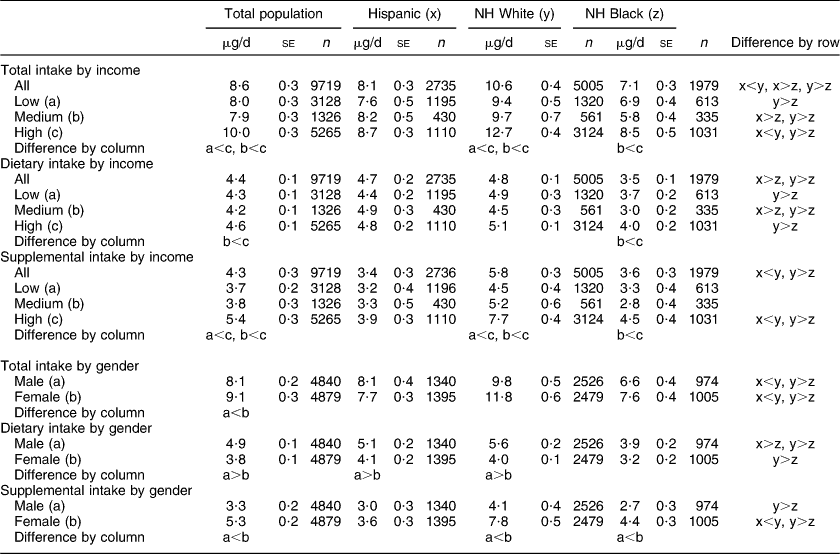
Mean intakes of vitamin D from food and supplements during 2007–2010 were categorized by PIR (Table 2). Total (dietary and supplemental) intake of vitamin D was significantly greater in the high income category (>185 % of PIR) v. the medium (>131 % to ≤185 % of PIR) or the low (≤131 % of PIR) income categories. It should be noted, however, that the middle-income group comprised only 10·6 % of the total population. Within each overall race/ethnic group when gender and age were controlled, economic status was related to differences in total, dietary and supplemental vitamin D intakes (Table 2). NH White total and supplemental vitamin D intakes of the highest income category were greater than those of the medium and low income categories. In contrast, dietary vitamin D intake of NH Whites did not vary by income status. Likewise, NH Black total vitamin D intake was greater in the high v. the medium income category, but not compared with the low income category. High-income NH Blacks also had higher dietary and supplemental vitamin D intakes than medium-income NH Blacks. Surprisingly, within the Hispanic group, income status was not associated with differences in vitamin D intake.
Vitamin D intakes (total, dietary and supplemental) of US adults aged ≥19 years by income, gender and race/ethnicity, National Health and Nutrition Examination Survey, 2007–2010Footnote *,Footnote †,Footnote ‡,Footnote §,Footnote ||
NH, Non-Hispanic.
* Values are means with their standard errors.
† Income categorized by poverty income ratio (PIR), with ≤131 % of PIR = low income, >131 % to ≤185 % of PIR = medium income and >185 % of PIR = high income.
‡ Multiple comparisons by PIR were adjusted for age and gender. Tukey–Kramer adjustment was used for control for the family-wise error.
§ Multiple comparisons by gender were adjusted for age and PIR. Tukey–Kramer adjustment was used for control for the family-wise error.
|| Significant differences by row or column groups indicated by letter: P < 0·05.
Estimates of vitamin D intake by race/ethnicity
When vitamin D intake (total, dietary and supplemental) was compared for all participants in race/ethnic groups, NH Whites had a significantly higher intake of vitamin D than NH Blacks and Hispanics (Table 2). Vitamin D intake (total, dietary and supplemental) by Hispanics was also higher than in NH Blacks.
Estimates of vitamin D intake by income and race/ethnicity
When groups were compared by income category across race/ethnicity, total vitamin D intake of NH Whites was greater than that of Hispanics and NH Blacks within the high income category (Table 2). Dietary intake by NH Whites was higher than that by NH Blacks for all income levels. Distinctions by income category of supplemental vitamin D intake between race/ethnic groups were apparent only for the high income category, with NH Whites having greater supplemental vitamin D intake than Hispanics and NH Blacks.
Estimates of vitamin D intake by gender
For the population as a whole, gender influenced total vitamin D intake. Although supplemental vitamin D intake was significantly higher for all females than for all males (Table 2), dietary intake of vitamin D by females was less. When vitamin D intake was examined across gender and race/ethnic groups, significant differences were apparent for females. Total and supplemental vitamin D intakes of NH White females were greater than those of NH Black females and Hispanic females. Dietary vitamin D intake of females, however, was significantly higher for NH Whites compared with NH Black females, but not Hispanic females. In contrast, total vitamin D intake of NH White males was higher than that of both NH Black and Hispanic males.
Vitamin D supplement use by income, gender and ethnicity
Participants within the high income category (33·1 %) were more likely to consume supplements that contained vitamin D than participants within the medium income (22·5 %) or low income (17·6 %) categories (data not shown). In addition, females (30·1 %) were more likely than males (23·0 %) to report taking supplements containing vitamin D. Furthermore, more NH Whites (34·7 %) than Hispanics (16·2 %) or NH Blacks (20·0 %) consumed supplements containing vitamin D.
Percentage not consuming the Estimated Average Requirement or the RDA by income and age
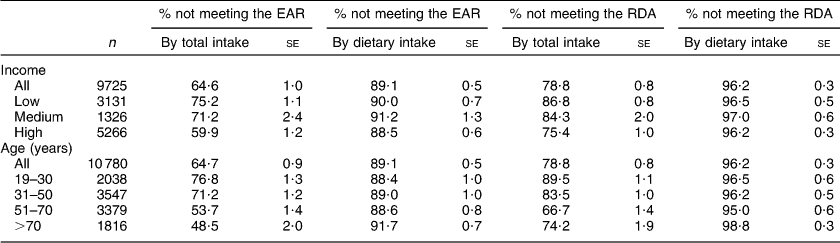
A substantial percentage (64·6 %) of the US population of adults in 2007–2010 did not meet the EAR for vitamin D (Table 3). When examined by income category, the percentage not meeting the EAR for vitamin D by total intake (diet and supplements) was less in the high income category (59·9 %) v. the low income category (75·2 %). The percentage not meeting the EAR for vitamin D by dietary intake showed little variation by income category.
Percentage of US adults aged ≥19 years not meeting the EAR and the RDA for vitamin D by income and age, National Health and Nutrition Examination Survey, 2007–2010Footnote *,Footnote †,Footnote ‡
EAR, Estimated Average Requirement.
* Values are mean percentages and their standard errors.
† EAR = 10 μg/d; RDA = 16 μg/d for 19–70 years and 20 μg/d for >70 years.
‡ Income categorized by poverty income ratio (PIR), with ≤131 % of PIR = low income, >131 % to ≤185 % of PIR = medium income and >185 % of PIR = high income.
Examining the percentage not meeting the EAR for vitamin D for total intake (diet plus supplements) by age indicated that the lowest percentages not meeting the EAR were in the older age groups (53·7 % of 51–70 year group and 48·5 % of >70 year group; Table 3). The percentage not meeting the EAR for vitamin D by diet alone was high (88·4–91·7 %) and showed little variation among age groups. Therefore, use of supplements was largely responsible for decreasing the percentage of participants not meeting the EAR with ageing.
A high percentage (78·8 %) of adults did not meet the RDA for vitamin D (Table 3). When examined by income, the percentage not meeting the RDA for vitamin D by total intake (diet and supplements) was less in the high (75·4 %) v. the medium (84·3 %) or the low (86·8 %) income categories. Moreover, the percentage not meeting the RDA by total intake (diet plus supplements) was less for adults aged 51–70 years (66·7 %) and >70 years (74·2 %). Again, use of supplements largely explained the decreasing percentage of participants not meeting the RDA with ageing.
Estimates of vitamin D contributions from food and supplement sources
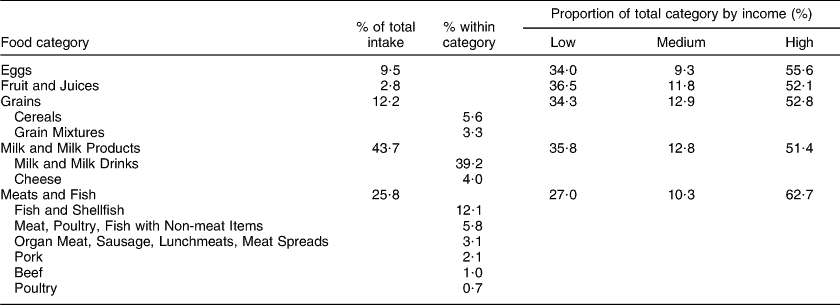
Fortified milk and milk products provided the greatest contribution (43·7 %) to the dietary vitamin D intake in the USA (Table 4). Other major food group sources of vitamin D were meat and fish (25·8 %), grain products (12·2 %), and to a lesser extent eggs and egg dishes (9·5 %) and fortified fruit juices (2·8 %). When the total food categories were assessed by income, the high income category consumed the greatest proportion of the total vitamin D intake of the population; however, the high-income group (68·3 %) also represented the largest proportion of the population. Nevertheless, a higher proportion of vitamin D intake from milk and milk products (35·8 %) intake was consumed by the lower income group which represented only 21·2 % of the sample population.
Proportion of vitamin D intake from major dietary sources for US adults aged ≥19 years, National Health and Nutrition Examination Survey, 2007–2010Footnote *,Footnote †
* Food categories based on the US Department of Agriculture's Food and Nutrient Database for Dietary Surveys food groups.
† Proportion of total category by income categorized by poverty income ratio (PIR), with ≤131 % of PIR = low income, >131 % to ≤185 % of PIR = medium income and >185 % of PIR = high income.
Discussion
To our knowledge, the present study is the first to examine US disparities of vitamin D intake by income status during 2007–2010. Total (dietary plus supplemental) intake of vitamin D in the US population was significantly greater in the high income category v. the medium and low income categories. Previously, dietary intake of vitamin D and serum 25(OH)D concentrations from NHANES III and NHANES 1999–2000 were also compared with PIR( Reference Kant and Graubard 34 ). PIR was categorized as poor, near poor or not poor; however, PIR was not a predictor of dietary intake of vitamin D and, surprisingly, marginal serum 25(OH)D concentrations were more likely to occur at higher PIR( Reference Kant and Graubard 34 ).
The effect of income on vitamin D intake during 2007–2010 was more complex when examined within specific race/ethnic groups. Although NH Whites and Hispanics in the highest income category had greater combined total and supplemental vitamin D intakes than those in the medium and low income categories, NH Blacks in the high income category differed only from the medium-income group. In contrast, Hispanics’ income status was not associated with differences in total, dietary or supplemental vitamin D intake. Only 16·2 % of Hispanics consumed supplements containing vitamin D, and therefore total vitamin D intake was more dependent on dietary sources.
Overall, the greatest total vitamin D intake was reported by high-income NH Whites (12·7 (se 0·4) μg/d) with a PIR of >185 %, and the lowest total dietary vitamin D intake was reported by medium-income NH Blacks (5·8 (se 0·4) μg/d) with a PIR of >131 % to ≤185 %. In the lower income category (≤131 % of PIR) the additional expense of consuming dietary supplements likely limited the use of vitamin D supplements for all ethnic groups. Previously, differences in vitamin D intake were also reported between race/ethnic groups( Reference Moore, Murphy and Holick 35 , Reference Calvo, Whiting and Barton 36 ). NHANES estimated intakes of vitamin D from food and supplements from 1999–2000 were consistently lower for NH Blacks compared with NH Whites, but not compared with Mexican Americans (similar to 2007–2010 NHANES Hispanics)( Reference Moore, Murphy and Holick 35 ). Likewise, earlier NHANES III (1988–1994) daily vitamin D intakes by African Americans (similar to 2007–2010 NHANES NH Blacks) were significantly lower than those by NH Whites and Mexican Americans( Reference Calvo, Whiting and Barton 36 ).
Over the last 30 years a trend is apparent in the USA of increased total vitamin D intake (diet plus supplements) by all race/ethnic groups. Mean intake of vitamin D of adults ≥19 years from the NHANES 1998–1994 survey was in the range of 7·33–8·37 μg/d for Whites, 5·73–6·90 μg/d for African Americans and 5·69–6·16 μg/d for Mexican Americans( Reference Calvo, Whiting and Barton 36 ); vitamin D intake from NHANES 1999–2000 ranged from 7·8 to 10·3 μg/d for NH Whites, from 5·3 to 6·1 μg/d for NH Blacks and from 5·7 to 6·9 μg/d Mexican Americans( Reference Moore, Murphy and Holick 35 ); and in the present analysis the total vitamin D intake in 2007–2010 was higher than in previous years and averaged 10·6 μg/d for NH Whites, 7·1 μg/d for NH Blacks and 8·1 μg/d for Hispanics (Table 2).
Dietary intake and use of supplements continue to make an important contribution to vitamin D status despite potential racial and ethnic differences in cutaneous synthesis of vitamin D and supplementation practices( Reference Fulgoni, Keast and Bailey 6 ). In previous studies with NH Blacks and NH Whites, a lack of vitamin D supplementation increased the odds of a vitamin D insufficiency( Reference Nesby-O'Dell, Scanlon and Cogswell 19 , Reference Shea, Houston and Tooze 37 ). In the present study, vitamin D supplementation differed by gender and race/ethnicity (Table 2). Vitamin D intake from supplements was higher for all females (5·3 (se 0·2) μg/d) than for all males (3·3 (se 0·2) μg/d). NH White females’ intake from supplements containing vitamin D (7·8 (se 0·5) μg/d) was nearly double that of NH Black females (4·4 (se 0·3) μg/d) and was more than double the intake of Hispanic females (3·6 (se 0·3) μg/d). Similarly, intake of vitamin D from supplements by NH White males (4·1 (se 0·4) μg/d) was approximately 37–52 % higher than that by Hispanic males (3·0 (se 0·3) μg/d) and NH Black males (2·7 (se 0·3) μg/d), respectively.
Obtaining sufficient vitamin D from food sources is challenging. Although consumption of fluid milk has shown a downward trend, recently more vitamin D-fortified products (yoghurts, margarine brands, cereal bars, etc.) have emerged in the marketplace to provide new sources of vitamin D( Reference Harnack, Steffen and Zhou 13 ). Despite the existence of more fortified foods in the marketplace, fortified milk provided the greatest source of vitamin D in the US diet in 2007–2010 (43·7 %). Overall, fortified foods from several food groups provided ∼62 % of the vitamin D intake from food, clearly indicating that consumption of fortified foods played a critical role in the dietary intake of this essential vitamin. Nevertheless, use of fortified milk differs among racial groups in the USA and barriers include food preferences, cultural tradition and cost( Reference Calvo and Whiting 38 ). Groups in greatest need of increasing vitamin D intake consume significantly lower amounts of commonly fortified foods such as milk and ready-to-eat cereals. Although vitamin D-fortified milk is relatively inexpensive per serving, the cost of plant-based milk and enriched mushrooms containing vitamin D may prevent lower economic groups from choosing these foods( Reference Calvo and Whiting 38 ). Moreover, a systematic review of nine clinical trials found that fortification of a food with vitamin D was associated with statistically significant improvements in serum 25(OH)D concentrations, which has important implications for the maintenance of vitamin D status in the population( Reference O'Donnell, Cranney and Horsley 39 ).
Major strengths and limitations of the present study should be noted. The primary strength was the large sample size and population-based analyses of vitamin D intakes over a period of 4 years. In addition, the vitamin D content of foods of the National Nutrient Database was largely based on new analytical data and not imputed data. Furthermore, with the establishment of an EAR and RDA for vitamin D in 2010, intakes by income categories and age could be compared. Nevertheless, this was a cross-sectional study and therefore causal inferences cannot be made. In addition, use of one 24 h dietary recall is dependent on memory, may not reflect usual intake and be subject to recall errors and under-reporting( Reference Willett 40 ); however, a single 24 h recall is sufficient to report mean usual intake of a group( Reference Thompson and Byers 41 ).
Conclusions
Our results identified greater total intake of vitamin D at higher income levels. Healthy People 2010 and 2020 include eliminating health disparities in the USA as an overarching goal( Reference Braveman, Kumanyika and Fielding 42 ). It is conceivable that differences in vitamin D intake are contributing to observed health status disparities in the USA. In a national survey, socio-economic status explained a considerable portion of the nutritional and health differences between races/ethnicities. Socio-economic status was associated with 30 % of the black–white difference in dietary quality and approximately 40 % of the prevalence of overweight and obesity( Reference Wang and Chen 43 ). Recently, after controlling for covariates and socio-economic factors, disparities in 25(OH)D concentrations related to ethnic skin colour were considered to be an important biological determinant of US health disparities( Reference Weishaar and Marcley Vergili 23 ).
The 2010 Dietary Guidelines for Americans identified low vitamin D intake as a public health concern( 44 ). Encouraging the consumption of foods naturally high in vitamin D and foods fortified with vitamin D, along with supporting the greater use of dietary supplements, would help to improve vitamin D status in the USA. Finally, culture-specific interventions are needed to increase vitamin D supplement use and health messages should be specifically targeted to all males, Blacks and Hispanics.
Acknowledgements
Sources of funding: This project was funded by a Chancellor's Research Fellowship from Texas Woman's University Office of Research & Sponsored Programs. The Texas Woman's University Office of Research & Sponsored Programs had no role in the design, analysis or writing of this article. Conflicts of interest: C.E.M., J.D.R. and Y.L. have no conflicts of interest to report. Ethics: This study was approved by the Institutional Review Board of Texas Woman's University, Houston Center, TX, USA. Authors’ contributions: C.E.M., J.D.R. and Y.L. designed the study; Y.L. performed the data analysis; C.E.M. wrote the manuscript and had primary responsibility for the final content; J.D.R. and Y.L. edited the manuscript.



