


The WHO estimates that over 340 million children and adolescents aged 5–19 years are classified as overweight or obese(1). Among pre-school children (< 5 years of age), the global prevalence of excessive weight (overweight and obesity) increased from 4·2 % in 1990 to 6·7 % in 2010. This trend is expected to reach 9·1 %, representing 60 million children, in 2020(Reference de Onis, Blossner and Borghi2). Childhood obesity is a complex disease with several adverse sequalae, including psychological, social and health consequences(Reference Adair3,Reference Reilly4) . Poor self-esteem, depression and eating disorders have been described more extensively in obese children than in their normal-weight peers(Reference Reilly4–Reference Field, Camargo and Taylor6). Furthermore, obese children are more susceptible to CVD risk factors such as hypertension(Reference Reinehr, Andler and Denzer7), dyslipidaemia(Reference Reinehr, Andler and Denzer7), chronic inflammation(Reference Visser, Bouter and McQuillan8), endothelial dysfunction(Reference Pena, Wiltshire and MacKenzie9,Reference Meyer, Kundt and Steiner10) and insulin resistance(Reference Chiarelli and Marcovecchio11). Research has suggested that early childhood may be a particularly sensitive period for the development of obesity later in life(Reference Gardner, Hosking and Metcalf12), thus early-life prevention of overweight and obesity should be valued.
There is evidence that meal pattern characteristics, such as irregularity of meals or ‘skipping breakfast’, could negatively influence diet quality(Reference Ramsay, Bloch and Marriage13,Reference Deshmukh-Taskar, Nicklas and O’Neil14) and cardiometabolic health outcomes including obesity(Reference Deshmukh-Taskar, Nicklas and Radcliffe15,Reference Pot, Hardy and Stephen16) . On the topic of eating frequency, increasing the number of daily meals might lead to a higher exposure to energy-dense foods, such as fast foods and soft drinks, and large-portion-size foods, resulting in increased hunger, excess energy intake and ultimately unhealthy body weight gain(Reference Mills, Perry and Reicks17–Reference van der Heijden, Hu and Rimm19). Nevertheless, a recent systematic review(Reference Canuto, da Silva Garcez and Kac20) of observational studies among adults included fourteen original studies reporting an inverse association between eating frequency and body weight or body composition, and seven studies reporting a positive association. Among children and adolescents, a previous meta-analysis(Reference Kaisari, Yannakoulia and Panagiotakos21) described an overall inverse association between eating frequency and the likelihood of being overweight or obese. However, when stratified by sex, the effect remained significant only in boys. The presence of publication bias and heterogeneity of studies might in part explain these differences, and further research was advised. The inconsistency in definitions of eating frequency might also impact the associations with body weight and hamper data interpretation and comparison between studies(Reference Mesas, Munoz-Pareja and Lopez-Garcia22).
There is no general agreement on the most appropriate definition of eating occasion, particularly the differentiation between what constitutes a main meal or a snack(Reference Leech, Worsley and Timperio23). The literature describes a variety of approaches to defining eating occasions (main meals and snacks), using, for example, the time of consumption (‘time-of-day’), food groups or nutritional profile (‘food-based classification’) or identification by the participant (‘participant-identified’)(Reference Leech, Worsley and Timperio23). These approaches can be contradictory or complement one another depending on the context(Reference Johnson and Anderson24,Reference Jennings, Cassidy and van Sluijs25) .
A lack of public health recommendations on eating frequency or temporal distribution is common among European authorities(Reference Berg and Forslund26). There is a lack of a universal definition of what constitutes an eating occasion, and for the differentiation between a main meal and a meal snack-type(Reference Leech, Worsley and Timperio23). The characterization of meal patterns among children using European harmonized methodology to collect dietary data and a national representative sample will support the improvement of the research field and aid the development of specific dietary guidelines.
The present study aimed to characterize eating frequency (daily number of eating occasions, main meals and snacks) in relation to weight status in Portuguese children aged 3–9 years, using data from a national dietary survey.
Materials and methods
Participants and design
The present study was conducted within the National Food, Nutrition and Physical Activity Survey of the Portuguese population, 2015–2016 (IAN-AF 2015–2016)(Reference Lopes, Torres and Oliveira27).
The IAN-AF 2015–2016 aimed to collect nationwide and regional data on dietary habits and physical activity and to assess their relationship with health determinants, namely socio-economic factors. A representative sample of the Portuguese population, aged between 3 months and 84 years old, was selected from the National Health Registry by multistage sampling in each of the seven geographical regions (NUTS II), and weighted according to sex and age groups. Data were collected by trained interviewers using computer-assisted personal interviewing, in two interviews (8–15 d apart) during 12 months(Reference Lopes, Torres and Oliveira27), distributed over the four seasons and including all days of the week, and following European standard guidelines(28). A total of 5811 participants completed two interviews and 6553 completed only the first one. Participants’ characteristics were compared with participants who refused to participate but accepted to answer a short questionnaire by telephone. Non-participants were older (> 65 years: 22 v. 13 %) and less educated (> 12 years: 19 v. 27 %). Regarding variables representing the main research areas of the survey, the differences between participants and non-participants were considered of small magnitude: fruit and vegetable consumption (≥ 5 portions/d: 18·6 v. 18·1 %), practice of regular structured physical activity (33 v. 39 %) and obesity (12·4 v. 12·7 %)(Reference Lopes, Torres and Oliveira27). As the children younger than 3 years and adolescents had different methods of collection of dietary data(Reference Lopes, Torres and Oliveira27), we decided to include only children aged 3–9 years. From the total children (< 10 years, n 1514), 1329 had complete data in the two face-to-face interviews. Our analysis included children 3–9 years of age (n 604) who had completed two interviews (n 521). Children’s characteristics were also compared with children who were not allowed to participate. Non-participants were similar for consumption of fruits and vegetables (≥ 5 portions/d: 31·2 v. 31·6 %) and for practice of regular structured physical activity (50·4 v. 51·2 %); however, non-participants had a slightly higher prevalence of obesity (5·0 v. 2·4 %). Four children did not have data on measured weight and height and were excluded, achieving a final sample of 517 children.
Dietary intake
For children under 10 years, dietary intake was obtained by two, non-consecutive, one-day food diaries followed by a face-to-face interview allowing the parent or another main caregiver to add details related to food description and quantification. The time between interviews was between 8 and 15 d and the days of reporting were selected (including all days of the week), but participants were able to change them, according to their own availability for the interview. During the face-to-face interview with a trained researcher, the food diaries completed by the caregiver in the previous day were included in the ‘eAT24’ module (Electronic Assessment Tool for 24-hours recall) which allowed the assessment of dietary data by an automated multiple-pass method for 24 h(Reference Lopes, Torres and Oliveira27). All foods, including beverages and dietary supplements consumed during a 24 h period, were recorded per food consumption occasion (and quantified and described as eaten). The place and time of consumption were also recorded for each food consumption occasion. For food and recipe quantification several methods were used, such as standard unit method (for foods consumed in distinguishable units with more or less standard weights), household measures and food photographs (a digital colour food picture book(Reference Torres, Faria and Sousa29) was developed, based on a previously validated one(Reference Vilela, Lopes and Guiomar30), including 176 food photo series with six portions of each food/recipe item and eleven household measures photo series). The total children’s energy intake was obtained through conversion of foods into nutrients by the software, using by default the Portuguese food composition table(31).
Eating frequency
The ‘eAT24’ comprises twelve predefined food consumption occasions to standardize the reporting of events (intake of foods and/or drinks) during the 24 h period: ‘before breakfast’, ‘breakfast’, ‘during morning’, ‘before lunch’, ‘lunch’, ‘after lunch’, ‘during afternoon’, ‘before dinner’, ‘dinner’, ‘after dinner’, ‘during evening/at night’ and ‘liquids intake’. All eating occasions reported in the food diaries were recorded and considered as separate intake occasions if the time of eating was different from another eating occasion; events consisting of water only (zero-energy foods) were excluded. To exclude negligible amounts of energy intake, eating occasions providing less than 209 kJ (50 kcal) were also excluded(Reference Leech, Worsley and Timperio23). Main meals defined as ‘breakfast’, ‘lunch’ and ‘dinner’ were unique and could be selected only once per day. The remaining eating occasions were considered snacks, and they could be selected more than once in case of having a snack on several occasions during the day.
Daily eating frequency describes the total number of separate eating occasions during a 24 h period, as the result of the average of the two reported days.
Anthropometrics
Children’s weight and height were measured by trained observers, according to standard procedures(Reference Stewart and Marfell-Jones32). Weight was measured in the same conditions, to the nearest tenth of a kilogram, using a digital scale (SECA® 813, Hamburg, Germany). Height was measured to the nearest centimetre, with children in a standing position with light clothing and barefoot, using a portable wall stadiometer (SECA® 213). The child’s age- and sex-specific BMI Z-score was calculated according to the WHO criteria(33). The BMI Z-score was categorized as underweight (< −2), normal weight (≥ −2 to ≤ 1) or overweight/obese (> 1), according to the WHO cut-off points(33).
Covariables
For socio-economic characterization, mother’s and father’s education and maternal age were considered. Parental education was defined as the maximum level of education of any of the parents and categorized as ‘no formal education or primary education’ (less than 6 years), ‘secondary or post-secondary education’ (between 6 and 12 years plus post-secondary education not including tertiary education) and ‘tertiary education’ (university degree, master and PhD). Parents also reported if their child had regular practice of physical exercise (reported as non-practitioners v. practitioners) and the daily minutes spent watching television or playing video games during both weekdays and weekend days. This variable was combined; the number of minutes were averaged between weekdays and weekend days, converted into hours (categorized as watching television TV or playing video games for < 2 h/d, 2–3 h/d or ≥ 3 h/d) and used as an indicator of a more sedentary lifestyle(Reference Tremblay, LeBlanc and Kho34). For children aged 6 years or older, physical activity was also assessed by an activity diary adapted from a model previously proposed(Reference Bouchard, Tremblay and Leblanc35), including two consecutive days during the week and two days on the weekend. This information was used only to classify dietary report of children aged 6 years or older into plausible reports or not. The diary consisted of a grid dividing each day (24 h) into 15 min periods. Children registered the primary activity performed in each 15 min interval, over the four days, according to previous written instructions. Each activity refers to a specific level of energy expenditure and was converted into metabolic ratios of expended energy. Individual daily energy expenditure was obtained as the mean expenditure of the 4 d diaries(Reference Lopes, Torres and Oliveira27).
Statistical analysis
To evaluate the extent of misreporting of energy intake, the ratio of proxy-reported energy intake to predicted BMR was used to classify the dietary report into under-reports, plausible reports and over-reports, based on Goldberg cut-offs(Reference Goldberg, Black and Jebb36). The BMR was estimated using the equations published by Schofield(Reference Schofield37), considering age, sex, body weight and height. The physical activity level was defined according to Torun(Reference Torun38) for children aged less than 6 years. For the remaining children, the individual physical activity level obtained by the diaries was used.
The characteristics of Portuguese children aged 3–9 years were examined according to BMI (non-overweight v. overweight/obese). Data were presented as prevalence estimates weighted by the inverse of its sampling probability for the Portuguese population distribution, according to the complex sampling design, considering in each region (NUTS II Statistical Geographic Units of Portugal) a cluster effect for the Primary Health Care Unit selected and stratification by sex and age groups(Reference Lopes, Torres and Oliveira27). Mixed weighting was used to correct proportions of the sample in order to coincide to the population proportions and to expand to the population size. The respective 95 % CI were also obtained. Prevalence estimates according to socio-economic variables, eating occasions (main meals and snacks), energy intake, physical activity and sedentary habits were compared using second-order Rao–Scott corrections to the Pearson χ 2 test for categorical variables and by generalized linear models with Gauss family and identity link function for continuous variables. The number of eating occasions per day was categorized as ≤ 5, > 5–< 7 and ≥ 7 and the number of snacks per day was categorized as < 3 and ≥ 3.
The probability of a child having a specific food consumption occasion was calculated using two trials binomial regression with logit link function.
To evaluate the association between eating frequency and overweight and obesity, weighted logistic regressions were used, obtaining crude and adjusted OR and respective 95 % CI. The significance of coefficients was estimated using the Wald test. The following potential confounders were tested: children’s sex and age, maternal age and education, maximum level of parents’ education, NUTS II, child’s practice of sports and sedentary lifestyle. To select which of the above variables to include in the models we used the change-in-estimate criterion with a cut-off point of 10 % and/or the statistical significance of the variable for the model. Only children’s sex and age (as a quadratic term) were significant to the models and included as confounder variables (model 2). To assess the effect of eating frequency on obesity independently of increasing energy intake, we also adjusted for the child’s energy intake averaged from the two days (model 3). Interactions between children’s sex, sport and maternal education were also tested. Tests for interactions were not significant and therefore we present results for all children together.
Statistical analyses were performed using R software version 3·4·1 for Windows and library ‘survey’(Reference Lumley39). A significance level of 5 % was assumed.
Results
Table 1 presents characteristics of the children, for the total sample and according to weight status (no overweight v. overweight or obese). Only three children were classified as underweight and were added to the group of normal-weight children. Compared with normal-weight children, overweight/obese children were older on average and the majority were girls (55 v. 46 %). The number of daily eating occasions ranged from 3·5 to 11, and on average children had 5·7 (95 % CI 5·5, 5·8) eating occasions per day. In the overweight/obese children, the mean number of daily eating occasions (5·5 (95 % CI 5·2, 5·9)) was lower than in the normal-weight children (5·8 (95 % CI 5·6, 5·9)), although the difference was not statistically significant. The number of daily main meals was similar in both groups, but normal-weight children (mean = 2·8 (95 % CI 2·7, 2·9)) had on average more snacks than the overweight children (mean = 2·6 (95 % CI 2·2, 2·9)), although the difference was not statistically significant. The numbers of daily eating occasions and snacks were categorized; for the inclusion of these categorical variables in the regression models, the ‘reference category’ was considered as the mean of daily frequency: the middle category in the overall eating occasions (> 5–< 7) and the second category in the snacks frequency (≥ 3). The majority of overweight children had <3 snacks/d, compared with normal-weight children (66·9 (95 % CI 54·4, 79·4) % v. 48·9 (95 % CI 42·1, 55·7) %; P = 0·024). On average, overweight children had a higher daily energy intake than normal-weight children (7590 (95 % CI 7084, 8100) kJ (1814 (95 % CI 1693, 1936) kcal) v. 6958 (95 % CI 6724, 7196) kJ (1663 (95 % CI 1607, 1720) kcal)). Normal-weight children had younger mothers and higher level of parents’ education than did the overweight/obese children. However, normal-weight children practised sports less frequently and watched television/played video games less than the overweight/obese group. Regarding the misreporting evaluation, 93 % of the sample had plausible reports.
Characteristics of the 3–9-year-old Portuguese children, for the total sample and according to BMI category*, weighted for the Portuguese population distribution

P values are determined by generalized linear models with Gauss family and identity link function for continuous variables and by second-order Rao–Scott corrections to the Pearson χ 2 test for categorical variables.
* BMI categories defined according to the WHO criteria(33).
Table 2 shows the percentage of children having eating occasions during the two recall days by food consumption occasion. For the three main meals, the percentage of children who consumed meals during both days was 95, 97 and 96 % for breakfast, lunch and dinner, respectively. About 90 % of the children did not have a meal before breakfast, before or after lunch, and before or after dinner. These results were similar across normal-weight and overweight/obese children. The average time of day that each food consumption occasion occurred is shown in Fig. 1. Usually, children had breakfast between 07.30 and 09.30 hours, lunch was reported as early as 12.00 hours until 13.30 hours, and dinner between 19.30 and 20.45 hours. The period of time when usually meals occurred did not seem to be different between underweight/normal-weight and overweight/obese children.
Distribution of time of consumption (mean, with standard deviation represented by horizontal bars), in hours, for each of the food consumption occasions among 3–9-year-old Portuguese children, weighted for the Portuguese population distribution
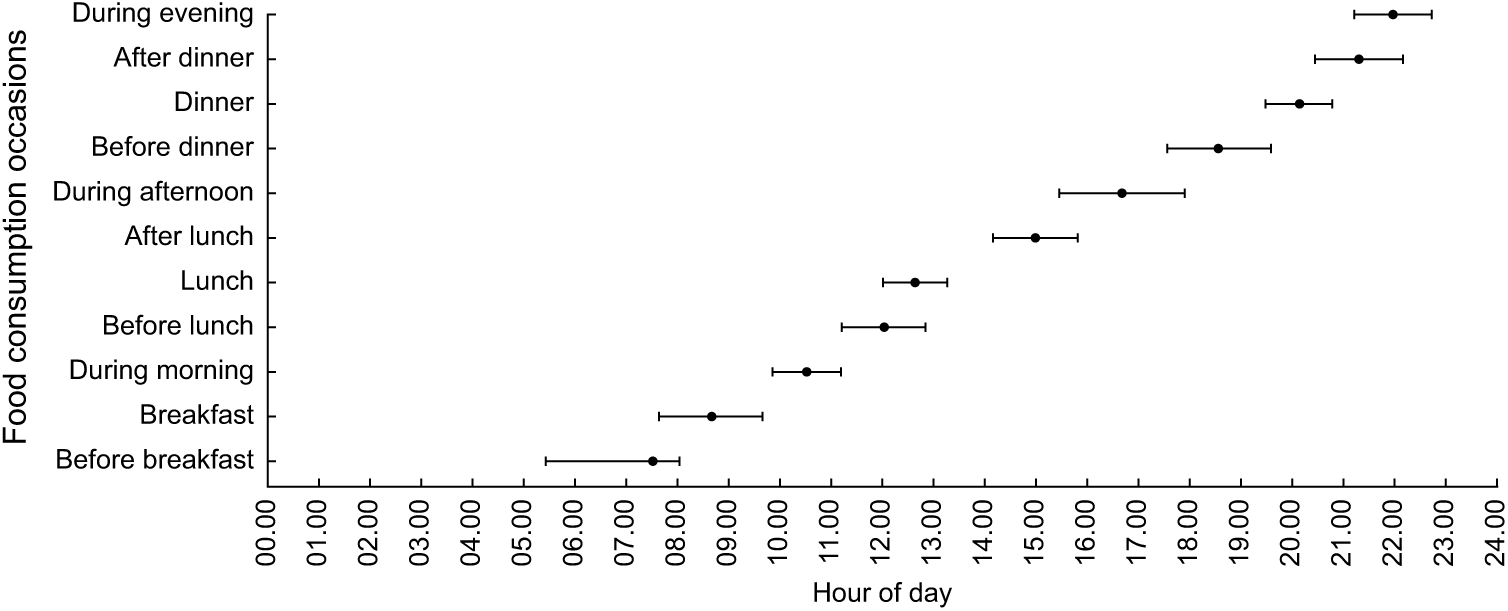

Energy intake increased significantly with increasing eating occasions and snacks in all children and in normal-weight children. The overweight and obese children had an average energy intake higher than the non-overweight children (Table 3).
Mean energy intake across categories of eating occasions and snack events among 3–9-year-old Portuguese children, for the total sample and according to BMI category*, weighted for the Portuguese population distribution

P values were calculated with the likelihood ratio test with Rao–Scott corrections and the F test.
* BMI categories defined according to the WHO criteria(33).
Table 4 presents the results for the association between eating frequency and weight status. Considering the total sample, and after adjustment for child’s sex, age and total energy intake, having ≤ 5 eating occasions/d was positively associated with being overweight or obese (OR = 1·93; 95 % CI 1·00, 3·73). Having < 3 snacks/d, compared with having ≥ 3 snacks/d, was also positively associated with overweight or obesity (OR = 2·17; 95 % CI 1·13, 4·16; Table 4). Due to the low number of misreporting reporters, we decided to perform the regression analysis excluding these children (n 33). Including only plausible reporters for energy intake, the association remained significant only for snack frequency and overweight/obesity (OR = 1·98; 95 % CI 1·00, 3·90, < 3 snacks/d v. ≥ 3 snacks/d).
Association between eating frequency (daily eating occasions and daily snacks) and overweight and obesity, in a national representative sample of children aged 3–9 years of age, weighted for the Portuguese population distribution, for the total sample (n 517) and excluding misreporters (n 484)

Model 1, unadjusted; model 2, adjusted for child’s sex and age (quadratic term); model 3, adjusted for child’s sex and age (quadratic term) and daily children’s energy intake (kcal).
Bold entries denote statistical significance.
Discussion
Portuguese children aged 3–9 years had on average six daily eating occasions: three main meals and three snacks. The distribution of the meal schedule throughout the day had a higher variation for ‘before breakfast’, ‘breakfast’, ‘during afternoon’ and ‘before dinner’. Overweight or obese children had on average fewer eating occasions than normal-weight children. Among these children, having five or fewer eating occasions, and particularly having fewer than three daily snacks, increased the odds of having excessive weight, after adjustment for potential confounders. Taking into consideration misreporting, the positive association with body weight was found only for having fewer than three daily snacks.
We opted for not analysing main meals separated from snacks, as the variability was low and the majority of children had the three main meals. So our analyses included all eating occasions and then separated by daily snacks.
Several pathways might explain the association between a lower eating frequency and higher body weight. Theoretically, eating frequency could modify metabolism, increasing satiety and improving glucose and insulin metabolism(Reference Leidy and Campbell40,Reference Farshchi, Taylor and Macdonald41) . Controlled feeding studies in adults(Reference Leidy and Campbell40) showed that reduced eating frequency had a negative impact on appetite control, increasing perceived appetite and reducing perceived satiety. In a randomized crossover trial among normal-weight women, meal regularity was associated with a greater thermic effect of food and lower glucose response, which might benefit weight management and metabolic health(Reference Alhussain, Macdonald and Taylor42). Moreover, increased eating frequency has been associated with higher levels of physical activity and improved composition of snacks and breakfast, in terms of fruit and vegetables, fat, fibre and carbohydrates, in healthy-weight children aged 9–10 years(Reference Jennings, Cassidy and van Sluijs25).
Obesity is a complex disorder and some remaining uncontrolled confounding may not be ruled out. However, we tested several potential confounder variables, namely children’s sex and age, maternal age and education, parental education, geographic region, child’s sports practice and sedentary lifestyle. Only children’s sex and age remained significant in the models and were included as confounder variables, as well as children’s energy intake (averaged from the two days). Interactions between children’s sex, sport and maternal education were also tested but no modifying effect was found.
Irregular consumption of energy intake at breakfast and between meals was previously associated with a higher cardiometabolic risk in adults, including an increased waist circumference and BMI, in a cross-sectional study(Reference Pot, Hardy and Stephen16); another cross-sectional study showed that in children larger variability in eating frequency was already associated with a disruption in total and LDL cholesterol concentrations(Reference Murakami and Livingstone43). Although we did not assess these effects (since we evaluated dietary intake of only two days) in the present study, we were successful in finding a significant association between eating frequency, namely snacks frequency, and BMI in children.
A previous meta-analysis(Reference Kaisari, Yannakoulia and Panagiotakos21), that included ten cross-sectional studies and one case–control study, among children and adolescents, described an overall inverse association between eating frequency and the likelihood of being overweight or obese. However, when stratified by sex, the effect remained significant only in boys. In the present study, we tested an interaction effect between sex and eating frequency in the association with obesity; because we did not find a statistically significant effect we decided to present the results for the entire sample, and not stratified by sex.
More recently, a cross-sectional study(Reference Murakami and Livingstone44) failed to find any association between eating frequency and BMI in UK children aged 4–10 years, while another cross-sectional study(Reference Jennings, Cassidy and van Sluijs25) found an inverse association in healthy-weight children aged 9–10 years, but not in centrally obese children. In a longitudinal study(Reference Taylor, Iosua and Heath45) in very young children, the daily eating frequency was not associated with the current or subsequent change in BMI. The authors highlighted that these null associations might be due to an improvement of internal energy self-regulation by young children, in comparison with older children(Reference Taylor, Iosua and Heath45).
Methodological differences between studies might explain the discrepancy of results regarding the association between eating frequency and weight. In the present study, the weight and height of the children were measured by trained examiners, following standard procedures. The BMI Z-scores were then calculated and categorized according to the WHO criteria. In the majority of previous research, children were categorized as overweight or obese according to other criteria, such as the International Obesity Task Force, hampering comparisons between different studies(Reference Kaisari, Yannakoulia and Panagiotakos21).
There is also variability in the dietary assessment method and in the definition of eating frequency, meal and snack frequency. Food diaries, 24 h dietary recalls and self-reported questionnaires (by children or by their caregivers) have been used to assess eating frequency. In the present study we defined eating occasions using the ‘participant-identified’ approach, as it was the child’s caregiver who decided the food consumption occasions in the food diaries, but it was the researchers who categorized the food consumption occasions, that provided at least 209 kJ (50 kcal), into main meals (breakfast, lunch and dinner) and snacks (the remaining food consumption occasions). We were also able to identify the time of day when children usually had each of the food consumption occasions.
Furthermore, different studies used different cut-offs to determine high or low eating frequency or using the exposure as a continuous variable. This last approach might not be the best one as we believe the association between eating frequency and obesity is not linear, and the extremes are the ones most harmful; correspondingly, we used the middle category as the reference in the eating occasion variable.
The strengths of the present study include a national representative sample of children and results weighted for the Portuguese population distribution regarding sex, age and region, following harmonized European methodology(28). We also used two non-consecutive one-day food diaries followed by a face-to-face interview to estimate children’s eating frequency, which is an advantage in comparison to simply asking parents to specify the usual eating frequency of their child. Trained interviewers, following standard procedures, performed objectives measures of children’s body size, which is also a strength compared with parents reporting the weight and height of the children.
There are also some limitations that deserve discussion. First, under-reporting of dietary intake among overweight or obese people is widely described in the literature(Reference Wehling and Lusher46,Reference Murakami and Livingstone47) and might have an impact on the association between eating frequency and obesity. When we included only plausible reporters for energy intake, the association between daily eating occasions and body weight ceased to be statistically significant. This effect might be due to a loss of power, as we excluded some children, and not due to a bias regarding the dietary report. Literature has reported a mismatch in mothers’ perception regarding their children’s weight. For example, in a cohort study among children aged 6–8 years, the majority of mothers misclassified the child’s weight and had the tendency to normalize the child’s weight status(Reference McDonald, Ginez and Vinturache48). Mothers were also poor at recognizing overweight and obesity in their children at 4 or 6 years(Reference Mitchell, Wake and Canterford49) or in pre-school children(Reference Campbell, Williams and Hampton50). As parents might fail to recognize their child as overweight or obese, it is not expected that they change their report based on the child’s weight status. A residual confounding because of the use of a broad categorization of physical activity level cannot be ruled out. However, in a sensitivity analysis, we included information for physical activity level evaluated by diaries for children aged 6 years or above, and for younger children, we have assumed the values defined according to Torun(Reference Torun38). This variable was tested as a confounder in the association between eating frequency and children’s overweight/obesity, but it did not change the estimate by 10 % nor was it significant.
A social desirability bias might have occurred, resulting in an over-reporting of healthy foods and/or under-reporting of unhealthy foods. However, this bias might have been minimized as our main exposure variable, eating frequency, was calculated independently of the quality or types of foods.
Another limitation is the cross-sectional nature of the study, which does not allow assessing the temporal relationship between eating frequency and obesity. Moreover, we could not exclude a potential reverse causality effect, since obese people could change their frequency of meals in an attempt to lose weight. However, this approach is more likely to occur in adults than in children(Reference Rietmeijer-Mentink, Paulis and van Middelkoop51).
Conclusion
Portuguese children aged 3–9 years had on average six daily eating occasions, divided into three main meals and three snacks. In these children, and after adjustment for potential confounders, lower daily snack frequency (<3/d) was positively associated with being overweight or obese. The present study supports that increasing the number of daily meals, maintaining the same energy intake, contributes to a healthy body weight in children.
Acknowledgements
This study had institutional support from the General Directorate of Health (DGS), the Regional Health Administration Departments, the Central Administration of the Health System (ACSS) and the European Food Safety Authority (CFT/EFSA/DCM/2012/01-C03). The researchers acknowledge all these institutions and persons involved in all phases of the IAN-AF 2015–2016, as well as the participants. Financial support: The IAN-AF 2015–2016 received funding from the EEA Grants Program, Public Health Initiatives (grant number PT06-000088SI3). The EEA Grant Program had no role in the design, analysis or writing of this article. Conflict of interest: None. Authorship: S.V. contributed to the design of the study, interpretation of the data and wrote the first draft of the paper. D.C. and M.S. contributed the statistical analysis and to the interpretation of data. A.O., C.L. and D.T. contributed to the design of the study, coordination of data collection and contributed to the discussion of results. All authors critically reviewed the manuscript and approved the final version as submitted. Ethics of human subject participation: Ethical approval was obtained from the National Commission for Data Protection, the Ethical Committee of the Institute of Public Health of the University of Porto and from the Ethical Commissions of each one of the Regional Administrations of Health. Written agreements from the parents or legal representatives were required for children. All documents with identification data were treated separately and stored in a different data set.
Appendix Members of the IAN-AF Consortium
Carla Lopes, Andreia Oliveira, Milton Severo (Faculty of Medicine, University of Porto); Duarte Torres, Sara Rodrigues (Faculty of Nutrition and Food Sciences, University of Porto); Elisabete Ramos, Sofia Vilela (EPIUnit, Institute of Public Health, University of Porto); Sofia Guiomar, Luísa Oliveira (National Health Institute Doutor Ricardo Jorge); Violeta Alarcão, Paulo Nicola (Institute of Preventive Medicine and Public Health, Faculty of Medicine, University of Lisbon); Jorge Mota (CIAFEL, Faculty of Sports, University of Porto); Pedro Teixeira (Faculty of Human Kinetics, CIPER, University of Lisbon); Simão Soares (SilicoLife, Lda, Portugal); Lene Frost Andersen (Faculty of Medicine, University of Oslo).



