


The International League Against Epilepsy has defined drug-resistant epilepsy (DRE) as the failure of adequate trials of two tolerated, appropriately chosen and used antiepileptic drug (AED) schedules (whether as monotherapy or in combination) to achieve sustained seizure freedom.Reference Kwan, Arzimanoglou and Berg 1 , Reference Tellez-Zenteno, Hernandez-Ronquillo, Buckley, Zahagun and Rizvi 2 Vagal nerve stimulation (VNS) therapy is used for patients who have DRE, following the failure of multiple AEDs. It is an adjunctive therapy to medication management, surgical resection, and other epileptic adjunctive therapies.Reference George, Salinsky and Kuzniecky 3 - Reference Ben Menachem 5 The use of VNS in patients with DRE has continued to be a controversial topic of research since its approval for use. VNS was first approved for use by the US Food and Drug Administration in 1997 and later approved for use by Health Canada.Reference Tellez-Zenteno and McLachlan 6
The American Academy of Neurology summarized the current literature in 2013 and stated that VNS can be used for the treatment of DRE with no standardized parameters and that it may have secondary benefit of mood improvement and potential seizure abortion at the onset of aura with the magnet use.Reference Morris, Gloss, Buchhalter, Mack, Nickels and Harden 7 However, the American Academy of Neurology review identified that the studies guiding recommendations for VNS therapy use in DRE did not control for medication use.Reference Morris, Gloss, Buchhalter, Mack, Nickels and Harden 7 , Reference Morris and Mueller 8 This information leaves room for possible confounding influences and therefore highlights the need for further research in the area.
In a recent prospective, randomized, parallel-group, open-label study, Ryvlin et alReference Ryvlin, Gilliam and Nguyen 9 assessed the contribution of AEDs along with the VNS treatment. In this trial, 96 patients were randomized to receive best medical practice (BMP) versus VNS therapy plus BMP. BMP was defined in the study as the “individualized therapy judged optimal by investigators at each visit for each patient, which could include a change in dosage or types of AEDs and other interventions.” Significant differences between groups in favor of VNS + BMP were observed regarding improvement in quality of life and seizure reduction (respective p values <0.05 and 0.03). More patients in the VNS+BMP group (43%) reported adverse events versus BMP group, probably reflecting transient adverse effects related to VNS implantation or stimulation. The main bias in the study was the lack of standardization of medication adjustments between physicians from the participant centers; also, they could not recruit the initial proposed sample. This study illustrates the need for additional research in the area of VNS therapy to determine whether it is the use of VNS therapy or the AEDs that are actually causing the seizure reduction.
The objectives of thisReference Ryvlin, Gilliam and Nguyen 9 study were to determine if the pattern of seizure reduction using VNS is similar to other Canadian centers and those reported in other international studies. In addition, we explored the changes in AED types and dosages along the treatment with VNS.
Methods
This is a retrospective study that included adult patients (18+ years of age) with DRE currently being treated with VNS therapy and who had at least 6 months of follow-up after implantation. All patients were followed at the Epilepsy Program of the Royal University Hospital in Saskatoon, Saskatchewan, Canada, by a single epileptologist; the VNSs were surgically placed by a single neurosurgeon, with the exception of two patients who had the device implanted at other Canadian provinces. The VNSs were surgically placed in the subcutaneous or pectoralis positions. The VNS therapy system was activated 2 weeks following surgery and was monitored with adjustments made to parameters by a VNS-trained registered nurse.
In our institution, VNS therapy is not used as a first-line therapy. Patients had to fulfill the following criteria to quality for VNS therapy: (1) not a candidate or failed resective epilepsy surgery; (2) DRE; (3) impairment of quality of life secondary to seizure frequency and/or intensity; (4) no other available treatment options; and (5) patients with idiopathic generalized epilepsy who fail to be controlled with appropriate AEDs and patients who are candidates for a callosotomy were generally offered VNS first. Each patient in this study met at least three of the five criteria before insertion.
From charts, we gathered sociodemographic and clinical information of patients (age, gender, seizure etiology, syndrome, seizure type, age of onset, seizure frequency pre- and post-VNS at each follow-up), AED use at each follow-up (medication type, medication changes, doses, dose changes, average number used), and VNS parameters (insertion date, stimulation parameters, and surgical complications). The data were collected from the last appointment pre-VNS insertion, and then at 6, 12, 24, and 36 months of follow-up. All patients who completed at least 6 months of follow-up were included in this study. Seizure frequency was obtained at each follow-up using seizure diaries elaborated by patients and caregivers. Patients were identified as responders to treatment if they showed a 50% or greater reduction in seizure frequency following the insertion of the VNS therapy system.Reference Qiabi, Bouthillier, Carmant and Nguyen 10 The average percent of seizure reduction and modifications to AED types or dosages were also extracted for each patient. Quality of life and severity of seizures were assessed only by asking patients and families without the use of a validated questionnaire (self-reported).
Analyses were performed with SPSS software, version 22 (IBM, Chicago, IL). Data are presented as means, standard deviations, and percentages. We compared categorical variables before and after treatment using a Chi-square test (2XN tables). We compared numerical variables using the Wilcoxon test. A significant p value was established at <0.05.
Results
Demographics
Thirty patients were included in this study. All of them were implanted between 2010 and 2015 and had at least 6 months of follow-up. Twenty-seven (90%) patients had a follow-up for 12 months, 22 (73%) for 24 months and 16 (53%) for 36 months. Eighteen (60%) patients were males. Mean age was 35.1±13.3 years, with a mean age of epilepsy onset of 5.4±5.9 years and with a mean epilepsy evolution time of 29.2±15.3 years. The etiologies of epilepsy, syndrome classification, seizure profile, and related comorbidity are displayed in Table 1.
General characteristics (n=30)

* Seven had Lennox-Gastaut syndrome.
VNS Parameters
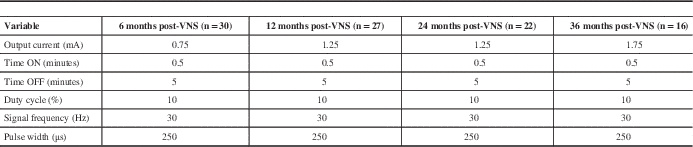
A standard VNS parameter schedule was used (approximately every 1 or 2 months), increasing parameter settings at standard intervals (output current was increased by 0.25 mA in every appointment). This standard was used for the majority of patients throughout the time of the study, and can be found in Table 2. There were a few exceptions to this standard, including four patients with the VNS time off increased to 3 minutes at the 24- and 36-month follow-ups, four patients at the 36-month follow-up with an increased duty cycle, two patients increased to 16% and two increased to 27%, and one patient with an increased VNS pulse width to 500 μs. One patient stimulator was no longer functioning at the 36-month follow-up.
VNS parameters
Response Rates
Response to treatment for was defined as a 50% reduction in seizure frequency per month. We identified the following response rates 43%, 48%, 41%, and 50% at the respective 6, 12, 24, and 36 months of follow-up. At each follow-up, there was also an improvement in seizure severity and quality of life. There was also a continual decline in the number of emergency department visits between follow-up appointments. The values for each of these measures are illustrated in Table 3.
Characteristics of VNS patients at follow-up

* All median seizure frequency per month values from the different follow-up periods were different than the frequency before implantation of the VNS (p < 0.005).
ER=emergency room; NA=not available.
Medication Modification
The mean number of medications remained fairly consistent between patients’ pre-VNS appointment and subsequent follow-ups. The greatest variability with a drug increase was seen at 36-month follow-up. At each follow-up, the range of the mean number of medications used was between two and five, with the exception of the 12-month follow-up when the range was between two and four. The interval means and ranges are listed in Table 4.
Medication modifications

* Decrease and increase of medication doses in the same patient.
‡ Decreased in the dose of medication were due to side effects in all cases.
NA=not available.
Changes of medications or doses were frequent in our patients during the follow-up period. Fifty-seven percent, 46%, 59%, and 75% of patients had changes at 6, 12, 24, and 36 months, respectively, either a medication type or dosage change (Table 4). In the majority of patients, the change of medication consisted in an increase in the dose of AEDs (Table 4). There was a change in medications in 57%, 46%, 45%, and 75% of patients at each follow-up time (Fig. 1). There was also a change in dosages in 57%, 46%, 45%, and 75% at 6, 12, 24, and 36 months, respectively (Fig. 2). Table 5 demonstrates the fluctuation in medications used by patients over the course of the 36 months of treatment.
The percentage of patients who had changes in AEDs at each follow-up

The percentage of patients who had changes in the dose of AEDs at each follow-up

Medications at follow-up

Complications
Complications of VNS in our center were minor. At the 6-month follow-up, three (10%) patients reported dysphonia, three (10%) hoarseness, two (7%) cough, and one (3%) dysphagia. At the 12-month follow-up, the number of complications was decreased to three (10%) patients with hoarseness, one (3%) with cough, and two (7%) with local pain beginning after the first follow-up. All of these complications regressed and were not present following the 12-month follow-up.
Discussion
The first study in Canada exploring the effects of VNS on adult patients was performed by Clark et al.Reference Clarke, Upton, Griffin, Fitzpatrick and DeNardis 11 In this study, authors included ten patients in a small randomized clinical trial. The study showed that there were more consecutive seizure-free days with VNS, suggesting that this should be the outcome to measure for future studies. The same group showed that VNS improved cognitive motor performance in small ON and OFF trials. McLachlan et alReference McLachlan 12 published findings from six Canadian centers in 2003. This study included 23 adults and four children with intractable epilepsy who were followed prospectively for 1 year. This study showed that seizures were reduced by more than 50% in only 19% of patients, by less than 50% in 46%, and unchanged in 35%. These results showed a lower response compared with previous industry funded trials showing >50% seizure reduction in 50% to 60% of patients. The authors concluded that the effect of VNS was modest and further studies were required. In 2008, McGlone et alReference McGlone, Valdivia, Penner, Williams, Sadler and Clarke 13 published the Halifax experience with VNS in 16 adult patients with refractory partial seizures followed prospectively over 1 year. A 50% or more reduction in seizures was seen in four (25%) patients. Similar to the McLachlan et alReference McLachlan, Sadler and Pillay 14 study, there was an improvement in the quality of life but this was not associated with seizure control and did not differ from similar changes seen in a control group treated with standard medical management. The study of Qiabi et alReference Qiabi, Bouthillier, Carmant and Nguyen 10 is a retrospective single-center Canadian experience with VNS. Thirty-four patients were included in this study. The main outcome was the seizure frequency assessed after 6, 12, 24, and 36 months. After 6 months of follow-up, 41% of patients had a >50% reduction in seizure frequency compared with baseline, 47% at 12 months, 57% at 24 months, and 60% at 36 months. Our study shows similar rates of response as the study of Qiabi et alReference Qiabi, Bouthillier, Carmant and Nguyen 10 with a seizure reduction rates of 43%, 48%, 41%, and 50% at 6-, 12-, 24-, and 36-month follow-up, and better rates than the study of McLachlan et al.Reference McLachlan, Sadler and Pillay 14
Our study is one of the few studies reported in the literature describing AEDs modifications in dose or number at the same time that the treatment with VNS. There was a modification either in dose or medication in 57%, 46%, 59%, and 75% of patients at 6-, 12-, 24-, and 36-month follow-up, respectively, suggesting a very important effect from AEDs in the seizure outcome. In almost all the cases, the modifications were related with an increase in the dose of AEDs (Table 4). The maximal improvement with VNS therapy in our patients coincides with the time when more changes of medications were done. In some way, our results coincide with the trial of Ryvlin et alReference Ryvlin, Gilliam and Nguyen 9 where significant differences between-groups in favor of VNS+BMP were observed regarding improvement in seizure frequency, suggesting an effect of the AEDs. The study of Oroz et alReference Orosz, McCormick and Zamponi 15 shows contradictory results compared with the trial of RyvlinReference Ryvlin, Gilliam and Nguyen 9 and our study, as the responder rate was higher in a subgroup of patients who had no change in AEDs during the study. In the study of McLachlan,Reference McLachlan and Young 16 AEDs were reduced in 43% of the patients, in the study of Qiabi,Reference Qiabi, Bouthillier, Carmant and Nguyen 10 only 9% of responders had lower antiepileptic medication at last follow-up compared with baseline and in other studies no changes on AEDs dose or number have been reported.Reference De Herdt, Boon and Ceulemans 17 , Reference Alexopoulos, Kotagal, Loddenkemper, Hammel and Bingaman 18 Finally there are some studies like the one from Labar et alReference Labar 19 in which no changes of AEDs were done during the study, showing the benefit of VNS, although the study did not have any control group. Although there is a significant variability in AED outcomes in a large proportion of studies, AED outcomes are not usually reported.Reference Frost, Gates and Helmers 20 - Reference Al-Said, Baeesa, Khalid, Abdeen and Kayyali 22 Our study brings a fundamental question that has not been addressed over time because changes in the AEDs may be one of the main factors of improvement in VNS trials.
Regarding complications, in our study we found that nine (30%) patients had minor complications at 6 months of follow-up; at 12 months, six (20%) patients; and at 24 months, all the complications were resolved. Overall, the rate of complications in our study was better compared to the experience of McLachlan et al,Reference McLachlan, Sadler and Pillay 14 in which minor adverse events occurred in 24 (88%) patients including hoarseness, cough, shortness of breath, minor pain, and heartburn, whereas eight subjects had severe adverse events (transient vocal cord paralysis lasting up to 6 weeks in three patients, stimulation associated swallowing difficulties, intractable vomiting, severe neck or throat pain). In the other Canadian study,Reference Qiabi, Bouthillier, Carmant and Nguyen 10 the complications related with the implantation were less severe, including eight (23%) cases with limited cervical hypoesthesia, two (9%) minor scar infections, and one (3%) Horner syndrome. Some patients experienced voice hoarseness, throat paresthesia, and coughing related to stimulation that improved over time. According to a recent Cochrane review of VNS efficacy and safety, minor complications can happen between 1% and 37% of patients and the majority are reversible over time.Reference Panebianco, Rigby, Weston and Marson 23
Qiabi et alReference Qiabi, Bouthillier, Carmant and Nguyen 10 point out that the use of VNS in Canada at 3.5 units per million inhabitants is considerably less than the 25 units per million population implanted in the United States (data from Cyberonics). One reason for this difference includes limitations in funding for VNS devices in every provincial jurisdiction. Further, there is little or no reimbursement for the extra time involved in regular follow-up and reprogramming visits after the device is implanted. There is also skepticism among Canadian neurologists regarding efficacy, cost-effectiveness, and the type of patients who should be considered for VNS. Finally, the inclusion criteria in Canadian centers are more stringent than the US and European centers where VNS can be used early in the course of some epileptic conditions. In the study by Qiabi et al,Reference Qiabi, Bouthillier, Carmant and Nguyen 10 the indications for VNS included patients with drug-refractory partial epilepsy not candidate for epilepsy surgery (e.g. multifocal epilepsy, epileptogenic zone overlying eloquent cortex), patients who have failed epilepsy surgery, patients with cryptogenic or symptomatic generalized epilepsies, patients with idiopathic generalized epilepsy who fail to be controlled with appropriate antiepileptic drugs (from lack of efficacy or significant side effects), and patients who are candidates for a callosotomy were generally offered a VNS first (when available). Our criteria are similar, and in both Canadian centers the criteria are very stringent limiting significantly the potential implantation of patients. Our study included a large proportion of patients with developmental delay and intractable epilepsy, which is a group in which VNS is an effective and well-tolerated therapy.Reference Andriola and Vitale 24
There are some limitations in our study, but also some strengths. Our study has a small sample size and the patients belong to a single center; they may not represent the population of patients with epilepsy around the world because of different criteria of implantation. We would like to highlight that the implantation criteria and results of our study are similar to a recent study reported in Quebec, making it possible to extrapolate these data to other Canadian centers. Another limitation is the lack of standardized questionnaires to measure seizure severity and quality of life. We relied on patient and caregiver reports; this may not be the best. Finally, we did not have a control group. A significant strength of this study is that the study was generated from a single center in the province, with a single neurologist deciding on medication management. We have mitigated the potential confounder of practice variation among physicians across centers like the study of Ryvlin.Reference Ryvlin, Gilliam and Nguyen 9 The mitigation of this confounder allows the possibility to correlate the AEDs treatment with VNS therapy. Another advantage is that our study was not financed by any drug company. Finally, this is one of the few studies reporting AED outcomes along the whole treatment with VNS, including changes in doses and medications.
The continual study of VNS and its use within the management of DRE is crucial to understanding the interaction of VNS and AEDs. In looking at the changes and variations of types of medications alone in our study, it is easy to see how these fluctuations may have affected patient care separately or in conjunction with VNS therapy. Our study shows that the maximal improvement with VNS therapy in our patients coincides with the time that there more changes of medications, including the introduction of new AEDs. Our study suggests the notion that changes in dose or AED types during VNS treatment may be causing an improvement in seizures and not necessarily the VNS therapy, bringing a controversy in a fundamental question.
In Canadian centers, VNS treatment could be a consideration in a subset of patients with DRE. More research is required to explore the interaction between AED treatment and VNS therapy. Future randomized control trials will be necessary, potentially controlling for medication management to better understand the efficacy of VNS, although we recognize that the design of a study with no medication modifications could be challenging. Also, with the continual introduction of new AED medications, continual research is needed to determine if there is a point in which long-term AED adjustments in DRE will surpass the efficacy of VNS therapy.
Acknowledgments and Funding
JFT-Z receives grants from the University of Saskatchewan, the Saskatchewan Health Research Foundation, and the Royal University Hospital Foundation in Saskatoon, Saskatchewan.
Disclosures
JFT-Z is a principal investigator for the University of Saskatchewan, Saskatchewan Health Research Foundation, and the Royal University Hospital Foundation. JA, KW, LH-R, and AV do not have anything to disclose.
Statement of Authorship
All authors participated writing the document and all reviewed the final version.



