


Children who are overweight are more likely to become overweight adults(Reference Whitaker, Wright and Pepe1). Obesity is the result of an imbalance between the energy consumed and the energy expended(Reference Jakicic2). Dietary behaviours that have been positively associated with increased body mass among children include energy intake(Reference Gillis, Kennedy and Gillis3), percentage energy from fat(Reference Gillis, Kennedy and Gillis3) and energy density(Reference Johnson, Mander and Jones4, Reference Johnson, Mander and Jones5), while fruit and vegetable intake has been negatively associated(Reference Tohill, Seymour and Serdula6). Ensuring that adolescents are physically active and consume a healthy diet is essential in preventing childhood obesity(Reference Kipping, Jago and Lawlor7).
Previous research among African-American girls aged 8–10 years showed that physical activity was negatively associated with percentage energy consumption from fat and positively associated with percentage energy from carbohydrate(Reference Jago, Baranowski and Yoo8). These associations implied that interventions which attempt to change both behaviours by changing some underlying common construct may hold greater utility. It is not clear what such a construct may be, but it could be a personality trait, a desire to be healthy, living in a healthy environment, higher socio-economic status or an increased awareness of the importance of healthy eating and engaging in regular physical activity. Interventions designed to change both behaviours would be more effective if they attempted to manipulate the underlying construct, but before searching for the construct it is important to confirm if there are strong associations between adolescents’ diet and physical activity behaviours. While associations between diet and physical activity have been reported among adults(Reference Jago, Nicklas and Yang9), there is a shortage of findings among adolescents. Although previous research has shown a substantial percentage of participants are liable to misreport their dietary intake(Reference Glynn, Emmett and Rogers10) it is not clear if including these in analyses will affect associations between diet and physical activity. The aim of the present paper was to examine, in a large cohort of UK children, associations between the obesogenic aspects of diet and physical activity behaviours before and after accounting for misreporting of dietary intake. Furthermore, to examine if the accuracy of dietary reports affected the detected associations, all analyses were run for all participants and separately for just the participants who provided ‘normal’ or ‘valid’ reports of dietary intake.
Methods
Participants were adolescents aged 10–11 years from the Avon Longitudinal Study of Parents and Children (ALSPAC). As described elsewhere(Reference Golding, Pembrey and Jones11), ALSPAC is a birth cohort study that recruited participants in the former British county of Avon in south-west England. A total of 14 541 pregnant women were recruited into the original study, which resulted in 13 988 children alive at 1 year. Data are presented here for children who provided diet data at age 10 years and physical activity data at 11 years. Ethical approval for the study was obtained from the ALSPAC Law and Ethics Committee and the local research ethics committees.
Participants provided three 1 d non-weighed diet diaries using methods that have been described in detail elsewhere and included an additional parent questionnaire and a brief interview which were used to clarify any issues that might have arisen(Reference Glynn, Emmett and Rogers10, Reference Emmett12). Diet data were processed using methods similar to those previously described when the participants were aged 7 years(Reference Glynn, Emmett and Rogers10) and, to maximize the sample size, all participants with at least one day of data were included in the analysis. As the focus of the present paper is on dietary behaviours that have been associated with obesity, the following dietary variables were utilized: average energy consumed per day (kJ/kcal), percentage energy from fat, percentage energy from carbohydrate and mean grams of fruit and vegetables per day (excluding all juice, potatoes and baked beans). In addition, energy density (excluding drinks) was computed by dividing total food energy by total food weight.
Participants wore an MTI ActiGraph™ model 7164 accelerometer (Manufacturing Technology Inc., Fort Walton Beach, FL, USA) for seven consecutive days(Reference Riddoch, Mattocks and Deere13). The MTI ActiGraph has been shown to provide accurate and reliable assessments of physical activity in both children and adolescents(Reference Puyau, Adolph and Vohra14, Reference Welk, Schaben and Morrow15). Previous analysis of the data from the accelerometry study has shown that the reliability coefficient for 3 d of accelerometer monitoring was 0·7 within this cohort. Further analysis also indicated that there was a very small tendency for accelerometer counts to be higher on the first day of measurement when compared with the remaining days due to the novelty of the measurement, but this effect was very small (17 counts/min) and was less than 0·1sd of usual monitoring days. Thus, including the first day of monitoring in analysis is unlikely to introduce bias into any analyses(Reference Mattocks, Ness and Leary16). In light of this previous work participants were included in the present analyses if they provided three or more days of data with at least 600 min of data per day(Reference Mattocks, Ness and Leary16). Mean counts per minute (CPM), an indication of the volume of physical activity, was calculated. To provide an indication of time spent engaged in moderate-to-vigorous physical activity (MVPA), the mean minutes per day in which there were more than 3600 accelerometer counts per minute was also calculated (Mean MVPA) and averaged(Reference Mattocks, Leary and Ness17). To assess if associations with dietary behaviours differed by week or weekend day, the mean minutes of MVPA per weekday (Weekday MVPA) and per weekend day (Weekend MVPA) were calculated with participants included in the analysis if they had at least one day of each assessment.
Maternal education was self-reported. Pubertal status was self-reported at age 10 and 11 years. Height was measured using a Harpenden stadiometer (Holtain, Crymych, UK), weight was measured using a Tanita TBF 305 body fat scale (Tanita, Tokyo, Japan) and BMI (kg/m2) at age 10 years was calculated. To facilitate international comparisons of the descriptive data, the International Obesity Taskforce (IOTF) criteria were used to classify participants as normal weight or overweight/obese(Reference Cole, Bellizzi and Flegal18). As height has been associated with accelerometer energy expenditure(Reference Puyau, Adolph and Vohra19) and pedometer step counts among adolescents(Reference Jago, Watson and Baranowski20), all of the regression models were adjusted for height. Fat mass was measured using a Lunar Prodigy DXA scanner (GE Medical Systems, Diegem, Belgium) at age 11 years. As total levels of fat mass increase with height it is important to account for stature when expressing an individual’s level of adiposity, and therefore fat mass index (FMI; fat mass in kilograms divided by the square of height in metres) was calculated for all participants(Reference Eto, Komiya and Nakao21–Reference VanItallie, Yang and Heymsfield23).
Analysis
Age-estimated BMR was calculated using the Schofield criteria(Reference Schofield24). Using the same methods that have previously been applied to the diet data when the participants were 7 years of age(Reference Glynn, Emmett and Rogers10), the Torun criteria(Reference Torun, Davies and Livingstone25) were then used to identify likely misreporting of dietary intake and two samples, the full and restricted samples, were created. The full sample included participants with any diet data and at least 3 d of valid accelerometer data, while the restricted sample included participants who had ‘plausible’ dietary reports and at least 3 d of accelerometer data. The χ 2 test was used to examine sex differences in pubertal status and IOTF categories of obesity (at age 10 and 11 years) for both samples. The χ 2 test was then used to examine if there were differences in pubertal status or IOTF groups between the samples (i.e. comparing normal dietary reporters v. all other participant groups). For the full sample one-way ANOVA tests were performed with sex as a factor investigating the following variables: BMI, FMI, CPM, Mean MVPA, Weekday MVPA, Weekend MVPA, energy, percentage energy from fat, percentage energy from carbohydrate, height, energy density and grams of fruit and vegetables per day. This process was then repeated using the restricted sample.
As the diet and physical activity assessments were made a year apart the month of each assessment was coded as spring (March, April, May), summer (June, July, August), autumn (September, October, November) or winter (December, January, February). The two assessments were then compared and a dummy variable created to take account of the 59·9 % of physical activity assessments conducted in a different season to the dietary assessments. Linear regression models were used to examine the extent to which dietary variables (energy, percentage energy from carbohydrate, percentage energy from fat, energy density, fruit and vegetable consumption) predicted each of the four physical activity outcome variables. Models were run in five steps for each outcome: Model 1, exposure variable only; Model 2, Model 1 plus maternal education, FMI, height and season change; Model 3, Model 2 plus pubertal status at age 11 years (when the outcome was assessed); Model 4, as Model 2 but with IOTF category at age 11 years (overweight/obese with normal as the reference group) instead of FMI; Model 5, Model 4 plus pubertal status. All fruit and vegetable models also controlled for total energy consumed. As preliminary analyses indicated there was strong evidence (P < 0·001) of sex differences in outcome and exposure variables, all models were run separately by sex. Analyses were performed separately for the full and restricted samples using the SPSS statistical software package version 14·0 (SPSS Inc., Chicago, IL, USA) and α was set at 0·05.
Results
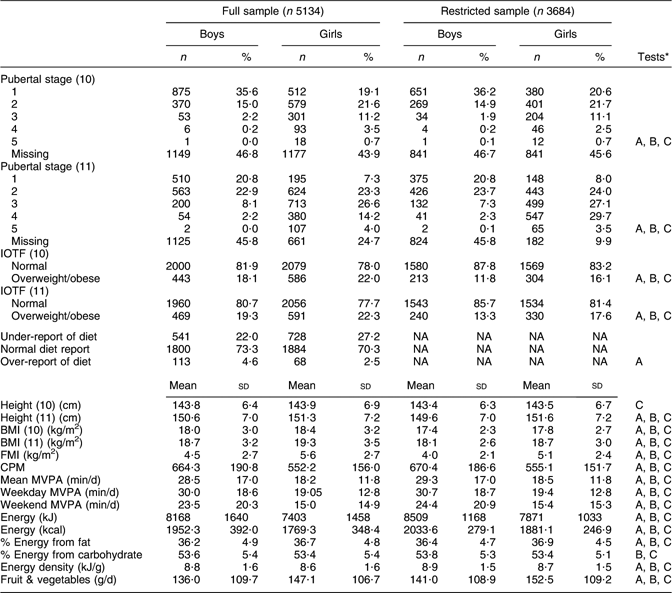
There were 5134 participants in the full sample and 3684 in the restricted sample. For the full sample 20·1 % of the participants were overweight or obese based on the IOTF criteria at 10 years of age. The χ 2 tests indicated sex differences in pubertal status both at age 10 and 11 years, with more girls being classified with higher Tanner stage scores than the boys using both the full and restricted samples. For the full sample, Tanner stage data were missing for 46·8 % of males and 43·9 % of females at age 10 years and 45·8 % of males and 24·7 % females at age 11 years, with similar proportions in the restricted sample (Table 1).
Participant characteristics by gender for full sample (diet data and at least 3 d of accelerometer data) and restricted sample (plausible diet data and at least 3 d of accelerometer data), Avon Longitudinal Study of Parents and Children (ALSPAC), south-west England
(10), assessment at age 10 years; (11), assessment at age 11 years; IOTF, International Obesity Taskforce; FMI, fat mass index; CPM, counts per minute; MVPA, moderate-to-vigorous physical activity; NA, not applicable.
*A = sex difference (P < 0·05) in full sample; B = sex difference (P < 0·05) in restricted sample; C = difference (P < 0·05) for participants in restricted and full sample.
In the full sample, girls’ FMI was higher than that of the boys (5·6 v. 4·5 kg/m2, P < 0·001) with a similar pattern in the restricted sample (5·1 v. 4·0 kg/m2, P < 0·001). Participants in the full sample were slightly taller than participants in the restricted sample at age 10 years (144·7 v. 143·5 cm) and at age 11 years (151·5 v. 150·4 cm). FMI was lower in the restricted sample than in the full sample (4·6 v. 6·2 kg/m2). For the full sample CPM was higher among the boys than the girls (664·3 v. 552·2) as were Mean MVPA (28·5 v. 18·2 min/d), Weekday MVPA (30·0 v. 19·05 min/d) and Weekend MVPA (23·5 v. 15·0 min/d), with similar results for the restricted sample (all P < 0·005). All physical activity variables were higher in the restricted sample (P < 0·005).
There was a sex difference in the energy consumption of participants in the full sample, with higher consumption among the boys (8168 v. 7403 kJ/d (1952·3 v. 1769·3 kcal/d)). Girls in the full sample consumed a greater percentage of their energy from fat than the boys (36·7 % v. 36·2 %), with comparable findings in the restricted sample. Boys in the restricted sample consumed a greater percentage of their energy from carbohydrate than girls (53·8 % v. 53·4 %). Girls in the full sample consumed a greater weight of fruit and vegetables per day than boys (147·1 v. 136·0 g/d) with a similar result in the restricted sample (152·5 v. 141·0 g/d).
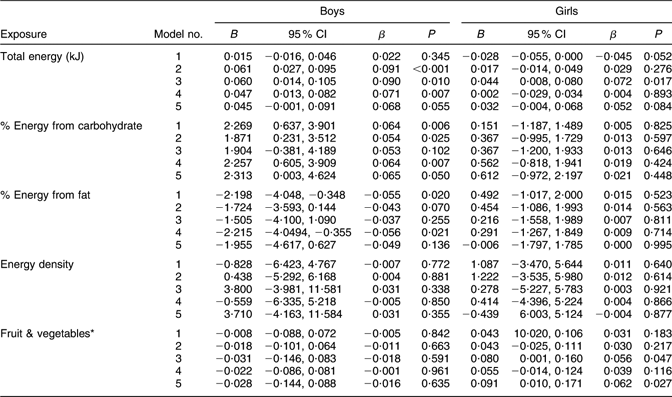
Regression models in which each of the dietary variables predicted CPM are shown by sex in the restricted sample in Table 2. Total energy was associated with CPM among boys in models that adjusted for confounders; however, the associations were weak (standardized beta (β) = 0·071 to 0·091). Percentage energy from carbohydrate was positively associated with CPM in boys in the unadjusted model (unstandardized beta (B) = 2·269; 95 % CI 0·637, 3·901; P = 0·006) and this pattern was still evident after adjustment for confounders but not when the model was also adjusted for pubertal status (Models 3 and 5). Percentage energy from fat was negatively associated with CPM among boys in the unadjusted model (Model 1: B = –2·198; 95 % CI −4·048, −0·348; P = 0·020) but only remained associated in the model that adjusted for IOTF thresholds instead of FMI (Model 4). For girls fruit and vegetable consumption was associated with CPM after adjusting for all confounders and pubertal status (B = 0·080; 95 % CI 0·001, 0·160; P = 0·047) with a similar pattern evident when the IOTF cut-off point was used instead of FMI (Table 2).
Association between mean CPM per day and dietary variables in 11-year-old children (restricted to plausible reporters of dietary intake only), Avon Longitudinal Study of Parents and Children (ALSPAC), south-west England
CPM, counts per minute; B, unstandardized beta; β, standardized beta.
Model 1 = unadjusted; Model 2 = Model 1 plus maternal education, fat mass index, height and season change; Model 3 = Model 2 plus pubertal status; Model 4 = Model 1 plus maternal education, International Obesity Taskforce group (reference normal), height and season change; Model 5 = Model 4 plus pubertal status.
*All fruit and vegetable models are also adjusted for total energy consumption.
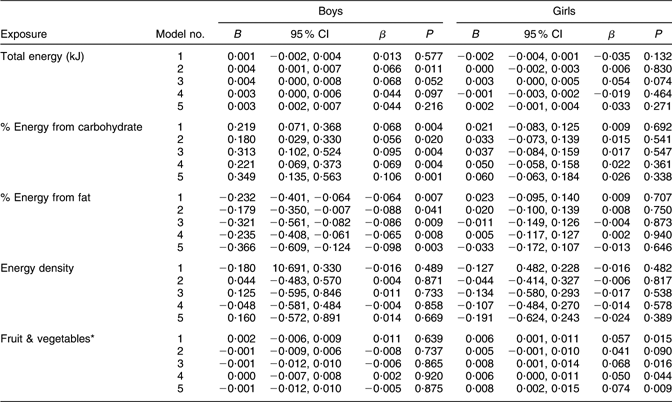
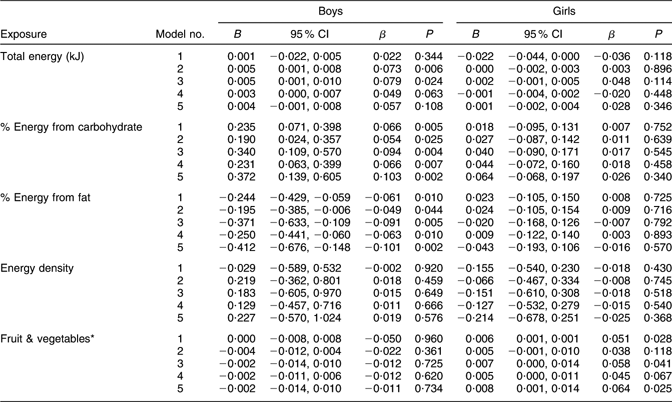
Among boys percentage energy from carbohydrate was positively associated with Mean MVPA in all of the models (β = 0·056 to 0·106) while percentage energy from fat was negatively associated in all of the models (β = −0·064 to −0·098). Among girls fruit and vegetable consumption was positively associated with Mean MVPA in all of the models (β = 0·041 to 0·074; Table 3). A similar pattern was evident for both genders when Weekday MVPA was the outcome (Table 4). When Weekend MVPA was the outcome (Table 5) fruit and vegetable intake was associated with physical activity among the girls but only in the models that controlled for all confounders and pubertal status (Models 3 and 5).
Association between Mean MVPA (min/d) and dietary variables in 11-year-old children (restricted to plausible reporters of dietary intake only), Avon Longitudinal Study of Parents and Children (ALSPAC), south-west England
MVPA, moderate-to-vigorous physical activity; B, unstandardized beta; β, standardized beta.
Model 1 = unadjusted; Model 2 = Model 1 plus maternal education, fat mass index, height and season change; Model 3 = Model 2 plus pubertal status; Model 4 = Model 1 plus maternal education, International Obesity Taskforce group (reference normal), height and season change; Model 5 = Model 4 plus pubertal status.
*All fruit and vegetable models are also adjusted for total energy consumption.
Association between Weekday MVPA (min/d) and dietary variables in 11-year-old children (restricted, plausible reporters of dietary intake only), Avon Longitudinal Study of Parents and Children (ALSPAC), south-west England
MVPA, moderate-to-vigorous physical activity; B, unstandardized beta; β, standardized beta.
Model 1 = unadjusted; Model 2 = Model 1plus maternal education, fat mass index, height and season change; Model 3 = Model 2 plus pubertal status; Model 4 = Model 1 plus maternal education, International Obesity Taskforce group (reference normal), height and season change; Model 5 = Model 4 plus pubertal status.
*All fruit and vegetable models are also adjusted for total energy consumption.
Association between Weekend MVPA (min/d) and dietary variables in 11-year-old children (restricted, plausible reporters of dietary intake only), Avon Longitudinal Study of Parents and Children (ALSPAC), south-west England
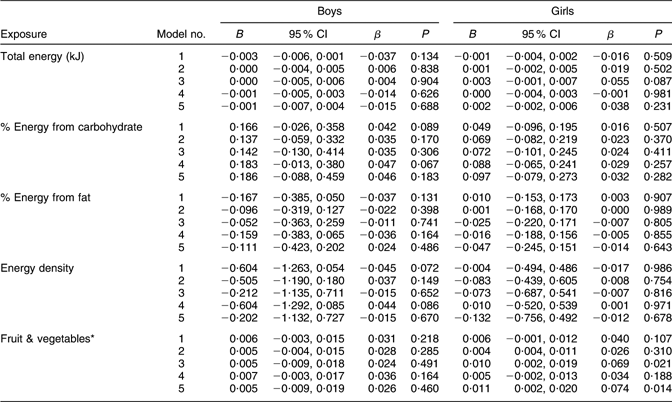
MVPA, moderate-to-vigorous physical activity; B, unstandardized beta; β, standardized beta.
Model 1 = unadjusted; Model 2 = Model 1plus maternal education, fat mass index, height and season change; Model 3 = Model 2 plus pubertal status; Model 4 = Model 1 plus maternal education, International Obesity Taskforce group (reference normal), height and season change; Model 5 = Model 4 plus pubertal status.
*All fruit and vegetable models are also adjusted for total energy consumption.
In the full sample, total energy consumption was associated with CPM among girls in the two models (3 and 5) that adjusted for pubertal status (β = 0·065 and 0·069), with fruit and vegetable consumption also associated with physical activity but only after adjusting for pubertal status (β = 0·047 and 0·046). For boys total energy was associated with CPM in all of the models but was only associated with percentage energy from carbohydrate in the unadjusted model (Model 1: B = 1·394; 95 % CI 0·046, 2·739; β = 0·040, P = 0·042) and Model 4 which used IOTF cut points (β = 0·046, P = 0·001) but did not adjust for pubertal status. When Mean MVPA was the outcome patterns in the full sample were similar to the restricted sample with total energy and percentage energy from carbohydrate positively associated in all of the models, but percentage energy from fat was not associated in any of the models. For girls, fruit and vegetable consumption was associated with Mean MVPA in the unadjusted model (Model 1: β = 0·041, P = 0·029) and Model 3 which included all possible confounders and pubertal status (β = 0·053, P = 0·024). Similar findings were evident when Weekday MVPA was the outcome. When Weekend MVPA was the outcome fruit and vegetable intake was associated with physical activity for the full sample of girls in the unadjusted model (Model 1: β = 0·042, P = 0·028) and the two models that adjusted for pubertal status (Model 3: β = 0·049, P = 0·036; Model 5: β = 0·050, P = 0·033; data not tabulated).
Discussion
In the current study we found that total energy, percentage energy from fat and percentage energy from carbohydrate were associated with physical activity among boys, while fruit and vegetable consumption was associated with physical activity among girls. However, all of the associations were weak (β < 0·11). Moreover, although patterns were broadly similar when CPM, Mean MVPA and Weekday MVPA were the outcomes, there were no associations between diet and physical activity behaviours for boys when Weekend MVPA was the outcome. Analyses therefore show that there were weak, sex- and day (week/weekend)-specific associations between an obesogenic diet and physical activity behaviours of a large sample of UK adolescents.
The associations between diet and physical activity reported herein are weaker than those reported for a small sample of 8- to 10-year-old African-American girls(Reference Jago, Baranowski and Yoo8), young adults in the Bogalusa sample(Reference Jago, Nicklas and Yang9) and US adults(Reference Matthews, Hebert and Ockene26–Reference Simoes, Byers and Coates28). However, the participants’ diets contained about 53 % carbohydrate and 36 % fat, which is broadly comparable to UK and US findings that have used FFQ(Reference Rugg-Gunn, Fletcher and Matthews29, Reference Phillips, Bandini and Naumova30) and multiple 24 h dietary recalls(Reference Jago, Baranowski and Yoo8, Reference Lytle, Ebzery and Nicklas31). Similarly, the mean minutes of MVPA obtained in this sample are broadly comparable to UK and US studies that have included children of a comparable age(Reference Jago, Anderson and Baranowski32, Reference Basterfield, Adamson and Parkinson33). Collectively these findings may therefore suggest that the presence or absence of associations between diet and physical activity behaviours is unlikely to be a function of measurement and is more likely to be sample-dependent, differing by participant age, gender or perhaps country of study.
The weak associations between diet and physical activity behaviours suggest that while targeting change in both behaviours may be beneficial for obesity prevention, the benefit is likely to be a function of an accumulation of small changes rather than the product of a shared underlying construct. We found that associations between behaviours were consistent before and after adjustment for maternal education, a surrogate measure of socio-economic status, suggesting that socio-economic position is not a key underlying construct in understanding associations. Moreover, although associations differed by gender, the overall associations remained weak, suggesting that if diet and physical activity behaviours are influenced by an underlying construct then the effect is only very small. Thus, intervention effectiveness could be improved by finding ways to obtain small but achievable increases in physical activity, as well as small but achievable changes in dietary consumption, so that overall there is a change in energy balance and reduction in obesity. Obesity prevention interventions that include both diet and physical activity elements should therefore focus on the most effective method of changing each behaviour separately.
Over 20 % of the participants under-reported their dietary intake, with girls providing more inaccurate reports than boys. These findings are slightly higher than the 21 % of boys and 11 % of girls in the same sample who provided under-reports at age 7 years(Reference Glynn, Emmett and Rogers10), suggesting that under-reporting may become a greater issue as girls grow up. Interestingly, mean minutes of MVPA per day and mean counts per minute were higher in the restricted sample than in the full sample, indicating that ‘plausible’ dietary reporters were more active than the misreporters. Identifying participants who provide implausible dietary records may be useful in delineating the factors that contribute to obesogenic dietary behaviours. Associations between diet and physical activity behaviours were comparable whether misreporters of diet were included or not in the analyses. Results therefore suggest that the associations between diet and physical activity behaviours are not related to dietary reporting status.
Strengths and limitations
The study used relatively robust measures to assess whether associations between diet and physical activity behaviours are evident before and after controlling for potential confounders. However, the study is limited by the gap between the two assessments, pubertal change between assessments and the fact that 59 % of the diet and physical activity assessments were conducted in different seasons, which could have adversely affected the sensitivity of our assessments as physical activity has been shown to differ by time of year(Reference Mattocks, Leary and Ness34). It is also important to recognize that physical activity patterns are not the same every day, with previous analysis of a subset of these participants indicating that the intra-individual intra-class correlation for accelerometer counts was 0·53(Reference Mattocks, Leary and Ness34). To address potential limitations participants were only included in the analyses if they provided three or more days of accelerometer data and thus it is reasonable to assume that the accelerometer data provide a reasonable indication of habitual physical activity. It is also important to recognize that both the diet and the physical activity measures were designed to capture patterns of behaviour that are representative of usual life and we controlled for pubertal development and seasonal change in our analyses. It therefore seems reasonable to assume that if there were associations between diet and physical activity behaviours we should have been able to detect them despite the measures being collected 12 months apart. It is also important to recognize that a number of possible associations were examined in both boys and girls and therefore results need to be interpreted with caution, as it is possible that associations are a function of chance.
Conclusions
We found weak associations between the percentage energy from fat in the diet and physical activity behaviours of UK boys and between the fruit and vegetable intake and physical activity of UK girls. Moreover, we found that these associations were largely unchanged after excluding participants likely to have misreported dietary intake. Strategies that attempt to prevent obesity by small changes in both behaviours should focus on the most effective means of changing diet and the most effective means of changing physical activity separately.
Acknowledgements
The UK Medical Research Council, the Wellcome Trust and the University of Bristol provide core support for ALSPAC. The present research was funded specifically by a grant from the National Heart, Lung, and Blood Institute (R01 HL071248-01A), a grant from the Wellcome Trust (GR068049MA), and the World Cancer Research Foundation. We have no conflicts of interest. R.J. conceived the paper, performed the analysis and wrote the first draft of the paper. A.R.N. conceived the paper, advised on the analysis and provided critical content input. P.E. conceived the paper, led the dietary assessment and provided critical content input. C.M. supervised the accelerometer data collection and provided critical content input. L.J. supervised the dietary data collection and provided critical content input. C.J.R. conceived the paper, led the physical activity assessment and provided critical content input. We are extremely grateful to all the families who took part in this study, the midwives for their help in recruiting them, and the whole ALSPAC team, which includes interviewers, computer and laboratory technicians, clerical workers, research scientists, volunteers, managers, receptionists and nurses.



