


Nordic nations have cultivated the single most valuable resource a society can have in the twenty-first century: human capital … At some point, the Americans forgot that it’s not enough to talk about equal opportunity, democracy, and freedom–these things need to be protected and supported by concrete actions.
A society grows great when old men plant trees in whose shade they shall never sit.
Thomas Kuhn showed how paradigms – collections of beliefs, assumptions, and “truths” – shape how communities understand their world. Just as scientists clung to an Earth-centered universe until evidence forced a paradigm shift, a society operates within an economic paradigm that persists until its flaws become undeniable.
The underlying paradigm of American capitalism, with its emphasis on radical individualism and dogmatic belief in self-regulating markets, faces mounting challenges it cannot explain away: rising inequality, declining social mobility, accelerating climate change, and biodiversity loss that undermine the conditions for human survival and limit the possibilities for human flourishing. Meanwhile, Nordic societies reflect a different paradigm – one that strikes a practical balance between individual initiative and collective well-being, while embracing the essential role of the state in shaping markets to serve the public interest.
While Kuhn described paradigm shifts without advocacy, I adopt an explicitly normative position: this chapter advocates for a deliberate shift in how Americans conceptualize their economic and social systems. What Kuhn called a paradigm is often described as a societal mindset – as Donella Meadows explains in Thinking in Systems, they represent the same concept of collective beliefs and assumptions that shape how we organize ourselves. Specifically, I argue for transitioning from a hyper-individualistic “Me-Me-Me” paradigm to what I call the “Me-We-Me” paradigm, as Nordic capitalism exemplifies.
The Me-We-Me societal mindset maintains strong individual responsibility while fostering a practical commitment to broader societal well-being, recognizing both the moral imperative of taking responsibility for societal well-being (caring for a stranger’s child) and the practical benefits that flow back to individuals (that child may become the healthcare worker who tends to us in our elder years). Drawing on insights from evolutionary biology, particularly Multilevel Selection (MLS) theory, we’ll examine why Nordic societies consistently lead global measures of societal well-being and how the underlying Me-We-Me paradigm represents a promising direction forward for reshaping American capitalism – one that honors American values of individualism and freedom while pragmatically addressing challenges that individuals cannot efficiently solve alone.
Flight of the Nordic Bumblebee
The Nordic model is often likened to a bumblebee – which, according to conventional wisdom, shouldn’t be able to fly given its body mass relative to wing size. Similarly, critics insist the Nordic model’s comprehensive social programs should be too heavy a tax burden for any economy to sustain.Footnote 1 Rather than examine the evidence of how the Nordic model succeeds, critics swat it away with ideological charges of socialism – a reflexive denial that exemplifies how thoroughly ideology can trump empirical evidence in American discourse.
However, those who examine the evidence find that efficiency is the “secret” to both the Nordic model and the bumblebee’s flight. The bumblebee does not simply flap its wings up and down. Instead, it traces an elongated motion that creates low-pressure zones above its wings, efficiently generating lift through Bernoulli’s Principle – the same principle that enables modern jets to fly.
Similarly, the Nordic model doesn’t simply tax and inefficiently spend; it carefully orchestrates how resources are collected and deployed. Through functioning democratic institutions, transparency, and systematic data collection, Nordic citizens receive demonstrable value in return for their tax contributions. Tax revenues are invested in essential services like healthcare and education, with effectiveness monitored through continuous assessment and refinement to do more of what works and less of what does not. The Nordic health registries exemplify this systematic approach to efficiency. Tracking population health data since the 1950s, these registries have been described as an “epidemiologist’s dream,” enabling Nordic societies to deliver healthcare with remarkable effectiveness.Footnote 2
Through these efficient societal systems, Nordic societies achieve what critics deemed impossible: collecting taxes to fund efficient universal services that expand individual freedoms.
Nordic capitalism represents the most comprehensive natural experiment disproving neoliberal assumptions. Its sustained success empirically refutes claims about the inherent inefficiency of tax-funded universal programs. Yet because this success contradicts neoliberal theory, many American economists dismiss it with charges of “socialism.”
Evolution and Society: MLS Theory
The concept of society as an organism, while dating back to Aristotle’s Politics and Hobbes’s Leviathan, was largely overshadowed in the twentieth century by reductionist perspectives emphasizing individual components over collective systems. Margaret Thatcher’s assertion, “There is no such thing as society. There are individual men and women and there are families,” exemplifies the view that dominated neoliberal thought with its emphasis on individualism.Footnote 3
MLS theory demonstrates how natural selection operates at multiple levels – both within groups and between groups. A society is a group, and MLS theory shows that societies balancing internal competition with cooperation tend to outperform those that do not. This dual-level selection process explains why cooperative behaviors evolve even when they might initially appear costly to individuals, challenging earlier models that focused solely on individual selection.
David Sloan Wilson and Dag O. Hessen’s application of MLS theory to Nordic societies reveals how institutional structures and cultural norms can promote effective cooperation while maintaining healthy competition. Through universal healthcare, robust social safety nets, and inclusive educational policies, Nordic societies have created environments where cooperative behaviors are incentivized and destructive competition is minimized. These systems reduce the stress and uncertainty that often drive selfish behaviors, fostering collective responsibility while still allowing for individual achievement. The resulting social resilience and consistently high measures of societal well-being provide compelling evidence for MLS theory’s practical application in modern governance.
Empirical Evidence for Group-Level Success
The success of Nordic societies’ evolutionary balance is evident in global performance metrics. As outlined in Chapter 1, they consistently lead virtually every measure of societal well-being – from the SDG Index (where Denmark, Finland, and Sweden rotate the #1 position) to the Democracy Index (claiming five of the top six spots) and the World Happiness Report (with Finland holding the top spot for eight consecutive years). Perhaps most tellingly, Nordic nations claim all five top spots in the Global Social Mobility Index – effectively measuring the American Dream’s promise of opportunity for all – while the US ranks 27th.
This empirical evidence validates MLS theory’s prediction about societal success through balanced competition and cooperation. While biological evolution operates through genetic transmission, socioeconomic systems evolve through institutional and cultural adaptation. In Nordic societies, this evolution manifests through three key mechanisms: institutional selection (effective policies persist and spread), cultural selection (cooperative norms yield better outcomes), and economic selection (efficient resource allocation between individual and collective needs leads to superior performance).
Despite higher taxes and strong labor protections, Nordic companies remain globally competitive precisely because their societies have evolved efficient mechanisms for balancing individual achievement with collective prosperity. Their emphasis on education and continuous skills development ensures individuals can contribute effectively to both personal and societal success, demonstrating how cooperative strategies create more sustainable societies.
American capitalism’s “Me-Me-Me” paradigm dismisses Nordic societies’ success with charges of socialism, assuming their universal services and high taxes must inevitably create inefficiency and reduce freedom. Critics argue these nations “should have long ago collapsed under the weight of public spending.” Yet reality proves otherwise.Footnote 4
Nordic citizens understand that the costs of their model in higher income taxes represent investments in the well-being of every individual – investments in essential areas like healthcare, education, and social safety nets. The return on these investments has proven exceptionally high, benefiting the collective “We” and the individual “Me.”
History offers stark warnings about societies that fail to achieve a shared sense of “We.” Abraham Lincoln’s warning that “a house divided against itself cannot stand” resonates today. Without cultivating a shared identity and sense of “We” through systems and norms of decency that encourage mutual benefit among societal members, American society risks dangerous fragmentation. The stakes could not be higher – without such a shift, American capitalism risks collapse, potentially paving the way for a totalitarian system that appeals to humankind’s worst tendencies – selfishness and fear – to pit citizens against one another, undermining freedoms.
Paradigms
In his seminal work The Structure of Scientific Revolutions, Kuhn describes paradigms as the underlying assumptions that dictate how research is conducted and interpreted within a scientific community. Paradigms shape what is considered valid knowledge, the methods used to obtain it, and the questions deemed important. When a paradigm is challenged by accumulating anomalies that it cannot explain, a scientific revolution may occur, leading to a paradigm shift. In the Kuhnian sense, a paradigm represents the collective framework of a community’s beliefs, values, and techniques, guiding their understanding of the world and the conduct of their work.
American capitalism operates within a paradigm constructed by neoliberal ideology, a dominant framework that has significantly shaped its economic policies and societal values since the 1980s. This paradigm emphasizes minimal state intervention, deregulation, privatization, and a belief in the efficiency of free markets. Within this framework, profit maximization and individual self-interest are viewed as the primary drivers of economic prosperity and societal well-being. Within such an environment, tendencies toward selfishness can be displayed as a symbol of freedom. Narratives championing Social Darwinism, emphasizing “survival of the fittest,” and celebrations of individualism (“pull yourself up by the bootstraps”) perpetuate a detachment from communal welfare. This heightened individualistic perspective views collective actions skeptically, often interpreting them as restrictions on individual freedom.
However, this focus on extreme individualism and intense competition has led to rising inequalities and sustainability crises, challenging the very foundations of this paradigm. The neoliberal ideology has prioritized short-term gains and individual success over long-term sustainability and collective well-being, creating systemic vulnerabilities and socio-economic disparities.
The Nordic model is born of a Me-We-Me mindset. In this context, individuals – each representing the “Me” – recognize they are integral components of a larger “We” and that each individual “Me” can benefit by cooperating with the “We.” With such a mindset, each Me recognizes that their individual well-being is directly connected to the well-being of the We. The Danish word samfundssind, or societal mind, reflects the Me-We-Me mindset. Samfundssind became a word of frequent use in Denmark during Covid-19. A global pandemic makes clear how individuals depend upon and affect one another – including the fact that individuals can infect one another. Samfundssind emphasizes the connectivity between individuals and reflects an expectation for individuals to take personal responsibility for themselves (each “Me”) and the group at the societal level (the “We”).Footnote 5
Darwin acknowledged the significance of cooperation within groups for enhancing their competitive advantage over other groups. In 1871, Darwin wrote: “There can be no doubt that a tribe including many members who … were always ready to give aid to each other and to sacrifice themselves for the common good, would be victorious over other tribes; and this would be natural selection.”Footnote 6 This aligns with the contemporary evolutionary theory of MLS, which emphasizes the multitiered nature of evolutionary competition. MLS theory describes how a group that can effectively foster cooperation amongst its individuals where such cooperation is beneficial for the group overall, while still allowing for competition between individuals where such competition is healthy, will outcompete groups unable to cooperate effectively.Footnote 7 Wilson emphasizes the importance of understanding and embracing MLS theory within Half-Earth because of the great need for scaled cooperation and coordination at a large scale – the societal and global levels.Footnote 8
Societies adept at discerning when and where to encourage cooperation and when and where to encourage competition achieve a competitive advantage globally. Here, the Nordic Model stands out, melding societal-level cooperation with individual-level competition.Footnote 9 Foundational structures like universal healthcare and education are examples of cooperation executed at the group level, while individual-level aspirations and freedoms remain intact. Such societies and the individuals within them don’t merely subsist – they flourish, which is the evolutionary explanation for why Nordic societies effectively “outcompete” other societies as measured by their top ratings on so many societal-level measurements.
Paradigms and Purpose
In Thinking in Systems, Donella Meadows explains that systems consist of elements, interconnections, and purpose. While elements (like organs in a body or individuals in society) are easily identified, the interconnections between them are complex and often hidden. Systems nest within larger systems – individuals within societies, healthcare systems within political systems – creating intricate webs of interaction.Footnote 10
The elements of a system are often easy to identify. The elements are the pieces of a system most readily seen. The human body is a system, and the body’s organs are some of its elements. We can readily see the heart, lungs, brain, and so on. However, understanding the interconnections between the elements of a system is often difficult. The interconnections can be complex and sometimes hidden. We may not easily see how the body’s organs interact. Teams of medical doctors must, at times, come together to discuss a patient’s diagnosis to understand the body as a system with interconnected elements.
Systems can be elements of even larger systems. Society is a system in which every person is an element. A person is, therefore, a system (i.e., the human body is a system), and that person is simultaneously an element of the larger system of people that is society. Furthermore, societies and the people within them build systems that further interact. National healthcare systems interact with the people within societies, and those systems interact with other systems, such as political and ecological systems. The interconnections of systems multiply at a dizzying rate when one considers society as the unit of analysis. Systems thinking helps us more fully consider how a given system works, and how it interacts with other systems and other systems’ many elements.
What about Purpose?
The purpose is the most important thing to consider about a system. Yet, purpose is often the least interrogated. We frequently get stuck in the weeds observing the elements and trying to understand interactions in a system. But asking why that system exists in the first place – the purpose – requires taking a step back to understand the whole and what overarching goals we are attempting to achieve. Considering a system’s purpose takes us to a philosophical place and a domain where there may not be a definitive “right answer” because considerations of purpose are comingled with considerations of values and ethics. Different well-intentioned people may have differing views about a system’s purpose.
What is the purpose of a healthcare system in a nation? Is it to ensure that everyone has access to good quality healthcare, or is it something else, like incentivizing individuals to get a job by tying healthcare benefits to employment? What is the purpose of a transportation system in a city? Is it to ensure that everybody can most efficiently and safely get from point A to point B? Or is it to ensure that every individual with a car has ample parking spots throughout a city? What is the purpose of an educational system? A penitentiary system? A tax system? A corporate governance system? A political system?
Systems, and the purposes for which systems are established, are born of mindsets.
So, What Is a Mindset?
Meadows discusses mindsets and paradigms interchangeably, tethering to Kuhn’s descriptions of paradigms from his 1962 publication of The Structure of Scientific Revolutions. Meadows explains that a mindset – or what Kuhn calls a paradigm – represents the collection of unstated assumptions and beliefs shared by a society:
The shared idea in the minds of society, the great big unstated assumptions, constitute that society’s paradigm, or deepest set of beliefs about how the world works… Growth is good. Nature is a stock of resources to be converted to human purposes. One can ‘own’ land. Those are a few of the paradigmatic assumptions of our current [American] culture, all of which have utterly dumbfounded other cultures, who thought them not the least bit obvious.Footnote 11
The words, “deepest set of beliefs about how the world works,” bear repeating. A mindset presents a society’s collection of assumptions and beliefs to explain how the world works – and how the world should work.
A mindset can change, though the process differs dramatically between individuals and societies. As Meadows explains, for an individual, paradigm shifts can happen in a millisecond – requiring nothing more than “a click in the mind, a falling of scales from eyes, a new way of seeing.” This aligns with Gil Scott-Heron’s insight that true revolution occurs in the mind when “all of a sudden, you realize I’m on the wrong page” – a revolution that cannot be televised precisely because it represents this internal paradigm shift in one’s mind. My own experience, described in the , exemplifies this phenomenon. Living in the Nordic societies caused scales to fall from my American eyes, leading me to question deeply held assumptions about capitalism that I had previously accepted as fact. Encountering Nordic capitalism revealed working policies and practices that American conventional wisdom had deemed impossible or dismissed as socialism, fundamentally transforming my understanding of what capitalism could achieve.
However, societal paradigm shifts face fierce resistance. As Meadows notes, “Whole societies resist challenges to their paradigm harder than they resist anything else.” Historical responses to paradigm challenges have included everything from crucifixions to concentration camps. This explains why shifting from a Me-Me-Me to a Me-We-Me mindset at a societal level requires strategic persistence rather than just presenting evidence. The resistance is not rational – it is systemic.Footnote 12
Meadows offers specific guidance for achieving societal paradigm shifts: persistently highlight failures of the old paradigm while confidently advocating for the new one, elevate change agents to positions of influence, and focus energy on the open-minded middle rather than entrenched reactionaries. This aligns with this book’s approach – documenting the human costs of American capitalism’s Me-Me-Me paradigm while demonstrating the proven success of Nordic capitalism’s Me-We-Me alternative.
Purpose of Nordic Systems: Enabling Freedom to Flourish
To illustrate how different mindsets shape freedoms in practice, I will examine two key stakeholder groups in society: parents and corporate employees. These two groups helpfully reveal the practical implications that the Me-Me-Me and Me-We-Me societal mindsets have on individual freedoms.
Enabling Freedom for Parents
In her book Making Motherhood Work, Caitlyn Collins vividly contrasts the experiences of working mothers in the Nordics with those in the US, highlighting the profound differences in freedom and support. In Nordic countries, where universal systems like paid parental leave, subsidized childcare, and comprehensive healthcare are the norm, mothers express a remarkable ease in balancing work and family life. A Swedish interviewee encapsulates this sentiment by stating, “It is easy in Sweden to work and have kids.” This stands in stark contrast to the sentiment expressed by a mother in the US, who remarked, “We can’t figure out how to do it all at the same time.” The disparity underscores how the “Me-We-Me” paradigm in Nordic capitalism ensures that the burdens of parenthood are not shouldered by individuals alone but are shared collectively by society. A conversation my wife had with a Copenhagen hairstylist further illustrates this mindset. Despite not having children, he enthusiastically supported policies like childcare subsidies, recognizing that investing in the next generation benefits everyone. This collective responsibility is the bedrock of the “Me-We-Me” paradigm.
The harsh realities of hyper-individualism in American capitalism are starkly revealed through the everyday struggles faced by parents caring for a sick child. Consider the story of seven-year-old Liza Scott from Alabama. Diagnosed with brain cancer in 2021, Liza set up a lemonade stand to help pay for her surgery – an alarming illustration of a system where even a child feels the burden of financial responsibility due to the absence of collective support.Footnote 13 Medical debt is a leading cause of personal bankruptcy in the US, underscoring the systemic failures that leave individuals vulnerable.Footnote 14 As Elizabeth Bradley and Lauren Taylor point out in The American Health Care Paradox: Why Spending More Is Getting Us Less, “The Scandinavian approach has consistently achieved the best health outcomes in the world at a reasonable cost.”Footnote 15
Stories like Liza’s, which likely seem cruel to most Nordic citizens, have become all too common in American a society shaped by the “Me-Me-Me” paradigm. Some may argue that Liza Scott’s story, which garnered national attention and nearly half a million dollars in donations, positively exemplifies the American spirit of coming together as a “We.” However, this narrative highlights deep inequities and inefficiencies inherent in the “Me-Me-Me” mindset. For every Liza who successfully captures public attention, countless other children with equally urgent needs go unfunded, their stories untold, their struggles unaddressed. The reliance on the marketplace of philanthropy raises serious ethical concerns about fairness and efficiency, particularly when access to essential healthcare is dependent on visibility, effective marketing, and sheer luck. This inequitable distribution of resources perpetuates societal anxiety and exposes the shortcomings of a hyper-individualistic approach.
Enabling Freedoms for Corporate Employees
In the US, the dramatic rise in CEO-to-worker pay ratios – from 15:1 in 1965 to an astonishing 350:1 in 2020 – highlights the growing power imbalance between corporate leaders and rank-and-file employees. This stark disparity is a direct consequence of the “Me-Me-Me” paradigm, where the concentration of power and wealth at the top comes at the expense of the broader workforce. In contrast, Nordic countries maintain a more equitable distribution of resources, with CEO-to-worker pay ratios closer to 50:1, thanks in large part to institutional structures like collective bargaining and strong labor unions. These mechanisms ensure that employees have a voice in their workplaces, fostering a more balanced relationship between the “Me” and the “We.” The lower CEO pay ratios in the Nordics are not merely a cultural difference; they reflect a deeply embedded societal commitment to fairness and shared prosperity, principles that are systematically undermined by the hyper-individualism of American capitalism.
The purpose of Copenhagen’s transportation system is to ensure efficient and safe transportation for everyone. The purpose of Denmark’s healthcare system is to deliver healthcare to everyone in Denmark efficiently. These systems, and the many systems associated with the Nordic model, are born of that Me-We-Me mindset with the overarching purpose of ensuring everyone has the freedom to flourish. The Me-We-Me mindset recognizes that many of the common problems we face will be more efficiently addressed by coming together as a We to build efficient universal systems rather than pushing all problems down to each individual Me.
I previously introduced the “efficient hand pump” metaphor (Chapter 7) to counter the “leaky bucket” metaphor and the closely related “trickle-down economics” metaphor advanced by the neoliberal agenda. Expressions and metaphors have incredible staying power and shape our perceptions of reality and subsequent actions, as George Lakoff and Mark Johnson explain in their seminal book, Metaphors We Live By. If a metaphor paints a misleading or false picture, we must work to supplant that metaphor, or we are collectively prone to be misled.Footnote 16
The leaky bucket metaphor suggests that significant inefficiencies are unavoidable when establishing tax-funded universal programs. The hand pump metaphor symbolizes the efficient tax-funded systems proven possible through the Nordic model. The efficient hand pump reflects the Me-We-Me mindset. Greater efficiency is achieved by coming together in a cooperative spirit, as a We, to access water. Taxes are collected across the We to fund the project, and once that efficient hand pump is in operation, everyone realizes a greater degree of individual freedom.
With a Me-Me-Me mindset, individuals in the US may fixate on the taxes paid to fund such a hand pump, noting that the taxes reduce individual freedom. But a Nordic citizen informed by a Me-We-Me mindset sees the resultant expansion of freedom for everyone while paying a higher tax rate. As former Swedish Prime Minister Olof Palme emphasized with a US audience when he discussed freedom and taxes (Chapter 7), “Again, you face the question of whose freedom? In order to answer that question, you have to investigate for what purposes the [tax] revenue is used.”Footnote 17
When tax-funded systems are designed to increase freedom for all and operate efficiently, higher taxes and expanded freedoms can coexist. Neoliberal ideologues routinely deny this duality.
Neoliberalism is rooted in the Me-Me-Me mindset, where virtually any collective, coordinated effort funded by taxes is assumed to be freedom-killing. Former US presidential candidate Mike Huckabee cofounded a neoliberal organization that produces The Kids Guide to Fighting Socialism. This manual instructs children how to identify incidences of “high taxes” and trains them to call it socialism and fight against it. While the Nordic model is a proven success of taxes used to pay for efficient services, in the US, we are trained from the youngest of ages to see such a universal service as one that kills the freedoms of every individual and “rewards laziness,” as the Kids Guide instructs.Footnote 18
Neoliberal ideology presents a binary choice between a hyper-individualist Me-Me-Me mindset and a hyper-collectivist We-We-We mindset, where individual freedoms are entirely subjugated. Such a dichotomy conveniently suits the capitalism versus socialism narrative. Huckabee’s Kids Guide to Fighting Socialism exemplifies this constructed dichotomy:
Capitalists believe in individualism, which is the idea that everyone should have the same rights, freedoms, and opportunities. Socialists believe in collectivism, which is the idea that what’s good for a group of people is more important than what’s good for one person. This is why socialists think it’s ok to take something that one person has made and give it to other people; they feel that the happiness and freedom of one person isn’t very important.
However, the Nordics exemplify a variety of capitalism that simultaneously respects the Me and the We. In this regard, we could amend the bumblebee statement: The Nordic bumblebee can fly. But the neoliberals, unaware or willingly ignorant of that fact, deny that reality.
The benefits of the “Me-We-Me” paradigm in Nordic capitalism are often less conspicuous at the individual level than the apparent costs imposed on individuals by the “Me-Me-Me” paradigm in American capitalism. In Nordic societies, access to systems like universal healthcare and worker representation is routine, almost mundane – yet these systems form the bedrock of societal stability and a foundational reason Nordic societies consistently top global indices like the Sustainable Development Goals Index and the World Happiness Report. In contrast, the absence of such systems in the US often results in severe and visible consequences for individuals, exposing the systemic vulnerabilities of a hyper-individualistic approach.
An employee killed or severely injured on the job due to a lack of proper health and safety protections represents the most egregious violation of an individual’s freedom. Most workers in the US are far safer on the job today than in the early twentieth century when Upton Sinclair published his 1906 novel, The Jungle. However, health and safety on the job remain a severe concern over a hundred years later.
US workers are more likely to be killed on the job than their Nordic counterparts.Footnote 19 Employees in the manufacturing sector, for example, are about three to four times more likely killed on-the-job in the US than in Sweden, Norway, or Finland. The US has improved significantly since The Jungle was published, and US workers are safer than in many nations. Still, compared to the health and safety assurances for employees in the Nordic nations, the US has significant room for improvement.
The systems and structures established to ensure health and safety for employees are conspicuously more robust in the Nordics than in the US. Nordic corporations routinely draw upon democratic principles as a means to structure and operate their organizations – known as industrial democracy – which results in the interests of rank and file employees being taken better into account than in a top-down command and control approach.Footnote 20
By law, Nordic corporations must have employee representation on boards of directors. Labor having a seat on a board better ensures that employee health and safety interests – and all other interests, for that matter – are continuously considered at the highest level of the corporation.
Employees’ well-being is further assured in Nordic organizations thanks to the ombudsman, an advocate for employees. The ombudsman originated in Sweden in 1809 to protect an individual’s rights against the abuse of royal power of the State and it was extended to protect against abuse of power in other domains. The ombudsman is an ever-present point of contact for corporate employees to raise concerns and ensure an expedient response.Footnote 21 Furthermore, Nordic corporations must have dedicated individuals to employee health and safety matters. For example, any enterprise with thirty or more employees in Norway must establish a working environment committee. Workplaces with ten or more employees must have a health and safety representative, an individual whose fellow employees democratically elect.Footnote 22 Furthermore, high rates of labor union participation across the Nordics further ensure health and safety protections for corporate employees.
Two personal experiences – a friend’s child battling cancer and the workplace death of a childhood friend – illuminate how American capitalism creates systemic harm while revealing the alternative possibilities demonstrated by Nordic capitalism.
Constraining Freedom for Parents
In 2013, I received a phone call in Denmark from my close friend Mike in the US. Mike and I met at the University of Wisconsin, Madison, where we studied industrial engineering. He often joked that he had two degrees from the University of Wisconsin-Madison – his and mine – which was not far from the truth. But Mike was not calling to chat. He had the worst conceivable news: His three-year-old son Oliver had been diagnosed with cancer and had only about a year to live.
Oliver’s diagnosis revealed the cruel inefficiencies of American capitalism. Like most Americans, Mike’s family gained access to healthcare through his employer. While individual compassion emerged – Mike’s bosses protected his position during layoffs, showing genuine empathy – the case exposes the precarious nature of depending on individual benevolence rather than systematic support. Oliver’s access to care depended on his parents maintaining employment, contrasting sharply with Nordic systems, where the state guarantees universal access.
As Mike fought to maintain work performance while caring for Oliver, my wife and I were battling to secure US healthcare coverage due to her “pre-existing condition” of pregnancy (Chapter 1). These experiences exposed how American capitalism constrains individual freedom through dependencies. Insurance companies could deny my pregnant wife coverage for being unprofitable; Mike faced pressure to prove his workplace value while his child fought cancer. Nordic capitalism takes an alternative approach, ensuring universal healthcare access as a foundation for individual freedom by placing healthcare in the domain of democratic rights rather than market forces.Footnote 23
When I asked Mike what I could do to help, he mentioned the possibility of needing a fundraiser. Even with healthcare, surprise expenses could be around the corner, or what if Mike lost his job? His response crystallized yet another contrast between systems – one that reveals the American dependence upon charity and philanthropy for addressing systemic issues.
The individuals within the Me-Me-Me paradigm of American capitalism are not wholly unconcerned with the well-being of others – it just approaches care from the point of view of individual discretion, which can manifest in beautiful expressions of kindness at the local level. My grandmother Gladys is the kindest person I have ever known. Like so many other grandmothers I knew growing up, my grandmother spent hours in the basement of Central Lutheran Church in Winona, Minnesota, making handmade quilts for community members facing hardship. When a child fell ill, these grandmothers would lovingly craft a quilt – a touching gesture of community support that undoubtedly brought comfort. However, while such sincere acts of kindness represent a genuine caring for the “We,” they do not address systemic challenges like ensuring access to healthcare. A handmade quilt, no matter how lovingly crafted, does not ensure access to chemotherapy and other necessary cancer treatments, and does not reduce the anxiety of a parent who fears losing their job for the risk of losing their child’s access to healthcare.
In the Nordics, requiring charitable fundraising for a child’s cancer treatment would be unthinkable. Yet this systematic approach comes with its own trade-offs. Critics argue that the Nordic model’s efficiency in addressing basic needs through the state has potentially dampened expressions of individual charity and community care. There may be fewer grandmothers gathering in church basements to make quilts, as citizens might feel their tax contributions fulfill their social obligations. While more efficient and equitable, this “colder” institutional approach might lack some of the warming human touch that characterizes American local community responses to hardship.
The warmth of individual charitable responses cannot overcome the profound inequities of the American approach, where the Me-Me-Me mindset has normalized crowdfunding for medical care. Healthcare costs are now among the leading causes of personal bankruptcy in the US, demonstrating how unequal such a dependence on charity is – some secure support while others do not. Charitable responses to systemic problems, while touching at the personal level, reveal the limitations of local community generosity in addressing challenges that require systematic solutions.
Constraining Freedom for Corporate Employees
My childhood friend Jesse was killed in a Menards Corporation factory in Eau Claire, Wisconsin. He was just twenty-two years old, a university student working to pay his tuition. We grew up together in Fountain City, a small town in western Wisconsin. Jesse introduced me to music and ideas that continue to shape my world today.
Near Thanksgiving 1997, a 500-pound truss slipped from a hook and struck him in the head, killing him. His death revealed the human cost of American capitalism. Years later, studying Nordic systems showed me that an alternative was possible.
Occupational Safety and Health Administration (OSHA) inspectors found thirty-seven safety violations at the factory, including failure to provide basic protective equipment like hard hats. The $42,000 fine initially assessed – later reduced to $22,750 – reflected the limited power of regulatory oversight in a system where corporate interests dominate.Footnote 24
The OSHA report, obtained through the Freedom of Information Act (FOIA), revealed how American capitalism’s focus on shareholder value undermines worker safety.Footnote 25 “Corporate-wide, the employer does not employ anyone with a primary duty involving the safety and health of the employees,” the report noted. “Each manager is responsible for safety and health in his respective department or areas.” This fragmentation of responsibility effectively meant no one was ultimately accountable for worker safety.
The report states: “Management officials insist that they knew the hook was not to be used for large trusses and said that a chain was supposed to be wrapped around the chain hoist. Interviews with several other employees indicate this policy was routinely not enforced or it was ignored by management in an effort to focus on production.” The gap between stated policy and actual practice reflects a fundamental feature of oligarchic capitalism – the concentration of power that maximizes profit at the expense of worker safety.
The most jarring example came just after Jesse’s death, when coworkers were ordered to clean up his blood and restart production. Such an action would be unthinkable in Nordic capitalism, where strong labor unions and worker representation ensure that basic considerations for human dignity would take precedence over immediate considerations of profit and production.
Jesse’s death illuminates the stark contrast between American capitalism, with its oligarchic underpinnings, and Nordic capitalism, with its democratic underpinnings. In the US, where Menards Corporation generates over $10 billion in annual revenue and its founder holds $20 billion in personal wealth, a mere $22,750 fine for a worker’s death reveals how profits trump considerations for human life. This reflects what Swedish Prime Minister Hansson warned against in his 1928 Folkhemmet speech – treating workers as mere “rented creatures” from whom to extract maximum value with minimum regard for their humanity.
Nordic capitalism takes a fundamentally different approach through power-dispersing mechanisms. Workers sit on corporate boards, dedicated safety representatives conduct regular inspections, and ombudsmen provide independent oversight. These aren’t just bureaucratic requirements – they reflect the Me–We–Me mindset, embedding safety into corporate governance.
A tragedy like Jesse’s would have been more likely prevented in a Nordic context, and certainly had it occurred, the response would have been massively different. In Nordic workplaces, a worker’s death triggers the immediate suspension of operations, a full investigation, and often severe consequences – a stark contrast to Menards, where production resumed shortly thereafter and the value of a human life was assessed at $22,750.
The systemic failures that led to Jesse’s death illustrate what MLS theory reveals about societal design: When competition and profit are elevated above cooperation and the well-being of society’s members, a society’s overall fitness erodes – and the individuals within it are more likely to suffer.
Jesse’s death was not isolated. In 2021, another Menards worker, aged nineteen, died in a similar incident, killed while operating a forklift in Minnesota. The store remained open even as protesters gathered outside. “As a human being, when another human being dies, the respectful thing to do is mourn that loss and to close the store down,” one protester noted. “There’s no reason they should’ve forced his coworkers to continue working knowing that he was dead in the back.”Footnote 26
OSHA would later administer a modest $25,000 fine.Footnote 27
This systematic resistance to worker protection extends beyond individual workplace policies into coordinated political action. Menards exemplifies this through explicit anti-union policies – including a 60 percent pay reduction for managers if their units unionize – and coercing employees to participate in broader anti-labor networks like Americans for Prosperity.”Footnote 28 This fusion of corporate and political power reveals how thoroughly American oligarchic capitalism opposes the power-dispersing mechanisms that define Nordic democratic capitalism.
This fusion of private wealth with political power shapes public discourse in ways that resist democratic reforms. Congressman Blaine Luetkemeyer, the ranking member on the Small and Medium-Sized Business Committee (the committee to which I testified, Chapter 4), dismissed stronger OSHA rules as “anti-American” and “socialist.” In response to a proposal that OSHA fines for employee deaths should be increased, he contended, “job creators know that their employees are their most valuable asset and do everything in their power to provide a safe and healthful working environment.”Footnote 29 Such rhetoric exemplifies how thoroughly the Me-Me-Me mindset has captured American political discourse – any attempt to disperse power through democratic institutions is dismissed as “socialism.”
Jesse’s death and the inadequate response reveal a fundamental flaw: even a 512 percent increase in OSHA fines would have meant only $116,480 – less than 0.001% of Menard Corporation’s annual revenue – for a worker’s life. That represents little profit incentive to change one’s ways. And the issue runs deeper than fine amounts.
The core problem lies in the concentration of power that, accelerated by the neoliberal policies of the 1980s, has driven American capitalism to slide ever deeper into oligarchic capitalism. In this increasingly oligarchic system, workers’ basic rights – including their safety – are subordinated to profit maximization. Nordic capitalism shows us a different path forward that demonstrates democratic capitalism in practice. Through power-dispersing mechanisms like strong labor unions, worker representation on corporate boards, and robust regulatory oversight, it creates systems where worker safety is prioritized in policy and practice.
That Jesse’s death can be examined through FOIA requests represents one of the remaining democratic checks on American oligarchic capitalism. Transparency mechanisms – like FOIA and OSHA – emerged from an era when democratic accountability was seen as essential to American capitalism’s legitimacy and functioning. Yet as economic and political power grows increasingly concentrated, these oversight tools face mounting threats. Recent legislative attempts to abolish OSHA, severe budget reductions, and broader challenges to its authority reveal how aggressively oligarchic interests seek to dismantle democratic oversight. The same forces that have eroded worker protections now target both OSHA and FOIA, risking a future where workplace tragedies remain hidden behind corporate secrecy. The ongoing erosion of democratic capitalism thus threatens not only worker safety but also our fundamental capacity to witness, document, and understand the human costs of unchecked corporate power.
Personal Case Studies, in Sum
These stories – of a father forced to prioritize employment while his son battles cancer, and a young man killed by inadequate workplace safety measures – represent just two examples from one person’s life of how American oligarchic capitalism creates unnecessary suffering. Having experienced Nordic democratic capitalism, I know with certainty that these situations are not inevitable consequences of a market economy. They directly result from policy choices prioritizing concentrated private profit over human well-being.
Every American likely carries their own stories of how the Me-Me-Me mindset has caused preventable harm – whether through denied healthcare access, unsafe working conditions, crushing student debt, unaffordable childcare that forces parents out of the workforce, or countless other systemic failures. These are not inevitable features of market economies, but rather the consequences of conscious choices: choosing oligarchic capitalism over democratic capitalism and the Me-Me-Me mindset over the Me-We-Me alternative.
How to Shift a Mindset?
How can we shift away from the Me-Me-Me mindset? The personal cases above illustrate the human cost of maintaining this paradigm, while history offers compelling examples of successful shifts that required overcoming entrenched resistance to change.
The Progressive Era’s transformation of American capitalism (1890s–1920s) shows how persistent exposure to systemic failures – through muckraking journalism, labor activism, and academic research – gradually shifted public consciousness about the role of government in regulating business. Even more dramatic was Europe’s post-World War II transformation from a continent ravaged by nationalist competition to one defined by unprecedented cooperation. Beginning with the European Coal and Steel Community in the early 1950s, former adversaries chose to bind their economic interests together, leading to the European Union’s creation in 1993. This shift from national competition to regional cooperation produced the longest period of peace in European history (Pax Europaea), demonstrating how the evolution from destructive competition to strategic cooperation can create remarkable stability and shared prosperity. These historical examples suggest that paradigm shifts, while challenging, become possible when societies confront clear evidence of systemic failure while being presented with viable alternatives.
In Thinking in Systems, Meadows offered specific guidance for achieving such transformations: persistently expose the failures of the existing mindset while presenting evidence of successful alternatives – precisely what Nordic capitalism provides. This point aligns with our conclusion in Chapter 1: The US is stuck in a Me-Me-Me-fueled prisoner’s dilemma, and the path forward requires demonstrating how individual interests (Me) are better served through collective action (We). Nordic capitalism provides compelling evidence for this argument.
In The Structure of Scientific Revolutions, Kuhn described the mindset shift – or paradigm shift in Kuhn’s words – as essential to understanding how widespread societal-level change takes place. Kuhn posited that science does not gradually evolve towards truth as commonly assumed. Instead, science and our collective understanding of the world reside within a paradigm that includes our assumptions about how the world works. A scientific revolution occurs when the shortcomings of the existing paradigm become so evident – the flaws of the relied-upon theories and assumptions are so apparent – and a new paradigm can better explain the world. The shift to an alternative paradigm is inherently revolutionary, as those benefiting from the existing paradigm typically resist change that might diminish their power.
Meadows draws upon Kuhn’s description of how a paradigm shift comes about to advise how to bring about a mindset shift when needed:
You keep pointing at anomalies and failures in the old paradigm, you keep speaking louder and with assurance from the new one, you insert people with the new paradigm in places of public visibility and power. You don’t waste time with reactionaries, rather you work with active change agents and with the vast middle ground of people who are open-minded.
Therein lies a prescription for bringing about a mindset shift from Me-Me-Me to Me-We-Me. The Me-Me-Me mindset is failing so many people in the US. The problems of the Me-Me-Me mindset have become too conspicuous to ignore. Far too many do not feel freedom in the so-called Land of the Free. The American Dream is more myth than reality for many. The Me-We-Me mindset commonplace across the Nordics demonstrates that a different mindset can bring about positive change.
Achieving this mindset shift requires transforming the very language through which society understands itself. As Lakoff and Johnson demonstrate, commonly invoked expressions and metaphors both reflect and shape a society’s collective mindset.Footnote 30 US citizens must actively work to replace expressions and metaphors associated with the Me-Me-Me mindset with those illuminating how collective action can enhance individual freedom.
The leaky bucket metaphor, rooted in the Me-Me-Me mindset, suggests that taxes collected to fund universal programs inevitably result in significant inefficiencies. Nordic capitalism demonstrates the opposite: efficient universal systems that ensure all children have access to quality childcare, healthcare, and education while providing parents with paid leave. Far from leaking, these systems efficiently convert tax revenue into expanded individual freedoms.
While many in the US embrace narratives of the “self-made man” and prescribe “pull yourself up by the bootstraps” to others, these expressions reflect and reinforce the Me-Me-Me mindset by obscuring the support systems – from family wealth to public infrastructure – that enable individual success. Donald Trump’s characterization of substantial family financial assistance as merely a “small loan” exemplifies how the Me-Me-Me mindset leads individuals to downplay collective support.Footnote 31 American society’s celebration of supposedly self-made billionaires further entrenches this mindset by presenting individual achievement as disconnected from societal infrastructure and collective investment.
Me-Me-Me on the Global Stage: America First
The Me-Me-Me mindset operates beyond the societal level and can manifest dangerously in international policy. This scaling becomes particularly concerning when it shapes isolationist foreign policy, as demonstrated by the US’s formal rejection of the UN SDGs in March 2025.
By characterizing globally agreed-upon objectives like gender equality (SDG #5 “Gender Equality”) and climate action (SDG #13 “Climate Action”) as threats to US interests and declaring, “We must care first and foremost for our own,” American leadership demonstrated the Me-Me-Me mindset applied to international relations.Footnote 32 This isolationist approach proves particularly dangerous as global challenges like climate change and biodiversity loss fundamentally require international cooperation – problems that cannot be solved through individual or national-level action alone.
The Me-Me-Me mindset applied to foreign policy ultimately weakens the US by isolating the nation from crucial allies and partnerships. Programs like Fulbright, born of the smoldering embers of World War II with the mission “to increase mutual understanding and support friendly and peaceful relations between the people of the United States and the people of other countries,” demonstrate a more effective approach.Footnote 33 Through decades of academic exchanges and person-to-person diplomacy, such programs have built enduring alliances by fostering mutual respect and understanding that make nations less likely to wage war against one another. As a Fulbright scholar who first experienced Nordic societies through this program and who has since led thousands of American MBA students to the Nordic nations, I’ve witnessed how expanding the sense of “We” beyond national borders – engaging with allies in a spirit of mutual respect and shared purpose – creates stronger partnerships that enhance US security and prosperity.
The “America First” ideology has historical roots in 1940s isolationism, which ended abruptly when the attack on Pearl Harbor demonstrated the US’s inextricable connection to global affairs. As JPMorgan CEO Jamie Dimon warned in his 2025 letter to shareholders, “America First” cannot mean “America alone.” He notes that if Europe’s economic weakness leads to fragmentation, individual nations will be forced to seek their own relationships for security, potentially drawing them closer to Russia for energy and China for trade, ultimately undermining American interests.Footnote 34
The Nordic approach offers a striking counter-example to this self-defeating isolation, demonstrating how the Me-We-Me paradigm can successfully scale to international relations. Nordic countries understand that participating in the collective “We” of international cooperation – whether through climate agreements, security partnerships, or trade pacts – ultimately enhances national prosperity. For instance, their leadership in international climate agreements has simultaneously advanced global environmental goals while securing their position as pioneers in green technology markets.
The danger of scaling Me-Me-Me thinking to international relations becomes clear: It leaves nations isolated and vulnerable precisely when global challenges demand coordination.
Parting Reflections
Evolutionary science demonstrates that societies balancing cooperation with competition outperform those fixated solely on self-interest. Nordic capitalism exemplifies this through the Me-We-Me mindset, creating systems that expand individual freedoms through collective investment – including universal healthcare and education.
The US needs not abandon its cultural narratives to embrace this paradigm shift. These narratives should be central to the transformation. By deeply re-examining ideals like the “American Dream” and the “Land of the Free” and insisting these aspirations become reality for all Americans, these concepts can be reimagined through a Me-We-Me lens. Just as Grundtvig revitalized Danish narratives of a glorious past to inspire a sense of “We” that built Denmark’s modern prosperity, Americans can draw on their shared stories to foster collective action and renewed unity. Although political gridlock hinders national cooperation in the US, plentiful opportunities exist for cooperative efforts at a more local level, including states and cities, which align with the scale of Nordic systems to serve populations of several million.
As global challenges like climate change reveal the limitations of hyper-individualism, the Me-We-Me paradigm offers a practical path forward – one that honors individual freedom while enabling the cooperation required to address systemic threats.
Not everything that is faced can be changed. But nothing can be changed until it is faced.
The Nordic Region will be the most sustainable and integrated region in the world by 2030.
Humanity stands at a defining crossroads. Our actions – or inactions – over the next two decades will determine whether future generations have the freedom to flourish or struggle to survive in a world increasingly defined by conflict over dwindling resources.
E. O. Wilson warned, “We are needlessly turning the gold we inherited from our forebearers into straw, and for that we will be despised by our descendants.”Footnote 1 His caution underscores the urgency of this moment. Since the Industrial Revolution, humanity’s consumption has soared – from modest use of Earth’s annual regenerative capacity before 1800 to exhausting a whole planet’s worth by 1980. By 2030, we are on track to consume the resources of two Earths annually (Chapter 2).
Earth is humanity’s endowment. Sustainability requires living off the Earth’s annual interest – not depleting its principal. Today’s overconsumption erodes the Earth’s principal and with it, the freedom of future generations.
Capitalism warrants both praise for its achievements and scrutiny for its harmful unintended consequences. Its remarkable efficiency has propelled recent generations to consumption and quality of life levels unimaginable before the Industrial Revolution. In the whole of human history, across some 10,000 generations, it is only in the last 10, the most recent 0.1 percent, that humanity has experienced the levels of material prosperity associated with modern life – a development directly shaped by the rise of capitalism.
However, capitalism’s incredible efficiency has also led to the rapid depletion of Earth’s natural resources, pushing beyond the planet’s annual regenerative capacity and breaching planetary boundaries. Capitalism fails to differentiate between sustainable consumption – akin to living off the interest of Earth’s endowment – and unsustainable exploitation, akin to depleting the endowment’s principal.
Capitalism, like fire, can be harnessed for immense benefit – or cause great harm. Just as we control fire for warmth and cooking while guarding against wildfires, we must direct capitalism toward a worthy purpose.
Democratic societies possess the capacity to discern between sustainable and unsustainable practices and implement the policies needed to advance sustainability. When a society’s citizens are informed by science and well versed in critical thinking, when power is sufficiently distributed throughout society, and when democratic institutions operate with good governance, they can implement policies that incentivize sustainable practices while penalizing unsustainable ones. Thus, a robust democracy is crucial for capitalism to function optimally. In contrast, oligarchic capitalism concentrates power in few hands, enabling influential interests to steer policies toward their own benefit while undermining sustainable development.
Democratic capitalism emerges as the most promising path forward because it aligns market efficiency with democratic oversight to serve long-term public goals. It provides markets with the clear purpose they need: advancing sustainable development. Arthur Okun aptly noted, “Capitalism and democracy are really a most improbable mixture. Maybe that is why they need one another.”Footnote 2
No region has blended capitalism and democracy more successfully than the Nordics. Therefore, I contend that Nordic capitalism offers invaluable lessons for realizing sustainable capitalism.
Ten Lessons from Nordic Capitalism
Nordic capitalism can serve as a North Star for realizing sustainable capitalism, offering general direction while acknowledging that each society must chart its own specific path. The journey toward a sustainable version of capitalism will require tailored approaches based on individual contexts. Realizing sustainable capitalism in the US will differ from the Nordics, but inspiration and valuable examples can undoubtedly be drawn.
To complement the ten lessons that follow, the core ideas from this book are distilled into a set of guiding principles – “The Manifesto of Nordic Capitalism” – included in Appendix B.
Again, we must acknowledge the limitations of Nordic capitalism. It is imperfect, yet it offers meaningful lessons. Like Polaris, the North Star — which wobbles in the night sky but nonetheless provides valuable direction — Nordic capitalism can serve as a guide despite its shortcomings.
The following ten lessons from Nordic capitalism provide critical insights for transforming American capitalism. These lessons are effectively a culmination of the “so what?” of the book, to borrow a note from Miles Davis. They begin with arguably the most fundamental lesson: confronting denial.
Lesson 1: Denial – Get Over It
Denial is a fundamental barrier to progress. Cognitive dissonance helps explain why individuals and societies often reject uncomfortable truths rather than confront them.Footnote 3 Combined with what sociologists call “systems justification theory,” this psychological mechanism leads individuals and organizations to defend the status quo even when it contradicts their stated values. From climate change to structural inequality, this resistance in the form of denial prevents collective action.Footnote 4
Two steps can help overcome such denial.
Step 1: Consider Hypocrisy as a Potential Systems Failure
Hypocrisy arises when people’s behavior diverges from their stated values. Rather than dismiss or hide these contradictions, we should approach them with humility and curiosity. Personal hypocrisies may reveal deeper systemic failures.
After my friend Jesse was killed in a factory accident (Chapter 9), I wrote in Wisconsin Engineer: “We must treat the human element of our work as if it were our dearest friend … not as inputs or numbers” (see Appendix A, “Remember the People behind the Numbers”).Footnote 5 Yet only a few years later, as a labor and capacity planner in corporate America, I was reducing people to numbers. I had become what I recently criticized. I was a hypocrite.
The psychological dissonance became unbearable. One morning, I could not get out of bed, and everything around me appeared in shades of blue. For the first time, I sought help for my mental health. I was forced to confront the contradictions in my life. Over time, I came to see my hypocrisy less as a personal failure and more as a reflection of the systemic failures of American capitalism – failures that too often discourage people from treating others with respect and dignity.
Decades later, returning from Copenhagen to the US brought new contradictions and hypocrisies into view. Though I had embraced car-free living in Denmark, I quickly reverted to driving in the US. After experiencing greater gender equity in the Nordics, Sarah and I nonetheless fell into traditional roles in the US – she managed childcare, while I focused on earning income.
In each case, I felt like a hypocrite. But these were not just personal inconsistencies. They were reflections of the systems around me. American capitalism, transportation design, and family policy pushed me into roles misaligned with my values. Nordic societies more deliberately address these tensions through well-designed transportation, childcare, family leave, and taxation policies and associated systems.
Acknowledging and sharing our hypocrisies takes humility – and a willingness to look bad occasionally. Nordic leadership offers a useful model in this respect. Leaders are expected to show vulnerability, often using self-deprecating humor (Chapter 5). This openness makes room for honesty, creating conditions for collective dialogue and progress.
Step 2: Accept That Multiple Truths Can Exist at Once
We often deny uncomfortable truths because they seem to threaten other truths we hold dear. But truth is not a zero-sum game. Multiple things can be true at once.
My great-great-grandparents Knut and Anne Strand worked hard after arriving in the US from Norway in 1861. My family and I have also worked hard. We are justified to feel pride in the middle-class lives we have built. But it is also true that Knut Strand was given land through the Homestead Act of 1862 – land taken by force from Native Americans. That land provided a base of opportunity for future generations, including me. I can acknowledge that the same history that helped my family build a middle-class life came with costs borne by others.
These truths can coexist. Yet many Americans seem to believe that acknowledging systemic injustice somehow erases the value of individual effort. Denying one truth to protect another is still denial.
In 2021, in the wake of George Floyd’s murder in Minneapolis, Minnesota, I wrote a LinkedIn post that went viral. In it, I juxtaposed two historical truths: Truth #1 – Leave It to Beaver premiered on October 4, 1957, portraying an idealized American dream; Truth #2 – one month earlier, on September 4, 1957, fifteen-year-old Elizabeth Eckford faced extreme racist hostility for simply trying to attend school in Little Rock, Arkansas. I paired these events with the imagery shown in Figure 10.1.Footnote 6 I wrote, “I increasingly hear disingenuous rhetoric that to teach about the historical facts of America is to somehow teach white children not to love themselves. I believe the exact opposite. I believe that truth and love go hand in hand. I can teach my white children to love themselves while also teaching them these historical truths of America. We can build a better future together for ALL Americans by facing our truths and deciding, together, the kind of American society we desire to build.”
Two Truths, One Nation: America, 1957.

Figure 10.1(a) Long description
Image taken in the 1950s, which is a posed studio portrait of a smiling white family of four. The father stands behind the seated mother. Two sons, one older and standing, the other younger and seated, are smiling. All are dressed in formal 1950s clothing.
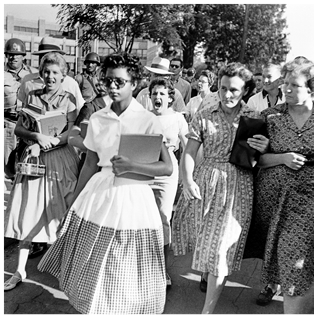
Figure 10.1(b) Long description
Image taken from the 1950s illustrate a teenage Black girl walks while holding schoolbooks, dressed in a checkered skirt and blouse. She is surrounded by a crowd of white individuals, some of whom appear hostile or angry. One white woman is visibly yelling behind her. Military personnel in helmets are present in the background.
My LinkedIn post struck a nerve. A chorus of commenters rushed to defend Truth #1 while denying Truth #2, often misappropriating Martin Luther King Jr.’s words about judging people by the content of their character rather than the color of their skin. King called it a dream because it was not yet a reality in America. His own children, and children like Elizabeth Eckford, were not judged by the content of their character – they were judged by the color of their skin. Acknowledging that reality is necessary to move toward solving the problems at hand.
Denial may offer comfort in the short run, but it’s a terrible way to solve real problems.
Consider the reality of climate change and the widespread denial about it that continues to shape American discourse. Truth #1: My generation, and the generation before me, has benefited immensely from technological advancements and consumption. Truth #2: Since about 1980, we are exceeding planetary boundaries, undermining future generations’ ability to meet their needs. Charles Koch, among others, has spent decades promoting Truth #1 while denying Truth #2 – an evasion younger generations can no longer afford. As one sixteen-year-old student wrote when joining Greta Thunberg’s climate strike, “We strike because they will be dead while we are living in the chaos they left behind.”Footnote 7
Overcoming denial begins with recognizing that truth is not a threat but a starting point. Progress depends on acknowledging complexity and uncomfortable realities rather than retreating into denial. In a pluralistic society, this means approaching opposing views with humility, curiosity, and critical thinking.
American Denial: Get Over It
As mounting evidence exposes the inability of unfettered markets to solve pressing social and environmental challenges, the neoliberal near-religious belief in unfettered market solutions has lost credibility. American neoliberal ideologues face a choice: adjust their ideology or deny reality.
Denial has become a familiar response in the US. When I testified before Congress’s Small and Medium Business Committee in 2019 and suggested that American capitalism could be improved by drawing lessons from Nordic capitalism, Representative Hagedorn accused me of “going against capitalism,” implying I was advocating for a version of Soviet socialism while he invoked unfounded claims of American supremacy (Chapter 4). Hagedorn’s actions reflect a broader pattern in the US in which troubling realities, like climate change and a range of societal-level problems, including lack of access to healthcare and the declining affordability of university education, are met with charges of “socialism” and related denial tactics.Footnote 8 Denial in America more recently extended to the realm of basic democratic functioning as the results of a fair election were rejected by a chorus of deniers, including Hagedorn, directly threatening democracy in the US.Footnote 9
The strategy of denial has proven successful in both American politics and corporate America. Pioneered by chemical companies attacking Rachel Carson’s Silent Spring in the 1960s, denial reached new heights when tobacco companies concealed known health risks and fossil fuel corporations suppressed their own research confirming climate change.
As the US becomes less democratic and increasingly oligarchic, the challenges to overcome denial intensify. Powerful industries and individuals, whose wealth and power depend on maintaining the status quo, actively resist the transition to sustainable capitalism. Upton Sinclair’s succinct observation merits repeating: “It’s difficult to get a man to understand something when his salary depends on not understanding it.”Footnote 10
History shows how denial by ruling elites can accelerate a society’s decline. As Adrian Goldsworthy demonstrates in his analysis of Rome’s fall, the empire’s elite persistently denied mounting systemic problems even as their society’s foundations weakened. They refused to acknowledge their increasingly ineffective governance and internal corruption, while simultaneously failing to maintain the shared identity and loyalty that had bound their allies across the empire. Their denial prevented necessary reforms until it was too late.Footnote 11 The parallel to modern American society’s refusal to face its own systemic challenges – from weakening democratic institutions to eroding relationships with international allies to climate change denial – is striking.
Overcoming denial requires both the willingness to face uncomfortable truths and the tools to analyze them critically. “I love America more than any other country in this world, and, exactly for this reason, I insist on the right to criticize her perpetually,” wrote James Baldwin in Notes of a Native Son. Baldwin reminds us that loving one’s country means confronting hard truths in the spirit of improvement.Footnote 12 Likewise, as introduced in the prologue, Gil Scott-Heron challenges us to recognize that the most transformative revolutions begin in the mind. Near the end of his spoken-word song “The Revolution Will Not Be Televised,” he adds, “The revolution will put you in the driver’s seat.”
Confronting denial that was strategically cultivated by powerful interests is not merely an act of resistance; it is an act of empowerment. It is how we reclaim democratic agency and reshape capitalism to serve the public good.
National education systems emphasizing critical thinking equip societies with these necessary analytical tools. The Nordic educational emphasis on critical thinking has proven especially valuable in an era of rising populism and political polarization. Labels like “socialism” or, more recently, “woke,” often serve not merely as shorthand critiques but as tools to delegitimize opposing viewpoints without substantive engagement (it does not mean that concepts of socialism or “woke” are beyond critique, but that critiquing them solely with pejorative labels is insufficient). This tendency is often exacerbated in media environments prioritizing sensationalism over depth of analysis, contributing to a public discourse that is increasingly polarized and less informed. Furthermore, societies that do not promote rigorous critical thinking are also more susceptible to the rise of autocratic leaders who exploit divisiveness and name-calling to consolidate power, manipulating public sentiment and undermining democratic processes.
A common adage holds that it is easier to fool people than to convince them they have been fooled. Would-be tyrants understand that well, constructing alternative realities that deny uncomfortable truths and fabricate false enemies. “You submit to tyranny when you renounce the difference between what you want to hear and what is actually the case,” warns Timothy Snyder.Footnote 13 When reality inevitably asserts itself, the damage to democratic institutions, social bonds, and basic human decency may be irreparable.
The ultimate cost of denial is freedom itself.
Lesson 2: Establish Universally Subsidized Childcare
Nordic societies prioritize public investments in children. The Nordic commitment to “the good childhood” is reflected in their public investment levels: Denmark, Finland, Iceland, and Norway spend $23,000–$29,000 annually per child – compared to the OECD average of $14,000 and just $500 in the US.
Since pioneering universal childcare subsidies in the 1960s and 1970s, Nordic nations have built comprehensive systems that support both child development and workforce participation. Denmark’s model, where families pay no more than 25 percent of childcare costs through age ten, shows how universal support can simultaneously advance child well-being, gender equality, and economic productivity.Footnote 14
Nordic investments in child welfare advance multiple SDGs through an integrated approach: they ensure inclusive, equitable education from early childhood (SDG #4 “Quality Education”); enable mothers’ workforce participation and economic independence (SDG #5 “Gender Equality”); promote sustainable economic growth through increased labor participation (SDG #8 “Decent Work and Economic Growth”); minimize early childhood development disparities across socioeconomic groups (SDG #10 “Reduced Inequalities”); and support family health through reduced stress and improved work–life balance (SDG #3 “Good Health and Well-Being”).
Adopting universally subsidized childcare in the US would significantly reduce childcare costs and address socioeconomic challenges. US experts like Caitlyn Collins highlight multiple benefits, including reduced childcare costs for low to middle-income families who need it most, improved workforce participation that addresses gender and racial disparities, and enhanced political durability through universality.Footnote 15 The government’s role in managing universally subsidized childcare is primarily limited to tax collection and subsidy distribution, thereby sidestepping common concerns in the US about public sector operational inefficiency.
States in the US competing to attract workers and businesses might recognize the competitive advantage of universally subsidized childcare. Utah claims to be the “most family-friendly state.” Still, it faces high childcare costs that burden its working parents, much like the rest of the US.Footnote 16 Utah established the Office of Families in 2022 to explore effective childcare policies.Footnote 17 By addressing its high childcare costs through such proven policies as universal subsidized childcare, Utah could set a precedent showing other states how family-friendly policies are a component of a business-friendly environment.
The US business community could emerge as a critical ally. Businesses are severely impacted by losing productive workers and absenteeism due to inaccessible childcare. The 2024 BCG Report titled Childcare Benefits More than Pay for Themselves at US Companies encourages companies to assume childcare costs for their employees, assessing the benefits from a productive workforce far outweigh childcare costs.Footnote 18 However, tethering additional social services to employment could increase labor market rigidity. Moreover, small and medium-sized businesses might struggle to absorb these high costs. The US faces a decision whether to treat childcare as another employment benefit funded by companies or follow the Nordic example. US business leaders can champion the cause of universal subsidized childcare as good for business because it frees businesses to focus on what they do best: Business.
Furthermore, subsidized childcare could help bridge societal divides in the US. By bringing together parents from diverse backgrounds, childcare facilities can foster community, trust, and mutual understanding. They can become places where Americans participate in a common project: ensuring the well-being of our children. In doing so, these spaces help cultivate a stronger sense of “We” through recognition that our children’s future is a shared responsibility.Footnote 19
Lesson 3: Ensure Universal Access to Quality Education Rooted in Critical Thinking
The prosperity enjoyed by modern-day Nordic societies results from “generations of phenomenal educational policy,” as David Brooks wrote.Footnote 20 Even when the Nordics were among Europe’s poorest nations in the mid 1800s, they invested in education, and their investments paid great returns. Economic historian Peter Lindert asserts that the world’s most significant error in social policy has been the underfunding of mass education. In his book Making Social Spending Work, Lindert demonstrates that societies flourish when they invest in their children through access to good quality education for all.Footnote 21
Nordic societies have consistently valued providing good quality education for the many over elite education for a select few. Grundtvig-inspired folk schools have emphasized an education accessible to all citizens, initially attending to the many peasants of society rather than the few elites.
Furthermore, universally subsidized early childhood education ensures that every child in the Nordics has access to good-quality preschool independent of the circumstances of the family in which they are born. Research indicates that universal early education supports equal opportunities by increasing children’s noncognitive capabilities in less-advantaged homes and communities. At the other end of childhood, tuition at Nordic universities is paid through taxes collected, ensuring that the decision to pursue tertiary education is one of individual level aspirations, not one of considerations of family wealth and whether one’s parents can afford it, or whether one can take on student loan debt.
The Nordic secret to education is consistent with the powerful Grundtvig quote repeated in this book, “In wealth, we have come far, when few have too much and few too little” (Chapter 4). Folk schools address learners’ real problems while expanding their worldview. At the time of Grundtvig’s original folk schools in Denmark, practical problems related to cultivating the land and tending to livestock. Solutions were proposed, such as how to operate best and coordinate the farm’s activities beyond a single farm, leading to the establishment of cooperatives according to democratic principles. This coordination rose above the ideas of Me to considerations of We. Individual farmers, cooperating at a scale that afforded them more power, realized greater freedom to control their destinies through the cooperatives.
Nordic educational success is not the result of a commitment to exceptionalism – like trying to establish little Harvards across the Nordic nations – but rather a commitment to simply making education consistently good for most everyone. In doing so, the seemingly mundane good at the individual level sums up to the exceptionally good at the societal level with a heightened degree of opportunity for more people – regular people – to realize their full potential. “Everyday life is quite ordinary” in a Finnish school, remarked Pentti Moilanen when explaining why Finnish schools are number one in global education rankings.Footnote 22 If one expects to see that their exceptional results arise from hyper-intense school days with long hours and many tests, one will be surprised. Finnish schools assign less homework and engage children in creative play. Children are regularly outdoors in nature, even in rain or snow, contributing to their healthy development, well-being, and positive environmental attitudes and values.Footnote 23 Classrooms are open and airy. All children receive free, high-quality school meals as a public service. Teachers are amongst the most respected members of society and have significant freedom within their classrooms.
Most critically, Nordic education is fundamentally rooted in critical thinking – a vital bulwark against the threats of tyranny and erosion of democracy. Nordic schools emphasize developing critical thinking skills, encouraging students to question assumptions, evaluate evidence, and identify logical fallacies. This focus on critical thinking has proven particularly valuable in the social media age. Finland leads the world in media literacy, with other Nordics close behind. Nordic citizens’ heightened ability to identify misinformation, verify sources before sharing claims, and think critically about media content demonstrates how educational emphasis on analytical skills creates more resilient democracies.
The importance of critical thinking in education cannot be overstated in an era where democracies face unprecedented threats from both external and internal forces. As Timothy Snyder emphasizes in On Tyranny, would-be autocrats are fundamentally bullshitters – in the Harry Frankfurt sense of the word – who construct their own versions of reality to suit immediate selfish needs and force that version of truth upon society. The best defense against tyrants and their attempts to manipulate truth is a population well-versed in critical thinking, capable of identifying logical fallacies and demanding evidence for claims.Footnote 24
The stark contrast between Nordic and US performance in media literacy rankings reveals the consequences of different approaches to education. While Nordic citizens are more likely to verify sources and think critically about information, the US’s comparatively poor performance in these assessments manifests in concerning ways. When faced with misinformation or potential foreign interference in democratic processes, societies with strong critical thinking capabilities are far better equipped to maintain democratic resilience.
Thomas Jefferson forcefully emphasized that an educated citizenry, practiced in skepticism and critical thinking, is required for democracy’s survival. “It wasn’t enough,” Carl Sagan noted of Jefferson’s view, “to enshrine some rights in a Constitution or a Bill of Rights. The people had to be educated and they had to practice their skepticism and their education.”Footnote 25 In How Democracies Die, Levitsky and Ziblatt further argue that beyond constitutional structures, democracies need the “guardrails” of cultural norms to remain stable, including a reverence for truth and critical thinking that do not tolerate bullshitting or widespread lying as means of amassing power in society.Footnote 26
The Nordics’ commitment to universal access to quality education rooted in critical thinking equips their societies to tackle threats to democracy and guard against the rise of authoritarian leaders.
Lesson 4: Where the Markets Fail, Establish Efficient Universal Systems (and Keep Improving Them)
Friedman exemplified the unwavering faith in markets to solve any problem, declaring, “Underlying most arguments against the free market is a lack of belief in freedom itself.”Footnote 27 Equating the mere questioning of markets with a “lack of belief in freedom” is a hallmark of neoliberal ideology.
Market failures in healthcare delivery systems directly constrain individual freedoms and human potential. This is starkly illustrated in the US, where approximately four million children lack healthcare access – a sharp contrast to Nordic nations where universal healthcare is guaranteed. The US system’s structural deficiencies manifest in multiple ways: coverage denials for pre-existing conditions, byzantine administrative processes that burden both providers and patients, and the persistent uncertainty of coverage even for insured individuals. These systemic failures represent not merely inconveniences, but fundamental constraints on individual liberty and social welfare. The frequent inability to determine coverage eligibility prior to treatment and the prevalence of unexpected medical bills exemplify how market failures in healthcare create barriers to both access and planning that particularly impact society’s most vulnerable members.
Markets fail for access to healthcare, and in so many other domains, including education, access to daycare, paid parental leaves, and addressing mounting challenges of environmental degradation.
Nordic societies have adopted a pragmatic approach to using markets where they work, and opt for something else when they do not. Nordic citizens vote on which objectives to pursue (e.g., healthcare, childcare, education), how much tax revenue must be collected to support such objectives, and then commit to building efficient systems to achieve them. Anu Partanen reminds us, “This is not the rich paying for the poor. This is about the middle class paying for itself.”Footnote 28
The Nordic approach demonstrates how societies can move beyond ideological battles over markets versus state intervention to focus instead on what actually works. While US policy debates often remain trapped in Cold War-era dichotomies between “free markets” and “big government,” Nordic societies have developed what Klein and Thompson describe in Abundance as systems that move beyond artificial scarcity, where public investment and market mechanisms work in concert to expand possibilities.Footnote 29 The result is reliable, efficient outcomes that expand both individual and collective prosperity.
A prevailing narrative propagated by neoliberalism has portrayed the poor as exploiting the affluent and unworthy of public support. This framing reduces poverty to personal failure and has often carried racial undertones. Ronald Reagan helped popularize the “Welfare Queen” myth, and since the mid 1960s, women of color have been cast in this role, portrayed as freeloaders and con artists.Footnote 30
“There’s class warfare, all right. But it’s my class, the rich class, that’s making war, and we’re winning,” remarked Warren Buffett. Buffett tabulated taxes paid by everyone in his office versus income; he paid far less in taxes as a fraction of income than anyone else, including secretaries and clerks. “How can this be fair?” Buffett asked.Footnote 31 Not only is it unfair, but it’s also inefficient. Nordic societies build efficient, universally available systems as a reliable default option, and the successes speak for themselves. Everybody benefits when markets are used where they work well but not dogmatically clung to where they do not.
Nordic nations also demonstrate a commitment to continuously improving universal systems. In recognition that mothers took far more parental leave than fathers, in 1993, Norway was the first country to allocate a four‐week leave for fathers with a “use it or lose it” policy to encourage gender equality. Sweden followed Norway’s lead, implementing a “daddy month in 1995.”Footnote 32 Denmark, Iceland, and Finland would follow suit with dedicated paid parental leave time for fathers to encourage greater equality among genders.
Lesson 5: Expand Positive Freedoms for All (Not Just Negative Freedoms for the Powerful Few)
Throughout its history, the US has focused primarily on expanding freedoms in terms that Isaiah Berlin would characterize as “negative freedom,” freedom from something. The expansion of negative freedom is often a matter of power, and the US’s most powerful individuals and families enjoy extraordinary freedoms (Chapter 7).
Expanding negative freedom includes freedom from paying taxes. “Only the little people pay taxes,” Leona Helmsley, an infamously wealthy US businessperson convicted of tax evasion in the 1980s, once said. A culture of tax avoidance by the powerful has been increasingly normalized and legalized. During a 2016 presidential debate, Donald Trump was accused of not paying taxes. He replied, “That makes me smart.”Footnote 33 Today, the US’s billionaires and largest corporations routinely pay little to no taxes.Footnote 34
In the Nordics, freedom is more often considered in terms Berlin characterizes as “positive freedom,” the freedom to do something. Positive freedom includes access to good education, childcare, paid parental leaves, and healthcare. It is represented by “freedom to roam,” where everyone can access land whether or not they own it; they can forage mushrooms and berries, set up camp, and light a campfire (Chapter 4).Footnote 35
With the continued US march toward oligarchy and away from democracy, the expansion of negative freedoms for powerful individuals will continue. Increasingly, democracy is framed as the enemy in the US that limits the freedoms of the powerful, a trend that must be reversed. The US can directly learn from the experiences of the Nordics to build a society where most everyone has the freedom to thrive.
Lesson 6: Celebrate Stewards and Ostracize Extractors
We should celebrate the stewards who work in harmony with the Earth and cooperate with other people. Conversely, we should ostracize the extractors who attempt to dominate the Earth’s resources and other people.
Stewards commit themselves to expand the freedoms of others – current and future generations – while extractors focus on expanding their own freedom, frequently at the cost of others’ freedoms. Stewards demonstrate humility and leverage their positions of power to further disperse power across society in a manner more consistent with democratic ideals. Extractors leverage their positions of power to extract what they can in their quest for more. Stewards assume a role as lobbyists for society and future generations. Extractors assume a role as lobbyists for themselves.
Stewards are more likely to rise into the upper echelons of power in Nordic societies than in US society. Longtime CEOs Mads Øvlisen of Novo Nordisk and Mads Nipper of Ørsted embody the sort of stewards commonly found atop Nordic-based organizations (Chapter 6). Exalting the stewards into positions of power is critical to maintaining the strength of Nordic democracies, as democracy demands a culture of stewardship.
In the US, corporate stewards like Patagonia’s founder Yvon Chouinard are often seen as anomalies. When Chouinard transferred his billion-dollar company to a trust and nonprofit dedicated to environmental protection in 2022, the move was celebrated but regarded as an exceptional act rather than a template for responsible business leadership.Footnote 36
However, Chouinard’s approach has been commonplace in Denmark. “Chouinard’s Donation of Patagonia Is Big and Bold, But Not New,” reads the title of a subsequent Forbes article. The article describes how Danish corporations, including Carlsberg, Novo Nordisk, and Rambøll, had founders who had donated their companies (or majority voting shares) to a corresponding enterprise foundation (Chapter 6). The article reads, “While this approach may seem novel in the US, it has been deployed for decades in Scandinavia. It’s demonstrated that billionaires can give away their companies and continue to generate considerable profits, while also contributing substantially to social and environmental causes.”Footnote 37
Chouinard has set a precedent for other US billionaires and company founders to follow his stewardship lead and help normalize a culture of celebrating stewards and ostracizing extractors.
Lesson 7: Pursue Smart Policies and Good Governance (Stop Fighting about “Big” versus “Small” Government)
American political discourse remains constrained by a Cold War-era dichotomy between “big” and “small” government – a false choice deliberately stoked by Reagan and neoliberals to equate any State involvement with Soviet socialism. “Government is not the solution to our problem. Government is the problem,” proclaimed Reagan in his inaugural address in 1981.Footnote 38
This anti-tax, anti-government ideology is reflected in Milton Friedman’s categorical declaration: “I am in favor of cutting taxes under any circumstances and for any excuse, for any reason, whenever it’s possible.”Footnote 39
Such absolutist positions represent a fundamental barrier to realizing sustainable capitalism, which requires strategic deployment of both market mechanisms and democratic processes including effective tax policies. Carbon taxes can internalize environmental externalities, establishing markets to drive sustainable innovation. Similarly, income taxes to fund universal systems education and subsidized childcare represent democratic investments in society’s collective capacity (Lesson 2).
Efforts must be redirected from inherently fighting government to instead fighting for smart policies and good governance.
Nordic business leaders engage in discussions to shape smart policies and commitment to good governance that better ensures a healthy society. The Nordic business community has wielded its power to champion the policies and practices that resulted in the Nordic model. Universal healthcare, education, services for children, good wages secured for everyone through effective unions and collective bargaining arrangements, and sensible environmental policies are all hallmarks of Nordic societies for which the Nordic business community has advocated from the late 1800s to today.
Business Leaders Must See Themselves as Lobbyists for Society First, Their Companies Second
The “first priority” of the Nordic business community “is the health of the country, not immediate financial returns,” wrote Henderson in Reimagining Capitalism (Chapter 6). She continued, “And for over a hundred years, this commitment has been fundamental to its success. The case of Denmark highlights how business can play a central role in framing policy without subverting the democratic process. Business is an important and active voice in the conversation, but it does not seek to control either the process or the endpoint.”Footnote 40
Nordic business leaders commonly see themselves as stewards of societal interests, not just their company’s interests, such as slashing corporate taxes paid. The Nordic public expects their business leaders to behave as such. Supporting democratic principles and practices is a central tenet that Nordic business leaders must adhere to be accepted in Nordic societies.
Yet even the Nordic nations face profound challenges ahead. Scientists studying the relationship between social outcomes and environmental impacts have reached a stark conclusion that currently no countries achieve high level of social welfare outcomes while staying within planetary boundaries.Footnote 41 This finding underscores the unprecedented scale of transformation needed – and why business leaders must become more active advocates for policies that can help societies thrive within environmental limits. The Nordic approach of business leaders acting as stewards and partnering with government to develop smart policy provides a proven model for tackling this existential challenge.
US business leaders should follow Nordic examples by advocating for smart, society-wide policies – such as universal healthcare, family support, and labor protections – that foster prosperity and democratic resilience. They should see themselves as lobbyists for the well-being of society.
US business leaders must also champion more active labor policies, like in the Nordics, to encourage the supply of good jobs focused on tackling challenges represented by the SDGs, including climate change and social inclusion. Dani Rodrik and Stefanie Stantcheva outline these challenges and opportunities in their article, “Fixing Capitalism’s Good Jobs Problem.”Footnote 42 Nordic societies are well-positioned to encourage the dramatic growth of good jobs given their willingness to establish ambitious societal-level sustainability goals coupled with the Nordic competencies for effective labor market policies as part of Nordic flexicurity (Chapter 4).
Coupling bold sustainability goals with good jobs is vitally important to help ensure alignment between SDG #8 “Decent Work and Economic Growth,” SDG #13 “Climate Action,” and SDG #7 “Affordable and Clean Energy.” Alleviating potential tensions between these SDGs mitigates fear that can arise when some jobs must be phased out in the transition to future-oriented jobs – such as with the necessary shift from fossil-fuel sector jobs to renewable energy sector jobs. Clinging to jobs of the past is foolhardy but, unfortunately, all too often politically expedient as fears can be readily stoked by powerful actors who desire to thwart necessary progress.Footnote 43
The 2019 Danish Climate Law “promises to bring the Danish way of life within planetary boundaries,” write economists Asker Volgsgaard et al. They continue, “In the labour market, a green job guarantee can keep the economy at full employment to preserve livelihoods and sustain political support for change.”Footnote 44 In 2022, Finland became the first country in the world to make its stated objective to carbon negativity legally binding (Chapter 1).Footnote 45 Finland’s future jobs will be those good jobs described by Rodrik and Stantcheva.
Nordic flexicurity promotes a societal-level growth mindset and the creation of future-oriented good jobs.
Artificial Intelligence is poised to replace hundreds of millions of full-time jobs globally, understandably raising anxieties among workers everywhere. Nordic flexicurity – where labor, business, and government leadership work closely together – offers valuable lessons for managing AI’s disruption of work and these associated fears. In April 2024, at “AI and the Future of Work: Norway in Conversation with California,” hosted by the Nordic Center at University of California, Berkeley, Ole Erik Almlid, CEO of the Confederation of Norwegian Enterprise, affirmed that tripartite cooperation allows Norway to adapt quickly which is vital for the competitiveness of companies, while Peggy Hessen Følsvik, President of the Norwegian Confederation of Trade Unions, emphasized workers’ desire to be at the table when discussing ways to implement AI on the job. Norwegian Minister of Trade and Industry Jan Christian Vestre emphasized how the tripartite model’s structure enables ongoing dialogue to build trust, ensuring decisions serve society’s broader interests rather than allowing any single group to dominate. By embedding trust-building mechanisms into national labor policy and giving workers meaningful input in implementation decisions, Nordic societies reduce fear while positioning themselves to capture AI’s benefits.
The Nordic approach stands in stark contrast to regions where AI deployment often occurs with minimal worker involvement, eroding trust between employers and employees, which is arguably the case in the US at present.Footnote 46
Where Is the Action from US Business Leaders?
While Nordic business leaders have long advocated for policies that support societal well-being, US business leaders have too often prioritized corporate interests. Though the Business Roundtable signaled support for climate action,Footnote 47 and a higher minimum wage,Footnote 48 these positions have rarely translated into substantive advocacy.
Meanwhile, fossil fuels remain over-subsidized – distorting markets and impeding adoption of renewables (Chapter 3). For business to play a constructive role in advancing sustainable capitalism, rhetoric must give way to action – particularly in support of policies that align market incentives with sustainability goals.
Where power is sufficiently dispersed, like in the Nordics, minimum wage laws are unnecessary. Recall that a McDonald’s worker in Denmark makes $22/hour (Chapter 3). In contrast, power is overly concentrated in the US. US corporations are price makers that leverage their power to suppress wages below market equilibrium, representing a market failure. Therefore, a substantial increase in the minimum wage is needed to nudge the US toward market equilibrium, and targeted efforts to disperse power must be made. Here, the US must learn from the effective power-dispersing mechanisms established across Nordic societies (Chapter 4)
The Business Roundtable must move from rhetorical support to concrete action – especially when it comes to advancing policies like minimum wage increases and collective bargaining rights. In the Nordics, business leaders have long advocated for societal well-being through support for universal systems and labor rights. US leaders can follow suit by championing democratic institutions and shared prosperity, not just shareholder returns.
Despite the Business Roundtable’s rhetoric about building an inclusive economy, member corporations commonly prioritize tax avoidance and maintaining subsidies over meaningful policy reform.
Perhaps some of that janteloven exhibited by Nordic CEOs (Chapter 5) could do US CEOs some good. CEOs should hold one another accountable. For example, US CEOs should advocate against ballooning their own salaries, fueled by stock options, where their pay has become a function of power rather than merit (Chapter 6). US CEOs have the highest CEO-to-worker pay ratios globally, having inflated from 15:1 in 1965 to 350:1 in 2020 (Chapter 9) as the US has marched toward oligarchic capitalism. CEOs must advocate for alternative corporate structuring favoring long-term stewardship (Chapter 6). The Purpose Foundation in the US helps to structure US companies to encourage this stewardship approach of ownership, mirroring the benefits of the Danish enterprise foundation model within the constraints of the US legal system.Footnote 49
Today, American business leaders would do well to heed the example of their Nordic counterparts, who faced widespread labor unrest and the rise of socialist movements in the late nineteenth and early twentieth centuries. Rather than positioning themselves in rigid opposition, Nordic business leaders recognized that the long-term viability of capitalism depended on fostering shared prosperity. They partnered with reform-minded social democrats and supported the development of strong, effective labor unions – recognizing the importance of having credible negotiating partners. Together, they helped construct policies and institutions that expanded opportunity and reinforced the social contract.
By contrast, many US business leaders and members of the economic elite today continue to rely on adversarial rhetoric – dismissing workers as “lazy” or labeling appeals for living wages as “socialist.” A different approach is needed – one that acknowledges the mutual dependence of economic success and social stability. Supporting institutions that expand opportunity, ensure decent working conditions, and build public trust is not a concession but a pragmatic strategy for sustaining capitalism in a democratic society. In doing so, business leaders can help cultivate a deeper sense of shared purpose – a stronger “We” – and contribute to the foundations of capitalism itself.
Lesson 8: Cooperation Is Strength
How we discuss the world – as fundamentally cooperative or competitive – shapes our expectations and often becomes a self-fulfilling prophecy. As Lakoff and Johnson demonstrate in Metaphors We Live By (Chapter 9), the metaphors we use shape our deepest patterns of thought and action. When individuals and organizations view each other primarily as competitors, it encourages a zero-sum mentality that sees the world as an arena of conflict (Chapter 6). Yet addressing contemporary global challenges requires cooperation at a global scale.
No nation to date has achieved good social outcomes while staying within its fair share of planetary boundaries.Footnote 50 The path forward requires unprecedented cooperation across societies to reimagine how we can achieve human well-being while respecting planetary boundaries. An overemphasis on competition and growth as ends in themselves obscures the fundamental interdependence of social, environmental, and economic systems. What’s needed instead is a narrative that recognizes cooperation as the cornerstone of long-term business success and societal flourishing.
The Nordic tripartite model involves ongoing structured cooperation among labor unions, employers, and the state. This model supports high wages and robust social security without the need for minimum wage laws, promoting shared prosperity and equitable power distribution (Chapters 1 and 3). For example, Denmark’s approach to implementing a carbon tax on agriculture exemplifies how democratic processes can lead to pragmatic, cooperative solutions that align with SDG #1: “Partnerships for the Goals.”
Leadership in the Nordics involves a high degree of consensus-seeking and power delegation. This leadership style is crucial for addressing the SDGs as it fosters a culture where every employee’s voice matters, enhancing cooperation within organizations (Chapter 5). Leadership is understood as a dynamic process involving all, rather than a static position held by a few.
At the company level, the ‘Nordic cooperative advantage’ is evident where businesses create value through ongoing stakeholder cooperation, significantly impacting sustainability outcomes. These firms stand out in global sustainability rankings, showcasing the effectiveness of their cooperative approaches in addressing complex global challenges like those posed by the SDGs (Chapter 6).
Nordic capitalism balances competition with cooperation, harnessing the benefits of competition to drive efficiencies and innovation where advantageous, while preventing competition from undermining social welfare.
Moving away from competitive narratives that glorify extractive behaviors towards cooperative strategies like those seen in the Nordic model can guide the US and other nations towards more sustainable and equitable systems. This transformation is necessary to effectively tackle collective challenges reflected by the SDGs – complex problems that require broad collaborative efforts.
Lesson 9: Democratic Capitalism Must Supplant Oligarchic Capitalism
Democracy is weakening in the US. The 2020 Global Democracy Index characterizes the US as a “flawed democracy.”Footnote 51 Oligarchic capitalism, as it is now experienced in the US, creates conditions that erode democratic principles as economic power concentrates in the hands of a small elite with outsized influence over political, legal, and cultural systems. This concentration of wealth distorts democratic processes, enabling a narrow segment of society to shape public policy, control media narratives, and fund political campaigns to advance their interests. Public accountability weakens, pluralism declines, and power becomes increasingly insulated from democratic scrutiny and oversight.
Conspicuous efforts to consolidate power through gerrymandering and voter suppression have become increasingly routine. Even more sinister, election positions at the state, county, and township levels are being weaponized with systemic “efforts to inject partisanship into under-the-radar election jobs.” At the same time, election administration at the state, county, and township levels is being politicized through coordinated attempts to inject partisanship into roles that were once largely nonpartisan.Footnote 52 In How Democracies Die, Levitsky and Ziblatt warn, “American democracy is not as exceptional as we sometimes believe. There’s nothing in our Constitution or our culture to immunize against democratic breakdown.”Footnote 53
Oligarchic Capitalism Is Corroding American Democracy
As Robert Reich emphatically warns, “Today the great divide is not between left and right. It’s between democracy and oligarchy.”Footnote 54 Since the 1980s, as Wolfgang Streeck observes, the rise of neoliberal market forces has broken the postwar compromise between democracy and capitalism. His conclusion: “It is not the crisis of capitalism that challenges democracy but its neoliberal triumph.”Footnote 55
The weakening of US democracy through this neoliberal triumph reflects how American capitalism, in its current form, increasingly concentrates power in the hands of a few – undermining democratic accountability. (Chapters 3 and 4). “Oligarchy works as a patronage system that dissolves democracy, law, and patriotism. American and Russian oligarchs have far more in common with one another than they do with their own populations,” wrote Timothy Snyder in The Road to Unfreedom, citing Charles Koch as an exemplar of the American oligarchy.Footnote 56
The rise of powerful business leaders who downplay empathy and collective responsibility raises important concerns for the future of democratic capitalism. Elon Musk – appointed head of Donald Trump’s Department of Government Efficiency in 2025 – publicly described empathy as a “bug” in Western civilization that is “exploited.”Footnote 57 This framing reflects a broader trend among some influential American capitalists to portray human connection and civic responsibility as liabilities rather than strengths.
Defunding public institutions has long been a feature of the neoliberal playbook and has contributed to entrenching oligarchic capitalism in the US. Billionaires such as Koch and Menard have systematized strategic philanthropy at public universities, using their donations to advance a thinly veiled neoliberal agenda under the guise of academic support (Chapter 7). This tactic – evading taxes while channeling wealth to reshape public institutions in their image – has weakened democratic accountability and tilted power further toward private interests. As public universities and other civic institutions are starved of public funding, they become increasingly dependent on private donors, leaving them vulnerable to ideological capture.Footnote 58
While American capitalism is increasingly described as oligarchic – marked by the concentration of wealth and influence in the hands of a few – it is also beginning to exhibit signs of kleptocracy: A distinct form of oligarchy in which public institutions are systematically manipulated to serve private interests, and corruption becomes embedded to benefit a privileged segment of the elite. This reflects a crisis of governance and a structural failure that erodes public trust and inflicts lasting damage on democratic institutions.Footnote 59
In stark contrast, Nordic societies routinely top the global indices measuring effective democracies, and their continued investments in public institutions are a significant reason. These investments serve as the efficient hand pumps of society that increase an individual’s freedom. They also thwart the potential for an oligarch with an agenda to take over a public institution and undermine democratic accountability (Chapter 7).
Capitalism Needs Democracy to Function Effectively
Markets require sufficiently dispersed power to function effectively. The concentration of power in the hands of a few oligarchs and their corporations represents a fundamental paradox of oligarchic capitalism: in its drive for deregulation and concentrated power, it undermines the very market conditions necessary for capitalism to function (Chapter 3).
The persistent American assumption that unfettered markets automatically maximize freedom obscures the role that democratic processes of negotiation and consensus-building play in realizing freedom for the many people. As Arthur Okun wrote:
A democratic capitalist society will keep searching for better ways of drawing boundary lines between the domain of rights and the domain of dollars. And it can make progress. To be sure, it will never solve the problem … [as] capitalism and democracy are really a most improbable mixture. Maybe that is why they need each other – to put some rationality into equality and some humanity into efficiency.Footnote 60
The mounting failures of American capitalism in its current form – its inability to address sustainability challenges, maintain functional markets, or preserve democratic institutions – signal conditions ripe for a paradigm shift, as Kuhn would describe.
Democratic Capitalism Is Essential for Realizing Sustainable Capitalism
Realizing sustainable capitalism requires getting markets to drive sustainability outcomes through internalizing negative externalities into prices. The Nordic nations show how democratic processes make this possible: Finland pioneered the world’s first carbon tax in 1990, followed soon by the other Nordic nations. Today, they maintain among the world’s highest carbon taxes, which creates the market incentive for companies to reduce emissions through efficiency gains and innovation.
The policies establishing carbon taxes in the Nordics emerged through democratic processes. Nordic political leaders, in cooperation with Nordic business leaders and other stakeholders across Nordic societies, supported policy mechanisms to internalize environmental costs. In contrast, in the US, political leaders and business leaders have commonly blocked efforts to internalize the costs of carbon emissions in prices. These blocking efforts persist despite widespread public support for companies to internalize the price of carbon, suggesting democratic processes are not functioning as they should in the US. Major carbon-emitting US corporations – which would face billions in liabilities under Nordic-level carbon prices – leverage their political influence to prevent the internalization of greenhouse gas emissions costs (Chapter 3).
The matter of carbon pricing reveals a fatal flaw in neoliberal ideology that frames government intervention as inherently anti-capitalist: properly functioning markets require a democratically accountable state to correctly price goods and services by internalizing negative externalities. Without the “visible hand” of a democratically accountable government, the “invisible hand” of the market cannot realize efficient outcomes. Therefore, a democratically accountable state is essential for implementing the policy interventions needed to realize sustainable capitalism. Without such interventions, companies will continue operating beyond planetary boundaries, depleting the principal of Earth’s endowment rather than living sustainably off its interest, directly violating sustainable development by compromising future generations’ ability to meet their needs.
This transformation demands a fundamental shift in how we define the purpose of the firm (Chapter 6). In oligarchic capitalism, the firm’s purpose is narrowly defined as maximizing profits for shareholders – the so-called Friedman doctrine that has dominated American capitalism since the 1980s. In democratic capitalism, as demonstrated by Nordic firms, the purpose expands to creating value for all stakeholders. Yet realizing sustainable capitalism requires an even more ambitious definition: creating value for stakeholders while operating within planetary boundaries. This evolution in corporate purpose reflects the broader transformation needed in how capitalism itself functions.
In Democracy for a Sustainable World, James Bacchus explores the deep connection between democracy and sustainable development. When democratic processes engage citizens at every level – from local initiatives to global governance – they build the institutional capacity needed to confront climate change, ecological collapse, and other pressing sustainability challenges.Footnote 61 The Nordic experience illuminates this dynamic: democratic institutions create pathways for bold sustainability policies that would likely falter under oligarchic capitalism, where concentrated wealth and power often block essential market reforms.
Lesson 10: Embrace the Me-We-Me Mindset – Expanding Individual Freedoms through Efficient Universal Systems
The Me-We-Me mindset represents a fundamental paradigm shift essential for realizing sustainable capitalism. The Me-We-Me mindset embraces the view that individual and societal prosperity are mutually reinforcing forces.
As demonstrated throughout this book, the Me-We-Me mindset manifests across multiple levels of society: in individual leadership through cooperative consensus-building rather than dominance, in company operations through stakeholder engagement and the “Nordic cooperative advantage,” and at the societal level through universal systems that expand individual freedoms through collective investment. These manifestations, explored in earlier chapters, reveal how the Me-We-Me mindset shapes Nordic leadership, business, and social policy approaches.
While also rooted in a reverence for individualism, the Me-We-Me mindset starkly contrasts the Me-Me-Me mindset of modern American capitalism, where selfishness has become dangerously conflated with freedom. This conflation represents perhaps the greatest threat to American democracy and capitalism, as individuals increasingly view taking responsibility for society’s collective welfare as an attack on individual freedom. This mindset creates a destructive paradox: in pursuing absolute individual freedom by rejecting collective responsibility, people ultimately diminish their freedoms and those of future generations. A society that cannot act collectively to address shared challenges – from climate change to education to healthcare – cannot sustain the conditions necessary for individual liberty to flourish.
The Nordic experience demonstrates how the Me-We-Me mindset can be cultivated through institutional structures and cultural norms. Universal access to education emphasizing critical thinking and civic responsibility creates citizens capable of seeing beyond narrow self-interest. Democratic processes give stakeholders real voice in decisions and foster trust in collective action. Business leadership focused on long-term stewardship rather than short-term extraction demonstrates how individual and collective prosperity can align. Perhaps most importantly, social systems that expand individual freedoms through collective investment provide concrete evidence that the Me-We-Me approach works.
Children and future generations stand at the heart of this mindset shift. The Nordic commitment to children’s well-being reflects a profound understanding that individual freedom is enhanced, not diminished, by collective investment in the next generation. This offers a powerful starting point for building broader support for Me-We-Me approaches, as concern for children’s welfare transcends political divides. When we invest in systems ensuring every child’s ability to flourish – regardless of the circumstances of their birth – we create the foundation for a society where both individual and collective freedom can thrive. In such a society, the American Dream can become the reality for far more people.
The Me-We-Me mindset represents a paradigm shift away from extraction toward sustainability and stewardship, emphasizing the systems approach needed to address collective challenges. The Nordics demonstrate this mindset in action. A subset of US leaders have embraced a stewardship approach that reflects the Me-We-Me mindset. They have leveraged their platforms as business leaders, seeing themselves as lobbyists for society first, and their companies second.
This vision is not new. Over a century ago, Frederick Winslow Taylor – the father of scientific management – argued that the goal of management should be to secure “the maximum prosperity for the employer, coupled with the maximum prosperity for each employee” (Chapter 3). Around the same time, Swedish Prime Minister Per Albin Hansson, in his famous “People’s Home” speech, laid the moral foundation for Nordic capitalism by insisting that workers must not be treated as “rented creatures,” valued only as inputs (Chapter 4). While the US largely abandoned Taylor’s balanced ideal in favor of shareholder primacy, the Nordics institutionalized a stakeholder vision, designing a society in which prosperity and dignity could be shared.
Adopting a Me-We-Me mindset constructively directs us toward higher-order considerations of building the good society. “We should measure the prosperity of the nation not by the number of millionaires, but by the absence of poverty; the prevalence of health; the efficiency of the public schools; and the number of people who can, do read worthwhile books,” remarked W. E. B. DuBois.Footnote 62 DuBois was describing the good society, using terms little different than those of Denmark’s Grundtvig and a society rooted in Bildung, as evidenced by the modern-day Nordics (Chapter 4).
DuBois was highly critical of capitalism and was sympathetic to socialist causes. For DuBois and other self-described socialists, capitalism did not deliver a good society. In a letter to Coretta Scott, Martin Luther King Jr. remarked,
I imagine you already know that I am much more socialistic in my economic theory than capitalistic. And yet I am not so opposed to capitalism that I have failed to see its relative merits. It started out with a noble and high motive, viz, to block the trade monopolies of nobles, but like most human systems it fell victim to the very thing it was revolting against.Footnote 63
King advocated for the US to adopt a variety of democratic socialism.
In the face of capitalism’s critiques, “the Nordic model of capitalism achieves virtually everything that contemporary democratic socialists say we should want,” as Lane Kenworthy describes in his 2022 book, Would Democratic Socialism Be Better?.Footnote 64 The fundamental critiques many socialists have about capitalism are more often critiques about American capitalism and the ills resulting from a hyper-individualistic Me-Me-Me mindset.Footnote 65 Insofar as US capitalists perceive the rise of self-described socialists as a threat to capitalism, embracing a Me-We-Me mindset and a more Nordic-style variety of capitalism represents an excellent opportunity to “save capitalism” in the US.
Parting Reflections
Mounting sustainability crises, growing inequalities, and the continued erosion of democratic institutions reveal the profound limitations of American capitalism. The consequences of our collective action – or inaction – will profoundly impact the well-being and freedom of future generations.
History shows that moments of crisis create opportunities to mobilize action. As Milton Friedman noted, “Only a crisis produces real change. When that crisis occurs, the actions that are taken depend on the ideas that are lying around.”Footnote 66 Nearly a century ago, Childs’ Sweden: The Middle Way sparked American interest in Nordic approaches following the Great Depression.
Today, Nordic capitalism can guide what will become the next version of American capitalism. The neoliberal ideas that were lying around because of Milton Friedman and his Mont Pelerin colleagues shaped the responses to the crises of the 1970s. Nordic capitalism offers lessons that can help inform the next version of American capitalism. While no nation has yet achieved full sustainability within planetary boundaries, the Nordics’ strong democratic institutions and proven success in achieving progress in many of the SDGs position Nordic capitalism well to serve as a guiding North Star.
Nordic capitalism demonstrates how business success and societal prosperity reinforce each other. People cooperate through democratic processes to build efficient universal systems that expand positive freedoms for all members of Nordic societies – the freedom to access healthcare, education, and other essential services (Chapter 7) – all of which is generally supported by the Nordic business community. Through these efficient systems, individual and collective flourishing become mutually reinforcing. As The Economist succinctly assessed, “Nordics show that countries can balance a business-friendly environment with strong safety nets.”Footnote 67
The mounting failures of American capitalism’s “Me-Me-Me” mindset – where selfishness has come to be dangerously mistaken for freedom – reflect what Kuhn might recognize as conditions ripe for a paradigm shift. The “Me-We-Me” mindset at the heart of Nordic capitalism offers a compelling alternative: a paradigm in which individual and societal flourishing reinforce one another.
Evolutionary science also helps explain the need for a paradigm shift. Multilevel Selection theory illuminates how societies that balance individual competition with group cooperation create conditions that support both societal and individual prosperity. Nordic capitalism exemplifies this balance, resulting in societies achieving higher levels of collective well-being. Realizing such a balance requires structures and cultural norms that foster cooperation and consensus-building alongside healthy competition. The Triangle of Tensions (Chapter 2) depicts how negotiating between the efficiency, equality, and sustainability dimensions demands strong consensus-building skills. Nordic societies use democratic processes and stakeholder engagement to strike a balance.
In this light, democracy emerges as the essential mechanism through which free societies build consensus and coordinate cooperative actions for shared benefit. As challenges like climate change and healthcare access demonstrate, individual well-being increasingly depends upon efficient collective solutions – a practical reality that Nordic societies have long recognized. Capitalism and democracy work better together through a well-functioning, democratically accountable state. Okun wisely noted, “a democratic capitalist society will keep searching for better ways of drawing the boundary lines between the domain of rights [democracy] and the domain of dollars [capitalism],” and the task is never complete.Footnote 68
A well-functioning, democratically accountable state is necessary for realizing sustainable capitalism to effectively coordinate the “visible hand” of the state and the “invisible hand” of the market.Footnote 69 These fundamental forces must work hand in hand in democratic capitalism, as Nordic capitalism demonstrates. However, the entrenched rhetoric of neoliberalism has created a self-fulfilling prophecy: As state capacity diminishes, it reinforces beliefs about government inefficiency, justifying further reductions in the state’s role – a core tenet of the neoliberal ideology.Footnote 70 Nordic citizens, by contrast, have demanded and secured an efficient, democratically accountable state – strengthening both their democracy and capitalism.
The ideals and mythology of the US can be leveraged to make the American Dream a reality for more people, both current and future generations. The Land of the Free is a powerful narrative, and the transformation from Me-Me-Me to Me-We-Me embodies America’s founding principle E pluribus unum – “Out of many, one” – where individual success and collective prosperity reinforce rather than oppose each other. American society need not invent new stories about itself; it must do the hard work to turn its existing stories into reality. Just as Grundtvig transformed Nordic mythologies into practical steps of self-improvement through folk schools and cooperative movements rooted in democratic ideals, so too must the US transform its powerful folklore into concrete actions that expand freedom and prosperity for all Americans.
Looking at the Nordics can be like holding up a mirror to American society, reflecting back truths that can be uncomfortable for many Americans to confront. An honest gaze into the mirror reveals an American society that falls short of its cherished myths and proclaimed ideals about freedom and democracy. Americans face a choice: they can examine their reflection and commit to improving the imperfections they see, or stare down at the ground in denial, insisting that the US is uniquely free and that to suggest otherwise is unpatriotic.
Learning from Nordic capitalism requires courage to move beyond complacency and denial and to look up with curiosity and hope. Nordic capitalism shows that an alternative to the American version of capitalism rooted in neoliberalism exists and by most measures performs better. Grounded in democratic principles and practices, Nordic capitalism serves as a guiding light in a time of disorientation and division. It is time to move past the Cold War era claim that Nordic societies are “socialist” and recognize that their comparatively strong performances are the outcome of a well functioning form of democratic capitalism.
Like the North Star, Polaris, Nordic capitalism offers direction rather than a fixed prescription. Polaris wobbles in the night sky, a reminder that even the best benchmarks are imperfect, yet it still offers valuable guidance. Nordic capitalism provides guidance and a solid foundation from which to realize sustainable capitalism, if we choose to look up.

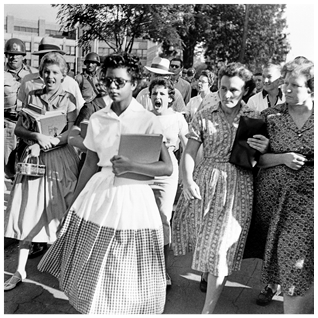

 Open access