


In Australia, 24·5 % of children aged 2 to 14 years were overweight or obese in 2014–2015(1). A national survey found that up to 47 % of 4- to 13-year-olds were regularly consuming more energy than required for their age group(2). More than a third of energy in the diets of Australian 4- to 8-year-olds (38 %) and 9- to 13-year-olds (39 %) came from energy-dense, nutrient-poor, or ‘discretionary’ foods(3). Contributing to this excessive energy intake are fast foods, which are regularly consumed by school-aged children in Australia(Reference Hardy, Mihrshahi and Drayton4). In 2015–2016, Australian households spent 13 % of their weekly food and beverage budget on takeaway and fast foods(5). Spending on takeaway and fast foods had increased by 50 % between 2004–2005 and 2009–2010(6).
There are several initiatives that aim to address the impact of fast food on the population’s diet. The fast-food industry has introduced the Quick Service Restaurant Industry (QSRI) Initiative for Responsible Advertising and Marketing to Children that aims ‘to ensure that only food and beverages that represent healthier choices are promoted directly to children’(7). The QSRI has nutrient criteria for what constitutes a ‘healthier’ children’s meal(7). However, it is a voluntary initiative and the industry’s own criteria are not aligned with government recommendations for children(Reference Wellard, Glasson and Chapman8). Additionally, in several Australian states and territories, fast-food chains with more than twenty outlets in the state or over fifty outlets nationally must display the energy content of menu items on menus and menu boards, along with the anchor statement ‘the average daily energy intake is 8700 kJ’(9–11). It should be noted that this is an average adult’s daily energy intake. One of the principles behind the implementation of menu labelling legislation was that it would encourage fast-food chains to reformulate menu items or offer healthier products as defaults(12).
A study of children’s fast-food meals in Australia found that nearly three-quarters of meals exceeded 30 % of the daily energy recommendations for 4-year-old children and 90 % of meals exceeded 30 % of the upper limit for Na for children aged 4 to 8 years(Reference Wellard, Glasson and Chapman8). A US study of twenty-two fast-food chains found that 99 % of children’s meals were of poor nutritional quality, with 44 % exceeding standards for saturated and trans fats and 85 % containing more than the recommended amount of Na(Reference Batada, Bruening and Marchlewicz13). Compared with children’s meals from fast-food chains internationally, although Australian children’s meals had similar energy contents to those from Canada, New Zealand and the UK, they had higher energy contents than children’s meals in the USA(Reference Hobin, White and Li14).
Providing healthier fast-food choices is one way of mitigating some of the negative effects of fast foods. Reformulation and restructuring of children’s fast-food meals to include healthier menu items is needed to reduce the negative impact of fast foods on children’s diets.
The previous analysis of Australian fast-food children’s meals was conducted in 2010(Reference Wellard, Glasson and Chapman8) prior to the introduction of fast-food menu labelling. Whether the implementation of menu labelling has had any impact on fast foods in Australia is unknown. Therefore the aims of the present study were to: (i) investigate the nutrient composition of children’s meals offered at fast-food chains; (ii) compare these with children’s daily requirements and recommendations and the food industry’s own criteria for healthier meals; and (iii) determine whether results have changed since last investigated in 2010.
Methods
Sample
An audit of fast-food nutrition information was conducted, both online and by request from customer service telephone numbers, emails or in-store from Australian fast-food chains. Chains were included if they provided meals marketed for children and were large enough to be covered by menu labelling laws; that is, they had twenty or more outlets in the state of New South Wales or fifty or more outlets nationally(9).
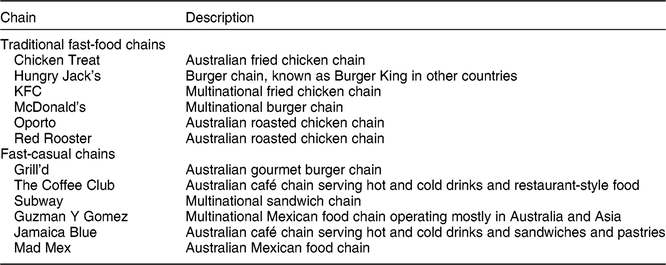
For the purposes of the present study, children’s meals were defined as small meals that were advertised in-store for consumption by children and comprised of a main item and a drink(7). A total of twelve chains were included (see Table 1). Half were signatories to the QSRI and consisted of the more traditional fast-food chains (Chicken Treat, Hungry Jack’s, KFC, McDonald’s, Oporto and Red Rooster); the others were not and were considered fast casual (Grill’d, The Coffee Club, Subway, Guzman Y Gomez, Jamaica Blue and Mad Mex). Although Subway can be considered a traditional fast-food chain, at the time of the 2010 study it did not sell children’s meals and was excluded. Subway also provides fully customisable and made-to-order sandwiches, which are more aligned with the fast-casual chain menus than fast-food menus. To ensure consistency with the results, Subway has been included in the fast-casual category. Since the 2010 study, demand for traditional fast-food chains has shifted towards more premium and/or healthier options available at fast-casual chains(Reference Vuong15). These additional chains were included in the present analysis to give a broader overview of children’s meal options in chain outlets in Australia.
Fast-food and fast-casual chains included in the present study
Procedures
Nutrition information for all available children’s meal combinations from each chain was sourced from company websites in May 2016. Data were collected for energy (kJ/serving), saturated fat (g/serving), sugars (g/serving) and Na (mg/serving) for each menu item. A total was then calculated for each possible meal combination for each of the nutrients. Where data were not available on company websites, information was obtained from store visits, printed material, menu boards, or via telephone calls and emails to outlets. This was consistent with methods utilised in the 2010 study(Reference Wellard, Glasson and Chapman8).
Data analysis
Nutrition information was compared with children’s daily requirements and recommendations according to the Australian Nutrient Reference Values for energy and Na (upper limit)(16, 17) and the Australian Dietary Guidelines for saturated fat and sugars(18). To remain consistent with the previously published analysis(Reference Wellard, Glasson and Chapman8) the estimated energy requirements for children aged 4, 8 and 13 years were calculated using a physical activity level of 1·7 (light-moderately active) and averaged between genders. These ages and physical activity level were included as they are the cut-offs for the QSRI, and this allows comparison with the 2010 research. Further, the last Australian survey found that 84 % of 2- to 4-year-olds met the recommendation for 3 h physical activity/d(19). Additionally, 60 % of 5- to 17-year-olds met or exceeded the recommendation of 1 h physical activity/d(19). Nutrient composition for each meal combination was compared with 30 % (recommended as a guide for the nutrient contribution of meals(20)) and 100 % of estimated daily requirements and recommendations for 4-, 8- and 13-year-old children (Table 2). Meals from the QSRI signatory chains were also compared with the fast-food industry’s own nutrition criteria for healthier children’s meals(7).
Children’s meal and daily requirements and recommendations, and the QSRI criteria used to assess children’s fast-food meals

QSRI, Quick Service Restaurant Industry Initiative for Responsible Advertising and Marketing to Children.
* Meal recommendations are 30 % of daily requirements.
† QSRI(7) maximum nutrient criteria.
‡ Nutrient Reference Values for Australia and New Zealand(17), physical activity level of 1·7 (light-moderate activity), average for males and females.
§ Australian Dietary Guidelines, saturated fat should comprise no more than 10 % total energy intake(18).
║ Australian Dietary Guidelines, sugar should comprise no more than 20 % total energy intake(18).
¶ Na upper limit, Nutrient Reference Values for Australia and New Zealand(16).
The number and proportion of total meals that met or exceeded each criterion were calculated. The mean and range per serving for each chain, each meal type and in total were calculated for energy and each nutrient.
Differences in median nutrient composition between traditional fast-food and fast-casual chains were investigated. As the data contained several outliers (energy and Na) or were not normally distributed (sugars and saturated fat), Mann–Whitney U tests were conducted.
Data were analysed using the statistical software package IBM SPSS Statistics version 19. A comparative analysis was conducted on the six signatory chains of the QSRI, by comparing with the 2010 analysis(Reference Wellard, Glasson and Chapman8). First, a sensitivity analysis using a Mann–Whitney test was conducted using all QSRI meals at both time points. As there were no significant differences in energy or any nutrient between 2010 and 2016 and there were no new meal options added by the chains in 2016, only the meals available at both time points from the signatory chains were included in the following analysis (n 144). Chi-square tests were conducted to determine whether the proportion of meals that met or did not meet the QSRI criteria, and the proportion of meals exceeding 30 % and 100 % of children’s daily recommendations, had changed between 2010 and 2016. All results were considered significant if P ≤ 0·05.
Results
The nutrient contents of 289 children’s meals were reviewed, including 172 from QSRI signatory chains (60 %) and 117 from non-signatory chains (40 %). The mean nutrient composition of a children’s meal was 2107 kJ, 6·4 g saturated fat, 26·2 g sugars and 731 mg Na per serving (Table 3).
Mean and range nutrients in Australian fast-food and fast-casual children’s meals in 2016, per serving
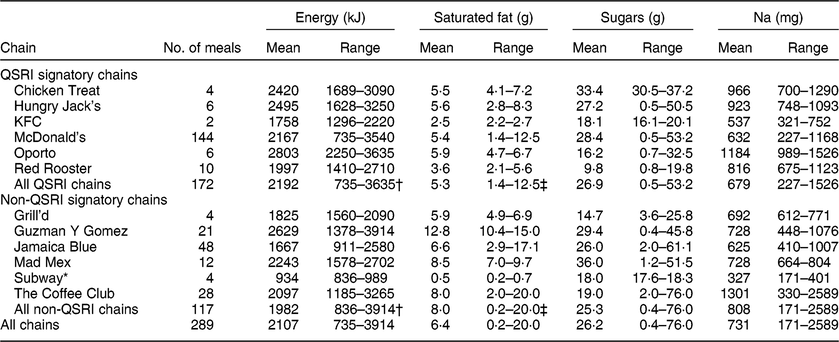
QSRI, Quick Service Restaurant Industry Initiative for Responsible Advertising and Marketing to Children.
* Although Subway can be considered a fast-food chain, it has been included with fast casual as it was not included in the original study and provides a customisable menu more aligned with the other fast-casual chains.
† Fast-food meals significantly higher than fast casual, P = 0·003.
‡ Fast-food meals significantly lower than fast casual, P < 0·001.
Proportion of meals exceeding 30 % and 100 % of daily recommendations
The majority of meals available from QSRI signatories exceeded 30 % of daily recommendations for a 4-year-old’s energy (69 %, n 118), saturated fat (52 %, n 90), sugars (67 %, n 115) and upper level of intake for Na (88 %, n 152; Table 4). The results were also substantial for 8- and 13-year-olds, particularly for Na (88 %, n 152 and 64 %, n 110, respectively). Two meals exceeded 100 % of the upper limit for Na for 4- and 8-year-olds.
Number and proportion of Australian fast-food and fast-casual children’s meals from QSRI signatory chains and non-signatory chains (‘other’) exceeding 30 % and 100 % of estimated daily requirements and recommendations and the QSRI criteria
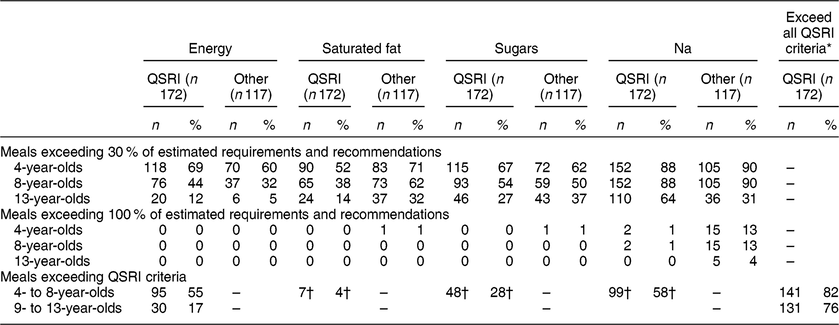
QSRI, Quick Service Restaurant Industry Initiative for Responsible Advertising and Marketing to Children.
* QSRI(7) maximum nutrient criteria.
† 4- to 13-year-olds.
In non-signatory chains, a higher proportion of meals exceeded 30 % of daily recommendations for saturated fat for all ages (71 %, n 83, 62 %, n 73 and 32 %, n 37 for 4-, 8- and 13-year-olds, respectively). Fewer meals from other chains exceeded the 30 % of energy recommendations for all ages, and the sugar recommendations for 4- and 8-year-olds; however, a higher proportion of meals from other chains exceeded 30 % of a 13-year-old’s sugar recommendations. More meals from other chains exceeded the entire daily Na recommendations for all ages.
Proportion of meals from QSRI signatory chains that met the QSRI criteria
Overall, 82 % of meals from QSRI signatories (n 141) exceeded the industry’s own advertising and marketing nutrient criteria for energy and three nutrients for 4- to 8-year-old children as did 76 % of meals (n 131) for 9- to 13-year-olds. The proportion of meals exceeding an individual criterion was highest for Na, with more than half of meals (58 %, n 99) exceeding this nutrient criterion (Table 4). Meals that met the criteria were most likely to include water, intensely sweetened soft drink or flavoured milk as the beverage, and/or did not include deep fried sides, such as fries. No meals containing a cheeseburger met the QSRI criteria.
Differences between traditional fast-food and fast-casual chains
There were significant differences between children’s meals from traditional fast-food and fast-casual chains. Although fast-food chain children’s meals had significantly higher energy content (median: 2232 v. 1927 kJ, U = 7995, z = −2·965, P = 0·003), they had significantly lower saturated fat content (median: 4·9 v. 7·5 g, U = 13 532, z = 4·978, P < 0·001). There were no significant differences between fast-food and fast-casual children’s meals for median content of sugars (P = 0·33) or Na (P = 0·36).
Changes between 2010 and 2016
Between 2010 and 2016, the overall mean nutrient content of meals per serving available at both time points changed very little (Table 5). However, considering individual chains, there were some changes to note. Meals from Chicken Treat reduced in mean energy (−600 kJ/serving), saturated fat (−9·4 g/serving) and Na (−121 mg/serving), and meals from Red Rooster reduced in mean energy (−410 kJ/serving) and sugars (−11·8 g/serving). Meals from KFC reduced in saturated fat (−10·5 g/serving). Despite decreasing in saturated fat (−1·7 g/serving), meals from Hungry Jack’s increased in energy (+345 kJ/serving), sugars (+8·6 g/serving) and Na (+187 mg/serving).
Mean and range of nutrient content of Australian fast-food children’s meals per serving from QSRI signatory chains in 2010 and 2016

QSRI, Quick Service Restaurant Industry Initiative for Responsible Advertising and Marketing to Children(7).
Between 2010 and 2016, there were no significant differences in the proportion of meals that did not meet the QSRI’s criteria for any nutrient (all P > 0·05, data not shown). There were also no significant differences in the proportion of meals that exceeded either 30 % or 100 % of children’s recommendations for energy or any nutrient (all P > 0·05, data not shown).
Discussion
Our study aimed to investigate the nutrient composition of children’s meals offered at Australian fast-food and fast-casual chains, compare the nutrient composition with children’s requirements and recommendations, and determine whether there had been changes in nutrient composition between 2010 and 2016. While there was wide variation in nutrient composition within and between outlets, the mean meal was found to provide 2107 kJ, 6·4 g saturated fat, 26·2 g sugars and 731 mg Na. This was above 30 % of estimated daily requirements across all nutrients for a 4-year-old. The mean meal also contained greater than 30 % of the upper limit of Na across all age groups. We found minimal changes in energy, saturated fat and Na contents of meals available in both 2010 and 2016, meaning that chains have not systematically reformulated their meals to make them healthier.
In Australia, 20 % of children consume fast food at least once per week(Reference Hardy, Mihrshahi and Drayton4). This increases to 34 % in some cultural groups and 33 % in children with an obese BMI(Reference Hardy, Mihrshahi and Drayton4). Many of the meals included in our study supplied over 30 % of daily energy requirements, which has been recommended as a guide for lunch or dinner meals(20). In addition, many of the meals are providing excess saturated fat, sugars and Na which have the potential to displace nutrient-dense foods in a child’s diet(Reference Rangan, Randall and Hector21). This may lead to weight gain in the long term.
Our study provides further evidence that in Australia, the introduction of menu labelling in chain outlets has not driven reformulation. The 2010 data were collected prior to the implementation of menu labelling in any Australian state(9). The 2016 data were collected 5 years after the first state had implemented legislation to make energy labelling mandatory in chain outlets(9). To provide customers with the ability to compare items, especially those with similar energy contents but different macronutrient contents, detailed nutrition information should be provided at the point of purchase for all items on the menu.
In QSRI chains, the majority of children’s meals did not meet the industry’s own definition of a healthy children’s meal that could be marketed to children. Less than a quarter of meals would be permitted to be marketed to 9- to 13-year-old children and only 18 % could be marketed to younger children. Despite this, fast-food chains continue to market their children’s meals by showing imagery only of the limited, ‘healthier’ options(Reference Watson, Lau and Wellard22). It is unknown how popular these options are. Further, the criteria themselves have their own limitations. As the saturated fat and sugar cut-offs are determined per 100 kJ it is harder for lower-energy children’s meals to meet the saturated fat and sugar criteria. That is, the higher the energy content, the more saturated fat and sugars the meal can contain. This allows chains to market their more energy-dense offerings but not their lower-energy meals. Overall, our study shows there is still a need to revise the QSRI nutrition criteria to ensure that unhealthy meals are not being promoted to children.
The participation of the fast-food chains in the QSRI can be perceived as activity that promotes health. Similarly, providing ‘healthier’ menu options can lead to the chain being perceived as healthier overall(Reference Chandon and Wansink23) despite still providing many unhealthy options as was seen in our study. Further, in Australia fast-casual chains often market themselves as ‘healthier’ alternatives to traditional fast-food chains. For example, the Mexican fast-casual chain Guzman Y Gomez markets itself as ‘Deliciously Healthy’(24) and the fast-casual burger chain Grill’d ‘Healthy Burgers’ has an endorsement by a popular nutritionist and nutrient content claims on its website(25). Although lower in energy, children’s meals at fast-casual chains were found to be higher in mean saturated fat per meal than their traditional fast-food counterparts. Similarly, US studies found that menu items in children’s meals from fast-casual outlets(Reference Schoffman, Davidson and Hales26) and sit-down restaurants(Reference Deierlein, Peat and Luz27) had significantly more energy and other nutrients of public health concern than traditional fast-food menu items. Public education is required to ensure that consumers are not misled by such marketing approaches in either fast-food or fast-casual chains, and greater transparency on the nutrient composition of children’s meals (in addition to energy) may counter the ‘health haloes’ chains may gain from participating in these activities.
However, education in isolation is not likely to result in healthier behaviours. To reduce the negative impact of fast-food meals on children’s dietary intakes, the trend of increased energy, saturated fat and Na must be reversed. Reformulation of menu items has consistently been recommended to reduce the impact of unhealthy meals on nutritional intake in the fast-food setting(Reference Wellard, Glasson and Chapman8, Reference Hobin, White and Li14, Reference Wootan28, Reference Moran, Block and Goshev29). Given the unhealthy nature of the meals offered by chains demonstrated in our study, reformulation remains an intervention that should be implemented.
Our results are similar to recent research conducted in the USA that found that despite publicly committing to reformulating the nutrient composition of children’s meals, there have been little changes in energy, saturated fat or Na between 2012 and 2015(Reference Moran, Block and Goshev29). More broadly, there have been little changes in energy or macronutrient content of individual fast-food menu items that have been consistently on menus for multiple years in the USA(Reference Jarlenski, Wolfson and Bleich30, Reference Bleich, Wolfson and Jarlenski31) or in Australia(Reference Wellard-Cole, Goldsbury and Havill32).
Our study had several limitations. Most of the included nutrition information was sourced from chain websites and was not verified via laboratory testing, which would be cost-prohibitive due to the number of individual menu items, nutrients and samples required to be tested. Therefore, the accuracy of information is unknown. Another limitation was the exclusion of chains that do not market meals specifically for children. This excluded pizza chains, among others, where children share part of a larger meal. However, the complexities of portion sizes and large number of possible food combinations prohibited this analysis.
An additional limitation is that up to half of parents ordering for their 6- to 12-year-olds will choose larger options for their child rather than meals marketed as children’s meals(Reference Harris, Schwartz and Brownell33). The nutritional impact of this has not been assessed; however, larger sizes would increase the energy and nutrient contents of the included items. Programmes such as Kids LiveWell in America have the potential for improving the nutrient composition of children’s meals by offering smaller portions and healthier options(34). However, research has shown that there was little improvement in nutrient content of children’s meals in the three years following the introduction of Kids LiveWell(Reference Moran, Block and Goshev29). Regardless of what meals were chosen for children, systematic reformulation would address this issue. However, to understand the impact that changes to nutrient composition makes, more accurate consumption data are required, particularly among children who are frequent consumers of children’s fast-food meals. Further research that combines analysis based on fast-food consumption patterns of children of all ages together with the nutrient profile of the foods consumed is warranted.
Conclusion
The results of the present study show that the nutritional value of fast-food children’s meals has not improved since 2010. Children’s meals can provide excess energy, saturated fat, sugar and Na to children’s diets. Systematic reformulation of energy content and the nutrients of public health concern would improve the nutrient composition of children’s fast-food meals, thereby reducing the negative impact consumption of these meals may have on children’s nutrient intake and overall diet. The fast-food industry’s own nutrition criteria require review to appropriately define a healthy meal and ensure that unhealthy meals are not advertised to children.
Acknowledgements
Financial support: This research received no specific grant from any funding agency in the public, commercial or not-for-profit sectors. Conflict of interest: None declared. Authorship: L.W.-C. and C.H. conceived the study. C.H., L.W.-C. and W.L.W. designed and oversaw the study. A.H. collected and cleaned the data and conducted preliminary analysis. L.W.-C. and W.L.W. finalised the data analysis. L.W.-C. prepared the draft manuscript with input from A.H. and W.L.W. All authors provided significant input into manuscript review and approved the final manuscript. Ethics of human subject participation: The study did not require ethical approval as it was an observational study and had no human subjects.



