




In 1955, the United States Public Health Service wrote that plague has ‘come to be a maritime disease because it is a disease of rats and rats are great travellers, at least a few of them being on practically every ship’.Footnote 1 Rats in the mid-nineteenth to mid-twentieth centuries were a fundamental part of maritime life. These small rodents gnawed their way through the sinews of global capitalism, inhabited nearly every vessel and terrorised sailors, cats, and dogs. In so doing, rats transgressed boundaries that shaped life on ships, as well as material and conceptual connections between spheres of land and sea. This paper offers a broad overview of the spatial, medical, and sensory relationships between rats and humans in primarily, although not entirely, British and American maritime spaces in the nineteenth and early twentieth centuries. I focus on these maritime powers because of their significance in global naval affairs, and in the management of rats on board ships and in docks. Territorially, economically, and militaristically, British seafaring concerns were of particular importance in this period.Footnote 2 While the United States was also major player in nineteenth and twentieth-century shipping,Footnote 3 what accords it a particularly important role in the story of rats, plague, and maritime capitalism is the presence of its inventors and naval architects.
Within these broader imperial units, this paper does not focus on any specific oceans or groups of sailors, nor does it narrow its source material to any print communities. Instead, it scours travelogues, natural history books, shipping records, and government correspondence for traces of what Kaori Nagai has called ‘vermin writing’ – the ‘ways in which non-human animals emerge as “vermin” in human documents and leave their traces on them’ – on ships and in docks.Footnote 4 In following the maritime traces of rats through numerous archives and across multiple regions, this paper cannot provide a comprehensive minutia of rats on ships. Instead, it offers a panoramic view from which more in-depth histories of rats, infrastructure, and the oceans can be told.
The association of rats and maritime life has a long history. Lucinda Cole has argued that in the early-modern British empire, rats were a ubiquitous part of transatlantic seafaring.Footnote 5 Rats caused great damage to colonies when accidentally imported on ships,Footnote 6 and on board they ravaged food supplies, or attacked sailors directly by nibbling at their toes while they slumbered.Footnote 7 Nagai, likewise, has emphasised the omnipresence of shipboard rats in the nineteenth century.Footnote 8 Yet despite this rodents and other animals in maritime spaces have received little historical attention. Footnote 9 In the last five years, historians have begun to address this lacuna, and a minute but growing literature on shipboard animals has developed. Seafaring animals have been examined as reservoirs of disease,Footnote 10 companion species,Footnote 11 destroyers of the ship and its cargo,Footnote 12 or as objects of commerce.Footnote 13
Studies of nineteenth and twentieth-century seafaring rats stand not only to contribute to maritime history but also to oceanic history in general. In the last two decades, scale and geography have been key concerns of oceanic historians. Scholars have analysed the utility of categories such as the Atlantic or Indian Ocean Worlds, which contain studies within enclosed oceanic units,Footnote 14 and considered the implications of both ‘terracentric’ and ‘aquacentric’ histories.Footnote 15 One of the more interesting developments has been the attempts of scholars to reunite spheres of land and sea.Footnote 16 Far from timeless and natural, these divisions are, as Wilko Graf von Hardenberg argues, ‘recent constructs’;Footnote 17 and products of distinct and complex histories.Footnote 18 In thinking beyond this binary, Alison Bashford’s concept of terraqueous history, which collapses ‘the enduring couplets – land and sea, earth and ocean’, is helpful.Footnote 19 However, when formulating this concept ‘through which to comprehend and consider modern human endeavours where land and water meet’, Bashford neglects the presence of animals.Footnote 20
How non-humans have responded to, engaged with, or even comprehended human-constructed boundaries of land and sea has not been subjected to historical analysis. Seafaring rats, as animals who spend most of their time outside of water yet are adept swimmers who often live on ships, are terraqueous animals of a kind, and an ideal starting point for analysis.Footnote 21 Nestled in bags or barrels of grain, coffee, cotton, and other products, rats in the nineteenth and twentieth centuries hitchhiked across transport networks that connected rural hinterlands with port cities. Finding their way into the holds of ships as stowaways in cargo, or through deliberately climbing mooring ropes and gangways, rats on vessels found themselves in a paradise, replete with food and hiding places. Some rats made ships their permanent homes, while others departed in cargo and established new populations around the world. These globe-scurrying rodents not only demonstrate the frailty of human efforts to control the movement of pests between ports, but by passing between spheres of ship and shore, rats undermined and reshaped physical and conceptual borders between land and sea.Footnote 22
To explore these broader historiographical questions, this paper examines how anti-rodent borders between ships and shores were created, policed, and transformed over approximately the mid-nineteenth to- mid-twentieth centuries. In the process of constructing such boundaries, I argue, humans and rats spatially and architecturally altered the ports that connected disparate lands and seas, as well as the ships that transported goods and people between them. Such changes were ultimately a response to shifting human perceptions of rodent agency. Hence this paper is organised around human experiences of, and attempts to prevent, particular ratty activities in maritime spaces, and how rats circumvented or succumbed to them across three periods:
First, from the mid- to late-nineteenth century, when there was a significant increase in global shipping and mass-migration of both humans and animals.Footnote 23 Here, few attempts were made to curtail the movements of rats from shore to ship, and gnawing, eating, and drinking on board ships were identified as their key pestilent maritime activities. From the source material, which is by nature fragmentary, it is impossible to generalise what types of ships these rats were infesting, and even less whether barques, dhows, junks, steamers, and so on were particularly vulnerable to rats. Instead, these pilfering pests were largely accepted as a general feature of maritime life, who upturned rigid spatial hierarchies on board and cohabited with captains, crew, and travellers, alike. While steps could be taken to mitigate the ravages caused by rats’ powerful teeth, little could be done to stop them from crossing to and from spheres of land and sea.
Second, between the 1890s and the 1920s, rodent control shifted towards enforcing a land/sea boundary by preventing rats from climbing or swimming on or off board ships. In this period, against the backdrop of the Third Plague Pandemic, rats were rapidly linked to outbreaks of plague, and their presence on board became increasingly unacceptable. With millions of humans and rats dying, various technologies and spatial strategies to remove rats from human maritime spaces were deployed, and international agreements passed to rid ships and docks of ‘vermin’. Lukas Engelman and Christos Lynteris’s Sulphuric Utopias provides a compelling analysis of one of these technologies: maritime fumigation. This strategy of distributing poisonous gases into ships to disinfect merchandise and later, to kill rats, was touted as a technology of hygienic modernity, which could create a capitalist utopia of disease-free trade without the need for costly shipping delays caused by maritime quarantine.Footnote 24 However, fumigation was not the only aspect of this desired rat and plague-free utopia: it was paired with infrastructural innovations that attempted to suppress ratty movements between sea and shore. Such innovations focused primarily on preventing black and brown rats from climbing or swimming on board ships.
Third, from the 1920s to the 1950s, the construction of anti-rodent boundaries between land and sea was deemed ineffective and architectural and spatial strategies were developed to prevent not only gnawing, eating, drinking, swimming, and climbing, but also nesting and movement on board. In 1920s New York, an ambitious new strategy was attempted: the total rat-proofing of ships. Rat-proofing was rapidly adopted by cargo and passenger shipping companies trading in United States ports and was met with such success that it significantly reduced the need for costly fumigation. While nineteenth century rats moved between ports, disregarding entrenched hierarchies of maritime life, twentieth century rat-proofers attempted to access the spatial and sensory world of rats to identify and remove the spaces that enabled them to thrive, thus making it easy to eliminate on-board survivors. In this period, although enforcing a hard anti-rodent border between ship and shore eventually proved impossible, such technologies succeeded in constructing a new border: one that aimed to prevent rats from travelling between ports.
Gnawing, Eating, and Drinking: mid- to late- nineteenth-century human/rodent relations before borders
Rats have long been a source of discomfort to sailors and of financial losses to traders. Travelling across supply lines linking cities and rural hinterlands to the international maritime arena, rats frequently found themselves on board vessels where they survived and thrived. Legions of nineteenth-century natural historians, seafarers, and writers in the Anglo world complained bitterly of ship-rats, animals who, according to North American abolitionist, solider, and author Thomas Wentworth Higginson, fared ‘on board ship better than men do’ (Figure 1).Footnote 25 Such writers were largely unconcerned with preventing rats from entering ships, but instead took umbrage at the trespassing of rats into human spaces. Their chief grievances were the definitive activities of rodents: gnawing, eating, and drinking. The very taxonomic category, ‘rodentia’, created by Thomas Edward Bowditch in 1821, was derived from the Latin rodere, meaning ‘to gnaw’,Footnote 26 and on ships, black and brown rats put their gnawing prowess to great use. To locate sources of food and water on board, as well as to build nests, rats relied on their sharp incisors, which could perforate almost any wooden shipbuilding or provisions-storage material. Spaces on board in which food, water, and cargo were stored, were particularly vulnerable.Footnote 27 In times of great thirst, according to a court case at the Cape of Good Hope, rats would go as far as to gnaw through ‘leaden pipes conveying water’.Footnote 28 In the cargo hold, rats gnawed at anything from bags of coffee to parchment labels affixed to British imperial postage.Footnote 29 At times, rats were indicted for ‘arson’ and ‘larceny’,Footnote 30 or were blamed for chiselling away at the timbers of wooden sailing ships and sprouting leaks.Footnote 31 On occasion, rats even tore sails to pieces, perhaps in search of nesting materials.Footnote 32 On one ship docked in Calcutta in the nineteenth century,Footnote 33 a group of sailors hoisted the sails, and were horrified to witness a ‘perfect shower of rats, old and young…pouring on the deck’.Footnote 34 By gnawing through almost anything, seafaring rats ate away the profits and property of nineteenth century capitalists, and the information networks of the British empire.
Rats inhabiting nineteenth-century vessels not only threatened cargo and architecture but gnawed their way through the rigid spatial hierarchies that structured life on ships. On board eighteenth- to early-twentieth century ships, life was unpleasant for much of the crew and passengers. Conditions were cramped, crowded, nauseating, hot, and often filthy.Footnote 35 Perhaps with the exception of captains and wealthy travellers, there was little privacy for most seafarers, and virtually none at all for labourers or passengers in steerage.Footnote 36 In order to maintain discipline and order in such an unpleasant and potentially incendiary environment, several historians have argued that seventeenth to early twentieth-century ships, whether sail or steam, were structured according to a rigid spatial hierarchy of power, which divided the ship into areas reserved for different social ranks, races, and genders.Footnote 37 Rats utterly disregarded the boundaries between these spaces, moving between places reserved for cargo, the minute sleeping quarters inhabited by Indian seafarers, the packed lower decks of kidnapped Africans on slave ships, or the captain’s cosy chambers, gnawing, eating, drinking, and thriving in the process.
For many passengers on board ships, the human senses were constantly assaulted by disgusting smells, sights, sensations, which rats exacerbated.Footnote 38 The sounds and smells of rats, in particular, were disturbing to many seafarers. In the process of eating, nesting, and scurrying, rats created an unsettling cacophony of noises: scraping, squealing, and scurrying could frequently be heard below the decks and disturbed many a seafarer’s nights rest.Footnote 39 Meanwhile, the smell of a dead and decaying rat, which wafted throughout the ship, was described by one writer as ‘the rankest compound of villainous smells that ever offended nostrils’.Footnote 40 These human sensory experiences provoked by rats sparked emotions that ranged from discomfort to outright horror. Thomas Boteler, a Lieutenant on the HMS Barracouta, while returning to England from a naval survey of the west coast of Africa in 1826, provided a skin-crawling description of sharing his vessel with unwanted pests. Rats,
unable to pick up any refuse of eatables about the deck, attacked the stock of provisions which we had below and made great havoc, besides running over us at night and keeping up a great noise about the decks…Indeed, their ravages [rats and cockroaches] were so unlimited that scarcely anything escaped them. They destroyed our books and clothes, and even attacked us while asleep so ravenously that many of us were latterly obliged to wear gloves, their bites proved very painful, as they sometimes gnawed the skin off for nearly a quarter of an inch square.Footnote 41
These indignities were frequent on British vessels, and captains and wealthy travellers complained bitterly of rats’ invasions into their chambers. Rear-Admiral Beaufort of the HMS Woolwich, for example, was one morning awoken by the disturbing sensation of ‘the cold nose of a rat licking his lips’, who scurried away ‘firmly between the timbers’.Footnote 42 Sinclair Thomas Duncan, a passenger on board a ship returning from Australia via Cape Horn, also experienced a ratty assault. In the 1860s, he wrote that he had been ‘very much annoyed by rats’. As he was drifting into sleep in his cabin, he ‘felt something soft moving along my face’ and upon a scan of the room, spotted a ‘large rat’, and ‘dozens’ of others ‘running about the tables’ which disturbed his rest.Footnote 43 The fact that rats so easily moved between spatial hierarchies on board may have augmented the anxieties provoked by such experiences. Rats were often associated with underclasses, and on ships many commentators thought that they emerged from the lower decks.Footnote 44 By scurrying between the cargo, crew, captain and wealthy travellers’ spaces, ship-rats revealed the close proximities between people across the class and racial spectrum that might otherwise have been hidden on land.
These writings, however, were largely produced by wealthy and literate captains, officers, or travellers, who lived in relative comfort on board ships. Evidence of relationships between rats and labourers or travellers in steerage are more difficult to come by.Footnote 45 Some works of literature suggest that the lower decks were plagued by disturbing sounds made by rats,Footnote 46 while travelogues and periodicals indict rats for making ‘a meal’ of a sailor’s toes,Footnote 47 or gnawing away at ‘the heel of the seaman’.Footnote 48 Indeed, one can imagine that under already cramped conditions, those packed below deck would have experienced ratty assaults of greater frequency and magnitude. Enslaved people, who had no freedom of movement at all, probably fared the worst against ship rats. According to a letter in the Illustrated London News recounting the British capture of a slave ship near the coast of Cuba in 1857, the ‘poor captives’ were in a ‘wretched condition’: they were ‘packed closely together, and covered with dirt and vermin’.Footnote 49 Indeed, chained aboard the lower decks on the infamous Middle Passage, and without shoes, enslaved people would have been left relatively defenceless against the night-time gnawing of rats.Footnote 50
Despite the annoyances of rats, attempts to prevent them from boarding ships in the nineteenth century were few. Perhaps this was considered more effort than it was worth, or even impossible.Footnote 51 Instead, rat-control gravitated around killing rats or keeping them away from certain areas on board.Footnote 52 One technique, developed in Egypt, for example, involved submerging a vessel underwater for half an hour to drown the rats on board.Footnote 53 In times of extreme infestation, the services of ratcatchers could also be enlisted.Footnote 54 Cats and dogs were also frequently employed as ratters.Footnote 55 However, their efficacy was often in doubt. In 1857, on board the Dutch ship Konigin der Nederlanden, a cat was taken aboard one evening. The morning later, ‘nothing was to be seen but her skin and bones’.Footnote 56 This fileted feline was not the only predator to experience the wrath of starving rats. In the Arctic, American explorer Elisha Kent Kane and his crew were utterly inundated with rats, who became such an aggressive menace that even their dogs ‘were afraid to go into the hold of the vessel.Footnote 57 One dog named Rhina, had her feet and nails ‘ferociously’ gnawed, and Kane was forced to withdraw her from the lower decks, ‘yelping and vanquished’.Footnote 58 At such times, when ratcatchers, dogs, and cats all failed to quell infestations, ships were fumigated with charcoal, sulphur, mercury, or boiling steam as a last resort.Footnote 59
At times, rats were so difficult or expensive to evict from ships, that other seafarers pragmatically attempted to coexist with them. Some attempted to contain them within certain parts of the ship by feeding and watering them in designated spaces.Footnote 60 Other, more superstitious sailors, scorned attempts to kill them, instead describing a rat infestation as a sign of good luck.Footnote 61 At least one captain was not averse to rat companionship, and even brought pet rats on a voyage.Footnote 62 Other seafarers hunted ship rats for sport,Footnote 63 or consumed them as food.Footnote 64 Some even viewed rats as a source of health on board. Before the 1890s, rats were not typically associated with disease.Footnote 65 North American sailor George Barrell, for example, thought that rats performed a ‘service in consuming wastage that might otherwise breed pestilence’ on the decks.Footnote 66 Others, such as Kane, who ate rats as maritime medicine, attributed his ‘comparative immunity from scurvy’ to his regular consumption of rat soup.Footnote 67
Thus, nineteenth century rats gnawed their way into maritime life, feasting upon cargo, disregarding spatial boundaries on board, undermining societal hierarchies when they moved between the spaces of the ship, and inverting the natural order when they predated upon humans, cats and dogs. In so doing, rats disturbed seafarer’s bodies and minds: their noises kept sailors up at night, their rotting corpses reeked, the feeling of a rat running across one’s bed disturbed what little privacy could be had on board and their occasional gnawing away at extremities caused spine-chilling discomfort and pain. To cope with ship rats, humans attempted to restore order by killing (and occasionally eating) them, or by reimagining human and rat relations entirely. In the 1890s, however, this plurality of multispecies relationships on ships would gradually begin to disappear.
Climbing and Swimming: constructing anti-rodent boundaries
Around the turn of the twentieth century, rats gradually became increasingly unacceptable seafaring companions. This was mainly down to one reason: the global spread of plague. Beginning in Hong Kong in 1894, plague travelled along commercial trade networks to every continent except Antarctica.Footnote 68 By 1959, this pandemic had killed some twelve million people.Footnote 69 As millions of humans and rats died, the tacit acceptance of nineteenth century commentators that it was probably impossible to eliminate rats from maritime trade entirely, was gradually overturned. Here, the problems of rodents devouring cargo, the unpleasant noises, the terrifying sights and sensations they provoked, were quickly subordinated to the lethal dangers they posed to global health.
By the 1890s, ships had long been suspected as reservoirs of infectious diseases, and quarantine restrictions were often imposed on vessels, cargo, and passengers in ports.Footnote 70 In the wake of the rat-flea theory of plague, fears of rats perpetuating the pandemic began to merge with earlier suspicions of ships as unhealthy or diseased spaces.Footnote 71 Accordingly, sailors, public health officials, politicians, shipbuilders, and inventors began to tackle a new challenge: to fundamentally restructure the spatial dynamics of ships and docks to exclude rats from them. To do this, they attempted to construct an anti-rat border between spheres of land and sea by policing two characteristic rat activities: climbing on or off board and swimming to and from shore.
In 1897, the first biomedical study arguing that rats and fleas played a role in the spread of plague was published by Japanese bacteriologist Ogata Masanori. Footnote 72 However, this theory was controversial and not uniformly accepted by governments and scientists around the world.Footnote 73 As such, there was considerable disagreement as to what measures should be taken against rats on ships. Some scientists and bureaucrats viewed rats as a considerable risk. In 1899, British Indian naturalist E.H. Aitken wrote that he had often observed rats climbing up hawsers (cables) tying ships into docks, and passing ‘from boat to boat and from boat to shore with wonderful facility’. Aitken worried that they were spreading plague between ports in this way.Footnote 74 Similar concerns were expressed in Australia a year later.Footnote 75 Austro-Hungarian medical authorities, likewise, suspected that infected ship rats might play a role in the spread of plague through gnawing or soiling cargo, which could become ‘infected’ and spread the disease through supply lines if careful disinfection was not undertaken.Footnote 76 Others, such as A. John Gregory, an Assistant Medical Officer of Health for the Cape Colony thought in 1900 that infected rats were the main danger and could be carried in cargo across the country.Footnote 77
To avoid plague outbreaks, between 1899 and 1903, several states, cities, and ports began passing regulations that aimed at preventing rodents from swimming or climbing on or off board ships. The experts involved, whether sailors, zoologists, medical officials, or politicians, were largely convinced that one of the primary means by which rats boarded ships was via cables that connected ships to docks, or by swimming short distances. They thus started to employ architectural and spatial strategies to isolate all large vessels from the land to prevent rats from travelling between ship and shore. In attempting to curtail such ratty activities, humans began altering the spaces at which land and sea conjoined. In 1899 France, for example, the French Minister of the Interior mandated the inspection of ships in ports for rats, the protection of ‘mooring-cables…so as to prevent rats getting in or out of the ship by these means’, and the raising of footbridges at night. To kill any rats that snuck past such defences, he also dictated that ships should be fumigated with ‘sulphurous acid in all parts likely to harbour rats’.Footnote 78 A few months later, in January 1900, the USA required all ships ‘infected or suspected of being infected with plague’ to be placed in ‘anchorage sufficiently remote from the nearest land or other vessel’ to prevent rats from swimming to land or to another ship.Footnote 79
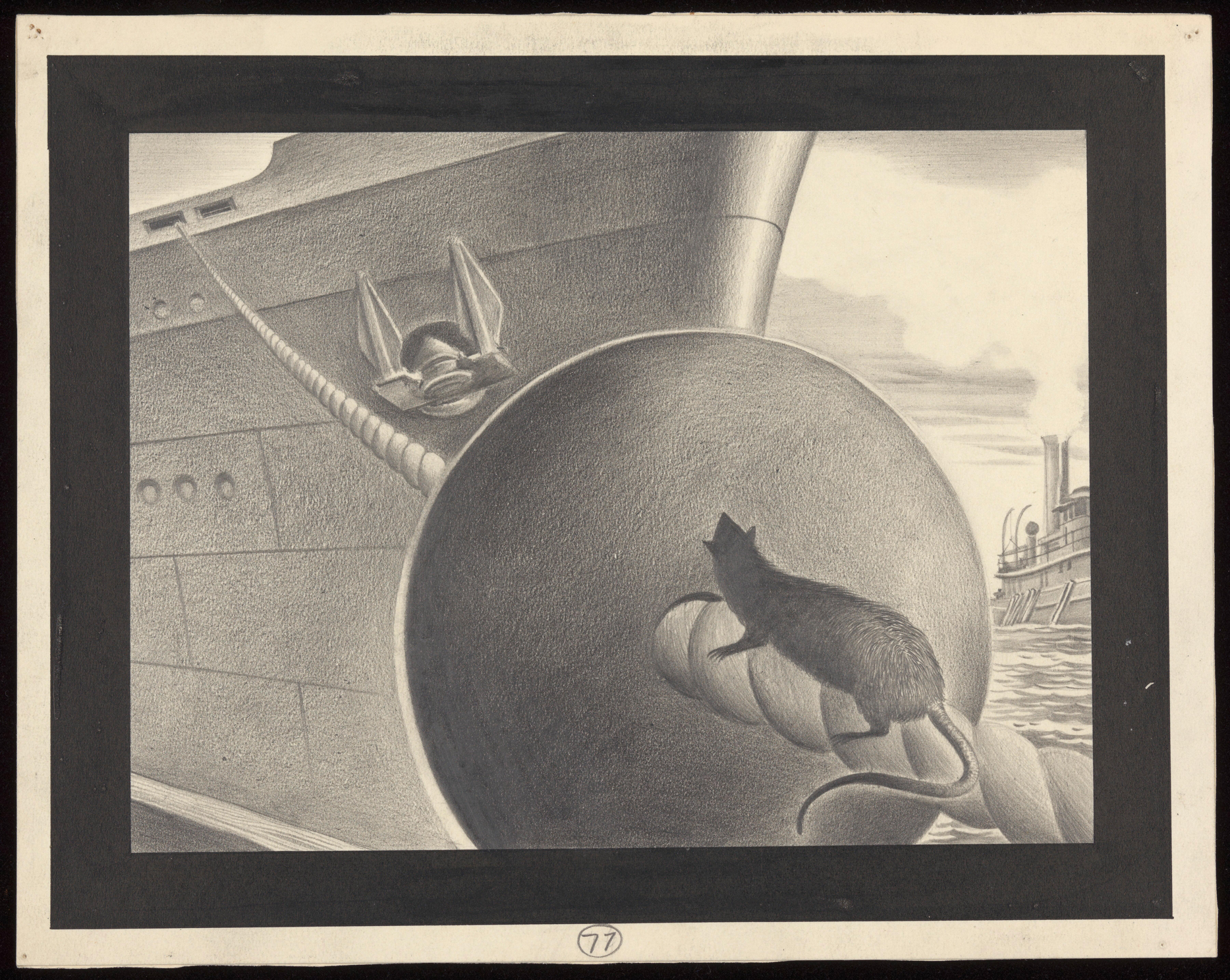
Other countries followed suit and began making use of an infrastructural strategy that had sometimes been used in Port Louis, Mauritius since the 1850s, and in the USA since the 1880s: the protection of hawsers with barriers that were later named ratguards (see Figure 2 for an illustration of what became a popular design). The early adoption of ratguards in Mauritius was hardly surprising: it had earned the moniker of an ‘island of rats’ in the eighteenth century.Footnote 80 By the mid-nineteenth century, Port Louis was overrun with hordes of sugar-hungry rats climbing the cables that connected sea and shore by tethering ships to docks. To mitigate their ravages, officials began placing ‘boards’ that rats allegedly could not climb over – ‘on the mooring chains to prevent’ rats from embarking.Footnote 81 The intent of such devices was simple: affix a tin-coated ‘circular piece of wood, like the head of a cask, made in two parts…on the cable at right angles’ to impede the path of rat and thus lock the animal on land or at sea.Footnote 82 In 1888, a different design was patented in the USA by inventor Thomas Wilson: a funnel-shaped ‘protector for vessels against rats’.Footnote 83 Here, rats could walk into the cone of the funnel, but purportedly not climb over it. Fearing the spread of plague, medical authorities in Odessa, then-Russia, began making use of these devices in 1899,Footnote 84 and in Great Britain by April 1901.Footnote 85 In the same year, the use of ‘metal funnel’ ‘sheathing’ devices on hawsers was mandated at the Table Bay Docks in the Cape Colony.Footnote 86 In 1900, Australian authorities in Sydney and Melbourne mandated the use of ratguards, the tarring of mooring ropes, the raising and tarring of gangways at night, the docking of ships four feet from wharves and piers, and erected numerous other anti-rat defences.Footnote 87 In some docks, they took these measures further, and declared war not only on ship rats, but also on land rats inhabiting wharves, so as to prevent plague from moving between seafarer and land-lubber rodents.Footnote 88
Not all countries, however, were convinced of the rats’ role in spreading plague. British India, at the time the epicentre of the plague pandemic, was slow to adopt such measures, despite the insistence of some British Indian scientists, like Aitken, that rats circulated plague. Instead, its medical authorities remained largely convinced that rats played only a minor role in the spread of plague,Footnote 89 even though bacteriological and observational evidence suggested that rats were susceptible to plague and could spread it on board or in dock.Footnote 90 Accordingly, measures against rats were initially lax in parts of the country. According to O.V. Muller, a historian and political economist at Elphinstone College, anti-rat boundaries were not enforced in India’s largest port: Bombay. Ships were typically docked ‘up against the quay’, which allowed rats easily to swim or climb from sea to shore.Footnote 91
From October to December 1903, an International Sanitary Conference was hosted in Paris where representatives from around the world passed international regulations to prevent the spread of plague. All signatories, encompassing the British Empire, the USA, and numerous European and Middle Eastern Nations agreed to a series of measures targeting rats on board ships.Footnote 92 These encompassed inspecting unusual mortality among seafaring rats, killing rats on ships with cases of confirmed plague, and disinfecting any ‘infected’ merchandise.Footnote 93 Additionally, the agreement empowered sanitary inspectors to issue certificates stating that rat destruction had been carried out.Footnote 94 Fumigation was touted by delegates at this conference as the best available rat-destruction strategy, and was ultimately accepted as the eminent maritime disease control strategy.Footnote 95 Two years later, the USA signed an agreement to similar effect with numerous South American countries.Footnote 96 Rats on board ships were now internationally regarded as signs of potential contagion. Although it was considered near impossible to rid ships of their presence permanently, it was hoped that by stymieing their movements between ship and shore, the oceanic spread of plague could be prevented.
Following these agreements, nations around the world scrambled to pass local guidelines and regulations to prevent rats from crossing between shore and ship, and to kill those on board. By 1908, both anti-swimming strategies and ratguards were widely employed, although the specifications for their deployment varied from place to place.Footnote 97 Yet both measures were met with problems. At times, closing the land/sea border to rats, meant also closing it to humans. In Bombay, 1905, the Health Officer of the Port, J. Sladen, found himself unable to comply with a request from the Australian Commonwealth to close the ‘openings in the side of a ship’ after sundown on ships with passengers on board, presumably because this would trap them on board overnight. Instead, he suggested that gangways between ship and dock should be ‘freshly tarred’ and either drawn up or ‘brightly illuminated and a watch kept on them’ at night, as was practice in Calcutta.Footnote 98 On other occasions, such measures interfered too greatly with the flow of goods. By the end of 1905, in Aden, even keeping cargo boats and lighters ‘3 feet off jetty walls’ was deemed too difficult a logistical task, and the precautions were abandoned.Footnote 99 In any case, the utility of a three feet rule was often in doubt. According to Dr G.A. Chitre, the author of an extensive report on the efficacy of measures imposed to prevent rats from boarding ships in Bombay, rats could potentially jump such a distance.Footnote 100 Moreover, since the gangway undersides were never tarred, there was nothing to prevent rats from sneaking on board undetected in this manner.Footnote 101
Rat’s climbing capabilities proved a tougher behaviour to curtail, and anti-climbing devices became a source of much controversy. A discussion of their efficacy in the Australian parliament in 1906 is a case in point. According to Billy Hughes, an MP for West Sydney, ratguards were so useless that ‘not only a rat, but a cow, could get ashore on the mooring ropes’. To make matters worse, their use was poorly enforced, meaning that on some ships tied up with five hawsers, only three or so would contain ratguards.Footnote 102 Although other Australian government bureaucrats insisted that ratguards worked, the lived experience from sailors refuted such statements. Countering a claim from one MP that ‘rats cannot get over them [ratguards]’, politician James Matthews retorted: ‘sailors assure me that they do’.Footnote 103 Ratguards were met with yet another problem in windy ports, such as Aden. In 1906, the Port Surgeon of Aden dismissed them as ‘useless’.Footnote 104 The wires that affixed the guards to hawsers were too short to fasten them securely, which meant that they were liable to be blown out of position on windy days, and thus would have allowed rats to pass.Footnote 105
A. John Gregory, the Medical Officer of Health for the Cape Colony was equally unconvinced by ratguards, and conducted an experiment which demonstrated, in a clear and simple manner, how utterly ineffective they were at impeding the movements of Cape rats between sea and shore. To simulate a docked ship, Gregory hung a cable over a tank of water, and attempted to prevent rats from crossing it. Firstly, he covered the cable with tar, which the rats crossed without any difficulty. Next, he placed a ‘large galvanised iron disk 18 inches in diameter’ in use in ‘Eastern ports’ on the rope.Footnote 106 But the rats simply stood on their hind legs and vaulted themselves over. Finally, Gregory repeated his experiment with funnel guards, which he found equally pointless. Despite coating such funnels in grease, wire, or other materials, the rats ‘managed to negotiate every obstacle in the shape of disks’ up to a size of 20 inches, which he deemed impractically big for a guard. Nothing, apparently, could impede the progress of a determined rat without causing considerable disruption to shipping. And more importantly, rats were as likely to simply slip into cargo undetected.Footnote 107
Between 1919 and 1921, similar experiments were conducted by Chitre in the Bombay Bacteriological Laboratory and observations made in the docks to the same conclusion. Chitre found that even if perfectly used, ratguards could never create an ‘absolute barrier, but only…a repellent to a certain extent’.Footnote 108 To make matters worse, in a series of photographs, Chitre documented how poorly ratguards were enforced. Often, they were too small to be effective. At times they were placed so close to ships that rats could simply ignore them and jump aboard, and at other times they had large gaps between guard and rope, allowing rats to squeeze through.Footnote 109 In short, human error and rodent cunning mitigated against efforts to prevent rats from climbing from docks to ships.
News of the inefficacy of these guards spread, and in the 1910 and 1920s, three new ratguard designs were devised. One, exhibited at the 1912 Philippine Exposition in Manila, which had been in use there for some four months, was a larger circular guard with additional reinforcement: a three foot long ‘galvanized-iron disk’ that was to be ‘held in place by four half tubes’ which extended out a foot in length.Footnote 110 A second, somewhat different design was patented by American inventor F.E. Maynard in the same year.Footnote 111 This ‘trapguard’ comprised a cylindrical disk, with a gate that a rat could easily push to enter. Maynard’s design arguably attempted to manipulate the sensory world of the rat to human advantage. Noting that the rat, confused by the presence of a barrier, would probably choose to enter the dark space, it was here that the coup de grâce would be delivered. Inside the guard was placed a ‘pad’ saturated with poison, which would coat the unsuspecting rat’s fur with poison, causing great tactile discomfort. Subsequently, the rats would clean themselves by licking off the poison, and thereby ingesting it.Footnote 112 W.E. Rucker of the US Public Health and Marine Hospital Service endorsed this sadistic design as ‘very good’ and promised to display it at the ‘International Congress on Hygiene and Demography’.Footnote 113 Just over a decade later, a third design, devised by Major J. Taylor of the Indian Medical Service along with Chitre, involved electrifying ‘half an inch parallel strips of aluminium on a hinged wooden triangular casing’ fastened around a hawser which would shock climbing rats and send them cascading to the ground. However, this design was ineffective in wet conditions, which caused the current to short circuit, allowing rats to cross ‘unharmed’.Footnote 114 Despite their greater efficacy under certain conditions, all these new guards were rarely used: perhaps their more complex designs entailed additional expenses deemed beyond their utility.Footnote 115
However, ratguards were faced with an additional problem: not only was their ability to prevent embarking and disembarking in doubt, they did nothing to assist in killing the rats living on board ships. They had to be paired with regular fumigation (typically with sulphuric acid) to kill the ship’s resident rodents, as well as the laying of poison in ports to catch escapees, and if any survived such measures, they could potentially re-establish large populations while at sea or on land.Footnote 116 As noted by Engelmann and Lynteris, in the 1900s and 1910s, sulphuric fumigation as a rat-control strategy was not without its problems and was at times opposed by United States shipping companies.Footnote 117 Similar complaints were expressed by British imperial companies in the 1920s. In 1922, Messrs. Turner Morrison and Company complained that fumigations’ utility was severely limited: rats simply escaped poisonous gases by running into ‘their homes behind casings of cabins and amongst wood work of upper structures’, where fumigants could not penetrate.Footnote 118 In the same year, William Glen Liston, Director of the Bombay Bacteriological Institute, claimed that because each hold was usually fumigated separately, rats could escape death by moving around the ship. Moreover, storerooms could not be fumigated because the gases damaged food, and this could only be attempted after cargo was unloaded. Thus, the ‘most infectious place in the ships is usually passed over’.Footnote 119
Ultimately, despite their inefficiency, these spatial and architectural strategies represented the best-known measures to curtail the perceived agency of rats in crossing between spheres of sea and shore. These pests and the pathogens they carried had exposed the porosity of sanitary borders between land and sea and forced humans to reconfigure how these spheres connected. Notwithstanding their inherent problems, ratguards, combined with more efficient fumigants such as hydrogen cyanide,Footnote 120 remained the dominant strategies of preventing rats from exiting or boarding ships until 1925, when they were supplemented by a new infrastructural technique: the complete rat-proofing of vessels. Rat-proofers attempted not only to prevent the circulation of rats from ship to shore, but to transform the ship from a rodent paradise, replete with food, water, and nesting spaces, into a purgatory in which they could not meet their basic needs. In this way, rat-proofers moved beyond the fixation with rodents crossing between sea and shore and attempted to eliminate rodent eating, nesting, reproducing, and movement on board. Rat-proofing would ultimately succeed in transforming ships into no rats’ lands, thus producing new borders that greatly impeded the circulation of these animals between ports.
Nesting and Movement: deconstructing and remaking borders
By the 1920s, rat-proofing had become perhaps the most important anti-rodent strategy in the terrestrial USA. Spurred by the success of an anti-plague rat-proofing campaign conducted in San Francisco between 1903 and 1908,Footnote 121 which had eliminated plague from the city, numerous areas across the country were attempting to retrofit buildings to transform them from rat lodgings into architecturally hostile spaces.Footnote 122 Their explicit goal was to bring about a permanent reduction in black and brown rat populations through building the rodents ‘out of existence’.Footnote 123 This, rat-proofing advocates argued, could be achieved by ridding buildings of all possible entrances and exists for rats, interspaces suitable for nesting, such as spaces between furniture and floor, or roof and ceiling, and eliminating runways which rats could use to access sources of food and water.Footnote 124
With such successes in urban spaces, it was only a matter of time before shipbuilders began applying rat-proofing principals to vessels. The first experts to do so, were surgeon Samuel B. Grubbs and pharmacist Benjamin E. Holsendorf of the United States Public Health Service. In 1913, Grubbs and Holsendorf argued that fumigation ‘of vessels for rats could not be efficiently done unless the vessel was extensively prepared’. Such preparation, which involved ‘blocking runways by which rats could escape’, constituted a form of ‘partial rat-proofing’ from which a ‘more complete and permanent system’ could be developed.Footnote 125 Hence, in 1924, they proposed a year-long experiment in total rat-proofing a ship, and ‘one of the finest and largest passenger vessels afloat was chosen for a demonstration’.Footnote 126 While rat-proofing work was being carried out, near daily observations were taken and trapping operations conducted, and as the rat-proofing progressed, trapped rodents gradually fell to zero. By 1925, rats had successfully been built out of the ship.Footnote 127
Following the successes of this demonstration, work commenced in 1925 on the rat-proofing of seventy-three ships of eighteen different lines,Footnote 128 and Grubbs and Holsendorf publicised their methods in an eighteen-page illustrated paper in Public Health Reports. Their guidelines were aimed at large steamships, but could, in theory, have been applied to any ships. Rat-proofing entailed a fundamentally different approach to the anti-rodent borders of the 1890s–1920s, which in many ports remained in use into the 1940s despite their documented inefficacy.Footnote 129 Instead of trying to prevent rats from crossing between spheres of land and sea, rat-proofers aimed to stop these animals from moving and breeding on ships, making it easy to kill them on board, and thus to prevent their migration between ports. In Grubbs and Holsendorf’s paper, rat-proofing was depicted as a process of spatial exclusion, in which the ship would be constructed or retrofitted to transform it into a no rats’ land. Its explicit goals, they argued, were to make it ‘impossible or difficult for a rat to hide, nest, or move about in search of food’.Footnote 130 Essentially, it aimed to abolish all architectural features of ships that allowed rats to survive and thrive, transforming them into hostile environments in which rats would have access to little food, no suitable nests, and ferocious competition from their compatriots. In the words of Grubbs and Holsendorf, rats would be
confronted with an acute housing problem, high cost of living, and poor transportation between home and business (food getting). Labouring under these disadvantages, rats will be exposed to acute rivalry among themselves, to their enemies, and to starvation. They will breed with difficulty, and instead of multiplying will decrease or even disappear.Footnote 131
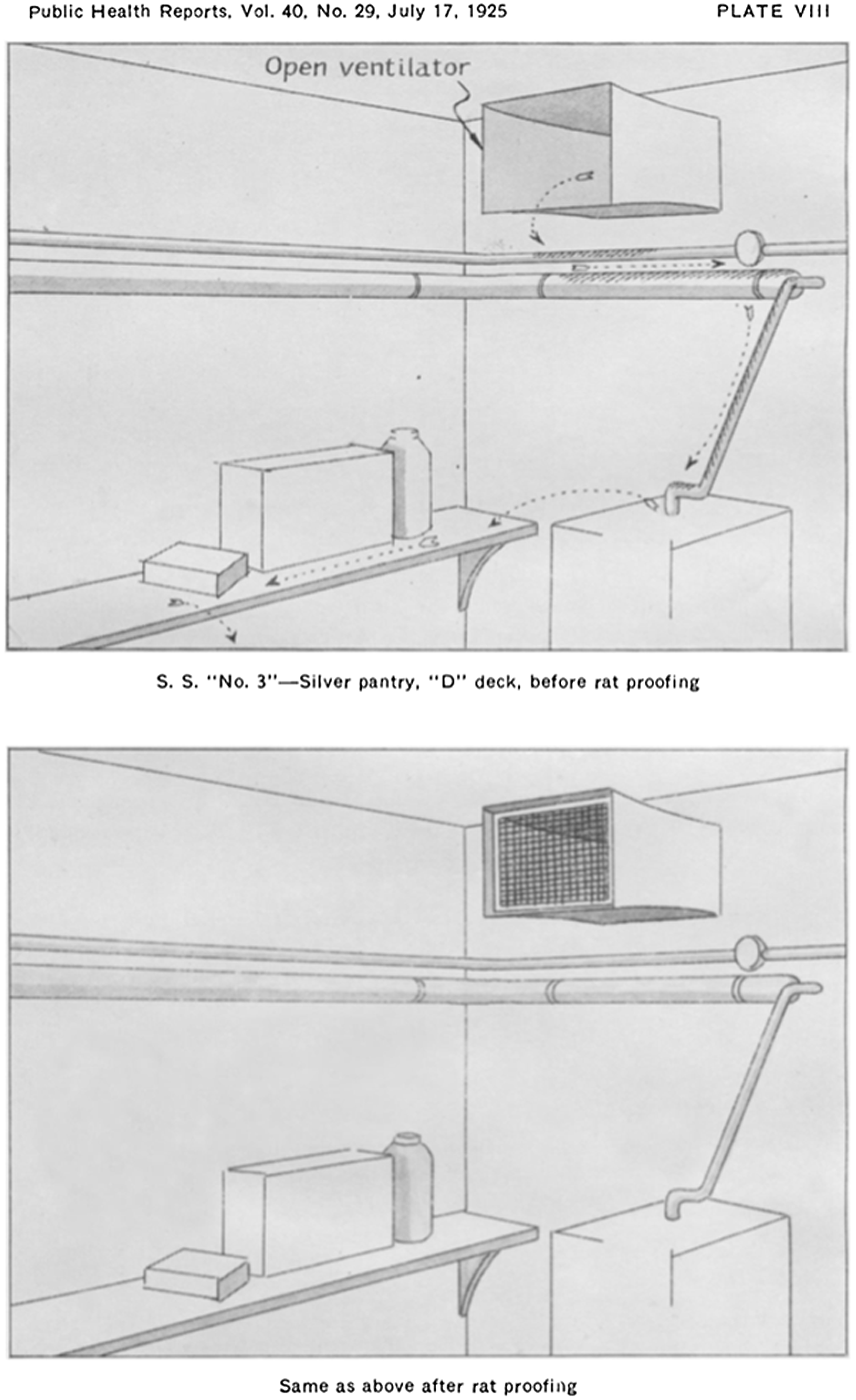
Imagining the spatial and sensory world of rats was key to the success of rat-proofing. Building upon knowledge produced by ratcatchers and fumigators about the sensorial and spatial worlds of ship-rats, rat-proofers attempted to end the unrestricted rodent movement that so violated the rigid spatial ordering of life at sea.Footnote 132 To achieve a rat-free maritime world, rat-proofers needed to think like rats to deprive them of their basic needs. To prevent them from gnawing their way into produce containers, nibbling at garbage, or chewing holes in water tanks and casks, one could place goods in rat-proof containers, or in rooms ‘devoid of rat harbourage and into which rats can not come from without’.Footnote 133 To impede their climbing and scurrying in search of food, they could place screens ‘impenetrable to rats at gnawing levels’ over doors and windows.Footnote 134 To deprive them of cosy, secluded and dark spots in which to nest, one needed to locate gaps between furniture and the floor, secluded openings of ventilation shafts, or spaces between decks, and block them with ‘material impenetrable to rats’.Footnote 135 The process is perhaps best illustrated by the following ‘before and after’ diagrams:
In the before illustration (Figure 3, Plate IV), we can see the imagined or observed path of the rat as illustrated by arrows. The diagram argues that this room, before rat-proofing, provides many highways for rats, who could climb along the piping in and out of the room, up and down the shelves, and hide underneath the chest of drawers. By contrast, in the ‘after’ illustration (Figure 3, Plate V), whilst rats could probably still climb around the room, they were deprived of both hiding places and paths between this room and the rest of the ship, thanks to the installation of screens over all openings. Likewise, in Grubbs and Holsendorf’s diagram of a pantry (Figure 4), in the ‘before’ image, the rat can scurry in through the vent, access all the food, and then move on or escape through the vent once again. By closing the vent in the ‘after’ photograph, the rat is subsequently deprived of access to food altogether.
Applying these practices required considerable expertise because the spatial and sensory worlds of rats and humans were so vastly different. The geography of the ship had to be considered not from a human perspective, but via a rats-eye-view. According to C.L. Williams, humans were accustomed to looking ahead, or down, and rarely above. ‘Runways’, he argued
may be anywhere, but the best place to look for them is where one would never think of looking. The truth of this paradoxical statement may readily be verified by placing an experienced inspector and a neophyte on the same ship. The former will soon have spotted every run on the ship; the latter will take a month to find them all. This is partly due to man’s instinct to direct his eyes to the ground, while the runways are mostly overhead…Footnote 136
Such advice, along with instructional photographs and diagrams produced by the US Public Health Service visually reconfigured spaces once completely innocuous, or even useful to sailors, as potential rodent homes.Footnote 137 Furnishings, building materials, and goods were constructed as pathological objects and reframed in terms of their uses to rats. Gaps between fittings, unenclosed storage areas, and rooms without netting were transformed into ‘harbourage’ that rats might contaminate. Piping, tightropes, or shelves were recast as rat ‘runways’ or ‘highways’ through which they might move between parts of the ship, encounter other rats, breed, and risk infecting sailors. Scrap material or stored possessions were depicted as nesting materials.
Through accessing the spatial world of the rat, rat-proofers developed one of the most successful anti-rodent measures yet attempted. According to Grubbs, total rat-proofing was quickly becoming a more efficient rodent control strategy than fumigation. In 1927, he reported that in contrast to fumigation, which was only 70–80% effective,Footnote 138 and temporary in effect,Footnote 139 total rat-proofing gave permanent results. As evidence of its efficacy, Grubbs noted that it had quickly become a popular measure and was widely used by New York shipping businesses, as well as within the United States Navy and Army Transport Service vessels.Footnote 140 According to C.L. Williams, it was so effective that even in the case of one ‘vessel engaged in the West Indies trade’, which had harboured an average population of 1177 rats, rat-proofing had gradually reduced that number to zero.Footnote 141 The wholesale exclusion of rats from vessels was now believed to be a possibility.
Total rat-proofing appears to have been widely accepted as a key tool in the maritime war against rats. Yet not everyone was convinced that it should be used to evict these animals entirely. James Alexander Mitchell, the Secretary of Public Health of South Africa, thought that rat-proofing should be employed on ships, but only to limit the spaces accessible to rats. A few individuals, in his opinion, could serve as an early warning system for plague, much like canaries in coalmines. Rats, he argued should be offered their own ‘special chambers or spaces…where they could find attractive cover and food, but which could be easily shut off when desired’.Footnote 142 By keeping these rats in a secure and bounded space, they could act as ‘sentinels’ or ‘detectors of plague infection’.Footnote 143 In other words, once these rats got infected, the crew would know that plague was on board. Mitchell’s suggestion that rats might yet serve some purpose on board rat-proof ships appears to have been unpopular or overlooked. Although this article was published in a British journal and reprinted in French,Footnote 144 there is no evidence that Mitchell’s strategy was ever used outside of South Africa and at the time of publication, Mitchell had not yet tested it on ships himself.Footnote 145
Instead, shipbuilders and engineers in North American and some British shipyards continued to apply Grubbs and Holsendorf’s principals in pursuit of a utopian ideal of eliminating seafarers’ pestilent companions from ships entirely. According to Vernon B. Link’s survey of the US Public Health Service’s Annual Reports, shipping companies quickly began experimenting with rat-proof construction. By 1926, rat-proofing of ships had commenced in ‘Southampton, Bremen, Danzig, Buenos Aires, Gothenburg and Bergen’.Footnote 146 The rapid adoption of these techniques likely owes much to Grubbs and Holsendorf’s 1926 manual, The Rat-Proofing of Vessels which was translated into multiple languages and had gone through three editions by 1931.Footnote 147 In this booklet, the authors strongly pushed an economic argument: rat-proof construction was a cost-saving device. Not only could ships be rat-proofed at minimal cost, but their role in keeping rat populations to an absolute minimum would prevent damage to cargo and lessen the need for fumigation along with the shipping delays it caused.Footnote 148 Fumigation, once promoted as a measure to avoid shipping delays,Footnote 149 was now being attacked as a source of further delays by rat-proofers. At this point, avoiding routine fumigation through rat-proofing had become a possibility following the International Sanitary Convention of Paris in 1926, which empowered port health officers to issue ‘deratisation’ exemption certificates. When investigating ships for rats, inspectors paid particular attention to rat harbourage and exemptions could be issued if an official was ‘satisfied that the ship is maintained in such a condition that the rat population is reduced to a minimum’.Footnote 150 By 1929, American Marine Standards Guidelines recommended that all shipowners take steps to rat-proof their vessels,Footnote 151 and although these were not mandated, all ships funded by any money loaned from the United States Government had to comply to such regulations.Footnote 152
This combination of financial incentive and government regulations meant that rat-proof ships sailed widely across the globe by the early 1930s: as many as 75% of the ‘better-class ships’ coming into New York from 47 companies and 14 nations from the Americas, Europe, South America, and Asia had been rat-proofed.Footnote 153 Thanks to such successes in rat-proofing, in May 1937, the Quarantine Commission of the Office International D’Hygiene Publique, which consisted of representatives from the French, British, German, Belgian, Dutch, and American empires, confirmed that sanitary authorities could neglect the ‘deratisation’ of rat-proofed parts of the ship, and still receive an internationally-valid certificate stating that deratisation had taken place.Footnote 154 In the same year, an article in Public Health Reports declared that the overseas transmission of plague was ‘A Danger Almost Eliminated’.Footnote 155 A study of 4,418 ships at ‘Atlantic ports between July 1, 1936 and January 31, 1937’, revealed that only 8.4% of ships were infested with rats, in comparison to 50% a decade earlier. This, the author attributed to a combination of rat-proofing, more effective fumigation, and intensive inspections of vessels.Footnote 156 In 1948, G.L. Dunnahoo, a United States quarantine official reported that numerous shipbuilding companies had found that ratproof ships required ‘less tons of steel and less man hours’ to produce relative to other ship designs. As a result of this, rat-proofing bloomed in popularity, and in United States ports, the number of fumigations was ‘steadily dropping off’ and correspondingly, so were shipping delays.Footnote 157 Just a few years later Kund Stowman, a US Delegate to the Special Committee of the World Health Organisation on the International Sanitary Regulations, claimed that ‘a large majority of ocean going ships’ had been rat-proofed, the result of which was that deratting operations were becoming increasingly unnecessary.Footnote 158 Rats, the unwanted but constant animal companions of humans on ships for hundreds of years had, in many cases, now been built out of maritime spaces.
Ultimately rat-proofers, although able to prevent rats from making permanent homes in ships, abandoned the fantasy that anti-rat borders between land and sea could be clearly delineated and policed by humans, even in cases where ratguards were still in use. According to C.V. Akin, Chief Quarantine Officer of New York, the term ‘ratproofing’ itself was somewhat of a misnomer. In ‘the natural course of events’, he argued, ‘any vessel, regardless of the way in which it has been built, may pick up rats in cargo or rats may come on board by way of ship lines and gangways’. With rat proofing, rats were now unable to ‘roam at will’ and could ‘be cornered and eliminated by trapping or by other direct combat measures’,Footnote 159 and thus prevented from disembarking. Essentially, in transforming the ship into a no rats’ land, rat-proofers created a new border which impeded rodent movements between ports. Thus, by the 1930s, in response to the movements, habits, and settlement practices of rats, humans had not only reshaped boundaries between sea and shore, but also transformed the vessels that moved between them into anti-rodent barriers in their own right.
Conclusion
Rats left their marks on maritime architecture, and on international trade and transport in the nineteenth and twentieth centuries. Such traces were not only physical; ideas about what rats might do to humans, domestic animals, cargo, and boats themselves haunted the designs of ships and docks long after rats had stopped devouring sails. At sea, rats obstructed international trade, ate away at capitalist coffers, damaged property, disrupted imperial knowledge networks, and unwittingly facilitated the global spread of plague.
As knowledge about rats changed, so too did the spaces and objects that connected spheres of land and sea. In the nineteenth century, rats climbed gangways and hawsers which tethered ships to shore with few impediments or found themselves imported into cargo holds. Seafarers generally viewed them as an unavoidable part of maritime life, and once on board, rats engaged with humans in a variety of ways. Some who were accustomed to a more segregated hierarchy of life saw rats as abominable pests and complained of their invasions from the lower quarters into their own. Others took umbrage at their attacks on food, cargo, and flesh. Several seafarers, however, contended that rats were harmless, and tried to form cordial relationships with them, hunted them for sport, or consumed them as food or medicine.
In the wake of the Third Plague Pandemic, and the gradual acceptance of rats being the primary agents in the spread of plague, the fundamentals of human-rodent relations on ships began to change. As the rat was transposed into a pathogenic object, the variegated multispecies relationships on board became more monochrome. Rats were no longer sources of food which might ward off hunger or scurvy; they no longer served as on-board companions, or signs of good luck, eternally present on ships, regardless of human attempts to control them. Instead, as carriers and spreaders of plague, rats were now the greatest animal ‘enemies of man’; they were no longer permitted to hitch a ride on, nor make their homes in, the bowels of the ships that kept the global economy moving. Accordingly, various scientists, government officials, and inventors constructed an anti-rodent border which aimed to block the throughfares that connected ship to shore, and thus to prevent rats from swimming or climbing on board.
However, such a border proved an unrealisable ideal: rats were resourceful and learned to circumvent the infrastructural innovations. This strategy also neglected the fact that ships were perfect habitats for rats, which the animals rarely wanted to leave, and in which the survivors of fumigation could raise new families. To address this problem, rat-proofers developed new infrastructure to prevent nesting, breeding, and movement on board. To achieve this, they reframed the architecture of the ship in terms of the rats’ own spatial and sensory perceptions. Rather than viewing the ship as a series of rigidly separated series of spaces for cargo, food, water, and humans of various classes, they imagined it as a multitude of potential rat habitats that needed to be enclosed, covered, and plugged. Gaps between fittings, along with shelving and piping were reconceived as ‘highways’ through which rodents could move. Dark spaces underneath furniture or between the decks were damned as ‘harbourage’ in which rats might nest. Objects stored outside of containers were declared potential nesting materials. In building rats out of the ship, rat-proofers succeeded in erecting a new anti-rat barrier: the ship as a no-rats’ land, and a border between ports.
Reflecting on the history of these scurrying seafarers ultimately shows how fragile boundaries between land and sea have been in the past. These boundaries were fluid and shifted in response to a multitude of interactions between rats, humans, ships, hawsers, ratguards, cargo, fleas, and Yersinia pestis. Despite the attempts of humans to exclude rats from oceanic crossings, these terraqueous animals continued to move between spaces separating ships and land, hinterland and docks, ports, and oceans. Only the comprehensive reconstruction and retrofitting of ships succeeded in greatly limiting, but never fully eliminating, the maritime movement of rats.
Illustration of two ‘ship rat[s]’ from 1870, August, T.W. Higginson, ‘Our Menagerie. IV.–Rats.’, Our Young Folks: an Illustrated Magazine for Boys and Girls, Vol 6, No 8, p 488.
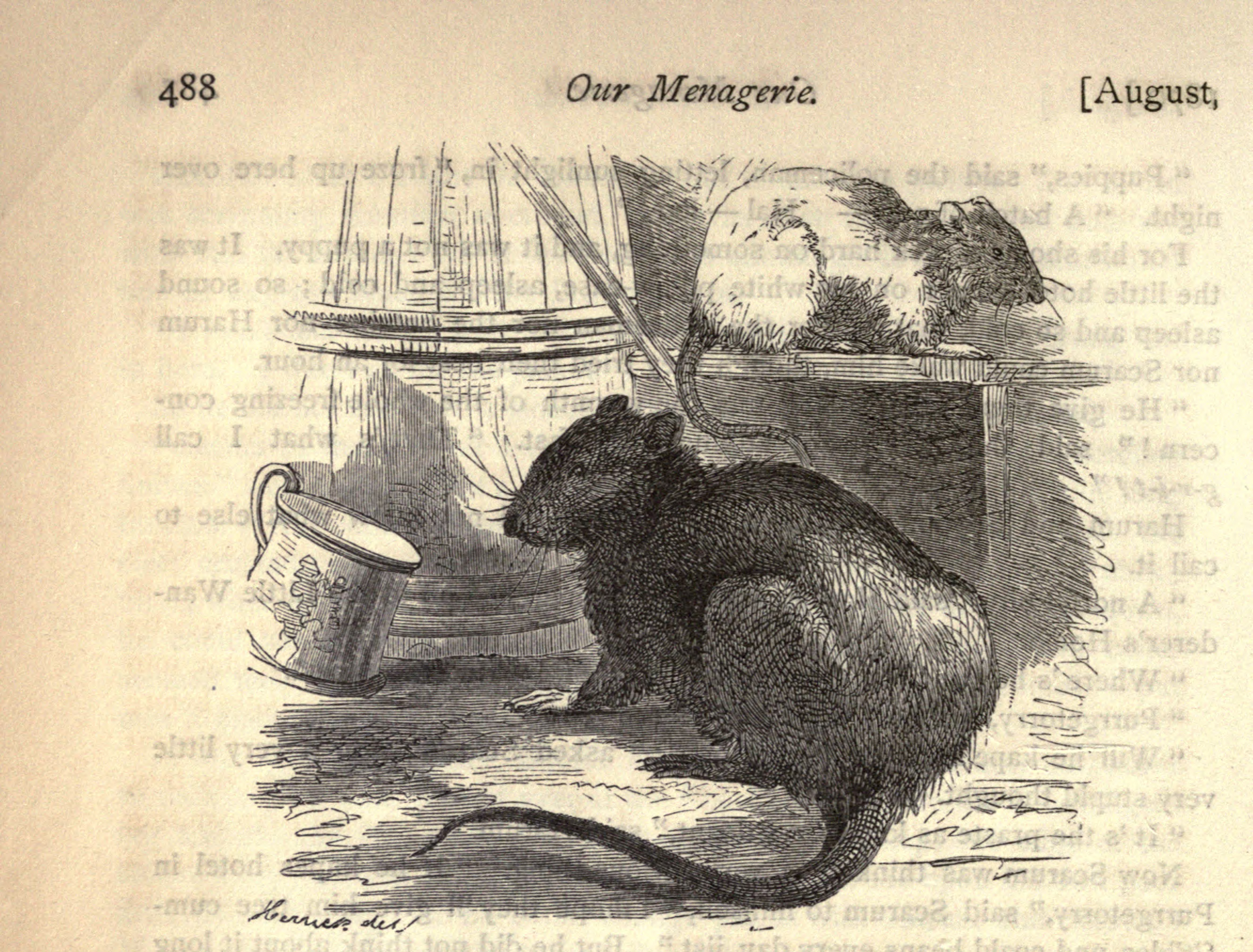
Illustration of a rat-guard barring a black rat from boarding a ship. ‘Obstructions on mooring-lines to stop rats boarding ships. Drawing by A.L. Tarter, 194-.’ Wellcome Collection: https://wellcomecollection.org/works/hcrv7jkv..
Plates IV and V from S.B. Grubbs and B.E. Holsendorf, ‘The Rat-Proofing of Vessels’, Public Health Reports 40, no. 29 (1925).
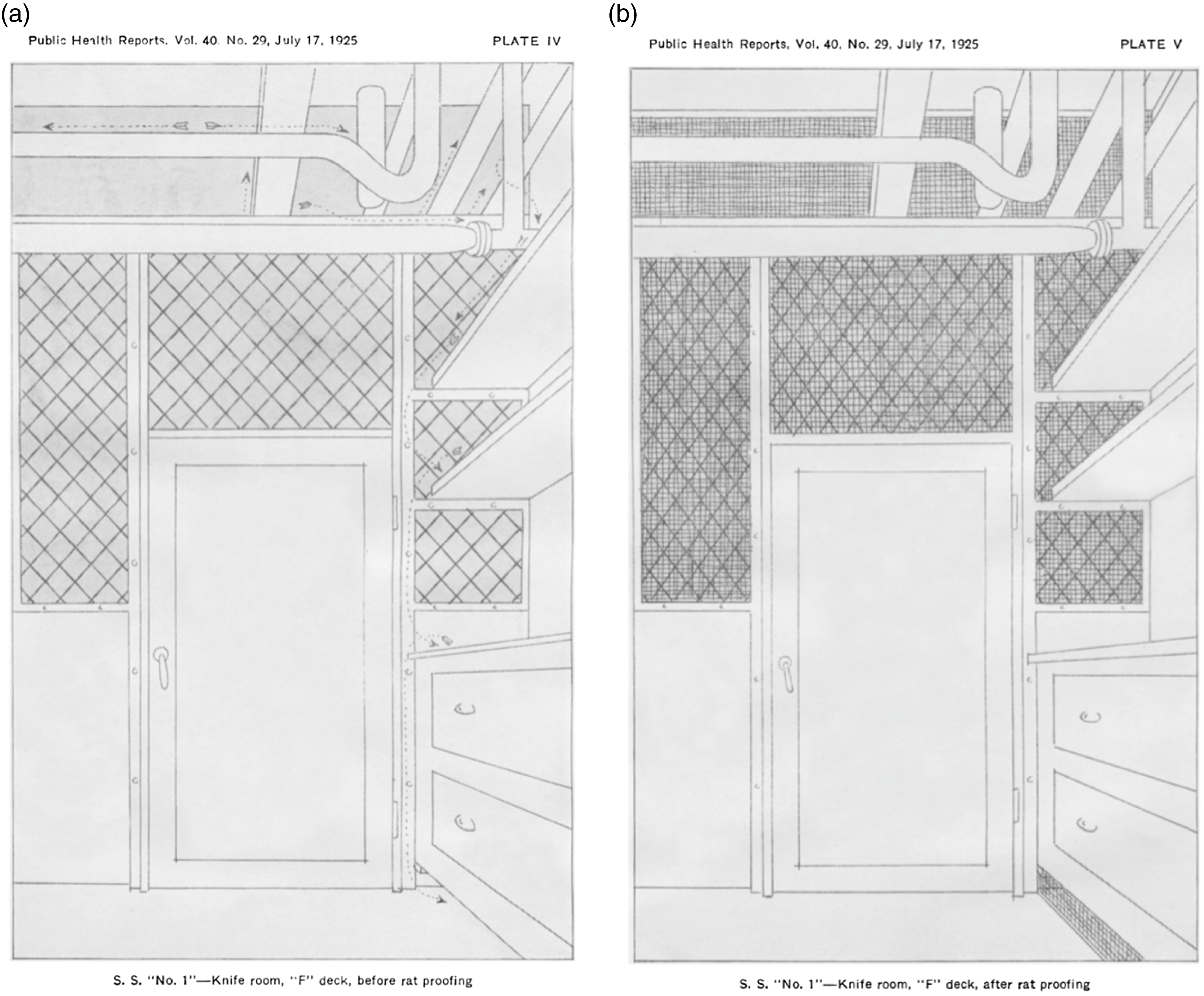
Plate VIII from S.B. Grubbs and B.E. Holsendorf, ‘The Rat-Proofing of Vessels’, Public Health Reports 40, no. 29 (1925).


 Open access

