


1. Introduction
Recent advancements in artificial intelligence (AI) have revolutionised various fields, enabling the rapid development of innovative solutions to address complex challenges. Among these advancements, Generative AI models, such as Generative Pre-trained Transformers (GPT) developed by OpenAI (2024), have shown remarkable potential in transforming process design since their initial release in 2020. These models excel at processing extensive datasets and generating contextually relevant ideas, making them particularly valuable for ideation in process design (Reference Zhu and LuoZhu and Luo, 2022). The application of Generative AI in conceptual design has been explored in several studies. Ma et al. (2023) investigated the use of Large Language Models (LLMs), such as GPT, in conceptual design generation. The findings revealed that AI-generated solutions exhibited higher feasibility and usefulness compared to crowdsourced ideas, although the novelty of these solutions was slightly lower. Zhu and Luo (Reference Zhu and Luo2023) demonstrated the efficacy of Generative Transformers in automating early-stage design concept generation, highlighting the models’ ability to synthesise domain knowledge and draw analogies to produce novel and useful concepts. However, while this study successfully addressed technical aspects of conceptual design, it did not emphasise sustainability considerations.
Building on this foundation, the authors’ prior work (Reference Mas’udah, Livotov and NugrohoMas’udah and Livotov, 2024) extended the application of Generative AI by integrating it with nature-inspired principles (NIP) derived from natural ecosystems to develop sustainability-focused solution concepts. This study demonstrated the potential of AI-driven ideation in achieving sustainability goals but did not focus on systematically enhancing the robustness of these solution concepts. To advance these ideas, the authors have further explored strategies for improving AI-driven design processes by evaluating various prompting strategies to enhance creativity in sustainable design (Livotov and Mas’udah, 2025; Mas’udah et al., 2025) and assessed the novelty, feasibility, usefulness, and sustainability of AI-generated concepts relative to human evaluations (Reference Mas’udah, Livotov and NugrohoMas’udah, Livotov, & Nugroho, 2024). While these investigations validated the utility of Generative AI in creating and evaluating solution concepts, the studies revealed limitations in addressing potential operational risks and ensuring consistency in real-world applications. A similar issue was identified in the study by Xu et al. (Reference Xu, Kotecha and McAdams2024), which evaluated ChatGPT’s performance in engineering design tasks and subjective decision-making. The research found that, while ChatGPT excelled in knowledge extraction, it exhibited limitations in tasks requiring human-like judgment and contextual decision-making. These findings further underscore the necessity for systematic methodologies to refine and optimise AI-driven solution concepts, particularly in addressing potential risks and enhancing their practical applicability.
In the field of optimising solution concepts, several studies have explored the integration of AI with traditional methodologies. For instance, Yang (Reference Yang2023) developed Predictive Patentomics, a method that utilises ChatGPT’s language processing capabilities to forecast innovation success and valuation by analysing patent data. This approach demonstrates the potential of AI in extracting valuable insights from patents to predict innovation outcomes. Nevertheless, it does not integrate these insights into a systematic framework like FMEA to predict and prevent potential failures in sustainable innovation. Similarly, Bahr et al. (Reference Bahr, Wehner, Wewerka, Bittencourt, Schmid and Daub2024) proposed a Knowledge Graph Enhanced Retrieval-Augmented Generation (RAG) framework for Failure Mode and Effects Analysis (FMEA), aiming to leverage analytical and semantic question-answering capabilities on FMEA data. While this approach enhances the reasoning capabilities within FMEA contexts, it primarily focuses on data retrieval and does not fully address the integration of AI-generated insights with practical implementation strategies. These studies indicate a growing interest in combining AI with methodologies like FMEA to optimise solution concepts. However, there remains a gap in integrating Generative AI with patent analysis and FMEA to systematically predict and prevent potential failures in sustainable innovation. Addressing this gap could lead to more robust and applicable AI-driven solutions across various domains.
Therefore, the goal of this research is to develop a comprehensive framework that integrates Generative AI, patent analysis, and FMEA to optimise solution concepts by predicting and preventing potential failures in sustainable innovation. The study aims to answer the following research questions:
1. How can Generative AI be utilised to extract meaningful insights from patent data to predict potential challenges in AI-driven solution concepts?
2. How can the integration of patent analysis and FMEA with Generative AI enhance the robustness and applicability of these solutions in sustainable process design?
By addressing these questions, this research seeks to contribute to the advancement of sustainable innovation through the optimisation of AI-driven solution concepts, ensuring their reliability and applicability in real-world scenarios.
2. Literature review
2.1. Generative AI and patent analysis for risk prediction in design processes
The utilisation of Generative AI models has significantly advanced the analysis of extensive textual data, including patents, to predict potential risks in design processes. A study by Pelaez et al. (Reference Pelaez, Verma, Ribeiro and Shapira2024) introduced a framework that employs GPT-4 to label and rationalise large-scale text from U.S. AI patent documents, effectively identifying public value expressions within patents. This semi-automated, human-supervised approach demonstrates how Generative AI can process vast patent datasets to uncover insights pertinent to design risk prediction. Complementing this, the authors’ prior work (Reference Livotov, Mas’udah, Sarsenova and Chandra SekaranLivotov et al., 2019) proposed a methodology for systematically anticipating secondary problems in new technologies by analysing patent documents. This approach focuses on identifying engineering contradictions within novel technical systems, thereby facilitating the early detection of potential risks during the design phase. Additionally, Yang (Reference Yang2023) explored the use of ChatGPT in forecasting innovation success and valuation by analysing patent data, highlighting the potential of LLMs in predicting the impact of technological advancements. Furthermore, a report by the World Intellectual Property Organization (WIPO) provides a snapshot of the patent landscape for Generative AI, indicating its disruptive potential across various sectors (WIPO, 2024). These studies underscore the potential of combining Generative AI with patent analysis to proactively identify and address risks in design processes, thereby enhancing the robustness and sustainability of innovative solutions.
2.2. Generative AI-driven FMEA for failure Prevention in sustainable innovation
Integrating Generative AI into FMEA has emerged as a promising strategy for proactive failure prevention, particularly within the field of sustainable innovation. Thomas (Reference Thomas2023) discussed the transformative impact of AI language models like ChatGPT on FMEA, highlighting their potential to revolutionise failure analysis by enhancing the efficiency and effectiveness of FMEA processes. El Hassani et al. (Reference El Hassani, Masrour, Kourouma, Motte and Tavčar2024) developed a framework that incorporates LLMs into the FMEA process, automating data collection and reliability assessment to streamline failure analysis. Their case study validated the framework’s efficiency and accuracy, highlighting its potential to enhance traditional FMEA practices. Additionally, Bahr et al. (Reference Bahr, Wehner, Wewerka, Bittencourt, Schmid and Daub2024) proposed a Knowledge Graph Enhanced Retrieval-Augmented Generation (RAG) framework for FMEA, leveraging analytical and semantic question-answering capabilities on FMEA data. This approach integrates knowledge graphs with RAG techniques to improve the comprehensiveness of failure mode analysis. These advancements illustrate the efficacy of integrating Generative AI with FMEA to proactively identify and mitigate potential failures, thereby supporting the development of sustainable and resilient innovations.
3. Methodology
3.1. Research design
This study employs a systematic methodology to optimise solution concepts by integrating Generative AI, patent analysis, and FMEA. The framework focuses on predicting potential risks or secondary problems associated with solution concepts and formulating mitigation strategies to refine and enhance the initial concept.
Framework for solution concept optimisation

Figure 1 presents the proposed framework for solution concept optimisation, showcasing the key phases from identifying potential problems to refining the initial solution concept. The detailed framework consists of the following phases:
1. Initial solution concept generation
The process begins with the development of initial solution concepts tailored to address the specific problem identified in the case study. These concepts are generated using a Solution-Driven Approach (SDA) based on the authors’ prior work (Reference Mas’udah, Livotov and NugrohoMas’udah and Livotov, 2024), leveraging Generative AI and nature-inspired principles for ideation. This method emphasises sustainability, aligning with the approaches discussed by Kokoschko et al. (Reference Kokoschko, Wohak and Schabacker2023) in integrating eco-design methods into SMEs’ product development processes.
2. Patent collection and analysis
In this phase, patents related to the initial solution concept are systematically collected from several reputable patent databases, including the German Patent and Trade Mark Office (DPMA, 2024), United States Patent and Trademark Office (USPTO, 2024), European Patent Office (EPO, 2024), and Google Patents (Google, 2024). To facilitate efficient patent retrieval and analysis, the proposed framework implements a Retrieval-Augmented Generation (RAG) approach powered by GPT-4o. This approach leverages the strengths of LLMs in conjunction with external knowledge sources to enhance the accuracy and relevance of the extracted insights (Reference Lewis, Perez, Piktus, Petroni, Karpukhin, Goyal, Küttler, Lewis, Yih, Rocktäschel, Riedel and KielaLewis et al., 2020). Furthermore, the integration of RAG frameworks has been shown to improve the performance of language models on knowledge-intensive tasks by providing access to up-to-date information (Reference Gao, Xiong, Gao, Jia, Pan, Bi, Dai, Sun, Wang and WangGao et al., 2023). The RAG process consists of three primary activities:
a) Retrieval phase: Relevant patents are retrieved based on their similarity and forward patent citation relationships to the initial solution concepts. Generative AI (GPT-4o) assists in identifying and refining search keywords and criteria, enhancing both the relevance and efficiency of the retrieval process. These relevant patents are analysed to identify potential limitations and challenges. Additionally, forward citations of these patents are also examined, as patents often do not explicitly disclose their limitations (Reference Livotov, Mas’udah, Sarsenova and Chandra SekaranLivotov et al., 2019). However, subsequent patents that cite the original patents frequently highlight underlying challenges, negative impacts, or potential areas for improvement, offering valuable insights for refining the solution concept.
b) Data extraction phase: Retrieved patent documents and their forward citations are then processed using GPT-4o. The Generative AI model extracts critical insights from the patents, systematically identifying key limitations, their associated causes, effects, and improvement strategies. An example prompt used during extraction was:
“From the given patent documents, identify clearly the limitations, associated causes, effects, and recommended improvement strategies explicitly mentioned.”
c) Generation phase: Insights extracted by GPT-4o are summarised into structured outputs and categorised according to recurring potential issues, such as operational complexity, scalability challenges, and energy efficiency. This structured information serves as foundational input for the subsequent FMEA analysis, enabling a comprehensive and systematic evaluation of potential risks associated with each solution concept.
3. FMEA transformation and prevention strategies
The data extracted from patent analyses is systematically transformed into an FMEA framework. FMEA facilitates the identification of potential failure modes, their causes and effects, and the prioritisation of prevention actions (ASQ, 2024). By integrating insights from patent data, this phase ensures that the optimised solution concept effectively addresses potential challenges and aligns with best practices in risk management.
4. Optimisation of Solution Concept
The initial solution concept is refined based on the findings from the FMEA analysis, addressing the identified risks, and thus enhancing the sustainability, robustness, and applicability of the original concept.
3.2. Case study
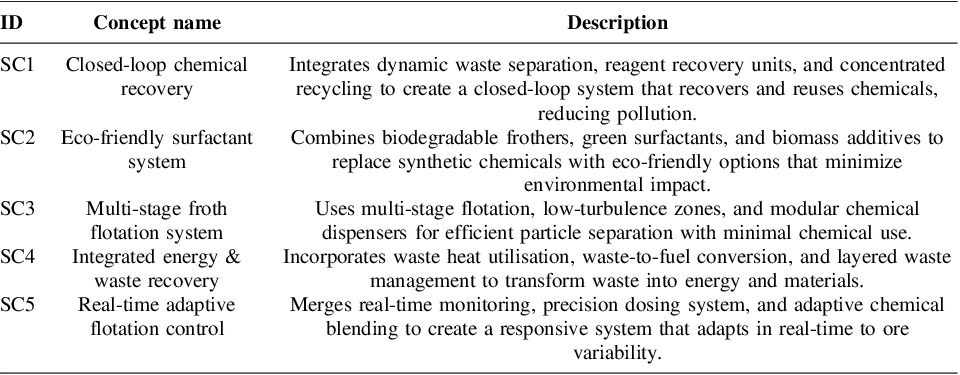
The proposed framework was applied to a case study on froth flotation for nickel recovery, a method known for its environmental and operational challenges. These challenges include water pollution caused by chemical usage, solid waste generation, and inefficiencies that significantly increase production costs. Addressing such issues aligns with the framework’s objective to optimise solution concepts for sustainable innovation. This case study builds on the authors’ prior works (Mas’udah and Livotov, Reference Mas’udah and Livotov2024; Mas’udah et al., Reference Mas’udah, Livotov and Nugroho2024), which explored the application of Generative AI and SDA to propose sustainable solutions for these challenges. These studies developed five solution concepts (Table 1), aimed at addressing the identified problems. While these previous studies focused primarily on generating and evaluating the initial solution concepts, the current research advances these efforts by employing the proposed framework (as outlined in Section 3.1) to systematically optimise the concepts.
Initial solution concepts for froth flotation of nickel recovery

3.3. Evaluation
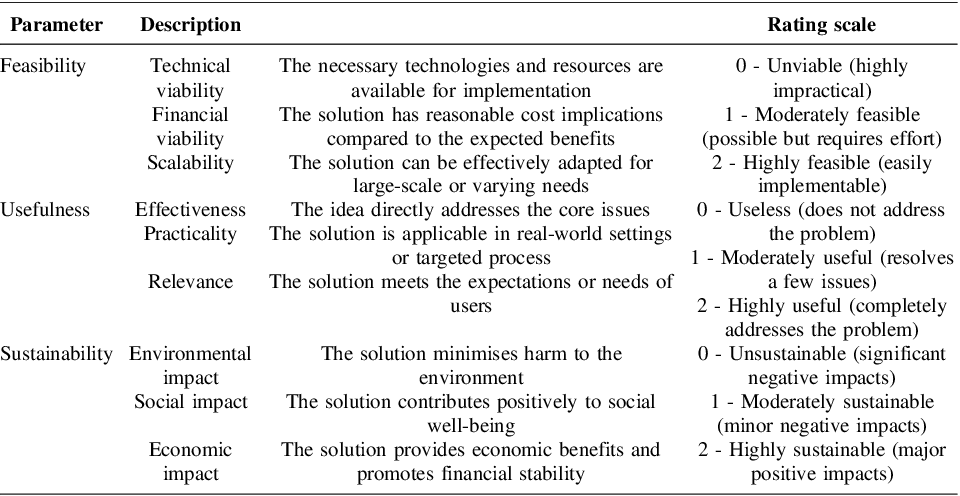
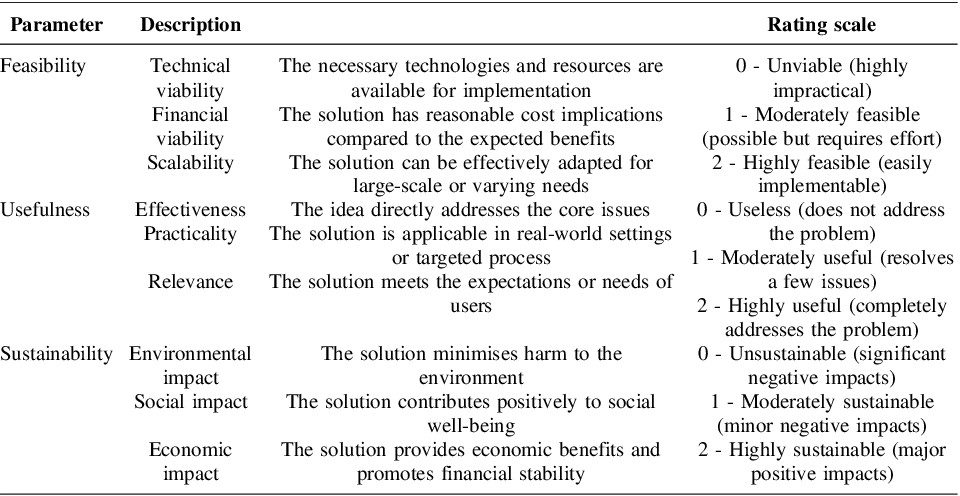
The optimised solution concepts were evaluated to validate the effectiveness of the proposed framework in refining AI-generated solution concepts and addressing the identified challenges. Building on the evaluation methodology from previous work (Reference Mas’udah, Livotov and NugrohoMas’udah, Livotov, & Nugroho, 2024), a comparative analysis was conducted between the initial and optimised solution concepts using a combination of human experts and Generative AI evaluations. Subject-matter experts in engineering and design, alongside a GPT-4o-based model, assessed both the initial and optimised concepts using the metrics outlined in Table 2. While human experts provided contextual judgment, the AI evaluation offered large-scale, data-driven insights to complement the analysis
Assessment criteria for solution concept (Reference Mas’udah, Livotov and NugrohoMas’udah, Livotov, & Nugroho, 2024)
4. Results and discussion
4.1. Predicting secondary problems through patent analysis
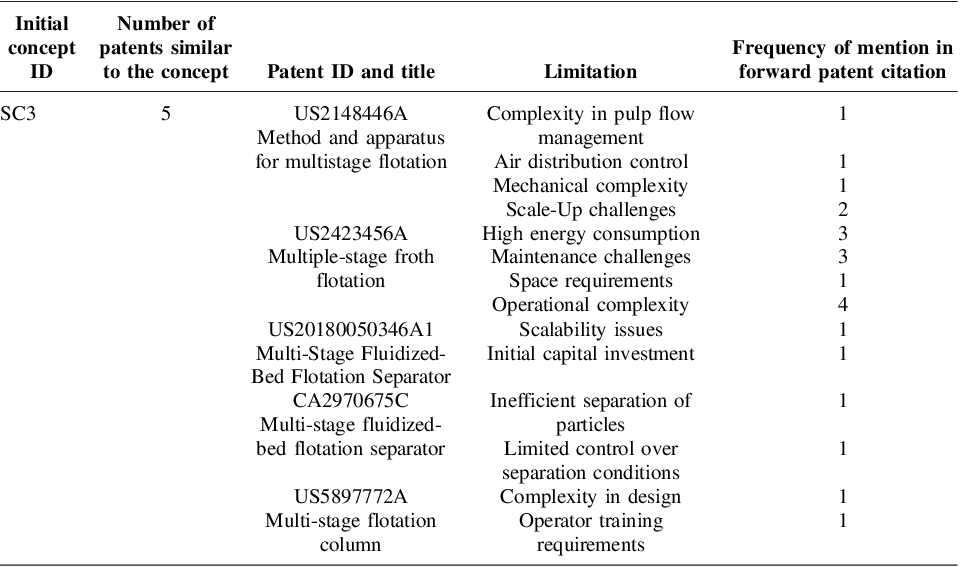
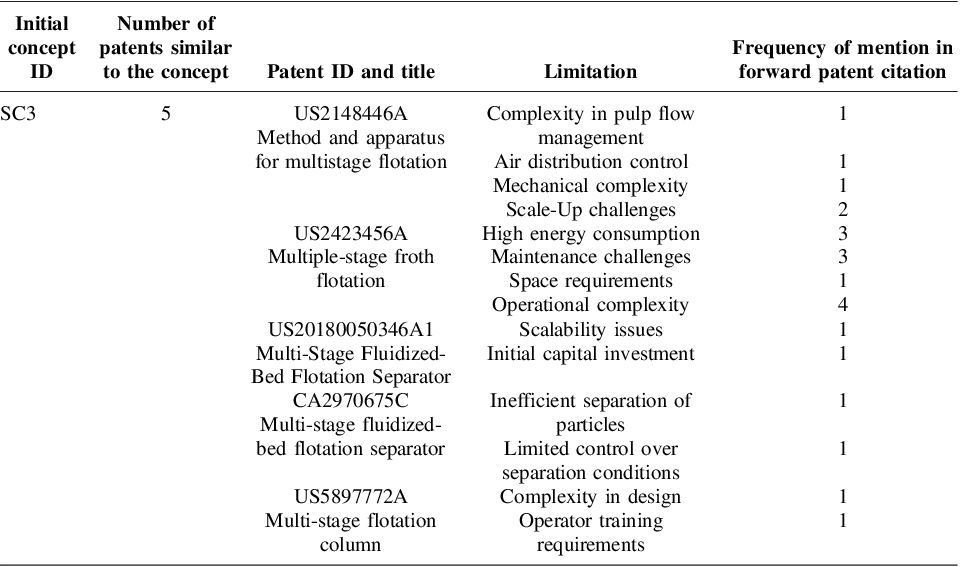
The patent analysis identified a total of 14 relevant patents across the five initial solution concepts, providing insights into limitations, causes, effects, and improvement strategies. These findings highlight recurring challenges that may arise during the implementation of the proposed concepts, offering valuable input for their optimisation. Table 3 illustrates an example of extracted data for Solution Concept 3 (SC3), where five closely related patents were analysed. Key limitations identified for SC3 include operational complexity, scalability challenges, and high energy consumption. These issues underline the importance of addressing secondary problems early in the design process, ensuring the feasibility and sustainability of the proposed solutions.
Example of extracted insights from patent analysis for solution concept 3 (fragment)
From the analysis of 14 patents and their 42 forward citations, a total of 54 limitations were identified. These limitations were then categorised into 10 recurring potential problems, which serve as the basis for predicting secondary issues associated with the solution concepts. This categorisation was based on the nature and scope of the issues mentioned in the patents and their forward citations. For example, limitations such as “high energy consumption” and “heat transfer efficiency” were grouped under the category “energy efficiency”. Issues like “space requirement” and “maintenance challenges” were categorised as “equipment design & maintenance”. This categorisation helps streamline the analysis, ensuring the identified challenges are systematically addressed in the optimisation process. Figure 2 provides a visual representation of the identified problems from patent analysis.
Identified potential problems in patent analysis: (a) frequency of recurring problems; (b) distribution of problems by category
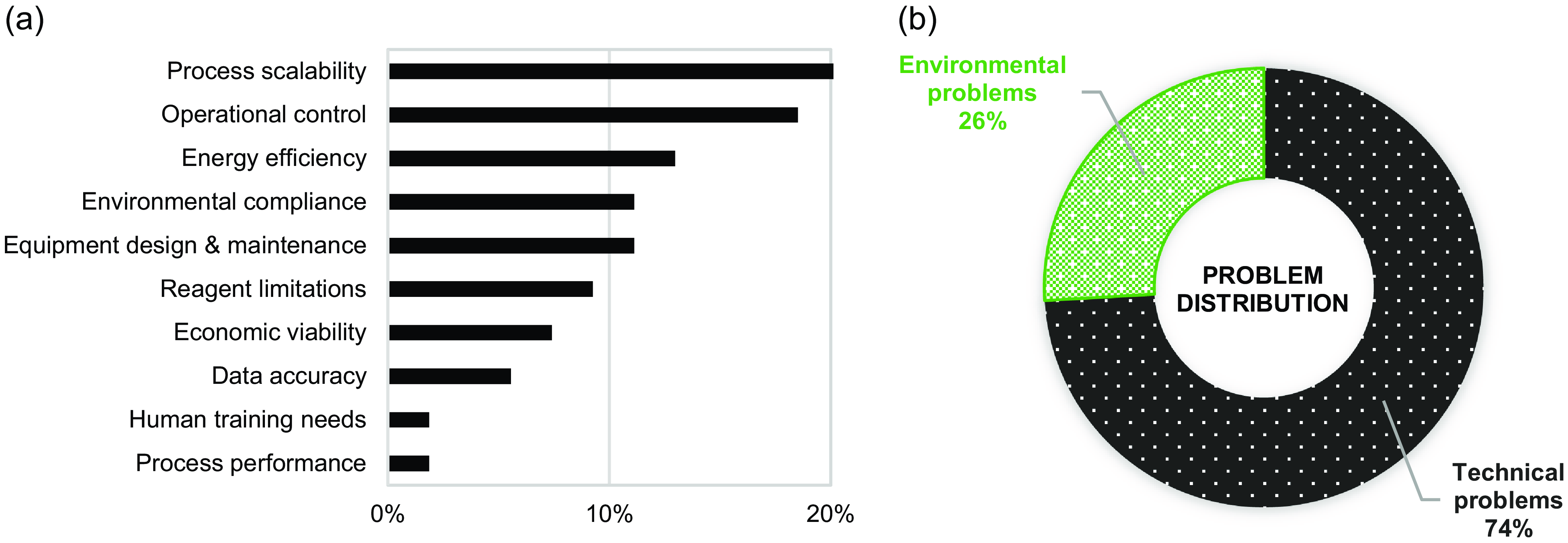
Figure 2(a) highlights the frequency distribution of these 10 problems, revealing that process scalability, operational control, and energy efficiency are the most frequently mentioned issues, accounting for approximately 52% of all identified limitations. Figure 2(b) further classifies the problems into technical problems (74%) and environmental problems (26%), emphasising the predominance of technical challenges in multi-stage froth flotation systems.
Figure 3 illustrates the heat map of predicted secondary problems across the five solution concepts. The values within each cell represent the frequency of mention for each problem category derived from the analysed patents and their forward citations (as presented in Table 3). These frequencies provide a quantitative measure of the likelihood of potential secondary problems for each solution concept. For instance, solution concept 3 (multi-stage froth flotation system) shows high-frequency mentions of “operational control” and “process scalability,” highlighting these as critical areas requiring attention. Conversely, issues such as “human training needs” and “data accuracy” show lower frequencies, suggesting they pose minimal risks across most solution concepts. By visually mapping these values, the heat map underscores the areas of concern that are most likely to arise during the implementation of the concepts. This allows for targeted optimisation efforts, ensuring that high-risk issues are addressed systematically in the design process.
Heat map of predicted secondary issues across solution concepts

4.2. FMEA transformation - preventing potential failures and optimising concepts
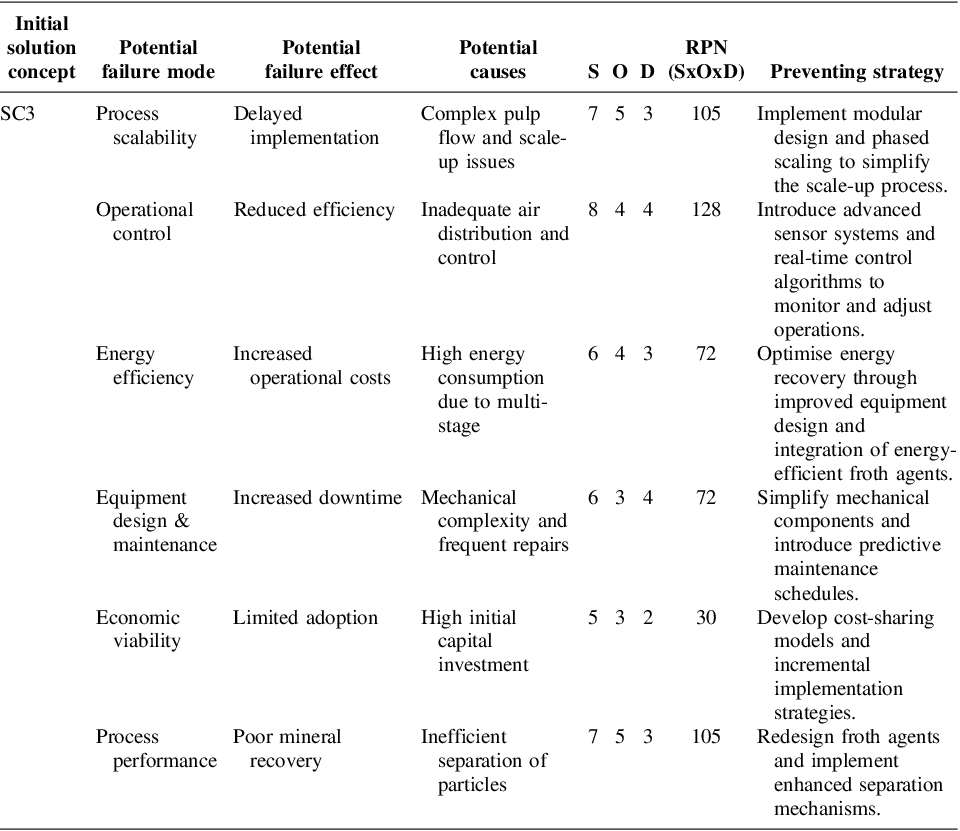
The transformation of patent insights into an FMEA framework facilitates a systematic approach to identifying and mitigating potential failures associated with the initial solution concepts. Table 4 presents an example of the FMEA analysis conducted for solution concept 3 (SC3), highlighting key failure modes, their effects, causes, and prevention strategies derived from patent forward citation analysis. The analysis employs a combination of insights from patents and expert judgment to determine the following key parameters:
-
Severity (S): rates the criticality of the failure effect, ranging from 1 (negligible) to 10 (catastrophic).
-
Occurrence (O): assesses how frequently similar problems were mentioned in forward patent citations, rated from 1 (rare) to 10 (frequent).
-
Detection (D): evaluates the likelihood of identifying the failure before significant issues arise, rated from 1 (easy to detect) to 10 (difficult to detect).
Example of FMEA Analysis for Solution Concept 3 (SC3)
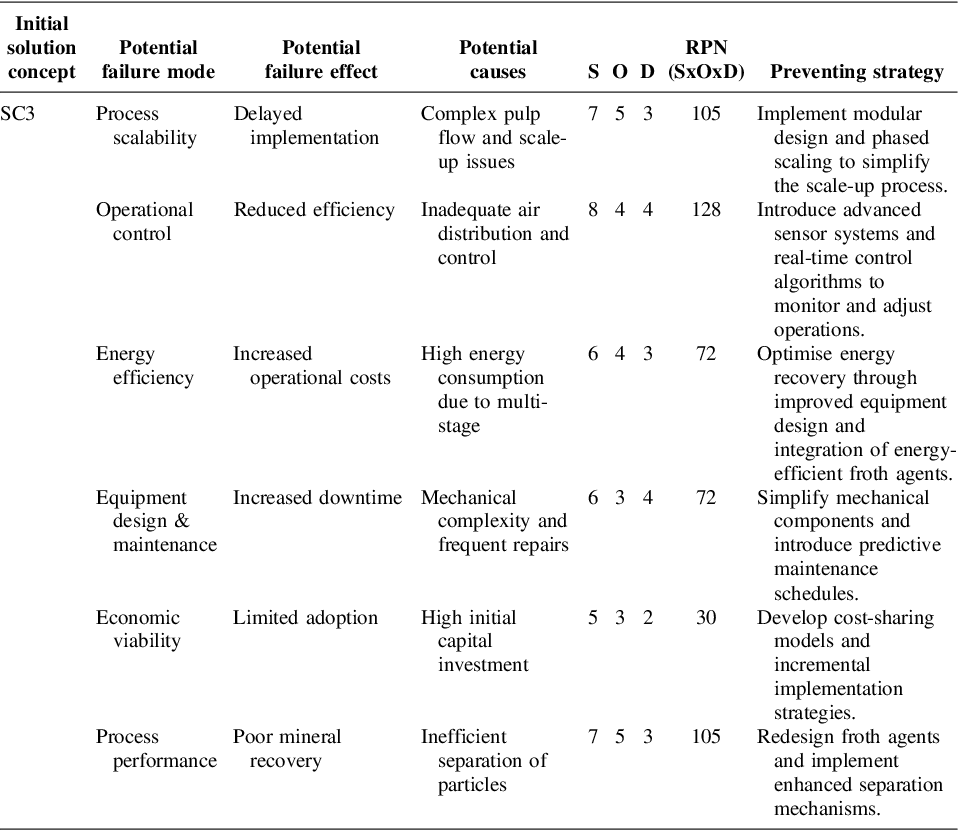
The resulting Risk Priority Number (RPN = S × O × D) quantifies the priority for addressing each failure mode, with higher RPN values indicating higher urgency. For example, “operational control” exhibits a high RPN of 128, signalling the need for immediate mitigation strategies, such as the integration of advanced sensor systems and real-time control algorithms. The prevention strategies extracted from forward citation analysis not only mitigate the identified risks but also contribute to the optimisation of the solution concept. These strategies ensure the refined solution is more robust, scalable, and aligned with sustainability goals, thereby enhancing its overall feasibility and practical applicability.
4.3. Solution concept evaluation
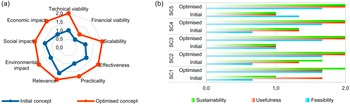
Figure 4 provides a comparative evaluation of the initial and optimised solution concepts, based on the assessment metrics defined in section 3.3. The evaluation focuses on three main dimensions, feasibility, usefulness, and sustainability along with their respective sub-criteria. Figure 4(a) illustrates the average ratings for sub-criteria across the five solution concepts. The optimised concepts demonstrate significant improvements in most areas. However, financial viability remains consistent, indicating that cost-related aspects were less impacted by the optimisation process. Figure 4(b) presents the aggregated scores for the main criteria, such as feasibility, usefulness, and sustainability. The optimised concepts consistently outperform their initial counterparts, with the most significant improvements observed in sustainability, reflecting the mitigation of identified limitations and the integration of strategies promoting environmental, social, and economic benefits. These findings underscore the effectiveness of the proposed optimisation framework. By addressing identified risks and enhancing performance metrics, the optimised solution concepts offer greater potential for real-world implementation and align more closely with sustainable innovation objectives.
Comparative evaluation of initial and optimised concepts: (a) Average rating of sub-criteria across concepts, (b) Average performance of feasibility, usefulness, and sustainability

4.4. Limitations and future work
This study provides a novel framework for optimising AI-generated solution concepts by integrating Generative AI, patent analysis, and FMEA. However, several limitations should be acknowledged:
-
Dependency on patent data: patent forward citations offer valuable insights but may not capture emerging issues not yet documented in the patents. Future studies should incorporate diverse data sources, including experimental data and industry reports.
-
Subjectivity in evaluation ratings: Although the FMEA analysis and concept evaluation ratings combine AI-driven insights with human expert judgment derived from patent analysis, human subjectivity may still affect consistency. Future work could explore developing automated or semi-automated tools to standardise rating processes, thereby minimising variability in evaluations.
-
Early-stage focus: the evaluation is limited to early-stage design concepts and excludes physical prototyping or simulation, leaving real-world applicability untested. Future work should introduce physical prototyping, advanced simulation tools, or digital twin technology that can help validate the feasibility, usefulness, and sustainability of the optimised solution concepts.
-
Limited evaluation dimensions: the framework primarily addresses feasibility, usefulness, and sustainability, with minimal focus on other dimensions such as regulatory considerations that may significantly influence concept adoption. Future work should broaden the evaluation framework.
5. Conclusion
This study introduces a novel systematic framework integrating Generative AI, patent analysis, and FMEA for optimising AI-generated solution concepts, specifically demonstrated through a case study on froth flotation for nickel recovery. The key scientific contributions of this research include the systematic integration of Generative AI with patent analysis and FMEA, enabling the early prediction and prevention of potential failures in sustainable process design. The framework leverages insights extracted from patent data to proactively identify operational risks and formulate targeted prevention strategies, significantly enhancing the feasibility, usefulness, and sustainability of the initial AI-generated concepts. The research further contributes new knowledge by demonstrating the practical applicability of Retrieval-Augmented Generation (RAG) with GPT-4o in patent insight extraction, bridging a critical methodological gap previously unaddressed in sustainable innovation studies. However, reliance on patent-based insights and an early-stage evaluation without physical validation present notable limitations. Future research should incorporate diverse data sources, advanced simulations, and broaden the evaluation dimensions, including regulatory and operational contexts, to ensure comprehensive and robust solution optimisation suitable for real-world implementation.
Acknowledgement
The authors are grateful to the German Academic Exchange Service (DAAD) for funding this research.




 Open access

