


2.1 Introduction
States violate human rights. If this were not the case, a multi-layered human rights framework aiming at accounting for states’ human rights violations would not have been created. States may be participating in this accountability system in good faith, by which we mean they are willing – at least to some extent – to acknowledge their behaviour and change their ways. In other situations, however, human rights violations are deliberate and entrenched, having become part and parcel of state policy. Examples include systematic practices of torture, forcible disappearance, assassination of political opponents or, coming to the subject of our chapter, recklessly and often violently pushing people on the move back over the state border. A state which intentionally commits serious violations of human rights is unlikely to own up to its actions. Its tendency will be to deny the violations – ensuring at the same time that as little evidence of them as possible emerges. The resulting evidentiary gaps then make it difficult for accountability mechanisms to operate as intended.
Successful litigation should be possible even in these circumstances. However, it depends on the adjudicator accepting a complaint’s factual basis. If states suppress evidence of their deeds, conclusive evidence that a complainant was treated as alleged will be lacking. Still a bedrock in evidentiary law today, the Latin adage actori incumbit probatio (‘it is for the claimant to prove their claim’) is often taken to mean that a complaint left without the proof of its factual allegations stands to be rejected. Such an outcome is problematic and requires a corrective when the complainant’s evidentiary incapacity stems from actions or omissions purposefully instigated by the perpetrating state precisely in order to avoid human rights accountability.
One solution is to have the adjudicator shift the burden of proof from the complainant to the respondent state.Footnote 1 Although such a shift is often referred to in legal scholarship, the question of its exact conditions of operation is not settled. Surprisingly human rights jurisprudence tends not to address it head-on. In-depth academic analyses are conspicuous mostly by their absence.Footnote 2 We shall propose that the shift be conditioned on two sets of circumstances being established, each attracting a different standard of proof. We shall further argue that the shift-based evidentiary route must be distinguished from the ‘normal’ evidentiary route whereby, against the odds of state-created holes, the facts can get established on the substantive strength of the evidence submitted.
To make these arguments, we use the adjudication of pushback complaints by UN treaty bodies (UNTBs) as a case study. Pushbacks are expulsions designed to circumvent the law, by the state, of people on the move. (We favour this expression over other terms such as ‘migrants’, due to its bypassing the problematic migrant/refugee binary at the heart of most legal frameworks and migration discourses).Footnote 3 When the state ‘pushes’ people ‘back’, it forces them out of its jurisdiction, in such a way that they cannot access procedural and/or other legal safeguards.Footnote 4 Such evasion of legal frameworks may concern international instruments, such as the Refugee Convention or the protection granted to a person who is, for example, a victim of torture, a trafficked victim or an unaccompanied minor. It may also concern provisions found in domestic and international law for the benefit of the whole population, such as those adopted in order to guard against arbitrary detention or excessive state violence.
The evasion of legal guarantees is what makes an expulsion a ‘pushback’ (without the latter word being a legal term). This means that a pushback always entails expulsion-related human rights violations, including the denial of the expelled’s right-holding status.Footnote 5 In addition, between the moment of their apprehension by state agents and their expulsion, people may have been beaten, secretly detained, tortured, left to die, disappeared or refouled to a place where their life or integrity is at risk – in short, subjected to serious human rights violations.Footnote 6
In Europe, one would hope the European Court of Human Rights (ECtHR or Court) to be the go-to body for individuals seeking redress for the violations of human rights they have suffered. However, as Dembour has extensively documented,Footnote 7 the Court has shown itself reluctant to defend the human rights of people on the move. This observation also holds for pushbacks: the Court has hardly ever found a ‘no-paper pushback’Footnote 8 – that is one that leaves no trace of their occurrence in state records, as explained below – to have breached the European Convention on Human Rights.Footnote 9 The orientation of its jurisprudence is inciting litigators, including the European Centre for Constitutional and Human Rights (ECCHR), for which Hakiki works, to address pushback complaints to UNTBs, a telling change of forum since these bodies are not empowered to deliver legally binding judgments.
UNTBs’ final views are nonetheless precious: carrying some authority, they offer some redress to victims as well as contribute to the development of human rights international law. In respect to our topic, they provide an official confirmation, against state denials, that pushbacks are a reality. Our analysis of the four final views UNTBs have so far adopted in pushback casesFootnote 10 concludes that the correct factual determinations were reached, with the UNTBs willing to see through the state-instigated evidentiary holes, but on a weak legal reasoning. In response, we identify evidentiary principles which we argue can contribute to the building of a fair, clear and coherent evidentiary framework.
Our chapter proceeds as follows. Section 2.2 classifies pushbacks into ‘no-paper’ and ‘paper’ categories, with each type giving rise to particular forms of state denials. Section 2.3 reviews the limited evidentiary elements which, in a context of state-created evidentiary holes, may nonetheless potentially remain accessible to a pushback survivor. The chapter then moves to a legal analysis. Section 2.4 starts by mapping out the four logical outcomes which the adjudicator can reach regarding the disputed facts of a complaint: these can be upheld or rejected, procedurally or substantively so, following a number of evidentiary principles. This conceptual exercise provides the basis for critically analysing, in Section 2.5, the four pushback cases which have been decided by UNTBs to this day. Section 2.6 identifies what we regard as the two major risks of a loose evidentiary reasoning: the adjudicator’s failure to demarcate the procedural (shift-based) and substantive (evidence-based) evidentiary routes; the upscaling of applicable standards of proof (e.g., due to the higher-than-legally-required standard met in some extraordinary cases becoming expected in subsequent cases, even where the shift is called for). Section 2.7 concludes.
2.2 State Denials: Typical Forms in ‘No-Paper’ and ‘Paper’ Pushback Cases
The stronger the secrecy surrounding a pushback operation, the less effective the legal safeguards against abuse, the more serious the human rights violations tend to become. This spiral then provokes states to want to deny their actions and in turn to dispense huge efforts in suppressing evidence. The following measures have been reportedFootnote 11 to have been taken by states with regard to pushbacks: systematically failing to record people’s presence, handling and custody; using unmarked vehicles for transportation, unofficial means for communication and unofficial detention sites; redirecting border cameras to ‘unwitness’Footnote 12 human rights violations or refusing to share border cameras’ footage;Footnote 13 criminalising audiovisual recording by third parties; seizing and destroying people’s mobile phones; and expelling victims and witnesses, thus making them inaccessible to investigations.Footnote 14
In the course of litigating cases, the ECCHR has come to distinguish between two broad types of pushbacks. No-paper pushbacks leave no trail in official records, such that even the most minutious examination of state records would give no hint whatsoever that they ever took place. By contrast, paper pushbacks leave an official trace, for example a refusal-of-entry decision or a readmission under a bilateral agreement, both of which qualify as pushbacks if the authorities ignored the protection needs and rights of the person refused or ‘readmitted’.
The ECCHR has observed that when a person complains to have been no-paper pushbacked, their apprehension by state agents – of which there is by definition no official record – is often the centrally disputed fact. The situation presents itself differently in paper pushbacks, where the core problem is that the state record typically fails to mention protection claims. The factual issue most saliently disputed in this type of complaint is not whether the person was expelled (this is clearly documented) but whether they had expressed, or could have expressed, protection needs at the time of their expulsion. In paper pushbacks, the state typically claims to have respected all relevant applicable legal frameworks.
2.3 Which Types of Evidence Are Accessible to a Pushback Survivor?
Whilst the complainant is generally expected to bring the proof of their factual allegations, state-created evidentiary holes make this difficult, if not impossible. Based on Hakiki’s litigating experience, this section identifies nine types of evidentiary material a pushback victim may nonetheless potentially be able to submit, as follows: (1) the complainant’s own account; (2) identity documents; (3) digital messages and pictures/videos; (4) medical records; (5) fellow survivors’ testimonies; (6) technological analysis of digital material; (7) legal correspondence; (8) state documents; (9) general reports. This section briefly discusses each element, highlighting their challenges and potential value. Elements (7) and (8) are especially relevant to paper pushbacks, whilst the others are addressed having mostly no-paper pushbacks in mind.
2.3.1 The Complainant’s Own Account of the Events
With rare exceptions, pushback complainants have little to no external, stand-alone conclusive evidence of their factual claims. In this context, their own account of what happened to them often becomes the central piece of evidence they submit to the adjudicator. Few survivors, however, are ready to go through the process of recounting their pushback, as this tends to be a lengthy and retraumatising experience, often affecting a person for days and even weeks.
If a survivor wants to enter this process – which they should be encouraged to do only if they are already in a stable environment, ideally with access to psycho-social services – they cannot be expected to write their account alone. That they will need assistance is recognised in adversarial legal systems, which, leaving it to the parties to produce evidence,Footnote 15 devote a substantial part of the training of lawyers-to-be to the taking of truthful, non-leading and clarifying statements. When the witness is a survivor, additional specialised training is required so as to minimise the re-traumatisation which occurs when a person is brought back to their original ordeal.Footnote 16
A ‘detailed and credible’ account (to cite qualificatives found in the jurisprudence) should attract high probative value, given it is virtually impossible for a person who has not directly lived a situation to recount it without getting into ‘twists’ and introducing incoherences within their previous inventions. When such an account is submitted, the evidentiary elements discussed below mainly serve to corroborate it. By contrast, these elements have to become the main evidence when a victim cannot recall their pushback in detail, possibly due to memory loss provoked by the trauma of the pushback.
2.3.2 Identification Documentation
States commonly object in pushback litigation that the complainant is not who they say they are. Even though they most likely will have travelled undocumented and with their presence in most of the countries they crossed left unregistered, the complainant will typically have in their possession some documents bearing their identity, which they can submit to the adjudicator. These papers, however, will often have been hastily drawn by the authorities, without respecting specific spelling or transcription in the Latin alphabet. The state then commonly relies on orthographic variances to argue that the complainant is not the same person as, for instance, the person whose readmission from one state to another was registered. Proving the basic fact of one’s identity becomes a challenging evidentiary matter for the complainant, necessitating corroboration and/or proof of credibility.
2.3.3 Digital Messages and Pictures/Videos Sent Around the Time of the Pushback
People often lose their belongings or have them destroyed, including by the police, during their journeys. This is particularly true of mobile phones, as already mentioned. Thus, original footage with metadata – including geolocation of where it was recorded – will rarely be available.Footnote 17 However, important evidence may be retrieved from messaging services and social media platforms, which remain accessible even after losing access to the mobile phone that was originally used. Proofs are also created from keeping supportive contacts (kin, activists, lawyers, journalists, non-governmental organisations [NGOs]) informed of one’s whereabouts and state of health through sending messages, including videos and/or pictures. These may serve during litigation to prove that the complainant was at the place they say in their submissions and are not inventing the treatment their complaint alleges they have suffered. In awareness that states are prone to subsequently deny the abusive treatment they inflict, a victim occasionally seeks to record what is being done to them as it is being done, in which case they are likely to then ask trusted contacts to safeguard electronically sent information (see examples in Section 2.3.6).
A technical note is in order. Posts and messages on social media platforms such as Facebook, Instagram or TikTok theoretically remain accessible even after phones are lost or destroyed. By contrast, messages sent through messaging services such as WhatsApp, Telegram or Signal tend to get lost on the sender’s end, but may be accessible if receivers safekept them (for instance in the home country). The metadata of a file shared through either technology is automatically erased and replaced by a new time-record indicating the day the file was last shared. However, the evidentiary significance of the absence of original metadata should not be overestimated, in light of the limited probative value of metadata, especially given the possibility to attribute later dates to pictures (for instance by taking a picture of a picture). In extremely rare circumstances, applicants may be able to safekeep original pictures or videos, with the original metadata, sometimes even including the GPS location of the taking of the picture or video. However, because of the routine seizure and destruction of phones, this is rare.
2.3.4 (Absent) Medical Records
In instances of violence and injury, medical records will rarely exist, since people on the move have little to no access to medical assistance. Some victims may photograph their injuries, though the resulting pictures will rarely be dated, as addressed above, let alone comply with forensic requirements. For example, they may show the injured body parts but not the complainant’s face, or may lack scale references to understand the extent of the injury, potentially requiring additional expert analysis.
2.3.5 Fellow Survivors’ Testimonies
Whilst on the move, people form temporary communities whose members are, like them, undocumented and vulnerable. As people tend to travel and be pushed back in groups, a complainant should theoretically be able to rely on the testimony of fellow survivors. This could be extremely precious in the (often state-instigated) absence of local civilian witnesses. However, most complainants will have lost contact with their travel companions by the time they submit a claim. Further, even if an erstwhile companion can be located, they may not wish to provide a statement.
Where a willing survivor is identified, the collection of their testimony is logistically demanding. People who are pushed back together rarely form a homogenous group: they generally come from a mixture of countries, speak different languages and end up in various places. Obtaining a testimony therefore typically necessitates transnational travel and translation into several languages. The task is also emotionally demanding: it is as painful, intense and laborious a process, and requires as much training, experience, empathy and resources, as taking a statement from a complainant. This is because ‘witnesses’ (in the proceedings) are themselves victims/survivors, often of several pushbacks. In particular, it would be wrong to ask them to focus strictly on the elements relevant to the complaint being litigated, as preventing them from recounting what is important to them could aggravate their trauma.Footnote 18
Procedurally, a statement from a witness presents the advantage that adjudicative bodies are familiar with this type of evidence.Footnote 19 What is more, the circumstances of its production may make it immediately clear to the adjudicator that the complainant and the witness have had no recent interaction, thereby eliminating the possibility of them having ‘concocted’ the statement, thereby enhancing the probative value of the submitted testimony.
2.3.6 Technological Analysis of Digital Materials by Organisations Such as Forensic Architecture
When an exceptional level of evidence is gathered in support of the victim’s account, this may provide the opportunity for its evidential value to be further enhanced through technological operations. This section recounts two examples drawn from the ECCHR case work where this happened.
Our first example is the case of Parvin A., an Iranian refugee who was pushed back from Greece to Turkey no less than six times.Footnote 20 Despite the risks, Parvin A. had resolved to hide and use her phone for recording the circumstances of her apprehensions and detentions during the first pushbacks she suffered. Through messaging services, she sent out over forty pieces of audio and/or visual material to trusted contacts. Forensic Architecture (FA), the University of London-based research group famous for its pioneering use of cutting-edge techniques for the investigation of state and corporate violence, worked on this material. It reconstructed the events complained of in a platform specifically designed to this effect, even creating a 3D model of the detention sites where Parvin A. had been placed during her first pushback.Footnote 21 Images FA subsequently obtained through open sources led to the identification of the police stations in which she had been secretly detained. They corroborated her account regarding inter alia the way people were handled. The similarities between her and other pushback cases involving the same police stations and similar forces revealed the scope of coordination and infrastructure deployed by the state for pushback operations, confirming her treatment was not an ‘isolated event’ but part of a ‘pattern’ or ‘practice’ by the Greek authorities.Footnote 22
Our second example is the case of I. M., a refugee from the Pakistani-controlled side of Kashmir, who was pushed back from Slovenia to Croatia, and severely ill-treated in Croatia before being pushed back to Bosnia and Herzegovina (BiH). A courageous travel companion had taken a video recording after I.M.’s ill-treatment and expulsion to BiH, showing him in great pain. The video was analysed and verified by the NGOs No Name Kitchen/Border Violence Monitoring Network, and the case was investigated again by journalists from Lighthouse Reports and German media outlet Der Spiegel.Footnote 23 Its originally fuzzy imagery was stabilised, leading to the identification of (1) the location of the incident through GPS metadata and corroboration from a close examination of the landscape; (2) the affiliation of the officers appearing in the footage through an analysis of the details of their uniforms; and (3) the identification of the perpetration of similar acts of violence and expulsions in the background of the footage.
The afore-described technological feats are evidentiary gold. However, they are extremely costly and unavailable to most pushback victims, the overwhelming majority of whom do not even have access to legal representation. Three or more organisations belonging to the not-for-profit and/or journalistic worlds worked on each case for months. The dispensation of such a level of resources clearly cannot set the bar for what an adjudicator may expect to see evidenced in any given case.
2.3.7 Legal Correspondence
Rarely, people on the move may be in contact with lawyers as they are literally facing pushback risks at the border. These lawyers may represent them before the authorities, for example faxing international protection claims to national border authorities to put the latter on notice of their clients’ asylum-seeking status, or seeking interim measures from regional and/or international adjudicative bodies such as UNTBs, despite risks of criminalisation, for example, for facilitating irregular movement. Correspondence which has arisen between lawyer, state and international body may later be submitted to defeat the state’s claim that the complainant had never expressed or intended to make a protection claim at the border.Footnote 24
2.3.8 State Documents on the Complainant’s Case
In paper pushbacks, the state will per definition have documented the supposedly legitimate measure through which it has pushbacked the complainant. These state documents may constitute the sole evidence the complainant is able to submit to prove their interaction with state authorities. Needless to say, the state will have had exclusive control of what they record. Their content, therefore, including the absence of any protection claim, should be approached with caution by the adjudicator when assessing the content of said interaction.
2.3.9 External Reports Documenting State Practice
Published reports documenting a state practice of pushbacks are an essential part of the complainant’s submissions. They make sense of the evidentiary difficulties which mar the complaint. Moreover, they usually confirm some of the details provided in the complainant and/or the witnesses’ accounts, strengthening their credibility. The gathering and submission of reports from as authoritative sources as possible is also a highly time-consuming task.Footnote 25
2.3.10 Conclusion
This section has identified the types of evidentiary materials that a pushback complainant may be able to submit to an adjudicatory body in support of their factual allegations. Our review has made clear that for a complainant to submit strong evidence necessitates the deployment of resources to which most people on the move – and their lawyers – do not have access. Expecting pushback complainants to routinely submit strong evidence would defeat human rights accountability and justice. In a context where the state is likely to dispute whatever weak or strong evidentiary submissions the complainant is able to make, an in-depth reflection as to how the evidentiary system should work is needed. Section 2.4 starts this work by abstractly mapping out the possible end forms of a factual dispute.
2.4 Disputed Facts: Four Logically Possible Adjudicatory Outcomes
Pushback litigation sees the word of the complainant pitted against state denials: the facts are thus ‘in dispute’ between the parties. Such a situation is not one that international human rights law relishes; it prefers when the facts of a case arrive before the international adjudicator already established by the domestic authorities. Pushback victims, however, by definition have no opportunity to challenge their expulsion prior to being pushed back, and they also usually face a system of utter impunity with regard to any ill-treatment or arbitrary detention, with no possibility of having their claims effectively investigated and dealt with within the national criminal system.Footnote 26 In short, no domestic court will have properly considered their case, if at all. The admissibility requirement of exhaustion of domestic remedies, amply discussed elsewhere in this volume, should consequently be waived,Footnote 27 leaving it to the international judge to determine the facts of the complaint.
Abstractly thinking about how a disputed fact can present at the end of the adjudicatory process, two outcomes are logically possible: either it remains disputed and unclear, or it has been resolved – each time in favour of either the complainant or the respondent state.Footnote 28 This results in four logical possible factual outcomes, as per Table 2.1:

Table 2.1 Long description
The data are as follows.
Facts remain unclear, to the benefit of the state, Outcome 1.
Facts remain unclear, to the benefit of the complainant, Outcome 2.
Facts are resolved, in favor of the complainant, Outcome 3.
Facts are resolved, in favor of the state, Outcome 4.
In practice, things are unlikely to be as clear-cut as Table 2.1 makes out. For example, one disputed point may be resolved in favour of the complainant, another in favour of the respondent, whilst others remain unresolved. Importantly, it is not because one party’s factual allegations are accepted as established that this party will win the case – they may lose on legal arguments. Finally, whether a particular judicial decision would best be categorised as supporting one or the other party’s account is not always obvious. Table 2.1 must be approached as a heuristic device.
Outcome 1 arises when a complainant fails to establish the factual basis of their complaint. It can thus be conceptualised as an application of the actori incumbit probatio principle. It is important to underscore, however, that the Latin term actor (used in its dative form actori’) is really meant to designate any party who is making a factual claim in the proceedings so that the adage does not so much allocate the burden of proof to the complainant as distribute it between the parties (even if in practice the initial burden rests on the complainant). Outcome 1, therefore, need not be the end point for all the cases whose facts remain uncertain by the end of the adjudicatory process – even under the adage.
Outcome 2 arises when, despite the continual lack of factual clarity, the adjudicator eventually considers the complainant’s factual allegations established, due to having shifted the burden of proof from the complainant to the state, and the latter not having then discharged it. Although the shift (also known as ‘reversal’) in the burden of proof is much talked about in international human rights adjudication, its exact conditions of operation have not been clarified. We submit that the shift should be subject to two conditions, which we propose to call the context condition and the linkage condition. We further submit that each of these conditions should be proven to a different standard of proof, as we explain after having introduced this concept.
One need not be a lawyer to understand that a fact can be established to a higher or lesser degree of certainty – in the same way that one can either very strongly or more circumspectly believe that something has happened. The Common Law recognises four such degrees: a finding can be so secure as being ‘beyond reasonable doubt’; it can be made on evidence which is ‘clear and compelling’ (less than virtually certain, but more than probable); it may be adopted ‘on the balance of probabilities’ (being ‘more likely than not’, that is, having at least fifty-one per cent chances of being correct); and, at the bottom of this descending scale, it may be no more than just plausible – prima facie. Evidentiary rules refer to these various bands of persuasion to indicate the level – in legal language, ‘threshold’ or ‘standard of proof’ – to which a disputed factual allegation must be proven for the adjudicator to accept to be persuaded to uphold it. These are (in phrasings which in practice may be expressed under slightly different formulations):
1) Beyond reasonable doubt (BRD)
2) Clear and compelling
3) More probable than not
4) Prima facie (meaning ‘at first sight’ in Latin, and evoking a standard which is also sometimes expressed as requiring no more than a ‘beginning of proof’)Footnote 29
This Common Law classification has no equivalent in the Civil Law tradition, which contents itself with speaking of the intime conviction du juge (‘inner conviction of the judge’), without attempting to differentiate the degree or depth of the judge’s conviction. This stark difference in evidentiary approaches may well explain the rarity of references to specific standards of proof in international human rights adjudication: many international judges have not been trained in them. This, however, is a great pity. Alongside the other contributors to this volume, we have come to the conclusion that the notion of the standard of proof is an indispensable evidentiary tool to achieve fairness and justice in human rights adjudication – as the operation of the shift, to which we now return, may serve to illustrate.
The shift’s first condition commands that there exists a context which indicates that the respondent state may well have acted in the way claimed by the complainant. Roberts distinguishes two such broad contextual situations: (1) the state is known to have previously been acting in the way described by the complainant (state practice or pattern), or (2) the state is refraining from sharing evidence which it either possesses (due, e.g., to the events having occurred under state surveillance) or should possess (due, e.g., to a legal duty on the state either to record the contested event, as for any detention, or to investigate, as in the case of serious injury, death or disappearance, the more so when the latter occurs under its custody).
We concur with Roberts that the context condition should neither have to be established beyond reasonable doubt nor be found established merely on prima facie evidence. Roberts proposes that the general standard applicable in human rights adjudication, namely more probable than not, should be applied here too. We believe some adjudicators may be more comfortable to impose the clear and compelling standard in this instance. Of course, in practice, whether the clear and compelling or the probable standard is reached is a judgment call. Whatever standard is adopted, the important thing is that, in case of hesitations, the adjudicator favours finding the condition established rather than rigidly insisting that the complainant submits a level of evidence which is beyond their reach.Footnote 30 One would expect the context condition to be established in respect to virtually every pushback complaint. If it is not, it may indicate that the adjudicator expected an unreasonably high level of evidence or, alternatively, that the complainant did not have sufficient resources to gather the documentation that could have established that it was not unreasonable to presume (no more than that) that the state acted in the way alleged.
The shifting of the burden of proof depends on the linkage condition also being met. This condition requires the applicant to establish that it is plausible that they were personally affected by the presumed events, in other words, that they were one of the people (in our selected topic) pushed back. Importantly, this only needs to be established prima facie, a ‘beginning of proof’ thus being sufficient for the condition to be found established. Accordingly, just one of the following pieces of evidence next to the applicant’s statement should be enough for the adjudicator to consider the linkage condition fulfilled:
1) A detailed account from the applicant of what happened to them
2) A picture of the pushback operation taken despite the obstacles, where the applicant appears
3) A witness statement emanating from a fellow migrant who testifies having seen the applicant being pushed back
4) A social media message recounting the event and the presence of the applicant in it, sent shortly after the pushback in question occurred
5) Confirmation by whatever means of the applicant’s location during, immediately before or immediately after the pushbackFootnote 31
If these two conditions are met, the adjudicator must shift the burden of proof onto the state. It therefore now falls on the state to rebut the presumption of veracity of the complainant’s factual allegations. In the absence of said rebuttal, the adjudicator must uphold the complainant’s factual account, even if the facts remain uncertain. Were this outcome not reached, it would defeat the purpose of having introduced the mechanism of the shift as a corrective to the application of the normal evidentiary rules.Footnote 32 To be noted that the standard of proof which the state’s rebuttal must meet for it to be accepted by the adjudicator is hardly ever discussed in the literatureFootnote 33 or spelt out in the case law. Our opinion is that it should be at least clear and compelling and, in some circumstances, even BRD.
In the last analysis, Outcomes 1 and 2 are procedural in nature: under Outcome 1, the complaint is ‘automatically’ rejected when the adjudicator assesses its factual basis has not been evidenced; under Outcome 2, the factual basis of the complaint must be upheld once it is seen that the state has not rebutted the presumption which has arisen that it acted in the way alleged by the complainant.
By contrast, Outcomes 3 and 4 are substantive. Like Outcome 2, Outcome 3 ends up upholding the complainant’s factual allegation, but here it is because the adjudicator finds for the complainant’s version of the facts upon the substantive consideration of all the circumstances of the case – including any presumption which arises against the state’s factual allegations/denials. The taking into account of presumptions is entirely appropriate since, under the Latin adage quoted above, the state is one of the parties to the proceedings expected to bring the proof of all their factual claims. This important consideration is too often neglected.
There is no requirement before the UNTBs for the complainant to prove their case beyond reasonable doubt.Footnote 34 Although hardly ever explicitly stated, the default standard of proof applied in international human rights adjudication at the merits stage seems to be the balance of probabilities (i.e., something being ‘more probable than not’), also sometimes expressed as ‘preponderance of evidence’ (more evidence leans on one side as opposed to the other). Consequently, whenever the adjudicator is able to find that the complainant’s version of the facts is, on balance, more persuasive than the state’s, the corrective of the shift is not needed and should not be applied. Even if the conditions for such a shift, as identified above, appear to be met, in reality they are not since the second condition is proven to a higher degree than required. In such a scenario, the adjudicator should find the facts established on their own probative basis, resulting in a substantive finding – an outcome which is preferable to a procedural finding obtained through the shift. We come back to this point later.
Finally, it is of course theoretically possible that the adjudicator comes to the conclusion that the facts are as described by the state rather than by the complainant. Outcome 4 captures this scenario in our table. As with all other outcomes, the adjudicator should explain why they reach this conclusion.
A new table (Table 2.2) can be produced which incorporates the normative discussion above.

Table 2.2 Long description
If the facts remain unclear
Outcome 1. Procedural rejection.
Legal basis. The complainant has not established the factual basis of their complaint. The latter is therefore rejected as per the Latin adage.
Outcome 2. Procedural upholding.
Legal basis: The complainant having established a suspicious state context and brought a beginning of proof that their case relates to this context, the burden of proof has been shifted by the adjudicator onto the state, which has failed to discharge it. The factual basis of the complaint is considered established, generally leading to violation findings.
If the facts are resolved.
Outcome 3. Substantive upholding.
Legal basis. The adjudicator finds the complainant's version of the facts established, on the balance of probabilities or to a higher standard. Although this factual outcome does not guarantee the complaint will be upheld on legal grounds, this normally follows.
Outcome 4. Substantive rejection.
Legal basis. The adjudicator finds the state's version of the facts established. This factual outcome does not automatically lead to the complaint being rejected on legal grounds.
Two remarks are in order. The first is an important legal point: the discussion offered above exclusively concerns scenarios which involve disputed facts. When facts are uncontested, the principle is that the adjudicator is to consider them established. The second is a reminder that neither Table 2.1 nor Table 2.2 intends to capture the complexities of the potentially multiple evidentiary processes and decisions which arise in any one case. Whilst the Tables are drawn as if one single and clear factual conclusion was reached in any given case, which would nicely encompass any and all more specific factual ‘sub-claims’, things do not necessarily work like this.
2.5 How UNTBs Have Navigated the Challenge of Pushbacks’ Disputed Facts: Case-by-Case Analysis
To our knowledge,Footnote 35 so far UNTBs have only decided four pushback complaints.Footnote 36 This small number gives us the opportunity to review each final view in detail. We do this in the chronological order of their adoption. For each case, we start by offering a summary of the complainant’s factual account and the response it attracted from the respondent state (often, denials following the patterns identified in Section 2.2), before analysing the reasoning provided by the committee on the facts. We conclude that the UNTBs have reached the correct determinations, but following an evidentiary reasoning lacking in clarity and sharpness.
2.5.1 Sonko v. Spain
Sonko, the first case to be reviewed, was decided by the Committee against Torture (CAT) in 2011.Footnote 37 Both parties agreed on the following facts: Mr Sonko and three other persons had been in Moroccan waters, each floating on a dinghy and trying to reach the Spanish enclave of Ceuta. The group of four was pulled up into a boat by the Spanish Guardia Civil (a paramilitary force) and taken to Moroccan waters, and then thrown back into the sea at a place where they could not stand up. As Mr Sonko started drowning, a Spanish officer swam to him, dragged his body onto the shore and tried to reanimate him, but to no avail – Mr Sonko had died. The parties disagreed on one crucial fact: whether the officers had pierced Mr Sonko’s dinghy before throwing him back into water.
Atypically for a no-paper pushback, Spain opened a domestic judicial investigation of the incident. Whether the complainant (the deceased’s sister) was informed of these proceedings was disputed between the parties. Spain would only have needed to produce a copy of its alleged notification for this issue to be settled. Without remarking upon this, let alone requesting the State to produce said copy, CAT stated that the domestic remedies had been exhausted (a bewildering determination since it was not the complainant who had pursued the domestic investigation, which the Committee had moreover specifically recognised to have been flawed).Footnote 38
In yet more atypical submissions in a ‘no-paper’ case, Spain neither denied before CAT that the pushback had taken place (on the contrary, it confirmed its occurrence by saying it had been carried out ‘in accordance with the procedures for dealing with immigration by sea’),Footnote 39 nor that Mr Sonko had encountered its officers. We hypothesise that the State refrained from totally denying the pushback due to the victim’s very public death in the presence of its agents and on foreign territory, which would likely have produced local knowledge and thus potential witnesses.
CAT upheld the complaint, having observed that
it [fell] to the State party to explain the circumstances surrounding Mr. Sonko’s death, considering that he was alive when he was pulled out of the water. [R]egardless of whether or not the Civil Guard officers punctured Mr. Sonko’s dinghy or at what distance from the shore he was expelled from the boat, he was placed [by the authorities] in a situation that caused his death.Footnote 40
This reasoning resonates with the principle according to which a presumption of state responsibility arises (which the state must rebut) when a person comes under its custody or control in good health, and then leaves it injured or dead. Whilst its gist is to be approved, the reasoning falls short in two respects.
Firstly, the Committee does not explicitly state that the State had failed to provide a convincing explanation for the death of Mr Sonko. This conclusion, albeit congruent with the finding that the State had breached its obligation to investigate, is left implicit.Footnote 41 Secondly, the evidentiary basis upon which the violation is found is not exactly identified. In evidentiary terms, this could have been either because the State had failed to discharge the burden of proof which the Committee had shifted onto its shoulders (Outcome 2), or because the Committee was convinced of the accuracy of the complainant’s version of the events (Outcome 3). Whatever the route followed, the violation outcome stood. The one does not exactly amount to the other, however. A procedural shift-based violation seems weaker than one reached substantively, thus with the facts at issue being positively established to have taken place.
The Committee may purposefully have avoided clarifying the basis of its decision. This could explain why, before coming to the passage quoted above, it ‘recalls’ (a word which wrongly suggests that the pronouncement which follows is a staple of its jurisprudence) that ‘it is not its task to weigh the evidence or to reassess the statements made regarding the facts or the credibility of the relevant national authorities’.Footnote 42 Such a limited interpretation of its task gestures to the no-fourth-instance principle, according to which international bodies should not (gratuitously) review domestic findings reached after possibly three sets (first instance, appeal, final instance) of proceedings. This principle, however, should be of no import when the domestic authorities have failed to (properly) investigate and establish the facts. One Committee member, Ms Gaer, vehemently objected to the words quoted above, which she described as a ‘shocking pronouncement’,Footnote 43 which went against both the Committee’s own jurisprudenceFootnote 44 and reason. To quote:
The State party [has confirmed] that its Civil Guard officers did in fact take Mr. Sonko and his companions on board their vessel and subsequently ‘released them,’ but argues that they did so ‘in an area very close to the shore,’ and did not puncture the dinghies. Thus, the State party alleges, the death of Mr. Sonko was ‘an unfortunate accident’ rather than an act of cruel, inhuman, or degrading treatment or punishment.Footnote 45
She continued:
For the Committee to reach a decision that a violation of article 16 of the Convention [prohibition of ill-treatment] occurred, it must reject the version of the facts articulated by the State party in this case. […] It is not the case that every death that occurs in custody constitutes a violation of the Convention […] In [a] case [such as this one], the Committee is called upon […] to resolve [the] tensions between the accounts offered by the author and the State party, such as whether the State’s agents left Mr. Sonko in possession of his dinghy when they expelled him from the patrol vessel […]. The Committee has apparently determined that the State’s version of the events is not credible. It is well within its power to do so and should have stated so plainly.Footnote 46
The last three lines suggest that the Committee found in fact for the complainant rather than simply considering that the State had failed to discharge its burden of proof. However, the route followed was not made clear.
This lack of transparency in reasoning is to be lamented on two important grounds. First, it risks raising the evidentiary standard which the Committee applies in future cases, since its decision suggests that it felt that the evidence before it was not sufficient for a straightforward substantive finding of violation to be reached – despite the fact that in this case its members were apparently more convinced by the version of the complainant than by that of the state. The Committee’s hesitation may influence future jurisprudence, which would implicitly, perhaps even unconsciously, expect a standard of proof higher than the balance of probabilities to be met.
Second, whether or not the dinghy had been pierced was a crucial question – not only factually but also legally. Admittedly, on paper, failing to protect life and intentionally endangering it both amount to the violation of the same state obligation (here Article 16 CAT). However, the former is an omission, the latter a positive action, so that the two are different in nature and gravity. By not having come to a determination that the dinghy must have been (presumed to have been) pierced, but having simply found that the State had failed to protect life, the Committee’s decision has less of a legal import than it otherwise would have had. This illustrates the obvious point that evidentiary reasoning impacts material obligation findings. Otherwise said, express factual findings are central to the very implementation of human rights. It is therefore essential that a fair and clear evidentiary framework be defined and applied.
2.5.2 Diory Barry v. Morocco
The second case, Diory Barry (or Diodory Barry)Footnote 47 v. Morocco, was decided in 2014, again by CAT.Footnote 48 The complainant explained he had set from Mauritania for the Canary Islands by pirogue in a perilous journey in which some thirty of his companions had died. Two weeks after departure, the forty or so remaining survivors were intercepted by the Moroccan authorities, taken to a detention camp in Morocco, kept there for roughly ten days, at which point the Moroccan gendarmerie took them to the desert in the border area separating Morocco and Mauritania. There they were told to walk to the closest Mauritanian town, approximately fifty kilometres away, each having been given a pair of plastic flip-flops, a bottle of water and a few sandwiches – no additional food or water, no protection against the sun and no blankets. Their itinerary crossed a minefield, causing the death of a person the day before the group was found, some of its members seriously wounded – including from the time they were adrift at sea. The complainant argued his expulsion had happened ‘in a flagrantly illegal manner’ with ‘no official record of his detention or expulsion’,Footnote 49 and had resulted in inhumane treatment.
The State admitted the interception of a vessel by the Moroccan Royal Navy in the area referred to by the complainant, and the detention and expulsion to Mauritania of the people found on this vessel. In a typical line of paper pushback defence, it stated that this expulsion had been executed ‘in accordance with the legislation in force’, which ‘guarantees the right of aliens to access to a lawyer, an interpreter and a doctor, to communicate with their consulate or a person of their choice and to appeal a decision to escort them to the border within 48 hours of being notified of the decision’.Footnote 50 The admitted interception, however, had not occurred on the date given by the complainant, and had concerned a larger group than the one he had described. This led CAT to observe (in a paragraph which we shall quote in its entirety, although doing so little by little rather than in one go):
The State party has partially confirmed the facts as submitted by the complainant, although confusion regarding dates and the number of migrants on board the intercepted boat means that it cannot be proven beyond doubt that the State party and the complainant are referring to the same boat and group of migrants.Footnote 51
This convoluted formulation (which resembles – without fully adopting it – the Common Law standard of ‘proven beyond reasonable doubt’) appears to want to convey that the two parties could not have been referring to the same event. Despite this, CAT took it that the State had ‘confirmed the facts as submitted by the complainant’, but without specifying which of these facts exactly.Footnote 52
The paragraph we have started to quote continues as follows:
Given that the State party has not provided any observations on the treatment of the complainant while the decision to expel him to Mauritania was being implemented,Footnote 53 due weight must be given to the complainant’s allegations.Footnote 54
With this the State is implicitly castigated for having failed to address in its submissions the way the complainant had been treated during the expulsion. This criticism does not lead CAT to apply the principle according to which a fact alleged by one party and left undisputed by the other is accepted as established, however. Instead, CAT merely derives from the absence of refutal by the State that ‘due weight must be given to the complainant’s allegations’. This formulation, routinely found in CAT’s case law when the state has failed to address the core of the complaint,Footnote 55 is regrettably ambiguous. It can mean at least three things: (1) that in the absence of refutal by the respondent state, CAT is simply to accept the complainants’ allegations (which it indeed does in some cases);Footnote 56 (2) that it has given these allegations significant weight; or (3) that it has been mindful to carefully assess which weight to grant them before finding them established.
In Barry, the ‘due weight’ formulation cannot be used in the first sense, since CAT carries on its reasoning by stating:
The Committee also refers to its concluding observations,Footnote 57 adopted following consideration of the fourth periodic report submitted by the State party, in which it expressed its concern regarding information received that, in practice, ‘undocumented migrants [had] been escorted to the border or otherwise expelled in violation of Moroccan law without having been given the opportunity to exercise their rights. Several allegations have been made that hundreds of migrants have been abandoned in the desert without food or water.’ The facts reported by the complainant are therefore not isolated.Footnote 58
Such referencing of a periodic monitoring report is permitted under CAT’s Rule 3 (2), which rightly allows use of knowledge obtained outside the particular case at hand, including as to the existence of ‘a consistent pattern of gross, flagrant or mass violations of human rights’.Footnote 59 This knowledge can potentially play a crucial evidentiary role, contributing to the factual basis of a complaint being upheld, whether procedurally (Outcome 2) or substantively (Outcome 3).
The periodic report could have been sufficient evidence for establishing that the first context condition towards operating the shift was fulfilled. Barry, however, never mentions the burden of proof or its shift. In this particular case, we suggest it is because the decision actually constitutes a substantive finding, as confirmed by the last quoted sentence referring to ‘the facts reported by the complainant’,Footnote 60 a choice of words which puts at a distance the idea that the complainant would have offered mere allegations that were upheld only because they were not rebutted by the State. If deliberately chosen (which of course we cannot know for sure), the word ‘reported’ suggests that CAT had no doubts about the facts of the case. Putting it in a positive light, the Committee would have felt certain about them.
Whilst we approve of a substantive finding having been made in this case, we regret the appearance earlier in the reasoning of the ‘due weight’ phrasing, which may suggest a procedural upholding (Outcome 2), therefore muddying the waters. If a procedural upholding, then the decision should have expressly stated that the respondent state had failed to rebut the presumption of responsibility which had arisen against it. If a substantive upholding, the decision should have spelt out that its factual findings rested on the substantive strength of the evidentiary material before it – including their alignment with what the Committee knew about Morocco’s pushback practices. Due to the lack of clarity in the reasoning, we propose to classify Barry as an ‘Outcome 5’, which ambiguously sits between Outcomes 2 and 3, as per Figure 2.1.
Adding a fifth outcome (ambiguous upholding) to our matrix.

Figure 2.1 Long description
The bottom half of the circle indicates cases in which the facts remain in dispute by the end of the adjudicatory process. The top half indicates cases in which the facts are resolved. The left side of the circle indicates cases in which the factual basis of the complainant is rejected by the adjudicator by the end of the adjudicatory process. The right side indicates those cases in which the complainant's factual basis is accepted. The outcomes start from the third quadrant and continue anti-clockwise with outcome 1 in the third quadrant and outcome 4 in the second quadrant. Outcome 1. Dispute remains or rejected. Outcome 2. Dispute remains or upheld. Outcome 3. Dispute resolved or upheld. Outcome 4. Dispute resolved or rejected. Outcome 5 appears on the right half of the circle, across the horizontal axis, between Outcomes 3 and 2, indicating that it is not clear whether the facts have been resolved or are still in dispute. In Outcome 5, the legal basis for the upholding is ambiguous.
2.5.3 D.D. v. Spain
The third case to be reviewed is D.D. v. Spain, decided by the Committee on the Rights of the Child (CRC) in 2019.Footnote 61 With support from ECCHR, D.D. complained to have been no-paper pushed back to Morocco on 2 December 2014 from the top of a border fence located on the Melilla enclave (which is Spanish territory), directly into Morocco in the custody of Moroccan officers. Even though he was 15 years old and unaccompanied, D.D. did not benefit from any process or identification in Spain. He was simply expelled, despite ill-treatment risks in Morocco.Footnote 62
The State initially disputed only his minor status and the alleged illegality of his handling.Footnote 63 Subsequently, it started to make submissions classically found in no-paper pushback cases. For example, it disputed D.D.’s identity. It stated that ‘the author ha[d] not proved that he [had taken] part in an assault on the border fence in Melilla and that there [was] no record of how he [had] entered Spain’.Footnote 64 It additionally relied on a lack of correspondence in the names that appeared on two documents D.D. produced (records of his registration in Melilla submitted to CRC to prove his presence at the border around the time of the contested pushback on the one hand; ID documents from when the Spanish State later registered him in Madrid as a minor on the basis of his Malian documentation on the other hand).Footnote 65 The State finally alleged that the complainant did not appear in the photographs he submitted, which a journalist had taken of the 2 December pushback.Footnote 66
That the state would deny at the admissibility stage that a complainant has victim status is nothing unusual in no-paper pushback litigation. Such a submission is nonetheless rare in international human rights adjudication: the facts having normally been established by their domestic courts, states do not commonly argue that an international complaint is manifestly ill-founded by disputing its facts. When a state does this, this may well in itself signal that the case deserves a full assessment, i.e., an examination that takes place at the merits stage.
At admissibility, the only thing which can be decided is whether the case is admissible, that is, whether it deserves full consideration later – nothing else. In D.D., however, the Committee proceeded to resolve the question of the disputed identity already in the part of its decision addressing admissibility. This was not the right place to do this. When a state contends that a claim is inadmissible as ill-founded on its legal substance, UNTBs routinely start by briefly addressing this point in the admissibility section, confirming that the substance of the claim is not ill-founded, before delving into a more in-depth analysis of the legal claims in the merits section. The same should happen when the facts are in dispute. They should first be assessed at admissibility and then again at the merits stage.
At admissibility, the standard of proof to be applied when assessing the facts should be prima facie. In practice, as Lisa Reinsberg explains in Chapter 3,Footnote 67 this means that the alleged facts’ plausibility (nothing more) must be verified without the adjudicator paying any attention to any state submission. At the merits stage, the applicable standard is higher, namely, more probable than not, as noted above. Not systematically going through one and then the other stage risks the two thresholds becoming somewhat amalgamated, possibly resulting in an upsliding of the prima facie standard, thus a negation of the raison d’être of the admissibility stage, and the wrong dismissal of cases as inadmissible.
Leaving aside the question of the stage of the proceedings at which factual determination should have occurred, we now turn to analysing D.D.’s evidentiary reasoning. CRC found in favour of the complainant regarding his identity, due to the State having been in the unique position to compare fingerprints but having failed to do so. For the first time in its own case law, but citing decisions by the Human Rights Committee (HRC) on secret detention, torture and enforced disappearances,Footnote 68 the Committee stated:
The Committee considers that the burden of proof cannot rest solely on the author of the communication, especially given that the author and the State party do not always have equal access to the evidence and that frequently the State party alone has access to the relevant information.Footnote 69
This formulation could have indicated that the context condition for operating the shift was fulfilled. Such an interpretation would appear supported by the references which CRC included (but which our quotation omits) to jurisprudence commonly described by legal scholars as exemplars of the shift. However, there was no shift being operated in D.D. as no presumption was identified which it would have been for the State to rebut. Instead, what the Committee operated was an explicit distribution of the burden.
This burden, CRC said, ‘[could not] rest solely’ on the complainant. The Committee weighed the arguments and evidence provided by both parties to arrive at its conclusion – a substantive upholding of the complainant’s factual allegation (Outcome 3). It is regrettable that the reasoning did not make clear that the outcome was in no way procedural. As formulated, the last quoted sentence is reminiscent of the shift, at the same time as the State’s failure to compare fingerprints is emphasised. The latter element could be mistaken to indicate that a higher level of evidence (i.e., actual knowledge that the State refrained from comparing fingerprints in its possession) than is legally necessary is required for the shift to be operated.
Spain had also disputed whether the complainant was on Spanish territory. In this regard, the Committee stated: ‘according to the author, he was arrested by Spanish security forces at the third fence of the Melilla border crossing’.Footnote 70 The italicised qualification is regrettable since, beyond the identity question, Spain had accepted that its agents had handled someone on 2 December, whom they had taken from the third Spanish border fence to Moroccan authorities. What Spain disputed was the qualification of this handling as an expulsion.Footnote 71
The complainant had advanced the existence of a risk of ill-treatment and further refoulement upon expulsion to Morocco.Footnote 72 Spain addressed this point factually, neither accepting nor rebutting it.Footnote 73 Without noting this, the Committee upheld it, neither as an undisputed fact, nor within the mechanism of the shift, but relying on its own reporting.Footnote 74 This reporting – as Hakiki knows for having been part of the team litigating the case – had been specifically submitted by the complainant, alongside other reports by the UN Special Rapporteur on Torture, the BBC, Human Rights Watch and Médecins Sans Frontières. The latter reports are mentioned in the decision in relation to the factual issue of the content of Spanish policyFootnote 75, but regrettably not in relation to the risk of ill-treatment upon expulsion. It would have been better for the Committee to acknowledge these reports’ probative value in corroborating its own reporting.
Section 2.5.1, we have observed in relation to Sonko that a vague assessment of the evidence may lead to material state obligations being left undetermined. The same phenomenon is visible in D.D. Here the Committee did not assess whether the evidence showed the existence of ‘substantial grounds for believing that there is a real risk of irreparable harm to the child’ if the child were to be expelled (Article 37 of the Convention for the Rights of the Child). The Committee restricted itself to concluding that the evidence showed that the State had not assessed whether such substantial grounds existed. A violation of procedural obligations under Article 37 was confirmed,Footnote 76 but the related substantive human right was not addressed.
In conclusion, although the Committee’s evidentiary conclusions in D.D. deserve to be broadly applauded, explicit and precise reasoning is lacking. Not only does it leave practitioners in the dark as to which evidentiary rules apply, but it also weakens human rights accountability.
2.5.4 A.B and B.D. v. Poland
The last case to be considered is A.B. and B.D. v. Poland, decided by the HRC in 2023.Footnote 77 It concerns a paper pushback, here of a Chechen family who had presented themselves over twenty times to the Polish authorities at the border crossing from Belarus to Poland, and had each time been issued with a refusal of entry.Footnote 78 The complainants eventually gained access to the Polish asylum framework: after HRC itself granted them interim measures for Poland to register their asylum claims and to refrain from removing them from the territory until its own decision on the merits of their complaint.Footnote 79
As typical of paper pushbacks, the key disputed point between the parties was whether, in their previous interactions with the Polish officers, the family had attempted to claim asylum. The complainants claimed this,Footnote 80 referring to national judgments confirming the existence of a state practice of denying access to asylum procedures, findings by various UNTBs and other human rights institutions and organisations as to systematic pushbacks taking place at the Polish borders, and governmental public declarations confirming the same.Footnote 81 In contrast, the State submitted that the complainants had been interviewed as to their reasons to seek entry into Poland and had only ever expressed economic or personal reasons, as per ‘reports of the Border Guard officers’.Footnote 82
The first remarkable feature of this decision holds in its opening. Usually, a decision starts by simply recording the identity of the complainant, the legal provisions relied upon in the complaint, and the name of the representative(s). In this case, however, the decision begins as follows:
The authors fled the Russian Federation and arrived in Belarus in January 2017, with the intention of applying for asylum in Poland at the border between Belarus and Poland, in Terespol. The authors made more than 20 attempts, in the period from January to August 2017, to request asylum at the border. On each of those occasions, however, their claim for asylum was not recognized as such by Border Guards with the result that the claim was not passed on to the competent authorities for consideration. As a result of their not having valid travel documents and not being acknowledged as having claimed asylum, the authors were issued decisions by which they were denied entry into Poland and were immediately expelled and sent back to Belarus.Footnote 83
What is extraordinary in this quotation is that the Committee adopts the complainant’s version of the events from the very start.
Whilst there is no explicit explanation as to why these events were not reported in the section of the decision entitled ‘Facts as presented by the author’, the seasoned observer can later guess what led the Committee to proceed in the way it did. The next paragraph records that the Committee had examined and granted an application for interim measures upon submission of the complaint on 24 and 25 August 2017.Footnote 84 The section entitled ‘Facts as presented by the authors’ subsequently reports that the complainants were again denied access to asylum at the border post on 29 August 2017. (This would normally have been mentioned in the introductory paragraph summarising the procedure). In the section dealing with admissibility, the Committee notes that whether the complainants had claimed asylum was disputed by the parties,Footnote 85 but resolves it simply by stating: ‘the authors have sufficiently substantiated their claims that they presented information to authorities at the Terespol border checkpoint’.Footnote 86 In the section devoted to the merits, the Committee yet again notes the State had brought up this issue.Footnote 87 This time it does not address it itself, presumably because it considers it was resolved at admissibility.
Given the State’s non-compliance with the interim measures, followed by its shameless denial that the complainants had ever wished to claim asylum, against the Committee’s own finding that they had had such a wish, as confirmed by its very request to the State that they be given access to asylum procedures, the Committee could not but be entirely confident about the facts. A substantive upholding of the factual basis of the complaint was therefore the right outcome in this case. However, the Committee should have expressly explained this, as well as recorded that the standards of proof applicable at the admissibility and merits stages differ.
2.5.5 Conclusion
The analysis offered in this section can be summarised as follows: UNTBs are to be commended for having, to this day, seen through the state denials and for having invariably accepted the factual allegations of the complainants in pushback cases, despite the evidentiary challenges these cases raise; however, their evidentiary reasoning would gain in being sharper. What is needed, then, is not only clarity regarding the identification of applicable principles but also appreciation of the negative impact of lack of clarity. Section 2.6 starts this conceptual work by highlighting the pitfalls that arise when the evidentiary framework is loose.
2.6 The Risks of a Vague Evidentiary Reasoning
Having demonstrated in Section 2.5 that UNTB jurisprudence suffers from a lack of evidentiary clarity,Footnote 88 this section seeks to highlight the risks which this weakness generates for human rights accountability by analysing in further depth two ‘clouding’ elements. We argue that the absence of specification of the standard of proof applied by the adjudicator, commonly lamented in the literature, risks producing an inadvertent raising of the standard of proof to the detriment of the complainant. The second element we have selected for discussion relates to our recommendation that the either procedural or substantive manner in which the factual basis of a complaint is upheld be distinguished. Confusing these two routes, we argue, risks obliterating the obligation for the adjudicator to uphold the complainant’s factual allegations when the circumstances for reversing the burden of proof are present.
Table 2.3 helps visualise these two risks. Its vertical axis lists the evidentiary standards of proof that can be reached when seeking to substantiate a complaint’s factual basis. The horizontal axis lists the three outcomes discussed above.Footnote 89 The table’s top three circled areas indicate where the two axes normatively intersect, that is, which standard of proof is applied that triggers a particular outcome.
Matching evidentiary thresholds and outcomes (merits stage)

Table 2.3 Long description
If the Standard of Proof reached is Prima facie, the outcome is Outcome 1 except if the burden of proof is to be shifted onto the state under Procedural rejection, or Outcome 2's linkage condition S o P near-universally recognized under Procedural shift-based upholding.
If the Standard of Proof reached is More probable than not, the outcome is context condition Roberts under Procedural shift-based upholding, or Outcome 3 S o P widely recognized, under Substantive evidence-based upholding.
If the Standard of Proof reached is Clear and compelling, the outcome is context condition Dembour and Hakiki under Procedural shift-based upholding, or Outcome 3 even more warranted under Substantive evidence-based upholding than the one above.
If the Standard of Proof reached is Beyond reasonable doubt B R D, the outcome is Outcome 3 even more warranted under Substantive evidence-based upholding than the two above.
If the Standard of Proof reached is Absolutely certain, the outcome is Outcome 3 infinitely more warranted under Substantive evidence-based upholding than the three above.
Outcome 1 for Prima facie is highlighted in a bright shade. Outcome 2 for Prima facie and Outcome 3 for more probable than not are highlighted in a dark shade. Outcome 3 for clear and compelling, B R D, and absolutely certain are highlighted in lighter shade.
The ‘more-probable-than-not’ standard, also known as preponderance of evidence, is the standard of proof generally accepted to be of application in international human rights adjudication at the merits stage.Footnote 90 By definition this standard is respected when higher standards are met, as Table 2.3’s last column’s three bottom light grey boxes capture.
These same three boxes indirectly suggest how the standard of proof imposed on the complainant could inadvertently be raised. For the sake of this discussion, let us assume that a couple of pushback cases were decided by a committee on unusually strong evidence, possibly enhanced by technological operations (as in Parvin A and I.M. discussed above). If this is done without appreciating that the submitted evidence was stronger than legally required, committee members may come to expect the same level of evidence to be reached in subsequent cases. In the absence of clearly set and understood standards of proof, previous adjudicating experience risks becoming the adjudicator’s point of reference. Academic studies have observed that the prima facie standard of proof commonly gets distorted in human rights adjudication in a way that disadvantages the complainant victim. The Strasbourg BRD standard is similarly affected.Footnote 91 We speculate that an upward slippage could also affect the ‘more probable than not’ standard.
Table 2.3’s two dark--shaded encircled boxes help visualise the risk of an incorrect application of the shift. They show that a violation finding can only be reached procedurally – through the operation of the shift – if the evidence linking the complainant’s complaint to the problematic human rights contextual situation is no stronger than prima facie. Additionally, they show that when there is plausible evidence of this link (and the underlying problematic context has been proven to a higher standard, and the state has failed to rebut the presumption which has arisen against it), then the adjudicator must find in favour of the complainant factually. If this were not an automatic outcome, there would be no point in envisaging the shift as a corrective mechanism in the evidentiary framework when states for example suppress evidence of their violating practices. If the standard which is met is the balance of probabilities, then the case is a standard one, represented in Table 2.3 by the darkest-shaded box (substantive upholding).
2.7 Conclusion
It is crucial that human rights adjudication takes place in evidentiary normative fairness, clarity and consistency. Three points in particular have emerged for special attention in the course of our analysis of the UNTB pushback case law. Firstly, in international human rights adjudication, disputed factual allegations must be examined first at admissibility – under the prima facie standard of proof, and again at the merits stage – under the preponderance of evidence standard. Secondly, whilst a complainant will not suddenly stop their submissions when they think they have achieved the minimum standard of proof legally required, the adjudicator must, for its part, recognise when the submitted evidence has gone beyond the set minimum legal standard so as to avoid the understanding of the requirements of relatively low standards being skewed and slipping upwards. Thirdly, for the shifting of the burden of proof to remain a meaningful corrective to the application of the normal evidentiary principles when the state attempts to escape human rights accountability, its operation must take place in strict adherence to the conditions and mechanisms of its application. This requires, amongst other elements, that the adjudicator identify the cases where the shift is not appropriate, due to a substantive upholding of the factual basis of the complaint actually being indicated.
3.1 Introduction
Each of the eight United Nations human rights treaty bodies (UNTBs) currently authorised to receive individual complaintsFootnote 1 requires that such complaints be ‘sufficiently substantiated’, ‘not manifestly unfounded’ or ‘not manifestly ill-founded’, to be deemed admissible.Footnote 2 In this chapter, I refer to these admissibility criteria, together, as the substantiation requirement. This requirement contributes to the high rate of rejection due to inadmissibility, which is the final outcome for as many as 65 per cent of registered complaints.Footnote 3 Despite its enormous impact, the substantiation requirement is clouded in confusion: the UNTBs have neither clearly nor consistently defined the criterion. In any human rights complaint proceedings, a lower standard of proof necessarily applies at admissibility, when the complainant is merely introducing the complaint that they will later be required to prove in the merits stage. The UNTB complaint procedures were envisioned as directly accessible to all individuals, without the need for legal counsel, and although time and practicalities have prompted increased formality and rigidity, the admissibility criteria should not be interpreted to improperly impede access to justice at the United Nations. This chapter accordingly aims at reviewing and making sense of the enduringly amorphous substantiation requirement,Footnote 4 thereby hopefully helping complainants to navigate it and UNTBs to uniformly implement it.
The analysis offered in this chapter is based on an extensive review of admissibility decisions published between 1977 and 2023 by the eight treaty bodies referred to above. The general difficulties in searching UNTB case law have inevitably complicated the research.Footnote 5 Understanding decisions concerning substantiation is additionally challenging because UNTBs publish neither the parties’ submissions nor any explanation of their rejection of complaints in the registration stage (including for lack of substantiation).Footnote 6 Their admissibility decisions often merely conclude that the complainant has or has not adequately supported their factual or legal claims, without explaining why.Footnote 7 All in all, I have read more than 400 admissibility decisions concerning substantiation.Footnote 8 My analysis of these decisions reveals that, although UNTBs frequently invoke the prima facie evidentiary threshold, they often require complainants’ claims to be probable or even convincing – when weighed against the state’s submissions – to satisfy the substantiation requirement at admissibility.
The text is organised as follows: having clarified when the substantiation requirement applies, Section 3.2 reviews the evolution and status of the corresponding treaty body rules. Section 3.3 compares descriptions of the substantiation requirement to the commonly accepted legal meaning of the prima facie threshold. Section 3.4 examines the first distortion of prima facie by identifying five reasons UNTBs often find claims insufficiently substantiated, which appear reasonable but have allowed UNTBs to reject claims for lacking convincing (rather than plausible) legal or evidentiary support. Section 3.5 addresses prima facie’s second distortion, which arises when treaty bodies weigh states’ arguments and evidence against those of the complainant in their assessment of substantiation. This often results in a claim being declared inadmissible because the state’s official determinations and documentation are presumed to be credible, while the complainant does not benefit from the same presumption. Section 3.6 outlines six scenarios when treaty bodies may apply a low standard of proof or partially shift the burden of proof onto the state, thereby making it easier for the complainant to satisfy the substantiation requirement. UNTBs’ occasional and exceptional use of a lower evidentiary standard further throws into relief the elevated requirement more typically applied and constitutes a third distortion of the prima facie threshold, as commonly understood. In its final section (3.7), the chapter urges the treaty bodies to harmonise their approach to the substantiation requirement in a way that respects prima facie’s etymological meaning.
3.2 Origins and Formalisation of the Substantiation Requirement
Before discussing the meaning of the substantiation requirement, it is important to clarify when it applies. In short, substantiation is assessed both at the registration stage and, if the complaint is registered, again at the admissibility stage. At the registration stage, treaty bodies weed out more than eighty percent of incoming complaints based on an initial assessment of admissibility, without a reasoned decision.Footnote 9 At admissibility, UNTBs again assess substantiation, alongside other criteria that require at least some evaluation of the substance of the complaint. These include whether the named victim has been personally affected by the alleged violation or has been ‘clear[ly]’ disadvantagedFootnote 10 and whether the kind of violation alleged falls within the UNTB’s jurisdiction ratione materiae.Footnote 11
Over time, UNTBs have rejected an increasing number of complaints for lack of substantiation.Footnote 12 This may be partly explained by the constant growth of their case load which,Footnote 13 coupled with their generally inadequate resourcing, has prompted a search for efficiency in the treaty bodies’ operations.Footnote 14 That the admissibility requirements have become more demanding through the years is confirmed by an analysis of the governing texts.Footnote 15
The Human Rights Committee (HRC or Committee) was the first treaty body to consider how to interpret and apply the admissibility requirements. When it discussed its initial draft rules of procedure in 1977, there was apparently no mention of substantiation or well-foundedness with respect to admissibility.Footnote 16 However, the HRC began assessing the evidentiary support for individuals’ claims at the admissibility stage as early as 1978.Footnote 17 It soon explicitly asserted a ‘sufficiently substantiated’ admissibility criterion, based on the requirement found in the Optional Protocol that authors ‘claim’ that a state party to the ICCPR has violated their rights.Footnote 18 For example, in its 1985 views concerning J.H. v. Canada, the Committee stated that an author ‘must himself claim, in a substantiated manner, that he is or has been a victim of a violation’.Footnote 19 In a private meeting in 1989, the HRC formally revised its Rules to add this admissibility requirement.Footnote 20
The HRC’s two closest contemporaries took different approaches. By the late 1990s, both the Committee on the Elimination of Racial Discrimination (CERD) and the Committee against Torture (CAT) had begun to expressly require substantiation in the admissibility analysis they provided in their decisions.Footnote 21 However, CERD, whose complaint process became operational in 1982,Footnote 22 has never included a substantiation requirement in its Rules.Footnote 23 By contrast, when CAT revised its Rules in 2002, it added an admissibility requirement to the effect that communications not be ‘manifestly unfounded’.Footnote 24
In 1999, states began to include a substantiation requirement when creating new individual complaint processes. That year, states adopted the Optional Protocol to the Convention on the Elimination of All Forms of Discrimination against Women (CEDAW), which became the first UN human rights instrument to include a substantiation requirement – namely that complaints not be ‘manifestly ill-founded’.Footnote 25 The four UN treaty-based individual complaint processes created since 2006 – those of the Committee on Economic, Social and Cultural Rights (CESCR); Committee on the Rights of the Child (CRC); Committee on the Rights of Persons with Disabilities (CRPD); and the Committee on Enforced Disappearances (CED) – each reference one or both standards (not manifestly unfounded or ill-founded, and sufficiently substantiated) in their respective treaties or optional protocols, as well as in their rules.Footnote 26 While each treaty body is unique in whether and how its founding instrument or rules explicitly require substantiation, treaty bodies and their secretariat staff in the Office of the High Commissioner for Human Rights (OHCHR) have generally treated this as a uniform requirement for all UNTB individual complaint processes, albeit without having consistently defined it.Footnote 27
3.3 Behind a Confusing Variety of Labels: Understanding the Prima Facie Threshold
In their decisions, the treaty bodies have offered differing explanations of the nature and stringency of the standard of proof by which they assess the substantiation or foundedness of the complainant’s allegation at the admissibility stage. They have varyingly stated that the complainant must ‘establish’ the relevant facts, provide ‘convincing arguments’ of a violation or ‘adequately explain’ the allegations, but also, merely, ‘raise the possibility of a violation’.Footnote 28
Nonetheless treaty bodies, states and scholars have identified a common legal standard for assessing substantiation at admissibility: prima facie.Footnote 29 The Latin term prima facie is commonly translated as ‘at first appearance’ or ‘on the face of it’.Footnote 30 In UNTB decisions and scholarship, it appears repeatedly as a stand-in for ‘not manifestly unfounded’ and ‘sufficiently substantiated’. Rather than bringing clarity, however, invoking this legal term poses two primary problems: first, the different formulations of the substantiation requirement do not necessarily share the same meaning; and second, prima facie itself is a debated term.
The criterion of ‘not manifestly ill-founded’ (or ‘not manifestly unfounded’) and ‘not insufficiently substantiated’ appear as separate and distinct grounds of inadmissibility in treaty body rules. The two conditions are not synonymous. Potentially, there is a vast difference between making a claim that is clearly false or obviously unsupported and making one that is not fully convincing. It follows that, even if either ‘sufficiently substantiated’ or ‘not manifestly ill-founded’ could be understood to be interchangeable with the term ‘prima facie’, both cannot be. Yet, CAT, for example, has ‘found claims to be manifestly unfounded where the author of the communication has failed to present an arguable case, that is, to submit substantiated arguments … in such a way that they establish a prima facie case for the purpose of admissibility of the complaint’.Footnote 31 This statement seems to conflate the two distinct terms and to equate them with the prima facie threshold.
Separately, there appears to be confusion around the meaning of prima facie itself. The CESCR recently noted that ‘even where a communication appears prima facie to be admissible because the initial submission is sufficiently substantiated for purposes of registration, nothing prevents the Committee from concluding, after further examination and on the basis of the information on admissibility provided by both parties, that the communication is inadmissible for want of sufficient substantiation’.Footnote 32 This implies that at least some of the CESCR members believe the purportedly prima facie threshold applied at registration is lower than the (unspecified) standard applied at admissibility. Scholars’ explanations reflect the UNTBs’ various interpretations of these terms. Tom Zwart has proposed that the prima facie standard means that ‘[f]or purposes of admissibility, the author of a complaint … has only to make a reasonable effort to adequately substantiate his allegations’ before a UNTB.Footnote 33 Taking a slightly different view, Thomas Buergenthal asserted that the prima facie standard means ‘that the communication must contain allegations which, if proved, would amount to a violation’.Footnote 34 For Kirsten Young, however, ‘even if the facts alleged by the author would, if proved to be true, amount to a violation of the Covenant, the claim will still be inadmissible … if the [treaty body] finds that the facts have not been ‘sufficiently substantiated’.Footnote 35 Each of these explanations describes a different conception of the substantiation requirement and of the term prima facie. Indeed, Frans Viljoen has observed that the substantiation requirement has not always been interpreted in the same way by UNTBs: ‘In some instances this has been set as a prima facie standard, in others merely as providing some substantiation.’Footnote 36
Other international tribunals have grappled with contradictory interpretations of prima facie, as well. For example, the International Criminal Tribunal for the former Yugoslavia has asserted, on different occasions, that the prima facie threshold requires either the presentation of evidence that would be sufficient for a conviction if not contradicted, or – merely – a pleading that sets out a credible case.Footnote 37 The European Court of Human Rights’ not ‘manifestly ill-founded’ admissibility requirement has commonly been described as ‘tantamount’ or ‘analogous’ to the minimal prima facie substantiation threshold found in the UNTB procedural rules.Footnote 38 However, scholars and practitioners have criticised the Court for applying a higher standard in practice.Footnote 39 Regarding World Trade Organization dispute settlement processes, it has been observed that prima facie is incoherently and unsatisfactorily used in at least three different ways,Footnote 40 namely as: (1) an evidentiary threshold that the complainant, alone, must satisfy in order for the dispute to be considered; (2) a rebuttable presumption of truth, whereby the complainant’s coherent complaint is taken as true unless and until rebutted by the other party; or (3) the evidentiary standard that the complainant must satisfy on the merits, based on consideration of all the available evidence.Footnote 41 This diversity of approaches at the international level mirrors the various interpretations found in national legal systems, where, for example, prima facie can refer either to a minimal standard of proof (meaning, evidence sufficient, at first sight, to avoid summary dismissal so that the case can proceed to the merits), or as a threshold which impacts the burden of proof (by requiring a decision on the merits in the complainant’s favour unless the other party presents stronger evidence).Footnote 42
Despite these differing explanations, there does appear to be a prevailing understanding of prima facie in international law. In line with its colloquial meaning, prima facie is most commonly understood as a low standard of proof – a requirement to present an initial claim that is cognizable, but that need not (yet) be convincing nor more persuasive than the other party’s submissions. Case law from international tribunals often suggests that the prima facie threshold requires, first, that the complainant’s submissions alone be examined (without attention given to the submissions of the other party) and, second, that the alleged treaty violation appear to be plausible at the preliminary stage.Footnote 43 Thus, the Inter-American Commission on Human Rights describes its assessment of whether a petitioner’s claim is ‘colorable’ and therefore not manifestly groundless, for purposes of admissibility, as ‘a prima facie analysis of the substance (“caracterización”) of the allegations’ ‘to determine whether the petition establishes the legal grounds for a possible or potential violation of a right’.Footnote 44 The European Court of Human Rights most often equates the prima facie burden with a plausibility standard when deciding requests for interim measures.Footnote 45 The African Commission on Human and Peoples’ Rights has described the prima facie threshold as requiring ‘preliminary evidence indicative of a violation’, implying that only the complainant’s submissions are considered.Footnote 46 Its counterpart Court has specified that a prima facie finding of jurisdiction is based on a factual assessment ‘at a glance’.Footnote 47 Moving away from the human rights field, the International Centre for Settlement of Investment Disputes (ICSID) tribunal has stated that its responsibility under a prima facie standard is to assess whether the ‘the facts alleged by the Claimants … are capable of coming within … the Treaty’s provisions, [and] the Claimants’ allegations [are not] incoherent and conclusory’.Footnote 48 In these contexts, the tribunals may accept the complainant’s factual allegations as true – unless manifestly untrue – and do not attempt to ascertain whether the complainant will be able to conclusively prove them to be true.Footnote 49 Thus, on the basis of the most persuasive discussions, I view the proper normative understanding of prima facie to be consistent with a plausibility standard of proof, assessed on the basis of the complainant’s submissions alone.
The UN treaty bodies’ interpretation of the substantiation requirement appears – at least at times – to be at odds with the prevailing understanding of the prima facie threshold. In light of the dominant legal interpretation of prima facie, and the preliminary procedural stage when the substantiation requirement applies, such an understanding is regrettable. Plausibility at first glance is all that should be required for the purpose of admissibility (even if the UNTBs are admittedly not alone in invoking the prima facie threshold and then requiring that the allegation be convincing, rather than merely plausible).Footnote 50
3.4 The First Distortion of Prima Facie: The Application of Too High a Standard
Turning from abstract descriptions of the substantiation requirement and its relationship to the prima facie standard, this section analyses how the UNTBs interpret and apply the evidentiary standard in the particular circumstances of actual admissibility decisions. UNTBs may find a complaint insufficiently substantiated for lack of detailed factual explanation, legal argument, or supporting documentation. The cases discussed indicate that treaty bodies sometimes require the complainant’s claim to be convincing, however, suggesting a distortion of the prima facie standard. More specifically, rejections for insufficient substantiation tend to fall into one the following five categories: (1) the complainant provides evidence which is deemed not to sufficiently support their factual allegations; (2) the complainant fails to provide evidence pertaining to each element of the applicable legal standard or test; (3) the complainant provides inadequate proof of the individual harm the alleged violation caused them; (4) the complainant fails to provide official documentation – or, alternatively, the state has provided official documentation that contradicts their claim; and (5) the treaty body is unconvinced of the legal existence of the right allegedly violated. Each of these categories will be briefly described in turn, along with examples of how the application of seemingly straightforward grounds for rejection can result in an evidentiary standard that is higher than prima facie.
3.4.1 Unsupported Factual Allegations
First, when a complaint asserts a violation of the relevant treaty without describing the factual circumstances in detail or without providing evidentiary support for the factual claims, a treaty body will likely find a lack of substantiation.Footnote 51 However, UNTBs have rejected allegations for these reasons even when the only evidence available to the complainant is their own memory of events. For example, the HRC ‘[took] into account the absence of further information and supporting evidence’ when rejecting an author’s claim that he had not been provided with legal assistance after having been charged with a crime; his narrative recitation was considered insufficient to satisfy the substantiation requirement.Footnote 52 The Committee seemed to have wanted the author to prove a negative (that he was not informed of his right to counsel), and to provide documentary evidence of an oral exchange between himself and the authorities. Similarly, the HRC rejected a protester’s allegations that Uzbek authorities had denied her legal counsel, not provided her with Russian translations of police reports, and held court hearings in her absence. This was on the grounds that she had ‘provided no specific arguments’, apparently indicating the HRC required additional details, possibly dates.Footnote 53 Given that the summary of the author’s allegations was arguably quite detailed, one nonetheless wonders what exactly the Committee expected her to submit.
3.4.2 Inadequately Supported Legal Claim
Second, complainants must provide substantiation for each legal conclusion necessary to find a violation, for every claim within the complaint.Footnote 54 In one case, the HRC rejected an alleged violation of the right to freedom of assembly as insufficiently substantiated because the complainant was the only person who had participated in the protest and ‘one-person protests normally do not fall under…the right of peaceful assembly’, but are rather analysed under the right to freedom of expression.Footnote 55 In other instances, treaty bodies have drawn unfavourable legal conclusions when they considered a complainant to have ‘made no link between the alleged facts and the violation’.Footnote 56
When a complainant asserts a legal claim that requires the UNTB to apply a specific test or a particular standard of proof on the merits, treaty bodies have sometimes interpreted the substantiation requirement to require evidentiary support that satisfies the elements of that particular legal claim, sometimes seeming to address the merits fully and directly.Footnote 57 For example, in cases involving allegedly unfair domestic proceedings, complainants must show that the domestic process was manifestly or clearly unfair or arbitrary, and treaty bodies have required specific – and convincing – evidence as to these points.Footnote 58 In such a case, the HRC seemed to demand conclusive evidence when it found the individual’s claim unsubstantiated, stating that it ‘[could not] conclude, on the basis of the materials at its disposal, that in deciding the author’s case the domestic courts [had] acted in a clearly arbitrary or manifestly erroneous manner’.Footnote 59 The individual alleged that the state had violated his privacy rights by, inter alia, using evidence against him obtained through covert surveillance. He alleged that this did not satisfy the requirements of international human rights law as it lacked safeguards and its parameters were secret or vague.Footnote 60 A faithful application of the prima facie standard would have assessed the plausibility of his claim (whether as to the conventionality of the surveillance or the domestic courts’ conduct), rather than requiring convincing evidence that domestic courts clearly erred.
UNTBs have also sometimes conflated the substantiation requirement with the standard of proof on the merits in discrimination cases, when the complainant must (only) make a prima facie showing in order for the state to be required to provide an acceptable explanation.Footnote 61 In a 2015 dissent concerning an allegedly discriminatory compensation regime, three HRC members called the majority to task for their apparent ‘confusion [regarding the difference] between the absence of a prima facie violation and manifestly ill-founded nature of the claim’Footnote 62 when rejecting a complaint for insufficient substantiation. They wrote, ‘[w]hile the existence of a violation might not be clearly apparent at first sight, that does not mean that the lack of a violation itself is clear or that the evidence provided by the author to substantiate his claim is so unconvincing that the claim must be declared manifestly ill-founded. However, in this case, the Committee is basing itself on this prima facie assessment to put a stop to the proceedings.’Footnote 63 These objections imply that in this particular case, the HRC majority interpreted the substantiation requirement to mean the alleged violation must be ‘clearly apparent’ rather than plausible, and required the complainant to meet the standard of proof applicable to the merits of the claim.Footnote 64 Expecting the complainant to conclusively prove the merits of the claim in order to survive admissibility appears to conflate these two procedural phases and their evidentiary standards.
3.4.3 No Demonstration of Specific Personal Disadvantage
Third, a treaty body may find a complaint insufficiently substantiated if the author does not demonstrate how they have been affected individually. For example, when a complainant alleged the state violated its positive obligation to prosecute hate speech, but ‘failed to establish that [public officials’ Islamophobic] statements had specific consequences for him or that the specific consequences of the statements were imminent and would personally affect him’, the HRC declared his complaint inadmissible for lack of substantiation.Footnote 65 The HRC also found his claim regarding lack of an effective remedy insufficiently substantiated because he ‘has not been able to prove that he was a direct victim of such violations’.Footnote 66
Some cases in this category illustrate the difficulty of distinguishing between general conditions and individualised harm.Footnote 67 In a case concerning conditions in a labour camp in Turkmenistan, which the HRC had previously found to be incompatible with the ICCPR, member Hélène Tigroudja dissented from the Committee’s inadmissibility determination, pointing out that the Committee already knew of the conditions in this particular camp and the difficulties for detainees to present complaints to authorities.Footnote 68 She asserted: ‘It is therefore reasonable to infer from this previously established jurisprudence of the Committee that the objective conditions of detention in the labour camp are incompatible with the Covenant,’ making it ‘odd to require the authors to demonstrate having been “personally” subjected to such conditions, given that this extreme and unhealthy environment is imposed on all the detainees’.Footnote 69 Even leaving aside the HRC’s own prior findings, one could argue that the detainees’ claim that the camp conditions violated their rights would easily pass a prima facie or plausibility standard based on their individual accounts of beatings in addition to their description of the general conditions documented in independent reports.Footnote 70 Yet, the HRC referred to ‘the absence of detailed explanations’ in rejecting the claim as insufficiently substantiated.Footnote 71
3.4.4 Supportive Official Documentation Not Provided
Fourth, when an event would ordinarily generate official documentation, treaty bodies appear to expect the applicant to provide this documentation in order to satisfy the substantiation requirement. For example, when a complainant alleged he had been convicted twice for the same crime, but ‘failed to provide any documents, such as copies of arrest warrants, court decisions or imprisonment records’, the HRC found his allegation insufficiently substantiated.Footnote 72 This practice is related to treaty bodies’ general view that ‘official documentation’ provided by the state should be treated as credible,Footnote 73 and their deference to national authorities’ fact-finding.Footnote 74 In an interesting contrast, though, treaty bodies typically do not appear to take official notice of relevant documents that are publicly available or generated by the UN treaty bodies themselves, unless those are submitted by the parties themselves.Footnote 75 Relatedly, where a state contests the complainant’s allegations, the treaty body may not consider a complaint sufficiently substantiated unless the complainant can provide relevant official documentation. For example, in a case where a migrant alleged he had been subjected to inhumane treatment by Italian immigration authorities, but Italy claimed to have no record of his detention, the CAT did not accept the complainant’s allegations alone. CAT required that he present ‘documentary evidence of his travel, his stay at the detention facility in Lampedusa or on a boat in Palermo, or his return to Tunisia’, or that he satisfactorily explain why he could not produce that evidence.Footnote 76 This approach diverges from the prevailing understanding of prima facie by requiring that the complainant’s allegations be convincing, rather than merely plausible or credible.
3.4.5 Unclear Existence of the Claimed Right
Fifth, in arguably more legally nuanced or novel cases, treaty bodies have sometimes rejected complaints as insufficiently substantiated when the committee members find the legal argument (rather than the factual allegations) to be unconvincing.Footnote 77 For example, the CEDAW Committee rejected, on substantiation grounds, a woman’s complaint that the Philippines violated its CEDAW obligations when the Supreme Court repeatedly relied on discriminatory gender stereotypes in deciding her sexual harassment complaint.Footnote 78 The Committee noted that ‘even if it could be argued that some aspects of gender-based stereotypes may appear to be indicated in the Court’s decision, they do not suffice, per se, to demonstrate that they have negatively affected the Court’s assessment of the facts and the outcome of the trial, or to corroborate the author’s claims of a violation of … the Convention for purposes of admissibility’.Footnote 79 CEDAW Committee member Patricia Schulz wrote in dissent: ‘for admissibility purposes, the author has brought sufficient elements to substantiate her claim’ based on the text of the judgment and other information, which the state failed to address in its submissions.Footnote 80 In declaring the author’s claim unsubstantiated, the CEDAW Committee majority seemed to reject the argument that judicial reliance on gender stereotypes, in and of itself, could constitute a violation of CEDAW, rather than concluding that the allegations were unclear or unsupported.
Similarly, in a case concerning an alleged violation of the right of unconditional access to shelter, the HRC found the claim unsubstantiated because the complainant could have chosen to stay in a shelter if he had cooperated in his own deportation. Hélène Tigroudja again dissented, arguing that the Committee ‘ignored the regional and universal criticisms’ of the shelter available to irregular migrants in the country and failed to explain its conclusion concerning what she considered to be a clear and substantiated ‘breach of the enjoyment and exercise of a right that is supposed to be absolute’.Footnote 81
In another instance, the HRC rejected a challenge to Moldova’s restrictions on foreign nationals’ practice of law, ostensibly because the complainant had failed ‘to substantiate, for purposes of admissibility, that the differentiation in treatment based on nationality was not based on reasonable and objective criteria and in pursuit of a legitimate aim’.Footnote 82 However, the complainant had presented arguments as to the illegitimacy of the state’s aim and, rather than addressing these, the HRC grounded its decision in the complainant’s failure to factually demonstrate that he could not overcome the restrictions by meeting the additional requirements imposed on non-nationals. In each of these examples, the UNTB appeared to be questioning the legal significance of the factual allegations, rather than finding those allegations to be implausible or lacking evidentiary support. In addition to directly and decisively engaging in the legal merits of the claim in their admissibility analysis, in these cases UNTBs required the complainant’s (legal and factual) claim to be persuasive at this preliminary procedural stage.
While the above review suggests that treaty bodies have identified some seemingly straightforward criteria for assessing substantiation, these same criteria can be invoked to set a high evidentiary bar. Sometimes, beyond requiring detailed allegations, UNTBs require a reliable and convincing account of the facts and wholly persuasive legal arguments. They sometimes expect documentary evidence to support the complainant’s allegation, and will find a lack of substantiation in its absence. In these ways, UNTBs have demanded more than a colourable claim or plausible allegation, diverging from the prima facie standard.
3.5 The Second Distortion of Prima Facie: UNTBs’ Premature Regard for State Submissions
In addition to sometimes requiring that complainants present claims that are convincing on their own, UNTBs have often raised the evidentiary bar even higher by critically assessing those claims, including in light of the state’s submissions. For purposes of substantiation, UNTBs do not generally accept complainants’ allegations as true even when the state has not refuted them and they are not implausible.Footnote 83 Going further, while UNTBs will accept some inconsistencies in the complainant’s allegations or evidence,Footnote 84 they often require the complainant to explain discrepancies that arise out of the state’s presentation of a different version of events or contradicting evidence, already at the admissibility stage.Footnote 85 For example, in the covert surveillance case mentioned in Section 3.4, the HRC seemed to accept the state’s assertion that the surveillance regime satisfied the treaty requirements, therefore expecting the complainant to present a more convincing rebuttal.Footnote 86 This is all rather incongruent with what prima facie is classically understood to entail. As explained in Section 3.3, the prima facie threshold is defined as a preliminary assessment of the plausibility of the allegations based on the complainants’ submissions alone.
In contrast, treaty bodies routinely consider all the information submitted by both parties when evaluating substantiation for purposes of admissibility. This is not following any explicit legal prescription, but may be the unintended consequence of three types of procedural rules and practices. First, some treaty body rules require that the state’s views on admissibility be considered before a treaty body can declare a complaint admissible (as opposed to inadmissible),Footnote 87 or allow treaty bodies to revoke an admissibility decision made before receiving the state’s submissions.Footnote 88 Second, some rules require treaty bodies to consider ‘all the information before [them]’ when deciding on the merits.Footnote 89 Despite the reference to the merits stage, treaty bodies have sometimes interpreted this as an obligation to consider both parties’ submissions even when assessing admissibility, and to do so with regard to each admissibility criterion.Footnote 90 For example, in 2013, the HRC asserted that the substantiation requirement means ‘authors must provide sufficiently detailed information to allow the Committee to make a well-founded decision on the merits of the claim’Footnote 91 Third, treaty bodies increasingly decide on admissibility and merits simultaneously, in the interest of efficiency.Footnote 92
Consequently, treaty bodies’ practice is to give equal consideration to the state’s arguments and evidence when deciding substantiation, a practice that is difficult to reconcile with their obligation to ascertain whether ‘the individual claims, in a manner sufficiently substantiated, to be a victim of a violation’.Footnote 93 In other words, by considering the state’s arguments and evidence at this stage, the treaty body is no longer simply determining whether the individual has provided support for their allegations; instead, it ventures into assessing the relative credibility and persuasiveness of their evidence. This approach risks improperly simplifying the analysis treaty bodies would have undertaken if only they had weighed the evidence at the merits stage, with the possible result of prematurely rejecting a complaint that could have been successful on the merits. It also may entail a potentially unfair allocation of the burden of proof, as we shall now see.
3.6 The Third Distortion of Prima Facie: Inconsistent Allocation of Burden of Proof
As observed above, the substantiation requirement in practice often entails more than minimal support for a claim. This is problematic not only as a possibly erroneous interpretation of the procedural requirements, but also as a potentially unfair allocation of the burden of proof. There are, however, cases in which treaty bodies may excuse the complainant from having to substantiate a claim for purposes of admissibility to the generally expected (if arguably too high) degree. UNTBs have come closer to applying a prima facie standard in a handful of the many cases that fall into the following six categories: (1) the complainant lacks legal representation; (2) the complainant is in detention; (3) relevant documentation is in the state’s sole possession or control; (4) the complainant faces difficulty obtaining documentation because of prevailing conditions; (5) the complainant is suffering from trauma related to the alleged rights violations; and (6) the merits and admissibility of the claim are closely linked. Each situation will be reviewed in turn, with a view to identifying what these exceptions may reveal about the general rule. While these exceptional decisions hint at a path toward a lower evidentiary standard, they also underscore the current lack of an approach that is consistent and that aligns with the accepted understanding of prima facie. More significantly, some of these decisions indicate that (beyond imposing too high a standard of proof and prematurely assessing the state’s submissions) UNTBs are sometimes expecting complainants to provide arguments or evidence – at admissibility – to pre-emptively counter the state’s possible defences on the merits.
3.6.1 Complainant Lacking Legal Representation
Treaty bodies have suggested that they expect more substantiation from a complainant who is represented by counsel than from one who is not.Footnote 94 For example, the CESCR has noted that it ‘understands that communications are sometimes submitted by persons who are not represented by lawyers or jurists trained in international human rights law. The CESCR must therefore, in accordance with the victim-centred approach, refrain from imposing any unnecessary formalities in order to avoid creating obstacles to the submission of communications for its consideration.’Footnote 95 By contrast, when a complainant is represented by counsel, the Committee may be less forgiving of a lack of substantiation, including because ‘legal representatives have a procedural due diligence obligation in the submission and processing of communications before the Committee’.Footnote 96 The CEDAW Committee has similarly indicated that it expects greater clarity and responsiveness from complainants when they are represented by counsel.Footnote 97 This is notable because the majority of complainants before UNTBs now have legal representation.Footnote 98 Accordingly, UNTBs’ consideration of whether an individual has legal representation may more often serve to raise the standard of proof, rather than lower it.
3.6.2 Complainant in Detention
If a complainant is in detention at the time of presenting their complaint, the treaty body may be persuaded to lighten the burden of proof. For example, the HRC has noted ‘the difficulties that living in detention entails’ and assessed substantiation in view of the author’s ‘individual circumstances’.Footnote 99 Nonetheless, UNTBs have not consistently adopted this approach in complaints presented by individuals in detention, nor have they uniformly embraced consideration of individual circumstances, more broadly, in assessing substantiation.
3.6.3 State Controls Access to Relevant Documentation
When a complainant’s ability to substantiate their allegations depends on information or documentation in the state’s sole control or possession, a treaty body may admit the complaint so long as the complainant’s claim is credible in light of the limited information available. The HRC has explained, ‘[i]n cases where the allegations are corroborated by credible evidence submitted by the author and where further clarification depends on information exclusively in the hands of the State party, the Committee may consider the author’s allegations substantiated in the absence of satisfactory evidence or explanations to the contrary presented by the State party’.Footnote 100 The CRC has similarly noted in another admissibility decision that ‘the burden of proof cannot rest solely on the author of the communication, especially given that the author and the State party do not always have equal access to the evidence and that frequently the State party alone has access to the relevant information’.Footnote 101
Nonetheless, while treaty bodies have sporadically referenced states’ duty to participate in the proceedings and furnish relevant information, there is not a consistent, clear expectation that a state must provide the evidence that it has an obligation to generate; at least, there are no automatic procedural repercussions for its failure to do so.Footnote 102 The complainant will not always be excused from sufficiently substantiating their claims even when it is the state that has possession over relevant documentation or an ex officio obligation to collect it. Moreover, by allowing for the possibility that a complaint will be deemed insufficiently substantiated if the state presents contrary evidence or explanations, UNTBs again make clear that the complainant’s allegations alone may be inadequate to satisfy the substantiation requirement even when ‘corroborated by credible evidence’.Footnote 103
3.6.4 Evidentiary Inconsistencies Related to the Alleged Violation’s Impact
Treaty bodies, and particularly the CAT, may demand less substantiation from complainants who are suffering from trauma related to the alleged violations.Footnote 104 For example, the CAT has ‘[taken] note of the authors’ assertion that [factual] inconsistencies were due in part to the trauma that they had endured’ and ‘[concluded] that, for the purposes of admissibility, the authors have sufficiently substantiated their allegations’.Footnote 105 UNTB decisions do not, however, illustrate a broader pattern of considering the effects of trauma on fulfilment of the substantiation requirement.
3.6.5 Country Conditions Impeding Complainant’s Access to Documentation
Similarly, when country conditions complicate a complainant’s access to supporting documentation, a treaty body may lower the substantiation standard. For example, the CEDAW Committee ‘consider[ed] that, even if many of the author’s statements were contradictory, the threshold for admissibility should not be set too high in view of the situation in the author’s country, which makes it difficult, if not impossible, for a woman to obtain documentation attesting to gender-based violence from the police, courts or medical facilities’.Footnote 106 Likewise, the CRC considered the complainants’ relationship to the alleged victims sufficiently substantiated, in part, due to ‘the difficulty in obtaining [identity documents and family record books] given the children’s current situation [in refugee camps in a conflict zone]’.Footnote 107 These kinds of cases combine challenges related to both individual circumstances and to the accessibility of information that is, or should be, in a state’s possession. As in each of those categories, UNTB decisions in this combined category are also limited and do not demonstrate a consistent practice of requiring the complainant to merely make a plausible claim for purposes of substantiation.
3.6.6 Closely Linked Merits and Admissibility
When the questions of substantiation and determination of the merits are very closely linked, the treaty body will sometimes defer scrutiny of the facts and admit the complaint.Footnote 108 This has occurred when the complaint raises alleged due process or judicial protection violations. For instance, when a woman alleged that domestic courts failed to appropriately consider her claim of gender-based employment discrimination, the CEDAW Committee concluded that ‘the issues of admissibility of the author’s claims … and the level of their substantiation in the present communication are so closely linked to the merits of the case that it would be more appropriate to determine that at the merits stage of the proceedings’ and, therefore, declared the complaint sufficiently substantiated and admissible.Footnote 109 Essentially, when the treaty body must decide whether the alleged facts constitute a possible treaty violation, and the answer is unclear or depends on a nuanced legal analysis, the treaty body may decide to resolve that question on the merits.
One may observe, however, that other cases illustrate a contrary practice.Footnote 110 For example, where a complainant presented information showing that national law and political realities made it very difficult for him to meet the requirements for seeking election to public office, the HRC rejected his complaint as unsubstantiated rather than proceeding to the merits. HRC members Yuval Shany and Konstantine Vardzelashvili argued that the individual’s detailed allegation of an interference with the right to political participation satisfied the substantiation requirement. They found that the majority erroneously expected the complainant to prove the unreasonableness of the law rather than properly requiring the state to ‘justify the restrictions found in the legal framework of the federal law’ once the complainant demonstrated their prima facie incompatibility with the treaty.Footnote 111 Similarly, in S.T. v. Moldova, the HRC found the claim of discrimination based on nationality unsubstantiated because the complainant did not prove the difference in treatment was unreasonable, rather than requiring the state, on the merits, to prove that it was reasonable.Footnote 112 This inadmissibility determination stands in contrast to the HRC’s merits decisions, indicating that it will find a violation of the right to non-discrimination if the state fails to meet its ‘heavy burden … to explain the reason for the differentiation’ shown by the complainant.Footnote 113
These six scenarios indicate some overlap in the reasons why a treaty body may sometimes come closer to applying a prima facie standard when assessing substantiation, particularly where the power differential between the complainant and the state is exacerbated or the state is responsible for the difficulties the complainant is experiencing in obtaining supporting documentation. Nonetheless, this small body of exceptional decisions also serves to highlight the stringency of the evidentiary standard more often imposed, including in factually similar cases. Moreover, it bears repeating that treaty bodies have not established consistent policies or lines of jurisprudence addressing the standard or burden of proof at admissibility. Outside these six scenarios (or in cases when a UNTB does not lighten the evidentiary burden even though one of these exceptions could apply), complainants must often do more than present a plausible claim supported by credible evidence. They must make out a claim that is more probable than the state’s as to the existence of an alleged violation or, in some cases, pre-emptively counter the state’s possible defence that a restriction was reasonable. In other instances, UNTBs may declare a complaint inadmissible because the complainant does not produce evidence that is within the state’s control or possession. The individual’s inferior access to evidence may not be considered reason enough to require only a plausible claim. The UNTBs could decide that conflicting versions of events or the complainant’s lack of access to state-held evidence means there is enough to take up the merits, but they do not always do so. While UNTBs have frequently repeated the principle that the complainant should not bear the burden of proof alone, especially when the state is in possession or control of relevant information, they do not consistently apply this principle in practice.
3.7 Implications and Conclusion
This chapter has reviewed the origins, description and application of the requirement that individual complainants sufficiently substantiate their complaints for purposes of admissibility. As we have seen, the requirement originates from the HRC’s practice, rather than treaty text. The term sufficiently substantiated is not found in other human rights systems and, perhaps because of this, has developed in a sui generis manner, despite its sporadic conflation with the terms prima facie and not manifestly ill-founded, which are used by other international tribunals. While treaty body rules of procedure have formalised the substantiation requirement – for all but the CERD – its contours remain blurry in practice. Several other takeaways are worth emphasising.
First, the variations in both the description of the substantiation requirement and its application in practice present significant challenges to a coherent explanation of this standard and, therefore, to access to justice. While at least five common grounds of insufficient substantiation can be identified, treaty bodies themselves have never specified any categories or common grounds of unfoundedness. Moreover, some of these categories and corresponding analysis are premised on somewhat subjective and vague concepts, such as what constitutes specific detail, leaving room for stringent interpretation. Most problematically, the treaty bodies have sometimes rejected a claim as unsubstantiated when they are not fully convinced of the legal existence of the asserted right, which appears to go beyond the question of whether the complaint provides sufficient information to allow a determination of its admissibility or, even, discussion of its merits. Similarly, while treaty bodies have sometimes expressed a willingness to lighten the evidentiary burden based on the nature of the alleged violation or the circumstances of the complainant, they do not do so in a consistent manner. Complainants have little clear guidance to help them understand the evidentiary requirements or to anticipate how a treaty body will assess the substantiation of their complaint.
Second, and relatedly, equating the substantiation requirement with a prima facie threshold is likely to be unhelpful to complainants (and to treaty body members), given the lack of a universally shared understanding of this term among UNTB members. As Stirner writes, ‘[the Human Rights] Committee’s reference to a prima-facie case in the admissibility context is unnecessarily confusing. The reference to a prima-facie case does not provide any additional insights as to the requirements to meet the ‘substantiation’ threshold’.Footnote 114 In practice, UNTBs typically refer to a prima facie standard ‘without indicating the procedural relevance of the prima-facie case or why it is referred to in this case’.Footnote 115 Fundamentally, the variations in UNTB decisions concerning substantiation illustrate that they are not applying the commonly accepted definition of this term, as requiring that the claim be plausible, without regard for the other party’s submissions.
To improve access to justice before the treaty bodies, and in addition to other recommendations made in Chapter 11, the treaty bodies could: (1) adopt clear, accessible, shared definitions of the terms ‘sufficiently substantiated’, ‘not manifestly unfounded’ and ‘not manifestly ill-founded’; (2) interpret the substantiation requirement to impose an evidentiary threshold that is considerably lower than the standard of proof that must be satisfied on the merits, and consistent with a plausibility standard; (3) synthesise their practice with regard to the kind of documentation required in order for a complaint to be considered sufficiently substantiated for purposes of registration and admissibility; (4) reconsider the practice of evaluating both parties’ submissions on admissibility and merits when deciding on substantiation and revise their rules of procedure as necessary; and (5) remove references to a prima facie standard in OHCHR guidance and similar materials, unless accompanied by a clear definition of what this term is understood to mean.
The UNTBs play a vital role in interpreting international human rights law, guiding states in its implementation and ensuring that individuals have access to an independent and respected process for the determination and vindication of their rights. Treaty bodies can improve both the appearance and the reality of access to justice at the UN level by clarifying the evidentiary requirements relevant to the admissibility of individual complaints. Doing so may bring an added benefit of increased efficiency by reducing the time spent on complaints that cannot be, or have not been, adequately substantiated.

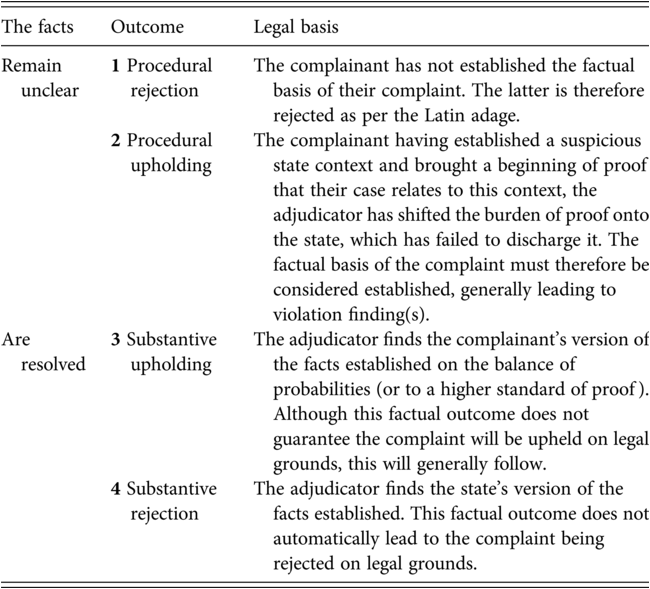

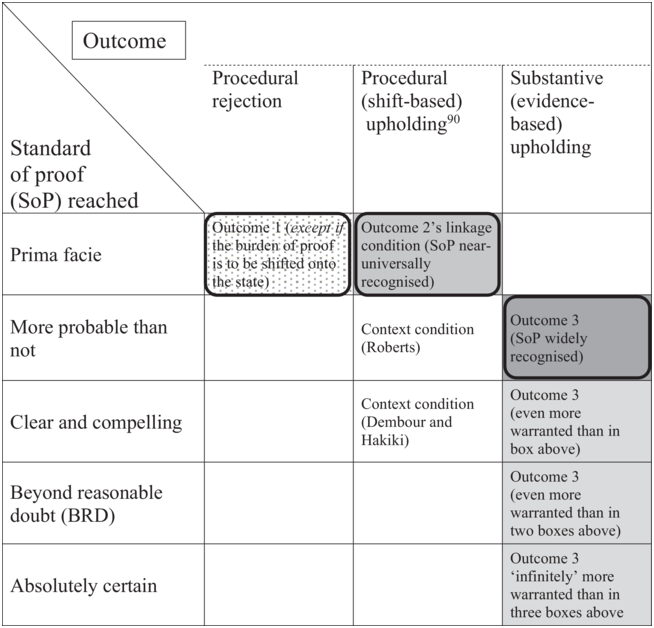

 Open access