


The presence of supermarkets/grocery storesFootnote † in a neighbourhood is associated with buying and consuming healthier food( Reference Fiechtner, Kleinman and Melly 1 ). Grocery stores typically sell healthier food items at affordable prices compared with convenience stores and fast-food outlets( Reference Ginn, Majumdar and Carr 2 , Reference Powell, Kumanyika and Isgor 3 ). Wide ranges of fresh food choices, with relatively lower price points, frequent availability and visually appealing presentation, are associated with choosing healthier food options and healthier diets( Reference Goryakin, Rocco and Suhrcke 4 ).
Healthy food access at the neighbourhood level is unequal. This is believed to play a role in the increased prevalence of chronic diseases( Reference Wang, Cubbin and Ahn 5 – Reference Auchincloss, Mujahid and Shen 7 ). These inequalities stratified by income, race, ethnicity and urbanization of neighbourhoods, which have been reported from developed nations in particular( Reference Larson, Story and Nelson 6 , Reference Lamichhane, Warren and Puett 8 – Reference Maguire, Burgoine and Monsivais 11 ), are significant and pose a population health equity concern( Reference Larson, Story and Nelson 6 ). Food deserts – deprived urban regions with limited food access – are a barrier to a healthy diet and contribute to unhealthy eating patterns and related poor health outcomes( Reference Beaulac, Kristjansson and Cummins 12 ). Although some recent studies show mixed results( Reference Ghosh-Dastidar, Cohen and Hunter 13 , Reference McInerney, Csizmadi and Friedenreich 14 ), it has been reported that poor healthy food access also influences residents’ diets in many ways( Reference Whelan, Wrigley and Warm 15 ). Mothers with children were mostly constrained by economic access while physical access was the main barrier for the elderly( Reference Whelan, Wrigley and Warm 15 ). These barriers ultimately contribute to food insecurity where the quality and/or quantity of food consumed are affected( Reference Walker, Keane and Burke 16 ).
Many major grocery stores have moved away from inner-city low-income neighbourhoods, leaving these neighbourhoods to be served by convenience stores and fast-food restaurants or grocery stores situated a significant distance away( Reference Zhang and Ghosh 17 ). While spatial food access disparities are explicitly seen as a threat to public health, social exclusion that results from socio-economic and cultural segregation should not be underestimated( Reference Walker, Keane and Burke 16 , Reference Franco, Roux and Glass 18 ). Low-income disadvantaged neighbourhoods are the most affected when it comes to poor grocery store access( Reference Walker, Keane and Burke 16 , Reference Giang, Karpyn and Laurison 19 ). In some cases, however, these communities have physical and economic access to fast-food outlets, where foods high in fat, sugar and salt, that are minimally nutritious, are sold( Reference Larson, Story and Nelson 6 ).
Eating behaviour is complex and is shaped by many factors such as policy, environmental and individual variables( Reference Glanz, Sallis and Saelens 20 ). While disparities in these factors leading to health inequities have been widely identified, attempts are being made to find the most effective ways to address them. Guided by an ecological framework, the most successful levels at which to intervene have been recognized as environmental and policy levels( Reference Story, Kaphingst and Robinson-O’Brien 21 ). One such effort to improve healthy food access is the development of grocery stores in areas with poor access. Due to the complex nature of these interventions, involving many parties, successful examples of such operations are few in number or small in scope.
The present systematic review intends to address the knowledge gap on systematically developed evidence on the effectiveness of newly opened grocery stores. Although there are systematic reviews available on interventions based in small food stores( Reference Gittelsohn 22 ) and grocery stores( Reference Escaron, Meinen and Nitzke 23 ), there have been no reviews to our knowledge examining the impact of newly opened grocery stores. The objectives of the review are to systematically synthesize evidence from published peer-reviewed literature on the effectiveness of new grocery stores on diet and selected health-related outcomes, and to identify areas that need further research. It is anticipated that these efforts will inform evidence-based public health practice, policy and programmes, and consequently contribute to reduce inequalities in healthy food access. The specific research question to be addressed is ‘How do new retail food store (grocery store) interventions influence diet and selected health-related outcomes in adults?’
Methods
The present review followed the steps for conducting systematic reviews summarized by the Effective Public Health Practice Project (EPHPP), which recommended these steps: (i) question formulation; (ii) literature retrieval; (iii) developing relevance criteria; (iv) assessing studies for relevance and then for methodological quality; (v) data extraction and narrative synthesis; (vi) peer review of the report; and (vii) dissemination( Reference Thomas, Ciliska and Dobbins 24 ).
Question formulation and establishing relevance criteria
The research question was developed to represent the adult population, new retail grocery store interventions and the selected health-related outcomes. The research question did not name a specific comparison group, although it was understood that individual studies may have chosen comparison groups. In addition, we anticipated that some studies would have investigated the impact of only newly opened grocery stores, or only within-store interventions, or combination of these two types of interventions. Although the focus of the review was on new grocery store openings, in order to capture those studies with a combination of both intervention types, the research question was framed in broad terms.
Inclusion criteria were: (i) assessing an adult study population; (ii) newly opened retail grocery store or a combination of new store and within-store interventions; (iii) assessment of any of the following health-related outcomes: physical or psychological health, either self-reported or diagnosed by a physician, e.g. obesity (BMI), psychosocial factors, food security, dietary habits (fruit and vegetable (F&V) consumption, F&V purchase, food-related behaviour); and (iv) peer-reviewed scholarly articles published in or after 1995 in the English language.
The decision to include adults as the target population was due to children’s dietary behaviour and food choices being highly influenced by and dependent on factors including but not limited to parents’ food habits and school food programmes. Grocery stores were selected as they sell and promote a greater variety of ‘healthy’ foods compared with other types of food stores. The objective was to review evidence related to the impact of new grocery store interventions on health-related outcomes. The field of study is relatively new and there is practically no literature published prior to the last two decades. Therefore, the search was limited to studies published on or after 1995.
Exclusion criteria were: (i) having a study population who are only pregnant women, overweight or obese populations, or those with chronic disease conditions; (ii) interventions which focus solely on organizational nutrition environments (e.g. schools, hospitals) or the information environment (e.g. media reports, public or media campaigns); and (iii) studies with specific focus on ready-to-eat/takeaway food outlets such as restaurants or cafeterias.
Literature retrieval and search strategy
Eight electronic databases were searched: Ovid MEDLINE, EMBASE, Cumulative Index to Nursing and Allied Health Literature (CINAHL), ProQuest Public Health, Web of Science, Scopus, PsycINFO and Cochrane Library. The search strategy, initially developed on MEDLINE (see Table 1), was adapted to the other seven databases (see online supplementary material for comprehensive search strategy). The search strategy was developed for three core concepts: (i) food/nutrition environment (e.g. grocer*, supermarket*, food retail*, etc.); (ii) intervention (e.g. implement*, develop*, establish*, etc.); and (iii) health-related outcomes (e.g. obesity, BMI, food habits, etc). Once relevant records were identified during the initial search, reference lists of these records were manually searched to identify any further records. All records were imported into one RefWorks folder and duplicates were removed systematically. The electronic search and article retrieval were conducted between 22 and 24 August 2015 and email alerts were requested, when possible, from databases to identify any new publications until November 2015.
Search strategy developed in MEDLINE

Due to the large number of records involved, it was difficult to have two reviewers independently work on the article screening process. Initial title screening was carried out by A.M.H.A., T.R., J.H., M.G. and M.C.Footnote * At this point the reviewers were asked to be overly inclusive and only to remove records that were clearly not relevant considering the inclusion and exclusion criteria. Afterwards, abstract screening, full article review for eligibility and a manual search of reference lists of identified records were carried out by A.M.H.A. Records which were not clearly within the exclusion criteria were reviewed by a second reviewer.
Quality assessment and data extraction
Eligible studies were assessed for their methodological quality using the EPHPP Quality Assessment Instrument for quantitative studies and the accompanying dictionary( 25 ). This standardized tool has been tested and shown to have adequate content and construct validity and acceptable levels of inter-rater reliability( Reference Thomas, Ciliska and Dobbins 24 , 26 ).
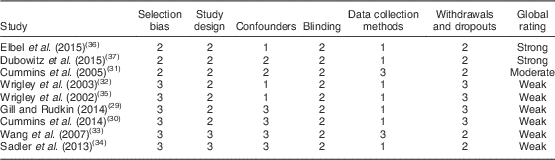
Each quantitative study was independently assessed and scored by two raters for quality with respect to selection bias, study design, confounding, blinding, data collection method and rates of withdrawal/dropouts( 25 ). The instrument allocated a global descriptive rating for each study as ‘strong’, ‘moderate’ or ‘weak’ based on the ratings for the above six components( 25 ). If the study did not yield any ‘weak’ rating for the above six components, it was rated as ‘strong’. If there was only one ‘weak’ component rating, the study was scored as ‘moderate’ in quality, and if there were two or more ‘weak’ ratings the study was scored as ‘weak’( 25 ). Disagreements between the two raters for a particular study were discussed with a third rater.
Regardless of the methodological quality rating, all records were included in the present review for the reasons discussed below. Retail food environment interventions such as new grocery store openings in neighbourhoods with limited healthy food access are relatively under-evaluated natural experiments. As such, manipulating the intervention exposure, in a similar way to randomized controlled trials or other types of planned experiments, is rarely if ever achieved( Reference Craig, Cooper and Gunnell 27 ). Nevertheless, evidence produced by these natural studies is extremely useful when crucial confounding variables are known and controlled( Reference Craig, Cooper and Gunnell 27 , Reference Bonell, Hargreaves and Cousens 28 ). The component ratings used in the EPHPP Quality Assessment Instrument focused specifically on components that are barriers that natural experiments typically encounter. Therefore, it would be inappropriate to exclude studies from the review based solely on methodological quality.
Data relevant to the present review were extracted into a data extraction sheet which defined and sorted data along study location, study design, characteristics of intervention and comparison populations, length of follow-up, number of participants in each group and health-related outcomes reported. Afterwards, results were synthesized narratively.
Results
Selection of studies
The search of eight databases identified 12 972 prospective records. Out of these, 4290 records were systematically removed during de-duplication. The remaining 8682 records initially underwent a title screening and 8583 records, for the purpose of the study, were excluded as they fell clearly outside of the topic of interest. Screening of the full abstract was carried out on the remaining ninety-nine articles; of these, forty-three records were eliminated as they fell outside the topic of interest or inclusion criteria, leaving fifty-six articles for full-text review. Fifty records were excluded during full article review because they did not meet inclusion criteria; specifically, nine were reviews, seven were small food store interventions, five were discussion/position papers and twenty-nine were exclusively on within-store interventions. Six eligible records were retrieved and their reference lists were searched, and this identified four more records. Further, one more record was identified through the email alerts. This resulted in eleven eligible articles representing seven interventions meeting all inclusion criteria, which were then included in the present systematic review. Figure 1 shows the flow diagram of the study selection process.
Flow diagram of the study selection process

Quality of included studies
Nine of the eligible records were quantitative studies and they were subjected to methodological quality assessment( Reference Gill and Rudkin 29 – Reference Dubowitz, Ghosh-Dastidar and Cohen 37 ). Of the two records that were not assessed for methodological quality, one comprised a combination of qualitative and quantitative methodology( Reference Cummins, Findlay and Higgins 38 ), while the other was purely qualitative( Reference Wrigley, Warm and Margetts 39 ). The quality assessment revealed that the majority of the records (six) were of ‘weak’ methodological quality( Reference Gill and Rudkin 29 , Reference Cummins, Flint and Matthews 30 , Reference Wrigley, Warm and Margetts 32 – Reference Wrigley, Warm and Margetts 35 ), while two studies scored ‘strong’( Reference Elbel, Moran and Dixon 36 , Reference Dubowitz, Ghosh-Dastidar and Cohen 37 ) and one study was of ‘moderate’ methodological quality( Reference Cummins, Petticrew and Higgins 31 ). Table 2 shows the quality assessment results of individual studies.
Methodological quality rating results showing the six component ratings and global ratings of individual studies
Among the eleven records, ten included study designs that controlled for known and potential confounders during either the design or analysis phase. Five of the studies had comparison groups that were matched with intervention neighbourhoods for known risk factors such as income, neighbourhood deprivation, education, race/ethnicity or geographical distance to main healthy food store( Reference Cummins, Flint and Matthews 30 , Reference Cummins, Petticrew and Higgins 31 , Reference Sadler, Gilliland and Arku 34 , Reference Elbel, Moran and Dixon 36 – Reference Cummins, Findlay and Higgins 38 ). In the case of the Seacroft (Leeds, England) intervention, where one sample was followed up from baseline to after the intervention, Wrigley et al. and Gill and Rudkin explicitly discussed and controlled for known risk factors within participant groups( Reference Gill and Rudkin 29 , Reference Wrigley, Warm and Margetts 32 , Reference Wrigley, Warm and Margetts 35 ). However, with a one-time survey of residents living close to the intervention store, Wang et al. did not report any adjustments made( Reference Wang, MacLeod and Steadman 33 ). In the study by Cummins et al., confounders were addressed at multiple stages, such as at the design phase by matching and at the analytical phase by selection, and then adjusting for confounders( Reference Cummins, Flint and Matthews 30 ). Several factors prevented Sadler et al. from repeating the follow-up on the same sample of study population( Reference Sadler, Gilliland and Arku 34 ). However, they identified this limitation and took several measures to control the variability that resulted. For example, they asked additional questions about previous shopping behaviour of participants in the second phase and, further, treated them as four different samples in the analysis rather than two samples which were followed up( Reference Sadler, Gilliland and Arku 34 ).
Studies used either intention-to-treat and/or on-treatment analysis as analytical methods. Intention-to-treat analysis evaluates population/community-level impact by comparing intervention and comparison neighbourhoods, while on-treatment analysis evaluates individual- or subgroup-level impact by comparing participants who adhere to treatment exactly as assigned with those who are not assigned to treatment( Reference Ten Have, Normand and Marcus 40 ). Among the interventions included in the present review, five had comparison groups( Reference Cummins, Flint and Matthews 30 , Reference Cummins, Petticrew and Higgins 31 , Reference Sadler, Gilliland and Arku 34 , Reference Elbel, Moran and Dixon 36 – Reference Cummins, Findlay and Higgins 38 ), while two interventions did not( Reference Gill and Rudkin 29 , Reference Wrigley, Warm and Margetts 32 , Reference Wang, MacLeod and Steadman 33 , Reference Wrigley, Warm and Margetts 35 , Reference Wrigley, Warm and Margetts 39 ). Among studies with a control group, three had presented both forms of analytical results( Reference Cummins, Flint and Matthews 30 , Reference Cummins, Petticrew and Higgins 31 , Reference Dubowitz, Ghosh-Dastidar and Cohen 37 , Reference Cummins, Findlay and Higgins 38 ), while Elbel et al. reported intention-to-treat analysis only( Reference Elbel, Moran and Dixon 36 ). Wrigley et al.’s study and secondary analysis of data by Gill and Rudkin presented results of switchers v. non-switchers( Reference Gill and Rudkin 29 , Reference Wrigley, Warm and Margetts 32 , Reference Wrigley, Warm and Margetts 35 ), while the other two studies used other methods( Reference Wang, MacLeod and Steadman 33 , Reference Sadler, Gilliland and Arku 34 ).
Statistical power was at least mentioned by five out of nine records( Reference Cummins, Flint and Matthews 30 – Reference Wrigley, Warm and Margetts 32 , Reference Elbel, Moran and Dixon 36 , Reference Cummins, Findlay and Higgins 38 ). Wrigley et al. and Elbel et al. considered statistical power for sample size calculations at the design phase( Reference Wrigley, Warm and Margetts 32 , Reference Elbel, Moran and Dixon 36 ). Some authors suggested that the small number of switchers might have led to the attenuated statistical power( Reference Cummins, Flint and Matthews 30 , Reference Cummins, Petticrew and Higgins 31 , Reference Wang, MacLeod and Steadman 33 , Reference Elbel, Moran and Dixon 36 , Reference Cummins, Findlay and Higgins 38 ).
Measures used to assess outcomes
Data collection tools utilized to assess outcomes were different among studies. Six studies included detailed, valid and reliable instruments( Reference Cummins, Flint and Matthews 30 , Reference Cummins, Petticrew and Higgins 31 , Reference Sadler, Gilliland and Arku 34 , Reference Elbel, Moran and Dixon 36 – Reference Cummins, Findlay and Higgins 38 ). In some other interventions new questionnaires were developed and tested for content, clarity and sensitivity prior to use in the study( Reference Wang, MacLeod and Steadman 33 ). BMI where evaluated was either based on objectively measured height and weight( Reference Dubowitz, Ghosh-Dastidar and Cohen 37 ), or self-reported( Reference Cummins, Flint and Matthews 30 ). Cummins et al. assessed F&V consumption using a single question where they inquired how many portions of F&V participants usually eat per day( Reference Cummins, Petticrew and Higgins 31 ).
Health-related outcomes
Some of the studies included findings not of interest to the present review; reported below are the outcomes that are within the scope of the review. A summary of study characteristics is given in Table 3.
Characteristics of selected studies and methodological quality ratings

F&V, fruit and vegetables.
Fruit and vegetable consumption
The most frequently investigated outcome was the impact of the new grocery store on F&V consumption. This was reported by all studies, and the results are diverse. A recent intervention, where the effect of a government-subsidized grocery store was examined, discovered a decline in self-reported F&V availability in households with children aged 3–10 years in both intervention (from 77 to 68 %; significant) and comparison (from 78 to 65 %; significant) groups( Reference Elbel, Moran and Dixon 36 ). However, salty snack availability in the intervention group was reported to be reduced to 23 % from 32 % (significant) during the first follow-up( Reference Elbel, Moran and Dixon 36 ).
A recent grocery store intervention in Pittsburgh, Pennsylvania, USA monitored consumption of different dietary components including F&V( Reference Dubowitz, Ghosh-Dastidar and Cohen 37 ). They found that those who lived in the intervention neighbourhood consumed significantly less energy (−178 kcal/d (–745 kJ/d)), added sugars (−3·34 teaspoons/d) and calories from solid fats, alcohol and added sugars (−3·11 % of daily energy) compared with the comparison neighbourhood. They measured these outcomes using a difference-in-differences method. The amount of F&V and wholegrain consumption, however, was also reported to have been reduced (non-significantly) at −0·14 servings/d and −0·05 ounces/d (–1·4 g/d), respectively, in the intervention v. control groups. As well, all these outcomes were reduced among regular users of the new grocery store compared with others in the intervention group; however, these were not statistically significant( Reference Dubowitz, Ghosh-Dastidar and Cohen 37 ).
Cummins et al. reported findings from an intervention in a deprived neighbourhood in Glasgow, Scotland, where a new hypermarket was built( Reference Cummins, Petticrew and Higgins 31 , Reference Cummins, Findlay and Higgins 38 ). The quantitative research revealed, after adjusting for baseline consumption and other relevant confounders, a statistically borderline increase of fruit consumption (0·03 portions/d; 95 % CI −0·25, 0·30) and a small (negative) impact on vegetable (−0·11 portions/d; 95 % CI −0·44, 0·22) and F&V consumption (−0·10 portions/d; 95 %CI −0·59, 0·40) in the intervention compared with comparison neighbourhoods( Reference Cummins, Petticrew and Higgins 31 , Reference Cummins, Findlay and Higgins 38 ). Separate analyses of ‘switchers’ (study participants who had a different primary grocery store at the study start and who said that the new store was their primary grocery store during the follow-up) compared with ‘non-switchers’ showed a slight increase (but not statistically significant) in all the above three consumption levels( Reference Cummins, Petticrew and Higgins 31 , Reference Cummins, Findlay and Higgins 38 ).
Another study, also by Cummins et al. and examining the impact of a supermarket built in Philadelphia, Pennsylvania, USA, reported in unadjusted intention-to-treat or adopters v. non-adopters analyses that there were no significant difference-in-differences in the F&V consumption( Reference Cummins, Flint and Matthews 30 ). As well, an intervention in the USA (Flint, Michigan) failed to detect any improvements in healthy eating behaviour; in fact, they detected that the post-intervention group was significantly more likely to either eat out in restaurants or purchase prepared (usually less healthy) meals from the new store, than during the pre-intervention period( Reference Sadler, Gilliland and Arku 34 ). Similarly, no significant associations with food consumption behaviour were identified by Wang et al. due to a new grocery store in California, USA( Reference Wang, MacLeod and Steadman 33 ).
Research on the impact of a new superstore in Seacroft, Leeds, provided four out of the eleven studies included in the present review( Reference Gill and Rudkin 29 , Reference Wrigley, Warm and Margetts 32 , Reference Wrigley, Warm and Margetts 35 , Reference Wrigley, Warm and Margetts 39 ). The initial analyses by Wrigley et al. revealed a slight increase (but not significant) in F&V consumption from 2·88 to 2·92 portions/d( Reference Wrigley, Warm and Margetts 32 , Reference Wrigley, Warm and Margetts 35 ). Respondents with poor (≤2 portions/d) and the worst (<1 portion/d) pre-intervention diets improved by 0·44 and 0·83 portions/d during post-intervention, respectively. Further, analyses into switchers showed a significant 0·23 portions/d rise in F&V consumption. As well, Gill and Rudkin, in reanalysing these data, supported Wrigley et al. and reported a significant increase in F&V consumption in switchers; however, only in those who already consumed more during the pre-intervention( Reference Gill and Rudkin 29 ). Moreover, according to both Cummins et al. and Gill and Rudkin, residents living close to the store benefited the most. A non-significant increase from 2·56 to 2·81 portions/d in F&V consumption was revealed in respondents within a 750 m radius of the store using a straight-line distance approach( Reference Wrigley, Warm and Margetts 32 , Reference Wrigley, Warm and Margetts 35 ), while 0·7 portions/d increase (non-significant) was reported among those who lived in close proximity to the store and did not have a motor vehicle, using a road network measurement( Reference Gill and Rudkin 29 ). Focus group discussions post-intervention in Seacroft revealed that young respondents had negative attitudes about healthy eating, and in households with children that the children had a big influence on food purchasing and consumption patterns( Reference Wrigley, Warm and Margetts 39 ). However, older switchers noted a positive influence on their eating habits due to the new store, while some participants learned about healthy eating only after the intervention( Reference Wrigley, Warm and Margetts 39 ).
Self-rated health and psychological health
Cummins et al. reported an increased odds (OR=1·52; 95 % CI 0·77, 2·99) of fair-to-poor self-rated health (adjusted for baseline and for confounders) in the intervention v. control groups, although this was not statistically significant( Reference Cummins, Petticrew and Higgins 31 , Reference Cummins, Findlay and Higgins 38 ). As well, they reported non-significant improvements in psychological health in the intervention v. control groups (OR=0·57; 95 % CI 0·29, 1·11). Nevertheless, switchers showed a significant change in psychological health compared with non-switchers (OR=0·24; 95 % CI 0·09, 0·66).
BMI
Two studies measured BMI; neither of them found significant difference-in-differences through intention-to-treat analyses or on-treatment analyses( Reference Cummins, Flint and Matthews 30 , Reference Dubowitz, Ghosh-Dastidar and Cohen 37 ).
Perceptions of food access
Interestingly and importantly, two studies that assessed perceptions of food access revealed positive impacts. One intervention showed significantly greater difference-in-differences for a variety of components related to ‘perceived access to healthy food’ among both the intervention v. comparison and regular users v. others in the intervention area( Reference Dubowitz, Ghosh-Dastidar and Cohen 37 ). Another intervention revealed significantly greater perceptions of food access (1·47; adjusted) among the intervention v. comparison groups( Reference Cummins, Flint and Matthews 30 ).
Other outcomes
Wang et al. found increases in walking among those who switched to the new store( Reference Wang, MacLeod and Steadman 33 ), while the focus group discussions highlighted improvements in self-esteem among neighbourhood residents due to a new store in Leeds( Reference Wrigley, Warm and Margetts 39 ). Dubowitz et al. also monitored the level of neighbourhood satisfaction for the Pittsburgh intervention and found a significant improvement (11·10 %) in the intervention v. comparison groups( Reference Dubowitz, Ghosh-Dastidar and Cohen 37 ).
Discussion
Health disparities arising due to unhealthy dietary patterns are becoming a serious public health issue( 41 , Reference Drewnowski and Darmon 42 ). Overcoming these serious health issues is critical. Practices of food procurement and eating are two of the most highly variable human activities with direct health consequences; therefore, they are also among the most valuable targets to direct preventive strategies( 41 ).
The present systematic review assessed the impact of opening new grocery stores in areas with previous low grocery store access on diet and selected health-related outcomes of neighbourhood residents. Review of eleven records of seven interventions revealed that new grocery store interventions have in general had an inconclusive influence on health-related outcomes in adults. Of the seven interventions, all reported F&V consumption as a proxy for healthy eating behaviour while few studies examined self-reported health, psychological health, BMI, perceptions of food access and self-reported household food availability. Significant increases in F&V consumption were detected in only one intervention among switchers who already consumed more F&V during pre-intervention, or who lived near the new store. Conversely, one study reported significantly lower household F&V availability, while another reported a non-significant decline in daily F&V consumption in both intervention and comparison neighbourhoods. Further, one more intervention found that the intervention group was significantly more likely to consume unhealthy food. Among other health-related outcomes, there were significant improvements in perceived food access, neighbourhood satisfaction and poor psychological health. One intervention did not have any impact at all on healthy eating behaviour. In the two studies that measured BMI, they failed to detect any significant changes. It is surprising that only one study in the review reported food insecurity (although the intervention’s impact on the food insecurity was not clearly stated) as poor geographic access to food contributes to food insecurity( Reference Wang, MacLeod and Steadman 33 ) and this is the issue that the intervention was hoping to address.
The strength of evidence produced by these studies is generally weak, where the majority (66·67 %) of studies had ‘weak’ methodological quality and only 22·22 % had ‘strong’ and 11·11 % had a ‘moderate’ methodological quality. Although the quality of the majority of studies reviewed was weak according to the quality assessment tool used, they do, however, represent some of the better-quality evidence generated in an ethically possible manner, because the nature of these interventions is such that it is not possible to conduct randomized controlled trials. Therefore, while interpretations of the study results need to be made with caution, they provide the best possible results of natural experiments. It should be noted, however, that future research on interventions are encouraged to utilize better methods, such as longitudinal studies followed up for longer time periods, studies showing graded relationships and validated tools, to make evidence even stronger.
A noteworthy observation was that all of the interventions reviewed had occurred in areas designated as socio-economically disadvantaged or low-income neighbourhoods. People living in these neighbourhoods are at high risk for poor diet due to poor healthy food access, abundance of unhealthy food exposure and poor public transit options( Reference Cushon, Creighton and Kershaw 43 , Reference Powell, Slater and Mirtcheva 44 ). Apart from poor healthy food access, many of these neighbourhoods also suffer from low basic public and private services, social exclusion and associated oppressions( Reference Wrigley, Guy and Lowe 45 ). These accumulated deprived conditions contribute to major grocery store retailers locating further away, partly due to business and other regulatory policies or practices, or economic reasons( Reference Zhang and Ghosh 17 ).
Food consumption behaviour is influenced by multiple factors( Reference Glanz, Sallis and Saelens 20 ). Establishing a new grocery store alters community and consumer nutrition environments. This modified nutrition environment leaves the relationship between eating behaviour and individual factors to remain unchanged, making it hard to achieve any change in health behaviour by modifying only one component, i.e. environmental determinants. Some authors already identified this and acknowledged the importance of combined efforts to address healthy eating. For example, Wang et al. recognized the importance of combining traditional public health individual- and family-focused perspectives into these interventions if any effect is to be detected( Reference Wang, MacLeod and Steadman 33 ). Likewise, independent associations between healthy food access and healthy eating are yet to be uncovered and understood( Reference Cummins, Petticrew and Sparks 46 ).
When assessed, interventions changed individuals’ perceived access to healthy food( Reference Cummins, Flint and Matthews 30 , Reference Dubowitz, Ghosh-Dastidar and Cohen 37 ). This observation could be claimed as a positive behaviour change step due to grocery store interventions towards reducing health inequalities by changing the dietary habits( Reference Prochaska, Redding and Evers 47 ). For instance, according to the transtheoretical model the core processes of change, which is described as individuals progressing through stages of change from precontemplation to maintenance and to termination, begins with a change in perception related to the behaviour change in question( Reference Prochaska, Redding and Evers 47 ). In particular, change in perception towards healthy food access exemplifies implicit and explicit processes of change such as consciousness raising, social liberation and stimulus control( Reference Prochaska, Redding and Evers 47 ). Intervention cohorts had more opportunities/alternatives to practise healthy food habits while avoiding unhealthy food habits. This suggests that in the long term these interventions, if sustained, could lead to positive changes in food behaviour and ultimately to narrowing of health disparities.
Despite the fact that grocery stores promote healthy food, many also offer a variety of highly processed products high in sugar, salt and fat( Reference Sadler, Gilliland and Arku 34 , Reference Elbel, Moran and Dixon 36 ). Further, exposure to a grocery store with a large variety of products may contribute to buying products that are not core food items, thereby overspending on non-essential items. In fact, focus group discussions by Wrigley et al. revealed that although the new store increased accessibility and convenience, some residents were concerned about ‘temptation to overspend’ when they used the new store( Reference Wrigley, Warm and Margetts 39 ). Financial difficulties that may be associated with consuming a healthy diet, while trying to balance a tight budget for other essentials such as housing and transport, might offer a challenging task for low-income households. Spending a limited budget on transport could affect the amount of money that is spent on food and ultimately reflect as lower F&V consumption contributing to poorer health. Focus groups, in fact, revealed that the new food store within walking distance saved them transport cost previously used for travelling to get groceries( Reference Wrigley, Warm and Margetts 39 ).
In analysing the systematic review results, the context in which these interventions occur and that of their applicability should be considered. For example, retail food environments in Canada and the USA are dissimilar( Reference Minaker, Shuh and Olstad 48 ); thus, the interventions which occurred in the USA might not completely be transferable to Canada. Five of the interventions reviewed from the USA were in locations where African-American populations were a majority( Reference Cummins, Flint and Matthews 30 , Reference Wang, MacLeod and Steadman 33 , Reference Sadler, Gilliland and Arku 34 , Reference Elbel, Moran and Dixon 36 , Reference Dubowitz, Ghosh-Dastidar and Cohen 37 ). A study from the UK, reporting improvements in F&V consumption, had a white majority( Reference Gill and Rudkin 29 , Reference Wrigley, Warm and Margetts 32 , Reference Wrigley, Warm and Margetts 35 , Reference Wrigley, Warm and Margetts 39 ). Having a large minority ethnic group as participants might have skewed health-related outcomes reported, as it is widely known that low-income minority subgroups reportedly have poorer health outcomes such as obesity compared with the white majority in the USA( Reference Wang and Beydoun 49 ). Therefore, one could argue that not showing any significant impact in these studies might be due to the combined low socio-economic and racial/ethnic health disparities that already exist and that intervention impacts on other groups of the population might bear different results. According to intersectionality theory, multiple disadvantaged conditions might result in worse health outcomes than when each condition is taken singly( Reference Viruell-Fuentes, Miranda and Abdulrahim 50 ). As such, detection of the effects of food environment interventions might need examination of participants’ many disadvantaged conditions all taken together.
The majority of studies reviewed used well-tested and standardized measurement tools ensuring high quality of data presented. Further, all studies investigated individual shopping behaviour where participants’ primary grocery shopping details were examined, warranting that data were reported at the individual level and not at an ecological level. Moreover, all but one( Reference Wang, MacLeod and Steadman 33 ) of the studies were prospective observational studies, which facilitated reducing potential recall bias. Additionally, all studies were published within the past 14 years, suggesting that the evidence produced is current and would be applicable to the present food environment discourse.
These studies have varied follow-up periods from 1–4 months up to 12 months, and numbers of participants ranging from seventy-eight to 1009. Study designs used were also very diverse and included one-time surveys with retrospective data collection( Reference Wang, MacLeod and Steadman 33 ), uncontrolled before/after studies( Reference Gill and Rudkin 29 , Reference Wrigley, Warm and Margetts 32 , Reference Wrigley, Warm and Margetts 35 ), before/after studies with different samples from the same population( Reference Sadler, Gilliland and Arku 34 ), controlled pre–post quasi-experimental designs( Reference Cummins, Flint and Matthews 30 , Reference Cummins, Petticrew and Higgins 31 , Reference Dubowitz, Ghosh-Dastidar and Cohen 37 , Reference Cummins, Findlay and Higgins 38 ) and a street-intercept survey( Reference Elbel, Moran and Dixon 36 ). Differences in follow-up periods, sample sizes and study designs make the comparison of studies challenging.
Although the majority of interventions relied on detailed and well-established measures to assess outcomes, some studies used single-item questions( Reference Cummins, Petticrew and Higgins 31 ). Using brief instruments to assess outcomes such as F&V consumption and diet has shown to be less effective in actually measuring what needs to be assessed compared with tools with more detailed questions( Reference Kirkpatrick, Reedy and Butler 51 ). Results produced would be more reliable if all studies used detailed and comprehensive measurement instruments.
Selecting areas with the highest level of deprivation might not be the best option to evaluate these interventions as healthy eating might be one out of many challenges these deprived populations face in everyday life. For instance, food price is one of the major limiting factors for low-income households when it comes to purchasing healthy food( Reference French 52 ). Further, healthy food costs more than less healthy options( Reference Cavanaugh, Mallya and Brensinger 53 ) and literature indicates that price reductions and monetary incentives are interventions that might work for low-income populations( Reference Powell, Chriqui and Khan 54 ). Although food access is improved with grocery store interventions, the concomitant impact on food price might be limited. In fact, healthy food basket pricing in Flint, Michigan found that the price was significantly higher in a food desert than in the rest of the city( Reference Sadler, Gilliland and Arku 55 ). The higher price was reduced after opening two grocery stores in the food desert but remained higher than in the remainder of the city on average( Reference Sadler, Gilliland and Arku 55 ). This might be leading to low-income residents not being able to change their diet due to their limited budgets. This assumption is supported by results showing that although neighbourhood residents have improved their perceptions of food access, they did not show any significant changes in F&V consumption or BMI. In contrast, this could also be a function of BMI taking a longer time to change while individuals’ perceived food access, self-esteem and neighbourhood satisfaction could change sooner. Further studies that incorporate several intervention components such as monetary incentives or price reductions for healthy food with new store interventions might provide balanced results.
Changes in eating behaviour and subsequent health-related outcomes might also take a longer time to change and show any detectable effects. Some authors highlight this limitation of food environment interventions, specifically Cummins et al. argued that significantly improved perceptions of food access among participants is a positive indication of better health in the long run( Reference Cummins, Flint and Matthews 30 ). Elbel et al. proposed that more than 1 year might be necessary for neighbourhood residents to change eating behaviour and subsequently to see any impact on health-related outcomes( Reference Elbel, Moran and Dixon 36 ).
Further, these seven interventions took place in two countries. Outcomes of these studies should be interpreted in the context in which they occurred. For instance, the Seacroft intervention showed a significant impact on F&V consumption among switchers. It was an initiative which had enormous government backing and targeted poor neighbourhoods specifically( Reference Wrigley, Guy and Lowe 45 ). It was an intervention not only to increase food access, but also to combat social exclusion (‘Seacroft green’ Centre) and had the intention to provide unemployed local residents with employment opportunities( Reference Wrigley, Guy and Lowe 45 ). In contrast, the grocery store opened in Flint, Michigan was a privately invested venture, was closed after 1 year in business and had no government support( Reference Sadler, Gilliland and Arku 34 ). Complex and context-specific interventions may have many prominent or subtle effects, with acceptability of interventions by residents and subsequent change in behaviour influenced by many known and unknown factors. For instance, if a new grocery store was opened in a disadvantaged, predominantly low-income neighbourhood, and if the community had the understanding that the store was established primarily for low-income residents, some people might be reluctant to shop at the new store. Unknown factors such as the above are difficult to capture and their effects on health-related outcomes might be considerable. Future retail food environment interventions should take these subtle effects into consideration when assessing intervention impact.
Limitations
While the body of literature exploring the food environment is large, studies evaluating new grocery store interventions are very few to date. We limited our search to only peer-reviewed literature published in English language after 1995 in selected but comprehensive electronic databases. Therefore, it is possible that relevant studies, for instance those published as non-peer reviewed reports or only in less comprehensive electronic databases, were missed. Further, included studies had used dissimilar methodologies which made comparisons challenging.
Conclusion
As discussed, approaches which address single aspects of healthy eating (such as improved access to retail food stores) do not seem to enhance diet and other selected health-related outcomes such as self-rated health, psychological health and BMI in an effective manner over short durations. These interventions might prove successful and result in intended effects in the longer term, yet we do not have enough evidence to say whether this is the case. Conversely, as complex and multifaceted dietary behaviours and resulting health-related outcomes are, interventions that aim to address these problems should also have multidimensional and multipronged approaches if any effect is to be seen. Presently the field of retail food environment interventions is developing and the complex linking pathways that connect these interventions to diet and health are yet to be elucidated. Further evidence is needed in the form of high-quality research to uncover these complex associations, as well as interventions in different communities and contexts with longer follow-up periods to inform policy decisions and recommendations.
Acknowledgements
Acknowledgements: The authors would like to thank Lukas Miller, the liaison librarian for Community Health and Epidemiology in the Leslie and Irene Dube Health Sciences library at the University of Saskatchewan, for his assistance during the search strategy development. They would also like to thank Tracy Ridalls, Joel Heitmar, Melissa Gan and Mike Chouinard for their contribution in the initial title screening of articles; and Dr Sharon Kirkpatrick, Assistant Professor, School of Public Health and Health Systems, University of Waterloo, for her reviews. Financial support: Funding for this study was from a grant from the Canadian Institutes of Health Research (#127084). A.M.H.A. was supported through CREATE/ITraP (Collaborative Research and Training Experience/Integrated Training Program in Infectious Disease, Food Safety and Public Policy) during the study period. The funders had no role in the design, analysis or writing of this article. Conflict of interest: None. Authorship: This systematic review was conceived and designed by N.M. and R.E.-S. A.M.H.A. conducted the search, extracted data and composed the manuscript. All authors contributed to the quality assessment of individual studies, interpretation of the findings and preparation of the manuscript. Ethics of human subject participation: Not applicable.
Supplementary Material
To view supplementary material for this article, please visit https://doi.org/10.1017/S1368980017000933



