Nearly one in three children in the USA is overweight or obese (BMI ≥ 85th percentile for age and sex)(Reference Bethell, Simpson and Stumbo1). Obesity is associated with increased risk of multiple health consequences in youth, including asthma, sleep apnoea, type 2 diabetes, early puberty, depression, low self-esteem and teasing(Reference Abrams and Levitt Katz2–Reference Young-Hyman, Tanofsky-Kraff and Yanovski4). Additional risks when obesity continues into adulthood include hypertension, CVD and certain cancers(Reference Jemal, Siegel and Ward5, Reference Mensah, Mokdad and Ford6). Childhood obesity rates have generally increased among all racial/ethnic groups in the USA; however, African-American youth, on average, experience higher rates of excessive weight and related health burdens(Reference Flegal, Ogden and Yanovski7–Reference Ogden, Carroll and Flegal10). Differences in health behaviours (e.g. diet and physical activity) have been partially implicated(Reference Crespo, Smitt and Andersen11–Reference Troiano, Briefel and Carroll13), along with environmental contributors, including food marketing(Reference Zimmerman14).
Marketing is viewed as comprising four key elements known as the 4 Ps: product, price, place and promotion(Reference McCarthy15). Product is the tangible or intangible goods and services that meet the needs and desires of the customer. Price is what the customer is willing to exchange or pay for the product and includes both monetary and non-monetary costs. Place is how the customer gets to access the product. Promotion references a variety of strategies (e.g. advertising, branding, publicity) used to get the word out that the product is available. These 4 Ps are directly controlled by food marketers and evidence suggests that the manipulation of product, price, place and promotion contributes to both unhealthy diets and overconsumption of food(Reference Harris, Pomeranz and Lobstein16–Reference Chandon and Wansink20).
Elevated exposure to food marketing may increase preference and demand for certain foods, brand loyalty and psychological associations between selected food items and activities, toys, games, characters and/or celebrities(Reference Zimmerman14, Reference Harris, Schwartz and Brownell21, 22). Comprehensive reviews document elevated levels of advertisement of foods of minimal nutritional value by promoting products using channels with high utilization among youth (e.g. television, Internet, cross-promotions with movies)(Reference Hastings, Stead and McDermott18, 22, Reference Story and French23). As such, the food marketing environment may contribute to overconsumption of dietary energy.
Targeted marketing involves identifying a group of people with shared characteristics or need and matching the product, price, place and promotion activities to the preferences of that group(Reference Kotler, Armstrong and Starr24). Targeted marketing practices have been linked to diet and obesity disparities(Reference Grier and Kumanyika25–27). The food marketing environment represents the totality of the surroundings and conditions in which an individual is exposed to practices aimed at encouraging the acquisition and consumption of foods and beverages(Reference Grier and Kumanyika25–27). The food marketing environments of African-American consumers are less likely to support the development and maintenance of healthful eating and may predispose African Americans to excess energy consumption(Reference Grier and Kumanyika25). African-American youth (compared with their white counterparts) have greater exposure to advertisements of foods and beverages of low nutritional value and high energy content during their most watched programmes(Reference Powell, Szczypka and Chaloupka28, Reference Powell, Szczypka and Chaloupka29). Taken together with greater media usage of African-American youth(Reference Roberts, Foehr and Rideout30), overall exposure to the promotion of unhealthy and high-energy foods may far exceed that of their white peers.
Marketing of high-energy foods to youth has been recognized by researchers(Reference Zimmerman14, Reference Harris, Pomeranz and Lobstein16), public health authorities(22, 31) and federal regulators(32) as contributing to less healthy diets and/or overconsumption of energy. The US Institute of Medicine(22) and the WHO(31) have called for self-regulation and government intervention to ensure reductions in marketing of unhealthy foods to children. Others have suggested grass-roots or social/environmental justice movements, particularly in lower-income and minority communities, to help develop and enforce policies to support neighbourhood environments with healthy choices for all segments of the community(Reference Taylor, Poston and Jones33). For example, active involvement of community residents in pointing out to policy makers the limited availability or access to health-promoting resources (e.g. healthier food choices) due to structural disadvantages related to a specific population (e.g. lower socio-economic status, minority) and demanding corrective action.
Despite these recommendations, public support for food marketing restrictions has yet to reach levels suggesting sufficient political leverage for legislative or regulatory interventions(Reference Harris, Pomeranz and Lobstein16, Reference Barry, Brescoll and Brownell34, Reference Goren, Harris and Schwartz35). Limited public support may be, in part, due to a lack of public awareness of children's daily exposure to food marketing and/or its health consequences(Reference Goren, Harris and Schwartz35–Reference Speers, Goren and Harris37). There is conspicuously limited published literature related to consumer awareness and attitudes concerning food marketing exposure of children. More in-depth understanding of parental perceptions is critical for intervention development. Further, what does currently exist in the published literature focuses on general v. ethnic-specific perceptions. Recent studies examining perceptions of the food marketplace suggest differences in perception among ethnic groups(Reference Grier, Mensinger and Huang38) and between adults and teens(Reference Bibeau, Saksvig and Gittelsohn39).
The purpose of the present study was to examine caregivers’ perceptions of the extent to which the food marketing environment contributes to dietary behaviours of African-American children (aged 3–11 years) residing in predominantly African-American communities. Given the dearth of literature on this topic and with this target population in particular, the study was exploratory in the hope of gaining a more in-depth understanding of caregiver perceptions of children's exposure to general and targeted food marketing and consequences on children's eating behaviours. Findings from this research are intended to inform potential strategies to address the food marketing environment to promote healthier eating among African-American children and families.
Methods
Setting and study design
The study was conducted in Birmingham, Alabama, a large urban city located in the south-eastern USA. The largest city in the state, Birmingham's population is 62 % African American. Nearly 28 % of households include children and the median family household income is about $US 32 000(40).
The study design utilized a community-based participatory research (CBPR) approach(Reference Israel, Schulz and Parker41). CBPR is a methodology that acknowledges the value of both the ‘researcher’ and the ‘participant’ in the full process of scientific inquiry through the formation of partnerships between academic researchers and community members for the active participation in the study design, data collection and interpretation of findings. Further, CBPR is a process with the ultimate goal of social change to improve community health. The present study is part of ongoing research to support changes in community systems, programmes and/or policies that may contribute to obesity-related health disparities in the USA. To conduct the study, we partnered with Congregations for Public Health, Inc. (CPH), a non-profit organization comprised of six African-American churches located in older Birmingham neighbourhoods with high proportions of African Americans, school-age children and lower-income households (see Table 1)(42). The mission of CPH is to address the public health concerns of residents living in neighbourhoods within a 1 mile (1·6 km) radius of each church. Trained Neighborhood Outreach Specialists (NOS) assigned to each church provide community outreach, conduct health promotion activities and assist with data collection.
Neighbourhood characteristics of study participants: caregivers (n 25) of African-American children aged 3–11 years from six primarily African-American communities in metro Birmingham, AL, USA

Source: US Census Bureau(42).
Procedures
NOS recruited caregivers of young children from their church catchment area using previously successful methods including fliers, word of mouth and direct contact via other outreach efforts. While the target population for the study was caregivers of young African-American children, we recognized the heterogeneity within this subset of the population. As such, a purposive sampling approach was used to try to recruit participants who represented a range of demographic characteristics (e.g. family composition, socio-economic status, neighbourhood of residence) that might result in divergent perceptions of the food marketing environment to better inform our exploratory study. Each potential participant was screened for inclusion criteria (i.e. neighbourhood resident, caregiver of a 3–11-year-old African-American child, English-speaking) and provided information about the study's purpose, procedures, risks and benefits. The study was conducted according to the guidelines laid down in the Declaration of Helsinki and all procedures involving human subjects were approved by the University of Alabama at Birmingham. Written informed consent was obtained from all study participants.
Individual semi-structured ethnographic interviews(Reference Spradley43) with study participants were held at participating CPH church locations or other convenient public locations within the community (e.g. community centre). Each interview was conducted by a trained interviewer using a semi-structured protocol that focused on the following topics: knowledge and attitudes about child eating behaviours; attitudes and beliefs about the influence of food marketing on child food and beverage consumption; and opinions about efforts to limit food marketing directed at children.
Interviews were audio-recorded and transcribed verbatim by a commercial transcription company. Transcribed interviews were analysed inductively using a software program for qualitative data analysis (NVivo9). A standard thematic analysis(Reference Creswell44) was conducted to search for common categories and themes in the data. Two independent coders, experienced in qualitative research, initially coded a sample of interviews to develop the coding tree. After independent assessment, coders, in collaboration with study investigators, added and revised codes until consensus on a final coding scheme was reached. Subsequently, each interview transcript was independently coded by the two original coders. Coders identified key points and recurring categories and themes that were central to the experiences described by the participants. The process consisted of dividing the text into semantic segments, labelling the segments with codes, examining the codes for overlap and redundancy, and aggregating these codes into broader categories and themes(Reference Creswell44). A constant comparative method(Reference Glaser and Strauss45) was employed to generate semantically rich codes, categories and themes.
Results
A summary of findings from interview analyses along with a discussion of different views presented are offered below. Selected participant quotations are included throughout to bring the participant's voice to life, as well as to illustrate the range of responses provided.
Participant and neighbourhood characteristics
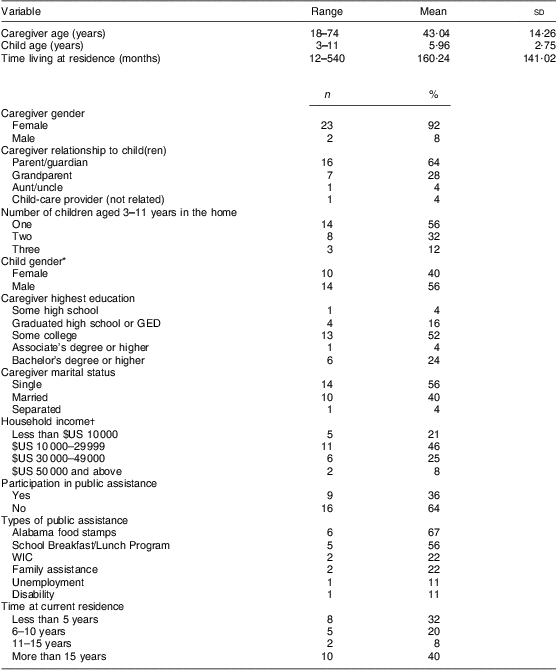
Participants were primarily female (23/25) with a mean age of 43 years. Primarily parents/guardians (64 %) or grandparents (28 %) of young children participated in the study. Participants tended to be single (56 %) and to be the caregiver for two or more children between the ages of 3 and 11 years (44 %). All participants resided in the neighbourhoods surrounding the six churches of CPH. As noted earlier, these neighbourhoods include primarily African-American and low-income residents. Nearly half (46 %) of caregivers had lived in their current residence for more than 10 years. Additional demographic information is provided in Table 2.
Demographic characteristics of study participants: caregivers (n 25) of African-American children aged 3–11 years from six primarily African-American communities in metro Birmingham, AL, USA

GED, General Education Development; WIC, Special Supplemental Nutrition Program for Women, Infants, and Children.
*Gender of the first child (if there are multiple children aged 3–11 years in the home).
†Data missing for one participant.
Child eating behaviours, consequences and parenting practices
Caregivers described their beliefs about important foods for children to eat and/or limit, concerns about their child's eating behaviours and general strategies used to guide children's eating. They expressed the need for children to eat a diet consistent with recommended dietary guidelines (e.g. fruit, vegetables, whole grains, low-fat dairy products, lean protein) and avoid ‘junk’ foods (e.g. chips, sodas, candy, other sweets). Participants believed such a diet helps children to take in appropriate vitamins and nutrients to maintain adequate energy for growth and development. Similarly, caregivers appeared to be well aware of negative health consequences of poor diet and excess energy intake. They identified several health problems linked to dietary behaviours, including obesity and chronic diseases such as diabetes, hypertension, cancer and dental caries. In addition, caregivers noted that unhealthy choices of foods and overconsumption may also lead to increased financial burden (e.g. medical costs). While some expressed concerns about their child's current dietary habits and future well-being, others did not see an immediate concern.
Regardless of the perceived risk for negative health for children in their care, caregivers described general practices to encourage children to eat healthier including setting and enforcing rules about healthy eating, limiting the amount of less healthy foods, and creative cooking where healthier items (e.g. vegetables) are added to dishes or substituted for less healthy items and healthier cooking preparation methods are used (e.g. baking v. frying):
‘Because I am the parent, in order for you to be able to eat some of the junk food that you want, you must eat the vegetables that I prepare.’
‘I did this baked chicken but you use Bisquick® … cook it in the oven and they thought it was really fried chicken.’
Perceptions of the food marketing matrix
Caregivers expressed high confidence in parenting strategies to manage the child's diet, but they described challenges with maintaining a balanced and lower-energy diet due to influences beyond their control. These challenges are presented according to the 4 Ps of the marketing matrix: product, price, place and promotion.
Product
Caregivers described the foods and beverages the children in their care generally eat and concerns about these items. Some noted that their children regularly consumed healthier foods, particularly when authoritative parenting practices were in place. However, participants more often described children's favourite foods as consisting of chicken (often fried), fast foods (e.g. hamburgers, hot dogs, pizza, French fries) and ‘junk’ foods (e.g. chips, sodas, candy, other sweets). These items represented most of the specific requests by children. Some caregivers expressed concern about preference for these foods with higher fat, sugar and/or salt content, as these were also the foods participants most associated with health problems.
Price
Caregivers noted that foods that are higher in nutritional value and lower in energy (e.g. produce, lean meats, whole grains) compared with less healthy foods are often more expensive and place a particularly high burden on families with limited incomes. While caregivers reported that the healthier option would be better for them/their child, multiple participants pointed to the higher cost of healthier items. Participants admitted to often succumbing to the appeal of cheaper, less healthy items and low-cost combos (e.g. sandwich, fries and soda) and bundled foods (e.g. 2 for $5) as they were believed to offer greater financial value (i.e. more food for the money):
‘I was trying to get a turkey sandwich and they offered you white bread or wheat bread so the white bread on the sandwich was $2·59, so I asked for the wheat and the price changed it to $3·59 and I said it is the same sandwich and he said but it is wheat bread and wheat bread costs more than white bread.’
The issue of higher costs of grocers selling healthier items was not lost on one caregiver who offered the following:
‘I noticed that you could not find asparagus or artichoke hearts, not the can ones but I am talking about the real fresh ones you could not find them [in local store]. So when I asked the store manager he told me well ma'am when I bought those kinds of things, I lost money on them because nobody bought them and you know they just rotted and I lost money, so I do not stock them.’
Place
Participants frequently commented about the lack of availability of stores and restaurants offering healthier foods in their neighbourhood. As such, caregivers generally believed that healthier options were either unavailable or inaccessible to many families. Caregivers described their neighbourhoods as including only convenience or corner stores rather than grocery stores or supermarkets that generally sell a larger variety of foods. The smaller convenience/corner stores were seen as locations to purchase low-cost and less healthy items:
‘Most older communities had little corner stores. I think that down near the schools, there are still little stores there, so on the way to school, they'll stop and get a bag of junk, and on the way back home, they will stop also. I think that's a big influence on what they eat.’
Similarly, participants mentioned the presence of more fast-food than sit-down restaurants in their neighbourhoods. The most frequently reported restaurant for eating out was McDonald's® and often it was located within the neighbourhood.
Promotion
Caregivers reported that some of the greatest influences on children's food and beverage intake were commercials and print ads supporting the purchase and consumption of certain foods. While promotion is part of the marketing matrix of all products, caregivers noted that food marketers use several techniques to appeal specifically to African-American children and families. Participants described the inclusion of African-American children and families, celebrities (e.g. actors, music artists, sports figures) or characters (e.g. from cartoons, movies, television shows) with high popularity among African Americans, and ethnic music, as particularly influential. They further suggested that commercials that are run during shows with higher African-American viewership will have greater impact on purchasing decisions:
‘If we see black people in commercials – African Americans in commercials – we're going to be more prompt, I believe, to buy. So, you see African Americans in Burger King® and Quizno's® and Subway® – all these different types of commercials – it makes us feel comfortable to the point that, hey, we need to get that because they've got us on the commercial, eating the same type of burger or whatever.’
‘You see these rappers doing these commercials for Burger King® … and these kids associate that product with them. So maybe that means if you eat a Whopper like this rapper over here does, that makes you cool like this rapper.’
Attitudes about food marketing practices
We asked caregivers to share their views about food marketing practices impacting African-American children. There were multiple sub-themes in our analysis, including whether food companies are generally helping or hurting residents of African-American communities with their marketing practices, company loyalty and uncertainty about the overall impact of food companies on African-American youth.
When directly asked, over half of caregiver discussions referenced food company practices as being harmful:
‘…it's a great concern because they [food companies] do try to get them to buy certain foods, like I said, and most of them are unhealthy. So, I don't know it's just like these children growing up now don't have a choice of something to me.’
Other caregiver discussions, however, focused on how food companies help and/or positively impact African-American communities. A sentiment expressed by these caregivers focused on how food companies often support extracurricular activities for their children. From academic scholarships and fundraisers, to community events, to paying for scoreboards at the local sports field, food companies are providing financial resources to communities that may otherwise not get these programmes or services:
‘But there are some companies that, especially some restaurants, because you have Pizza Hut® giving so many scholarships to their employees or to high school students. And this motivates them and then you have those coupon books where they can buy certain product and that contributes towards their education.’
Some caregivers also described a sense of loyalty to certain companies who targeted African Americans as if there was some apparent indebtedness:
‘…well I know my sister, she always talks about supporting Coke® because Coca-Cola has sponsored that game, I guess for years, I do not know how long, but she always says let us buy Coke® products because Coke® always sponsors that classic [college football game] and the Food World also sponsored it, we need to support Food World and we support Coke® because they always sponsor that game.’
Yet there were others who expressed ambivalence. This was primarily couched in a theme of targeted marketing is good business practice and caregivers must take personal responsibility to limit child exposure to advertisements and promotion of unhealthy food:
‘Well they [food companies] are there to sell a product, and we are there to shield and protect our children. So, it's incumbent upon the parents to protect the children, which we are not doing a very good job when it comes to the kinds of food that they eat.’
In summary, participants provided multiple insights about how the food marketing environment influences African-American children's diets. In general, participants expressed concerns about health consequences of unhealthy diets and lack of access to healthier and affordable food options in their communities. They also described various promotional activities that influenced food purchase and consumption including television and print advertisements, celebrity or character endorsements, and discounted/combo meals. Participants were also familiar with several food companies/restaurants who sponsored community events related to their children. While most recognized this as partly a promotional activity, there was limited consensus about this type of marketing practice being harmful to African-American communities.
Discussion
Given limitations in children's ability to critically analyse and evaluate the intent of persuasive messages(Reference Blosser and Roberts46–Reference Wartella48) and ever-increasing exposure to promotion and advertising, researchers and policy makers need to better understand the extent to which food marketing practices are perceived to influence the food consumption of younger children. Despite the excess burden of obesity and diet-related diseases among minority populations, racial/ethnic health disparities have not been central to policy discussions regarding corporate marketing practices linked to excess energy intake(Reference Grier and Kumanyika49).
The present study is among the first to examine the perceptions of caregivers of young African-American children on aspects of the food marketing environment. Findings presented here suggest that caregivers of young African-American children in this area are well aware of the health consequences of overweight and obesity and readily understand the links between excess energy intake and weight status. They further articulated a myriad of influencing factors related to their food marketing environment. For example, caregivers expressed concern about children's strong preferences for foods (product) with low nutritional value (e.g. ‘junk’ foods). Such energy-dense food and beverage items have been recognized as being highly palatable, particularly among African Americans where there is biological evidence supporting a higher preference for high-fat, high-energy and sweet foods than among whites(Reference Troiano, Briefel and Carroll13, Reference Schiffman, Graham and Sattely-Miller50). Further, advances in food product innovation in recent decades have led to the development of foods and beverages that are both highly palatability and faster to consume(Reference Zimmerman14); characteristics also linked to energy overconsumption and obesity.
Like previous research(Reference Grier, Mensinger and Huang38, Reference Bibeau, Saksvig and Gittelsohn39, Reference Ustjanauskas, Eckman and Harris51), our findings also suggest that caregivers are aware of the influence of cost (price), food access (place) and advertisement (promotion) on children's food choices. While much of what was suggested as influencing intake could apply to youth regardless of race/ethnicity, caregivers appeared keenly aware of known targeted marketing techniques including the use of African-American actors in commercials, ethnic music and music artists, and ad placement during highly viewed shows by the target audience.
While public health officials have called for the restriction of food marketing to children worldwide(31), public support for restrictions in the USA is less clear. Despite a general awareness of targeted marketing techniques and their perceived influence on eating behaviours and health risk, participants were not quick to blame food and/or marketing companies. Many caregivers focused on the good done by these companies in their communities and they expressed loyalty as a result. Similar to an earlier study(Reference Ustjanauskas, Eckman and Harris51), African-American caregivers in our study seemed to differentiate between a food retailer's promotion of unhealthy food to children and other promotional activities (e.g. sponsorship of community events). While commercials and print advertisement of unhealthy foods aimed at children were generally seen as harmful, sponsorships and many of the other promotional activities were considered as supportive and/or good business practices. As such, framing the demand for unhealthy food marketing restrictions in the African-American community as a social justice issue (i.e. emphasizing community responsibility and government intervention to ensure equity) may be challenged by community perceptions of the cause of the injustice. That is, participants in the present study were more likely to attribute children's unhealthy eating to lack of parental control (i.e. personal responsibility) rather than inequitable food marketing practices (i.e. corporate manipulation). This is also consistent with previous work suggesting consumers may have difficulty distinguishing between calls for limitations on advertisement of unhealthy foods/beverages to children and restrictions of the sale and purchase of these items(Reference Ustjanauskas, Eckman and Harris51). The latter has been perceived as going too far and potentially infringing upon individual rights and free enterprise.
Findings from our exploratory study should be interpreted with caution given its limitations. First, opinions expressed by our participants may not reflect those of all caregivers of African-American children. Our sample included a self-selected group with some relationship to our community partner; however, demographic characteristics of the sample are similar to their community-at-large. Second, responses provided were based on caregivers’ reflection on what influences their child's purchasing and consumption behaviours. Objective measures of actual purchase and consumption and metrics for decision making at the time of purchase were beyond the scope of the study. Finally, the interpretation of interview data is subject to bias by the researchers. To minimize subjectivity, transcripts were independently coded by multiple researchers and results were reviewed by community partners involved in data collection and interpretation of findings.
Despite these limitations, the present study offers unique insight into the perceptions of caregivers of young African-American children concerning aspects of their food marketing environment. There is a need for critical dialogue between community members, policy makers and food marketers to galvanize the demand for healthy food. However, the road to achieve this goal will likely require modified strategies than those that may have supported other movements in these communities.
Acknowledgements
Sources of funding: This research was funded through a Robert Wood Johnson Foundation grant to the African American Collaborative Obesity Research Network. Conflicts of interest: None. Authors’ contributions: M.L.B., A.O.-Y. and J.D.A. designed the study. I.H., N.I. and M.L.B. conducted the analysis. M.L.B. and R.W. interpreted the analysis. M.L.B. wrote the manuscript. All authors made conceptual contributions to the manuscript. Acknowledgements: The authors would like to express their appreciation to the Founder of Congregations for Public Health, Inc. (CPH), Rev. Donald Solomon and the CPH Neighborhood Outreach Specialists working on this study: Denise Benson, Eloise Gaffney, Clara Griggs, Helen Smith and Patricia Walker. They would also like to thank their graduate research assistants: Herpreet Thind, MPH and Monique Mullins, MPH. They further appreciate the input and guidance from Vikki Lassiter, Sonya Grier, Katie Disantis and Shiriki Kumanyika in the Research, Evaluation and Dissemination Core of the African American Collaborative Obesity Research Network throughout various phases of this project. Finally, the authors are forever grateful to the caregivers participating in the study.