



Fast food, which is characterized not only by nutritional content, large portion sizes and energy density( Reference Matthiessen, Fagt and Biltoft-Jensen 1 ), but also by short preparation time and the types of places in which it is sold( Reference Lake, Burgoine and Greenhalgh 2 ), is associated with weight gain and obesity in children and adolescents( Reference Duffey, Gordon-Larsen and Steffen 3 – Reference Fraser, Edwards and Cade 5 ) and an increasing risk of developing chronic disease later in life( Reference Rosenheck 6 ). Approximately one-third of 12–16-year-old adolescents in the USA eat fast food regularly( Reference Bauer, Larson and Nelson 7 ), accounting for 30–50 % of total energy intake( Reference Lachat, Khanh le and Huynh 8 , Reference Poti and Popkin 9 ), and displacing other foods necessary for growth and overall health( Reference Paeratakul, Ferdinand and Champagne 10 ). The increase in the number of fast-food oulets in the USA( Reference Powell, Chaloupka and Bao 11 ) may be one factor that could explain increased trends in fast-food consumption among US 12–16-year-olds. While similar trends in fast-food consumption may not be as highly published elsewhere, growing evidence indicates that fast food plays an influential role in adolescent diets in other countries( Reference Feeley, Musenge and Pettifor 12 , Reference Guldan 13 ). Hence, the present research focused on examining to what extent access to fast-food outlets, known providers of energy-dense foods, is associated with fast-food intake in adolescents in school neighbourhoods in Denmark.
Physical access to fast-food outlets may provide one explanation for increased fast-food intake. Studies conducted in North America using geocoded information show clustering of fast-food restaurants and convenience stores within 400- to 800-m walking distances to schools( Reference Austin, Melly and Sanchez 14 – Reference Neckerman, Bader and Richards 22 ), often within lower-income neighbourhoods( Reference Simon, Kwan and Angelescu 15 – Reference Zenk and Powell 17 , Reference Kestens and Daniel 20 – Reference Neckerman, Bader and Richards 22 ). Outside North America, one study from New Zealand corroborated similar spatial patterning( Reference Day and Pearce 23 ), while a longitudinal study in the UK demonstrated an increase in the patterning of convenience stores around schools within 800 m( Reference Smith, Cummins and Clark 24 ). These findings are troubling given the relatively easy access young people may have to energy-dense foods as they pass these outlets during their travel to and from school, priming adolescents into making unhealthy food choices( Reference Hackett, Boddy and Boothby 25 ).
Whether proximal exposure of fast-food outlets is associated with fast-food intake among adolescents is still largely understudied, despite growing research interest( Reference He, Tucker and Irwin 26 ). Current findings are mixed among studies using objective measures of food-outlet exposure. A recent US study in rural New Hampshire and Vermont demonstrated that adolescents were more than 30 % more likely to consume fast food in towns with five or more fast-food outlets( Reference Longacre, Drake and MacKenzie 27 ). Another US study( Reference Davis and Carpenter 18 ) investigating pooled information from over 500 000 students in California reported decreased fruit and vegetable consumption and increased soda intake when fast-food outlets were within 0·5 mile (800 m) from the school. In a study conducted in Ontario, Canada, He and colleagues( Reference He, Tucker and Irwin 26 ) showed adolescents living in close proximity to convenience stores to have lower indices of healthy eating, while those attending schools in close proximity to fast-food outlets or convenience stores exhibited lower healthy eating indices. By contrast, a study conducted in Rotterdam, the Netherlands( Reference van der Horst, Timperio and Crawford 28 ) found little association between soft drink and snack consumption and food outlets within 500 m of the school in approximately 1300 adolescents. Likewise, a US study( Reference Laska, Hearst and Forsyth 29 ) in Minneapolis/St. Paul found little association between exposure to any food outlets in surrounding school areas (800, 1600 and 3000 m from the school) and dietary intake of 349 adolescents. Despite US findings showing food outlets are clustered around schools( Reference Austin, Melly and Sanchez 14 – Reference Neckerman, Bader and Richards 22 ), existing evidence between local fast-food outlet exposure and eating behaviour among adolescents outside US contexts is limited( Reference Smith, Cummins and Clark 24 ), prompting further investigation.
Nevertheless, the use of objective measures has resulted in valuable contributions to our understanding of how built environments contribute to dietary behaviours. However, Caspi and colleagues( Reference Caspi, Kawachi and Subramanian 30 ) argue for the need to incorporate information other than objective built environment measures, as their sole reliance may be prone to classification bias( Reference Lake, Burgoine and Greenhalgh 2 ) and discrepancies in location or trading hours( Reference Powell, Han and Zenk 31 , Reference Svastisalee, Holstein and Due 32 ), which ultimately distort the relationship between the built environment and dietary behaviour.
Incorporating perceived information about the built environment in addition to objective measures may bring an added dimension to our understanding of how people use their surrounding neighbourhoods. There are few studies that examine both perceived and objective measures of the food environment and dietary intake. Among studies of adults, it has been suggested that these measures, while correlated, are not the same( Reference Moore, Diez Roux and Brines 33 ) and cannot serve as proxies for each other( Reference Williams, Thornton and Ball 34 ). Perceived information of the food environment could, for instance, represent different constructs of adult dietary behaviour, such as food quality( Reference Moore, Diez Roux and Brines 33 , Reference Sharkey, Johnson and Dean 35 ) or food preference( Reference Caspi, Kawachi and Subramanian 30 ), that cannot be captured by objective data. Although objective information was not used, a study by Hearst and colleagues( Reference Hearst, Pasch and Laska 36 ) demonstrated that perceived proximity of fast-food outlets was associated with consumption of snack foods, soft drinks and purchasing behaviour among adolescents. While both perceived and objective measures of the food environment could provide unique insight into adolescent dietary behaviours, there are presently no published studies that concurrently examine objective and perceived exposure to fast-food outlets and relationships with dietary behaviours in an adolescent population. The aim of the present study was to examine the association between fast-food intake in adolescents and perceived and objective exposure to fast-food outlets in the local school area. We hypothesize that perceived and objective proximity of fast-food outlets are the exposures and fast-food intake is the outcome. Study results are valuable for improving health interventions and urban planning that enable healthy lifestyles.
Methods
Design and study population
We used data from the Danish contribution to the international Health Behaviour in School-aged Children (HBSC) Study, a cross-sectional examination of health and health behaviours in 11-, 13- and 15-year-old children in nationally representative samples of schools( Reference Currie, Nic Gabhainn and Godeau 37 ). In 2010, 137 randomly selected schools were invited to partake in the Danish HBSC Study, whereby seventy-three of these schools consented to participate. Of 5704 students enrolled in 5th, 7th and 9th grades (11, 13 and 15 years of age, respectively), a total of 4922 (86·3 %) answered the internationally standardized HBSC questionnaire( Reference Roberts, Freeman and Samdal 38 ) during one class period.
All surveys were conducted anonymously and identifiable only by participant number, making comparisons between participants and non-participants unfeasible. School principals also answered a short questionnaire about school facilities and rules and policies about leaving school campus (response rate=84 %, n 63).
Outcome measure
Students were asked to report on frequency of fast-food consumption expressed in the question, ‘How many times a week do you usually eat fast food?’ Students were prompted with examples of food items such as burgers, sausages, pizza and shawarma (response key: 1=never, 2=<once/week, 3=once/week, 4=2–4d/week, 5=5–6d/week, 6=once/d, 7=>once/d). Questions and key response categories were tested prior to survey administration. Based on the response distribution, we dichotomized the outcome measure to reflect fast-food consumption of at least weekly (≥1 time/week) v. less than weekly (<1 time/week). A total of sixty-nine (1·4 %) students were missing information on the outcome measure and were subsequently excluded from analysis.
Exposure variables
Perceived measure of fast-food outlet exposure
Students were also asked to report whether they encountered food outlets selling fast food within a 5-min walking trip from school (response key: 0=none, 1=one, 2=two or more, 4=don’t know). A total of fifty-two (1·1 %) students were missing information about fast-food outlet exposure and were also excluded from analysis, while 502 (10·2 %) of the students answered that they did not know whether a fast-food outlet was near the school.
Objective measure of fast-food outlet exposure
Information from the 2010 Danish HBSC Study shows that over 75 % of the study population travels 15 min or less to school, while 64 % of the study population travels either on foot or by bicycle, indicating that school catchment areas are also reflective of their students’ home neighbourhood environments. During the administration of the 2010 study, we obtained addresses for all food outlets from the Smiley Registry, a quarterly database maintained by the Danish Veterinary and Food Administration, which is responsible for all food safety inspection reports (www.findsmiley.dk). Using school zipcodes as the initial sourcing area, we retrieved 3367 addresses for all food outlets (e.g. supermarkets, convenience stores both within petrol stations and free standing, bakeries, fast-food outlets and restaurants) and geocoded them using ArcGIS 9·1 (ESRI, Redlands, CA, USA). In order to examine the overall quality of address listings, we compared the health inspection database with two Internet-based search engines for address information: Krak.dk (n 3329; www.krak.dk) and Google Maps (n 3328; www.googlemaps.dk). Additionally, eight school areas in rural and urban areas were selected and food outlets were validated by street inventory methods as described in previous studies( Reference Svastisalee, Holstein and Due 32 , Reference Svastisalee, Nordahl and Glümer 39 ), representing a 6-month time lag between the time the data were initially collected to the finalization of data validation. Positive predictive value, as categorized by Pacquet and colleagues( Reference Paquet, Daniel and Kestens 40 ), showed good overlap between the Smiley registry and Krak.dk (81 %) and moderate overlap with Google Maps (58 %). Positive predictive values for fast-food outlets alone were 83 % and 65 %, respectively.
Using ArcGIS 9·2, we created 500 m radial buffers surrounding each of the study schools, using the schools as buffer centroids. Based on these buffer maps, we enumerated the number of fast-food outlets within a 500 m radius of each school and used this information for further analysis in statistical modelling. A total of seventy-five fast-food outlets were identified in the present study. Previous distance measures used in food built environment studies examined ranges between 400 and 800 m from the school( Reference Austin, Melly and Sanchez 14 , Reference Simon, Kwan and Angelescu 15 , Reference Davis and Carpenter 18 , Reference van der Horst, Timperio and Crawford 28 , Reference Skidmore, Welch and van Sluijs 41 , Reference Affuso, Stevens and Catellier 42 ). We used 500 m to reflect student-reported measure of 5-min walking distance from the school, according to the average walking speed for children at 83 m/min( 43 ). Exposure to fast-food outlets was then expressed as a total count surrounding each school and categorized (0=zero outlets, 1=one outlet, 2=two or more outlets) to match the answer categories used by the students about their perceived exposure to fast-food outlets.
Covariates
We considered sociodemographic variables associated with differences in fast-food intake, as fast-food consumption tends to be higher in boys( Reference Bauer, Larson and Nelson 7 , Reference Denney-Wilson, Crawford and Dobbins 44 , Reference Fletcher, Bonell and Sorhaindo 45 ), older adolescents( Reference Lachat, Nago and Verstraeten 46 ) and low social class( Reference Lachat, Nago and Verstraeten 46 ). Family social class was determined by student report of job title and place of work of the mother and father. Each occupation was coded by the research group into one of five social class variables (I=high to V=low) using classification standards previously described elsewhere( Reference Svastisalee, Holstein and Due 47 ). We recoded social class into four levels, high (I–II), middle (III–IV), low (V and economically inactive) and unclassified, excluding students with missing family social class information (n 88). Lastly, the student’s home language other than Danish may be associated with immigration status, potentially representing groups with differing food choices.
We also considered behavioural correlates reflecting the school lunch context, such as the presence of a school canteen( Reference Gosliner, Madsen and Woodward-Lopez 48 – Reference Townsend, Murphy and Moore 50 ), which may be associated with healthy eating( Reference de Moraes, Adami and Falcao 51 , Reference Dubuisson, Lioret and Dufour 52 ) and minimize the likelihood of consuming lunch elsewhere. In Denmark, provision of school cafeterias is not considered the norm, necessitating that most children attending school bring lunch from home( Reference Samuelson 53 , Reference Lyng, Fagt and Davidsen 54 ). Of late, there has been interest in ensuring the nutritional quality of packed school lunch, due to the introduction of school health initiatives and food policies( Reference Sabinsky, Toft and Andersen 55 ). However, such policies are enforced and implemented on a school-by-school basis.
School travel time and mode may be related to perception of fast-food outlet exposure, as students with short travel times to or from school may be more likely to either walk or cycle to school, thereby increasing exposure to shops within the local area( Reference Hearst, Pasch and Laska 36 ). Based on distributions of student responses, we compared students with travel times of 15 min or less v. more than 15 min to or from school. We examined differences in reporting between those who walked to school v. those with wheeled transport (cycling and motorized combined), as students walking to or from school would most likely be exposed to food-buying options due to increased contact time in the local area( Reference Lehnung, Leplow and Ekroll 56 ).
School policies, whether students were allowed to leave school, and the presence of a school cafeteria may limit or restrict access to fast food( Reference Neumark-Sztainer, French and Hannan 57 ). Based on data from the school principal, we examined differences between schools allowing students to leave campus during school hours v. schools that did not. We also examined presence v. absence of a school cafeteria.
Statistical analyses
Analysis was based on seventy-five school neighbourhoods and 4642 students with complete data on all covariates and outcome measures. Statistical analyses were conducted in the SAS statistical software package version 9·2. We determined fast-food intake, and tested for differences between boys and girls, between grades and between family social classes using χ 2 statistics. Spearman correlation analyses were performed to ensure all neighbourhood-level variables were independently distinct from each other (range from −0·002 to 0·380). As we initially detected differences in fast-food intake between boys and girls and in order to separate sex-related differences, we conducted combined and sex-stratified analyses, examining the likelihood of eating fast food at least weekly among students. We used logistic multilevel regression analysis (Proc Glimmix) to control for the cluster design of the study (random school and class effects).
Results
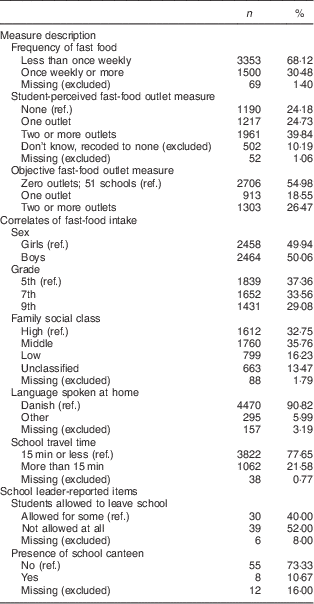
Over 30 % of the students reported at least weekly intake of fast food (Table 1). Over 60 % reported one or more fast-food outlets surrounding the school, while 45 % of the students (n 2216) attended twenty-four schools with at least one fast-food outlet within 500 m distance, as determined by the objective measure.
Descriptive statistics for measures and correlates; adolescents (n 4642) aged 11–15-years, Danish HBSC study, 2010
HBSC, Health Behaviour in School-aged Children; ref., referent category.
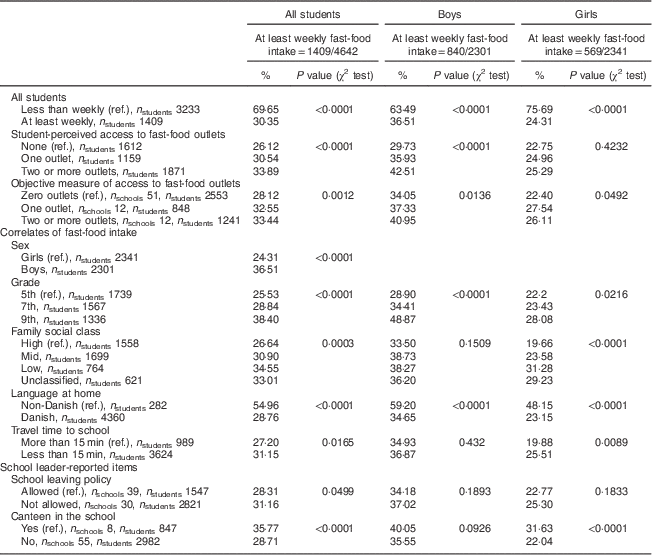
In Table 2, we show χ 2 analysis for all students and separately for boys and girls. Levels of at least weekly fast-food intake were statistically different among students and boys and girls, with the proportion of intake levels generally being higher with greater levels of perceived and objectively measured fast-food outlets. At least weekly fast-food consumption increased proportionally with age, while a high to low gradient in intake was detected for all students and girls. More than 31 % of students with at least weekly intake of fast food travelled less than 15 min to school on a daily basis. More than 28 % of students with at weekly fast-food intake attended schools with a school leaving policy, while 35 % of these students attended schools with a canteen on the premises.
Proportion of students with at least weekly intake of fast food by sociodemographic characteristics and neighbourhood variables; adolescents (n 4642) aged 11–15-years, Danish HBSC study, 2010
HBSC, Health Behaviour in School-aged Children; ref., referent category.
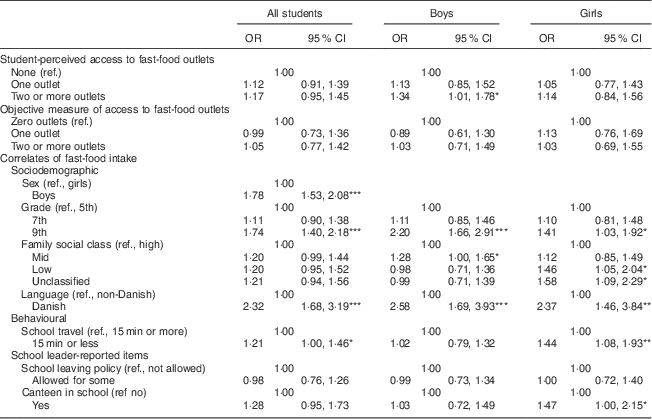
In Table 3, we show multivariate multilevel logistic regression models for associations between correlates and at weekly fast food intake for all students and stratified by sex. Objective exposure to fast-food outlets was not associated with at least weekly fast-food intake in any of the models, but boys had 34 % higher odds of fast-food consumption on an at least weekly basis if they perceived two or more fast-food outlets in the school neighbourhood compared with those reporting no outlets. Boys also had 78 % higher odds of eating fast food at least weekly than girls.
Multivariate multilevel logistic regression analysis modelling likelihood of at least weekly fast-food consumption; adolescents (n 4642) aged 11–15-years, Danish HBSC study, 2010
HBSC, Health Behaviour in School-aged Children; ref., referent category.
Association significant at the *0·05, **0·01 and ***<0·001 levels.
Significant correlates of at least weekly fast food intake were generally similar for both boys and combined student models. For instance, 9th grade students and 9th grade boys had 1·74 and 2·20 higher odds, respectively, to consume fast food on an at least weekly basis compared with their 5th grade referents. Likewise, students and boys speaking Danish at home had 2·32 and 2·58 higher odds of at least weekly fast-food intake, respectively, compared with students and boys speaking another language. Boys from middle social class backgrounds had 1·28 higher odds of at least weekly fast-food intake than their high social class referents. Lastly, students with travel times 15 min or less had 21 % higher odds of at least weekly fast-food consumption than those with greater travel times to school.
Using similar analyses for girls, we show in Table 3 that older girls and those from low social class backgrounds had significantly 41 % and 46 % higher odds, respectively, to report at least weekly fast-food intake compared with their referents. Similarly to boys, girls had 2·37 higher odds to report at least weekly fast-food intake if they spoke Danish at home. Girls with travel time to school of 15 min or less had 44 % higher odds to consume fast food on an at least weekly basis than girls travelling more than 15 min to school, and those attending schools with a canteen had 47 % higher odds of reporting at least weekly fast-food consumption than those with no canteens.
Discussion
Our study examined whether both perceived and objective measures of the fast-food environment were associated with fast-food intake in an adolescent population. Univariate analyses showed that perceived and objective presence of fast-food outlets was associated with a higher frequency of fast-food intake. In the multivariate adjusted analyses, only perceived presence of fast-food outlets was associated with fast-food intake and only among boys. There is risk of overcontrol in the statistical models because some of the covariates may mediate the associations between presence of fast-food outlets and fast-food intake rather than confound them. Since the study is cross-sectional, it is not possible to make a distinct separation of confounder and mediator variables.
Another main finding is that several other sociodemographic and environmental factors were associated with fast-food intake and that the pattern of associations differed between boys and girls. One example is that neighbourhood perception, especially for boys, may be important when considering built environment measures associated with food intake, as we have shown that boys’ perception of fast-food outlet location was significantly associated with their fast-food intake, but this was not the case for girls. Second, school lunch location may also be a predictor of at least weekly fast-food intake for girls, emphasizing the need to ensure that school lunch menus contain healthy choices for students. Third, girls who have short commuting times to school may have greater tendency to consume fast food than those with longer commuting times. Lastly, individual factors such as increasing age and low socio-economic family background for girls may contribute to at least weekly intake of fast food.
Our study is unique in concurrently examining both perceived and objective measures of fast-food outlet exposure and fast-food intake among adolescents, and therefore we cannot directly compare it with other studies. However, the results are in general agreement with other adolescent studies examining the relationship between the food environment and food intake, such as that of Longacre et al.( Reference Longacre, Drake and MacKenzie 27 ), who reported a 30 % increase in likelihood to consume fast food in rural areas with high fast-food outlet exposure, and Davis and Carpenter( Reference Davis and Carpenter 18 ), who found decreased fruit and vegetable consumption but increased soft drink intake with fast-food outlet exposure.
Our findings illustrate potential sex differences in neighbourhood perception of the built environment. We have demonstrated that boys’ perception of fast-food outlet location was significantly associated with fast-food intake. Potential explanations for this finding may be due to sex differences in spatial navigation( Reference Wolbers and Hegarty 58 – Reference Leon, Cimadevilla and Tascon 60 ), as well as differences in perceived fast-food availability( Reference Lucan, Barg and Long 61 ). Another explanation may be related to a greater proportion of boys eating fast food than girls, as frequency of consumption may be associated to a heightened awareness of surroundings( Reference Hearst, Pasch and Laska 36 ). In order to further examine such differences, future studies may consider more in-depth analyses of how boys and girls use and interpret their local surroundings.
Study findings also show that the presence of a school canteen is especially important in predicting at least weekly fast-food intake in girls. We were surprised by this result, as one would expect that the presence of canteens may encourage healthier food habits( Reference Raulio, Roos and Prattala 49 , Reference Dubuisson, Lioret and Dufour 52 ); however, many schools worldwide still struggle to achieve healthier food and nutrient standards despite policy improvements( Reference Pearce, Wood and Nelson 62 , Reference de Silva-Sanigorski, Breheny and Jones 63 ). It would be beneficial in the future to examine school canteen offerings to assess nutritional quality and acceptability, or whether girls are bringing in food purchased elsewhere. While school leaving policies were not significantly associated with fast-food intake in our population as found by Woodruff and collegues( Reference Woodruff, Hanning and McGoldrick 64 ), there is a need to teach students about healthier lunch options if leaving the school during the lunch period.
The study illustrates that girls with shorter commuting times to school had a greater tendency to consume fast food than those with longer commuting times. Our findings are in general agreement with studies examining school travel time and snack and fast-food behaviour among adolescents. Students who travel to and from school within a short time frame are more likely to either walk or cycle( Reference De Meester, Van Dyck and De Bourdeaudhuij 65 ), which increases exposure to food-buying opportunities within the local area( Reference Lehnung, Leplow and Ekroll 56 ). As shown by Hearst et al.( Reference Hearst, Pasch and Laska 36 ), increased exposure time within the local area may translate to an increase in purchasing behaviours of snack and fast foods.
Lastly, individual factors such as increasing age for all students and low socio-economic family background for girls may contribute to at least weekly intake of fast food. Our findings are in general agreement with previous research indicating greater fast-food consumption as adolescents increase in age( Reference Bauer, Larson and Nelson 7 , Reference Denney-Wilson, Crawford and Dobbins 44 ). However, age may also serve as an indicator for mobility within local surroundings( Reference Malone 66 ), as well as age-acquired spatial knowledge( Reference Jansen-Osmann and Fuchs 67 ); age should be an important consideration in future research. Our research also shows girls from low-income backgrounds reported more frequent intake of fast food than girls from high-income ones. The association with family social background was found to be reversed in a Chinese population of adolescents( Reference Shi, Lien and Kumar 68 ) and of no significance in Dutch adults( Reference Van der Horst, Brunner and Siegrist 69 ). The lack of consistent findings between family social background and fast-food consumption may indicate that the complexity in this relationship may be dependent upon other factors, such as lack of time to prepare healthy meals( Reference Van der Horst, Brunner and Siegrist 69 ) or lack of work–life balance expressed by working parents( Reference Bauer, Hearst and Escoto 70 ), which may also increase propensity for fast-food consumption.
Study strengths include the large and nationally representative study population and the incorporation of both perceived and objective measures of the fast-food environment, which further contributes to our understanding of how perception of local surroundings may influence dietary behaviour. The study also benefits from the use of validated objective measures, the inclusion of three age groups, simultaneous control of potential confounding variables, a high student response rate and a nationwide random sample of schools.
Our study, however, is limited by possible misclassification bias of the objective measure of the fast-food outlet environment, as we did not include all other food outlets that could sell fast food, such as cafés or convenience stores, which could potentially under-report the number of food-purchasing opportunities for adolescents. Street audits showed good overall concurrence among fast-food outlets, yet previous work indicates discrepencies among other types of food outlets such as convenience stores or cafés( Reference Svastisalee, Holstein and Due 32 ). Positive response bias( Reference Diez Roux 71 ) could also be a limitation of the present study, as it is often used as a rationale for using different data sources for measures of correlates and outcomes such as the fast-food environment and fast-food intake. Previous analyses showed adolescent fast-food intake was not a predictor of mismatch between objective and perceived measures of the environment. Thus, students’ perceptions of the fast-food environment do not seem to be subject to positive response bias.
Other drawbacks of the study could be reflected in the distance measure used to characterize the local fast-food outlet exposure, which may not realistically reflect actual usage and may be sensitive to other travel and distance measures. Others found significant associations between food purchasing and 10 min of travel( Reference Hearst, Pasch and Laska 36 ). While future studies should explore various ranges of travel times, our illustration within a short local radius was to demonstrate how readily students may be exposed to fast-food outlets. We also realize that although the use of questionnaire methods to collect perceived information of the neighbourhood built environment among adolescents is a widely used approach( Reference Hearst, Pasch and Laska 36 , Reference Rosenberg, Ding and Sallis 72 – Reference Carroll-Scott, Gilstad-Hayden and Rosenthal 74 ), there are also other tools such as community map sketches( Reference Topmiller, Jacquez and Vissman 75 ), photo-voice( Reference Morales-Campos, Parra-Medina and Esparza 76 ) and concept mapping( Reference Minh, Patel and Bruce-Barrett 77 ) that may help elucidate detailed information about food environments relevant for youth. As there was also a proportion of students who were unable to locate a fast-food outlet in the local area, there may also be an indication that some students may not be fully cognizant of the term, fast food. It may be necessary to explore how adolescents in Denmark conceptualize the meaning of fast food, as others have found adults differentiate between fast food and restaurant food( Reference Duffey, Gordon-Larsen and Jacobs 78 ), while the image of fast-food outlets is in flux, as many offer healthier menu items( Reference Wellard, Glasson and Chapman 79 ). We acknowledge that other correlates such as peer networks( Reference Wouters, Larsen and Kremers 80 ), accessibility, affordability and taste preference( Reference Shepherd, Harden and Rees 81 ) as well as safety( Reference Topmiller, Jacquez and Vissman 75 ) may also influence perception of fast-food outlet location and consumption. Lastly, we realize the risk of overcontrol in the multivariate analyses, yet examination of univariate and multivariate analyses suggests that overcontrol may not be a threat in our study.
To our knowledge, the present study is the first to examine both perceived and objective measures of the fast-food environment and fast-food intake in an adolescent population, which demonstrates that perceived location of food outlets may have an impact on fast-food intake behaviour in boys. Findings from the study contribute to a growing body of knowledge examining the impact of local surroundings and dietary behaviours in adolescents. Other aspects, such as travel time to school, may be a guiding factor, as increased exposure within a specific area may increase tendency towards consumption and purchasing behaviours. Inspiring schools to make either campuses or school lunch offerings more attractive, encourage healthier purchase of foods or better support school nutrition policies may reduce the need to consume food elsewhere. Further exploration should examine not only sex differences in fast-food intake behaviour, but also how boys and girls interpret their local surroundings. Greater attention should also be directed towards a better understanding of how resources within the school and local areas contribute to dietary behaviour. Implications of the study findings could impact public health planning that targets food environments specifically for adolescents, recognizing where they purchase and eat food, both within school and local surroundings.
Acknowledgements
Acknowledgements: Special thanks go to Jindong Ding Petersen, Nishan Lamichhane and Laurence Blanchard, who worked on the validation of the objective data. The authors acknowledge Professor Pernille Due and Associated Professor Mette Rasmussen for making the 2010 HBSC data available for analysis. Financial support: This work was funded in part by Nordea Fonden. Nordea Fonden had no role in the design, analysis or writing of this article. Conflict of interest: None. Authorship: C.S. was responsible for conception of the study, study design, collection and setup. C.S. and R.K. were involved with study analysis. C.S. and R.K. drafted the initial manuscript. J.S., T.P.P., B.E.H. and S.E.J. provided feedback and guidance regarding drafts of the manuscript. All authors were involved with critical revisions of the paper and provided approval for publication. Ethics of human subject participation: Ethical approval was not required for this study. However, the study was conducted according to the guidelines laid down by the Helsinki Declaration and all procedures involving human subjects were approved by local school, student and parent boards. Verbal informed consent was obtained for all subjects, and this was witnessed and formally recorded. This study is registered with the Danish Data Protection Agency.



