

After decades of “ever closer” international cooperation, the economic integration process has come under pressure in recent years. Faced with increasing trade-offs between the gains from international cooperation, democracy, and national sovereignty,Footnote 1 popular movements that aim to slow down or even reverse international integration have proliferated. When such movements are successful, as in the case of the UK's “Brexit” referendum or the election of Donald Trump as US president, they challenge the viability of international institutions. The consequences of national democratic decisions can thus be felt strongly both domestically and internationally. In today's interconnected world, such popular rejections of international cooperation therefore beg important questions about international relations, national sovereignty, and democracy. To answer these questions, we need to better understand the motives underlying such rejections, the dilemmas and incentives such votes generate for policymakers, and the dynamics they produce in the international arena. In short, we need a better understanding of the mass politics of international cooperation and their implications for international relations.
We seek to hone our understanding of these issues by focusing on Europe where integration-skeptic movements have been particularly successful and where popular referendums have allowed voters to decide directly on whether to accelerate, stop, or even reverse the highly advanced European integration process. An important feature of these decisions has been that their consequences extend well beyond the domestic realm. When referendums fail to ratify new cooperation agreements or succeed in reversing existing ones, they create negative spillovers for the other parties to such agreements, thus sparking fears of contagion and even disintegration. As a result, those other member states have a clear interest in a cooperative referendum outcome. At the same time, they also have a range of options for how to respond to a negative referendum outcome and whether to accommodate the referendum country's direct democratic choice or not. This creates interesting strategic dynamics in which foreign policymakers can interact with domestic voters during the referendum campaign to boost the cooperative vote.
We explore how voters behave in this kind of strategic environment, especially how their expectations about foreign reactions to a noncooperative referendum outcome shape their vote intentions and to what extent foreign policymakers can influence those expectations. For this purpose, we leverage a fascinating and important case of a foreign policy referendum in which the stakes of other countries were particularly high: the 2015 Greek bailout referendum. While on paper the referendum was simply meant to be about the terms of an international financial bailout package designed to tackle the country's enormous financial crisis, it was widely feared at the time that a noncooperative referendum outcome would put Greece's entire eurozone membership at risk. Since a Greek exit from the currency union (colloquially referred to as “Grexit”) would put the irreversibility of the euro in question and would potentially create large contagion risks for other peripheral eurozone countries, the referendum vote was also seen as a threat to the entire project of European monetary integration—with potentially enormous negative consequences for all other eurozone members.
To investigate how expectations and foreign signals about the likely response to a noncooperative outcome influenced individual vote choices in the 2015 Greek referendum, we use original survey data from a unique poll fielded just one day before the vote. Our analysis shows that expectations about the consequences of a noncooperative referendum outcome can have a powerful effect on voting behavior: voters expecting that a No vote would result in Grexit were substantially more likely to vote Yes, that is, in favor of the proposed bailout agreement, than those believing that Greece's creditors would accommodate a No vote by proposing better bailout terms in renewed negotiations. This effect was especially strong for the vast majority of voters who wanted to stay in the common currency. We also show that there is room for foreign actors to shift voters’ expectations and decisions in their favor by signaling their resolve not to accommodate a noncooperative vote. In fact, we find that, following the announcement of the referendum, the European Central Bank's (ECB) decision not to increase capital injections into Greek banks—thereby forcing their closure—influenced expectations and increased the share of cooperative votes. Overall, this study helps refine our understanding of how the strategic international dimension shapes the mass politics of international cooperation.
Expectations and Foreign Intervention in Foreign Policy Referendum Campaigns
By their very nature, the consequences of national referendums on foreign policy, especially those on treaties concerning international cooperation and supranational integration, are also felt abroad, affecting both domestic voters and citizens of other countries. When such a referendum results in a vote that enables the initiation, widening, or deepening of international cooperation, these cross-country spillover effects are usually net positive. By contrast, whenever the outcome of a national foreign policy referendum impedes a deepening or continuation of cooperation, it tends to generate net negative cross-border spillover effects.
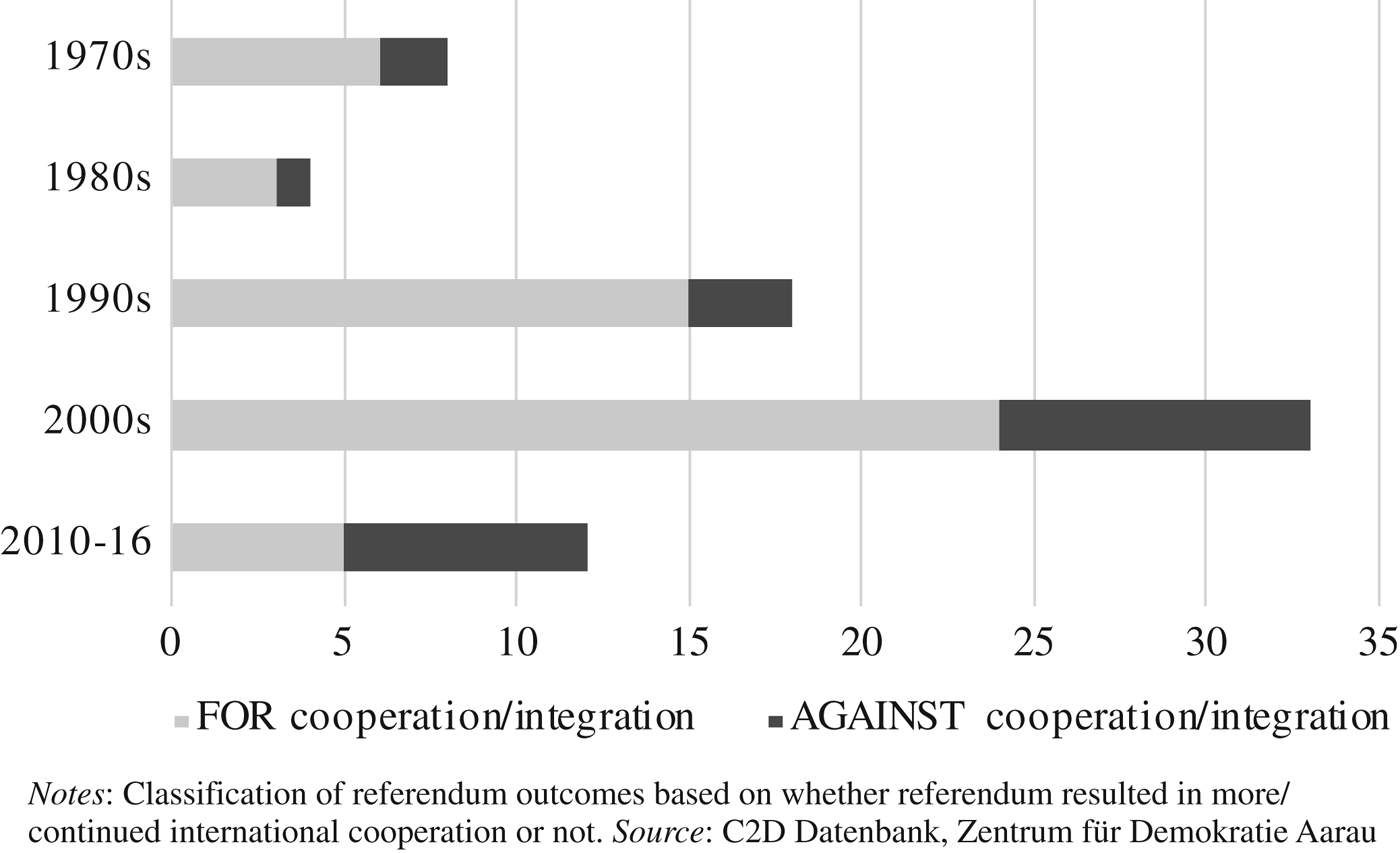
Such negative outcomes of referendums on international cooperation are not a new phenomenon. From the 1972 rejection of EC membership by Norwegian voters to the 2016 rejection of the EU-Ukraine accession agreement by Dutch voters, efforts to establish or deepen international cooperation have failed time and again at the polls.Footnote 2 However, a closer look reveals that noncooperative referendum outcomes have become both more frequent and more disruptive in recent years. Figure 1 lists all national referendums on questions concerning international cooperation from the 1970s until today and shows that the share of referendums that resulted in a rejection of more or continued cooperation has markedly increased in recent years.
Voting outcomes in foreign policy referendums, 1970–2016
The cross-border ripple effects of noncooperative referendum outcomes have also grown with time. Whereas, for example, Switzerland's 1986 rejection of UN membership barely registered abroad, other countries have been much more affected by the consequences of the Dutch and French rejections of the EU Constitution in 2005 or the 2016 UK referendum vote to leave the European Union. The magnitude of the potential spillover effects of a noncooperative referendum outcome varies widely and depends on the specific circumstances of the referendum, such as the issue at stake, the political and economic importance of the referendum country for other countries, the level of integration, the rules of international cooperation, and the renegotiation process itself. Thus, spillover effects can be small, but they can also prove very costly for other member states, especially when the referendum outcome prevents other countries from cooperating further or even unilaterally challenges the status quo of an existing arrangement. All else equal, the more integrated the referendum country is within a politically interconnected and highly institutionalized organization (such as the EU), the larger the potential damage a negative referendum vote can cause abroad. And the higher the potential spillover effects are, the stronger the interest of other member states in a cooperation-friendly referendum outcome.
Whereas the referendum country is free to vote in favor or against cooperation, the other countries are also free to choose how to react. A range of foreign responses is possible, ranging from more to less accommodating ones. For instance, foreign partners may accommodate the reservations of the dissenting country by modifying the agreement, granting exceptions, or negotiating a new one that better reflects the concerns of the referendum country. But they can also pursue more hard-line responses such as making no concessions or simply moving forward without the referendum country. This type of decision is not easy because the other countries face a dilemma: accommodating the democratically expressed wishes of the referendum country's electorate allows them to salvage as many of the cooperation gains as possible, but also generates moral hazard and political contagion risks because other countries might be incentivized to call national referendums to improve their relative position in the union. On the other hand, pursuing a hard stance vis-à-vis the referendum country allows them to discourage such opportunistic behavior, but it is likely to be costly for everyone involved because of the foregone gains from cooperation. This dilemma will be particularly pronounced when the potential spillover effects of a negative referendum vote are large.
Whatever the most likely strategic response on the part of other member states, this response strongly determines how a negative referendum vote would ultimately play out for the referendum country. It thus shapes the underlying stakes of the referendum vote for everyone involved, including above all the referendum country itself. From the referendum country's viewpoint, these stakes are lowest when a noncooperative vote carries small negative externalities and highest in referendums that leave the other countries highly exposed. This is because high spillover effects typically increase the range of (re-)negotiation options available to the countries involved because more issue areas are affected and because a higher level of integration increases interdependence between states. Taken together with imperfect information over both the true preferences of multiple actors and the magnitude of spillover effects that have yet to materialize, this variability of final payoffs effectively renders the consequences of a noncooperative referendum vote uncertain ex ante.Footnote 3
Because the consequences of a negative referendum outcome depend so strongly on the other countries’ response, voters are likely to take that into account when deciding how to vote. Policy preferences and expectations about those responses should therefore jointly determine voting decisions in foreign policy referendums.Footnote 4 Not surprisingly, foreign policy referendum campaigns are often characterized by distinct and often contradictory narratives about the risks and benefits associated with referendum outcomes.Footnote 5 In such politicized environments, voters will form certain sets of beliefs about how foreign actors will react to a noncooperative referendum vote. These expectations are likely to influence their voting behavior, especially in cases where the spillover effects of their decision are potentially large.Footnote 6 The more a voter believes in the likelihood of punishment for noncooperation, the more likely that voter is to vote for cooperation.
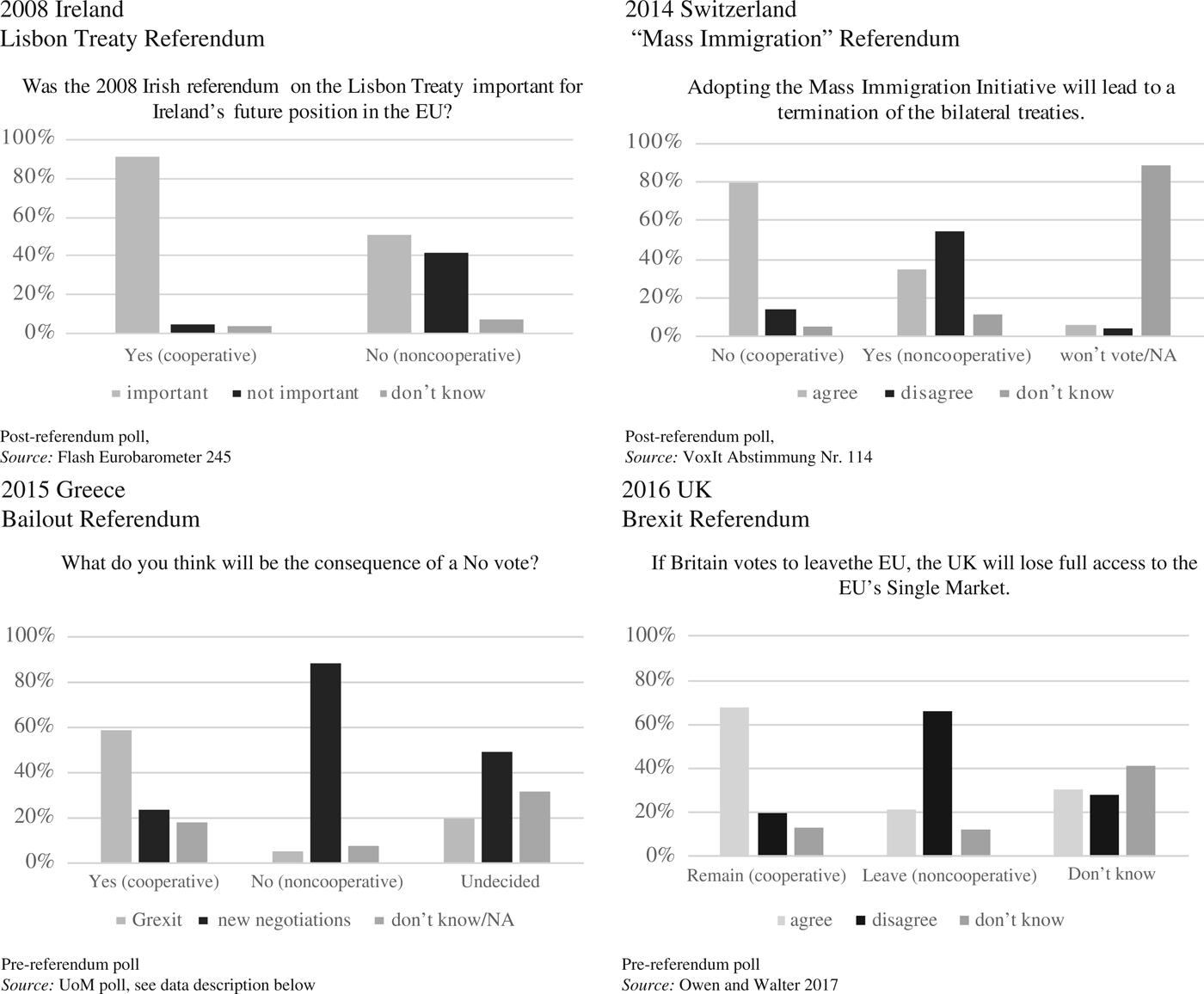
Figure 2 illustrates the wide divergence of expectations about the likely consequences in four recent foreign policy referendums with relatively large spillover effects abroad: the 2008 Lisbon Treaty ratification referendum in Ireland, the 2014 Swiss referendum “Against Mass Immigration,” the 2015 Greek bailout referendum, and the 2016 “Brexit” referendum on EU membership. In all four referendums, expectations about the consequences of a noncooperative vote diverged widely between voters favoring and opposing cooperation. In each case, voters in favor of new or continued cooperation assessed the likely international responses associated with the noncooperative referendum outcome (resisting further integration in the Irish case, defying compliance with an existing arrangement in the Greek case, and reversing existing forms of cooperation in the Swiss and British cases) much more negatively than voters opposed to such cooperation.
Expectations about the consequences of noncooperative referendum outcomes
Given the importance of voters’ expectations in shaping vote intentions, all actors with a stake in the referendum outcome, including domestic and foreign ones, have an incentive to influence these expectations. Foreign policymakers in particular may seek to sway voters toward a cooperative vote by coaxing them through normative appeals and promises of future benefits, or by threatening them with negative consequences in the case of a noncooperative referendum outcome (in fact, they may also try to directly influence public opinion during the campaign, as the recent revelations about Russia's efforts to meddle in Western elections show). Especially when other countries would be worse off under all potential outcomes of a noncooperative referendum vote compared to the outcomes associated with a cooperative referendum vote, they have a strong strategic incentive to try to induce voters to cast a cooperative ballot.Footnote 7 However, influencing domestic public opinion through foreign interventions is a difficult task. Not only is there a risk that these efforts might backfire,Footnote 8 but foreign governments also face private information and time-inconsistency problems that make it difficult for them to credibly communicate their actual resolve not to accommodate a noncooperative vote.Footnote 9 Because non-accommodation also imposes costs on those other countries themselves, their pledge to punish such a vote ex post may suffer from credibility issues.
Much research in international relations has shown that one way to overcome such credibility problems is to send costly signals that reveal one's true resolve.Footnote 10 By engaging in activities that create costs not only for the referendum country but also for themselves, foreign policymakers can more credibly signal that they would not be willing to accommodate the referendum country's noncooperative vote. As a result, such costly signals from foreign policymakers should make voters more pessimistic in their expectations about the consequences of a noncooperative vote, making them more likely to cast a cooperative referendum vote.
The 2015 Greek Bailout Referendum
To study the role of expectations and foreign intervention in foreign policy referendums, we focus on the July 2015 bailout referendum in Greece, a particularly interesting case with potentially wide-ranging spillover effects abroad. All eurozone members had a strong interest in the Greek referendum because it was widely believed that a No vote would effectively end Greece's membership in the eurozone. Grexit was an outcome European policymakers had been trying to avoid for years because they feared that it would lead to renewed financial market pressure on other European crisis-ridden countries such as Italy or Portugal and would also trigger massive losses in the budgets and central bank balance sheets of surplus countries such as Germany and the Netherlands.Footnote 11 Perhaps most importantly, Grexit would put the viability of the entire European monetary integration project into question. A noncooperative referendum outcome could thus create potentially very large negative spillover effects for other eurozone members. Unsurprisingly, foreign intervention in the referendum campaign was unusually high and the likely consequences of a noncooperative referendum outcome were a hotly debated issue during the campaign. These features render the 2015 Greek bailout referendum a critical and insightful case for studying the role of expectations and the effects of foreign intervention in foreign policy referendums.
Set against the background of one of the deepest and most prolonged economic crises in recent decades,Footnote 12 the referendum was the culmination of a lengthy negotiation between the Greek government and the country's creditors, in which neither side showed any willingness to compromise. Since the crisis started in 2010, ushering in a period marked by a sharp rise in unemployment and poverty levels, Greece had received two bailout packages on the condition of drastic austerity measures and structural reforms. Against that backdrop, the populist left-wing SYRIZA party came to power in January 2015 with an explicit mandate to end austerity. The new government of Prime Minister Alexis Tsipras immediately embarked on an aggressive negotiation strategy aimed at softening the conditions attached to the existing bailout program in Greece's favor. Worried about political contagion and moral hazard effects, the creditors remained firm in their resolve not to make any concessions.
As the country was facing increasing liquidity problems, it became clear that Greece would need an extension of the existing bailout arrangement beyond its 30 June 2015 expiration date. As that date drew nearer, events escalated. On 24 June 2015, the European Commission made a “take-it-or-leave-it” proposal about the conditions attached to a bailout extension for Greece. Tsipras rejected the ultimatum and broke off negotiations, accusing the creditors of blackmail and characterizing the proposal as an attempt to humiliate Greece. On the morning of 27 June, Tsipras—in an effort to boost his bargaining leverage vis-à-vis the country's creditors—surprised everyone by calling a referendum on the proposal to be held only one week later. To the dismay of European policymakers, he recommended that voters vote No—that they reject the creditors’ proposal.
An intense week of campaigning followed. Two dominant narratives emerged in the public debate in which all major political actors took very clear stances. The three moderate pro-EU parties, conservative Nea Dimokratia, center-left PASOK, and centrist To Potami, in tandem with European policymakers warned that a vote against the bailout proposal would inevitably result in Greece's exit from the eurozone. They argued that European policymakers would not give in to the Greek government for fear that granting Greece better terms in response to a noncooperative referendum vote would signal a lack of resolve to enforce existing rules, thereby inciting similar noncooperative behavior by other countries and eventually undermining the eurozone's stability. As a result, they strongly advocated voting Yes. By contrast, the No camp, led by Tsipras and the coalition government parties of SYRIZA and ANEL (populist right), argued that a rejection of the agreement would enhance Greece's bargaining leverage in renewed negotiations with its creditors and ultimately result in debt forgiveness and less austerity.Footnote 13 This second narrative emphasized that Greece's membership in the eurozone was not at risk because Europeans would not want to damage the monetary union by allowing Greece to crash out of the euro. Greek voters were thus exposed to two very different competing narratives about the potential consequences of a noncooperative referendum outcome for the future of Greece and the eurozone.
The Greek referendum campaign also witnessed an unusual escalation of events involving foreign policymakers and politicians. For example, European Commission President Jean-Claude Juncker, International Monetary Fund (IMF) Managing Director Christine Lagarde, and German Finance Minister Wolfgang Schäuble strongly advocated a Yes vote and threatened that a No vote would result in disorderly default and Grexit.Footnote 14 Moreover, foreign policymakers directly intervened in the campaign. On 28 June, one day after Tspiras had called the referendum, eurozone finance ministers decided not to extend the ongoing bailout program scheduled to end three days later. As a consequence, the ECB announced later in the day that it would not increase the Emergency Liquidity Assistance (ELA) funds it had been supplying to keep the Greek banking system afloat with the justification that such support could not be granted without a bailout program in effect. Faced with a bank run in the making, the Greek authorities decided later in the evening to call a bank holiday and impose capital controls. Both measures were meant to last at least until the day after the referendum and immediately caused long queues in front of the country's automated teller machines (ATMs).Footnote 15 Another major international event occurred two days later when an IMF loan expired and Greece became the first developed country ever to default on its debt to the IMF.
While threatening statements by foreign officials may have been nothing more than “cheap talk,” the creditors’ decision not to extend the existing bailout program or ELA assistance to Greek banks effectively amounted to a costly signal of their determination not to accommodate the Greek government's anti-austerity mandate. Greece was being told in unequivocal terms that the creditors would not budge in this game of “chicken” and that the country had to choose between the creditors’ path of austerity and leaving the euro. Recognizing the potential impact of this signal on the referendum campaign, Tsipras retorted that the creditors’ actions “had no other aim but to blackmail the will of the Greek people.”Footnote 16 Those actions were costly not just for Greece but also for the creditors. The economic damage they inflicted on the Greek economy vastly increased the amount needed for an eventual third bailout package, which would ultimately have to be financed out of foreign coffers. Whereas the sum needed for a third bailout program had been estimated to range between EUR 30 billion and EUR 50 billion just one month before the referendum,Footnote 17 the amount had risen to about EUR 90 billion when a third bailout package was finally agreed to on 12 July 2015.Footnote 18
Despite all these international efforts to sway Greek voters to vote cooperatively on 5 July 2015, the bailout referendum ended in a 61 to 39 percent landslide victory for the No camp. Greek voters had rejected the bailout proposal in what amounted to a noncooperative referendum vote.
Research Design and Data
To understand the Greek vote in the 2015 bailout referendum and the role expectations and foreign interventions played in this context, we use original survey data from a poll we conducted on Saturday, 4 July 2015, one day before the referendum. Our nationwide, computer-assisted telephone survey covered 989 respondents identified through a multistage sampling process.Footnote 19 Our survey was fielded just some hours before the polling stations opened, allowing us to gain a very accurate depiction of the motives of the Greek people and their vote. Although few surveys correctly predicted the strong rejection of the creditor proposal in the referendum, our survey mirrors the actual referendum outcome. Excluding those who were undecided or not planning to vote, 58 percent of respondents in our sample said they would reject the bailout package, which is very close to the 61.3 percent rejection rate in the actual referendum.
Our analysis proceeds in two steps. We first analyze the role that expectations played for the vote choice in the Greek referendum using both regression analysis and matching methods. We then explore foreign policymakers’ ability to shape voters’ expectations about the consequences of a noncooperative vote through costly signals. For this purpose, we concentrate on the effect of the ECB's decision not to increase emergency liquidity assistance to Greek banks, which forced the Tsipras government to close the banks, arguably the biggest event in the campaign period. Overall, we show that expectations about the response of international actors were the most important predictor of individual vote intentions in the Greek 2015 bailout referendum and that foreign intervention influenced both expectations and vote intentions.
Our main variables in the first part of the analysis are individuals’ vote intentions, expectations about the consequences of a No vote, and attitudes toward the euro. To measure vote intention, we use respondents’ answers to the following question: “As you are probably aware, PM Alexis Tsipras announced a referendum regarding the ratification of the agreement that Greece's creditors offer, which will take place on next Sunday, July 5th. What are you going to vote in the referendum?” For our analysis, we create a dummy variable that takes the value of 1 if voters stated that they intended to vote against the creditor proposal in the referendum or would probably do so, and 0 otherwise.Footnote 20 The left-hand panel in Figure 3 shows most voters had made up their mind about their referendum vote, with a majority stating that they would probably or certainly vote No.
Expectations are measured with respondents’ answers to the question “What do you think will be the consequences of a No vote?” Respondents could choose between (i) “Greece will exit the eurozone” reflecting the narrative of the Yes camp that a noncooperative referendum outcome would not be accommodated abroad; (ii) “The government will continue negotiations,” which captures the No camp's narrative that a No vote would enhance the government's bargaining leverage in a new round of negotiations; and (iii) “Don't know / no answer.” The right-hand panel in Figure 3 shows that most voters (85%) had clear expectations on the eve of the referendum. A majority believed that a noncooperative referendum outcome would result in continued negotiations, whereas only about one quarter thought that a No vote would lead to Grexit.
Vote intentions and expectations—Descriptive statistics

Because Greece's membership in the eurozone was the key issue at stake in the Greek referendum, voters’ attitude toward the euro conditioned by expectations should have had a strong influence on their vote choice. We therefore asked respondents what they personally thought was best for Greece's future: staying in the euro or adopting a national currency. More than three quarters of respondents (76%) wanted to keep the euro, whereas only 13 percent of respondents preferred to leave the euro (about one-tenth of respondents were undecided about this issue or did not answer). Even among those voting No in the referendum, a clear majority (61%) favored keeping the euro, the option that was preferred by virtually all Yes voters (98%).
Our argument suggests that expectations about the consequences of a noncooperative vote should be a key driver of voting behavior. To account for alternative determinants of referendum vote choice identified by existing research, we control for a number of additional variables. Most importantly, much research has shown that voters’ partisan identification is a strong determinant of the vote in popular referendums.Footnote 21 Parties frame the issues at stakeFootnote 22 and have a heuristic value for voters that allow them to overcome cognitive and information limitations around the referendum question.Footnote 23 Foreign policy referendums also often turn into a contest about the incumbent parties’ popularity.Footnote 24 To control for these partisan and incumbency effects, we use the vote recall from the January 2015 general election in Greece and create dummy variables for the main political parties in Greece: the governing parties syriza and anel, the conservative opposition party nea dimokratia (reference category), the center-left pasok, the centrist to potami, and the radical right golden dawn. We also include a dummy variable for those who abstained in the January elections and the other options.
Past research has also shown that material interests affect vote choices in foreign policy referendums.Footnote 25 For Greece, this suggests that more-educated people should be more inclined to vote Yes because they tend to disproportionally benefit from international integration. By contrast, the young, the unemployed, private-sector employees, and the self-employed—who have been hurt most by Greece's adjustment programs—should be more inclined to vote against the bailout proposal than public officials and pensioners who have seen lower decreases in their incomes.Footnote 26 We control for education using an ordinal variable with the following categories: (1) no education or primary studies, (2) secondary, (3) postsecondary, and (4) tertiary education. Age is operationalized in six categories—18–24, 25–34, 35–44, 45–54, 55–64, and over 65—and we include it as a continuous variable in all models.Footnote 27 Occupation is operationalized with a series of dummy variables: public sector employee, private sector employee, unemployed, farmer, entrepreneur, pensioner, and other. We also control for gender and whether the voter lives in a rural or urban area.
Vote Choice in the 2015 Greek Referendum: The Role of Expectations
How did expectations about the likely consequences of a noncooperative referendum outcome influence voting behavior in the 2015 Greek referendum? To answer this question, we gauge the effect of expectations on the referendum vote net from the possible confounders described earlier by using both regression and data-preprocessing techniques.
Figure 4 shows the results from a regression analysis of vote intentions. It displays the change in the probability of voting No as a result of moving from the baseline category to each of the variable values denoted on the vertical axis.Footnote 28 As our argument predicts, expectations about the consequences of a No vote have substantially strong and statistically significant marginal effects on individuals’ voting decisions, even after controlling for a range of alternative explanations. All else equal, a switch in expectations from grexit to new negotiations increases the probability of voting No by more than 40 percent.
Determinants of the No vote in the 2015 Greek bailout referendum
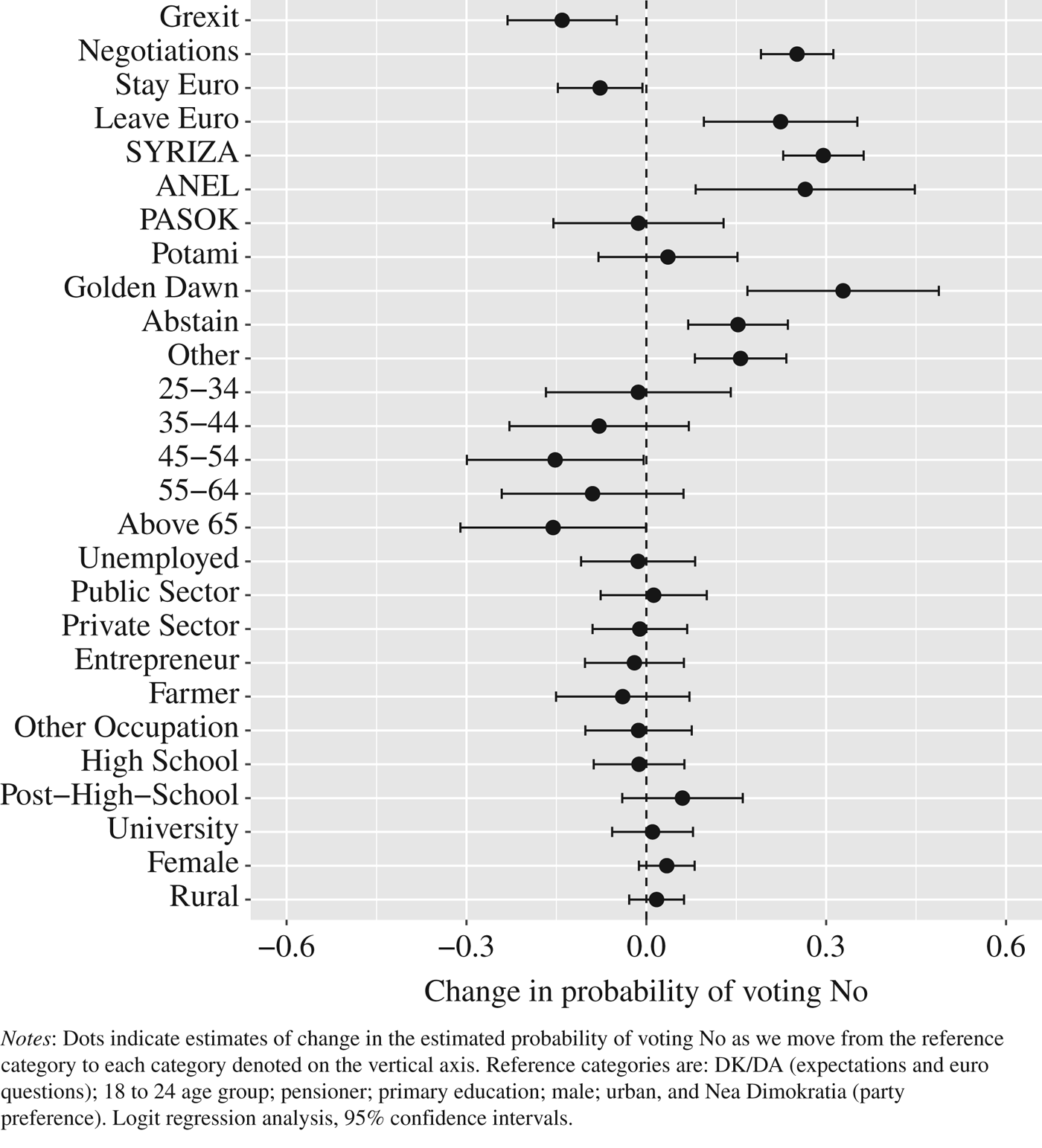
Not surprisingly, issue preferences and partisanship also matters. A preference to reintroduce the national currency strongly increases the odds of voting No, whereas a pro-euro attitude reduces these odds (although to a lesser extent). We also find strong partisan effects: voters for Nea Dimokratia (the baseline category), PASOK, and To Potami are all significantly less likely to vote No than voters for the governing parties SYRIZA and ANEL as well as the right-wing Golden Dawn, all of which campaigned in favor of a No vote. Substantively, and taking the partisan effects globally, these effects are somewhat larger than in other studies,Footnote 29 suggesting that parties played a particularly important role in the referendum campaign and that voters were influenced by their preferred party's recommendation. This is not surprising in this specific context, which was characterized by a polarized campaign, a short decision time of only one week, and a complicated referendum question. Nonetheless, the marginal effects of the expectation variables remain large and their magnitude is comparable to the partisan effects.
Material interests and demographics do not seem to matter much once expectations, issue preference, and partisan identification are taken into account. The only exception is age, where older voters are, as expected, more likely to vote Yes than younger voters. To the extent that younger voters have been hit hardest by austerity in Greece,Footnote 30 this is likely to reflect some pocketbook concerns, but in general the low association of material interests with voting behavior squares with recent research that emphasizes nonmaterial factors in explaining policy preferences and vote choice. Education is also of little predictive power once preferences and expectations are taken into account.
A key issue of concern is, of course, that partisan preferences and expectations are not independent from each other. To examine in more detail whether expectations have an independent effect on vote intentions or whether they are driven by partisanship and other variables such as issue preference, we repeat our analysis using matching analysis. Matching is a method of data preprocessing that allows us to pair “treated” cases with untreated cases along a series of observable characteristics, thus generating a control group which, on the basis of these characteristics, appears very similar to the treated group. This allows us to estimate the treatment effects independent of shared confounders.Footnote 31 In our analysis, this means that each individual who is “treated” with the expectation that a noncooperative referendum outcome will result in Grexit is matched to another individual from our data set who did not expect this outcome (the control category) but who is otherwise almost identical, meaning that s/he voted for the same party, had the same view of the euro, and so on.Footnote 32 Matching analyses thus allow us to compare how different expectations about the consequences of a noncooperative referendum outcome affect the vote intentions among individuals who are almost identical on all other relevant covariates. The advantage of the matching approach is that it not only allows us to evaluate more transparently the degree of similarity in pretreatment covariates between control and treated units, but it is also less model dependent.Footnote 33 We employ two methods of data preprocessing: genetic matching and entropy balancing.Footnote 34 Although there are clear imbalances in the observable characteristics of the two groups in the raw data, including key demographics and the two most obvious attitudinal confounders—partisan preferences and attitudes toward the euro—these differences evaporate after the matching process. The matching process thus creates practically identical treatment and control distributions for all covariates, increasing our confidence in the results.
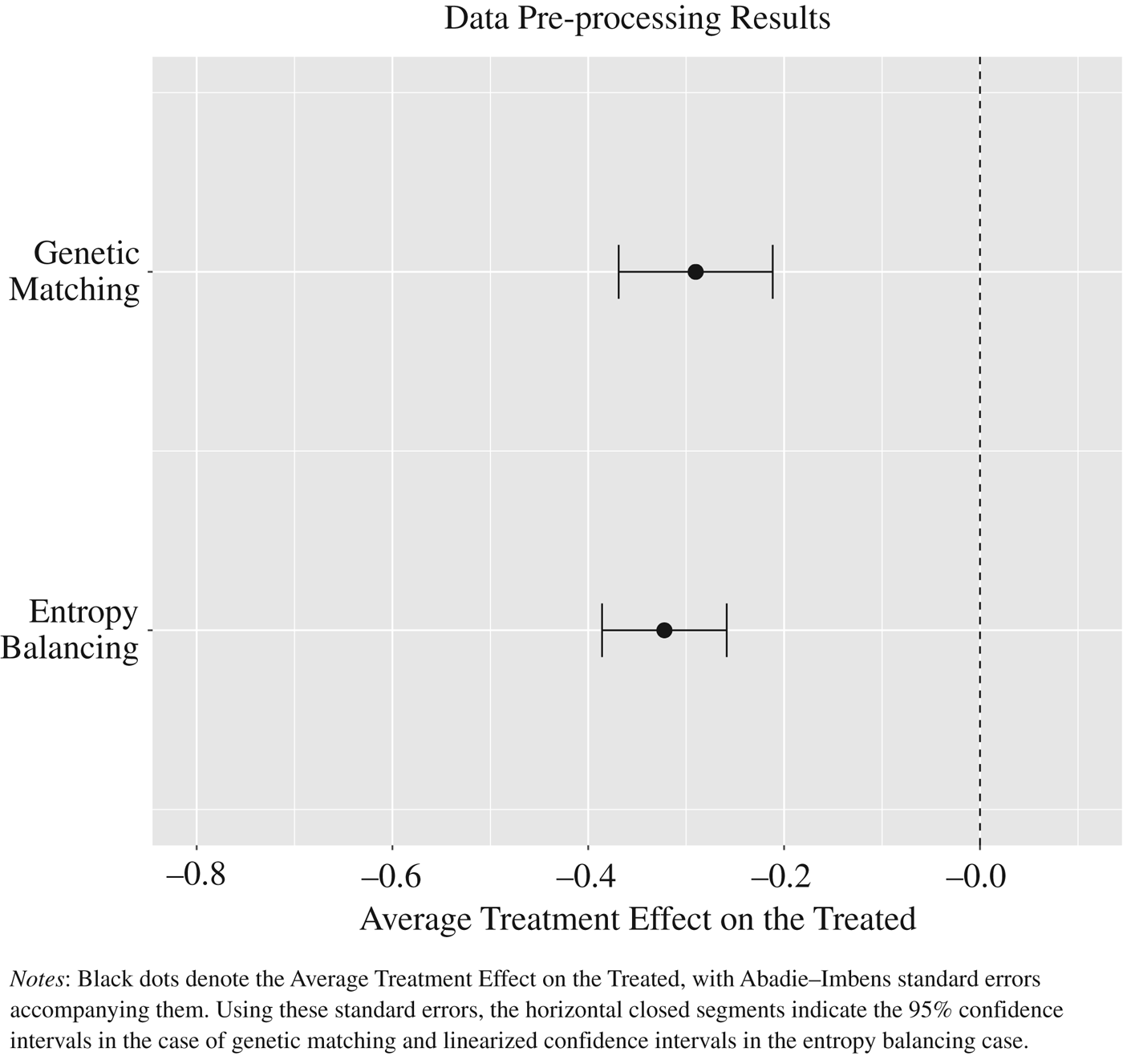
Both matching analyses produce very similar estimates and confirm that expectations about the consequences of a noncooperative referendum outcome significantly shaped the vote in the 2015 Greek referendum, independently of partisanship or issue preferences. Figure 5 shows that on average, and using the Average Treatment Effect on the Treated (ATT) as our estimand of interest, individuals who expected Grexit in response to a No outcome of the referendum were thirty-two (entropy balancing) and thirty (genetic matching) percentage points respectively less likely to vote against the proposed bailout package than individuals who believed that a No vote would result in new negotiations, but who were otherwise identical.Footnote 35 Thus, the matching analysis confirms that expectations had a substantial effect on vote intentions, which reassures us of the robustness of our results.
Effect of expecting Grexit on the likelihood of voting No in the Greek referendum
Our analysis so far has centered on the unconditional effect of expectations because a vast majority of Greeks had a clear preference for remaining in the eurozone. But expectations matter because they guide voters toward a vote choice that is consistent with their preferences. In our case, for example, for the majority of Greeks, who wanted Greece to stay in the euro, the expectation that a No outcome in the referendum would result in Grexit should drive them to vote for the Yes option. However, for those in favor of reintroducing the national currency, Grexit would be a desired outcome. Expectations about the consequences of a No vote should thus matter much less for this latter group because of their embrace of Grexit. To see if this was the case and to shed further light on the mechanism driving the effect of expectations on Greek voters’ referendum choice, we replicate our regression analysis from Figure 4 to explore the extent to which voters’ preferred outcome—staying in or leaving the eurozone—conditioned the effect of expectations on their vote.
Figure 6 represents the conditional effects of expectations. It displays the change in the predicted probability of voting No as a result of expecting Grexit or new negotiations, respectively, compared to those who are undecided. Consistent with our argument, we find that expectations matter greatly for those who want to stay in the euro. If these voters are convinced that a noncooperative vote will lead to new negotiations, possibly with more leverage for Greece, their likelihood of voting against the bailout package increases by about thirty-eight percentage points. But those who fear that a No vote would result in Grexit, although they want to stay in the eurozone, are twenty-three percentage points less likely to vote against the bailout proposal. In contrast, and as expected, expectations matter much less for those in favor of a return to the national currency.
The impact of expectations on referendum vote varies by euro preferences
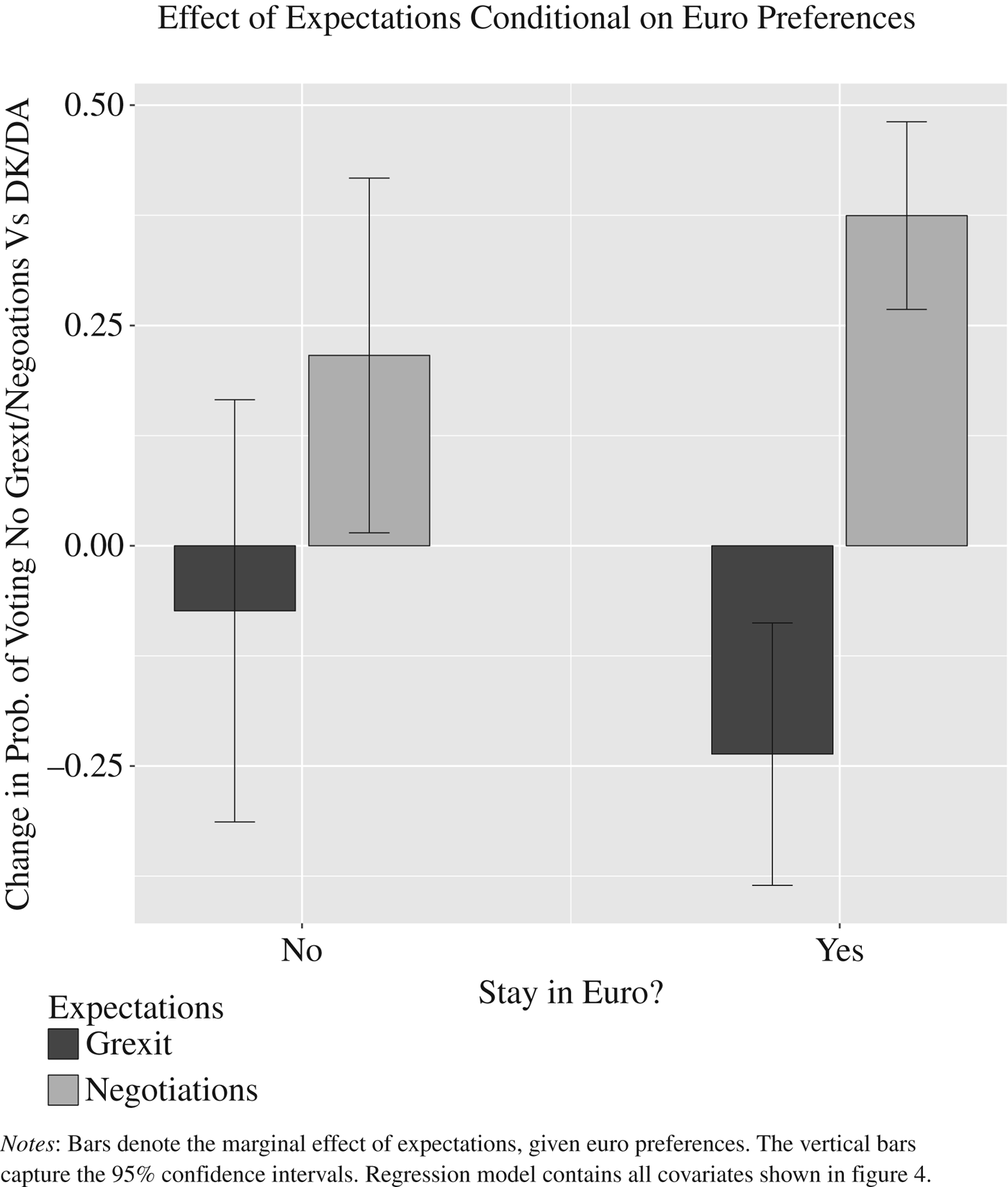
Taken together, these findings underscore that voters’ expectations about the consequences of a noncooperative outcome strongly influenced their referendum choice, especially among voters who wanted to remain in the common currency.
Can Foreign Policymakers Influence Expectations and the Vote?
The 2015 Greek referendum campaign also provides a good environment to examine whether and how involvement by foreign policymakers can influence voters’ expectations and ultimately vote intentions in favor of a cooperative vote. Foreign policymakers not only issued stark warnings that a No vote would spell the end of Greece's membership in the eurozone,Footnote 36 but also took costly measures designed to increase pressure on Greece and signal European policymakers’ resolve to punish the country for a noncooperative referendum outcome. Our argument suggests that such a costly signal should shift voters’ expectations toward a more pessimistic evaluation of the consequences of a No vote, thus decreasing their propensity to vote against cooperation.
To examine how costly signals sent by foreign policymakers affect expectations and vote intentions, we examine how the ECB's decision not to raise ELA assistance and the Greek government's subsequent decision to close the banks and impose capital controls influenced referendum vote intentions. Our argument suggests that if this foreign intervention indeed served as a credible signal of the creditors’ resolve not to accommodate a negative Greek referendum vote, the bank shutdown should increase Greek voters’ propensity to vote for the bailout proposal in the referendum. To test this empirical implication of our argument, Figure 7 uses data from all thirty-three public opinion polls published during the referendum campaign in Greece to show how the proportion of respondents intending to vote Yes in the referendum evolved throughout the campaign.Footnote 37 We classify each poll according to the date of fieldwork and distinguish between polls conducted prior to and after the bank shutdown, which was announced in the evening of 28 June, becoming effective the next day, 29 June.Footnote 38 For each group of polls, we plot a local polynomial smoother that indicates the evolution of public opinion during each phase. As expected, the announcement of the bank closure and capital controls had a significant effect on vote intentions. In line with our argument that a costly foreign signal should increase support for a cooperative vote, the bank shutdown bumped up vote intentions in favor of the bailout package by approximately ten percentage points, thus bringing the predicted outcome to a much narrower margin. Although this did not ultimately change the outcome of the referendum, which was still rejected with only 39 percent Yes votes, this is a fairly substantial increase in average vote intentions, which would have been able to sway the vote in a closer race.
Effect of bank shutdown on average support for bailout proposal (Yes vote) based on 33 polls of referendum vote intention
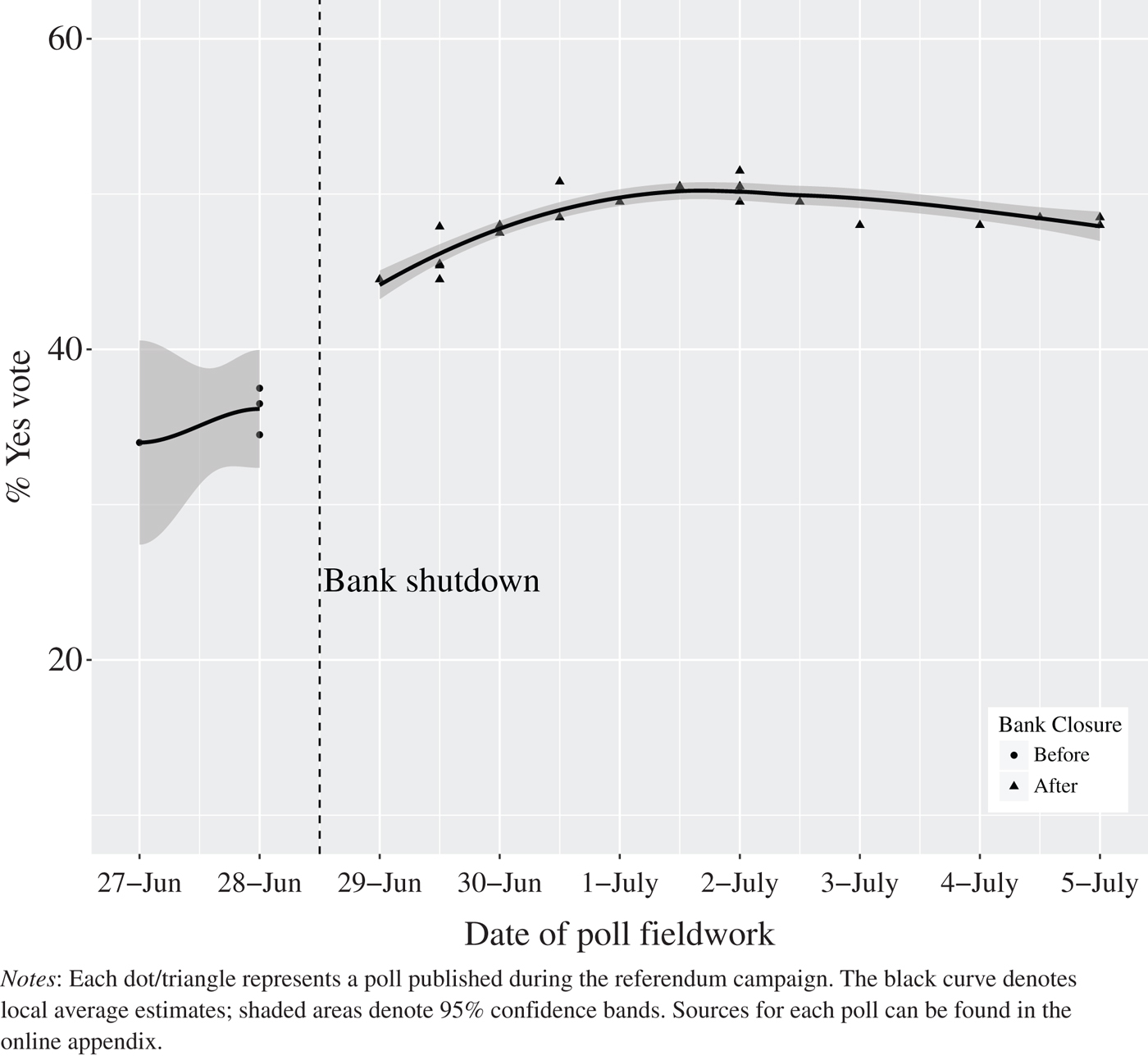
To corroborate this finding, we asked voters in our referendum survey if they had changed their vote intention as a result of the bank shutdown. About one fifth (21%) of all voters answered affirmatively. The majority of those who changed their vote intention because of the bank closure switched to a Yes vote (12.3% of all voters). Some voters (4.9% of all voters) became undecided, and a few (3.8% of all voters) hardened their position and switched toward a No vote. This latter group illustrates that costly signals sent by foreign policymakers can also backfire, pushing voters toward a noncooperative vote. Nonetheless, the net effect is positive and these individual-level results correspond closely with the average ten-percentage-point increase in Yes-vote intentions that we saw in the analysis of all polls shown in Figure 7.
Our argument suggests that foreign signals influence the vote because they affect expectations about the likely foreign reaction to a noncooperative referendum outcome. In the last step of our analysis, we examine this prediction empirically, testing whether the bank holiday predicts expectations about the consequences of a No vote in the referendum. For this analysis, our dependent variable, expectations, is trichotomous (respondent expects Grexit, new negotiations, or does not know or answer). We therefore employ a multinomial logit regression model, where those who “did not know/answer” serve as a reference category. This allows us to investigate whether shifts to and from this category can be attributed to the bank closure after controlling for all the covariates included in the previous analyses.Footnote 39
Figure 8 shows the determinants of respondents’ expectations about the consequences of a No vote. In line with our findings on the determinants of the vote intention, our results show that both partisan attachments and euro preferences influence these expectations. Sociodemographic variables, such as education and occupation, also seem to matter. The most relevant result, however, is that after controlling for all these influences on voters’ expectations, the bank closure also affects people's expectations. Those who changed their vote intention because of the bank shutdown were significantly less optimistic about the likely foreign response to a No vote. Substantively, the bank shutdown reduces the predicted probability of expecting new negotiations by almost twenty percentage points.Footnote 40 At the same time, the bank shutdown is associated with an increase in expectations that a No vote would push the country toward Grexit by almost ten percentage points. The strategy of European policymakers not to accommodate Greece's new financing needs during the referendum campaign thus succeeded in making some voters more pessimistic about the likely consequences of a No outcome in the referendum.Footnote 41
Determinants of expectations about the consequences of a No vote
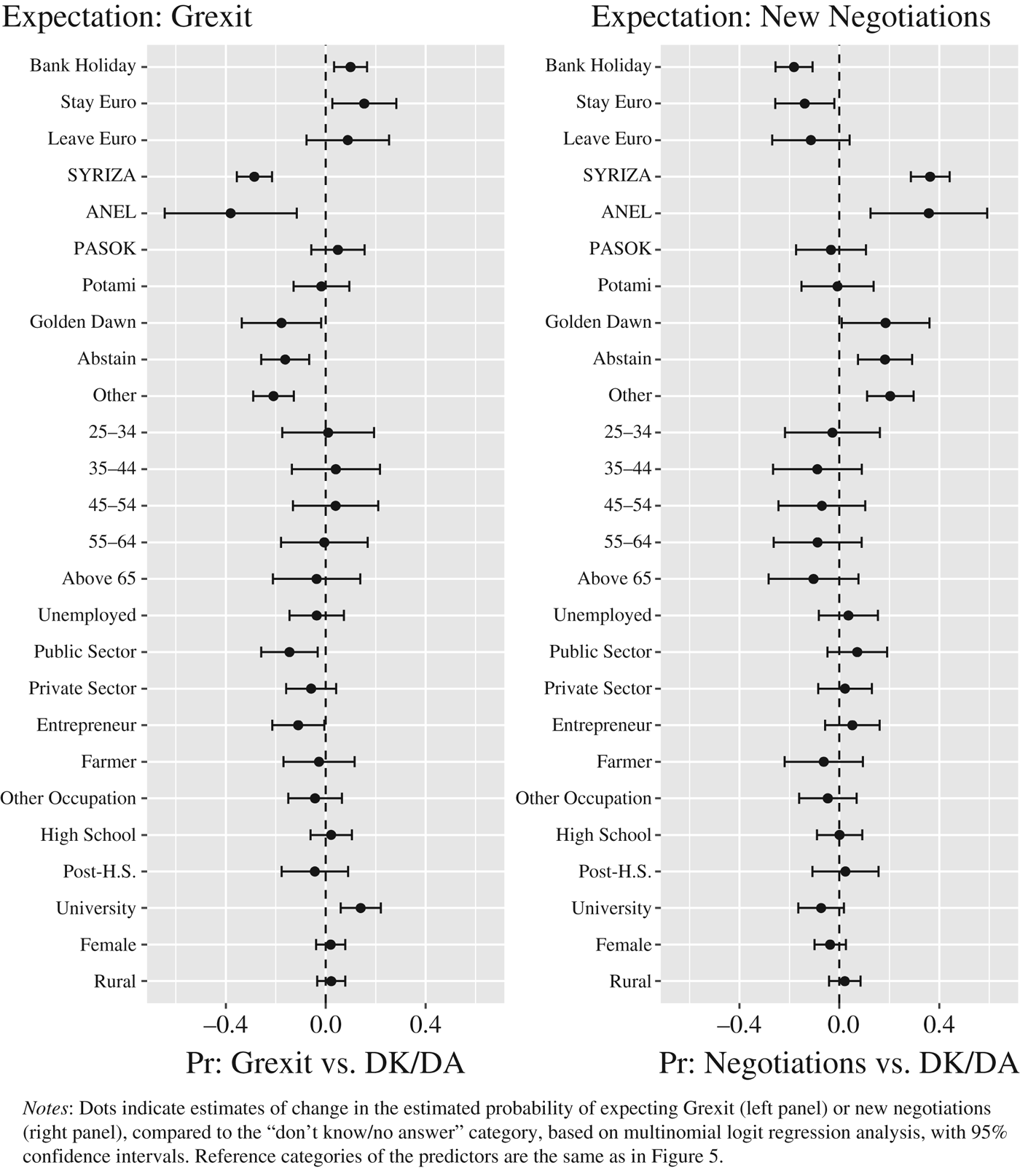
Overall, these results demonstrate that the European policymakers’ decision to take a hard line on Greece did indeed convince some voters that they would not accommodate a negative referendum outcome, increasing Greek voters’ propensity to support the bailout proposal. But our results also demonstrate the difficulties associated with this strategy. Despite the huge cost that the ECB's decision generated, both for Greece and other European states, this foreign intervention did not sway enough voters to change the referendum outcome. Our analysis thus suggests that, while international actors can indeed affect expectations in referendum campaigns through costly signals, this influence has its limits.
Conclusion
In recent years, popular referendums on questions of international cooperation and supranational integration have posed an increasing challenge to European integration. What these referendums have in common is that a direct democratic vote that rejects further cooperation or reverses existing levels of cooperation affects not just the referendum country but is costly for other countries as well. At the same time, the response of other countries to such a negative referendum outcome shapes how the vote will ultimately play out for the referendum country. In this strategic setting, foreign policymakers have incentives to warn domestic voters about a harsh foreign reaction to a noncooperative referendum vote to induce them to vote cooperatively.
We have explored one aspect of this strategic setting, focusing on how voters’ expectations about foreign reactions to a noncooperative referendum outcome shape vote intentions, and whether foreign policymakers can influence these expectations. Leveraging survey data from the 2015 Greek bailout referendum, a referendum in which other countries’ stakes were particularly high, we show that expectations about the likely consequences of a No vote had an unusually large impact on vote choice. Voters more optimistic about the foreign response were much more likely to vote noncooperatively than voters expecting a harsh foreign reaction (who were much more likely to cast a Yes vote). Our analysis also suggests that foreign policymakers were able to influence these expectations among some voters by sending a costly signal (cutting Greece off from additional financing) about their determination not to accommodate a noncooperative referendum outcome. Our work thus contributes to unpacking the popular dynamics and strategic interactions in the 2015 Greek bailout referendum, a fascinating and important instance of a foreign policy referendum with large potential consequences for other nations.
Our results point to a number of open questions that future research should investigate. How are signals and statements by foreign policymakers received in different contexts? How costly do such signals have to be to sway voters in favor of supporting new or continued cooperation? And, moving up one level of analysis, (how) do policymakers anticipate and respond to the expected reactions of other countries and the feedback effects between their actions and expectations?
More generally, our findings contribute to a better understanding of the mass politics of international cooperation. While the role of the mass public in creating new international agreements has been studied in detail, the spillover effects of popular rejections of new or existing forms of cooperation and integration on other countries, and the role of foreign interventions in domestic elections and referendum campaigns, have so far received much less attention. Because these spillover effects are growing, especially in highly integrated countries such as the member states of the European Union, the stakes other countries have in the outcome of domestic referendums and elections are equally growing.Footnote 42 This is most vividly demonstrated by the vast consequences of the Brexit vote in the 2016 UK referendum for the remaining twenty-seven EU member states, but is also evident in the strong interest abroad in the 2017 French presidential elections. In this setting, the interactions of policymakers not only with their own publics but also with voters abroad are becoming increasingly salient, raising important questions about international cooperation, democracy, and national sovereignty, which open new and exciting avenues for future research.
Supplementary Material
Supplementary material for this research note is available at <https://doi.org/10.1017/S0020818318000255>.



